
Tag: Sarah Gadon

Dracula Untold (2014)


Luke Evans rises above another terrible film in this first terrible attempt to launch a “Dark Universe”

Director: Gary Shore

Cast: Luke Evans (Vlad the Impaler/Dracula), Dominic Cooper (Sultan Mehmet III), Sarah Gadon (Mirena), Art Parkinson (Ingeras), Charles Dance (Master Vampire), William Houston (Cazan), Diarmaid Murtagh (Dumitru), Noah Huntley (Captain Petru), Paul Kaye (Brother Lucian)
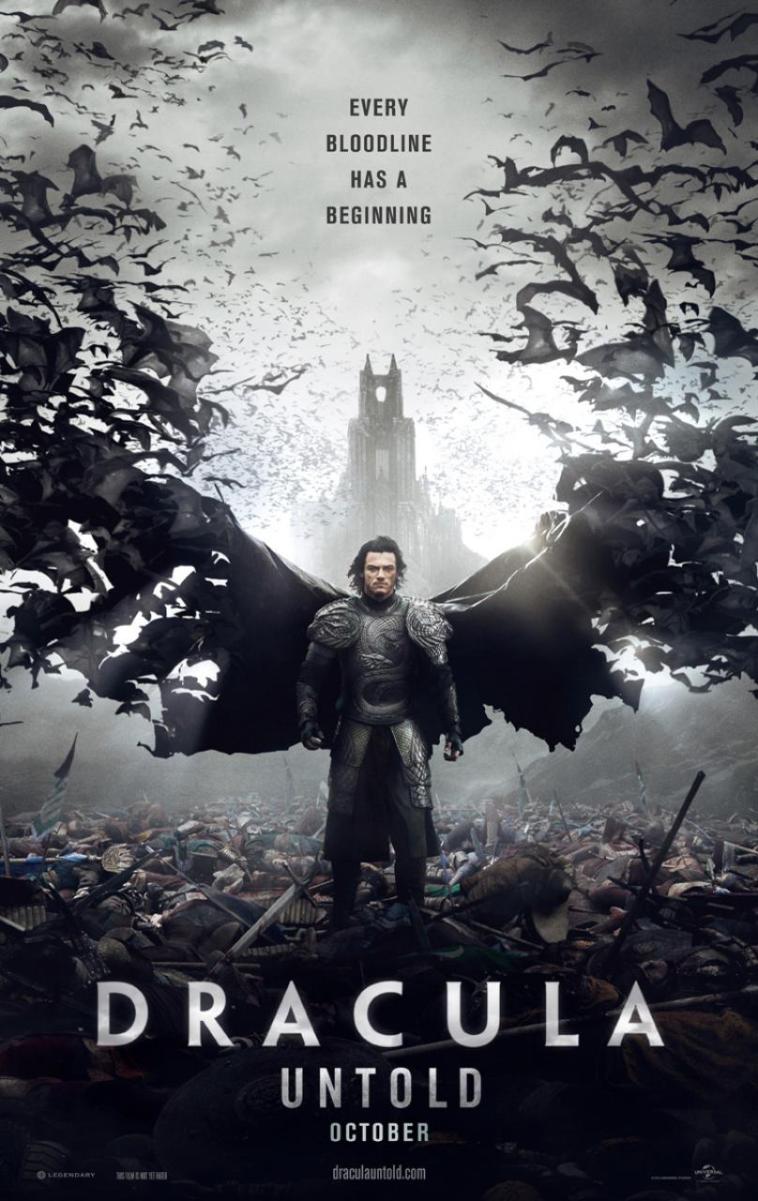
Every studio wants its own Cinematic Universe. Because the lesson from Marvel’s patient and excellent build of an entire world is that people will come and see every single film you make in a series. Right? Perhaps that explains the painful attempts of Universal to turn one of their few recognisable assets – monster movies – into some sort of bizarre linked universe. The project is currently in terminal decline after the flop of Tom Cruise’s The Mummy. But before that, a reboot had already been attempted with this bizarre retelling of the Dracula origins story.

Vlad the Impaler (Luke Evans) is a guy who wants to put his life of impaling behind him. All he wants is to lead his people peacefully in Transylvania. So imagine his disappointment when his boyhood rival Sultan Mehmet III (Dominic Cooper) arrives and demands the tribute of the first born sons of Transylvania – including Vlad’s son Ingeras (Art Parkinson). Vlad umms and ahs and then he decides – y’know what – not on his watch. But how can he keep his people, his son and wife (Sarah Gadon) safe? Well the only solution is to take on the mighty Power of the Vampire from a mysterious cave-dwelling creature (Charles Dance). Vlad now has unlimited strength for three days – but can he resist the craving for human blood that will make the transformation permanent? And will the powers last long enough to repel the Turks?

Okay. So obviously this film is complete rubbish. I mean it really is. It’s hilariously overshot – the action sequences are frequently hard to follow, so swiftly does the camera swoop and swirl like the bats Vlad can transform into. Shore is in love with showy shots – one battle is seen through the reflection on a CGI sword that is thrown in the air and twirls in an arc downwards (yes it is as complex and unengaging as I made it sound).

The plot is complete bobbins. It’s all “Forsooth my lord” and “We make for the monastery!” (a building, by the way, of unlimited size that seems genuinely able to accommodate most of the population of Transylvania). The film wants us to remember that Vlad is a cool bad-ass but also that he is ashamed of his life of sticking people on poles (needless to say, his signature move breaks out eventually). Vlad is a vampire and a monster – but he is also someone we need to root for, so he is portrayed as a lovable family man who never really seems that tormented by urgings for blood.

Luke Evans. One day he will be a star. If you could find a good performance in a terrible, stupid film it would be his. He is fully committed and he gives the part so much emotional depth – way more than is in the script. He really, really sells Vlad’s humanity and makes his character feel like a warm, lovable guy – but he mixes it with an edge behind the noble call of duty. Evans is genuinely rather good in this. The guy deserves so much better.

I’ll give a pass as well to Sarah Gadon and Art Parkinson, who at least treat the parts with a certain respect. Charles Dance has fun under bizarre make-up as a wizened monster. Everyone else is here to be as over-the-top and stupid as possible – not least Dominic Cooper, whose ludicrous accent, utterly unimposing frame and inexplicable sudden detailed knowledge of vampires makes for a deeply stupid, bad performance. But then everyone is going for it – Paul Kaye leaves no piece of scenery unchewed in his brief performances – and going for it badly. Everyone comes out of it badly.

The plot makes no sense: a strange gypsy emerges from nowhere to try and serve Vlad (why?) and then only returns at the end to help set up a sequel-that-never-came. Every decision Vlad makes is terrible. The villagers oscillate wildly from pathetically grateful yokels to “burn him!” lunatics to – well it would be spoilers, but let’s just say there is quite the body count. In fact, the only thing really interesting about the story is wondering what will make Vlad remain a vampire (which we all know he will do) – of course it is a “noble sacrifice”.

The biggest problem with the film is that Vlad is both far too powerful and far too noble. Since he can literally kill thousands of people single handed, why does he waste time taking his people into the woods – why not ride out single handed to meet the Turkish force and take them out? If he is so noble that he is never tempted once to keep the powers of a vampire for selfish reasons, where is the dramatic tension?
The film eventually ends in another overblown, stupid fight scene with bats and invulnerable vampires flying about the place. That’s before we head into an unearned coda in the modern age which sets up a sequel that is not coming, and includes a few groan-worthy references back to the original novel. But then this is a cartoon made by people who thought that they didn’t need to bother to make a good movie at all if they slapped the Dracula name on it.  I suppose you could say it’s just trying to entertain: but with no real interest in doing anything other than making more movies off it later, it’s a bit of a pointless mess.

Belle (2013)


Gugu Mbatha-Raw is the mixed race daughter making waves in society in Amma Asante’s underwhelming pseudo-historical film Belle

Director: Amma Asante

Cast: Gugu Mbatha-Raw (Dido Elizabeth Belle), Tom Wilkinson (William Murray, Lord Mansfield), Sam Reid (John Davinier), Emily Watson (Lady Elizabeth Mansfield), Sarah Gadon (Lady Elizabeth Murray), Miranda Richardson (Lady Ashford), Penelope Wilton (Lady Mary Murray), Tom Felton (James Ashford), James Norton (Oliver Ashford), Matthew Goode (Captain Sir John Lindsay), Alex Jennings (Lord Ashford)

The British film industry produces a constant stream of costume dramas, many covering alarmingly similar ground on the aristocracy or wealthy of the Georgian period onwards. It’s to be commended then that Belle takes a similar plot, but from a radically different direction. Here, a famous real painting of a white and mixed-race pair of ladies becomes the jumping off point for a drama about an illegitimate mixed-race daughter of a wealthy family.

Dido Elizabeth Belle (Gugu Mbatha-Raw) is the daughter of naval captain and a slave in the West Indies. After his death, she his raised by her uncle William Murray (Tom Wilkinson), Earl of Mansfield, and his wife (Emily Watson) to raise her as their own alongside their niece Elizabeth (Sarah Gadron). Belle is treated as an equal among the family, but is not allowed to dine with guests or move freely in society. However, Belle has inherited a fortune from her father – unlike Elizabeth – and quickly finds herself a source of interest from the younger sons of the nobility. Meanwhile Lord Mansfield, the Chief Justice, is asked to rule on the slave ship Zorg case (where slavers threw their slaves overboard in a storm), a case that brings passionate abolitionist John Davinier (Sam Reid) into Belle’s life and makes her start to re-evaluate society’s attitude to her.

Belle is a formulaic costume drama, given an imaginative twist by placing a black woman at its heart. It explores issues around the imbalanced attitudes of British society at the time (and since), and the hypocrisy and racism that bubbles under the surface of the British gentry. Belle is rejected by all and sundry – until knowledge of her wealth becomes known, at which point many of these objections are choked back to secure her money. The film gets much mileage out of Belle slowly comparing her position first to the black servants around her and then to the slaves who lost their lives on the Zorg.

However, what undermines Belle is that it is a work of fiction – and it feels like it’s hiding it. What we do know about the real Belle (which isn’t much) doesn’t relate at all to what we see in the film. She wasn’t an heiress. She didn’t fall in love with an abolitionist lawyer – Davinier was not the aspiring son of a cleric, but a French steward. Elizabeth probably wasn’t a penniless relative. Mansfield’s credentials as a proto-Abolitionist and reformer were never in doubt – by the time of the Zorg case he had already passed a ruling 10 years earlier that there was no basis for slavery in British law. Belle actually lived in Mansfield’s house until his death as effectively a housekeeper and semi-secretary (the very fate she rejects in the film). The film’s lack of interest in historical fact even affects small details – at one point James Norton’s pleasant but empty Oliver boasts his father has purchased him a commission as a Captain in the Navy, virtually the only institution in Georgian England which promoted solely on merit! (This annoyed me a lot more than it should have.) 

Belle is not a true story by a long stretch – but that doesn’t stop it proclaiming a “what happened next” series of captions at the end. It could have got away with this in a way other non-historical films have, if its story itself was more compelling. But instead Belle offers a merely serviceable story, offering a unique prospective on the aristocracy but largely using it to tell a fairly conventional “love across the social divide” story. Honestly, for large chunks of the film you could replace Belle with any slightly shameful second daughter, and the story would remain largely the same.

Which is a shame because it feels like it wastes something really interesting – and also wastes Mbatha-Raw’s star-making turn. She is excellent – sweet and naïve, but growing in confidence, determination and wisdom, gaining the strength of will to shape her own destiny. The film introduces interesting themes as Belle begins to question the attitudes of her family – do they accept her because they must? Would they be as open to a black stranger? – but these themes don’t quite coalesce into something really solid and coherent. Instead they are trotted out, but we don’t really feel we learn anything.

Similarly, the case of the slave ship Zorg seems rather loosely defined. We don’t get a real sense of public pressure or interest in the case, or really understand the essentials of what the case involved. Instead, it’s used primarily as a tool to question the attitudes of Lord Mansfield, and whether he has the ability to expand his obvious love for Belle into a wider statement of man’s equality. Tom Wilkinson is very good as Mansfield – prickly, but essentially decent and caring under a gruff surface – even if the role can hardly be a challenge for him. But the film doesn’t really manage to make a really compelling argument about what it is trying to say, other than slavery is of course bad.

Elsewhere, the film takes simple shots and shoots fish in the barrel. The Ashton family are introduced to stand in for British society. Lord Ashton is brisk and businesslike and interested only in maintaining the status quo. Lady Ashton – played by Miranda Richardson at her most coldly standoffish – only cares about securing wealth for sons. Of those sons, James Norton gets the most interesting part as the decent but shallow Oliver. Poor Tom Felton though: his character might as well be Draco Malfoy in period costume, all but spitting out ‘Mudblood’ at Belle. None of these performances offer anything different from what we’ve seen before.

That’s part of the problem with Belle – it wastes an interesting idea by slowly turning it into a more conventional story, primarily focused on who is Belle going to marry, rather than the implications of a black woman in a racist society, or the hypocrisy of that society being only willing to accept her when she has money. Despite some good acting – Penelope Wilton and Emily Watson also give tender performances – and a star-turn in the lead, it’s not really that interesting a film. You keep expecting it to burst into life, but it never does: for such a film offering a fresh perspective on history, you don’t feel like you’ve learned anything new about Georgian society at the end of it.