Tag: Shakespeare

The Tragedy of Macbeth (2021)

The Tragedy of Macbeth header

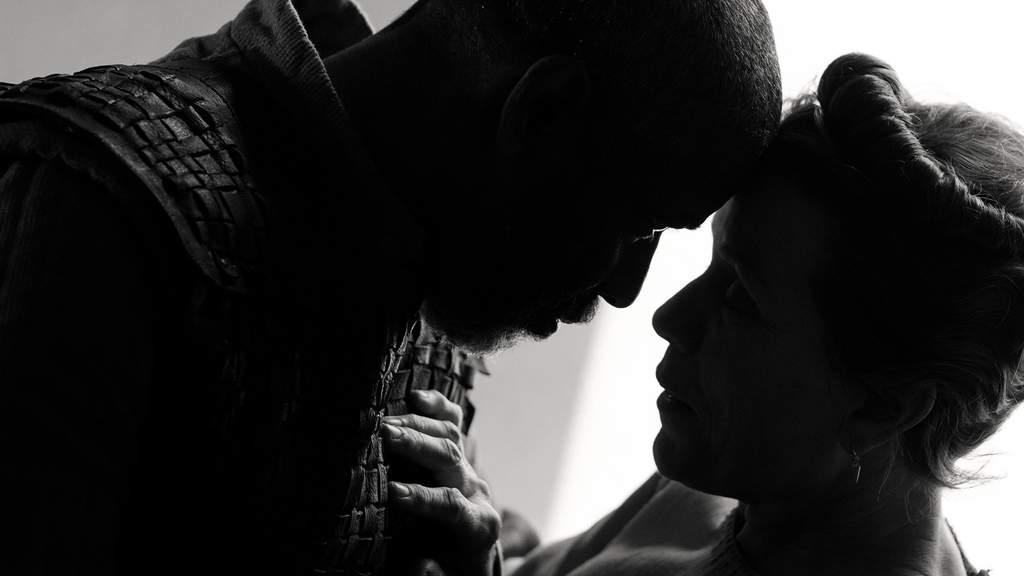
Denzel Washington and Frances McDormand are the Macbeths in this brilliant, noirish, superb Shakespeare film

Cast: Joel Coen

Director: Denzel Washington (Lord Macbeth), Frances McDormand (Lady Macbeth), Corey Hawkins (Macduff), Brendan Gleeson (King Duncan), Harry Melling (Malcolm), Bertie Carvel (Banquo), Alex Hassell (Ross), Kathryn Hunter (The Witches), Moses Ingram (Lady Macduff), Ralph Ineson (Captain), Stephen Root (Porter), Miles Anderson (Lennox), Jefferson Mays (Doctor)
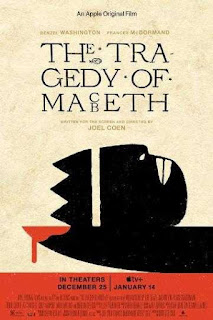
Shakespeare on screen is difficult to pull off. Focus too much on the language and you end up with something more theatrical than cinematic. Zero in on the visuals and you lose what makes Shakespeare great in the first place. That’s not even to mention that films – with their huge audiences – tend to focus on simple, more traditional interpretations of a play that add little to interpreting it afresh. These are all problems avoided by Joel Coen’s The Tragedy of Macbeth which is bloody, bold and resolute and jumps straight into the upper tier of great Shakespeare films. Inventive, dynamic, gripping and excellently acted it succeeds in being both a creative production of the play and something truly cinematic.

Shot in a crisply clean black-and-white, the 4:3 frame frequently filled with rolling mist and stark white light (it’s superbly shot by Bruno Delbonnel), this is a Macbeth set in a Jan Kott inspired Samuel-Beckett-tinged wasteland, with Scotland a bleak, blasted country, its characters leading lives full of sound and fury that signify nothing. The Macbeth’s castle is an Esher like construction of perfectly formed empty rooms, towering walls and arches casting grim shadows and open ceilinged rooms allowing onlookers to observe everything. There are brilliant images: not least the handle to Duncan’s door which is strikingly lit to resemble a knife. Characters frequently emerge from the mist or the darkness to walk towards us and confess their darkest thoughts.

No Shakespeare film has better used set and location since Orson Welles’ Othello – a film this is sharply reminiscent of, with its brilliant use of angles and shade that constantly disconcerts the viewer (even leaving us confused at points on whether we are looking down or up). Coen also seems to have been inspired by Peter Brook’s grimly nihilistic King Lear film, with this Scotland being trapped firmly in a circle of destruction powered by the witches. All three are played by Kathryn Hunter, whose contortionist twisting and ability to switch her vocals on a sixpence from sing-song to a Gollumesque growl make them truly feel of the earth and yet not. Hunter is inspired casting – sometimes representing all three witches in a single schizophrenic body, at others playing all three at once. A brilliant image at one point shows her double reflection in a watery pool, turning her body immediately into a trinity.
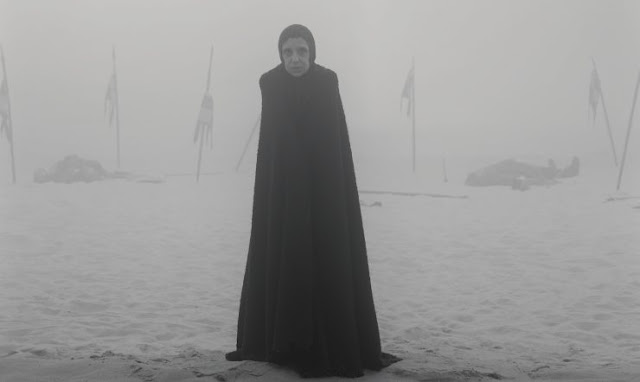
Hunter’s movement is birdlike and agile – fitting since it’s suggested the witches can transform themselves into carrion crows, flying over Scotland picking bones clean of fresh. The first image is the three birds circling the Captain as he walks slowly across a beach to report to Duncan. Later Hunter perches on a crossbeam in another opened-ceiling room, subtly poking Macbeth on to greater monstrosities. There is a cycle of destruction here – and the film’s ending implies all this chaos is bound to start again.

Crucial to this is Ross. Following Polanski’s Macbeth – and again heavily inspired by Jan Kott – Alex Hassell’s unctuous Ross, ingratiates himself with all while happily engaging in acts of brutality. He personally executes Cawdor (by beheading), joins Banquo’s murderers, shows the way to the sacking of Macduff house and hands Malcolm both the crown and Macbeth’s severed head. But Coen takes it further again: rather than a cruel opportunist, this Ross seems to be an agent of the witches – or maybe even a witch himself. Hassell’s costume, with its curiously feminine robe and wing-like arms, echoes the witches and Ross moves smoothly from side-to-side even in the final acts, planting seeds of further destruction (including further implied murders) and collaborating directly with the witches to restart the cycle at the end.

All this makes Macbeth and Lady Macbeth at times feel like rather tragic puppets at the heart of a terrible cycle of events they cannot control. It certainly fits with Denzel Washington’s balanced and intelligent performance in the lead. While Washington doesn’t mine as much weight and meaning from the text as the great stage Macbeths, he gives his line readings an unstudied naturalism and a dynamic and thoughtful rhythm (even if he is prone a little too much to the “soft-slow/fast” approach). His Macbeth is a weak, indecisive man, happy only when he is in action. Clearly ambitious from the start, he binds himself in knots thinking but, once a decision has been made, has no hesitation. Violence is an instinctive tool – he kills several people with no hesitation and a lightening aggression – but he’s lost without direction. He clings to the crown as if it will somehow give the things he has done meaning.
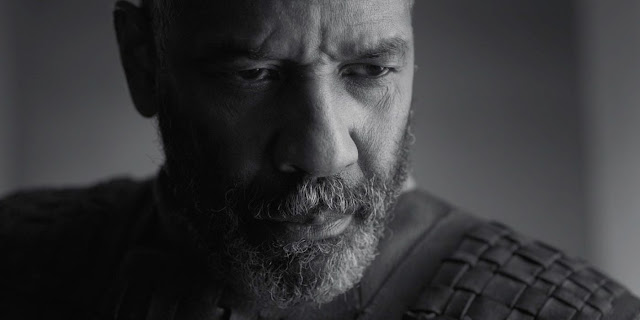
Washington’s performance shifts gears once Macbeth has decided to fully commit himself to those scorpions that fill his mind, becoming an unbalanced mixture of fatalistic and recklessly impulsive. No wonder he has less need for his wife. Frances McDormand is perhaps even better as a Lady Macbeth who sees the crown as her last chance for legacy in a world that has left her behind. McDormand really understands the way to mine nuance from the language. Frequently inpatient with her husband, she is decisive where he is not, but squeamish around violence in a way he isn’t. Both Washington and McDormand manage to suggest a great deal of unfulfilled sadness in the Macbeths, two people in the twilight of their years who pounce on a chance for a last hurrah but find themselves psychologically unsuited for the consequences.

The two leads are at the head of a uniformly strong cast. Hunter and Hassell are both superb. Bertie Carvel is a brooding but honest Banquo. Corey Hawkins a forceful but thoughtful Macduff, played with guilt and wise from the start on Macbeth’s villainy. Moses Ingram brings a lot of warmth to a striking scene as Lady MacDuff. Ralph Ineson’s delivery of the Captain’s speech is spot on. Harry Melling is an immature, stubborn Malcolm.

But the real star here might just be Coen’s direction. The brooding, overbearing beauty of the film is all part of its atmosphere of creeping intimidation and danger. There are some truly striking, haunting images: the flame lit murder of Banquo, a deranged Macbeth fighting a spectral hallucination of Banquo, water pouring down into the flagstones after Macbeth’s final visions of the future, the smoke and mist filled murder of Macduff’s children (a shot of Wellesian brilliance), Lady Macbeth standing before a sheer drop, the imaginative arrival of Birnam wood, Macduff and Macbeth’s final duel in a narrow battlements. This is a punchy, brilliant, beautiful, intelligent and unique reimagining of the play that mixes Shakespeare, visual and has something clear and unique to say about staging the play. Comfortably one of the greatest Shakespeare films ever made.

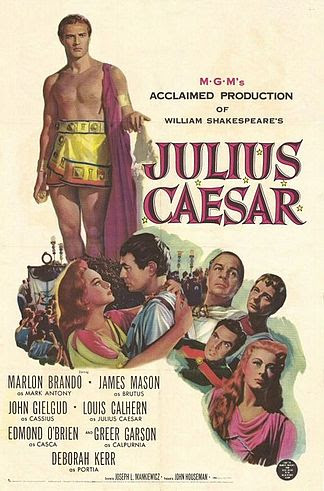
Julius Caesar (1953)

Mason and Gielgud confront Brando in Hollywood’s faithful Shakespeare adaptation Julius Caesar

Director: Joseph L Mankiewicz

Cast: Marlon Brando (Mark Antony), James Mason (Brutus), John Gielgud (Cassius), Louis Calhern (Julius Caesar), Edmond O’Brien (Casca), Greer Garson (Calpurnia), Deborah Kerr (Portia), George Macready (Marullus), Michael Pate (Flavius), John Hoyt (Decimus Brutus), Douglass Watson (Octavius)

Hollywood has always been in awe of Shakespeare. For large chunks of Hollywood’s Golden Age, it was felt the Bard’s mighty words could only be performed in a certain way by certain actors and that it somehow besmirched the Bard to put him on celluloid. It’s partly why there are few truly radical productions of Shakespeare on screen. By 1953 Orson Welles had directed inventive, challenging productions of Macbeth and Othello that reworked Shakespeare for cinematic effect, but these had been met by horror by some critics (‘how dare he change things!’). Julius Caesar fit the mould in many ways for how Hollywood felt Shakespeare should be done – traditionally, respectfully and by a cast of trained theatre actors. Then they threw in a curve ball by casting Brando as Mark Antony.

It’s hard now to really understand the hesitancy (and outright snobbery) from many about the very idea of Brando doing Shakespeare. This was the mumbling Stanislavsky-trained star of Streetcar, the earthy, T-shirt wearing slab of muscle that yelled “Stella!” – who on Earth did he think he was? Shakespeare is for plummy accents, focused on poetry. Brando took a huge risk taking this role on. But, today, his performance feels fresh, vivid and in many places strikingly modern.

Brando bought a more relaxed, natural style – and, yes he also affected a slightly plummy Brit accent – and bought a emotional realism to the most exhibitionist of Shakespeare’s great roles. (Let’s not forget, most of Antony’s part is a massive public speech). Brando creates an Antony who is passionate, loyal, committed – but also cunning, manipulative and very aware of the effect he is attempting to generate in that famous speech. He delivers the speech with aplomb, but concentrated as much on the emotion of what he was saying as the poetry of how he said it. It makes for an excellent marriage between two different styles of theatre, and Brando’s powerhouse delivery (Oscar nominated) carries real energy and dynamism.

It sits within a very traditional production, carefully shepparded to the screen by Joseph L Mankiewicz. Mankiewicz was a two-time Oscar winner for Best Director – but his reputation was largely formed on his mastery with dialogue and actors, rather than any visual sensibility. Julius Caesar is intelligently and faithfully bought to the screen – albeit with little cinematic flourish – shot with a moody black-and-white (designed to ape news-real footage and add further dramatic urgency to the action) on sets that were leftover at the studio from Quo Vadis. (Some of the busts are hilariously out of place – pretty sure Brutus has a bust of the Emperor Hadrian in his home, quite something seeing as he died 160 years before Hadrian was born.)

Mankiewicz by and large lets the play speak for itself.  What Shakespeare wrote, he largely says, and there is little in the way of message in a play that has been reversioned to almost any oppressive regime you can imagine. A few flourishes diverge from the text. He radically simplifies Acts 4 and 5 of the play (particularly the Battle of Philippi and the consecutive suicides of Brutus and Cassius), reducing these down to little more than half an hour. Wisely he focuses on the more dramatic Acts 1-3. The scheming is tense and moody, the assassination swift and brutal. The crowd scenes in Rome bustle with an immediacy and vibrancy – the camera often sits among the plebians during the speeches, encouraging us to share their feelings and reactions to the speeches. Antony is made a calculating and cunning figure – consciously waiting for certain reactions: he even, in one directorial flourish, enters bearing Caesar’s corpse during Brutus oration.

Mankiewicz’s main strength is in working with actors. Although Brando claimed the plaudits, the play is actually centred around Brutus, the intellectual of good intentions drawn into a conspiracy for the best intentions who finds principles and coups make for impossible bedfellows. The film’s finest performance is from the simply superb Mason, who was born to play tortured decent patricians like this and creates a Brutus stuffed with doubt, pride, arrogance, uncertainty and a little touch of fear. His patrician voice is perfect for this “most honourable of all the Romans”, and he sets about murder as the deeply unpleasant task it is, guided by his assumption that he-knows-best. The little moments are brilliantly done: from his petrified nerves at the assassination to his pious sermons on morality to Cassius to his tenderness and care for his wife and servants. It’s a wonderful performance.

To complement him, Mankiewicz recruited one of the greatest Shakespearean actors living as Cassius. Gielgud hadn’t done a film for over ten years (he always felt the cinema to be a minor art), and Julius Caesar was the only opportunity he had to capture one of his great Shakespearean performances on film until Prospero’s Books nearly 40 years later. It’s fascinating to watch a film where the old school (in Gielgud) and new school of acting (in Brando), both bring their own approaches to Shakespeare. This is Gielgud’s finest Shakespearean performance on camera – he must surely have learned more about acting on camera from Mason and Brando – the first time his style moved away from ‘singing the verse’ towards something more emotional, his Cassius a bitter, manipulative man who starts the film holding all the cards and ends up with none of them.

Watching these three powerhouse performers work is a treat – and also to see their styles merging and playing off each other. Mason is the perfect fusion of the realism of Brando and theatricality of Gielgud. Brando learned huge amounts from Gielgud, frequently consulting him on delivery. Gielgud surely took as much from Brando on adding greater emotion and realism into his screen performances, shirking the declamatory style that often makes him grand but unconnectable. The other actors around them offer versions of these styles: O’Brien stands out best as a shrewd and cunning Casca, Calhern tries a little too hard to be grand as Caesar, Kerr and Garson are a bit too theatrical in thankless parts as “the wives”.

Julius Caesar as a whole though is a lean, pacey and intelligent staging of the play, directed unobtrusively but professionally, very well acted by the cast. While Mankiewicz does nothing radical here – look at Orson Welles Othello and there you’ll see how the language of cinema can add a whole new perspective to Shakespeare, in a way this film never does. But while not radical, it focuses on story and character really well. The set-piece moments – the speeches, the murder, the plotting – are staged with urgency, energy and drama. Mainstream Hollywood still wasn’t ready for radical reworking of Shakespeare (this got lots of Oscar noms, Welles Othello was a flop), still seeing him as someone best cast in marble – but with Julius Caesar Hollywood took baby steps towards suggesting there could be a different future.

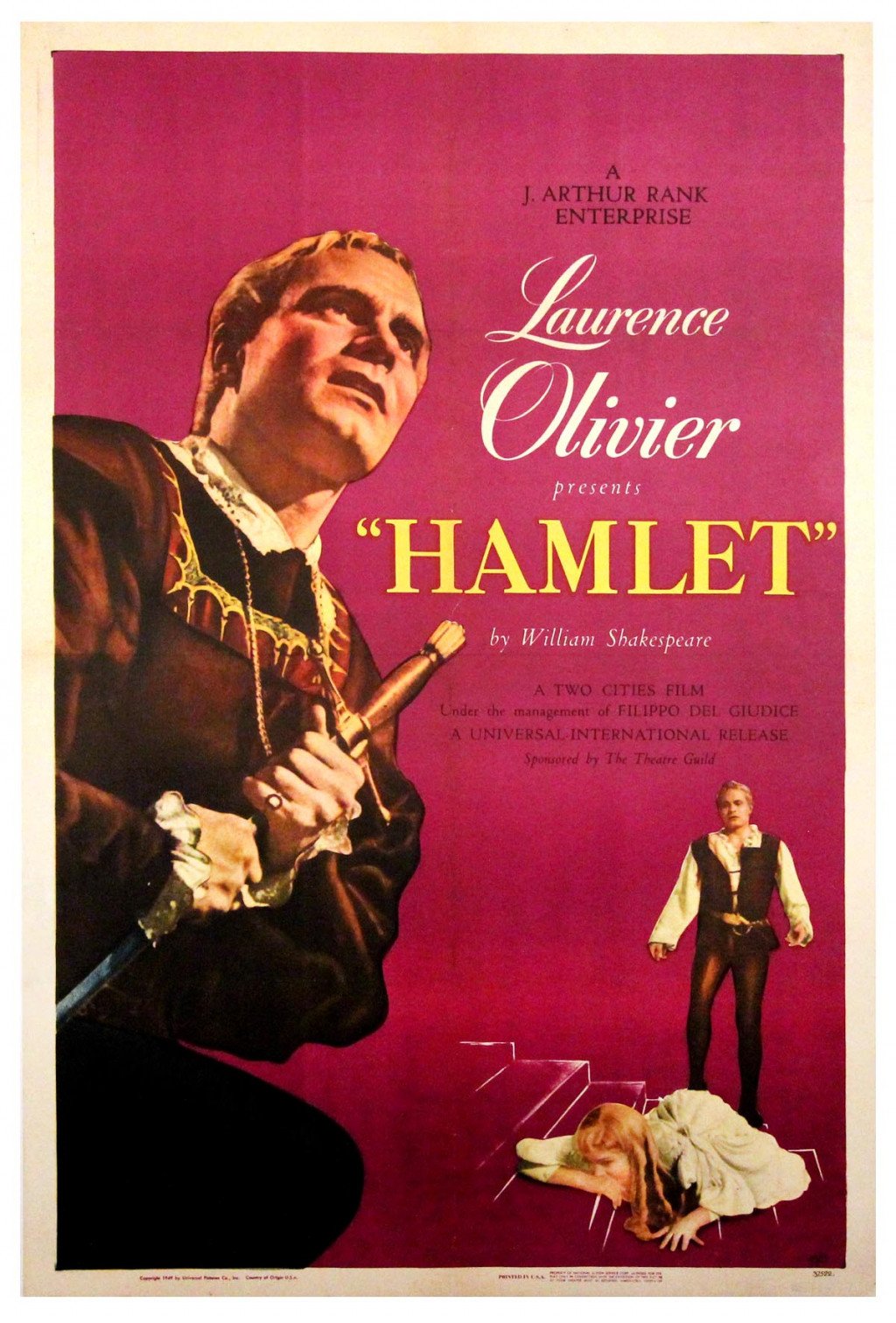
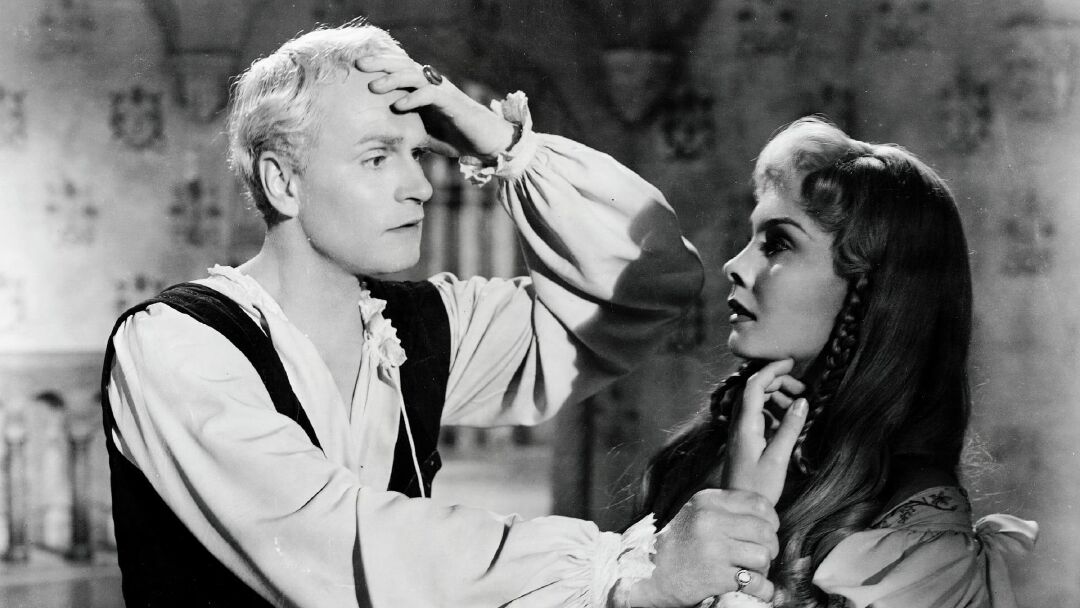
Hamlet (1948)

Laurence Olivier makes Shakespearean cinematic history in Hamlet

Director: Laurence Olivier

Cast: Laurence Olivier (Hamlet), Basil Sydney (Claudius), Eileen Herlie (Gertrude), Jean Simmons (Ophelia), Felix Aylmer (Polonius), Noman Wooland (Horatio), Terence Morgan (Laertes), Peter Cushing (Osric), Stanley Holloway (Gravedigger), Anthony Quayle (Marcellus), Esmond Knight (Bernardo), Russell Thorndike (Priest), Harcourt Williams (Player)

Close your eyes and picture Hamlet – chances are you will see an image inspired by Olivier. Olivier’s second Shakespearean directing outing coated him in plaudits. He became the only actor to win an Oscar for Shakespeare (and, until Roberto Benigni, the only actor to direct himself to an Oscar) and the film itself became the first non-American film to win Best Picture. Hamlet will live forever, a corner-stone production of the play and a part of Shakespearean and cinematic history. It skilfully weaves together theatre and cinema and still works as a cracking production of the play.

To bring it to the screen, Olivier made some big calls. Smaller parts were cut to ribbons (particularly the Player King) or in many cases (I’m looking at you Rosencrantz and Guildenstern) excised all together. Over half the dialogue cut, with the focus being bought onto domestic tragedy (the politics of Fortinbras is never mentioned). This is a family tragedy, and a Hamlet-centric production, where Claudius is a jovial villain and Gertrude a mother with confused feelings for her son.

Oliver set this in a sprawling medieval castle using the best elements of theatre and cinema. The sets are beautifully constructed: winding corridors, towering halls and imperious battlements provide the sort of realist set Olivier could only dream of in the theatre. But Olivier (and photographer Desmond Dickinson), lights this with the moody intensity of film noir. Shadows dominate the castle and the frame, frequently provide hiding places. Olivier’s debt to Wyler (and Welles) can be seen in his pictorial framing and use of deep focus, while domestic tragedy in a grand house has more than a few calls backs to Hitchcock’s Rebecca. Frequently shots show an actor in the foreground, being observed in long shot by a second actor in perfect focus.

It also takes inspiration from expressionist cinema, especially in its mist-laden battlements, with some neatly surreal touches. The Ghost (whose voice, heavily distorted, is also Olivier’s) is a shadowy demonic figure, emerging shrouded in mist. A wonderful series of shots sees the camera seem to soar away from the throne room steps where Ophelia weeps, through the castle towers, into the sky and then down towards Hamlet staring at the waves at the foot of the cliff, passing through his skull where the image of the crashing waves is overlaid across the interior of Hamlet’s skull. It’s a more effective use of visuals than the film gets credit for.

For all its traditional trimmings – cod-pieces and men-in-tights abound – it’s easy to forget how influential this was. It cemented for years a view of Hamlet as a man wracked by indecision and made it standard to see Gertrude and Hamlet locked in Freudian-inspired Oedipal lust. The first idea came from the opening narration’s reductive phrase “This is a tragedy of a man who could not make up his mind”. It’s an odd statement to make – especially as Olivier’s Hamlet hardly seems wracked by indecision – but it matched a perception of the play so, true or not, it stuck.

That relationship between Hamlet and Gertrude adds a perverted romantic twist to the bedroom scene between the two (you can sense the inspiration of Wyler’s Wuthering Heights), with the film frequently framing the encounter with romantic angles. Eileen Herlie, for all the unflattering make-up and filming, looks all too much like Hamlet’s contemporary rather than mother (Herlie was in fact nearly 12 years younger than Olivier). While the scene does have a little too much heavy-breathing – and Olivier overplays the heart-beat soundtrack as white noise – it’s an effectively unsettling balance of intimacy and incest. It also runs through the production – from Gertrude kissing Hamlet on the lips, to her conscious decision to drink the poison and protect Hamlet.

The production – partly driven by cuts – is fiercely Hamlet-centric. Olivier speaks most of the dialogue (all of Olivier’s films revolve around massive star-roles for himself, fitting his competitive dominance). His Hamlet is beautifully thoughtful, but also dynamic and energetic (not much doubt there). Olivier perfectly captures the intellectual, as well as the humanity, grace and charm. Some of the nuance of the soliloquies is lost by Olivier’s decision to deliver them in voice-over (although Olivier does a good job reacting along to the narration) – but fortunately “To Be or Not To Be” and his speech on Yorick’s skull remain delivered ‘live’, and coated in emotional honesty.

The rest of the cast are relegated. Sydney’s Claudius is little more than a scowling villain, Herlie has little presence. Norman Wooland makes a great deal of the loyal Horatio (a famously dull role), while Peter Cushing adds some comic energy as a foppish Osric. The best non-Hamlet moments go to Polonius and his children: Aylmer is the portrait of a doddering interferer nowhere near as smart as he thinks he is, while Morgan has a matinee idol energy as Laertes. Best of all is Jean Simmons, wonderfully heart-felt and fragile as Ophelia, whose gentleness dooms her.

Olivier might give himself most the best moments, but he allows plenty of directorial flourish elsewhere. There is a wonderful shot at Yorick’s tomb, where Hamlet’s shadow is cast over the skull, the skull seeming to become the shadow’s head. While a crane shot during Claudius-Laertes scheming is unwisely used twice in quick succession (more likely to raise chuckles), there is an impressive amount of camera movement and tracking shots. The production ends with a knock-out sword fight – and of course only Olivier would cap that with a life-and-limb risking dive from a platform. Olivier’s charisma is used brilliantly in these scenes, and while it’s not always quite clear emotionally what Hamlet is considering in these moments, his forceful presence drives the action and adds great weight to his final speech.

Because, this isn’t a film about a man not making up his mind. Sure, he’s a thinker – and one of the final shots brings us back to Hamlet’s chair, now empty – but when action is needed, this Hamlet grabs it. Just as Olivier grabbed the tools of cinema to create a production of the play that feels like a film. Some critics at the time were horrified that Hamlet should even be in the crude medium of film (Olivier took to calling it an “essay” on Hamlet) but today it stands quite rightly as both a great film and a key example of how to bring Shakespeare to the screen.

Henry V (1944)

Once more unto the breach with Laurence Olivier as Henry V

Director: Laurence Olivier

Cast: Laurence Olivier (Henry V), Renée Asherson (Princess Katherine), Robert Newton (Pistol), Leslie Banks (Chorus), Felix Aylmer (Archbishop of Canterbury), Robert Helpmann (Bishop of Ely), Nicholas Hannen (Exeter), Ernest Thesiger (Duke of Berri), Frederick Cooper (Nym), Roy Emerton (Bardolph), Freda Jackson (Mistress Quickly), George Cole (Boy), Harcourt Williams (King Charles VI), Russell Thorndike (Duke of Bourbon), Leo Genn (Constable of France), Francis Lister (Orleans), Max Adrian (The Dauphin), Esmond Knight (Fluellen), Michael Shepley (Gower), John Laurie (Jamy), Niall McGinnis (MacMorris), Valentine Dyall (Burgandy)

Olivier’s pre-eminence as the leader of the acting profession in Britain for a large chunk of the last century probably found its roots in his imperiously sublime production of Henry V, the first time he directed a film, but also the point where it seemed that Olivier and the country of Britain seemed to be almost one and the same. Filmed as a propaganda piece, heralding the indomitable spirit of the British in the face of foreign wars, Olivier’s film is a triumph that also set the tone for what the public expected from Shakespeare films for decades to come. 

Originally Oliver balked at the idea of directing the film, approaching William Wyler to take the job on. But Wyler, rightly, knew he could never bring the Shakespearean understanding to it that Olivier could, so the soon-to-be Sir Laurence took the job on himself – meaning he directed, co-produced, co-adapted and starred in the film. I’m not sure anyone else could have done it – or invested the entire project with such certainty, such confidence, such power of personality that the entire project flies together into a sweeping, brightly technicolour treat of pageantry and theatre.

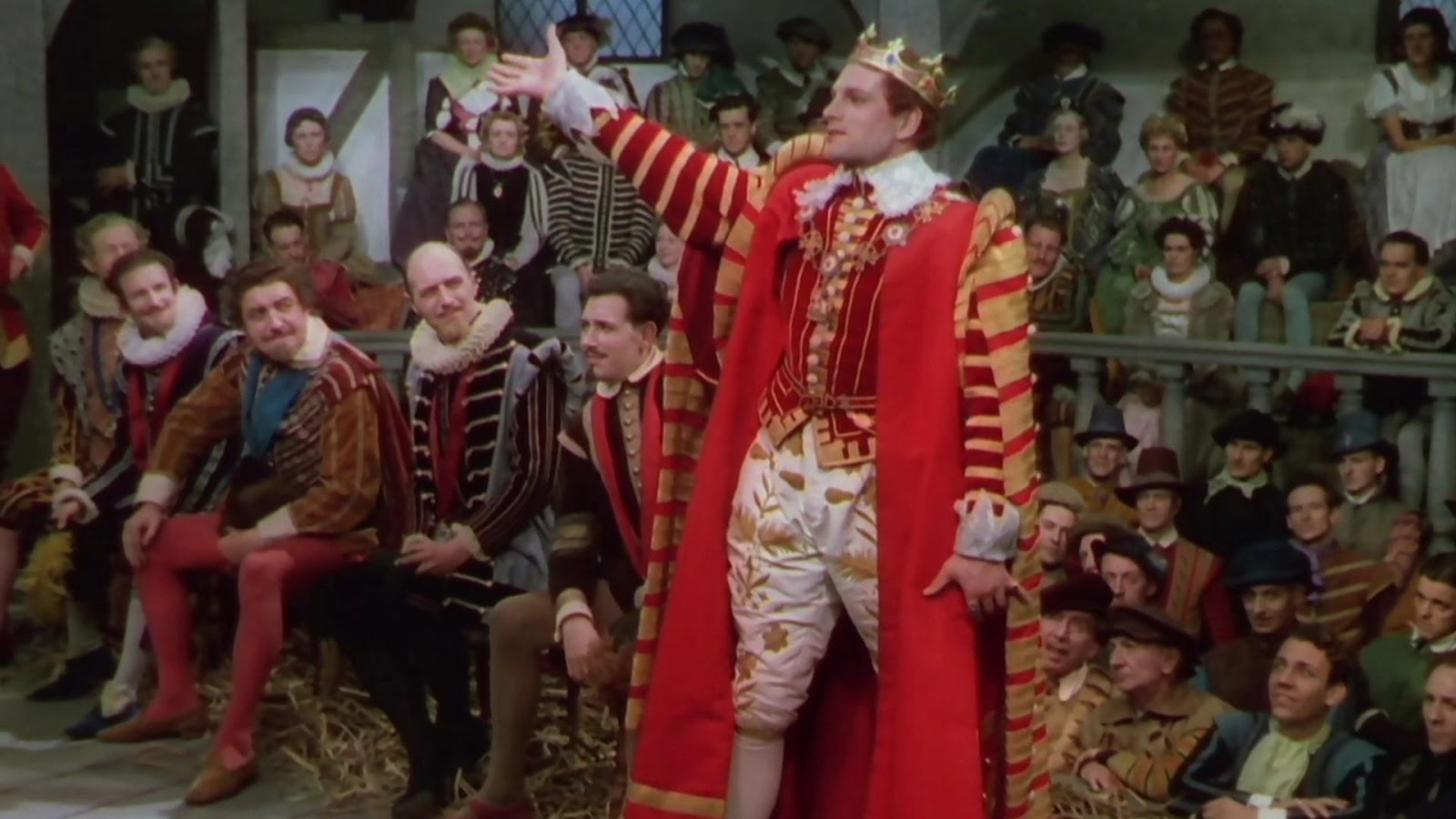
Olivier’s concept for the film is ingenious – and influential. Taking as its cue the words of the chorus (delivered with a archly bombastic confidence by Leslie Banks), the call to “let your imaginary forces work”, the film is set initially in a genuine Elizabethan era staging of Henry V (including unfortunate rain downpour after the first scene).Slowly, it develops over the course of the film from set to cinematic sound stage (still designed with influence from medieval illustrations) and finally into a realistic location setting for the Battle of Agincourt, before turning heel and repeating the journey back until the film ends again in the Globe theatre, with the actors taking their bow (and the female characters now played by fresh-faced boys). It’s marvellously done, and a neat play on the limitations of both film and theatre, and a testament to the powers that imagination can have to expand the world of what we are presented with.

The style of the play develops as we watch it, becoming more natural and restrained as we get closer to Agincourt, then progressing gently back the other way. The opening scenes play Canterbury and Ely’s long-winded legal argument in favour of war for laughs (with neat comic timing by Felix Aylmer and Robert Helpmann), with an avalanche of papers across the stage, Canterbury frequently lost in his exposition and Ely (and even Henry) having to prompt him with precise points. This is a nice set-up for the comic characters of the play, Falstaff’s old retainers here are the very picture of high-spirited, rowdy common folk (though I must say Robert Newton’s high-energy, gurning Pistol is a bit of a trial, even if it perfectly captures the playing-to-the-cheap-seats mania the role seems to require). 

This comic exuberance (and the stuff with Canterbury is genuinely quite funny) gives a perfect counterpoint for Laurence Olivier to perform Henry at his imperious best. Olivier was an actor who invested his Shakespearean delivery with far more naturalism than he is often given credit for, and his Henry here has more than enough true feeling, emotion, determination, courage, bravery and nobility behind his almost sanctified greatness. And of course you get Olivier’s outstanding delivery, that wonderfully rich voice with just a hint of sharpness, delivering the lines not as just poetry, but as true moments of invention. Olivier also has the mastery of the small moments – and Henry doesn’t get much of those – with two particular favourites being the small cough in the wings to clear his throat before entering for his first scene, and that satisfied, exuberant smile at the curtain call at the play’s end. His Henry – the true warrior king of virtue – cemented perception of the character for decades to come.

True, Olivier never touches on Henry’s darker side. Olivier neatly cut anything that could introduce any shades of grey into the character: gone is the summary execution of the traitors at Southampton, cut are the references to naked newborn babes being spitted on pikes before Harfleur, nowhere do you hear the order to execute all prisoners at Agincourt. This is film-making with a purpose, to pushing the message of England, for good, against all. 

As a director, Olivier revelled in the possibilities of cinema, marrying it to theatre. For the large speeches, Olivier invariably starts small and close, and then pans sharply and widely out to turn the cinema into a theatre – also allowing the actors (often to be fair, himself) to not feel restrained by the intimacy of the camera, but to deliver the speeches as intended, larger than life and bursting with impact. Olivier’s confidence with the camera is striking, his film a celebration of sweeping shots, of carefully placed tracking shots, of well-delivered acting. The camera work in the Globe is beautifully done, a series of carefully selected angles and shots. The long panning shot over a model of London leading to the Globe that book-ends the film is beautifully done, and the confidence with which Olivier slowly transitions from artifice to reality is superbly well done.

The style of the piece is extraordinary, with its primary colours like a medieval book brought to life. There is some pleasing comic mileage from the French court, reduced almost to a man to being a bunch of camp moral weaklings. The courting of Princess Katherine (Renée Asherson, in a role intended for Vivien Leigh) has a playful charm to it (even if, as in the play, it’s probably a scene too far after the highpoint of Agincourt). But the heart of it is that long build to the campaign, for Agincourt to be brought to life (at huge expense at the time), a beautiful rendering and explosion of reality after the careful artificiality of the rest of the film, as if we really have got our imaginations working and brought it to life before us as the Chorus instructed.

The film established a regular Olivier company that would work with him on films to come. William Walton’s score seems to capture that mood of England at war and believing it was in the right. The cast – plucked from English theatre by Olivier – give striking performances, from Leo Genn’s stern Constable to Max Adrian’s bitter Dauphin, with Esmond Knight’s pernickety Fluellen leading the way for the English. Olivier is of course at the centre as the master conductor, a man who fitted so naturally into the role of leader that he basically seemed ready to take it on for the whole country, never mind just the film. Is there an actor around who was more suited and natural in positions of authority than Olivier? Who was so easily able to inspire and dalliance with genius? 

Turning Henry Vinto a patriotic celebration of England was what was needed, but turning Shakespeare into something that worked on film, that married the theatrical qualities with the cinematic sweep of the camera was exactly what the Bard needed to find a life on screen. Olivier’s daring was to strip down the play and work out what would work on screen and how to make that come to life. Doing so, he defined Shakespeare films for a generation.

All is True (2018)

Kenneth Branagh plays the Bard himself in this engrossing, and rather moving, biography

Director: Kenneth Branagh

Cast: Kenneth Branagh (William Shakespeare), Judi Dench (Anne Hathaway), Ian McKellen (Earl of Southampton), Kathryn Wilder (Judith Shakespeare), Lydia Wilson (Susannah Shakespeare), Hadley Fraser (John Hall), Jack Colgrave Hirst (Tom Quiney), Gerard Horan (Ben Jonson)

There are few actors alive associated as much with Shakespeare as Kenneth Branagh. So it was probably only a matter of time before he played the man himself. Returning to smaller, more intimate projects after some colossal Hollywood epics, Branagh’s film is a beautifully shot, gentle and elegiac drama about loss and family life.

After the burning down of the Globe Theatre in June 1613 during a production of Shakespeare’s final play Henry VIII (otherwise known as All is True), William Shakespeare (Kenneth Branagh) returns home to Stratford-upon-Avon. There he must confront long-existing tensions with his wife Anne (Judi Dench) and daughters Judith (Kathryn Wilder) and Susannah (Lydia Wilson), and face the raw grief of the loss of his son Hamnet 18 years ago.

The script is intelligent and well thought out by Ben Elton, weaving a bit of fiction and sensitive theorising between the lines of what we know about Shakespeare’s final days. It makes for something that I will admit is not always awash with pace or events, but does have a quiet, magnetic emotional force that eventually casts a sort of spell.

It’s a film that gently explores the dynamics and tensions of family, and the all-pervading power of grief and how it can colour the relations between those left behind. Made worse of course by the patriarch of this family having effectively lived on another planet for the last 30 years, coming back so rarely from London that he now hardly knows the people he left behind (a sense of isolation that several skilful shots at the start establish). Especially when that patriarch is a genius, who is out of place and uncertain about where he lies in relation to the family. Nearing the end of his career, Shakespeare wants to know what it has been for and who will inherit whatever legacy he has left.

And that is particularly complex in the sense that he has no son to continue the family name, and no-one in his family (most of whom are illiterate) who can continue his artistic legacy. In death, young Hamnet has been sanctified by Shakespeare, made into a young proto-genius, a perfect son who was has set to continue his legacy. It’s blinded him to the qualities or depths of his other children, and powered an obsession in many of his later works with the loss of children. While the rest of the family have learned to set Hamnet aside, Shakespeare still mourns him as if he died yesterday – griefs that seem as tied in with the lack of future he sees ahead for his heirless family. 

So we get a series of heart-felt and universal vignettes as Shakespeare channels his loss into building a garden for Hamnet, and is eventually forced into confronting deep-rooted truths about himself and his family. The film is punctuated with his speaking to the ghost of his lost son, but he seems as unable to understand him still as he is to understand his family. His conversations with them are based around lost memories, faded past and a total inability to see the people they have become. He seems equally lost in the petty dynamics of the town, so alien to him from the larger concerns of London.

Much of this works so well as the film is so beautifully played by an exceptionally assembled cast. Branagh leads the film superbly with a restrained, quiet, contemplative performance with elements of comedy in among the sensitive touches. The make-up job takes a few beats to get used to, but once you are past that, the film focuses in on “the truth” below the surface with Shakespeare. Branagh gives Shakespeare a rich, sad inner life, a life that faces two traumas – the loss of the theatre he built, leading on to finally confronting the truths behind the loss of his son and the damage it has caused his family. Proud, intelligent, sensitive but also blind to so much, Branagh’s Shakespeare is an exquisite performance of great intellect, married to very everyday concerns.

It’s a balance that is explored in one of the film’s finest scenes, in which Shakespeare meets with the Earl of Southampton, played with scene-stealing charisma by Ian McKellen. Southampton for his part questions the Bard’s obsession with such middle-class concerns as status and money (from his comfortable position of being loaded) and clearly understands the greatness of Shakespeare in the way no one else really can. Shakespeare can’t feel in the same way that he has led a small life, and the film clearly addresses head-on his own sexual attraction to Southampton, present from the start in his giddy excitement at the Earl’s arrival. Southampton, aged, seems surprised and almost touched by Shakespeare’s continued love – gently turning him down. It’s part of the complex interior world that film explores around the poet – a man obsessed with social position and concerns of others, who was still willing to express his love for another man.

The film draws superb performances from the rest of the cast as well, with Judi Dench extremely good as the sensible, dedicated, long-suffering Anne. Kathryn Wilder is superb as Shakespeare’s overlooked daughter Judith with Lydia Wilson also fine as the more conventional Susannah. The rest of the cast are equally strong.

The film is beautifully shot, with the interiors lit with candles and the outside shots showing a marvellous inspiration from paintings that mount the film with a handsome beauty. While the film is not always blessed with pace, and has a feel at time of a sort of heritage-laced Bergman film, it carries without a certain emotional force that really ends up delivering a tender picture of difficult family dynamics and a man who has spent his life telling stories beginning to understand the story of his own life. Directed with a real measured passion from Branagh, and very well acted, there is a richness and depth to this that makes it one of Branagh’s finest films.

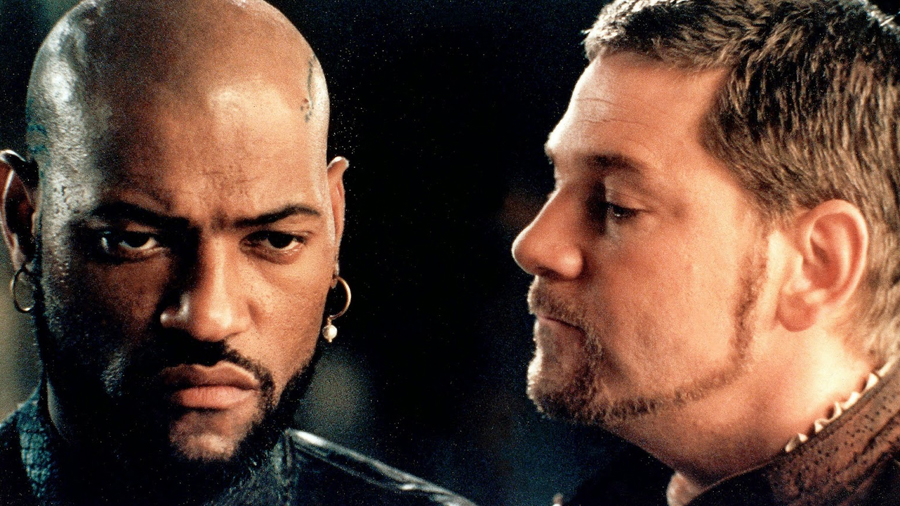
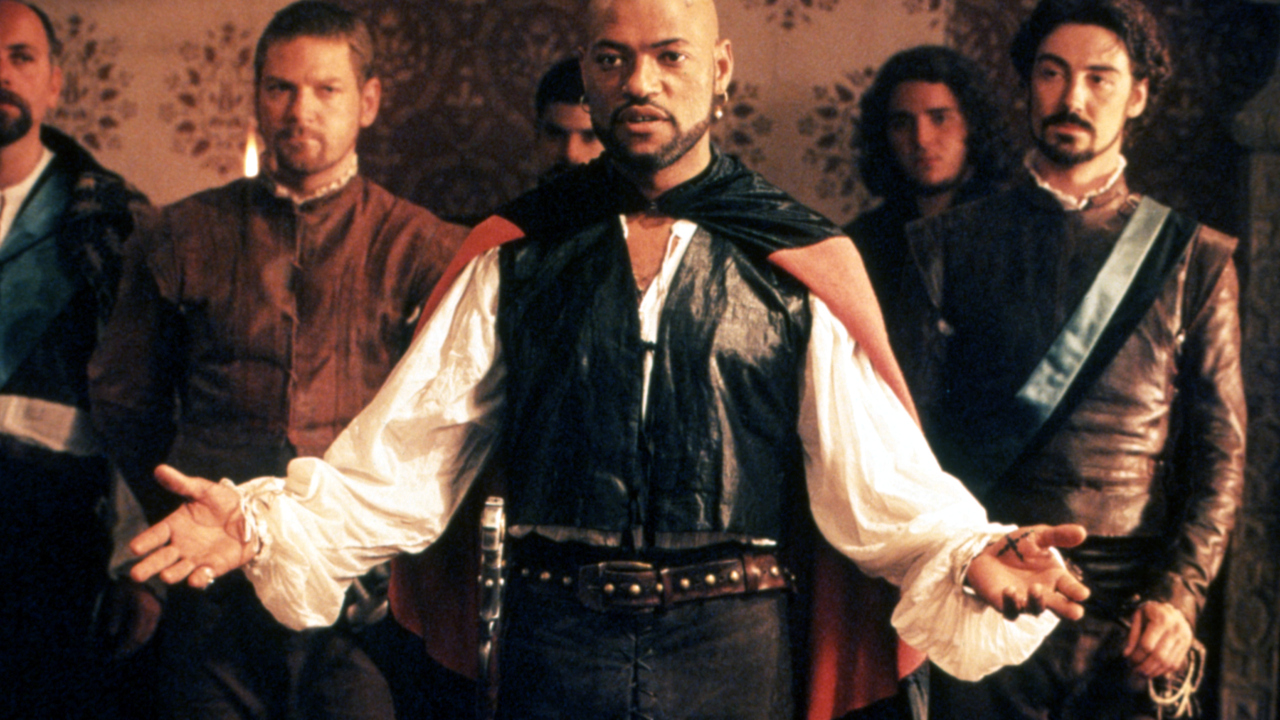
Othello (1995)

Laurence Fishburne falls foul of Kenneth Branagh’s schemes in this traditional but decent Othello adaptation

Director: Oliver Parker

Cast: Laurence Fishburne (Othello), Irène Jacob (Desdemona), Kenneth Branagh (Iago), Nathaniel Parker (Cassio), Michael Maloney (Roderigo), Anna Patrick (Emilia), Nicholas Farrell (Montano), Indra Ové (Bianca), Michael Sheen (Lodovico), Gabriele Ferzetti (Duke of Venice), Pierre Vaneck (Brabantio)

Othello is perhaps one of the most famous tales of betrayal and jealousy ever written. And yet Shakespeare’s tale of the noble general who descends into murder when convinced by his trusted ensign Iago that his wife is unfaithful, hasn’t often been made into a film. This is probably because its lead role requires a black actor and – for depressing historical reasons – most films aren’t considered good investments without a famous white actor in the lead (of course this has also been the case on stage). So we’ve had blacked-up performances from Orson Welles, Laurence Olivier and Anthony Hopkins – but this was the first proper adaptation of the play with a black actor in the lead role.

As the two leads, Laurence Fishburne and Irène Jacob are a mixed bag. Fishbourne has all the dignity and statue of the great general, and he brings a muscular physicality to the role which really works. He has a wonderful timbre to his voice and he handles the disintegration very well. He does sometimes feel a little hidebound by the language – treating the dialogue with a little too much reverence – but he’s the most believable Moorish general (for many reasons…) you’ve seen on screen so far. Jacob has greater difficulties – although many of these I think are due to this being her first film in English (talk about jumping in at the deep end) – and attempts to make Desdemona a free-spirit don’t really work that well.

Oliver Parker claimed he wanted to cast actors who weren’t associated with Shakespeare. Bizarre then that his cast is rounded out by Kenneth Branagh, the actor perhaps more associated with Shakespeare than anyone else alive. But then I guess when you can get Branagh in your movie, you aren’t going to say no. And it’s great he did, because this might just be one of Branagh’s finest Shakespearean performances: as if not also directing the thing (although many people mistakenly think he did!) freed him up to just focus on his performance. (It’s unfortunate for the other two leads that Branagh’s skill with both Shakespearean dialogue and performing it for the movies also serves to point up Fishburne’s more traditional take and Jacob’s discomfort.)

His Iago is superb, and he plays the part just right, never tipping the wink during his scenes with various characters, but playing Iago totally straight and completely genuine. He appears to be a decent, kind, lovely guy to everyone: it’s only in those asides to the camera that we see his real self, although even here he treats us with just as much charm. His Iago is the sort of guy you’d go for a drink with – and then be shocked to hear he had smilingly bad mouthed you to all your friends. Branagh also adds a homosexual undertone to the film, his Iago having incredibly mixed, repressed feelings about Othello: he seems genuinely moved when Othello makes him his lieutenant and a half twitch of regret crosses his face when the general dies.

Not that it stops him from being a bastard the rest of the time – and Parker does a very neat line in bringing the pivotal seduction of Othello to life on camera. On stage, Iago’s entrapment of Othello is a single, poison-dripping conversation – here, taking advantage of what you can do with film and editing, Parker spreads it over three locations: first a training-ground skirmish outside (where Othello bests Iago), then a sort of armoury changing room (where the outside is still visible), then finally a dungeon. As each lie gets more seductive, so Othello is literally dragged deeper and deeper into the castle. Then we get a neat flip: when he’s fully sold on Desdemona’s treachery, and begins raging and storming, we end up on huge open beaches or castle battlements, as if Othello has been reborn into a larger, refocused world.

This device smoothe out one of the problems with the original play – rather than Iago turning Othello against his supposedly beloved wife during one chat, the cuts from location to location (and different times of day) give the impression of a prolonged disintegration. Othello begins to get the first lines of each section, giving the impression that he has been dwelling on these lies in the interim, and that he is now the one bringing the subject back up, unable to stop prodding at it. It’s makes for a more convincing (and modern) psychological portrait of the corrosive triumph of jealousy than can be achieved in a traditional stage version.

The film has moments of invention – at one point Iago pours poison into Roderigo’s ear while they lie under a wagon where a couple are noisily rutting – and it does some really interesting stuff as mentioned with the “seduction” of Othello. Parker also throws in some expected cinematic tricks – so we get moments of Othello fantasising over Cassio and Desdemona together. But Parker’s not the most unique or challenging director, and he mostly shoots the film with a traditional straight forwardness, using a very traditional setting and editing style.

The film has other problems, too. Othello and Desdemona don’t have much chemistry between them, and Fishburne’s emotionally distant performance makes Othello harder to root for. Maybe this is just Branagh unbalancing the film – his Iago is so compelling, it throws off the film. Parker tries to make Desdemona a stronger character, but this doesn’t always work. Jacob’s slightly awkward tension with Shakespeare is part of this, but we also get the confusion of a Desdemona who fights for her life at the film’s conclusion and then strokes her husband’s head with affection as she dies.

Other performances don’t quite work. Michael Maloney is too overblown as Roderigo – though this Shakespearean wimp does at least get to genuinely threaten Iago and is slightly more convincing for the series of fights Iago puts him up to. Between them, the script editor and Anna Patrick turn Emilia, one of the play’s most intriguing characters, into a blank – she barely has a line in the first hour, and those she does have are delivered pretty blandly. Nathaniel Parker, though, is pretty good as Cassio (incidentally, Parker is of course the director’s brother, and Anna Patrick is the director’s sister-in-law – it’s a home movie!).

The main problem? As the play heats up to the final confrontations, the film slows right down. It’s hard to believe – as we enter Act 5 of the play – that there could still be half an hour of the film left, so snappy have the first four acts been. But the film dawdles and drags over the finishing line – and all the chase scenes of a desperately fleeing Iago can’t save it. For a film which has trimmed the play quite successfully into something sleek and fast-paced, it’s a shame that it drops all this for a wordy and over-played final half hour.

Of course Parker throws in decent moments: I like Cassio slipping Othello the knife he’ll use to kill himself. I really like Iago crawling his way on the bed loaded with dead characters, as if to try and force himself back into their story. The symbolism has been overplayed – and the image of two bodies buried at sea, water trails entwining, has been signposted far too often earlier – but these small moments work, even while the rest of the film’s conclusion drags. And maybe that’s because you don’t really care that much about Othello – he’s never seemed like a character easy to empathise with. And without that, the film can never completely work.

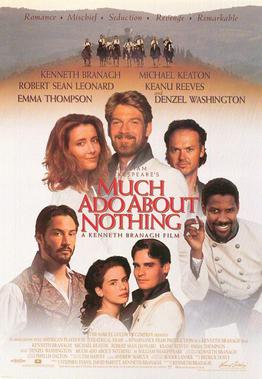
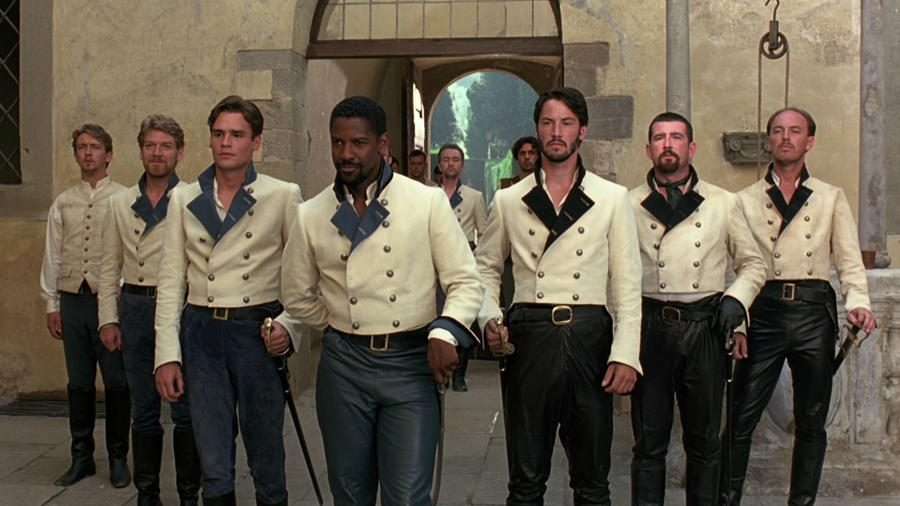
Much Ado About Nothing (1993)

Kenneth Branagh and Emma Thompson triumph in this brilliant adaptation of Much Ado About Nothing

Director: Kenneth Branagh

Cast: Kenneth Branagh (Benedick), Emma Thompson (Beatrice), Denzel Washington (Don Pedro), Michael Keaton (Dogberry), Keanu Reeves (Don John), Richard Briers (Leonato), Robert Sean Leonard (Claudio), Kate Beckinsale (Hero), Gerard Horan (Borachio), Imelda Staunton (Margaret), Brian Blessed (Antonio), Ben Elton (Verges), Jimmy Yuill (Friar Francis), Richard Clifford (Conrade), Phyllida Law (Ursula)

Branagh’s Much Ado About Nothing was his second Shakespearean directing gig, but his fourth film – and it’s clear from the first frame what a confident director he has become. Much Ado is one of the best Shakespeare films ever made, and certainly the greatest film version of a Shakespearean comedy, largely because it’s not only charming and hugely enjoyable but also actually funny – a pretty rare feat for any filmed version of a Shakespeare comedy.

From the opening you pretty much know you are in safe hands. Branagh loves the vibrant excitement of cinema, and delights in bringing the meaning out of Shakespeare’s text. Both ideas are central to the opening of the film, with Emma Thompson’s luscious reading of “Sigh No More”, while the camera pans across a bucolically blissful Tuscan setting. This feeds straight into Beatrice’s playful banter with the messenger – and Richard Briers gives the first indication of the film’s attention to small character details with his “don’t go there” look when the messenger tries to correct Beatrice’s teasing defamation of Benedick. From there the film explodes into a triumphant Magnificent Seven style arrival of Pedro’s lords on athletic horseback (backed by Patrick Doyle’s inspiring overture), while Leonato’s household excitedly (in a typical Branagh tracking shot) prepare to greet them, before an overhead crane shot introduces the two groups meeting in a courtyard. Everything you need to know about the sort of film you are getting – and Branagh’s ability to marry the language of cinema with the language of Shakespeare – is right there.

Branagh’s setting of the play in a golden Tuscan villa is perfect for both its playful, relaxed, soldiers-back-from-the-war plot line and the heated romances and jealousies that fuel the plot. Is it any surprise feelings are running high in such a sultry and hot climate? The two worlds – the army men and the people of Leonato’s household – are immediately clear. And the setting communicates the film’s mood – fundamentally bright, sunny, cheerful. Kick back your heels, you are being taken on a high-spirited, exotic holiday.

In this playful setting, Branagh invariably gets the tone just right. Shakespearean comedy is so reliant on live audience reactions, on bouncing off the audience, that creating this on film without that live element is really difficult. Trust me, watch any number of BBC Shakespeare comedies (don’t worry I’ve done it for you) and you will see immediately how hard it is to get that bounce and comedic juice out of these shows. Branagh gets it spot on here – the characters are so likeable, the delivery of the actors so assured, the spirit of the film so light yet perfectly controlled, that the comedy lands nearly every time. Above all, the actors look like they had a whale of a time making the film – and that enjoyment completely communicates to the audience.

The gulling scenes of both Beatrice and Benedick are expertly played and hugely entertaining: Branagh skilfully cuts them to fast-paced essentials, and then gets the best possible comic mileage out of them – from skilled cut-away shots for reactions to wonderful ensemble playing (Briers in particular is superb as a Leonato slightly out of his depth in trickery). It’s easy for the Beatrice gulling scene to fall a little short after the Benedick one – but, largely thanks to Emma Thompson’s excellent performance, that certainly doesn’t happen here.

But Branagh understands Much Ado is not just a comedy: it comes perilously close to being a tragedy. For at least an act of the play, our heroes are at loggerheads, and murder and death are almost the end results. From Claudio’s explosively violent reaction to Hero’s perceived betrayal at the wedding to Leonato’s furious denunciation, horror and danger are ever-present. This then leads us into Beatrice and Benedick’s wonderful post-wedding. Branagh sets this in a small chapel – adding an echo of marriage vows to the understanding the pair reach – and Thompson’s passion, fury and pain are met (for the first time) with quiet, mature understanding from Branagh’s Benedick. Thompson’s order for Benedick to “kill Claudio” carries a fiery conviction that chills. It’s a brilliant scene.

A lot of this works so well because of the brilliance of the acting. Branagh is charming, very funny and mixes this with a growing emotional depth and maturity as Benedick. But the film belongs to Emma Thompson who is quite simply astounding as Beatrice – surely one of the greatest performances of the role you will catch. She is the soul of the movie, at turns playful, frustrated, joyous and consumed with grief and rage. She speaks the lines (needless to say) with absolute clarity and emotion, but even more than that her intelligence dominates the movie. You can’t take your eyes off her.

But this is a very strong cast of actors, the best mix Branagh got between Hollywood stars and his regular players. Denzel Washington is simply perfect as the noble but strangely distant Pedro (his moments of isolation at the close of the film are as touching as they are unsurprising). Richard Briers gives some of his best work in a Branagh film as a Leonato, moved to great emotion and feeling. Leonard and Beckinsale are perhaps not given huge amounts of interpretative depth, but are very lovable. Gerard Horan is very good as a swaggering Borachio.

It’s easy to knock Keanu Reeves but – aside from his untrained voice, which makes him sound duller and flatter than he actually is – his Don John is actually pretty good. As a physically very graceful actor he completely looks the part, and he glowers and fumes with all the intensity you could require – and after all, Shakespeare didn’t give Don John much more to do than that.

No the real problems with the production – and the parts that don’t work – are Dogberry and Verges. Now I can see what Branagh is trying to do here: the malapropisms of Dogberry’s dialogue are rarely, let’s be honest, that funny, and would work even less well on film. But the decision to make Dogberry and Verges a cross between Monty Python and the Three Stooges doesn’t really work. Michael Keaton is giving it his all here to try and get some humour out of this – but his straining for every laugh, combined with gurning over delivery, bizarre accent and physical over-complications, just deaden every single Dogberry scene. These scenes largely flop.

But it doesn’t matter when every other scene in the film works so damn well. And, however much you might drift away during the Dogberry moments, the rest of the film will capture your heart and mind every time. Filmed with a luscious richness and stylish confidence, this is a ravishing and flamboyant film that will never fail to entertain. By the time the final reconciliation has happened, and the house erupts into a joyous celebration party – filmed, with astonishing chutzpah, as a single take, staggering in its complexity, that covers close-up, tracking shot and huge crane shot – while Patrick Doyle’s score gives a swelling version of Sigh No More, you’ll be in love yourself. And if not – well look to yourself.

Macbeth (1971)


Francesca Annis and Jon Finch as the murderous Macbeth’s in Polanski’s dark Shakespearean adaptation

Director: Roman Polanski

Cast: Jon Finch (Macbeth), Francesca Annis (Lady Macbeth), Martin Shaw (Banquo), Terence Bayler (Macduff), John Stride (Ross), Nicholas Selby (King Duncan), Stephen Chase (Malcolm), Paul Shelley (Donalbain), Richard Pearson (Doctor), Diane Fletcher (Lady Macduff)

Roman Polanski is always going to be a controversial figure. If he wasn’t also a gifted film maker, his reputation would be even lower than it is. His life has been a parade of misfortunes and misdemeanours. Macbeth was filmed a few years after his wife, Sharon Tate, was brutally murdered by Charles Manson. Hard not to read something into the director’s decision to film Shakespeare’s most infamous murderer. Certainly it was hard for reviewers at the time to disconnect the two. Throw in the fact that the film was made by Playboy Productions’ short lived film-making arm (with Hugh Hefner as Executive Producer) and you’ve got a film ripe for a poor reputation.

However, Macbethis actually a dynamic, well-filmed, surprisingly textually savvy production of this shortest and most intense of Shakespeare’s tragedies. While there is no doubt that this very much Polanski’s personal vision of Macbeth, it’s a fascinatingly dark, grim and horror-inflected production that really gets to grips with the darkness at the play’s heart – and also with the slightly empty, little-boy-lost quality in Macbeth himself (until then a character seen on screen largely as the brooding thane, laid low by his evil wife).

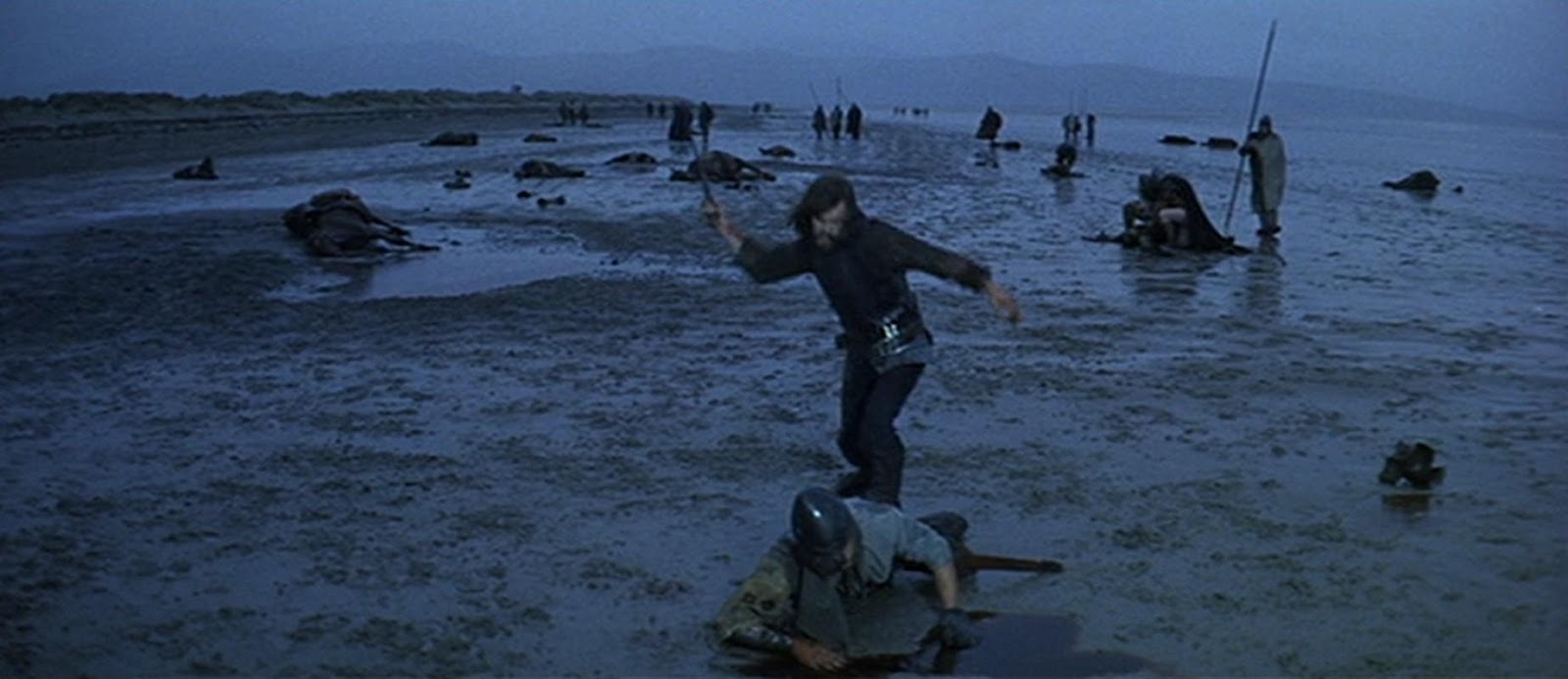
Polanski’s Macbethtakes place in a world where violence is second nature, life is cheap and grim slaughter is around every corner. One of the first acts we see is a soldier checking bodies on the battlefield. Finding a wounded soldier, he breaks his spine with two sickening blows from a flail. That’s just a precursor for the violent mood that will follow. Mangled bodies and bleeding corpses constantly appear, from Duncan’s guards to the twisted corpses of the Macduff children. Even when relaxing at the court, the Macbeths set up a bear baiting (kept off-screen) – the bear’s corpse (along with a few dogs) is later dragged through the palace corridors, leaving a trail of blood. 

Polanski’s Scotland is a savage, medieval, uncivilised place. Macbeth’s castle is a more like an elaborate farm, with wooden huts and mud-stained floors, than a mighty fortress. Every character looks swarthy, run-down and dirty. Colour has been drained out of the film in favour of muted greys and browns. There is precious little hope here, just a terrible onslaught of violence and murder that never seems to stop.

The brutality is constant, and Macbeth is up to his arms in it. Even the murder of Duncan doesn’t pass off without a hitch – the King awakens and has to be dispatched with panicked desperation. Banquo is finished off with a sickening axe thud in the back, his body dropping lifelessly into a stream. Even Macbeth’s faithful factotum Seyton is brutally lynched while trying to prevent his soldiers from deserting Dunsinane. The assault on the Macduff family is hideous in its fierceness: the house is burnt down, the servants (and its implied Lady Macduff) raped, while the children are brutally murdered (thankfully off-screen in most cases). It’s a harrowing slaughter that brings to mind World War II atrocities – and of course Polanski’s own recent tragedy. 

In this world, Macbeth is intriguingly presented as far less of a noble poetic hero than audiences at the time would have expected. Jon Finch’s Thane is low-key and lost, a puppet in the events happening around him. He’s almost like a slightly at-sea kid, who’s stumbled into power and has no idea what to do with it. His poetic soul is revealed as flashes of inspiration in an otherwise empty man. With many of the speeches internalised in voice-over, Macbeth’s sound and fury is deliberately toned down – by the end he seems weary and finished in a way few other Macbeths feel. His isolation throughout the play is complete – he’s incapable of relating to other people.

Similarly, Francesca Annis presents a fresher view of Lady Macbeth than a cartoon villain. While clearly still alluring (there was much controversial, Playboy-related, buzz to her famous naked sleepwalking scene) she’s equally as adrift as Macbeth is, totally unprepared for the psychological impact of murder. Excited and perhaps even a bit turned on by power, she falls apart as the impact of her actions grabs hold – it seems to be happening from the very start, her swooning when seeing the corpses of Duncan’s guards seems genuine rather than forced. Polanski even places her suicide on screen – her despairing leap accompanied by screams of terror from her waiting women.


In this grim world, there is a paganish, primitive feeling. Macbeth is crowned in a strange ceremony that involves him standing bare foot on the stone of scone. The Thane of Cawdor is executed by being hung by a metal chain (he defiantly jumps from the battlements rather than being pushed) while the court stares on. The witches are a crazed harem of naked women of all ages, engaged in bizarre, sadistic ceremonies in a secret subterranean den. The opening shot of the film uses a bright, bleached yellow sun that seems to stretch over a desolate coast-line, where the witches are burying a human hand clutching a dagger. Macbeth’s visions are a series of surreal and disturbing images, while Banquo’s ghost is an increasingly bloody and terrifying image as the scene progresses. There is a sense of strange powers hanging over everything.

And maybe that power is fate. This is also a fatalistic film, which runs with the theory that Shakespeare’s tragedies are almost circular in nature (very much inspired by Polish writer Jan Kott in his excellent book Shakespeare: Our Contemporary) with fate as a machine that traps people into an endless cycle of repetition. This feeling runs throughout Macbeth’s increasingly fatalistic disengagement with the world – the (excellent) sword fights at the end even see him fight with a certainty in advance of the results. The cyclical nature of this world is hammered home at the end, as Donalbain sneaks away from the celebrations of Malcolm’s crowning to consult with the witches in their hovel – hold onto your horses, the cycle is all set to begin again.

The film is also creative in its use of Shakespeare, in particular in its expansion of the character of Ross. Polanski and his co-screenwriter, famed theatre critic Ken Tynan, again followed Kott’s theories by repositioning Ross as the ultimate political opportunist. Helped by John Stride’s expressive performance, Ross is a constant figure of vileness, allying himself eagerly with whoever is on the rise. Ross assists in the murder of Banquo, murders the murderers and aids the destruction of the Macduff family. Overlooked for a chain of office in favour of Seyton, he swiftly reverses his stance and flies to Malcolm (much to Macbeth’s later fury) and then loudly leads the cheers for Malcolm’s crowning. It’s a neat side story, done with camera asides and no dialogue changes, but it adds a lot of interest to the film.

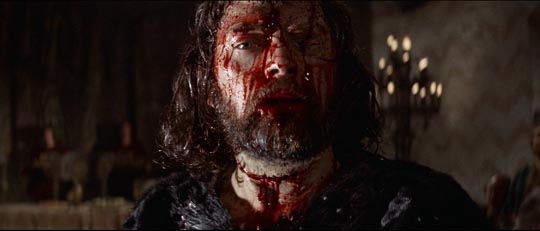
Macbeth ends with a gruelling beheading of Macbeth – and stylish angles gives the impression that we are experiencing Macbeth’s final moments of consciousness as his head is passed around Malcolm’s soldiers. It’s a neat way to end a violent and dark production of the play, shot through with Polanski’s personal awareness of the darkness of the human soul. The film sometimes loses its pace a little bit, and most of the performances leave very little impression – there is a reason why virtually no one in this film had a really established film career. Even the language of Shakespeare isn’t central here: it’s the experience of a brutal, dark and grim world that matters. It’s the images and visuals that stand out. It’s very much Polanski’s Macbeth.

Anonymous (2011)


Did the Earl of Oxford write Shakespeare (spoilers: No of course he didn’t.)

Director: Roland Emmerich

Cast: Rhys Ifans (Edward de Vere, Earl of Oxford), Vanessa Redgrave (Queen Elizabeth I), Sebastian Armesto (Ben Jonson), Rafe Spall (William Shakespeare), David Thewlis (Lord Burghley), Edward Hogg (Robert Cecil), Xavier Samuel (Earl of Southampton), Sam Reid (Earl of Essex), Jamie Campbell Bower (Young Oxford), Joely Richardson (Young Elizabeth I), Derek Jacobi (Himself), Mark Rylance (Henry Condell), Helen Baxandale (Anne de Vere)

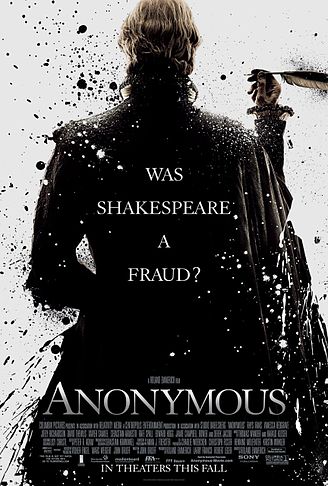
Many people would say that, for as long as there has been Shakespeare, there have been arguments about who wrote him. But that would be wrong. Because at the time everyone knew it was Shakespeare. Murmurings grew in the nineteenth century, but it’s only in our bizarre more recent times, when everyone wants to feel that they are smarter than anyone else, that conspiracy theories have taken hold. This film dramatizes one of the most famous conspiracy theories – and takes it to the bonkers extreme, chucking in royal incest, bastard claimants to the throne and blood purity, like it’s desperate to be some sort of poetry-circle Game of Thrones.

Edward de Vere, Earl of Oxford (Rhys Ifans) is a genius. He has written hundreds of plays, despite never (it seems) setting foot in a theatre. When he does one day, he suddenly thinks – hang about I should get these on the stage! Looking for someone to put their name to the work, he approaches a reluctant Ben Jonson (Sebastian Armesto) before credit is high-jacked mid performance by drunken dullard William Shakespeare (Rafe Spall). Oxford continues producing the plays through Shakespeare, carefully using them to influence the crowd to support the Earl of Essex’s (Sam Reid) campaign to succeed Queen Elizabeth (Vanessa Redgrave) and win her away from the influence of the Cecils (David Thewlis and Edward Hogg). 

It’s not often you get a film that is both a stinking, insulting piece of propaganda garbage, but on top of that is also a terrible film full stop. Anonymous is such a film. This mind-numbingly stupid, childishly idiotic film is probably the best case that Shakespeare wrote Shakespeare to come out of Hollywood. Because, after watching this film, you’ll sure as shit be convinced it wasn’t someone as tedious, pompous and arrogant as Edward de Vere, Earl of Oxford. Unbelievably Emmerich and co thought they were making a film that would reset the table of Shakespeare debate. The only thing that will need resetting will be your table after you’ve overturned it in fury.

Our film’s Shakespeare goes crowd surfing in an Elizabethan mosh pit. Seriously.

The Oxfordian theory is yet another garbage “alternative history” that puts forward a candidate claimed to have “really wrote Shakespeare”. The central conceit usually goes something like this: Shakespeare was from a middle-class background, grammar school educated, never travelled and generally lacked the academic chops to write the plays. He was simply too common to be a genius. Ergo someone super smart must have done so instead.

The Oxford theory was put forward at the turn of the last century by (and I’m not making this up) Thomas Looney (yes it is literally a Looney Theory). It argues that Oxford was well travelled, well-educated and known as a poet so must have written the plays and poems. Shakespeare was hired to put his name on the plays because it was too shameful for an Earl to write for the theatre. Of course this doesn’t explain why Oxford had the sonnets released under Shakespeare’s name while allowing his own (not so good) poems to circulate freely – but facts never stopped these people. Oxford also inconveniently died in 1604, before the likely composition (and first performance) of over a third of the plays, but again never mind eh? 

Anyway, I’ll get into the film in a second, but I’ll leave you with this. All contemporary evidence points to Shakespeare being the author of Shakespeare’s plays. All evidence we have indicates he was recognised as the writer by his contemporaries. The much vaunted travel knowledge rests on a few well-known city names and landmarks (who could possibly have known Venice had a bridge called the Rialto? Oh I don’t know, maybe anyone hanging out in taverns in international trading-hub London?) and includes howlers like Bohemia having a coastline and it being possible to sail between Milan and Verona. All evidence of research (far too hard work for the Looneys) into typography and the composition of the plays points to Shakespeare or at least that many of the works were composed after Oxford’s death. I would also add that the bollocks (which this film explores) of Shakespeare not spelling consistently is no great surprise when standardisation of spelling was still over 100 years away. Anyway…

The clueless bumbling playwrights of the time.

Anonymous is well designed. It’s well shot. There are some decent costumes. Rafe Spall is okay as a ludicrously crude, shallow and dumb Shakespeare. Nothing and nobody else emerges from the film with any credit. It’s got the intellectual rigour of a child. It understands virtually nothing about the Elizabethan state. It even turns Elizabeth I (played direly by Vanessa Redgrave and a little bit better by Joely Richardson in flashback) into a hormonal idiot, a sex-obsessed harlot banging out bastards left, right and centre while wailing about how much she needs the man she loves. Even its understanding of theatre is crap. It is crap.

At the forefront of this steaming pile of manure is Rhys Ifans, utterly mis-cast from start to finish as super-genius Oxford. Ifans is bland, disengaged and bottled up, his manic potential completely wasted. Oxford comes across as an arrogant arsehole, talking down to fellow playwrights, ignoring his daughter, soaking up vicarious adulation from the crowd as if it was his right, and merrily putting his full weight behind an agenda stressing government should be left to those born to it, rather than the nouveaux rich Cecils. If an unpleasant prick like Oxford was soul of the age, it’s just as well time has moved on.

This viewpoint is all part of the film’s charmless embracing of the Looney theory that the plays are all a carefully constructed pro-Essex, pro-elitist propaganda machine, designed to manipulate the masses into staying in their place. To make this work, the film plays merry hell with history. Because nothing works better for a film claiming to be “true” history than to change established historical facts to better fit its story. Essex is repositioned as anti-James VI of Scotland, while the Cecils are shown to be advocates for his succession from day one. It hardly seems necessary to say that this was the complete opposite of their positions. The film can’t claim to be telling us the “real story” while simultaneously changing events left, right and centre to better fit its agenda.

Historical fast-and-looseness continues with Elizabeth I. Needless to say, half the male cast are her children – Essex, Southampton and (of course) even Oxford. This allows for lots of icky sex as an unknowing young Elizabeth and Oxford bump-and-grind. Even without the incest, this scene would still be revolting beyond belief. If this film has any claim to fame, it will be remembered as the film where the Virgin Queen performed fellatio on young Oxford (a weaselly Jamie Campbell Bower, dire as ever) while he recited Shakespearean sonnets. I watched this with a group of friends and this scene was met by horrified mass shrieking.

Mother and son share a post-coital moment

The land of the Elizabethan theatre doesn’t fare much better. Shakespeare’s contemporary playwrights are, to a man, plodding mediocrities dumb-founded that a play can be written entirely in verse. Poor Ben Johnson (Sebastian Armesto struggling manfully with a terrible part) in particular gets it in the neck, Oxford haughtily telling him he “has no voice”. Shakespeare is not only an idiot, he’s also money-grubbing, illiterate and (the film heavily implies) even murders Christopher Marlowe when he “works out the truth”. 

But that’s the thing about this film: it really doesn’t give a shit about facts. By the time we reach the Essex rebellion and the film has changed the one categorical fact we have linking Shakespeare to the rebellion (his company performed Richard II privately for Essex’s friends the night before) you’ll have ceased to care. (The film substitutes Richard III instead and claims the hunchbacked king was created as a portrait of Robert Cecil – never mind that the character had already appeared in two plays by this point…) The Tower is the centre of some sort of all-powerful police state that alternates between scarily efficient and ludicrously incompetent depending on the demands of the script.

Amidst this firebombing of history, the film weaves its pointless conspiracy theory. So of course, Oxford is not only the greatest writer ever, but as Elizabeth’s son he’s also the true King of England. He is such a special snowflake genius, he’s even (in the film’s most stupid scene) shown writing and performing (as Puck) A Midsummer Night’s Dream aged 14. In a skin-crawlingly shite scene, Oxford searches for a play to give to Johnson while the camera pans along shelves of masterpieces he has casually knocked out. I would argue the plays have clearly been written by someone with an intimate understanding not only of theatre but the strengths and weaknesses of the company of actors originally performing them – but then this is a film that turns Richard Burbage into a harassed theatre manager, so what would be the point. By the end of the film, the announcement is made that all evidence linking Oxford to the plays will be destroyed and he will be forgotten. So you see the very fact that there is no evidence that this ever happened, is in itself evidence.

I realise I’ve not even mentioned the framing device of this film. The film opens in a Broadway theatre – and rips off the idea from Henry V that we are watching a play performance that becomes ever more realistic. Notable Oxfordian Derek Jacobi (playing himself) even narrates, neatly shitting on the memory of the same function he served in Branagh’s Henry. I love Sir Derek, but honestly a little of that love died during this film as he sonorously intones this lunatic nonsense. He’s not the only one of course – Mark Rylance (another believer) shamelessly pops up for a cameo. Needless to say, at the end of the “performance” the crowd in the Broadway theatre leave in stunned silence. I like to think that, rather than having their perceptions of the world shaken, they were just stunned such an epic pile of fuckwitterey garbage made it to the stage.

Oh Sir Derek. How could you? How could you?

Or the screen for that matter. This is a dire, stupid film, poorly acted and woefully directed by a tone deaf director. Roland Emmerich, hie thee back to disaster porn! Everyone in it is pretty awful, the script not only stinks, it makes no sense, half the scenes are borderline embarrassing. Even if it wasn’t about a pretty distasteful Shakespearean authorship theory, this would still be a truly terrible film, a narrative and performance disaster. The only good thing about it is, the film is so bad, its conspiracy theory so unbelievably ludicrous, its fast-and-looseness with history so plain that, far from re-setting the table for Shakespearean studies, it seems to have fatally holed the Oxfordian theory below the water line. It’s offensive because it wants to peddle its bizarre agenda as true history, while simultaneously changing the historical events at every opportunity. Just fucking awful.

Love's Labour's Lost (2000)


Shakespeare meets Musicals in Kenneth Branagh’s Love’s Labour’s Lost

Director: Kenneth Branagh

Cast: Alessandro Nivola (King Ferdinand of Navarre), Alicia Silverstone (Princess of France), Kenneth Branagh (Berowne), Natascha McElhone (Rosaline), Carmen Ejogo (Maria), Matthew Lillard (Longaville), Adrian Lester (Dumaine), Emily Mortimer (Katherine), Timothy Spall (Don Armado), Nathan Lane (Costard), Richard Briers (Nathaniel), Geraldine McEwan (Holofernia), Richard Clifford (Boyet), Jimmy Yuill (Constable Dull), Stefania Rocca (Jaquenetta)

Love’s Labour’s Lost is one of Shakespeare’s lesser-known comedies. There is a reason for that – it’s simply not that good (it’s certainly the weakest Shakespeare play Branagh has brought to the screen). I’ve sat through some turgid, and terminally unfunny, stage productions of the play in the past – but this movie version presented something different, as Branagh plays fast and loose with the script and turns it into an all-singing, all-dancing musical, with only the barest sprinkling of Shakespeare dialogue.

LLL isn’t really about anything. The King of Navarre (Alessandro Nivola), invites his three best friends (Kenneth Branagh, Adrian Lester and Matthew Lillard) to join him in three years of academic study, during the course of which they will forsake all female company. Of course, no sooner than the deal is made but the Princess of France (Alicia Silverstone) and her three companions (Natascha McElhone, Emily Mortimer and Carmen Ejogo) arrive in Navarre. Will love blossom to prevent the plans of the King? You betcha.

It’s slight stuff. The play always feels a little bit unfinished – it ends with the lovers separated (or as the play puts it “Jack hath not Jill”) but with hints of hope. It’s oddly structured – more like the first part of a series of plays than a standalone (the lovers don’t get together until almost Act 4, and the men and women spend very little time together). There is a series of dull sub plots revolving around the academics of Navarre, with whole scenes made up of obscure Latin jokes. As the icing on the top, a clown and a foppish Spaniard form a bizarre love triangle with a busty country wench. None of these plots is really resolved at the end. It’s a play that focuses a lot more on floral dialogue and intricate poetry rather than narrative.

Branagh addresses a lot of these problems by simply trimming the play to the absolute bone. I would guess at least 65% of the dialogue has been cut – probably more. Although this means some roles are now so small they feel like sketches (in particular many of the more working-class characters and academics), it does mean that this has a bit more narrative thrust and energy than most productions. Moving the setting to 1939 also gives a good context to the play, and places the political issues into an understandable context. It also gives a tension to underlie the lightness of the rest of the play. Branagh manages to remove most of the cumbersome exposition dialogue by replacing it with a series of 1930s-style cine-news reels (spryly voiced by Branagh himself). He even resolves the “cliffhanger” ending of the play with a similar device (reflecting the tonal shift at the end of the original play), which helps to ground the otherwise lightweight play in a very real world, where war carries a cost.

Of course, the main invention was to replace the intricacy (and obscurity!) of some of the dialogue with song and dance routines. The songs are carefully chosen from the great musical composers of the 1930s and 40s, and are delicately interwoven with the dialogue. Now for the purist this could of course be a source of fury, but when the material is one of the weaker plays, getting this “greatest hits” version of the text alongside some excellent songs works really well.

The song and dance numbers also have a certain charm about them. Most of the cast are not especially talented singers and dancers – only Nathan Lane and Adrian Lester have song and dance experience (and it certainly shows when Branagh allows them to let rip). The actors went through an extensive “musicals boot camp”, which certainly taught them the steps, but the musical numbers still retain a charming amateurishness about them. Sure it helps a truly gifted dancer like Adrian Lester stand out, but it’s also quite sweet to see actors like Richard Briers tripping the light fantastic. (Check Lester out at around 3:10 in the video below).

The real issue with some of the actors chosen is less with their song-and-dance strength, but that their acting strength doesn’t quite cut the mustard. Branagh’s delivery and comic timing is spot on, and McElhone is a worthy adversary cum love interest for him; but Nivola and Silverstone are a little too out-of-their-depth to bring much more than blandness to their key roles. Amongst the supporting roles, Nathan Lane stands out in making Costard actually quite funny, but Lillard mistakes gurning for wit. Mortimer and Ejogo are engaging but have precious little screentime.

The film is shot with Branagh’s usual ambition on a set that has a deliberate air of artificiality about it, evoking the classic 1930s studio musical. All exteriors deliberately feel like interiors, and there are homages aplenty, from Singin’ in the Rain to Ethel Merman. Each musical number has its own unique feel and the majority are shot with Branagh’s usual love of long-take. Some of the numbers stick in the head longer than others – but that’s just the nature of musicals. Particularly good are I Won’t Dance, I Get a Kick Out of You, I’ve Got a Crush on You, Cheek to Cheek and a steamy tango to Let’s Face the Music and Dance.

LLL doesn’t want to do anything more than entertain – and sometimes it probably tries a little too hard to be light and frothy, as if Branagh was consciously kicking back after the mammoth undertaking of his uncut Hamlet. Perhaps that is why LLL appealed to him – Shakespeare comedies don’t get less treasured or more inconsequential than this, so he had total creative freedom to do what he liked, in a way that a Twelfth Night or a Much Ado About Nothing wouldn’t allow him. It’s the sort of film you need to plug into the mindset of – and some aren’t going to be able to do that. It’s not a perfect film, but the lightness Branagh handles things with pretty much carries it through.

Perhaps that lightness however is slightly the problem: in Branagh’s previous films he found a perfect mixture between influential reimaginings (Henry V), wonderful crowd-pleasers (Much Ado) and reverential labours of love (Hamlet). People probably expected something else from him than a high-budget, lightly amateur musical with precious little Shakespeare in it. I think this partly explains the hesitant response this has received from the public and critics since: it’s just such an unlikely ideal that people didn’t seem to know how to respond to it.

Of course, as anyone who has sat through an average production of the play can tell them, they weren’t missing much from what has been cut – and this is still an infectiously funny, frothy concoction. It may have a slightly mixed acting bag – some of the leads are underpowered, while some strong actors like Timothy Spall are underused – but the actors do seem to be enjoying themselves, and this enjoyment basically communicates to the audience. It’s not a concept that could have worked with a long running time, but it sure works for the short term. It’s an odd concept – and it was a huge box office bomb – but it’s one that works.