Tag: Sharon Stone

Basic Instinct (1992)

Basic Instinct (1992)

A sensationalist hit, this Trashy Hitchcock-pastiches looks very pleased with its own naughtiness today

Director: Paul Verhoeven

Cast: Michael Douglas (Detective Nick Curran), Sharon Stone (Catherine Tramell), George Dzundza (Detective Gus Moran), Jeanne Tripplehorn (Dr Beth Garner), Dorothy Malone (Hazel Dobkins), Denis Arndt (Lt Philip Walker), Leilani Sarelle (Roxy Hardy), Bruce A Young (Detective Sam Andrews), Chelcie Ross (Captain Talcott), Wayne Knight (Assistant DA John Correli), Stephen Tobolowsky (Dr Lamott)
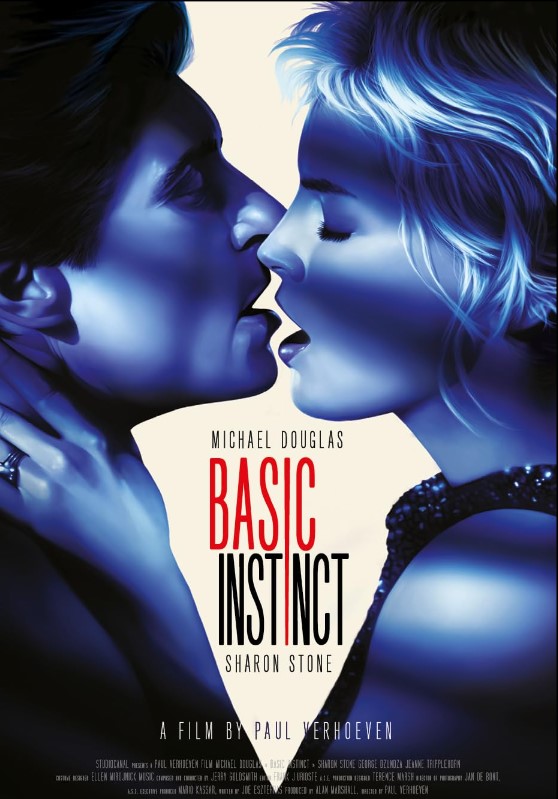
If there is one thing Basic Instinct proves for sure, it’s that Paul Verhoeven is a very naughty boy. A sensational smash hit in 1992, largely because of the instant iconic status of that scene (you know which one), Basic Instinct remixes Hitchcock (especially Vertigo and Psycho) with lashings of explicit sex and violence, a touch of The Silence of the Lambs and a dollop of Fatal Attraction. It’s a deeply silly, dirty film that was a sort of Fifty Shades of its day: vanilla porn for those who feel too self-conscious to actually go and watch a real one.

Catherine Trammell (Sharon Stone) is number one suspect for the murder of her boyfriend (or rather as she describes him “the guy I was fucking”) for two reasons: one she published a novel a few weeks earlier where she explicitly described the crime in detail and two she’s an obvious Hannibal Lector-ish genius psychopath. Doesn’t stop weak-willed detective Nick Curran (Michael Douglas) from becoming obsessed with her, sucked into a wild sexual affair. But is Catherine a misunderstood unlucky victim, or the genius manipulator her old college rival Dr Beth Garner (Jeanne Tripplehorn) – also Nick’s on-and-off girlfriend and psychiatrist – says she is?

Basic Instinct was the most expensive script ever sold, earning Joe Eszterhas $3million for what he claimed was fourteen days’ work. And you can see why – it’s got everything audiences could need for an addictive, trashy bit of fun. A femme fatale who is also a genius psychopath! A handsome macho cop! Brutal murders! A puzzle interesting enough to keep ticking over but obvious enough that you don’t need to think about it too much! And of course, lots and lots and lots of sex! And then even more sex! No wonder people saw dollar bills – at the very worst they had a chance at a so-bad-its-good box office smash.

But the good stuff. Basic Instinct’s comic-book Hitchcock pastiche actually works rather well, helped enormously by a marvellous Oscar-nominated score by Jerry Goldsmith, which brilliantly channels Bernard Herrmann’s luscious Vertigo strings. It’s no exaggeration to say Goldsmith’s score dramatically improves the film, from adding tension to a drawn-out elevator trip to adding a film noir lyricism to Catherine and Nick’s rather forced sexualised banter. Verhoeven also really knows his business: the film’s famous interrogation scene works as well as it does through his skilful editing between wide angles, close-ups and POV shots, aided by the striking uplighting from cinematographer Jan de Bont.

That scene – and the film – also works because of Sharon Stone. Taking on a role turned down by almost every single woman in Hollywood, Stone seizes hold of a part she knew was a once in a lifetime opportunity. Nick may be the lead – and Douglas, in the middle of his run of weak modern American men bewitched by strong women, may have been the high-paid star ($14 million to Stone’s $550k) – but both knew this was Catherine’s movie. Stone plays the role with a playful, sensual confidence and arrogant defiance, knowing full well she can seduce anyone. Despite the clunky dialogue, she makes Catherine sexy, smart and just about vulnerable enough to make some viewers doubt whether she’s the killer or not. (I mean she blatantly is, the film doesn’t really try and pretend otherwise. Most of the fun is seeing how shamelessly she can parade it and still get away with it.)

Away from that though, Basic Instinct is a terribly silly film, a well-made pandering to our lowest desires. Opening with an extremely graphic post-coitus stabbing frenzy (with blood spray everywhere and a nose skewered by an ice pick) – it then teases us three times that it will repeat this again after nearly every explosive session of rumpy-pumpy. Ah yes, the rumpy-pumpy. Basic Instinct slows at the half-way mark for an almost five-minute extended multi-angled, orgasm packed bit of horizontal jogging that Nick then rather pathetically spends most of the rest film bragging about being “the fuck of the century”.

But then Nick is a pathetic figure. Somehow keeping hold of his badge, despite gunning down two tourists while high on cocaine, he’s got such an addictive personality he makes Lloyd Bridges’ (“I picked the wrong week to quit sniffing glue!”) air traffic controller in Airplane look like a model of restraint. After internal affairs-mandated therapy (how’s that for a slap on the wrist) – hilariously compromised by Jeanne Tripplehorn’s Dr Garner crossing all ethical lines by repeatedly shagging him – Nick has proudly quit drugs, drink, smoking, and shooting before asking questions. Needless to say, under Catherine’s influence, he embraces all of these again, all while still managing to be the sort of middle-aged loser who wears a pullover to nightclub.

Eszterhas’ script mixes awful “tough” dialogue (“Looks like he got off before he got offed” Nick’s partner jokes over a victim) with clumsy psychological insight (my favourite is Tobolowsky’s consultant who confidently states two options: Trammel either did or didn’t do it – inevitably this childishly empty insight is met with the manly ‘tecs muttering “In English Doc!”) and blunt statements of the obvious (“She’s brilliant! And Evil!” screams poor Tripplehorn). The flirty banter is largely sold by Sharon Stone’s confidence, since the lines (“I’m not wearing underwear”) are hardly Double Indemnity. The film’s mystery is so irrelevant to its appeal (and, in many ways, plot), it merrily gets bogged down in several off-screen murders of characters we’ve never met.

Today Basic Instinct feels like a bizarre museum piece. George Dzundza’s sidekick cop is intended as comic-relief but comes across like a little ball of toxic masculinity. An early sex scene between Nick and Beth is pretty much impossible to watch today without thinking “yeah that’s rape”. The film uses bisexuality (though we only, of course, get girl-on-girl – Douglas made it clear he ain’t gonna kiss no man) as raw titillation, an entre for the soft porn of Douglas and Stone noisily going at it for about 10% of the film’s run time. Even the famous scene is uncomfortable to watch, since Stone has since made it clear she didn’t consent to that shot.

Basic Instinct is a deeply silly piece of trash. But then that was its appeal back then – no one felt they were actually watching Hitchcock when they sat down to this rip-off of the master (in fact Basic Instinct makes you feel it’s probably a relief the production code meant Hitchcock couldn’t give into his Verhoevenish instincts). Today most like to think of it as a sort of well played card trick. However, it’s hard not to feel a bit for Sharon Stone to whom it became a millstone (which she eventually exploited for a terrible belated sequel for which she pocketed $13.5million), despite being the person possibly most responsible for its success. So maybe Nick won in the end after all.
Casino (1995)

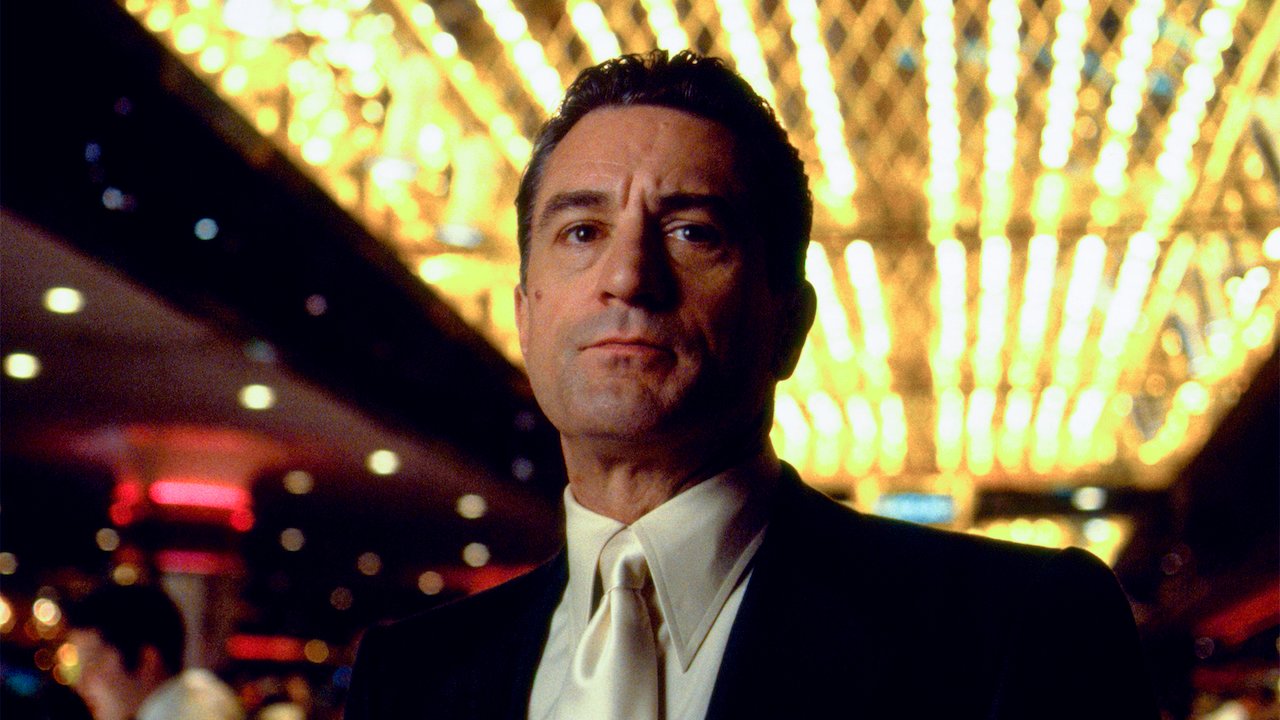
De Niro gets sucked into temptation and vice in Scorsese’s Casino

Director: Martin Scorsese

Cast: Robert De Niro (Sam “Ace” Rothstein), Sharon Stone (Ginger McKenna), Joe Pesci (Nicky Santoro), James Woods (Lester Diamond), Don Rickles (Billy Sherbert), Alan King (Andy Stone), Kevin Pollak (Philip Green), LQ Jones (Pat Webb), Dick Smothers (Senator), Frank Vincent (Frank Marino), John Bloom (Don Ward)

Scorsese’s Casino often gets overlooked in the master’s CV. Marking his first gangster film since Goodfellas, Casino is a very different film, a sort of combination history lesson and slice of violent gangster interplay, in which Las Vegas first gives these gangsters all their dreams coming true before chewing them up and spitting them out like all the other hopeless gamblers. And in doing that, it’s a perverse sort of nostalgia for the little guys being allowed to run the show – even if they did that by putting heads in vices – before they were shunted out by the even more ruthless efficiency of the mega-corporations. Because a world like Las Vegas only makes it easier for basic greed and personality flaws to take hold and ruin everything that’s good.

Sam “Ace” Rothstein (Robert De Niro) is a gambling and odds fixer, a man so expert at what he does and how he does it, so skilled at working the odds to spin out a profit for the Mafia, that the Chicago mob hires him to run their casino in Las Vegas. Rothstein turns the casino into the ultimate money making machine, understanding the odds of every bet and squeezing money out of every pore of the operation. While Sam takes care of the money, childhood friend Nicky Santoro (Joe Pesci) handles the other side of the Mafia business – increasingly abusing his position to make his own fortune on the side. Sam is further undermined by the only “against the odds” bet he ever made in his life: falling in love with Ginger (Sharon Stone), a selfish, self-destructive former hooker who is happy to take Sam’s money but will never offer him the love he craves. Disaster awaits.

Part of the reason perhaps why Scorsese’s Las Vegas epic (and the film is nearly three hours long) doesn’t have the warm regard of many of his other films is its focus on an intricate – although fascinating – explanation of how a Las Vegas casino operates, and the film’s reliance on voiceover to convey a vast amount of backstory, personal motivation and character insight. The opening hour of the film is almost entirely narrated (largely by De Niro and Pesci, although other characters occasionally intrude), as Scorsese shows exactly how a mob-skimming operation works in a casino, as well as nearly every detail of its operation, from day-to-day workings to dealing with cheats. The mechanisms of Las Vegas – along with its corruption, violence and blatant theft – are what fascinates the film. These sequences are assembled with the expected grace and skill of Scorsese and his regular editor Thelma Schoonmaker, but they lack the emotional connection of Goodfellas.

In fact, Casino might almost be some sort of tribute to silent film, so much of it is images accompanied alone by voiceover and well-chosen pop songs. It’s a film where imagery is all, with the camera prowling along the red-lined interiors of the casino itself (where daylight never intrudes), or lovingly following the progress of coins from slot machines to counting rooms to bags stuffed with cleaned bills for gangsters to carry away to their masters. It all makes for a rich and fascinating social history, even if you do feel slightly distanced from it by its near-documentary style voiceover.

But then, this voiceover does allow for a surprisingly rich character study once you plug into it. With the design stressing the demonic red-lined rooms and lights of Las Vegas – and the Saul Bass designed title sequence of a man falling through flames into a neon lit underworld – the idea of this place as some sort of hell is there all the way through. This context allows us to see three characters who are corrupted and destroyed by the pressures and temptations of five years running an operation in America’s capital of temptation and excess. And as the film goes on, everything gets bigger, from the garish colours and clothes to the music to the increasingly graphic violence.

And this film is astonishingly violent. Heads are placed in vices, people are brutally murdered by everything from pens to baseball bats, hits happen with a gruesome immediacy. And the person carrying out most of these acts is Pesci, a demonic imp lacking any sense of charm. Pesci retreads his role from Goodfellas, but even worse if possible, a man for whom violence is as second-nature as breathing. 

It makes a neat contrast through with De Niro, who dominates the film (and either appears in or narrates almost every minute). It’s one of De Niro’s calmer, most reflective performances ever in a Scorsese picture (arguably until The Irishman). He’s a quiet, meticulous, fastidious professional gambler, who never takes a chance professionally but takes huge gambles with his personal life. De Niro brings the film a calm centre, and the precision of a man who both loves what he does but is so obsessed with making things perfect he gets no pleasure from it. Unlike many De Niro roles in Scorsese, Sam is the closest you can see as a regular guy, someone who works in a world of theft and violence but sees that as a cost of doing business rather than a career choice.

It’s why he remains sympathetic, despite the destruction around him. Perhaps also helped by his simply appalling wife. Sharon Stone gets her finest part ever (she received the film’s only Oscar nomination, for Best Actress) as the self-destructive, greedy addict Ginger who doesn’t want to change anything about her life and marries Sam solely for his money, but continues her relationship with her pimp Lester (a sleazy James Woods) and snorts cocaine in front of her five-year-old daughter. But Sam takes the chance because he loves her – and this Jewish outsider, who moves in circles of Italian mobsters and Southern societies that control the state, wants nothing more than to be loved and accepted. It’s what keeps him close to Nicky – for all his horrific impulsiveness – because Nicky is the closest thing he has to a genuine friend.

It’s a theme that runs throughout the whole film. The Mafia allowed its “street” operatives to run this operation in Las Vegas – and would never allow such regular soldiers such power again – and Las Vegas itself closed its doors to these more “independent” operators in the future to give the riches to corporations and insiders. It’s part of what makes Casino such a fascinating history lesson – this is the Las Vegas we all kind of think of, dirty, corrupted and sexily run by gangsters (even if the film makes clear that these guys would crush your head for looking at them the wrong way). But it’s now a circus, an entertainment ride.  Because our heroes here make the same mistakes as the guys that go through their casino – “the longer they play, the longer they lose”.

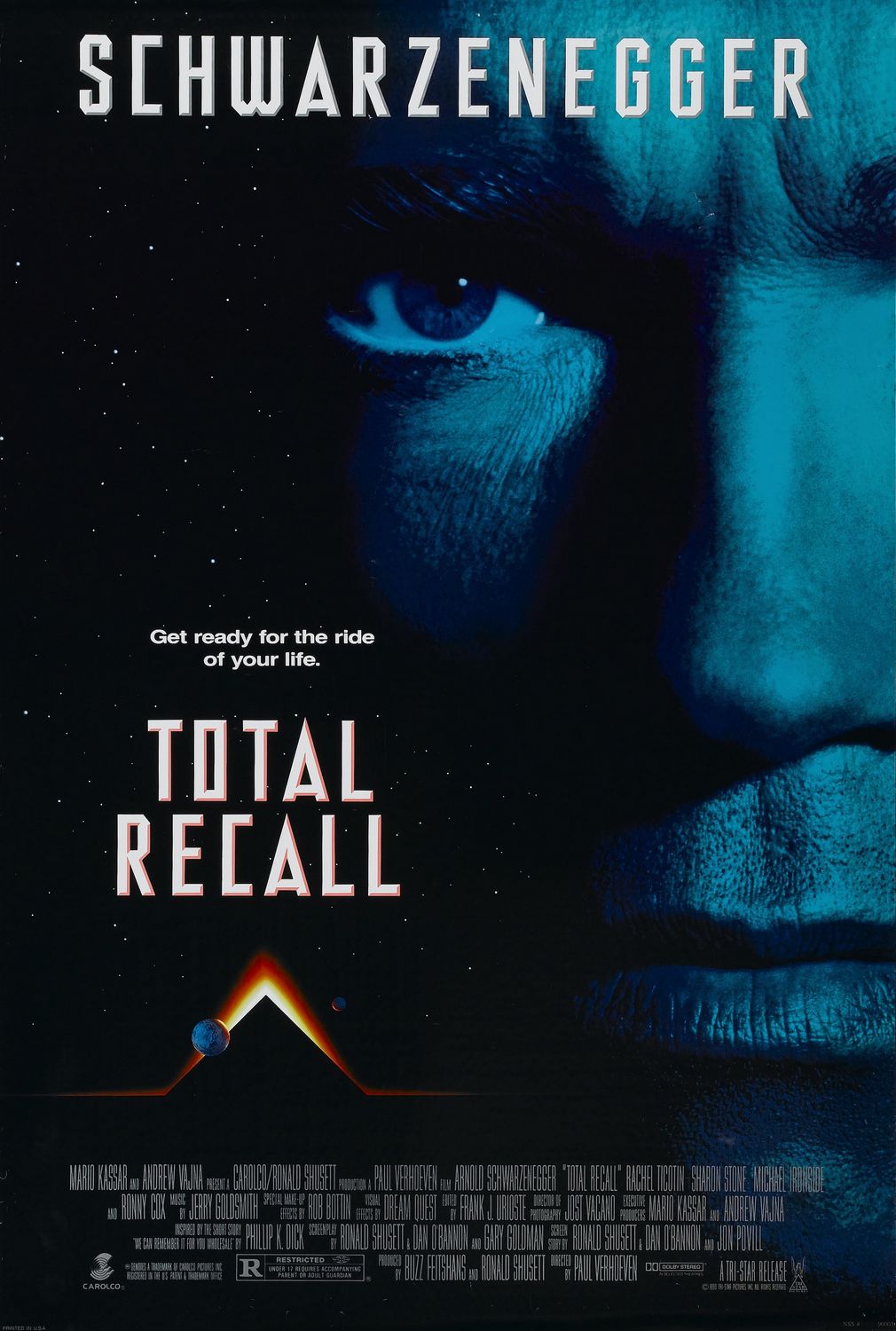
Total Recall (1990)


Arnold Schwarzenegger goes for a trip into his memories in Total Recall

Director: Paul Verhoeven

Cast: Arnold Schwarzenegger (Douglas Quaid/Carl Hauser), Rachel Ticotin (Melina), Sharon Stone (Lori Quaid), Ronny Cox (Vilos Conhaagen), Michael Ironside (Richter), Mel Johnson Jnr (Benny), Marshall Bell (George/Kuato), Roy Brocksmith (Dr Edgemar), Dean Norris (Tony)

Perhaps in 2084, they will look back on Schwarzenegger’s career and wonder what on earth we were all thinking. He was the figurehead of the 1980s fashion for muscle-bound leading men, defined more by physicality than acting ability. Since then, fashions have changed: movies are led by actors who go through hours of physical training, rather than weight lifters taking acting classes. Would Schwarzenegger be a star today? Quite possibly not: compare him to his nearest modern equivalent, Dwayne Johnson. Schwarzenegger doesn’t have an ounce of Johnson’s ability, wit or even charm. Would the world of Twitter embrace an often one-note performer with a paper thin range?

Schwarzenegger got where he was because, for all his lack of acting skill, he is a very clever man: he could spot a script and worked with people who got the best out of him. He turned himself into a brand: “Arnie” the pillar of strength, the master of the one-liner. It worked for films, it worked for politics. Which is all a long intro to say: in his best work, he put himself into decent roles in films from distinctive filmmakers, like Total Recall.

Total Recall is a semi-smart sci-fi action thriller, directed by Paul Verhoeven with his usual Dutch excess: part social satire, part wallow in extreme cartoonish violence and grotesque, Flemish-painting style imagery. Douglas Quaid (Arnie) is a construction worker in 2084, who dreams of escaping his humdrum life and visiting the Mars colony. He decides to visit Recall, a memory implantation centre which promises to give him memories of visiting Mars, with a twist: he’ll visit as a secret agent. However, the implantation reveals Quaid has hidden memories – he may in fact be rogue agent on the run, Carl Hauser. Before he knows it, everyone from his own wife (Sharon Stone) to a brutal intelligence operative (Michael Ironside) is hunting him with lethal force – and Quaid must head to Mars for answers about who he is.

Verhoeven’s sci-fi work adds a level of social satire to high concept stories. In Total Recall he mixes in his critical denunciations of big business and corporate ethics (also a major theme of Robocop) with an everyday acceptance of brutal violence that is so neck-breakingly, blood-spurtingly extreme in places it could only be social satire. Total Recall mocks our own ease with violence as entertainment, by setting itself in a world where the news broadcasts government troops machine gunning protestors (while a newsreader cheerily comments on the minimum use of violence), and the representatives of the Mars Corporation have literally no compunction or hesitation in inflicting huge numbers of civilian casualties in the crossfire.

A lot of this cartoonish violence spins out of the movie’s own playing around with the nature of reality. It leaves open the question of whether Quaid is really a spy in disguise, or if the film’s events occur only in his fractured brain suffering a terminal meltdown from an upload gone wrong. At Recall Quaid is promised his new fantasy memories will be full of action, he’ll get the girl and save the world. Needless to say he achieves all these things by the film’s end. Rachel Ticotin even appears on a screen in Recall as his “fantasy” woman. Is Quaid dreaming or not? It’s a question that is of more interest to viewers I suspect than the filmmakers (other than a few cheeky bits from Verhoeven), but it does tie in neatly with the almost dreamlike hyper violence Quaid dishes out: necks snapped, bodies spurting fountains of pinky red blood, dead bodies used as shields ripped to pieces by bullets. It’s all so extreme that it deliberately feels both not quite real and a mocking commentary on the bloodless action in other sci-fi films.

Schwarzenegger fits surprisingly well into all this. On paper, he’s completely miscast as an innocent discovering a hidden past, the future Governator anchoring a film with satirist leanings. But Verhoeven gets something out of Schwarzenegger in this film that works surprisingly well. Like James Cameron recognised, Verhoeven saw Arnie had a sort of upstanding sweetness amidst all the macho posturing. Arnie is surprisingly effective as Quaid, suddenly shocked at his capabilities for violence (as well of course or physically selling the action). Verhoeven taps into Arnie’s likeability (what other action star could sell “Consider this a divorce” as a punchline as he shoots his fake wife in the head?) and runs with it throughout the film.

As such, Schwazenegger makes a decent lead. It helps that he is willing to be a figure of fun at points. He wears a wet towel round his head to block transmissions. His face contorts ludicrously as he pulls an enormous probe from out of his nose. He infiltrates Mars dressed as an old woman. Most of this material fades away in the second half of the movie when Schwarzenegger reverts to the more typical heroic action (I suspect negotiations over the script shifted the film into a halfway house between a standard action movie and Verhoeven’s more satiric bent). But it’s all still there and helps humanise Quaid, so that we are on board with the slaughter he perpetrates later. Quaid is probably one of the best roles Arnie had – and Verhoeven does very well to fit a man so serious about himself into a world of self-parody. Saying that, the role is in some ways beyond Arnie’s reach – I’m not sure he is really plugged into or understands the dark comic tone of the movie, and he doesn’t really have the wit as a performer to do much more than deliver killer lines, certainly not to contribute to the dark satire Verhoeven is putting together.

As a whole the film doesn’t always deliver. Schwarzenegger seems at sea during scenes with his feisty, independent love interest played by Rachel Ticotin (this does her no favours, as her role hardly connects). Sharon Stone similarly has little chemistry with the Austrian Oak – although at least she has the second best role in the script as a vicious woman not afraid to use sex as a tool. The actual plot fits in nicely with the possibly dreamlike nature of what we are seeing, but the villain’s aims seem rather unclear, and the film lacks a strong enough antagonist (neither Michael Ironside or Ronny Cox have quite enough to make their thin characters come to life).

This plays into the film as being semi-smart: it’s a curious mix of smart and stupid. It’s got enough brains to poke a bit of fun at corporate America, and to make moral comments on our treatment of minorities (here represented by the mutants who inhabit Mars). On the other hand, it’s a schlocky action cartoon, that revels in ultra-violence while creating a world where, in universe, it is not considered extreme enough to comment on.

Total Recall is a fun movie that allows you to read more into it than is probably really there. Verhoeven peddles themes around the nature of reality, and introduces satiric comments on corporations and violence in the media that don’t hit home so heavily that they become wearing. I also have to say I like its empathy with the vulnerable and weak – the mutant resistance on Mars is engagingly grounded and humane, particularly in contrast to the ruthless heartlessness of Mars Corp. It’s not a masterpiece, but as a smarter piece of popcorn fun it works really well.

For Schwarzenegger himself, this was his final non­­-Terminator hit. Terminator 2 (a year later), an undoubted work of genius, was his high watermark. Three attempts since to relaunch the Terminator franchise (all with mediocre or worse directors), demonstrate Schwarzenegger’s awareness his time was fleeting and dependent on his roles rather than his skills. Total Recall was Schwarzenegger doing something completely different, to great success – but also one of his last hits-. His run of good scripts, and pulp premises, came to an end here – but it was a good end. California awaited!