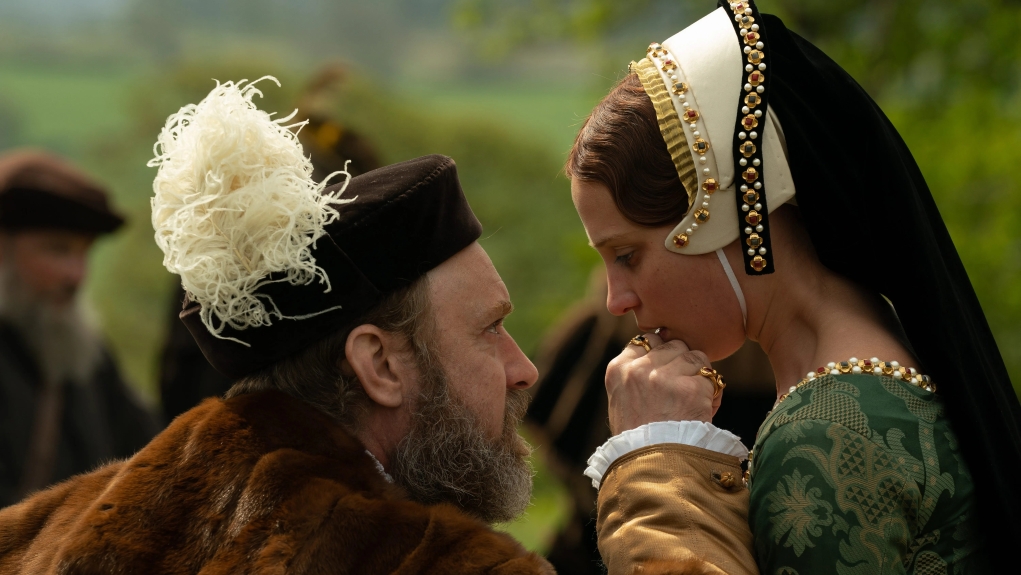
Tag: Simon Russell Beale

Firebrand (2024)

Firebrand (2024)

Atmospheric film attempts to redefine Katherine Parr, but fails to make a successful dramatic case

Director: Karim Aïnouz

Cast: Alicia Vikander (Katherine Parr), Jude Law (Henry VIII), Eddie Marsan (Edward Seymour), Sam Riley (Thomas Seymour), Simon Russell Beale (Bishop Stephen Gardiner), Erin Doherty (Anne Askew), Ruby Bentall (Cat), Bryony Hannah (Ellen), Junie Rees (Princess Elizabeth), Patsy Ferran (Princess Mary)

For years people had this muddle-headed idea that Henry VIII was a jolly fat-man with a charmingly eccentric habit of constantly marrying the wrong woman. In fact, this homicidal tyrant was one of history’s definitive arseholes, his hands scarlet red with the blood of anyone who annoyed him (including at least two of his wives). His last wife, Katherine Parr, is similarly often remembered as a dutiful matron than a dynamic and intelligent woman (who wrote a book on theology and ruled as regent for several months).

Firebrand is a noble attempt to challenge that narrative, drawing focus towards Katherine Parr’s (Alicia Vikander) zeal for religious reform and the near-fatal attention it brought her from the hard-core traditionalists around Henry VIII (Jude Law) not least Bishop Stephen Gardiner (Simon Russell Beale). This reimagining of the final months of Katherine Parr’s marriage to the bloated tyrant tries its very best to reclaim her as a major figure in the founding of the Church of England and if, in the end, it doesn’t quite manage this, it’s still good to have Katherine reclaimed from history’s trivia corner – and links her closely to the eternally popular Elizabeth I (poor Mary remains a dowdy fanatic, played by a gloomy looking Patsy Ferran – feminist sympathy can only go so far.)

Aïnouz does give Firebrand a freshly claustrophobic and sinister feel behind the costume details (bringing the sort of outsider eye that Kapur bought to Elizabeth). It has an imposing, doom-laden score of moody strings and sudden, discordant noise, frequently presenting the English countryside not as lush environment, but misty place pregnant with unknown menace. It’s a fine mood setter for a land where reformist religious practices are ruthlessly suppressed by a religiously conservative king (Henry’s only interest in reform being what he personally could get out of it – in his case a divorce and a mountain of monastery cash).

In the candlelit gloom of the court, the capricious king makes life as unpredictable and dangerous as he is. Henry is accompanied everywhere by a group of fawning hangers-on, whose job is to whooping up the court to collapse into hysterics whenever the king says anything approaching a joke. The most effective thing about Firebrand is it’s presenting of a Henry VIII who is one part Harvey Weinstein to two parts Josef Stalin. Jude Law gives a masterclass in preening cruelty and psychopathic bullying, as man so used to getting what he wants even the slightest suggestion he can’t sends him into a spiral of spittle-flecked rage. Firebrand plays up his corpulence, the suppurating stench of his ulcers (Law, in method style, wore a cologne that stank of piss during filming) making this king a million miles from the broad-shouldered Holbein image.

Henry paws openly at attractive court ladies and delights in humiliating those around him. He uses physicality as a weapon of control, constantly grasping people by the fae or neck to draw them towards him. Law is superbly cruel and domineering, while being pathetically needy, demanding complete and total affection from his wife and yo-yoing between randy affection and assault if he doubts for a second anything other than her complete devotion.

If only the film was able to make as compelling a case for Katherine Parr’s undoubted qualities, as it does for the King’s negatives. Alicia Vikander has a hard job – Katherine is rarely, if ever, not under observation so must constantly hide her thoughts and emotions behind a stoic shield. But it’s a shield that partly deadens her performance. Firebrand only finds a few moments, at its start, for Katherine to truly be herself, in the presence of Erin Doherty’s passionate firebrand Anne Askew (whose Protestantism overlaps with a socialistic political view which doesn’t quite ring true for Tudor England).

Vikander and Doherty’s relationship is one of the film’s most interesting, with more than a hint of romance between these two reformers, one who has never compromised and another who compromised so much she literally married her persecutor. Aside from that, Vikander has to work hard to try and communicate her fierce commitment to reform behind her eyes – something that’s a lot harder than using her skill at telegraphic her hatred and fear of Henry. Her management of the king does provide moments of interest, notably a fascinating sequence when Katherine publicly humiliates a potential mistress in order to re-spark the king’s interest in her (Henry, like other egotists, liking nothing more than young women fighting over him).

But Firebrand struggles to translate Katherine’s religious views into either something politically compelling or dramatic. Instead, it largely resorts to working hard to tell usthat Katherine was a feminist icon, the inspiration for Elizabeth I and the true mother of the Church of England – rather than showing it. It also has to awkwardly rework the actual historical events to facilitate this.

As such, we have her roundly rejecting the advances of Sam Riley’s lecherously ambitious Thomas Seymour (in real life she immediately married him on Henry’s death – showing even intelligent people can fall for terminally selfish idiots), arrested, imprisoned and threatened with burning (in real life Katherine avoided this by publicly submitting utterly to Henry’s ‘superior’ judgement in all things religious) and an optimistic ending of her and Elizabeth planning a feminist protestant utopia (as opposed to Elizabeth’s affair with Seymour that permanently fractured their relationship). Firebrand ends with a paean to how Parr’s writing laid the foundations of Anglicanism, which feels quite a reach to make from one book.

Strangely however, the film’s biggest historical deviation of fact – her final solving of her Henry problem – despite being a clearly fictional flourish is surprisingly satisfying (not least because of the vileness of Law’s Henry) and manages to ring spiritually true for what a parade of people (and Katherine as well probably) would have liked to do to the murderous maniac if given the chance. But it’s also too little, too late in a film that otherwise is a little too dry, a little too lacking in narrative drive. For all it wants to build up the reputation of Katherine Parr, it gives Vikander far too little meaty content to really play with while ceding much of the interest to its wallowing in the cruelty of the king.

Benediction (2021)

Benediction (2021)

Davies’ final film is a beautifully made, deeply sad, exploration of the long-term impact of trauma

Director: Terence Davies

Cast: Jack Lowden (Siegfried Sassoon), Peter Capaldi (Older Siegfried Sassoon), Simon Russell Beale (Robbie Ross), Jeremy Irvine (Ivor Novello), Kate Phillips (Hester Gatty), Gemma Jones (Older Hester Gatty), Ben Daniels (Dr Rivers), Calam Lynch (Stephen Tennant), Anton Lesser (Older Stephen Tennant), Tom Blyth (Glen Byam Shaw), Matthew Tennyson (Wilfred Owen), Geraldine James (Theresa Thornycroft), Richard Goulding (George Sassoon), Lia Williams (Edith Sitwell), Julian Sands (Chief Medical Officer)

Few generations carried scars as deep as that which saw millions of their fellows mown down in the endless bloody slaughter of World War One. For us, whatever understanding of the horrors of that conflict we have is often filtered through the war poets, who fought in unimaginable conditions. Terence Davies’ final film explores the life of Siegfried Sassoon (Jack Lowden, ageing into Peter Capaldi) whose life never escaped the shadow of those terrible sights and awful losses.

Benediction is a sombre, mellow, deeply sad portrait of a man who spent a lifetime searching for something, anything to fill the void the war had left in him. Following Sassoon’s life in a series of tableaux-style scenes that mix poetry reading, period music, news footage with flash-forwards to the tetchy, weary older man he will become, it’s a sad, reflective work that presents memory as a sort of prison that consigns everyone to a life sentence. Davies catches this beautifully in his stately, melancholic film where survival guilt goes hand in hand with bitter regret at missed opportunities.

It opens with Sassoon’s protest against the war – denouncing its content from his first-hand experience. Saved from the possibility of a firing squad by influential friends (chief among them, Simon Russell Beale’s good-natured Robbie Ross) Sassoon is dispatched to an Edinburgh military hospital to “recuperate”. There he meets and falls in love with the sensitive, shy poet Wilfrid Owen (Matthew Tennyson), a love he is scared to confess. After Owen is killed, Sassoon commits himself to a series of romantic relationships with selfish, bitchy men including Ivor Novello (a marvellously supercilious Jeremy Irvine, whose eyes are stone cold) and the shallow, vain Stephen Tennent (Calam Lynch, full of Bright Young Thing smugness, turning into a lonely, tragic Anton Lesser). As an older man, he converts to Catholicism and struggles to understand his son George (Richard Goulding).

Davies’ film posits a Sassoon who never recovered from grief at the death of Wilfrid Owen and could never truly forgive himself for being too timid to express his feelings. Davies films Sassoon and Owen in scenes that sing of unspoken intimacy, from an overhead shot of a swimming pool dip that feels like a pirouette, to the matching body language they exhibit while sitting watching a variety show at the hospital. They laugh and dance together, but at parting Sassoon cannot move himself beyond a tightly clasped handshake and a whispered urge to stay a few minutes longer.

In discussions with his doctor and friend Rivers (a lovely tender cameo from Ben Daniels), Sassoon tearfully talks of his fear of expressing his own emotions. Perhaps this, coupled with his self-blame, is why Sassoon placed himself in so many relationships with such transparently flamboyant shits? Davies certainly seems to suggest so: Sassoon had less fear of “being himself” when he was with arrogantly confident men like Novello and Tennant. Did he also, the film suggests, feel so crippled with regret and survivor guilt, that he couldn’t believe himself worthy of the love of gentle, decent men, such as the Owen-like Glen Byam Shaw (Tom Blyth).

Sassoon becomes a man who can never fully escape the never-ending hurt of memories. Even as an older man, Davies shows Capaldi’s Sassoon sitting in his garden, the background replaced by news footage of slaughter in the trenches. It’s mixed in with the shame Sassoon felt at his “stand” against the war being, in the end, a moment that changed nothing. Davies further paints his poetry as declining post-war, as if parts of his creative life never survived the shocks he experienced.

And always he hopes something might make him whole again. Sassoon races through these false dawns during the film: relationships with men, marriage to Hetty (Kate Phillips as the younger Hetty is nearly as oppressed with unspoken sadness as Sassoon), the birth of his son – all fail to deliver. So as an older man – in a neat CGI transition during a 360 camera move – Davies transforms Lowden to Capaldi as he tries Catholicism (there is another wonderful cut that takes us from young Sassoon’s silver military cross being dropped into a river, that transitions into the grey-suited older Sassoon lying in a crucifix position on the floor of a church).

But the tragedy of Benediction – and there is no denying it’s a deeply sad and even slightly depressing film – is none of these attempts fill his soul. The older Sassoon – sharp, prickly and with a stare that goes on and on from Capaldi – snaps at things he doesn’t understand, cruelly dismisses the older Tennant and bitterly complains at the lack of recognition his later work received. He’s a man desperate for companionship, but comfortable only on his own.

It’s particularly sad having seen the brighter, passionate and warm man he was. Much of Benediction succeeds due to an exceptional performance by Jack Lowden. Lowden brilliantly conveys Sassoon’s lingering depression and loss under the surface of every interaction. The cheery wit that covers the self-loathing that leads him into destructive relationships and painful situations is as well captured as the self-deceiving optimism he had that everything could be different. Lowden ends the film with an extraordinary emotional moment – filmed in tight one-shot by Davies – where we see, one the last day of the war, his impossible burdens lead him to a single, quiet, emotional outburst of the vast reams of pain that then continued to burn inside him for the rest of his life.

Benediction is about guilt, loss, regret and denying yourself opportunities at happiness and joy through an internal determination that it is not for you. There is something profoundly personal in this – Sassoon’s life in this film, mirroring many of the regrets Davies spoke of in his own life – a fact increased by the heartfelt, gentle construction of the film with its melancholic air and rich sense of empathy for its subject. As a final work, it’s a fitting tribute to both the poet and its director.

The Outfit (2022)

The Outfit (2022)

Theatrical, twisty-and-turn filled thriller, with a very fine leading performance

Director: Graham Moore

Cast: Mark Rylance (Leonard Burling), Johnny Flynn (Francis), Zoey Deutch (Mable Shaun), Dylan O’Brien (Richie Boyle), Simon Russell Beale (Roy Boyle), Nikki Amuka-Bird (Violet LaFontaine), Alan Meddizadeh (Monk)

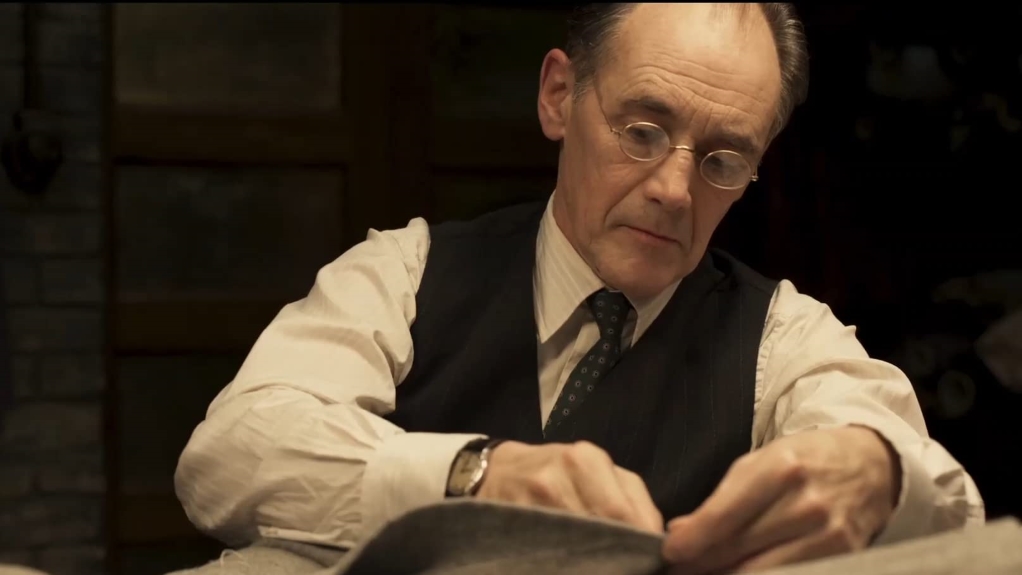
In the 1950s “English” Leonard Burling (Mark Rylance) has fled haunting loss at home to Chicago. A veteran of Savile Row, Leonard is a “cutter” (definitely not a tailor – that’s any fool with a needle and thread) who crafts tailor-made suits for the wealthy. But in Chicago, the wealthiest clients are also the most dangerous: the Boyle family, an Irish mob run by Roy (Simon Russell Beale) whose impulsive son Richie (Dylan O’Brien) hopes to succeed him – as does Roy’s enforcer Francis (Johnny Flynn). The Roys use Leonard’s tailor shop as a dead drop – Leonard scrupulously doesn’t want to know – and Richie is secretly dating Leonard’s shop assistant Mable (Zoey Deutch), who Leonard sees as a surrogate daughter. But, when the Roys discover they have a rat in their turf war with the LaFontaine gang, Leonard’s shop becomes the setting for one long night of cross and counter-cross, where Leonard will need to all his wits to survive.

The Outfit’s title has a double meaning – referring both to the obvious and the Capone-founded crime syndicate the Roy’s dream of joining – and that dual nature is a pointer to the film as a chamber piece where almost nothing or anyone is exactly as it seems. With all its action taking place within the confines of Leonard’s shop it means The Outfit best resembles a decent play. Certainly, it has a theatrical love for its tricksy structure of move and counter-move (perhaps a little too much) and gives rich, chewy dialogue relished by its cast of experienced theatre performers.

At its heart is a very fine performance of Mark Rylance. Few actors can more skilfully suggest deeper depths, below a softly spoken, quiet exterior. Leonard appears to be a mild-mannered, obsessive crafter of suits, slightly lonely who wouldn’t say boo to a goose or take even a moment to involve himself in anything beyond his shears (and you bet those are going to come into play at some point). He’s fastidious and exact – reflecting a craft where every cut must be made to perfection. Rylance perfectly captures the fastidious timidity of a humble, unquestioning man, cowed by his interaction with blow-hard, trigger-happy gangsters.

But he also subtly implies at every moment there is more to Leonard than first appears. With his gentleness and genuine concern for the well-being of Mable – excellently portrayed by Zoey Deutch as a head-strong, kind young woman making impulsive, reckless decisions while dreaming of an exciting future – it’s a surprise that when guns start appearing he’s fairly calm. Despite protests, when asked to sew up a gunshot wound he doesn’t even flinch. When bodies start to pile-up, he’s able to suggest courses of action without any trace of doubt.

Slowly we realise Leonard is thinking fast on his feet to get him – and Mable – out of a lethal situation. That he is a far more shrewd, resourceful survivor than we first thought. While fearing the dangers of the gangsters he interacts with, they don’t terrify him into inaction. We start to notice he can lie with ease, string out a yarn and think on his feet. That years of judging what clothes will fit a man have made a swift and accurate observer of details and human nature.

Rylance is able to convey all this with an assured skill. In many ways the most compelling thing about The Outfit is watching this consummate actor slowly reveal various cards in his hand, brilliantly balancing the quiet, shy persona with shrewd cunning. It’s also a brilliant camouflage for people to underestimate him – which of course they do – but Rylance also manages to lull the audience into constantly underestimating him as well.

It’s the gangsters who end up looking slightly out-of-the-depth. Ritchie Boyle – who Leonard timidly calls “Master Ritchie” throughout, like he was the scion of a lord of the manor – is a young-man desperate to prove his worth, but hopelessly incompetent and over-confident in his skill as a rough-and-tough man of the street. The real threat emerges as enforcer Francis (played with a sullen sharpness by Johnny Flynn), a born survivor with a ruthless streak a mile wide. Simon Russell Beale is slightly odd casting as a tough Irish gangster (I never quite buy it), but he and Rylance spark off each other brilliantly and Beale gets a great sense of sociopathic lèse-majesté about this crime boss who likes to see himself as a benevolent community improver but is in-fact a ruthless killer.

The Outfit offers an array of twists and turns – and more than a few shocks – and Graham Moore’s direction of his own script keeps up the tense atmosphere in its tight theatrical setting. There is more than enough mystery in exactly how events will turn out and there is enough doubt in the viewer about who is coming out of this alive. It’s final act, however, tips events a little too far – and certainly offers one reveal too many, that comes a little too much of the blue and gilds the lily too much as well as (for me) slightly undermining some of the character work the film works hard to do, as if Moore was trying a little too hard to top what’s come before. But before then this is an engaging theatrical plot-boiler, powered by an excellent Mark Rylance performance.

Operation Mincemeat (2022)

Operation Mincemeat (2022)

Wartime heroics get bogged down in bland love-triangles and tedious inventions

Director: John Madden

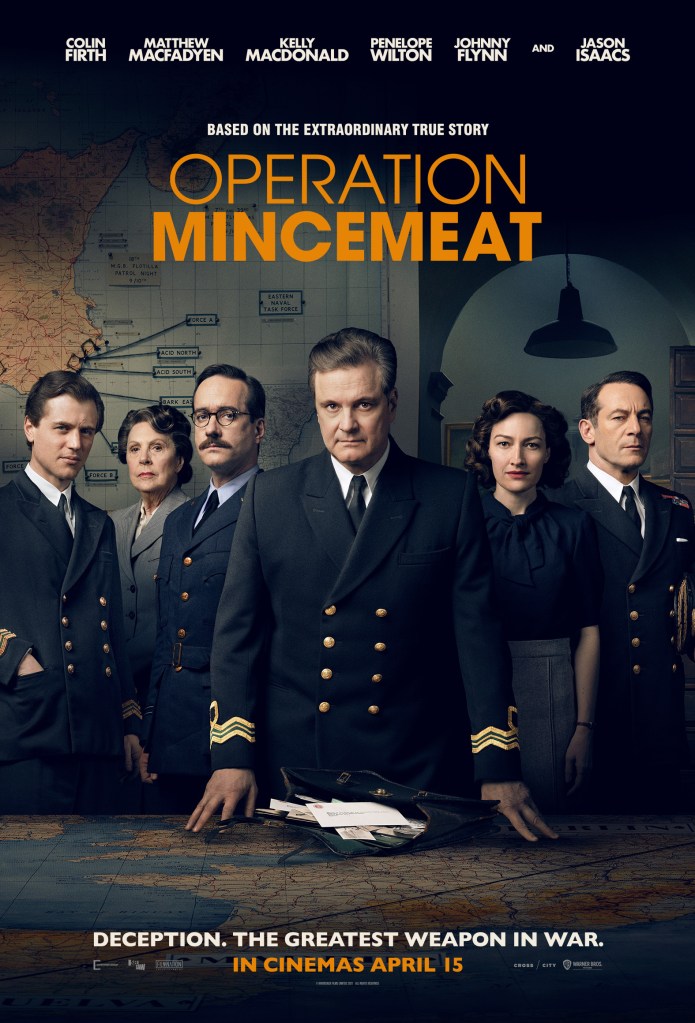
Cast: Colin Firth (Ewen Montagu), Matthew Macfadyen (Charles Cholmondeley), Kelly Macdonald (Jean Leslie), Penelope Wilton (Hester Leggett), Johnny Flynn (Ian Fleming), Jason Isaacs (Admiral John Godfrey), Simon Russell Beale (Winston Churchill), Paul Ritter (Bentley Purchase), Mark Gatiss (Ivor Montagu), Nicholas Rowe (Captain David Ainsworth), Alex Jennings (John Masterman)

In April 1943 a body washed up on the shore of neutral Spain. It was a Major William Martin, carrying Allied plans to launch a massive invasion of Greece in July 1943. German agents intercepted these plans before they could be returned to the British and the Germans shifted their troops to counter this invasion. Problem for them was, Major Martin wasn’t real, the plans he carried were inventions and the Allies were planning to attack Sicily. Welcome to Operation Mincemeat.

Adapted from an entertainingly written and well researched book by Ben MacIntyre, Operation Mincemeat is about one of the most successful wartime deception plans ever launched. The film is a bit of a deception operation itself. Although it looks like a Boys-Own caper film, with eccentric boffins solving problems and running circles around the Nazis, it’s actually a dry, slow, sombre film that seems embarrassed at even the faintest idea of flag-waving Wartime heroism. Instead, everything is glum, depressing and bogged down in invented details that never convince.

Which is a real shame, because when the film focuses on the things that actually happened it’s both entertaining and informative. To create Major Martin, MI6 needed a body – specifically a military-age male who drowned. That was almost impossible to find in London at the time – and the final ‘candidate’ had to be kept as ’fresh’ as possible for months. The letters he carried included ‘private correspondence’ from one British General to another – a letter that went through almost twenty drafts as the British authorities squabbled about how blunt its ‘personal’ views could be. When the body washed up, a helpful Spanish officer tried to return the papers immediately. When the film is on this material it’s good.

But it feels embarrassed by the idea of enjoying this stuff. After all, war is hell and the idea that we could even for a moment think these eccentrics (nearly all of whom spend their time penning spy stories) might find part of this subterfuge fun is disgraceful to it. So, we are constantly reminded of the horrors of war: the moral quandaries of using a person’s body for an operation, the troubling “wilderness of mirrors” of espionage. All this means that lighter moments – or moments where we could enjoy the ingenuity of the characters – are rushed over as soon as possible.

The other thing the film is embarrassed about are the lack of female characters. As such Kelly MacDonald’s Jean Leslie – who contributed a vital photograph of herself as ‘Major Martin’s’ paramour and the background of this fictional relationship – is elevated to third wheel in the planning. But, in a move that feels bizarrely more sexist and conservative, she also becomes the apex of a love triangle between herself and Firth and MacFadyen’s characters. This tedious triangle takes up a huge amount of time in an overlong film and is fatally scuppered by the total lack of chemistry between any of the participants.

It also means our heroes are forced to spend a lot of time running around like love-sick, horny teenagers, following each other and passing notes in class. At one point Cholmondeley tells Jean about Montagu’s wife with all the subtlety of “I saw X kissing Y behind the bike sheds”. This also means that the matey “all in this together” feeling essential to these sort of caper films (which is what this story really is) is undermined. This ends up feeling rather like a group of people who learn to dislike each other but vaguely put personal feelings aside for the greater good.

The real exciting history clearly isn’t exciting enough. Instead, ludicrous, artificial “improvements” littered through the story. I get that Jason Isaacs’ Admiral Godfrey is turned into a moronic, obstructive bureaucrat for narrative reasons. But the ridiculous shoe-horning in of a link between the Operation and the Anti-Nazi resistance in Germany in the second half of the film feels blatantly untrue even while it’s happening. By the time one of our heroes is being confronted by a German agent in their own home, the film has checked out of reality.

Truth is, this is a bad film, over-long, overly dry and crammed with artificial flourishes. Partially narrated by Ian Fleming (a woefully flat performance by Johnny Flynn, sounding oddly like Alex Jennings), the film attempts to draw links between this and the formation of James Bond but these fall as flat as everything else. MacFadyen gives probably the best performance among some wasted Brit stars. The truth is, a one-hour straight-to-camera lecture from Ben MacIntyre would have been twice as entertaining and interesting and half as long. A chronic misfire.

Mary, Queen of Scots (2018)

Margot Robbie as a particularly dense version of Elizabeth in misfire Mary, Queen of Scots

Director: Josie Rourke

Cast: Saoirse Ronan (Mary Queen of Scots), Margot Robbie (Elizabeth I), Guy Pearce (William Cecil), David Tennant (John Knox), Jack Lowden (Lord Henry Darnley), Joe Alwyn (Lord Robert Dudley), Gemma Chan (Elizabeth Hardwick), James McArdle (Earl of Moray), Martin Compston (Earl of Bothwell), Ismael Cruz Cordova (David Rizzio), Brendan Coyle (Earl of Lennox), Ian Hart (Lord Maitland), Adrian Lester (Lord Randolph), Simon Russell Beale (Robert Beale)

Mary Queen of Scots posterThe history of the Tudors has been mined so often by film and theatre that there can hardly be any hidden stories left to tell, barely any twists that can be unveiled or reimaginings that haven’t already been imagined. Mary Queen of Scots certainly fails to find any new angles on its oh-so-familiar tale, and even its attempt to rework events and characters keeps banging its head on those damn, unchangeable real events that spoil the story it seems to want to tell.
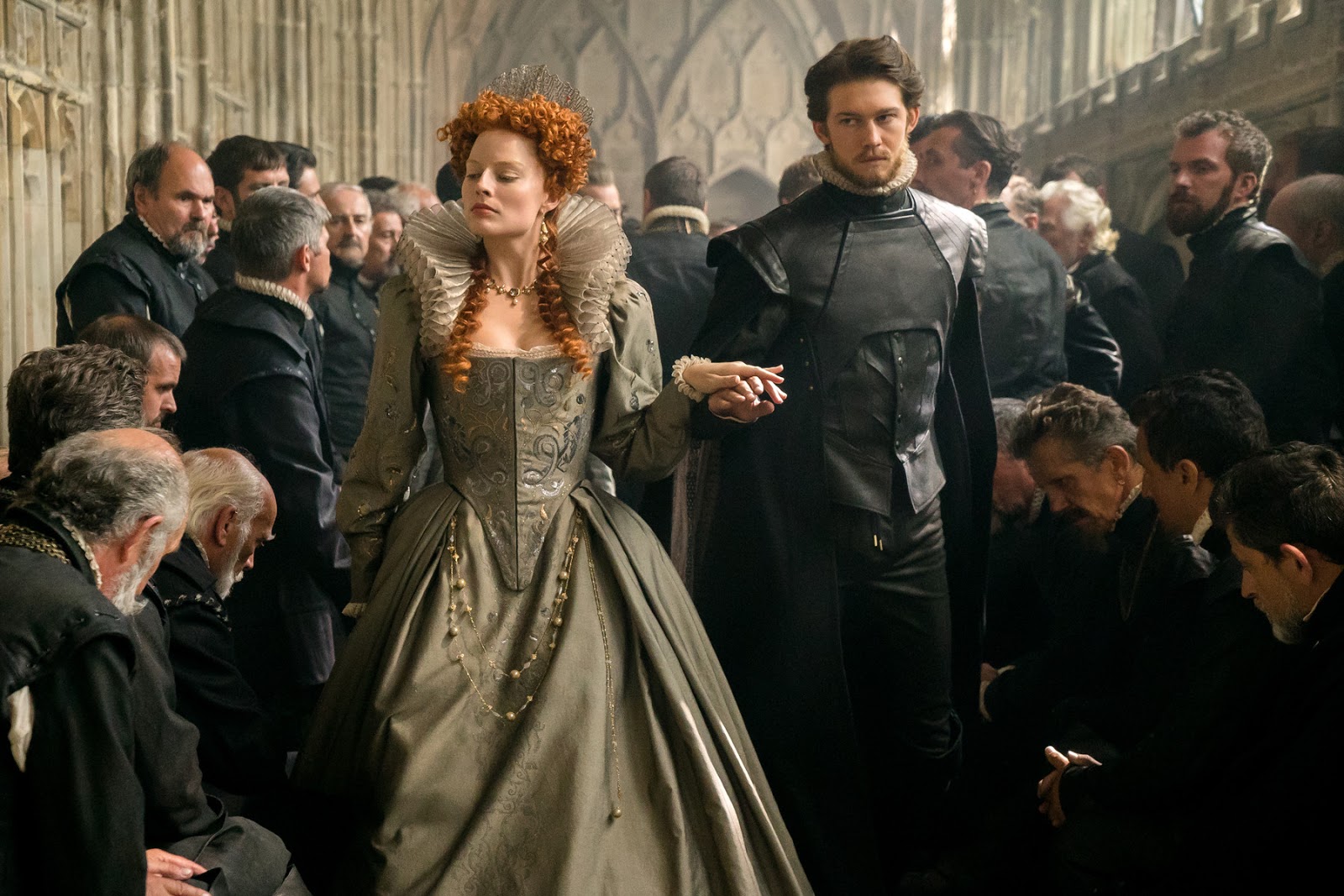
And it’s a familiar story. Mary (Saoirse Ronan) returns to Scotland from France after the death of her husband. Naturally many people aren’t keen to see this Queen, not least her half-brother the Earl of Moray (James McArdle) who was running the country, and protestant firebrand anti-feminist John Knox (David Tennant). But Mary is plugged in, sharp and savvy and she’s going to rule the country her way – and also put forward her claim for the throne of England currently held by her cousin Elizabeth I (Margot Robbie). It seems all is set for Mary’s success – until fortune begins to turn with her marriage to drunken playboy Henry Darnley (Jack Lowden). Conspiracy, murder, exile and execution are on the cards.

Mary Queen of Scots is a mess. For starters, Beau Willmon’s script does the near impossible of turning one of the most electric periods of British history into something stodgy, dull and hard to follow. Perhaps wrapped up in his House of Cards background, a show where there is a never ending stream of betrayals, counter crosses and twists for twists’ sake, Mary Queen of Scots is the same. The film is a constant parade of betrayals in Scotland, as lords shift and move sides from scene to scene with such swiftness, such lack of explanation, such lack of exploration of character and motivation, that you end up not only confused by ceasing to care. Decent actors like James McArdle and Ian Hart struggle through with ciphers (Hart literally changes sides every single scene). Martin Compston is given a confused character design as Bothwell that makes Mary’s third husband a hero until he makes a left-field heel reversal and becomes a bullying rapist. What a mess.

It’s even worse in England, where poor Guy Pearce’s every scene is a never-ending stream of exposition and historical context. Every single scene in England at the court drags and claws itself into nothingness, simply a load of dry, dense, uninvolving dialogue with characters whom we are never given any real reason to invest in. Just as the Scottish lords are ciphers who do whatever the plot requires them to do, with no time invested in developing their characters, so it’s the case with the English lords. There are many, many, many people to keep on top of but virtually no characters to invest in.

Willmon’s script also falls wildly in love with Mary herself, desperate to turn her into some genius politician and master of realpolitik, who we are frequently told is playing the game of courtly politics with aplomb and genius. “She’s out-manoeuvred us” one character constantly bemoans. However, the problem Willman has is that he eventually has to deal with the fact that the real life Mary made hideous, disastrous, stupid decisions. And since those decisions are basically the building blocks of the story (who she marries, who she trusts, who dies, where she goes, who she abandons etc etc.), there is no way around them. You are left with a film that tells you all the time how smart your lead character is, while most of the things she does are foolish.

Not least the marriage to Lord Darnley. Jack Lowdon gives a very good performance as a feckless, arrogant weakling. But surely only the densest woman alive could fail to see that Darnley is a hideously inappropriate husband? The film gets round this by stressing his charm and, in one hilariously misjudged scene, his intense skill at cunnilingus as being the thing that pulls the wool over her eyes. (After this first soft focus bit of oral play, Mary bashfully asks Darnley if he would like some “satisfaction” as well. No that’s fine he sweetly says – she really should be suspicious by then.) The film tries to course-correct by having Mary realise literally five minutes into the marriage that she has made a terrible mistake. But she doesn’t learn from it, as the rest of her life is a series of disastrous decisions, promoting the wrong people, snubbing others, leaving her son (the SINGLE MOST IMPORTANT PERSON IN THE COUNTRY) behind when she runs away… need I go on.

As well as trying to make Mary a genius, it also balances by trying to make Elizabeth an idiot. I swear there is not a single scene in this film where Elizabeth is not in tears about something. She shows no judgement whatsoever, struggles with her hormones, blindly follows the advice of her counsellors, spends half the movie making paper roses and stroking horses rather than running the kingdom. On top of which, this film which wants to make a point about the sexism women face dealing with a world of men, turns Elizabeth (the greatest queen England ever had) into a hormonal idiot, blindly led by men and obsessed with the idea of having children (even longingly trying to make her shadow appear pregnant) because, you know, deep down the ladies just be wanting babies. 

Now Saoirse Ronan and Margot Robbie do decent jobs with the versions of these people they play, even if none of this rings true. Josie Rourke does a decent job directing the film visually, with its Game of Thrones inspired look and feel (Edinburgh castle is turned into some sort of bizarre Dragonstone structure, half hewn out of a mountain). But its story is, to put it bluntly, really, really BORING. You are never given any reason to care about most of these characters, so the constant stream of betrayals and side shifting eventually becomes utterly unengaging. Every time you get near to thinking Mary is smart, she has to do a terribly dumb historically inspired real event, that actually makes her look even more stupid than she was. Mary Queen of Scots is a stodgy, dense, dull mess of a film that ends up being drier and less interesting than the sort of high-Hollywood epics from the 1970s it’s trying to update.

My Cousin Rachel (2017)


Rachel Weisz and Sam Claflin in a dance of romance and suspicion in My Cousin Rachel

Director: Roger Michell

Cast: Rachel Weisz (Rachel Ashley), Sam Claflin (Philip Ashley), Iain Glen (Nick Kendall), Holliday Grainger (Louise Kendall), Simon Russell Beale (Court), Pierfrancesca Favino (Enrico Rainaldi), Andrew Havill (Parson Pascoe), Andrew Knott (Joshua)

Did she? Didn’t she? That’s the key phrase this deliberately ambiguous film returns to again and again. Is Cousin Rachel a serial schemer, seductress and possible murderer? Or is she just – well I guess just really unlucky? It’s a difficult line to tread –ambiguity is extremely challenging to bring to film, as it’s a medium that’s pretty decisive in what it shows us first-hand. But My Cousin Rachel pulls this off with a creepy aplomb.

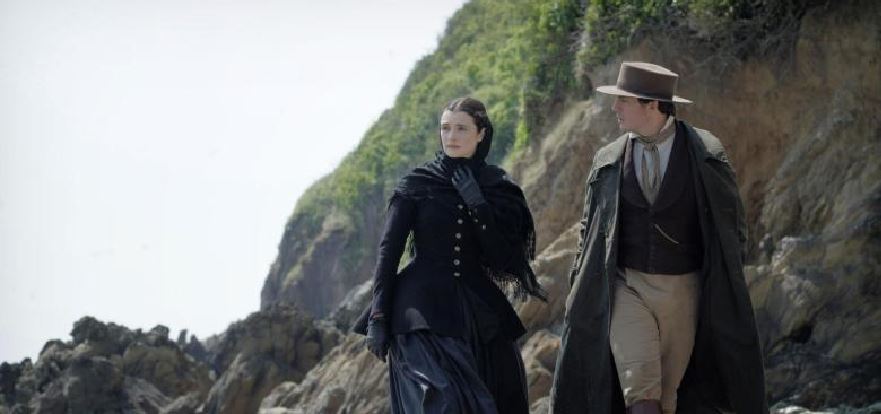
At some point in the 1830s, Philip Ashley (Sam Claflin) receives a letter from his cousin and guardian Ambrose, who has recently passed away in Italy. The letter obliquely accuses Ambrose’s wife, his cousin Rachel (Rachel Weisz), whom Philip has never met, of poisoning Ambrose. As Ambrose died before he could prepare a new will, Philip inherits his estate – but still harbours a rage against Rachel, suspecting her of murder. However, when Rachel comes to stay with him, Philip finds himself increasingly drawn towards, and besotted with, her.

Roger Michell gracefully directs and writes this intriguing little mood piece, a fine chamber-piece thriller. With an unsettlingly lyrical score and shot with a beautiful eye for the Cornish countryside, My Cousin Rachel not only grips, but rings true with anyone who has either (a) fallen blindly in love, (b) suffered from romantic obsession or (c) been paralysed with jealousy. Which is probably just about everyone.

The film relies for its success largely on Rachel Weisz’s exceptionally intelligent and thoughtful performance as Rachel. She looks perfect for the role – she’s both the sort of woman men would fall wildly in love with, and old enough to settle into an unsettling, semi-incestuous flirtation with Philip. Her performance works because Weisz plays the part with exceptional skill, never tipping the wink to the audience, but skilfully modulating and adjusting her performance with every scene so that you remain as uncertain about her actions and motives as anyone else.

Apparently Weisz made her own mind up on Rachel’s guilt and innocence, but never told Michell or Claflin. Intriguing to think that while they shot scenes of domesticity or passion, that only one of those involved really knows what’s happening – a mood that totally carries across to the viewer. Weisz plays the part with complete strength of conviction and straightness – every scene is played as if the feelings in it were completely true and bereft of manipulation. She makes it unreadable, while having a face overflowing with emotion and feeling. Does she understand Philips feelings early and manipulate him? Or does she genuinely not expect his romantic intentions?

Michell skilfully shows how Rachel wins over people with ease. Even the dogs immediately gravitate towards her. Parson Parscoe and his family flock around her. Philip’s servants smarten themselves up and make every effort to make a good impression on her. His godfather Nick seems to oscillate continually in his judgement of her, but even he seems powerless in her presence. The camera carefully hovers and focuses in on Rachel, with many shots focusing on her face alone – seducing us as much as the rest of the characters. We almost never see her except in scenes with Philip – so we have the same information as he does for making our minds up.

Sam Claflin is equally key to the film as Philip. In many ways Philip is quite the whiny teenager – you could easily dismiss him as a romantic young idiot, an obsessive would-be Romeo, who makes a series of terrible decisions through listening to his penis rather than his head. But despite that –/ perhaps because his errors and mistakes seem so universal – it’s easy to sympathise with him. Rather than want to slap him anger, you want to do so in frustration – “don’t do that, you idiot!” Michell and Claflin play his increasing disintegration brilliantly. Is it poison? Or is it his increasing jealousy and obsession unhinging him? Who hasn’t been involved in an unequal romantic obsession?

It’s not a perfect film. Philip’s obsession with Rachel is alarmingly sudden – perhaps too sudden. Towards the end, Michell becomes slightly too enamoured with mystery – a final, lingering shot introduces an element of uncertainty about a character we have never had cause to suspect, which feels like a little too much. At times the lingering camera seems to be trying to suggest more in the performance than Weisz seems willing to give away.

But these are quibbles. The film is well-directed and filmed, and terrifically acted – Glen and Grainger are very good in key supporting roles – but it’s a triumph for Rachel Weisz. Weisz seems like an actor it’s easy to overlook, maybe because she has never quite got the star vehicles her talent matches – but this film is a clear reminder that, at her best, she is an extremely gifted performer.

The Death of Stalin (2017)


Hilarious hi-jinks in Soviet Russia as the politburo struggle to deal with The Death of Stalin

Director: Armando Iannucci

Cast: Steve Buscemi (Nikita Khrushchev), Simon Russell Beale (Lavrenti Beria), Paddy Considine (Comrade Andreyev), Dermot Crowley (Lazar Kaganovich), Rupert Friend (Vasily Stalin), Jason Isaacs (Georgy Zhukov), Olga Kurylenko (Maria Yudina), Michael Palin (Vyacheslav Molotov), Andrea Riseborough (Svetlana Stalin), Jeffrey Tambor (Georgy Malenkov), Paul Whitehouse (Anastas Mikoyan), Paul Chahidi (Nikolai Bulganin), Adrian Mcloughlin (Joseph Stalin)

Armando Iannucci is a brilliant television satirist, who spring to wider fame with the success of foul mouthed political satire The Thick of It (re-imagined as Veep in the USA). His sweaty, sweary, fly-on-the-wall style, and characters who embody the panicked agitation of the nakedly ambitious but not-too-bright, was a perfect match for our modern world. Does the style work for the past? You betcha.

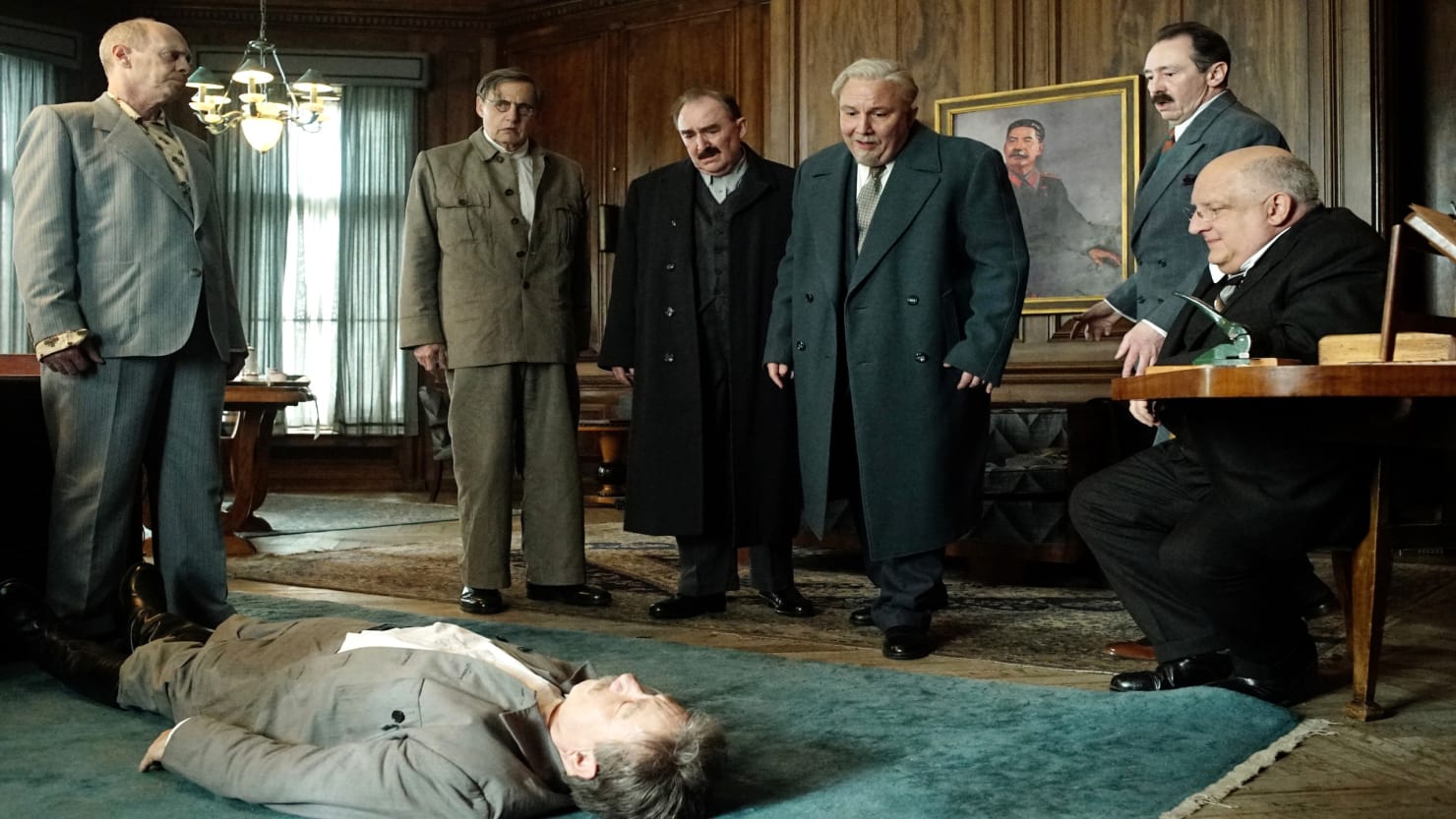
In Soviet Russia, a country near paralysed with terror, the ruthless dictator Stalin dies. This starts an immediate scramble to succeed him, with the leading candidates being weak-willed, vain and foolish deputy Malenkov (Jeffrey Tambor), vaguely principled but fiercely ambitious opportunist Khrushchev (Steve Buscemi) and sinisterly sadistic police chief Beria (Simon Russell Beale). Soviet Russia though is a pretty ruthless place for political manoeuvring, with retirement usually coming in the form of a single bullet to the back of the head.

First off the bat, The Death of Stalin is a blisteringly funny film, a real laugh-out loud riot. Why does it work so well? Because it understands that, hand-in-hand with the horror, Stalinist Russia was so completely barking mad that it lends itself completely to black comedy. Imagine The Thick of It, but with Malcolm Tucker executing rather than dismissing terrified ministers. Welcome to the madness. Events that seem crazy are pretty much true: although time has been telescoped, the struggle for the succession did more or less play out like this (with less swearing).

Every scene of this dark farce has a memorable, stand-out line or moment. The sweaty panic of these over-promoted yes-men is brilliantly reminiscent of the sort of panic you can imagine seeing in your office, with the exception that it probably isn’t literally life-and-death. Iannucci completely understands the wild improvisation of the fiercely ambitious in high-stress situations. If you think the ministers of The Thick of It were adrift when confronted with parliamentary enquiries, imagine how their counterparts struggle when faced with the threats of a bullet in the head.

Because that’s the great thing about this film – while still being hilariously foul-mouthed, it actually gives a pretty good idea of what it might have been like to live in Soviet Russia. The characters are constantly having to adjust to who is in favour and who isn’t, what it is permissible to think and say and what isn’t, who is “dead and who isn’t”. Iannucci totally understands human nature doesn’t change – those left alive around Stalin are just the sort of shallow, selfish, weaklings he’s been lampooning in The Thick of It. Most of the ordinary people we see are just desperate to keep their heads down – getting noticed for regular joes in this film is basically a death sentence. 

The opening sequence really gets this idea across. Paddy Considine is hilariously nervy and terrified as a radio producer ordered to send a recording of the live concert they’ve just broadcast (unrecorded) to Stalin. The frantic rush to reassemble the orchestra, fill the audience up again with people from the street, replace the conductor (the original having passed out in terror at the possibility that he may have been bugged questioning Stalin’s musical knowledge) is brilliantly funny – but works because the genuine expectation that doing the slightest thing wrong could lead to immediate execution is completely clear. Especially as the scene is intercut with Beria’s heavies rounding up innocent civilians to disappear into a gulag. 

Iannucci doesn’t dodge the ruthlessness. The film is punctured throughout by executions, often carried out with a black farcical desperation. It doesn’t shy away from the brutality of Beria, whose violence, sadism and pathological rape addiction we are constantly reminded of (and which are even more effectively sinister as he’s played by the cuddly Simon Russell Beale). In turn, a frantic Beria berates the rest of the politburo for their participation in the orgy of killings and show trials Stalin organised. We see people about to be taken to their deaths hurriedly offering terrified goodbyes to their loved ones. The final sequence of the film, as the battle for the succession reaches its end-game, tones down the jokes to give us an alarmingly realistic picture of a coup. Black farce ending in death: it’s as legitimate a picture as any of living in Stalinist Russia.

All of this is presented in a razor-sharp and witty script, and the cast who deliver it are brilliant. In a fantastic touch, the actors (with the exception of Isaacs) use their own accents, which only adds to the crazy fun. The acting is, across the board, fabulous. Russell Beale gives his greatest ever film performance as a grubby, ambitious, not-quite-as-smart-as-he-thinks Beria, with bonhomie only lightly hiding his chilling sadism and cruelty. Buscemi is equally brilliant as Khrushchev, who has the ego and self-delusion to convince himself that he is the only hope for a reformed USSR, while actually being a weaselly political player with naked ambition.

Around these two central players there is a gallery of supporting roles. Tambor gives a brilliant moral and intellectual shallowness to the hapless Malenkov. Friend is hysterical as Stalin’s drunken son, a deluded man-child barely tolerated by those around him. Palin’s cuddliness works perfectly as fanatical Stalinist Molotov. Whitehouse, Crowley and Chadihi are also excellent, while Riseborough does well with a thankless role as Stalin’s daughter. The film may be hijacked though by Isaacs as a swaggeringly blunt General Zhukov, re-imagined as a bombastic, plain spoken Yorkshireman, literally entering the film with a bang half-way through and bagging most of the best lines.

The Death of Stalin is not just a brilliantly hilarious comedy, it also feels like a film that completely understands both the terror and the confused ineptitude of dictatorship. In a world where it is death to question the supreme leader, is it any surprise that his underlings are all such clueless, ambitious idiots? Has anyone else understood the black comedy of dictatorship before? I’m not sure they have. You’ll laugh dozens and dozens of times in this film. And then you’ll remember at the end that when this shit happens, people die. This might be the best thing Iannucci has ever made.

The Legend of Tarzan (2016)


The Legend of Tarzan: The King of the Jungle takes on the MCU style. And loses.

Director: David Yates

Cast: Alexander Skarsgård (Tarzan/John Clayton III), Margot Robbie (Jane Porter Clayton), Samuel L. Jackson (George Washington Williams), Christoph Waltz (Captain Leon Rom), Djimon Hounsou (Chief Mbonga), Jim Broadbent (Lord Salisbury), Simon Russell Beale (Mr Frum)

Every so often you seriously wonder what the point of a film was. Are movie studios so desperate for a franchise that literally anything that has any kind of name recognition is considered a money-spinning franchise in the waiting? Welcome to the latest feeble attempt to jumpstart an epic franchise: the first (and surely last entry) in the Tarzan-verse.

In the late 1880s, the Belgians are carrying out terrible acts in Africa, spearheaded by ruthless Captain Leon Rom (a painting-by-numbers Christoph Waltz). To get hold of diamonds held by an H Rider Haggard gang of natives, he needs to lure Lord John Clayton III (better known as the legendary Tarzan) back into the jungle. But John (Alexander Skarsgård) has tried to put his life as the King of the Jungle behind him (for reasons never really made clear) and only once his wife Jane (Margot Robbie) is put at risk does he begin to reclaim what he has lost.

Was there any real demand for a Tarzan movie? Perhaps even more to the point, was there any audience for one? Since, I imagine, today most people only  on-screen Tarzan viewing experience was watching the Disney animated version, it’s hard to understand who the makers of this film imagined was going to engage with a confused, clichéd movie part dull origins story, intercut with a “rediscovering your roots” plot. And that’s the first of the major errors the film makes.

So determined is the film not to jump straight in with the context of who Tarzan is, that it keeps dribbling away from the actual plot to cram in small (confusing) moments establishing who his parents were, how he met Jane, how they left Africa etc. etc. etc. This stuff is far more interesting than any of the tiresome diamonds / kidnapped wife / White Man Saving Africa nonsense in the main plot, making all the “main” action feel like a sidetrack; not to mention that you’re several flashbacks in before you have any idea how Tarzan has ended up as a stuffed-shirt sitting in a clichéd London, slurping tea with his little finger extended, rather than swinging from vines in the jungle.

The film assumes a level of Tarzan-legend knowledge in its audience I sincerely doubt most viewers had, and the lag while you wait to catch up through the flashbacks is frustrating. The final product is a confused mess with no clear vision about what film it actually wanted to be. If it film wants to deal with the legend, why not just do that – and if it wants to introduce the origins, why doesn’t it just do that? Instead it’s neither one thing nor the other.

Mixed in with some feeble, faux superhero heroics is some clumsy post-colonial criticism of the Belgians’ terrible Congo record, but it goes nowhere in particular. A week on from watching it, I can’t remember what it was about at all. Stuff sort of happens, and there is a vague idea Tarzan is trying to save the Congo, but the film never kicks into gear. Events happen without any real narrative thrust – our heroes and villains literally meander down a river towards no-where in particular. It doesn’t help that almost every narrative beat in the film is completely predictable – this is the epitome of safe, uninspired film-making and storytelling, as if everything has been carefully honed in focus groups and committees.

A large part of the problem is Skarsgård’s lifeless performance in the lead role. Clearly bulging muscles and decent features were all the part really required, because there’s nothing in the way of character. He’s supposed to be a man who has lost touch with his past, confused and ashamed about his background. The film is building towards his emotional acceptance that his gorilla mother was his true mother. It’s a viable, if not especially original, plot – but it falls flat, simply because Skarsgård just isn’t interesting enough. His stilted performance conveys no inner pain or turmoil. Who cares who his mother was? Skarsgård doesn’t seem to, and neither did I.

It doesn’t help that all the rest of the actors (I mean all of them) are more interesting, eye catching presences. Jackson and Waltz are such seasoned pros they invest their paper-thin characters with their own charisma, though each of them could do what they are asked to here standing on their heads. Margot Robbie is actually rather radiant as Jane – even though she is never much more than a (defiant) damsel-in-distress.

The Legend of Tarzan is, at best, okay. It’s desperate to turn Tarzan into some sort of all-action superman, a competitor for the Marvel universe. But it focuses so much on trying to fill out the backstory and beef up the action that it fails to make a film with any characters in it we really care about. Instead this is the blandest, B-movie cornpuff you are likely to see and so instantly forgettable you’ll barely remember each scene as you watch it. It’s enjoyable enough but totally unsurprising, uninspired and fundamentally totally forgettable.