Tag: Social issues

Tootsie (1982)

Dustin Hoffman plays somewhat against type in the marvellous Tootsie

Director: Sydney Pollack

Cast: Dustin Hoffman (Michael Dorsey/Dorothy Michaels), Jessica Lange (Julie Nichols), Teri Garr (Sandy Lester), Dabney Coleman (Ron Carlisle), Doris Belack (Rita Marshall), Charles Durning (Les Nichols), Bill Murray (Jeff Slater), Sydney Pollack (George Fields), George Gaynes (John van Horn), Geena Davis (April Page)
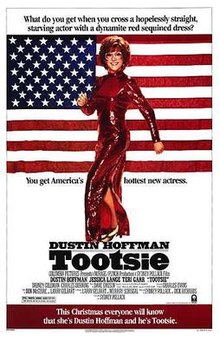
It sounds like a movie idea from hell: “We’ll get Dustin Hoffman to play a struggling actor who can only get a job when he dresses as a middle-aged woman and auditions for a daytime soap. Hilarious misunderstandings will follow…” But you’d be wrong: Tootsie is an absolute delight: not only a wonderful comedy, but a touching love story and an acute commentary on sexism and the compromises women are forced to make to get the same opportunities as men. It’s a wonderful, smart, thought-provoking film.

In a role that draws on more than a little self-parody, Dustin Hoffman plays Michael Dorsey, a dedicated, demanding, difficult actor who has alienated so many people across Broadway and Hollywood with his unwillingness to compromise that he can’t land a job. When his friend Sandy (Teri Garr) flunks an audition on a General Hospital-style daytime soap, Michael thinks “what the hell” and puts himself forward for the role under the disguise of the middle-aged “Dorothy Michaels”. Surprisingly he finds he lands the job: and realises that women’s lot on the masculine film-set is not a happy one, evading sexual approaches, treated like idiots and generally encouraged to not pipe up. Intelligent, clever fellow-cast member Julie Nichols (Jessica Lange) hides her light under a bushel. At first Michael enjoys the respect he wins, but as Dorothy increasingly becomes a feminist icon he’s plagued with guilt at the lies and deceptions he’s practising.

It’s the sort of idea that should be either patronising today (a man learns about feminism by walking in a woman’s shoes!) or inadvertently toe-curling. The fact that it isn’t (and I’ve watched this film with women who have enjoyed it a great deal, so I’m not completely guessing here!) is a tribute to the film’s lightness of touch, combined with a neat sense of the ridiculous, along with the emotional truth and genuineness that the film is handled with. It neither preaches nor mocks but simply focuses on telling the story and allowing us to draw our own conclusions. It also has a script packed through with some absolutely cracking jokes, all of which are delivered straight.

Central to its success is Dustin Hoffman, who plays the entire role completely straight. His Michael is a neat self-parody in his abrasive difficulty – but he’s also shown to be a concerned and genuine friend to Teri Garr’s delightfully ditzy Sandy, urging her to have more confidence (little realising how difficult it is for women to impress male casting directors if they behave with the confidence of men). Sure he’s not above clumsy passes to women at parties, but he’s no dinosaur or sexist. And becoming Dorothy Michaels is an opportunist moment of eagerness to show he has range and can get work if severed from his terrible reputation, rather than having any cruel or mocking motivations.
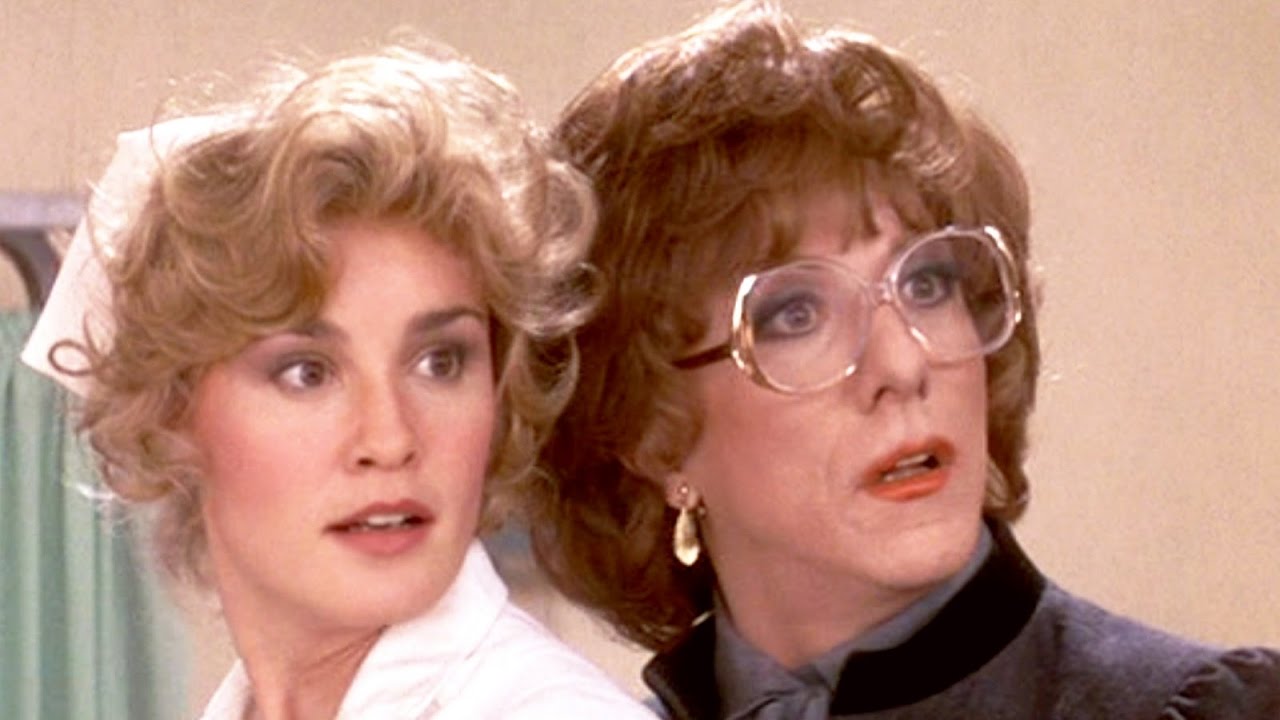
And what Hoffman does so well here is that Dorothy becomes her own personality. And that Michael immediately recognises that Dorothy, with her assurance, her kindness, her unwillingness to take nonsense, but her serene confidence, is a much better person than he is. She refuses to be trapped into either of the two roles the director intends for her (love interest or shrew) but insists her role in the hospital soap be treated like a dedicated professional, not defined by her sex – which makes her exactly the sort of role-model women around her (and eventually across America) have yearned for. Somehow as well, the film gets us to invest in what a great person Dorothy is, even as we know it’s really Michael in disguise – and Hoffman never, ever plays the part for laughs.

The casting allows the film to get a number of hilarious shots at the fast-paced, poorly-written, cheaply sexist nonsense that goes into daytime soaps. The director of the show is a roving lothario (played with all the smarm at his command by Dabney Coleman), who opposes Dorothy’s casting because she is not attractive enough, talks over the women in the cast and expects affairs as part of his salary. The show’s leading man is an aged actor (played with an oblivious sweetness by George Gaynes) who expects to kiss every woman in the show and is totally unable to learn lines. The plots of the soap are a joke, and the actresses are frequently placed into demeaning situations that real nurses and administrators (the only roles of course women can play in a hospital!) would never do.

Becoming horrified by this, Dorothy/Michael encourages the other women in the cast to break out from this – not least Julie Nichols, beautifully played by Jessica Lange as an intelligent, sensitive woman forced into pretending to be an airhead so as not to disturb the men around her. Lange is superb in this role, and so radiant that of course Dorothy/Michael finds himself falling in love with her – a complexity that constantly intrudes on the sisterly bond that Julie increasingly feels for Dorothy…

And that’s another source of guilt for Michael, who is (despite it all) a good guy, and slowly works out that there is no way of extracting himself from all this without hurting people’s feelings (not least when Julie’s sweetly charming widowed dad – played wonderfully by Charles Durning – starts to have feelings for Dorothy). Michael doesn’t want to hurt anyone – not even Sandy, with whom he finds himself stumbling into a one-night stand that he can’t work out how to reverse out of because he’s so desperate not to damage their friendship (something that he of course ends up damaging anyway). It’s a film that brilliantly balances these personal struggles with wider pictures.
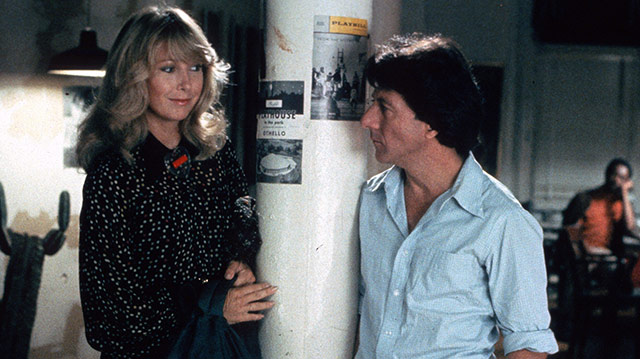
Because, as Michael is aware, he’s himself guilty of using women by stealing the cause of feminism by pretending to be a woman. He’s perpetrating a con on the whole of America, and can’t work out a way to back out. The solution he does finally find is a comic tour-de-force – while finding time to still focus later on the real, emotional impact on those who have come closest to Dorothy – and gently indicates how lives can move on.

Sydney Pollack has probably never directed a film as smart, touching and wise as this one (he also puts in a hilarious cameo as Michael’s frustrated agent). It’s a film that could have been just a comedy about a man in drag, but in fact ends up raising profound issues about sexism, feminism and relationships that still feel relevant today. It’s almost certainly Hoffman’s greatest performance – honestly, he’s sublime here, it’s a once in a lifetime performance – and there is barely a wrong beat in it. The cast fall on the great script with relish – Garr was never better and Bill Murray has a superb unbilled supporting role as Michael’s acerbic, playwright housemate. You’ll laugh, you’ll cry, you’ll think and you’ll want to watch it again. Can’t say better than that.

Lilith (1964)

Jean Seberg lures Warren Beatty and Peter Fonda into a psychologically dangerous web in Lilith

Director: Robert Rossen

Cast: Warren Beatty (Vincent Bruce), Jean Seberg (Lilith Arthur), Peter Fonda (Stephen Evshevsky), Kim Hunter (Dr Bea Brice), Anne Meacham (Mrs Meaghan), Jessica Walter (Laura), Gene Hackman (Norman), James Patterson (De Lavrier), Robert Reilly (Bob Clayfield)

Movies have long had a fascination with mental illness – in particular the impact of mental illness on women. Lilith is an intriguing, elliptical, somewhat cold but intriguing film that looks at the impact isolation, loneliness and seclusion can have on people and how these damaged psyches can sprawl out and cause further pain and suffering for others. However, it’s also a difficult, unclear and occasionally hard to like film, that deliberately clouds so many of its points in a veil of doubt and uncertainty that it’s difficult to really embrace it.

Returning from an undisclosed war (possibly Korea), Vincent Bruce (Warren Beatty), a lonely, slightly troubled young man, drifts into a job as a counsellor at a private mental hospital, under the supervision of Dr Brice (Kim Hunter). Bruce is empathetic and keen to understand and help the patients, but he finds himself slowly drawn towards Lilith Arthur (Jean Seberg), a sensual and seductive patient at the institute. Encouraged to spend more time with Lilith – as only Vincent seems able to draw her out of a fantasy world to engage with the real one – he increasingly finds himself infatuated with her, increasingly bending any personal or professional ethics to fuel his emotional and sexual need for her.

Just in case you are in any doubt from reading that, it’s pretty clear from early on in the film that the real person in need of help is Vincent. Played with a methody introspection and brooding insecurity by Beatty (he impassively and wordlessly drifts through several scenes or merely watches, and only rarely shows any emotional engagement), Vincent is frequently framed by Rossen alone, lost in the centre and sides of frames, or walking seemingly aimlessly forward. The camera often drifts towards him, if only to stress his lack of real engagement with the things he is seeing in front of him. His obsessive qualities are there from the very start, with his fixations switching between his mother, a former girlfriend (played with a flirtatious seductiveness by Jessica Walter) and finally settling, overwhelmingly, on Lilith whom he follows with the glazed eyes of a potential killer. Beatty struggled with the part – and I can see why, as our central character is such a distant cipher that he becomes someone very hard for the audience to invest any interest in.

Lilith herself is an intriguing if, it seems, unknowable character – almost impossible to tell if she is a truly destructive force or someone who simply behaves as she feels in the moment with no understanding of the impact her actions have. She is frequently callous and cruel, and then will revert to sadness, vulnerability and insecurity. She looks for love – or at least affection and loyalty – at every turn, but then also seems unable to understand any personal relationship except through the filter of sex. Starting the film placing an erotic spell around sensitive fellow patient Steve (Peter Fonda, vulnerable and rather sweet) she quickly switches all her efforts to wrapping Vincent in a web of enchantment (as the film rather clumsily stresses to us in a scene where a doctor explicitly compares her to a spider).

Lilith is increasingly seen as an unsettling, indiscriminate figure. No sooner does Vincent become her lover, than she begins flaunting a sexual relationship she is having with another female patient. (Lesbianism was quite radical for a film at the time). Even more surprisingly the patient is a staid, rather imperious middle-aged woman (played imposingly by Anne Meacham), and the relationship seems to be partly conducted to get a rise (of one sort or another) out of Vincent. Earlier, Lilith flirts disturbingly and erotically with a very young child (who seems disturbed) – although the viewer is perhaps even more disturbed by Vincent’s blank watching of the whole scene. At every point we are reminded of Lilith’s erotic allure – and the framing of the film, and its beautiful photography by Eugene Schufftan helps to create this mystic image. Lilith is often shown behind grills and bars earlier on, before she emerges into the outside world and one enchanting image sees her kissing her reflection in a lake, the very act reducing the reflection to shimmering ripples on the surface: can anyone know her?

The part leans on being borderline sexist, the idea of the enchanting, liberated woman as somehow being a dangerous (almost evil) threat to the safety and mental security of the men around her, deliberately endangering the decent world with her sexual openness. It largely manages to avoid this due to the performance of Jean Seberg, who gives Lilith a vulnerability and suggestions of deep psychological trauma that underpin her surface sexuality, flirtation and predatory nature. It’s no surprise that she is so completely able to overwhelm the repressed, inverted Vincent, or that he becomes such a willing slave to her whims and spur-of-the-moment suggestions.

Much of this disintegration of Vincent underpins the second half of the film, as he and Lilith engage in a dance that ends up having overwhelmingly negative consequences for each of them and for many of those around them. Intriguingly, Rossen’s vision of this mental institute as a more bohemian organisation suggests that the staff all seem aware of (and even tacitly encourage) the relationship – although whether this is part of a treatment or some sort of bizarre other motive is unclear. However, all this doesn’t help to make either character one we really care about, or make the story crystallise into something that carries real impact.

That captures the central problem of the film – Rossen deliberately builds the story with an elliptical sense of mystery in which the actions and motives of characters remain deliberately unclear, and the world they live in takes on elements of the dreamlike fantasy world that Lilith herself sometimes lives in (complete with her own language). Events seems to move with little sense of time. There are surreal interludes, not least an extended sequence where Vincent takes Lilith to a jousting competition (yes you read that right). It’s perhaps all a part of understanding how the personalities of the two lead characters slowly collapse over time into themselves, but it also serves to keep a distance between the film and the viewer. The final tragic outcomes are predictable from the very start of the film, but there is still a certain power to them. As a study of what slow mental disintegration may look like, Lilith is an intriguing little picture, but basically a little too hard to invest in emotionally to carry real impact.

Brooklyn (2015)

Saoirse Ronan excels as an Irish immigrant in the USA, torn between two loves

Director: John Crowley

Cast: Saoirse Ronan (Ellis Lacey), Emory Cohen (Tony Fiorello), Domhnall Gleeson (Jim Farrell), Jim Broadbent (Father Flood), Julie Walters (Mrs Kehoe), Brid Brennan (Miss Kelly), Eva Birthistle (Georgina), Fiona Glascott (Rose Lacey), Jane Brennan (Mrs Lacey), Jessica Paré (Miss Fortini), Emily Bett Rickards (Patty), Nora-Jane Noone (Shelia), Eve Macklin (Diana), Jenn Murray (Dolores), Eileen O’Higgins (Nancy)

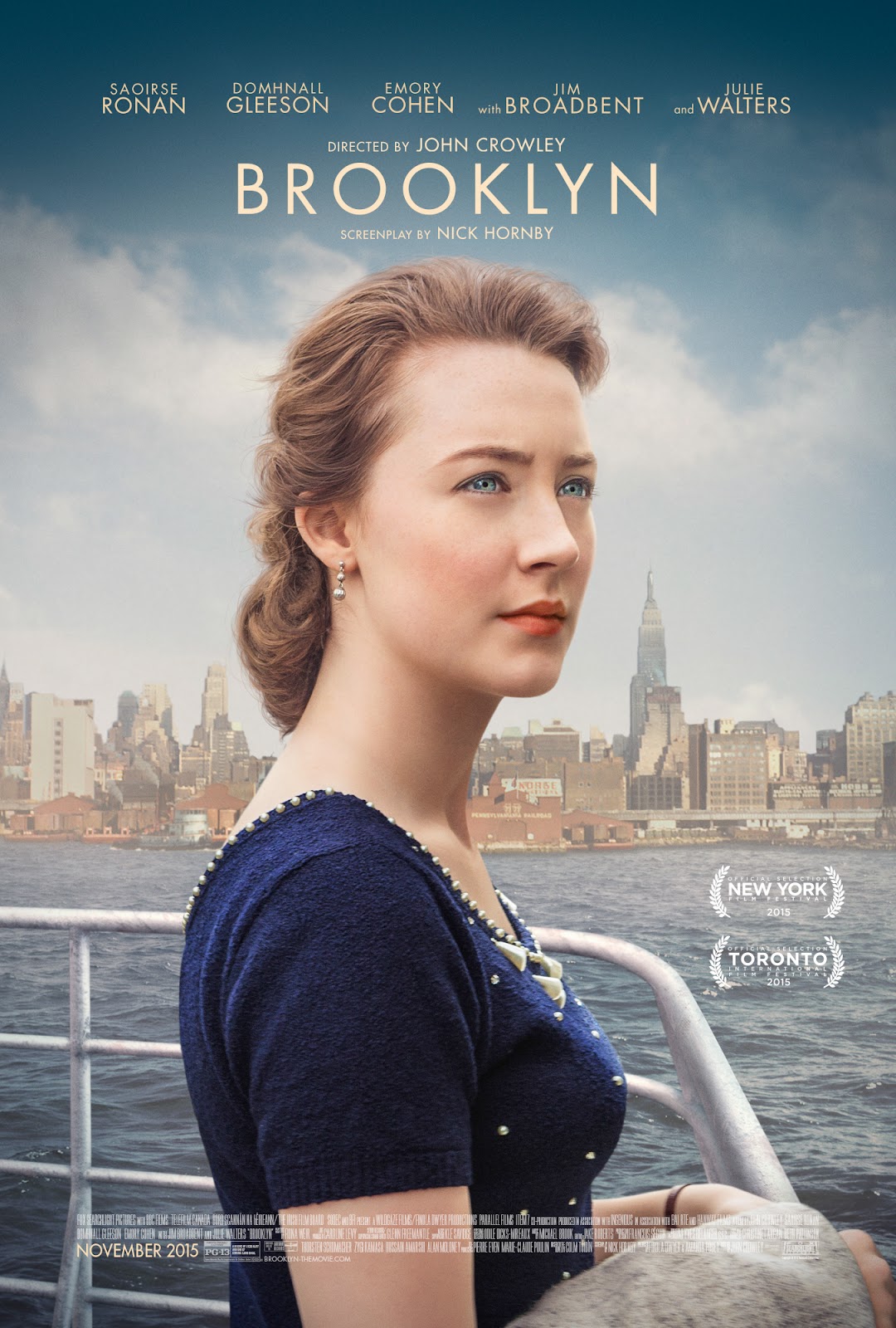
In the 1950s, Irish immigrants flocked to Brooklyn to build themselves a new life. Those who made the move often found themselves torn between two worlds – the lure of the new life they were building across the water, and the pull of the land of their fathers. Brooklyn, based on a successful novel by Colm Tóibín, places this conundrum in an intensely dramatic context by making the conflicting calls on its central character as much romantic as they are emotional.

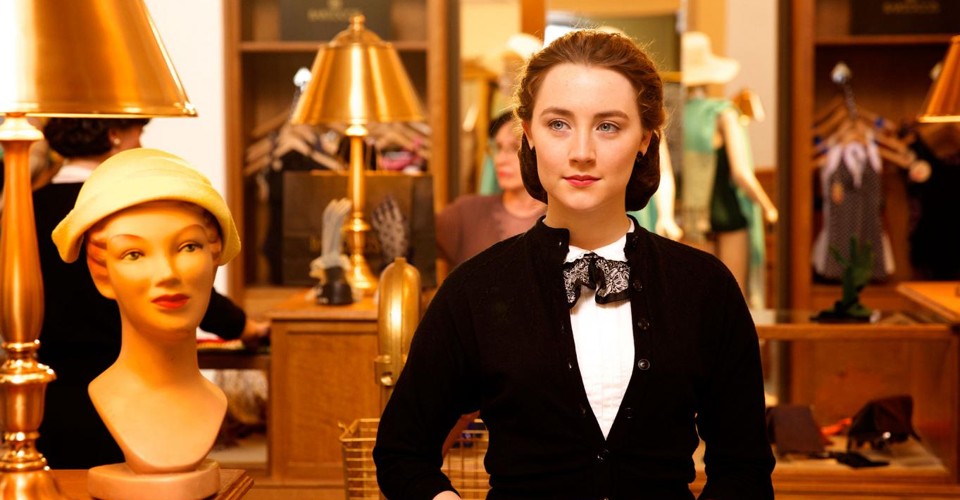
Ellis Lacey (Saoirse Ronan) is our homesick young woman, eager to build a new life in America. Sponsored by kindly priest Father Flood (Jim Broadbent, with more than a passing resemblance to Tóibín) and living in the boarding house of kindly-but-no-nonsense Mrs Kehoe (Julie Walters, in a role surely written for her) she finds work in a department store and trains at night as book keeper. She meets and falls in love with a sweet Italian American plumber Tony (Emory Cohen), but when tragedy occurs back in Ireland, on her return there she is strongly drawn to her homeland and to kindly, handsome Jim Farrell (Domhnall Gleeson). Which life will Ellis choose?

You can see why Brooklyn was so popular with Oscar voters, and why it struck such a chord with so many people. It’s reassuringly, warmly, old-fashioned, a big-hearted, brightly filmed, gorgeously mounted “woman’s picture”, the sort of story that Hollywood studios churned out in the 1940s and 1950s (you know, those sort of “who will she choose!” films). Crowley pulls the material together however with real emotional force, married with an interestingly different (if gently touched upon) theme of the immigrant experience.

Helped by a very good script by Nick Hornby, Brooklyn is not only emotionally moving but also much funnier than you might expect. Part of this is deliberate choice, expanding parts of the novel (particularly the dry humour of Mrs Kehoe, seized upon with relish by Julie Walters) that bring the funny, but also from the warmth, regard and humanity it invests its characters in. Ellis is a character so well drawn, whose feelings are so real, that we end up feeling deeply invested in her, and all the more ready to respond to her quick intelligence and dry (but gentle) wit. 

It’s a gift of a part for Saoirse Ronan, who is quite simply outstanding as a quiet, sheltered woman who grows, changes and decides to create her own destiny before our very eyes. (Helped by Hornby’s script again, which uses the Ireland-USA-Ireland structure to pinpoint many dramatic bookends and contrasts that Crowley subtly, and not forcefully, brings to the screen.) Ronan’s intelligence and her conflicting desires are clear in every scene, while her eyes seem able to communicate reserves of emotional depth. In two cultures where it isn’t easy for a woman to define her own destiny, Ronan brilliantly shows the difficulties many woman had in understanding or expressing what they want, in a world where they haven’t been set-up to think like that.

The film also doesn’t make it easier for her by making her two suitors – while radically different men – both such charming, lovely guys. Cohen’s Tony is a boyish enthusiast, full of hopes and dreams, who seems to represent everything that America has to offer Ellis. Domhnall Gleeson’s Jim is decent, honourable, kind, old-fashioned man who represents everything that she realises her Irish culture has for her – tradition, decency and a sense of self. It also speaks to how well drawn Ellis is by the film, and how deeply well-though out Ronan’s performance is, that it makes perfect sense that these two very different men would be drawn to her, and that both bring out different parts of her personality, which never feel contradictory.

It works as well because we’ve lived through everything Ellis has. She is present in nearly every scene in the film, and we see her change from a shy, scared, frightened woman on the boat from Ireland who needs to be cared for by an experienced emigrant fellow passenger (a very good cameo from Eva Birthistle) to a woman who flourishes in her new surroundings and the opportunities she is given. We need to feel that connection with her, since some of her behaviour (if it came from a man) would probably be seen as quite shabby indeed. But because we have such an understanding of her inner life – and because Ronan has such an empathetic and expressive face – we understand the reasons for her conundrum.

It’s that conundrum that lies at the centre of the film, and to be honest what dominates it. It works because it is done with such emotional truth (aided by Michael Brook’s excellent, heart-string tugging score that mixes American sounds with Irish folk to glorious affect), but the film is primarily a nostalgia romance. While it’s very setting makes you think about the immigrant life, it has very little to say really about either the cultural phenomenon or the impact it has on either the USA or Ireland (a charity Christmas meal for former Irish railway workers now all homeless is as close as it gets to talking about long-term integration). It doesn’t really matter, because the central story sweeps you up so much, but it does make the film more of a romance than the grander claims made for it by some as some sort of commentary on Irish immigration.

But there’s nothing wrong with such a handsome, romantic, emotional drama, or one that feels so reassuringly old-fashioned, even as it is made with touches of wit and confidence. Making some welcome comments on feminism, and led by Saoirse Ronan at her finest, it’s still a triumph of old-style, romantic, women’s pictures that you’d have to be pretty cold not to feel some sort of warming in your cockles by the end of it.

How Green Was My Valley (1941)

Donald Crisp and Sara Allgood raise Roddy McDowell in How Green Was My Valley

Director: John Ford

Cast: Walter Pidgeon (Mr Gruffydd), Maureen O’Hara (Angharad Morgan), Donald Crisp (Gwilym Morgan), Roddy McDowell (Huw Morgan), Sara Allgood (Beth Morgan), Anna Lee (Bronwyn), Patric Knowles (Ivor), John Loder (Ianto), Barry Fitzgerald (Cyfartha), Rhys Williams (Dai Bando), Morton Lowry (Mr Jonas), Arthur Shields (Mr Parry), Richard Fraser (Davy), Frederick Worlock (Dr Richards)

John Ford is by far-and-away best known for his Westerns, many of which are classics. So it’s a bit of a surprise that Ford always claimed the film closest to his heart was this occasionally sentimental drama about a young boy growing up in a Victorian Welsh mining town. Perhaps it was partly because, despite winning four Best Director Oscars, this was the only time Ford directed a Best Picture winner.

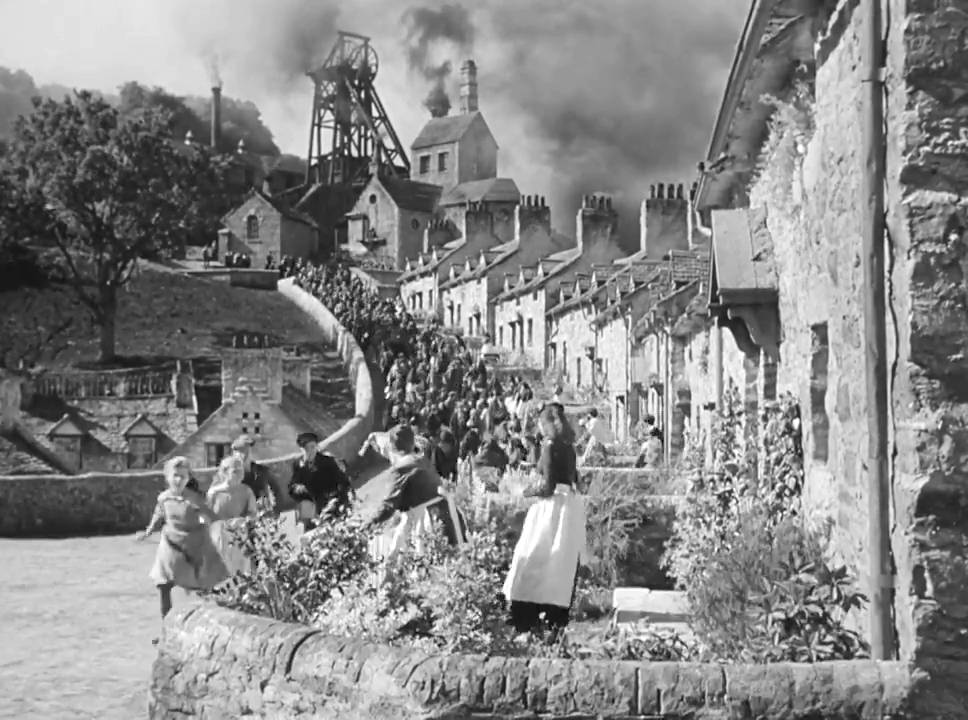
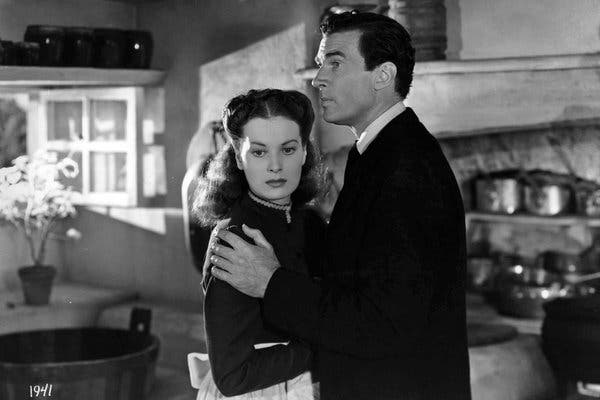
Following the remembrances of young Huw Morgan (Roddy McDowell), the youngest son (of several) of Gwilym Morgan (Donald Crisp), long-running foreman at the mine. The village is beautiful and life seems idyllic – until harsh economic conditions start to take their toll on the village. Wages are cut, moves towards unionisation are harshly resisted by the management, one-by-one the sons are laid off in favour of cheaper labour and the slag of the mine slowly turns the village into a dirty, stained mess. At the same time, the village is shown to be increasingly insular and judgemental, distrusting of outsiders, and suspicious of the preacher Mr Gruffydd (Walter Pidgeon) and the attraction between him and Huw’s sister Angharad (Maureen O’Hara) – made worse after she marries. Huw’s youthful innocence and naivety are met with an increasing attack from reality.

Ford’s film is today a controversial choice for Best Picture – among the films it beat were The Maltese Falcon and, most strikingly of all, Citizen Kane. It’s tough for any film to hold onto the same level of public affection, when it’s widely seen to have robbed a film commonly held up as one of the best (if not the best) of all time. But How Green Was My Valley is no travesty of an Oscar-winner. On its own merits it’s a solid, impressive, sentimental piece of episodic film-making that won’t disappoint you, even if it doesn’t inspire as much as it should.

John Ford directs a handsomely mounted film, full of luscious monochrome shots. It’s a shame that the original plans for the film – to shoot on location in Wales in technicolour – were prevented by World War Two, as the sweep of the real locations would have added a real epic scope to the drama, not to mention make the decline of the village even more obvious visually. But the recreation of the Welsh mining village they planned to film in (in Malibu of all places!) is faultlessly impressive, and Ford creates a real Celtic charm in his shooting of the film.

Celtic is perhaps the key word here as, along with the location, the other thing that ended up jettisoned in the film was its Welshness. There is precious little – if anything – Welsh about this film. It contains one Welsh actor (Rhys Williams), and Ford’s cast use a parade of actors ranging from an attempt at Welsh from Crisp to an imperious mid-Atlantic drawl from Walter Pidgeon. Most actors however settle solidly for something close to Irish – and it’s pretty clear to me that Ford, proud of his own Irish heritage, basically saw this a story of the old country forcing its sons to head to the new country, in the same way his own parents emigrated. It also makes sense for casting the film – there seemed to be precious few Welsh actors in Hollywood at the time, but a parade of Irish actors. 

But look past the film’s complete lack of Welshness – not to mention its presentation of the Morgan’s family home as far more clear and spacious than it would have been in real life – and pretend this is an almost Irish story, and you can focus on the film’s strengths. Although presented with sentiment and nostalgia, How Green is actually a more coldly realistic film than that. While shot with a luscious regard for the past, the film’s themes work to undermine this as much as possible – dealing with disillusionment, depression, unemployment and societal collapse. While Huw may remember the past as being a glorious country, we can see from the tumoils of his family that it was far more complex than that.

Of his siblings, most lose their jobs at the mines and are forced to emigrate. One who remains loses his life due to the mine’s working practices. Their father buries his head in the sand, and refuses to support any moves towards unionisation or the worker’s attempt to improve their lot. The family relies totally on the mine, but by the end of the film have been more-or-less destroyed by it. Even Huw’s sister Angharad, who has a good marriage to the son of the mine owner, finds herself trapped in a loveless marriage with her affections for Gruffydd the source of cruel comment from the village. The valley may be green on the surface, but it’s far darker underneath. 

And poor Huw either doesn’t notice, or doesn’t care. After struggling through bullying from a teacher at school, he finishes school and is awarded a scholarship – only to reject it in favour of remaining to work in the mine, having learned all the wrong lessons from his life (and to the horror of his father). Ford stresses Huw’s youthful naivety by not ageing up Roddy McDowell (very good) at all as Huw – Huw remains forever a 12-year-old-boy, even as events race on. It’s a neat capturing of both the older Huw (who narrates) imagination of what he was like, and also serves to stress how Huw’s nostalgia is framing the story we are seeing. It also makes Huw seem even weaker and vulnerable than he is – a shot of Huw labouring in the mine behind a seemingly giant cart hammers home his weakness – Ford shoots many scenes with low-angle lenses to make us visually emphasise with Huw and to see the world from his perspective.

How Green’s main weakness is its hesitation to commit to either the cold reality, or the hazy nostalgia that the film’s filming style uses. It lands between the two stools, wanting to tell us the truth while also wanting us to leave with a warm feeling towards the simpler times of the past. It’s perhaps not helped in this by the episodic nature of the script, which moves from event to event without much in the way of overarching narrative. It makes for a film that leans even more towards a slightly maudlin view of the past as a series of entertaining stories, which serves to cover even more the darker themes of the film.

Ford’s cast are a mixed bag. Donald Crisp is superb as the father, part imperious patriarch, part loving father – and won the Oscar. Equally good is Sara Allgood as his wife, the ideal loving mother that a son would remember, but with a spine of steel. Maureen O’Hara brings a passionate romanticism to Angharad, while Barry Fitzgerald and Rhys Williams are entertaining as a drunken trainer and his boxer protégé. Mnay of the rest of the cast though are weaker, with Walter Pidgeon rather stolid as Gruffydd and many of the actors playing Huw’s brothers reduced to balsawood under the burden of odd accents and earnest characterisation.

Ford’s film is a very good one that, if it catches you in the right mood, will certainly move you. I am not sure it caught me in the right mood on any of the occasions I saw it, but I appreciate its technical assurance and excellent direction. It fails to really find an effective balance between its darker tones and its nostalgic outlook, but it still works for all that. It’s not Welsh but it is a good film.

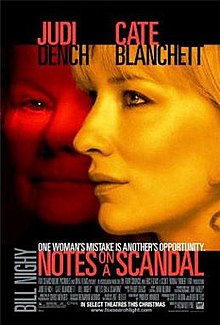
Notes on a Scandal (2006)

Cate Blanchett and Judi Dench battle with obsession in Notes on a Scandal

Director: Richard Eyre

Cast: Judi Dench (Barbara Covett), Cate Blanchett (Sheba Hart), Bill Nighy (Richard Hart), Andrew Simpson (Steven Connolly), Phil Davis (Brian Bangs), Michael Maloney (Sandy Pabblem), Joanna Scanlan (Sue Hodge), Tom Georgeson (Ted Mawson), Shaun Parkes (Bill Rumer), Emma Williams (Linda), Julia McKenzie (Marjorie), Juno Temple (Polly Hart)

Zoe Heller’s novel Notes on a Scandal makes superb use of an increasingly unreliable narrator to reveal the complications in the affair between a female art teacher and a young male student. It’s a device that doesn’t always carry across as well to film, but Richard Eyre and screenwriter Patrick Marber have still crafted a fine story about obsession and envy in all its different ways.

In an inner-city school, bohemian art teacher Sheba Hart (Cate Blanchett) is a new arrival, struggling to learn how to control her students. It’s a skill long-since mastered by jaded and bitter history teacher Barbara Covett (Judi Dench), who soon finds herself fascinated by the attractive and engaging Sheba. This relationship is complicated when she discovers that Sheba has begun a sexual relationship with one of her 15-year old students, Steven Connolly (Andrew Simpson), a student with a difficult record who has shown a surprising interest in art. As Barbara positions herself as Sheba’s only trusted confidant, the danger of discovery begins to become ever more likely as Sheba’s behaviour becomes more and more reckless.

The real strength of Eyre’s film are the two lead performances from Dench and Blanchett, a match-up surely made in casting heaven. Dench is superb in one of her best film roles, turning Barbara Covett into exactly the sort of shrivelled up, bitter spinster you are not surprised to learn has led a life of loneliness. Dench laces the performance with a sharp nastiness, masked behind a chilly professionalism, but she also makes clear the aching loneliness, the desperation and the ability to deceive herself that Barbara has, the longing to be loved but also the possessive obsession that drives love away.

She’s equally well-matched by Blanchett, at her most glamourous and natural as Sheba. One of the film’s strengths is the way it avoids giving spurious psychological reasons for Sheba’s obsession for this basically fairly unpleasant young lout. Blanchett identifies this sense of being trapped in Sheba, this desire to rebel and taste a little bit of freedom (in every home scene she is shown undertaking most if not all the housework and childcaring duties), feelings that mutate into a sexual obsession with Connolly. Blanchett is desperate, self-deceiving and hugely tragic, unable to fully express the reasons for her feelings herself, but unable to let go of her addiction to a new wildness and danger in her life that you feel she has never really felt before.

These two performances power a film that explores obsession and envy, with Barbara obsessed (to a scarily possessive and manipulative degree) with Sheba, exploiting Sheba’s own reckless and sexual obsession with Connolly. These feelings are shown to be often beyond the understanding of other characters, and both women ret-con events and reactions from the target of their obsessions to build elaborate fantasy worlds. It’s the danger of obsession here, the way we shape the facts to meet our desired preconceptions. It doesn’t matter what reality, or what anyone else, says – you want to believe what you want to believe.

And it’s these obsessions that lead people both to take unbelievable risks and also to feel a crushing sense of envy and possession. Both Barbara and Sheba can barely tolerate the idea of their loves focusing attention elsewhere, and despite seeming to have so much control in their relationships are helpless victims. Sheba is reduced to begging tears when it feels like her relationship with Connolly is burning out. After all is revealed, Barbara’s efforts to take control of Sheba’s life are revealed to be powered by an almost desperately sad need to believe that Sheba and she are starting a new life together. So deep is Barbara’s denial about her own lesbianism (and so extreme her unhappiness about herself), it’s a romantic vision she is so deep in denial feels unable to even begin to put any sexual dimension onto.

Envy and human frailty run through the whole film. Most of the teaching staff, especially Phil Davis’ sad-sack maths teacher in love with Sheba, carry their own small obsessions and envies. Sheba’s husband himself left his first wife for Sheba when she was one of his students. The students have more than enough rivalries to deal with. 

It’s a deadly circle, with contact breeding obsession, breeding envy. To get such an effect, Marber’s adaptation needs to streamline the book. The biggest loss as a result is the book’s slow, creeping, realisation that Barbara is a deeply arrogant, bitter, unlikeable person who views most of the people around her with contempt. Here Dench’s waspish voiceover immediately makes it clear to the viewer that she is not that nice a person. It’s a shame, as it rather signposts for the viewer where the film may be heading. 

The storyline also races through the book (the film is less than 90 minutes) which means it often feels more like a melodrama. While I think it’s a strength that the film doesn’t try and give a real reason for Sheba’s decision to seduce (or be seduced) by her student, other than to hint at her own sense of bohemian freedom being lost at home, I can see how others will find the reasons for why the radiant Sheba is so drawn to such a surly kid rather hard to accept.

But it still works, because the film is so well-played. With Dench and Blanchett at their best (and excellent support from Bill Nighy, quietly superb as Sheba’s husband, a decent guy who can’t believe his luck that he is married to such a wonderful woman, and whose world falls apart in bitter recrimination), it’s a film that gives more than enough rewards. The film gives us a decent ending from the book, with more hope for Sheba – but the balance suggests that for Barbara the cycle of obsession will only continue. Heaven help anyone who sits down on a park bench next to her.

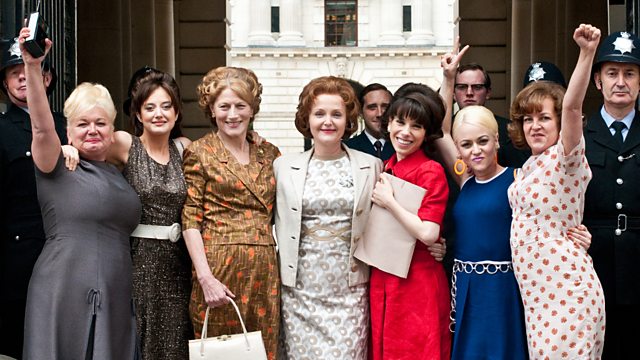
Made in Dagenham (2010)

Up the Women! British comedy wallows in nostalgia but tells a still relevant tale of sexual equality

Director: Nigel Cole

Cast: Sally Hawkins (Rita O’Grady), Bob Hoskins (Albert), Miranda Richardson (Barbara Castle), Geraldine James (Connie), Rosamund Pike (Lisa Hopkins), Andrea Riseborough (Brenda), Jamie Winstone (Sandra), Daniel Mays (Eddie O’Grady), Richard Schiff (Robert Tooley), Rupert Graves (Peter Hopkins), Kenneth Cranham (Monty Taylor), Nicola Duffett (Eileen), Lorraine Stanley (Monica), Roger Lloyd-Pack (George), Andrew Lincoln (Mr Clarke)

You’d like to think a film made ten years ago about a strike for equal pay in the 1960s would be more of a history piece than something that still carries real relevance today. But this is still a world where women are often paid less than a man, and where their work is often devalued or held as less “important” than their male counterparts. Made in Dagenham looks at all these issues with a rose-tinted, feel-good stance that aims to entertain first and make you think second. Nothing wrong with that, but it means the film is largely just a crowd-pleaser, when you feel it could be more.

At the Ford factory in Dagenham, the female sewing machinists are not paid as skilled workers, and are forced to accept less work. Frustrated at the patronising attitude from their all-male union reps, and encouraged by foreman Albert (Bob Hoskins, lovely in one of his cuddliest performances), the women decide to go on strike for equal play, led by Rita O’Grady (Sally Hawkins). As public attention builds, the Ford owners in America mobilise for a battle and the strike attracts the interest of Secretary for Employment Barbara Castle (Miranda Richardson), someone who knows the struggles a woman faces in a man’s world.

It’s no great surprise based on the fluffy, charming tone of this film that Nigel Cole’s previous credit was Calendar Girls. (Also no surprise that, like that film, this has been turned into a crowd-pleasing stage musical.) William Ivory’s script deftly sketches out some familiar movie-dynamics for its characters, establishes clear heroes and villains, gives us a good sprinkling of information and “things to think about”, mixes in at least one tragic sub-plot and provides a steady stream of high points, heart-string tugging moments and punch the air moments. As a piece of writing playing to the masses, it’s pretty flawless.

It’s in love with the 1960s details, with nostalgia dialled up to 11, with a love of the look, feel and styles of the era and plenty of sound cues mixed in that will have you tapping your toes. It’s all designed for you to have fun, and if that means some of the deeper questions get a bit lost at points, that doesn’t really matter. 

And there is more than enough enjoyable material to be seen in setting up a series of bigoted or patronising men (gamely played principally by Kenneth Cranham and Rupert Graves) and seeing them knocked down. You could argue that a slightly braver film would touch at the implications of what Richard Schiff’s corporate big-hitter says about equal pay: make it more expensive to make cars here and we will make our cars somewhere else. (In fact it was pretty hard to forget that, watching the film today, as Brexit has already caused at least three major car factory closures in the UK. In fact the film is very happy to talk all about equal pay for women in the Western World but never even raises the question of how we are quite content to have people in the third world slave away in conditions far worse than this for a few pennies an hour.) But that’s not the film’s point, and instead it’s all about those male-female relationships. 

Sally Hawkins does a good job as a woman slowly growing a social and political awareness and then turning that new-found enlightenment on her own domestic life with well-meaning but of-his-time husband Eddie (a sweet but cluelessly sexist Daniel Mays). It’s all conventional stuff, but Hawkins and Mays play it very well.

The real meat actually comes from plotlines elsewhere. Rosamund Pike is excellent as a woman with a first in history from Oxford, reduced to wheeling out nibbles for her patronising husband and keeping her ideas to herself. Geraldine James and Roger Lloyd-Pack get the tragic plotline of a couple struggling with his post-war undiagnosed PTSD, which gets most of the heart-string tugging. 

Eventually all is made well by Miranda Richardson’s Barbara Castle, floating into the picture to wave a magic wand and save the women’s bacon. Richardson thoroughly enjoys herself in a rather cardboard role, at least two scenes of which are solid exposition, in which Castle’s lecturing of two uppity civil servants is used to introduce the political context. By the end you won’t be surprised that good triumphs. But it’s a film which largely only looks to put a smile on your face, and doesn’t really look at the wider implications or injustices of unequal pay. To the film’s credit it has a final montage of the real Ford women talking about their lives and the battles they had to be respected, which gives it a bit of extra depth. A truly brave film would have found a few minutes – and that’s all it really needs – to look at the wider issues (then and today) economically and socially, and to make us think a little. As it is this just entertains, which is what you want, but it could be more.

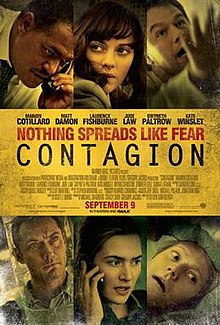
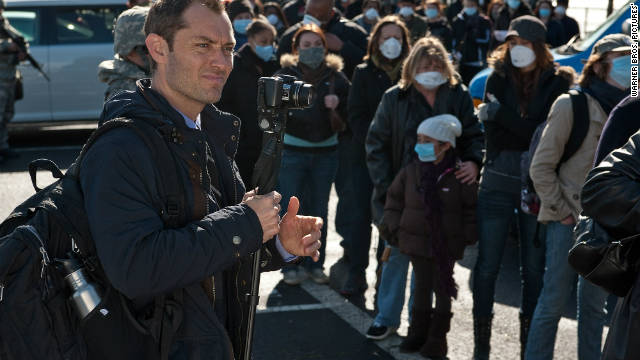
Contagion (2011)

Laurence Fishburne leads the drive to fight a pandemic in Soderbergh’s outbreak thriller Contagion

Director: Steven Soderbergh

Cast: Marion Cotillard (Dr Leonara Orantes), Matt Damon (Mitch Emhoff), Laurence Fishburne (Dr Ellis Cheever), Jude Law (Alan Krumwiede), Gwyneth Paltrow (Beth Emhoff), Kate Winslet (Dr Erin Mears), Jennifer Ehle (Dr Ally Hextall), Elliott Gould (Dr Ian Sussman), Chin Han (Sun Feng), Bryan Cranston (Rear Admiral Lyle Haggerty), John Hawkes (Roger), Enrico Colantoni (Dennis French)

It’s a fear that has gripped the world several times this century: the pandemic that will wipe us all out. It’s the theme of Steven Soderbergh’s impressively mounted epidemic drama, which mixes in an astute commentary on how the modern world is likely to respond to an event that could herald the end of times.

Beth Emhoff (Gwyneth Paltrow) is a businesswoman flying back to Minneapolis from Hong Kong (with a stopover in Chicago for a bit of rumpy-pumpy with an ex-boyfriend) who becomes Patient Zero for an outbreak of a virulent strain of swine and bat flu that proves near fatal for the immune system. While her stunned husband Mitch (Matt Damon) is immune, most of the population aren’t. Across the world, health organisations swing to action – from Dr Ellis Cheever (Laurence Fishburne) and Dr Ally Hextall (Jennifer Ehle) at the CDC, to Dr Erin Mears (Kate Winslet) running things on the ground in Minneapolis to Dr Leonara Orantes (Marion Cotillard) investigating for the WHO in Switzerland and Hong Kong. As populations panic, conspiracy-theorist blogger Alan Krumwiede (Jude Law) sees this as an opportunity for personal promotion and enrichment.

Soderbergh’s clinical filming approach makes for a chillingly realistic piece of cinema realitie, possibly one of the director’s finest films in his oddly-uneven career. Soderbergh presents events as they are, laying out the film like a giant Pandemic board. Captions regularly tell us what day we are on from initial outbreak, as well as the populations of the various cities the plot lands us in. The film is shot with a documentary lack of fussiness, and largely avoids either sensationalism or the sort of Hollywood virus clichés of films like Outbreak. It also succeeds in largely avoiding heroes or villains (even the usual baddies for this sort of film, Big Phama companies, are shown as part of a potential solution not the problem) – even the outbreak is largely an act of chance, prompted by mankind’s actions, but there is no reveal that shady suits or military types are behind it all.

Watching the film today in the light of Brexit and Trump it actually appears strikingly profound and prescient in its depiction of the knee-jerk paranoia and wilful blindness of internet and media pundits who believe every opinion is equal and valid regardless of expertise. Alan Krumwiede (a slightly pantomime performance from Jude Law, complete with bad hair, bad teeth and an Aussie accent perhaps intended to echo Julian Assange) all but denounces the views of experts as “fake news”, claims his opinions on the causes and treatment of the disease are as valid as the expert professionals (all but saying “I think we have had enough of so-called experts”), uses his unique hit count as evidence for the validity of his (bogus) conspiracy theories and makes a fortune peddling a snake-oil natural cure which he claims saved his life (and leads to millions of people ignoring the proper precautions and treatments recommended by the WHO and CDC). 

Soderbergh shows that this sort of crap is as much a dangerous pandemic as the disease itself, encouraging an atmosphere of fear and hostility. At the time it just seemed a bit snide to say “a blog is not writing, it’s graffiti with punctuation”, but today, as websites spout up presenting all sorts of horseshit as legitimate fact, this film looks more and more ahead of the curve in its analysis of a public disillusioned and untrusting of authorities can turn their attention and trust to a venal liar who claims to be a tribune of the people, but is interested only in lining his own pocket. 

But then that’s one of this film’s interesting psychological points. If there is an antagonist in this film, it’s human nature itself. The “wisdom of crowds” is continuously a dangerous thing, as areas devolve into rioting and looting. The bureaucracy of local and international governments causes as many problems as the disease: even as bodies pile up in Minneapolis, Kate Winslet’s on-site CDC crisis manager must bat away furious lackeys of the State Governor, demanding to know if the federal government will cover the extra medical precautions. Announcements of public danger are pushed back until after Thanksgiving, so as not to have a negative impact on the holiday. The decent Dr Cheever, who unwisely leaks news of a lockdown of Chicago to his fiancée, is thrown to the dogs by the government who need some sort of scapegoat they can blame the whole mess on.

If our enemies are red tape and the selfish rumour-mongering of the unqualified and the self-important, acts of heroism here are generally rogue moments of rule-benders. A scientist at a private pharmaceutical company continues his work after being ordered to destroy his samples (and then shares his crucial findings about the disease with the world, free of charge). CDC scientist Ally Hextall tests a crucial antibody on herself because there simply isn’t time to go through the lengthy trials needed (needless to say Krumwiede uses this as further evidence that the outbreak is a government stitch-up). 

Alongside all this, Soderbergh’s detailed direction and editing chillingly chart the spread of the disease. Having explained carefully how it can be spread by touch, the camera details every move of infected people, carefully lingering for half a second on every touched item, with the implication clear that everyone else who will touch these objects soon (such as door handles) will themselves become infected. The film pulls no punches in showing the grim effects of the disease (poor Gwyneth Paltrow!) and the resulting chaos as the pandemic progresses, with social structure breaking down, chaos only held in check by mobilising army forces and imposing curfews and a national lottery for cure distribution, with areas off-limits for those not carrying a wristband barcode identifying them as inoculated.

Soderbergh assembles a fine cast for this drama, helping to put human faces to characters who often have to spout reams of scientific and medicinal dialogue. Fishburne is particularly good as a noble and reasonable head of the CDC, who succumbs only once to putting his loved ones first. Matt Damon is the face of “regular joes” as a father going to any lengths to protect his last surviving child. As one reviewer said the “undercard” of the cast is particularly strong, with Jennifer Ehle perhaps the outstanding performer as the eccentrically driven CDC research scientist. Cranston, Gould, Han, Hawkes and Colantoni are also equally fine.

Soderbergh’s film was a bit overlooked at the time, but rewatching it again, the more I think it might be strikingly intelligent analysis of our modern world, ahead of its time in understanding how new media and human nature can interact with government and society, and how this can lead to a spiralling in times of crisis. One of his best.

Syriana (2005)

George Clooney gets crushed by the corruption of major oil companies in Syriana

Director: Stephen Gaghan

Cast: George Clooney (Bob Barnes), Matt Damon (Bryan Woodman), Jeffrey Wright (Bennett Holiday), Christopher Plummer (Dean Whiting), Nicky Henson (Sydney Hewitt), David Clennon (Donald Farish III), Amanda Peet (Julie Woodman), Peter Gerety (Leland Janus), Chris Cooper (Jimmy Pope), Tim Blake Nelson (Danny Dalton), William Hurt (Stan Goff), Mark Strong (Mussawi), Alexander Siddig (Prince Nasir Al-Subaai), Mazhar Munir (Wasim Ahmed Khan), Nadim Sawalha (Emir Hamed Al-Subaai), Akbar Kurtha (Prince Meshal Al-Subaai)

The more I think about Syriana the more I think Stephen Gaghan was unlucky. If he had made this story today, you can be sure this would have become a ten episode series on HBO or Netflix. Instead, Gaghan made it into a film in the early 2000s. This means the bloated, over expanded plot gets crammed into two short hours at the cost of much of the emotional and political complexity it needs. Without this Syriana is an angry lecture, something that throws some interesting observations at the viewer, but basically resorts more often to shouting at them about how shit the world is. With its interlinking storylines and “serious” content it looks like intelligent filmmaking, but it’s more like a misguided opportunity.

Gaghan’s film follows four plotlines. Bob Barnes (George Clooney) is a CIA field agent, and expert on the Middle East, coming to end of his effectiveness as a field agent, struggling to get his superiors in Washington to understand the complexities of Middle Eastern oil politics. He is ordered to arrange the assassination of the eldest son of the Emir of a Persian Oil Kingdom Prince Nasir Al-Subaai (Alexander Siddig). Nasir is suspected of the States of harbouring terrorist sympathies. In fact he is a passionate reformer, desperate to modernise his country. Nasir is working with Bryan Woodman (Matt Damon) a representative of an American energy company, whose son is tragically killed by an electrical fault at one of the Emir’s estates during a business trip. The Kingdom is also being courted by a newly merged US oil company Connex-Killen for exclusive drilling rights – with attorney Bennett Holiday (Jeffrey Wright) tasked to ensure that nothing stands in the way of the merger and the riches that will follow. As these three storylines of political and economic oil matters interweave, migrant oil worker Wasim (Mazhar Munir) struggles to find work in the kingdom, and is slowly wooed by extremists.

Gaghan directs his own script and that might be his first mistake, as he is not a confident or imaginative enough director to craft something truly dramatic and engaging out of this highly researched, technical script. Instead, the script – or rather the research behind the script – drives events at every turn and leads to scenes that feel like they should be intelligent but tend to be actors reciting reams of dialogue and stats at each other. Combined with that, the film has a slightly smug preachy tone to it, desperate to let us know how shady and corrupt the world is and how trapped we are on a continual downward spiral of greed and corruption preventing us from improving and changing the world. It doesn’t always make for compelling viewing.

On top of that the complexity of the narrative is often mistaken for smartness, but often feels rather more like rushed and sudden execution of a story that doesn’t really have time to breath. Frankly the story that Gaghan wants to tell needed 8-10 hours of screen time and he doesn’t get it. Instead he throws everything and the kitchen sink into this sprawling study of oil based corruption. From Washington, to private oil firms, to intelligence agencies, to the cash rich families sitting on top of these oil geysers everyone gets a kicking as part of the same sordid mess that has led to the world being dominated by the rich and the regular guys of the middle east being left adrift and easy picking for extremists.

It feels like it should carry real weight, but it never really does because it’s hard for us to get a handle on what is going on half the time and even less harder to care once you realise the film has sacrificed character and motivation for the drive of putting together its polemical view of the world. The film is stuffed with actors, but its striking how few of the characters they play make an impression. Every part is played by a star – except of course for the inexplicable casting of jobbing 1980s Brit TV actor Nicky Henson as an arrogant oil exec, a casting so outlandishly out of place for an actor you are more likely to see in One Foot in the Grave that I kind of love the film for it – but none of the roles is really much more than a cipher.

That’s not to say there isn’t decent work. Christopher Plummer brings great heft and menace to a law firm Washington bigwig. Jeffrey Wright nailed so well playing this sort of on-the-surface meek functionary who quietly learns (albeit reluctantly) to play the game as well as the loudmouths that he has played the same role several times afterwards. Alexander Siddig owes much of his post DS9 career to his exceptional thoughtful and sympathetic performance as an Arab Prince whose forward-thinking is a disaster for the governments who want to keep using his state as an ATM. 

George Clooney won a generous Oscar (it was surely partly a compensation for not winning anything for Good Night, and Good Luck that year) but gets the meatiest role as Bob Barnes, the tired and cynical CIA agent who slowly begins to question the orders he is given and the world he has been working to build for his masters. His story contains the most actual drama, possibly why it stands out – poor George gets a rough ride here, tortured, arrested, bruised and blooded. It’s pretty straight forward stuff for an actor of his quality (Clooney plays it with a world weary outrage) but it’s also the most memorable storyline of a film straining at every moment to be important. 

It’s quite telling actually that the film’s most memorable speech is put into the mouth of Tim Blake Nelson’s oil executive (“Corruption is why we win!”) a character so lightly sketched out he barely appears other than making that speech. It’s a sign of the weakness of the film: characters serve purposes to the narrative and then disappear. These lightly sketched characters act out a lecture on world politics and economic-energy-driven corruption. Syriana needed room to breath in order to become a drama rather than a lecture. Instead it’s a decent workmanlike movie with ideas that it never manages to really express in a way that will make you care. When it tells you rich businessmen love money and powerful politicians love power you’re likely to basically say “yeah. I know. Tell me something new…”

Wild Rose (2019)

Jessie Buckley sings up a storm in kitchen sink drama disguised as uplifting fable Wild Rose

Director: Tom Harper

Cast: Jessie Buckley (Rose-Lynn Harlan), Julie Walters (Marion Harlan), Sophie Okonedo (Susannah), Jamie Sives (Sam), Craig Parkinson (Bar singer), James Harkness (Elliot), Janey Goodley (Barmaid)

How do we find a balance between our dreams and the cold realities of our responsibilities? What do you do when your dream, what feels like the one thing you’ve been put on earth to do, never seems to come any nearer? And at what point does fixating on these dreams stop being naively exciting and start becoming selfish, as you ignore your children and others depending on you?

Rose-Lynn (Jessie Buckley) is released from prison back into her home in Glasgow. An immature screw-up, with a total lack of application but blessed with a blunt charm, Rose-Lynn has made a disaster of everything she has touched and has an almost non-existent relationship with her two young children who have effectively been raised by their grandmother Marion (Julie Walters). Rose-Lynn lands a job as a domestic cleaner thanks to a family friend, but her dream remains to go to Nashville and become a country singer. Her singing on the job is overheard by her wealthy employer Susannah (Sophie Okonedo) who decides to support her dream – but the temptation of her dream starts to sabotage her commitment to the relationship she is starting to build with her children.

Wild Rose on the surface (and in the marketing material) looks like an uplifting film about a young woman chasing her dream in the face of overwhelming odds. But it’s actually more like a 60s kitchen sink drama, spliced with country music. Rose-Lynn is a working-class single mother who had her two kids before the age of 18, who dreams of a better life but refuses to engage with her responsibilities in the real world. She basically is a dumb teenager who has never grown up, and has never given up on her fantasy of becoming a star. Like a sulky teenager, she rejects anything that feels like too much hard work – from learning a musical instrument to writing her own songs – and seems to believe just rocking up in Nashville with no plan and no contacts will magically land her a music career.

In actuality, Rose-Lynn is a rather selfish dreamer, with a self-destructive streak powered by laziness and a chippy resentment that cause her to frequently do her best to wreck opportunities. Pushing to get her security tag removed, she still heads out drinking until the last possible minutes of her curfew. Getting an opportunity to visit the BBC Radio studios, she prepares by getting drunk on the train. She miraculously escapes being fired the first day on her cleaning job, despite drinking from her employer’s drinks cabinet and dancing around her house not working the instant she is left alone. On top of which, she persistently lies or tells half-truths to everyone around her, and continually fails to deliver on commitments.

Your reaction to the film will be totally governed by your reaction to this character. So just as well she is played with such radiance and joie-de-vive by Jessie Buckley. A bombshell of a talent, Buckley manages to keep this character just the right side of charming. Her failures come not from cruelty or even conscious selfishness, but from a lack of maturity and just plain not growing up. She’s not ready to be a mother and not ready to deal with responsibility. But she’s still charming, she’s enthusiastic, she loves life and she wins friends easily. It just makes it all the more frustrating that she is such a screw-up.

You can see why her mother (a marvellous performance of caring but long-suffering frustration by Julie Walters) still loves her, even while she is beyond disappointed about the mess Rose-Lynn seems determined to make of her life. Her two children – adorable little moppets – are frequently shunted to one side, and the film walks a fine line between Rose-Lynn’s obvious love for them and also her (unspoken) resentment that their very existence acts as an anchor on her following her dream (the dream she is manifestly unprepared for).

Into all this turmoil steps Sophie Okonedo as her middle-class wannabe bohemian employer Susannah. This is surely the oddest character seen in films for a while, a sort of middle-class saviour who offers a world of opportunity to Rose-Lynn (who has withheld the truth about everything from her background to her family). Rather than doing what a real person would do and fire Rose-Lynn on her first day, Susannah not only encourages her singing but milks her upper-middle-class uni contacts to land an Rose-Lynn an interview with BBC Radio 2 legend Bob Harris (making a bizarre cameo as himself) and then goes further by offering to throw a fundraiser for Rose-Lynn to go to Nashville. Why does she do all this? Who knows, it’s all required for the plot in order to artificially bring to head the clashes in Rose-Lynn’s life between her dream and her family.

But then that’s the nature of the film, which hinges on narrative contrivances and clichés delivered with a solid level of commitment from the cast. In truth, this clash between what we should do and what we want to do is something we’ve seen many times before. The film seems determined to have its cake and eat it by reaching a conclusion that both these things are equally important and that (I guess) we need to find a balance between them. It makes for a slightly odd ending, or series of endings – just when we think it’s going to wrap up, another scene follows giving us another coda.

But then I guess it’s not clean, just as life isn’t. The real focus anyway is less Rose-Lynn’s dream and more about whether she can grow up enough to look after her children and stop being such a screw-up. In that sense it’s a hopeful film – as you would expect of course – but it feels like the film should pick a side, not least in saying that sometimes your dreams of being a professional footballer, or actor, or singer might be something you need to put aside at some point when it’s clear they are never going to happen. But then who really wants to think that?

The Miseducation of Cameron Post (2017)

Re-education classes turn out to be not for the good in The Miseducation of Cameron Post

Dir: Desiree Akhavan

Cast: Chloë Grace Moretz (Cameron Post), John Gallagher Jnr (Reverend Rick), Jennifer Ehle (Dr Lydia March), Sasha Lane (Jane Fonda), Forrest Goodluck (Adam Red Eagle), Marin Ireland (Bethany), Owen Campbell (Mark), Kerry Butler (Ruth Post), Emily Skeggs (Erin), Quinn Shepherd (Coley Taylor)

In 1993 teenager Cameron Post (Chloë Grace Moretz) is dispatched to a church-run sexual re-education camp after she is found to be in a same-sex relationship with a classmate. At the camp, her quietly cynical attitude quickly finds her aligned with the sceptical students Jane (Sasha Lane) and Adam (Forrest Goodluck) as they push up against the regime installed by Dr Lydia Marsh (Jennifer Ehle). How dangerous is the world of sexual re-education for its students?

Not surprisingly, the answer is very. The Miseducation of Cameron Post is a rather self-consciously indie film that sets up easy targets and then happily spends 90 minutes knocking them down. It’s often made with sensitivity, and has an excellent performance from Chloë Grace Moretz as its lead, a character you really root for, but this is a fairly empty viewing experience.

The film does get a lot of material out of the awful, cringing re-education programmes. It lands some blows against the hypocritical nature of the organisation, with at least one of the teachers (John Gallagher Jnr’s earnest Rick) also barely suppressing his homosexuality – and it re-enforces the cruelty of forcing people into becoming something they are not. But this is hardly news to any right-thinking person, and it doesn’t always make for good drama.

This is partly because Cameron herself never feels isolated in this re-education camp. She almost immediately falls in with like-minded rebel friends, and several of the other students are openly struggling with doubts. While the film perhaps wants to show that this sort of social engineering is never going to work, it does mean that our heroine never really feels at a disadvantage. You can’t help but feel a more effective film would isolate Cameron among people professing they are true believers (even if it turns out later they’ve been pretending), and show her struggling against conformity and clinging to her individuality. Instead, there seems no threat or any danger at all that she will ever drink the Kool Aid here at this camp – not for one second do you feel any chance that she is going to conform.

It makes for a major weakness for the film. It also makes Jane and Adam rather boring characters. They don’t challenge Cameron’s viewpoint at all, but merely echo her inner views with an added spice of rebellion. It makes for uninteresting scene constructions, and it’s not helped by the lack of chemistry between the three characters. By contrast, her relationship with roommate Erin, who is desperate to overcome her sexuality, makes for a far more interesting dynamic. Two characters with very different inner struggles, trying to find a common ground but frequently failing. Emily Skeggs is also heartbreaking as Erin, a young woman deeply unhappy and seemingly destined to remain so.

But there isn’t enough of this sort of thing. Nor is the viewer really challenged to consider the viewpoints of those running the camps. Jennifer Ehle, as the doctor running the camp, is a domineering Nurse Ratched figure, in a role which needed more shades of grey. She’s never a woman honestly doing what she believes is best, just a bully enjoying the power. John Gallagher Jnr’s conflicted worker doesn’t come into focus as a fully rounded human being, and his torment is touched on but his reasons for the decisions he has made are never explored.

It all contributes to a disappointing viewing experience. The film is too often shot with a self-conscious indie coolness, which gets on your nerves after a time, with its constant moody fall backs and gloomy set-ups. But it’s also a film that is taking a bit too much delight in making rather obvious and safe points over and over again, and failing to invest itself with enough drama to make for a compelling story. It’s a disappointment.