Tag: Sports films

Concussion (2015)

Will Smith takes on the NFL in solid but uninspired true-life story Concussion

Director: Peter Landesman

Cast: Will Smith (Dr Bennet Omalu), Alec Baldwin (Dr Julian Bailes), Albert Brooks (Dr Cyril Wecht), Gugu Mbatha-Raw (Prema Mutiso), David Morse (Mike Webster), Arliss Howard (Dr Joseph Maroon), Mike O’Malley (Daniel Sullivan), Eddie Marsan (Dr Steven T DeKosky), Adewale Akinnuoye-Agbaje (Dave Duerson), Stephen Moyer (Dr Ron Hamilton), Richard T Jones (Andre Waters), Paul Reiser (Elliot Pellman), Luke Wilson (Roger Goodell)

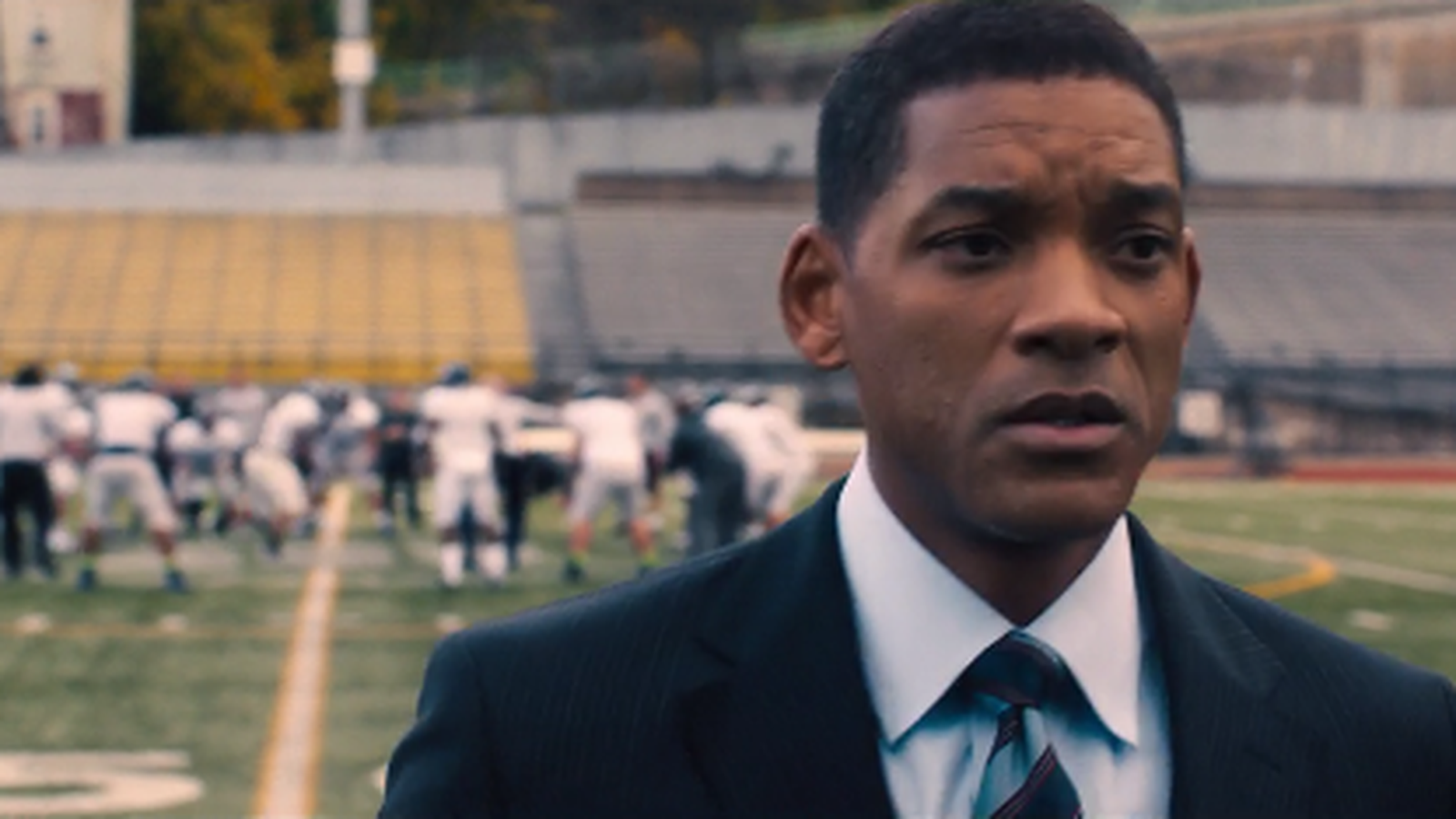
In 2002, Pittsburgh pathologist Dr Bennet Omalu (Will Smith) carried out an autopsy on deceased former Pittsburgh Steelers centre (and American Football legend) Mike Webster (David Morse). What he discovered – that the high speed impacts of American football massively increased the chances of players suffering serious brain damage and debilitating mental conditions – was to change his life, and lead to a six-year battle to get his research acknowledged by the NFL. This film dramatizes this story – with the obligatory inventions and dramatic changes (Landesman describes the film as “emotionally true” if not “factually true”).

Concussion is a fairly straight-forward, rather uninspired “one man’s struggle” kind of film. There isn’t much in it, to be honest, that is particularly unique or different from films of this type we’ve seen before. We’ve pretty much all seen the trope of a man pushing to get himself heard against the scorn, disbelief and anger of those who need to hear him the most. Does Concussionadd anything new to that? No not really.

Peter Landesman shoots the film with a methodical, workmanship that hits all the expected beats. The whole film plays like Michael Mann’s The Insider-lite: with the difference that the NFL never really convinces as an actual threat in the way Big Tobacco does in that film. The film falls over itself to repeatedly tell us how powerful the NFL is but never really shows us in the film how that power might work. When the FBI drum up charges against Omalu’s mentor, you never get the sense that this is being directed by the NFL themselves. They are simply never that dangerous an opponent.

Maybe because this is a film that doesn’t want to run the risk of saying America’s beloved sport is dangerous. It wants to blame bad eggs rather than an institutional failure – hence the repurposing of former player Dave Duerson as a sort of braggart bully. The characters playing the NFL heads are relegated to TV screens in the corner. It never wants to really look at the risks of this institution wilfully burying evidence their sport is dangerous, or question whether this sport is even a good idea. Throughout the world of sport, there are ungoing debates about the health risks of sport, from the danger of heart conditions to early onset dementia in football players from heading the ball. This film fails to really tap into any of this.

As such, there isn’t really any dramatic force behind the film: it doesn’t manage to suggest Omalu is in danger and it doesn’t want to turn the NFL into actual antagonists. It treads a weary middle ground. If the NFL was really positioned as a threat, then the pervasive presence of its stadium in Pittsburgh would be sinister. It isn’t for all Landesman tries to shoot it in that way.

Despite this though, Will Smith is very good as Omalu. The film’s version of the doctor seems a little different from the quirky, socially awkward real-life Omalu. But Smith nails the home-run scenes of Omalu raging at his research being disregarded. (In real life it was easy for the NFL to dismiss Omalu by using his Nigerian heritage (his ‘otherness’) quietly against him. The film doesn’t touch upon this by the way.) Smith has all the charisma the role needs and brings it a certain James-Stewartish moral decency.

The rest of the cast don’t get much else to play with. Alec Baldwin is pretty good as a former NFL doctor trying to ease his conscience (although his accent got some criticism). Gugu Mbatha-Raw has a fairly thankless role as the supportive wife, but does it well. Albert Brooks might be a bit too much at times as Cyril Wecht, but David Morse plays Mike Webster with sensitivity.

The film is not always that subtle. Shots of Webster haunting Omalu are a bit much. Omalu’s unhappiness and frustration are telegraphed using familiar clichés, from raging impotently at stony faced law officers, to trashing a room in his still-under-construction dream home in Pittsburgh (having read the source book it’s hard to believe the real Omalu ever did something like this). The timeline of the film isn’t always clear. There is a little too much lingering on funerals and tear-stained relatives for easy emotional hits.

The main issue is that Concussiondoes nothing special and doesn’t manage to make its familiar structure feel particularly fresh. It’s just a very, very familiar type of story told with no real unique imagination. Although Smith is very good, it’s not quite enough.

Chariots of Fire (1981)


Celebrations abound in triumphant running flick Chariots of Fire

Director: Hugh Hudson

Cast: Ben Cross (Harold Abrahams), Ian Charleson (Eric Liddell), Nicholas Farrell (Aubrey Montague), Nigel Havers (Lord Andrew Linsley), Ian Holm (Sam Mussabini), John Gielgud (Master of Trinity), Lindsay Anderson (Master of Caius), Cheryl Campbell (Jennie Liddell), Alice Krige (Sybil Gordon), Struan Rodger (Sandy McGrath), Nigel Davenpot (Lord Birkenhead), Patrick Magee (Lord Carogan), David Yelland (Prince of Wales), Peter Egan (Duke of Sutherland), Daniel Gerroll (Henry Stallard), Dennis Christopher (Charley Paddock), Brad Davis (Jackson Scholz)

Dun-da-da-da da-da dun-da-da-Da-Da DA. Hum that theme tune and you know straight away what film it is: you can’t resist the temptation to mime out running (in slow motion of course), arms swinging gracefully from side-to-side. There aren’t many more movies with more iconic, instantly recognisable themes than Chariots of Fire

If there is one thing everyone remembers, it’s the young athletes running along the beaches of St. Andrews, spray flying up from their bare feet. Nicholas Farrell sprinting with upper-class determination. Nigel Havers wiping spray from his face with glee. Ian Charleson full of serene joy. Ben Cross with fixed, rigid focus. The opening of Chariots is a master-class in quickly established character, tone, mood and era. The cross-fade from the funeral oration from an ageing Nigel Havers into this slow-motion, halcyon-days reflection tells you we are in the land of memory – and sets right up for the feel-good triumph the film becomes.

The film follows the key athletes of the British 1924 Olympics team. Harold Abrahams (Ben Cross) is a second-generation Jewish grammar-school boy who runs to prove he belongs and can excel. Eric Liddell (Ian Charleson) is a Presbyterian Scot, who runs to celebrate God and whose religion prevents him running in a vital Sunday qualifying heat. Both characters are, in their own ways, outsiders – and their underdog status makes them perfect to root for in this extremely well-made crowd pleaser.

Chariots is often seen as a slightly undeserving Oscar-winner. But that’s to overlook the panache it’s made with and how emotionally uplifting and engaging it is. Hugh Hudson had never directed a film before this one. His background was in commercials and he brings many of the strengths of that background to Chariots. The film is wonderfully assembled, a perfect combination of montage, cross-cutting, longer tracking shots and cross-fading. 

That opening scene tells you a lot with its swift economy. But he handles others just as well: Abrahams’ 100m winning race is played first in real time, then again, cross-cut with Abrahams’ reaction to victory. The first moment is one of triumph, but the immediate repeat allows an opportunity for the viewer to understand the mixed feelings that achieving everything you aimed for can bring. Abrahams’ slightly shocked, underpowered reaction gives the slow-motion repeat of the race a hazy, post-match analysis feel – as if Abrahams is still running the race in his mind. As if he knows that his whole life was building to that one moment, and now he needs to find a new focus.

Hudson’s mastery of moments like this is impressive. Sequences are fabulously assembled. The famous “one minute” dash around the Trinity court (actually Eton) is brilliant, and a great example of how the film sells tent-pole moments. It also masters quieter character moments. One of its stand-out moments simply allows Abrahams’ coach Mussabini (a scene-stealing Ian Holm) to react to Abrahams win (a victory he has not seen due to being banned from the stadium) by quietly rising to attention, then sitting on his bed, gleefully punching through his hat and quietly whispering “my son”. Other scenes – such as those where Abrahams confronts quiet anti-Semitism from Cambridge scholars (nice bitchy cameos from John Gielgud and famed director Lindsay Anderson), or Liddell is quietly pressured into running on Sunday – simmer with good acting and restrained direction.

It’s these scenes that really make the film work. Ben Cross is superb as a chippy, frustrated Abrahams who feels he must justify his place in England’s oppressive class system. He’s constantly glowering, tense and uncertain – but Cross mixes this with a boyish charm, a gentleness (most notably in his shy romance with an unrecognisable Alice Krige) – and a warmth and genuineness that he shows with friends. Nicholas Farrell’s boyish Aubrey Montague (a love-struck best friend if ever I saw one!) helps a lot here – if someone as obviously nice as him likes Abrahams, then gosh darn it we should as well.

Ian Charleson is equally impressive as the devout, charming but coolly determined Eric Liddell who has decided his course in life and nothing is going to shake him from it. The film has a refreshingly considerate view of Liddell’s Christianity – and, furthermore, praises him for sticking to his devout principles. Charleson wrote many of his speeches himself, and he brings a charming honesty to his character. How can you not love this guy? He’s the perfect ambassador for the Church.

The film tackles plenty of clashes for Liddell which sizzle in a quiet way. Cheryl Campbell is very good as his partly proud, partly concerned sister, worried that his missionary work is being sacrificed for his running. His confrontation with the Olympic committee over his crucial decision not to run – is there any other film where not working on a Sunday is the dramatic centre piece? – is nicely underplayed. It’s clear that they (including a very good Nigel Davenport as an understanding Chair) want him to run, and it’s equally clear Liddell is determined he won’t.

It’s the moments like this that make the film so triumphantly feel-good. Both Abrahams and Liddell are at heart immensely likeable, the upper classes and elites who frown at them in their way rather boo-able. The running scenes are great (despite the sweetly dated lack of grace!), the film really capturing the exhilarating energy of pushing yourself to the limit. Watching Abrahams training under the expert eyes of Mussabini (worth repeating again that Holm is the heart of this film, as the fatherly, wise trainer struggling against prejudice against both Italians and professionalism), or Liddell winning from behind after being pushed over in a race are simply hugely uplifting.

Strangely the one thing that does seem a little odd today is the Vangelis score. Yes the Chariots march is outstanding – but the 80s electronic beat to the rest of the score now sounds very dated. Yes it is interesting to overlay (then) modern music over a period piece – but nothing dates quicker than music (except perhaps haircuts) and that is the case here. It sounds odd and jarring with the action at times – but then that main theme is so brilliant (but also the most classical of Vangelis’ compositions) that it still sort of works.

The sad thing is that Chariots didn’t lead to great new things for most involved. When he won the Oscar for best original screenplay, Colin Welland famously cried “the British are coming!”. Sadly he wasn’t really right. Within four years two flop films had all but ended Hudson’s career. Producer David Puttnam took over Columbia Pictures, only to be dismissed within a year after disastrous results. Many of the stars of the film never got the breaks this film promised (Charleson died tragically young – the first major star in England to openly acknowledge his cause of death as AIDS). Even the star Americans introduced to play the yank athletes (Brad Davis and Dennis Christopher) never had a hit film again. As David Thomson put it, within ten years of all the major players only Ian Holm “had any professional credibility left”.

But Chariots is still a bit of lightening caught in a bottle. A strange idea to spin an entire film out of an event lasting less than 10 seconds, but which married up so well with universal themes of class and struggle. It knows exactly what it is, and exactly what it is doing. It really worked then and it really works now. It’s not pretending to be high art, or to really make profound statements – just to entertain. And it really does. Fetch your running shoes and start that Vangelis theme!

Eddie the Eagle (2016)


Some more comic escapades in the not-really-true-at-all film of Eddie the Eagle’s life

Director: Dexter Fletcher

Cast: Taron Egerton (‘Eddie’ Edwards), Hugh Jackman (Bronson Peary), Iris Berben (Petra), Keith Allen (Terry Edwards), Jo Hartley (Janette Edwards), Tim McInnerny (Dustin Target), Mark Benton (Richmond), Jim Broadbent (BBC Commentator), Christopher Walken (Warren Sharp), Rune Temte (Bjørn), Edvin Endre (Matti Nykänen)

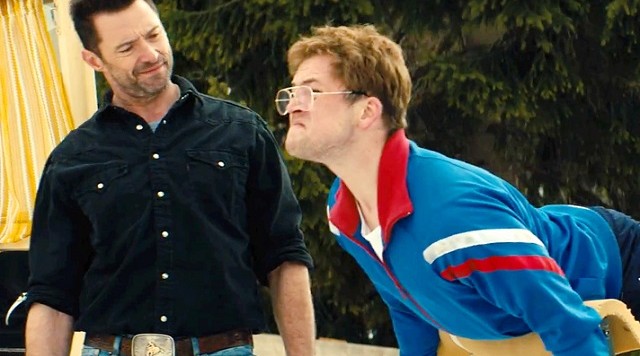
Watching Eddie the Eagle, it’s interesting to think that Edwards was ahead of his time. An unqualified ski jumper with a certain natural talent and a lot of dedication, his unspun, naïve enthusiasm effectively made him a perfect YouTube sensation, 15 years before that term existed. His joyous reactions and “just pleased to be here” manner while coming last in two ski-jumping competitions at the Olympics meant the public couldn’t get enough of him (then or now it seems) and he’s probably about the only thing anyone can really remember about the 1988 Winter Olympics.

I found my heart completely unwarmed by this lamely predictable film, a virtual remake of Cool Runnings and Rocky, which can barely move from scene to scene without tripping over clichés. In other sports films, the snobbery against the underdog feels unjust because we know they deserve to be there. Edwards doesn’t deserve to be there, and doesn’t prove himself anything other than a brave novelty act. Perverse as it sounds, the one area where the film deviates from its predictable formula is the part that makes everything else not really work.

It’s not a particularly funny film. That may be partly because every single comic beat in it is taken from somewhere else, but joke after joke falls flat. Scenes meander towards limp conclusions that can be seen coming a mile off. Every single character is either a cliché, mildly annoying or both. Jackman strolls through the film barely trying. Taron Egerton plays Eddie as virtually a man child, a naïve mummy’s boy, an innocent in the world of men, curiously sexless, but a cheery enthusiast with a never-say-never attitude. However, I often found him less endearing and more mildly irritating.

Virtually nothing in the film is actually true. This doesn’t necessarily matter, but I felt it made the film slightly dishonest. It leaves us with the impression Edwards was set to go on to success in his career – he wasn’t. It doesn’t mention the Olympic committee changed the rules to prevent amateurs taking part in this highly dangerous sport at this level. It doesn’t even begin to mention that almost the entire cast are invented supporting characters, or that many of the real characters (such as Edwards’ father) have had their personalities totally reimagined.

It also reshuffles the truth to make Edwards seem far more incompetent and unlikely than he actually was. In reality an accomplished amateur athlete and skier who just missed the Olympic team, he’s here reinvented as a barely proficient, uncoordinated klutz, a buffoon on skis. Egerton’s otherworldly naivety (at times his childish outlook on the world borders on the mentally deficient) is to be honest rather grating. By hammering up his ineptitude, it’s hard to really think that he should be clinging to these dreams that he’s not suited to perform.

Channel 4 run a TV reality ski-jump show called The Jump. Several celebrities who have taken part in it have suffered serious injuries. With that in mind, is it really wrong to wonder if a sport isn’t right in saying “the unqualified and the amateur shouldn’t be attempting this”? Yes the Olympics is partly about competing in the right manner – but shouldn’t that mean also protecting people from themselves?

The one slightly brave move the film makes is to briefly toy with the idea that Edwards is fundamentally misguided. Before the Olympics begins, his trainer pleads with him to continue his training, wait four years and qualify as a proper athlete rather than a novelty, to have a future of several Olympics rather than cheating into one. Edwards (and the film) ignores him, but I found I was thinking “you know what, he’s right”. The film never manages to remove from Edwards the whiff of the joke act.

I’ve been incredibly hard on this film – it’s not like it’s trying to do anything serious or meaningful. It just wants to tell a nice story about a nice guy. It prides itself on being a bland formulaic piece of film making. But I didn’t find it moving or heartwarming and I didn’t warm to Edwards. I admire his determination, but he’s like those deluded singers chasing their dream on X Factor. The characterisation of Edwards makes him hard to relate to and his final “success” doesn’t mean anything as the film never escapes the feeling that he is being laughed at rather than with. Add the fundamental dishonesty of the film and I found it really unsatisfying.

Give it a miss. Watch Cool Runnings instead. That’s full of invention too of course, but the invention is truer to the facts and the spirit of the truth, and the film itself is far funnier and more satisfying than this one.