Tag: Stanley Holloway

The Lavender Hill Mob (1951)

The Lavender Hill Mob (1951)

Delightful but surprisingly subversive Ealing comedy, one of my all-time personal favourites

Director: Charles Crichton

Cast: Alec Guinness (Henry “Dutch” Holland), Stanley Holloway (Alfred Pendlebury), Sid James (Lackery Wood), Alfie Bass (Shorty Fisher), Marjorie Fielding (Mrs Chalk), Edie Martin (Miss Evesham), John Salew (Parkin), Ronald Adam (Turner), Arthur Hambling (Wallis), John Gregson (Inspector Farrow), Clive Morton (Station Sergeant), Sydney Talfer (Clayton)

It’s my personal favourite of all the Ealing comedies. It’s always surprised me it has been so warmly endorsed by the Vatican. Sure, it ends with a cursory “crime doesn’t pay” message – and it’s got a great deal of lightness, affection and wit. You want our seemingly mousey underdog to successfully take on the big banks. But this is a surprisingly dark and subversive film under its cuddly exterior. Much like its lead character, appearances can be deceptive and The Lavender Hill Mob lulls you into a false sense of security to hide its surprisingly darker heart.

Set in post-War London, Henry Holland (Alec Guinness) is a timid bank clerk, paid pocket money to monitor the delivery of hundreds of thousands in gold bullion to his bank. And he’s had enough. Holland plans a heist – he’ll steal the money, escape unsuspected and live the life of Reilly he feels he deserves on the proceeds. The inspiration for how to smuggle the money out presents itself when he befriends artist turned tacky gift manufacturer Alfred Pendlebury (Stanley Holloway) – they’ll melt down the gold and smuggle it as Eiffel Tower models. What could go wrong?

The Lavender Hill Mob fits very neatly into the classic Ealing set-up. The plucky underdog takes on the establishment, in this case the heartless bank run by public-school poshos and the police with their new-fangled technologies. It plays these cards extremely well, poking fun at the set order and building a great deal of empathy with Holland and Pendelbury, the two most unlikely criminal masterminds you can imagine. Middle-aged, middle-class professionals who have led lives of quiet, dutiful anonymity, its huge fun to see them cut loose and embrace the chance to be bad-boys. Who hasn’t wanted to say “to hell with it” and grab the opportunities you want in life?

But TEB Clarke’s superb script, matched with Charles Crichton’s dynamic direction, has a darker heart under the surface charm. Set in a bombed-out post-war London, the film’s design never lets us forget this is an upturned Britain, reeling from years of unimaginable upheaval. A country going through social and political change leaving old, deferential ideas in the past and old principles of morality might not apply. After all, when death was a nightly visitor to the capital, why should you continue to play by the rules? Holland is actually a man who has simmered with quiet, unspoken resentment for decades, who crafts the perfect heist and sees it through with obsessive, almost cold-hearted fanaticism.

Sure, he seems sweet and, yes, he doesn’t half get swept-up in childish excitement in the glamour of crime – who can forget his bashful desire to take on the criminal nom de plume Dutch. But the genius of Guinness’ performance is that he never lets us overlook the ambition, greed and willingness to go to any lengths under Holland’s meek exterior. Watch how Guinness stares with unblinking acquisitiveness at the gold as it melts down. The authoritative command he takes over Pendlebury when a small batch of gold Eiffel towers are accidentally purchased by a group of school children. The demanding perfection he insists on in every step of the heist.

This is Guinness at his absolute best and perhaps only he could combine such a criminal heart with light-comedy. Holland is an immensely endearing character because his success remains so unlikely. His scheme is low-tech and clever so it’s impossible not to end up rooting for it – especially when the resources and technology of the police and the bank are so well sign-posted. Guinness is giddy with excitement at the scheme – but also look at how quickly and coldly he lies, how smug and satisfied he can be in success and how ruthless when the situation calls for it. But yet we love him. This is dramatic and light comic acting distilled in one. He’s superb.

If anyone is a corrupted innocent, it’s Alfred Pendelbury. Played wonderfully by Stanley Holloway as a poetry-quoting dreamer, Pendlebury is the real unlikely criminal here. Holloway and Guinness have a wonderful chemistry, both enjoying the naughtiness of theft, but with Holloway’s star-struck eyes, Pendlebury is the follower, in awe of Holland’s cleverness and determination. Poor Pendlebury almost blows the heist by absent-mindedly wandering away from a newspaper stand still clutching an (unpaid for) newspaper, blithely suggests they let lost Eiffel towers go and bundles around the crime with an optimistic amateurism.

Clarke’s script has a lot of fun with questions of class. The pompous bank managers are exactly the sort of arrogant posh-boys who look down on everyone else with paternal disregard. They are blank, unthinking automatons. Class works both ways. Holland is unsuspected of the crime as he’s the sort of middle-class person who wouldn’t do this sort of thing. Holland and Pendlebury are quietly resentful of those above them – but they assume the same authority over the criminal classes they recruit for the scheme. Sid James (cementing his persona as a cheeky spiv) and Alfie Bass are natural cap-doffers who quickly accept their place in the gang’s hierarchy and even (rather sweetly) trust Holland and Pendelbury to deliver their share from Paris (naturally, as working-class lads, they are suspicious of travelling to France anyway to collect the loot).

The Lavender Hill Mob exposes the assumptions and traps of the class system in this country, and does so with a gentle, sly, subversive wit. Holland is basically the forerunner of the sort of bitter middle and lower middle class ambitious types who would drive change in Britain in the next few decades.

The film also gets a lot of comic mileage out of the smug ineffectiveness of most of the official forces. The police have a raft of technologies – radios, cars, scientific techniques – all of which do very little to help. In a late car chase through London, the radios actively work against them – Holland easily uses the radio in their stolen police car to spread disinformation, the central radio director guides several cars into a collision and eventually scrambled signals lead to “Old MacDonald” being played on all receivers. Optimistic but hopelessly inaccurate bulletins are constantly posted on their progress and only personal inspiration of the lead detective (a colourless John Gregson) and chance leads to the crime being unmasked. As well as looking at the dark bitterness of its lead character, The Lavender Hill Mob is strikingly cynical about officialdom.

Crichton’s direction is visually inventive and at times almost Hitchcockian – Holland and Pendlebury’s dizzying stairway descent from the Eiffel Tower arguably inspired Vertigo. And the film is supremely funny. The heist is planned with perfect comic timing, chase scenes are brilliantly done and there is a superb farcical set-piece as Holland and Pendlebury hurriedly try to negotiate French customs in a rush to catch a boat. Every scene has a funny line or inspired piece of comic business and Clarke’s script perfectly balances this with gentle but intelligent social commentary.

The Lavender Hill Mob is a triumph. From start to finish a delight, insightful and funny, it has superb performances from a faultlessly brilliant Guinness and a bombastically huggable Holloway. It wraps up comedy, social commentary and a surprising cynicism into a complete package. It’s a tour-de-force of charm, shrewdness and grace. It remains my best loved Ealing comedy, and possibly one of my favourite comedies ever made.

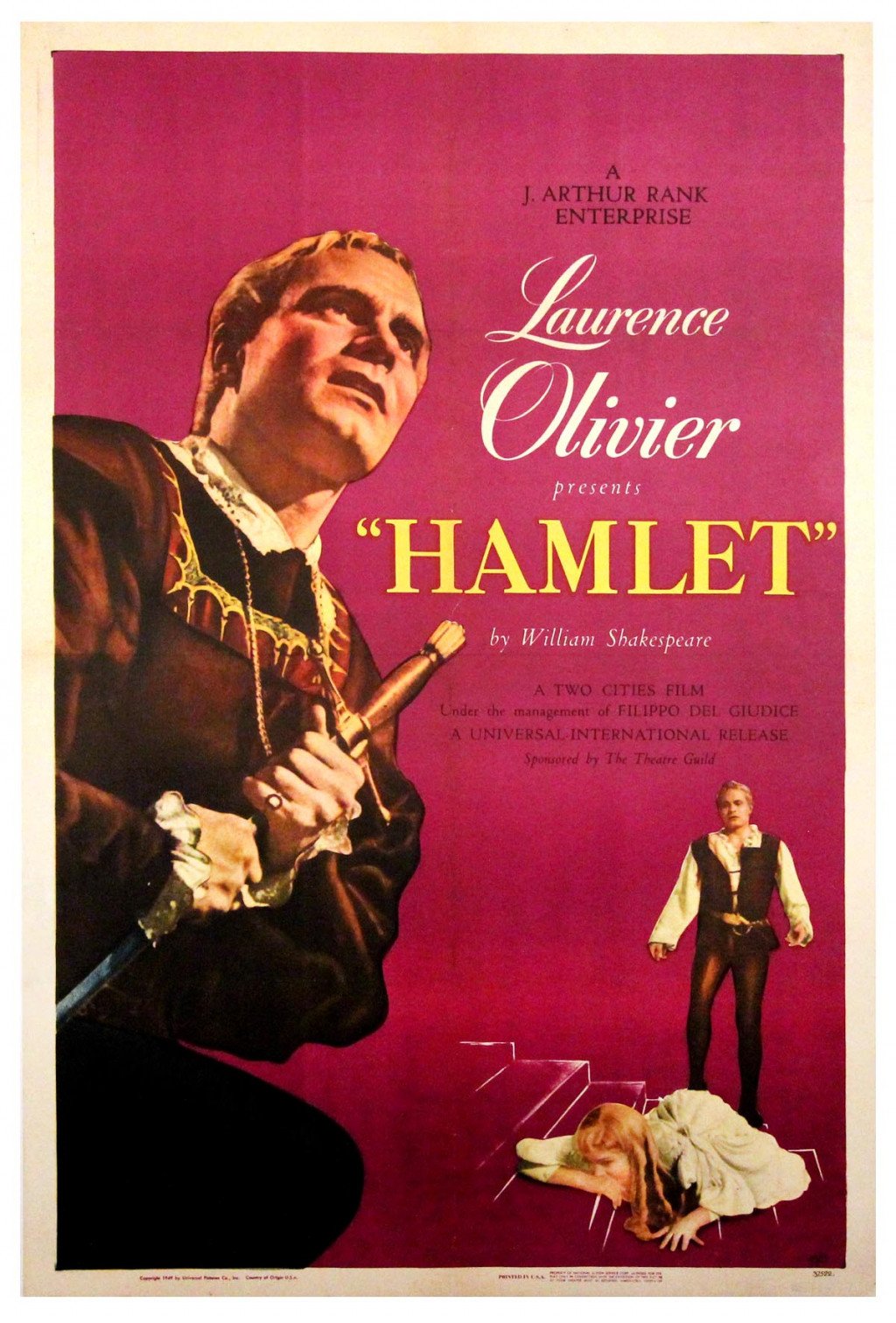
Hamlet (1948)

Laurence Olivier makes Shakespearean cinematic history in Hamlet

Director: Laurence Olivier

Cast: Laurence Olivier (Hamlet), Basil Sydney (Claudius), Eileen Herlie (Gertrude), Jean Simmons (Ophelia), Felix Aylmer (Polonius), Noman Wooland (Horatio), Terence Morgan (Laertes), Peter Cushing (Osric), Stanley Holloway (Gravedigger), Anthony Quayle (Marcellus), Esmond Knight (Bernardo), Russell Thorndike (Priest), Harcourt Williams (Player)

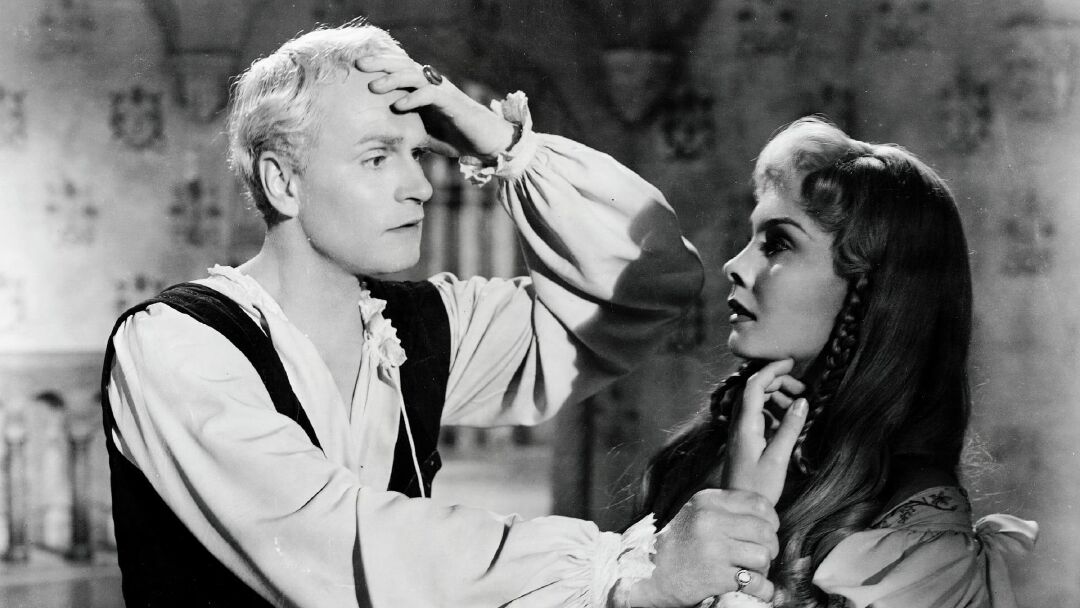
Close your eyes and picture Hamlet – chances are you will see an image inspired by Olivier. Olivier’s second Shakespearean directing outing coated him in plaudits. He became the only actor to win an Oscar for Shakespeare (and, until Roberto Benigni, the only actor to direct himself to an Oscar) and the film itself became the first non-American film to win Best Picture. Hamlet will live forever, a corner-stone production of the play and a part of Shakespearean and cinematic history. It skilfully weaves together theatre and cinema and still works as a cracking production of the play.

To bring it to the screen, Olivier made some big calls. Smaller parts were cut to ribbons (particularly the Player King) or in many cases (I’m looking at you Rosencrantz and Guildenstern) excised all together. Over half the dialogue cut, with the focus being bought onto domestic tragedy (the politics of Fortinbras is never mentioned). This is a family tragedy, and a Hamlet-centric production, where Claudius is a jovial villain and Gertrude a mother with confused feelings for her son.

Oliver set this in a sprawling medieval castle using the best elements of theatre and cinema. The sets are beautifully constructed: winding corridors, towering halls and imperious battlements provide the sort of realist set Olivier could only dream of in the theatre. But Olivier (and photographer Desmond Dickinson), lights this with the moody intensity of film noir. Shadows dominate the castle and the frame, frequently provide hiding places. Olivier’s debt to Wyler (and Welles) can be seen in his pictorial framing and use of deep focus, while domestic tragedy in a grand house has more than a few calls backs to Hitchcock’s Rebecca. Frequently shots show an actor in the foreground, being observed in long shot by a second actor in perfect focus.

It also takes inspiration from expressionist cinema, especially in its mist-laden battlements, with some neatly surreal touches. The Ghost (whose voice, heavily distorted, is also Olivier’s) is a shadowy demonic figure, emerging shrouded in mist. A wonderful series of shots sees the camera seem to soar away from the throne room steps where Ophelia weeps, through the castle towers, into the sky and then down towards Hamlet staring at the waves at the foot of the cliff, passing through his skull where the image of the crashing waves is overlaid across the interior of Hamlet’s skull. It’s a more effective use of visuals than the film gets credit for.

For all its traditional trimmings – cod-pieces and men-in-tights abound – it’s easy to forget how influential this was. It cemented for years a view of Hamlet as a man wracked by indecision and made it standard to see Gertrude and Hamlet locked in Freudian-inspired Oedipal lust. The first idea came from the opening narration’s reductive phrase “This is a tragedy of a man who could not make up his mind”. It’s an odd statement to make – especially as Olivier’s Hamlet hardly seems wracked by indecision – but it matched a perception of the play so, true or not, it stuck.

That relationship between Hamlet and Gertrude adds a perverted romantic twist to the bedroom scene between the two (you can sense the inspiration of Wyler’s Wuthering Heights), with the film frequently framing the encounter with romantic angles. Eileen Herlie, for all the unflattering make-up and filming, looks all too much like Hamlet’s contemporary rather than mother (Herlie was in fact nearly 12 years younger than Olivier). While the scene does have a little too much heavy-breathing – and Olivier overplays the heart-beat soundtrack as white noise – it’s an effectively unsettling balance of intimacy and incest. It also runs through the production – from Gertrude kissing Hamlet on the lips, to her conscious decision to drink the poison and protect Hamlet.

The production – partly driven by cuts – is fiercely Hamlet-centric. Olivier speaks most of the dialogue (all of Olivier’s films revolve around massive star-roles for himself, fitting his competitive dominance). His Hamlet is beautifully thoughtful, but also dynamic and energetic (not much doubt there). Olivier perfectly captures the intellectual, as well as the humanity, grace and charm. Some of the nuance of the soliloquies is lost by Olivier’s decision to deliver them in voice-over (although Olivier does a good job reacting along to the narration) – but fortunately “To Be or Not To Be” and his speech on Yorick’s skull remain delivered ‘live’, and coated in emotional honesty.

The rest of the cast are relegated. Sydney’s Claudius is little more than a scowling villain, Herlie has little presence. Norman Wooland makes a great deal of the loyal Horatio (a famously dull role), while Peter Cushing adds some comic energy as a foppish Osric. The best non-Hamlet moments go to Polonius and his children: Aylmer is the portrait of a doddering interferer nowhere near as smart as he thinks he is, while Morgan has a matinee idol energy as Laertes. Best of all is Jean Simmons, wonderfully heart-felt and fragile as Ophelia, whose gentleness dooms her.

Olivier might give himself most the best moments, but he allows plenty of directorial flourish elsewhere. There is a wonderful shot at Yorick’s tomb, where Hamlet’s shadow is cast over the skull, the skull seeming to become the shadow’s head. While a crane shot during Claudius-Laertes scheming is unwisely used twice in quick succession (more likely to raise chuckles), there is an impressive amount of camera movement and tracking shots. The production ends with a knock-out sword fight – and of course only Olivier would cap that with a life-and-limb risking dive from a platform. Olivier’s charisma is used brilliantly in these scenes, and while it’s not always quite clear emotionally what Hamlet is considering in these moments, his forceful presence drives the action and adds great weight to his final speech.

Because, this isn’t a film about a man not making up his mind. Sure, he’s a thinker – and one of the final shots brings us back to Hamlet’s chair, now empty – but when action is needed, this Hamlet grabs it. Just as Olivier grabbed the tools of cinema to create a production of the play that feels like a film. Some critics at the time were horrified that Hamlet should even be in the crude medium of film (Olivier took to calling it an “essay” on Hamlet) but today it stands quite rightly as both a great film and a key example of how to bring Shakespeare to the screen.

My Fair Lady (1964)

Audrey Hepburn and Rex Harrison cover how to speak proper in My Fair Lady

Director: George Cukor

Cast: Audrey Hepburn (Eliza Doolittle), Rex Harrison (Professor Henry Higgins), Stanley Holloway (Alfred P Doolittle), Wilfrid Hyde-White (Colonel Hugh Pickering), Gladys Cooper (Mrs Higgins), Jeremy Brett (Freddy Eynsford-Hill), Theodore Bikel (Zoltan Karpathy), Mona Washbourne (Mrs Pearce), Isobel Elsom (Mrs Eynsford-Hill), Henry Daniell (British Ambassador)

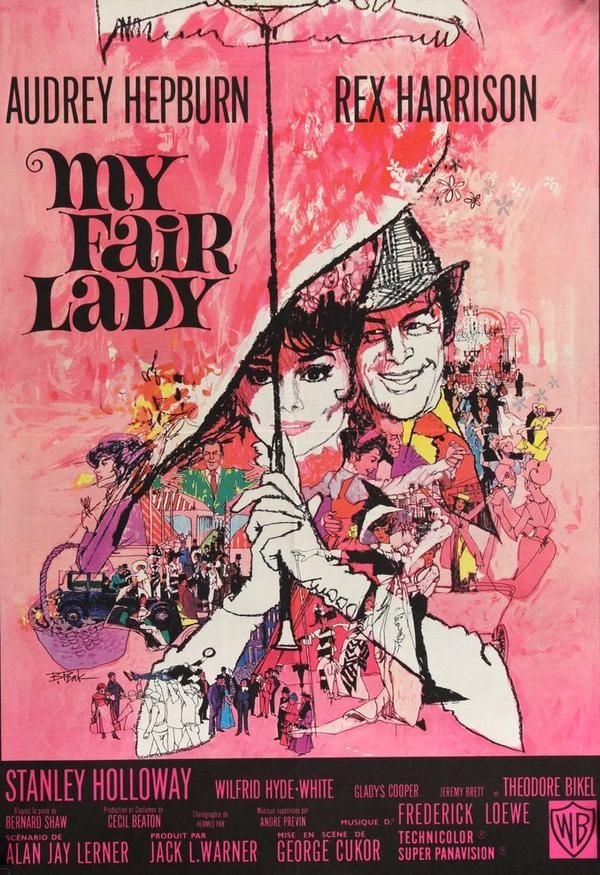
My Fair Lady is possibly one of the most popular musicals of all time. A singing-and-dancing adaptation of George Bernard Shaw’s most popular play, a satire on self-improvement and sexual politics, the original Broadway production ran for over six years and 2,717 performances, while the original cast-recording album was a smash hit bestseller. It was a question of when rather than if a film version would be made. When it finally happened, the film was garlanded with Oscars aplenty, not least Best Picture, Best Director and Best Actor.

The musical follows the story of Eliza Doolittle (Audrey Hepburn), a cockney flower girl in Victorian London, whose life is changed after a chance encounter with linguistics genius Professor Henry Higgins (Rex Harrison). Higgins has a bet with his colleague Colonel Pickering (Wilfrid Hyde-White) – he can change Eliza’s accent and manners so much that the shrill cockney girl will pass for a society belle. The bet will not only change their lives, but also those of Eliza’s father, sage-like binman Alfred (Stanley Holloway), and lovestruck romantic young gentleman Freddy Eynsford-Hill (Jeremy Brett). 

From the start, producer Jack L Warner wanted to develop a new verison of the film, fresh and different from the stage production. George Cukor, the esteemed director from Hollywood’s Golden Years, was brought on board as a safe pair of hands – but it was clear Warner was calling the shots. How to put your own stamp on a massive hit musical? Well you start by getting a fresh cast in. Julie Andrews had made the role her own in the original production, so Hollywood was stunned when she was overlooked for the part. Instead Audrey Hepburn was hired – while Julie Andrews got the consolation price of being able to accept Disney’s offer of the role of Mary Poppins. Warner knew who he wanted for Higgins – and Cary Grant was swiftly courted for the role. But Grant refused, allegedly responding that he wouldn’t even see the film unless Rex Harrison was retained in his signature role.

So Harrison owes him a drink or two, because the film allowed him to leave a permanent record of a stage role he had played over 1,000 times on Broadway and in the West End. Harrison had taken a revolutionary approach to musicals, by basically not singing. Instead he sort of spoke the songs rhythmically – an approach that every other performer of the role has stuck to. The film is a brilliant capture of this unique and authoritative performance, and while Harrison is not exactly fresh he’s certainly charismatic, delivering every scene with confidence and well-rehearsed bombast.

Harrison’s steely lack of willingness to compromise also lead indirectly to a revolution in sound recording in the movies. Harrison refused to obey the custom at the time to lip-sync on set to a pre-recorded soundtrack. Harrison insisted that his performance was subtly different every time so he could never lip-sync accurately. Instead the technicians were forced to invent a sort of wireless microphone that could be disguised in the over-sized neck ties Harrison wears. This also means that at least one musical number has the bizarre situation of Harrison singing live, Hyde-White lip-syncing and Audrey Hepburn being dubbed.

Ah yes Hepburn. If there is one thing everyone remembers about Hepburn’s performance in this film, it is that she doesn’t sing a single note of the final film. Her actual singing was quickly considered by Warner to be not up to snuff, and so she is replaced by voice-double-to-the-stars Marnie Nixon. It’s always a mark against Hepburn, whose performance is often rather shrill, stagy and (whisper it) even a little bit irritating. In fact, she’s pretty much miscast as the cockney flower girl, never convincing as a bit of rough from the streets, and is so horrendously misstyled throughout that she also jarringly looks like a 1960s fashion icon floated into a period film.

Having hired the male star of the Broadway production – not to mention Stanley Holloway also being retained from the original cast after James Cagney refused to be drawn out from retirement – the film quickly settles down into being a straight Broadway musical captured as faithfully as possible on the big-screen. My Fair Lady is a film crushed under the pressure of its design, and watching it today it looks unbearably studio-bound and flat. In every scene you can never forget you are watching the action take place on enormous sets, with the camera pulled back to try and get as much of the expensive soundstage work in frame as possible.

As a dance musical, it’s pretty flat – Holloway’s numbers in particular are strikingly lifeless in their dancing, which makes you regret even more that Cagney couldn’t be lured to star in it – and much of the singing feels forced or over-performed. Even Harrison’s numbers feel pretty by-the-numbers from Harrison’s constant repetition of them. Even the more impressive scenes – such as the race track sequence – feel artificial and over-designed, the money chucked at the careful period detail and over-elaborate costumes and set (designs courtesy of Cecil Beaton, who allegedly drew the designs and then disappeared to leave them to be interpreted by others) seeming more and more dated as the years pass by.

But then this was a film that probably felt dated at the time it was made – it beat Dr Strangelove for best picture, and in five years’ time Midnight Cowboy was lifting the Oscar – never more so than in Cukor’s direction. One wonders at times what Cukor really did: Warner cast the film and led on the design and staging. Harrison and Holloway had played their roles literally thousands of times already. The camera work is as conservative and unimaginative as you can expect, with the film dryly set up to give you the perfect view from the stalls. Several touches – such as the staging (complete with blurry focus edges) of Eliza’s fantasies of the domineering Higgins being punished by firing squad – are clumsy and obvious. It’s a film made with no real independent personality whatsoever.

Not to mention the fact that it completely fails to draw any chemistry from the Higgins/Doolittle relationship whatsoever. It’s an odd one, as the musical takes on a romantic ending of the two characters together – an ending, by the way, that Shaw famously hated when a suggestion of it was added to the original Pygmalion production. Here, this comes from nowhere, and feels unbelievably forced and artificial as Harrison has demonstrated no interest at all (other than irritation) for Hepburn, and she in turn offers little back. When they come back together it’s hard to care.

But they cared back then as this was a huge box office smash. It’s very odd to imagine it now – because this isn’t a great film, it’s a decently done one that carries some charm but never finds an identity for itself as film away from its musical roots and never brings anything unique and imaginative to the table. It’s extraordinarily flat as a piece of film-making and seems increasingly more and more dated in its performances, its atmosphere and its staging. It’s got some charm, but I’m not sure if it’s got enough.

The Private Life of Sherlock Holmes (1970)


Robert Stephens and Colin Blakely explore the mysteries of the Private Life of Sherlock Holmes

Director: Billy Wilder

Cast: Robert Stephens (Sherlock Holmes), Colin Blakely (Dr John Watson), Geneviève Page (Gabrielle Valladon), Christopher Lee (Mycroft Holmes), Irene Handl (Mrs Hudson), Clive Revill (Rogozhin), Tamara Toumanova (Madame Petrova), Stanley Holloway (Gravedigger), Mollie Maureen (Queen Victoria), Catherine Lacey (Old Woman)

The Private Life of Sherlock Holmes may just be the best Sherlock Holmes film you’ll see. It’s certainly one of the most original. Wilder’s semi-pastiche, described by Mark Gatiss as “both reverent and irreverent”, was a major box-office disaster at the time, but it’s a film that has grown richer and more enjoyable with age – particularly as we’ve caught up with its “fan fiction” style, its placing of the great detective in unusual emotional and social situations. 

Wilder’s film follows two “buried” cases of Sherlock Holmes, both suppressed by Watson. In the first (taking up the first quarter of the film), Sherlock Holmes (Robert Stephens) and Dr Watson (Colin Blakely) are invited to a production of Swan Lakeby the Russian Royal Ballet, where a curious and unusual case is proposed to Holmes. In the second story, a mysterious woman suffering from amnesia (Geneviève Page) winds up on the doorstep of 221B Baker Street. Investigating who and what has brought her there leads into a case that covers continents, the upper echelons of the British government, and (possibly) the deeply hidden depths of Holmes’ own heart.

First off, it’s impossible to talk about Private Life without noting we only really have half the film. Not only did audiences not get it, nor did the studio. Both were expecting a traditional Holmes adaptation. Getting an amusing and wry exploration of Holmes’ psychology, built into a film where the great detective makes several errors, was categorically not that. So half the film was cut and chucked in the bin (including two whole cases). The footage no longer survives (there is an excellent recreation of what is left on Eureka’s new blu-ray) – but it’s a film that might have been.

It’s also a film that was apparently hell to make. Wilder had always been demanding – he demanded a completely faithful interpretation of his text, and often gave scrupulous line readings. It went to extremes here: epic rehearsals before every shot, with every line and movement dictated. For Stephens – a fragile alcoholic going through a divorce – it was too much, and part way through filming he attempted suicide. Shooting was delayed while he recovered, though Stephens’ pale, wan face needed to be overly made-up to compensate (in the opening scenes he genuinely looks like a drag act).

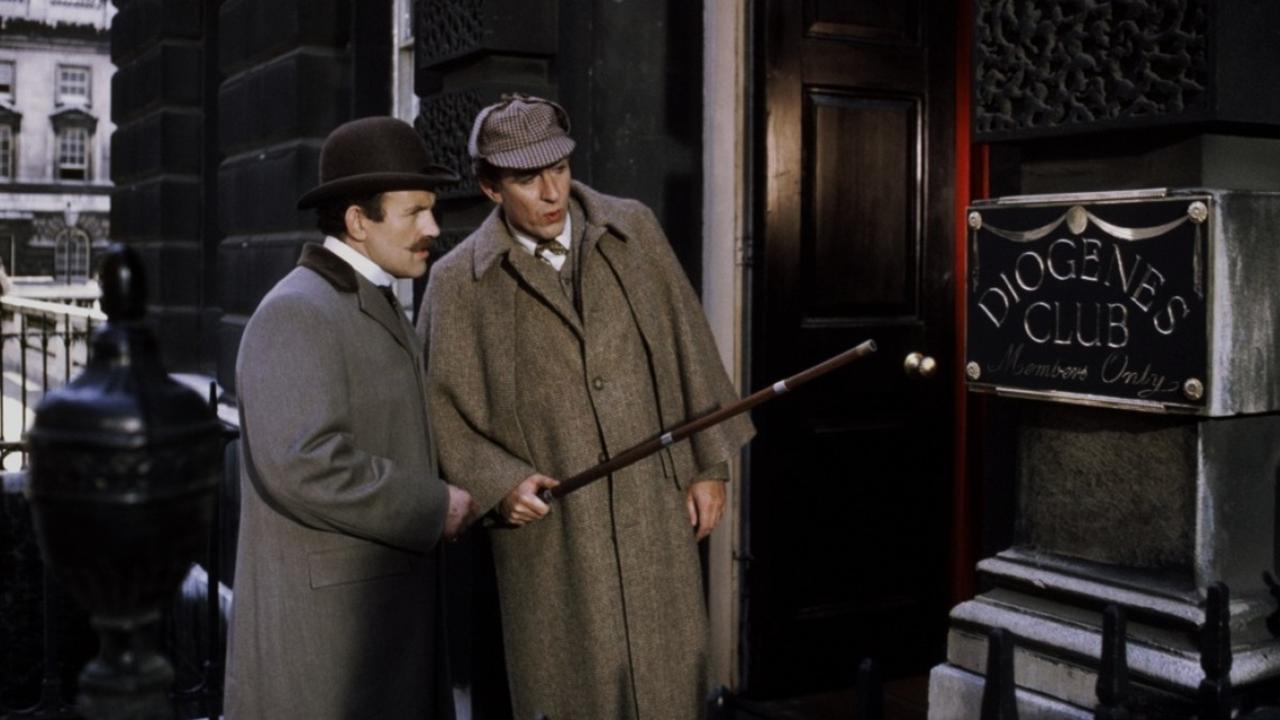
So you can’t forget the turmoil that brought it to the screen. But the end result (what remains) is largely a delight, even if it isn’t perfect. But it really is decades ahead of its time. Just like Sherlock (and it’s certainly the parent of that show), its main interest is not the case but the detective, his foibles and his emotional hinterland. Motored throughout by the wonderful chemistry between Stephens and Blakely (the two actors were good friends), it’s a wonderfully written film, full of wry humour and banter, mixed with moments of genuine heart and emotion. 

The film asks: who is Sherlock Holmes? Is he the cold fish he appears to be? While it doesn’t want to answer the enigma, it enjoys trying to unpeel those layers. Stephens’ Holmes is wry, witty, slightly fey, playful but also distant. He stands off from genuine intimacy and emotion – and why is that? As he spends time with Gabrielle Valadon, how much does he warm towards her – when he ruminates on his fears about trusting people, particularly women (in a marvellous late night conversation in an overnight train bunkbed), the film asks us to think: how damaged can this man who lives to investigate crimes but seems to have only one friend, be? It’s everything Sherlock took further: in fact the relationship between Holmes and Vardon has more than a few echoes in A Scandal in Belgravia.

The film’s real genius though is its opening short story, revolving around Holmes, a ballet company and a serious of unusual requests. This pastiche is very funny, very clever, beautifully played and crammed with invention and wit. The dialogue is beautiful, while both actors are perfect: Blakely is hilarious as a Watson full of joie de’vivre while Stephens’ drily amused Holmes works hard to never let surprise penetrate his raised eyebrow. The story goes down some mysterious alleyways – not least some curious questions around Holmes’ sexuality and experience with women. But it’s just about a perfect half hour of Holmesian pastiche: probably the best of its kind ever made.

The larger story doesn’t quite live up to it, but there are some beautiful moments in there, not least the growing bond between Holmes and Vardon in which nothing is ever said or done – and much is left open to interpretation – but where Holmes shows more of his humanity than he has perhaps ever done. The case itself is half humour, half expansion of Conan Doyle. By the end we are left asking ourselves how much on the back foot Holmes was for most of the case: and the case’s resolution eventually sniffs of satire. But the film itself ends on a bittersweet resolution, with Holmes facing the impact of emotions in a way he perhaps never has before.

Wilder’s film is sharp, witty and crammed with great scenes and jokes. It’s very well acted, particularly by Blakely as a hilarious Watson, full of good humour and bombast but with a sharp sense of cunning. He may not be as bright as Holmes, but he’s certainly bright enough to get the most out of life. Stephens is a little uncomfortable as Holmes (this film sparked a career nosedive that it took nearly 20 years for him to emerge from) but at certain moments he gives the part a really unique lightness masking an unknowable emotional hinterland.

It’s a film that’s easy to mistake for straight comedy, but it really isn’t. It’s a fascinating, entertaining and rewarding exploration of the leading character’s psyche, by writers who clearly know of what they speak. It throws in a case framework that smacks of the high-blown, Giant Rat of Sumatra-style cases Watson makes passing reference to in the stories. It’s a film that focuses on character and relationship – that captures a sense of friendship between Holmes and Watson that few other films have managed – and that spoofs the cannon while still feeling very true to it. 

It’s not perfect: it’s overlong and sometimes the pace drags or the sparkle fades. But Wilder and Diamond’s script has plenty of jokes and cannon knowledge (this was the first pastiche to explore Holmes’ cocaine use – and the psychological reasons for it) and has some terrific performances. Christopher Lee makes a wonderful urbane, whipper-thin Mycroft while Irene Handl is a wonderfully bumptious Mrs Hudson. Not only did it inspire Sherlock – it must also keep inspiring all fans of the great detective.

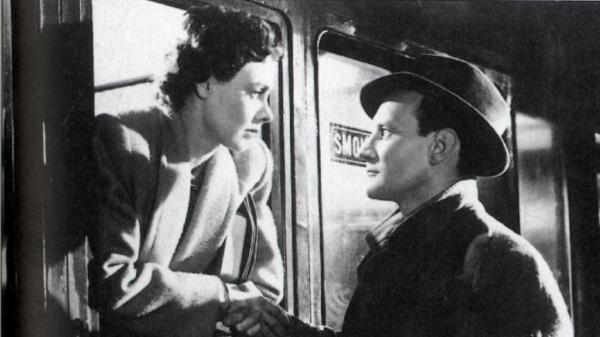
Brief Encounter (1945)


Love and life at a crossroads: Celia Johnson and Trevor Howard in one of cinema’s greatest love stories

Director: David Lean

Cast: Celia Johnson (Laura Jesson), Trevor Howard (Dr Alec Harvey), Stanley Holloway (Albert Godby), Joyce Carey (Myrtle Bagot), Cyril Raymond (Fred Jesson), Everley Gregg (Dolly Messiter)

Brief Encounter is often hailed as one of the most romantic films ever made. This is astonishing really, as it’s actually a film about an affair where two married people with young families toy seriously with the idea of walking out on these families to run off together. Put like that, you can imagine thinking, how could I sympathise with this situation? The film’s magic is that you do.

Laura Jesson (Celia Johnson) is a middle-class woman, married to loving but dull husband Fred (Cyril Raymond) with two young children. Every Thursday, Laura travels to Milford for the day for shopping and a trip to the cinema. One day she meets Alec Harvey (Trevor Howard), a married doctor who works one day a week at the Milford hospital. Enjoying each other’s company they agree to meet again, but quickly find their ease and comfort with each other developing into a deeper relationship – with infidelity on the cards.

Brief Encounter in many ways gets close to a perfect film. Its impact on people seems to be pretty near to universal. Perhaps because the film speaks to a certain universal truth: who hasn’t, at some point in their life, found themselves attracted to someone they shouldn’t be, and who hasn’t been tempted at some point to throw their life up in the air and embrace something new and exciting? The film carefully presents these temptations in a totally non-judgemental and empathetic way, and acknowledges the romance and enticement of the forbidden.

The film also perfectly captures the magical discovery of falling in love, the tingling excitement of every second spent in the company of that new found love-interest. It’s there throughout Johnson and Howard’s interactions: their smiling eagerness, the way their eyes light up and body language opens out when they speak to each other (compare to how closed off they are when speaking to anyone else). There is a relaxed pleasure about it – an innocence and spring-time joy that makes you forget that this is a couple toying with shattering their families in a passionate affair. There is a reason the film is set in a train station – it has a transient, chance-meeting sense about it, with the station being a “neutral” ground far away from both characters’ homes where it is easier for them to pretend to be “other people” – it removes many of the possibilities for the film’s would-be affair to be perceived as sordid or wrong.

The plot also hinges effectively on fleeting moments of chance that cause either joy or pain (usually the latter). Most obviously we have Doll’s interruption of their final moments – enough to make any of us scream at the screen – but their very first meeting is caused by the random chance of a piece of grit flying up at the right place at the right time. The relationship is only unconsummated due to Alec’s friend returning to a flat early (and his sneering contempt for Harvey’s planned adultery is the only scene where a third party shatters the illusion of a perfect romance that could cause no harm to anyone). The lovers encounter friends and have to concoct unconvincing spur-of-the-moment reasons for why they’re together. It’s this constant feeling of chance and chaos around the edges of the drama that provides the sense of danger that keeps this relationship alive and empathetic.

Laura and Alec are grown-up and intelligent adults, aware of the consequences of their actions, and the film keeps this constantly at the forefront. Part of the reason we can “relax” into this would-be affair is that we have already seen at the start that the relationship will end, meaning we can simultaneously root for this meeting of hearts and minds, while knowing that no one (other than the couple themselves) will be hurt. Imagine if the film had opened with Fred’s tear-stained face? Would all the romantic boat rides and illicit kisses on a country bridge still have made us feel warmly towards Laura and Alec?

Watching this film again, I actually started to think about how Lean developed as a director from these smaller scale, script-led Coward films to the sweeping, grandiose epics that he is best remembered for today. In Brief Encounter his command of mise-en-scene is so complete – and in Celia Johnson he has such an expressive actor – that the dialogue in voiceover (for all of Johnson’s excellent delivery) often feels superfluous; it tells us nothing that simply looking at the picture hasn’t already communicated. 

Look at the scene after Laura flees Alec’s borrowed apartment: Johnson’s stunned, panicked, guilty face is the camera’s focus, as we follow her, head down, moving fast through the streets without aim or direction, the score swelling behind her. Later she sits smoking on a park bench. Her conflicted emotions of guilt, shame and shock that she should do such a thing are clear, not just from the acting, but also the construction of the scene. Although the score helps, you could watch the scene silent and know exactly what was happening and what Laura was thinking about. But the film continues with Laura’s voiceover as she details everything her face is telling us. Take a look at the sequence here (64minutes and 42 seconds in):

Was it at points like this that Lean started to move towards his later films, where the language of cinema took the place of the language of speech? Later he would place so little information about the real Laurence of Arabia in that film’s script that nearly everything is interpreted from O’Toole’s expressive face. I think you can see the roots of it here – brilliant visual touches that capture the immediate intimacy between Alec and Laura, or the way the camera holds itself steadily on Laura while she prepares her evening make-up and calmly lies for the first time in her life to her husband. In the entire construction of this film, its detailed and perfectly paced building of a sense of Greek tragedy around a slim story, you see a master film-maker, a genius of visuals and compositions. You don’t need the extra explanation, it’s all there on the screen for us. 

Camera choices are sublime: look at the staging of Alec/Laura’s final meeting: first time round, the camera moves lightly past them, focused on Holloway and Carey’s characters. Despite that, we get an overwhelming sense that something important is happening just out of shot – reinforced when Dolly interprets them. Flash forward to the end of the film, as the scene is restaged – now Dolly practically forces herself into the frame (in one great shot, the camera watches Alec leave through the door before Dolly literally walks in front of the shot to sit down at the table). The careful, comfortable composition of Alec and Laura sharing the frame together – and the way she never does so with her husband (until the very end of the film) alone tells us visually as much about the relationships as any dialogue could.

What is fascinating is that this is remembered by so many people as being about the control of emotions. Watching it again, I remembered how far this was from the truth. Alec and Laura speak their feelings for each other with an almost wild abandon once the floodgates are open – Alec’s expression of devotion while they dry off in the boat house is as frank and heartfelt a declaration of love as you are likely to hear. Laura’s emotions – her joy and her pain – are not only written across her face, but spilled out across the screen in voiceover. The characters button this up when with others, but alone they are as high on love as a pair of first-date teenagers. Throughout, the writing of their dialogue is spot-on – from their initial slight shyness to the way their lines interlock and complement each other. Again, compare how Laura talks with Alec – naturally, freely, each line developing smoothly from the other – with how she communicates with everyone else in the film (haltingly, distant, talking at cross purposes, subject matter changing from line to line). I could do without chunks of the voiceover, but the dialogue is sublime, both in its style and its construction.

You can’t go far wrong either when you have actors as good as this, with such chemistry. Celia Johnson gives one of the most perfect, iconic performances in the history of cinema. Does she strike a wrong note once? I’ve already waxed lyrical about her expressiveness – but watch her in every scene, you always know what she is thinking. Her understanding of Laura is complete, and she brilliantly shows throughout the torn loyalties between the life she has and the one she could have – between making herself happy and doing “the right thing”. The film is really her story and Johnson creates a character I can’t imagine someone not relating too. Her voice is in a way ripe for parody with its crisp 1940s tones, but along with her beautifully expressive eyes under the surface of that stiff-upper lip sharpness, there are wonderful beats of emotion and desperation.

Trevor Howard is equally good as Alec Harvey – it’s amazing to think this was only his second film role. Harvey is a character we are slightly distanced from in comparison with Laura – it’s arguable that, since the film is delivered through Laura’s voiceover, we only see him (except in the opening moments) as Laura perceives him. Howard has a charm, a gentleness and an honour about him that make him a man we can relate to, but the actor also brings an edge of danger to him that make him a plausible would-be adulterer. Early in the film it’s Alec who makes the running, pushing for dinners and bunking off work for cinema trips. It’s he who sets up the possibility of consummating the relationship, and makes the first formal declaration of affection. In fact you can see, in that slight edge that Howard gives it, why some have plausibly argued that Harvey could be a serial seducer. But that’s subtext – like Johnson, Howard is perfect.

Brief Encounter is one of those films that rewards constant reviewing. It’s a brilliantly told, tightly structured and beautifully shot story that is also deeply moving and emotional, because it feels so real. It’s possibly one of the best expressions on film of falling in love, and all the excitement and danger that it brings. Perhaps that is why it moves us, and continues to have such appeal – all of us have had that excitement of spending every moment you can with someone else, of sharing everything with them. It’s an addictive and exciting feeling, and this film captures it perfectly. It also moves us because, deep down, we like sad tragic endings – they have real impact when we have related so strongly to the characters, and they stick with us. Because, you always remember when you have been heartbroken – and seeing it so vividly brought to life by Celia Johnson in a truly great performance helps to make this film permanently rewarding.