Tag: Stephen Graham

Boiling Point (2021)

Boiling Point (2021)

A chef struggles to hold it altogether under pressure in this intense one-take drama

Director: Philip Barantini

Cast: Stephen Graham (Andy Jones), Vinette Robinson (Carly), Alice Feetham (Beth), Hannah Walters (Emily), Malachi Kirby (Tony), Izuka Hoyle (Camille), Taz Skylar (Billy), Jason Flemyng (Alastair Skye), Ray Panthaki (Freeman), Lourdes Faberes (Sara Southworth)
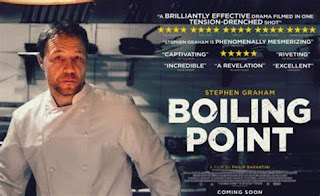
Who would want to run a restaurant? Blimey it can be stressful enough to cook for family and friends. Imagine having to prepare meals for hundreds of paying customers. Boiling Point follows – in real time – one single night of service in an over-booked restaurant a few days before Christmas. Chef Andy Jones (Stephen Graham) is feeling the pressure: his wife has left him, he’s let the paperwork slip so much over the past few months that the restaurant’s Food Hygiene Rating has slipped from five stars to three, little mistakes are slipping in and his former partner (and now celebrity chef) Alastair (Jason Flemyng) is sitting out front. It won’t be long before things hit the eponymous Boiling Point.

Expanded from a 22-minute short film made a few years previously, Philip Barantini’s film is shot in one 93-minute continuous take that starts with Andy’s (late) arrival at the restaurant and takes us through a night’s service. There are some films where this one-take device seems like a gimmick – but here it’s an essential part of the success of the film. Following all this in real time, with no single break or cut away, is like taking part in a giant panic attack. I can genuinely think of few films that were as tense as this one. There is a sweaty, edge-of-the-seat panic about the entire film that means you spend its entire runtime biting your fingernails, waiting for something to go wrong.

And there are so many potential disasters teed up. It’s a sign of the film’s intelligent, skilfully swift construction that all of these are established with minimum dialogue – and not all of them lead to disaster – but in short order we see not only the tensions among the staff (the disaffected junior chefs, the under-pressure waiting staff), but also a bullying Dad intent on making trouble on table 7, a drunken gaggle of ladies on a night out, a group of self-proclaimed social media influencers demanding off-the-menu treatment, a woman with a nut allergy that’s not correctly recorded on the ordering system, and that celebrity chef and the food critic he’s bought with him for dinner.

All this is of course bubbling up and hammering into an already deeply-under-pressure Andy, played with great skill by Stephen Graham, who has mastered these terminally weak alpha-males. Andy is the unknowing root cause of many of the problems. The restaurant’s health rating has dropped solely (as explained by a patronising but well-meaning health inspector, while Andy sits through the conversation like a sullen child who’s been caught cheating on his homework) because his lack of essential record keeping has made it impossible for it to be scored higher. Nevertheless, Andy lashes out at his junior chefs for the minor infractions also recorded, as if they were to blame.

Grasping a water bottle that he suspiciously swigs from almost non-stop, Andy has ceased leading in the kitchen: stock orders are not made, junior staff are either unsupported or allowed to shirk their duties (a kitchen hand is delivering the bare minimum, spending most of the shift on the phone or scoring drugs in the car park). Andy barely prepares any food and largely avoids any communication with his game-faced-but-deeply-out-of-her-depth restaurant manager Beth (an all-business Alice Feetham, trying to cover a rising sense of panic and a desperate need to be liked).

Kitchen command has effectively shifted to his deputy chef Carly, superbly played by Vinette Robinson. Calm, authoritative and supportive of the junior staff, Carly is just about holding the operation together by her fingertips, but even she has clearly had enough. There is a scintillating, hands-over-the-mouth dressing down she hands out to Beth – who she furiously points out doesn’t even realise all the things she doesn’t know – which feels like months of stress and frustration bursting out with carefully thought-out, inexorable, calm fury.

Just as pissed off is meat specialist Freeman (a brilliantly surly and resentful Ray Panthaki) who has had enough of cleaning up after Andy’s poor preparation and Beth’s greater interest in social media promotion rather than running a restaurant. The kitchen is full of careful character stories that swirl around the edges of the story, as the camera moves seamlessly from location to location. There is a beautifully done early scene between Hannah Walter’s motherly dessert chef and her young apprentice that literally brought tears to my eyes for its warmth and humanity.

Out front we wait for the inevitable cataclysm to take place. There to see it is Jason Flemyng’s smugly passive aggressive Alastair, mouthing platitudes about how he’s there to support Andy, while taking credit for his menu, mocking the set-up and pontificating about how he would improve every single dish. But even he is at breaking point, as later developments show.

All of this is built up by the single-take effect. Whenever the camera goes somewhere, we know that no second will be wasted and we are set to see something potentially dramatic. We begin to dread every time a young black teenage waitress heads back to table 7, where the customer doesn’t want her touching his glass and plates. Every return to the kitchen brings the sweat of wondering if a fatal mistake will take place. With the camera weaving around, following the action and moving seamlessly (but with obviously a huge amount of forethought) from place to place, this is brilliantly shot film where the one-take effect adds immeasurably to the pressure cooker effect.

Despite this, the final ending doesn’t quite land with the impact it should. But you can forgive it a great deal for the tense, gripping ride you follow to get there. The cast are all faultless – and often even more than that – and the direction is spot-on. This film is an unsung triumph – it should get a lot more recognition.


Film Stars Don't Die in Liverpool (2017)

film stars dont die in liverpool
Annette Bening and Jamie Bell as an unconventional couple in Film Stars Don’t Die in Liverpool

Director: Paul McGuigan

Cast: Annette Bening (Gloria Grahame), Jamie Bell (Peter Turner), Julie Walters (Bella Turner), Kenneth Cranham (Joe Turner), Stephen Graham (Joe Turner Jnr), Vanessa Redgrave (Jeanne McDougall), Frances Barber (Joy Hallward), Leanne Best (Eileen)

In 1981, Oscar-winning actress Gloria Grahame (Annette Bening) is performing The Glass Menagerie in Lancaster as part of a UK tour. When she collapses backstage seriously ill, she asks her former lover, young Liverpudlian actor Peter Turner (Jamie Bell), to come to her aid. Peter takes her back to his parents (Julie Walters, Kenneth Cranham) in Liverpool. The two had met a couple of years ago – Grahame the fading star, Turner the would-be actor – and age hadn’t prevented their relationship flourishing into a passionate romance. The film cuts between what pulled them apart in the past, and the present day, where Turner discovers Grahame has been diagnosed with terminal cancer and has at best a few months to live.

Film Stars Don’t Die in Liverpool is based on Turner’s book and is directed with just the right stylistic flourish by Paul McGuigan. Fundamentally a straight-forward (even rather conventional) narrative, McGuigan doesn’t crowd out the action and emotion, but skilfully intercuts past and present together (for instance, characters walk through doors in 1981 and emerge in their memories of 1979). This is pretty subtly done throughout (although the glorious, sun-kissed past and the rain drenched Liverpool present isn’t particularly subtle!) and allows the film to focus on its main strengths – the acting.

The success of the film rests on the chemistry – and skill – of the two leads who both give wonderful performances. Annette Bening excels in nearly a career-best role, as a star clinging to the remnants of her career. Outwardly displaying glamour and confidence – complete with a soft-toned movie star voice – it’s a brilliant study of inner fragility and uncertainty. She carefully reveals a Gloria Grahame who is deeply insecure and fragile.

Bening brings a lot of empathy to the role of a slightly lonely woman who has spent years avoiding questions around her own health, terrified that it could make her unemployable. It’s a fear that has a tendency to make her brittle and defensive. And of course, that’s only added to by her knowing that she is ageing in a young person’s profession. Even jokes about age expose her self-doubt and fear. (Peter drops an early clanger when she tells him after their first date she dreams of playing Juliet with the RSC: “You mean the Nurse?” he says without thinking. She throws him out.)

It’s one of the nice things about the film that the only person who really has a concern about age – or ever seems to mention it as an issue – is the older woman. Nobody else in the film questions the relationship between these two on age grounds (all the doubts raised are based on background and, above all, Grahame’s track record with marriage – four and counting). It’s purely an obsession of Grahame’s – because she doesn’t want to be reminded of her own mortality and, unconsciously, the far younger Turner is a constant reminder of this. And Grahame isn’t really that old anyway: certainly not at heart, her vibrancy being one of the first things that attracts Peter to her.

Peter’s feelings though are heart-breakingly genuine, shown in Bell’s wonderfully compassionate performance. McGuigan frequently allows long reaction shots to study the emotional impact of events on the characters, and no-one benefits from this more than Bell whose face is frequently a picture of conflicted, tortured emotion, of grief that he’s only just managing to hold in. Bell is terrific.

The film charts a romance that starts with a blissful freedom, but ends with a very true and heartfelt declaration of love. The past – saturated with cleanliness and colour as it is – is full of fun, romance and semi-surreal early encounters stuffed with expressive dancing (a great reminder that Bell can really move!) and watching Alien. The time the two spend in New York is similarly golden tinged. What draws it to a close is illness – and Grahame’s fears of how it will affect Turner as well as not wanting to live her last few months being nursed by her lover like an invalid.

It’s an involving romance and relationship piece, and it also gives time to how important families can be. Turner’s parents (lovely work from Walters and Cranham) are supportive and caring of Grahame – and his brother (edgy work from Graham) is only frustrated that they put her before their own interests. It makes quite a contrast with Grahame’s family, a mother who seems more interested in herself (Redgrave at her grand damest, showily quoting Shakespeare) and bitchy, jealous sister (a prickly Frances Barber).

But it’s mainly a film about the two leads and while it doesn’t reinvent anything about biopics or romances (or tragic stories of loss), it tells its story neatly and cleanly and allows scope for the acting to do a lot of the work. Bening and Bell more than rise to the challenge.

The Irishman (2019)

De Niro and Pacino under digital facelifts bring to life Scorsese’s meditative The Irishman

Director: Martin Scorsese

Cast: Robert De Niro (Frank Sheeran), Al Pacino (Jimmy Hoffa), Joe Pesci (Russell Bufalino), Ray Romano (Bill Bufalino), Bobby Cannavale (Felix “Skinny Razor” DiTullio), Anna Paquin (Peggy Sheeran), Stephen Graham (Anthony “Tony Pro” Provenzano), Stephanie Kurtzuba (Irene Sheeran), Jesse Plemons (Chuckie O’Brien), Harvey Keitel (Angelo Bruno)

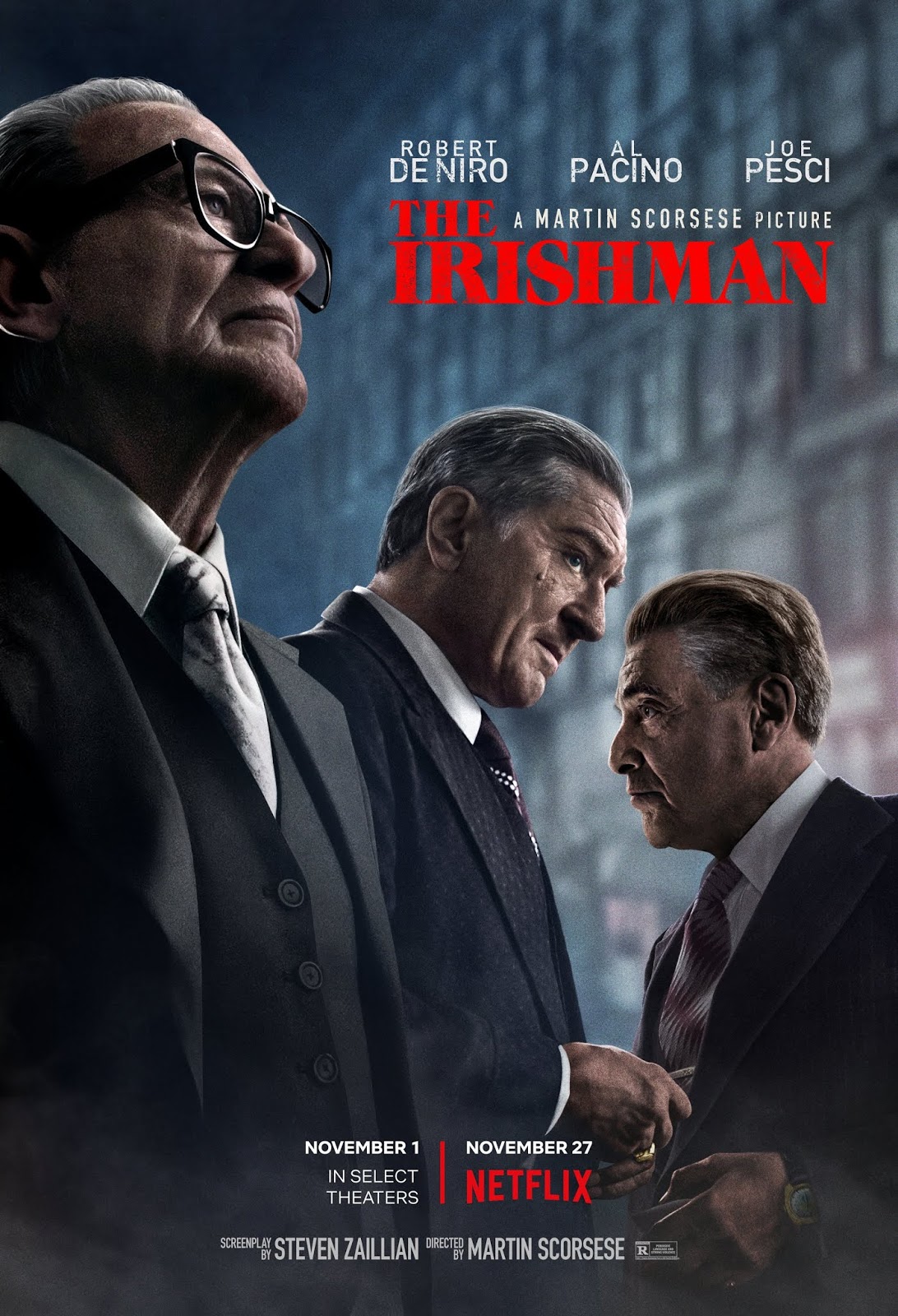
Scorsese had wanted to make this film for almost 20 years but it took the mega bucks of Netflix (to the tune of over $150 million) to finally bring it to life. With complete creative control, we get Scorsese’s epic as he saw it, an over three-and-a-half hour long sad meditation on the life of the gangster. For the first time in almost 25 years, Scorsese is reunited with his muse Robert De Niro – appearing here under various digital facelifts to tell the story of Frank Sheeran, an Irish member of the Mafia, and his relationship with infamous Teamster union leader Jimmy Hoffa (Al Pacino). Was the film worth the effort to make it?

I first saw The Irishman in the cinema. I now feel that was a mistake. This is a film that needs to be soaked in like a warm bath. Like reading an involving novel, it needs to savoured and consumed at your own pace. In the cinema in one take – with no intermission – its runtime is punishing. It’s the worst form of criticism but in one take, the film can overstay its welcome. In fact it can become a little boring.

Re-watching the film a year later at home – where I could break it up into three chunks as (I feel) so many people have, it becomes a richer and more engrossing viewing experience. Because this is a totally different beast to Scorsese’s previous gangster movies, a quiet mood piece, contemplative, sad, a genuinely tragedy-tinged, doom-laden reflection on the emptiness and costly violence of the gangster life, and the empty shells it leaves of the people in it. And at its centre, a man so dehumanised by war, by obeying orders, so lacking of personality, so incapable of emotion it seems, that he ends the film as a blank, lonely, abandoned slate. It’s a real, and deliberate, counter-point to his electric gangster films of the past, from Mean Streets via Goodfellas to Casino and the cartoonish The Departed. Here the price of doing business is your soul – and when that final bullet comes (as it inevitably will) you have nothing to show for it.

It makes for a late Scorsese epic – nearly a TV mini-series – slow-paced, wintery and a perfect counterpoint to Goodfellas. There crime is ruthless but you can see it’s also fun. Here it’s hardwork, unrewarding and inevitably leads to a bloody demise. Time settles on the shoulders of its leads like deadweights and their is a weary sadness as they trudge from one feud to another, each of which can only be resolved by putting another body in the ground. And everyone knows that the next feud might well mean it’s their body that will end up six feet under.

Frank Sheeran is a drained automaton, a human being possibly in name only, who takes on violent acts without question, who can kill without remorse. This is the very picture of a second-tier career criminal, a man who takes orders and carries out missions. De Niro brilliantly creates an sociopathic monster, a man almost devoid of his own personality, with little to him but a taciturn killer. Sheeran is a tough character to relate to or understand – but that’s because he’s not really a character at all. Interestingly he doesn’t have the sort of flaws that undermine other Scorsese gangsters, like Henry Hill. His flaw is in fact his entire existence. His sociopathic acceptance of violence, his thoughtless carrying out of killing, his inability to relate to human beings. It’s what leaves him alone, unloved and isolated in a care-home. This is a man who can barely muster much emotion about killing his best friend, whose quiet, placid nature perhaps only hides his lack of capability of even experiencing emotion.

The Teamster union politics content of the film is often dense and hard-to-follow. At times it tips into being not that interesting. So it’s tough that it takes up almost two hours of the film’s run-time. It’s a sign of the films overindulgence. At the end of the day I’m not sure it adds much to your overall impression of the film. But reviewing the film perhaps that’s the point. The very shallowness and even pettiness of this feuding – not to mention the naked, unromantic greed – over how to distribute union pension money, explodes the myth of any romance to this crime. These are blue-collar conmen, using violence as a way to conclude a board meeting.

As Jimmy Hoffa, Al Pacino is the best he’s been in literally decades – the film uses his “hoo hah” shoutiness to great effect, but Pacino also makes Hoffa an unexpectedly vulnerable and lost figure amongst all the politics, a showman who overestimates his importance and invulnerability. The entire film is shaped (we discover) around a series of flashbacks from Sheeran on a road trip on what turns out to be the final days of Hoffa’s life (the film includes a solution to Hoffa’s famous disappearance). De Niro and Pacino spark beautifully off each other as a bond forms between them – the films lingering on their growing friendship (and at times strangely homoerotic intimacy) one of its strongest elements, as well as carefully demonstrating how disloyalty is a crucial survival skill in this world.

The film strongest elements are the doom-laden nihilism of the gangster life. Told by Scorsese deliberately without flash and excitement, with a score so sparse that long stretches of the film echo with silence, there seems to be no fun at all in the gangster world, instead a series of mundane men sitting in small restaurants, talking about admin and punching the clock. Many of the gangster characters are introduced with on-screen captions that detail the dates and natures of their violent deaths. It’s the exact opposite of what you might expect from a Scorsese film. It’s a director showing the dark flipside of his previous films, of the way the gangster life is a dwindle through a dull life marked with moments of danger, where death is a sudden violent explosion that ends a life too soon.

And it leaves families in a mess. Anna Paquin speaks very few words as Sheeran’s adult daughter, but only because her silent disapproval and disgust at her father’s life becomes the haunting of Sheeran’s whole life. His daughter’s silent disgust is a recurrent theme (even from childhood, she is repulsed by his capacity for violence and his heartlessness). Sheeran’s attempt to break through her silent disapproval, to get her to acknowledge him in some way becomes a large part of the sad coda of Sheeran’s life. It’s all part of Scorsese’s message: what is the point of a life like this that brings wealth and power, but also leaves you broken, lonely and despised by everyone around you?

And you can’t argue with the skill with which this quiet, meditative, grim and slow exploration of the gangster world is put together by Scorsese – or the artistry that every moment of the film has, or the control of the director. It’s beautifully shot and edited. It’s pace is at times glacial, but this is resolved by watching at your own pace on Netflix. It’s not a film to be binged (ironically Scorsese has made a television novel that he wants you to watch in one go) but instead one to be savoured and considered. That’s where it’s strengths are.

There are also excellent performances. Joe Pesci, lured from retirement, is outstanding. He’s a revelation as a sort of cool, calm, grandfatherly fixer a million miles from the lunatics he played in Casino or Goodfellas. Pesci quietly dominates several scenes, using stillness and quiet like a vicious badger who knows he only needs to swat once to remove his foes. This is a performance of beautifully judged grace and stability, a calm reflectiveness that carries a vicious coldness at its heart. Russell may prefer a peaceful solution – but he will order your death without thinking twice. Also excellent is Stephen Graham as the sort of dangerously impulsive bully Pesci played to such great effect in those earlier movies.

And those famous digital facelifts? Well they are fine technically. You ignore them after a while. But no matter of digital trickery can make De Niro move with the gait, physicality or certainty of a man more than 30 years younger than he is. As we watch De Niro (supposedly a killer in his prime) shamble forward, or gingerly give a rude grocer a kicking, you can’t forget that he’s really a much older man. To be honest the film would have been just as good – maybe better – with actors the correct age filling in for the younger roles. Watching it again, I’m never convinced that I am watching a De Niro the age he was in Mean Streets or even Goodfellas. To be honest, at times the facelifts don’t look a lot more convincing than hair dye and a little tape to stretch the skin back.

In fact the digital facelift at times is almost a metaphor for the film: it’s a film where age and time are a constant presence. Knowing the lead actors are old men, trying to look young kind of sits with that. These are not dynamic, triumphant young men. But then they never were. These are men who feel the burdens of the world on their shoulders every day. Who at the end of their lives will have nothing to show for it over than a satisfaction that they managed to live slightly longer than they expected. Whose friends and family will hate them and who find they sold their souls and gained nothing but dust in exchange. Long, slow, sometimes trying – but on a second rewatch, also compelling, thought-provoking, heartfelt, insightful and inspiring.

Public Enemies (2009)

Johnny Depp rides into action as John Dillinger in Michael Mann’s underwhelming Public Enemies

Director: Michael Mann

Cast: Johnny Depp (John Dillinger), Christian Bale (FBI Special Agent Melvin Purvis), Marion Cotillard (Billie Frechette), Billy Crudup (J Edgar Hoover), Stephen Dorff (Homar van Meter), Stephen Lang (Agent Charles Winstead), Stephen Graham (Baby Face Nelson), Jason Clarke (Red Hamilton), David Wenham (Harry Pierpont), Spencer Garrett (Tommy Carroll), Christian Stolte (Charles Makley), Giovanni Ribisi (Alvin Karpis), Bill Camp (Frank Nitti), Branka Katic (Anna Sage)

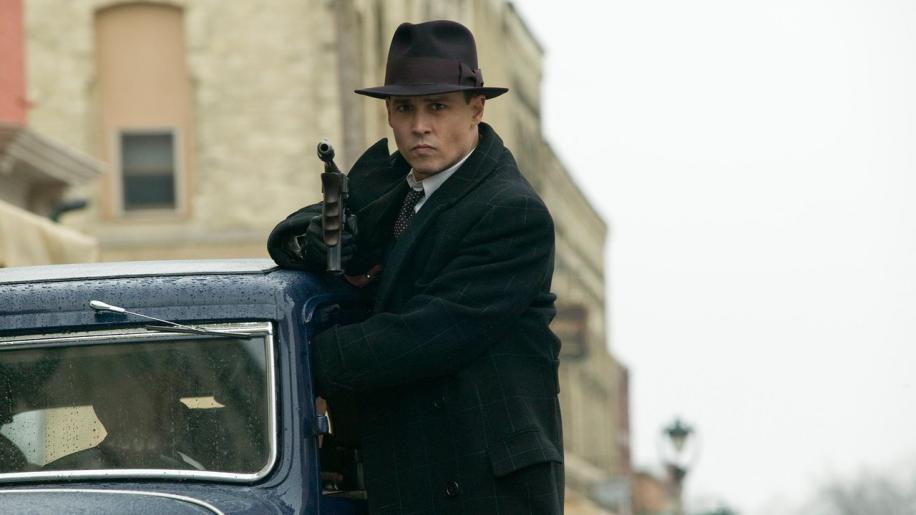
Michael Mann has an affinity for crime films. With Heat as one of his calling cards, Public Enemies is his attempt to do the same in the classic prohibition and bank robbery era of the 1920s. The guys going head-to-head this time?  John Dillinger (Johnny Depp), coolest robber there is, an icon of the criminal classes, and Melvin Purvis (Christian Bale) rigid and committed FBI agent. Public Enemies however fails to match Heat, falling part way between history lesson and action thriller. Covering the last few years of Dillinger’s life, and the rise of the FBI, it’s a cold, strangely uninvolving film mixed with a few stand out action scenes where tommy guns go blazing.

One of the first things it impossible to miss about the film is Mann’s decision to shoot the film using HD video cameras. The advantages of this is it gives much of the film an immediacy and modern look that throws the viewer into the middle of the action and makes this at times look and feel like a piece of news reel footage rather than a period piece. The camera choice allows Mann to put the camera right into the action, capturing every detail at a fast pace. The film has the look at times of a genuine documentary, and removing the richness of film also gives it the air of being caught on a phone, like some of this was some sort of found footage. Or rather, a phone that has been handled by a gifted cinematographer for perfect framing.

The downside of the choice of HD camera is that it makes the film at times look rather like a behind-the-scenes DVD documentary, with its untextured shadows and lack of lighting. Frankly at points it makes the film look bizarrely a little bit dull in places, or unusually unprofessional. Personally, I feel the benefits it gives in immediacy are cancelled out by this. But that’s just me.

Away from Mann’s shooting style – and his usual high octane skill of cutting and assembling action scenes – the film showpieces a strange lack of insight into its characters or any real developments of their hinterland. This is particularly so in the case of Purvis who never comes to life either in the film’s staging of him, or in Bale’s firm jawed, muted performance. When the final film caption throws up news of his later resignation and years later possible suicide it doesn’t make you question things you have seen in the film or feel like a logical progression: it just doesn’t tally up at all. 

The film does get some material out of how both sides play the media game. Purvis is a reluctant but fairly skilled player. His boss J Edgar Hoover (rather well played by Billy Crudup in one of the films best performances) is obsessed with spinning the nascent FBI to the media – half his scenes are bookended by press conferences – and his primary motivation is to exhibit himself to the media as the only logical choice for leading the FBI and the essentialness that it gains the powers it needs. Similarly, Dillinger and his fellow criminals delight in their media profile and do their damnedest to build up images of themselves as Robin Hoods (without the giving to the poor of course).

This is captured in Johnny Depp’s charismatic performance as Dillinger, a brooding, intense figure who would like to see himself as a sort of poet of the underworld. Dillinger talks about the banks money being their only interest and is frequently charming with an edge with regular people. He prefers bloodless robberies as they are cleaner and demonstrates a genuine sense of romantic openness with his girlfriend Billie. However, he is no angel. While he does not use violence as a first resort, he has no hesitation about using it as a second and will happily put bystanders at risk and rough up bank staff to get what he wants. He talks of escaping, but it’s clear that the game is an addiction for him and the danger is enjoyable – he takes an illicit thrill at one point of sitting in a cinema while his mugshot appears on the screen, wondering if anyone will dare spot him.

Depp’s performance is the finest thing in the film, a subtle and intelligent tightrope walk that teases depths that are perhaps not there, and suggests sympathies and agendas he perhaps does not have. While the character remains unknowable, you sense a great complexity and conflict there somewhere. He’s helped by being given a great actress like Marion Cottilard to play off, who makes Billie much more than just a gangster’s moll.

There is potential in the film, but it never really comes to life. For all the exciting shoot outs and drama, none of its characters are engaging or really interesting. The rest of the supporting cast feel like pieces to be moved around the board – many disappear with no real trace – and their fates pre-ordained by the demands of the plot. It makes for a rather flat experience, full of style, but never making you invest in it.