Tag: Stephen Root

No Country for Old Men (2007)

Javier Bardem is terrifying in the Coen’s Oscar-winning No Country for Old Men

Director: Joel & Ethan Coen

Cast: Tommy Lee Jones (Sheriff Ed Tom Bell), Javier Bardem (Anton Chigurh), Josh Brolin (Llewelyn Moss), Woody Harrelson (Carson Wells), Kelly Macdonald (Carla Jean Moss), Garret Dillahunt (Deputy Wendell), Tess Harper (Loretta Bell), Barry Corbin (Ellis), Stephen Root (Wells’ Hirer)
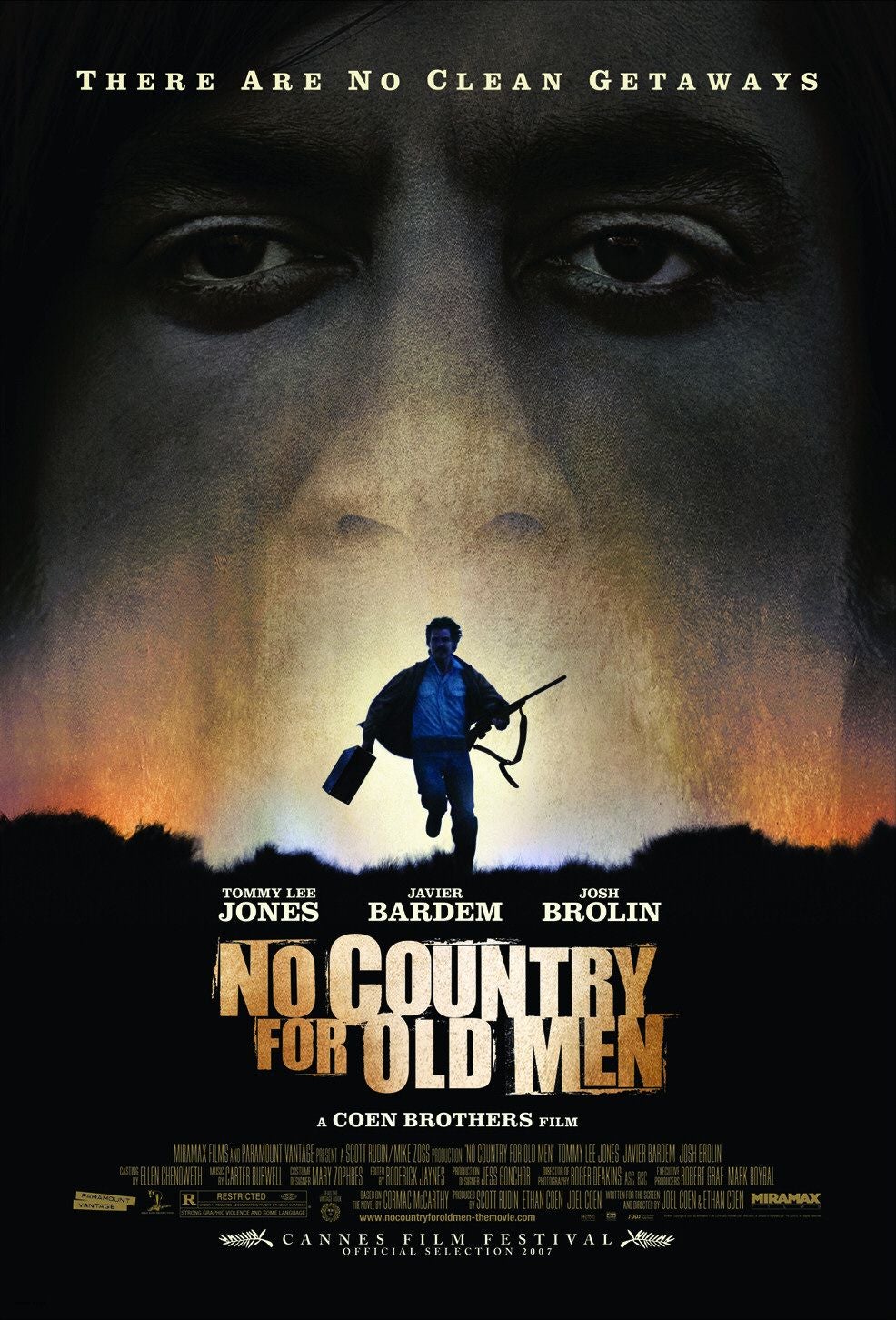
The borderlands of America. A vast panoramic countryside, where times may change but the underlying violence and savagery continues to lurk just under those dusty plains. It’s ground the Coens have explored before, but perhaps never with such mastery as in No Country For Old Men, a film that mixes the style of a classic Western with the nihilism and bleakness of their most challenging work, all capped with just a hint of their incomparable quirky black humour. A pitch-perfect adaptation of Cormac McCarthy, No Country For Old Men scooped four Oscars, including Best Picture.

In the border Terrell County in Texas in 1980, a Vietnam-vet and welder Llewelyn Moss (Josh Brolin) stumbles across a drug deal gone wrong in the desert: several dead men, a truck full of drugs and a suitcase containing $2 million. Taking the case, Moss sends his wife Carla Jean (Kelly MacDonald) to her mother’s for safety and flees first to Del Rio then Mexico to try and keep the money. Unfortunately, he’s being followed by relentless, psychotic hitman Anton Chigurh (Javier Bardem) who will stop at nothing to fulfil his contract – and heaven help anyone who gets in the way. Trailing in their wake is worn-out Sheriff Ed Tom Bell (Tommy Lee Jones), who feels increasingly adrift in a violent world he no longer understands.

The Coen’s film is a bleak, pessimistic and doom-laden look at man’s inhumanity to man – all of it watched with a weary sadness by Jones’ tired Sheriff, in a hauntingly gentle performance. The vision the Coens present is a world that may have moved on in decades from the Wild West, but still has that era’s cavalier regard for life. Life is very cheap in No Country For Old Men and even the slightest mistake, hesitation or act of kindness can have horrific consequences. It’s a film where death is a constant, terrible surprise – so much so it claims the life of one significant character entirely off-screen and can be handed out on the basis of a coin toss.

That coin toss will come at the prompting of Chigurh. Played with an Oscar-winning calm voidness, by an unworldly Javier Bardem, Chigurh is relentless, merciless and completely detached from humanity. Emotion is a complete stranger to him, other than a pride in his work and a capability for being irritated by a non-co-operative target. Chigurh sees himself as an instrument as fate, a nihilistic view where individual choice is removed from the equation. In one chillingly memorable scene, he relentlessly but with a terrifying calm gets a gas station attendant to call a coin toss: the attendant struggles to understand what he’s wagering, but it’s all too clear to us – and in case we miss the point, Chigurh urges him to keep the coin afterwards as it’s a momentously lucky object.

There’s a possibility that this is how Chigurh rationalises the world to himself. He is absolved of all moral consequences for his actions, as everything is pre-ordained, objects and people travelling to predetermined outcomes. It’s a viewpoint another character invited to toss a coin late in the film will firmly reject, saying all Chigurh’s actions are a choice. They’re probably also right. Chigurh kills throughout the film partly because it’s the most expedient way to get what he needs – from a car, to escaping a police station – but also because of the pride he takes in his work being the best, and anything obstructing that should be punished. He has no regard or interest in the money or even for his employers, all of them disposable in the pursuit of doing his job well. It’s perhaps not a surprise that a survey by psychologists named him the purest psychopath caught on film.

Pity those who cross his path. Compared to him, Woody Harrelson’s professional hitman is just that: a guy doing a job rather than an elemental, unstoppable force of nature (Harrelson is superb as a charming, slightly cocky pro, who accidentally gets in over his head). In many ways, it makes it even easier to root for Josh Brolin’s Llewelyn Moss as he tries to stay one step ahead of him with his ill-gotten gains. In a breakout role, Brolin makes Moss the quintessential everyman, with just enough touches of grace and decency to make us overlook the fact that he’s an opportunist putting himself and his family at risk to steal drug money. Moss is such an underdog – but also so ingenious and determined – he becomes the perfect person to root for.

The film largely chronicles the battle of wits between Llewelyn and Chigurh across Texas and Mexico, the two of them carrying out a hunter-tracker dance that has echoes of similar duels from directors like Leone. In one set-piece moment after another, we see their coolness under fire, as well as their focused determination to get what they want, regardless of cost. Brolin’s performance is a superb slice of taciturn Texan-ness, with just enough decency to get him in trouble: from protecting his wife, to taking water back for an injured man, to rejecting the advances of a poolside floozy. It’s interesting that he invariably ends up in more trouble when he tries to do something good – but such behaviour sets him aside from Chigurh and lets us know he’s one of us.

All this bleakness is followed with sad-sack sorrow by Tommy Lee Jones’ sheriff, whose eyes speak of endless, uncountable horrors that fresh ones don’t even seem to shock him anymore. Jones bookends the film with two superb monologues, that reflect on what seems like the increasing brutality of the modern world. But the Coens are smart enough to know that this sentimentality is misleading – Bell’s uncle Ellis (a fine cameo by Barry Corbin) tells him frankly that the world was ever thus and its naïve to think otherwise. This is also one of Jones’ finest performances, a tragic Homer, totally ineffective, reduced to following around and picking up the pieces.

All of this plays out without hardly any trace of a music score – Carter Burwell’s scant score makes use of everyday sound and hints of music at a few dry moments – hammering home the coldness and bleakness of it all. Excellently shot by Roger Deakins, whose classic, restrained, pictorially beautiful presentation of the West brings back a truckload of cinematic memories, the Coen’s film still finds room for dashes of dry humour. Sure, it ends with a nihilistic comment on the horrors of the world and our hopelessness in them, but there are small shoots of hope growing in there if you look closely. They are well hidden, but they are there.

No Country for Old Men is perhaps the Coens’ most fully rounded, morally complex, intriguing and dynamic film, a wonderful mix of the style of their earlier work with the bleakness of Fargo and just some touches of the wit they displayed elsewhere. Cormac McCarthy is the perfect match for two masters, whose direction is as faultless as their script. It’s a film that rewords constant viewing and is constantly shrewd and terrifying in its analysis of the human condition. Essential watching.
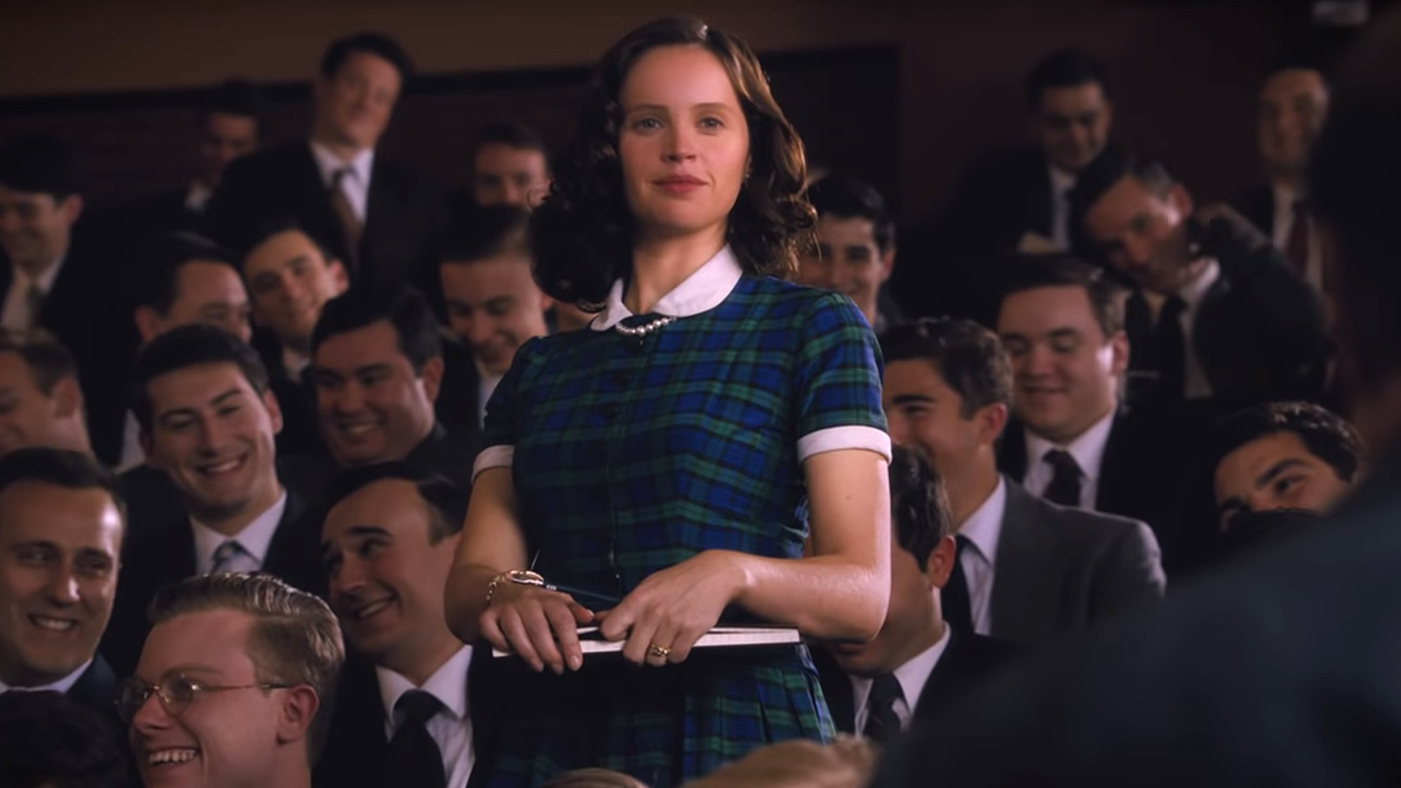
On the Basis of Sex (2018)

Felicity Jones does earnest, dedicated work in an earnest, dedicated film: On the Basis of Sex

Director: Mimi Leder

Cast: Felicity Jones (Ruth Bader Ginsburg), Armie Hammer (Martin Ginsburg), Justin Theroux (Mel Wulf), Kathy Bates (Dorothy Kenyon), Sam Waterston (Erin Griswold), Cailee Spaeny (Jane C Gisnburg), Jack Raynor (James H Bozath), Stephen Root (Professor Brown)

Ruth Bader Ginsburg is an extraordinary person, her pioneering work to bring about sexual equality in the USA something that has made an actual, permanent change to her country for the better. This biopic covers the early years of this campaign in the 1970s, and if it at times gets a little too bogged down in the conventions of these sort of biopics, it does tackle them with genuine passion.

At Harvard in the mid-1950s, Ruth Bader Ginsburg (Felicity Jones) is one of the first women allowed in to study law – and finds that she faces a battle to constantly prove that she deserves to be there. Her husband Martin Ginsburg (Armie Hammer), himself an accomplished lawyer, is endlessly supportive and encouraging, but Ruth continues to find that she struggles to be treated as an equal in the male dominated legal world of the 1950s and 60s. All this changes when her husband brings to her attention a tax case that discriminates against a male carer – and she realises this could be a vehicle to establish a precedent that American laws are unconstitutional when they discriminate on the basis of sex.

Mimi Leder directs a film full of warmth, respect and feeling for the importance of the story it is trying to tell. While it at times seems a tiny bit overwhelmed by the responsibility of bringing such a pioneering person’s story to the screen, it still manages to bring enough character and flair to it to make it an engaging watch. Perhaps you might feel at times you are only beginning to scratch the surface of RBG’s extraordinary life – but the film still treats you with the respect to assume that you can follow the legal arguments being outlined, even as it structures much of the film with clichés.

It does have some fine sequences in it though, not least a running visual image of Ruth walking up steps towards important buildings. The opening sees her lost in a crush of young male Harvard students, struggling to find her own space in a male dominated world. Later she climbs the steps outside the Court of Appeals, this time at the head of a progress of men following her behind. And finally the film bookends its opening Harvard steps sequence with Ruth – this time alone – climbing the steps of the supreme court: shots and cuts echo the opening of the film as Felicity Jones is slowly replaced by the real Ruth Bader Ginsburg.

Felicity Jones does a decent job as Ginsburg, although she struggles with a slightly awkward make-up job to age her up. She however captures the fire in Ginsburg’s belly and her passion to right wrongs, as well as the demanding intellectual ability that at times made her a domineering and difficult person. She doesn’t always find much wit in the role, but she really wins the empathy of the audience with the injustice she faces – not least from the very start having to justify why she has taken a place at Harvard from a man in the first place.

It helps as well that she has such a fine scene partner for so much of the film in Armie Hammer, who is excellent as her supportive, way-ahead-of-his-time husband Martin. Taking on most of the domestic chores – and combined with his own brilliant career – Martin was as much a fascinating figure as Ruth. Hammer plays with a joyful, charismatic relish, perfectly mixing intellectual curiosity with an innate decency. It’s also a generous performance that complements Jones perfectly.

The relationship between these two is the emotional heart of the film, frequently raising warm smiles from the audience. An early scene where Martin is diagnosed with cancer after collapsing during a game of charades tugs at the heartstrings, not least for the sudden pained look of panic that crosses Martin’s face as he collapses, and Ruth’s protective rush to his side. These two argue once in the film – and that an argument based around Martin encouraging Ruth to live the life she wants – and the film goes out of its way to show that their life together was an equal partnership, where both were determined to support and protect the other.

It’s a lovely relationship to place at the film’s centre – even if Hammer is essentially playing the supportive wife role that so many biopics of men have featured (Felicity Jones in The Theory of Everything for starters springs to mind!). That points at one of the weaknesses of the film: its predictability. Structurally it follows the route of many of these sort of biopics, with initial struggle, a cause, set-backs, pep-talks, sudden nerves before the eventual demonstration of triumph. Frankly nothing in the film narratively is remotely surprising, and Leder, despite a few touches of flair, largely directs with a workmanlike assurance.

Workmanlike is a little harsh, but is probably the film’s main weakness. While it’s well-played and has an excellent story – and, I will say it again, a script that largely expects its viewers to follow the legal points – it also can’t quite figure out a way to tell the story that doesn’t squeeze it into the biopic clichés that you’ve seen dozens of times before. Is that necessarily a bad thing? Not exactly: but it also makes the film at heart an engaging middle-brow drama, which seems a shame when Ruth Bader Ginsburg is anything but.

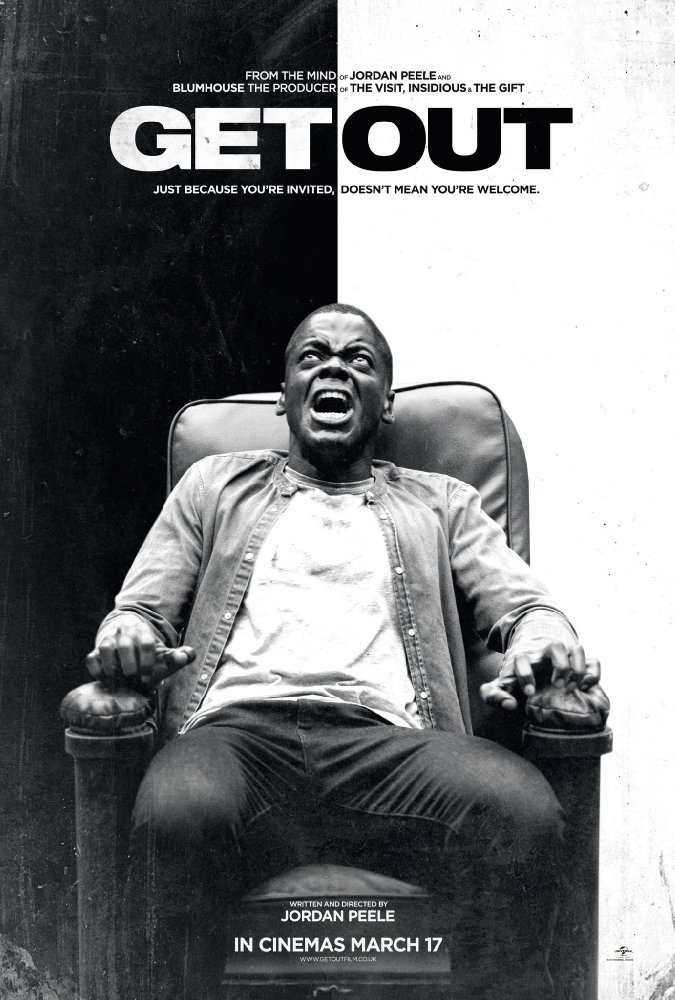
Get Out (2017)


Daniel Kaluuya finds himself well out of his depth in Get Out

Director: Jordan Peele

Cast: Daniel Kaluuya (Chris Washington), Allison Williams (Rose Armitage), Catherine Keener (Missy Armitage), Bradley Whitford (Dean Armitage), Caleb Landry Jones (Jeremy Armitage), Stephen Root (Jim Hudson), Lakeith Stanfield (Logan King), Lil Rel Howery (Rod Williams), Marcus Henderson (Walter), Betty Gabriel (Georgina)

Really great genre film-making transcends its genre, while demonstrating all its strengths. Get Out is nominally a horror film, but strangely it didn’t feel quite like that while I was watching it. It’s more of a horror-inflected social drama with lashings of satire and commentary on race in America. It’s a smart, deeply unsettling film, which really makes you think about how racism has subtly developed in America over the past 100 years. It also manages to feel very much like a film caught at the turning point between Obama and Trump.

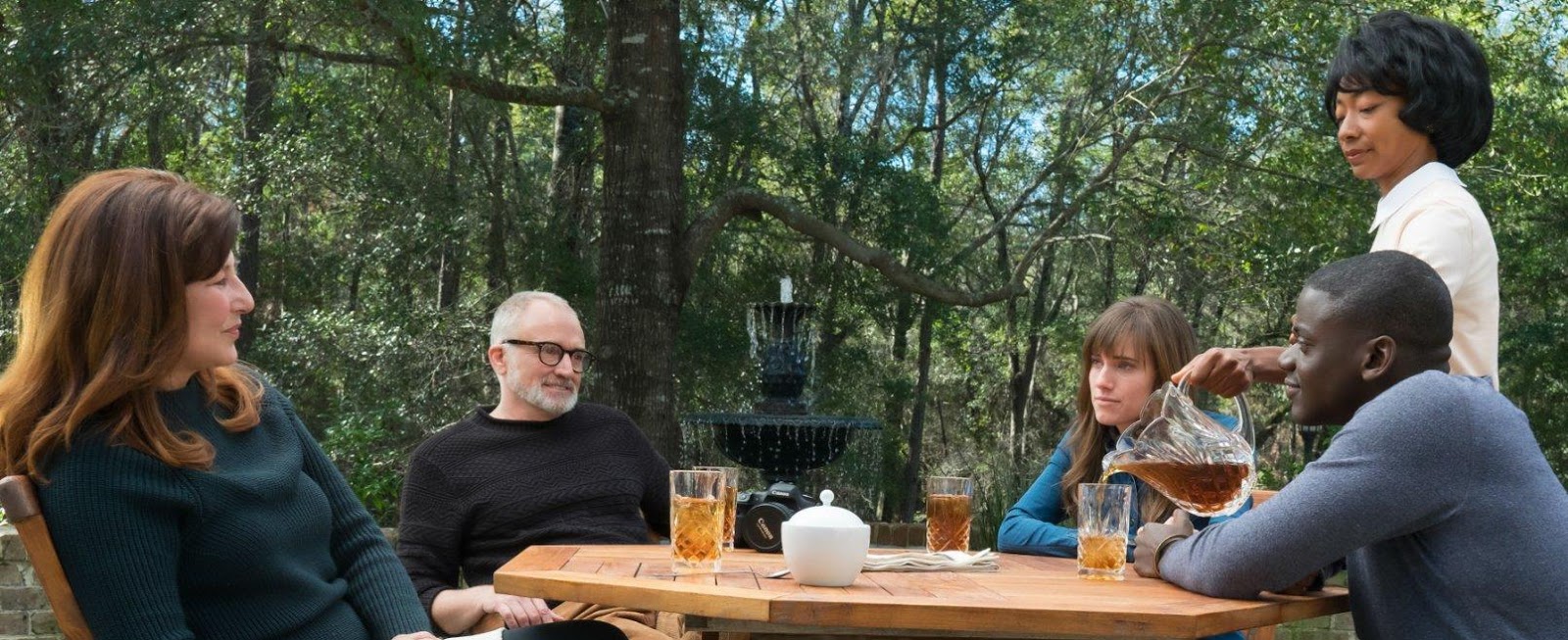
Chris Washington (Daniel Kaluuya) is a young, black photographer dating wealthy white Rose Armitage (Allison Williams). He reluctantly agrees to spend the weekend with her family on their countryside estate. Rose’s parents, neurosurgeon Dean (Bradley Whitford) and hypnotherapist Missy (Catherine Keener) are almost overly welcoming and in expressing their liberal credentials. Chris is doubly unsettled that the Armitages’ house has two black workers, both of whom seem alarmingly compliant. The weekend coincides with an annual get-together the Armitage family hosts, where the guests (all rich and white) make comments to Chris admiring his physique, build, sporting ability and genetic advantages. Chris can sense something is wrong – but can’t even begin to guess the mystery at the heart of the Armitage house.

Get Out is, more than anything else, a film about racial politics in America. It trades in the unsettled discomfiture some liberal white people feel when they actually have to interact with a black male from a different background, and then inverts this into a horror. But it rings true: the father so keen to be seen as liberal he uses the phrase “my man” repeatedly, praises Obama, shows off his “multi-cultural art”, delightedly repeats stories about Jesse Owens; the guests at the party who pinch Chris’ muscles, and praise his physique. It feels like a situation where Chris is invited but not welcome. 

In turn, it also inverts the discomfort some black people feel in white middle-class society. Chris finds his hosts patronising and condescending in their desire to be seen as open-minded. He’s uncomfortable at the black staff. Every second in the house reminds him that he doesn’t belong there. But the genius of Peele is that this could be nothing to do with anything except seeing a black man being constantly made aware of his difference in an unfamiliar milieu. 

Chris though, being basically a decent guy, does what any polite person in a minority tends to do: he works overtime to put his hosts at ease. He keeps quiet, he smiles, he laughs at jokes,  he tries to gently drift away. As almost the sole black person, he’s lost and out-of-his-depth and comfort zone (he’s reluctant about even going). All the other black people he meets are strange – Peel brilliantly shows the mixed messages from the servants in particular. In one brilliant sequence Georgina, the maid, says everything is fine while smiling and simultaneously crying. A black party guest dresses and behaves like the rest of the white people around him: has he just completely assimilated or is there something sinister going on here? Chris might guess more – but until it’s too late he decides to batten down the hatches and ride out an awkward weekend.

The house has plenty of mystery – there is a throw-away reference to a locked off-limits basement. Early in the film the couple hit a deer with their car: the police demand to see Chris’ ID even though he wasn’t driving, to the outrage of Allison. It’s a brilliantly eerie opening that hints at danger to come, both in the corpse of the deer and the suspicion of the police. It’s a brilliant touch to explore the barely acknowledged underlying racism of some middle-class Americans – this liberal elite would be horrified to hear the suggestion that they are anything but open-minded, but in fact have deeply paternalistic, two-tier beliefs that have subtly developed since the end of segregation.

The film is played superbly by the whole cast. Bradley Whitford brilliantly inverts his Josh Lyman persona. Catherine Keener is a sort of warm Earth Mother figure, with darkness and control under the surface. Both characters seem suspicious and yet are both so open and direct in what they say, you think it’s almost too obvious to assume they are villains. Caleb Landry Jones as their son is both full of alpha-male welcome and strange, violent and scornful looks and yearnings. Allison Williams as Chris’ girlfriend seems a strange presence in this household, but her honest sympathy for Chris, and her growing realisation with him that something is wrong, is the one thread Chris has to hang onto.

The star-turn of the movie is of course though Daniel Kaluuya as Chris. A young British actor, he’s superb here in a reactive role, trying to persuade himself everything is fine. His unease and insecurity are brilliantly done, as are the surface humour and reserved politeness he uses to disguise this. In a paranoid film, he is going out of his way to not appear paranoid. His relief in seeing any other black people – and then confused discomfort at their behaviour – is endlessly brilliant. As the plot progresses, Kaluuya takes Chris to some dark and emotional places, conveying both despair, fury and pain brilliantly. 

Peele’s film is not perfect. Introduce a character as a hypnotist and you are probably tipping the hat a little too soon – though to be fair, Peele even lampshades this by having Chris’ friend Rod (a hilariously endearing Lil Rel Howery) immediately point this out. The explosion of violence when it comes at the end is gratifying, but a little too much almost for a film about lack of power. The DVD contains an alternative ending that is, in fact, far better and more appropriate, which continues this theme (and is what I expected the ending to be as the film entered its final act) but was replaced because Peele felt (he says on the commentary) it needed a more upbeat ending.

Get Out though is both an excellent paranoia thriller with lashings of horror, and also a brilliant satire on race in America. Trading on the comedy of embarrassment, it has genuine things to say about how the racial divide hasn’t really gone away at all. Both funny and also deeply terrifying, its final reveal of what is going on is brilliant and also rings very true – as well as casting new light on several scenes we have already seen. Peele is a first-time director – but based on this he certainly won’t be one and done.