Tag: Sterling Hayden

1900 (1976)

1900 (1976)

Bertolucci’s bloated, self-indulgent and simplistic film is a complete mess

Director: Bernardo Bertolucci

Cast: Robert De Niro (Alfredo Berlinghieri), Gerard Depardieu (Olmo Dalco), Dominique Sanda (Ada Fiastri Paulhan), Donald Sutherland (Attila Mellanchini), Laura Betti (Regina), Burt Lancaster (Alfredo Berlinghieri the Elder), Stefania Sandrelli (Anita Foschi), Werner Bruhns (Ottavio Berlinghieri), Stefania Casini (Neve), Sterling Hayden (Leo Dalco), Francesca Bertini (Sister Desolato), Anna Henkel (Anita the Younger), Ellen Schwiers (Amelia), Alida Valli (Signora Pappi)
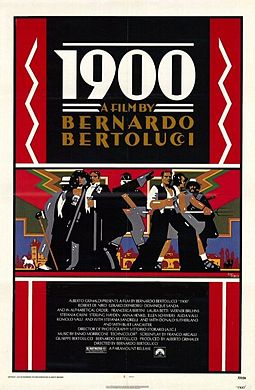
After The Conformist and Last Tango in Paradise, Bertolucci could do anything he wanted. Unfortunately, he did. Perhaps the saddest thing about 1900 is that you could watch The Conformist twice with a decent break in-between during the time it would take you to watch it– and get a much richer handle on everything 1900 tries to do. Bertolucci went through a struggle to get his 315-minute cut released: perhaps the best thing that could have happened would have been if he had lost. Not only would the film be shorter, but it would be remembered as a lost masterpiece ruined by producers, rather than the interminable, self-indulgent mess we ended up with.

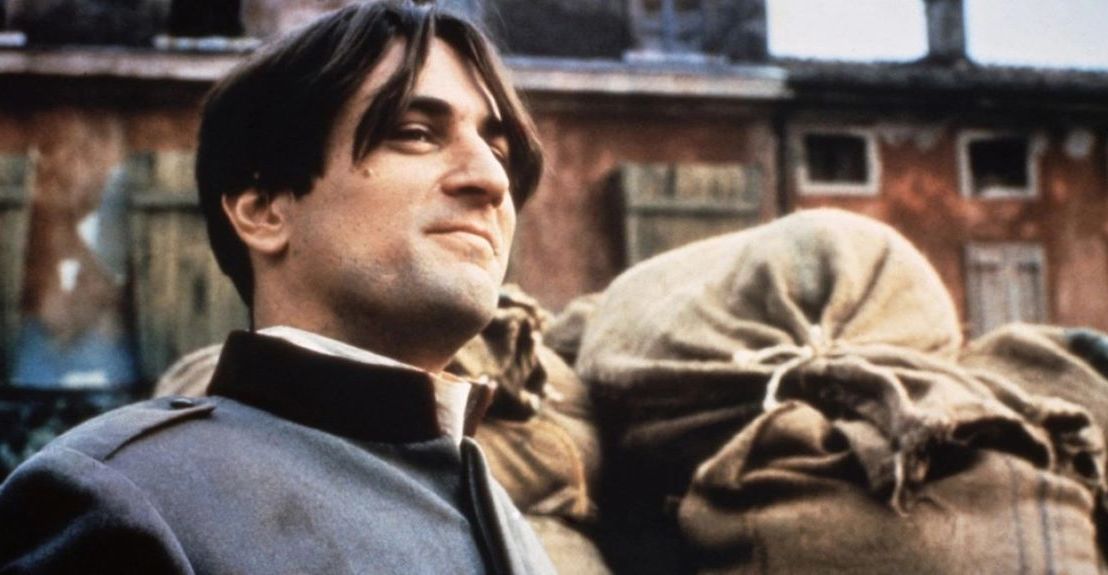
1900 – or Twentieth Century to literally translate its title Novecento – follows the lives of two very different men. Born minutes apart in 1901, Alfredo (Robert De Niro) is the grandson of the lord of the manor (Burt Lancaster), while Olmo (Gerard Depardieu) is the grandson of Leo (Sterling Hayden), scion of a sprawling dynasty of peasants. They grow up as friends, Olmo becomes a socialist and Alfredo an indolent landlord and absent-minded collaborator with the fascists, embodied by his psychopathic land agent Attila (Donald Sutherland). Their small community becomes a symbol of the wider battle between left and right in Italy.

In many ways 1900 is an epic only because it is extremely long and beautifully shot in the Bologna countryside by Vittorio Storaro. In almost every sense it fails. It offers nominal scale in its timeline, but its attempt to become a sweeping metaphor for Italy in the twentieth century falls flat and it focuses on a small community of simple characters, many of whom are ciphers rather than people. All of Bertolocci’s communist sympathies come rushing to the fore in a film striking for its political simplicity. It never convinces in its attempt to capture in microcosm the forces that divided Italy between the two world wars, nor invests any of its characters with an epic sense of universality.

Instead Bertolucci presents a world of obvious questions and easy answers. Every worker is an honest, noble salt-of-the-earth type, working together in perfect harmony to fight for rights. Every single upper-class character is an arrogant, selfish layabout, caring only about their back-pockets and the easy life. Bertolucci suggests fascism only arose in Italy as a means for the rich to control the poor, and never allows for one moment the possibility that any working-class person was ever tempted to take their side. It never rings true. (Bertolucci skips a huge chunk of the fascist 30s and 40s, possibly because this fantasy would be impossible to sustain if he actually focused on the history of that era.)

Bertolucci uses his two protagonists to make painfully on-the-nose comparisons between working class and rich with De Niro’s weak-willed Alfredo always found wanting compared to Depardieu’s Olmo. Even as children, Olmo is braver, stronger and smarter. Olmo has the guts to lie under the moving trains (Alfredo runs), Olmo stands up for what he believes in (Alfredo looks away), Olmo puts others first Alfredo whines about his own needs. Hell, Olmo even has a bigger cock than Alfredo (something they discover comparing penises as children and re-enforced when as young men they share an epileptic prostitute and she ‘tests’ them both).

The upper classes hold all the power but can do nothing without the working class. During the 1910s, a strike by the workers on the Berlinghieri leaves the clueless rich unable to even milk their moaning cows (they buy milk instead). Sterling Hayden’s peasant patriarch is a manly inspiration to all, while Lancaster’s increasingly shambling noble is literally and metaphorically impotent (Lancaster’s role is like a crude commentary on his subtle work in The Leopard). At one point he even pads around barefoot in horseshit to hammer home his corruption. (Incidentally this is the only film where you’ll ever see a horse’s anus being massaged on camera to produce fresh shit to be thrown at a fascist.)

For the rich, fascism is the answer. Continuing to shoot fish in a barrel, Bertolucci scores more easy hits by presenting our prominent fascist as an out-and-out psychopath. Played with a scary relish by Sutherland – in the film’s most compelling performance – no act of degradation is too far for Attila. Along with his demonic partner-in-crime Regina (a terrifyingly loathsome Laura Betti), he routinely carries out acts of violence, horrific murder and child-abuse, even literally headbutting a cat to death while ranting about the evils of socialism.

The poor meanwhile are all good socialists. Olmo, decently played by Depardieu, and his wife Anita (an affecting Stefania Sandrelli) rally the workers to stand against charging cavalry and protect their rights. Bertolucci even has Depardieu flat-out break the fourth wall for a closing speech, spouting simplistic platitudes direct to camera about the inherent wickedness of the landowner. Depardieu at least seems more comfortable than De Niro among this Euro-pudding (every actor comes from a different country and the soundtrack is a mismatch of accents and dubbing, not least Depardieu himself). Rarely has De Niro looked more uncomfortable than as the empty Alfredo, a role he fails to find any interest in, like the rest of the actors never making him feel like more than a device.

Bertolucci, stretching the run-time out, also embraces numerous tiresome excesses. Rarely does more than 20 minutes go by without a sex scene or a sight of someone’s breasts or sexual organs. From children comparing penises, to Depardieu performing oral sex on Sandrelli (just outside a socialist meeting), to De Niro and Depardieu getting hand-jobs from a prostitute, to Sanda dancing naked and high on cocaine or the revolting exploits of Attila and Regina, nothing is left to the imagination. As each goes on and on Bertolucci ends up feeling more like a naughty boy than an artist, so praised for his sexual licence in Last Tango that he feels more is always more. The excess doesn’t stop with sex either: at one point a worker silently cuts his ear off in front of a landowner to make a point about his stoic nobility.

1900 eventually feels like you’ve stumbled into a student debating club, where a privileged student drones on at great length about the evils of the rich, while quaffing another glass of champagne. It has moments of cinematic skill – some of its time jump transitions, in particular a train passing through a tunnel in one time and emerging at another, are masterful – but it’s all crushed under its self-indulgence. From its length to its sexual and violence excess, to its crude and simplistic politics delivered like a tedious lecture, everything is crushed by its never-ending self-importance.

Dr Strangelove; or How I Learned to Stop Worrying and Love the Bomb (1964)

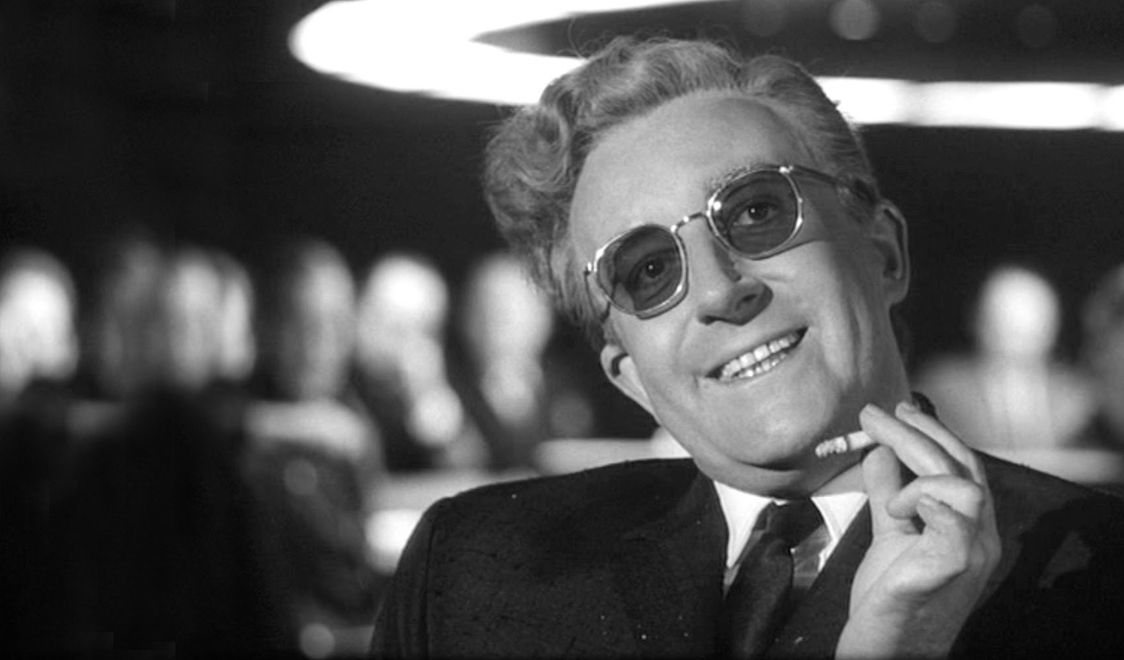
Peter Sellers tries to stop the end of the world in the terrific satire Dr Strangelove

Director: Stanley Kubrick

Cast: Peter Sellers (Group Captain Lionel Mandrake/President Merkin Muffley/Dr Strangelove), George C. Scott (General Buck Turgidson), Sterling Hayden (Brigadier General Jack D Ripper), Keenan Wynn (Colonel Bat Guano), Slim Pickens (Major “King” Kong), Peter Bull (Russian Ambassador), Jack Creley (Mr Staines), James Earl Jones (Lt Lothar Zogg), Tracy Reed (Miss Foreign Affairs)

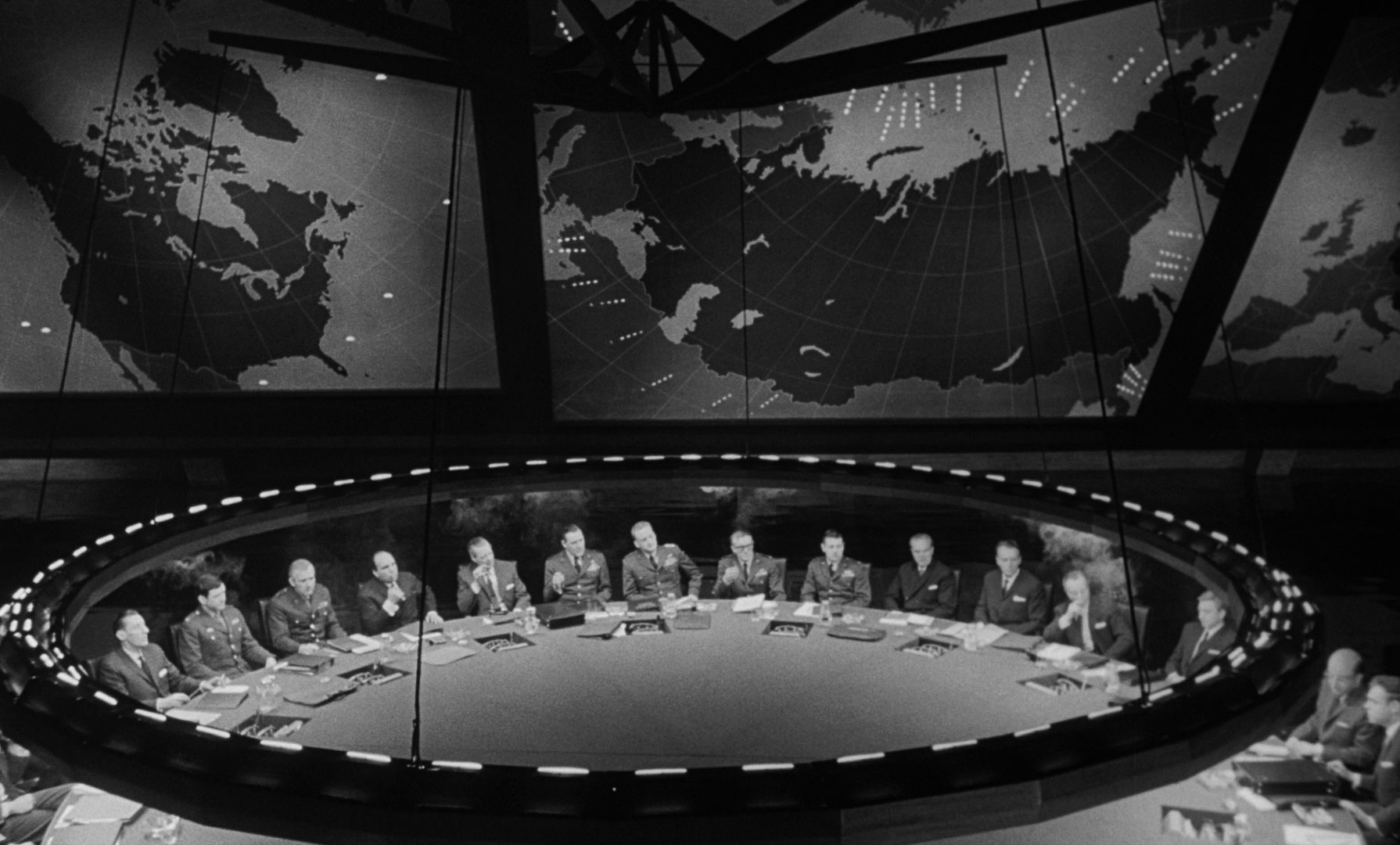
“Gentlemen you can’t fight in here. This is the War Room!” Kubrick’s hugely influential satire helped shape our perceptions of the Cold War and its mantra of mutually assured direction. Showing no mercy to its targets, it mixes Goonish schoolboy humour with moments of genuine tension and rising horror. Sure it features some of the faults of its director –self-importance, cold distance and much of the wit is due to Sellers and the performers rather than the not-particularly-witty-Kubrick – but there is no doubt it remains a seminal classic.

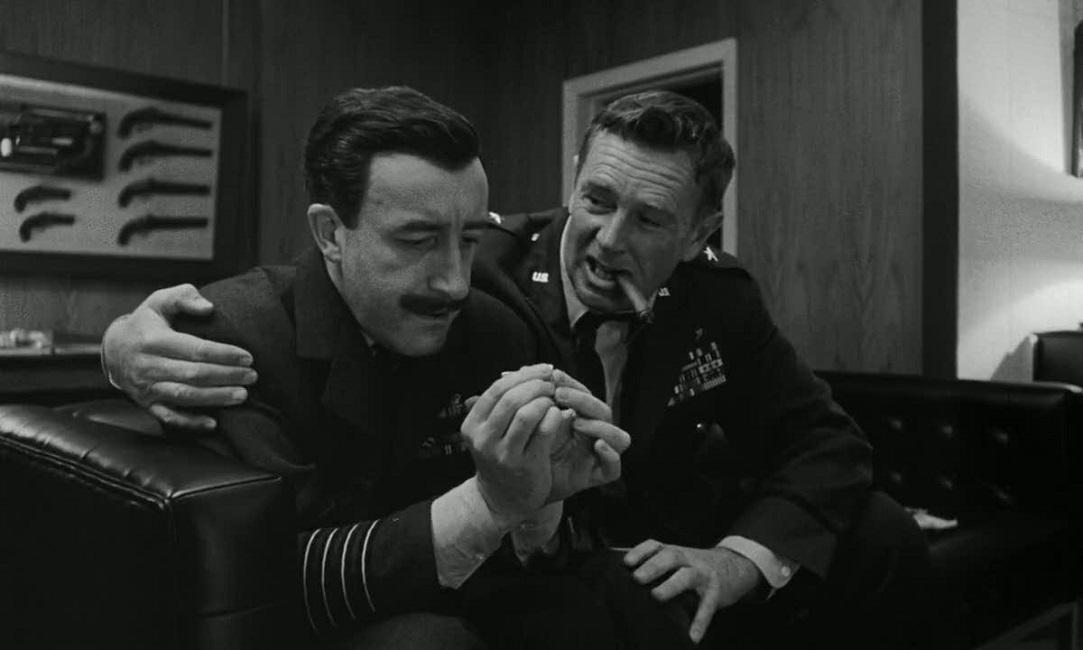
General Jack D Ripper (Sterling Hayden – excellent) orders his planes to drop their nuclear bombs on the USSR. Ripper is launching a pre-emptive strike to protect the American way of life from the Commies and, most importantly, to protect our precious bodily fluids. Yup he’s crazy, something his second-in-command RAF Group Captain Lionel Mandrake (Peter Sellers) quickly realises, but can’t do anything about. US President Merkin Muffley (Sellers again) reacts with horror at the prospect of all-out-war, negotiating with the Soviets to co-operate in shooting down the planes, while some of his advisors such as trigger-happy General Buck Turgidson (George C Scott, hilariously OTT) argue perhaps there is some merit in striking first. And sinister former-Nazi scientific consultant Dr Strangelove (Sellers one more time) spells out the impact of nuclear war.

Kubrick quickly came to the conclusion that if you were going to make a film about nuclear war, it almost couldn’t be anything buta comedy: after all the idea of two sides building a huge arsenal of weapons capable of destroying the world was so crazy, you wouldn’t believe it if you were told it. Dr Strangelove therefore ends up taking place in a world that’s one third grounded and two-thirds heightened reality. There is a great deal of college-style humour in the film (you can see it in those characters names which reference everything from the Whitechapel killer to female genitalia and excrement), but it works because its (mostly) played dead-straight.

Part of the film’s appeal was the number of sacred cows it slays. All the things that, at the time, America was meant to respect were ridiculed. The military, politicians, the Presidency, America’s moral authority, the ingenuity of American science and engineering. It’s all shown to be ineffectual, misguided, underpinned by fascist-tinged insanity, myopically obsessed with big bangs over humanity or plain ridiculous. Every single authority figure in the film is deconstructed over its course as some combination of childish, empathy-free or useless. You can’t come out of this film and every again have an unquestioning assurance our leaders know what they are doing.

This works, because it’s placed in a film that in many ways has the plot of a far more serious film (its very similar of course to Fail Safe). Chunks of it are played completely straight, or with just the merest touch of the surreal. In particular the sequences set on the bomber, commanded by Major Kong (played at short notice by Slim Pickens after injury prevented Sellers taking on that role as well) have that true sense of Kubrickian detail in their careful staging of all the procedures a bomber crew would follow (even if it still allows some fun to be poked at the expense of the survival kit, the contents of which would give a fella “a pretty good weekend in Vegas”).

Those bomber scenes sometimes outstay their welcome in their cold technicality (it’s odd to say that a film as short of this sometimes feels a little overlong), but that’s largely because in a film that is clearly demanding us to shake our heads at the madness, it struggles to get us invested in a more conventional heroic story (especially as success there is starting a nuclear conflagration).

Perhaps that’s because of the coldness in Kubrick’s style – emotion doesn’t often find its way into his greatest works, and he was often reliant on working with the right people (get a McDowell in it or a  Nicholson and things can click, get an O’Neal and you can get a different story). Humour isn’t his strong suit, but fortunately he worked with Sellers at his finest hours. Sellers takes on three roles, all of them a sharp contrast, and he’s masterful in all of them. There were fewer more gifted improvisational performers than Sellers, and each of his parts benefits hugely from the dynamism (of various sorts) he gives them. It’s also interesting that two of them are actually the “one sane man” (Muffley and Mandrake) while Strangelove is a pantomime monster of insanity (introduced late in the film, he’s the final indicator that our fates are in the hands of complete lunatics).

For Mandrake, Sellers parodied the stiff-upper lip upper class, with Mandrake a stuffed-shirt, attempting to wheedle recall codes out with Ripper with a clumsy bonhomie. Muffley is played almost dead-straight as a weak man out of his depth. But he does have a phone call monologue with the Russian premier (largely improvised with Sellers) that is one of the funniest things you’ll ever see. There’s no restraint in Strangelove, a wheel-chair bound grotesque with a phantom (hardcore fascist) hand, constantly suppressing involuntary Hitler salutes and trying to hide his mounting excitement at the prospect of worldwide annihilation (“Mein Fuhrer! I can valk!”).

Kubrick’s directorial approach – wisely – seems to have been to acknowledge that Sellers was providing so much of the madness and dark comedy the concept demands, that he could be more restrained. Interestingly, for being his most famous film, it often feels like one of his least personal ones. It stands outside much of the Kubrick cannon – it’s short, its often brisk, technically it’s unflashy and often unobtrusive – and it plays on the director’s weakest vein, comedy.

But it’s got his mastery of detail – partly also due to its faultless set design by Ken Adam. The reconstruction of the bomber interior is overwhelmingly convincing (the Air Force was amazed at how accurate it was). Ripper’s low-ceilinged office is a visual metaphor for the character’s insular insanity. Most influential of-all, the Bond villain-ish War Room, with its vast circular table and huge screens was so perfectly conceived, it cemented the idea for generations of what war planning rooms should look like (Reagan even asked where it was when he took office). The film may be darkly surreal, but its surroundings give it an authority that is essential for its success.

Authority is what the film needed to work. Perhaps that’s the greatest contribution of Kubrick, to create a structure of convincing reality, allowing the surreal and insane actions to work. From Ripper’s clear fixation on his own impotence (“I do not avoid women but I do deny them my essence”) – to Turgidson’s increasingly bombastic militarism (“I don’t say we won’t get our hair mussed, but I do say no more than 10 to 20 million killed. Tops.”), they all work because they contrast with a setting soaked in reality and detail. It also adds the important depth that gives the film impact: sure it wouldn’t happen like this, but something like this could happen.

Dr Strangelove’s humour has at times dated – there’s something undeniably schoolboyish about its tone. Stretches showing the detail of the bomber’s operation go on way too long. The film itself also takes a while to get going, and like many Kubrick films it has an air of being pleased with itself. But in Sellers it has a comic genius at the height of his game and its impact in changing the way we think about the world can’t be denied. Still a classic.

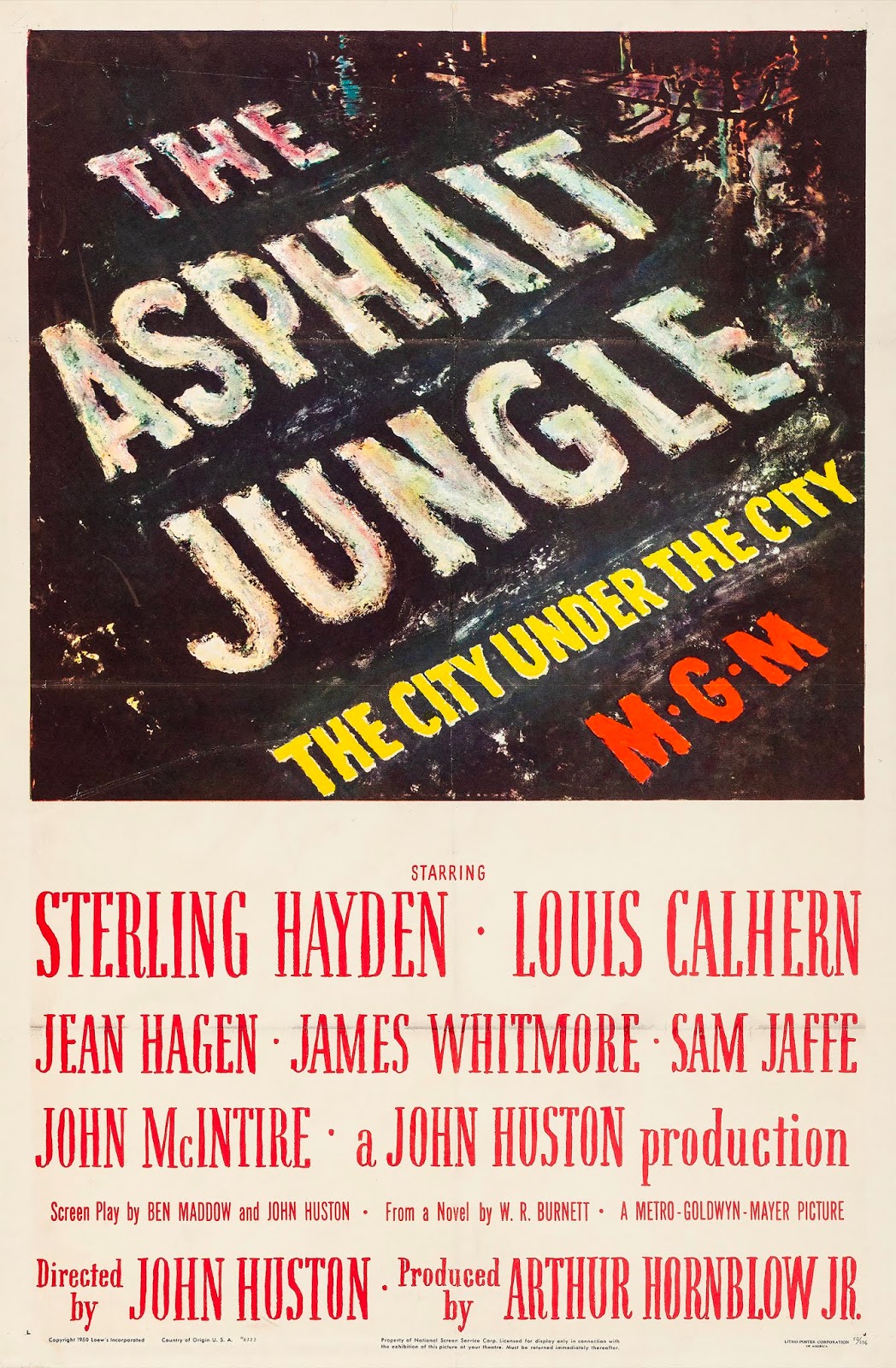
The Asphalt Jungle (1950)

A masterplan goes wrong in John Huston’s crime drama The Asphalt Jungle

Director: John Huston

Cast: Sterling Hayden (Dix Handley), Louis Calhern (Alonzo D Emmerich), Jean Hagen (“Doll” Conovan), James Whitmore (Gus Minissi), Sam Jaffe (“Doc” Erwin Riedenschneider), John McIntire (Police Commissioner Hardy), Marc Lawrence (Cobby), Barry Kelley (Lt. Ditrich), Marilyn Monroe (Angela Phinlay), Brad Dexter (Bob Brannom)

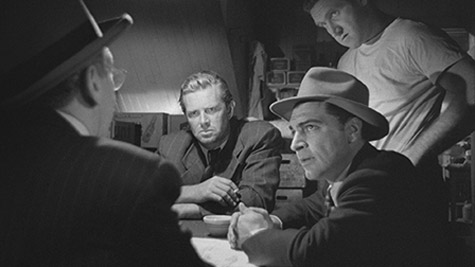
“Doc” Erwin Riedenschneider (Sam Jaffe) is out of the slammer after seven years, and the self-proclaimed “Professor” of criminal plans has a scheme for one final job. But rather than sell it to the highest bidder, Doc approaches crooked lawyer Alonzo Emmerich (Louis Calhern) to fund the crime and then split the proceeds with Doc. To carry out his robbery on a jewellery safe in a bank, he’ll need a gang including get-away driver Gus (James Whitmore) and Gus’ pal and “hooligan” Dix Handley (Sterling Hayden). But even the best laid plans of criminals can fall foul of events and the basic untrustworthiness of criminals themselves.

John Huston surprised some by turning his attention – Oscar in hand from The Treasure of the Sierra Madre – to noir cops and robber’s thrillers, but that was to forget he had made his name with his masterful adaptation of Dashell Hammett’s The Maltese Falcon. And in The Asphalt Jungle he created a small scale but almost perfect slice of criminalise noir, a brilliantly paced and acted film beautifully assembled that effortlessly chronicles the disastrous fall out of a robbery where it seemed everything was going perfectly.

Huston’s direction of the piece is, as nearly always, superlative. His painterly framing of scenes is dead on the money here, his framing of the actors within the scene absolutely without fault. Huston has an uncanny scene for arranging his actors in the minimum number of shots necessary, reducing dramatically the need for clumsy cut aways. Instead multiple actors are often artfully arranged in the frame, allowing the performers to react in the moment and the camera itself to capture the complete story in one smooth shot. It also allows for some great character intros, not least a shot of the Police commissioner in the background of the frame while foregrounded are the hands of his subordinate Dietrich, nervously fondling his hat. Straight away we get the mood of the scene.

This is all part of the brilliant noirish construction of a film that largely features sympathetic criminals – and it’s clear that the film’s sympathy is with the robbers here, the cops either incompetent, bureaucrats or corrupt themselves – either turning on each other, crumbling under pressure, making rudimentary errors that wind up getting them caught or failing into tragic fates that are left questioning what the point of it all was. This is all superbly caught in the moody darkness and shadows that soak over the picture, and highlighted further by the superb script, that packs some excellent lines and beautiful thematic points throughout the film.

It’s also helped by some great performances. Sam Jaffe (Oscar-nominated) is terrific as the cunning calm and businesslike “Doc” who seems unable to understand why things are not quite panning out as he planned, but is heartily sorry that it’s the case. He at least has honour among thieves, refusing to abandon his fellow criminals and quietly disappointed when betrayal raises its head. I love as well his screamish apology that the crime will involve one “hooligan” – or heavy – since he’s not the sort of guy who likes to resort to messy crimes (no matter that things quickly slide out of hand). He’s the sort of professional who expects everyone to play by the same rules, but that doesn’t stop him having his own private passions, particularly for the fairer sex, that will wind up catching him out.

He’s especially proved wrong since Sterling Hayden’s ‘hooligan’ Dix turns out to be the moral force of the gang, despite his down-on-his-luck scruffiness. Hitting crime as a way to finance his dream of buying back his family’s horse farm – and sadly losing most of that finance on the horses – Hayden is gloomy faced and gruff but has his own clear moral code in an affectingly gentle performance of vulnerability beneath the toughness. Debts and betrayal are anathema to him, and he winds up far more of the decent crook than any of the rest – he’s also the only one of the lot who can hold down a loving relationship, forging a genuinely sweet relationship with Jean Hagen’s Doll. Huston’s sympathies are clearly with the down-on-his-luck Dix, a decent guy who has just lost at life.

Of course the crook they can’t trust is the lawyer, a fine performance of snivelling weasliness under a veneer of culture from Louis Calhern. Puffed up, arrogant but desperate for the money and fundamentally weak and easily led, Calhern is excellent as the money man who only adds to the gang’s troubles, led on by Brad Dexter’s wonderfully impatient and ruthless hired gun. Calhern’s sad air of corrupted authority is only enhanced by his lecherous delight in his lusciously young mistress, a radiant early performance from Marilyn Monroe (shot like a classic painting by Huston).

Huston’s film throws this gang together flies together into a superbly detailed and gripping drama of the planning, execution and dreadful fall out of a robbery that clearly inspired the (perhaps even better) Rififi (so much so that it practically has the same story and structure), The Asphalt Jungle is a fabulously made and written pleasure, unpretentious but wonderful story telling marshalled expertly by a director at the top of his game.

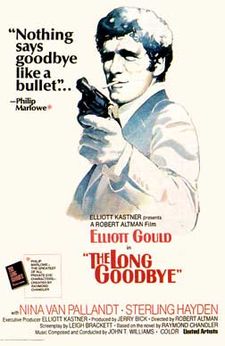
The Long Goodbye (1973)

Philip Marlowe: You ain’t seen the great detective this dishevelled before

Director: Robert Altman
Cast: Elliott Gould (Philip Marlowe), Nina van Pallandt (Eileen Wade), Sterling Hayden (Roger Wade), Mark Rydell (Marty Augustine), Henry Gibson (Dr. Verringer), David Arkin (Harry), Jim Bouton (Terry Lennox), Ken Sansom (Colony Guard)

Philip Marlowe: The Great Gumshoe as you’ve never seen him before. Altman has taken Chandler’s original novel and re-set it into the 1970s. Marlowe (Elliot Gould) is still a private eye but a sort of eccentric Don Quixote, an ambling, mumbling oddity too noble to take on “divorce work”. After he gives his friend Terry Lennox (Jim Bouton) a lift to Mexico, he is left facing police wrath after Terry’s wife is found dead. He is cleared only when Terry is found dead in Mexico, having signed a confession. But Marlowe can’t believe his friend capable of murder – and investigates further.

Altman’s Chandler adaptation was widely criticised at the time – largely because it was completely mis-sold as a mystery detective yarn, which it certainly is not. There are no clues, the mystery is pretty vague at best and the detective hero not only does virtually no detective whatsoever, but is such a naïve soul with such a trusting 1950s style code of honour that he seems swept along by events like a broken reed in a stream. Far from the Marlowe of Bogart or Mitchum, Gould’s Marlowe was an almost wilfully uncool, awkward social misfit, whose lack of engagement with the world stemmed far more from his own lack of understanding than any cynicism.

On top of that, the film is an unusual blend of old and new. Marlowe is a scruffy man out of time, constantly smoking (no one else in the film does) and shuffling from encounter to encounter. Vital conversations happen outside of our (and Marlowe’s) hearing. The camera roams as wilfully as its lead character, rarely standing still to let us absorb the action, but constantly offering us a series of subjective angles. Like much of Altman’s work, the naturalistic sound recording lets dialogue overlap and clash. The entire soundtrack is a riff on the themes in the title song, the music popping up throughout like pleasant musak. Vilmos Zsigmond’s photography is both an inversion of film noir with its California brightness and (through a technique of deliberate overexposure called ‘flashing’) a sepia infected look at the 1970s that draws a link back to the source material’s 1940s origins.

But the tone of the movie is the most unusual thing: a strangely addictive hipsterish take on Marlowe, in which the majority of other characters are as shallow and self-obsessed as you would expect of the 1970s: aside from Marlowe, the only character who seems to apologise or keep to his word at any point is the film’s least sympathetic and most violent character. The eventual killer reacts to being confronted with his crime with a blasé self-entitlement. Across the apartment from Marlowe’s bizarre old-school Hollywood apartment block, a commune of hippie ladies exercise topless outside at all hours; everywhere you turn there are clashes between the old and the new.

The film’s opening immediately establishes what the film is going to be like, and is also one of the best sequences in the film: a quiet, gently paced quest Marlowe undertakes to find cat-food in the middle of the night and his inability to persuade said cat to eat the “wrong” brand of food that he brings back home. This secluded existence is only broken by the arrival of Terry Lennox, who immediately beats Marlowe at a bet on the number of 7s in the serial number on a $10 bill (which he wins despite Marlowe having the higher number of 7s, as he successfully lures Marlowe into an incorrect challenge). It’s a wonderful summation of the film’s plot, as well as a series of clear insights into Marlowe’s personality: a man out of time easily manipulated by those around him, who can’t fool a cat or win a bet with the best hand.

Gould’s performance is absolutely central to the mood and tone of the film. His Marlowe is a counterpoint to the hard-bitten detectives of film noir. Instead, he is a scruffy mumbler, whose continual, conversational patter throughout the film feels more like a commentary he is running for his own amusement than any attempt to communicate with the world around him. Gould’s charm and otherworldly quality basically is the film: he’s hardly off screen and he “sets the tone”: the film’s ambling, slightly confused glances at the modern world, where dialogue and motives are both equally unclear, exactly match the beats of Gould’s interpretation of the character. It’s a perfect performance for the film, a sly gag that also has heart and character.

The film’s off beat tone and lackadaisical attitude are punctured at several moments by astonishingly sudden upturns in tempo, and scenes that sizzle with the threat of (or actual) violence. These moments are linked to Mark Rydell’s brilliant performance as fast-talking Marty Augustine, a man whose actions are totally unpredictable. He is responsible for the film’s only real act of violence – but it’s a striking moment of brutality that no-one sees coming (least of all the other characters, on whose shocked faces and stunned silence the camera lingers).

Rydell’s exceptional performance is the stand out supporting one here, but there is also some very good work from Nina van Pallandt as a woman who is part vulnerable wife, part femme fatale, and whose emotional state and motivations constantly seem to shift and change (at a pace the audience barely keeps up with, let alone poor Marlowe). Sterling Hayden’s Hemingway-esque author is one of those primal force-of-nature performances that can grate, but it works in a film where so many of the other characters are restrained.

The film is an absorbing character study, and at the same time a sly commentary on both the 1970s, the source material and film itself: Gould’s Marlowe at points seems to be pushing on the wall of self-awareness (most notably in a hospital scene late in the film, a masterpiece of misdirection): later, Third Man style, he walks past another character without offering a beat of recognition, before (as the credits roll) he inexplicably starts dancing down a boulevard, the camera watching him in long shot. Hooray for Hollywood (the only other music in the film) bookends the film.

It’s a fascinating and highly enjoyable film with a series of striking scenes and character moments that capture the attention and imagination. It’s a film that needs, however, a certain expectation going into it. Don’t expect a detective story, don’t expect detection even, but instead a unique merging of comedy, social commentary, satire and drama powered by an almost wilfully off-hand lead performance. It’s the sort of unique concoction only Altman could have made. There isn’t really anything else like it.