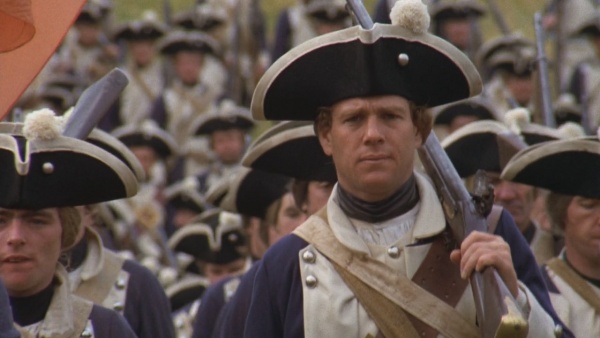
Tag: Steven Berkoff

Barry Lyndon (1975)

Ryan O’Neal is Barry Lyndon in Kubrick’s brilliantly distant epic

Director: Stanley Kubrick

Cast: Ryan O’Neal (Redmond Barry), Marisa Berenson (Lady Lyndon), Michael Hordern (Narrator), Patrick Magee (Chevalier du Balibari), Hardy Krüger (Captain Potzdorf), Marie Kean (Belle Barry), Gay Hamilton (Nora Brady), Godfrey Quigley (Captain Grogan), Murray Melvin (Reverend Samuel Runt), Steven Berkoff (Lord Ludd), Frank Middlemass (Sir Charles Reginald Lyndon), Leon Vitali (Lord Bullingdon), Leonard Rossiter (Captain John Quin), André Morell (Lord Wendover), Anthony Sharp (Lord Hallam), Philip Stone (Graham), Arthur O’Sullivan (Captain Feeney)

Kubrick has been criticised as a director more interested in style and the technical tricks of cinema than emotion, and there is perhaps no argument for the prosecution than Barry Lyndon. It now seems to the cineaste’s choice du jour as the greatest Kubrick film (probably partly because it is less well-known). Barry Lyndon however is like an exercise in all Kubrick’s strengths and weaknesses, a film that you can admire at great length while simultaneously caring very little about anything that happens in it.

Based on a William Makepeace Thackeray (although it feels in spirit only), Barry Lyndon tells the story of Irish chancer Redmond Barry (Ryan O’Neal) in the mid eighteenth century. Fleeing Ireland after (he believes) killing an English officer in a duel, Barry goes from the British arm to the Prussian army, to card-sharping the courts of Europe to marrying into the aristocracy, as husband to Lady Lyndon (Marisa Berenson). But, however hard he tries, it’s difficult for an Irish chancer to be accepted by the British aristocracy, particularly when he suffers from the vocal hatred of his wife’s son Lord Bullingdon (Leon Vitali). 

Kubrick spent several years carrying out research for an epic biopic of Napoleon (he had Ian Holm lined up for the lead role – Holm read multiple biographies and spent months working on a script with Kubrick). The flop of Waterloo (with a deliciously hammy Rod Steiger as Napoleon) killed off the chances of that film making it to the screen. Never-the-less Kubrick now had a vast archive of research for the period – and how easy it was to shift the focus of this research back a few decades. Thackeray’s novel was his chance to put all this to use – and allow Kubrick to indulge what had become a passion for the style of the era.

Barry Lyndon won four Oscars – and all in the areas where the film deserves unqualified praise. This is a stunningly beautiful piece of work, surely a contender for one of the most strikingly gorgeous films ever made. Ken Adam’s set design utilises a superb range of locations across the UK, dressed to breath-taking effect. The costumes, completely accurate to the period, are exquisitely detailed (Milan Canonero and Ulla-Britt Söderland) and lusciously mounted. Leonard Rosenman’s score is a wonderful riff on a range of masterpieces from classical music, including Handel, Bach, Schubert and Mozart.
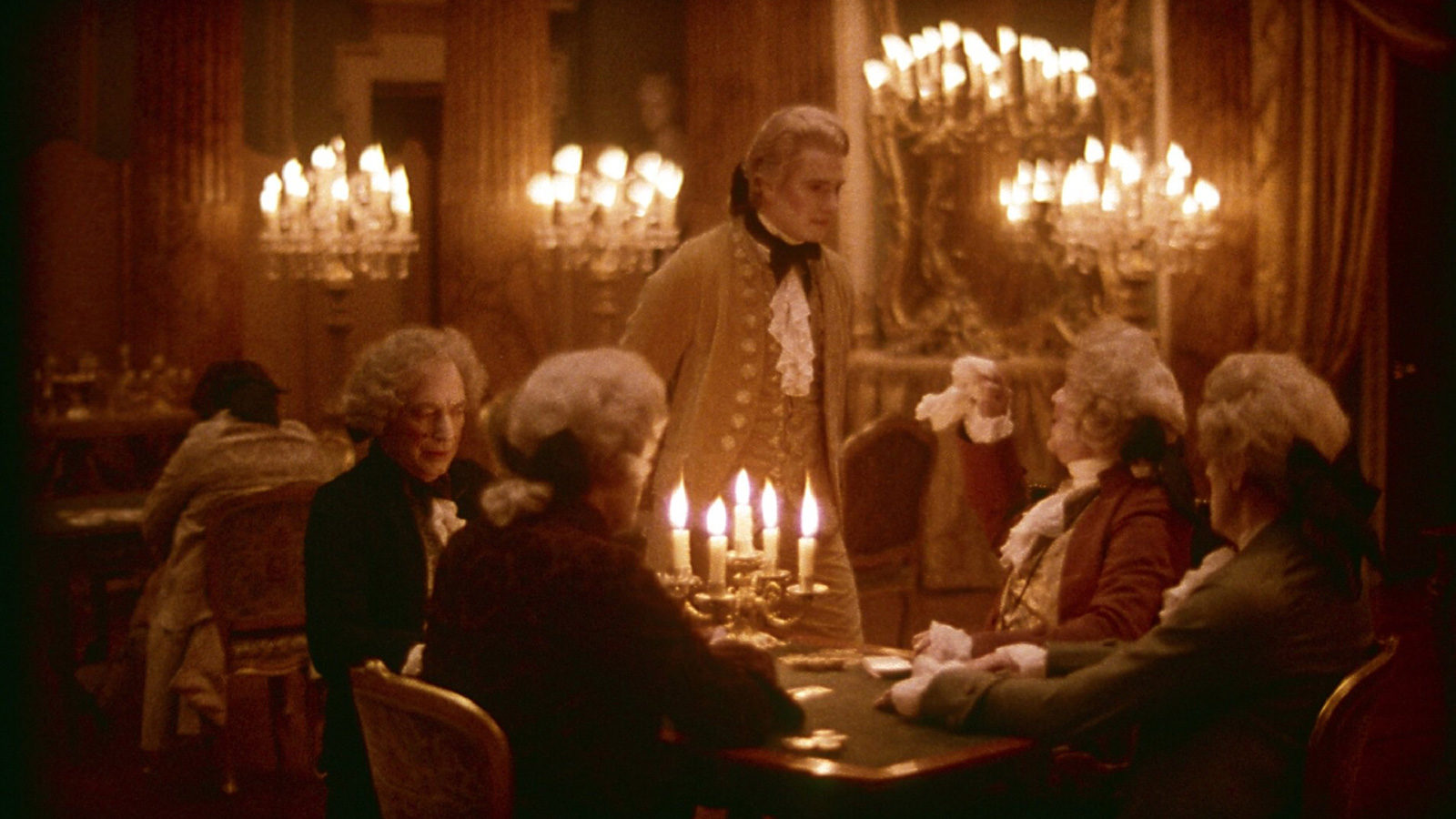
Most strikingly Kubrick decided to film as much as possible with natural lighting only, rather than the vast array of lighting bought in for most films. This was part of Kubrick’s intention to avoid any sense of the studio to his film – everything was to be shot on location and to help immerse the viewer in the detail of the period. Shots were framed to imitate artists of the period, in particular Hogarth. Evening scenes were shot lit only by candle-light, leading to truly stunning images, simply superbly lit. John Alcott’s photograhy utilised (and I’m serious here) NASA designed cameras used for the moon landings to capture images in such low light. Visually, Barry Lyndon may be one of the most perfect films ever made. It’s wonderful – and any doubts that Kubrick is not a true master of cinema should be dismissed.

But Kubrick’s problem, as always? He’s a technocrat artist who lacks some soul. So much time and energy has been expelled on the visuals and the design – the film took almost a year to shoot – that, while you are constantly almost hypnotised by its sublime imagery, it slowly occurs to you that you couldn’t care less about most of the events that happen in it. For all the film’s great length and beauty, it’s a cold and distant film. Kubrick turns Thackeray’s rogueish comic tale – a picaresque dance – into a chillingly sterile meditation on fate, with Barry transformed from a rogue and chancer into a lifeless, passive figure to whom things happen rather than ever attempting to instigate them. 

Is this Kubrick’s idea of humanity? Perhaps it suits the director who was the great master of intricate design and traps, that he would be tempted to turn this story into one where humans are just another piece of set dressing moved around and manipulated by an unseen force (fate, or rather a director?). The distancing effect is further by super-imposing an all-knowing narrator over the events, who frequently pre-empts what will happen and stresses the powerlessness of men. (On a side note, the book is narrated by Barry as were early screenplay drafts – perhaps the idea of O’Neal’s flat voice narrating so much of the action horrified Kubrick. It’s a definite improvement to get Michael Hordern’s tones talking to us for three hours.)
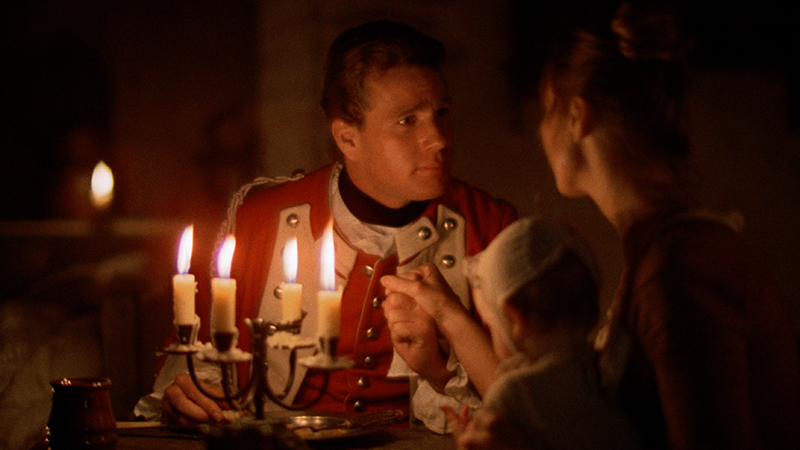
Perhaps though, the failure to capture any sense of Thackeray’s satirical wit, is a sharp reveal of Kubrick’s own inability to appreciate comedy – without the guiding hand of a Peter Sellers to support him. The problem is exacerbated by Ryan O’Neal in the lead role. Kubrick was ordered to hire one of the top ten box office draws of 1972 in the lead role – alas only O’Neal and Redford were the correct age and sex, and Redford (first choice) could never see himself as an Irishman masquerading as an Englishman. So O’Neal got the job – and the film is a damning indictment of his lack of charisma, flat and dry delivery and inability to bring life and energy to the proceedings (although O’Neal has blamed the editing partly for this, as well as the extended shoot). The film helped put an end to O’Neal’s career as a star (already on the wane) – and he is the film’s greatest weakness, in a role that needed more of the impish charm of Malcolm McDowell (although the lead actor from any of Kubrick’s films would have been superior). O’Neal’s presence turns Barry into a character we care nothing for, in a story already coldly distant.

O’Neal is also not helped by Kubrick’s utilising again his great love of striking British character actors – every role is filled with a recognisable face from 1970s British film and TV, each bringing colour and vibrancy to their (often brief) scenes. From Leonard Rossiter – weasily as you’d expect – as the captain Barry thinks he kills, through Patrick Magee’s ambivalently sinister Chevalier, Marie Kean’s loving mother, Murray Melvin’s obsequious priest, Godfrey Quigley’s matey army officer there is not a weak turn elsewhere in the movie. Leon Vitali brings real depth and energy into the film late on as Barry’s son-in-law and hated rival. Even Marisa Berenson – reduced to a dozen lines at most – makes an emotional impression as a woman trapped into serving the needs of the men in her life.

All these actors however are revolving in a movie that gets stuck and overwhelmed in its own grandeur and beauty. There are many wonderful sequences – with the film bookended by two duelling sequences that explore the strange rules and conventions with this society with a vicious black humour. Kubrick’s points about the oppressive insularity of the establishment – and the amount of forgiveness it has for its own, compared to the instant judgement of the outsider – are generally well-made, but are at times so laced with the director’s own cynical views of humanity in general (an increasingly clear trait in his later work) that they carry little impact. Despite this the film is never less than strangely captivating, even if its very easy to let it drift past you rather than invest in it.

But above all, while the film is stunning and the direction of Kubrick near faultless, the film itself gets so close to a great painting that it becomes something you hang on the wall to admire, but not to invest in. Kubrick couldn’t match his genius with the sort of emotion or wit that the story needed (much as it’s vastly superior to Tom Jones, that film gets closer to the spirit of authors like Thackeray than this ever does). Instead, he creates a coldly sterile world, like a perfect experiment in form and style that totally forgets such trivial elements as character and story. For all the film is full of character and events, you’ll find you care very little about them – and that the brilliance of Kubrick is only a partial consolation for that loss.
The Passenger (1975)

Maria Schneider and Jack Nicholson hit the road in Antonioni’s partly frustrating, partly masterful The Passenger

Director: Michelangelo Antonioni

Cast: Jack Nicholson (David Locke), Maria Schneider (The Girl), Ian Hendy (Martin Knight), Jenny Runacre (Rachel Locke), Charles Mulvehill (David Robertson), Steven Berkoff (Stephen)

Ever wanted to jack in your life and have a go at being someone else? It’s a temptation we’ve all felt at one time or another, that chance to make a completely fresh start free of all those burdens and expectations of our own lives. 

It’s a temptation thrown in the way of David Locke (Jack Nicholson) a British-American journalist, trying to make contact with rebel groups in the deepest Sahara deserts of Chad. Returning, after a failed excursion, to his ‘hotel’ in the tiny, beat-up village in the middle of the desert he finds that the only other resident, an Englishman, has died of a heart attack. The two man have a physical similarity, enough for Locke to decide to swop places with the dead man and leave Chad under a new identity as David Robertson. Curious to follow the details left in Robertson’s appointment diary, Locke finds that he has taken the identity of an arms dealer – making sense immediately of why Robertson was also in the hotel at the time – forcing Locke to stay one-step ahead of both the arms dealers and his wife Rachel (Jenny Runacre) and producer Martin (Ian Hendry) keen to talk to him about ‘Locke’s’ death.

If that sounds like it might be an action packed thriller – you’d be wrong, because let’s not forget that this is an Antonioni film, and if there is one thing you can expect from the revered auteur of the Art-House, it’s that his films are mysteries wrapped in enigmas. The Passenger is no exception, a slow, intriguing mood piece that only partially allows the audience even half a chance to puzzle out what it’s about, mixed with striking images and haunting sequences of fundamental unknowingness. Despite the paragraph above there is almost no plot in The Passenger, with the film instead focused on themes of alienation, existentialism, destiny, fate and identity. In other words all the big stuff.

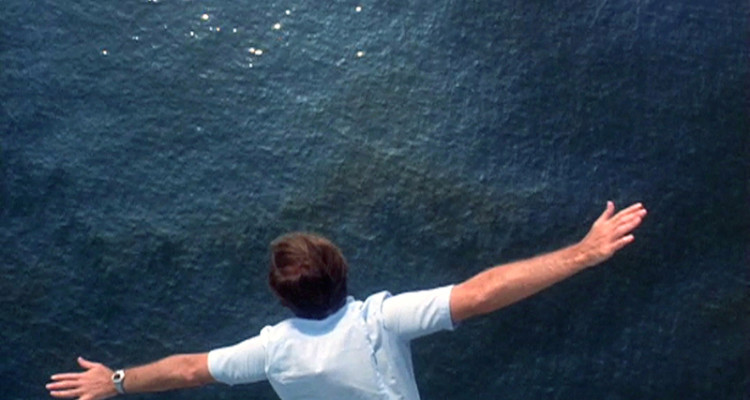
Much of this is captured in the character of Locke. Played by Jack Nicholson in a stripped-down, purged style a million miles away from the “Jack” of legend, Locke is a blank. We spend almost the entire film with him, but learn virtually nothing about him. What desires or miseries or depressions drive him to abandon his life and head out into a new life? We have only vague whispers about an unhappy marriage (with a wife having an affair with someone else) and a general listless dissatisfaction with his own life and career. Locke is a character yearning for some kind of release, some kind of higher meaning – the happiest he seems to be in the movie, is hanging over the side of a cable car, arms outstretched, pretending to fly over the waters below. It’s a freedom like that – some sort of total unshackling from the modern world altogether – that he seems to want or need.

So why doesn’t he go for it? Why doesn’t he just junk Robertson’s appointment diary and escape properly into the wide world, well beyond the reach of Chad rebels, curious wives and BBC Producers? Perhaps because he is a Passenger himself, a man who lacks the essential will and freedom of purpose to make his own destiny, to escape the structure of a world he finds so constricting? Instead, he seems bound of a wheel of fire, compelled somehow to continue following some sort of structure unable to yank himself fully free of the chains of this modern world. He wants to be a free spirit, but he remains a little man, to whom events happen, who is approached by people, who follows directions not forging his own path.

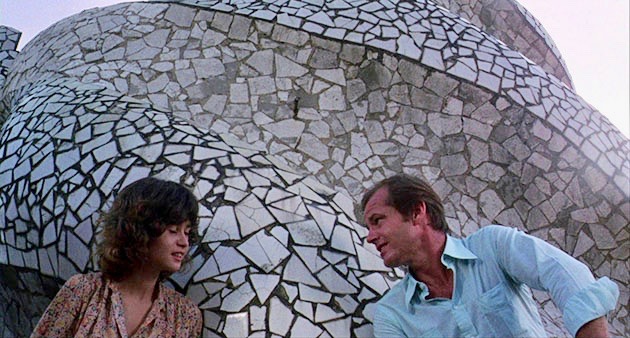
He gets as close as he can to opening up by talking to a passenger of his own, a mysterious girl (played with an unaffected naturalness by Maria Schneider that is part graceful reality, part wooden stiffness but works perfectly) he encounters while following Robertson’s trail. He first spots her sitting on a bench in London, then sees her again atop Guadi’s La Pedrera in Barcelona. Is this coincidence? Is this fate? Destiny? Or is this a curious suggestion that the girl may be more than she seems? None of these questions is answered by the film, but it fits perfectly in with the unknowing vagueness and quizzical unpredictability of its events. Hammering home the blank unknowability of Schneider’s character, she isn’t even named in the film. She joins Locke on his journey, but her motivations are as vague as his – is it escape, a bohemian lark, a curiosity that guides her? Who knows?

The film continues in this vein, showing Locke drifting from Chad to the UK to Berlin, Barcelona and Seville, never seeming to allow Locke more than a few seconds of freedom. Is the film asking if there is any such thing as true freedom, that even after swopping lives Locke still finds himself locked down into following a series of pre-arranged duties, like a train on a line? It’s not clear, but it’s beautifully filmed. Antonioni’s mastery of the camera shines throughout the film, and it’s full of haunting and immersive imagery, not least in his skilful use of locations and framing, with Locke and the Girl frequently positioned oddly or even dwarfed by the architecture and locations around them, from the plains of the desert to the towers of Gaudi.

Antonioni also saves for this film some sequences which are simply breathtaking in their cinematic mastery and beauty. His control of technique is near faultless – while his art house vagueness might have you pulling your hair out at points, these sequences will have you winding the film back just to relax in their skill and confidence again. Early in the film, we see Locke sit and fake his passport in his Chad hotel – oh for the days when identity theft was as simple as glueing a new photo into a passport – the camera smoothly moves around him, while he listens to recordings of Robertson and he meeting, until it settles onto the balcony (all this in one take) at which point Robertson walks into frame and continues the conversation, Locke following him and, there we go, Antonioni has taken us suddenly into the past. Without a single cut, the camera follows the conversation before panning back round to Locke sitting once again writing.

It’s a sequence that cineateases would be raving about, if it wasn’t dwarfed by the film’s penultimate shot, a stunning seven-minute single take that would be simplicity itself to make with CGI and Steadicam today, but was somewhere achieved without the invention of others. Starting on a single shot of Locke’s Seville hotel room, the pan slowly focuses on events outside the grilled window, the camera slowly zooming in on the outside until it passes through the grill and rotates 180 degrees back to see the room from the outside, while the Girl and other mysterious people arrive and leave outside. It’s a beautiful, brilliant, sublime, masterful piece of cinema. It’s compelling, surely one of the greatest “one-take” shots in all of cinema. Simply perfect. Directors could sit and dream of making such a shot. 

Antonioni’s masterful direction and wilfully obtuse exploration of his themes makes for a film that is at time frustratingly unreadable, but also crammed with opportunities for the viewer to insert their own views and interpretations, something that is only going to become more tempting (and rewarding) with repeated viewings. Alongside that, it’s a simply beautiful and sublimely made piece of cinema – and if for no other reason deserves your time.

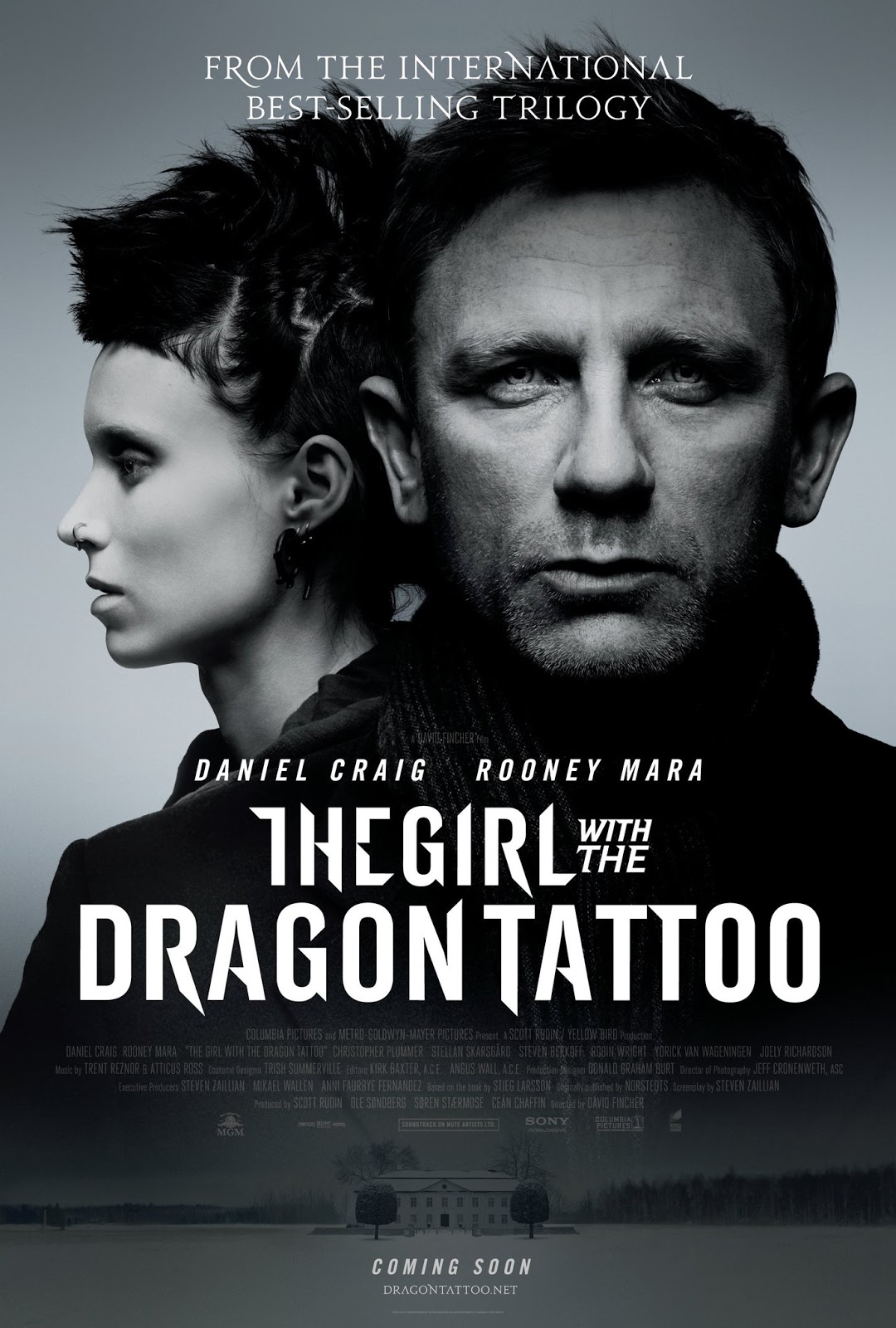
The Girl with the Dragon Tattoo (2011)

Rooney Mara and Daniel Craig investigate unspeakable evil in David Fincher’s superb The Girl with the Dragon Tattoo adaptation

Director: David Fincher

Cast: Daniel Craig (Mikael Blomkvist), Rooney Mara (Lisbeth Slander), Christopher Plummer (Henrik Vanger), Stellan Skarsgård (Martin Vanger), Steven Berkoff (Dirch Frode), Robin Wright (Erika Berger), Yorick van Wageningen (Nils Bjurman), Joely Richardson (Anita Vanger), Goran Višnjić (Dragan Armansky), Donald Sumpter (Detective Morell), Ulf Friberg (Hans-Erik Wennerström), Geraldine James (Cecilia Vanger), Embeth Davidtz (Annik Giannini), Julian Sands (Young Henrik Vanger), David Dencik (Young Morell), Tony Way (Plague), Alan Dale (Detective Isaksson)

At the time of its release, there was a slightly cool reaction to David Fincher’s The Girl with the Dragon Tattoo. Most reviewers were already familiar with the story twice over, firstly as the best-selling thriller then as the Swedish film starring Noomi Rapace. Perhaps fans were similarly slightly indifferent, while newbies had already declined the first two options, as the film struggled to crawl its way to breakeven. However, rewatching it, I feel this intriguingly well-made film deserves to be mentioned in the same discussion as another adaptation of a pulp thriller made 20 years earlier: The Silence of the Lambs.

Mikael Blomqvist (Daniel Craig) is a crusading financial journalist and co-owner of Millenniummagazine, whose career is in ruins after his article about the CEO of a major company leads to him losing a costly legal battle for libel. He is approached by retired businessman Henrik Vanger (Christopher Plummer), who asks him to investigate the 40-year-old disappearance of his niece Harriet Vanger, who vanished on their privately owned island estate. Blomqvist is hired after an exhaustive investigation into his personal life by emotionally challenged hacker and private investigator Lisbeth Slander (Rooney Mara), who is facing her own problems of gaining her independence from her position as a ward of the state, represented by her vile guardian Nils Bjurman (Yorick van Wageningen). As Blomqvist investigates, eventually with the help of Lisbeth, the trail takes a very dark turn suggesting a sinister hand behind the disappearance not only of Harriet but also of a number of other women around Sweden.

Fincher’s crisply made, icily cold movie embraces the coldness not only of wintery Sweden, but also the film’s chilling subject matter. There are very rarely – if ever – flashes of colour or light, with the world taking on an oppressive blackness and grey or windswept bleakness. It’s a perfect metaphor for the horror of what people do to each other. It’s brilliantly assembled, as you would expect from Fincher, and made with such consummate skill and excellence that its professional chill becomes almost oppressively unsettling, much like the plot itself.

Re-watching it I was put very much in mind of The Silence of the Lambs. That too was a masterfully made adaptation of a pulp novel that found a poetry and depth in the book, framing it around a series of unconventional relationships, with a female lead pushed into a role that sharply defies expectations. Both have at their centre a dangerous figure whose interests align with the other characters. Brilliantly, here the role of dangerously unpredictable genius and unexpected female role are both taken by Lisbeth Slander. (In fact Lisbeth is like a fusing of Clarice and Lector into one character). 

Like Lambs, which tapped into the 1990s obsession with the power of psychiatry and self-analysis and used it as the key to uncovering and defeating criminals, this takes our fascination with computers and the internet and uses that as silver bullet for finding criminals. Just as in the 1990s psychiatrists seemed to have access to some sort of mystical alchemy no one else could understand, so the film shows Lisbeth’s hacker skills as some sort of super power that can blow down secrets and accomplish things no one else can do. 

The film also echoes Lambs in its fascinating look at the place of women in the world. The film revolves around historical violence against women – when we finally have the killer unveiled he confirms women have only ever been his targets – and the film is heavy (in often wordlessly narrated flashbacks) with ominous feelings of danger from a domineering male culture. The world clearly hasn’t changed that much either. The killer continues to operate, everyone in a position of influence we see is an ageing man, Lisbeth’s ward is a vile sexual abuser. But, in this milieu of threat to women, Lisbeth becomes a sort of icon of a woman living life on her terms and taking control of her own life.

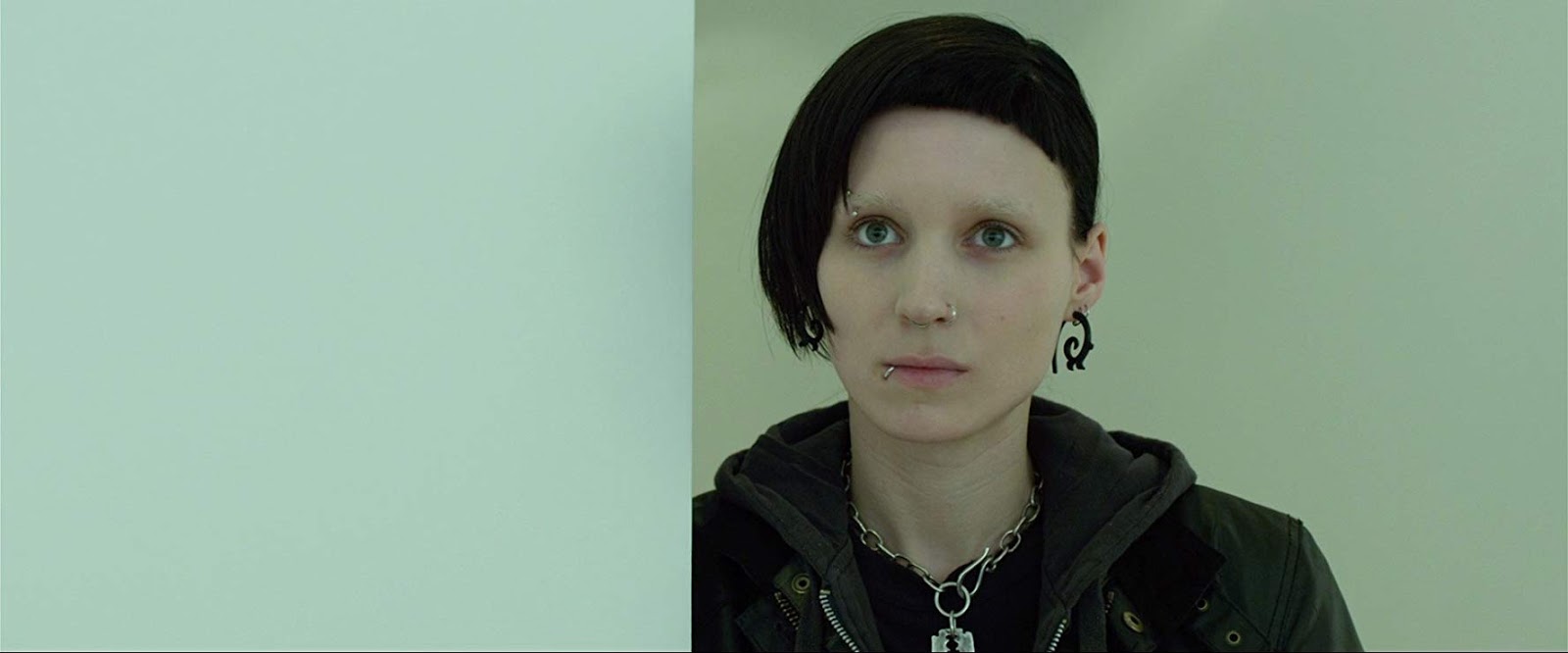
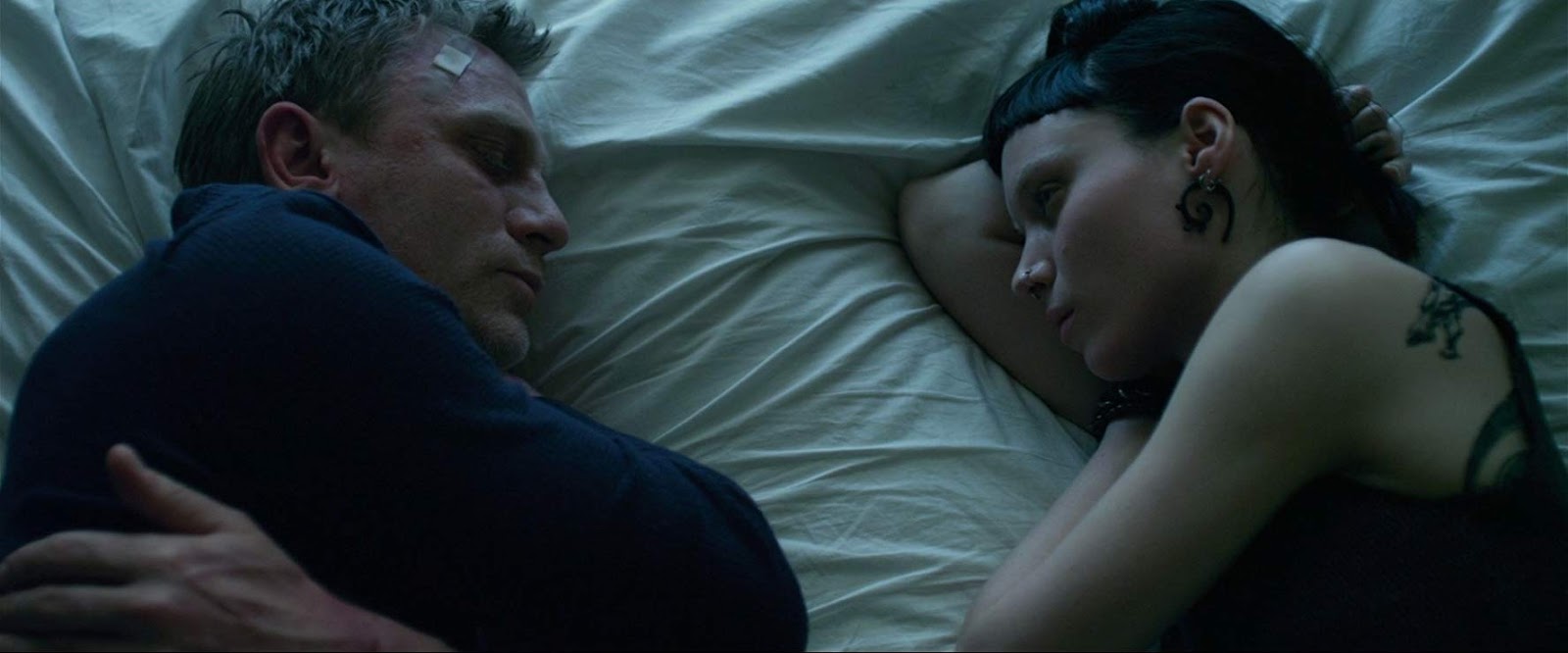
Impressively embodied by an Oscar-nominated Rooney Mara, Lisbeth is the sort of character you would normally expect to be a man: surly, anti-social, difficult, prone to violence, sexually indiscriminate, determined to always be in control and decisive in her relationships. She quickly takes the lead in her relationship with Mikael, professionally and later sexually (right down to her telling him where to put his hands during their passionate but also functional sex scenes). Mikael meanwhile takes far more the traditional “female” role: dedicated, hard-working, maternal, competent but better placed as the assistant to a true genius. Daniel Craig gives him a slightly rumpled middle-age quality, combined with a feckless recklessness that lands him in trouble.

The film is Lisbeth’s though, and Fincher brilliantly uses early scenes to establish her defiant, independent character. From snatching her bag back (brutally) from a would-be mugger on the underground, to a surly, blunt lack of respect she shows to a client, she’s painted clearly as a person who will respond how she wants, regardless of any “rules”. But Fincher also makes time to show her vulnerability. Lonely and insecure, she has worked hard to kill any vulnerability in her and protect herself from emotional pain. To see the small notes of tenderness she allows out – from her reaction to a former guardian suffering a stroke to her increasing emotional investment in Mikael – is strikingly engaging.

And we definitely see her suffering. If we had any doubts about one of the themes of this film being about how powerful men abuse and control women, the sub-plot of Lisbeth’s abusive warden (played with the pathetic, creepy relish of the small man enjoying what control he has by Yorick van Wageningen) hammers it home. The four key scenes between these characters cover a mini-arc in themselves from abuse of power, assault, revenge and power shift. Lisbeth may suffer terribly – more than she expects, much to her shock – but the sequence not only shows her ability to survive but also to turn the tables to her advantage. You could argue that this sort of rape-revenge fantasy might trivialise the impact rape has on real people – but it’s crucial for the theme of the film that there is hope that the sort of scum that abuse their positions can be stopped and that victims can survive and thrive. 

And you’ll need this as the film expands both into the past and the present day into a series of increasingly grim cases of historical abuse and murder. Fincher presents all this with the same brilliant, non-exploitative control that Jonathan Demme managed in Lambs. Despite the horrors of the themes, there is no lingering on anything graphic. Instead Fincher uses the tension of slowness, of steady camera work, of careful pacing to let tension and unease build up as we feel something is horribly wrong but never can be quite sure what. The final confrontation with the killer is not only deeply unsettling for it being one of the most brightly lit sequences of the film, but also for the middle-class banality of the villain’s taste (you’ll never listen to Orinoco Flow in the same way again) and the fascinatingly business-like approach he brings to his deeds of slaughter. 

The Girl with the Dragan Tattoo is such a well-made film that perhaps that’s its greatest weakness. It’s a little too easy to see a lack of personality in it, a professionalism, a clean perfection, a master craftsman quality, that you feel you are watching a studio picture made by a great director. And maybe you are: but then you could say the same about many of Hitchcock’s film, a director Fincher consciously echoes here. Superbly acted not just by the leads but by the whole cast (Plummer, Skarsgård and Wright are excellent while even Berkoff gives a restrained performance) The Girl with the Dragon Tattoo is the sort of film that will surely only be considered in a warmer and warmer light as time goes by.