Tag: Stuart Wilson

Enemy of the State (1998)

Will Smith and Gene Hackman dodge the surveillance state in Enemy of the State

Director: Tony Scott

Cast: Will Smith (Robert Clayton Dean), Gene Hackman (Brill), Jon Voight (NSA Director Thomas Reynolds), Regina King (Carla Dean), Jason Lee (Daniel Leon Zavitz), Lisa Bonet (Rachel Banks), Barry Pepper (Agent Pratt), Loren Dean (Agent Loren Hicks), Jake Busey (Agent Krug), Lisa Bonet (Rachel Banks), Jack Black (Agent Fiedler), Jamie Kennedy (Agent Williams), Seth Green (Agent Selby), Ian Hart (Agent Bingham), Stuart Wilson (Congressman Sam Albert), Jason Robards (Congressman Philip Hammersley), Tom Sizemore (Paulie Pintero)

A congressman (a cameoing Jason Robards) is murdered for refusing to support intrusive new counter-terrorism legislation championed by NSA director Thomas Reynolds (Jon Voight). Unfortunately, someone caught the killing on camera. When the NSA come hunting, he plants the recording on an unwitting lawyer friend, Robert Clayton Dean (Will Smith). Dean has no idea he has evidence that could blow the conspiracy – and is nonplussed when they set about destroying his life. The only person who can help is mysterious surveillance expert Brill (Gene Hackman), who has spent decades living off the grid. Can the clear Dean’s name and stop the bad apples in the NSA?

Enemy of the State is a fun chase movie, that enjoys the technical possibilities of the surveillance state, packaged with the fast-pace, bright colour-filtered style of Tony Scott (this is one of his best films). There is more than enough wit and enjoyment about it – not to mention watching a host of very good actors, many of them unknowns at the time, bring a lot of sparkle to the film (you’ve got to give kudos to the casting director). Everything of course gets tied up in a neat, pretty bow but it’s a damn lovely bow so that’s fine.

In its detailed look at the power of the surveillance state, Enemy of the State was, in a way, ahead of its time. The ability for the intelligence agencies here to look into literally everything in your life is pretty unsettling, from bank details to computer accounts. Every camera is an eye and satellites are tasked at will to watch anything. In fact, it’s quite something to remember that the state is only more powerful today – the internet and mobile phones would making tracking Dean even easier than the bugs they secrete about his person, which causes him to flee our baddies stripped to his undies. (Also, if only Reynolds had waited a few years, congress would wave through legislation such as he is requesting here, without batting an eyelid).

The film also dares to shade a little bit of naughtiness into Will Smith’s character. Sure, he’s a crusading labour lawyer (we’ve got to know he’s on the right side!) but he’s also an adulterer with trust problems in his marriage. Smith’s still at his charming best here, and his frazzled desperation as he struggles to understand why on earth the NSA is destroying his life is well-handled. Regina King gets a thankless role as Dean’s shrill wife, whose trust in her husband oscillates according to the requirements of the script, rather than any internal character logic.

Enemy of the State sometimes teeters on the edge of making a point about the dangers of the surveillance state. How easy could it be to abuse this power? Unfortunately it puts most of these arguments into the mouth of Regina King’s holier-than-thou wife, which rather undermines them. It’s also made abundantly clear that we’re witnessing rogue agents. This allows the film to focus more on the cool things surveillance can do, rather than clearer moral statements about whether that’s right or not, other than it being a dangerous tool in the hands of the wrong men.

Scott’s film is more of an entertainment than a treatise though (and thank God for that). It also has a nice little touch of 1970s’ conspiracy thriller to it, something the film leans into with the casting of Gene Hackman in a role reminiscent of Harry Caul in The Conversation. Sure, I can’t remember Caul driving a car while it was on fire or blowing up a building, but Hackman still gives the film some class and a touch of old-school espionage and cynicism. Truth-be-told, other than profession, Caul and Brill have very little in common (Brill is far more confrontational and confident, and much less likely to rip his apartment apart) but it’s still a nice call-back. I also rather enjoy Gabriel Byrne’s smart, playful little cameo as ‘fake’ Brill (hardly a spoiler as you can’t move without knowing Hackman is in the picture).

Scott’s high-energy fun culminates in a smart little trap laid by Dean for all his enemies, that plays nicely off the fact that the NSA agents and the Mafia are definitely paranoid and stubborn enough to not realise they are all talking at cross-purposes. The end of the film sees everything back to normal (it’s unclear how, or if, Dean got his job back considering his unceremonious firing), but I wouldn’t worry about it. It would be nice if it had said more, but as a rollercoaster ride it’s short, sharp and sweet.

The Age of Innocence (1993)

Daniel Day-Lewis and Michelle Pfeiffer have a love that cannot survive the morals of society in The Age of Innocence

Director: Martin Scorsese

Cast: Daniel Day-Lewis (Newland Archer), Michelle Pfeiffer (Countess Ellen Olenska), Winona Ryder (May Welland), Miriam Margolyes (Mrs Mingott), Geraldine Chaplin (Mrs Welland), Michael Gough (Henry van der Luyden), Richard E. Grant (Larry Lefferts), Mary Beth Hurt (Regina Beaufort), Robert Sean Leonard (Ted Archer), Norman Lloyd (Mr Letterblair), Alec McCowen (Sillerton Jackson), Sian Phillips (Mrs Archer), Jonathan Pryce (Rivière), Alexis Smith (Louisa van der Luyden), Stuart Wilson (Julius Beaufort), Joanne Woodward (Narrator), Carolyn Farina (Janey Archer)

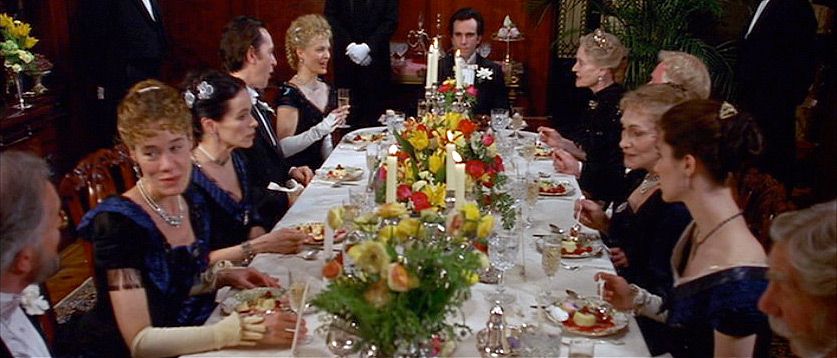
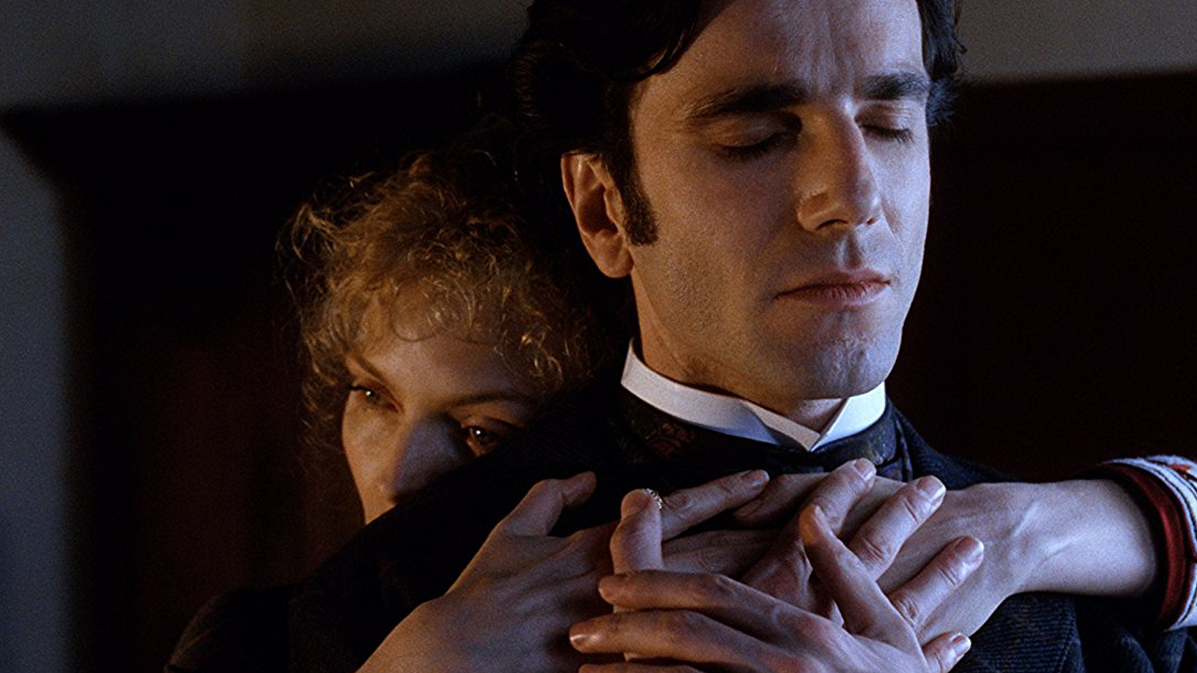
In 1870’s New York, Newland Archer (Daniel Day-Lewis), is a fastidious connoisseur of the arts, part of the super-rich elite of New York society. He’s engaged to be married to young May Welland (Winona Ryder), but finds his world view and values turned upside down when he meets May’s cousin, the Countess Ellen Olenska (Michelle Pfeiffer). Ellen is a scandalous figure, a woman separated from her philandering European husband, trying to make her way in New York society. Newland and Ellen are irresistibly drawn together, but do they have a chance to be together in the oppressive society of the New York upper classes?

That’s one question. The one more people were asking was: how would Scorsese follow up Goodfellas? Probably very few people would have bet on an adaptation of Edith Wharton’s The Age of Innocence. In fact, in 1993, there was more than a little annoyance among some viewers at the idea of the master of gangster movies, the guy who directed Raging Bull and Taxi Driver, turning his hand to the realm of Merchant Ivory. The film bombed at the box office – but did it deserve that reaction? Was Scorsese a director out-of-place?

Well the reaction is slightly unfair, because The Age of Innocence is a marvellously filmed, exact, brilliantly constructed piece of film-making, that so lays on the opulence and wealth of New York society that it turns everything in the film into feeling like a gilded cage. That’s a cage carefully controlled and monitored by the inmates, with their strict, inflexible rules about every single social interaction, unbreakable rules of decorum and etiquette covering everything, with any deviation from these rules met with instant expulsion. Put it like that, and this doesn’t sound a million miles away from the gangster families Scorsese is more associated with.

Inspired by the films of Powell and Pressburger in its intricate construction, and flashes of artifice in filming and editing, as well as its rich colour palette, with touches of everyone from Visconte, Ophüls, Truffaut to name but a few, this is a film-maker’s love letter to cinematic classics. A beautiful sequence of Newland watching Ellen from behind and a distance on a jetty, yearning for her to turn around before a boat passes a lighthouse, using that landmark as the point when he will stop looking and accept something is not to be. The scene is bathed in a Jack Cardiff-ish red, with the objects in the light given a sharp definition in contrast to the colours. It’s a beautiful image, and one of several that run through the film. Inspired by paintings of the era, Scorsese also layers in Viscontish scenes of opulence, with The Leopard very much in mind as every detail of the vast wealth, and huge accumulation of objects in every room of these people’s houses, seems to crush and entrap the people in them. The rooms themselves become metaphors of the oppressive, rule-bound society the characters are trapped in, like the people have been designed to fit into the rooms rather than vice versa. The one exception is Ellen’s rooms, which have a sense of personality to them.

This marvellous construction – with its beautiful photography, inspiring design and costumes – contains a storyline of frustrated love, a love triangle between three people where the man has to make a choice between what he wants and what is expected of him. Newland Archer clearly loves Ellen in a way he can never love May – indeed, he is dismissively cruel in his thoughts towards May, who he clearly considers nothing more than an extension of the mindless gilded objects of beauty around him, a woman he sees as lacking an imagination or daring. In Ellen, he sees far more opportunities for a world of change, of difference, or being something he does not expect. She is far more of a free-spirit, a more bohemian figure, confident in herself and something far more modern than May, who is very much a product of her time and place.

The film, carefully demonstrates the growing unease and unsettlement of Archer as he begins to feel things he has never done before, to start to react and aim for a style of living he would never previously consider. All his life before now is a careful studying and collection of moments, or savouring experiences in the way that a collector would place them in a glass box. From seeing only the moments of plays he wishes to see, to carefully collecting shipments of books from London and reading the choice moments, Archer is a coldly controlling figure who believes he guides and directs his own life. Ellen not only demonstrates to him that in many ways he is as conventional as anyone else, but also that there are other options in his life. Archer struggles to build the emotional language that he needs in order to express these feelings bubbling in him – key moments indeed seem reminiscent of the operas that this New York society spends so much time watching, and it is only late in the film in little, genuine moments of affection can he find something real.

Scorsese’s film artfully and carefully shows this developing affection between the two, a love that the two of them speak of surprisingly early, but fail to find a genuine way of expressing it. The film captures the attempt by New York society at the time to be more British than the British, and the hidebound restrictions this brings. Scorsese uses cinematic tricks to show Archer’s striving to escape. Spotlights zero in on Archer and Ellen in the middle of society, as if to drain out all other moments. Letters from his respective love interests are delivered with the actors addressing the camera, as if speaking to Archer direct. Flashes of screen colour cover key cuts, as if all this colour was just on the edges of his life but he is unable to access them. He is a man who feels himself trapped and committed to one form of life, but who still feels the longing for another.

The Age of Innocence is a beautifully made film, but there is a coldness to it. Perhaps this is why it doesn’t quite capture the heart in the way of other films. So much as Scorsese captured the cold and restrictive world of this society, that it seems to permeate the film and make the whole thing somehow colder and more restrictive. There is such artistry and effort in the film-making, that the film seems a coldly detailed piece of art. Perhaps this is why the use of narration – beautifully spoken by Joanne Woodward – becomes overbearing here in the way it doesn’t in other Scorsese films. It’s another distance from the entire experience, as if the film is keeping the audience at arm’s length as much as society is. 

Daniel Day-Lewis’ performance is expertly assembled, a masterful, brilliantly observed, intricately detailed masterclass in micro-expression, of layered frustrations and repression. But it’s such a marvellously constructed, detailed and well observed performance that it feels a masterful piece of art to be admired rather than loved. For all the film centres Archer in the story, he is a hard man to care for or invest in. Pfeiffer gives a wonderful performance as the far freer, intelligent and daring Ellen – but there is a slight lack of spark between them, for all the brilliance of both actors the feeling of an overpowering, obsessive love just doesn’t quite come out of the picture.

This coldness of the construction, carries through every frame. It is perhaps an easier film to admire than love, for all its brilliant construction. It is perhaps too successful in establishing the sharp rules of its society, and does not invest enough time in looking at the raw passions that bubble under the surface of its characters. It never quite explores the inner life of its characters, and they remain slightly distant objects from us. To be fair, this works very well in some cases: Winona Ryder as May carefully plays her hand throughout the film, so that it is a shock in the final scenes where she reveals depths of determination, strength of character and manipulation that far dwarf anything Archer is capable of. Where he is a man with a wistful longing for what he wants, but lacks the will to take it, she knows what she wants and is determined to take it.

The film uses its mostly British cast very well, their understanding of period and these sort of society rules crucial to its success. Margolyes, Wilson and McCowen in particular are very impressive as very different types of society bigwigs. Scorsese’s film contains many other things to admire, but it’s such a wonderfully made piece of film-making, so overburdened with intelligent interpretation of the novel that it fails to make a real emotional connection with the viewer. You will respect and enjoy scenes from it, but perhaps find its running time as overbearing as the characters find the society they are in, and eventually find yourself needing to come up for air.

Vertical Limit (2000)


Chris O’Donnell and Scott Glenn head into high nonsense in Vertical Limit

Director: Martin Campbell

Cast: Chris O’Donnell (Peter Garrett), Bill Paxton (Elliot Vaughan), Robin Tunney (Anniez Garrett), Scott Glenn (Montgomery Wick), Izabella Scorupco (Monique Aubertine), Robert Taylor (Skip Taylor), Temuera Morrison (Major Rasul), Stuart Wilson (Royce Garrett), Nicholas Lea (Tom McClaren), Alexander Siddig (Kareem Nazir), David Hayman (Frank Williams), Ben Mendelsohn (Malcolm Bench), Steve Le Marquand (Cyril Bench), Roshan Seth (Colonel Amir Salim)

You know a film is in trouble when its heart-rendering death scene at the open is met with howls of laughter from the packed cinema. But Vertical Limit is that kind of film: totally ridiculous, mind-numbingly stupid and filmed in such a melodramatic, over-the-top way it’s impossible to take seriously. It’s a silly, contrived, stupid movie, but at least it’s good clean fun.

Peter (Chris O’Donnell) and Annie Garrett (Robin Tunney) are on a climbing trip with their father when an accident puts them all in danger. Their father sacrifices himself to save their lives, but afterwards the siblings drift apart. Three years later she’s part of mountaineering team taking arrogant millionaire Elliot Vaughan (Bill Paxton) up K2. When disaster strikes (of course!) and Annie, Elliot and wounded Tom McClaren (Nicholas Lea) are stranded up the mountain, Peter gets together a team to head up the mountain to save them. The best way of doing this? Why, carrying nitro-glycerine up the mountain! That’s right, this is a film where our heroes basically carry a series of bombs up a mountain: it’s The Wages of Fear meets Cliffhanger.

Oh lord where to begin? In the very first scene, I horribly misread the relationship between Annie and Peter – so it was a bit of shock, after what seemed like a fair amount of flirting, to have them revealed as brother and sister. But their weird obsession with each other hangs over the whole picture, and is used to justify the people killed in this film to save Peter’s sister. Peter certainly can’t get excited about his nominal love-interest (a bored looking Izabella Scorupco), although that might be partly due to Chris O’Donnell’s balsa-wood earnestness.

But then the whole film is wonkily acted. Bill Paxton is so obviously a wrong-un, he practically twirls his moustache through the whole film. Scott Glenn plays a mystic climber mourning the loss of his wife, like some sort of bizarre shaman. Robert Taylor is wooden as Skip. Alexander Siddig is wasted as a rent-a-Muslim (the film is so old the call to prayer even needs to be explained!). Among the smaller roles, Ben Mendelsohn plays a sort of climbing Crocodile Dundee. None of these actors bring their A-game to this rubbish.

And it is rubbish. Nothing in it is particularly exciting, despite the efforts of Campbell to throw a (literal) avalanche of events at the screen, with characters hanging over cliffs like no-one’s business. None of these action sequences is actually that exciting – some, like a prolonged helicopter drop-off, are frankly dull – and everything has a sort of inevitability about it. You can predict who will die and who won’t, and the film only talks about things that are going to happen: of course Montgomery Wick’s wife’s body will be revealed after one of several avalanches (another scene that provokes sniggers rather than gasps); of course Vaughan will try and kill his fellow survivors; of course Peter will have to come to terms with his dad ordering him to cut him loose at the start of the film.

Most of the mountain climbing effects are not convincing. The opening sequence is obviously filmed at ground level, the passes of K2 look like sound stages. At one point Wick drops the title by saying they are at the “Vertical Limit” where the body starts dying: O’Donnell responds like a forgetful child actor, suddenly remembering he’s supposed to be out of puff in this scene. The very idea of taking nitro-glycerine up the mountain like this is so completely irresponsible and stupid that the film can’t get over it. Needless to say many, many, many more people die on this rescue expedition than are actually rescued at the end. Not that it matters, as Annie and Peter reconcile to continue their odd flirtatious relationship once more!

Vertical Limit is a terrible film. No doubt about it. It’s good to laugh at, I’ll give it that. But it’s got literally nothing else going for it. Nothing. Martin Campbell: how did you deliver something this mundane and stupid?

The Mask of Zorro (1998)

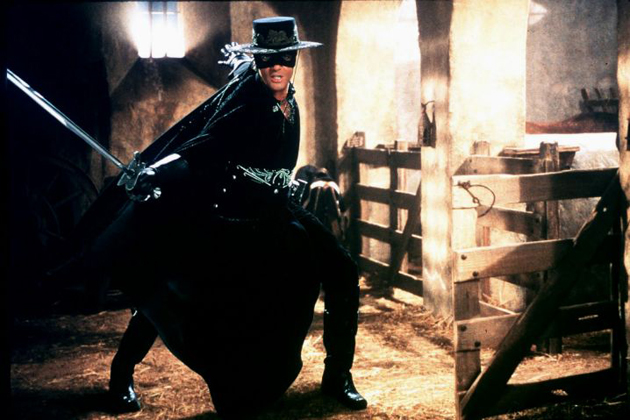
Antonio Banderas buckles his swash as Zorro

Director: Martin Campbell

Cast: Antonio Banderas (Alejandro Murrieta/Zorro), Anthony Hopkins (Don Diego de la Vega/Zorro), Catherine Zeta Jones (Elena Montero), Stuart Wilson (Don Rafael Montero), Matt Letscher (Captain Harrison Love), Tony Amendola (Don Luiz), Pedro Armendáriz Jnr (Don Pedro), LQ Jones (Three Fingered Jack), Julieta Rosen (Esperanza De La Vega), Maury Chaykin (Prison Warden)

Zorro is a classic, musketeers/Robin Hood style hero from the old school. A dashing, duelling nobleman who battles the cruel rich to save the struggling poor. It’s the formula of a thousand post-war B-movies. The great thing about that formula is the sense of fun around them is already there – a decent film can capture it. And The Mask of Zorro manages to be lot more than just a decent film.

In 1821, as the Spanish leave California, Don Rafael Montero (Stuart Wilson) sets a trap to defeat his arch-nemesis Zorro (Anthony Hopkins). Knowing his real identity is Don Diego de la Vega, Montero throws de la Vega into prison after accidentally killing his wife (the woman they both loved) and kidnapping de la Vega’s daughter to raise as his own. Twenty years later, de la Vega escapes just as Montero returns to California to steal its resources. De la Vega teams up with Alejandro Murrieta (Antonio Banderas), a young bandit hungry for revenge. Taking him under his wing, he trains him as the new Zorro – though both have conflicted feelings when de la Vega’s daughter Elena (Catherine Zeta-Jones) arrives, knowing nothing of her true heritage.

Few films have captured the magic, Errol Flynn-style thrills of old-school Hollywood swashbuckling as well as The Mask of Zorro. Characters swoop and tumble, and swords swish and clash. It sounds odd to say, but the sound design for the sword fights is amazing, each clash has a metallic, ringing clarity that sounds incredibly cool. Match that with the fact that all five of the principals have clearly spent their time in sword school, and you’ve got pure, sword-clashing entertainment.

The plot also keeps things simple. The story is a fairly straight forward heroic revenge drama, with more than a touch of The Count of Monte Cristo (de la Vega’s prison escape is pure Dumas, while Murrieta disguising himself as a rich don to destroy his enemies from within is straight out of Cristo’s playbook). We also have (in another Monte Cristo touch) the Pygmalion mentor-pupil relationship, with de la Vega tutoring Murrieta not only in sword play, but also the manners of a gentleman. The villain’s plot is not exactly clearly explained (it has something to do with stealing Mexican gold to buy California from the Mexicans) but fortunately (a) the film doesn’t really spend too much time worrying about it and (b) since the plot involves enslavement and ruthless murder, it hardly matters anyway as their villainous credentials are very well established.

As the young Zorro, Banderas (at the height of his roguish charm) is very fine, giving it just the right balance of cocksure confidence and playful exuberance. He also weights the character with a genuine love for his murdered brother, which expands as the film progresses into a sincere empathy for the poor and downtrodden. He also has great chemistry with Zeta-Jones (basically establishing her career here) – they meet in no less than three guises, and with each the romantic spark is exceptional. The famous foreplay sword-fight scene (culminating with Murrieta using precise strokes to remove Elena’s top) works because their sword fight is not only playful, but their romantic interest and mutual respect is clear.

Anthony Hopkins also relishes the chance to take an action role (it’s quite something to think he was nearly 60 at the time of filming). Sure, not all the stunts are him of course – and he had to have a generous application of fake tan to give him a Spanish appearance – but the performance works because Hopkins gives it a perfect playful charm, while never losing the sight of the pain under de la Vega’s surface. He gives a lot of weight to what could otherwise have been a straight “mentor role”.

Campbell directs all this with a brisk, old-school simplicity – the film has a true 1930s swashbuckling feel to it. It’s not exactly the last word in exciting film making, but it doesn’t have to be. The important thing Campbell understands here is keeping the pace up, and presenting us with something fun or exciting (or both) every scene. So whether it is a decent gag, a piece of cool looking sleight of hand (de la Vega using a whip to extinguish candles from a distance) or the clash of swords, something always keeps you entertained.

When you match that with some performances you’ve got a great piece of Sunday afternoon entertainment. It’s possibly a bit too long, and Wilson’s Rafael (while in some ways an interesting, conflicted character) is never really allowed the space to become an effective counterpoint to the heroes. But despite that, it offers more than enough entertainment, excitement and fun. It’s got a decent, fun script with plenty of good lines, and by keeping the focus on a small core cast it really allows us to bond with those characters. It lacks a certain undefinable quality that makes it a beloved film, but it has enough to make it a welcome guest whenever it comes round.