Tag: Ted Levine

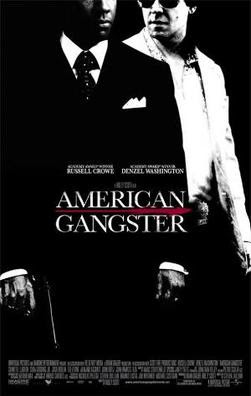
American Gangster (2007)

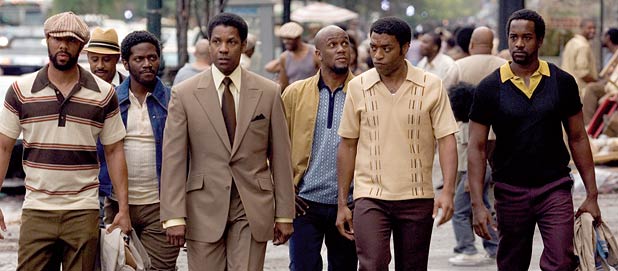
Denzel Washington leads his brothers in a life of crime in American Gangster

Director: Ridley Scott

Cast: Denzel Washington (Frank Lucas), Russell Crowe (Richie Roberts), Chiwetel Ejiofor (Huey Lucas), Josh Brolin (Detective Trupo), Lymari Nadal (Eva), Ted Levine (Captain Lou Toback), Robert Guenveur Smith (Nate), John Hawkes (Freddie Spearman), RZA (Moses Jones), Yul Vazquez (Alfonsa Abruzzo), Malcolm Goodwin (Jimmy Zee), Ruby Dee (Mama Lucas), Ruben Santiago-Hudson (Doc), Carla Gugino (Laura Roberts), John Ortiz (Javier J Rivera), Cuba Gooding Jnr (Nicky Barnes), Armand Assante (Dominic Cattaneo), Joe Morton (Charlie Williams), Idris Elba (Tango), Common (Turner Lucas), Jon Polito (Russo), Ric Young (Chinese General), Clarence Williams III (Bumpy Johnson)
In 1970s New York there was only one organisation that ran crime: the mafia. The idea that anyone else could get a look in was unthinkable: to the cops, the government and the criminals themselves. Frank Lucas (Denzel Washington) was the guy who was going to shake that up: a resident of Harlem and former right-hand man of crime boss “Bumpy” Johnson (Clarence Williams III), Lucas saw an opening to bring in cheap, high-quality drugs from Vietnam (hidden in the temporary coffins of deceased servicemen). With this product he could take over crime in New York – and run it as he thinks it should be run, with the mentality of a FTSE 500 company and a gun. Frank is helped by the fact no one knows who he is. But that is all about to change as honest cop Richie Roberts (Russell Crowe) sets up a task force dedicated to finding, and arresting, the drug kingpins in New York. He’s as surprised as anyone to find the trail leads to Harlem.

Based on a true story, Scott’s American Gangster is assembled with Scott’s usual professionalism and assured touch, using top actors in well-assembled, well-shot scenes. It’s glossy, entertaining and enjoyable. But it’s not quite inspired or stand-out. Despite everything, it doesn’t really show us anything new and lacks either the fire of inspiration or the sort of poetry and energy the likes of Spike Lee, Quentin Tarantino or Steve McQueen could have bought to it. It tells an interesting story, but manages to be pretty much by the numbers – albeit those numbers are flashed up with as much pizzazz, drama and entertainment as you could wish.

The most interesting themes are questions of class and racial politics. The film’s version of Frank Lucas is successful because he runs his crime empire not like a gang but like a company. He dresses plainly and simply, so as not to draw attention (unlike the flamboyant criminals played by Idris Elba and Cuba Gooding Jnr). He talks in terms of supply and demand, brand loyalty and being a chairman. In one particularly well managed scene, he pontificates to his brothers on his ideology of business, excuses himself to walk across the street and shoot a rival in the head, then returns to calmly finish his breakfast. It’s the ideas of Wall Street applied to gangster crime. Lucas is all about bringing a smooth, modern, professional thinking to crime – but with the gun still up his sleeve.

But another reason why Frank Lucas needs to be as professional as he is, is because he’s loathed by all other parts of the criminal system. It’s a system that is racist from top-to-bottom, where black men are unwelcome as anything other than foot-soldiers. The elite criminals – most of them tracing many generations back to Sicily – smile at Frank for his money, but never see him as an equal. Even the government can’t begin to imagine a black man could be running such a huge empire – Robert’s AG boss spews out a racist diatribe, rubbishing any idea that a black man could achieve something the Mafia has failed to do. Frank though is just as wary of the flashy ostentatiousness of most black criminals in New York, telling his brother that the quietest man in the room is the most powerful.

It’s those brothers who Frank relies on – only family can be trusted. They’ll also be his Achilles heel. Because even his most competent brother (played by a sharp Chiwetel Ejiofor) is as much a liability as he is a good lieutenant. His brothers are innocents turned by their brother into tools for his crime empire. Frank hands out beatings to cousins who are unreliable. He’s bitterly disappointed when his nephew chucks in a baseball career because crime looks more fun. As his mother – an impassioned performance from an Oscar-nominated Ruby Dee – tells him, the rest of the family looks to him and follows his lead. There is a clear tension between this family – whose benefactor is also its corrupter – but it doesn’t quite come into focus.

This is partly because the film is covering a lot, and partly because it finds itself falling a bit in love with Frank Lucas. Not surprising when the part is played by Denzel Washington at his most magnetic – if strangely not quite as energised as you might expect. Washington gives Frank a dignity and cool that the real Frank – by all accounts a much cruder, ruder, less able man – never had. The film doesn’t really want to explore the darker side of Frank. Instead it invites us to sympathise with him, as an outsider made good. To feel sorry for him when he makes a fatal error (wearing an ostentatious fur coat to the Ali/Frasier “Fight of the Century” – an act that blows his carefully preserved anonymity). The film doesn’t want us to feel the damage of the drugs Frank is pouring into New York, since it might damage our respect for his triumph against the odds.

The barriers that Frank has to overcome – from arrogant Mafia kingpins, to local crime lords and corrupt cops (Josh Brolin has fun as a prowling bullying detective) – are in the end more interesting than the procedural struggles of Russell Crowe’s Richie Roberts (on solid form). Roberts is also given a rather cliched (and fictional) custody battle that hardly justifies its screentime. The cops definitely get the short end of the stick – and a stronger film might have focused just on Frank Lucas and really explored the struggles of a black man in white crime world, dealing with racism and trying to apply Wall Street ideals to street violence.

American Gangster doesn’t quite succeed with its dark commentary on the American dream – but it’s as entertaining as you could hope and while it lacks in inspiration, it’s also hard to find too much fault with. One of Scott’s most solid works, with a charismatic Washington doing decent work.


The Silence of the Lambs (1991)

Jodie Foster and Anthony Hopkins carry out a strange dance in the compelling The Silence of the Lambs

Director: Jonathan Demme

Cast: Jodie Foster (Clarice Starling), Anthony Hopkins (Dr Hannibal Lecter), Scott Glenn (Jack Crawford), Ted Levine (James “Buffalo Bill” Gumb), Anthony Heald (Dr Frederick Chilton), Brooke Smith (Catherine Martin), Diane Baker (Senator Ruth Martin), Kasi Lemmons (Ardelia Mapp), Frankie Faison (Barney Matthews)

Is there a more unlikely Oscar winner than The Silence of the Lambs? In fact, double down on that: is there a more unlikely film to have won all five of the Big Ones – Picture, Director, Actor, Actress and Screenplay – only the third film in history to have achieved that (It Happened One Night and One Flew Over the Cuckoo’s Nest being the others)? Re-watching the film, it’s actually a triumphant vindication for Hollywood to have chosen a thriller for the ages, a complex and intriguing puzzle wrapped in an unsettling outer layer of thrills and horror, as if the academy was (late in the day) finally tipping an award-lined hat to the film’s spiritual grandfather, Hitchcock himself.

Clarice Starling (Jodie Foster) is a trainee FBI agent, in the final weeks before her graduation. Out of the blue she is plucked from Quantico by the head of the Behavioural Science Unit, Jack Crawford (Scott Glenn), to interview notorious psychiatrist-turned-cannibalistic-serial-killer Dr Hannibal Lecter (Anthony Hopkins), now interned in a psychiatric prison-cum-dungeon in Baltimore. Crawford hopes the Lecter might be able to shed light on the motives of “Buffalo Bill” (Ted Levine), a serial killer kidnapping and skinning young women across a number of states. Lecter can shed some light – but the price is an opportunity to investigate further into the psyche of the determined and ambitious Starling. A three-way game of cat-and-mouse between Bill, Clarice and Lecter soon starts to emerge.

Demme’s film is a sublimely made entertainment that brilliantly pulls together the trappings of multiple genres (there are splashes of horror, thriller, police procedural, romance and black comedy to name but a few) into an unsettlingly tense and engrossing whole. It’s truly a film Hitchcock would have been proud of, a masterfully assembled thrill ride where every shot serves a purpose, and each scene is carefully constructed to establish a clear story and push the audience’s buttons. It has two of the best tense “prolonged misdirects” in film history (wittily signposted in advance by an early car chase that is revealed in a pull-away to be a training exercise in Quantico – don’t trust your eyes!) and it brilliantly immerses you in the world and emotions of Clarice Starling.

Demme’s aim was to get us to empathise above all with Clarice, as she descends into the dark underbelly of this terrifying world. Demme uses a carefully selected combination of POV shots and straight-to-camera addresses to deliberately put us into the position of actually “being” Clarice Starling. From following her perspective through rooms and corridors, to seeing the characters she is talking to address the camera directly as if talking to us, through to carefully placed close-up shots that allow us to study the thoughts and feelings travelling across Clarice’s face, it brilliantly allows us to invest overwhelmingly in her without us even really noticing we are doing it.

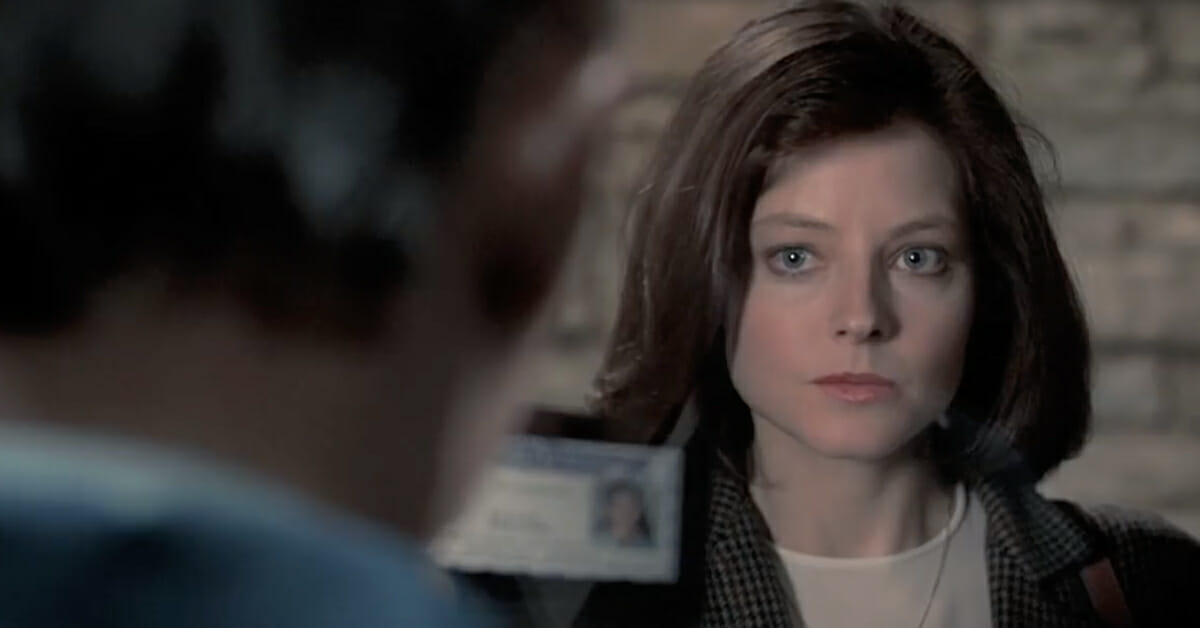
And of course that is put together with Jodie Foster’s extraordinarily brilliant performance in the role. One of the film’s many strengths is exploring the nature of being a determined, brave and ambitious – but still slight and feminine – woman in the alpha-male world of crime investigation. Clarice fends off in virtually every scene not just discrimination and instant judgement, but a parade of half-spoken advances and flirtations from male colleagues. Foster’s brilliance is to make a character who is determined but humane, slightly vulnerable while never weak. She’s the key driver of the story, but also both an insider and outsider in her world, partly motivated by a desire to prove herself, partly by an attempt to vanquish haunting childhood memories of weakness and loss.

It’s these feelings under the surface that attract the interest of Hannibal Lecter, and the strange dance between them is the heart of the film’s appeal and it’s magic. Why does Lecter want to know about the facts of Starling’s life (that quid pro quo he archly asks for)? Does he want to analyse her? Does he want to help? Does he want to amuse himself with her terrible memories? Or is he just bored? He hardly seems to be certain himself, but the intimacy shared revelations provide is neatly played with by Demme in sequences between the two (they barely share the frame by the way more than twice) that hum with a tension of danger, but also a thrill of illicit romance, mixed with incestuous interest (Starling the orphan, Lecter the father-like man of wisdom helping her catch the killer). And it works with us as well – we are so invested in Starling that, just like her, we end up liking Lecter (even though we know we shouldn’t).

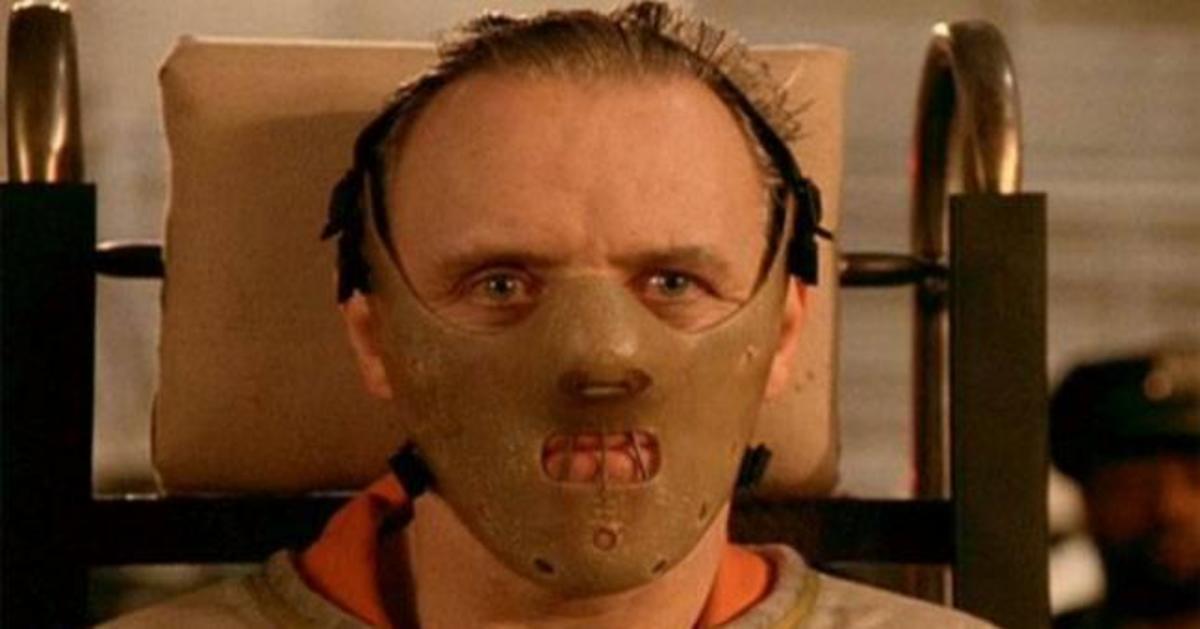
Of course it helps that Hannibal Lecter is portrayed in a performance of magnetic, career-defining brilliance by Hopkins. Hopkins modestly claimed playing Lecter was easy once you mastered the voice and the physicality – but that’s to downplay the extraordinary skill mastering those aspects concern, and the bravura brilliance with which Hopkins plays to the camera but never tips into absurdism. It’s an arch, knowing, winking performance that also carries with it an intense, psychotic menace, a delirious capacity for violence (as we find out). Demme introduces the character sublimely – after the build-up, his ram-rod stillness, polite manner and refined behaviour are somehow even more unsettling. Sure Brian Cox in Manhunter may be more conventionally chilling, but Hopkins is like an elemental demon playing with our childhood bogeyman fears, a guy who seems even more dangerous as he playfully chats one minute, then beats you to death with a truncheon the next.

The scenes between these two characters dominate the film (even if they take up no more than ten minutes of its runtime), and their relationship (beautifully shot as a game of one cagey upmanship that turns into semi-flirting, that turns into something in between) defines the movie and its legacy. Lecter’s magnetism was such that in later movies he would increasingly become an anti-hero of sorts, a lord of misrule rather than a brutal and indiscriminate killer, but here he’s terrifying and satanic, just as Starling is courageous and noble as the lady on a quest.

And that quest targets Buffalo Bill – a deeply unsettling performance of psychological unease and self-loathing by Ted Levine. The film was controversial at the time for its killer being both a transsexual and gay (although the film makes clear it’s a desire to be anyone apart from who he is that drives all these feelings), especially as at the time these groups were barely represented positively in the movies. But it also makes for singularly unsettling character, living in a subterranean cave-like basement, surrounded by moths, his voice slurred childishly while carrying no sense of shame or regret for his actions.

The hunt for Bill is the film’s story, and Demme uses the devices of cinema to make this as tense and unsettling an experience as needed. The camera prowls terrifyingly around Bill’s domains. Howard Shore’s score makes a deeply unnerving use of mournful refrains. Frequently scenes – such as the post-mortem inspection of a victim’s body – are often silently scored, making the mechanical noises of the investigator’s trade (such as the loudly clicking and whirring camera) deeply jarring. The film is grim, but relies more on reaction rather than bathing us in horrors, and implication brings the greatest terror. Every sequence of the film is perfectly assembled to leave us struggling to breathe – not least as events place Starling in more and more peril.

With its playful sense of black comedy, mixed with genuine terror and thrills, The Silence of the Lambs genuinely feels like the film Hitchcock was born to make. Everything in the film is perfectly assembled to serve the film’s aims – there is not a foot wrong in its assembly, and it’s sad that Demme never hit these sort of heights again. But the film is like a twisted companion piece to Psycho (only better), and in Hopkins and Foster produced two landmark performances. While the film engrosses us in Starling’s struggles in a man’s world, it also overwhelms us with Hopkins’ devilish magnetism and dark mystery. And what to make of the relationship between Starling and Lecter? It’s a mystery so enigmatic that it continues to grip today and it’s the secret behind the success of this compelling masterpiece.

Heat (1995)

De Niro is packing Heat

Director: Michael Mann

Cast: Al Pacino (Lt Vincent Hanna), Robert De Niro (Neil McCauley), Val Kilmer (Chris Shiherlis), Jon Voight (Nate), Tom Sizemore (Michael Cheritto), Diane Venora (Justine Hanna), Amy Brenneman (Eady), Ashley Judd (Charlene Shiherlis), Mykelti Williamson (Sgt Drucker), Wes Studi (Detective Sammy Casals), Ted Levine (Detective Mike Bosko), Dennis Haysbert (Donald Breedan), William Fichtner (Roger van Zandt), Natalie Portman (Lauren Gustafson), Tom Noonan (Kelso), Kevin Gage (Waingro), Hank Azaria (Alan Marciano), Danny Trejo (Trejo), Xander Berkeley (Ralph)

In the mid-90s, Heat was the cinematic event of the year. De Niro! Pacino! Together! In one scene! The two acting heavyweights – wildly proclaimed and popular since the 1970s – had of course made The Godfather Part II together but had shared no scenes. Here, however, we’d see them both at the same time riffing off each other. The great thing is that there is so much more to Heat than just that one scene. Heat is a sort of poetic cops and robbers flick, part stunning action adventure, part profound exploration of the internal souls of men chasing down leads, both good and bad.

Neil McCauley (Robert De Niro) is a skilled career criminal who lives his life with a monastic self-denial, saying you can have nothing in your life “that you cannot walk out on in 30 seconds flat if you spot the heat around the corner”. Vincent Hanna (Al Pacino) is a bombastic, egotistical, workaholic detective with a self-destructive family life. Naturally, these two men find themselves on opposite sides, as McCauley plans his next job and Hanna works to stop him. But the men, with their similar codes dedicated to their chosen career, find that they have an increasing mutual respect – not that that will stop either of them “putting the other one down” if push comes to shove.

Heat is the pinnacle of Michael Mann’s career, and his most triumphant exploration of the conflicted, complex, masculine personalities at the heart of the high-adrenalin worlds of crime and police work. Mann has a gift for giving the simple rush and tumble of cops and robbers a sort of epic poetry, like a metropolitan Beowulf, and he achieves this again here. Heat is a film that throbs with meaning, it’s cool blue lensing and chilly, modern architecture serving as a perfect counterpoint to the cool, professional and focused personalities of its characters.

Heat also goes the extra mile by building this playground confrontation into a mythic battle of wills, a battle of principles and ways of living that seem separated only by a few degrees. Mann invests this with such sweep, such grandiosity (without pomposity), such scale that it becomes a sort of modern epic, a film where intense meaning can be mined by the viewer from every scene. Whether there is in fact any meaning there – avoid listening to Mann’s commentary which drills down so many of his elliptical character beats and open-ended scenes into the dullest, most predictable tropes that he had in mind while filming – is another issue, but Mann’s trick as always with his best work is to make something really quite small and everyday seem like a grand, timeless epic.

It all boils down to that famous coffee shop scene, where De Niro and Pacino for a few magic moments come together. It’s a scene that explicitly asks us to see cop and criminal and understand that there is in many ways very little to choose between them. It hinges on the gentle competitiveness of the actors, and the way they subtly play off each other. It also plays on our own histories of these two actors, of decades of seeing them as two sides of the same coin, both carrying so much cultural baggage for a string of iconic roles that saw them rule Hollywood for over a decade. It’s the sort of scene given extra investment, where you sense the mutual respect of the actors fuelling the strange bond that powers the scene. 

It’s also the one scene of the film that Pacino underplays in. The rest of the film he goes way bigger, powering through each scene with an explosion of shouting and drama. It’s a performance ripe for parody, with more than an edge of ham, but it just about works. Pacino turns Hanna (hilariously the character shares a name with a BBC political journalist of the 1980s) into the purest form of adrenalin junkie, a larger-than-life personality who tears through people and cases with a focused determination that allows no room for a personal life. De Niro downplays far more by contrast, apeing a sort of 1940s noir cool, a monkish insularity that prevents anyone from getting close to him, mixed with a laser-guided determination to do whatever it takes to make his score.

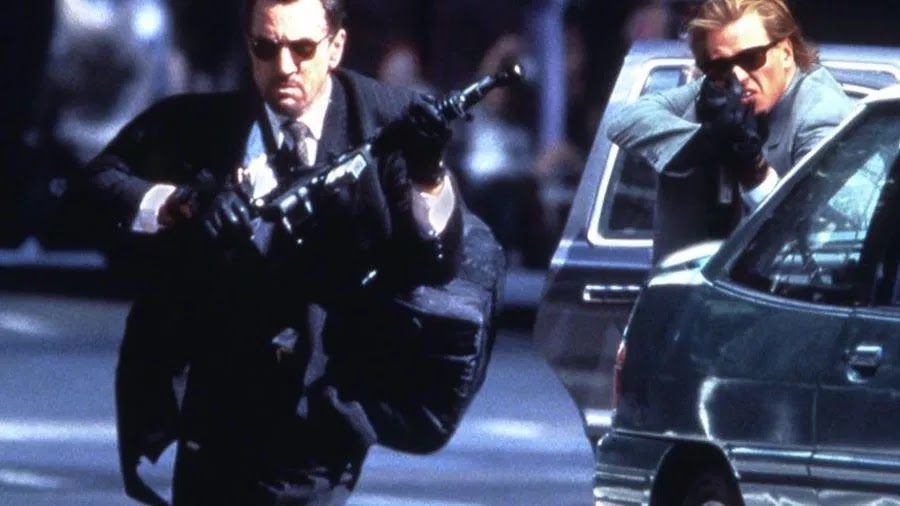
Mann’s film throws these two characters into a series of stunning set pieces with the bank robbery at the centre (“the one last score” that McCauley can’t pass up no matter the danger). The robbery – and the shoot out that follows it – is a triumph of action cinema, brilliantly shot and edited. The gun play is stunning, with Andy McNab having served as a consultant for the actors on the use of automatic weapons. The scene rips through the screen, spewing bullets all over the place in a ruthless, no-onlooker-spared rampage that also really pushes the limits of effective sound design. That’s just the highlight of several scenes that – with guns or otherwise – hum with tension, danger and excitement.

Mann also has enough room in this film though to skilfully establish a number of supporting characters with compelling story lines of their own. Val Kilmer is a tad wooden as McCauley’s number two, but his storyline of troubled marriage is mined for unexpecting pathos (thanks also to Ashley Judd’s fine work as his wife). Kevin Gage is very good as a psychopathic criminal unwisely brought on board to fill a slot in an early robbery. Dennis Haysbert has his own tragic plotline as a criminal trying to turn straight. Diane Venora is excellent as Hanna’s neglected wife, as is Portman as his vulnerable daughter-in-law. This isn’t to mention excellent performances from a rogues gallery of character actors, from Jon Voight to William Fichtner. 

Mann keeps all these plotlines perfectly balanced in a film that is very long but never drags for a minute. Crammed with exciting set pieces and brilliant sequences, it’s a film that manages to feel like it is about a very masculine crisis – the failures of men to balance the personal and their career, selfishly harming those around them because of their addiction to action. Mann’s film looks brilliantly at the essential emptiness and sadness this leads to – as well as the blinkered drive that never prevents men from stopping for a second and changing their lives, no matter how many reflective cups of coffee they have. Mann partners this existential, poetic feeling drama with the ultimate crash-bang cops and robbers and thriller, which will leave you on the edge of your seat no matter how many times you see it. Quite some film.

Jurassic World: Fallen Kingdom (2018)

Chris Pratt comes face-to-face with an old friend in Jurassic World: Fallen Kingdom

Director: JA Bayona

Cast: Chris Pratt (Owen Grady), Bryce Dallas Howard (Claire Dearing), Rafe Spall (Eli Mills), Justice Smith (Franklin Webb), Daniella Pineda (Zia Rodriguez), James Cromwell (Sir Benjamin Lockwood), Toby Jones (Gunnar Eversol), Ted Levine (Ken Wheatley), BD Wong (Dr Henry Wu), Isabella Sermon (Maisie Lockwood), Geraldine Chaplin (Iris), Jeff Goldblum (Dr Ian Malcolm)

I don’t care how old I get. I still love those dinosaurs. Doesn’t everyone? And of course what’s better than seeing dinosaurs munch down on them what deserves it? Well you got plenty of that in Jurassic World: Fallen Kingdom, which throws everything it can at the screen and is enjoyable enough, even if it feels a little like one for the money.

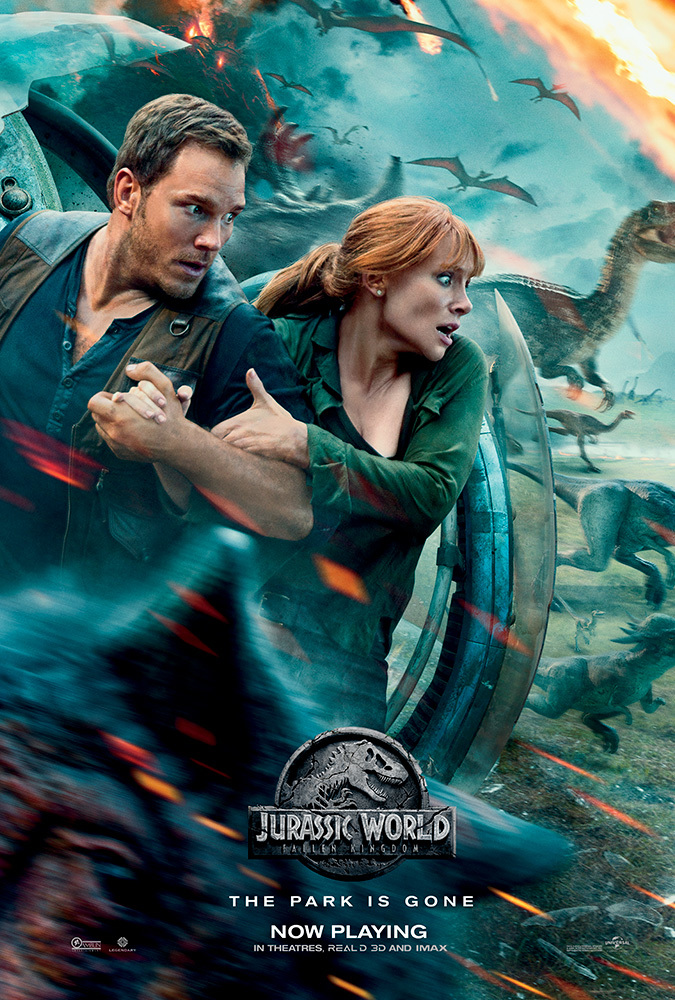
It’s been five years since the events of the first film, and the old Jurassic Park is now abandoned and the whole island given over to the control of the dinosaurs. In what you have to say is a pretty damning indictment of InGen’s planning (but then they really planned nothing well on this whole project) turns out the whole island is actually a volcano and, yup, she’s gonna blow. Claire Dearing (Bryce Dallas Howard) is leading a campaign to win government support for saving the dinosaurs, when she is recruited by Eli Mills (Rafe Spall), chair of a charity foundation set up by ageing businessman and park co-founder Benjamin Lockwood (James Cromwell) to lead a ‘Noah’s Ark’ mission to the island. But they need the help of Owen Grady (Chris Pratt) to find Blue the last surviving member of his Velociraptor pack. Arriving on the island howeer, they find not everyone can be trusted.

Jurassic World: Fallen Kingdom plays like a remix of events and moments from each of the earlier films. So you more or less get exactly what you might expect, and the film never really surprises you at all. You have a dangerous mission on the abandoned island (Jurassic Park III), dangerous chases in a lab (Jurassic Park), a bioengineered super dinosaur running riot (Jurassic World), dinosaurs on the main land (The Lost World) and businessmen with ulterior motives (all of them). None of the sly wit and the relatively patient build-up of Jurassic World is really present here: instead we are almost immediately thrown into an island literally exploding, and the film gets bigger and bigger from there (even if it doesn’t get better).

JA Bayona directs this with a breezy professionalism, with a decent sense of pace and some well-constructed tension sequences. There are some decent call-back jokes, not least to Claire’s far more appropriate choice of footwear. The film also gets some decent material out of exploring the back story of Owen’s bond with the velociraptor back, not least his parental bond with lead velociraptor Blue. It makes for some interesting emotional material, but it’s a shame that this never really feels like it plays back into any broader theme in the movie. There is some stuff in there about parental bonds (Lockwood and his granddaughter, Wu’s plans to have Blue “mother” his latest super dinosaur abomination) but it doesn’t go anywhere.

That’s part of the problem of this film: it goes nowhere we haven’t really been before. Even the beats of wonder as people go “oh wow that’s a dinosaur” feel repeated and tired – the first moment even revolves around a brachiosaurus, just as the same moment did in the first film. Bayona does however draw some heart rendering material from the dinosaurs running vainly from death in the volcanic eruption – most notably from a brachiosaurus tragically bellowing in despair as it is engulfed in volcanic gas. 

But it’s all pretty samey. And the plot moves at such a lick that it actually starts to feel a little bit silly. So of course Owen and Claire are persuaded in minutes to go back to the island. Of course they are betrayed in the first few minutes. Of course the island starts to erupt almost as soon as they arrived. Everything happens at this crackerjack pace, that actually starts to make things feel even more cartoonish than a film about a load of man-made dinosaurs feels like to start with.

That’s on the top of the fact that none of the new characters make any real impact – most of them might as well have “Trope” or “Plot Device” written on their faces. The villain stands out a mile away the instant he appears. His main henchman is so nakedly untrustworthy, you marvel Claire and Owen even consider going on the mission with him. The comic relief character is insanely annoying. Countering this, Chris Pratt plays off his charisma extremely well to remain a very magnetic hero, and I think Bryce Dallas Howard gets much more to play with here as a Claire far more plugged in and competent than in the first film.

But the atmosphere of affectionate nostalgia, and delight that powers the first film so well and makes it (for my generation) such a huge joy to watch, with its tongue-in-cheek but also smart and not-overly-done fanboy style, is missing here. This feels more like a film assembled by people who have seen all the films and basically wanted to box tick everything you might expect to see. It’s not really trying to do something different, it’s just treading water.

But despite all that, it’s still quite good fun.  That’s the odd thing. Yes people in it behave with staggering stupidity and the film doesn’t offer any surprises (the dinosaurs have clearly read the script when planning their meals). Yes it’s derivative and unoriginal. But I still rather enjoyed it. It’s lacking in any inspiration or (you feel) the sort of genuine affection Colin Trevorrow brought to it, but you know it’s good enough. Whether good enough is good enough is of course another question.