Tag: Temuera Morrison

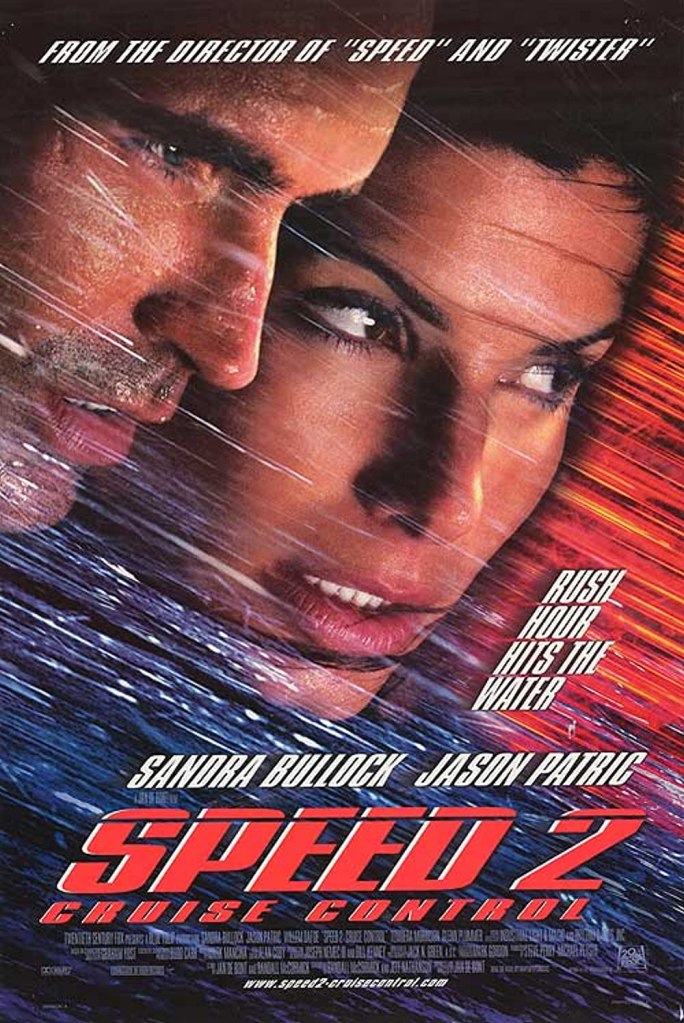
Speed 2: Cruise Control (1997)

Speed 2: Cruise Control (1997)

It seemed like such a good idea at the time… Keanu Reeves wisely passed on Speed 2 – so should you

Director: Jan de Bont

Cast: Sandra Bullock (Annie Porter), Jason Patric (Alex Shaw), Willem Dafoe (John Geiger), Temuera Morrison (Officer Juliano), Glenn Plummer (Maurice), Brian McCardie (Merced), Christine Firkins (Drew), Mike Hagerty (Harvey), Colleen Camp (Debbie), Lois Chiles (Celeste), Royale Watkins (Dante)

In 1996 Keanu Reeves turned down a huge salary for Speed 2. Everyone in Hollywood thought he was mad. On June 13th 1997, Speed 2 was released. On June 14th everyone thought Keanu Reeves was a genius. It’s quite something when one of your best ever career moves was not doing a movie. But God almighty Keanu was right: time has not been kind to Speed 2 – and even when it was released it was hailed as one of the worst sequels ever made. It’s like de Bont and co sold their souls for Speed and in 1997 the Devil came to collect.

Keanu’s Jack Traven is clumsily replaced by Jason Patric’s Alex Shaw – although the dialogue has clearly only had the mildest tweak as Shaw has inherited Traven’s job, friends, personality and girlfriend Annie (Sandra Bullock – elevated to top billing but even more of a damsel-in-distress than in the original). Alex and Annie are wrestling with making a long-term commitment – see what I mean about this script only be mildly tweaked? – when they decide to take an all-or-nothing cruise. Shame the cruise liner is hijacked by deranged computer programmer turned bomber Geiger (Willem Dafoe). With the boat powering through the water towards a collision on shore, can Alex save the day?

You’ve probably noticed the disparity between the title Speed and the setting: a slow-moving cruise liner. At one point, Alex asks how long it would take an oil tanker to move out of a collision course with the liner – “At least half hour – that’s not enough time!” he’s told. The very fact that a debate whether 30 minutes will be enough time in a flipping film about speed shows how far this sequel has fallen. How did anyone not notice this?

Pace is missing from the whole thing. The script is truly dreadful. Paper-thin characters populate the cruise liner, none of whom make even the slightest impression. At one point a character breaks an arm and then immediately shrugs off the injury to steer the ship. The script is crammed with deeply, desperately unfunny “comedy” beats. Bullock’s character seems to have transformed into a ditzy rom-com wisecracker – with a “hilarious” running joke that she’s a terrible driver (geddit!??!) – and, instead of the charming pluck she showed in the first film, is now an irritating egotist. She still fares better than poor Patric, who completely lacks the movie star charisma of Reeves and utterly fails to find anything that doesn’t feel like a low-rent McClane rip-off in his character.

It’s like de Bont forgot everything he knew about directing in the three years between the two films. If anything, this feels like a well below average effort from a novice director. The humour is dialled up with feeble sight gags and the film takes a turgid 45 minutes to really get going (most of which is given over to derivative romantic will-they-commit banter between Patric and Bullock).

de Bont basically flunks everything. He fails the basic directing test of confined-spaces thrillers like this by never making the geography clear to the viewer. I challenge anyone to really understand how characters get from A to C on this boat. The long introductions are supposed to establish these basics (see Die Hard for a masterclass in this), but here you haven’t got a clue about what’s where or why some locations are more risky than others. There is a spectacular lack of tension about the whole thing – it’s not really clear what Dafeo’s lip-smacking, giggling, leech-using (yes seriously) villain actually wants or how his scheme works, and the momentum of the boat towards unspecified destruction is (a) hard to see on the open water with no fixed point to compare the speed with and (b) even when we get that, not exactly adrenalin fuelled anyway.

de Bont’s comedic approach to much of the material might have worked if he had any sense of wit or comic timing in his direction. Or if Patric had been more comfortable with the wit the part requires. Bullock instead feels like she has to joke for all three of them, to disastrous effect. There are a couple of semi-comic sidekicks sprinkled among the supporting players, but none of them raises so much as a grin. The film can’t resist implausible in-jokes, like bringing back Glenn Plummer’s luckless character to have his boat swiped by Alex (they even leave in a mildly altered “what are you doing here?” line, as if they didn’t realise until shooting it that Keanu wasn’t going to be there).

It ends with a loud crash of a boat into the shore which cost tens of millions of dollars (at the time one of the most costly stunts ever) but just looks like a fake boat ripping through a load of backlot buildings. It’s a big, loud, dull, slow ending to a film that looks like it was made by people who had no idea what they were doing but enough power to ignore anyone who might have been able to point out what they were doing wrong. Speed 2 remains the worst sequel ever. Reeves went off to make The Matrix. Who’s the idiot?

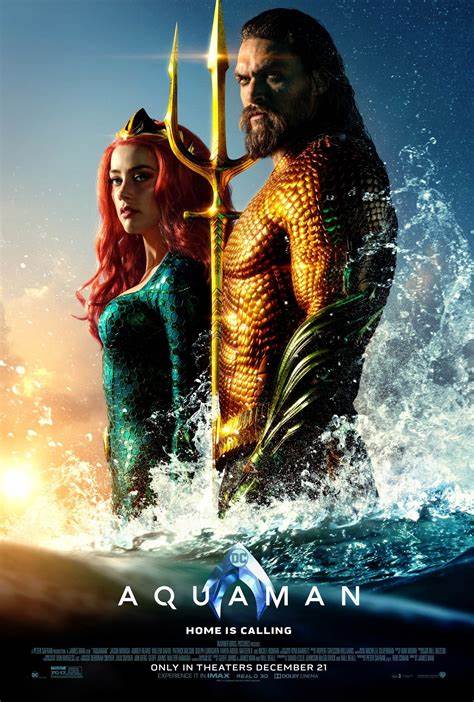
Aquaman (2018)

Jason Momoa takes himself rather seriously in the deeply silly Aquaman

Director: James Wan

Cast: Jason Momoa (Arthur Curry/Aquaman), Amber Heard (Mera), Willem Dafoe (Nuidis Vulko), Patrick Wilson (Orm Marius), Dolph Lundgren (King Nereus), Yahya Abdul-Mateen II (David Kane/Black Manta), Ludi Lin (Captain Murk), Temuera Morrison (Thomas Curry), Nicole Kidman (Queen Atlanna), Micheal Beach (Jesse Kane), Julie Andrews (Karathen)

After helping the rest of the Justice League save the world Arthur Curry aka Aquaman (Jason Momoa) is quite the celebrity. Curry is the son of lighthouse keeper Thomas (Temuera Morrison) and Atlantian Queen Atlanna (Nicole Kidman), who fled her unloved husband and his underwater kingdom but was recaptured when Arthur was young. Her other son Orm (Patrick Wilson) is now King of Atlantis, planning to lead the forces of the sea in a war against those on land. Can Arthur and Orm’s unwilling betrothed Mera (Amber Heard) combine to prevent a war? And will Arthur become a worthy hero?

Aquaman makes a valiant effort to embrace perhaps the silliest set-up for a comic book novel yet. Based around a massive, technologically advanced underwater kingdom that has (inexplicably) remained silent and secret for thousands of years, who inhabitants all seem to have superhuman strength and magical skills (guess it must be all that water pressure), the film at times is hard to take seriously. But it sort of gets away with it, as Wan leans into the tongue-in-cheek campness of all this (and I’m amazed how camp these Atlantians are) and asks us not to take anything we see that seriously, but just to sit back and enjoy the ride.

And the film is basically just a big ride, as we travel from place-to-place and watch Aquaman hit things in various under-water and above ground locations, while keeping up a bit of rapid-fire banter that will flower (but of course!) into an opposites-attract romance with Mera. One thing Wan does very well is to find a way to present the various fights in a style I’ve not seen before. The showpiece one-on-ones take place in a series of incredibly smooth one-shots, which twist and glide around our heroes while they despatch countless foes and, in one impressive show-piece, in and out and across buildings during a fight in an Italian cliff-side town. The ending may be your typical CGI smackdown, but Wan’s presents the fights in a way that actually looks different and excites a bit of awe.

Where the film is less successful is in its slightly tired coming-of-age/proving-his-worth/resolving-his-loss storyline, which offers few surprises. Try as I might, I can’t find Jason Momoa a charming enough actor to effectively make me invest in his character. Compare him to Dwayne Johnson, who is always willing to laugh at himself and is the very embodiment of charming self-awareness. Momoa takes himself very seriously – he always needs to be the coolest guy in the room – and his air of cocky self-importance sometimes jars in a film as dopey as this one.

This also means the film fails to sell a real plot arc for Aquaman himself. Its nominally about a character learning to acknowledge his mistakes, vulnerability and inability to go-it-alone. This doesn’t always feel earned and sometimes emotionally confused. One of Aquaman’s earliest acts is to let the ruthless father of a hijacker (a scowlingly charismatic Yahya Abdul-Mateen II) drown. Later he expresses regret for doing this as, by making an enemy, he endangered Mera. Not regret because it was wrong to let the man die, but a sociopathic concern for his loved ones rather than someone else’s. The character’s growth never really convinces – he still seems like the same cocky maverick at the end than he was at the beginning, rather than someone who has matured into a real leader.

But aside from these doubts, this is a big silly pantomime pretty much told with the right balance between seriousness and tongue-in-cheek. Amber Heard mixes heroism with a dopey, flower-eating sweetness as Mera. Willem Dafoe constantly looks like he’s about to snigger as a wetsuit glad Grand Vizier. There is something rather lovable about a film so eclectic in its cast that Julie Andrews (of all people) voices a sea monster and Dolph Lundgren tackles King Nereus like it’s his shot at Macbeth.

Bangs, booms and few jokes carry us through a deeply silly but enjoyable film. There is a great deal of visual imagination for the sea kingdoms, a mix of Greek inspired nonsense and space-ship bombast. Wan pretty much throws the kitchen sink at the screen, and while it’s definitely rather too long it’s also bubbling with just as much tongue-in-cheek fun that you roll with it. Nothing here reinvents the wheel – and the plot often feels like a rather clumsy after-thought – but it’s still an entertaining wheel.

Star Wars Episode II: Attack of the Clones (2002)

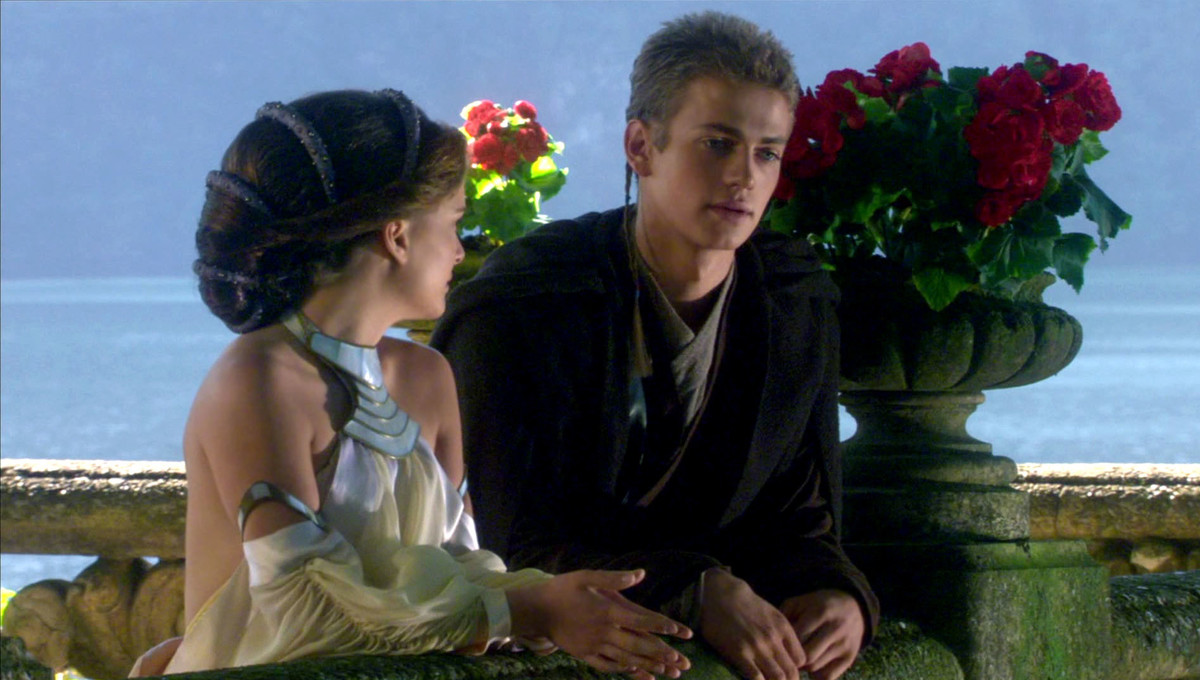
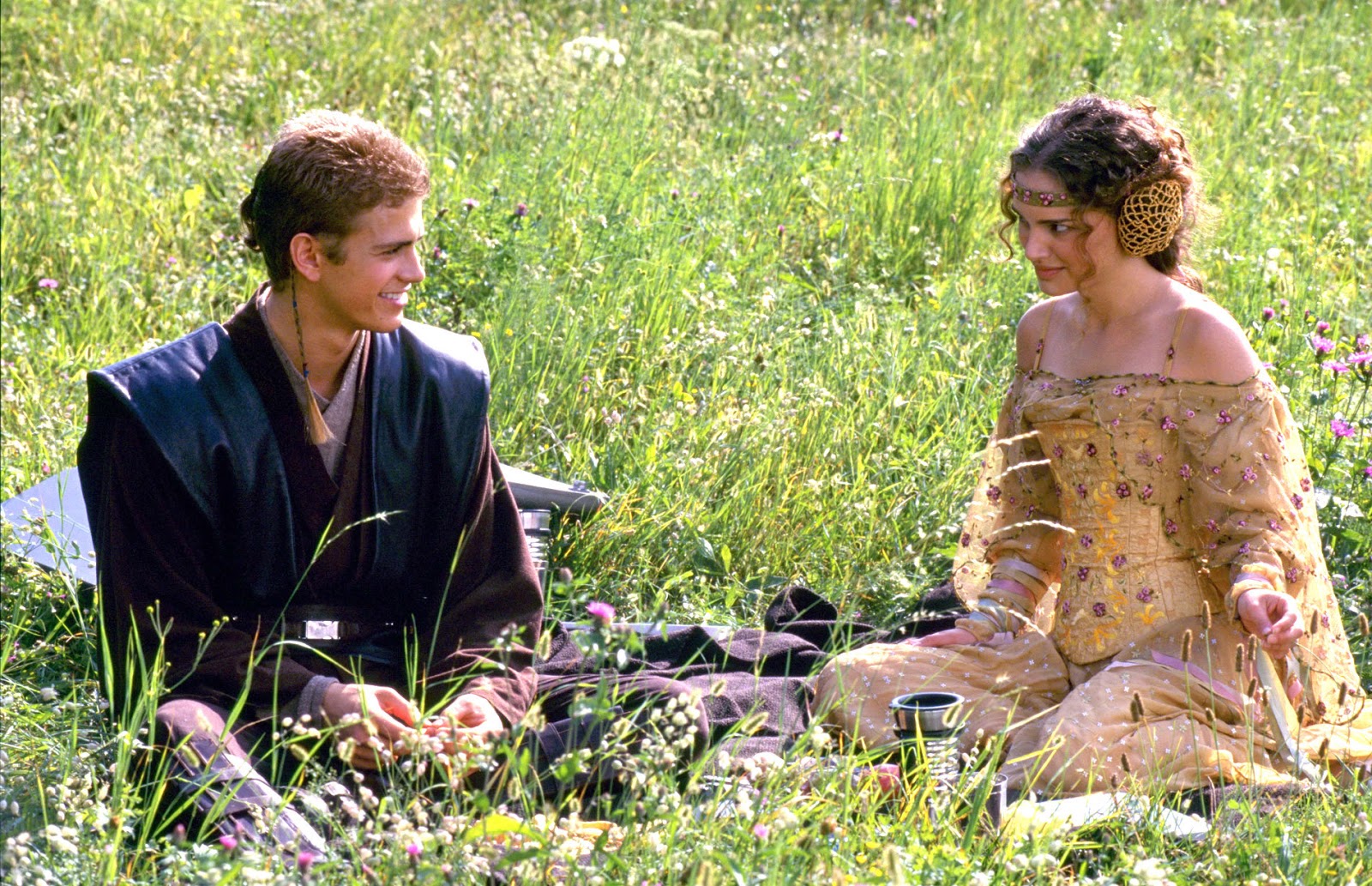
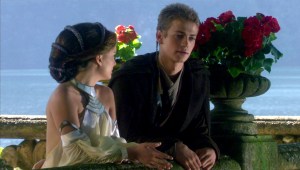
He hates sand you know. Anakin puts the moves on Padmé in Attack of the Clones

Director: George Lucas

Cast: Ewan McGregor (Obi-Wan Kenobi), Hayden Christensen (Anakin Skywalker), Natalie Portman (Senator Padmé Amidala), Ian McDiarmid (Chancellor Palpatine), Christopher Lee (Count Dooku), Samuel L. Jackson (Mace Windu), Temuera Morrison (Jango Fett), Frank Oz (Yoda), Anthony Daniels (C-3PO), Kenny Baker (R2 D2), Jimmy Smits (Bail Organa), Ahmed Best (Jar Jar Binks), Pernilla August (Shmi Skywalker), Joel Edgerton (Owen Lars), Silas Carson (Nute Gunray/Ki-Adi-Mundi)

Nothing could be as bad as The Phantom Menace. Surely? Well, umm, Attack of the Clones is pretty bad, but it’s not quite as stodgy and racist as the first one. It really isn’t. But don’t get me wrong, it’s still tone death, poorly written, crappily directed, poorly assembled, textbook bad film-making disguised under a lot of money.

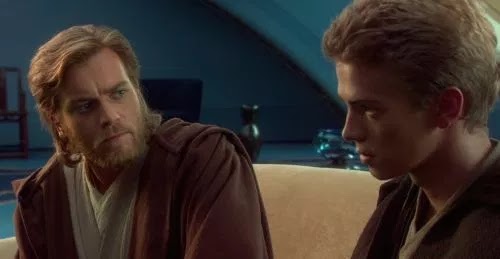
Anyway, ten years have crawled by since Phantom Menace. Padmé (Natalie Portman) is now a senator campaigning against a revolutionary Separatist movement in the Republic, led by mysterious former Jedi Count Dooku (Christopher Lee). After a failed assassination attempt, Jedi Knight Obi-Wan Kenobi (Ewan McGregor) and his Padewan pupil Anakin Skywalker (Hayden Christiansen) are assigned to protect her. After another assassination attempt throws up a strange link to a mysterious planet of industrial cloners, Obi-Wan investigates leaving Padmé in Anakin’s care: but the two of them are falling in love, strictly against the rules of the Jedi order.

Sigh. Attack of the Clones is once again a mess, overly computer engineered, badly directed by a director with no knack for visual storytelling other than throwing special effects at the screen. It has a densely disinteresting plot about shady dealings around a mysterious Clone army that eventually the film doesn’t bother to resolve. Lucas shoots the entire film in a shiny, sterile, entirely computer generated environment that looks worse and worse the older the film gets. It builds towards a series of clashes at the end that have impressive spectacle on first viewing, but are hugely empty viewing experiences the more you come back to them. But all this isn’t even the film’s main problem.

First and foremost, the most egregious problem with this film is the romance at its heart. This romance, whose impact is meant to be felt through every film is to come, is as clumsy and unconvincing as anything you are likely to see. Not for one second are you convinced that this couple could ever actually be a thing. For starters Anakin is a whiny, preening, chippy rather dull man who over the course of the film murders a village full of people. Hardly the sort of character to make women swoon. On top of this, his romantic banter and tendency of staring blankly and possessively at Padmé has all the charm of a would-be stalker, mentally planning out the dimensions of the basement he’ll imprison his love in. 

Padmé is hardly much more engaging. Her way of handling this love-struck young man, who she claims she doesn’t want to encourage? To flirt with him in a series of increasingly revealing costumes, while constantly telling him “no we can’t do anything” – for unspecified reasons. But then as she says “you’ll always be that 12 year old boy to me” (Oh yuck George!). Portman looks she can barely raise any interest in holding Anakin’s hand, let alone conceiving future generations of Skywalkers. The desperate attempt to create a sense of “love across the divide” falls flat, flat, flat with all the sweep of a Casualty romance of the week. Put it frankly, we are never ever given any reason at all for us to think that they have any reason to be in love.

Despite all this the film desperately tries to throw them together into a series of clichéd romantic encounters, from candle-lit meals to gondola cruises around the lakes of Naboo. Jesus the film even throws in a flirtatious picnic (in which, true to form, Anakin espouses the benefits of totalitarianism, hardly the sort of thing to get a young girl’s heart fluttering!) followed by a roll around in the long grass after a bit of horseplay. To be honest it’s sickening and all the fancy dressing in the world never disguises the utter lack of chemistry between either characters or actors. And you’ll suffer with the actors who are trawling through the appalling “romantic” dialogue. The infamous “I don’t like sand. It’s coarse and rough and irritating and it gets everywhere. Not like here. Here everything is soft and smooth” sums it up – especially as Anakin ends it with stroking Amidala’s exposed shoulder possessively. Late in the film Padmé says “I’ve been dying inside since you came back into my life” – I know how she fuckin’ feels.

But then to be honest nothing really works in this simply terrible film. Of course a lot of the blame rests with Lucas whose overwhelming ineptitude as a writer and director is exposed in scene after scene. Most of the dialogue lacks any wit or lightness at all, constantly straining for a grandeur it can’t deliver and reads like George simply knocked out the first draft and left it at that. As for his directing: the camera positioning lacks any imagination what-so-ever. Most scenes that don’t have lightsabers feature characters sitting talking at each other to fill in plot details (I’m not joking here, there are so many different designs of chairs in this film it’s like strolling around IKEA). Sometimes George spices it up by having characters work slowly and aimlessly from A to B telling each other the plot (I’m failing to resist saying this is a pretty decent metaphor from the film).

The film shakes this up with a few action sequences which either tediously ape things we’ve seen before, but not-as-good (a chase through an asteroid field smacks of Empire Strikes Back) or having a computer game realism to them that never involves you. A prolonged sequence in a battle droid factory literally looks like a computer game from its hideously shiny lack of realism, to its logic, to the way George shoots it with the conveyor belt moving relentlessly forward visually like a dated platform game.

In fact computer game is a pretty good way of thinking about this film. When making this film, Lucas was convinced this would be the start of a new age: that only dull, traditional directors would be building sets and that all the cool kids would make everything in computers. Watching this film today in hi-def blu-ray does it no favours. Lucas’ computer generated sets (in most shots everything except the actors and their costumes are not real) look ridiculously shiny and unrealistic. There is no weight and reality to anything. Instead it all looks like some sort of bizarre, wonky computer visuals. How can you invest in anything in this film when even the goddamn sofa they are sitting on is a visual effect? How can anything have any weight or meaning? Compared to the lived in appearance of the Millennium Falcon, nothing looks realistic or carries any weight at all.

George Lucas isn’t really a director of action either. It’s hard not to compare the epic battles here with the style and substance of the (equally effects filled world) of Lord of the Rings being released at the same time. There, the battle scenes not only carry real emotional weight and peril but also have at least some sense of tactics and story-telling. This is just a collection of special effects being thrown at each other, like an exploding fart in a special effects lab. This makes for events that look impressive when you first see them, but carry no lasting impact: when you revisit the film, nothing feels important or dangerous or coherent – instead it’s just a lot of stuff happening, loudly.

This goes for the famous Yoda-Dooku light saber duel. Sure when I first saw this, seeing a computer generated muppet take on a stunt double with an octogenarian’s face super-imposed on his felt really exciting. But again, on repeated viewings, it’s just a load of wham and bang that kind of leaves you cold (not least because the fight is a showy bore-draw). It’s as ridiculously over-made and over stuffed as half a dozen other fights in the film. It’s almost representative of how crude these prequels are: a character always defined by his intellect and patience in Yoda reduced to a bouncy special effect for a moment of cheap “wow” for the fans. I’ll also throw in the lousy fan service of turning Boba Fett (a character who has a fascination for a lot of fans for no real reason) into an integral part of the Star Wars backstory – as if George intended this character at any point to be so popular, until he released the merchandising opportunities…

Lucas’ direction fails time and time and time again. Even small scenes fall with a splat or feature moments that get the wrong type of chuckles. The moment where Anakin embraces his dying mother? Forever ruined by the snigger worthy collapse of Pernilla August’s Shmi in his arms, looking like a primary school child miming playing dead (tongue out and all) in a school play. Obi-Wan and Anakin’s chase through the skies of Coruscant packed with “jokey” attempted buddy cop lines that never ring true. The film has even more skin crawlingly embarrassing scenes than Phantom Menace, from a sickeningly cutesy room of “younglings” learning Jedi skills to Obi-Wan’s bizarre encounter with a greasy alien in some sort of American diner. There is precisely one moment of wit in the film (Obi-Wan using the force to tell a drug dealer to “You want to go home and rethink your life”). Other than that – nope, it’s poorly made, poorly written, poorly assembled rubbish.

None of the actors emerge with credit. Pity poor old Hayden Christiansen, left to his own devices by Lucas’s inept, direction free, direction. But he is absolutely, drop-down, unreedemably awful in this film. In fact Anakin, far from being a jumping off point, was the death-knell of his career. Was there really no other young actor with charisma who could have stepped in to take this role instead? Portman fairs a tiny bit better, while at least McGregor, Jackson and Lee have enough experience to take care of themselves. But there is no sense of relationship between any of these characters. The two most important relationships Anakin has in the film contain no chemistry: he and Padme and he and Obi-Wan (neither of whom seem to particularly like each other).

Attack of the Clones could never be as disappointing as Phantom Menace (what could?) but it’s far, far, far away from being a good film. It’s got a simply terrible script, is directed with a dull flatness that all the CGI flair and shouting can’t distract you from. There is nothing in there for you to invest emotionally in. It’s built around a relationship that quite frankly doesn’t work at all on any levels. It builds to a random ending that feels like George ran out of ideas rather than because it meets any thematic reason. How could it all have gone so wrong?

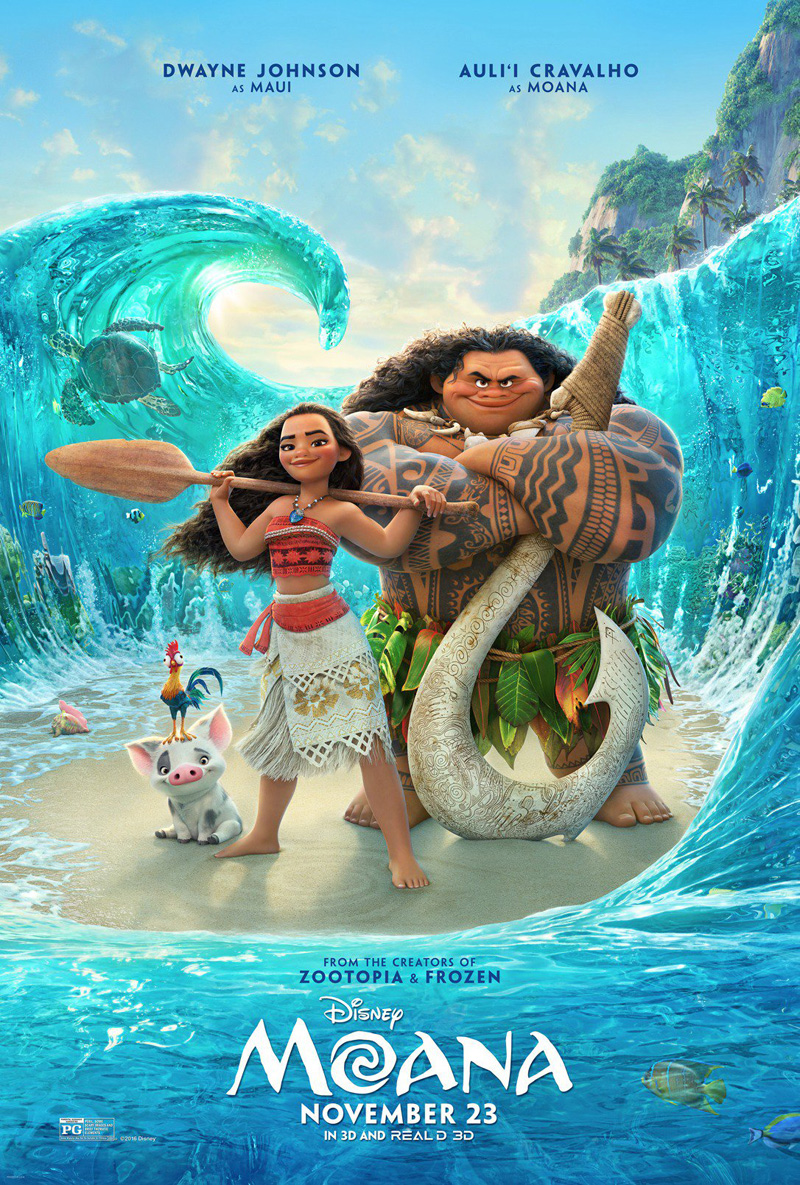
Moana (2016)


Maui and Moana conquer the seas in this wonderfully fun Disney yarn

Director: Ron Clements, John Musker

Cast: Auli’i Cravalho (Moana), Dwayne Johnson (Maui), Rachel House (Tala), Temuera Morrison (Tui), Jermaine Clement (Tamatoa), Nichole Scherzinger (Sina), Alan Tudyk (Hei-Hei)

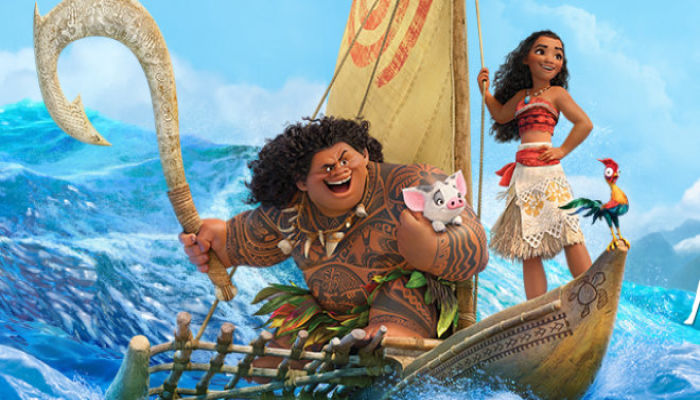
Once upon a time, the demi-God Maui (Dwayne Johnson) stole the heart of the island goddess Te Fiti, in order to give it to humanity. But he was attacked by the lava demon Te Kā and lost the heart and his magical fishhook. A thousand years later, Moana (Auli’I Cravalho), the daughter of the chief of her small island, grows to be a teenager who dreams of exploring beyond the reef. When her island’s crops start to fail, the Ocean chooses her to leave the island to find Maui and restore Te Fiti’s heart, in order to restore health to the world.

Moana is a charming, engaging and witty Disney movie, with strong, well-drawn characters, that immerses itself in its Polynesian mythology setting. What works about it – and what always puts Disney above its competitors – is that the film is interested in telling a story about characters who have real concerns and depth. Compare it to other, more stunted, “joke”-focused animations, produced by companies like Dreamworks, to see how far above those films it is. There are very few jokes here that will date (perhaps one about tweeting) – instead it’s a film that recognises its content for the adults doesn’t need to be sly film references or cheeky gags: a strong plot and engaging characters will entertain all generations.

One of the reasons the movie works so well is because Moana herself is a sympathetic, engaging heroine with dreams and aspirations, but who is still deeply respectful of her background. She’s not a rebellious teen, but someone who wants to improve the world around her, and is beautifully voiced by Cravalho. As such, she’s not only a great role model (take note parents!), but someone you end up totally rooting for. It also helps that she has a wonderful chemistry with Maui (very well voiced by a charmingly sparkling Johnson) – the film quietly subverts the expected Mentor/Pupil relationship between the two, as each teaches the other lessons both practical and spiritual.

Moana learns many of the lessons Disney picked up from Frozen. Like that film, it follows a free-spirited, independent-minded young woman not defined by a romantic interest. Its focus is on the lead overcoming a task to save her world. And it is built around an extremely catchy, very good song. How Far I’ll Go, Moana’s signature song (refrains of which are built into many of the other songs), is a sensational, powerful and tear-prickling power ballad about being yourself and following your own heart. It is remarkably easy to sing along with and carries a great message. It’s also got a brilliant popular appeal – I was stunned to see the YouTube video of it has over 141 millionhits (would that this site had so many). Many of the other songs are similarly excellent, especially the extremely hummable You’re Welcome (the songs are brilliantly composed by Lin-Manuel Miranda, Opetaia Foa’I and Mark Mancina).

Its visuals are outstanding, the animation terrific. I also really liked the way Clements and Musker embraced the strengths of silent characters, and the expressiveness animation can bring to characters. The Ocean, a clear character here who influences events, is nothing more than a shaped concentrated wave with no features, but has an expressiveness that makes it one of the wittiest characters in the film (memories of the carpet from Aladdin spring to mind). Similarly, the silent, dim-witted chicken Hei-Hei supplies many of the film’s laugh-out-loud moments. Maui’s body tattoos (wonderfully illustrated), moving and communicating silently with Maui throughout the movie, are terrifically innovative and feel unique.

Moana has a looseness and coolness to it that makes it an enjoyable, perfect viewing for a Saturday night. The storytelling is brilliantly done and the final confrontations are shot with a daring vibrancy that betters many action films. Clements and Musker have a mastery of the material that creates a gripping and involving story and characters. In many ways, it doesn’t do anything too unique or different from past Disney movies, but it tells the story with such charm and imagination that you’ll get totally wrapped up in it.