Tag: Terrible Films

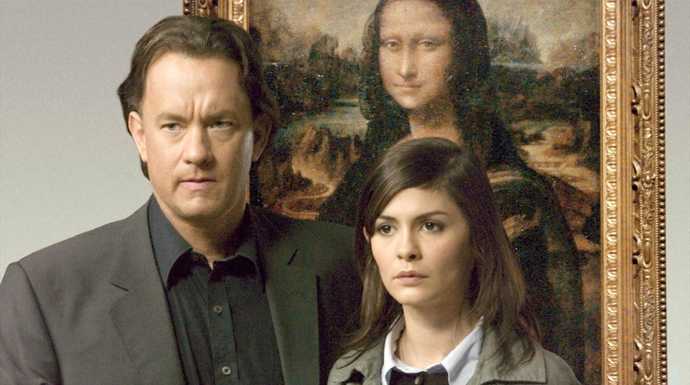
The Da Vinci Code (2006)

Tom Hanks and Audrey Tautou stumble through the dire The Da Vinci Code, possibly one of the dullest films ever made

Director: Ron Howard

Cast: Tom Hanks (Robert Langdon), Audrey Tautou (Sophie Neveu), Ian McKellen (Sir Leigh Teabing), Jean Reno (Captain Bezu Fache), Paul Bettany (Silas), Alfred Molina (Bisoph Aringarosa), Jürgen Prochnow (André Vernet), Étienne Chicot (Lieutenant Jérôme Collet), Jean-Yves Berteloot (Remy Jean), Jean-Pierre Marielle (Jacques Saunière)

In 2003 the world went a little crazy. Maybe it was all the buzz of conspiracy that seemed to be everywhere. Maybe people wanted a bit of escapism from the misery of our post-9/11 world. Or maybe there is just no accounting for taste. But inexplicably, a staggeringly poorly written thriller by a hack author, peddling a tired old conspiracy, became one of the most popular books of all time. Yup, ladies and gentlemen, it was a time of silliness, paranoia and poor taste. It was the time of The Da Vinci Code.

When the curator of the Louvre (Jean-Pierre Marielle) is found dead in the museum, with his body covered with bizarre self-inflicted wounds and symbols, visiting Professor of Symbology from Harvard Robert Langdon (Tom Hanks) is called in to consult. Langdon quickly finds himself the main suspect and on the run, aided only by the victim’s granddaughter Sophie (Audrey Tautou in a truly thankless part of continual question asking, devoid of any agency). Following a trail of bizarre clues, Langdon ends up investigating a conspiracy that leads to the heart of the Catholic Church – could the Church be founded on a lie? Could Jesus Christ have in fact been married to Mary Magdalene? Could she have been his intended heir? Did she have a child? Has a secret society run (at various times) by the Knights Templar, Leonardo Da Vinci and Isaac Newton worked since the dawn of time to protect the secret? Of course they haven’t, but that’s not going to stop the film.

Okay let’s get the main event out of the way. This is a terrible film. But it’s not terrible for the reason you might think. I mean, sure, it’s poorly scripted bobbins, with poorly developed ciphers for characters, and it peddles a conspiracy theory which is total, illogical nonsense from top to bottom. But that’s not the main reason. The main reason this film is terrible is that it is so unbelievably fucking boring.

The film is an utterly faithful, practically scene-by-scene reproduction of Dan Brown’s book. And it immediately reveals how little Brown knows about how to write a good thriller. The film has two or three action “set pieces” or moments of tension – at least, they would be tense, if only there were any stakes to the situation, or the characters’ motivations or the peril they’re in made the slightest bit of sense. They don’t. You’ll barely remember the car chase, or any of the moments where the heroes are held at gunpoint. None of the characters have any definable personalities, other than what they are invested with by the actors playing them. But then that’s no surprise from a novel where the lead character is defined solely by being brainy, having a Mickey Mouse watch (such a character!) and (film rights pleading ahoy) looking like Harrison Ford.

Just like Dan Brown’s turgid original, this film quickly turns into a series of scenes where characters fling exposition at each other to whizz us through a series of sub-par brainteasers and anagrams, which are only solvable with information the characters have but the audience doesn’t (hardly making it a fun thing to play along with). You’ll find yourself wishing for those anagrams back though, once they move on to spunking the novel’s bizarre conspiracy theory into our ears. The low point of this is when Ian McKellen’s polio-suffering billionaire historian (a billionaire historian! Who has a private plane! Of course he does…) tees up a handy PowerPoint presentation he just happened to have sitting around ready, and regurgitates all the mystic mumbo-jumbo that the film tries to pass off as fact.

I’m sure I don’t need to recap the nonsense of this film, but seeing it boiled down from the book is a real reminder that Brown clearly read widely but with no depth. For starters, most of his understanding of everything from the church, to the Templars, to the history of Europe is bogged down in inaccuracy and misinterpretation. By the time the film is claiming that Isaac Newton’s discovery of gravity angered the church you’ll have lost all ability to take anything the film says seriously (for the record, the Catholic church didn’t have a problem with gravity, and even if they did, as an Anglican living in a Protestant country, Newton wouldn’t have given a damn anyway).

None of the film’s (or book’s) ideas are even that original – it was all spewed forth in a book called Holy Blood, Holy Grail (several characters here have names that are anagrams of the writers and editors of these books) in 1982. The idea of Jesus having a whole line of secret descendants is arrant bollocks. The idea of a secret society working to protect this secret is even more stupid (it was revealed after the publication of Holy Blood, Holy Grail to be a total hoax, swallowed whole by that book’s writers). There is not a shred of reality here – rather, it’s typical paranoia and anti-establishment bollocks repackaged as dark reveal.

This is before we even touch on the – heaven help us – “art analysis”. The dark hints of conspiracy in The Last Supper by Da Vinci boil down to: (a) there is no Grail in this painting, (b) the bloke to the left of Jesus looks a bit like a girl so must be Mary Magdelene (“a hint of bosom” McKellen tells us playfully), (c) there is an inverted triangle between Christ and this man/woman – so surely a sign of the female dominance! The fact that the painting shows only 12 disciples and Jesus – meaning that if Mary was there, it should show 14 people not 13 – isn’t considered worth mentioning. But then that’s par for the course for the film’s bullshit clues “discovered” in works of art to support the film’s bullshit, anti-Catholic agenda (the church being staffed in this film exclusively by shadowy, Bond-villain types, with a ruthless agenda for extremist Catholicism and murderous Albino hit-monks they dispatch at will). Give me a break.

But if the film had packaged this all up in a gleefully silly, high energy story, it could still have been an entertaining watch. Unfortunately, it’s completely and utterly boring. It goes on (and on) for almost two and a half hours, and in between unengaging lectures and tedious dialogue scenes it drags like you wouldn’t believe. It’s almost impossible to get engaged in anything at all, and it’s really not helped by the flat, dimly lit, for-the-money direction from Ron Howard. There is no zip or fun about the film whatsoever, as if the book’s massive popularity made the producers worried that if they treated the book like an action adventure yarn, or a fun bit of nonsense, then it might offend people. Instead they treat this nonsense with a deathly reverence usually reserved for Biblical epics that’s fatal for the viewing experience of the entire film. 

It’s supremely dull, very self-important, and for all the hard work of an interesting cast of actors (who do their very best) it’s a complete, yawn-filled, pile of stinking crap. As the man said: “Holy Blood? Holy shit.”

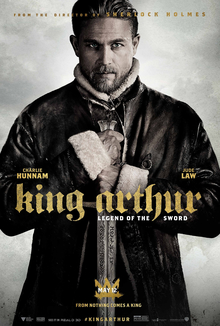
King Arthur: Legend of the Sword (2017)

Charlie Hunnam is a “Proper LEGEND” in disasterous geezy gangster King Arthur: Legend of the Sword

Director: Guy Ritchie

Cast: Charlie Hunnam (King Arthur), Jude Law (King Vortigern), Àstrid Bergès-Frisbey (The Mage), Djimon Hounsou (Sir Bedivere), Aidan Gillen (Goosefat Bill Wilson), Eric Bana (King Uther Pendragon), Kingsley Ben-Adir (Tristan), Craig McGinlay (Percival), Tom Wu (George), Neil Maskell (Back Lack), Annabelle Wallis (Maggie), Katie McGrath (Elsa), Freddie Fox (Rubio), Mikael Persbrandt (Greybeard), Michael McElhatton (Jack’s Eye), Geoff Bell (Mischief Jack)

Okay we’ve all seen bad movies. And we’ve all seen movies that don’t make a lot of sense. But it’s a pretty special film that is both at the same time. King Arthur: Legend of the Sword is one of those. It is jaw-droppingly terrible and also insanely, ludicrously, incoherent. It’s completely impossible to follow what the hell is going on. Considering the studio planned this as the first of at least ten movies in an Arthur-verse, it’s practically a textbook on how not to start a movie franchise.

Anyway the plot, such as I can work out, is something like this: back in ye olde England times, magic and Mages have been nearly wiped out after (I think) an attempt by Mage Warlord Mordred to seize the throne. Then former Mage pupil and jealous brother of King Uther Pendragon (Eric Bana), Vortigern (Jude Law) kills his wife to get powers to seize the throne. Only young Arthur survives – and an unspecified period of time later (he ages, no one else does), Arthur (Charlie Hunnam) is a cocky geezer running a brothel in Londinium in the shadow of the Coliseum (yes really). Then one day Uther’s sword Excalibur turns up buried in a stone and Vortigern gets everyone to try and pull the sword out of the stone, so he can find the true heir (Arthur) and then when he finds him he puts on a show trial and it looks like he’s going to execute him because Arthur has become a legend in five minutes. Then Arthur is rescued by rebels who want Arthur to lead them, because the sword has special powers which Arthur can control if he can only get over his doubt and when it works… Oh God I can’t believe I’ve just tried to puzzle it out.

Scenes in King Arthur: Legend of the Sword follow each other with barely any structural link from one to the other. The film is convinced that the best way to pique our interest in a mystery is to throw us into the deep end and then info-dump flashbacks and voiceover throughout the film. The effect is rather like an ove- excited child trying to tell you a story (“And then a MASSIVE OLIPHANT SMASHED THE BRIDGE, and Uther fought it with a sword and it went boom and there was a big funeral and then Vortigern killed his wife and he was sad and he shouted and then a BIG DEMON killed Uther because the sword couldn’t go boom and then Arthur grew up”) who keeps leaving out the key details so has to throw them in later (“oh and Vortigen killed his wife because he needed to become a BIG DEMON and could only do it if he killed someone he loved and he had to become a BIG DEMON because it was the only way to stop Uther from making the sword go boom and he needed to get the sword – umm – well I’m not sure why but he needed it to build his tower. Did I mention his Tower? I think it was why he wanted to become King so he could build the tower. I think the tower made him a powerful magician. But of course he already was a magician he just wanted to be a betterer one. Did I mention that Arthur got the sword and made it go boom?”).

Instead the film showcases absolutely all the worst instincts of Guy Ritchie. All of them. Everything happens really fast and incredibly loudly. There are huge senseless battles and enormous CGI beasts who attack for no reason whatsoever. Arthur and his cronies are all transformed into cockney wide-boys, with Vortigern’s enforcers basically gangsters, all speaking with the Lock Stock rat-a-tat vibe that was fresh in 1998 but feels impossibly dated and tiresome now. This mixes with the ridiculously loud and fast pace of the film that makes it almost literally impossible to work out what is going on – and certainly makes it impossible to give a shit about anyone or anything in the film as events, characters, action and dialogue fly past with nothing dwelling to make any impact.

Everything has been thrown at this. Monsters! Gangsters! Chinese Martial Artists! Knights as Nazis (Jude Law’s Vortigen hosts a full blown Nuremberg Rally)! None of it really ties together. Nothing makes sense. Everything is filmed dull and murkily.

Probably because the producers worked out what they’d put together was an impossible turkey, the film has been cut to ribbons. To try and make a virtue of this, frequently characters explain events that are going to happen, while the events themselves play out on screen. Ritchie pumps this up to the next level by having the dialogue delivered with manic speed, which clearly passes in his mind for cool. This is when it explains things at all. More often events speed by so swiftly that we just have to assume massive time jumps have happened. This sword must be important (its name is in the title) but when it pops up out of nowhere, we get no sense that Vortigern has spent any time looking for it. Not only that, his system of forcible sword tests is both a well-oiled machine and something Arthur (who lives literally in the shadow of Vortigern’s castle) has never heard of. In less than two minutes of screen-time after he pulls the sword, Arthur is spoken of as a legendary figure who must be killed publicly to kill his legend. What? How much time is passing here?

The film has both way too much plot going on, and not enough interesting plot going on. It’s so determined to set up future movies that we get lots of incoherent information about Mages, magic and powerful swords dumped on us really quickly. Anything that could be seen as a “special effect” has been left in, while it feels like anything dialogue-related has been cut. So we have a way, way, way too long sequence of Arthur in some place called the Darklands battling monsters for reasons never explained by the plot (its stated purpose, to get him to master the sword, doesn’t even work – making it a complete cul-de-sac). We get a battle at the start where we literally don’t know who is fighting whom or why. At one point, the Mage commands a giant snake which pops up to save Arthur and is never used again. On the counterside, we are never clear what Vortigern is trying to do or why he seized the throne, why he is building a huge tower or why he needs the sword – or indeed why the sword is important other than it makes things go BOOM.

The actors stumble about the wreckage of this film, like shell-shocked survivors of some kind of apocalypse. Perhaps this is at last the end of Charlie Hunnam as a star of big budget movies – he is, to put it bluntly, awful: a complete non-presence. Jude Law swans through the film as if just turning up was repaying a favour to Ritchie – although god knows Vortigern is a character that makes no sense at all. The rest of the actors make no impact – Aidan Gillen looks a little ashamed to be there – with the one exception of Neil Maskell who gets some very small emotional force out a father-son relationship. But to be honest, this is one where you want to be forgotten.

A film that wants to start a franchise but gives us no reason to care about anyone in it, is on a hiding to nothing. What on earth in this movie would make you want to come back and see the future adventures of Arthur and Pals? I can’t think of anything. If you can work out what is going on you are welcome to it. Lord knows no one else wants it.

The Mummy (2017)

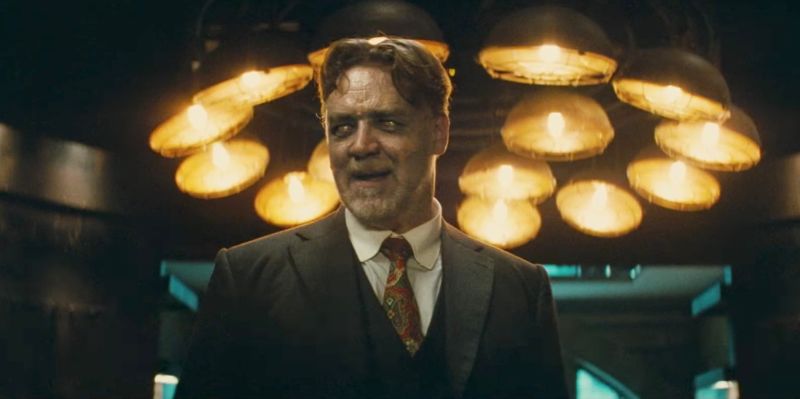
Like the film, Annabelle Wallis stares at Tom Cruise in awe in disaster laden (in more ways than one) The Mummy

Director: Alex Kurtzmann

Cast: Tom Cruise (Nick Morton), Sofia Boutella (Ahmanet), Annabelle Wallis (Jenny Halsey), Jake Johnson (Chris Vail), Russell Crowe (Dr Henry Jekyll), Courtney B Vance (Colonel Greenway), Marwan Kenzari (Malik)

Mummy PosterMany films have killed their franchises. It takes a really special film to kill a franchise before it has even started. Welcome to the first, and probably last, entry in Universal’s misguided Dark Universe franchise, a Marvel-style playground for all Universal’s old monsters like Frankenstein, Dracula, the Wolfman etc. etc. And of all of them, The Mummy was the one they decided to start with? 
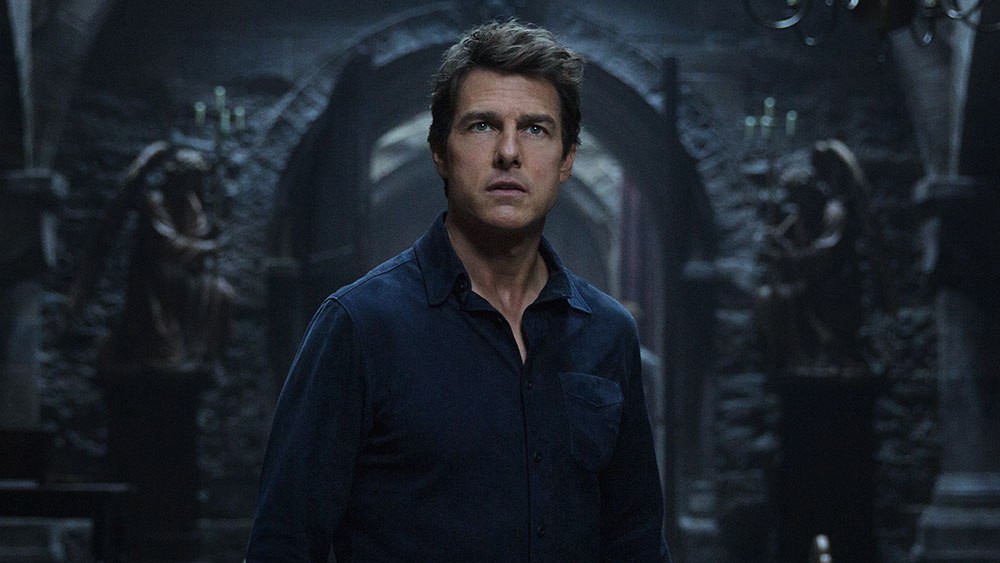
Anyway, our hero is Nick Morton (Tom Cruise) a sort of soldier of fortune in modern day Iraq, plundering antiquities under the banner of the US Army like some low-rent Indiana Jones. He and his hapless sidekick Vail (Jake Johnson) stumble upon a tomb of mysterious lost Egyptian princess Ahmanet (Sofia Boutella) after stealing information from archaeologist Jenny Halsey (Annabelle Wallis). On the clock to take as much as they can from the tomb, Jenny and Nick take home Ahmanet’s sarcophagus. Their plane crashlands in Dover, with Jenny the only survivor – only for Nick to be resurrected in the mortuary. Looks like reborn Ahmanet wants to bring Set, the God of Death, into the world and has chosen Nick as the vessel for Set’s soul. Or something. It’s not really clear. 

In fact the whole film is pretty awful. What sort of film were they trying to make here? Is this a horror or an action film or a buddy film or some sort of black comedy? The tone shifts wildly from moment to moment: one minute Tom Cruise is exchanging Indiana Jones-style banter with his buddy Vail (Jake Johnson). The next he is shooting a possessed Vail at point-blank range (even this is played for laughs a bit). The next he’s being haunted American Werewolf style by a ghost or vision or zombie or somethingversion of wise-cracking Vail. What is going on here? What kind of film is this?

Tom where he normally is – centre of the frame

Well actually we know what kind of film it is: it’s a Tom Cruise starrer. Allegedly, the Cruiser (already quite the control freak perfectionist) took over most of the production from inexperienced, Universal suit Alex Kurtzmann. The DVD’s special features don’t half support this, with Cruise shown effectively directing most of the action sequences while Kurtzmann stands quietly to one side or (best of all!) greeting the star after the opening aircraft crash has been filmed to be told “you’ll love the footage Alex!”. 

Well the studio had doubled-down on Cruise to launch their franchise with his glittering smile and international box-office appeal, so I guess it’s fair enough the guy was shoved square centre. I know the film is called The Mummy but it might as well be Nick Morton. Cruise is in almost every single scene, most of the characters spend the whole time talking about him, and all the action is done by him (every other character is completely useless). The best lines, such as they are, go to him. He’s starting to look a little bit too old for the “young buccaneer” role he has here – and certainly too old to be flirting with Anabelle Wallis – but the film doesn’t care.

Anyway, the plot charges about London with odd time jumps, and unclear character motivations abounding. Why does Ahmanat have such an idee fix that Nick has to be the vessel for Set (other than, of course, his Tom Cruise Awesomeness)? Is it a good or bad thing that Nick could or could not get the powers of a god? Why does Ahmanet need Set in the first place – she “sells her soul” to him in ancient Egypt times for the throne, but basically just cuts the throats of her family at night (hardly requiring the demonic powers of the dead)? In Egypt she’s easily defeated with a blow dart but by the time she’s reborn in London she has incredible powers over minds, matter and animals – why didn’t she use any of this before? 

On top of that, we’ve got the incredibly dull Prodigium organisation (a sort of SHIELD for monster fighting) run by Nick Fury-ish arc character Dr Henry Jekyll, played with lumbering crapness by Russell Crowe. Why Russell, why? Crowe plays the part half like a plummy Stephen Fryish professor, the other half like some demented OTT cockney geezer. Of course the film isn’t subtle enough to avoid giving us Jekyll going full Hyde, a laughable moment of cheesy rubbishness with a wild-eyed Crowe reduced to “alrigh’ mate” hamminess while tossing Cruise around in a punch-up that looks like two drunk dads at a wedding going at it.

Oh Russell, why? Why do you make it so difficult for your fans?

The film is also saddled with one of the most inept female characters since Roger Moore’s Bond years. At one point, poor Anabelle Wallis stumbles on Ahmanet and her zombie minions on the verge of stabbing Nick to death and turning him into a demon-host, and Nick’s response is an irritated cry of “Jenny!” as her total lack of proactive response to this, like even he finds her arrival pointless and annoying. I’m afraid to say after that moment, every moment in the film with Wallis weeping, panicking, running away or laughably cheering Nick’s Tom Cruise Awesomeness from the wings (“Kick her arse Nick!”) was met by me and everyone I was watching the film with shouting “Jenny!” at the screen with the same exasperated annoyance.

The only good sequence in the film is the opening plane crash – and that is spoilt as it was all over the trailers. By the time we are in a secret crypt (getting in the way of the crossrail construction) with zombie Templar knights wrestling Nick (no seriously) you’ll have long since ceased caring. Even the fun of saying the next line in the cliché-ridden script before the actors do will be less fun than it used to be.

The Mummy sounds like it should be some sort of camp classic. But it’s really not. It’s ineptly made, poorly written, with a plot that makes no sense and action that varies from dull to laughable. Terrible characters, awful pace, rubbish acting, lousy direction and half-hearted from start to finish – it could barely launch a fart let alone a franchise.

Volcano (1997)

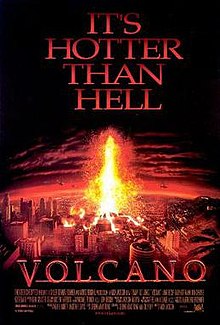
Tommy Lee Jones and Anne Heche are chemistry free in a film that is a disaster in more ways than one: Volcano

Director: Mick Jackson

Cast: Tommy Lee Jones (Mike Roark), Anne Heche (Dr Amy Barnes), Gaby Hoffmann (Kelly Roark), Don Cheadle (Emmit Reese), Jacqueline Kim (Dr Jaye Calder), Keith David (Lt Ed Fox), John Corbett (Norman Calder), John Carroll Lynch (Stan Olber)

In 1985 Mick Jackson directed a film for the BBC called Threads. A masterpiece of nuclear terror, it showed the horrifying impact of a full-scale nuclear attack on Britain. Off the back of its success, Jackson got a ticket to Hollywood and the big time. Oh dear lord. Be careful what you wish for. Could Jackson really direct something so brilliant as Threads on a shoestring, and then something as unspeakably bad as this on a massive budget?

Volcano already felt dated when it was released in 1997. Imagine how it feels now. It’s a feeble disaster film, of the type where the heroes are all square-jawed types who just need to stop focusing on their super important jobs and look after their kids, and the villains are all greedy businessmen. Anyway a volcano goes off under Los Angeles (don’t ask) so disaster zone manager Mike Roark (Tommy Lee Jones looking so bored he can barely be bothered to deliver the lines) has to save the city and his daughter. Mostly his daughter. Literally everything you could expect to happen, inevitably happens.

Volcano is almost unspeakably bad. I mean I watched it expecting it to be rubbish, but at least sort of fun rubbish. But this is just, y’know, a rubbishy rubbish. For ages. It’s almost half the runtime before the volcano really goes boom – and then you are reminded how dull watching lava pour very slowly forward can be. And it moves very slowly. Despite this it keeps creeping up on the cast as it from nowhere. None of whom, by the way, you would miss if they failed to turn up to a dinner party, let alone if they were incinerated by molten rock.

The heat of that molten rock, by the way, changes according to the requirements of the scene and the plot armour of the characters. At least two red shirts (and the red shirts are easy to spot) are vaporised solely from being in close proximity to it early on. Later, the key heroes are suspended a few feet above it, or even splashed by it, and feel no real effect other than some hot shoes and a few burns. 

Tommy Lee Jones is completely and utterly miscast in a role that he looks like he hated every minute of filming. Roark is your typical shouty man. He has family problems (needless to say these get fixed in the film) but his main quality seems to be his near creepy love for his daughter, a love that blinds him to all other events. Early in the disaster he abandons a fireman in a truck in order to carry his daughter away from lava (the fireman and the man who tries to save him instead die horribly). Later Roark tries to stop a vital explosion that could save the city because his daughter may be at risk having stupidly walked into the middle of the blast radius.

It doesn’t help that his daughter is the worst example of a dumb damsel-in-distress ever, frequently freezing up in the face of any danger and proving hopelessly incapable of showing any initiative. Never mind a volcano eruption, she’d be hopeless with toast burning. It’s as impossible to care for her as it is any other flipping character. To be honest I’d quite happily drop a pile of lava on all of them. That would at least be fitting with the film’s vomit inducing infantile liberalism – “Why look” (to paraphrase a wiser-than-his-years kid who has nearly got himself killed) “Everyone looks the same under volcanic ash”. Yup, whatever colour or creed everyone looks equally sad about being in this film.

Jackson directs this with a mixture of total lack of inspiration (not helped by some effects that looked painfully wonky even then), ludicrously overblown zoom shots (whenever something dangerous happens), and laughable camera work. It makes the whole film look and feel even more stupid than it does already. Will you care about anything that happens in the film? No you won’t. Will you laugh at it? Not quite enough to justify watching it.

Mission: Impossible 2 (2000)

Tom Cruise joins forces with his ego to take on Mission: Impossible 2

Director: John Woo

Cast: Tom Cruise (Ethan Hunt), Thandie Newton (Nyah Nordoff-Hall), Ving Rhames (Luther Stickell), Dougray Scott (Sean Ambrose), Brendan Gleeson (John C McCloy), Anthony Hopkins (Mission Commander Swanbeck), Richard Roxburgh (Hugh Stamp), John Polson (Billy Baird), Radé Sherbedgia (Dr Nekhorvich), William Mapother (Wallis), Dominic Purcell (Ulrich)

Okay. I love this franchise. Always have. But every franchise has its misfire right? Its Phantom Menace? Ladies and gentlemen: welcome to this total turkey. Can you believe this was the biggest box office hit of 2000? Has anyone watched it since then? Did anyone like it even then?

Anyway, the plot for what it’s worth, plays like Hitchcock’s Notorious if it had been roughly humped after a drunken dinner by The Fast and the Furious. Ethan Hunt (Tom Cruise) has to recruit the bizarrely named Nyah Nordeff-Hall (Thandie Newton), a society catburgler and sort of hot Raffles. Why? Well of course her ex-boyfriend and rogue MIF agent Sean Ambrose (Dougray Scott) has pinched a deadly virus and we need her to get back into his bed and trust to find out more so MIF can pinch it back before it hits the market. She’ll be ready to deceive a man though because “she’s a woman, she has all the training she needs” – or so says Anthony Hopkins’ half-asleep Mission Commander. 

Mission: Impossible 2barely has a plot though. Rarely has a film looked more like a story loosely written around some pre-determined action set-pieces. Much as I like Tom Cruise, no film looks more like a cocky vanity project than this one. The camera lingers on Cruise’s chiselled torso and general macho physicality like a lovestruck teenager. Remember when the MIF was a team organisation? Not anymore. Cruise is now a one man army, who barely needs the help of his two sidekicks (the job of one is to press keys on a computer, the other flies a helicopter. That’s it).

So the whole film is about making Cruise look good. From punching, to climbing freestyle up a cliff, to flashing the famous grin, to driving cars and bikes really fast, the whole film is blinded by his smile. Poor Thandie Newton and Dougray Scott can only watch as the Cruiser bestrides the film like a colossus, creeping about to find themselves dishonourable graves. Both performers are crushed by the weight of Cruise’s ego and the film’s front-and-centering of it. Newton can barely raise her performance above balsawood. Poor Dougray Scott not only gives an utterly bland performance, but was stuck on the set for so long by production delays he had to pull out of the first X-Men film, giving his role of Wolverine to an unknown West End actor by the name of Hugh Jackman. Ouch.

Perhaps as a reaction to the first film being seen as too confusing (it really isn’t…) the plot is almost laughably simple, verging on pointless. The film homages (rips off) other, way, way better films everywhere you look. So we get flirting-through-racing-fast-cars from GoldenEye. We get the almost the whole plot of Notorious with the woman sent to spy on her former lover by a handler who is now in love with her (the film even has an extended racecourse sequence). “I will find you” Cruise bellows at Nyah at one point like a low rent Last of the Mohicans. It doesn’t help that the film sounds like the writers spent about five minutes on the dialogue: “Damn you’re beautiful” Cruise tells Nyah. Well, be still my beating heart. This shit was penned by the writer of Chinatown for fuck’s sake.

The slight plot could probably be comfortably wrapped up in about an hour, if it wasn’t for the film’s constant (embarrassing) use of slow motion at every conceivable opportunity. I guess it’s meant to add style and depth, but it’s actually crushingly annoying and often gives us laughable moments (none more so than Cruise walking past a flaming doorway in slow motion for no reason). You just want to tell the film to get a bloody move on.

But then that is part of the John Woo style. Hard to believe this style of shooting an action film was once considered cool beyond belief. It looks so pretentiously, artily, self-importantly, thuddingly dull now. There are a huge number of action scenes here but none of them are particularly exciting, and none of them hugely memorable. There is a bit with a bike, a bit with cars, a shoot-out in a base, an infiltration of a big building. Yawn. Perhaps because Ethan Hunt feels less like a human, more like an empathy-free, ego-mad super soldier, it’s hard to care. In every other film, time is invested to make him appear human – here he’s an asshole who forces a woman to give her body for secrets, grins like a lunatic and slaughters people left, right and centre. It’s like he’s been given an arsehole upgrade from the first film (the third film would correct all this). 

The film has no humour whatsoever. It’s po-faced and serious and desperately in love with itself. I keep banging on Cruise, but I think I do blame him. Other than Hopkins, no one in the film can compete with his charisma which feels like a deliberate choice. Every single memorable thing in the film is done by him. No other character is allowed to contribute anything to the resolution of the problem. On top of that every character seems to have a Tom Cruise mask – meaning Tom also gets to play at least three other characters as well. 

John Woo shoots all this with a tedious flashiness that is completely empty. Logic is left lying battered and bruised on the sidewalk. By the time we get to the final resolution, we are desperate for Nyah (who has been used for sex, humiliated and infected with a deadly virus) to tell Cruise to get stuffed. Instead (after watching him gun down a pliant Sean Ambrose, who is never allowed to appear as a worthy adversary) they go on a sun dappled date in Sydney, with Cruise all but turning to the camera to wink. “Don’t you wish you were me?” he seems to be saying. Christ I really don’t.

Vertical Limit (2000)


Chris O’Donnell and Scott Glenn head into high nonsense in Vertical Limit

Director: Martin Campbell

Cast: Chris O’Donnell (Peter Garrett), Bill Paxton (Elliot Vaughan), Robin Tunney (Anniez Garrett), Scott Glenn (Montgomery Wick), Izabella Scorupco (Monique Aubertine), Robert Taylor (Skip Taylor), Temuera Morrison (Major Rasul), Stuart Wilson (Royce Garrett), Nicholas Lea (Tom McClaren), Alexander Siddig (Kareem Nazir), David Hayman (Frank Williams), Ben Mendelsohn (Malcolm Bench), Steve Le Marquand (Cyril Bench), Roshan Seth (Colonel Amir Salim)

You know a film is in trouble when its heart-rendering death scene at the open is met with howls of laughter from the packed cinema. But Vertical Limit is that kind of film: totally ridiculous, mind-numbingly stupid and filmed in such a melodramatic, over-the-top way it’s impossible to take seriously. It’s a silly, contrived, stupid movie, but at least it’s good clean fun.

Peter (Chris O’Donnell) and Annie Garrett (Robin Tunney) are on a climbing trip with their father when an accident puts them all in danger. Their father sacrifices himself to save their lives, but afterwards the siblings drift apart. Three years later she’s part of mountaineering team taking arrogant millionaire Elliot Vaughan (Bill Paxton) up K2. When disaster strikes (of course!) and Annie, Elliot and wounded Tom McClaren (Nicholas Lea) are stranded up the mountain, Peter gets together a team to head up the mountain to save them. The best way of doing this? Why, carrying nitro-glycerine up the mountain! That’s right, this is a film where our heroes basically carry a series of bombs up a mountain: it’s The Wages of Fear meets Cliffhanger.

Oh lord where to begin? In the very first scene, I horribly misread the relationship between Annie and Peter – so it was a bit of shock, after what seemed like a fair amount of flirting, to have them revealed as brother and sister. But their weird obsession with each other hangs over the whole picture, and is used to justify the people killed in this film to save Peter’s sister. Peter certainly can’t get excited about his nominal love-interest (a bored looking Izabella Scorupco), although that might be partly due to Chris O’Donnell’s balsa-wood earnestness.

But then the whole film is wonkily acted. Bill Paxton is so obviously a wrong-un, he practically twirls his moustache through the whole film. Scott Glenn plays a mystic climber mourning the loss of his wife, like some sort of bizarre shaman. Robert Taylor is wooden as Skip. Alexander Siddig is wasted as a rent-a-Muslim (the film is so old the call to prayer even needs to be explained!). Among the smaller roles, Ben Mendelsohn plays a sort of climbing Crocodile Dundee. None of these actors bring their A-game to this rubbish.

And it is rubbish. Nothing in it is particularly exciting, despite the efforts of Campbell to throw a (literal) avalanche of events at the screen, with characters hanging over cliffs like no-one’s business. None of these action sequences is actually that exciting – some, like a prolonged helicopter drop-off, are frankly dull – and everything has a sort of inevitability about it. You can predict who will die and who won’t, and the film only talks about things that are going to happen: of course Montgomery Wick’s wife’s body will be revealed after one of several avalanches (another scene that provokes sniggers rather than gasps); of course Vaughan will try and kill his fellow survivors; of course Peter will have to come to terms with his dad ordering him to cut him loose at the start of the film.

Most of the mountain climbing effects are not convincing. The opening sequence is obviously filmed at ground level, the passes of K2 look like sound stages. At one point Wick drops the title by saying they are at the “Vertical Limit” where the body starts dying: O’Donnell responds like a forgetful child actor, suddenly remembering he’s supposed to be out of puff in this scene. The very idea of taking nitro-glycerine up the mountain like this is so completely irresponsible and stupid that the film can’t get over it. Needless to say many, many, many more people die on this rescue expedition than are actually rescued at the end. Not that it matters, as Annie and Peter reconcile to continue their odd flirtatious relationship once more!

Vertical Limit is a terrible film. No doubt about it. It’s good to laugh at, I’ll give it that. But it’s got literally nothing else going for it. Nothing. Martin Campbell: how did you deliver something this mundane and stupid?

Flash Gordon (1980)


Flash Gordon: Sometimes words fail you

Director: Mike Hodges

Cast: Sam J Jones (Flash Gordon), Melody Anderson (Dale Arden), Max von Sydow (Ming the Merciless), Topol (Hans Zarkov), Ornella Muti (Princess Aura), Timothy Dalton (Prince Barin), Brian Blessed (Prince Vultan), Peter Wyngarde (General Klytus), Mariangela Melato (General Kala), Richard O’Brien (Fico), John Osborne (Arborian Priest), Philip Stone (High Priest Zogo), John Hallam (General Luro)

Well. If almost 40 years on, Flash Gordon is a cult favourite and beloved by millions, then there is hope yet for Jupiter Ascending. By any objective standards, Flash Gordon is a terrible film. But it gets a pass from millions because it’s one people have grown up with. I dread the same reaction to The Phantom Menace from those people whose first exposure to Star Wars was through that film.

Ming the Merciless (Max von Sydow) rules the planet Mongo and decides to destroy the Earth for his own amusement. Disgraced ex-NASA scientist Hans Zharkov (Topol) is the only man on Earth who believes a series of natural disasters are the actions of invaders from space. Zharkov flies a rocket into space to find them – accompanied, for strange reasons, by professional football star “Flash” Gordon (Sam J Jones) and travel agent Dale Arden (Melody Anderson). Arriving at Mongo, they encourage its citizens – especially the forest people led by Prince Barin (Timothy Dalton) and the hawkmen led by Prince Vultan (Brian Blessed) – to unite and rise up against Ming.

Yup you read that right. It’s all as barmy as you might expect. Any film that asks to believe Brian Blessed can fly is always going to be odd. Flash Gordon does at least have its tongue firmly in its cheek. The whole thing is as camp as Christmas. In an age where science fiction and comic books are treated like holy texts, it is at least interesting to see a film that treats its source material with such a breezy lack of respect. The entire film is an exercise in high camp, cheaply put together, that refuses to take anything seriously and actively encourages the respected actors in its cast to take the piss.

So what is Flash Gordon? Is it a big old joke? Yes it probably is. No one is taking it seriously. The actors clearly think it’s a pile of campy rubbish. The producers seem determined to throw as much technicolour cartoon colours at everything as possible. The film is so cartoonish it all but has “Pow!” and “Thwack!” appear on screen as punches land. At a time when Star Wars (and it’s hard to believe it, but George Lucas only made Star Wars because he couldn’t get the rights for this) took its space opera roots rather seriously, this seemed to miss the point completely. It’s a would-be Star Wars rip off that has nothing in common with the tone of the thing its ripping off. Usually that would be a good thing: here I’m not sure it is.

So the dialogue is terrible, the plot line makes no real sense, the film barrels around telling jokes against itself as inopportune moments. Characters shrug off events with no problems at all – at one point a character undergoes brainwashing torture: two scenes later he’s fine (“I just didn’t think about it” he gleefully tells someone. It’s never mentioned again.) The special effects, even for the time, are shockingly bad (the backdrops are sub-Doctor Who. The costumes and design are ludicrously overblown, like an explosion in a campy dressing-up box. It’s a terrible display of excess married with a complete lack of understanding about what made the things it’s trying to rip off successful in the first place. But yet, and yet, and yet it’s still in a terrible, terrible, terrible way quite good fun.

But perhaps the most interesting thing about its campy rubbishness, is how much odd sexual stuff creeps in under the radar. There are also lashings of sadomasochism, incest, orgasms, sex dens, threesomes, swinging, voyeurism – acres of cheeky sexual humour. Ming has a ring that can induce orgasms (it’s so effective on Dale Arden that it’s even commented only Ming’s daughter has had such a response). Ming has a harem, full of opiates to encourage “performance”. There are references to pleasure planets and sex toys. Ming’s daughter is whipped while tied to a bed by Ming’s henchmen (while Ming watches eating some popcorn). The arborians have a bizarre ritual which seems laced with wanking references. It never stops. At least they had some fun.

Some of the actors are also clearly enjoying themselves. Of course Brian Blessed throws himself into it: an actor who never knowingly underplays, Blessed rips through a bizarre role that sees him perform in a jockstrap with some unconvincing wings. Timothy Dalton channels Errol Flynn. Max von Sydow chews the scenery and virtually everything else in sight as a campy, moustachio-twirling Ming. Peter Wyngarde has a great voice and uses it to marvellous effect as pervy security chief Klytus, while Mariangela Melato plays his dominatrix assistant. There are bizarre, eclectic casting choices: so we get Look Back in Anger author John Osborne playing a high priest, Blue Peter’s Peter Duncan as an initiate, and Richard O’Brien (of course!) playing – well to be honest himself.

Sam J Jones is of course simply awful as Flash (wooden, dull and confused). Melody Anderson isn’t a lot better as Dale Arden, while Ornella Muti gets some awful dialogue which she does at least deliver with some conviction (sometimes too much: “Not the BORE WORMS!” sticks in the mind as a bizarre moment of over such over conviction that it simply becomes funny). It’s a bizarre mix of acting styles and overblown, fourth-wall leaning. It’s so bad, I suppose, that to many people it’s good. But actually it gets a little overbearing.

Because nothing is taken seriously at all, the film actually becomes a bit wearing after a while. The writer later regretted playing everything for laughs: it removes any stakes from this ridiculous film. It says a lot that Brian Blessed – the most overblown actor in it – is the only one who really emerges with dignity intact. Blessed at least knows it’s utter crap and plays it like he’s taking the piss in every scene. He commits so fully to the scenery chewing that it sort of works. The rest of the cast can only aspire to his levels of camp. Flash Gordon is a terrible film. But age and fondness have been kind to it, and made it remembered as something better than it is. It’s a misfiring gag with some great Queen songs. It goes on forever, it looks awful but it fails utterly as anything but a joke. But hell maybe that’s enough.

GI Joe: Retaliation (2013)


Channing Tatum and Dwayne Johnson wonder how they landed in this mess in GI Joe: Retaliation

Director: Jon M. Chu

Cast: Dwayne Johnson (Roadblock), Bruce Willis (General Joe Colton), Channing Tatum (Duke), Jonathan Pryce (President of the US), Adrianne Palicki (Lady Jaye), DJ Controne (Flint), Ray Park (Snake Eyes), Byung-hun Lee (Storm Shadow), Ray Stevenson (Firefly), Arnold Vosloo (Zartan), Walton Goggins (Warden James), RZA (Blind master)

Back in 2009, Hasbro (flushed with success from its Transformers franchise) released GI Joe: a humble, straightforward nonsense actioner (almost exactly the sort of film spoofed by Team America) in which gung-ho American action heroes save the world, destroying major cities on the way. It was harmless, Stephen Sommers-directed fun. Critics hated it. Audiences saw it, but were basically meh. It left us on a cliff-hanger. The cliff-hanger led to this joyless, “by-contractual-obligation” reboot.

The villainous Zartan (Arnold Vosloo) has changed his entire DNA to make him an exact physical match for the President of the United States (Jonathan Pryce) and taken his place. Using his powers, he orders a surprise attack on the GI Joe force, wiping out their base. All the Joes, including Duke (Channing Tatum) are killed, except for Roadblock (Dwayne Johnson), Lady Jaye (Adrianne Palicki) and Flint (DJ Controne). Now they need to form a team to take revenge, defeat Zartan and prevent the plans of the newly escaped Cobra Commander.

Oh dear God this is an awful film: a truly dire comic book disaster, terribly written and practically incoherent in its plot and storyline, peopled from top to bottom with bored looking actors. It’s barely a sequel at all to the original film. In fact, it disregards most of the plot of GI Joe: Rise of Cobra altogether, barely acknowledging its existence. None of the plot threads of the first film are carried across at all, with the exception of the replacement of the President. On top of that, all the characters the first film spent time establishing as our heroes are unceremoniously dispatched (mostly off-screen) to be replaced with a trio of new heroes, none of whom make any real impact. Is it just me who feels cheated that all the characters the first film tried to build up just get wiped out like so many wasps when a pest controller comes calling?

Was it really necessary to totally dump the previous film? It wasn’t that bad. And if they were going to do that, could they not have come up with a fresher reboot than this? Who on earth thought the way to make the series fresher was to introduce Bruce Willis (at his most breezily, contemptuously disengaged) as a new hero? The film barely has time to introduce its new heroes: Lady Jaye has Daddy issues and is looking for approval (her Daddy, by the way, sounds like a sexist asshole with his “women shouldn’t serve in the military” attitudes and I was waiting for another character to point this out – they don’t of course), while Flint barely has a character beyond being a cheeky-chappie. When even Dwayne Johnson can barely be bothered to bring his C-game to a role, you know you’re in trouble: this film turns the most engaging action star of our age into a dull rent-a-muscle.

Then the plot. Yawn. Oh dear God yawn. Is there a plot? Not really. Events happen. They keep happening. Occasionally characters (like the “Blind Master”) pop up to essentially blurt out a load of plot, in between rushed character introductions. Turgid fight scenes are given extended screentime – but since they usually involve people we don’t really know fighting people we’ve barely been introduced to, it’s pretty hard to get engaged in them. Nothing really links together or carries any meaning. In fact, the film is about so little – and what plot there is, so clumsily and irritatingly spoonfed to the audience while our heroes take a frustratingly long time to catch-up – that you’ll be surprised the run time is as long as it is. I’ve already forgotten most of it and I watched it two days ago.

I say watched it, because I’m not sure “letting it pass before my eyes” on a Saturday morning over breakfast really counts. Certainly the final battle scenes – involving the storming of a bunker, something blowing up in space, world leaders in peril, and embarrassingly trite “personal rivalry” stories coming to a head – are so unimaginatively filmed, so dully predictable in their execution, that I fast forwarded through them. I just wanted the fucking thing to end. In fact I bemoaned the failure of Cobra to knock off all the Joes to start with. Not that the villains are much better themselves.

Pity poor Channing Tatum. Actually on reflection don’t: he’s well out of it. Tatum and Johnson’s double bill is the most likeable thing in the movie, the only thing that feels remotely real. Tatum was called back for reshoots (as he became more famous in between finishing filming and the planned release date, after the success of Magic Mike) and it’s a neat reminder of what an engaging, off-the-cuff performer he can be: when he kicks the bucket, the film’s most likeable, interesting character goes with it. The other actors just seem interested in picking up a cheque.

GI Joe: Retaliation isn’t a reboot. It’s an execution. It’s not even an execution you can get worked up about. In fact, I would have happily knocked off some of its characters myself. Did we create the language of cinema to come up with something as stodgy and insipid as this? Where is the magic and inspiration, where is the fun? What looking glass did we fall through, that anyone thought this pile of crapparoo was the way to restart a franchise?

Anonymous (2011)


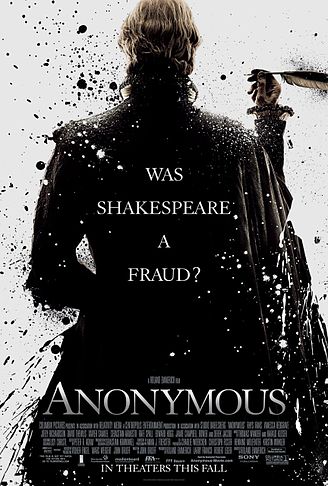
Did the Earl of Oxford write Shakespeare (spoilers: No of course he didn’t.)

Director: Roland Emmerich

Cast: Rhys Ifans (Edward de Vere, Earl of Oxford), Vanessa Redgrave (Queen Elizabeth I), Sebastian Armesto (Ben Jonson), Rafe Spall (William Shakespeare), David Thewlis (Lord Burghley), Edward Hogg (Robert Cecil), Xavier Samuel (Earl of Southampton), Sam Reid (Earl of Essex), Jamie Campbell Bower (Young Oxford), Joely Richardson (Young Elizabeth I), Derek Jacobi (Himself), Mark Rylance (Henry Condell), Helen Baxandale (Anne de Vere)

Many people would say that, for as long as there has been Shakespeare, there have been arguments about who wrote him. But that would be wrong. Because at the time everyone knew it was Shakespeare. Murmurings grew in the nineteenth century, but it’s only in our bizarre more recent times, when everyone wants to feel that they are smarter than anyone else, that conspiracy theories have taken hold. This film dramatizes one of the most famous conspiracy theories – and takes it to the bonkers extreme, chucking in royal incest, bastard claimants to the throne and blood purity, like it’s desperate to be some sort of poetry-circle Game of Thrones.

Edward de Vere, Earl of Oxford (Rhys Ifans) is a genius. He has written hundreds of plays, despite never (it seems) setting foot in a theatre. When he does one day, he suddenly thinks – hang about I should get these on the stage! Looking for someone to put their name to the work, he approaches a reluctant Ben Jonson (Sebastian Armesto) before credit is high-jacked mid performance by drunken dullard William Shakespeare (Rafe Spall). Oxford continues producing the plays through Shakespeare, carefully using them to influence the crowd to support the Earl of Essex’s (Sam Reid) campaign to succeed Queen Elizabeth (Vanessa Redgrave) and win her away from the influence of the Cecils (David Thewlis and Edward Hogg). 

It’s not often you get a film that is both a stinking, insulting piece of propaganda garbage, but on top of that is also a terrible film full stop. Anonymous is such a film. This mind-numbingly stupid, childishly idiotic film is probably the best case that Shakespeare wrote Shakespeare to come out of Hollywood. Because, after watching this film, you’ll sure as shit be convinced it wasn’t someone as tedious, pompous and arrogant as Edward de Vere, Earl of Oxford. Unbelievably Emmerich and co thought they were making a film that would reset the table of Shakespeare debate. The only thing that will need resetting will be your table after you’ve overturned it in fury.

Our film’s Shakespeare goes crowd surfing in an Elizabethan mosh pit. Seriously.

The Oxfordian theory is yet another garbage “alternative history” that puts forward a candidate claimed to have “really wrote Shakespeare”. The central conceit usually goes something like this: Shakespeare was from a middle-class background, grammar school educated, never travelled and generally lacked the academic chops to write the plays. He was simply too common to be a genius. Ergo someone super smart must have done so instead.

The Oxford theory was put forward at the turn of the last century by (and I’m not making this up) Thomas Looney (yes it is literally a Looney Theory). It argues that Oxford was well travelled, well-educated and known as a poet so must have written the plays and poems. Shakespeare was hired to put his name on the plays because it was too shameful for an Earl to write for the theatre. Of course this doesn’t explain why Oxford had the sonnets released under Shakespeare’s name while allowing his own (not so good) poems to circulate freely – but facts never stopped these people. Oxford also inconveniently died in 1604, before the likely composition (and first performance) of over a third of the plays, but again never mind eh? 

Anyway, I’ll get into the film in a second, but I’ll leave you with this. All contemporary evidence points to Shakespeare being the author of Shakespeare’s plays. All evidence we have indicates he was recognised as the writer by his contemporaries. The much vaunted travel knowledge rests on a few well-known city names and landmarks (who could possibly have known Venice had a bridge called the Rialto? Oh I don’t know, maybe anyone hanging out in taverns in international trading-hub London?) and includes howlers like Bohemia having a coastline and it being possible to sail between Milan and Verona. All evidence of research (far too hard work for the Looneys) into typography and the composition of the plays points to Shakespeare or at least that many of the works were composed after Oxford’s death. I would also add that the bollocks (which this film explores) of Shakespeare not spelling consistently is no great surprise when standardisation of spelling was still over 100 years away. Anyway…

The clueless bumbling playwrights of the time.

Anonymous is well designed. It’s well shot. There are some decent costumes. Rafe Spall is okay as a ludicrously crude, shallow and dumb Shakespeare. Nothing and nobody else emerges from the film with any credit. It’s got the intellectual rigour of a child. It understands virtually nothing about the Elizabethan state. It even turns Elizabeth I (played direly by Vanessa Redgrave and a little bit better by Joely Richardson in flashback) into a hormonal idiot, a sex-obsessed harlot banging out bastards left, right and centre while wailing about how much she needs the man she loves. Even its understanding of theatre is crap. It is crap.

At the forefront of this steaming pile of manure is Rhys Ifans, utterly mis-cast from start to finish as super-genius Oxford. Ifans is bland, disengaged and bottled up, his manic potential completely wasted. Oxford comes across as an arrogant arsehole, talking down to fellow playwrights, ignoring his daughter, soaking up vicarious adulation from the crowd as if it was his right, and merrily putting his full weight behind an agenda stressing government should be left to those born to it, rather than the nouveaux rich Cecils. If an unpleasant prick like Oxford was soul of the age, it’s just as well time has moved on.

This viewpoint is all part of the film’s charmless embracing of the Looney theory that the plays are all a carefully constructed pro-Essex, pro-elitist propaganda machine, designed to manipulate the masses into staying in their place. To make this work, the film plays merry hell with history. Because nothing works better for a film claiming to be “true” history than to change established historical facts to better fit its story. Essex is repositioned as anti-James VI of Scotland, while the Cecils are shown to be advocates for his succession from day one. It hardly seems necessary to say that this was the complete opposite of their positions. The film can’t claim to be telling us the “real story” while simultaneously changing events left, right and centre to better fit its agenda.

Historical fast-and-looseness continues with Elizabeth I. Needless to say, half the male cast are her children – Essex, Southampton and (of course) even Oxford. This allows for lots of icky sex as an unknowing young Elizabeth and Oxford bump-and-grind. Even without the incest, this scene would still be revolting beyond belief. If this film has any claim to fame, it will be remembered as the film where the Virgin Queen performed fellatio on young Oxford (a weaselly Jamie Campbell Bower, dire as ever) while he recited Shakespearean sonnets. I watched this with a group of friends and this scene was met by horrified mass shrieking.

Mother and son share a post-coital moment

The land of the Elizabethan theatre doesn’t fare much better. Shakespeare’s contemporary playwrights are, to a man, plodding mediocrities dumb-founded that a play can be written entirely in verse. Poor Ben Johnson (Sebastian Armesto struggling manfully with a terrible part) in particular gets it in the neck, Oxford haughtily telling him he “has no voice”. Shakespeare is not only an idiot, he’s also money-grubbing, illiterate and (the film heavily implies) even murders Christopher Marlowe when he “works out the truth”. 

But that’s the thing about this film: it really doesn’t give a shit about facts. By the time we reach the Essex rebellion and the film has changed the one categorical fact we have linking Shakespeare to the rebellion (his company performed Richard II privately for Essex’s friends the night before) you’ll have ceased to care. (The film substitutes Richard III instead and claims the hunchbacked king was created as a portrait of Robert Cecil – never mind that the character had already appeared in two plays by this point…) The Tower is the centre of some sort of all-powerful police state that alternates between scarily efficient and ludicrously incompetent depending on the demands of the script.

Amidst this firebombing of history, the film weaves its pointless conspiracy theory. So of course, Oxford is not only the greatest writer ever, but as Elizabeth’s son he’s also the true King of England. He is such a special snowflake genius, he’s even (in the film’s most stupid scene) shown writing and performing (as Puck) A Midsummer Night’s Dream aged 14. In a skin-crawlingly shite scene, Oxford searches for a play to give to Johnson while the camera pans along shelves of masterpieces he has casually knocked out. I would argue the plays have clearly been written by someone with an intimate understanding not only of theatre but the strengths and weaknesses of the company of actors originally performing them – but then this is a film that turns Richard Burbage into a harassed theatre manager, so what would be the point. By the end of the film, the announcement is made that all evidence linking Oxford to the plays will be destroyed and he will be forgotten. So you see the very fact that there is no evidence that this ever happened, is in itself evidence.

I realise I’ve not even mentioned the framing device of this film. The film opens in a Broadway theatre – and rips off the idea from Henry V that we are watching a play performance that becomes ever more realistic. Notable Oxfordian Derek Jacobi (playing himself) even narrates, neatly shitting on the memory of the same function he served in Branagh’s Henry. I love Sir Derek, but honestly a little of that love died during this film as he sonorously intones this lunatic nonsense. He’s not the only one of course – Mark Rylance (another believer) shamelessly pops up for a cameo. Needless to say, at the end of the “performance” the crowd in the Broadway theatre leave in stunned silence. I like to think that, rather than having their perceptions of the world shaken, they were just stunned such an epic pile of fuckwitterey garbage made it to the stage.

Oh Sir Derek. How could you? How could you?

Or the screen for that matter. This is a dire, stupid film, poorly acted and woefully directed by a tone deaf director. Roland Emmerich, hie thee back to disaster porn! Everyone in it is pretty awful, the script not only stinks, it makes no sense, half the scenes are borderline embarrassing. Even if it wasn’t about a pretty distasteful Shakespearean authorship theory, this would still be a truly terrible film, a narrative and performance disaster. The only good thing about it is, the film is so bad, its conspiracy theory so unbelievably ludicrous, its fast-and-looseness with history so plain that, far from re-setting the table for Shakespearean studies, it seems to have fatally holed the Oxfordian theory below the water line. It’s offensive because it wants to peddle its bizarre agenda as true history, while simultaneously changing the historical events at every opportunity. Just fucking awful.

The Circle (2017)


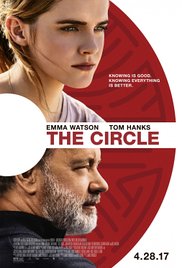
Emma Watson struggles against the surveillance state in shockingly bad adaptation The Circle

Director: James Ponsoldt

Cast: Mae Holland (Emma Watson), Tom Hanks (Eamon Bailey), John Boyega (Ty Lafitte/Kalden), Karen Gillan (Annie Allerton), Ellar Coltrane (Mercer), Patton Oswalt (Tom Stenton), Bill Paxton (Vinnie Holland), Glenne Headly (Bonnie Holland)

Is there anything sadder than seeing a book you thought was fantastic get totally screwed up by film producers? Worst of all, Dave Eggers, the book’s author, even gets a screenwriting credit here. I hope to God his contribution was a rejected earlier draft, rather than the bland, aimless drivel on display here. It would be too depressing to think he gutted his own work and then mutilated its corpse.

Mae (Emma Watson) is thrilled to land a job at The Circle, an all-powerful, Google-style corporation with a virtual monopoly over the internet. However, she discovers while she works at the Circle that there are (of course!) dark secrets at the heart of the company, and that its charismatic CEO Eamon Bailey (Tom Hanks) may not be all that he seems.

Imagine an adaptation of 1984 at the end of which Winston Smith defeats Big Brother but decides there are positive sides to living under a dictatorship, so carries on doing so. That’s exactly as ballsed-up as this total misreading of Egger’s gripping critique of our internet age. In this terrible adaptation, the novel is neutered beyond recognition into just another bland “Big Corporations Acting All Corporation-y” nonsense. The film is pretty much exactly as awful as the book is brilliant.

Where did it all go so completely and utterly wrong? Did they not understand the book? The novel is not only a critique of the pervasive power of its shady Google-like organisation. It’s also a savage attack on our own tweeting, social media obsessed world – the sort of world where private actions are theft as they rob everyone else from experiencing them vicariously through tweets, photos and posts. It’s this part of the story the film completely (and almost wilfully) misses the point of.

They seem terrified at the thought that the social media Twitteratti might take against the film if it too openly attacks the actual users of systems like this, with their (at times) shallow, demanding and entitled pushing of their own opinions, and intrusions into others’ lives. Instead the film gives a complete pass to all the users of the systems, while attacking the corporation providing them. So we get the bizarre set up of a film that seems to say it’s totally fine for normal people to record everything and push it all onto the internet, turning their world into a judgemental surveillance state, but it’s evil for a corporation to create the devices they use to do it.

Even the film’s criticism of corporations isn’t very clear, largely because we never get a sense of the Circle’s power and its hunger for getting more and more control. The film throws away its involvement in politics and its control over everyday lives. Perhaps because it knows so many of the viewership love gadgets, there is no exploration of the creepy, controlling aspect of the many tracking and recording devices the Circlers wear throughout the film, as there is in the novel. Instead the target is the shady business people at the top (not that we learn anything about what they want) because everyone hates businessmen don’t they? Nice easy target. I can tweet my loathing of them very easily.

It’s a film devoid of any challenge. A character’s suicide from the book is changed to an accidental death. The more vulnerable and desperate of the characters from the book have been deleted. The obsessive self-definition the Circlers gain from what other people tweet about them is downplayed. The ending of the film completely inverts the novel, and leaves us with a bizarre final image of our hero kayaking on the lake, but warmly smiling at the drones watching her, even after she has destroyed the “villains” who run them. It makes no sense whatsoever. My jaw literally dropped when this happened by the way.

Mae is a character who now has no consistency. Her growing obsession with the power of social media – and the destructive effect it has on her actual human relationships – is completely ignored. It’s the key part of her character from the book, and its removed here to try her as traditionally ‘likeable’ as possible. An anti-hero becomes a flat out hero. The film shows the impact of actions she carries out in the book – particularly on Annie – but removes these actions from the film. Why do people slip into depression or depart from the film? Who knows. Left with nothing to work with from the original book, Emma Watson gives a bland and forgettable performance. No one else really makes an impact, playing dull, neutered versions of the characters from the source material, devoid of depth or interest.

The Circle might be one of the worst literary adaptations I’ve ever seen. It guts the original book and removes any of the most challenging and interesting content. It’s terrified of criticising in any way anyone who might be watching. It’s a satire on the social media age that has no satire in it, and is desperate not to talk about social media. Worst of all it will discourage people from reading the original novel. In the words of the modern age: #uttershit.