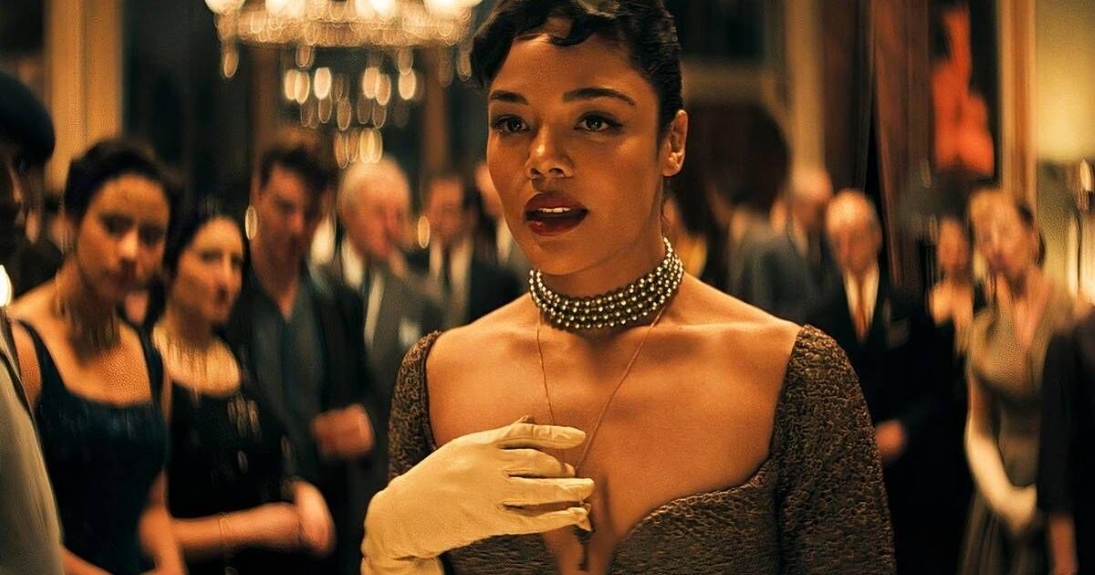
Tag: Tessa Thompson

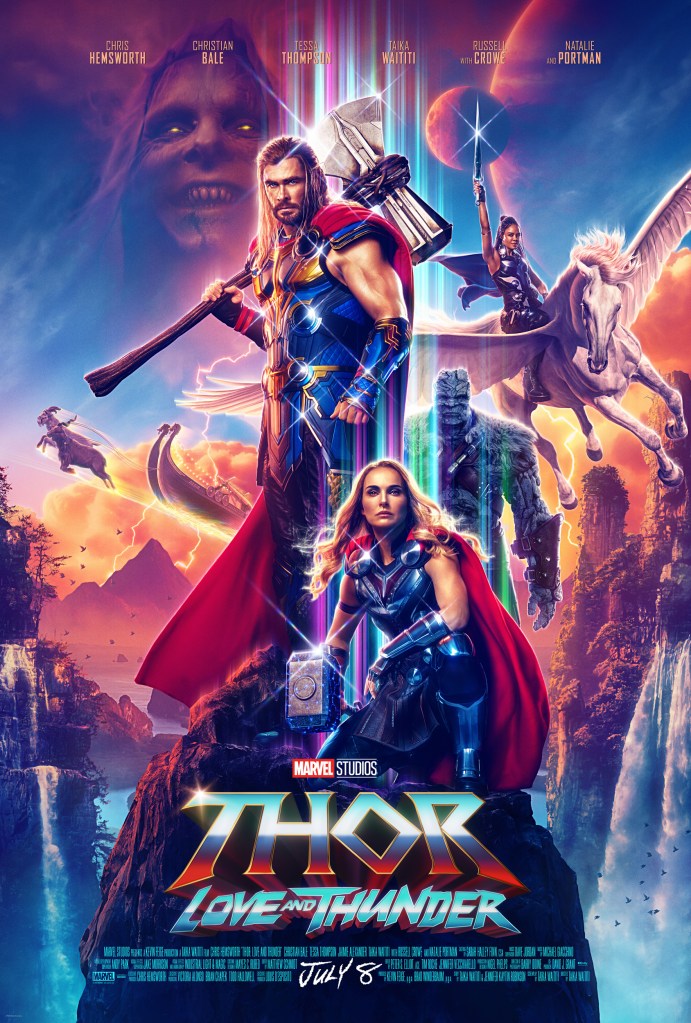
Thor: Love and Thunder (2022)

Thor: Love and Thunder (2022)

Injokes, backslappery and smugness abound in this terrible Thor adventure

Director: Taika Waititi

Cast: Chris Hemsworth (Thor), Natalie Portman (Dr Jane Foster/Mighty Thor), Christian Bale (Gorr the God Butcher), Tessa Thompson (Valkyrie), Jaimie Alexander (Sif), Taika Waititi (Korg), Russell Crowe (Zeus), Kat Dennings (Dr Darcy Lewis)

Okay. Part way through this desperately unfunny tonal mess I wondered: if I had to choose would I watch this again, or Thor: The Dark World? I can’t quite believe it, but I’d rather watch that functional, forgettable, mundane film. At least it doesn’t make me angry as it drifts past my eyes. And I say that as someone who loved Thor: Ragnarok. Thor: Love and Thunder is terrible. So, unlike Star Trek, it looks like even numbered Thor films are awful – so at least Thor Five should be a doozy.

Thor (Chris Hemsworth) is in a state of ennui – although that doesn’t stop him restoring his buff form after we last saw him as a coach potato in Avengers: Endgame. He doesn’t know what to do with his life: he has (and I can’t believe the film doesn’t make this obvious joke considering its jukebox score) “lost that lovin’ feelin’”. Will the arrival of bereaved father Gorr (Christian Bale), and his mission to butcher all Gods because they don’t answer your prayers, give him meaning? Or will it be the chance to finally rekindle his love for Jane Foster (Natalie Portman) when she unexpectantly lands back in his life? However, it’s not the Jane he remembers: unknown to him, she’s dying from cancer, but his old hammer Mjolnir is keeping her alive, transforming her into a female version of Thor.

Thor: Love and Thunder is a bit like attending a victorious Thor: Ragnorak after-show party. Everyone there thinks everything they say is like the funniest thing ever and the air rings to the sound of backs being slapped. It takes everything that it believes worked best in that film and dials it up to eleventy thousand. Waititi doubles down on his quirky, off-the-cuff, shoulder shrugging humour at every turn and you get the feeling that no one once tapped him on the shoulder and said “you know that’s funny to us on set, but are we sure that will be funny in the audience?”

Because, based on the audience I saw it with, it wasn’t. I think I chuckled about three times in the film. Which considering it takes every single bloody opportunity to tell a joke, is damning. Perhaps it fails to land because, unlike in Ragnarok or other Waititi films, its like he’s surgically removed anything emotional or gives a weight to the gags. He’s also sacrificed much of his trademark sweetness. Instead, this is full of incredibly knowing, tip-the-wink gags at the audience, as if trying to say “hey it’s okay, we can’t take this seriously, comic books are all silly, silly shit”.

And you know, that’s fine many people take these things too seriously. But what worked about Thor: Ragnarok was it balanced a quirky sense of humour with genuine stakes and real emotional quandaries. This however is just a tonal mess. We have an opening scene dealing with child death, that shifts swiftly into knock-about farce. A leading character dying of cancer sitting alongside a pair of screaming goats. It is revealed Jane is effectively draining her life source using the hammer (that it is keeping her alive and killing her at the same time). Here’s a chance to explore the cost of heroism and finding a purpose in life (after all isn’t Thor supposed to be depressed? Wouldn’t Jane make a good contrast here?). instead, the film constantly retreats to playing the humour card (worst of all unfunny humour!), as if Waititi perhaps thinks this genre stuff is silly and slightly below him.

Ragnarok allowed moments of impact: this film shits all over any moment of potential emotional reality. Hemsworth’s Thor used to be a guy with a strong moral purpose and seriousness, but allowed to stretch his wings with comedic sharpness. Now he’s a buffoon who interrupts a speech to distraught parents with gags. Any attempt to build an arc of a hero who is internally lonely and searching for purpose is constantly smashed by self-consciously irreverent humour. It says a lot that Thor’s axe Stormbreaker feels as much a character as anyone else – although the film is overly pleased with the gag of the axe being jealous of Thor’s doe-eyes at his old hammer.

The entire film feels like it’s been plotted out in about four minutes. Presumably Waititi was confident “hilarious” off-the-cuff inspiration would solve any problems. Christian Bale struggles manfully with his villain – but it’s like no one gave him the memo that the film was a piss-take. Tedious detours fill the plot – like an un-funny Guardians of the Galaxy cameo at the start, a tiresome trip to an orgy-tastic God planet and the screeching giant goats which feels like a joke whose punchline has been cut. A major plot point about a wish granting Eternity God is suddenly introduced to establish a secret plan for the villain. It’s like no one gave a damn.

Waititi doubles down on funny stuff that worked in small doses in Ragnarok by stretching it past any point of humour here. Liked Neill, Damon and Lesser Hemsworth playing bad actors in that film? Well, you get bucket loads of it here with Melissa McCarthy as a Fat Hela (that’s the joke: she’s fat). Liked Korg’s overly literal asides? Well, he’s in seemingly every second of the bloody film here, including narrating it. Russell Crowe pops up for a cameo that everyone clearly feels was hilarious but really looks like a big-name actor amusing himself with a borderline racist Greek accent. The film is crammed with this crap.

Hemsworth does okay I suppose, but in many ways the film feels as much of an ego-trip for him as it does Waititi. Natalie Portman gets to do some some fun things, but comedy isn’t her natural forte and she struggles with getting the zing in the dialogue that Tessa Thompson manages. It builds towards a big ending where Thor weaponises children and then the film lands on an utterly unearned emotional ending at a secret place – as if Waititi suddenly remembered his films work best when they have a heart – at the centre of the universe that is so easy to reach you wonder why people didn’t go there much earlier in this franchise. Even the final explanation of the title feels thrown in at the last minute and I’ve no idea what we are supposed to make of Thor’s character arc in this film.

The lack of heart is what is missing here. There is nothing heartfelt or emotionally true really in this. Nothing to give you warm feelings or to make you say “ahh”. Instead there are just endless, endless smug insiderish-gags. This is a piece of shit and the silent reaction it got from the full audience I saw it with says it all. A smug, tonal mess by a director who is over-indulged and unrestrained and forgets that humour works best when grounded with some sense of drama. I’d definitely rather watch Thor: The Dark World again.

Men in Black: International (2019)

Tessa Thompson and Chris Hemsworth struggle through the messy Men in Black: International

Director: F Gary Gray

Cast: Chris Hemsworth (Agent H), Tessa Thompson (Molly Wright/Agent M), Liam Neeson (High T), Kumail Nanjiani (Pawny), Rafe Spall (Agent C), Rebecca Ferguson (Riza Stavros), Emma Thompson (Agent O), Kayvan Novak (Vungus the Ugly)

Remember Men in Black? An amusing, odd-couple buddy movie about a secret agency patrolling alien activity on Earth. To be honest, the well was pretty dry after when the first movie ended. The formula – with original stars Will Smith and Tommy Lee Jones – attempted to recapture the magic twice with diminishing returns. This, surely final, attempt subs in the stars of Thor: Ragnorak for an over-long, neither terribly exciting nor funny movie that feels like it’s been assembled by an arguing committee.

Molly Wright (Tessa Thompson) encounters the Men in Black when they erase the memories of her parents (but accidentally leave hers intact) when she’s a child. As an adult she becomes obsessed with joining them, dedicating her life to building the skills the agency needs. Recruited by shrewd head of US operations Agent O (Emma Thompson) as Agent M, she’s shipped to the UK to join forces with their ace Agent H (Chris Hemsworth), under the direction of branch chief High T (Liam Neeson), to safeguard an alien dignitary. When the dignitary is assassinated, Agents M and H find themselves at the centre of a conspiracy that could destroy the whole world.

Tonally, Men in Black: International is a mess. At times it’s a farcical buddy movie, at others a darker action film. What it is all the time is overlong, meandering and only occasionally interesting. It stretches its slim action over nearly two hours (the first film was barely more than 90 minutes!), with the plot featuring so many diversions and chases down rabbit holes, that you are desperate to get back to the Eiffel Tower for the signposted showdown.

It doesn’t help that most of the events in the film are fairly predictable. You only need to have seen a film before to work out who the ‘surprise’ villain is. Every action scene – flipping heck nearly every joke – has been done in hundreds of films before. Anything remotely interesting – in some version of this film Agent H could have been a washout, coasting on his glory days rather than the stereotypical cocky-but-cool hero he is – has been ironed out. None of the dialogue sticks even vaguely in the head and not one of the punchlines lands.

Every scene is written with a perfunctory A-to-B quality. For example, at their first meeting Agent H is dozing at his desk, when Agent M approaches to ask to join his latest mission. She has a comprehensive briefing prepared for him (because she’s new and eager) which he shoves aside with a few off-the-cuff I’ll-read-it-later gags (because he’s a bog-standard action hero who acts on instinct). He claims he wasn’t dozing but meditating and sends her on her way. As she leaves, she tells him he has a “tell”: when he meditates he snores. This is neither particularly funny or enlightening, but because Agent H needs to be impressed for the film to continue, he is and recruits her. That’s a decent insight into the formulaic writing.

F Gary Gray tried to resign multiple times as the story he wanted to tell – something slightly darker about alien refugees on the run from a hideous force – was forced more and more into cookie-cutter Hollywood summer blockbuster fare by the producers. Fights like this perhaps explain why the motivations and actions of several characters make little sense. While Gray and the producers feuded over their cuts of the films, Hemsworth and Thompson allegedly then hired their own scriptwriters to re-write their dialogue.

It ends up an incoherent film, where it feels like some scenes were inserted by test audiences. For example, Rebecca Ferguson pops up for essentially a pointless cameo where she gains control of the macguffin. This long sequences only exists so we can get: a hot actress as an ex for Hemsworth’s character, a fight between Ferguson and Thompson (because Hemsworth can’t fight a girl, he fights the heavy – complete with lame Thor hammer joke), and an unneeded wrap up of a minor plot hole from the film’s opening. At the end they get the macguffin back again – but you could have dropped the whole sequence and got to the ending much quicker and lost nothing.

Hemsworth and Thompson do their best, although the film can’t decide whether to make them buddies or potentially romantic partners. Perhaps the confusion comes about from the actors’ obvious lack of sexual chemistry (they are much more believable as mismatched buddies). I actually feel both actors would have been better the other way around, rather than the lazy casting here. Hemsworth’s sweet earnestness and geeky charm under the muscle would be better as the newbie agent, while Thompson’s confidence and no-nonsense brusqueness matches the more the experienced agent. They do their best anyway, but they have some piss-poor material to work with.

It says a lot that the best moments of the film feature Emma Thompson coasting with snark through a few minutes of screentime. Liam Neeson seems an odd choice for a character clearly written as a posh English gent. Rafe Spall’s casting memo clearly told him he was in some sort of cartoon farce, so embarrassingly broad is his performance. The CGI chess pawn comic relief character does and says nothing that has even a passing relationship with the word “funny”.

Men in Black: International is a fairly dull, predictable, unimaginative franchise entry that, by trying to appeal to everyone with its derivative stunts and jokes, ends up appealing to no-one.

Creed II (2018)

Sylvester Stallone and Michael B Jordan take to the ring once more in Rocky IV/Creed remake Creed II

Director: Steven Caple Jr

Cast: Michael B Jordan (Adonis Creed), Sylvester Stallone (Rocky Balboa), Tessa Thompson (Bianca Taylor), Dolph Lundgren (Ivan Drago), Florian Munteanu (Viktor Drago), Phylicia Rashad (Mary Anne Creed), Andre Ward (Danny “Stuntman” Wheeler), Wood Harris (Tony “Little Duke” Evers), Brigitte Nielsen (Ludmila Drago), Milo Ventimiglia (Robert Balboa), Russell Hornsby (Buddy Marcelle)

After eight films, in a franchise that has been running for over 40 years, you have to ask if there are any original stories left to tell in the Rocky universe. The answer? Yes there probably are. Does this film tell one? Well no not really, even if there are moments where you feel it wants to. Instead it basically gives us the formula we expected going into it.

Adonis Creed (Michael B Jordan) is finally heavyweight champion of the world – but why is he so glum? Maybe because he still can’t seem to shake off the shadow of his deceased father Apollo Creed. So he finds it hard to resist when Ivan Drago (Dolph Lundgren), the man who killed Apollo, emerges from disgrace in the Ukraine (I’m not sure the makers of this film realise that the Ukraine is different country to Russia). Drago brings with him his super-fighter son Viktor (Florian Munteanu, virtually mute for the whole film) who challenges Adonis to a title fight. Rocky (Sylvester Stallone) doesn’t approve and wants nothing to do with it. Adonis’ pregnant wife Bianca (Tessa Thompson) isn’t sure it’s a good idea. But Adonis gives it a go – and is left hospitalised after a mauling, though Viktor is disqualified in the fight on a technicality. Adonis has to rebuild his confidence from nothing, lay to rest his daddy issues and, of course, take on Viktor in a rematch – stop me if you have heard any of this before.

Because you almost certainly have. This is a film that repackages themes from Creed, the basic plot structure of Rocky IV ,and mixes in elements from several other films to come up with a sort of Frankenstein’s monster that feels familiar rather than fresh. Practically every beat can be predicted in advance, and there are no surprises or challenges to your expectations. Essentially everything plays out so closely to what you might expect, and is so clearly signposted in the film, that it’s almost impossible to spoil. 

Which is a shame as there is a better, more intelligent film in here which is thrashing around trying to get out. There was a film to be made here about the shadows fathers cast over us. After all, Adonis and Viktor are basically fighting the battles of their fathers and adopted fathers rather than their own. For Adonis in particular, his struggles to live in the shadow of his father is hammered home with decreasing subtly as the film goes on. Director Steven Caple Jnr was clearly so pleased with his framing of a shot where Adonis trains while a window with a picture of his father towers above him that he repeated it several times in the film. It’s as far as the film goes to questioning the wisdom of these people being weighed down by legacies.

Because this is a film that is trying to have its cake and eat it. All of the characters close to Adonis oppose his first fight with Viktor – Rocky even tells him it’s not his fight – but come the second fight all these characters are cheering him on in the rematch. It seems the only way to escape your father’s shadow… is to climb deeper under it. (Interesting note: all references to Creed being the son of a girlfriend of Creed’s rather than with his wife are deleted in the film, which feels odd.)

You know what would have been interesting? Perhaps Adonis thinking he doesn’t need to win the fight to match his father’s achievements. Or perhaps Adonis deciding that fighting alone proved his point, and he didn’t need to match Rocky’s success in Rocky IV. Or deciding that he didn’t need to rise to the bait. Instead the film shows him pushing against his father’s legacy – and finally doubling down on it in order to create his own legacy. Thinking about it doesn’t make a load of sense.

It would also have been nice if the intervening years had changed Ivan Drago in some way – but he’s established very early on as a villain, and that’s it. Of course this is partly due to Lundgren’s limitations as an actor – wisely it’s nearly half an hour before Ivan speaks, and he does only one scene in English – but it would have been nice if Drago perhaps expressed some regret to suggest he has changed in some way since 1986. Viktor has an equally unclear trajectory – Ivan’s determination to reclaim glory via his son seems to be leading towards some bust up between them, but it never does (is it just me or does Viktor seem like he almost hates his domineering father?). The film tries to pay this off with a moment of familial affection between the two but it comes from nowhere and seems unclear.

So the story is predictable. So predictable by the way, that the film seriously sags in the middle as we wait (with no tension) for Adonis to decide he will get into the ring again and fight Viktor. It also has a slightly manipulative relationship between Bianca and Adonis (Tessa Thompson is wasted again in a bit of a nothing role – and her musician character is saddled with some of the worst music you’ll ever hear). But it’s still a well made film. The fight scenes in the ring are of course excellent as always. The main actors are all good – Jordan is very convincing and Stallone continues to get a load of pathos from the ageing Rocky.

But it’s just a little bit dull and familiar. There is too much of the same old same old here. Where are the new ideas? Even all these father themes were explored to a conclusion in Creed – why retread it all again? What does this do that is new and different – nothing really. It’s another chapter in their lives. But nothing else. And with the birth of Adonis’ daughter we’ve got to get ready for a whole new series of films in 30 years, as Amora Creed takes on Clubber Lang’s grandson’s nephew in Kid Creed. Or something like that.

Creed (2015)

Sylvester Stallone and Michael B Jordan keep the flag flying in Rocky relaunch Creed

Director: Ryan Coogler

Cast: Michael B Jordan (Adonis Creed), Sylvester Stallone (Rocky Balboa), Tessa Thompson (Bianca), Phylicia Rashad (Mary Anne Creed), Graham McTavish (Tommy Holiday), Wood Harris (Tony “Little Duke” Evans), Ritchie Coster (Pete Sporino), Anthony Bellow (“Pretty” Ricky Conlan)

Remember Rocky IV? It’s a bizarre film that opens with the plot twist of Apollo Creed, Rocky’s rival-turned-friend, slain in the ring by a Russian fighting monstrosity. Well that film, for all its rubbishness, partly redeems itself by being the jumping-off point for this spirited and well-made re-launch of the series. (Strange as it is for a film as grounded as this one to bounce off from such a bizarre piece of 1980s nonsense as Rocky IV.)

Adonis Creed (Michael B Jordan) is the son of Apollo  Creed from an extramarital affair. Adopted as a young boy by Creed’s widow Mary Anne (Phylicia Rashad), Creed grows up to be a man who yearns to fight as a boxer – although whether this is motivated by a desire to get closer to his father or to try and outdo him the film subtly plays around with as a major theme. He approaches Rocky Balboa (Sylvester Stallone) to train him, who eventually reluctantly agrees, inspired by seeing something of himself in the young man. When Creed unexpectantly lands a title shot – while Rocky deals with increasing ill health – both men have to come together to fight for their pride and future. 

Creed is a film that captures what works about this franchise, and repackages basically a very familiar story (this is almost point-for-point a Rocky remake) with a great deal of dynamism. Coogler, a talented and original director, brings imagination and intelligence to essentially pulpy material and makes something old seem new again. It does this while still homaging the previous films (even the rubbish ones!) at several points, from small stills on the walls of Rocky’s restaurant, to bit-part characters, to the marvellously beguiling score that gently riffs on the familiar motifs from the series.

It’s also helped by a fine performance from Michael B Jordan with a pretty much spot-on re-interpretation of the Rocky character in a new form. Jordan’s Creed is impulsive and quick-tempered, but also kind and charming. In fact it’s refreshing to have such a clean-living and well-brought up hero centring a film! Jordan gets some intelligent and subtle character work over Creed’s mixed feelings for his father: both resentful of never knowing him and also desperate to gain a sort of posthumous approval. It’s a basic daddy-problems story line but it’s done with a lot of subtlety.

Stallone’s performance as the ageing, slightly world-weary, lonely Rocky is another stand-out. This film’s Rocky is punched out, weighted down by life and unable to get over the sadness of his wife’s death; he sees young Creed as both a chance to find a new family and a reminder of his guilt over Apollo’s death. It’s a fine performance he gives here, detailed, moving and pretty much perfectly judged, with real moments of humour among the pathos. There is also an extraordinarily subtle make-up job on Stallone to make him appear far weaker and vulnerable than he actually is. It’s probably his best performance since the original film.

Coogler’s direction is spot-on, the pacing of the film is pretty much perfect. He shoots the fight scenes with particular freshness, the camera darting in and around the fighters as they beat each other in the ring. This immediacy adds a lot to these sequences – although the heavily choreographed fights, while great cinema, barely resemble a real boxing match! The film also balances really well both the training montages (many of which affectionately homage similar sequences from the early films) with a sensitive and well-constructed romance plotline between Creed and singer Bianca (well played by Tessa Thompson, who makes a lot of what is on paper quite an underwritten part).

It’s not perfect, don’t get me wrong. The decision to cast actual boxers in pivotal roles doesn’t always pan out, not least Anthony Bellow as Creed’s title rival (surely it’s easier to train up an actor than try to teach a boxer to act). For the English viewers it’s hard not to feel a few sniggers at the slightly strange sight of a title fight taking place at Goodison Park of all places (surely this film is the closest any Everton fan has got to seeing major silverware). 

But its affectionate reworking of the tropes of the series works really well, it’s extremely well-acted, it has intelligent character work for both Creed and Balboa who become fully rounded and intriguing characters, and it’s very well directed. It becomes a film about the importance of family as much as it is about legacy, about the two lead characters having to come to terms with the loss of their loved ones and build a new family. For all that the events in the film are pretty close to a straight re-tread of Rocky, this is such a lovely, heartfelt film it’s hard not to like it a lot.

Thor: Ragnarok (2017)


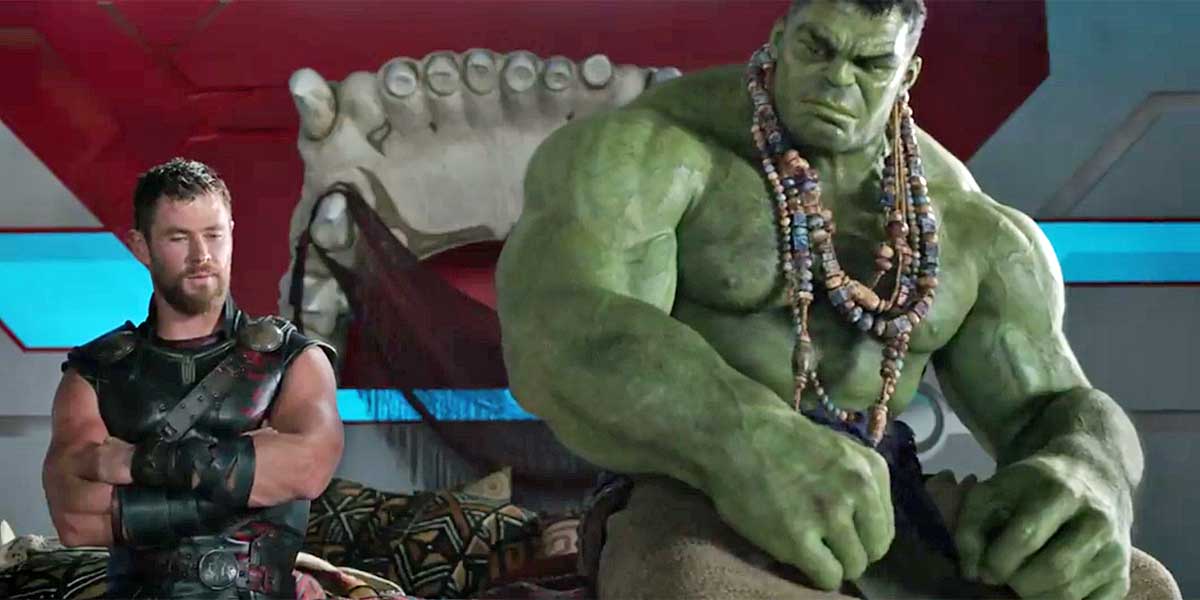
Thor and Hulk: It’s the buddy movie you’ve been waiting for

Director: Taika Waititi

Cast: Chris Hemsworth (Thor), Tom Hiddleston (Loki), Cate Blanchett (Hela), Idris Elba (Heimdall), Jeff Goldblum (Grandmaster), Tessa Thompson (Valkyrie), Karl Urban (Skurge), Mark Ruffalo (Bruce Banner/Hulk), Anthony Hopkins (Odin), Benedict Cumberbatch (Doctor Strange), Rachel House (Topaz), Taika Waititi (Korg)

The Marvel franchise is now on to 17 films. That’s 17 films all in the same universe, with at least three more to come in the next year or so. The weight of franchise backstory has started to feel overbearing, with so many other films to tie into and characters to set up that the individual film itself is left with barely any identity or purpose. How refreshing then to have a film that cuts loose and takes a slightly different tone: a genuine action comedy. Thor: Ragnarok is so tonally different from the other Thor films (let alone the other films in the series) it actually manages to feel like its own beast – it’s as close to a director-led vision as the franchise has got.

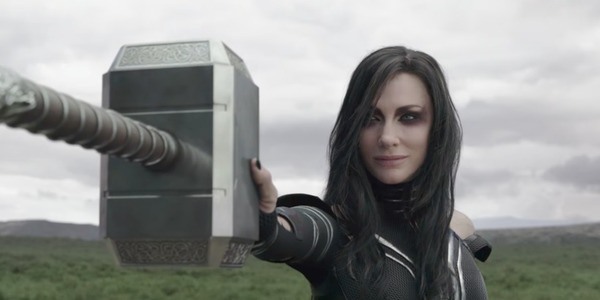
Thor (Chris Hemsworth) has been all over the universe, working to stop Ragnarok (the prophesised end of Asgard). Returning to Asgard, he unmasks his troublesome step-brother Loki (Tom Hiddleston) who has been disguised as Odin (Anthony Hopkins). Travelling to Earth to rescue their dying father, they arrive in time to see his death. Unfortunately, this releases their elder sister Hela, Goddess of Death (Cate Blanchett). While Hela ruthlessly conquers Asgard, Thor is trapped on the planet Sakaar and forced to enter a deadly gladiatorial contest – against his Avenger ally the Hulk (Mark Ruffalo) – all while trying to escape back to Asgard to stop Hela.

Thor: Ragnarok has a plot that ambles at points rather than sprints. But this hardly matters, as its main focus is on entertaining the audience. Waititi creates a sort of punk 1980s wildness, mixed with a fun-loving wit. The result is a film with action, and high stakes – but never takes itself too seriously. It perfectly understands how to puncture grandeur or pomposity of the Asgardian gods with a neat one-liner or a bit of everyday conversational inanity (a lot of the latter comes from Waititi himself, hilariously playing chilled out rock gladiator Korg).

Waititi also allows Hemsworth to let rip with his comic timing rip in a way he’s scarcely been allowed to do since Branagh’s original. It drops the faux-Shakespearean seriousness of Thor: The Dark World, and Hemsworth repositions the character in a more relaxed and charming style. From his opening introduction, undercutting the monologing of a fire demon with a dry series of puns while dangling from a ceiling in chains, he finds a neat balance between seriousness and charisma. Waititi is also (like Branagh) not afraid to let Asgard’s mightiest warrior be the butt of a few sight gags – one laugh out loud moment involving a very strong window is a stand out. Hemsworth demonstrates here he’s a far more accomplished comedian (physically and verbally) than he gets credit for.

This more relaxed Thor is perfect for the rock-and-roll feel of the film. Expertly scored (there is particularly fine use of Led Zeppelin’s Immigrant Song) it has a groovy, 1980s feel. The planet Sakaar is a primary-coloured, odd-alien filled, campy explosion of energy and vibrant punky fun. Said planet is run by the Grandmaster, played by Jeff Goldblum at his most Jeff Goldblumiest ever – if you can picture that you’ve got the tone of the whole planet. This neon lit style is reminiscent of everything from Flash Gordon to The Last Starfighter

The film’s loose comic style also allows a series of fun match-ups, from Thor and Loki (a wonderfully weaselly, fun Tom Hiddleston – still one of the best things in this whole franchise), to Thor and Strange (a lovely cameo from Cumberbatch), Thor and Valkyrie (a neat mixture of drunken self-loathing and female Thor-ness from Tessa Thompson) and lastly Thor and Hulk. The latter provides a lot of the film’s comic gold, the Hulk finally turned into some sort of character with achildish vulnerability and swagger (though the film still finds time for a Hulk penis gag). Waititi also throws in some nice call-backs to previous films – the bunch here set themselves up as the Revengers, while there are multiple references to the mantra used to calm the Hulk in Avengers: Age of Ultron – without making it feel in-jokey. 

There is so much fun in the film, you almost forget the main plot of the film is fairly heavy-going, end-of-the-world stuff. For a Marvel film there is a large body count of recurring characters (at least four bite the bullet here), while Hela’s plot encompasses mass slaughter and destruction. Scenes with Hela are kept short (structurally the film effectively strands her on Asgard to contain her invincibility), so it’s just as well the part is played with such charismatic dryness and imperious arrogance by Cate Blanchett (easily the best Marvel villain since Loki). She’s ably backed up by Karl Urban, adding a lot of complexity to reluctant cowardly turncoat Skurge. Waititi shoots Hela’s rampage of destruction with an exciting dynamism – it’s an action scene that feels different, no mean feat in a franchise that has had so many fights.

In fact most of the action feels very fresh, the fights never out-stay their welcome, and there are some brilliant visual flourishes – the final battle in particular throws in some almost painterly images as Thor and his allies take on Hela’s zombie army. The arena fight between Hulk and Thor is about a million times more interesting than the dull Hulkbuster battle between Iron Man and Hulk in the past Avengers film as Watiti keeps the focus on character rather than pummelling. The film also manages to keep the stakes high – there are always innocent people our heroes fight to protect.

Thor: Ragnarok might well be the most entertaining, fun film Marvel has produced. It’s almost certainly the best Thor film. While The Dark World failed dismally to build on the mixture of earnestness and comedy in Branagh’s original, this one feels like a natural progression of the first, amping everything up into a vibrant, 1980s styled cocktail of action and fun. It’s terrifically entertaining, well paced, anchored in characters we care about, and it just wants to entertain the viewer. You’d have to be pretty cold for it not to succeed.

Selma (2014)

Martin Luther King fights the good fight

Director: Ava DuVernay
Cast: David Oyelowo (Martin Luther King), Tom Wilkinson (President Lyndon B. Johnson), Carmen Ejogo (Coretta Scott King), Andre Holland (Andrew Young), Tessa Thompson (Diane Nash), Giovanni Ribisi (Lee C. White), Lorraine Toussaint (Amelia Boynton Robinson), Stephan James (John Lewis), Wendell Pierce (Hosea Williams), Common (James Bevel), Alessandro Nivola (John Doar), Tim Roth (George Wallace), Oprah Winfrey (Annie Lee Cooper)

Tragically, for a while this film seemed to be most famous for being the poster child for “Oscar-Gate” or hashtag oscarssowhite (sorry hashtags are not my thing). Selma was the film that should have been littered with nominations. Instead it got just two – one for Picture, one for Best Song. Of the many, many snubs the most shocking were Ava DuVernay and David Oyelowo, particularly as other contenders up for the awards had certainly done inferior work that year . This film, however, categorically demands to be remembered in its own right – it is a fine, very moving piece of work, a dynamic history lesson that avoids preaching from a pulpit.

A lot of this comes down to the breathtaking work from David Oyelowo, who delivers one of those performances where the actor seems to transcend his skin, not just imitating Martin Luther King but inhabiting him, exploring and expressing every depth and shade. It’s a performance that stands comparison with Daniel Day-Lewis’ Abraham Lincoln. Oyelowo’s King is a big hearted, patient man but also a shrewd political player, a family man who betrays his wife, a political campaigner who holds the big picture and the small in his mind. It’s a totally committed performance that is intensely respectful without ever feeling hagiographic.

Oyelowo’s performance also immeasurably helps the film’s structure, as this is a biography that focuses on one single key moment in its subject’s life, rather than attempting to cover the whole lot in one 2-3 hour sitting. I rather like this, as the important thing about these biopics is to understand the person at the centre, not just to tick off events in their life. Anyway this film focuses on three months in 1965: King is campaigning for equal voting rights, and planning a high-profile march across Alabama from Selma and Montgomery to pressure President Lyndon B Johnson to promote the Voting Rights Act.

This is a very powerful film, humming with a constant sense of the deep rooted injustice and oppression in America at this time. It makes no compromises in showing the violence meted out to Black Americans, but it’s the day-to-day injustice that DuVernay shows particularly well: in the opening scene, Annie Lee Cooper (played by producer Oprah Winfrey) has her carefully prepared application to vote cruelly dismissed by a smalltown clerk, gleefully and casually exploiting a succession of legal loopholes to thwart her. It’s a simple scene but amazingly powerful in its casual (unspoken) racism, and it brings to life in a few strokes the day-to-day experience of millions of people at this time.

It’s also a beautifully shot film, that uses the real-life location of the Selma bridge spectacularly. An assault on the first attempted march by mounted policeman, shrouded in tear gas, is deeply moving in its simplicity, the camera catching the brutal overreaction of the police with a journalistic eye (Wendell Pierce as Hosea Williams is particularly impressive in the build-up to, and aftermath of, this sequence). Other moments of violence are equally shocking, but DuVernay never over-eggs the moment, allowing the events and the story to speak for themselves. We know how terrible some of these events are, and how disgusting the treatment of Black Americans was – the film never uses music or editing to hammer it home to us.

The film ends on the kind of high note you can only feel when injustice has been overcome and decent people triumph (punctured, DuVernay acknowledges, by the fates of some of the characters,  revealed at the end of the film. More than one of these is a gut punch – not least the death of King himself three years later). But it’s never twee, preachy or a history lesson. Instead it’s a living, breathing expression of a moment in history that wraps you up in its story. Oyelowo is of course outstanding, but there is some excellent support, not least from Carmen Ejogo as his wife Coretta (overlooked at the time, but outstanding), Andre Holland, Stephen James, Lorraine Toussaint and Common as King’s fellow Civil Rights leaders. Tom Wilkinson adds a lot of depth to a sometimes thinly written Johnson, while Tim Roth translates his contempt for George Wallace in a performance of slappable vileness. A beautiful and marvellous film.