
Tag: The Hobbit

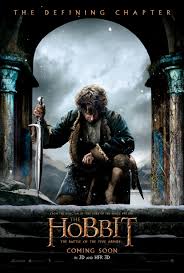
The Hobbit: The Battle of the Five Armies (2014)


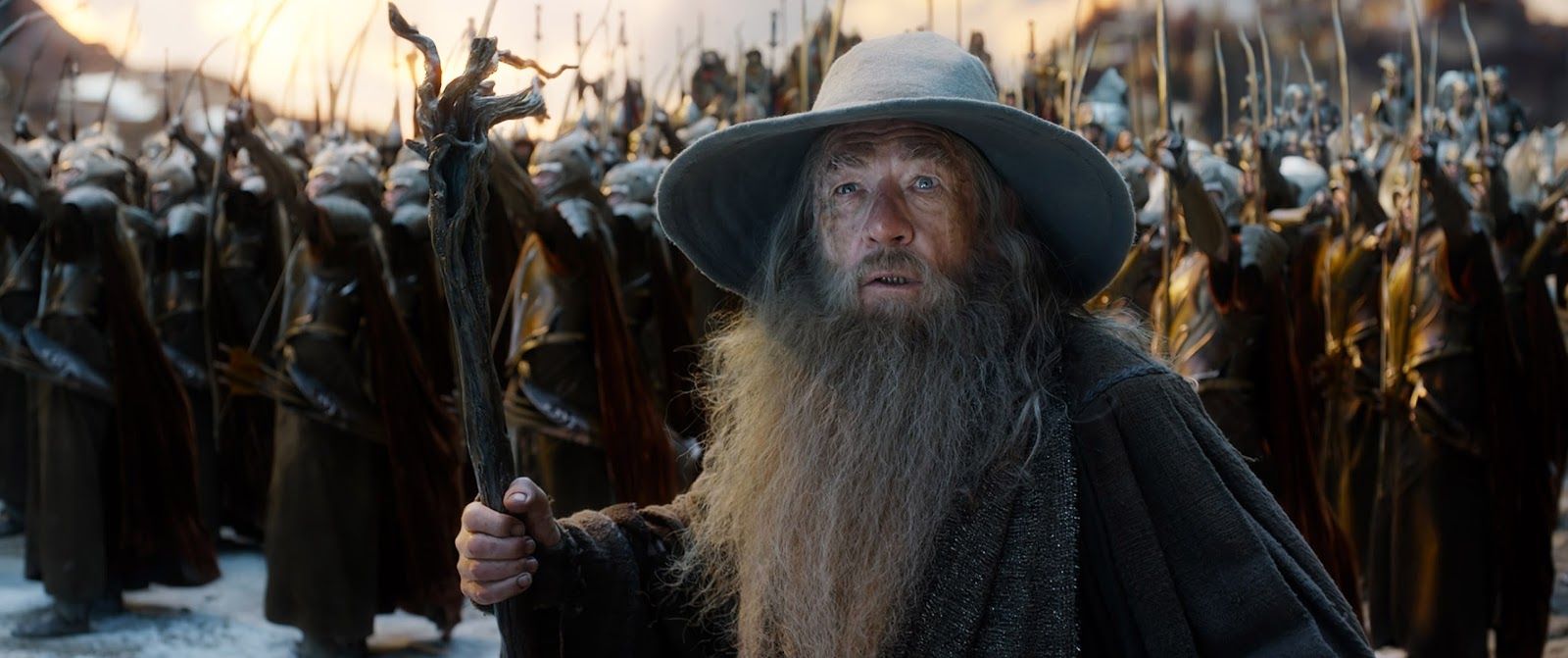
Gandalf prepares to take on many foes – not least the script and editing – in The Hobbit: The Battle of the Five Armies

Director: Peter Jackson

Cast: Martin Freeman (Bilbo Baggins), Ian McKellen (Gandalf), Richard Armitage (Thorin Oakenshield), Luke Evans (Bard), Evangeline Lilly (Tauriel), Orlando Bloom (Galadriel), Aiden Turner (Kili), Lee Pace (Thranduil), Ken Stott (Balin), Cate Blanchett (Galadriel), Ian Holm (Old Bilbo), Graham McTavish (Dwalin), Christopher Lee (Saruman), Hugo Weaving (Elrond)
I feel like I’m running out of things to say about this desperately flawed trilogy – but here we go… Peter Jackson finally finishes his great contractual obligation, serving up another film that expands out a slim couple of chapters of a children’s book into something that strains so heavily for the feel of something epic and world shattering, it feels like a constipated man struggling on the loo.

We’ve finally made it to the Lonely Mountain. Smaug is killed by Bard (Luke Evans) during his attack on Lake Town, while Thorin (Richard Armitage) seizes control of the fortune under the mountain. However, the mountain now becomes a struggle point between the dwarves and their allies: Bard and his people and Thranduil (Lee Pace) and his elves, who are all looking to gain control of its treasures. While Bilbo (Martin Freeman) attempts to make an increasingly maddened Thorin see sense, Gandalf (Ian McKellen) brings warning of an imminent attack by an army of Orcs – will this mutual enemy bring our heroes together at last?

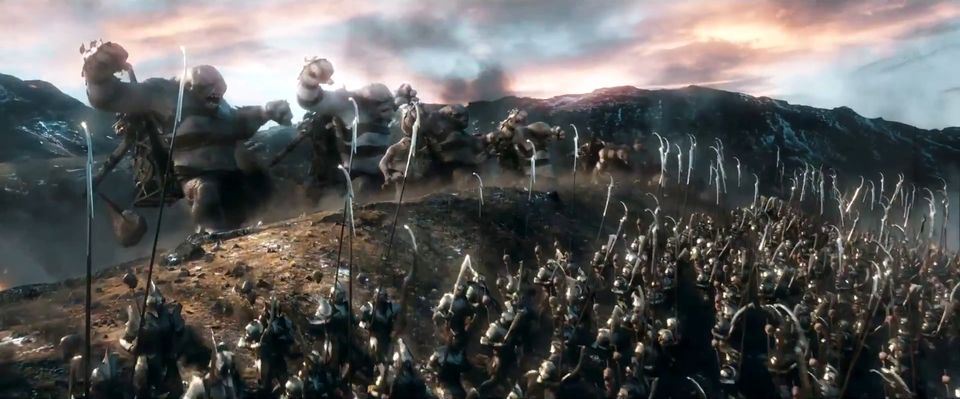
The Battle of the Five Armies is the moment where you knew this sprawling, sausage-fest of a trilogy had lost what soul it had. Almost the entire runtime is given over to battle sequence, seems to go on forever and ever with no respite. We see a host of clashes that carry none of the poetry of The Lord of the Rings, and a host of characters we don’t really know fighting with each other. Frankly, it’s hard to care. It looks great, but it’s just empty spectacle, sound and fury signifying absolutely nothing at all. In fact, it’s all so unclear that watching this movie for a third time I still have absolutely no fucking idea what this battle is even about! What are the Orcs doing? Why are they attacking? 
As always character moments are constantly sacrificed. The dwarf company are ruthlessly trimmed of screen time–even Ken Stott’s Balin doesn’t get much of a look, bizarre as he’s been established previously as Thorin’s confidant. Apparently James Nesbitt nearly wept when he saw this film – not surprising since he must barely be on screen for more than five minutes. Crucial moments that should make us care about these characters are constantly lost: Thorin’s descent into madness occurs completely off camera, Gandalf’s struggle to keep the peace gets glanced over, Bilbo nearly gets completely lost in the shuffle from special effect to special effect.

Tragically, far too much screen time is given to two characters Jackson has parachuted into the film. Weaselly Lake Town official Alfrid is given seemingly endless scenes of “comic relief” – a shame since he’s about as funny as being hit in the mouth by a hammer. I understand Jackson must find this character funny, and that he felt some comic relief was needed amongst all the fighting – but quite frankly he’s wrong. Alfrid is not funny – I think you’d go a long way to find anyone who liked him – and secondly if they needed comic relief characters, why not let one of the dwarves fill that function rather than introducing a new character 2/3rds of the way into the story? 

The second character who gets far too much to do is our old friend Legolas. The elf’s plot line is given never-ending minutes of screen time, his struggles and conflicts given (it feels) even more screentime than Bilbo’s. Do we really need to see Legolas searching for the orcs? Do we really need to see him doing ridiculously impossible feats in the middle of combat? Are we given any reason to care about him at all, other than the fact we remember him from Lord of the Rings?

Legolas’ inclusion demonstrates almost everything wrong in this series. Did Jackson include so much of him because he didn’t need to think quite so much about what to do with the character, being already so familiar with him? When Legolas (at best a secondary supporting character in the story) has his battle with some random Orc, intercut (and even prioritised in the edit) over Thorin’s climactic battle with Azog, the clash the entire trilogy has been building towards, you know something is seriously wrong.

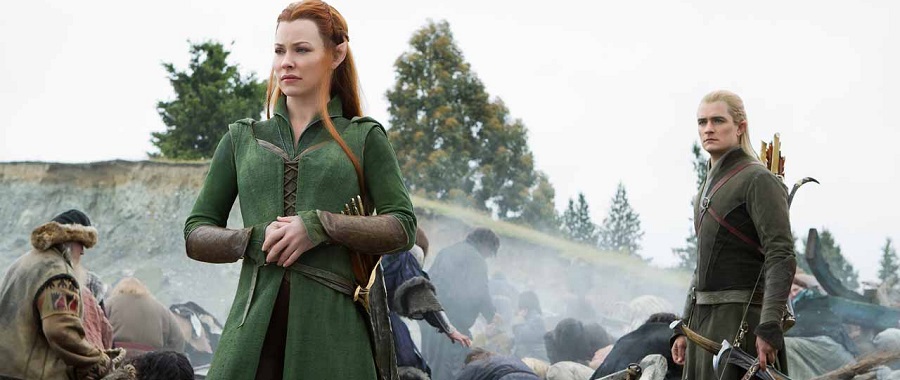
On top of which, Legolas’ inclusion undermines Jackson’s other big invention, the Legolas-Tauriel-Kili love triangle. Really this should be a Tauriel-has-to-marry-Legolas-but-wants-to-marry-Kili structure – that at least would work, right? We’d understand her struggle and division – and it would add a lot more weight to her feelings for Kili. Instead, Jackson is worried this might make Legolas look unsympathetic – so instead Tauriel is sorta in love with both with them, a confused, messy structure that makes no real sense. To add insult to injury, when Tauriel and Kili are threatened by random nasty Orc, who saves the day? Legolas. Who fights Tauriel’s battles for her? Legolas. Jackson introduces a love triangle, and then undermines it because he doesn’t want to criticise his beloved character. He introduces a female character, only to reduce her to a victim obsessed with lurve. It’s a disaster.
You feel Jackson threw in this plot because not a lot actually happens in this movie. Doubly annoying then that so many plots we do care about disappear so swiftly. The Arkenstone, the cause of so much struggle, is completely forgotten half-way through. The fate of Bard and the Lake Town survivors is glossed over. The dwarves get benched from the action for ages. The plotline around the Necromancer is wrapped up with embarrassing and confusing swiftness. Thorin’s plotline is rushed together at the edges, with the focus constantly on getting more fighting in shot.

It’s a real shame that the actors don’t get the time they deserve to really let their performances flourish. Armitage is, as always, superb as a Thorin who loses himself in greed and desire for gold, and becomes cruel and bitter before remembering his nobility. Martin Freeman is still great as Bilbo, honest, normal and delightful despite being given little to do. Ian McKellen still has all the Gandalf qualities of wisdom and grandfatherly authority. Among the rest of the cast, Luke Evans continues to be a stand-out as the noble Bard.
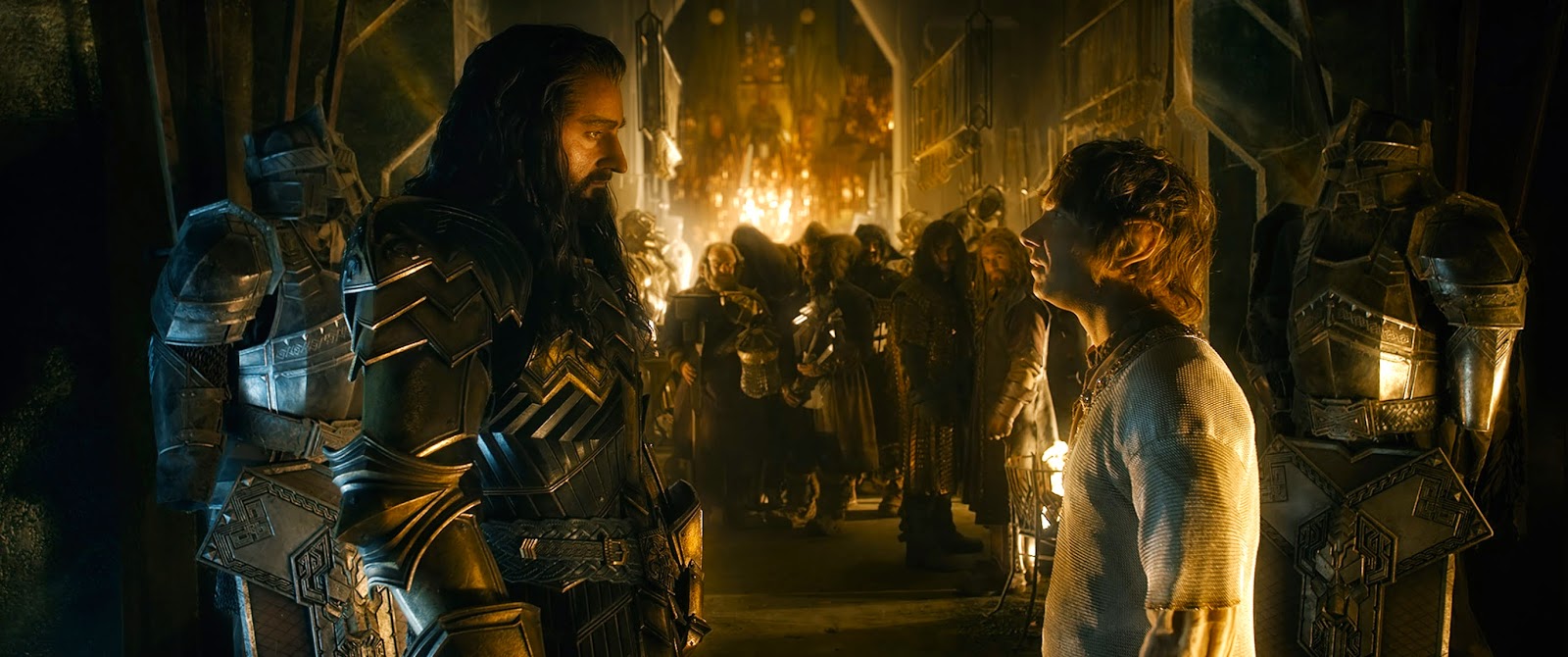
There are moments of action that really work. Smaug’s attack on Lake Town is the film’s dramatic highlight – shame its over in 12 minutes. But it’s brilliantly shot, has moments of heroics and looks great. Thorin and Azog’s battle really works because Thorin is just about the only character in the film we really care about. But much of the rest of the fighting is just silly – gravity-defying bashing (Legolas and Saruman are particularly guilty of this) or never-ending struggles in the battle itself – in which by the way, only men seem to be allowed to be seen doing anything brave.

The Battle of the Five Armies is in many ways a fitting conclusion to the series. Millions of dollars are spent on making a brilliantly designed and shot series of images. But no time is spent on making us care about anything. We invest almost nothing emotionally in the story at all. While we might be a bit sad at seeing people die, we know so little about many of them their deaths hardly stick with us. Why did Jackson not see this? Yes Lord of the Rings was a masterpiece and tough act to follow – but when you see the love and care dripping from every frame of that 12 hour trilogy, and then you move to this mess, you can’t help but think: where did it go wrong? It’s not a complete disaster – the films are always watchable – but they could have been so much more. Instead, they’re the bloated, incoherent footnotes to a great trilogy.
The Hobbit: An Unexpected Journey (2012)


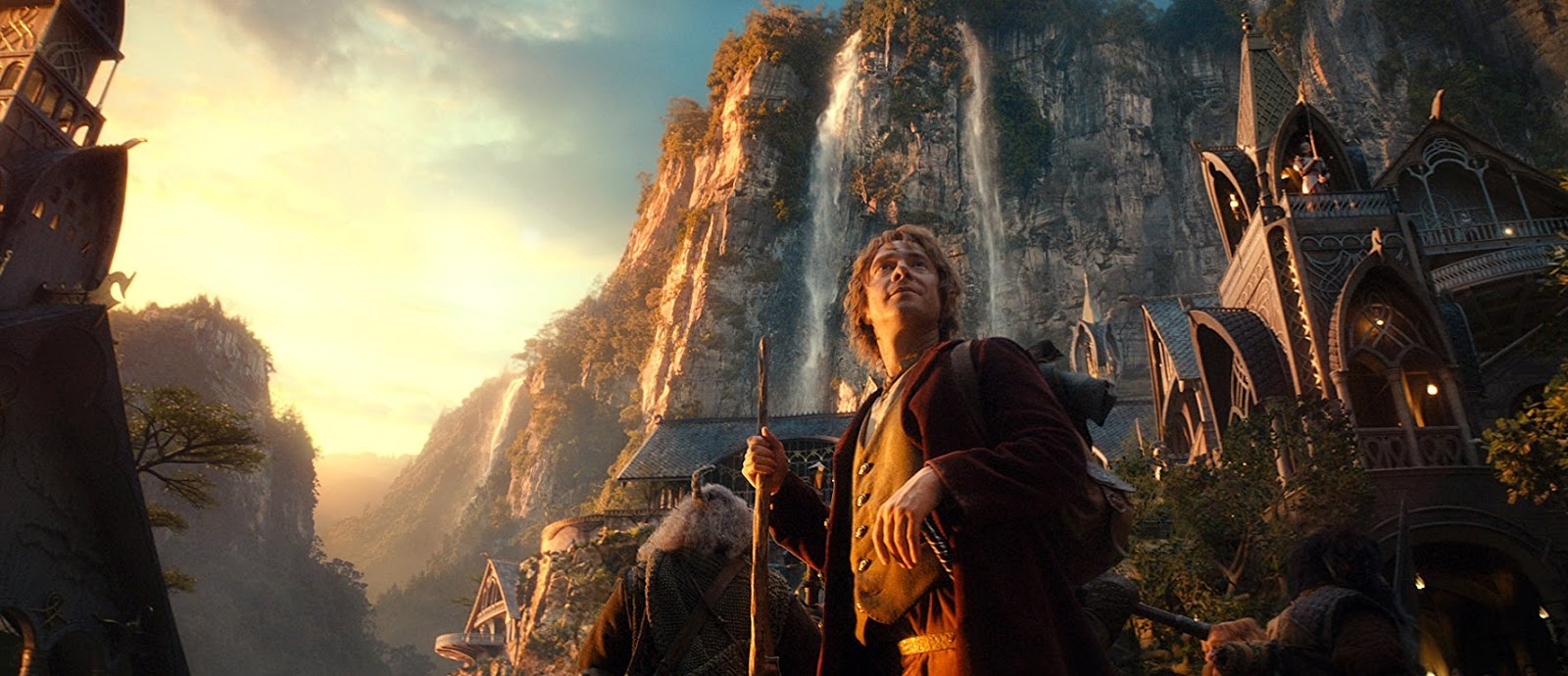
Martin Freeman goes on An Unexpected Journey in the first of Peter Jackson’s deeply flawed trilogy

Director: Peter Jackson

Cast: Martin Freeman (Bilbo Baggins), Ian McKellen (Gandalf), Richard Armitage (Thorin Oakensheild), Ken Stott (Balin), Graham McTavish (Dwalin), Aidan Turner (Kili), Dean O’Gorman (Fili), James Nesbitt (Bofur), Cate Blanchett (Galadriel), Hugo Weaving (Elrond), Christopher Lee (Saruman), Ian Holm (Old Bilbo), Elijah Wood (Frodo Baggins), Sylvester McCoy (Radagast), Andy Serkis (Gollum), Manu Bennett (Azog the Defiler), Lee Pace (Thranduil), Benedict Cumberbatch (Necromancer)

The little-loved Hobbit films are finished now. This may be a controversial statement, but looking back at the three films now, An Unexpected Journey is clearly the best of an average bunch, the only one that feels like it has some sort of story arc, where the padding isn’t too overbearing and we get some character moments. Despite all that, it’s (bless) a bit of a mess. A tragic missed opportunity, which are like bloated windy farts that follow through.

So. It’s three films. We all know it shouldn’t be. We all know it’s a slight kids’ book. So let’s take it as read that even this, the best of the bunch, is an over-extended three hour expansion of six chapters (six bloody chapters!) of the original kids’ fable. Never, at any point, does this feel like it needs to be a long film. Where is the depth and passion in this film? It’s a slow, slow, quick, quick, slow paced splat, which takes ages and ages and ages to get going and then runs through as many set-piece action scenes as possible. 

Why did Peter Jackson make these films? Honestly, watching it you feel he had a gun to his head. He can’t bring any love or depth of feeling to huge chunks of the film. The action scenes feel put together by a choreographer and designed to be as loud and broad as possible, rather than because they are being put together by a storyteller. 

Thirteen dwarves? This is one of the main reasons Jackson was worried about making this film. How could he make these characters distinctive? How could he build plot arcs and storylines for each one? The answer was he couldn’t. So he didn’t even bother. Now I know the Tolkien fans would have hit the roof, but for goodness’ sake would it not have been better for the good of the film to cut the number of dwarves down? So we could get to know them a bit? Because large numbers of these dwarves are indistinguishable from the other. Throughout the course of this film, as a stand-alone viewing experience, only Thorin and Balin stand out in any way as immediately recognisable. They are the only two who you can always identify. The rest? They just all mash into one. They don’t even really have distinctive moments. They are just a mass.

So you watch the overblown, overextended and yawn-worthy action and chase scenes and you just can’t get wrapped up in them. Because all we are doing is watching huge, time-consuming sequences with a mass of characters we can’t tell about, and even when we do, we don’t have any emotional connection to them. The dwarves are all sort of refugees I guess, which gives us some sort of link to them, but it’s the same back story for each one. It’s indistinctive and unclear. If Jackson had gone with his gut and cut some of these out, then the extended running time could have been used to build establishing character moments, to give pay-offs and plot arcs for them. Instead, he kept them all – and never develops any of them.

Those action scenes do go on forever. I know they all come from the book, I get it, but there is no tension in any of them. Dwarves bounce, twirl and fly all over the place. Never at any point do they really feel like they are in danger. A run over the field from some wolves – yawn. The chase sequence through the Goblin kingdom in a mine – double yawn. The second is particularly bad as it brings back strong memories of the LOTR sequence in the Mines of Moria, which had a hundred times the excitement and thrills of this. 

In fact that reminiscence is a big problem for a large chunk of the film. The Hobbit is a kids’ book, but The Lord of the Rings is an adult fantasy novel. The attempt to tie these two different tones and genres of novel is a constant hiccup. So we get the dwarves pratting around and bouncing about, in moments that seem childish and cheap. And then we get doom-laden conversations, and dark over-blown musings about the stakes of the world – stakes that don’t tie in, in any way, with the content of the action, adventure story we are seeing in the film. Then there are blatant, clumsy references back to the original – did anyone else groan when Elijah Wood wandered onto the screen? Appearances from Blanchett, Weaving and Lee are all shoe-horned in. At least Ian Holm gets to do some lovely narration. But all these moments simply remind you that you could be watching a better film trilogy than this.

But despite all this, An Unexpected Journey isn’t all bad. Yes it hares about so quickly, with no depth at all, at great over blown length, but it has its moments and it is just about entertaining enough. Jackson can still do some of these moments well – the flashback that opens the film to Smaug’s attack on the mountain is very well done; in fact it has more inspired film-making and tension than nearly anything else that follows. Yes the arrival of the dwarves takes a lot longer to get going than the film needs – but at least it’s pretty charming, and Jackson’s whimsical love of Hobbiton is pretty clear. Shame I don’t think he brought any more invention or sense of charm to much of the rest.

It’s also helped by the fact there are some damn fine performances in there. Martin Freeman is just about perfect casting as Bilbo; he’s charming, vulnerable, slightly-out-of-his depth, brave, very English – he’s great. Ian McKellen practically is Gandalf by now, and he hasn’t lost his understanding of the character’s slightly grubby, grandfatherly charm. Richard Armitage as Thorin is brilliant, mixing a gruff, maverick quality alongside his pride and resolution – and his intense sense of loyalty. Of the rest of the cast, not many get a look-in, being either cameos or underdeveloped, but Ken Stott stands out as the kindly, wise Balin.

The film is also possibly the only one of the three that truly stands alone in some way. It has some form of plot arc behind it in the relationship between Thorin and Bilbo, and the lack of trust Thorin has for Bilbo, his unwillingness to accept him into the group. Similarly, Bilbo has to learn to embrace his role with the dwarves and his place in the company. This is actually a pretty touching and carefully done dynamic, that culminates not only in the film’s most involving (and tellingly low-key) action sequence, but also a tender moment of acceptance from the previously stand-offish Thorin (brilliantly sold by Armitage). 

This is a great plot arc. It also has a negative impact on the next two films – because this is the emotional climax in many ways of the trilogy – and it came in the first film of three! With this major emotional plot line between two of our core characters resolved by the end of the first third of the sequence, what is there to do with the rest of it? It’s a major loss for the rest of the trilogy. 

But for this stand-alone film it works well. Because it reminds you there is some heart in this film – heart missing from the next two films – because it is founded on an understandable emotional bond. The rest of the company may be indistinguishable, but at least Thorin and Bilbo move us. The best moments in these films are founded on feeling and character investment. Andy Serkis makes a great return as Gollum in an entertaining exchange with Freeman. The clash between Thorin and Azog is the most engrossing in the film because it has a genuine history to it established in the film, that a zillion clashes with the Goblin King, or a pack of wolves or faceless goblins never do. 

The Hobbit: An Unexpected Journey is a decent movie. It has flashes of excellence in it. It’s got some good performances. Peter Jackson is still able to shoot a decent scene, even if you don’t really feel his heart is completely in it. The performances are uniformly good, and some are excellent. But the whole thing feels like an overblown missed opportunity. There was a chance to do something magic here with this Hobbit series. But this wasn’t it. You can’t cast the same trick twice.

The Hobbit: The Desolation of Smaug (2013)


Martin Freeman does some good work in one of the rare moments where the film actually does a scene from the original book

Director: Peter Jackson

Cast: Martin Freeman (Bilbo Baggins), Ian McKellen (Gandalf), Richard Armitage (Thorin Oakenshield), Benedict Cumberbatch (Smaug/Necromancer), Evangeline Lilly (Tauriel), Luke Evans (Bard), Lee Pace (Thranduil), Stephen Fry (Master of Lake Town), Orlando Bloom (Legolas), Graham McTavish (Dwalin), Ken Stott (Balin), Aidan Turner (Kili), James Nesbitt (Bofur)

The Hobbit films are an interesting opportunity to watch a team try to recapture lightening in a bottle. The Lord of the Rings films were not just a hit – they were a cultural phenomenon and changed the lives of nearly everyone involved in their production. For many of the actors it will be the first line of their obituary. The Hobbit followed the same shooting plan (two years in New Zealand, three films shot back to back) but somehow it didn’t manage to recapture the same magic. It still made squillions of dollars of course, but it’s not as loved as the first trilogy.

Of course the main problem with this is that the three films were (let’s be honest) a rather bloated inflation of a pretty short kids’ book into almost 8 hours of film making. The Desolation of Smaug is one of the biggest victims of this aggressive padding, as action sequences are crammed into to fill up the running time, at the cost of those moments of character development that made the first trilogy such a rewarding investment (and even made the first film an enjoyable experience for all its faults).

This film is all too aware that it is a “big film” and a guaranteed box-office smash, so gives us the action it thinks the punters want. Strangely it all feels more like a contractual obligation (“Peter we need more Tolkien. Three more to be exact. Do what you have to do!”) – what it probably needed (as did the whole trilogy) is a new pair of eyes on it, a fresh take, rather than Jackson having to go back to the well. To be fair Jackson acknowledged this, and tried to hire Guillarmo Del Toro to direct the trilogy (still credited as creative consultant).

The action sequences in this film bizarrely expand moments from the book with overblown padding – they are invariably the duller parts of the film. In that I’ll include the ludicrous semi-comic barrel escape of the dwarves (turned from floating down the river to a chase orgy of Dwarves-Elves-Orc conflict) and the overextended attempt to dispose of Smaug in the Lonely Mountain (again marked by unbelievable acts of athleticism and derring-do which seem so out of step I wonder if we are meant to take them seriously). Add in the huge amount of action given to Jackson-favourite Legolas and we have an awful lot of dull, over-choreographed action padding out a very slim story (no more than 6 chapters of the original book). What the makers seem to feel are the film’s tentpole highlights are in fact the sags in the fabric.

It’s a shame because the moments where the film does hew more closely to the story of the book are easily the best bits. The confrontation between Bilbo and Smaug is the film’s real highlight (helped by Benedict Cumberbatch’s superb vocal work as the self-satisfied fire breather), and (with some tweaks) it’s pretty much straight out of the book. The material in Laketown is faithful enough to the tone of the book, while adding depth to its story and the life of the town so that you invest in its fate (Luke Evans does a good job with surprisingly little as Bard). The inclusion of Beorn the shapeshifter I could have done without (one for the fans) and stupid as the spider attack is, at least it was in the original book. But the more the film starts to focus away from the dwarf plotline and onto elf politics or the terribly vague rise of Sauron story, the less it holds your attention.

Bless him, by 2013 Jackson was probably the only person on the planet excited by seeing Orlando Bloom in a film. The acrobatic elf has all the depth and interest of a cartoon character, while his now heavily over choreographed fight scenes seem to be taking place in a different universe from the first trilogy. In fact, all the scenes involving the elves are deathly dull and add very little to the plot, little more than limp attempts to tie in the LOTR story more fully into The Hobbit. This focus on Legolas also steals screen time from the dwarves, making many of them little more than extras in their own story.

The problem with ramming so much action and extra plot in to link the films into LOTR is that we don’t get the time with the characters we need in order to feel the necessary concern for them. The main problem here is that there are too many characters. There are three people who can claim to be the lead in this film (Bilbo, Gandalf and Thorin). Behind them there are at least 10 prominent supporting characters and behind them at least another 12 small but important characters. That’s 25 characters the film needs to be juggle – in other words about 6.5 minutes each if you divide it equally. Jackson does a decent job with juggling these it has to be said – but it’s still way too many. I challenge any non-Tolkien fan to successfully identify pictures of all 13 dwarves without prompts.

It’s a shame as there are some very good performances in this. Martin Freeman continues to be perfect for the lead role, decent, brave and resourceful (but with small flashes of “ring addiction”); Ian McKellen of course just is Gandalf; controversial as her extended storyline is, I rather liked Evangeline Lilly’s performance; Ken Stott does a lot with limited screen time as Balin. Richard Armitage demonstrates his star charisma again as Thorin, a complex part he invests with a Shakespearean gravitas: in this film Thorin is at times kindly, stubborn, generous, selfish, patient, temperamental, a warm friend, a deeply suspicious comrade – Armitage holds all these threads together brilliantly. Honestly the guy is an absolute star.

Overall, I enjoyed Desolation much more than I remember doing in the cinema. Perhaps it helps that I’ve seen all three films, and understand more where this film is going. It’s still an overblown, overstuffed piece of work that doesn’t have the sense of soul that LOTR has. It mistakes high octane action for human interest and struggles to make all the characters in the film make an impression. A braver adaptation would have reduced the number of dwarves – but I can just imagine the riot from the book fans… What this film really is, of course, is 4-5 really good scenes, surrounded by padding to boost the running time – but those scenes (Smaug and Bilbo, Thorin confronting the people of Laketown, the few quiet talking bits) are very well done, and they just about make the film work. On repeated viewings you’ll find yourself drifting out to make a cuppa during the barrel chase. But you’ll certainly be in your seat when Bilbo first enters the Lonely Mountain’s treasure store. And its miles better than what was to come.