Tag: Tim McInnerny

Gladiator II (2024)

Gladiator II (2024)

Gonzo sequel sits firmly in the shadow of the illustrious predecessor it tries to imitate time and time again

Director: Ridley Scott

Cast: Paul Mescal (Lucius Verus/Hanno), Pedro Pascal (Marcus Acacius), Connie Nielsen (Lucilla), Denzel Washington (Macrinus), Joseph Quinn (Emperor Geta), Fred Hechinger (Emperor Caracalla), Derek Jacobi (Gracchus), Tim McInnerny (Thraex), Alexander Karim (Ravi), Peter Mensah (Jubartha), Lior Raz (Viggo), Matt Lucas (Master of Ceremonies), Rory McGann (Tegula)

There’s nothing particularly wrong with Gladiator II. In many ways, it’s a big, silly, perfectly inoffensive swords-and-sandals flick, with the violence dialled up. But as a sequel to Gladiator – a film that married scale with a hugely relatable emotional story about one man’s quest to avenge his family and unite with them in the afterlife – it’s not even in the same league. Gladiator II’s biggest problem is that when it tries to do something different from Gladiator it usually fails and when it hues close to the original, it only reminds you what a good film that was and how you’d honestly much rather watch that again.

Gladiator II picks up 16 years after the first film. The nephew of the late Commodus, Lucius (Paul Mescal) lives with his wife in the last free city of Numidia. That ends when the city is taken by a Roman army, under the command of General Marcus Acacius (Pedro Pascal) and Lucius’ wife is killed. Lucius, taken as a slave, of course arrives in Rome and becomes a gladiator in the service of the ambitious, unscrupulous wheeler-dealer Macrinus (Denzel Washington). Macrinus has schemes to exploit the fragile Empire, ruled by brothers Geta (Joseph Quinn) and Caracalla (Fred Hechinger). General Acacius and his wife, Lucius’ mother Lucilla (Connie Nielsen), also plan to overthrow the Emperors. And Lucius also plans revenge against Acacius and all of Rome in that order.

Gladiator II is awash in echoes from the first film. It gives Lucius mostly the same motivation as Maximus. It opens with a big Roman battle. It rushes to get Lucius back into the Colosseum, via a few reluctant bouts in the provinces. He is accepted as a leader by the other gladiators, marshalling them like troops. Connie Nielsen gets the same plot and versions of the same “visiting the hero in prison” scenes. There is a lot of talk about the power of the mob. Hands are frequently rubbed in the dirt. The famous quotes (“Strength and honour!”) are paraded out. Lucius cos-plays as Maximus for the film’s big ending. The final scene shows a survivor searching in the dirt of the Colosseum. Just when you think the film has at least not shown us a shot of a hand stroking some wheat… Gladiator II even chucks that in. It’s a big bit of nostalgia IP dressed up as homage.

But Gladiator II only seems to understand the surface elements of what made the first film successful – not the heart. Gladiator was a very simple story: it was a film about a man who deeply loved his late wife and son, determined to carry on living until he avenged them. Sure there were plot mechanics about the future of the Empire and “The Dream of Rome” – but this was window dressing to a plot focused on very real emotions, about caring for your loved ones. Maximus was carefully crafted as an honourable, decent man, a reluctant warrior who fought because he must. This narrative simplicity is completely lost in Gladiator II, a film so awash with subplots, schemes and shady deals that it becomes hard to follow – and eventually to care – who is on whose side and why.

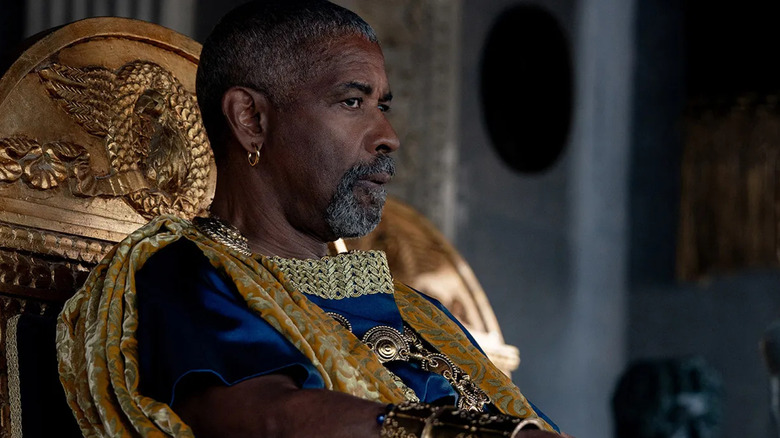
There are at least four competing schemes at play in Gladiator II, each fighting for screen time like rats in a trap. It’s at best a bloody stalemate. The character who emerges best from all this is Macrinus. Based on the first Moorish Emperor of Rome (a fascinating, if short-lived, figure) he’s played with a meme-courting bombast by a clearly having-fun Denzel Washington (his rolling pronunciation of the word “Pol-leetic-sah!” designed to launch a thousand GIFs). A flamboyant figure, he effectively mixes elements of both Proximo and Commodus from the first film with the larger-than-life amorality of Washington’s Alonzo Harris (if Harris was a slightly camp Roman aristocrat). Most of the film’s enjoyable moments revolve around his increasingly brazen manipulations, first of a corrupt senator (an enjoyably sleazy Tim McInnerny) then the two deranged and incompetent Emperors. Every other plotline eventually falls into the shadow of Washington’s scenery-chewing excess (by the time Macrinus is using a character’s severed head as a prop to intimidate the Senate, you realise you just have to go with it).
Gladiator II though needs to split its focus between these multitudinal plot lines, to the detriment of all of them. The emperors fiddle and feud while Rome burns. Various soldiers and senators line-up familiar plots to restore the republic. Lucius, the character we are supposed to relate to the most, is the one who starts to lose our interest. Paul Mescal does an effective job as this growling, surly figure, even if he doesn’t quite have the force to pull off his final late-act speeches. But the film rushes his elevation to leader among the gladiators so quickly it feels unearned – as well as stuffing the film with a multitude of sidekicks so anonymous they blur into one, so much so you won’t even notice (or care) when they start to bite the big one.

On top of which, Lucius zigs-zags through motivations with all the logic of a charging rhino. He goes from wishing he was dead, to fighting desperately for life, to vowing revenge on one man to suddenly changing his mind, to leading a proto-Spartacus inspired revolt to ditching the idea, to denouncing his mother and birth-right until suddenly he doesn’t, to half-heartedly resenting Macrinus to announcing he only lives to see him die, from rejecting Maximus to cos-playing him – how are we supposed to keep up with this? The fact he’s a man of very little words doesn’t help.

When he does speak it’s never particularly punchy. Scarpia’s workman-like dialogue gives him a clumsy rallying cry – “Where we are not where death is. Where death is, we are not” – which manages to be both leaden word-soup and spectacularly unrallying. The film recognises this by having Lucius ditch it late on for a rousing cry of – what else? – “Strength and honour”. Scarpia’s script, along with its muddy plotting, is full of deathly, forgettable pap; as well as riffing so determinedly on Gladiator that you’d think not a day went by in the bowels of the Colosseum without a wistful discussion about Maximus. Gladiator II also manages to pee across several ideas at the heart of Gladiator, from the potential implication that Maximus may have cheated on his wife to father Lucius (even Russell Crowe questioned that one) to the idea that at the end of the film they buried him in the Colosseum, which seems like the last thing they’d do.

In fact, I started to think that Ridley Scott’s main motivation for doing Gladiator II was to chuck in all the gonzo ideas he couldn’t make work (or find the budget for) in the first film. A fight with a mad rhino. A flooded arena full of ships (with added sharks – how these were caught and conveyed in-land to the arena just doesn’t even bear thinking about). Lucius and his fellow prisoners take on man-eating poorly-CGI’d baboons (Lucius’ position as leader largely stems from him biting one of these beasts before strangling it to death). Outside the arena, heads, hands and arms are hacked off and Scott effectively opens the film with a re-stage of the battle of Jerusalem from Kingdom of Heaven – only the siege towers this time are on ships charging the sea walls.

All of this is pretty well done, don’t get me wrong. Scott can do historical epic on screen like few others. But Gladiator II actually suggests that where he lucked out on Gladiator was keeping it simple with a strong story. Gladiator II feels something where attention has been lavished on the scale and the bombast, but that plot and character have been rushed. The film is about 15 minutes shorter than Gladiator while telling a story twice as complex, a mixture that doesn’t work well. In fact, the main feeling I had coming out from it was that I didn’t need to see it again and if I could re-watch Gladiator and pretend this didn’t exist at all, I might be a happier man. Gladiator II lives so absolutely in the shadow of its predecessor, that its flaws become more apparent through the constant invitation the viewer is made to compare and contrast them. This one won’t echo to 2030 let alone eternity.
The Aeronauts (2019)

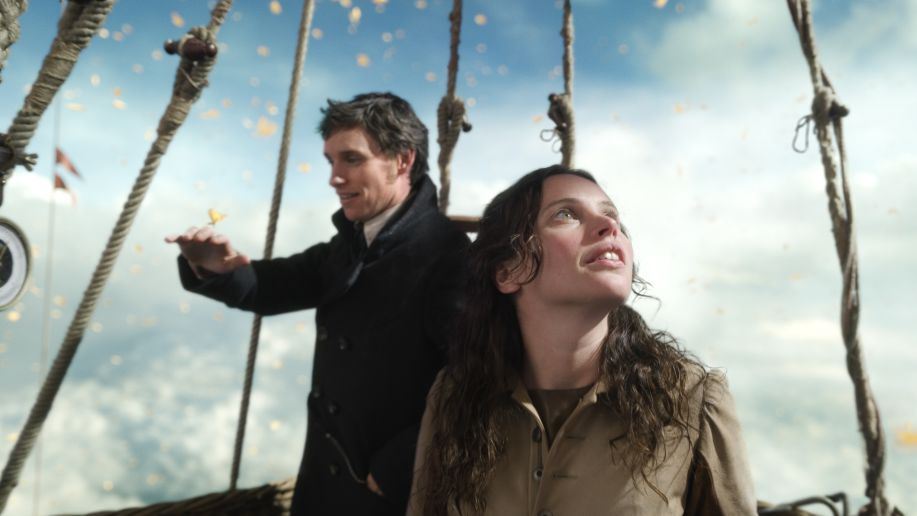
Redmayne and Jones go up, up and away in The Aeronauts

Director: Tom Harper

Cast: Felicity Jones (Amelia Rennes), Eddie Redmayne (James Glaisher), Himesh Patel (John Trew), Tom Courtenay (Arthur Glaisher), Phoebe Fox (Antonia), Vincent Perez (Pierre Wren), Anne Reid (Ethel Glaisher), Rebecca Front (Aunt Frances), Tim McInnerny (Sir George Airy), Robert Glenister (Ned Chambers), Thomas Arnold (Charles Green)

When you have found two actors with such natural and easy chemistry as Felicity Jones and Eddie Redmayne, it makes sense that you would seek other projects for them to star together in. Let’s try and recapture that Theory of Everything magic in the bottle! The Aeronauts brings these two actors back together, but the law of diminishing returns applies in this impressively mounted but rather uninvolving epic that has more in common with Gravity that it does Theory of Everything.

James Glaisher (Eddie Redmayne) is a scientist, one of the first meteorologists, determined to prove that man can predict the weather. While his theories are laughed at by fellow members of the Royal Society, Glaisher raises the cash for a private balloon trip to the heavens to take meteorological readings. But he needs a pilot: who better than Amelia Rennes (Felicity Jones) a famous balloonist and show-woman, the widow of a fellow balloonist (Vincent Perez) who fell to his death in an attempt to break the record ascent. Will the two mismatched aeronauts – the uptight scientist and the freespirit with tragedy at her core – reach an understanding amongst the clouds?

If you got the sense that the story of the film is rather predictable from that paragraph well… you’d be right. It’s the sort of film that has bookend scenes: an early one where our hero desperately tries to make himself heard during a speech at the Royal Society while his colleagues walk out in contemptuous laughter, and then another near the end with the same hero being applauded to the rafters by those same colleagues. Even his harshest critic claps politely – because it’s that sort of film. Meanwhile our other hero overcomes her survivor guilt by heading into the skies. Whenever the story, written by workaholic Jack Thorne, focuses on these personal stories, the film falters into cliché and dull predictability.

It’s told mostly in real time, following the just over 1 hour and 40 minutes of the pair’s ascent in the balloon, with flashbacks to their first meeting and their own backstories plugging the gaps in conversation. No major revelations happen in these flashback sequences, and a host of respected actors go through the motions, filling in the paint-by-numbers stories of bereavement, scientific isolation, an inspirational father with early onset dementia, and pressures to just conform to what women are expected to do. The two leads do their very best to animate these rather dull and tired plotlines but with very little success.

In fact, both actors are largely struggling the whole time to add breadth and depth to thinly sketched characters. Tom Harper leans heavily on their pre-existing chemistry and there is certainly very little in the characters to challenge them, particularly Redmayne who can play these stiff-necked, all-business, shy science types standing on his head. Felicity Jones has by far the better part as a natural adventuress who has locked herself in isolation and guilt (and in a dress) due to her guilt at her husband’s death. Jones gets the best material – and also the best vertigo inducing action sequences – in a film that is most successful when it is far away from the ground.

Harper’s film is by far at its most interesting when extreme altitudes, cold temperatures and reduced oxygen induce crisis in the balloon’s ascent. As Amelia has to go to extreme and dangerous lengths in order to force the balloon to begin its descent, the film finally comes to life. With several terrifying shots of the huge drop to the ground (they certainly made me squirm in my seat) and a compelling feat of bravery and physical endurance to force the balloon to start releasing gas (combined with some horrifyingly close slips and falls) the film works best from this moment of crisis, through to the hurried and panicked attempt of both aeronauts to control the descent of the balloon safely to the ground. The sense of two people struggling with the very outer reaches of mankind’s connection to the Earth – and their terrifying distance from the safety of the ground – really brings Gravity to mind far more than any other film.

It’s a shame then that I came away from the film to find most of it is not true. Glaisher did take to the skies – but with a male companion, Henry Coxwell. Amelia Rennes never existed (and most of the events in the sky never happened), although she is heavily based on a real female aeronaut and professional balloonist who had no connection with Glaisher or science. It shouldn’t really matter, but it kind of does as the film doubles down on Glaisher’s tribute to Rennes at the Roya Society and its general attitude of female pioneers in science. As one critic said: there were genuine pioneering women in science, why not make a film about one of them?

But it’s an only a minor problem really for a film that is impressively made when it is in the air, but dull and uninvolving when it is on the ground. At heart it’s an experience film – you can imagine as one of those immersive rides at Disney it would be amazing – but as a piece of storytelling it’s dull, predictable and uninvolving and largely fails to make the science that was supposed to be at the heart of it clear or significant. Jones and Redmayne do their best but this story never really takes flight (boom boom toosh).

Peterloo (2018)

Mike Leigh’s passionate but dry, overlong film brings the Peterloo massacre to life

Director: Mike Leigh

Cast: Rory Kinnear (Henry Hunt), Maxine Peake (Nellie), Pearce Quigley (Joshua), David Moorst (Joseph), Rachel Finnegan (Mary), Tom Meredith (Robert), Simona Bitmate (Esther), Karl Johnson (Lord Sidmouth), Sam Troughton (Mr Hobhouse), Roger Sloman (Mr Grout), Alastair Mackenzie (General Byng), Neil Bell (Samuel Bamford), Lisa Millet (Jemima Bamford), Philip Jackson (John Knight), John-Paul Hurley (John Thacker Saxton), Tom Gill (Joseph Johnson), Lizzie Frain (Mrs Johnson), Ian Mercer (Dr Joseph Healey), Nico Mirallegro (John Bagguley), Danny Kirrane (Samuel Drummond), Johnny Byron (John Johnston), Tim McInnerny (Prince Regent), Vincent Franklin (Reverend Etlhelstone), Jeff Rawle (Hay), Philip Whitchurch (Colonel Fletcher), Martin Savage (Norris), Al Weaver (Hutton)

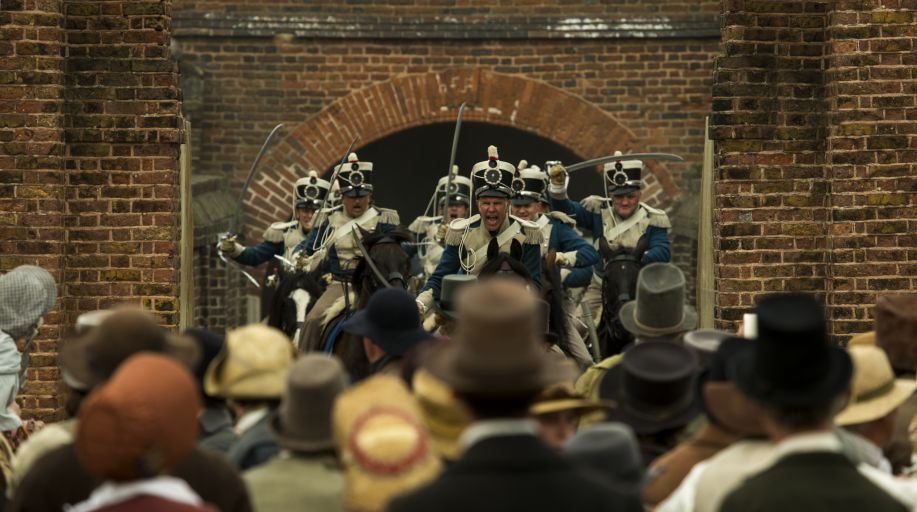
Perhaps one of the most pivotal moments in the struggle of the working classes to gain political and social rights was the Peterloo massacre of 16th August 1819, at St Peter’s Field in Manchester. At a meeting of over 60,000 people, officials ordered first the mounted yeomanry and then soldiers to attack and break up the crowd. At least 15 people were killed and hundreds more wounded, either from the indiscriminate sabre blows from the yeomen (probably drunk) and soldiers (unable to control the panic), or crushed in the frantic attempt to escape from the confined square. The immediate reaction from the authorities was praise at breaking up this “Bonapartist” piece of revolutionary nonsense. The lasting effect was condemnation of the brutality shown towards a peaceful demonstration and the massacre becoming a major cause celebre. It was ultimately influential in the passing of the Great Reform Act, which greatly extended the franchise and rebalanced much of Parliament (at this point so unbalanced by age old tradition that while some tiny hamlets returned MPs, the whole of Manchester had no representation).

It’s still an emotive subject for many today, and with this reverent film, overflowing with anger at the hypocrisy and injustice of the ruling classes, you can’t doubt that Mike Leigh and the makers of Peterloo are among them. But however sincere their personal passion about the subject is, what they fail to bring to the film is any real dramatic impetus to make us care. Instead this is an inert, over-long, often (if I am being completely honest) tedious film that takes nearly an hour to get going and then only offers flashes of dramatic interest before culminating in the massacre itself (very well shot and staged, but still itself a rather distant viewing experience).

 A large reason for this is the film is so reverential towards the campaigners for liberty, that the overwhelming majority of their scenes are given over to very good actors giving spirited renditions of actual speeches and pamphlets at a series of political meetings, shot with a reverent simplicity by Leigh. Much as it is can be interesting to hear quotes from things like this, by the time we are onto our twelfth political speech covering similar ground, delivered with another bout of fiery passion, you’ve started to glaze over. What we don’t get from many of these campaigners is any reason to really care about them – either as people or as part of a movement. Instead the film ends up like a cinematic Rushmore, carving their representations into celluloid for us to gaze up at in awe.

A similar fate befalls the working-class characters in the film, who are lacking any real character or story at all and whose main function seems to be to exist so we can experience both their misery and their awakening political awareness. Our main family is a group of mill workers, with Maxine Peake (does anyone do “hard-pressed working class stoicism hiding pain” better than Peake?) as the matriarch, welcoming her son home from Waterloo. These people talk at each other, quoting various current issues and bemoaning the hardness of living at a time of near universal poverty – but other than the fact that they are poor and suffering we are given very little reason to care for them. Like the rest of the working-class characters, they seem more like passengers in the film, meaning when the swords start flying, it’s actually very hard to get worked up as much as we should as members of this family are hacked down. 

The one exception in the entire campaign-side of the narrative comes with the introduction of “Orator” Henry Hunt, a prosperous middle-class man who became a famed agitator for working men’s rights. Wonderfully played, with a an air of arrogant grandiosity mixed with genuine commitment to the cause, by Rory Kinnear, Hunt shakes up the pattern the film settles into over its first hour. Acutely aware of his position as the nominal head of a national movement, Hunt has little patience (and even a touch of class-based distance) from the mostly lower middle-class campaigners he mixes with in Manchester (while never being anything less than scrupulously polite), and his fish-out-of-water awkwardness around them raises several laughs (the only ones of the film). Scenes in which he imposes his own conditions on the internal politics of the Peterloo meeting (who will speak, who will be on the podium, will there be weapons in the ground) not only feel more real than anything else we’ve seen in the film, but they are also far more entertaining and engaging than anything else connected to the massacre’s build-up.

Leigh was perhaps so hidebound by wanting to honour the men who campaigned for liberty that, other than with the larger-than-life Hunt, he seems too restricted dramatically – as if adding too much of that essential for drama, conflict, would somehow undermine them. Ironically he has far greater freedom with the authorities – and the film’s more engaging sequences (outside of those with Hunt) are all based around the arguments, clashes, plots and fury of the various levels of authority in the country, from the corpulent Prince Regent through the Home Office to the local magistrates.

The film gets more juice from its righteous anger at the unfairness, arrogance and hypocrisy of these men than it does from almost everything else. It also gives the actors playing these roles far more to work with. Karl Johnson stands out as a stammering but adamantine Home Secretary Lord Sidmouth, paternalistic but totally unwilling to budge an inch. The real stars, however, are the magistrates we follow in Manchester, each introduced trying a trivial case (drinking an employer’s wine, an argument over a watch, stealing a coat) with ludicrous hard-line punishments (flogging and imprisonment, transportation and execution respectively). Played with a lustful relish by Philip Whitchurch, Jeff Rawle, Martin Savage and most expressively of all Vincent Franklin (who nearly goes too far with the lip smacking, until a scene later we see even the Home Office officials eagerly reading his latest dynamite dispatch with a barely suppressed chuckles at his OTT rhetoric), these characters argue the fine points of law and lustily denounce the working classes with such fire and energy that you conversely get more wrapped up in their scenes than almost anything else in the film. Maybe Leigh felt he had greater freedom to create characters and drama here, but it does feel unbalanced.

All that said, the massacre itself when we reach it is brilliantly staged, immediate, deadly, meticulously reconstructed and filmed with a documentary anger at its brutality. You can sense the creeping tension throughout the film and the explosion of violence afterwards, for all the problems of the film, is genuinely horrifying. In fact it wraps you up so much, I wish the film had dealt more with the aftermath of the clash (there is a very good scene as stunned journalists walk St Peter’s Field with horrified fury) and the impact it had, rather than the film wrapping up swiftly with funeral of one of its working-class characters (it’s not a surprise which one).

But then that’s part of the whole film’s problem. It feels like a missed opportunity. It’s a stately civics lesson, a film that hammers home the importance of what it is presenting to you, but never really gives you a reason to invest in the real stories and passions behind the history. Instead it presents everything as important, because it is, rather than making it important to us. It feels at the same time a film that is preaching to the choir who already know this history back-to-front, and also a dry history lesson introducing it to a new audience. Either way it fails. Despite one or two good scenes, a dull, underwhelming, preachy disappointment.

Eddie the Eagle (2016)


Some more comic escapades in the not-really-true-at-all film of Eddie the Eagle’s life

Director: Dexter Fletcher

Cast: Taron Egerton (‘Eddie’ Edwards), Hugh Jackman (Bronson Peary), Iris Berben (Petra), Keith Allen (Terry Edwards), Jo Hartley (Janette Edwards), Tim McInnerny (Dustin Target), Mark Benton (Richmond), Jim Broadbent (BBC Commentator), Christopher Walken (Warren Sharp), Rune Temte (Bjørn), Edvin Endre (Matti Nykänen)

Watching Eddie the Eagle, it’s interesting to think that Edwards was ahead of his time. An unqualified ski jumper with a certain natural talent and a lot of dedication, his unspun, naïve enthusiasm effectively made him a perfect YouTube sensation, 15 years before that term existed. His joyous reactions and “just pleased to be here” manner while coming last in two ski-jumping competitions at the Olympics meant the public couldn’t get enough of him (then or now it seems) and he’s probably about the only thing anyone can really remember about the 1988 Winter Olympics.

I found my heart completely unwarmed by this lamely predictable film, a virtual remake of Cool Runnings and Rocky, which can barely move from scene to scene without tripping over clichés. In other sports films, the snobbery against the underdog feels unjust because we know they deserve to be there. Edwards doesn’t deserve to be there, and doesn’t prove himself anything other than a brave novelty act. Perverse as it sounds, the one area where the film deviates from its predictable formula is the part that makes everything else not really work.

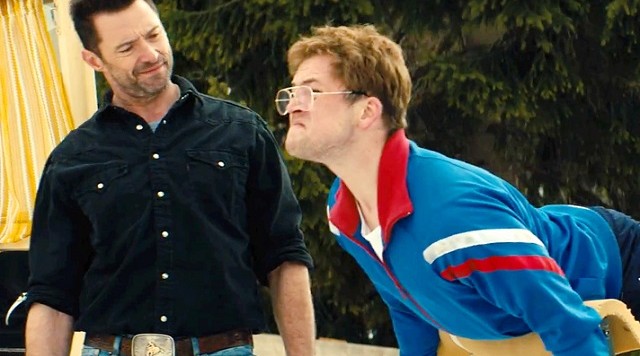
It’s not a particularly funny film. That may be partly because every single comic beat in it is taken from somewhere else, but joke after joke falls flat. Scenes meander towards limp conclusions that can be seen coming a mile off. Every single character is either a cliché, mildly annoying or both. Jackman strolls through the film barely trying. Taron Egerton plays Eddie as virtually a man child, a naïve mummy’s boy, an innocent in the world of men, curiously sexless, but a cheery enthusiast with a never-say-never attitude. However, I often found him less endearing and more mildly irritating.

Virtually nothing in the film is actually true. This doesn’t necessarily matter, but I felt it made the film slightly dishonest. It leaves us with the impression Edwards was set to go on to success in his career – he wasn’t. It doesn’t mention the Olympic committee changed the rules to prevent amateurs taking part in this highly dangerous sport at this level. It doesn’t even begin to mention that almost the entire cast are invented supporting characters, or that many of the real characters (such as Edwards’ father) have had their personalities totally reimagined.

It also reshuffles the truth to make Edwards seem far more incompetent and unlikely than he actually was. In reality an accomplished amateur athlete and skier who just missed the Olympic team, he’s here reinvented as a barely proficient, uncoordinated klutz, a buffoon on skis. Egerton’s otherworldly naivety (at times his childish outlook on the world borders on the mentally deficient) is to be honest rather grating. By hammering up his ineptitude, it’s hard to really think that he should be clinging to these dreams that he’s not suited to perform.

Channel 4 run a TV reality ski-jump show called The Jump. Several celebrities who have taken part in it have suffered serious injuries. With that in mind, is it really wrong to wonder if a sport isn’t right in saying “the unqualified and the amateur shouldn’t be attempting this”? Yes the Olympics is partly about competing in the right manner – but shouldn’t that mean also protecting people from themselves?

The one slightly brave move the film makes is to briefly toy with the idea that Edwards is fundamentally misguided. Before the Olympics begins, his trainer pleads with him to continue his training, wait four years and qualify as a proper athlete rather than a novelty, to have a future of several Olympics rather than cheating into one. Edwards (and the film) ignores him, but I found I was thinking “you know what, he’s right”. The film never manages to remove from Edwards the whiff of the joke act.

I’ve been incredibly hard on this film – it’s not like it’s trying to do anything serious or meaningful. It just wants to tell a nice story about a nice guy. It prides itself on being a bland formulaic piece of film making. But I didn’t find it moving or heartwarming and I didn’t warm to Edwards. I admire his determination, but he’s like those deluded singers chasing their dream on X Factor. The characterisation of Edwards makes him hard to relate to and his final “success” doesn’t mean anything as the film never escapes the feeling that he is being laughed at rather than with. Add the fundamental dishonesty of the film and I found it really unsatisfying.

Give it a miss. Watch Cool Runnings instead. That’s full of invention too of course, but the invention is truer to the facts and the spirit of the truth, and the film itself is far funnier and more satisfying than this one.