Tag: Tim Robbins

Top Gun (1986)

Top Gun (1986)

Cruise flies into movie super-stardom in this fun-but-much-worse-than-you-remember flying film

Director: Tony Scott

Cast: Tom Cruise (Lt Pete “Maverick” Mitchell), Kelly McGillis (Charlie Blackwood), Val Kilmer (Lt Tom “Iceman” Kazansky), Anthony Edwards (Lt Nick “Goose” Bradshaw), Tom Skerritt (CDR Mike “Viper” Mitchell), Michael Ironside (LCDR Rick “Jester” Heatherly), John Stockwell (Lt Bill “Cougar” Cortell), Barry Tubb (Lt Leonard ”Wolfman” Wolfe), Rick Rossovich (Lt Ron “Slider” Kerner), Tim Robbins (Lt Sam “Merlin” Wells), James Tolkan (Cdr Tom “Stinger” Jardian), Meg Ryan (Carole Bradshaw)
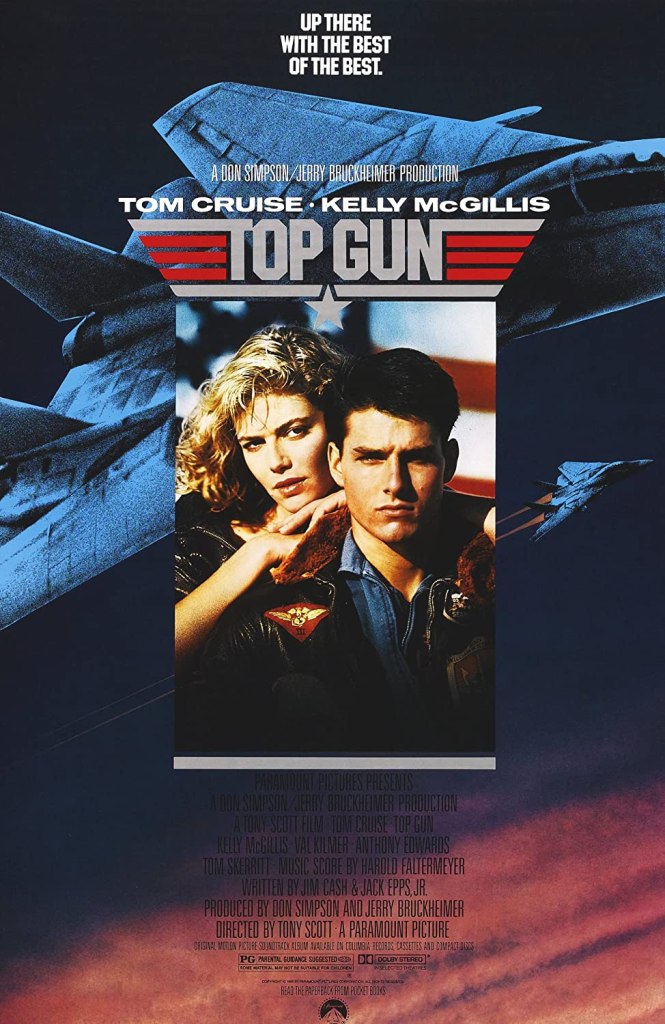
“I feel the need: the need for speed!” Those words lit up mid-80s cinema screens with one of the biggest hits of the decade. Top Gun is still one of Cruise’s most iconic films, its blasting rock-and-roll soundtrack, beautifully backlit romance and cocksure go-getting self-confidence making it one of the definitive Reaganite 80s films ever made. Its legacy is so all-consuming, it’s always a surprise when you sit down to watch it what a fundamentally average it is.

Its plot, such as it is, can be summarised thus: Tom Cruise cockily flies planes and romances Kelly McGillis until Goose dies. Then he flies planes with the same level of skill but slightly more humility and commits to Kelly McGillis. It all takes place in TOPGUN, the navy’s dog-fight training school for elite pilots. Cruise is Pete “Maverick” Mitchell, super-confident best-of-the-best. Kelly McGillis is the astrophysicist and civilian instructor on the course whose heart melts for Tom’s boyish charms. Anthony Edwards is the doomed Goose (he might as well have a skull and crossbones hanging over him – he’s even got a loving wife and son back home). Val Kilmer is Cruise’s rival pilot, super-professional “Iceman”. The training is fast-paced, macho and culminates in a clash with a (conveniently unnamed) country that definitely isn’t the USSR.

There are three things undeniably great about Top Gun. The songs from Kenny Loggins and Berlin are top notch, full of soft-rock sing-along bombast. Scott shoots the hell out of scenes and the sun-kissed beauty framing the various airplanes and aircraft carriers is superb. With its fetishistic worship of the manly glory of the navy and its equipment, the film had full military backing, a huge boon it exploited for wonderfully executed scenes of dogfights and faster-than-sound planes (Scott even paid $25k to get an aircraft carrier to change course – writing a cheque there and then – so a sunset shot would look better). And of course there is Tom Cruise.

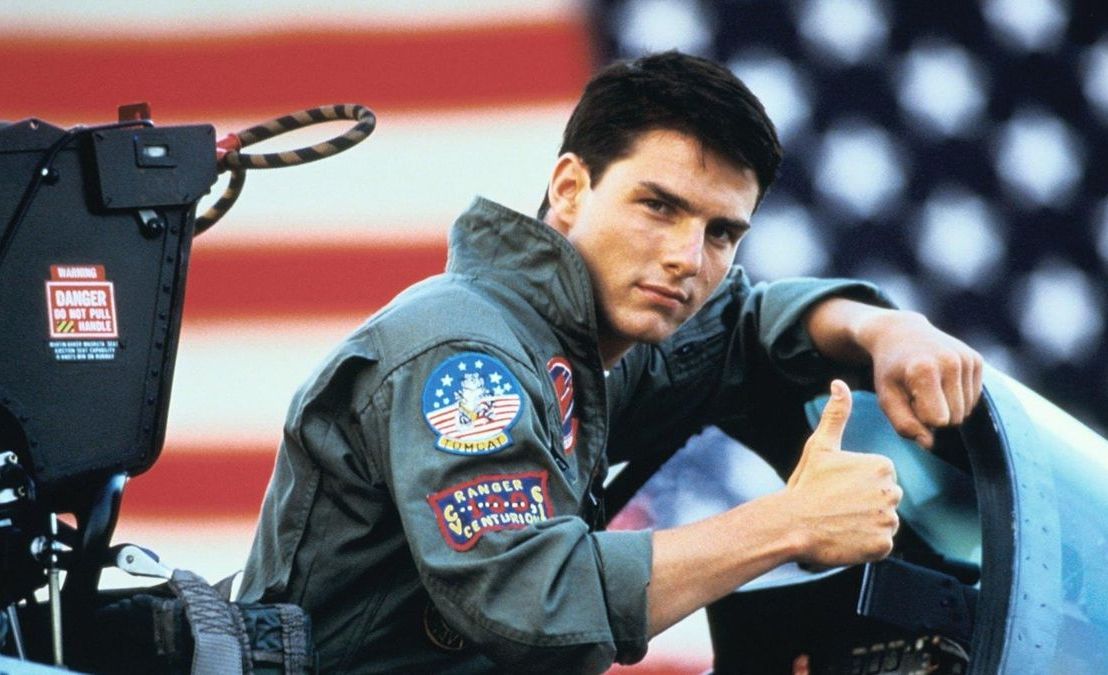
Top Gun is the foundation stone in the Church of Tom Cruise, defining a persona Cruise would effectively riff on for huge chunks of his career. Pete Mitchell is so cocksure he’s even called Maverick. But, as well as being arrogant and over-confident, he’s preternaturally skilled, boyishly enthusiastic, strangely vulnerable, yearns for affection, wins people over with a grin and goes through a crisis of confidence that sands down his negative qualities while never touching his courage, skill and likeability. Cruise cemented his eye-catching charisma and relatability: audiences wanted to be him or be with him. A huge chunk of its massive success is down almost exclusively to what a star Cruise is and how easily he makes this hackneyed stuff work.

The rest is a bizarre mix of half-formed plot ideas, weakly sketched characters and a plot so shallow it almost doesn’t deserve the name. Top Gun is all about a cool guy flying planes accompanied by some excellent songs. There is no depth to its character exploration. There is a dim suggestion Maverick needs to mature (with Goose as the sacrificial lamb to prompt that development) but it’s barely explored. It has no shrewdness in its look at the risk-taking intensity of flying or the type of personalities it might attract. The training is awash with familiar tropes: hotshots, grizzled trainers (two of them in Skerritt and Ironside!) mixing growls with behind-his-back grins at Maverick’s pluck. His rival is the anthesis of Maverick, but (gosh darn it!) he eventually learns to respect him.

The central romance seems thrown in because a film like this needs it – it’s very much An Officer and a Gentlemen in the skies. Maverick’s true emotional love story is with Goose – this surrogate brother/uncle providing Maverick’s only friendship and the vicarious family this Cruise archetype character secretly longs for. But gosh darnit, it’s Hollywood so gotta have a beautiful woman for our hero to manfully seduce. Poor Kelly McGillis looks rather uncomfortable in her ill-shaped and poorly developed character, while her love scenes with Cruise are acted with a slobbering over-intensity that suggests both of them are trying too hard (he constantly kisses her tongue first, which is gross). Perhaps they wanted to really go for it in the hope viewers would overlook the obvious homoerotic tensions of most of the film.

Oh those tensions! Top Gun drips with gleaming, tanned half-naked men squaring up to each other in dressing rooms – and that’s not even mentioning the infamous volleyball sequence (where only Edwards, bless him, wears a t-shirt). Characters forever utter variations on “I’ll nail his ass” lines. Iceman and Maverick take part in a homoerotic-tension fuelled rivalry that culminates in an explosive dog-fight climax and a loving embrace on the deck of an aircraft carrier.

It’s hard to tell how much all this was a joke, and how much Scott, Bruckheimer and Simpson just didn’t notice in the middle of all their glistening, back-lit, fast-paced shooting of military muscle (in every sense) how gay it might look. Maybe they thought people wouldn’t notice either amongst all the military machinery (this must be Michael Bay’s favourite ever film). Top Gun’s aerial footage is super impressive (though it is funny noticing now that famous daredevil Cruise clearly does all his cockpit shots in front of a green screen) even if the whole film feels like an MTV video to promote its knock-out songs.

Top Gun is still fun, even if that’s mostly mocking the nonsense and emptiness it’s built upon. Nothing much really happens, its plot so flimsy it barely stands up against the Mach-9 force of its planes. But it’s got Cruise at his blockbuster best – and when you’ve got that you don’t really need anything else. It’s poorly written, junkfood trash all framed in a fetishistic beauty – but it’s sort of goofy, stupid, empty fun.
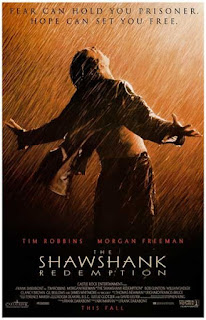
The Shawshank Redemption (1994)

The Shawshank Redemption (1994)

Hope and friendship are put to the test in one of the most beloved films ever made

Director: Frank Darabont

Cast: Tim Robbins (Andy Dufresne), Morgan Freeman (Ellis Boyd “Red” Redding), Bob Gunton (Warden Samuel Norton), William Sadler (Heywood), Clancy Brown (Guard Bryon Hadley), Gil Bellows (Tommy Williams), James Whitmore (Brooks Hatlen), Mark Rolston (Bogs Diamond)

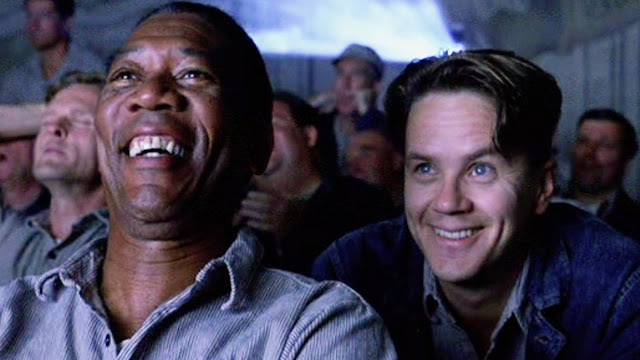
You’d hardly believe it… but the film now routinely listed as one of the most beloved films of all time was actually a box office bomb. The Shawshank Redemption tops many public polls of great films. It’s been the number one film on IMDB practically since the site was built. What is it about it that has had such a connection with people? Perhaps it’s because, under the multitude of genres the film touches on, it’s a film about the strengths of two things crucial to all of us: hope and friendship.

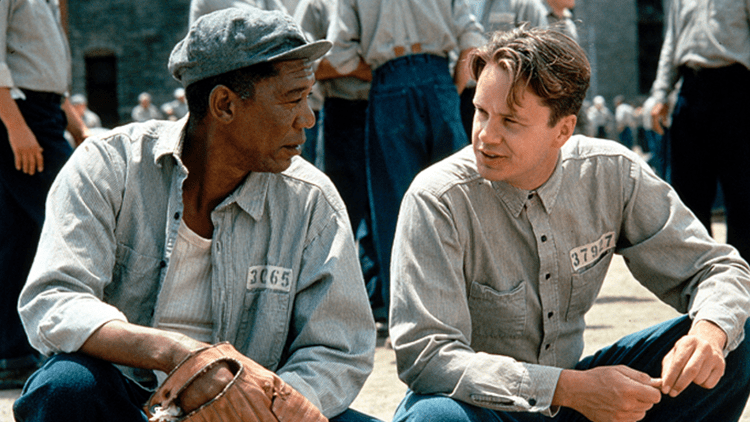
In 1947 Andy Dufresne (Tim Robbins), a mil-mannered bank manager, is imprisoned for life in Shawshank State Prison for the murder of his wife and her lover. For the next twenty years, Andy will get busy living rather than get busy dying, finding what moments of warmth, friendship and hope he can from rebuilding the prison library to helping his fellow prisoners. But he’ll also face daily danger, from sexual assault from brutal fellow prisoners to the machinations of corrupt warden Samuel Norton (Bob Gunton). During his time in prison, his confidant and closest friend is Red (Morgan Freeman), a smart fixer who has spent decades failing his parole hearings.

This is possibly the finest Stephen King adaptation ever made – the other major contender, Kubrick’s The Shining, has the disadvantage of being loathed by the author – perhaps because it captures both the Dickensian sprawl and sentiment of King’s best work, mixed with his edge and danger. There is a charming shaggy-dog story element to The Shawshank Redemption that helps make it delightful to watch. Not only that, it carefully builds up empathy for two people, both of whom are convicted murderers. It manages this as it turns its prison setting into a universal metaphor for the helpless victim trapped in a system.

Because, for all the pious spouting of the Warden (Bob Gunton at his most hypocritically vile), Shawshank is a place devoid of justice. On Andy’s first night in prison, a fellow new arrival is beaten to death for refusing to stop his terrified whining by head guard Hadley (a terrifyingly blank and amoral Clancy Brown). Abuse of power is pretty much endemic in Shawshank – as Andy discovers as he witnesses the guard’s casual brutality, and his accounting skills drags him into building the corrupt financial empire Norton runs with the slave labour of the prisoners.

Shawshank is all about squeezing hope out of people. It’s nothing less than a dystopian hell hole where there is no right and wrong. That’s Andy’s big impact on the place: for all its hellishness, he helps create some sort of freedom. Darabont wonderfully establishes the crushing dehumanising of the prison, so that moments where people can pretend for a moment they are free carry even more power. Whether that’s drinking cold beers on a freshly tarred roof (inveigled by Andy in return for sorting out Hadley’s inheritance tax problems) or listening to Mozart over the prison speakers. It’s there in the rebuilding of the library as a place prisoners can feel pride in or Andy coaching others to gain their school diplomas. And we feel every moment of it with them.

And that’s not even thinking about how brutish some of the other prisoners are. Much of Andy’s first few years in prison see him dodging gang rape from a group of particularly violent prisoners (led by a sneeringly vicious Mark Rolston). For that opening act, Andy is tossed as low as you can go, Darabont pulling no punches on vicious beatings or terror he has to endure. Hope becomes more powerful when it grows out of despair.

But that suffering is crucial because it gives even more warmth and power to the friendship between Andy and Red. Shawshank Redemption is a beautiful platonic love story, about a deep and lasting bond between friends. The warmth, regard and affection between these two characters, who discover how much they have in common is beautifully paced and supremely engaging.

It’s also helped a great deal by two fabulous performances from the leads. Tim Robbins’ baby-faced inscrutability is perfect for a man who may or may not be a murderer, and looks like he both needs protection and also has the internal strength to see him through anything. You can see why Red thinks, on first meeting him, he might be weak – but also never doubt for a moment that he’s strong enough to wade through the filth of Shawshank.

Opposite him is an iconic, beautiful performance from Morgan Freeman. Darabont’s film uses Freeman’s gorgeous tones to perfection through Red’s narration. Freeman of course gives Red a wonderful world-weary wisdom but also a sort of innocence. Red has worked out perfectly how to bend the rules of the prison – so confidently that he’s an awe of someone who finds out a way to break them completely. This is some of the actor’ finest work, making Red witty, shrewd, self-aware but also in some ways touchingly naïve and scared that he could never survive outside the prison.

Institutionalisation is a major danger in prison: it’s part of the danger of giving up hope, of accepting the status quo that your whole life is those four walls. But then, it’s also the terror of leaving a regimented world, where some decisions are made for you and you can always know your place. One of the film’s finest sequences covers the tragic end for Brooks, wonderfully played by James Whitmore, an educated and respected librarian inside but an irrelevant, old man outside, day-dreaming of one day being allowed to ‘go home’. It’s a danger Red knows could hit him too – after all he’s the best fixer inside, but a man with no such purpose outside.

Darabont’s film understands it. In fact, the film itself encourages the viewer to get a bit institutionalised themselves. The audience enjoys Andy’s triumphs, the commadre between the prisoners, the fun of the tables subtly turned. So much so the viewers can forget that this should be a film about getting out of this hell. (In fact you can argue, after a time, it makes prison look a little like an eternal boys camp). It shakes the viewer up as much as Andy when this status quo we’ve started to enjoy gets shaken up by the arrival of young thief Tommy (Gil Bellows). It’s a moment where the viewer realises that the film made a subtle shift from being a prison drama to a buddy movie where our heroes eek out little wins from the system: not least because this is the point when the system reminds Andy (and us) that it’s not to be messed with.

Darabont’s film reforms into a wonderful caper movie, a super-clever heist, covering Andy’s eventual escape. This is classic Ocean’s Eleven stuff and has the double delight for the audience of paying off Andy’s mistreatment and injustice and also allowing us to really enjoy how ingenious he is. Then the film switches gears effortlessly on a sixpence after this moment of delightful triumph with a low-key, tender, Red-focused coda which taps us straight back into the beautiful warmth of that friendship.

Perhaps this is why The Shawshank Redemption is so universally beloved. It’s a prison film and a buddy film, it’s a caper and it’s a film about a crushing system, it’s a film of hellish suffering and deep hope, all framed around a wonderfully judged, life-affirming friendship. Darabont’ script and direction is perfectly judged and immensely moving and the acting is perfect. It works so well because it constantly brings us back to feelings of hope and friendship. Those are universal feeling and they are beautifully presented in the film. We live with Andy being put through the wringer, and relate to him so much, that we feel as cleansed by the rainfall as he does. It’s that which lies at its success; and the brilliant way it gets you to invest in the fate of its characters.

Short Cuts (1993)

Anne Archer and Jack Lemmon are just two of many intersecting lives in Altman’s Short Cuts

Director: Robert Altman

Cast: Andie MacDowell (Ann Finnigan), Bruce Davison (Howard Finnigan), Julianne Moore (Marian Wyman), Matthew Modine (Dr Ralph Wyman), Anne Archer (Claire Kane), Fred Ward (Stuart Kane), Jennifer Jason Leigh (Lois Kaiser), Chris Penn (Jerry Kaiser), Lili Taylor (Honey Bush), Robert Downey Jnr (Bill Bush), Madeleine Stowe (Sherri Shepard), Tim Robbins (Gene Shepard), Lily Tomlin (Doreen Piggot), Tom Waits (Earl Piggot), Frances McDormand (Betty Weathers), Peter Gallagher (Stormy Weathers), Annie Ross (Tess Trainer), Lori Singer (Zoe Trainer), Jack Lemmon (Paul Finnigan), Lyle Lovett (Andy Bitkower), Buck Henry (Gordon Johnson), Huey Lewis (Vern Miller)

Helicopters fly over Los Angeles, spraying against medflies. Beneath them, people’s lives entwine over the course of a couple of days. It could only be an Altman film. The man who turned the whole of Nashville into a set for, repeats the trick here with a brilliantly handled adaptation of a series of Raymond Carver short stories into one single inter-linked narrative, that explores a full gamut of emotions in that strange race we call humanity.

The son of TV commentator Howard (Bruce Davison) and his wife Anne (Andie MacDowell) is hospitalised after he is accidentally clipped by the car of waitress Doreen (Lily Tomlin). He’s treated by Dr Ralph Wyman (Matthew Modine), currently feuding with artist wife Marian (Julianne Moore). Marian befriends clown Claire (Anne Archer), who is horrified when her husband Stuart (Fred Ward) and his friends decide not to let finding a dead body spoil their fishing trip. Marian’s sister Sherri (Madeline Stowe) is becoming increasingly exasperated with philandering cop husband Gene (Tim Robbins), who is having an affair with Betty (Frances McDormand) estranged wife of Stormy Weathers (Peter Gallagher) who flew one of those helicopters spraying medflies. That’s not even mentioning a furious baker (Lyle Lovett), a sexually frustrated pool cleaner (Chris Penn) and his phone-sex worker wife (Jennifer Jason Leigh) or Howard’s unreliable father Paul (Jack Lemmon).

There aren’t many directors in Hollywood who could throw this many plates onto sticks and keep them spinning. Certainly very few who could make it look as easy as Altman does. With no less than twenty leading characters spread out across at least nine storylines, many of which intersect but without those taking part of them being aware of it, this is such a carefully woven tapestry even a single loose thread could have led to the entire image unravelling into a sorry collection of fabric. The fact it doesn’t, and the film moves so confidently and vibrantly from place-to-place, shifting from perspective to perspective without ever once confusing or alienating the audience, demonstrates this is the work of a master at the top of his game.

Altman’s verité style is at its best here. There is no need for flash or intrusive cinematic tricks, when the entire film is a brilliant expression of the potential of cinematic narrative. Altman’s camera, with its observational stillness, is perfectly matched with masterful editing (the film is superbly assembled by Geraldine Peroni) that not only makes this a coherent whole, but also finds every trace of reaction and nuance from the characters. Time and time again the camera (and the editing) searches out and finds that little moment of reaction that adds a whole world of depth to the story.

Because, like some of Altman’s best films, this is all about a cascade of little moments that combine into one beautifully enlightening whole. Each story demonstrates a different facet of the human experience, but what they all have in common is the unpredictability of how events many turn out and how people may react to them. There is a wonderful unknowability about people which the film captures. Just when we think we have a person sussed, they will do or say something we don’t expect. A philanderer’s wife will be amused by his cheating than horrified. An abusive baker will have depths of kindness. Feuding couples will find they have more in common than not.

There’s also darkness and sadness. The film is largely anchored by the increasingly heart-string tugging collapse of Howard and Ann’s son – and the pain that can lie in parent-child relationships is also seen in the dysfunctional relationship between jazz singer Tess (Annie Ross) and her talented but depressed celloist daughter Zoe (Lori Singer). As Ann, Andie MacDowell gives one of her finest performances as a powerless mother desperate to do the right thing, her fear and vulnerability as touching as her pain is devastating. Somehow, it’s all the more affecting by knowing how distraught Lily Tomlin’s Doreen would be if she knew the terrible impact of her very minor accident was.

That’s another beauty of this tapestry. As characters ‘guest’ in each other’s stories, we don’t see them in black-and-white but as ordinary people doing their best. Tim Robbins’ cop would probably seem a selfish rogue agent in the eyes of several characters, but as we see more of his home life (dysfunctional but strangely loving), it’s hard not to warm to him. We understand why Ralph (Matthew Modine) is a bit distant with the Finnegans, because he’s distracted by concerns that his wife is having an affair. We can’t be angry at Doreen, because we know she’s such a decent person.

The film doesn’t shy away from the darkness of people, not less the slow bubble of sad-eyed depression in the eyes of Chris Penn, jealous of the people his wife (a very good Jennifer Jason Leigh) talks dirty to down a phoneline – a bubble that will burst before the film’s end. Peter Gallagher’s cocksure and charming pilot has the potential in him to do something quite unpleasant to his wife. Even Tim Robbins’ cop seems only a few degrees from potentially taking the law into his own hands.

Short Cuts is wonderfully constructed – and never feels overbearing or overlong despite its great length – but it’s not perfect. It’s very hard not to notice today that it’s view of the great melting pot of Los Angeles is overwhelmingly white. Nearly every single woman takes her clothes off at some point (Julianne Moore famously does an entire domestic argument nude from the waist down, which is making a point about the impact of long-term marriage but still Modine is fully clothed). Altman at times lets his cynicism (and even slight condescension) for some characters show a little too clearly.

But, despite those flaws, Short Cuts is an almost perfect example of smorgasbord story-telling in cinema. And no one else could surely have done it with such ease and wit as Altman did.

The Player (1992)

Tim Robbins is the ultimate heartless Hollywood exec in Altman’s vicious satire The Player

Director: Robert Altman

Cast: Tim Robbins (Griffin Mill), Greta Scacchi (June Gudmundsdottir), Fred Ward (Walter Stuckel), Whoopi Goldberg (Detective Susan Avery), Peter Gallagher (Larry Levy), Brion James (Joel Levison), Cynthia Stevenson (Bonnie Sherow), Vincent D’Onofrio (David Kahane), Dean Stockwell (Andy Sivella), Richard E. Grant (Tom Oakley), Sydney Pollack (Dick Mellon), Lyle Lovett (Detective Paul DeLongpre), Gina Gershon (Whitney Gersh), Jeremy Piven (Steve Reeves)

Hollywood: it’s a hell of a place. Sharks ain’t got nothing on studio power-brokers, hunting product to sell. After all, not a single letter of “Art” appears in “Hollywood”. Griffin Mill (Tim Robbins) hears 50,000 pitches a year and gives the green light to ten or twelve. Mill is plagued with death threats. Confronting the writer (Vincent D’Onofrio) he believes responsible, he kills him in a fight. Can he get away with murder and successfully romance the writer’s artist girlfriend June (Greta Scacchi)? And, even more importantly, can he protect his job from hotshot executive Larry Levy (Peter Gallagher)?

Robert Altman had been working outside of the studios for well over two decades after negative experiences creating his critically acclaimed but hard-to-digest masterpieces (including McCabe and Mrs Miller and The Long Goodbye, the sort of films only Altman could make). His career had drifted during the 1980s, as his edgy, ‘disciplined ill-discipline’ approach (with overlapping sound and roving cameras) moved out of fashion. The Player was not only his payback expose on the studio system, with the exec a sociopath, but also his triumphant comeback to the frontline of film-making (he earned several awards, including a nomination for Best Director).

The Player is nominally a comedy, but in the way of Altman it also fits half a dozen other labels: from film noir to corporate satire. Above all it’s a maverick’s view of a system designed to produce product (Mill constantly speak of his films like this – he would love our modern age of “content”). The studio’s offices are lined with posters from classic Hollywood – but the studio produces the most crowd-pleasing cookie cutter movies you can imagine. It’s all about squeezing in all the ideal elements a film must have: “Suspense, laughter, violence. Hope, heart, nudity, sex. Happy endings. Mainly happy endings.” (In a neat subversive twist, these are of course all present in The Player – but then it’s to be expected when what we are seeing might actually be a film within a film).

Film pitches all have an air of desperation, every idea boiled down to simple, easily digestible slogans. It’s nearly always a combination of two other films – “Out of Africa meets Pretty Woman!” – or involves the biggest stars (“Julia” and “Bruce” were those two stars – and both actors hilariously spoof themselves in the film’s climactic sequence). Ahead of its time, the film even features a pitch (from a cameoing Buck Henry) for The Graduate 2, a nostalgia tinted exploitation of the IP with all the original cast, that basically sounds like the sort of thing they’d actually make today.

There is no place for film-making as an art – any idea that can’t be compressed into 30 seconds is worthless. Mill’s knowledge of film is patchy at best, his attempt to make small talk about Bicycle Thieves boiling down to “Perhaps we should remake it?”. The film (possibly the film within a film within a film), Habeas Corpus, pitched by Richard E Grant’s pretentious writer (“No stars! No pat Hollywood endings!”) is only attractive because it has the wisp of Oscar about it (and Oscars mean Big Bucks). Even then, Mill plans to rework the whole film into exactly the sort of pat-Hollywood romantic thriller Grant’s character claims to hate (no character will support this decision more than Grant’s sellout writer). The only person who seems to actually watch films is Fred Ward’s studio head-of-security – and at least half of his references are met with blank incomprehension. When Griffin makes a speech donating the studio’s old films to a cultural library, his words about art and culture are incredibly hollow.

This vicious satire of the shallow culture of Hollywood – Larry Levy’s up and coming executive attends AA solely to network, not because he has a drink problem – is wrapped up in a beautiful noir framework, that’s brilliantly a few degrees off reality (for reasons that later become clear). Deluged by death threats from (he surmises) a disgruntled writer, Griffin meets the man he suspects – a pretentious holier-than-thou wannabe, played with chippy fury by Vincent D’Onofrio – who he beats to death in a neon-lit carpark, after a dig too far about Mill’s job security (as nothing threatens these guys more than the prospect of being drummed out of town).

Altman’s film wonderfully echoes the neon lit shadows of classic noir, while building a homage filled trap around Mill, desperate to escape punishment. Mill of course has killed the wrong man – and his stalker knows it – and his own heartless-but-effortlessly-cool business dealings are contrasted with his efforts to avoid the dogged pursuit of a police department (led, in a curious but just-about-effective piece of casting, by Whoopi Goldberg) correctly convinced he is guilty. The film asks, how much does morality intrude on Mill, when he’s led his whole life trampling people: isn’t literally killing someone only the next step up from all that metaphorical killing he’s been doing?

His one weakness is falling in love with his victim’s girlfriend, an artist played with a breezy sexiness by Greta Scacchi. Scacchi’s June is intriguingly unknowable – how much does she suspect Mill, and how much does she even care? – and the dance of seduction and suspicion between them is highly effective, culminating in a tastefully, imaginatively but highly sensually shot sex scene (built from Scacchi’s refusal to do a nude scene – instead the nudity comes from a full frontal of Robbins emerging from a mud bath).

Scacchi’s June feels like halfway between a real person and a movie construct – and that’s a deliberate effect in a film which, the ending suggests, may well have been a movie within a movie. Mill takes a pitch in the final moments from his actual blackmailer, who outlines the very film we have been watching, a pitch Mill accepts on condition the film (he?) gets a happy ending: cue Mill arriving home to June and the two of them using the same pat Hollywood pay-off lines to greet each other, we just saw Bruce Willis and Julia Roberts mouth in Mill’s happy-ending for Habeas Corpus. Apply the logic of a film to all the action and it suddenly makes sense on a whole new level, as a beautifully judged exploration of the very crowd-pleasing elements Mills praises, repackaged in a sharp and bitter satire.

Tim Robbins performance of restrained amorality is vital to the film’s success. In his career, any weakness is deadly – a mantra he applies to his interactions with the police and with June. Mill is so eerily controlled – fear is the only emotion he categorically shows, guilt never crosses his mind – you start to wonder if he even has a real personality. But, in the movie’s structure, he’s both a real person and also a construct whose life echoes scenes from the movies whose posters fill his office.

Altman balances these ideas of truth and reality perfectly within the studio satire. The film is astonishingly well-made, all Altman’s trademarks of overlapping dialogue and roving camera present and correct. It opens with a hugely confident seven-minute tracking shot around the studio, which feels like a real “I’m back!” statement – and is beautifully and wittily done. The film is crammed with dozens of celebrities playing themselves (they were given no dialogue and encouraged to improvise scenes), all of them keen to show they were in on the joke.

The Player is dark, witty and very clever, one of Altman’s sharpest and most enjoyable films. Crammed with echoes of film noir and a brutal expose of Hollywood business practice, it’s very well performed and keeps just enough lightness and humanity (it encourages to empathise, but not sympathise, with Mill, for all his amorality) to also be entertaining. One of the great films about Hollywood.