Tag: Tobey Maguire

Spider-Man: No Way Home (2021)

Spider-Man: No Way Home (2021)

Tom Holland’s Spider-Man encounters friends and enemies from another franchise or two

Director: Jon Watts

Cast: Tom Holland (Peter Parker/Spider-Man), Zendaya (MJ), Benedict Cumberbatch (Dr Stephen Strange), Jacob Batalon (Ned Leeds), Marisa Tomei (May Parker), Jon Favreau (“Happy” Hogan), Jamie Foxx (Max Dillon/Electro), Willem Dafoe (Norman Osborn/Green Goblin), Alfred Molina (Otto Octavius/Doctor Octopus), Benedict Wong (Wong), Tony Revolori (“Flash” Thompson), Andrew Garfield (Peter Parker/Spider-Man), Tobey Maguire (Peter Parker/Spider-Man), Rhys Ifans (Dr Curt Connors/Lizard), Thomas Haden Church (Flint Marko/Sandman), JK Simmons (J Jonah Jameson)

It’s been out long enough now – and Marvel are even advertising the Guest Stars – so I guess we can worry slightly less about spoiling this massive crossover event. Spider-Man: No Way Home became one of the biggest hits of all time. It’s not hard to see why, in our nostalgia-loving times. But its not just about nostalgia – lovely as it is to see all those old characters once again. It’s also a hugely entertaining, rather sweet film, crammed with slick lines and jokes, while also, like the best of Marvel’s films, having a heart. We’ve got a hero here so humanitarian he goes to huge risks to try and save the villains. That’s refreshingly human.

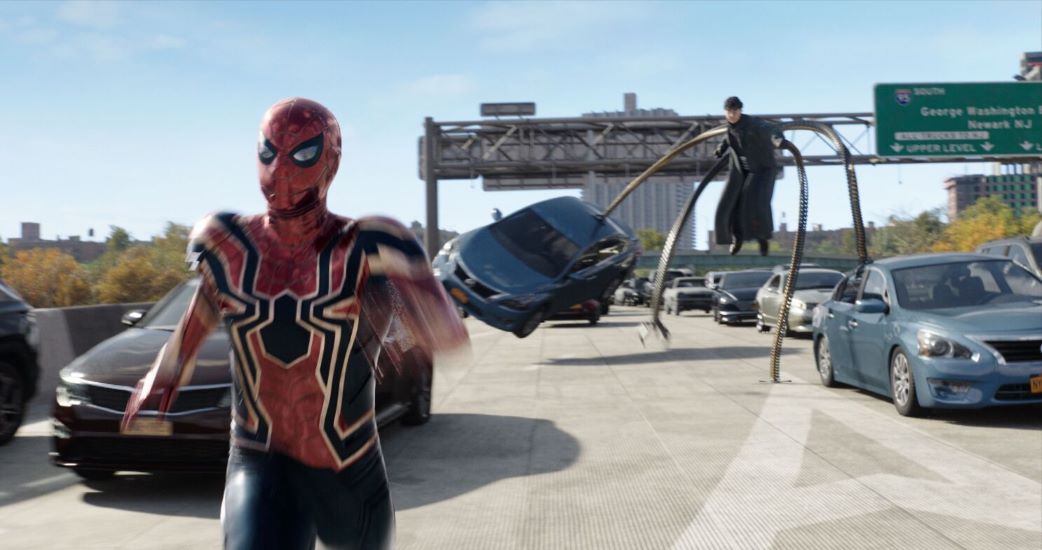
Picking up after the conclusion of Spider-Man: Far From Home, Peter Parker’s (Tom Holland) secret-identity is known. Parker finds himself at the centre of a massive, world-wide scandal, which ends the college chances of him and his friends MJ (Zendaya) and Ned (Jacob Batalon). Peter asks Dr Strange (Benedict Cumberbatch) for help: namely can the world forget who he is? When the spell goes wrong, people who know Parker’s identity from other realities start appearing. And these guys aren’t happy, with villains like Dr Otto Octavius (Alfred Molina), Electro (Jamie Foxx) and psychopath Green Goblin (Willem Dafoe) arriving. But, when Peter discovers sending them back will condemn them to die in the battle against their Spider-man, he decides to do everything he can to try and save them.

No Way Home’s success partly lies on the nostalgia factor, especially for those of us who loved the early Maguire films. And you can sign me up to that: I can’t believe it’s been 20 years since the first one came out! No Way Home throws in characters from all five pre-Holland films and zeros in on the best of the bunch. The films has a lot of fun shuffling and realigning these characters in interesting new combinations, often allowing them to moan about things like origin stories (there is a very funny exchange between Electro and Sandman on the danger of falling into experiments) or just to get on each other’s nerves (Molina’s Doc Ock is spectacularly grumpy).

You pretty much have to have a heart of stone not to enjoy seeing most of these characters again – particularly as they are played with such lip-smacking aplomb. Above all, Dafoe relishes the chance to cement his place as one of the great villains, switching perfectly between gentle and psychotic as the schizophrenic Norman Osborn/Green Goblin (and becoming the nemesis of no-less than two Spider-men). Molina is equally good: pomposity and rage turning into avuncular decency. These two landmark villains from the two best films take most of the limelight, with a smaller share for Jamie Foxx (far more comfortable here than he was in Amazing Spider-Man 2). But every villain is given moments of tragic depth and seeing them react to news of their deaths is strangely moving.

It sets the table rather nicely for a film about redemption. Peter believes he can save these villains from death if he can cure them and restore their humanity. While the pragmatic Strange sees this as pointless, Peter can’t turn his back on a chance to save people. On top of this, No Way Home also serves as a meta-redemption arc for the two previous franchises: Maguire gets a third film worthy of the first two and Garfield is given the sort of rich material he was denied in his failed series.

Which brings us nicely to the biggest returns. Denied by both actors for the best part of a year, this film throws not one, not two but three Spider-men at us, with Maguire and Garfield reprising their incarnations. All three delight in sparking off each other, riffing on everything from web-slingers to making normal life work (“Peter time”) alongside Spider-manning. Maguire settles nicely into the Big-Brother role, giving a worldly experience to the others without losing his gentle idealism. Garfield is sensational – lighter, funnier and warmer than he was in his own films, with a hidden grief that plays out with genuine impact.

Who couldn’t get excited about seeing these three together – or to see the film make these scenes work as well as it does? It shuffles and reassembles things we are familiar with, but presents them in new and intriguing combinations and above all feels true to the characterisations established in previous films. Maguire, Molina and Dafoe in particular feel like they’ve not been away since their own films, while Garfield and Foxx deepen and improve their characters. But it became a mega-hit because it has a truly strong story behind it.

A story staffed by strong, relatable characters. There is a genuine sense of alarm around how Peter and his friends in the film’s opening act are hounded and persecuted by a population scared of them. Even here redemption is key, with Peter going to dangerous lengths to try and get his friends a second chance at getting into MIT. These three characters have a sweet, warm friendship and the chemistry, in particular between Holland (who is sensational, endearing, funny but bringing the role great emotional depth) and Zendaya is stronger than it’s ever been.

And that’s before we hit the film’s genuinely endearing message. Holland’s still-optimistic hero (another excellent contrast with his more damaged alter-egos) is motivated by saving people. And that includes the villains. Maybe it’s the years of Covid, but there is something hugely lovable about a hero who wants to give people a second chance. It’s a living demonstration of “with great power comes great responsibility” (words this film introduces into the Marvel universe with powerful effect, in a mid-film climax). In fact the film is, in some ways, the origin-story Holland’s Spider-Man never had: it gives him a foundational tragedy, leaves him in an isolated position, strips him of his Iron Man style tech and leaves him in a set-up (alone in a cheap apartment, struggling to make ends meet and superheroing on the side) familiar from the comics.

Watts directs the film with real confidence and zest, especially outside the action set-pieces: there is frequent use of ingenious-but-not-flashy single takes and the film’s patient momentum for much of its first half, focusing on character and emotion, really pay off in the second half of fan-service and fights. The camera effects used for Peter’s web-slinging and his spider-sense have a delightful quirky invention. What he really does well though is zero in on the emotion and when events get tragic, he isn’t afraid to commit to that. It gives the film an emotional force that really connected with people.

That heart is what sustains it. It’s a joyful nostalgia trip – that redeems elements of the previous films – but this is a film that really cares about its characters – all of them – and wants you to as well. That gives difficult, emotional struggles to all its Spider-Men, that searches of the humanity in its villains, even the worst of them, making us sympathise with them even as they do dreadful things. Combined with the action and adventure – and the electric pace of the best of Marvel – No Way Home rightly stands as one of the best entries so far.

Pawn Sacrifice (2014)

Liev Schreiber and Tobey Maguire recreate Spassky/Fischer in Ed Zwick’s pointless chess drama

Director: Ed Zwick

Cast: Tobey Maguire (Bobby Fischer), Liev Schreiber (Boris Spassky), Peter Sarsgaard (Father Bill Lombardy), Michael Stuhlbarg (Paul Marshall), Lily Rabe (Joan Fischer), Robin Weigert (Regina Fischer)

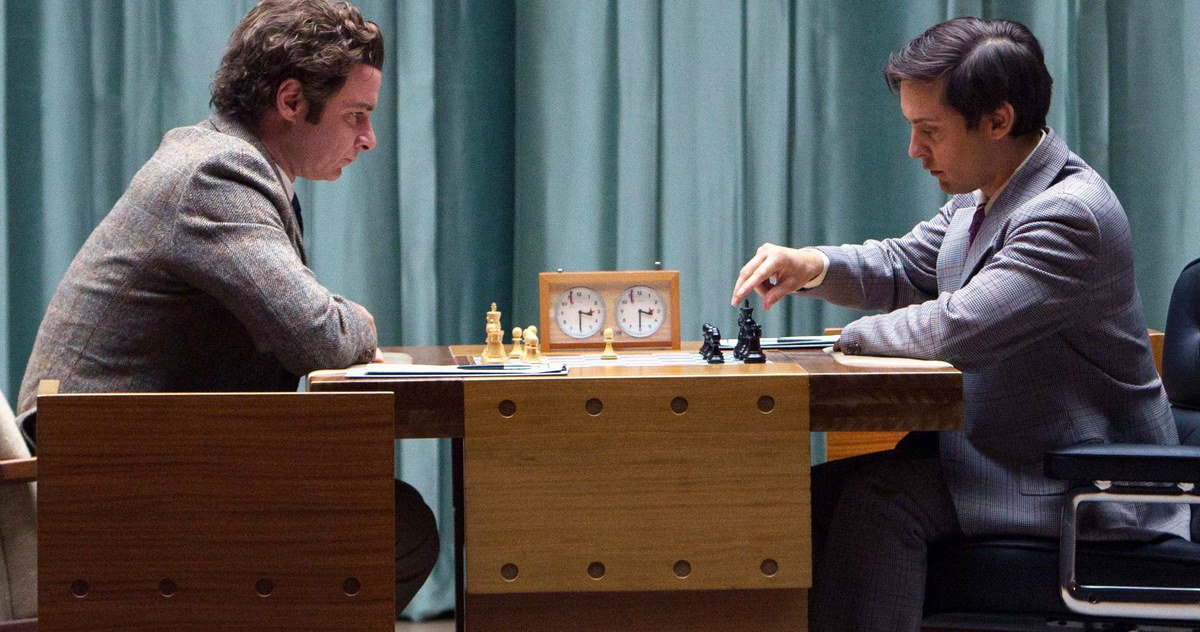
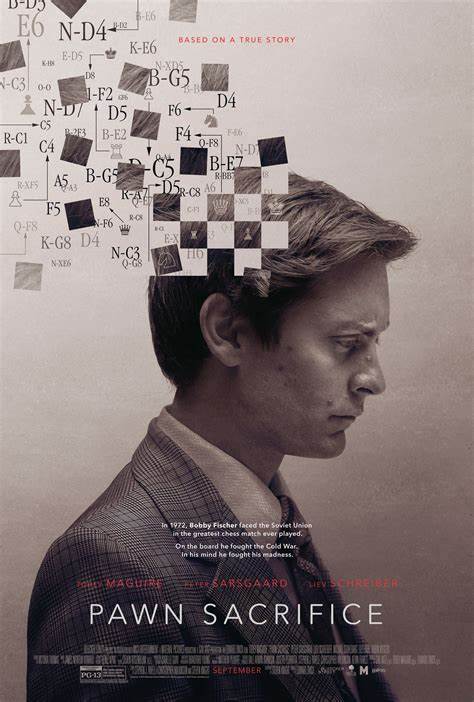
In the 1960s and 70s, Chess suddenly became world news. Like the space race before it, it was effectively a way for the USA and USSR to combat each other without the risky side effect of blowing up the whole world. The USSR had all the best players: until American chess prodigy Bobby Fischer emerged to shatter this monopoly. In 1972 the world seemed to come to a stop to watch the world championship clash between Fischer (Tobey Maguire) and Boris Spassky (Liev Schreiber) in Reykjavik. Ed Zwick’s film attempts to bring together the personal and the political – two superpowers using a game as a proxy for war – into an enlightening package. It fails.

The film opens with Fischer trashing his apartment in search for bugs on the eve of the 1972 final before flashing back in time. You’d expect the film to give us an idea of what bought our “hero” to this point. Zwick’s film utterly fails to do this. Now Fischer – very well played by an aggressively prickly Tobey Maguire – was a hugely troubled man. Though never formally diagnosed some combination of paranoia, OCD and a myriad other personality problems meant he was never more than a step away from self-destruction. Despite this he was deeply driven by an ambition to be the best chess player in the world. Its rich material, but the film never begins to get to grips with Fischer.

Could this be because it wants to tell an uplifting story – the film is really building towards the standing ovation Spassky gives Fischer in game 6 at the 1972 championship when Fischer whipped him in about 40 moves of perfect play – but is struggling with the fact that Fischer himself is deeply unsympathetic. A paranoid conspiracy freak who even by the standards of the 1960s was an aggressive, virulent anti-Semite (Fischer would later match Mel Gibson in his anti-Semitic tirades, blaming Zionism for everything from 9/11 down). A bully who refused to interact with anything except on his own terms, who cut all friends and family from his life for the most minor transgressions. There is no insight given here at all, or suggestion of what was wrong with Fischer.

It’s hard to hang a “triumph against the odds” structure – as Zwick’s unimaginative and conventional film tries to – around this. A far more interesting film would have used the 1972 tournament as an Act 2 triumph and then explored in more depth Fischer’s long spiral of self-destruction that would see him as a bearded eccentric ranting against Jews and America, in exile in Iceland. A film like that would also have then been able to properly do service to the idea of Fischer as a pawn of American state interests, who celebrate him when they want to rub the Soviet nose in it, but then drop him as soon as his purpose is served.

Instead, the film becomes formulaic and empty, leaving us with the impression that we learn nothing about Fischer at all. Why did this man of Jewish descent hate Jewish people so much? Was it self-loathing? What motivated him to seemingly self-destruct his own career so regularly? Was it a fear of being beaten? We have no idea. Instead that opening scene of Fischer destroying his apartment tells us everything we learn about the man over the course of the film. He remains an enigma – and since he’s also deeply unpleasant (the film skirts a little around how much) and we don’t get given any rich material to understand why he’s like this, he becomes a tedious figure to spend time with.

Zwick’s film also fails to communicate the cold war motivations behind this. Although there are the odd shots of the powers-that-be watching on TV in the Kremlin and the White House, we get no sense of how or why these powers are using chess to promote their own ideology. The film is endlessly reliable on vintage and reconstructed newsreel footage to constantly tell us directly things it can’t work out how to do with dialogue, from the political situation to chess moves. You learn nothing about the Cold War from this film. Michael Stuhlbarg’s lawyer turned promoter for Fischer states openly that he wants to use Fischer to show up the Russkies – but that blunt statement is it.

Instead the film is only really interesting when it is effectively recreating footage from the 1972 championship. And when a film’s strong points are recreating real events perfectly, you know you are in trouble. Zwick’s film lacks ideas, a compelling plot, insight or invention. It suffers badly today when compared to the far more dynamic and insightful The Queen’s Gambit (whose lead character is a heavily fictionalised female Fischer). Zwick’s film is him at his plodding, middle-brow worst, presenting a would-be epic shorn of anything of actual interest of controversy. The only thing that redeems it are decent performances from Maguire, Sarsgaard and Schreiber. Otherwise, this is an empty mess that tells you nothing at all about anything. You could checkmate it in about four moves.

The Great Gatsby (2013)

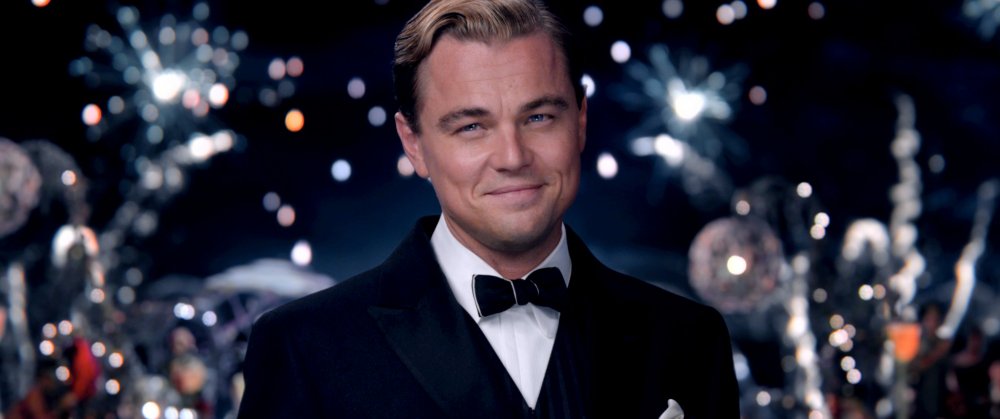
“Hello old sport”: Leonardo DiCaprio is The Great Gatsby

Director: Baz Luhrmann

Cast: Leonardo DiCaprio (Jay Gatsby), Tobey Maguire (Nick Carraway), Carey Mulligan (Daisy Buchanan), Joel Edgerton (Tom Buchanan), Elizabeth Debicki (Jordan Baker), Isla Fisher (Myrtle Wilson), Jason Clarke (George Wilson), Amitabh Bachchan (Meyer Wolfsheim), Jack Thompson (Dr Walter Perkins), Adelaide Clemens (Catherine)

The Great Gatsby is possibly the great American novel. I’ve only read it once, but I certainly admired its beautiful prose, capturing of an era of American life and understanding of the fragility behind America’s love of success. Baz Luhrmann is clearly a fan, as he spent years putting together this passion project, presenting the biggest, brashest version of Fitzgerald you are ever going to see.

Nick Carraway (Tobey Maguire) is a young writer turned bonds salesman in 1920s New York. He lives across the bay from his cousin, Daisy (Carey Mulligan) and her husband Tom Buchanan (Joel Edgerton), a brash old-money man carrying on an affair with Myrtle (Isla Fisher), the wife of his garage mechanic. Carroway’s next-door neighbour is the sumptuously wealthy, but mysterious, Jay Gatsby (Leonardo DiCaprio) whose parties and generosity are legendary. As Carraway gets to know Gatsby (as much as anyone can), he discovers that Gatsby has a deep, near obsessive, love for Daisy.

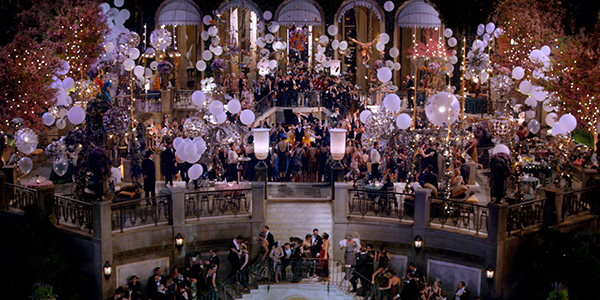
Luhrmann’s film is a technicolour explosion that uses many of the techniques you’ll be familiar with from any of director’s other films. The camera is a whirligig of motion. The colours are bright and primary. The whole tone of the film (certainly for its first hour) is larger than life. The narrative has been tweaked to take on the tone of a Greek Tragedy, with the loud noise, fast camera moves and speedy pace all inverted in the latter half to invoke sadness and tragedy. And of course, the music is deliberately anachronistic, mixing modern genre music with 1920s sounds.

Sometimes this high-budget technicolour brilliance does feel like it is partly getting in the way of the deeper themes that lie within the original. But that might be partly because the novel’s themes are so reliant on internalised feelings, unsaid or guessed emotions, and deeply purple prose, that these are ideas which are very hard to translate to the screen.

There is something to be said for Luhrmann turning one of the pillars of 20th-century American culture into a spiritual sequel to Moulin Rouge!. And Moulin Rouge! is what the film strongly resembles, not only in design, but its romantic structure, poetic retelling, high drama, sense of impending doom and danger behind the bright lights, assault on class and the way it stands in the way of true love, and the lack of freedom in our lives. Both even have sad, reflective authors book-ending events.

So your enjoyment of the film is probably going to depend on how you feel about Luhrmann’s OTT style. Love Moulin Rouge! and Romeo + Julietand you will probably find something to enjoy here (and you’ll also notice his love of tragic love stories). Saying that, of those three, Gatsby is the one the carries the least depth to it, which is intriguing as it probably mines the most psychologically rich source material. While Luhrmann understands that the book is about the real emotions masked by explosive parties and opulence – the film often feels as choked by these things as the characters do.

This is partly because I feel both Maguire’s and Mulligan’s performances don’t quite work. Maguire is so stripped back, quiet and passive he almost disappears – you don’t get a sense of Carraway as either a shrewd observer or someone wrapped up in events: instead he’s a passenger, like the plot contrivance Gatsby sometimes treats him as. Similarly, Mulligan is slightly overwhelmed by the movie, not giving a strong enough performance for her to break through. The film powers forward with such momentum and brashness, it squashes her.

It’s probably why the most successful lead performance by far comes from DiCaprio. He’s perfectly cast as Gatsby: so good in fact you wish he was in a more thoughtful, relaxed film that would give him a more of a chance to breathe. DiCaprio perfectly encapsulates the desperation just beneath Gatsby’s surface, the fear and uncertainty that lies under his suave urbanity. He completely gets the character, understands he is a showman presenting a front to the world because that’s what he thinks the world wants, but who is, in his own way, as empty and lost as the world of bright lights he is offering people. It’s an excellent performance.

Luhrmann’s work with DiCaprio is what gives the film it’s centre and, for all the colour, noise and joy of the first 40 minutes or so, it finds its heart in the moments of acting and character interplay as the Gatsby-Daisy-Tom love triangle comes to a head. This scene, with its bubbling emotions, high stakes and tension is like an oasis of calm in the high-faluting scenery that surrounds it. But then this is a film where the smaller moments actually come across as richer than the larger ones – partly helped by the fact that Joel Edgerton and Elizabeth Debicki both give excellent performances as the key supporting characters. 

The Great Gatsby captures the feel of Fitzgerald rather well, but for all the dialogue of the book placed over the film in voiceover, it never quite manages to capture the spirit of the book in the same way. It looks wonderful, and its dynamic filming is certainly enjoyably impressive, but it doesn’t quite become a film that deals in emotions and depth. It flashes and fizzles but it never lets us really soak in its ideas and themes. It’s all too much at times, and the tragic sadness at the heart of the story, of this lost boy trying to live the life of a man, never comes out as it should. An interesting and entertaining film, but not one that will last.

The Cider House Rules (1999)


Michael Caine and Tobey Maguire deal with moral dilemmas in this handsome adaptation of John Irving’s Dickensian novel

Director: Lasse Hallström

Cast: Tobey Maguire (Homer Wells), Michael Caine (Dr. Wilbur Larch), Charlize Theron (Candy Kendall), Paul Rudd (Lt. Wally Worthington), Delroy Lindo (Arthur Rose), Erykah Badu (Rose Rose), Heavy D (Peaches), K. Todd Freeman (Muddy), Kieran Culkin (Buster), Jane Alexander (Nurse Edna), Kathy Baker (Nurse Angela), Kate Nelligan (Olive Worthington), J.K. Simmons (Ray Kendall) 

The Cider House Rules is the sort of well-constructed literary adaptation that Hollywood excels at producing: a well-crafted script (Irving adapted his own novel extremely well), juggling serious affairs without hectoring the audience, handsomely mounted, with a Dickensian style and a cast of heavyweight actors delivering performances that speak of their investment in the film.

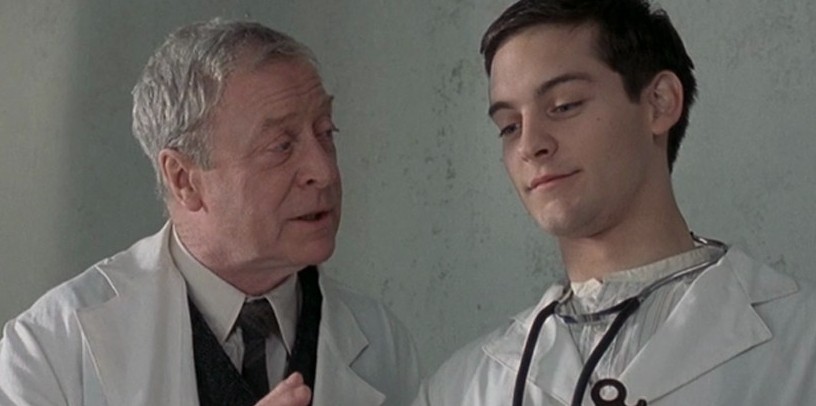
In a Maine orphanage in the 1940s, Homer Wells (Tobey Maguire) is raised by Dr Wilbur Larch (Michael Caine) as a surrogate son. Larch is a domineering autocrat with a passionate love for his charges, whose humanitarian instincts lead him to perform illegal abortions. Troubled by this – and feeling pressured into succeeding Larch’s as director – Homer leaves with a young woman (Charlize Theron) and her fiancée (Paul Rudd) after she visits for an abortion. Working as an apple picker in their orchard, under Mr Rose (Delroy Lindo), Homer learns important lessons above love and duty.

There are many similar films that feel like dull awards-bait, and the fact that this one avoids that is a major point in its favour. It’s very easy with material like this – cute orphans and tear-jerking speeches – to feel Cider House is a manipulative film (and I guess in a way it is) but it’s put together with such commitment and sincerity I found it genuinely moving. Hallström’s warm and beautifully paced direction creates a marvellous coming-of-age tale with characters whose flaws can be as deep as their warmth is vibrant.

The film also manages to move beyond its ‘coming-of-age’ roots with intelligent (but not too heavy-handed) mulling on the nature of “rules” – both those imposed on us and those we impose on others. Dr Larch (a magnetic performance by Oscar-winner Michael Caine) is a maverick, disregarding the abortion laws as he believes it is better he does abortions rather than someone untrained; he is also perfectly willing to impose his own rules on Homer as testaments to be followed without question. Similarly the “Cider House Rules” written on the wall of the apple workers’ lodgings are rejected outright by the working gang for their own unspoken code of conduct, no more effective than the system it replaces. All the characters are forced to draft their own rules (or principles) they can live with, matching their circumstances and actions.

The film also looks gently at the conflict between our desires and our duties, with Homer and Candy both yearning for freedom from their natural inclinations to have something to serve. This is presented as a struggle without a natural “right or wrong”, even if the apple orchard is a loose Garden of Eden, into which evil is admitted with tragic (and life-changing) consequences. A small criticism would be that the charismatic warmth of Caine’s performance and the family atmosphere of the orphanage are so endearing that it does unbalance the dilemma Homer eventually faces – instead of the audience feeling as torn as Homer about whether he should stay or return, most audience members I think would want him to return to the orphanage forthwith!

Tobey Maguire is so perfectly cast as the naïve in some ways, wordly wise in others, old-boy-young-man that he effectively reprised Homer Wells as Peter Parker a few years later. His sweet face –uncomplicated innocence and charm are in every twitch of his smile – carries the film, and his easy-going desire for a simple life makes perfect sense of the character’s rebellion against Larch’s benevolent dictation. Equally good for me though is Theron as Candy. She is a wonderfully expressive performer: midway through the film she is caught off-guard by an overlong hug from Homer, and a series of conflicted emotions from shock, to guilt, to attraction play across her face.

There is hardly a weak performance in the film, with Hallström drawing excellent work from the young orphans. Amongst the sprawling, Dickensian feeling cast, Caine is marvellous as the part dictator, part humanitarian Larch making a larger-than-life character feel real and grounded. Lindo captures the pride mixed with arrogance of Mr Rose. There are plenty of other excellent performances, not least from Baker and Alexander as two contrasting nurses in the orphanage.

I almost feel slightly guilty for the impact Cider House Rules had on me. In many ways it’s exactly the sort of safe, middle-of-the-road “serious” drama that seems designed to attract the notice of Oscar voters. But it’s told with a great deal of skill and dedication, and delivers so many emotional moments with warmth and feeling, I found myself genuinely moved by it. In fact I felt a bit teary at least twice. This is closely linked to some excellent performances – and a wonderful swelling musical score by Rachel Portman – but despite being the sort of middle brow Hollywood film it’s fashionable (and easy) to attack, I thought this was engaging, moving and thought provoking from start to finish.