Tag: Tom Berenger

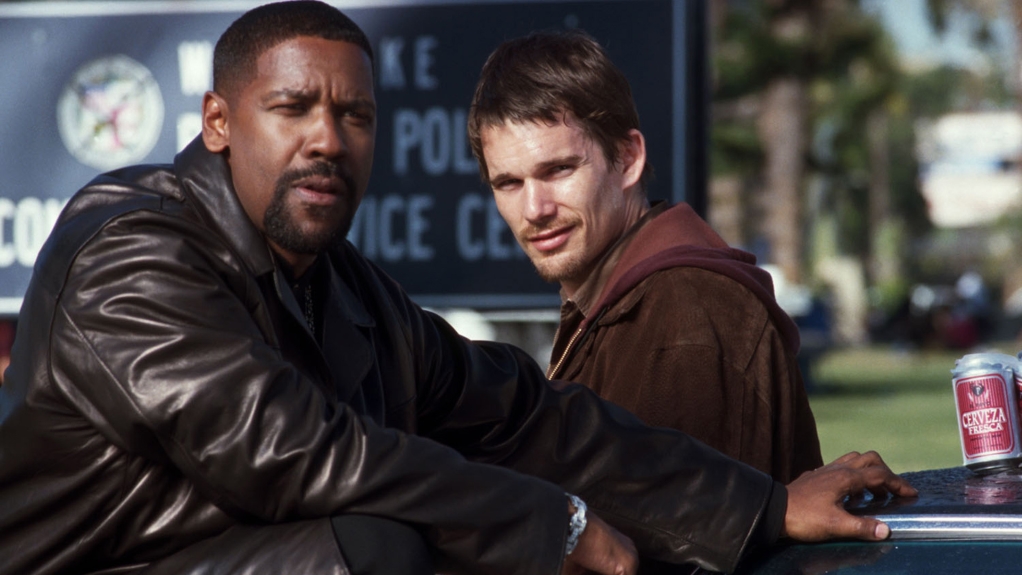
Training Day (2001)

Training Day (2001)

Pulsating corrupt-cop drama, highly entertaining with a full-throttle Denzel Washington

Director: Antoine Fuqua

Cast: Denzel Washington (Detective Alonzo Harris), Ethan Hawke (Officer Jake Hoyt), Scott Glenn (Roger), Tom Berenger (Stan Gursky LAPD), Harris Yulin (Doug Rosselli LAPD), Raymond J Barry (Lou Jacobs LAPD), Cliff Curtis (Smiley), Dr Dre (Officer Paul), Snoop Dogg (Blue), Macy Gray (Sandman’s wife), Charlotte Ayanna (Lisa), Eva Mendes (Sara)

“King Kong ain’t got nothing on me!” That’s the mantra of larger-than-life legendary cop Alonzo Harris (Denzel Washington), who has immersed himself so much in the dirty neighbourhood gangland of LA that it’s hard to see where cop ends and crook begins. Alonso claims to believe to keep the town clean, you gotta break a few rules. But then he also believes in filling his own pockets with stolen money. It’s all going to come to a head in one day: first day on the job for ambitious boy-scout officer Jake Hoyt (Ethan Hawke) who thinks he’s auditioning to join an elite squad only to find he’s the victim of a series of elaborate mind-games and dodgy moves by Alonzo, testing to see whether he is potential asset or sacrificial pawn. It’s going to be a long day.

Training Day is basically a massive dance with the devil, offering his little Faustus all the wonders of the world in return for his soul. It’s all there for Hoyt’s taking: respect, glory, standing – and of course oodles of plastic-wrapped dollar bills. All he has to do is sacrifice every inch of his integrity and personal morality to Alonzo Harris, a grandstanding Mephistopheles. This first day is all about Harris pushing Hoyt to see how far he will go. Will he smoke a little dope so he could pass as an undercover druggie? Will he search a house under a false warrant? Will he rough up a suspect? Will he murder a drugdealer and steal his cash?

Throughout all this, Denzel Washington barnstorms to fantastic Oscar-winning effect. This is a delightfully Devilish performance, Washington leaving it all out on the pitch. Alonzo Harris has inhabited the persona of the gangsters he follows for so long he’s basically become one. Harris is scarily charismatic, the unshakeable confident cool he uses to cow and terrify criminals and punks on the street, also making him a hugely attractive figure. This is despite his complete amorality, his ruthless capacity for violence and his shocking willingness to abuse and use almost everyone around him. He does all this by convincing Hoyt for long stretches that his poor treatment, abuse and deception of him is all in Hoyt’s own interest: to toughen up this naïve puppy into a killer.

Hoyt spends half the time if this is some elaborate show-and-test. Who can blame him? Washington’s exuberance plays masterfully on the edges of someone putting on a massive performance. There are neat moment where we see how fragile some of Harris’ control is, once he is outside of his comfort zone: he’s in hoc for millions to Russian gangsters and as events of the day pile up his thermonuclear self-confidence tips into moments of impotent fury. Washington is fantastic as this street monster, whose seductive lines on modern policing (do a little bad to do a greater good) start off sounding like common sense before you realise they tip quickly into justifying open criminality. It’s a performance of perfect physical swagger matched with his limitless charisma, inverting the qualities that made him a perfect Steve Biko or Malcolm X into a Lectorish monster.

Ethan Hawke is also extremely good as his polar opposite, the eager to please rookie who realises there is a lot more going on here than he thought. Training Day suggests there may well be a middle ground between Hoyt’s straight-as-an-arrow idea of policing and Harris’ corruption – and it’s part of Harris’ appeal that his perverted mentoring ends up making Hoyt a tougher, more unrelenting (better?) cop than he was before. But also, Hawke is great at showing that Hoyt (under his sheen of moral uprightness) is also a tough, hardened professional. In classic story-telling style, Harris is a dark reflection of Hoyt: they share a stubbornness, a conviction that they are right, a refusal to be intimidated (Hoyt may nervously try to please Harris at first, but once he realises the score he refuses to be forced into doing anything he doesn’t want to do) and a capacity for throwing themselves into decisive action. There is a reason why this rookie can get the drop on Harris – much to his wicked mentor’s delight and admiration – in a way no one else can.

That alone shows the dark magnetism of people like Harris: like Hoyt we end up wanting their approval even when we hate or fear them. Even as he holds a shotgun to his head, there is a part of Hoyt you suspect is proud that Harris’ gut reaction is to shout an impressed “My man!”. Of course Harris knows his validation is important to people. Monsters like this know the weaker-willed crave their respect. But then Harris also knows no one else in his team – all of them weak-willed bullies, desperately trying to imitate them – have even a quarter of the independence of mind Hoyt has.

What Harris under-estimates is Hoyt’s survival instinct. The final third of the film, the clash that has been building inevitably between these two, again demonstrates both their similarities and their fundamental differences. The main difference between them being Hoyt cares for, and protects others, and Harris cares only about himself. Hoyt’s humanitarianism will save him from dangerous situations and even Harris’ girlfriend (a tough-but-cowed performance from Eva Mendes) recognises Hoyt has shown more concern for her son in a few minutes than his father, Harris, ever has in his whole life.

The final act of Training Day hinges a little too much on one whopper of a coincidence: the sort of narrative contrivance so colossal that, in a less magnetic film, you’d be throwing stuff at the TV shouting “oh come on!” It’s final, inevitable, confrontation between Harris and Hoyt feels rather too much like many, many other films before it in every single beat, while the ending has a whiff of Hays Code morality (all wrongs righted!) about it that rather undermines the edgy, unpredictable film it precedes.

But when Training Day focuses on the sound and the fury of Washington and the Faustian dance on the deep grey lines of street policing, this is a sensational, energetic and highly watchable cop thriller, pulsatingly directed by Antonie Fuqua. With Washington superb and Hawke easy to overlook as his straight-laced partner, it’s a character study that constantly shifts our expectations and leaves us genuinely worried about the fate of its hero. The sort of slick entertainment Hollywood does at its best.
The Big Chill (1983)

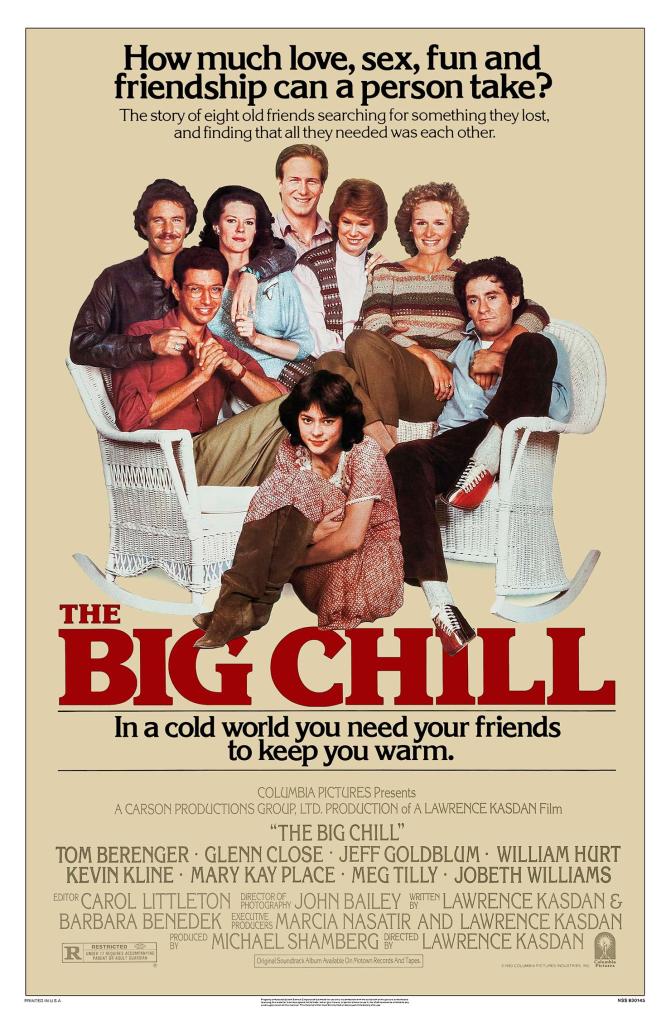
The Big Chill (1983)

Heart-warming, engaging and moving ensemble drama, low-key and all the better for it

Director: Lawrence Kasdan

Cast: Tom Berenger (Sam Weber), Glenn Close (Sarah Cooper), Jeff Goldblum (Michael Gould), William Hurt (Nick Carlton), Kevin Kline (Harold Cooper), Mary Kay Place (Meg Jones), Meg Tilly (Chloe), JoBeth Williams (Karen Bowens), Don Galloway (Richard Bowens)

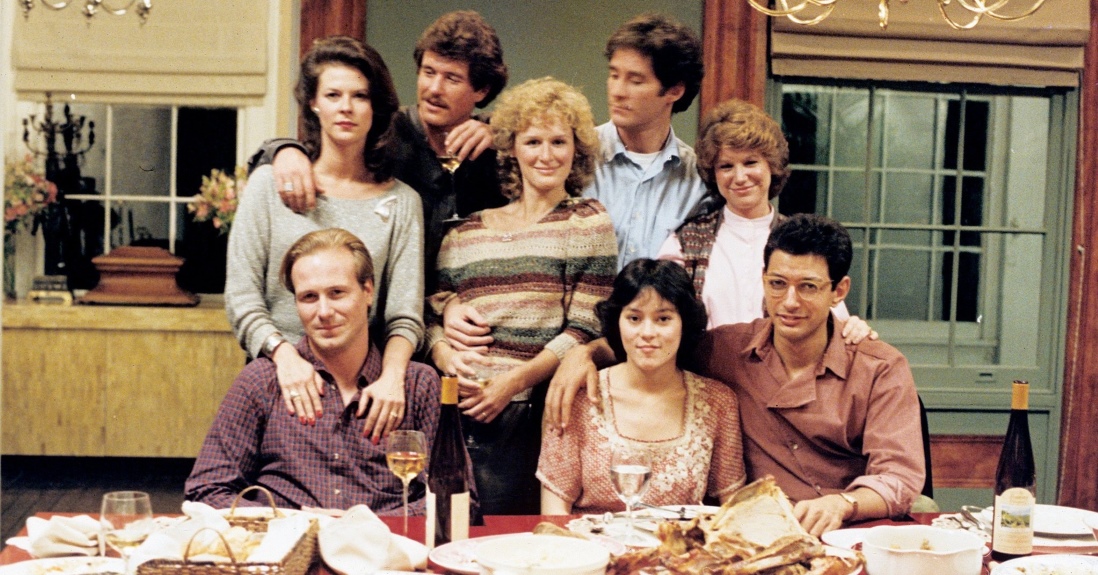
Growing up is hard, isn’t it? The older you get, the harder it is to cling on to the idealism of your younger days. The past can wind up feeling both very familiar and a very different country indeed. It’s something a group of thirtysomething college friends start thinking about when they gather for the funeral of their friend Alex (the famously cut-from-the-film Kevin Costner, seen only via close-ups of his hands and chest while being prepped by an undertaker). Spending a weekend together they reminisce, argue and remind each of why (and if they are still are) friends.

Kasdan’s sharp script, full of sparkling dialogue and rich (if at times familiar) character arcs attracted a smorgasbord of the cream of 80s American film acting, all of whom give fabulously relaxed, extremely genuine performances, largely devoid of grandstanding. The disparate range of career and life-choices the friends have made influenced an armada of ‘college-reunion’ stories, but it’s a trope that works because Kasdan knew it offered such a rich potential for drama.

The Big Chill is the definitive ensemble piece, delightful because it’s structured not around heavy-handed, overtly dramatic clashes, but everyday conversations full of observational humour and low-key emotional truths. There isn’t really a plot as such in The Big Chill: the pleasure comes from Kasdan pulling off the near-impossible trick of making us feel we have been invited to share the fun rather than watching, with our noses pressed up against the window, a film where the actors are having more fun than us. The Big Chill feels truthful, universal and eventually moving because it is so down-to-earth. We’ve all had social groups where we feel absolute loyalty and love for its members, while still being capable of finding them earth-shatteringly infuriating.

Most of them have traded their youthful idealism to change the world for a Reaganite cash-grasping. Sam (Tom Berenger) stars in a hit Magnum PI style TV drama. His former partner in left-wing politics Harold (Kevin Kline) owns a successful running shoes business (named Running Dog in a subtle pop at his own selling out) while his wife Sarah (Glenn Close) is a successful doctor. Michael (Jeff Goldblum) writes shallow celebrity pieces for glossy magazines, Meg (Mary Kay Place) has traded being a public defender for real-estate law. Karen (JoBeth Williams) wanted to be a writer, but instead married an ad executive Richard (Don Galloway).

All of them feel their late friend Alex represents the path they could have taken: a genius scientist who turned down all academic promotions to focus on social work and his old principles. Not that this seems to have made Alex happy. The most like Alex’s seems to be Nick (William Hurt). A former radio-psychiatrist, left impotent after Vietnam, who jacked in his career and is now a drifting drug addict. It’s never quite said, but you can feel the concern of the rest of the group that Nick feels destined to be the next funeral they gathering for.

Much of the tension comes from Nick – largely because he feels more willing to touch nerves the rest are happy to leave unprodded. This is a group that works hard to maintain harmony – after all, Sarah’s affair with Alex hasn’t dented Harold’s genuine grief or his love for his wife, and no one else wants to address it. But there are clear tensions and resentments under the surface: small grudges or irritations many perhaps coming from that uncomfortable feeling of the group seeing their own self-recriminations reflected back at them in their friends faces.

Nick is the only one who raises the scary spectre that decade-old events hold this group together, not their lives today. If they all met for the first time now, would they even be friends? Nick is also willing to take pot-shots at their tendency to self-pitying regret and to provoke the romantic and sexual tensions the others are happy to keep unremarked or compromise on. (Even Jeff Goldblum’s seemingly provocative Michael, avoids trouble by scrupulously taking nothing seriously.)

What makes The Big Chill such a lovable film, despite this, is this doesn’t fracture the group but are islands of tension within a sea of genuine friendship and warmth. Kasdan’s insistence that the company spend a longer time than usual in rehearsal – famously the cast cemented their chemistry via an almost five-hour, Mike Leigh-style, in-character improvisation, involving cooking and eating a dinner together – paid off in spades. They genuinely feel like life-long friends, sharing in-jokes, teasing each other, looking out for each other and making generous offers of help.

There is a lot to laugh at because it feels so universal. We’ve all mucked around with friends while cooking and cleaning. When the group gather to teasingly cheer along with the opening credits of Sam’s cheesy TV show (to his good-natured embarrassment) it makes us laugh because we recognise the affection. The hilarious absurdity of Harold, Nick and Sam chasing a bat out of the attic feels real. Just as the emotions hammer home – Harold’s grief in his eulogy for Alex, Sarah’s tears at a meal, Nick’s tragic middle-distance gloom or Karen’s private ennui among her friends.

It’s all helped by superb performances. JoBeth Williams is excellent in, arguably, the film’s most challenging role, deeply unhappy with where her life has gone, wanting to pretend she can seize the day but not having the conviction to see it through. Goldblum is drily witty but distant as the group’s closest thing to an outsider, Berenger affectingly modest at his sell-out success, Place quietly desperate as a woman whose body clock is ticking down. Kline is very funny and sweet as a man desperate to help those around him, while Close in the flashier (and Oscar-nominated) part as the group’s nominal ‘mother figure’, far more deeply affected by Alex’s death than she is willing to let on.

Perhaps best of all is Hurt, vulnerable, gentle and quietly lost as Nick, his pain manifesting itself in occasional bear-prodding outbursts, but who will quietly apologise the next morning with a gentle, unremarked hug. He also forms a warm and genuine bond with Alex’s younger girlfriend Chloe, played with a sparky energy by Meg Tilly, who (not surprisingly) sees a lot of Alex in him.

Kasdan’s film gently explores the tensions of a group of adults unsure about where their life has taken them, but it does so in a warm and charming structure that makes us really care for the characters all of whom are expertly and humanly drawn. It’s lack of explosive melodrama is a large part of its success, helping ground the film as something relatable that we can feel a real bond with.

Inception (2010)

Leonardo DiCaprio caught between dreams and reality in Inception

Director: Christopher Nolan

Cast: Leonardo DiCaprio (Dom Cobb), Joseph Gordon-Levitt (Arthur), Marion Cotillard (Mal Cobb), Ellen Page (Ariadne), Tom Hardy (Eames), Ken Watanabe (Saito), Dileep Rao (Yusof), Cillian Murphy (Robert Fischer), Tom Berenger (Peter Browning), Pete Postlethwaite (Maurice Fischer), Michael Caine (Professor Stephen Miles), Lukas Haas (Nash), Tallulah Riley (Disguise woman)

What is reality? It’s a question that for many of us never comes up. But in the artificial and exciting world of film, it’s a legitimate question. These worlds we watch unspooling before us on the cinema screen, so large, so real, so exciting. Could we get lost in them? And how much do the films we love echo the dreams that fill our nights, the movies we create in our mind to keep our brain active during those hours of complete physical inactivity? And what happens when the world of imagination and possibility becomes more compelling, more comfortable – and perhaps more real – to us than the actual flesh-and-blood world around us? These are ideas tackled in Inception: the blockbuster with a brain. 

Set in some unspecified point in the not-too-distant future, Dom Cobb (Leonardo DiCaprio) and his partner Arthur (Joseph Gordon-Levitt) are “extractors”, shady corporate espionage experts who use experimental military technology to enter shared dream states with their targets. While in their dreams, they have complete access to their subconscious mind, where secrets can be extracted. A wanted man in the States, Cobb is forced to ply his trade despite his yearning to return home to his children. After a job goes wrong, their would-be target Saito (Ken Watanabe) hires the pair to take on a far more challenging role: rather than extract an idea he wants them to plant one – a technique called “inception” – into the mind of a business rival (Cillian Murphy) to get him to dismantle his father’s empire. To do the job, Cobb needs a new team, including dream “architect” Ariadne (Ellen Page), dream identity forger Eames (Tom Hardy) and dream compound chemist Yusof (Dileep Rao) – and needs to try and control his own dangerous subconscious version of his late wife Mal (Marion Cotillard) who is determined to destroy his missions.

Just a plot summary should give an idea of the twisty-turny world of imagination and ideas that Christopher Nolan mixes in with big budget thrills and excitements, in the most original sci-fi/philosophy film marriage since The Matrix. Of course it helps when you have the clout of having directed a hugely successful comic book series, but Nolan was brave enough to trust that an audience for this sort of action-adventure caper wanted to have their brains stretched as far as their nerves. So he creates a dizzying and challenging piece of escapism that plays around with the audience’s perceptions and understanding of the nature of dreams. 

In the world of dreams, the film is a fabulous tight-rope-walk of dazzling concepts. Here everything is possible, with Nolan throwing at us worlds from film fantasy: intricate Samurai houses, brawling third-world streets, luxurious hotels, Bond-style winter bases and entire cities that literally fold, bend and reinvent themselves around the film’s dreamers, worlds that defy conventional rules of physics and time. This world is presented with genuine visual panache at every point, Nolan’s mastery of the language of film leading to a sensational series of slight-of-hand tricks and compelling set-pieces, all the while making you question which events are real and which are dreams or even dreams within dreams. In these worlds, the characters have the ability to literally shape a world to meet their needs, and the dangerous attraction of these worlds – even if they are not real – is the dark temptation that hangs over every frame. 

Because it’s those ideas beneath the action that give the film depth as well as excitement, that ability to ask questions and openly invite the audience to begin theorising themselves to fill in any blanks. Within the world of Inception, characters can create dream states within dreams, to share one person’s dream while simultaneously all being inside the dream of someone else. These multiple levels are cleverly established as being as much of a risk for the characters in getting confused as they are for the audience, with the characters carrying personal “totems” to help them judge if what they are seeing is reality or not. This is made all the more difficult by the establishment that your subconscious will manifest people to populate the dream worlds – and these will turn on invaders they detect in the dream.

All of this tunnels down into the deep limbo of our subconscious – and also introduces as a concept Nolan’s fascination with time. In dreams, time moves at a different pace, and this differential becomes all the greater as you descend down levels in dreams within dreams. A few minutes can become an hour in a dream and become almost a day in the dream within it – and years within the dreams beyond that. This is brilliantly demonstrated by Nolan in the film’s dazzling central sequence as the film intercuts between three timelines in three different dreams – each impacting the other.

It’s another masterful touch – the impact of actions on dreamers’ bodies in the level above can be felt in their world. A slap to the face in the real world can send someone in the dream flying across a room. A bucketful of water turns into a tidal wave in the dream. The dreamer falling in the world above removes gravity in their dream (giving Joseph Gordon-Levitt a cult fight scene in a gravity free world that sees him gracefully leaping from floor to ceiling to wall). The visuals are extraordinary, but the intriguing logic of the inter-relation between reality and the dreams – and the way dreams struggle to explain external effects – lend all the more credence to the mixing of reality.

But then, as Nolan suggests, isn’t that film after all? In dreams we move from location to location and struggle to remember the journey in between. We find ourselves doing tasks and not knowing how we started. Chases, faulty logic, sudden reversals and changes – these are the rules of film, it’s editing slicing out the boring bits and focusing on the reality. We are dropped into the middle of Cobb’s story and only slowly find the backstory, a gun filled chase through an African city is almost indistinguishable from similar sequences in the dreams. The final sequence of the film is a purposefully cut series of images that are very true to the rules of film, but feel alarmingly close to the rules of dream (unsettling us about whether what we see at the end is truth or dream, a debate that continues today). It makes for fascinating stuff, as well as a commentary on film itself.

Nolan’s film is gloriously entertaining, even if in its haste at points it does fail to explain how certain events and concepts truly work – but doesn’t really matter so compelling is the journey. The cast, enjoying the chance to mix action hijinks with genuine characters and dialogue are very strong, with DiCaprio anchoring the film wonderfully as the conflicted, lonely, defensive and daring Cobb. Hardy made a name for himself in a cheekily flirtatious performance, which sparks wonderfully with Gordon-Levitt’s more po-faced Arthur. Page creates a character both naïve and at times almost gratingly intrusive. Cotillard makes a difficult balance look easy playing a character part real and part dream figure. Watanabe is archly dry as the investor. There isn’t a weak link in there.

It may at times move too fast and not always make itself completely clear. It might be a bit too long in places and take a little too long to make its point – but it’s ambitious, challenging, intriguing film-making that rewards repeated viewing. Not least with its cryptic ending in which we are forced to ask how much of what we have seen is real and whether – like Cobb perhaps? – we should even care at all if the end result is so positive. With the fascinating world of dreams – and the rules there that we encounter – it gives us a firm grounding for the its meditation of the dark attraction of fantasy, embodied by the genial wish fulfilment of the movies where adventure lies around each corner and the heroes triumph.

Platoon (1986)

Charlie Sheen goes to war in Oliver Stone’s Oscar winning Vietnam film Platoon

Director: Oliver Stone

Cast: Charlie Sheen (Chris Taylor), Tom Berenger (Sgt Barnes), Willem Dafoe (Sgt Elias), Kevin Dillon (Bunny), Keith David (King), Forest Whitaker (Big Harold), Mark Moses (Lt Wolfe), John C. McGinley (Sgt O’Neill), Francesco Quinn (Rhah), Reggie Johnson (Junior), Johnny Depp (Lerner)

Vietnam has been a long-standing scar on the American psyche. For over 12 years, American soldiers were rolled into Vietnam to fight for something many of them were pretty unclear about. Vietnam was a bloody shadow boxing match for super powers to indirectly combat each other. American casualties were high, and the country that sees itself as championing justice and the free world ended the war with the blood of millions of Vietnamese and Cambodians on its hands. Is it any wonder the country still struggles to compute this?

Before Platoon there had been films that had dealt with the Vietnamese experience. Apocalypse Now had embraced the druggy, morally confused insanity of the war. The Deer Hunter had effectively shown the traumatic impact the war had on regular blue-collar steel-workers. But Platoon was something different. This was the war on the ground, with privates and sergeants as the focus (many of them poor, working class and also black) – the lower rungs of American society flung into a war they don’t understand, in a country they can’t recognise, fighting an enemy they have no comprehension of. 

Platoon throws the audience into the visceral, cruel, terrifying horror of pointless conflict, with a feeling that the war will never end. Stone pulls off a difficult trick here: the film shows a horrifying picture of war and killing, but combines this with successfully showing the adrenalin rush that comes from conflict – and the excitement of visceral film-making. 

Oliver Stone had fought as a young man in a similar unit, after dropping out of college. Chris Taylor (Charlie Sheen) is effectively a surrogate figure for the director, with the film crafted from Stone’s own experiences and those of his fellow soldiers. The film is a simple, intense experience with a straightforward plot: Taylor is torn between two potential “father figures”. One, Sgt Barnes (Tom Berenger), is a supernaturally ferocious warrior and martinet whom the men hold in awe. The other, St Elias (Willem Dafoe), is an equally fierce fighter, but also a hippy, nearly saint-like protective figure. Which of these two will Taylor side with?

Well okay it’s not a massive surprise really is it? The strength of Oliver Stone’s film is its visceral, bloody, impressive intensity. You are thrown into the midst of a series of terrible battles, interspersed with bored soldiers bickering or taking pot. At no time is the viewer (or the soldiers) given any real idea about what is going on, what the aims of the war are, what is really happening in the battles. Stone plays the film totally from the soldier’s POV. Battles are a confused mess at night. The location of the enemy is frequently unclear. There are no indications of any tactics at all. There is barely any leadership – Mark Moses’ Lt Wolfe is an almost hilariously ineffective moral weakling, who follows the leads of his sergeants. The soldiers (or rather the two sergeants) essentially operate as lone wolves, doing what they think best for any particular circumstance.

The film pivots on a confused raid on a Vietnamese village, as the platoon descends on a village for no very clear reason – apart from seemingly being pissed off that one of their number has been killed in the night. Nominally they are searching for Vietcong fighters. But really it seems like an excuse to let off steam. Platoon must have hit hard in the 1980s, as it doesn’t flinch at all from watching American soldiers committing atrocities. Women are shot, teenagers are beaten to death, a fox hole containing what looks like a child is exploded after a brief warning. The soldiers are all terrified, thrusting guns into Vietnamese faces. Above all Sgt Barnes feels no guilt at all at executing villagers in order to pressure the elders into telling what he thinks they might know about the Vietcong (who equally are largely faceless figures of terror in the distance stalking the platoon).

Where the film is less strong is in its plotting and narrative ideas. These are straightforward in the extreme, with Barnes and Elias almost literally as opposing devil and angel on Taylor’s shoulders. The film is clearly weighted in favour of Elias’ hippie mentality, his desire to preserve innocent lives and his caring attitude to his men. Barnes is presented far more harshly – even though his brutality stems from his own deep-rooted desire to keep his men safe, and his belief that Vietnam is hell and you can’t pussyfoot your way around hell. 

Saying that, it’s hard to argue against Stone’s feelings that compromising your humanity is not worth it no matter the struggles to keep yourself and others alive. But these are (forgive me) rather obvious, even traditional points – and its part of the film being essentially a conventional morality tale with a breath-taking military setting laid over the top. The ideas in this film won’t really challenge you – and in fact the film itself is really more of an experience than something that rewards reflection.

Stone’s direction is extremely good – even though he at times falls too much into the trap of overblown, overly operatic visuals (Taylor’s final confrontation with Barnes in the forest falls heavily into this trap). Stone has never been accused of being the most subtle of directors, and there is no stone (sorry) left unturned here to get the message across. In fact Platoon frequently hits its points so hard and with such unsubtle force, that it actually leaves you very little to think about after its finished – the film does all the work for you, like an angry rant that goes into unbelievable depth of detail.

But the acting has a very healthy commitment to it. Sheen shows why he was an actor of promise before he became a self-destructing punchline. Dafoe is very good as the serene Elias – a man’s man, but one comfortable in his own skin, with a strange campness about him, whose courage extends to doing the right thing no matter what. Tom Berenger is hugely impressive as the cold-edged Barnes, who has had to stamp out his humanity to survive. The rest of the characters split into two rival camps following these different soldiers, and there are some fine performances here from some now far more recognisable actors.

Platoon was garlanded with Oscars, partly because it talked about the American experience in Vietnam in a manner (and from a perspective) that had not been addressed before. It is an important historical landmark of a film, even if it is possibly not a great film. A simple, at times less than subtle anti-war film dressed up as a war film, it will immerse you in the conflict and the horror – but I’m not sure it will give you as much to think about as it thinks it does.