Tag: Tom Cruise

Born on the Fourth of July (1989)

Born on the Fourth of July (1989)

Passionate polemic against Vietnam, with a committed central performance – tough, angry viewing

Director: Oliver Stone

Cast: Tom Cruise (Ron Kovic), Willem Dafoe (Charlie), Kyra Sedgwick (Donna), Raymond J Barry (Eli Kovic), Jerry Levine (Steve Boyer), Frank Whaley (Timmy), Caroline Kava (Patricia Kovic), Cordelia Gonzalez (Maria Elena), Ed Lauter (Commander), John Getz (Major), Michael Wincott (Veteran), Edith Diaz (Madame), Stephen Baldwin (Billy), Bob Gunton (Doctor)
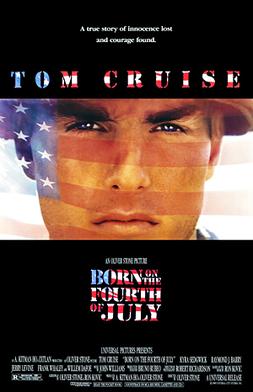
Ron Kovic and Oliver Stone shared the feelings of many of their generation: a deep and abiding feeling of betrayal about the war they were sold in Vietnam. Kovic entered Vietnam a passionate true-believer in the cause; he left a traumatised veteran, paralysed from the waist-down, facing a difficult journey of guilt and discovery that would lead him into a career of anti-war activism. Stone too left Vietnam, wounded and affected with PTSD. The two had collaborated on a screenplay of Kovic’s autobiography in the 70s, before funding fell through: Stone vowed he would make the film when he had the power: the success of Platoon and Wall Street gave him that.

It’s not a surprise, considering the understandable passion that went into it, that Born on the Fourth of July is a polemic. You can argue it’s a heavy-handed and virulent one: but then it’s hard to argue with the catastrophic impact over a decade of American foreign policy decisions had on generations across several countries. Could it have been anything else? Born can be an uncomfortable and relentless watch, and subtlety (as is often the case even in Stone’s best work) can be hard to spot. But is that a surprise when the whole film feels like a ferocious, cathartic cry of pain?

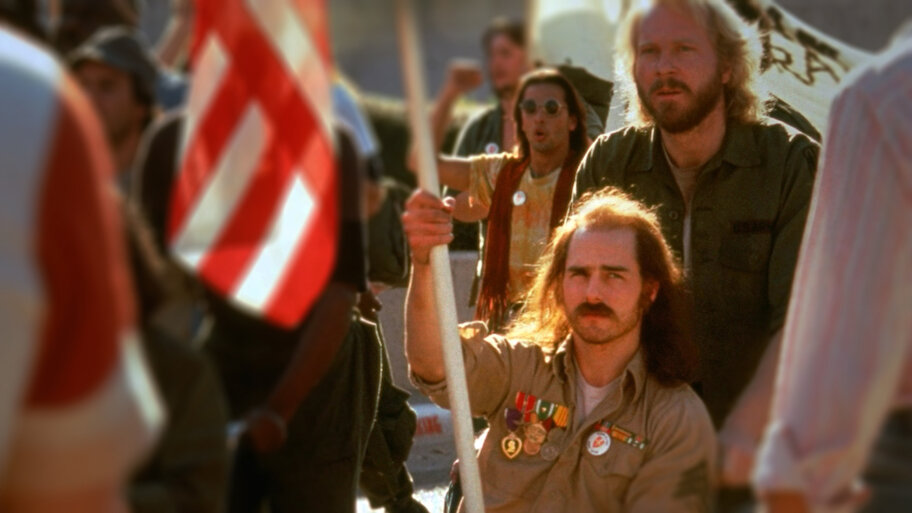
It follows a mildly fictionalised version of Kovic’s life (Kovic’s willingness to adapt his life, drew some fire at the time – particularly as he was considering a run for Congress) starting with his childhood, through his teenage enlistment, the shocking horror of Vietnam, his limited recovery in under-funded veteran hospitals, his growing discomfort with the attempt by some (including his passionately conservative mother) to celebrate sacrifices he increasingly feels were misguided and wrong, culminating in his joining the ranks of the same long-haired protestors he spoke of disparagingly earlier.

Through it all, Kovic is played with a searing intensity by Tom Cruise. Cruise was a controversial choice – seen as little more than a cocky cocktail juggling, jet piloting, superstar (despite measured, subtle turns in The Color of Money and Rain Man). It feels a lot more logical today, now that Cruise’s Day-Lewis commitment to projects is well-known. It’s a raw, open and vulnerable performance with Cruise expertly inverting the cocksure confidence of his persona (and the earlier scenes), to portray a man deeply in denial at his injuries (internal and external), with resentment, anger and self-loathing increasingly taking hold of him.

Kovic is a man who never gives up: be that a misguided (and in the end almost fatal) attempt to defy medical advice that he will never walk again, to embracing the anti-war cause with the same never-say-die attitude he signed up to the military with. What Stone and Cruise bring out, is the huge cost to Kovic of working out the fights worth having: from his student days training days on hand for a wrestling bout he loses, to is military career, to activism, it’s a long, difficult journey.

It’s a performance that understands the crippling burden of guilt. Cruise commits to Kovic’s rage, but always keeps track of the vulnerable, damaged, scared soul underneath. He never allows us to forget this is a man eating himself up, not with resentment at his injury, but guilt at his actions in Vietnam – from being part of a mission that pointlessly machine-gunned women and children, to his own accidental shooting of a fellow marine. As you would expect from Stone, Born’s view of Vietnam is bleak: pointless, disorganised missions, led from the rear by incompetent or uncaring officers, where the only victims are innocent civilians or GIs.

That’s perhaps the key about Born. Kovic is not motivated primarily by his injuries. Those are the results of the risks he chose and, to a certain degree, he accepts them. What motivates him is guilt: throughout he is haunted by the crying of the Vietnamese baby he was ordered to leave in the arms of its deceased mother while also struggling to accept his guilt at his friendly fire killing. These feelings fuel his self-loathing, and his anger rightly develops against the lies he was told that led him to commit those acts.

Stone’s film is unrelentingly critical of the mythologising of armed American intervention, and the assumption (often parroted by those who stay at home) that it can never be anything other than completely righteous. It’s a society where (as happens in the film’s opening) children play at soldiers, watch parades of veterans (the young Kovic fails to clock the flinching of these veterans – one played by the real Kovic – at rifle fire, seeing only what he wants to see) and, as young men, are sold tales of duty, sacrifice and heroism. Kovic is too young and fired-up to notice the reluctant pain of his veteran dad (a superbly low-key Raymond J Barry), clearly struggling with his own trauma.
Much as the film paints one of Kovic’s friends in a negative light – like a young Gecko he heads to college, states all this talk of Communism conquering the world is propaganda bullshit and sets up a burger chain where he brags about fleecing the customers and groping the female staff – it also can’t but admit that when it came to Vietnam, he was right. Similarly, Stone is critical of Kovic’s ambitious, apple-pie Mom (Caroline Kava, in a performance of infuriatingly smug certainty) who won’t hear a word against the war and demands achievement from her son, constantly stressing it must have been worth it.

It’s not a surprise one of Born’s most cathartic moment is when Kovic – Cruise’s performance hitting new heights of unleashed resentment – rails late-at-night at his Mom, calling out her upbringing of unquestioning patriotism and saintly conformity as nothing but an ocean of bullshit. It’s an outpouring that has been welling up since his return, looking for the right direction: snapping at protestors, doctors, his younger brother who dares to oppose the War. Born is about a man coming to terms with why he is so angry and finding the appropriate target: and it becomes the system that sent him on this journey, starting with his mother and onto his own government.

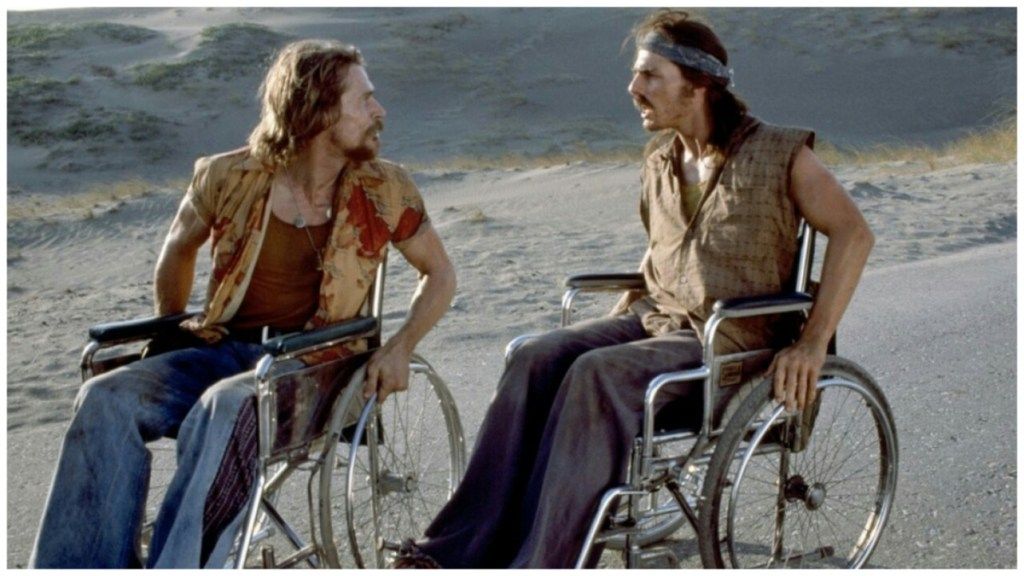
This would be the government that provides shabby hospitals, full of broken-down equipment, whacked out attendants and overworked, underqualified doctors.  Stone’s camera pans along wards piled with rubbish and rats. The conditions here are, in many ways, worse than the Mexican villa where Kovic finds himself struggling to re-adjust, surrounded by other paralysed veterans (among them Willem Dafoe, as a seemingly mentor-like figure with uncurdled rage just below the surface). Stone’s film never once loses its righteous fury at how a generation was let down by its leaders on every level.

So it’s not surprising Born is a fiercely polemic work. And, yes, that does sometimes reduce its interest and make it an unrelentingly grim watch (Stone isn’t interested in putting any other side of the argument in here). But it’s extremely well made (Robert Richardson’s excellent photography uses tints of red, white and blue at key points to brilliantly stress mood) and you can feel the heart Stone (who won a second directing Oscar for this) put into it. Its impact comes down to how much you engage with the passionate, furious argument its making: connect with it and it’s a very powerful film.

Mission: Impossible: The Final Reckoning (2025)

Mission: Impossible: The Final Reckoning (2025)

Cruise’s final mission is really a tribute to the star himself and his never-ending force of will

Director: Christopher McQuarrie

Cast: Tom Cruise (Ethan Hunt), Hayley Atwell (Grace), Ving Rhames (Luther Stickell), Simon Pegg (Benji Dunn), Esai Morales (Gabriel), Pom Klementieff (Paris), Henry Czerny (Eugene Kittridge), Angela Bassett (President Erika Sloane), Holt McCallany (Serling Bernstein), Janet McTeer (Secretary Walters), Nick Offerman (General Sidney), Hannah Waddingham (Rear Admiral Neely), Tramell Tillman (Captain Bledsoe), Shea Whigham (Briggs), Greg Tarzan Davies (Theo Degas), Charles Parnell (Richards), Mark Gatiss (Angstrom), Rolf Saxon (William Donloe), Lucy Tulugarjuk (Tapeesa)

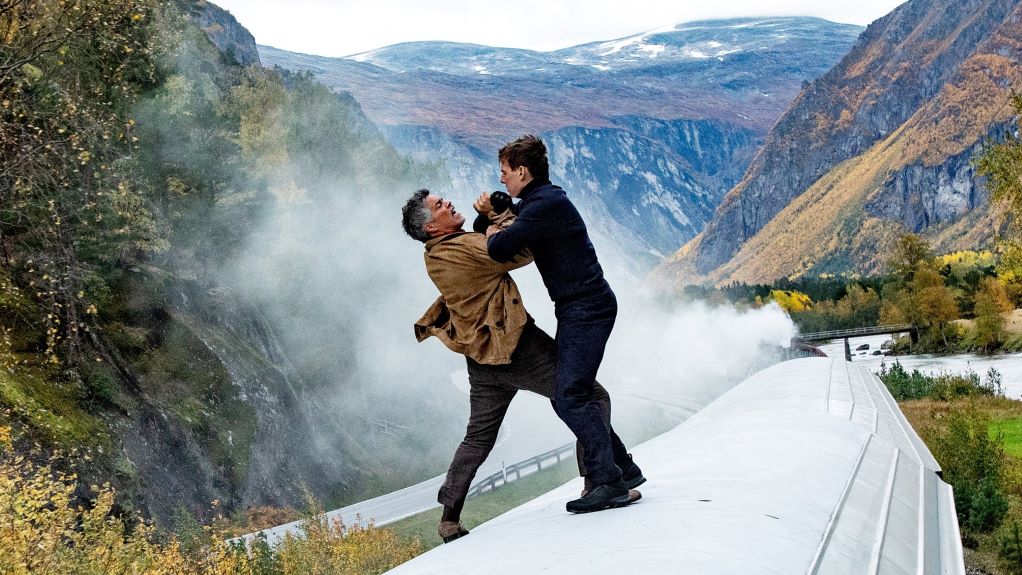
Almost thirty years after the first film trotted into the cinema, Tom Cruise signs off (he claims) his franchise of death-defying stunts with a final entry that dials the global threat up so far you can almost hear the desperate whirring as the doomsday clock tries to keep up. Mission: Impossible: The Final Reckoning is big in every single way, packed with set-pieces, dense procedural plot mechanics that require reams of exposition, global annihilation round every corner and at the centre the towering, chosen-one aura of Ethan Hunt himself, the only man who can save the world.

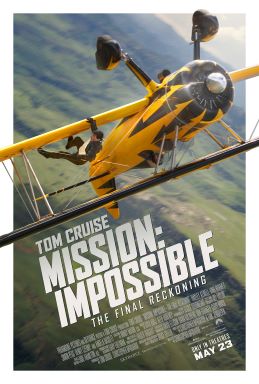
The Final Reckoning takes off a few weeks after the now-rechristened Dead Reckoning (after it under-performed they didn’t want to scare people off with a Part 2 subtitle). AI demigod The Entity is hellbent on gaining control of the world’s nuclear arsenals so that, having presumably binged Terminator, it can SkyNet-like wipe out humanity. Ethan (Tom Cruise) is on the run, but he has a plan. Dig out the sunken Russian sub where the Entity was ‘born’, fish out its source code, hook it up to an Entity-killing virus and trap the AI would-be-overlord in what’s essentially a glowing USB drive. This mission will involve lots of running, fighting, defusing of nukes, diving to the bottom of the ocean, jumping between bi-planes mid-flight… he might as well chuck the kitchen sink as well.

Mission: Impossible: Final Reckoning has plenty of fun, even if it is hellishly overlong. It’s the sort of crowd-pleaser that gets people clapping at the end (as several people in my packed-out screening did). When the stunts come, they’re hugely well-staged. As always the Tom Cruise USP is front-and-centre: if you see him do it, he did it. Yes, Tom really did jump out of a naval helicopter into the raging Atlantic. Yes, that really is Tom, climbing over a speeding bi-plane thousands of feet-up with only a pair of goggles to keep him safe. It’s no-coincidence the villain is an AI who creates an artificial digital reality. The Mission: Impossible films are all about it keeping it solidly real.

But, once the initial adrenaline rush subsides, I’m wondering if its pumped-up thrills are going to be a bit more wearing second-time around. What struck me about The Final Reckoning is, that for all the huge amount of stuff going on, there is precious little heart in it. More than any other M:I film since the little-loved M:I:2 (practically the only film in the franchise not to get a shout-out here), the act of saving-the-world here is a job for one never-wrong superhuman. Cruise does almost everything, his team’s main role being getting into the right place to send him a message or wire up a computer. On top of that, the best of the series set-pieces had flashes of Ethan’s stress, fear and sense of ‘I cant believe I have to do this’ humour – all of that is mostly missing here.

The Final Reckoning loses a lot of the heart of what made the earlier films so rewarding. It loses the moments of friendship or sparky interplay between the team. Cruise and Pegg, the series main comic relief, share almost no scenes together. Klementoff and Davies do virtually nothing as new team members, other than shoot guns and get captured. Cruise shares more time with Atwell, but the bizarre is-it-a-romance-or-not between them is as oddly undefined as Ethan’s relationship with Rebecca Ferguson’s Elsa was (in fact it makes you realise the most sexual thing Ethan has done since film three is hold someone’s hand). Cruise is so often on solo missions, that the film could probably have dispensed with the team altogether with only a small plot impact.

The film only affords to slow down to give Ving Rhames (the only other guy to appear in every film) a moment of genuine emotion – though special mention must go to Rolf Saxon and Lucy Tulugarjuk who from small moments craft characters I genuinely grew attached to and worried about. Otherwise, the bonds of friendship that powered the franchises most successful non-stunt moments are absent. In fact, also missing are the heist caper set-pieces – even the famous face-masks are only employed very briefly.

The Final Reckoning dials the stakes up so much, they are effectively meaningless. In previous films, high-stakes were mixed with personal ones: we were always more invested in whether Ethan save his friends rather than the word. The film also struggles without a real antagonist. Its nominal human opponent, Esai Morales’ Gabriel, little more than a smirk and an obstacle. Shorn of the most-interesting element of his character – his fanatical loyalty to his AI master – Gabriel is neither particularly interesting or a threat. In its vast runtime, Final Reckoning has no time to actually explore what the personal link between Ethan and Gabriel actually was, making you wonder why on earth they bothered to put it in both films in the first place.

It’s not helped by the fact that the film is so constantly in motion, that virtually every single scene of dialogue is about communicating what’s going to happen next. There are constantly (admittedly skilfully batted around) conversations explaining why Ethan has to go there, get this, bring it here, do this to it, put it in that all within a ridiculously small window of time. Sometimes, to shake it up, we cut across to the US bunker where a gang of over-qualified actors (Bassett, Offerman, McCallany, McTeer and Gatiss) similarly explain what the Entity is doing to each other. (Although, like Rhames, Bassett gets the most interesting stuff to actually act as a President facing a Fail Safe like terrible choice).

What you realise is that The Final Reckoning is pretty confident that what really pulls the audience in is Tom Cruise doing crazy stunts, so that’s what it gives us. In fact, rather than a tribute to the series (despite closing plot points from Missions 1 and 3) what the film really feels like is a tribute to Cruise, the last man-standing among the old-fashioned superstars. Most of the dialogue puffs up Cruise’s Ethan into Godlike status (it’s not quite “living manifestation of destiny” like Rogue Nation put it, but close). Cruise carries out two extended fight scenes in his pants (though if I looked like that at 61 so would I). No other actors intrude on his stunts or messianic sense of purpose.

Which is amazingly done of course. Literally no-one does it better than Cruise. The fact that the movie feels like Cruise effectively shot most of it alone with just the crew, means it almost doesn’t matter that its plot is merely to link together set-pieces. And if someone deserves a victory lap – which is what this is – then that guy is Cruise. I’d have wanted more of the fun, humour and warmth that made most of the other films such massively rewarding hits. But The Final Reckoning gives more of what the series does that no other series does. And I guess that’s a fitting finale.

Mission: Impossible: Dead Reckoning Part 1 (2023)

Mission: Impossible: Dead Reckoning Part 1 (2023)

Action and impossible stunts continue to deliver entertainment in Cruise’s running and jumping franchise

Director: Christopher McQuarrie

Cast: Tom Cruise (Ethan Hunt), Hayley Atwell (Grace), Ving Rhames (Luther Stickell), Simon Pegg (Benji Dunn), Rebecca Ferguson (Ilsa Faust), Vanessa Kirby (Alanna Mitsopolis), Esai Morales (Gabriel), Pom Klementieff (Paris), Henry Czerny (Eugene Kittridge), Shea Whigham (Jasper Briggs), Cary Elwes (Director Denlinger), Greg Tarzen Davies (Degas), Frederick Schmidt (Zola Mitsopolis), Charles Parnell (NRO Director), Mark Gatiss (NSA Director), Indira Varma (NRO Director)

When they promote Mission: Impossible films, the stunts are front-and-centre. So much so that the film’s life-risking (what else?) stunt of the Cruiser driving a motorbike off a cliff and parachuting to safety was not only in every trailer but they even released a social medial film showing how it was done. Mission: Impossible films are thrill rides – and knowing what you are going to get doesn’t reduce the excitement of getting it. There’s plenty of excitement in Dead Reckoning Part 1 but that desire to entertain doesn’t always work when the film tries to tackle more emotional content.

Dead Reckoning starts, Hunt for Red October-like, with the sinking of a radar-invisible Russian sub (there is even a neat twist on that film’s switch from Russian to English). The disaster is caused by its AI supercomputer, known as The Entity. While intelligence agencies compete to control it, the Entity uses its ability to predict every outcome to plot world domination. The only threat it predicts? Ethan Hunt (Tom Cruise) of course. Ethan will stop at nothing to destroy this threat, in a country-hopping adventure with his regular team (Ving Rhames, Simon Pegg and Rebecca Ferguson) that rotates around mysterious thief Grace (Hayley Atwell) and a ruthless old enemy of Ethan’s, Gabriel (Esai Morales).

Dead Reckoning is, of course, huge fun. Shot over years, due to Covid (responsible for its budget ballooning to an eye watering $300 million) it never lets events go on too long without throwing in a twist and turn filled set-piece which plays off its lead characters’ skill under pressure. Despite the vast numbers of set-pieces, you rarely shift in your seat, because each is paced to perfection with just the right balance between tension and wit. That long shooting process also means its villainous AI plotline (clearly the makers binged on AI drama Person of Interest beforehand) seems zeitgeist rather than something from science fiction.

The film is a masterclass in shooting action. The recent Indiana Jones film threw in a seemingly never-ending three-way car chase. Dead Reckoning probably dedicates more time to its jaunt through the streets of Rome, but it’s always clever enough to keep shifting gears. We go from shoot-out, to Cruise and Atwell handcuffed together and awkwardly sharing the driving, to switching of cars (a ludicrous yellow mini which even Ethan can’t work out, impotently turning the windscreen wipers on and off), pratfall spins down the Spanish steps, all with a free-wheeling sense of improvisational fun that only comes from months of careful storyboarding and determination to never settle for “things move fast until they stop”.

Dead Reckoning is a reminder that no-one since Buster Keaton puts themselves through as much as Cruise does (it seems fitting the finale builds towards the biggest train crash since The General). It’s Cruise’s USP: he does it for real. Even at 60 he pushes himself in the way few actors have ever done. Run full-pelt through the streets of Venice? Climb along the roof of a speeding train? Fight two actors half his age in a cramped corridor? You can sort of understand why the film doesn’t shirk on dialogue paying tribute to Cruise/Ethan’s superhuman determination and endurance (and the film is a further reminder Ethan’s only flaw is caring too damn much).

Let’s not forget also Cruise pretty much produces and co-directs these missions. Dead Reckoning is a triumph of the producer’s art – McQuarrie and Cruise are practised experts at pulling together locations, resources and expertise. They are equally ace at assembling tense sequences that don’t involve death-defying stunts. A first act cat-and-mouse chase around a huge Dubai airport sees Cruise tracking Atwell, while dodging a US government team sent to capture him, while Pegg hunts for a suspicious bag, while Cruise is also tracked by Morales. None of this involves stunt work (although Cruise and Atwell both learned how to perform sleight-of-hand tricks in camera) just timing and an ability to constantly present events in a dynamic way. This is consummate box-office ride assembly, marshalled to perfection with all the skill of expert showmen.

The set pieces are so gripping, it sometimes draws your attention a little bit too much to how perfunctory all the joins can be. A host of British actors (Gatiss, Varma and rent-a-villain Cary Elwes) gather in a room to throw plot statements at each other. The conversations between the team are often dominated by the narrative need to establish who will go where and why. The script has a tendency to demonstrate how people feel by having them bluntly state it (“My friends matter more to me than anyone!”). When trying to be human, rather than a thrill ride, it can stumble.

It’s perhaps why the moments that aim for tragedy feel like they land slightly awkwardly, as if you aren’t quite sure how sad you should be feeling. Dead Reckoning throws in an emotional mid-act that strains for a depth a film primarily designed to entertain popcorn munchers, isn’t quite able to deliver on. Put simply, the film can’t afford to have Ethan get caught up in grief when ten minutes later we need an exasperated Cruise to jump off a mountain. This ride don’t stop for anyone.

The film also suffers from the characters spending the entire runtime chasing a mysterious key which they have no idea the purpose of, but the audience has had explained to us in that opening Russian prologue. This is a series that thrives best on carefully concealing things from us, on the characters having a card or two up their sleeves. It somehow doesn’t quite work that we are more aware of the bigger picture than the characters. It makes Dead Reckoning feel like an extended opening act.

But this ride is fun enough for now. Atwell is charming, funny and has superb chemistry with Cruise; Morales is a chillingly arrogant villain, Klementieff enigmatically vicious as a near-wordless henchman. Whigam and Davies are good fun as contrasting agents vainly chasing the uncatchable Ethan. And above them all is Cruise: jumping, running, diving, punching and generally putting life-and-limb on the line, all to entertain us. Maybe he is a bit mad, but it’s impossible not to applaud him.

Top Gun: Maverick (2022)

Top Gun: Maverick (2022)

You’ll feel the need for speed in this triumphant better-than-the-original sequel

Director: Joseph Kosinski

Cast: Tom Cruise (Captain Pete “Maverick” Mitchell), Miles Teller (Lt Bradley “Rooster” Bradshaw), Jennifer Connelly (Penny Benjamin), Jon Hamm (Vice Admiral Beau “Cyclone” Simpson), Glen Powell (Lt Jack “Hangman” Seresin), Monica Barbaro (Lt Natasha “Phoenix” Trace), Lewis Pullman (Lt Robert “Bob” Floyd), Ed Harris (Rear Admiral Chester “Hammer” Cain), Val Kilmer (Admiral Tom “Iceman” Kazansky), Charles Parnell (Rear Admiral Solomon “Warlock” Bates)

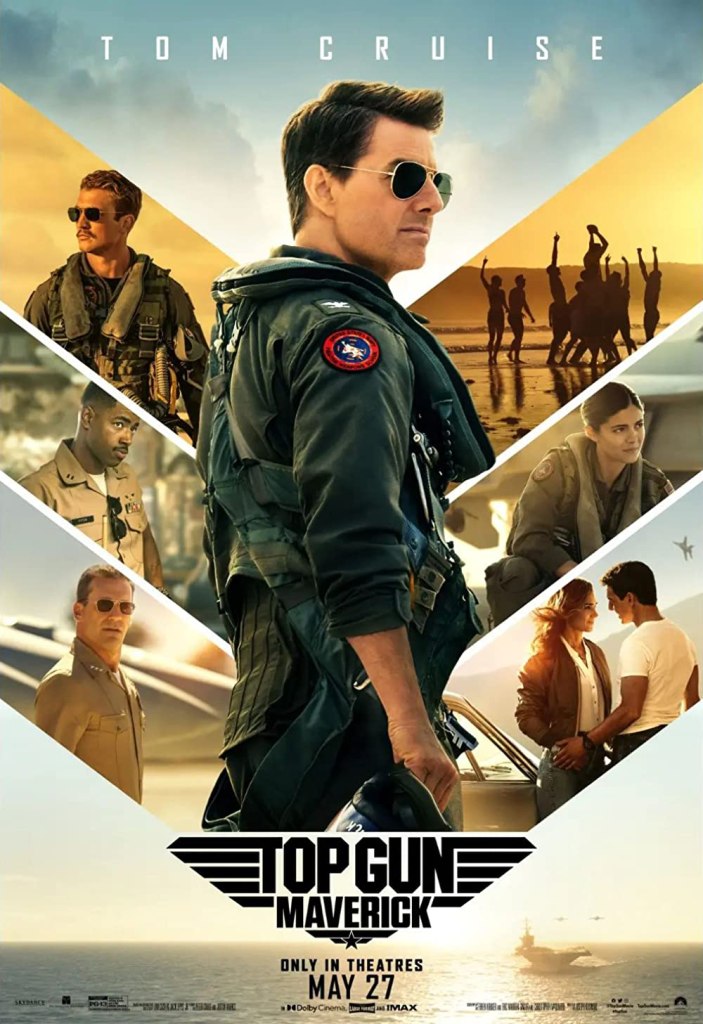
It’s been 38 years since Tom Cruise last felt that need for speed. Top Gun is a sentimental favourite, partially because its the ultimate brash, loud, Reaganite 1980s Hollywood film. But (whisper it), it’s not actually – and never has been – a very good film. Perhaps though that’s all for the best: Top Gun has so little of merit in it, it offers an almost completely blank canvas for a sequel. It helps the team create Top Gun: Maverick, a film so insanely entertaining it should carry some sort of health warning.

Decades have passed and Pete “Maverick” Mitchell (Tom Cruise) is pretty much the greatest pilot in the world, deliriously skilled at everything in the cockpit and pretty much hopeless at anything outside it. He’s distrusted by all his superiors except his old wingman Iceman (Val Kilmer). Thanks to Iceman he is selected to train the next generation of pilots at TOP GUN for an impossible mission to take out a nuclear plant in a “hostile nation” (clearly Iran). One of that next generation is Bradley “Rooster” Bradshaw (Miles Teller), son of Maverick’s late best friend “Goose”, the guilt for whose death Maverick never recovered from. After Maverick tried to prevent Rooster from following in his father’s footsteps – not able to stand the thought of being responsible for the deaths of both his surrogate brother and son – can the two overcome their problems?

Top Gun: Maverick was delayed from hitting cinema screens for nearly two years thanks to Covid. Cruise resisted all opportunities to sell it to streaming: a decision vindicated by the supreme big-screen entertainment it offers. This one you really do need to see on the big screen. Its aerial footage is so stunning it makes the original look like tricycles on training wheels. Combined with that though, and unlike the original, Maverick has a thoughtful and engaging emotional storyline, with characters who change through well thought out emotional arcs.

But I’ll be honest, the staggering, visceral enjoyment of these plane sequences is probably the principal thing you’ll immediately take out of the film. Working from a training programme partly devised by Cruise, the film shows the impact of punishing G-forces by… actually putting the actors in planes travelling at these huge speeds. Unlike Top Gun, with its blue-screen cockpit shots, there is no doubt Cruise, Teller et al are actually in the planes as they bank at impossible speeds. Partially shot by the actors themselves – sitting the camera up in their cockpits – the film literally shows you the scenery flashing by. It’s Cruise’s mantra of doing it for real taken to a stunning degree. It’s the simple old-fashioned joy of knowing almost everything you see is real.

The mission this time is far more detailed: effectively it’s a steal from Star Wars, our heroes required to fly through a narrow ravine (below the radars of surface to air missiles) before climbing a steep bank and using their laser targeting to successfully blast a small access port. (It won’t surprise you to hear that on the final mission one character has to “use the force” when their targeting laser fails). Maverick’s training programme pushes the pilots to the limit, while his extraordinary flight skills quickly win their awe (in the first session he challenges all the pilots to take him down in a simulated dogfight, with everyone shot down doing 200 press-ups – Maverick does zero, everyone else 200+). Kosinski shoots with a cool clarity that makes you feel you are being punched by G-force.

But Top Gun: Maverick would just be a showcase for cool planes without its emotional heart. And it’s the intelligent and involving story that makes it work. Cruise is at his charismatic movie star best as Maverick – he knows exactly how to win the audience over – but his cocksure confidence is underpinned by a growing sense of fear at the risks he puts others through. Unlike the navy, his main concern is to get the pilots back alive and his guilt-ridden treasured memory of Goose is the hallmark of a man who never managed to put ends before means. He’ll take any risk himself, but balks at taking chances with anyone else’s life.

It’s what drives his troubled relationship with Rooster. The two have a surrogate father-son relationship, fractured by Maverick’s attempt to keep Rooster safe out of the cockpit. (Pleasingly, Rooster does not hold Maverick responsible for his father’s death, only for derailing his career.) The relationship between these two – Cruise’s Maverick quietly desperate to rebuild some sort of familial connection and Rooster shouldering resentment for a father-figure he clearly still loves – is handled with a great deal of tact and honesty. It really works to carry a wallop.

It’s also part of how Maverick’s place in the world, and decisions in life, are being questioned. As made clear in a prologue where he thumbs his nose at a sceptical Admiral (no one scowls like Ed Harris) by taking a prototype jet out for test run, he’s both a relic and a guy who doesn’t know when to stop (he wrecks the jet by pushing past the target of 10 Mach by trying to go another .2 faster). Unlike Iceman – a touching cameo from a very ill Val Kilmer that leaves a lump in the throat – Maverick never fit in within a military organisation (“They’re called orders Maverick”). He’s lonely, his past failed relationship with Jennifer Connelly’s Penny just one of many roads-not-taken. (There is no mention of Kelly McGillis’ character.) In a world of digital drones, he’s an analogue pilot flying by instinct: his days are numbered.

This is proper, meaty, thematic stuff explored in a series of involving personal arcs which by the end not only leaves you gripped because of the aerial drama, but also genuinely concerned about the characters. I can’t say that about the original. Top Gun: Maverick is not only a thematically and emotionally richer story – carried with super-star charisma by Cruise – than the original, it’s also more exciting and more punch-the-air feelgood. This sort of thing really is what the big screen is for.

Top Gun (1986)

Top Gun (1986)

Cruise flies into movie super-stardom in this fun-but-much-worse-than-you-remember flying film

Director: Tony Scott

Cast: Tom Cruise (Lt Pete “Maverick” Mitchell), Kelly McGillis (Charlie Blackwood), Val Kilmer (Lt Tom “Iceman” Kazansky), Anthony Edwards (Lt Nick “Goose” Bradshaw), Tom Skerritt (CDR Mike “Viper” Mitchell), Michael Ironside (LCDR Rick “Jester” Heatherly), John Stockwell (Lt Bill “Cougar” Cortell), Barry Tubb (Lt Leonard ”Wolfman” Wolfe), Rick Rossovich (Lt Ron “Slider” Kerner), Tim Robbins (Lt Sam “Merlin” Wells), James Tolkan (Cdr Tom “Stinger” Jardian), Meg Ryan (Carole Bradshaw)

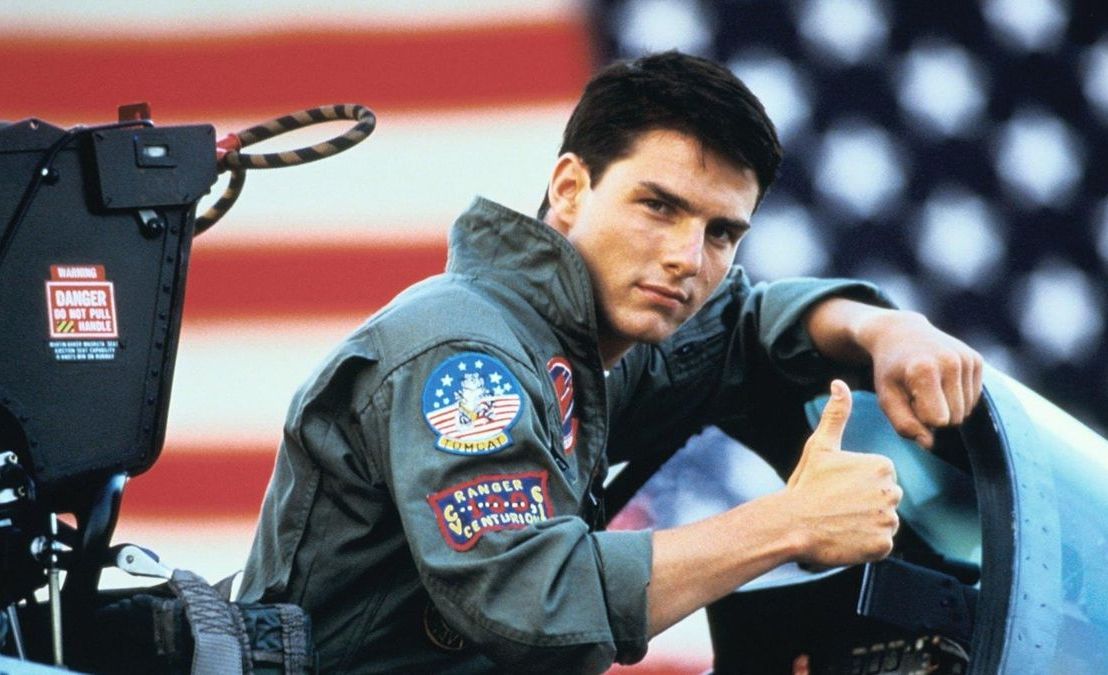
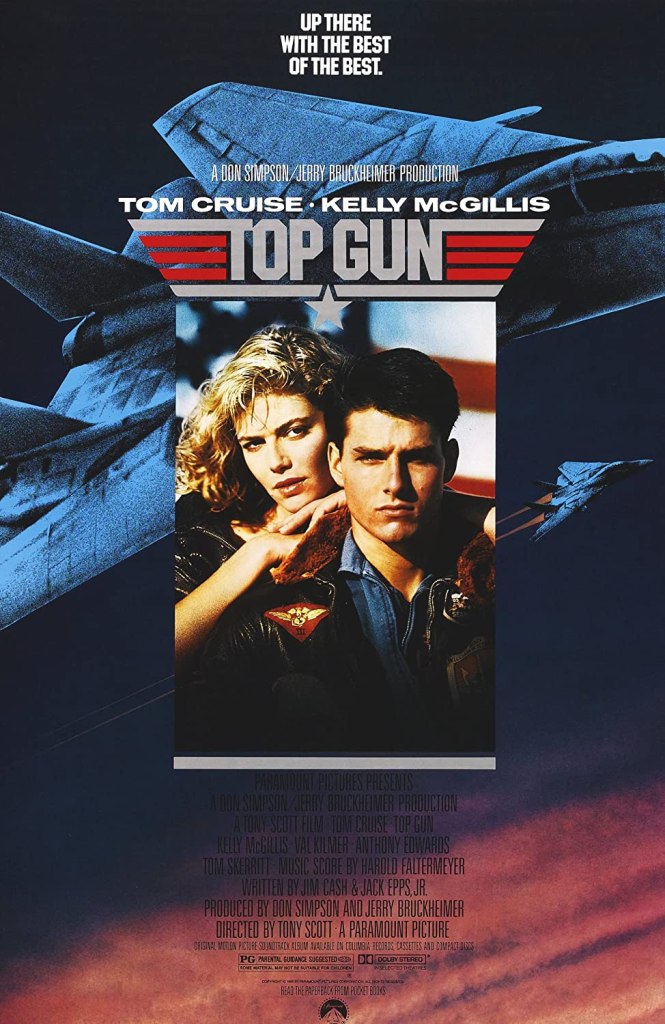
“I feel the need: the need for speed!” Those words lit up mid-80s cinema screens with one of the biggest hits of the decade. Top Gun is still one of Cruise’s most iconic films, its blasting rock-and-roll soundtrack, beautifully backlit romance and cocksure go-getting self-confidence making it one of the definitive Reaganite 80s films ever made. Its legacy is so all-consuming, it’s always a surprise when you sit down to watch it what a fundamentally average it is.

Its plot, such as it is, can be summarised thus: Tom Cruise cockily flies planes and romances Kelly McGillis until Goose dies. Then he flies planes with the same level of skill but slightly more humility and commits to Kelly McGillis. It all takes place in TOPGUN, the navy’s dog-fight training school for elite pilots. Cruise is Pete “Maverick” Mitchell, super-confident best-of-the-best. Kelly McGillis is the astrophysicist and civilian instructor on the course whose heart melts for Tom’s boyish charms. Anthony Edwards is the doomed Goose (he might as well have a skull and crossbones hanging over him – he’s even got a loving wife and son back home). Val Kilmer is Cruise’s rival pilot, super-professional “Iceman”. The training is fast-paced, macho and culminates in a clash with a (conveniently unnamed) country that definitely isn’t the USSR.

There are three things undeniably great about Top Gun. The songs from Kenny Loggins and Berlin are top notch, full of soft-rock sing-along bombast. Scott shoots the hell out of scenes and the sun-kissed beauty framing the various airplanes and aircraft carriers is superb. With its fetishistic worship of the manly glory of the navy and its equipment, the film had full military backing, a huge boon it exploited for wonderfully executed scenes of dogfights and faster-than-sound planes (Scott even paid $25k to get an aircraft carrier to change course – writing a cheque there and then – so a sunset shot would look better). And of course there is Tom Cruise.

Top Gun is the foundation stone in the Church of Tom Cruise, defining a persona Cruise would effectively riff on for huge chunks of his career. Pete Mitchell is so cocksure he’s even called Maverick. But, as well as being arrogant and over-confident, he’s preternaturally skilled, boyishly enthusiastic, strangely vulnerable, yearns for affection, wins people over with a grin and goes through a crisis of confidence that sands down his negative qualities while never touching his courage, skill and likeability. Cruise cemented his eye-catching charisma and relatability: audiences wanted to be him or be with him. A huge chunk of its massive success is down almost exclusively to what a star Cruise is and how easily he makes this hackneyed stuff work.

The rest is a bizarre mix of half-formed plot ideas, weakly sketched characters and a plot so shallow it almost doesn’t deserve the name. Top Gun is all about a cool guy flying planes accompanied by some excellent songs. There is no depth to its character exploration. There is a dim suggestion Maverick needs to mature (with Goose as the sacrificial lamb to prompt that development) but it’s barely explored. It has no shrewdness in its look at the risk-taking intensity of flying or the type of personalities it might attract. The training is awash with familiar tropes: hotshots, grizzled trainers (two of them in Skerritt and Ironside!) mixing growls with behind-his-back grins at Maverick’s pluck. His rival is the anthesis of Maverick, but (gosh darn it!) he eventually learns to respect him.

The central romance seems thrown in because a film like this needs it – it’s very much An Officer and a Gentlemen in the skies. Maverick’s true emotional love story is with Goose – this surrogate brother/uncle providing Maverick’s only friendship and the vicarious family this Cruise archetype character secretly longs for. But gosh darnit, it’s Hollywood so gotta have a beautiful woman for our hero to manfully seduce. Poor Kelly McGillis looks rather uncomfortable in her ill-shaped and poorly developed character, while her love scenes with Cruise are acted with a slobbering over-intensity that suggests both of them are trying too hard (he constantly kisses her tongue first, which is gross). Perhaps they wanted to really go for it in the hope viewers would overlook the obvious homoerotic tensions of most of the film.

Oh those tensions! Top Gun drips with gleaming, tanned half-naked men squaring up to each other in dressing rooms – and that’s not even mentioning the infamous volleyball sequence (where only Edwards, bless him, wears a t-shirt). Characters forever utter variations on “I’ll nail his ass” lines. Iceman and Maverick take part in a homoerotic-tension fuelled rivalry that culminates in an explosive dog-fight climax and a loving embrace on the deck of an aircraft carrier.

It’s hard to tell how much all this was a joke, and how much Scott, Bruckheimer and Simpson just didn’t notice in the middle of all their glistening, back-lit, fast-paced shooting of military muscle (in every sense) how gay it might look. Maybe they thought people wouldn’t notice either amongst all the military machinery (this must be Michael Bay’s favourite ever film). Top Gun’s aerial footage is super impressive (though it is funny noticing now that famous daredevil Cruise clearly does all his cockpit shots in front of a green screen) even if the whole film feels like an MTV video to promote its knock-out songs.

Top Gun is still fun, even if that’s mostly mocking the nonsense and emptiness it’s built upon. Nothing much really happens, its plot so flimsy it barely stands up against the Mach-9 force of its planes. But it’s got Cruise at his blockbuster best – and when you’ve got that you don’t really need anything else. It’s poorly written, junkfood trash all framed in a fetishistic beauty – but it’s sort of goofy, stupid, empty fun.

The Color of Money (1986)

Newman and Cruise set the table in The Color of Money

Director: Martin Scorsese

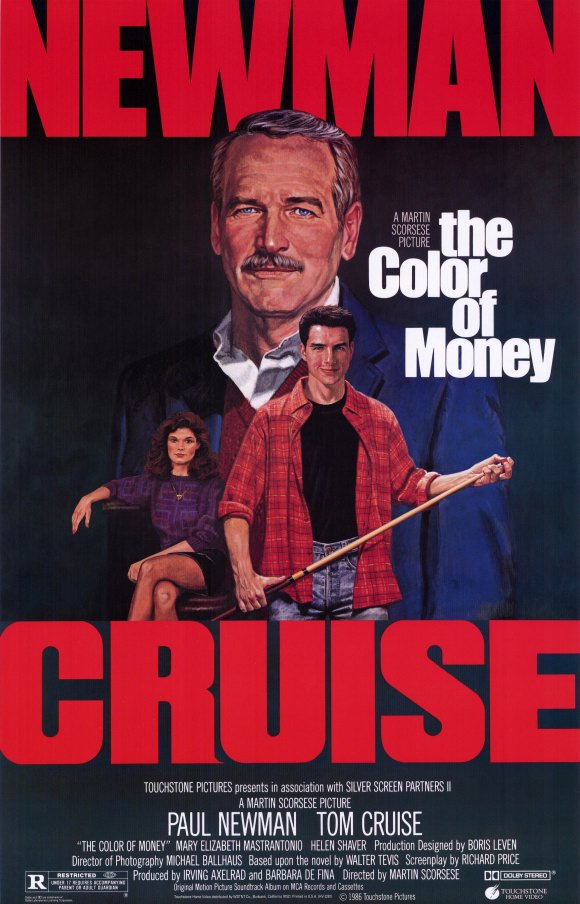
Cast: Paul Newman (“Fast” Eddie Felsen), Tom Cruise (Vincent Lauria), Mary Elizabeth Mastrantonio (Carmen), Helen Shaver (Janelle), John Turturro (Julian), Bill Cobbs (Orvis), Forest Whitaker (Amos), Keith McGready (Grady Sessions)

The Hustler is one of Newman’s most iconic roles. It’s remembered for his cocksure cool, leaning across the table and dispatching balls with a twinkling smirk. What people don’t remember is that The Hustler is actually more of a kitchen-sink drama than a Rat Pack party. It deals with depression, assault, corruption, injustice and suicide. It’s not even remotely a laugh a minute. The Color of Money is a belated sequel, that feels made by people who remember their impression of what The Hustler was, but don’t actually remember the tone of the film itself. But then, Scorsese intended from the very start to make an entertainment to showcase a star, so I’m sure he knew that making a real tonal companion to the original film was always going to be a no-no.

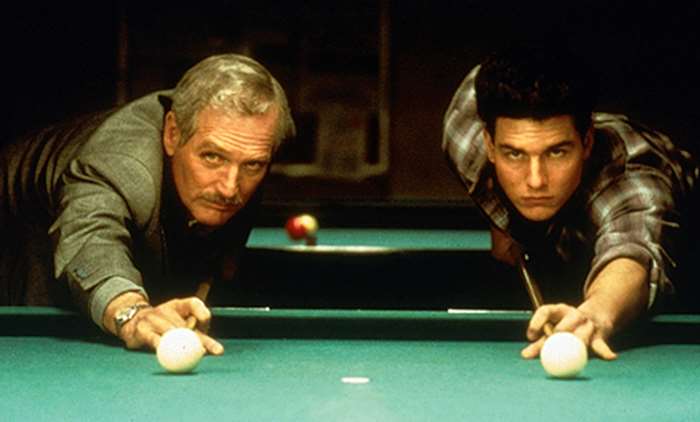
It’s 25 years since “Fast Eddie” Felsen (Paul Newman) was banished from pool clubs throughout the land by gangsters. He now earns a living selling booze to clubs, largely so he can hang out pool clubs and mentor and stake the ‘hustler’s and stars of tomorrow. The kid who catches his eye is Vincent Lauria (Tom Cruise) an exceptionally gifted pool player with a cocksure confidence and a love of the game, that perhaps reminds Eddie more than a little of himself. Vincent, and his girlfriend Carmen’s (Mary Elizabeth Mastrantonio) grifting skills leave a lot to be desired: but Eddie sees promise and takes them out on a road trip to train them up and make a fortune.

It’s a fitting title, as it’s pretty clear that The Color of Money was the main thing on Scorsese’s mind when he made this. Don’t get me wrong, this is an enjoyable and well-made star vehicle, but it’s also the only time Scorsese was a hired gun working for a star who made films he grew up watching. Scorsese has spoken openly that his main aim here was to bring it in on time and on budget (he made it faster and cheaper than that), in order to help win studio backing for The Last Temptation of Christ. (Ironically of course, most people have far fonder memories of The Color of Money than that film, but then this is a film designed to entertain not challenge.)

It’s a fairly traditional and even predictable storyline. The mentor and the mentee, the latter jaded but rediscovering some of his old fire from the callow exuberance of the other. To be honest not very much actually happens in the film other than pool games and some predictable feuds before the final reconciliation. Inevitable lessons are learned and understandings are achieved. Compared to The Hustler, this is a very callow piece of work indeed, a straight entertainment vehicle that takes the fun, memorable beats of the original and crafts a whole film around them. In many ways you could argue it’s as much a sort of spiritual sequel to Newman’s work in The Sting as anything else.

But Scorsese shoots the hell out of it, so there is always something to look at. No end of editing and camera tricks are used for the pool games, which are shot like action sequences. Swift pans, tracking shots, sharp camera spins are all used to turn a game of knocking nine balls into pockets into something epic. Interesting shots abound, especially several sequences where a camera is mounted on a car bonnet to product an odd Steadicam effect. This is work way beyond a journey-man-pro director, but compared to Scorsese’s other works it’s minor. Scorsese opens the film by delivering a voiceover introducing nine-ball-pool, but the film never feels personal.

What it is, is a triumph for its two leading men. The year before Newman had won an honorary ‘career’ Oscar, which he accepted with a slight air of surprised resentment. No wonder, since he won a ‘real’ Oscar a year later for this reprise. To be honest, the film doesn’t ask anything particularly demanding of Newman, compared to the heights he had achieved in, for instance, The Verdict. It’s a lot of charm and aged confidence, mixed with a mentor exasperation and an unspoken concern that his powers are fading. Newman does spice things up with some interesting character work – there is a great scene when Eddie berates himself for being suckered by pool shark Amos (also a beautiful cameo from Forest Whitaker), humiliated for having lost his touch. But, whereas the first film was a below-the-skin character study, this is more like a victory parade for a charismatic star who even signs off the film by stating “I’m back!”. He’s great but not challenged.

Cruise raises game as he always does when working with legends (see also his work with Hoffman and Nicholson). The film captures perfectly both his cocksure confidence and the gentleness and vulnerability that Cruise manages to hide beneath it. You only need to see how vulnerable and scared Vincent is of being abandoned by the more sophisticated Carmen, to know that his karate moves with a pool cue while singing along to Werewolves of London is a front of a young man wanting to look like a big one to the world. Mastrantonio is pretty good in a fairly simplistic role, that is essentially a twist on a hooker-with-a-heart-of-gold.

The Color of Money offers up fairly predictable charms and plot twists and no real surprises at all. While its original film was a piece of neo-realism tinged social drama, this is a brash entertainment, stuffed with pop songs and charismatic actors doing their thing. All pulled together by a director who wanted to prove he could make something as glossy and empty as the next man. Entertaining but forgettable.

The Firm (1993)

“He can’t handle the truth!” Tom Cruise takes on The Firm. We lose.

Director: Sydney Pollack

Cast: Tom Cruise (Mitch McDeere), Jeanne Tripplehorn (Abby McDeere), Gene Hackman (Avery Tolar), Holly Hunter (Tammy Hemphill), Ed Harris (FBI Agent Wayne Tarrance), Hal Holbrook (Oliver Lambert), Jerry Hardin (Royce McKnight), David Strathairn (Ray McDeere), Terry Kinney (Lamar Quinn), Wilfrid Brimley (Bill DeVasher), Gary Busey (Eddie Lomax), Paul Sorvino (Tony Morolto)

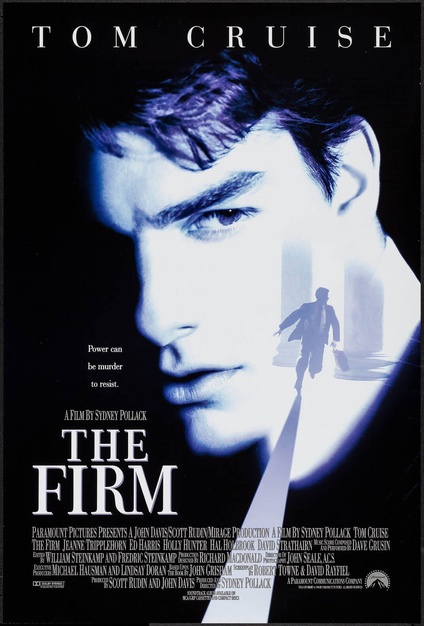
Mitch McDeere (Tom Cruise) is graduating top-of-his-class from Harvard Law. A plucky kid who’s worked for everything he has – and who wants to provide the best he can for wife Abby (Jeanne Tripplehorn) – Mitch has lots of offers but is seduced by a perk-filled offer from a law firm in Memphis. Everything goes wonderfully at first. But then associates at the firm start to die under suspicious circumstances and Mitch discovers no-one everleaves the firm except in a wooden box. Maybe all that off-shore tax-dodging isn’t quite as innocent as it seems – and those big-city clients with Italian-sounding names aren’t so friendly after all…

Adapted from a best-selling novel by John Grisham at the height of his airport-novel flogging days, The Firm is bought to the screen by Sydney Pollack. And what a complete dog’s dinner he makes of it. The Firm is a dreadful film: long, slow and dull with a plot that stretches right through elaborate and comes out the other side as confusing. By the time Mitch is tearing through Memphis, briefcase flapping behind him, you’ll have long-since ceased caring about anything involved in the film at all. Because for a film of such great length, very little seems to happen in it – and what little does happen is wrapped up in a mixture of legalese and curiously flat chase sequences.

Cruise plays Mitch at his most gung-ho, cocky, shit-eating grinnish. He’s preppy, super-smart, arrogant but also loyal, brave and principled. Aside from a brief temptation by money – and that because he wants the best for his family! – and of course a dalliance with a honey-trap on a beach (but it was a set-up, so not his fault!), he’s practically perfect in every way. He’s even a decent athlete, playfully taking part in back-flipping competitions with a break-dancing pre-teen busker (one of the most clumsy and bizarre introductions of a Chekov’s skill in the movies).

To put it bluntly, Mitch is an irritating character and watching him (very slowly) decide to do the right thing doesn’t make gripping viewing. Around him a host of experienced character actors do their thing, none of them stretching themselves. Tripplehorn does her best with the thankless part of “wife”, though she does at least get to do something a little proactive at the end. Hackman grins and coasts as Cruise’s mentor with the lost conscience. Hunter pouts and wisecracks (Oscar-nominated) as Grisham’s twist on an Eve-Ardenish secretary. Holbrook and Brimley scowl behind smiles as high-ups at the Firm. Harris shouts a lot as a permanently angry FBI agent with a heart of gold. Sorvino breaks out his Mob Boss 101.

Pollack marshals all these forces together with minimal effort and then ticks the boxes of all Grisham-cliches. The only thing missing are some courtroom dynamics, but we get the next best thing with wee-Tommy playing the FBI, the Mafia and the Firm off against each other in a desperate attempt to stay one step ahead of the game. I can’t stress enough how turgid and dull this film is. However scintillating you feel the set-up you might be, as the film clocks into the second hour (with 30 minutes still to go), you’ll be amazed how little sense of peril or threat there is.

There is nothing sharp, pointed or pacey about this film. “It has to happen fast” Tom announces at one point, as he kicks his impenetrable plan into gear. “Good luck in this film” my wife commented. She’s spot-on. Pollack fails to bring any sense of pace or peril to the film. For all we are repeatedly told Cruise’s life is at risk, it never really feels like it.

A big part of this massive failure is the terrible musical score that covers every single second of the film. Provided by an Oscar-nominated Dave Grusin (beating out Michael Nyman’s score for The Piano from even being nominated, one of the most inexplicable oversights at the Oscars from the 90s), every single second of the film is overlaid with a plinky-plonky piano score that would not sound out of place in a second-rate jazz bar or a hotel lift. Rather than bring you to edge of your seat, the score actually makes you feel like you should be resting back in it with a large cocktail in hand and a fuzzy sense of upcoming sleepiness clouding your brain. Which to be honest might work: pissed and half-asleep is probably the only way to get anything from the movie.

Magnolia (1999)

Family dramas come together in Paul Thomas Anderson’s beloved Magnolia

Director: Paul Thomas Anderson

Cast: Jeremy Blackman (Stanley Spector), Tom Cruise (Frank TJ Mackey), Melinda Dillon (Rose Gator), April Grace (Gwenovier), Luiz Guzman (Luiz), Philip Baker Hall (Jimmy Gator), Philip Seymour Hoffman (Phil Parma), Ricky Jay (Burt Ramsey), William H Macy (“Quiz Kid” Donnie Smith), Alfred Molina (Solomon Solomon), Julianne Moore (Linda Partridge), Michael Murphy (Alan Kligman), John C. Reilly (Officer Jim Kurring), Jason Robards (Earl Patridge), Melora Walters (Claudia Wilson Gator), Felicity Huffman (Cynthia), Eileen Ryan (Mary), Michael Bowen (Rick Spector)

After the success of Boogie Nights, Paul Thomas Anderson landed a terrific deal: he could make what he wanted, about anything at all, at any length he liked. “I was in a position I will never ever be in again” is how Anderson remembers it. And thus was born Magnolia, a beautifully assembled labour of love, an imaginative remix of Robert Altman’s Short Cuts with biblical imagery. A sprawling collection of short stories, which leans into high tragedy and melodrama, Anderson’s Magnolia is the sort of film that is always going to find a special place on a film buff’s list of favourite films.

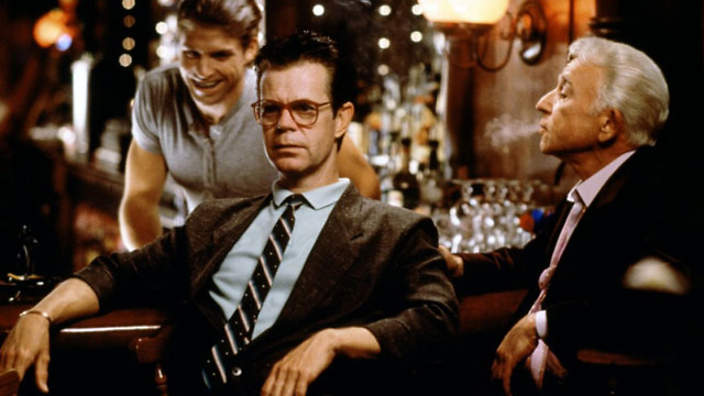
The film follows the lives of several people over a single day in LA. Legendary host of long running quiz show What Do Kids Know? Jimmy Gator (Philip Baker Hall) is dying of cancer and desperate to reconcile with his traumatised daughter Claudia (Melora Walters). Claudia is tentatively starting a relationship with devout and kindly police officer Jim Kurring (John C Reilly). Former champion of Gator’s show, “Quiz Kid” Donnie Smith’s (William H Macy) life is a disaster after his parents stole his winnings, and he’s struggling to hold down even the most basic of jobs. Former producer of the show Earl Partridge (Jason Robards) is also dying  of cancer, cared for by his dedicated nurse Phil (Philip Seymour Hoffman). Earl’s wife Linda (Julianne Moore) is wracked with guilt, while Earl himself is desperate to reconcile with his estranged son Frank Mackey (Tom Cruise), now a self-help guru who coaches men on how to pick up women. 

If you can’t see the links between the works of Robert Altman here, then you clearly need to look again. But it’s well worth it, as Anderson is a worthy successor to the master. He directs with a fluid confidence that comes from a director making a picture to please himself. Magnolia is frequently self-indulgent in its style and quirks, but it doesn’t matter when the effect of watching the film is so rewarding. From long takes to having the characters (all of them in different locations) sing along with Aimee Mann’s “Wise Up” at a key moment in the film, there are flourishes here that will annoy some but will be precisely what others fall in love with the film for.

And that love is deserved as this is a thoughtful and intelligent film about the impact the past (and specifically our parents) can have on us. As the man said, “they fuck you up, your Mum and Dad”. Certainly the case here. From “Quiz Kid” Donnie Smith to Claudia Gator, the film is crammed at every level with children (young and old) who have had their lives negatively affected by their upbringings. The past is a heavy burden, and it’s near impossible to shake-off – and in the cases of Donnie and Claudia brings with it a heavy dose of self-loathing. 

But what’s striking is that problems with the past don’t result in the same outcomes for people. Who would have thought that seemingly misogynistic motivational speaker Mackey’s beef with his dad is that Earl walked out on him and his dying mother when Mackey was a teenager? Part of the fascinating psychology of the film is how a son who loved and cared for his mother grew up to encourage men to treat women just as his father treated his mother. Is this some sort of perverse way to feel closer to the father who abandoned him? Perhaps Mackey has defined his life around hatred for his father, along with a deep longing for love – and perhaps his inability to deal with these feelings led to a professional career espousing the exact opposite? One of the neat things about Anderson’s film is that it largely avoids pat answers to this sort of thing. It’s left up to us to decide for ourselves – and perhaps reflect on how every person is an unanswerable riddle.

Whatever the answers are, it’s clear that parental problems are being paid-forward. The new Quiz Kid champion Stanley Spencer is a precocious child genius, being treated as an ATM by his father, who brags about his son while passive-aggressively demanding Stanley keep winning to continue funding his failing acting career. Stanley is a desperately unhappy child, more than smart enough to realise he is a performing monkey but unable to escape. And how can you get out of knots like that? After all, the film shows us one possible future for Stanley with Donnie – but walks a deft tightrope on whether the same life of loneliness and disappointment is inevitable for Stanley or not.

These familial clashes are introduced in the first hour and then simmer with exquisite timing during the film’s second hour. Anderson’s brilliant decision to build the film around a live recording of Gator’s quiz show means we are constantly reminded (as the show plays in the background throughout other scenes) that everything we are seeing is happening at the same time. The second hour of the film is a superbly deft cross-cutting from storyline to storyline, each building in tension. The desperation and entrapment in each scene beautifully spark off and contrast with each other. The sequence is at times marginally undermined by a slightly oppressive music score, but it’s beautifully assembled and shot and carries a real power – a superb balancing act of almost real time action that plays out for a nearly the whole of the second act. 

And Anderson knows skilfully to balance the gloom with real sparks of humanity and decency. Two characters in the film – Reilly’s cop and Hoffman’s nurse – are decent, kind and generous souls who have an overwhelmingly positive impact on every character they encounter. Both characters – and both actors are superb in these roles – are quiet, low-key but humane people who offer a quiet absolution to a host of characters, and opportunities to move on from the burdens of the past. Hoffman’s Phil is a genuinely kind person, who puts others before himself while Reilly’s Jim (surely the best performance of the actor’s career) is such a sweet, well-meaning, honest guy, that you understand why so many people feel bound to unburden themselves to him.

There is a lot to unburden in this film, and some of these moments tip over into melodrama at points. There are tear stained deathbed confessions, and angry, tearful moments of resentment and guilt bursting to the surface. At times, Magnolia is a little in love with these big moments, and indulges them too much, but it offers so many moments of quiet pain that you forgive it.

Not that the film is perfect. Today, even Anderson says it’s too long – and it really is. Unlike Altman, Anderson is less deft at pulling together all the threads in an overlapping story. This is effectively a series of short films intercut into one – the plot lines don’t overlap nearly as much as you might expect, with only Jim moving clearly from one plotline to another. It’s also a film that is driven largely by men. Of the few female characters, all are defined by their relationship to a man (and an older dying man at that), and not one of the female characters isn’t some form of victim. 

Anderson’s failure to really wrap the stories together means you can imagine unpicking the threads and reducing the runtime. Julianne Moore’s role as Earl’s guilty, unfaithful trophy wife (is she unaware of Earl’s own past of infidelity?) could have been easily shed from the film. Moore, much as I like her, gives a rather hysterical, mannered performance that feels out of touch with some of the more naturalistic work happening elsewhere in the film. The most melodramatic of the plots (every scene features Moore shouting, weeping, shrieking or all three), it also ends with the most contrived pat “hopeful ending”. It’s a weaker story that lags whenever it appears on screen.

Magnolia starts with a discussion of coincidence, but it’s not really about that – and the coincidence of all these people seems largely in the film to be reduced to the fact that they are all living in the same city with similar problems. It’s a slightly odd note to hit, as if Anderson slightly shifted the focus away from lives moving into and out of each other, in favour of a series of more self-contained linear stories. (That opening montage discussion of three (fictional) moments of fate and chance, while beautifully done, could also easily be trimmed from the film).

But then, these tweaks wouldn’t change the fact that Magnolia is a superbly made film, or that Anderson is a great filmmaker, even if he doesn’t quite manage to create the sprawling, interweaving, state of the nation piece he’s aiming for here. But as a collection of beautifully done short stories, it’s great. And the acting is superb. Tom Cruise drew most of the plaudits for an electric performance of egotism and triumphalism hiding pain and vulnerability near the surface, Anderson using Cruise’s physicality and intelligence as a performer better than perhaps any other director. Among the rest of the cast, Hall is superb as the guilt ridden Gator, Macy very moving as the desperate Donnie and Melora Walters heartrending as the film’s emotional centre, who ends the film breaking the fourth wall with a tender smile, that is perhaps one of the most beautiful final shots of modern cinema.

All this and it rains frogs at the end as well. But that introduction of biblical bizarreness is both strangely profound and fitting for Anderson’s stirring and inspiring film.

Minority Report (2002)

Tom Cruise messes with fate and the future in Minority Report

Director: Steven Spielberg

Cast: Tom Cruise (Chief John Anderton), Max von Sydow (Director Lamar Burgess), Samantha Morton (Agatha), Colin Farrell (Danny Witwer), Neal McDonough (Detective Fletcher), Steve Harris (Jad), Patrick Kilpatrick (Knott), Jessica Capshaw (Evanna), Lois Smith (Dr Iris Hineman), Kathryn Morris (Lara Anderton), Peter Stormare (Dr Solomon P Eddie), Tim Blake Nelson (Gideon)

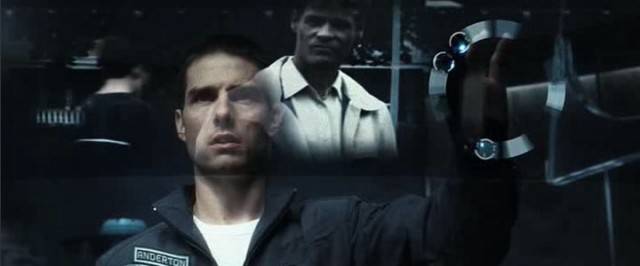
If you could see what lies ahead for you in your future would you change it? Or would you accept what fate has clearly already decided? It’s one of many questions that Minority Report, Spielberg’s bulky, brainy sci-fi chase movie slash film noir, tackles. And the answer it suggests is: everybody runs.

It’s the year 2054, and murder in the District of Columbia is a thing of the past thanks to the Pre-Crime Division. Using three psychics, known as “pre-cogs”, permanently hooked-up to a machine that can visualise their visions of violent deaths and murders that will occur, the Pre-Crime team led by Chief John Anderton (Tom Cruise) arrest and imprison murderers hours, minutes and seconds before they even commit their crimes. Anderton believes passionately in the system – but his belief is shaken when the next murderer to be identified is none other than himself. Anderton is due to kill in a complete stranger in 36 hours – and immediately goes on the run to work out who this man is, why he would wish to kill him, and if there is any truth in the rumour that the pre-cogs don’t always agree, and that the most powerful pre-cog Agatha (Samantha Morton) can produce a “minority report”: an alternative vision that shows a different future.

Spielberg’s film is one that mixes searching discussion on fate, choice and destiny with the pumping, fast-moving action of a chase movie and the gritty, hard-boiled cynicism and intrigue of a classic film-noir. He frames all this in a brilliantly constructed, dystopian future where adverts and government surveillance can read our eyes wherever we go and identify us immediately (throwing personalised ads in the faces of people everywhere they step) and, in the interests of safety, people who have technically not done anything yet are imprisoned for life on the basis of things it has been determined they will do.

It makes for a pretty heady cocktail, and one which will have you questioning how much of what we decide is our choice and how much is destiny. If Anderton knows his destiny, can he change his fate? Will he have the willpower or the ability to avert his destiny? Or does knowing what will happen and where it will take place only drive him towards his fate? Put simply, does knowing the future in advance give you a chance to change or it or does it make that future even more likely (or perhaps even inevitable)? Spielberg’s film delves intelligently into these questions, throwing paradoxes and causality loops at the viewer with a genuine lightness of touch.

This works because the film balances these more philosophical questions with plenty of adventure and excitement. Several chase sequences – which make imaginative use of various pieces of future tech like driverless cars and jet packs – keep you on the edge of your seat. Spielberg tentpoles the film throughout with some brilliant set pieces, from Alderton’s race against the clock to stop a killer at the start to his own escape from the clutches of his former colleagues. 

These set pieces also differ in styles. These more conventional action sequences are sandwiched between others that are a mix of darkness, comedy, horror and slapstick. In one sequence, Alderton must attempt to hide in a bath of icy water (Cruise holding his breath of course for a prolonged period on camera) to evade a series of body-heat seeking metallic spiders, with Alderton desperate to protect his freshly replaced eyes from being exposed too soon to daylight. Later, Alderton will evade the cops thanks to the advice of pre-cog Agatha whose simple instructions (Grab an umbrella! Stand still for five seconds behind the balloons! Drop coins for the tramp!) wittily use her fore-knowledge of events to guide Alderton through a gauntlet of perils.

The horror is in there as well from those creepy spiders, not to mention the ickyness of Cruise carrying out an operation to replace his eyes to evade that all-intrusive retinal scanning. The sequence – with Peter Storemare as a sinister doctor who delights in leaving unpleasant tricks for the temporarily blinded Alderton (rotten food and sour milk being the most gross) – is a brilliantly vile, uncomfortable piece of kooky surrealism in the middle of a wild chase. And also tees up the bizarre dark comedy of Cruise – attempting to use his old eyes to break back into his former office – dropping his eyes and desperately chasing them as they roll down a corridor towards a drain. 

There are also darker themes in Alderton’s tragic background. Saddled with a drug addiction and a broken home, we learn Alderton is still struggling with the grief of losing a son to kidnappers – a loss he clearly holds himself personally responsible for. Getting tanked up at home and interacting with old home movies of his lost son, Alderton carries within a deep sadness and grief. It’s a challenge that Cruise rises to really well, his ability to bring commitment and depth to pulpy characters perfect for making Alderton a character you really invest in.

It also gives Alderton the tragic backstory and self-destructive problems so beloved of grimy, gumshoe cops of old noir films. That’s certainly also the inspiration for the drained out, greying look of the film that Spielberg shoots, with colours bleached and the future looking a confusing mix of clean, sleek machines and dirty, rain sodden streets. Alderton’s hunting down of his future victim has all the shoe leather and bitterness of classic Chandler. Meanwhile Federal Agent Witwer (a decent performance from Colin Farrell) chases him down with the determination of an obsessed cop, while also showing more than a few of the quirks of the maverick PI himself.

Minority Report is so good in so many places, it’s a shame that the final act so flies off the rails from the tone of what we have seen before, eventually stapling a happy ending onto a film that tonally has been building towards something very different. On a re-watch, there is just enough in the film to allow you to interpret this ending as a sort of fantasy or dream, but you’ll want the film to end the first time it crashes to black (you’ll know the point I mean). I prefer to believe the ending is a sort of dream – although Spielberg drops no hints to this effect in the film visually at all, in the way something like Inception does so well, to leave you questioning reality – because with that thought that final act betrays everything you have seen before in its simplicity and embracing of binary rights and wrongs.

But with that massive caveat, Minority Report is a very impressive film – and for at least the first hour and fifty minutes probably one of Spielberg’s best. It gets lost in the final act – and I know I said this but please let that be a fantasy – but until then this is a brilliant mix of genres and intelligence and Hollywood thrills with Cruise at his best. It’s exciting and its emotionally involving. Ignore that ending and it’s great. When you re-watch it, pretend you can’t see that future.

Oblivion (2013)

Tom Cruise goes all Top Gun (Olga Kurylenko is along for the ride, pretty much all she does in the movie) in would-be intellectual sci-fi thriller Oblivion

Director: Joseph Kosinski

Cast: Tom Cruise (Jack Harper), Morgan Freeman (Malcolm Beech), Olga Kurylenko (Julia Rusakova), Andrea Riseborough (Victoria Olsen), Nikolaj Coster-Waldau (Sykes), Melissa Leo (Sally)

Spoilers: I’m going to discuss the entire content of the plot from the third paragraph. You’ve been warned!

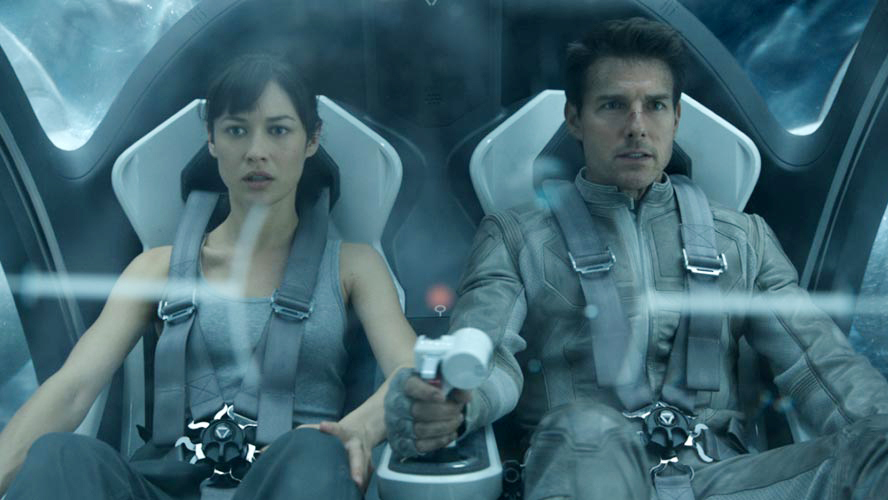
It’s 60 years after an alien attack. The world has been destroyed, cities lie in ruins, and mankind has fled to Jupiter’s moon Titan. Earth is being drained of its last few resources to power the new civilisation on Titan by massive machines. Drones fly around the planet, protecting the machines from the last surviving alien forces still on Earth. The drones are tended by Jack Harper (Tom Cruise) and Vika Wilson (Andrea Riseborough), whose memories have been wiped for security reasons and who are dedicated to keeping the drones functioning. 

Or is this all a lie?

Well it won’t be a huge surprise to hear that it is, of course. And there are some decent ideas in Kosinski’s film: the twist reveal that the organisation Harper and Wilson are working so hard to preserve is in fact the very alien invaders they so hate, or that the strange figures on the planet they are helping the drones to kill are actually the last surviving remnants of mankind. Harper and Wilson are clones of NASA astronauts captured 60 years ago and replicated over and over again in order to serve the robots. The “Tet” in space that they believe is their HQ is the alien mothership. These are all decent twists. So why do they combine together to have so little real impact?

I think it’s because Kosinski rushes the film. He’s so pleased with the narrative rug pulls that he seems to want to reveal many of them one after the other. Additionally, the biggest twist – Tom Cruise is actually working for the baddies! – immediately makes most of the rest easy to predict. Not least the constant references to Base 49 where he and Vika work – sure enough it’s a clone number, so the planet is filled with clones of this pair. The only thing stopping them bumping into each other is that they have been told everything outside of their “patrol zone” is irradiated and they must never enter it. 

All of this world building – and the film does take its time establishing it a piece at a time early on – is interesting stuff. But it loses its way once the film surrenders itself to a string of reveals that overwhelm it. By the time we are watching super-man Jack shooting down drones from his helicopter, the film seems to have lost the more meditative start. With Jack at first we get a sense of a guy longing to find more depth to live with. But the film loses this sense, with Jack become steadily less interesting the more we find out about him.

Then once you accept the idea of Cruise and Riseborough being endlessly cloned, the logic gap starts to click into place. It’s never explained why the aliens are so reliant on human engineers for their drones – if they have conquered loads of planets before without them, why do they need them here? Furthermore, we are told the first wave of Jacks were mindless soldiers who killed everyone on the planet – why then are these engineer Jacks and Vikas given so much independent thought? Why not just make them automatons? Why clone them and then lie to them about who they are working for – why not just program them to obey the robots?

Then after a slow build of questions and revelations about Jack’s world, we get a standard Independence Day style mission up into space to “blow up the mother ship”. Of course this is a mission that only your man Tom can do. And do it he does, because Tom Gotta Do What Tom Gotta Do. It’s all a rather disappointing resolution to a film that toys around with being something a bit more complex and interesting earlier on.

Ah, Tom Cruise. To be honest he’s probably miscast here. There is something so incredibly, movie-star strong about Cruise that he somehow overpowers the shocks and make them seem silly. On top of which, the part is another ego-stroke. Jack is the ultimate man’s man – he fixes things, he loves sports, he builds a cabin in the woods, he’s clearly dynamite in the sack; but he’s also sensitive and caring and in touch with his feelings. On top of which both female characters in the film – Riseborough’s sadly besotted Vika and Kurylenko’s mysterious astronaut who lands on Earth and awakens strange memories in Jack – are both pathetic ciphers who need Tom’s help for everything, while of course also being way, way, way too young for the Cruiser.

But the film still looks good, and still has some very interesting twists. The design and visuals are faultless – in fact they seem to become the main focus, all those long shots of deserted, sand consumed parts of New York. Its main problem is that it’s low on themes – I guess it’s trying to make a case that humanity can’t be bashed out of us, no matter how many times we try and clone it out of someone – but it gets lost a bit in plot mechanics and the delight the director has in executing them. For a film that only really has four characters in it, I still felt they were hazy and undefined. A lot is left to the viewer’s own suppositions, so the film gets pretty reliant on your adding the depth it needs. If you are inclined to do so, this works. But the essential dramatic thrust of the film itself isn’t compelling enough to make you willing to make the effort the film needs.

Oblivion wants to be the next big, thoughtful, twist-filled, sci-fi epic. But it just doesn’t have enough interest and complexity to really engage the viewer. Instead it all becomes a bit forgettable – not because it’s bad but because, at the end of the day, it’s nothing special.