Tag: Tom Ford

A Single Man (2009)

A Single Man (2009)

Grief is at the heart of this moving, beautifully made debut from Tom Ford

Director: Tom Ford

Cast: Colin Firth (George Falconer), Julianne Moore (Charley Roberts), Nicholas Hoult (Kenny Potter), Matthew Goode (Jim), Jon Kortajarena (Carlos), Paulette Lamori (Alva), Ryan Simpkins (Jennifer Strunk), Ginnifer Goodwin (Mrs Strunk), Teddy Sears (Mr Strunk), Lee Pace (Grant Lefanu)

Grief is like a gaping wound that never heals. It’s an unbearable burden LA-based English professor George Falconer (Colin Firth) can’t bear any longer. Distraught after the death of his partner of sixteen years Jim (Matthew Goode), George decides November 30th 1962 will be the last day of his life. He will spend the day putting his affairs in order, soaking up the isolated intensity of moments, have dinner at his oldest friend Charley’s (Julianne Moore) house, then take his life. Adapted from Christopher Isherwood’s novel, A Single Man follows that one day.

The universal pain of grief and vibrancy of love shines out of one of the most tender gay-love stories ever made (strikingly shot and acted by a straight director and leads). A Single Man is a film that aches in every frame with the desolation of loss and the agony of moments that can never be claimed, touches that can never be made and conversations that can never be had. It studies how empty and overbearing life can feel when we know we must face it alone, without the person who made the world make sense to us.

It is of course a double burden when that loss cannot be acknowledged. George learns of the death of Jim via an awkward phone call from Jim’s brother (a vocal cameo from Jon Hamm) who can’t bring himself to openly acknowledge the love between the two men and tells him it’s a “family only” funeral. George himself can only convey repressed English regret during the phone call, before collapsing into lurching emotional hysteria after it. His loneliness and cool distance from others is all a side effect of man who must always hide his true feelings and who and what he is.

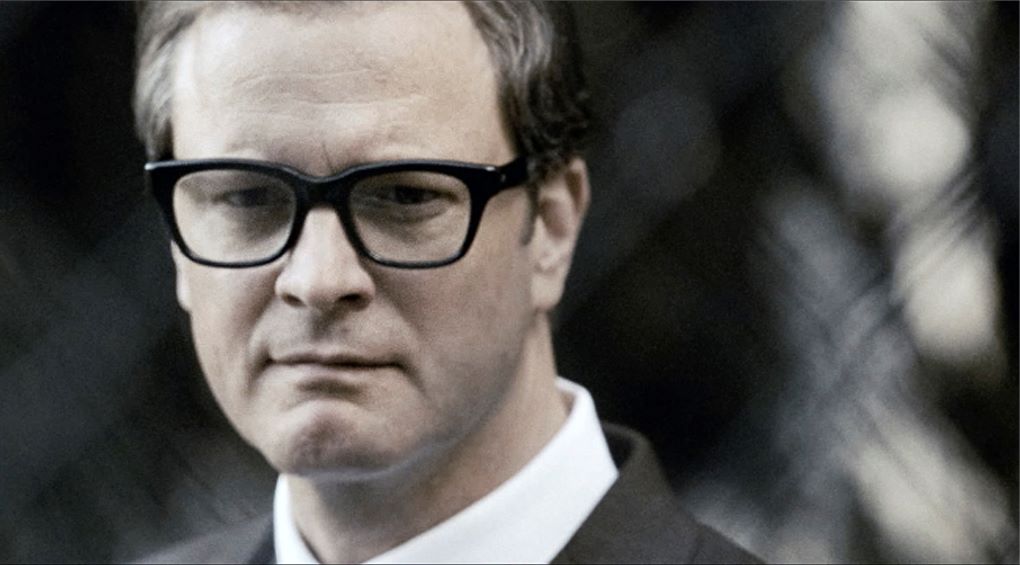
The film gains a huge amount from Colin Firth’s extraordinary performance in the lead role, hiding a seething, raw pain under a genteel and refined exterior. This seemingly cold, precise man – who dresses like a fashion model and is polite to a fault – is a tempest below the surface of loss that cannot be expressed. It’s as much the burden of putting on one face to the world, knowing there is another below the surface, that has crushed George’s spirit over the past years, as the loss of Jim. All of this is captured by Firth with exquisite sensitivity, in a perfectly judged performance.

Even George’s closest confidante Charley – his best friend, and one-time experimental romantic fling, now a depressed divorcee – can’t quite understand George’s feelings for Jim. Played with a wonderful air of domestic, middle-aged tragedy by Julianne Moore, Charley still can’t quite believe a homosexual love can ever really be the “equal” of a heterosexual one – that some part of George would have been happier if he had accepted a ‘normal’ relationship and family with her rather than the more ‘exotic’ relationship he chose. If even those closest to George can’t really see his relationship as legitimate, what chance does his apple-pie neighbourhood have of doing so?

It’s the intense loneliness – no one to share his pain with, no way to really mourn his love – that has finally beaten the will to carry on for George. Ford’s direction reflects his sense of ennui by presenting the world as coldly drained out, rich colours replaced with greyscale-tinged greys and blues. Warm colours only intrude in those moments where George consciously decides to engage, one final time, with the wonders the world has to offer, the frame filling with warmth and colour.

Ford’s elegiac film doesn’t shy away from the coldness of pain and loss. Opening with a (literally) chilling scene, as George imagines encountering Jim’s dead body in the snows, it conveys the functional distance the world can seem to have when we are dealing with life changing internal feelings. George is entrapped into tired conversations about university politics (his gaze drifts to two male tennis players, the screen momentarily filling with colour). Reflecting his fastidious nature, he carefully puts his affairs in order at the bank and catalogues keys, account details and suicide notes on his desk. All of it feels irrelevant compared to the pain within.

But A Single Man is also a hopeful film. Even when the world seems at its bleakest – when we have decided we can’t go on – there is still hope. It’s represented here by Nicholas Hoult, warm, open and honest as George’s student Kenny who intuitively identifies something is wrong with George and goes to huge lengths to try and find out what. The tenderness between the two – and the protectiveness as well as genuine smiles Kenny can promote in George – is a beat that suggests there may still be some chance of happiness in this world where we least expect it.

It’s part of the same warmth and humanity that underlies Ford’s heartfelt film, wonderfully directed. If it was a parade of bleakness, it would have far less effect. But flashbacks to George and Jim together show the joy and comfort of their lives, while the small moments of warmth and humanity in the present constantly remind us of what George’s decision will cost him.

The film’s final dark splash of irony may well be a little too on the nose, sign posted as a possibility a little too heavily earlier in the film. But, in its exploration of grief and intelligent, intense character study it’s a wonderful debut from Ford. And Firth’s extraordinary, career defining role (a year later, after winning the Oscar for The King’s Speech he thanked Tom Ford as being someone who owed a piece of the award to) is one for the ages that speaks to anyone who has ever known loss.
Nocturnal Animals (2016)


Amy Adams does a lot of reading and thinking in Tom Ford’s intriguing part thriller, part strange romance, part memory saga Nocturnal Animals

Director: Tom Ford

Cast: Amy Adams (Susan Morrow), Jake Gyllenhaal (Edward Sheffield/Tony Hastings), Michael Shannon (Detective Bobby Andes), Aaron Taylor-Johnson (Ray Marcus), Isla Fisher (Laura Hastings), Ellie Bamber (India Hastings), Armie Hammer (Hutton Murrow), Laura Linney (Anne Sutton), Andrea Riseborough (Alessia Holt), Michael Sheen (Carlos Holt)

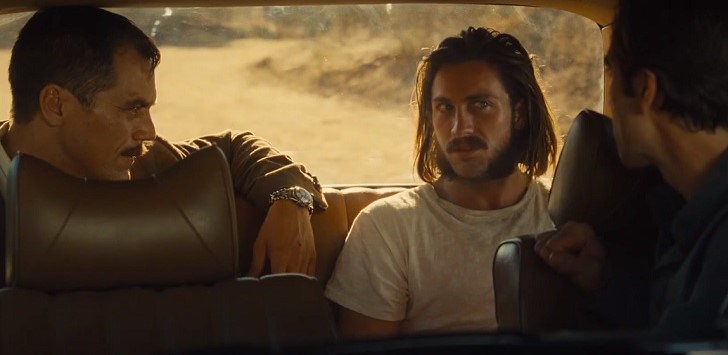
Susan Morrow (Amy Adams) is a society wife, running art galleries and married to an increasingly uninterested husband (Armie Hammer). One day she receives a copy of a manuscript from her ex-husband, Edward Sheffield (Jack Gyllenhaal). The book, while sensitive and from the heart, is also terrifying and visceral, and speaks to her in a way few things in her life have. It makes her begin to question her own choices. We see the story of the novel played out – Tony Hastings (Gyllenhaal again) and his wife (Isla Fisher) and daughter (Ellie Bamber) are waylaid late at night on an abandoned road by a violent local (Aaron Taylor-Johnson) – tragedy ensues.

It would be easy to say Nocturnal Animals is a stylish film that favours beauty over substance. But that would be untrue – Tom Ford has crafted a dynamically structured, intriguing puzzle, open to (and ripe for) discussion and reinterpretation over and over again. The film teases us with uncertainty and ambiguity, but it manages to avoid slipping into heavy-handed pretension. It leaves us with things unsaid, presenting parallel narratives and inviting us to mix and match them to create our own understanding. Ford’s skill is to not always present a definitive answer for how the book plot we are watching is meant to reflect on the plotline of the real world.

Ford is really good at distinguishing between the fiction and the reality. The world of Edward’s story is heightened in nearly every way, in a broad Western setting, while Morrow’s “real world” is cooler and contained, set in chilly apartment rooms or icy modern galleries or homes. The intercutting between the two is skilfully done, perfectly paced, never confusing or jarringly pulling us suddenly from one reality to another. The film avoids making obvious visual crossovers and links between the two (bar once – a moment that doesn’t really work), leaving the interpretation up to the viewer.

The story-within-a-story has a heightened tension, sometimes difficult to watch, not least in the road-rage incident that opens it. This sequence is almost unbearable in its whipper-cracker tension, with a threat of physical and sexual violence in every moment. The horror is almost palpable, sold a lot by Gyllenhaal’s struggles to control his panic and fear. Taylor-Johnson plays the demonic bully with an overblown operatic intensity, a hyper-real flamboyance that works well because it serves as a contrast with the grounded elements in the real story. It also adds to the sense of horror throughout this whole chilling sequence. Who hasn’t felt fear of being pulled over in a road in the middle of nowhere by terrifying, aggressive young men?

But all the elements of the story-within-a-story are cleverly balanced literary flourishes, carefully designed to appear just a little too close to “drama”, than those of the real world. Michael Shannon – a hard-boiled slice of charisma, he’s very good – is basically a stock character, repackaged with depth, but very much the sort of character you would find in a film rather than real life. Gyllenhaal’s Hastings similarly has the sort of moral conundrum and intense grief that feel that they belong more to a character from literary fiction than real life. The events of this story have a ferocious hyper-real intensity to them. Events in the story-within-a-story has a carefully constructed sense of dramatic irony.

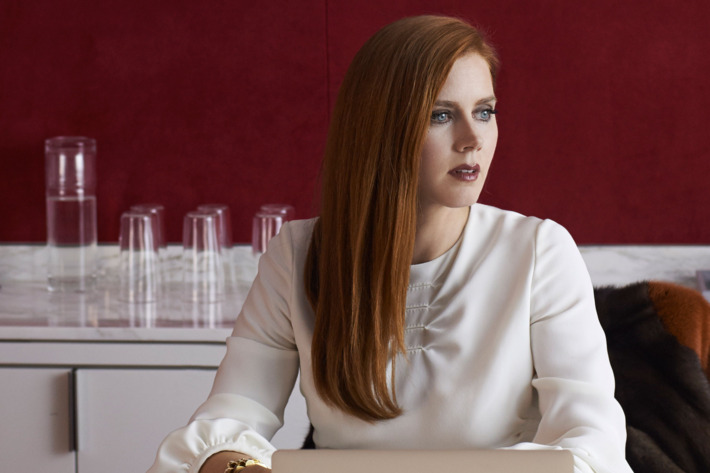
By comparison, the “real world” is almost deliberately low-key and humdrum –minor affairs, and small but telling secrets, lives that are stuck in dull ruts or unimaginative cul-de-sacs. Amy Adams gives a complex and fascinating performance, much of which is essentially her reacting to things she is reading. It’s a performance that reeks of regret, of a woman unhappy in the choices she’s made, but too in love with the advantages they’ve brought to risk changing. She’s so set in the conventionality of life she seems unable to even imagine using her independence to break free.

The film teases us by misleading us about the parallels between the characters in the real world and those in the story. Ford playfully implies at first what we are watching may be partly true, and invites us to wonder what may be invention and what might have actually happened in real life. Alongside that, he also uses the double casting of Gyllenhaal to demonstrate the self-identification writers have for their characters. How much does Sheffield see himself in Hastings – and how much do the events that occur to Hastings, suggest a self-loathing in Sheffield? Again it’s all left to our own invention and imagination. We get flashbacks to past events in the real world that serve to both broaden our understanding and make us question our preconceptions. 

The film builds towards a conclusion that is equally open. Despite its horrendous content in the story-within-a-story, there is a romantic longing in this film, a sense of a life not lived – and a hope for the future. The final sequence is completely open to interpretation – you could equally see it as hopeful (as Ford sees it) or bleak (as most audience members do) – I probably incline more to the latter, but that might just be me. Everyone though will think something a little different depending on what they see, and how they interpret it – the film doesn’t labour the points it makes or push you too far in any direction.

Nocturnal Animals is an intriguing experiment in form and content that works extremely well. It’s powered by some terrific performances and shot with grace and beauty by Ford. This is Ford really flexing his muscles as an artist of film, and he borrows liberally from Lynch to Hitchcock. Ford has a brilliant eye for composition and form and his editing is masterful. He gives his work a lyrical musicality, a sense of balance and rhythm – he’s also a fine, subtle writer and avoids the crudity of the showman. He’s a fine film maker, and Nocturnal Animals is an intriguing, at times hard to watch, but fascinating film that grabs hold of you and doesn’t let go.