Tag: Tony Richardson

The Entertainer (1960)

Laurence Olivier excels as a faded music hall star in The Entertainer

Director: Tony Richardson

Cast: Laurence Olivier (Archie Rice), Brenda de Banzie (Phoebe Rice), Roger Livesey (Billy Rice), Joan Plowright (Jean Rice), Alan Bates (Frank Rice), Daniel Massey (Graham), Shirley Anne Field (Tina Lapford), Thora Hird (Mrs Lapford), Albert Finney (Mick Rice)
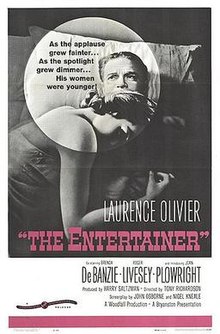
In the late 1950s Laurence Olivier was worried about his career. While he was still doing Shakespeare and Coward comedies (intermixed with the odd film), the world of acting and theatre was moving on. Not least as John Osborne’s Look Back in Anger was taking the West End by storm. Olivier seemed the polar opposite of the “Angry Young Men” of British theatre, a dusty relic. So Olivier changed gears – and his entire life – by asking to be cast in the lead role of Osborne’s next play The Entertainer. Olivier’s sensational stage performance – captured here on film – radically changed the path of both his career and his life, with his long-troubled marriage to Vivien Leigh broking down during it. But he also cemented himself as the leading British actor.

Olivier plays Archie Rice, a failing never-has-been end-of-pier comedy performer at an unnamed Seaside town in 1956. Rice’s routines are old-and-tired, his comedy tinged with desperation and he’s all but broke. Archie’s audiences are tired, bored and unamused. His home life, with his faded former beauty champ wife (Brenda de Banzie) is on the ropes due to his constant infidelity. His father (Roger Livesey) – a music hall celebrity with real talent – loves him but thinks he’s a disasater waiting to happen. His son Frank (Alan Bates) adores him but his daughter Jean (Joan Plowright) is more realistic. Archie through continues to peddle the idea of a success being round the corner, trying to put together a hit revue starring his latest mistress (Shirley Anne Field) and funded by her parents. Things will not end well.

The Entertainer’s main claim to historical note is that it captures that sensational stage performance of Laurence Olivier in the lead role. Olivier had always liked to claim that, with a few zigs and zags in his career, he would have become a third-rate comedian. His performance – with its ingratiating patter, it’s seedy sexually ambivalent campness, his selfishness and self-obsession and greed – is brilliant. Archie’s entire life is a desperate struggle to get himself the career he wants – while trying to shut his eyes to his own lack of talent (of which he is painfully aware). Olivier captures superbly not only the front of a man bent on self-promotion, but also the dead-eyed horror of a man who is aware all the time that he is dying inside.

Olivier’s eyes are drill-holes of death, and his life is an exhibition of selfish patter, with a constant sense of performance in every inch of Archie’s life. He’s a run-down, finished and disillusioned man trying to pluck what few moments of pleasure he can from a life he is only going through the motions in. All of it covered with a coating of self-delusion that quickly crumbles into sweaty desperation. While the film can only give a taste of the Olivier stage performance, it re-enforces Olivier’s energy, creativity and bravery. Olivier’s both bravura and tragically tired music hall performances alone are worth the price of admission.

Away from Olivier’s exceptional capturing of the washed up patter of the sleazy loser, it’s easy to overlook most of the rest of the film. But it’s directed with a kitchen-sink freshness by Tony Richardson, who brilliantly captures the faded grandeur and grubby failure of a failing seaside resort. Osborne’s play used the decline of music hall as a metaphor for the decline of the British Empire and while the film (for all its Suez references) doesn’t quite convey this, favouring instead domestic tragedy, it still perfectly captures the crumbling world of Rice and his ilk. Rice’s father – Roger Livesey, excellent and about a year older than Olivier – is a relic of the success of this era, and still carries some of its glamour, but still lives as a virtual tenant in the Rice home, eating spare cake where he can.

While the film is dominated by Olivier, this presentation of the play as a domestic tragedy works rather well. Brenda de Banzie (also reprising her role from stage) is very good as an ex-glamour puss (and former mistress of Archie) now turned into a faded, depressed matron, drunkenly bitter about what her life has (not) led to. Joan Plowright is excellent as the knowing daughter, alternately sympathetic and appalled at her father. Shirley Anne Field’s naïve lover is suitably naïve, under the control of her battleaxe mother, well played by Thora Hird. The cast is rounded out with Alan Bates and Albert Finney (both in debuts) as Archie’s sons.

While the film feels a little overlong at times, and is perhaps too much in thrall to Olivier, it offers a neat kitchen-sink view of failure and corruption in British life of the 1950s. There is, of course, no hope and no second chances here. Only the long, wearying decline and rotting as Archie’s life disintegrates under pressure and his own incompetent self-delusion. 
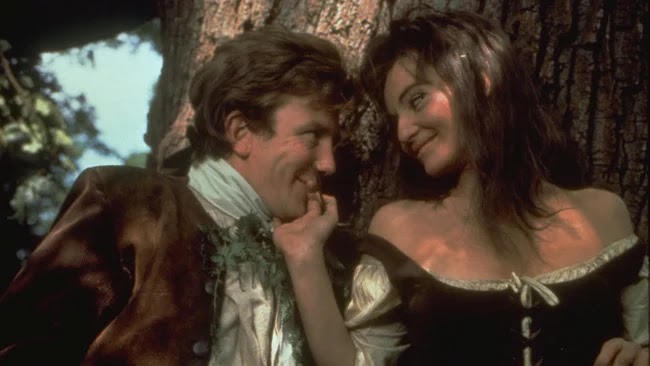
Tom Jones (1963)

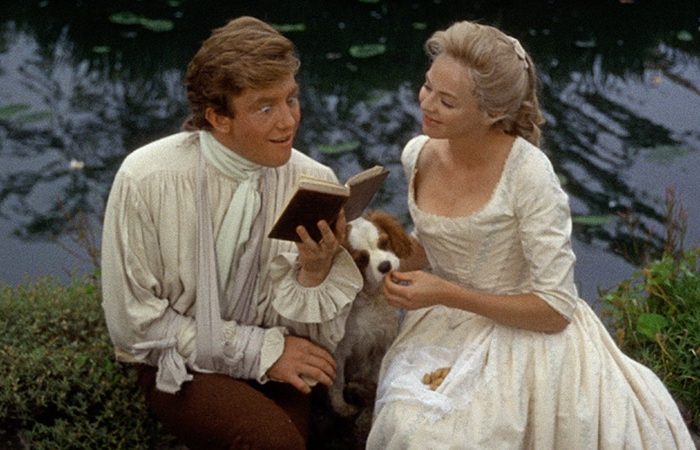
Albert Finney flirts with Diane Cilento (among many, many others) in Oscar winner Tom Jones

Director: Tony Richardson

Cast: Albert Finney (Tom Jones), Susannah York (Sophie Western), Hugh Griffith (Squire Western), Edith Evans (Miss Western), Joan Greenwood (Lady Bellaston), Diane Cilento (Molly Seagrim), George Devine (Squire Allworthy), David Tomlinson (Lord Fellamer), Rosalind Atkinson (Mrs Millar), Wilfrid Lawson (Black George), Rosalind Knight (Mrs Fitzpatrick), Jack Macgowan (Patridge), Freda Jackson (Mrs Seagrim), David Warner (Blifil), Joyce Redman (Mrs Waters/Jenny Jones), Rachel Kempson (Bridget Allworthy), Peter Bull (Thwackum), Angela Baddeley (Mrs Wilkins), Julian Glover (Northerton)

In early 1964, America was at the height of Beatlemania. Everything about Swinging Sixties London was the height of cool, so what better way to reflect that at the Oscars than naming Best Film of the previous year as being Tom Jones, the film that turned Henry Fielding’s work into the epitome of the era’s vibe. Watching Tom Jones today is a cruel reminder that generally nothing dates as hard or as fast as cutting-edge film techniques, and that time is often not kind to comedy. But Tom Jones was the first truly British film to lift Best Picture since Olivier’s Hamlet in 1948, so it was a sign of the short-lived all-conquering cool of British culture.

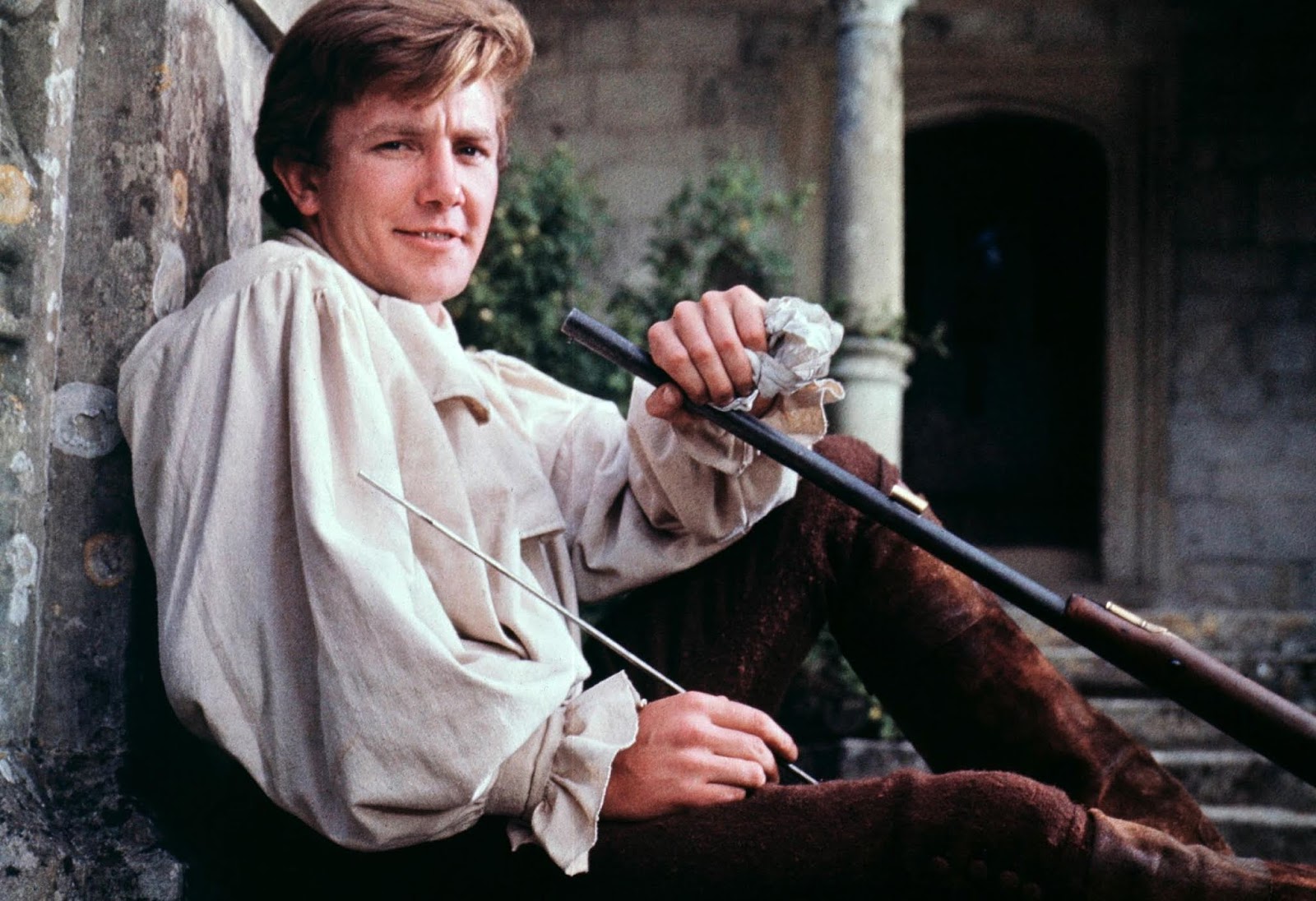
Adapted with a frenetic style from Henry Fielding’s novel, the film follows the trials and tribulations of Tom Jones (Albert Finney), adopted by Squire Allworthy (George Devine) after he is found abandoned on Allworthy’s bed as a baby. Growing up, Tom is a roisterer and rodgerer (especially keen on rodgering) but fundamentally decent, in love with Sophia Western (Susannah York) and the target of jealous rumours from his cousin Blifil (David Warner, looking a bit lost in his film debut). Banished as a result of Blifil’s schemes, he journeys to London encountering adventures along the way, not least a night of bliss with a Mrs Waters (Joyce Redman) who may (or may not) be his mother. Will Tom be able to prove his innocence, win the love of Sophia and escape his destiny of being “born to hang”?

Tony Richardson came to Tom Jones fresh from directing several searching, morally complex kitchen-sink dramas – and basically seemed determined to cut loose with this film by having fun. What he comes up with is an explosion of multiple different styles, from silent film to sped-up Benny Hill chases. Not a single editing or camera trick is unused, with the film stuffed to the gills with fades, wipes and freeze frames. Richardson basically used every single trick in the book. He was also lucky to have a perfectly judged score from John Addison (winning an Oscar).

It makes for a frenetic and fast-paced film, in love with its own 60s cool of anarchic comedy, sexual liberation and tongue-in-cheek lack of reverence all washed down with a bucket load of thigh-slapping bawdiness. It’s a film that’s inordinately pleased with itself, using Fielding’s interventionist narration style as the licence to break the fourth wall frequently and introduce a dryly hammy voiceover from Michael MacLiammóir. All of this was seen as the height of daring film-making back in the day – especially since Hollywood expected literary adaptations to be treated with reverence rather than as a high-brow Carry-On. But it’s dated badly.

Its smug, overbearing sense of zeitgeist cool comes across terrifyingly passé today, and the film’s daring use of every single cinema style makes it tonally feel like a complete mess. Richardson will segue from farce straight to an immersive hunting sequence where we are invited to feel every moment of the blood lust and violence, straight to a pastoral sequence showing the courtship of Tom and Sophia in glorious countryside.

Richardson himself – despite winning Best Director for his very self-consciously flashy work – also had mixed feelings about the film, recutting it shortly after its Oscar win into a shorter version which remains the version most people have seen today. He said of it that it “felt incomplete…and botched in much of its execution…whenever someone gushes to me about Tom Jones, I always cringe little inside”.

It’s a fair assessment of a film that is all flash – and way too much of it – and so little substance that it frequently becomes trite, smug and unpleasant to watch. John Osborne’s script (which apparently he submitted than refused to redraft) is in all honesty a mess (much of it was rewritten on set while the narration was a post-production addition to make it all make sense), with barely any quotable lines, and whatever skill the film has is all in the telling and the editing. 

Did Richardson take the whole thing as a lark and then work out later on that comedy is harder than it looks? The entire film was a complete mess on set – several errors were in fact left in the film (such as Western falling off his horse due to Griffith’s drunkenness) and then turned into jokes through the voiceover. There is a slight air from all involved that this isn’t proper film-making, that this is just one to flog for a bit of cash. Its Oscar win is inexplicable, but can be chalked up to a horrendously weak year at the Oscars.

Albert Finney goes through the entire film on autopilot – little matter than it made him a star – and he seems a curious choice for a young lover, throughout the film he channels instead a sort of horny Arthur Seaton. Finney thought the entire thing bosh and a waste of his talents – an attitude that does come across on the screen. Lightness is not always Finney’s strength, and his distant disengagement with the film becomes more striking with every viewing. 

Many of the rest of the cast mug shamelessly. Hugh Griffith bizarrely landed an Oscar nomination for a performance of gurning over-the-top mania. The film had three nominations for Best Supporting Actress: Edith Evans emerges best, although she could play this domineering Mrs Western standing on her head; Diane Cilento brings an attractive lightness to buxom Molly while Joyce Redman is good value and gets the film’s most famous sequence, a slobbery eating sequence with Finney where food is consumed in a very suggestive way as foreplay. Arguably the best supporting roles come from Joan Greenwood as the sexual but cruel Lady Bellaston and George Devine as the decent Squire Allworthy (the only character who isn’t some sort of caricature).

Tom Jones is most of all a memento of a particular brand of fast-paced, technique heavy, manic sixties comedy. It made a lot of money and won a lot of awards, so led to a torrent of similar films from bawdy Hogarthian costume dramas to sex comedies in modern London with naïve but well-endowed young men. Richardson and co. should have credit for catching this vibe first – but it makes for an odd experience today, like a slightly uncomfortable museum piece.

The Loneliness of the Long Distance Runner (1962)

The Loneliness of the Long Distance Runner (1962)

Class struggles makes it harder to win the race in this excellent kitchen-sink drama

Director: Tony Richardson

Cast: Tom Courtenay (Colin Smith), Michael Redgrave (Governor), Avis Bunnage (Mrs Smith), Alec McCowen (Brown), James Bolam (Mike), Joe Robinson (Roach), Dervis Ward (Detective), Topsy Jane (Audrey), Julia Foster (Gladys), James Fox (Gunthorpe), John Thaw (Bosworth)

In the 1960s British film made waves when it started to turn away from upper-class, costume-laden dramas, and accents started to be heard that weren’t cut-glass and RP. Few of these films ran (literally) further from this than The Loneliness of the Long Distance Runner.

After the death of his father, Colin Smith (Tom Courtenay), a working-class young man, is drawn into a life of petty crime. Sent to borstal for his re-education, his skill at long-distance running catches the eye of the Governor (Michael Redgrave). The Governor hopes to use Colin to win the five-mile cross-country run in the joint sports challenge day he has arranged with the local private school. But will Colin play ball, or will he stick to his own principles of never playing “their” game?

The Loneliness of the Long Distance Runner is in many ways a sort of British Rebel Without a Cause, but without the glamour. Instead, Colin is a council house lad, angry at the world (but not quite clear why) and brought low by the theft of £70. The film showcases Colin as a sort of anti-authority hero, a man who just simply doesn’t want those bastards telling him what to do. He’s not violent or dangerous, he’s more sullen, fed-up and laced with anger and contempt at a world that short-changed his father. 

He finds himself in the confines of borstal, an institution all about rules, regulations and changing people to match what society expects of them: everything Colin hates, and spends the film pushing against. Unlike the anti-hero of Alan Sillitoe’s other seminal kitchen sink drama, Saturday Night and Sunday Morning, Colin isn’t out for what he can get – while that film’s lead was more frustrated the system didn’t work enough for him, Colin wants no system at all. He wants freedom to make his own choices and define his own life – and his rebelling is all about that.

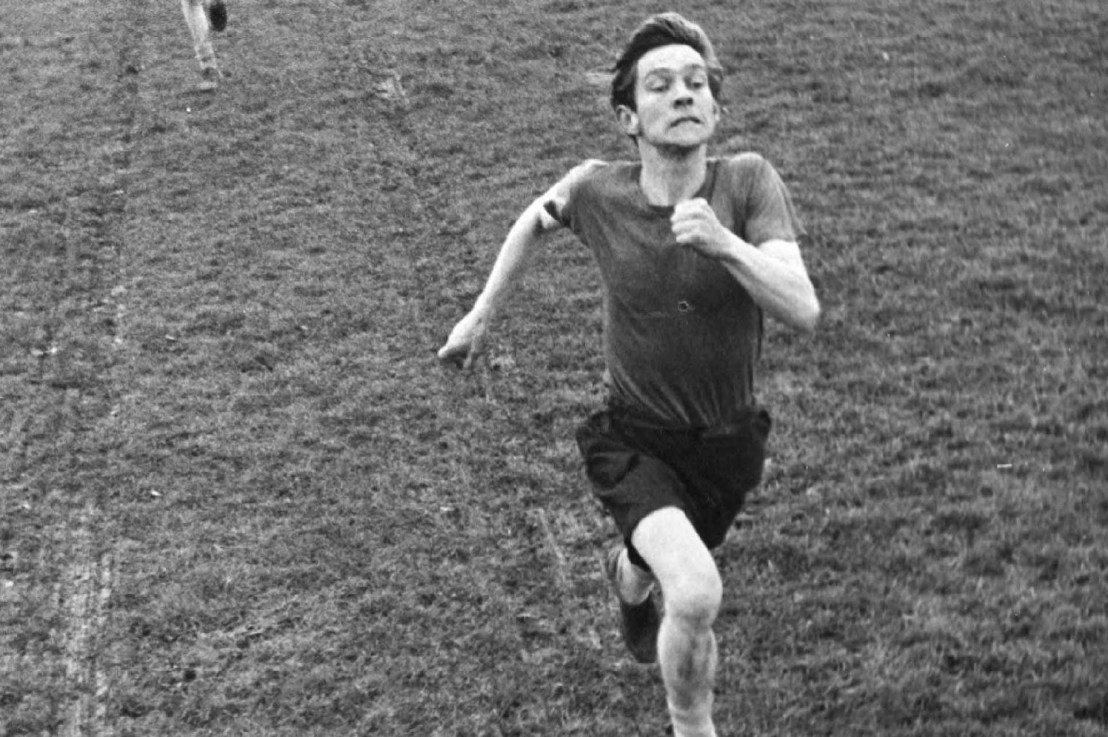
What’s intriguing about Silitoe’s story is Colin has a genuine gift for running. Richardson shoots the sequences of Colin running through the country (granted special permission to go unattended by the Governor) with a lyrical freedom. It’s as if, while running, Colin can put the world aside for a moment, to focus on his own independence. Silitoe gives Colin the means to move up in the world – but to do so he has to fall in with the desires of his “betters”. Therein lies the film’s conundrum.

It helps a great deal that Michael Redgrave is terrific as the Governor – the very picture of hypocritical and self-serving authoritarianism, interested in the boys only so far as they can serve his ends. The slightest misdemeanour and punishment is absolute – with the boy banished back to the bottom rung of the borstal, and ignored by the Governor. 

Richardson shoots the borstal as a confining series of small spaces, a real contrast to the broad, open spaces Colin runs through. The flashback scenes that showcase Colin’s life of petty crime are shot with an intense realism, on-location in Nottingham streets. These scenes are perhaps slightly less engaging and interesting than those at the borstal: their content is pretty similar to other kitchen-sink dramas, and they seem more predictable (for all their engaging direction and acting) than other parts of the film.

The real success of the film is largely due to Tom Courtenay, making his film debut. It would be easy to be annoyed by Colin, an inarticulate and chippy lad who hates the system without actually being engaged enough to understand why. But Courtenay brings the part a tenderness and surly vulnerability, and for all his childish rebellion, his barely expressed feelings of grief and anger at his father’s death strike a real chord. Given a sum of money in compensation, largely frittered away by his mother (Avis Bunnage also excellent) on her fancy man, Colin symbolically burns part of it, then spends the rest taking himself, a friend and two girls to Skegness. Colin’s relationship with Audrey is sweetly, and gently organically grown – and Courtenay brings a real vulnerability to a confession of his own virginity.

Courtenay makes Colin’s principles and issues understandable to us – and relatable – even though it’s tempting to encourage him to play along with the Governor, win the race and seize and opportunity to better himself from that. But what Courtenay makes clear, is that doing that would be a sacrifice Colin’s own sense of self – and that would be a defeat.

The Loneliness of the Long Distance Runner is a terrific kitchen-sink drama, built around an empathetic lead performance, that gives you plenty to think about. It’s shot with a poetic beauty by Richardson and photographer Walter Lassally. Finally, some credit must go to the casting director – not only Courtenay, but James Bolam and (uncredited) John Thaw and James Fox fill out the cast in prominent roles. Keep an eye on those guys: they might have futures ahead of them y’know.