Tag: Tony Scott

Top Gun (1986)

Top Gun (1986)

Cruise flies into movie super-stardom in this fun-but-much-worse-than-you-remember flying film

Director: Tony Scott

Cast: Tom Cruise (Lt Pete “Maverick” Mitchell), Kelly McGillis (Charlie Blackwood), Val Kilmer (Lt Tom “Iceman” Kazansky), Anthony Edwards (Lt Nick “Goose” Bradshaw), Tom Skerritt (CDR Mike “Viper” Mitchell), Michael Ironside (LCDR Rick “Jester” Heatherly), John Stockwell (Lt Bill “Cougar” Cortell), Barry Tubb (Lt Leonard ”Wolfman” Wolfe), Rick Rossovich (Lt Ron “Slider” Kerner), Tim Robbins (Lt Sam “Merlin” Wells), James Tolkan (Cdr Tom “Stinger” Jardian), Meg Ryan (Carole Bradshaw)
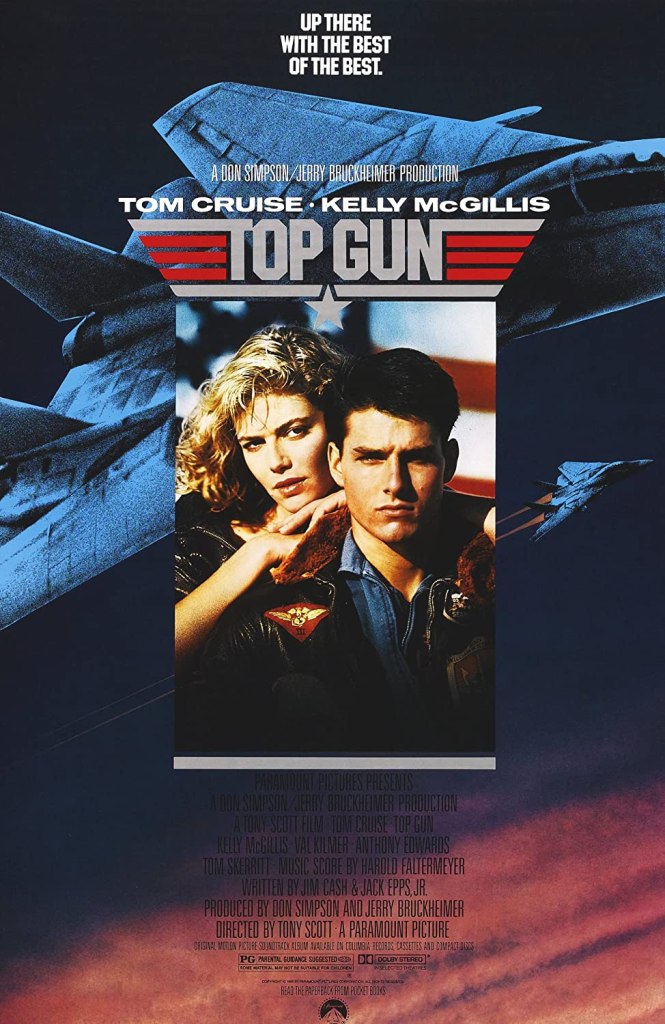
“I feel the need: the need for speed!” Those words lit up mid-80s cinema screens with one of the biggest hits of the decade. Top Gun is still one of Cruise’s most iconic films, its blasting rock-and-roll soundtrack, beautifully backlit romance and cocksure go-getting self-confidence making it one of the definitive Reaganite 80s films ever made. Its legacy is so all-consuming, it’s always a surprise when you sit down to watch it what a fundamentally average it is.

Its plot, such as it is, can be summarised thus: Tom Cruise cockily flies planes and romances Kelly McGillis until Goose dies. Then he flies planes with the same level of skill but slightly more humility and commits to Kelly McGillis. It all takes place in TOPGUN, the navy’s dog-fight training school for elite pilots. Cruise is Pete “Maverick” Mitchell, super-confident best-of-the-best. Kelly McGillis is the astrophysicist and civilian instructor on the course whose heart melts for Tom’s boyish charms. Anthony Edwards is the doomed Goose (he might as well have a skull and crossbones hanging over him – he’s even got a loving wife and son back home). Val Kilmer is Cruise’s rival pilot, super-professional “Iceman”. The training is fast-paced, macho and culminates in a clash with a (conveniently unnamed) country that definitely isn’t the USSR.

There are three things undeniably great about Top Gun. The songs from Kenny Loggins and Berlin are top notch, full of soft-rock sing-along bombast. Scott shoots the hell out of scenes and the sun-kissed beauty framing the various airplanes and aircraft carriers is superb. With its fetishistic worship of the manly glory of the navy and its equipment, the film had full military backing, a huge boon it exploited for wonderfully executed scenes of dogfights and faster-than-sound planes (Scott even paid $25k to get an aircraft carrier to change course – writing a cheque there and then – so a sunset shot would look better). And of course there is Tom Cruise.

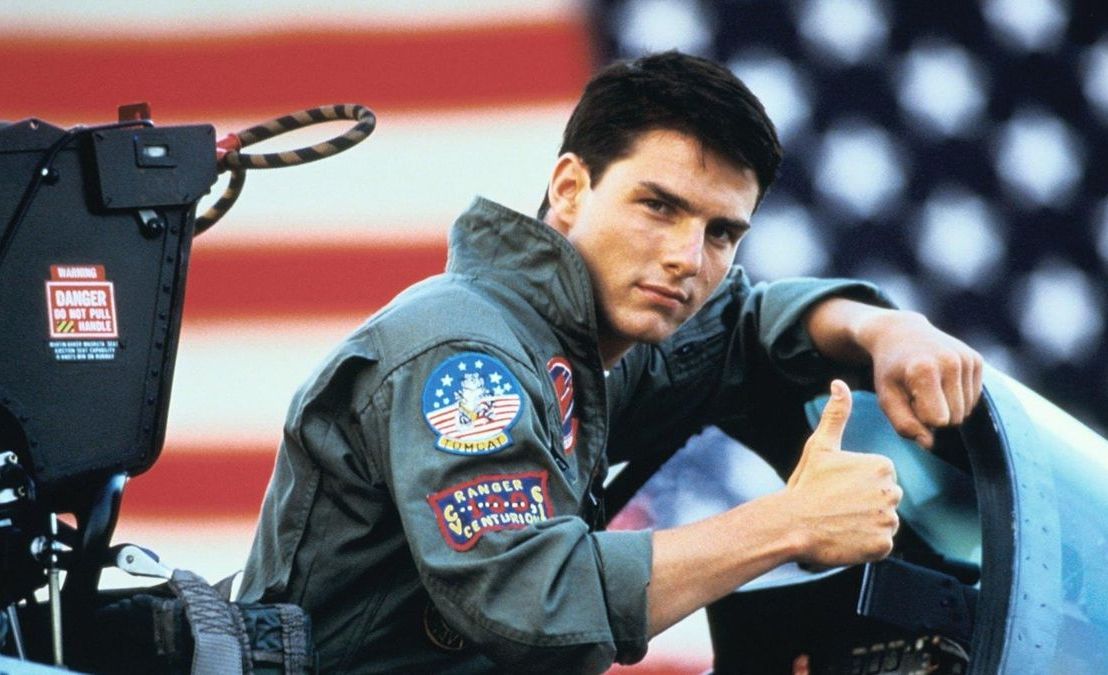
Top Gun is the foundation stone in the Church of Tom Cruise, defining a persona Cruise would effectively riff on for huge chunks of his career. Pete Mitchell is so cocksure he’s even called Maverick. But, as well as being arrogant and over-confident, he’s preternaturally skilled, boyishly enthusiastic, strangely vulnerable, yearns for affection, wins people over with a grin and goes through a crisis of confidence that sands down his negative qualities while never touching his courage, skill and likeability. Cruise cemented his eye-catching charisma and relatability: audiences wanted to be him or be with him. A huge chunk of its massive success is down almost exclusively to what a star Cruise is and how easily he makes this hackneyed stuff work.

The rest is a bizarre mix of half-formed plot ideas, weakly sketched characters and a plot so shallow it almost doesn’t deserve the name. Top Gun is all about a cool guy flying planes accompanied by some excellent songs. There is no depth to its character exploration. There is a dim suggestion Maverick needs to mature (with Goose as the sacrificial lamb to prompt that development) but it’s barely explored. It has no shrewdness in its look at the risk-taking intensity of flying or the type of personalities it might attract. The training is awash with familiar tropes: hotshots, grizzled trainers (two of them in Skerritt and Ironside!) mixing growls with behind-his-back grins at Maverick’s pluck. His rival is the anthesis of Maverick, but (gosh darn it!) he eventually learns to respect him.

The central romance seems thrown in because a film like this needs it – it’s very much An Officer and a Gentlemen in the skies. Maverick’s true emotional love story is with Goose – this surrogate brother/uncle providing Maverick’s only friendship and the vicarious family this Cruise archetype character secretly longs for. But gosh darnit, it’s Hollywood so gotta have a beautiful woman for our hero to manfully seduce. Poor Kelly McGillis looks rather uncomfortable in her ill-shaped and poorly developed character, while her love scenes with Cruise are acted with a slobbering over-intensity that suggests both of them are trying too hard (he constantly kisses her tongue first, which is gross). Perhaps they wanted to really go for it in the hope viewers would overlook the obvious homoerotic tensions of most of the film.

Oh those tensions! Top Gun drips with gleaming, tanned half-naked men squaring up to each other in dressing rooms – and that’s not even mentioning the infamous volleyball sequence (where only Edwards, bless him, wears a t-shirt). Characters forever utter variations on “I’ll nail his ass” lines. Iceman and Maverick take part in a homoerotic-tension fuelled rivalry that culminates in an explosive dog-fight climax and a loving embrace on the deck of an aircraft carrier.

It’s hard to tell how much all this was a joke, and how much Scott, Bruckheimer and Simpson just didn’t notice in the middle of all their glistening, back-lit, fast-paced shooting of military muscle (in every sense) how gay it might look. Maybe they thought people wouldn’t notice either amongst all the military machinery (this must be Michael Bay’s favourite ever film). Top Gun’s aerial footage is super impressive (though it is funny noticing now that famous daredevil Cruise clearly does all his cockpit shots in front of a green screen) even if the whole film feels like an MTV video to promote its knock-out songs.

Top Gun is still fun, even if that’s mostly mocking the nonsense and emptiness it’s built upon. Nothing much really happens, its plot so flimsy it barely stands up against the Mach-9 force of its planes. But it’s got Cruise at his blockbuster best – and when you’ve got that you don’t really need anything else. It’s poorly written, junkfood trash all framed in a fetishistic beauty – but it’s sort of goofy, stupid, empty fun.

Enemy of the State (1998)

Will Smith and Gene Hackman dodge the surveillance state in Enemy of the State

Director: Tony Scott

Cast: Will Smith (Robert Clayton Dean), Gene Hackman (Brill), Jon Voight (NSA Director Thomas Reynolds), Regina King (Carla Dean), Jason Lee (Daniel Leon Zavitz), Lisa Bonet (Rachel Banks), Barry Pepper (Agent Pratt), Loren Dean (Agent Loren Hicks), Jake Busey (Agent Krug), Lisa Bonet (Rachel Banks), Jack Black (Agent Fiedler), Jamie Kennedy (Agent Williams), Seth Green (Agent Selby), Ian Hart (Agent Bingham), Stuart Wilson (Congressman Sam Albert), Jason Robards (Congressman Philip Hammersley), Tom Sizemore (Paulie Pintero)

A congressman (a cameoing Jason Robards) is murdered for refusing to support intrusive new counter-terrorism legislation championed by NSA director Thomas Reynolds (Jon Voight). Unfortunately, someone caught the killing on camera. When the NSA come hunting, he plants the recording on an unwitting lawyer friend, Robert Clayton Dean (Will Smith). Dean has no idea he has evidence that could blow the conspiracy – and is nonplussed when they set about destroying his life. The only person who can help is mysterious surveillance expert Brill (Gene Hackman), who has spent decades living off the grid. Can the clear Dean’s name and stop the bad apples in the NSA?

Enemy of the State is a fun chase movie, that enjoys the technical possibilities of the surveillance state, packaged with the fast-pace, bright colour-filtered style of Tony Scott (this is one of his best films). There is more than enough wit and enjoyment about it – not to mention watching a host of very good actors, many of them unknowns at the time, bring a lot of sparkle to the film (you’ve got to give kudos to the casting director). Everything of course gets tied up in a neat, pretty bow but it’s a damn lovely bow so that’s fine.

In its detailed look at the power of the surveillance state, Enemy of the State was, in a way, ahead of its time. The ability for the intelligence agencies here to look into literally everything in your life is pretty unsettling, from bank details to computer accounts. Every camera is an eye and satellites are tasked at will to watch anything. In fact, it’s quite something to remember that the state is only more powerful today – the internet and mobile phones would making tracking Dean even easier than the bugs they secrete about his person, which causes him to flee our baddies stripped to his undies. (Also, if only Reynolds had waited a few years, congress would wave through legislation such as he is requesting here, without batting an eyelid).

The film also dares to shade a little bit of naughtiness into Will Smith’s character. Sure, he’s a crusading labour lawyer (we’ve got to know he’s on the right side!) but he’s also an adulterer with trust problems in his marriage. Smith’s still at his charming best here, and his frazzled desperation as he struggles to understand why on earth the NSA is destroying his life is well-handled. Regina King gets a thankless role as Dean’s shrill wife, whose trust in her husband oscillates according to the requirements of the script, rather than any internal character logic.

Enemy of the State sometimes teeters on the edge of making a point about the dangers of the surveillance state. How easy could it be to abuse this power? Unfortunately it puts most of these arguments into the mouth of Regina King’s holier-than-thou wife, which rather undermines them. It’s also made abundantly clear that we’re witnessing rogue agents. This allows the film to focus more on the cool things surveillance can do, rather than clearer moral statements about whether that’s right or not, other than it being a dangerous tool in the hands of the wrong men.

Scott’s film is more of an entertainment than a treatise though (and thank God for that). It also has a nice little touch of 1970s’ conspiracy thriller to it, something the film leans into with the casting of Gene Hackman in a role reminiscent of Harry Caul in The Conversation. Sure, I can’t remember Caul driving a car while it was on fire or blowing up a building, but Hackman still gives the film some class and a touch of old-school espionage and cynicism. Truth-be-told, other than profession, Caul and Brill have very little in common (Brill is far more confrontational and confident, and much less likely to rip his apartment apart) but it’s still a nice call-back. I also rather enjoy Gabriel Byrne’s smart, playful little cameo as ‘fake’ Brill (hardly a spoiler as you can’t move without knowing Hackman is in the picture).

Scott’s high-energy fun culminates in a smart little trap laid by Dean for all his enemies, that plays nicely off the fact that the NSA agents and the Mafia are definitely paranoid and stubborn enough to not realise they are all talking at cross-purposes. The end of the film sees everything back to normal (it’s unclear how, or if, Dean got his job back considering his unceremonious firing), but I wouldn’t worry about it. It would be nice if it had said more, but as a rollercoaster ride it’s short, sharp and sweet.

Crimson Tide (1995)

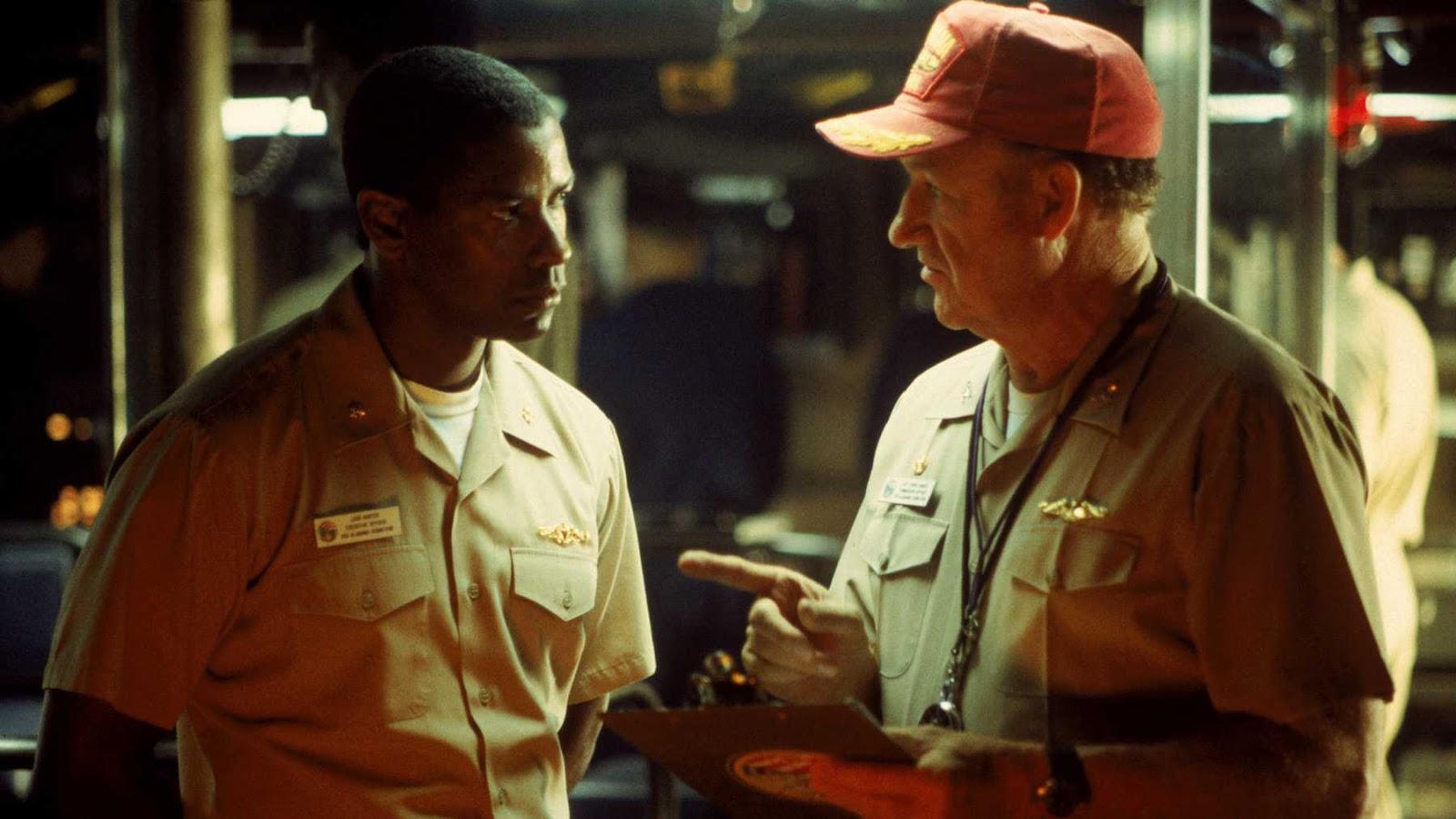
Denzel Washington and Gene Hackman face off under the water in Crimson Tide

Director: Tony Scott

Cast: Denzel Washington (Lt Commander Ron Hunter), Gene Hackman (Captain Frank Ramsey), George Dzundza (COB Walters), Matt Craven (Lt Roy Zimmer), Viggo Mortensen (Lt Peter Ince), James Gandolfini (Lt Bobby Dougherty), Rocky Carroll (Lt Darik Westerguard), Danny Nucci (PO Danny Rivetti), Lillo Brancato Jnr (PO Russell Vossler)

“The three most powerful people in the world: the President of the United States, the President of the Russian Republic and…the captain of a US ballistic missile submarine”. So boasts the film’s opening caption. This submarine drama explores the truth of that, during a clash of wills (and more) between Captain Frank Ramsey (Gene Hackman) and his XO Lt Commander Ron Hunter (Denzel Washington) over the launch of the sub’s nuclear missiles at a rogue Russian general. Ramsey has orders in hand. Hunter has a later, partial, order that may or may not be recalling the strike. Should the sub launch, or should they work to repair their radio and check the second message – possibly losing the narrow window of time they have to take out a rogue general’s missiles before he can launch them at America? Glad I don’t have that job.

Tony Scott’s submarine thriller is one of the best of the genre. It throws in all the clichés you would expect (the claustrophobia, the long dive, the game of cat and mouse with an enemy sub, the blips on the radar, the need to sacrifice someone to save the ship etc.) but presents them with a dynamic freshness (helped by Hans Zimmer’s exciting, award winning score). And at its heart it is a character study of two very different men, with very different styles of thinking and leading. Both rules are juicy, so it’s not surprising that two of the best actors in the game fill them out.

Denzel Washington is just about perfect as a Harvard-educated, committed soldier-thinker who believes in relating to the men as much as he does in firm order. Washington is careful not push Hunter towards being too cautious – under his command the Alabama bests a Russian sub in combat – and he may be alarmed by the impact of nuclear war but will reluctantly pull the trigger, but only once he is certain he has received the correct orders. A lot of the film depends on Washington’s natural moral authority, as well as his mix of forceful reserve and relatability. 

You need a big actor to not get steamrollered by Washington in those argument scenes – and few have the authority of Gene Hackman. Hackman is way too smart an actor to make the captain what he could have been in lesser hands – a trigger happy autocrat. Ramsey may be an old hand who believes in telling men what he wants and expecting delivery or a boot in their ass. But he’s not uncaring, he’s well-read, thoughtful, articulate and capable of acts of kindness and generosity. But he’s also a man rigid in his intent when he believes he is doing the right thing – and Hackman is always careful to establish that his intent on launching missiles is because he believes he is protecting innocent civilians back home.

The film becomes a compelling clash of tempers between two men who firmly believe they are both doing the right thing. The film is careful to throw up the fundamental lack of compatibility between the two from the start, even if it is tinged with respect. Their backgrounds, methods of discipline even ways of thinking about their role are different. There is an unspoken racial tension under the film, not because anyone in it is racist, but rather as Washington’s Hunter represents all round a newer America (an educated Black-American officer) that makes Hackman’s naval old hand feel like a relic of Cold War thinking.

But the film is, at heart, sympathetic towards both men, and probably places more blame on the system (an Admiral later reassures us both men were both right and wrong). Scott’s film with its expected flashy style (Scott loves the stark red lighting of the sub at alarm, mixed with the blaring greens of radar screens and the cool blues of sub interiors) gets a wonderful sense of the claustrophobia affecting decisions. Every character is a sweaty mess, while the sub seems to spend half the movie at an angle, forcing the crew to virtually pull themselves through it. 

The final hour takes place almost in real time, and covers the pressure cooker of men forced to make world-destroying decisions, cut-off under the ocean from any idea of what’s going on in the world, in extreme temperatures on little sleep. It’s a world of butch extreme masculinity – another way that makes Washington’s more cultured Hunter seem strangely other. Sweat pours off the men (the camera frequently focuses in on sweat-dripping faces). The officers of the ship generally come out badly, with Viggo Mortensen in particular a weak-willed man flip-flopping from side-to-side during the various changes of command on the sub. Many of the rest think little about what they are doing, and it’s telling Washington is largely supported by non-commissioned officers and regular sailors. Perhaps that’s where the true heart of America lies.

The film was written by a smorgasbord of writers (Robert Towne wrote much of the Hackman/Washington arguments at short notice, while Quentin Tarantino polished up much of the rest of the dialogue – no wonder it’s sprinkled with pop culture references). Initial support from the navy was cut off after Bruckheimer confessed the film was not about a HAL style computer trying to launch missiles, but a potential mutiny on a submarine and a feud between its two senior officers. Scott’s front-and-centring of the human drama between two great actors is what makes the film work – and take its place as one of the classic submarine movies.