
 |
Noémie Merlant and Adèle Haenel are part of an illicit affair in Portrait of a Lady on Fire |
Director: Céline Sciamma
Cast: Noémie Merlant (Marianne), Adèle Haenel (Héloïse), Luàna Bajrami (Sophie), Valeria Golino (The Countess)

There have been several well-known, successful films made that have focused on male gay couples but, perhaps because female directors are simply fewer in number, there have been fewer films that have focused on lesbian love stories. Portrait of a Lady on Fire is a triumphant course correction to this, a film that is both a beautiful artistic statement and also a deeply moving and involving romance drama, subtly and truthfully told.
Marianne (Noémie Merlant) is a young female artist in late eighteenth-century France, who is summoned to an isolated island to paint the daughter of a Countess (Valeria Golino). The daughter – Héloïse (Adèle Haenel) – has been plucked from her chosen life in a convent after the death of her sisterm and is now set to marry a Milanese nobleman. A painting of her is needed to “seal the deal”. Problem is, Héloïse refuses to sit for any artist – so Marianne is to pretend to be her companion in order to study her and paint her from memory. However, as the trust between the two women grows, Marianne confesses to Héloïse – and destroys the painting – an action that finally leads to her agreeing to sit for a new painting. As the Countess leaves the two women alone on the island with just a maid, Sophie (Luàna Bajrami), the painting continues – as does the bond between them.
Sciamma’s film is beautifully made, an artistic triumph of intense feeling that helps us forge a deep emotional bond with these two women. Sciamma uses mid shots and close-ups for almost 70% of the film, an effect that brings the women’s faces – and the often micro-emotions that cross them – into sharp focus, as well as building a stunning sense of intimacy between them and the audience, as if we are pressed close up against them. It allows us as well to really feel the growing physical closeness between the two women, as they more and more share the frame.
Sciamma only breaks away from these to longer shots when the camera moves outside of the house – to capture the women walking to and from the house across the island’s beach – or when disagreement has broken between them. The effect is stunning, totally immersive, and allows the two actresses to beautifully convey a deeply felt courtship that takes well over half the film to flower into an actual relationship after a prolonged, hesitant, second-guessing courtship.
Noémie Merlant is wonderful as Marianne, the artist who has struggled all her life as a woman in a man’s world, restricted by what she is and is not allowed to paint (from themes to nude men – which are of course out). Marianne is a woman with a thick skin, who is careful to avoid opening herself up, but eager to form a bond beyond this. The “artist” of the relationship, she has spent her life observing the world but only rarely allowed herself to be part of it. Her quietness is neatly contrasted with Héloïse’s more noticeable immediate chill, which is itself a careful shield from a world where she has no choices, but reveals a deep longing for emotional and intellectual freedom and a humming tenderness and gentleness. It’s an equally superb performance from Adèle Haenel.
Both women are struggling to express themselves in a men’s world. A man hardly speaks in the entire film (and other than in the film’s opening and coda, they don’t even appear) but the presence of men hangs over the entire film. The little commune of independence that Marianne, Héloïse and Sophie form – a very equal, comfortable naturalness where they cheerfully exchange roles, with the maid relaxing while the mistress cooks – can only exist while men are distant. The judgements and decisions of men affect all their lives – from Marianne’s painting to Sophie’s pregnancy, which the women work together to avert.
When we do see men they are distant and selfish. On the boat over to the island at the start of the film, not a single man lifts a finger to save her painting gear after it is dropped in the ocean (forcing Marianne to dive in herself); at the film’s conclusion, the male servant who arrives promptly takes the centre of the kitchen and demands to be served dinner. The women’s enjoyment of leading their own lives – from their relationship, to Marianne’s triumphant decision to sketch a recreation of Sophie’s abortion, capturing a moment no man would ever choose to paint (or have a clue how to) stresses that, never mind sexuality, women got to make very few decisions of their own in the eighteenth century.
But it’s the relationship that is central, and it’s beautifully and organically developed with an immensely involving delicacy. Every beat is perfectly placed and the effect is overwhelmingly emotional. Sciamma uses music only three times in the film: once Marianne’s enthusiastic to recreate Vivaldi on a harpsichord for Héloïse’s enjoyment early in the film (a touching sign of her eagerness to share her passions), again for a haunting but beautiful moment of singing from a group of peasant women on the beach, and finally a powerful echo of the movie’s first use of music, surely bound to take its place as one of the great endings of film.
For the titular painting itself, the one that captures Marianne’s feelings about Héloïse rather than the one she paints for the suitor, it appears only briefly on screen and we never see its creation. What we see is the moment that inspired it – a Héloïse so wrapped up in Marianne that she never even notices her dress catch fire in a bonfire on a beach – and it’s that which is truly important. At that moment we know everything about what that moment means to both women, and the force of a love that will last the lifetime of both women and shape their emotions and lives in profound ways. Sad, beautiful, joyful, triumphant Portrait of a Lady on Fire is a great piece of film-making.

 1988 wasn’t a vintage year at the Oscars, so perhaps that explains why this functional film ended up scooping several major awards (Picture, Director, Actor and Screenplay). Rain Man is by no means a bad film, just an average one that, for all its moments of subtlety and its avoidance of obvious answers, still wallows in clichés.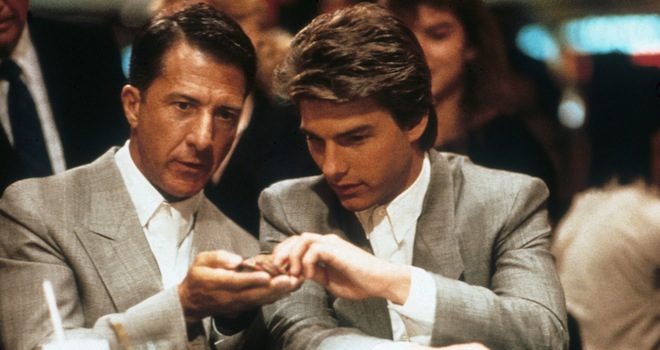
 Movie Musings