Tag: Vera Farmiga

The Departed (2006)

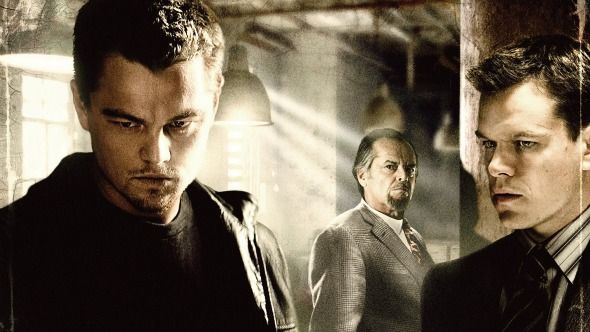
DiCaprio, Nicholson and Damon runaround in Scorsese’s cartoonish Oscar-winner The Departed

Director: Martin Scorsese

Cast: Leonardo DiCaprio (Billy Costigan), Matt Damon (Colin Sullivan), Jack Nicholson (Frank Costello), Mark Wahlberg (Sean Dignam), Martin Sheen (Captain Queenan), Ray Winstone (Mr French), Vera Farmiga (Dr Madolyn Madden), Alec Baldwin (Captain Ellerby), Anthony Anderson (Trooper Brown), James Badge Dale (Trooper Barrigan), David O’Hara (Fitzy), Mark Rolston (Tim Delahunt)

It’s one of those historical oddities that Scorsese finally won his Oscar for his lightest (comparatively speaking) most out-right entertaining film. I’ll confess I’ve never been a huge fan of The Departed. It won Best Picture in a year without a clear front runner, with the Academy feeling an overwhelming sense that Scorsese was ‘due a win’. The Departed is certainly entertaining, but as a great big, violent cartoon which feels like a different universe from the director’s real gangster masterpieces, such as Goodfellas, Mean Streets and Casino. The Departed also can’t hold a candle to Raging Bull, Taxi Driver and The Aviator (I know that last one is controversial). Still it may be just a bit of fun, but at least it is fun.

Boston is a city where the Irish community is split, between cops and robbers. Crime lord Frank Costello (Jack Nicholson) gets a man on the inside by pushing his protégé Colin Sullivan (Matt Damon) to train as a police officer so he can get tips from the inside. Simultaneously, Captain Queenan (Martin Sheen) recruits officer trainee Billy Costigan (Leonardo DiCaprio), an honest young man with a dodgy family, to go under cover in Costello’s gang. Both moles feed information on their ‘side’ to the other – but the stakes heighten as they both become aware of the others existence and race to unmask the other’s identity.

Based on a Hong Kong action film, Infernal Affairs (which has the same plot, but tells the story in about half the time). The Departed takes the basic template and ratchets almost everything up to an even more frenzied pitch. Scorsese throws in fast-cutting visual flair, makes effective use of montage and lays The Rolling Stones over the soundtrack (he really does love Gimme Shelter doesn’t he?). It’s hard to tell, watching The Departed, how much Scorsese’s tongue was in his cheek. This could very easily be a parody piss-take of Casino, with its bright-lights, extreme violence, effing and jeffing and toxic masculinity.

What is clear is that The Departed has all the logic of a playground game. Nothing ever feels particularly real, all emotions and personalities are dialled up to eleven. Big name actors have fun with big, chewable dialogue fully of sweary one-liners. There is barely any sense of a wider world, The Departed really being a chamber piece involving a few key characters, played out in a graphic novel style. In real life both Costigan and Sullivan would have been uncovered in seconds (it makes Line of Dutylook like a fly-on-the-wall documentary). If it has links to any Scorsese film, it’s probably Cape Fear, which was a similar heightened pastiche (of Hitchcock). Don’t get me wrong, there is a lot of fun in watching Scorsese essentially take himself off, and it’s nice to see him having fun, but the film’s constant resorting to foul-mouthed, cartoonish action means depths are missed.

For starters, the film touches on but never really dives into the complex divided loyalties Costigan and Sullivan feel for their sides. After years (at least I think its years, there is very little sense of timeline in the film) pretending to serve one master while actually serving another, you’d expect an exploration of loyalty being increasingly torn between these two masters. It’s not a sense that comes across in the film. Instead, both of them feel fear of their false master and resentment to the true master. Both want to retire – seemingly to the same (lawful) side. The film spends time on the psychological impact of the constant stress of living a lie – but its analysis of this is skin-deep, trauma exhibiting as a bubbling, unpredictable temper (especially with DiCaprio’s Costigan) rather than really giving us an understanding of the psychological trauma. All the final shots in the world of a rat crawling across a railing in front of the court house, doesn’t translate into insight.

The film also misses the mark in exploring the dangerous masculinity of this world. The intense male attitudes here – with the macho posturing and the constant use of sexual and homophobic slurs – are obviously part and parcel of this world. But you feel a smarter film would have unpacked this more, rather than using it for punchlines and chuckles. There’s only really one woman here – a female psychiatrist who (obviously) becomes involved with both men – and you feel more could have been made of how the destructive bloodshed of this film is at least partly powered by overgrown schoolboys on both sides burning the world down to prove their manliness.

But this film is designed as an entertainment, not the sort of insightful character study Scorsese has delivered in the past. And with its primary colour pallet and shots – like a character falling from a building, and low-angle Dutch angle shots of characters checking phones – that seem inspired by graphic novels, it’s clear that we are not meant to take things too seriously here.

That carries across to the performances, many of which are Grand Guignal in their excess. None more so than Jack Nicholson in a performance of such flamboyant “Jack-ness” that it will either delight you or make you wonder whether Scorsese gave him any limits at all. The cast is roughly split between the OTT and the method. Mark Wahlberg follows Nicholson’s lead as a foul-mouthed, permanently angry cop, with rigid morals (he was Oscar-nominated and gets most of the film’s funniest lines) while Baldwin showboats amusingly on the chewy dialogue. At the other end, Sheen brings a fatherly warmth to Queenan while Winstone mumbles a lot as Costello’s number two.

In the leads, DiCaprio brings an edgy, firecracker intensity to Costigan, a man who seems constantly on the edge of a nervous breakdown. Damon, by contrast, underplays rather effectively as the seemingly straight-laced Sullivan, letting the Boston accent roll around his tongue and riffing effectively off his “boy next door” looks. Vera Farmiga does decent work as the woman caught in the middle – even if she’s not 1% convincing as a trained trauma psychologist.

That doesn’t matter though in the heightened, cartoony posturing, blazing gun battles and operatic shouting that makes up the crazy world of The Departed. Scorsese lifting the Oscar for this is rather like David Hockney winning the Turner Prize for a doodle. I enjoyed it a lot more this time around, but it’s still a big, crude, graphic novel, something that looks and sounds clever., but is only a B-movie imitation of Scorsese’s finest work. The Departed is frothy but misses the mark when it aims for true thematic or character exploration.
The Front Runner (2018)

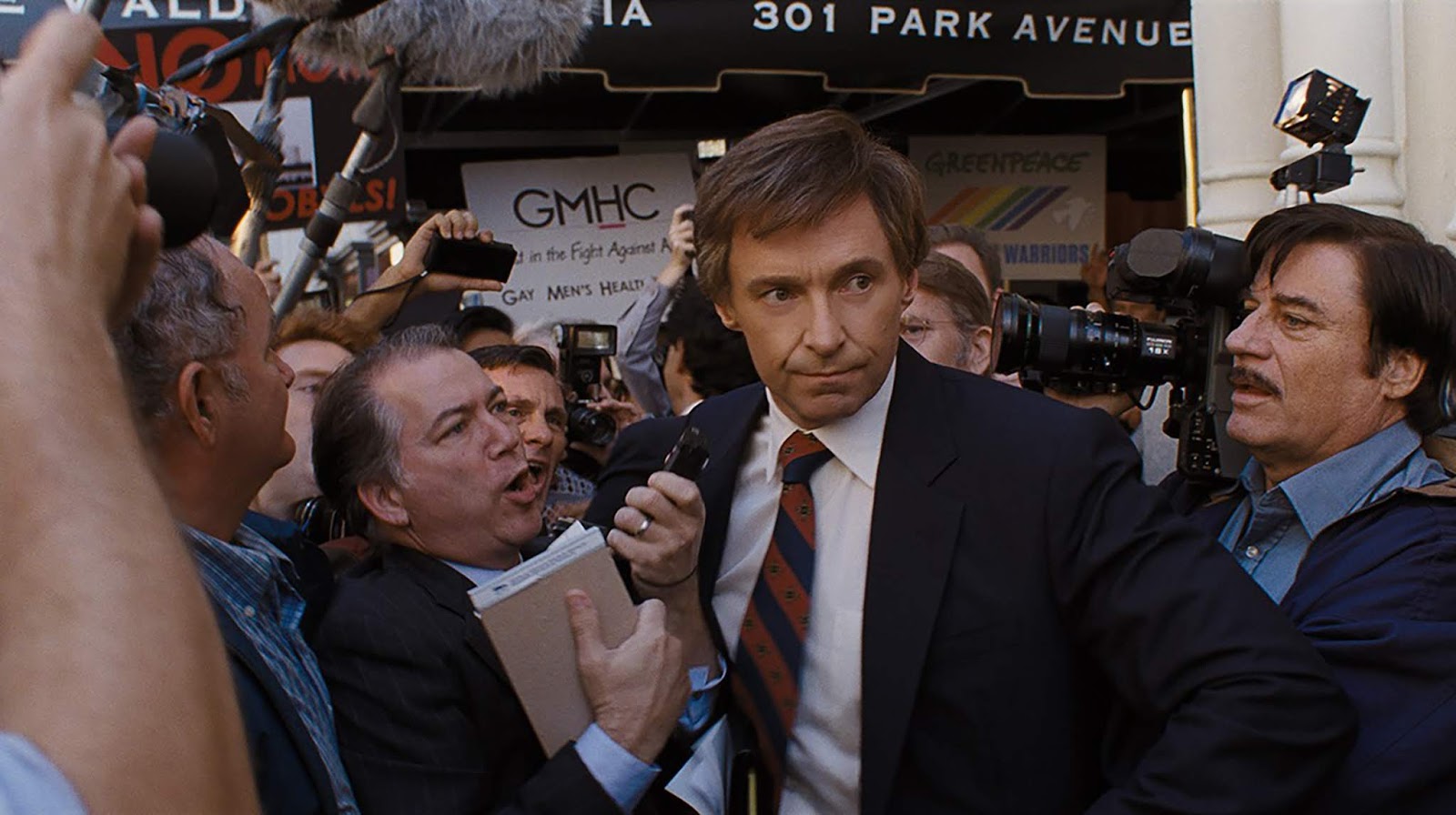
Hugh Jackman in the centre of a media scrum in misfiring biopic The Front Runner

Director: Jason Reitman

Cast: Hugh Jackman (Gary Hart), Vera Farmiga (Lee Hart), JK Simmons (Bill Dixon), Alfred Molina (Ben Bradlee), Sara Paxton (Donna Rice), Mamoudou Athie (AJ Parker), John Bedford Lloyd (David S Broder), Spencer Garrett (Bob Woodward), Steve Coulter (Bob Kaiser), Ari Garynor (Ann Devroy), Steve Zissis (Tom Fiedler), Bill Burr (Pete Murphy), Mike Judge (Jim Savage), Kevin Pollak (Bob Martindale)

In the 1988 Democratic primaries, Gary Hart (Hugh Jackman) was the man to beat: a telegenic liberal with an attractive programme of policies and a forward-thinking vision for America. No one could beat Hart. Except for Hart himself. A man with a history of affairs, he became embroiledin a sex scandal after an ill-advised friendship (the film is coy on taking a stance on whether this friendship was sexual or not) with a young woman, Donna Rice (Sara Paxton). Angrily denying anything was going on, Hart unwisely challenged journalists to follow him: which the Miami Herald did, soon finding Hart had skipped campaign events to invite Rice to come and stay with him at his Washington home for a long weekend… Cue a media snowstorm and an imploded campaign.

Reitman’s film is a pretty decent chronicle of this early media sex scandal. I say pretty good because it does what it sets out to do with a solid observation of the facts and a general even handedness between Hart and the media. However it never really quite sparks into life, and Reitman’s attempt to make this story into something with huge relevance for how the modern media has developed, and how the world of politics has led us to Trump, just doesn’t really work. 

What the film instead becomes is a slightly dry but enjoyable enough docu-drama, that covers a period of history that should feel tumultuous and should create a sense of setting the table for the future but doesn’t. The idea that it was only at this point that American politicians suddenly had interest from the press in their personal lives is nonsense for anyone who had even a passing knowledge of the careers of Kennedy and Nixon. The film’s attempt to make us sympathise with Hart is also undermined by the high-handed arrogance with which he treats even the slightest inquiry into his personal life from anyone, be it press to members of staff who simply want an explanation of why their leader consistently demonstrates such astonishing poor judgement.

This is despite a decent performance of charisma from Hugh Jackman, possibly better than Hart deserves. The film does demonstrate – amidst its general sympathy for Hart – his willingness to throw Donna Rice under the media bus and his stubborn refusal to acknowledge any wrong-doing on his own part. I can’t say I actually really felt much sympathy for him over the course of the film, which I’m not sure was the film’s intention.

Neither did I really feel the film really skewered journalism. I think it wants to lay a suggestion that this was the first descent on a slippery slope, where gutter press, personality led journalism led to only egotists of mediocre talent wanting to take on the challenge of running the country. Or rather, that we get the politicians we deserve. While you could say there is some merit in this, I’m not sure this film manages to present that fully (Hart’s behaviour is at least partly self-destructive and would have been in any era) or that it really establishes that we are living in the shadow of times like this. And the investigation into Hart’s lies and evasions is hardly gutter press journalism. Neither does the film make a real case for Hart being some sort of potential great leader: while he has some decent, liberal, ideas he’s also short-tempered, lacks focus and has a tendency to snap at or cold shoulder underlings.

A bit of spin in the movie is got out of Jack Kennedy’s numerous affairs not being covered by the press. And while that is true, this seems less because of a natural shyness of the press, but rather because Kennedy was more astute at making friends in the fourth estate, and more willing to share parts of his life outside politics with them for stories (essentially, he made news for the press, making them more willing to keep quiet about his adulteries, while Kennedy avoided doing anything too blatant that the press would find impossible to ignore). Hart’s real problem was less that he was in a more censorious or gutter press era, and more that he was inept at press (and people) management, treating those around him with high handed contempt, mixed with challenges and threats. The film could almost be a textbook on how not to use the media.

It’s telling Hart’s only real relationship with a reporter in the film is with a young, impressionable (and fictional) Washington Post journalist (played very well by Mamoudou Athie). Hart comforts him through a mild panic attack during a flight and they develop a friendship, which I think the film wants us to think the journalist betrays by asking Hart the difficult questions about his lack of faithfulness and proclivity for affairs (all pretty well documented historically). I’m not sure that is the case. Surely, by this stage almost any thinking human beingin the States was asking these questions, and by putting them to the candidate, surely this journalist was simply doing their job? The “tragedy” of Hart was his incompetence at working with people, rather than his questionable private activities being brought to light.

The film struggles with all these themes and I don’t think it really successfully tackles any of them. The case it tries to set out doesn’t really work and, despite some fine observational moments of politics in action and a good performance from Jackman, it never really takes flight as it should. It’s a decent effort but a misfire.

Up in the Air (2009)


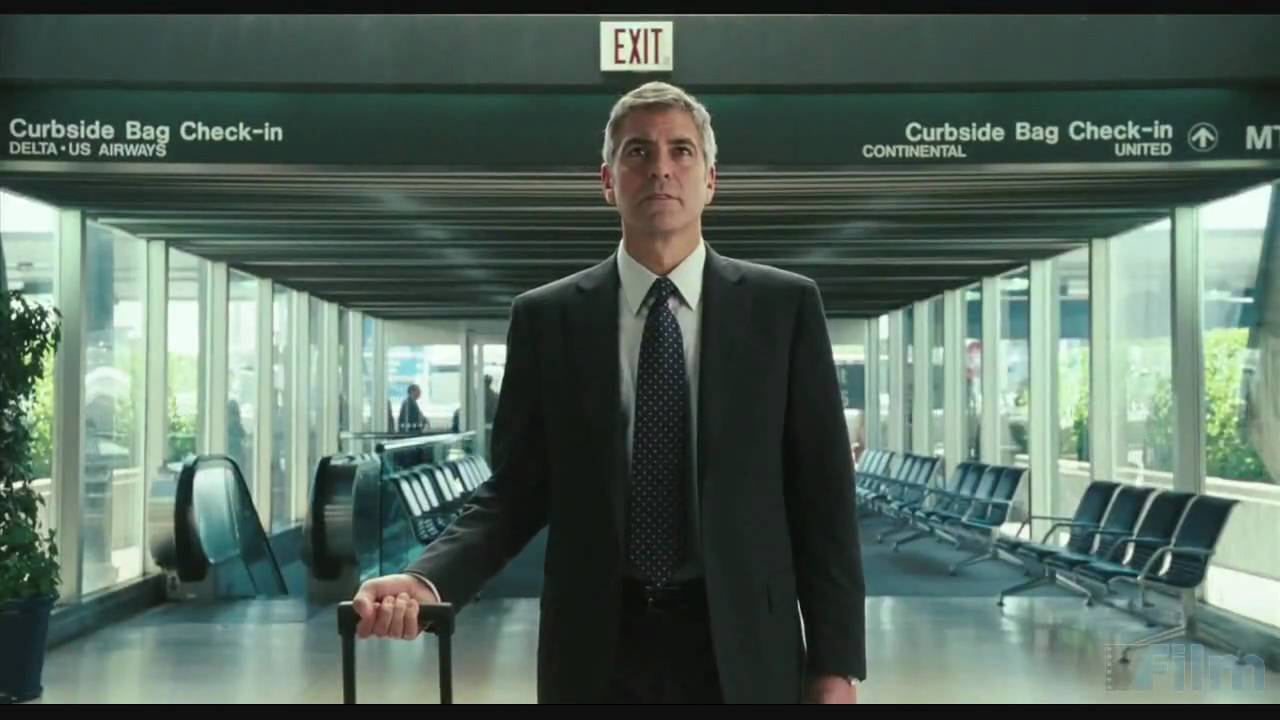
George Clooney about to head Up in the Air in Reitman’s brilliant bitter-sweet comedy

Director: Jason Reitman

Cast: George Clooney (Ryan Bingham), Anna Kendrick (Natalie Keener), Vera Farmiga (Alex Goran), Jason Bateman (Craig Gregory), Amy Morton (Kara Bingham), Melanie Lynskey (Julie Bingham), Danny McBride (Jim Miller), Zach Galifianakis (Steve), JK Simmons (Bob), Sam Elliott (Marnard Finch), Tamala Jones (Karen Barnes)

One of the worst days in your life can be the day you lose your job. The uncertainty, the insecurity, the sudden feeling of no longer knowing what the future holds – it hurts. Imagine, however, if you were the other side of the equation. What if it was your job to actually tell other people they no longer had a job?

Ryan Bingham (George Clooney) works for a Human Resources consultancy company who specialises in firing people for companies. Ryan spends his life flying from company to company across America, fires thousands of people a year, and gives motivational speeches promoting his ideology of no relationships with people or possessions. His relationships are on-the-road flirtations, in particular with one of his female counterparts Alex Goran (Vera Farmiga). However, Ryan’s world is facing threat: his company has hired young, ambitious Natalie Keener (Anna Kendrick), and wants to introduce a video conferencing system to conduct firings remotely. Ryan argues Natalie knows nothing about the ‘human element’ of his job, and she joins him on the road to find out more.

Up in the Air is a marvellous, perfectly formed, small-scale film: thought-provoking, endearing, with plenty of laughs as well as an air of bittersweet sadness. It manages to focus on all its issues and themes equally without short-changing any of them, and leaves you feeling rewarded and rich at its end. There are moments in there that will make you cry, make you laugh but also make you a little angry. Reitman never insults your intelligence though: he presents things as they are and trusts you to make the judgements you want to make. It’s quite simply wonderful, a little masterpiece of cinema. 

It’s also a wonderful film of its time, which very deliberately doesn’t shy away from the brutality of the economic climate so much of its plot focuses on. Reitman used a series of talking heads of real people who really had gone through meetings exactly like this, and their emotional, very real reactions to losing their jobs gives the picture a profound depth. 

Up in the Air doesn’t take the easy route of condemning Ryan’s work. Sure our sympathies are naturally with those losing their jobs, but Ryan isn’t a heartless shark. He genuinely feels he is there to support people: his principal objection to the video conferencing is it removes the human element from an extremely difficult moment in people’s lives. He has platitudes, and smooth professionalism, but also a brilliant understanding of people and he gets so close to appearing that he cares deeply about people’s lives (even if he can’t remember them days later) it’s as near as damn it to counting. Watch the scene where he fires JK Simmons’ character – he’s read Simmons’ CV, gently questions why Simmons is working anyway at a company he hates and encourages him to follow his dream of becoming a chef. Sure it’s about defusing a situation – but to Ryan it’s also about helping a person see possible future steps, if only for a moment.

It’s such a brilliant snapshot of how Ryan can analyse in seconds what might encourage a person to find greater depth in their lives, that you forget for a moment that Ryan prides himself on having nothing. His flat is a facelessly cold place, which looks less welcoming (and cheaper and colder) than the hotel rooms he stays in. He’s never happier than when in a VIP lounge. He proudly lives out of a suitcase perfectly sized to avoid checking bags. His motivational career stresses the aim of getting everything that matters to you in the world into a backpack. He has no friends, he’s a stranger to his family, no fixed abode (he spends over 320 days a year travelling). He shares a few painful minutes with people and then never sees them again. 

This might just be the part Clooney was born to play: his handsome, slightly smug grin, his studied chuckles, his slight air of blankness behind his good looks are perfect for Ryan’s surface, but Clooney’s great gift as an actor is the emotional weight and depth he is able to show beneath this veneer as soon as it is scratched. He’s a marvellous physical actor – watch his growing flirtatious ease with Alex turn into a comfy affection. He understands the psychology of Ryan completely and never judges him: he can see why Ryan does what he does, and why it works for him. His performance gives Ryan the dignity of his convictions, doesn’t present with any inch of satire Ryan’s feeling that his job is partly about helping people. Even the slightest touch of distance from the part would have shattered the film’s delicate equilibrium – Clooney doesn’t do it for a second.

Of course, drama means Ryan is thrown into situations that challenge this way of thinking, not least his relationship with Alex (essentially the female version of himself). Vera Farmiga is outstanding as a woman with a very male outlook on the world. Perhaps because they share so much, their relationship grows from a sexually charged flirtation (a brilliantly shot and edited sequence in a VIP lounge) into one that increasingly becomes more and more tender. The film dangles before us and Ryan the option for a new way of life – but it doesn’t lie to us about the nature of either of these people. The relationship doesn’t develop the way we expect – and in fact it becomes a commentary in its own way on the very same future prospects Ryan spends his life selling the people he fires, that despair is a gateway to future opportunity.

Anna Kendrick’s Natalie comes at the world of firing from our ruthless modern age – how can we do this faster, quicker and cheaper? Let’s put together a framework for all conversations, let’s do it remotely, let’s use as many buzzwords and platitudes as we can. While Ryan’s work (to him) is all about not forgetting you need to guide an actual human being through without them getting angry or upset, for Anna it’s a simple progression from A to B. Kendrick’s wonderful performance is all about unpeeling these layers. As she finds out first-hand what the job involves, so we discover she is a far more sensitive, “normal” person than we expect, someone who can’t see the logic behind Ryan’s world-view.

And the film asks Ryan to look at the logic of this world view as well. Everything he expresses at the start of the film comes under fire. Change threatens to make him as redundant as the people he fires. His growing closeness to Alex challenge his ideas about commitment (“we fall in love with pricks and are then surprised when they are pricks” Alex comments, something the film explores late on). The impending marriage of his sister – and the realisation of the complete lack of presence he has in his family’s lives – makes him start to think about the strength of his rootless existence.

But the film doesn’t hammer these points home, it juggles them all perfectly within its framework of looking at corporate America today. In a world where people are increasingly becoming faceless numbers on a spreadsheet, is it surprising so many need a faceless man to do the firing for them? Travel has made the world smaller, but also our lives smaller – like Ryan we can be everywhere and nowhere. Up in the Air is a sad and tender film, but one which leaves a kernel of hope somewhere – there are moments that make you think there are opportunities for change and rebirth. Sure it might be pulling the same trick Ryan does, but if so that’s smart – and shows what a good trick it is. Up in the Air is a hell of a movie, and Reitman is one hell of a director.