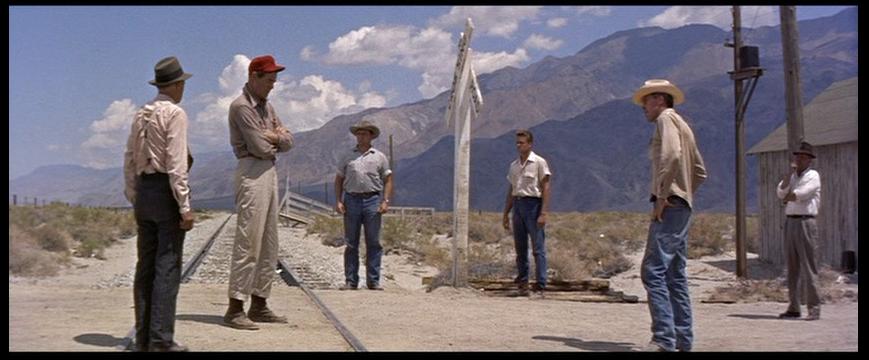
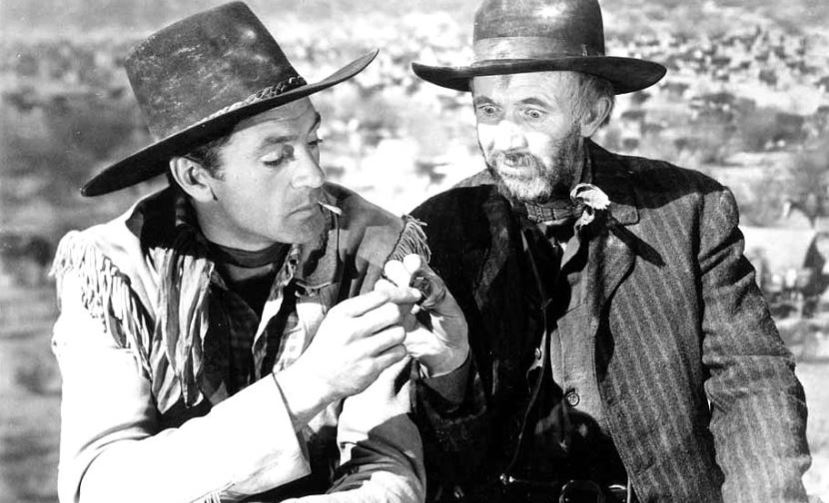
Tag: Walter Brennan

Sergeant York (1941)

Sergeant York (1941)

Patriotic flag-waver with a great performance from Cooper and plenty of genuine heart

Director: Howard Hawks

Cast: Gary Cooper (Alvin C. York), Walter Brennan (Pastor Rosier Pile), Joan Leslie (Gracie Williams), George Tobias (“Pusher” Ross), Stanley Ridges (Major Buxton), Margaret Wycherly (Mother York), Ward Bond (Ike Botkin), Noah Beery Jr. (Buck Lipscomb), June Lockhart (Rosie York), Dickie Moore (George York), Clem Bevans (Zeke), Howard Da Silva (Lem), Charles Trowbridge (Cordell Hull)

In 1941, after Japanese bombs landed on Pearl Harbor, America needed patriotic big-screen heroes. Few stood out more than Alvin York. A young man (over ten years younger than Gary Cooper) who had lived a youth of drunken rough-and-tumble before he found the light. When America joined the First World War, the 30-year-old York was called up. A gifted sharp-shooter, York was perfect for soldiering – but had to wrestle with his conviction to stick to the Commandments from the Good Book. Finding a solution to his moral quandary, York fought in France where his sharp-shooting instincts saw him almost single handedly capture a German machine gun embankment and 132 Germans (it’s an achievement that sounds pure Hollywood, but is in fact entirely true).

It’s an inspiring hero story that Warner Brothers bought to the screen at the perfect time, it’s release seeing tales of streams of young men walking from the cinema straight to the enlistment office. Producer Jesse L Lasky spent no less than twenty-two years attempting to persuade the notoriously publicity-shy and modest York (just as in the film, the real York couldn’t wait to leave the glitz and glamour of his triumphant homecoming behind and return to his fiancé, farm and work with the Church) to grant him the film rights to his life. York agreed only with the advance of Hitler, a hefty payment to his Church and a promise that no-less than Gary Cooper would play.

Cooper was reluctant – pointing out he was far too old to play this national hero – but really no other actor could have done it. Cooper won his first Oscar for the role, and it’s his understated sincerity and decency that really sells the film. He turns what could otherwise by a potentially cloyingly perfect man into someone utterly sympathetic and endearing. There is an aw shucks quality to Cooper, as he captures York’s modesty, his shrugging off his accomplishments as no more than his duty, his palpable discomfort with attention (be it from congressmen or his fellow Tennessee farmers commending his shooting) and a deep-rooted genuineness in his love for his beau Gracie (Joan Leslie giving a commendable performance of endearing brightness that helps you overlook she was 24 years younger than Cooper – thankfully she doesn’t look it).

Cooper’s performance powers a sprightly, very enjoyable film by Howard Hawks (who picked up his only Oscar nomination for this) that manages to transcend the danger of being an overbearing flag-waver. (Don’t get me wrong though – this film waves the flag so much, you can practically feel the strain in its arms). Hawks produces a film that in many ways owes as much to The Adventures of Robin Hood as an heroic All Quiet on the Western Front. Despite the patriotic focus being the final few Acts, as York carries out his act of astonishing heroism, the film’s real heart is in the opening half and the conversion of a man who is never-too-naughty into one who casts aside the demon drink, works hard to earn what he has, and puts his faith and the good of others before his own concerns.

Hawks shoots this part of the film with a palpable energy and a rough-and-tumble sense of humour. It’s there from the film’s opening as Walter Brennan (in a role he invests with all his wheezy, twinkly dignity) finds his sermon constantly interrupted by the gunplay of the drunken York and his buddies. There is a light humour when Margaret Wycherly – a little too ethereal for my taste as York’s saintly mum (although her casting does make York and White Heat’s Cody Jarrett siblings) – archly observes that, even when drunk, her son’s accuracy with a shooter is second to none. That’s the skill of Sergeant York there: in it’s end is it’s beginning, York is already deeply skilled and as his slightly embarrassed reaction shows when he sobers up, reformation is not a long journey.
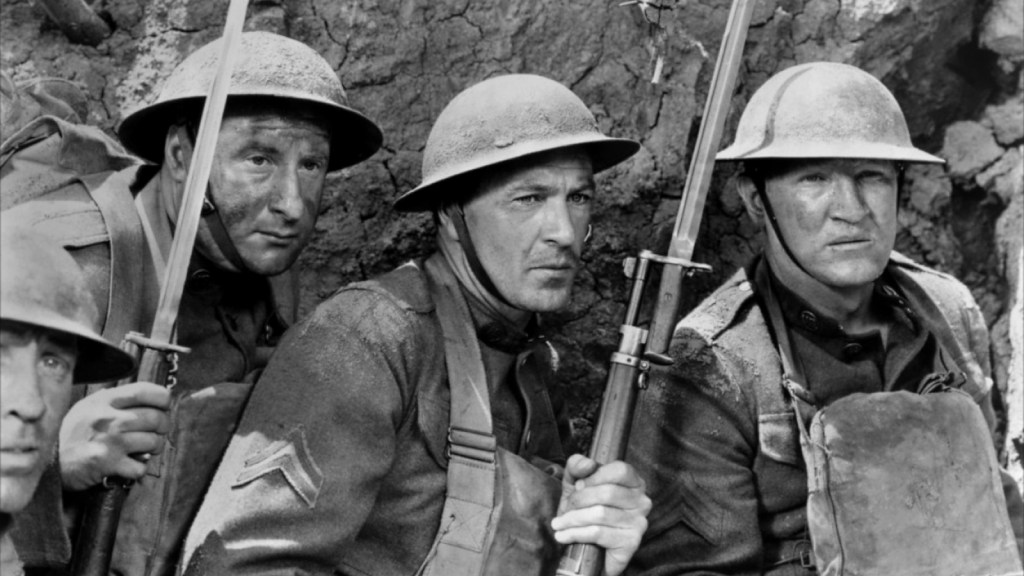
A large part of the success is making York one of us. Striving to save the money he needs to buy the farmland of his dreams, Hawks provides a sweet montage of York undertaking no end of backbreaking, thankless work and returning home to tick off his slowly accumulating dollars under the smiling approval of Ma. When, after all his work, he finds the land has nevertheless been sold (because the owner never believed this previously idle lush could hold on to his hard-earned pennies), his outrage at the breaking of another man’s word is a clarion call to all of us who have played by the rules and been shafted. When his conversion comes, it’s not as out-of-the-blue as it could seem, but a logical conclusion for a journey we’ve watched him go on.

It’s undercut with scenes that drip with Hawksian skill. A marksmanship competition is crammed with a playful Robin Hoodesque skill. A bar-fight that the drunken York gets wrapped up in is so full of comedic tumbles and prat falls it’s hilarious. York’s constantly being fetched for various tasks by his kid brother is expertly played for subtle laughs. Alongside this, the romance between York and Gracie (and the off-screen slapping he hands out to a rival who treats her with disrespect) is beautifully handled.

The only real Hawksian touch missing is that little slice of cynicism, that ability to look under the skin of a legend (like with Wayne in Red River) and see a more flawed person. York basically is perfect, and in a film dripping with patriotism there can’t be any fault with either the army or the moral question of whether gunning down your fellow humans is alright in the service of your country. There is a version of Sergeant York where his commanding officer’s invitation that he take some time and read his way through the history of America (a replacement good book) was an act of naked manipulation of a guileless man. Or where we see the sort of guilt at his taking of life that the real York felt, play out across Cooper’s face. There’s none of that here.

In fact, after the vibrant, playful, heartfelt first few acts, you feel Hawks felt less interested in the war itself. There is a functionality about the final acts of Sergeant York as York aces his shooting tests on the range (although the flabbergasted reaction of his training officer and York’s apologetic manner at his failure to only manage five dead-on bulls-eyes on his first time using an army-issue rifle are funny). Hawks spices it up with York’s turkey-shoot metaphor, and a warm supporting turn from George Tobias (as a New Yorker soldier) and York’s gobble-gobbles to distract his German opponents. But, for all the realism of the trenches, there is an air of duty about this sequence.

But then Sergeant York works not because of the deed, but the man. And the film’s success in investing us in a man who could very easily have been all-too-perfect, in a playful and energetic first half works wonders. With a very fine, perfectly judged performance by Gary Cooper, this may not be Hawks most characterful work – but as the sort of film to showcase a man who inspires you to achieve acts of heroism, it hits the target perfectly.

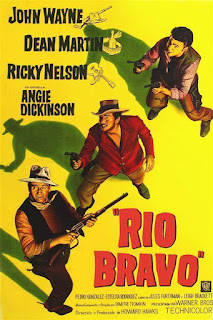
Rio Bravo (1959)

Rio Bravo header
John Wayne, Ricky Nelson and Walter Brennan are supremely unbothered by danger in Hawks’ High Noon riposte, Rio Bravo

Director: Howard Hawks

Cast: John Wayne (Sheriff John T Chance), Dean Martin (Dude), Ricky Nelson (Colorado), Angie Dickinson (Feathers), Walter Brennan (Stumpy), Ward Bond (Pat Wheeler), John Russell (Nathan Burdette), Pedro Gonzalez Gonzalez (Carlos Robante), Estelita Rodrigues (Consuelo Robante), Claude Akins (Joe Burdette)

When they saw High Noon Hawks and Wayne were unimpressed. Who was this sissy cry-baby, blubbing in his office, begging all and sundry to join him in an impending gunfight with an outraged gang? This wasn’t the West they knew. How un-American was that? So, heads went together and they came up with their counterpoint: Rio Bravo, where the Duke does the right thing, locks up the bad man, is supremely unruffled by threats of violence from his gang, turns down offers of help from across the town (he doesn’t need to worry, they all help anyway) and even finds time for an unfazed, late-night jail-room sing-along with his deputies. Take that Fred Zinnemann and Carl Foreman!

The Duke is John T Chance, a grizzled, experienced sheriff, still in-his-prime, who arrests the brother of Nathan Burdette (John Russell) after he shoots an unarmed man in a bar brawl. When Nathan demands his release – or there will be hell to pay – Chance relies on the men he can trust: old-timer Stumpy (Walter Brennan), recovering alcoholic former-deputy Dude (Dean Martin) and (eventually) plucky young gunslinger Colorado (Ricky Nelson). The three simply have to wait for the Marshalls to arrive and take Burdette away – but will the Burdette’s strike first? On top of which, Chance’s eye is caught by the widow of a cheating gambler, Feathers (Angie Dickinson) – does he also have time for a bit of love?

Rio Bravo is possibly one of the most “shooting-the-breeze” films ever made – even though the general air of manly cool is punctuated by the odd gun-fight. Wayne and his gang are far too cool, confident and quick on the draw to ever be that worried about the approaching threat of the Burdette family – not that you can blame them, since Hawks spends only the minimum amount of time fleshing them out. Instead, the film is a chronicle of a few days where they hole-up and basically shoot-the-breeze – their banter carrying over to exchanging bon-mots during the final gunfight (“You took two shots!” “I didn’t take the wind into account”). It’s the sort of unfazed cool against the odds that you can see has carried across to a whole host of modern action and superhero films, heroes who are so confident in their skills they crack wise even under fire.

Rio Bravo is directed at a gentle pace but complete assurance by Hawks. It occasionally has a feel of settling down and watching a relaxed after-show party, with a group of actors so comfortable in each other’s company, that they simply filmed themselves having a whale of a time. Wayne marshals the whole thing on screen with authority and confident precision: the part is far from a stretch, but he hits the beats with a naturalness that really works, from a fatherly mix of encouragement and disappointment in Dude’s slow turnaround from his drunken collapse, to a crusty flirtatiousness with Feathers (Angie Dickinson at her most radiant here).

The film is full of delightful little moments that pop-up with a perfectly judged regularity. Colorado and Feathers save Chance’s bacon with a perfectly timed flower-pot through the window, matched with Colorado’s pitch-perfect shooting skills. Dude judges exactly the location of sharp-shooter through the drops of blood on a full beer-glass (a lovely image from Hawks). Chance and Colorado confront a card cheat. Chance is so cool under fire, that pinned with two guns on his back in a small room, he never once feels like he thinks there is any real danger.

Either side of these events, the film is full of a sublime lackadaisical charm, as our heroes riff off each other, never once letting events get too heavy. You couldn’t cast Dean Martin and Ricky Nelson without having them break into song – so of course, they do just that in a late-night sing-along. It seems to be about blocking out the sound of Degüello, the cut-throat Mexican song that plays non-stop outside the town overnight, warning them of the perils to come. But really it’s just because we are watching three blokes chilling and simply too cool to be that flustered by scare-tactics. (The Degüello here, by-the-way, was composed by High Noon’s composer Dimitri Tiomkin – another one in the eye for that film).

Wayne’s charges all do a fine job on screen, with Dean Martin in particular fitting the role like a glove and bringing a wonderful sense of sixties brashness as well as a surprisingly affecting struggle with alcohol. Ricky Nelson does his duty when pushed. Walter Brennan wheezes and cackles as only he can. Angie Dickinson is wonderfully vibrant and sexy – surely, with those tights, she’s too much for even the Duke to handle?

Duty is what it is all about, and these are men’s-men who knuckle down and get on with it rather than complain. People may offer to help, but only those qualified will do so (two of them rock-up to help at the final gunfight anyway). That film’s concluding shoot-out is rousing, dramatic and literally explosive. Hawks shoots it all with assured skill – the film’s long silent opening, is a wordless delight of reaction, implication and careful character development (Chance and Dude are wordlessly, but perfectly, established).

Rio Bravo is one of those films people has have their “favourite” – and that might be because it’s laid-back, fun and invites you to join on it. It’s free of pretension and shows you the sort of men you’d like to be, going about effortlessly the sort of things you’d like to do. No wonder people love it so much.

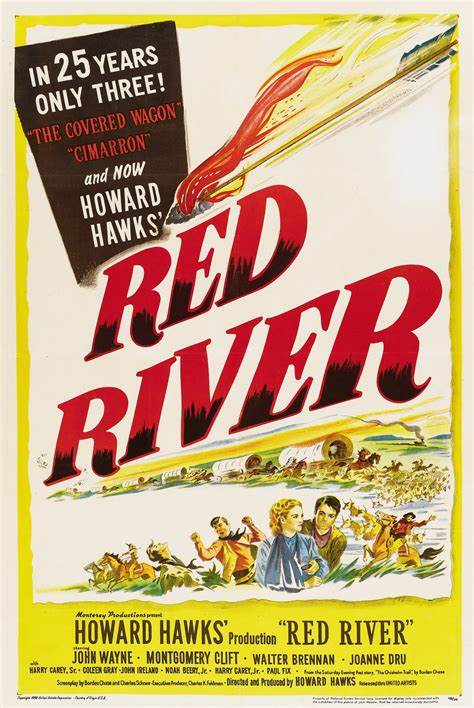
Red River (1948)

John Wayne and Montgomery Clift as duelling surrogate father and son in Red River

Director: Howard Hawks

Cast: John Wayne (Thomas Dunson), Montgomery Clift (Matt Garth), Joanna Dru (Tess Millay), Walter Brennan (Groot), Coleen Gray (Fen), Harry Carey (Melville), John Ireland (Cherry Valance), Noah Beery Jnr (Buster McGee), Harry Carey Jnr (Dan Latimer), Chief Yowlachie (Quo)

Some say Red River is, even more than Citizen Kane, the masterpiece in American film. That’s pushing it. But Red Rivercertainly is a prime slice of beefy entertainment. Hawks’ first Western (and how odd a director so associated with them didn’t turn his hand to them until late in his career – and then only made six), there is no greater compliment to make than to say you could mistake it for John Ford.

In fact, Ford was beyond impressed, famously observing of Wayne “I didn’t know the big son of a bitch could act”. Act he certainly does here as monolithic obsessive Thomas Dunson (surely a forerunner to the equally troubled – and troubling – Ethan Edwards in The Searchers). Dunson has spent almost two decades building his Texan cattle empire. Unfortunately, the Civil War means the bottom has dropped out of the Texas beef market. To make good his investment, Dunson needs to take the cattle (all 9,000 of them!) up north to Missouri (over a thousand miles) to sell at a good price. Along the way, Dunson’s ruthlessly focused ambition tips into tyranny, with Dunson (literally) judge, jury and executioner among his team. Can his more liberal adopted son, Matt Garth (Montgomery Clift), stop Dunson from destroying everything around him?

Red River covers the movement of cattle up the Chisholm Trail, a huge economic migration that saw millions of cattle moved from Texas to where their price was increased by a factor of ten. But the film has only a passing interest in the history – and the romantic, nostalgic look at it here, as a sort of boys-own adventure that goes wrong, is far more about the movies than social history. What the film is really focused on is the personal clash between two generations of men: one a relic of the first years of the new frontier, the other younger, more modern in his thinking, with a streak of humanity the other has beaten down.

Hawks’ film mixes this up with some terrific location footage. How did they wrangle all those cattle? The film is very strong in capturing the sense of excitement in the Frontier – the setting off on the trail, with its quick shot cacophony of horse-backed men whooping with joy, is full of a sense of adventure. The film is a triumph of quick-quick-slow story-telling. The 15 years of Dunson’s empire-building passes by with montage and Wayne voiceover which begins and ends with Wayne in the same position, but the actor considerably aged. Context is skilfully and swiftly given to us, but the tensions between Dunson and Matt are grow and develop naturally, simmering for a good hour-plus before erupting. Transition text between sequences bridges us from scene to scene, and is especially effective in charting Dunson’s descent into tyranny.

Tyranny is what it is all about. This is one of Wayne’s darkest – but also greatest – roles. Hawks taps into the despotic rigidity in this slab of Americana. Dunson is a man utterly and completely convinced not only of his invulnerability, but his rightness, embodying American manifest destiny. Claiming swathes of land as his own, Dunson is a man on the move, constantly striding forward (Hawks often shoots him in progressive, shark-like motion). He’ll leave behind him everything from the woman he loves (with a shocking toughness, as he looks back on the burning remains of the wagon train he left her in) to the land he claimed, to anyone who lets him down.

Dunson is also a ruthless embodiment of a time before law. No one seems to question the way he executes those who cross him. Practically the first thing he does on arrival in Texas is out-draw and kill the man sent to question his arrival. His farmstead has a full graveyard. A dark comic touch is added with his insistence in “reading the words” over graves of men he’s killed. On the trail he has those who back out, run away or question his leadership whipped or shot. Wayne’s certainty as an actor tips into a (literally) black-hatted despotism. His manly focus and ability to outdraw anyone turns him in the end into a nightmare avenger, a Western Terminator.

Opposite him is Clift (equally superb) as a more modern minded kid. Matt is the sort of man who knows that at times a bit of bend and a sympathetic ear gets better results than a beating. Hawks brilliantly builds the love-hate relationship between these two men who have very little in common, other than mutual affection. (Clift and Wayne themselves were polar opposites in acting style, social views and personalities.) There is a real love there – which makes it all the more inevitable Dunson will view Matt’s questioning of him as a betrayal nothing less than blood will redeem. The two of them, and their clash (like the clash between two sides of America) dominate the film, not letting too many other characters have a look-in.

Of the rest, Walter Brennan is a very good as Dunson’s loyal number 2, who may not always agree with the chief but largely (if reluctantly) sticks by him (for all he mutters to him “You’re wrong Mr Dunson”). John Ireland’s cocky gunslinger, who joins the trail because he admires Dunson’s no bullshit attitude, promises much at first but fails to deliver on much-hyped clashes. (Possibly because Ireland fell out with Hawks over a competition for the affections of his future wife Joanna Dru, his role later cut to ribbons in revenge.) There is however a strange, almost homoerotic, link between Clift and Ireland – mutual respect leading to an admiration love-in and much fondling of each other’s firearms during competitive rock shootings.

Red River’s ending has gained some criticism – largely because the film builds its sense of violence between the two leads so well that it feels a bit of a disappointment that they are effectively told to pull themselves together (by a woman of all things!). But, for all the film mines the clashes between two different outlooks, it never loses track of their very real affection. Sure Dunson may talk about killing Matt – but he certainly won’t in cold blood (even if he happily guns down anyone who gets in the way) and at the end of the day, he’s still the closest thing he’ll ever know as a son. Matt is emotionally mature enough to know Dunson is to-all-intents-and-purposes his father, even if he’s not above throwing a few punches at him. The clash is effectively a narrative dead-end – for all it would be exciting to see them take shots at each other, this is a family. And most families fight and make-up, not plug each other with bullets.

And it distracts from the grand entertainment of Red River, its excited love for the open country (the late act scenes inside are as disconcerting for us as they are the characters). This is a western of psychological depth successfully mixed with grand adventure. It’s hugely entertaining but also feels very true. It has two wonderful performances from Wayne and Clift. It’s not the Great American Film, but it’s directed by a superb understander of cinematic narrative and a hard film not to love.

My Darling Clementine (1946)

Henry Fonda is here to enforce justice in My Darling Clementine

Director: John Ford

Cast: Henry Fonda (Wyatt Earp), Linda Darnell (Chihuahua), Victor Mature (“Doc” Holliday), Cathy Downs (Clementine Carter), Walter Brennan (Newman Haynes Clanton), Tim Holt (Virgil Earp), Ward Bond (Morgan Earp), Don Garner (James Earp), Grant Withers (Ike Claton), John Ireland (Billy Clanton), Alan Mowbray (Granville Thorndyke), Roy Roberts (Mayor), Jane Darwell (Kate Nelson)

In John Ford’s The Man Who Shot Liberty Valance, a journalist says “When legend becomes fact, print the legend”. It could almost be a commentary on My Darling Clementine, a lusciously romantic retelling of the story of Wyatt Earp and his Gunfight at the OK Corrall between the Earps and local cowboy gang the Clantons. John Ford’s film is a perfect slice of Americana, in which the West is seen at its glorious best, and almost no fact in it is true.

In 1882 retired Marshal turned ranger Wyatt Earp’s (Henry Fonda) brother James is killed outside the town of Tombstone, shortly after Earp had turned down an offer to buy his cattle from Old Man Clanton (Walter Brennan), the family patriarch. Earp suspects foul play, but decides to stay in Tombstone as its new Marshal, with his brothers Virgil (Tim Holt) and Morgan (Ward Bond) as his deputies to reinforce the law. In town he meets local gambling man “Doc” Holliday (Victor Mature) and falls for Holliday’s former girlfriend Clementine (Cathy Downs), in town searching for Doc. Will Wyatt find out who killed his brother and find contentment?

My Darling Clementine is almost entirely invented. Virtually nothing in it is true, from the year it’s set (the actual gunfight happened in 1881) to what happens in the actual gun battle. The fates of nearly all the characters have been changed (James, whose death kicks the film off, actually died in 1926) and a host of characters have been invented, not least Clementine herself. The action has been moved to Monument valley from Arizona. Its comprehensive myth-making on screen, with Earp himself changed from an unhappily married man probably “carrying on” with an Irish actress into the pillar of moral decency that is Henry Fonda. 

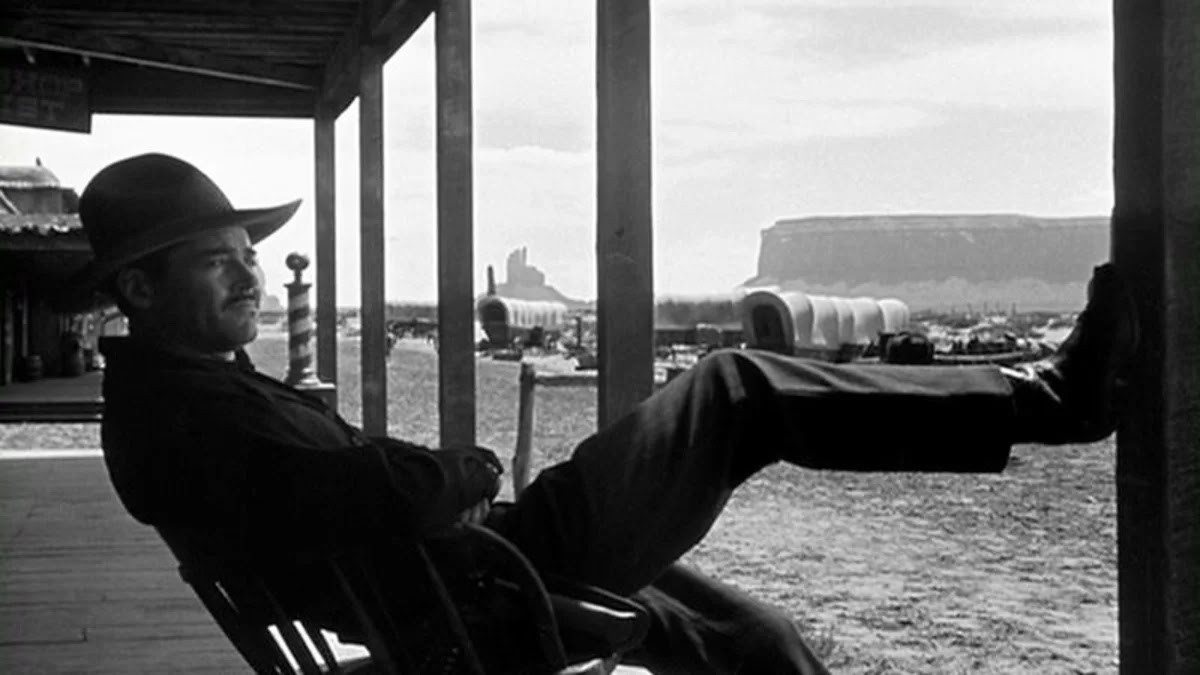
But does it really matter? Not really. If you run with the film has being part of Ford’s tradition of reworking the past of America into a grand origins myth for the United States, the film works perfectly. It’s directed with great visual skill by John Ford, who creates some luscious shots of Monument valley and some glorious skylines that dwarf the actors into the machinery of myth. His visual storytelling is perfect at communicating character, from the boyish leaning back on his chair from the boy scoutish Earp to carefully building the tentative, ]barrier filled relationship between Earp and Clementine. 

My Darling Clementine features a romance plot line, but it’s played in parallel with a story of feuding that leaves large numbers of the cast dead. Aside from Earp and Holliday there is virtually no overlap between the romance plot and the events leading to the gunfire. Clementine never refers to it, and you can almost imagine this as two films skilfully and gracefully cut together. Perhaps this is Ford’s intent: this is a film about community in the West, about the building and creation of a town and the shaping of relationships and friendships around it – that just happens to have as well a gang of murderers that Fonda needs to take down.

Tombstone is emerging from the Wild West – at a key moment half way through the film, Earp and Clementine dance (Earp with a surprising grace) at an outside ball to celebrate the opening of a church. It’s just one sign of civilisation arriving in the town, with theatre on the way and even Holliday’s gambling den slowly becoming something a little bit less violent. Earp himself is a reluctant but honest lawman, repeatedly asking at the start “what kind of town is this?” and seemingly deciding to stay to sort the place out as well as find out who killed his brother. 

It’s telling in any case that Earp’s reaction to his brother being killed is to pick up a badge not a gun, but then you would expect nothing less from Henry Fonda. Fonda is at his most decent, and bashful, his most just and moral, the embodiment of law and justice. Fonda pitches the performance perfectly, a shy man who knows what’s right, but has the guts to go the extra mile to get it. Fonda also gets some wonderful chemistry from his interactions with Cathy Downs’ Clementine, each scene between them dripping with longing but a sad knowledge that nothing can come of it.

There are a whole host of reasons for that, not least her past relationship with Doc. If there is a second heart to the film, it’s the uneasy semi-friendship that grows between Holliday and Earp. It’s a beautifully judged, wordlessly expressed mixture of regard, respect and suspicion, of two men who have taken very different paths in life but recognise in each other a common world view, a yearning for peace and poetry under the guns. Holliday – dying although you wouldn’t think it considering the hale and hearty look of Victor Mature – is a dangerous man but a fair one, not like the arrogant destructiveness of the Clantons. He’s even able to juggle respectful relations, not least with Linda Darnell’s showgirl. Mature gives a decent performance, hampered by his essential earnest woodenness from really exploring the depths of a TB suffering physician turned gunslinger, but able to express a basic decency and touch of poetry.

It’s a film about small moments between these characters that culminates in parallel with a gun fight that burns out of the clash between the Earps and Clantons. The Earps are of course all thoroughly decent, upright sorts while the Clantons are unclean, unshaven (first thing Wyatt does in the film is get shaved!) types, led by a bullying Walter Brennan. The gunfight is spectacular, but it’s part of one of two films, followed as it is with Earp’s sad departure from the town and the culmination of the unspoken love between him and Clementine. But isn’t that part of the myth? And with its romance, its heroic stand against injustice and its epic sweep and brilliance, My Darling Clementine is a celebration of the myth and power of the West.

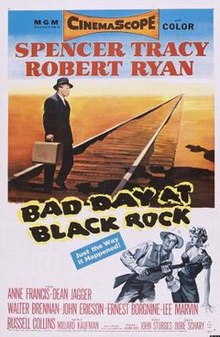
Bad Day at Black Rock (1956)

Spencer Tracy is the only just man in town, in brilliant modern Western Bad Day at Black Rock

Director: John Sturges

Cast: Spencer Tracy (John J Macreedy), Robert Ryan (Reno Smith), Anne Francis (Liz Wirth), Dean Jagger (Sheriff Tim Horn), Walter Brennan (Doc Viele), John Ericson (Pete Wirth), Ernest Borgnine (Coley Trimble), Lee Marvin (Hector David), Russell Collins (Mr Hastings), Walter Sande (Sam)

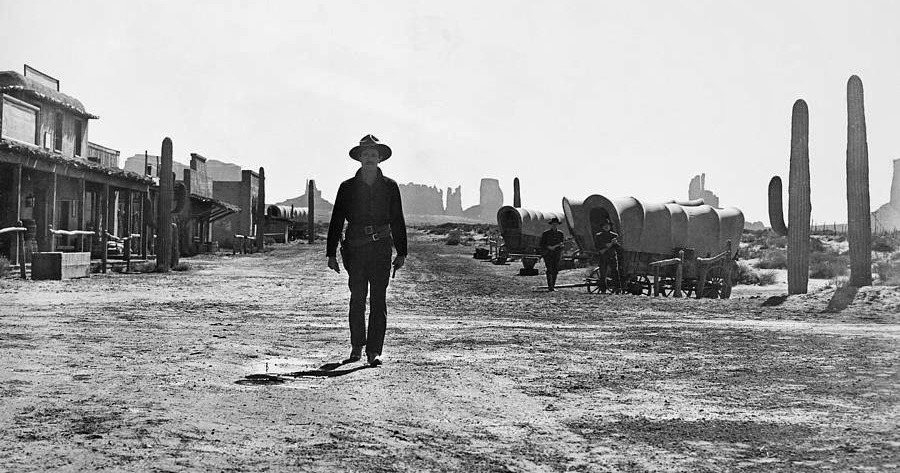
A man walks into a town. It’s a dust bowl town, looks like it’s just one street with a few buildings. The natives sit warily outside the bar and treat the stranger with suspicion. Trigger fingers are itchy. Is it the Wild West? No it’s 1945, but the new guy in town is about to find out just how unfriendly the American West can be. Just as well that, despite only having one hand, he’s more than capable of looking after himself.

Spencer Tracy, perfect as a man of rigid principles and certainties who won’t waver in the face of any intimidation, is our no-nonsense hero Macreedy. Arriving in town, he’s looking for Japanese-American farmer Komoko, father of a deceased colleague from the war, but no one wants to talk about where he is or what happened to him. Sheriff Horn (Dean Jagger) is an alcoholic who doesn’t want to know anything, the local doctor (Walter Brennan) doesn’t want to get involved and hotel clerk Pete (John Ericson) doesn’t want to give Macreedy a home. Macreedy is tailed on arrival by a couple of intimidating heavies (Ernest Borgnine and Lee Marvin – the go-to guys at the time for these sort of roles), and quickly works out the town is run by local businessman Reno Smith (Robert Ryan) – and any secrets it holds ain’t coming out easy.

Bad Day at Black Rock is a classic western, set in a time when the world of the West had been left far behind. American culture has a romantic longing for rural, small-town America, and the heroic past of the pioneers of the old West. Bad Day inverts a lot of this mythology: this America is horribly corrupt, unspeakably racist and hiding no end of dirty linen in its cupboards. In fact, small-town America is horrible, while the man from the big city represents all that is good – that in itself is quite a surprise turnaround from what you might expect from Hollywood.

In many ways it’s a very simple, very gripping, film. Macreedy’s arrival in the town sparks guilty consciences and sets the town bully, Reno Smith, into a quiet, panicked breakdown. We know watching it roughly where the film is likely to go. However, what Sturges does well is to invest this with so much attention. Huge chunks of the film involve both Macreedy and the men of the town, tensely trying to work out what is going on, or watching and waiting to see what opportunities there will be. It’s a film packed with moments of waiting or characters sitting and watching, talking around subjects rather than tackling the big questions they want to ask. It sounds slow but it actually builds up an extraordinary amount of danger and feeling of danger.

It’s a drama that works on the slow burn while also being a very short, snappily paced film. The best part of the first half-hour of the film is the careful establishing of the atmosphere, the relationships between the different characters, and the politics of this Western town. In the middle of this we have Macreedy, the man of mystery whom we know nothing about, who never seems to rise to the unfriendly intimidation he meets from every corner. You know that all this tension is going to erupt into something serious – but the film constantly leaves you guessing exactly how it will pan out and keeps you surprised about who ends up on which side.

You couldn’t get a better actor for this role than Spencer Tracy. There is something so rigidly determined about Tracy in this film, so adamantine and determined – the sort of man who operates in rights and wrongs, who even in this world of intimidation and terror tries to play by some sort of rules for as long as he possibly can. What’s so great about Tracy in this film is that he seems like both a stranger in black and a disappointed dad, with the people in the town constantly letting him down. The film also teases us for a long time – we suspect throughout that Macreedy is more dangerous and more capable of looking after himself than he appears. (It was Tracy who insisted, by the way, that Macreedy be made one-armed, as he thought it could give Macreedy an interesting vulnerability to overcome). 

The film makes us wait for its three action set-pieces: a car chase, a bar fight and a shoot-out. But it’s perfect in its patience, because violence always seems like it could burst out at any time. Marvin and Borgnine as the obvious heavies do great work as different types of overt muscle. Robert Ryan as the corrupt guy who really runs the town is especially good as a man who seems, under his dominance, to only just be holding onto his self-control, going to great lengths to prevent himself getting into trouble. It’s a point that Macreedy himself makes – deep down, Smith doesn’t have the guts to do his dirty work alone, and gets his strength from controlling others. All this delicate mixture of guilt and fear that bubbles under the surface of Smith is apparent in Ryan’s excellent performance.

But then no-one in the town is in control. Dean Jagger’s moral weakling sheriff is a drunk and a pathetic loser. Walter Brennan’s (very good) doctor wants to do the right thing, but lacks the guts to do it. John Ericsen’s hotel clerk knows he’s in the wrong, but isn’t brave enough to stand his ground. Their lack of control is in fact the root of the problem – Macreedy would never have suspected there were any dark secrets to uncover in the town if the people there hadn’t treated him with such overt suspicion. Sturges captures this perfectly (even if I think the Cinemascope width of shot isn’t perfect for a film that gets so much play out of claustrophobia and suspicion).

Politically the film is pretty simple – racism ain’t good you know – but as an example of brilliantly assembled Western tension and moral righteousness, mixed with a bit of action, adventure and claustrophobia, it works really well. Brilliantly directed, and very well written as a piece of expressive theatre, this is terrific with some wonderful performances. And front and centre is Spencer Tracy as the ultimate man in black, a man with moral certainty and courage, whom it’s impossible not to admire.

The Westerner (1940)

The Westerner (1940)

Entertaining but unspectacular Western fun as odd-couple friends turn rivals

Director: William Wyler

Cast: Gary Cooper (Cole Harden), Walter Brennan (Judge Roy Bean), Doris Davenport (Jane Ellen Matthews), Fred Stone (Caliphet Mathews), Forrest Tucker (Wade Harper), Paul Hurst (Chickenfoot), Chill Wills (Southeast), Lilian Bond (Lillie Langtry), Dana Andrews (Hod Johnson)

In 1882, Cole Harden (Gary Cooper) arrives in the town of Vinegaroon in Texas. The town is ruled by “Judge” Roy Bean (Walter Brennan), a corrupt, self-proclaimed justice of the land, who collects unfair fines and hands out “suspended sentences” (i.e. hangings). Nearly hanged, Harden escapes by peddling a story of his (fake) friendship with Lillie Langtry, the obsessive focus of Bean’s love. Over time the two men find themselves drawn to each other, forming a friendship – which is challenged by Bean’s favouring the violent cattle ranchers over the homesteaders.

The Westerner is a well-constructed, decent old-style Western that doesn’t do anything particularly radical – as if those making it needed a bit of downtime between more demanding projects, so put together something quite enjoyable to fill their time. It’s nominally a film about the clash between cowboys and homesteaders, but this plotline actually gets very little play – and is pretty unclear.

What it really is, is a sort of romance between Harden and Bean. They are two people surprisingly drawn together, who have a similar outlook on the world, and share a very natural and immediate bond. They have very real chemistry. In fact their chemistry is so strong there is barely room for anyone else to get a look in. 

So the film is a sort of bromance tragedy, because of course it’s clear that they will end up on opposite sides. Because Bean has principles of control which Harden cannot allow to stand. Because the same instincts that lead Bean to champion the cowboys, are the same ones that lead Harden to champion the homesteaders. Both men think that they are basically in the right. The main difference between them is probably that, if push comes to shove, Bean would rather win than be right, while Harden is more concerned with meeting his moral standards than anything else.

Wyler brings all this together with professional crispness, shooting the action and more chamber-piece moments with skill. He draws a real playfulness from Brennan and Cooper – could many other directors have thought about including a scene where Cooper wakes up slightly confused in a bed with Brennan’s arm around him after a night of drinking? Confrontations throughout the film have a playful edge to them, even when guns are on the table. Even the final gun fight between the two has a reluctant edge to it, as if this was a game with a few more consequences than normal. 

The bond between Bean and Harden is so strong, and so central to the film, that the relationship between Harden and Jane Ellen Mathews never quite clicks into gear. There is a charming scene where Cooper (with an honest flirtatiousness) cuts a lock of Jane Ellen’s hair – but the film isn’t really interested in this relationship. It feels like it exists for plot and scripting reasons – that the writers felt a romantic plot was needed, and wanted to give Harden a very clear personal motivation above and beyond his sense of justice. Doris Davenport is fine as Jane Ellen, but it’s not a performance you really remember.

Gary Cooper is rather good as Cole Harden, despite his reluctance to do the film. Cooper identified that Brennan had the best role and the best lines, and felt that he would actually be playing the support rather than the lead. Contractual obligation got him into the film. And it’s a good thing, as Cooper is actually very good. He has a light comedic touch which you don’t often associate with him, which he matches with his upright honesty and unflinching decency. But there is a playful grin behind his eyes throughout, and you get a real sense of his conflicting loyalties.

But Cooper was right – Judge Roy Bean is the role in this film, and Walter Brennan (who won his third supporting actor Oscar in five years for this) is quite simply terrific. His Bean is a wily, slightly crooked, maverick bully with a warped sense of personal justice – but he’s also a charming, rather sweet old man with a tough streak. The script gives a lot of focus to Bean’s obsessive love for the actress Lillie Langtry, which not only humanises him, but turns someone who we first see carrying out a ruthless judicial murder into some sort of teenage, love-struck rogue. That’s the genius here – Bean could be awful, but actually we (like Harden) end up loving him. Brennan’s effortlessly charismatic performance is central here – he is terrific in the role.

Take away these performances though and you probably only have flashes here and there of class alongside. Scenes are well constructed, and the entire film is very well filmed by the great Gregg Toland, but it’s very much a solid piece of professional work rather than a great classic. Brennan is brilliant and Cooper impressive, but not much more of the rest of the film really settles into the memory.

Hangmen Also Die! (1943)


Brian Donley on the run in Fritz Lang’s Nazi occupation thriller

Director: Fritz Lang

Cast: Hans Heinrich von Twardowski (Reinhard Heydrich), Brian Donlevy (Dr Franticek Svoboda), Walter Brennan (Professor Stephen Novotny), Anna Lee (Mascha Novotny), Gene Lockhart (Emil Czaka), Dennis O’Keefe (Jan Horak), Nana Bryant (Hellie Novotny), Margaret Wycherly (Ludmilla Novotny), Tonio Selwart (Chief of Gestapo Kurt Haas), Alexander Granach (Inspector Alois Gruber), Reinhold Schünzel (Inspector Ritter), Jonathan Hale (Dedic)

Film dramas “ripped from the headlines” have a mixed track record. Making a drama about an event that happened so recently the dust has hardly settled leaves you open to making decisions in your film that could later be exposed as mistakes. Few films in history are more headline-ripping though than Hangmen Must Die!, a film about the assassination of Heydrich, the planning of which must have started almost immediately after the news broke.

Dr Svoboda (Brian Donlevy) is on the run in Prague after shooting dead Reinhard Heydrich, Hitler’s deputy in occupied Czechoslovakia. After a chance meeting, he pleads with Mascha Novotny (Anna Lee) for shelter – but this only serves to endanger her family, particularly her father Professor Novotny (Walter Brennan), in the affair. Meanwhile the Gestapo, led by Alois Gruber (Alexander Granach) investigates and the Nazis take hundreds of Czech notables, including Novotny, into custody as hostages. The Germans promise to execute hostages until the assassin is handed over.

First things first: unlike 2016’s Anthropoid, this film is a complete work of fiction. It is first and foremost a film made by European exiles in the middle of World War II to sing the praises of those defying the march of fascism. Heydrich only appears at the start of the film, played with a sinister, mincing campness by von Twardowski (a notable German socialist exile). Despite this, the arrogance and cruelty of Heydrich is hammered home, with his lines delivered in a bullying, untranslated German. The film uses a dark humour to stress his villainy, Heydrich nonchalantly strolls down a crowded meeting room, forcing those in attendance to remain saluting, swivelling to follow Heydrich, until he finally settles and returns the salute allowing them to relax. It’s a neat little joke and perhaps one of the clear signs of the hand of co-writer Bertolt Brecht. Take a look at the sequence (and rest of the movie as well!) here:

That’s one of the film’s other claims to fame: noted director Fritz Lang worked with fellow exile Brecht to craft the script. As such, the film is a slightly unusual mix between the left-wing, idealist politics of Brecht and the film noir style of Lang. The primary aim is to serve as a propaganda tool, and the courage and bravery of the Czech people is repeatedly stressed. With a few key exceptions, the Czechs are loyal, honest and willing to make huge sacrifices. Lang films this with a stirring simplicity, low angle shots, skilful use of light, and dynamically involving crowd scenes, bringing this courage visually to life. Brechtian touches, such as a crowd of Prague locals confronting Mascha (with increasing menace) when she considers betraying the assassin to save her father’s life, are perfectly complemented by Lang’s skilful film making. The film’s final tribute to the heroes of Europe, with the people of Prague joining together to sing a hymn to the fallen hostages, surges with a left-wing Brechtian political outrage.

What’s most unusual about the film – and one of its problems – is the curious mixture of tones. Perhaps because of its film noir styles, perhaps because of the American accents of many of the Czech characters (interestingly, the exiles overwhelmingly play villainous Germans), this film becomes a sort of behind-the-lines 1930s hard boiled gangster thriller – with the difference that the cops are the baddies. The Gestapo go about their jobs like gangster gumshoes from Hollywood movies. The Czech people, for all their gumption, look and act like streetwise New Yorkers. It’s an odd tone that takes some getting used to.

On top of that, the film shows several hostages (including characters we get to know) shot due to the refusal to hand over the assassin. I can’t watch this without thinking about how little it gets near the true horror of Nazism. The Gestapo here are relative pussycats, compared to the brutal lengths they went to in real life: the Gestapo chief even prudishly talks about a need for evidence. Compared to the thousands of civilians killed in real life, this is nothing. The Germans even essentially “give up” in a coda and accept a defeat. This makes terrific propaganda of course, but it just ties into the sense that this film doesn’t even begin to touch the villainy of the occupation. It makes for better entertainment, but it’s strange to watch today.

Finally, the last problem with the film is the rather mixed performers. Put simply, Brian Donlevy is totally miscast as the assassin, a B-movie actor who is far too American for the part, and incapable of giving the role the depth it needs. Svobada just isn’t interesting or sympathetic. Anna Lee is similarly bland, while the less said about O’Keefe as her fiancée, the better. Not one of the American actors is completely convincing in their role, although Walter Brennan is close to an exception, effectively gentle and wise as the brave Novotny. The best performances are from the exiles, with Graucher in particular excellent as a shrewd, soulless, corrupt detective, with no guilt about the means he uses.

The film culminates in a rather hard-to-follow and far-fetched attempt by the resistance to frame a collaborator (played with weaselly self-importance by Gene Lockhart) for the crime. This plot tends to meander, but there are several very good scenes showing the Czech resistance, including a wonderful sequence in a restaurant that goes from a sit-down, to an unveiling, to a shootout. Lang skilfully builds the tension throughout, and the creeping relentlessness of hostage executions and Svoboda’s attempts to run from the Gestapo are very well done. Sequences such as Svobda ducking into a movie cinema, only to find a keen collaborator inside, sizzle with excitement.

In fact there are many excellent moments in the film. It is beautifully filmed, with a gorgeous use of expressionist shadow and camera angles to create a claustrophobic, doom laden world. Lang’s strength of plotting by-and-large works very well. Though it can’t bring across the full horror of Nazi occupation, the dread of the Gestapo is clear in the movie. “Enhanced interrogation” is underplayed, but it is sinisterly embodied in the fate that befalls an arthritic shopkeeper. We see him exhausted, but not broken, in a prison cell, forced to constantly pick up a chair under interrogation with her weakened hands. Later, a character throws himself out of a window rather than risk being interrogated to reveal information about the resistance. The hostages are brutally dispatched, with the level of panic, fear, collaboration or defiance having no impact on their fates.

It’s a fractured film, overlong but very well filmed, which creates a brilliant tribute to the strength of the Czech people. Trim 20 minutes off it and I think this could have been a great thriller.  It’s a strange mix of acting styles, but the marriage of Brecht and Lang works very well (it’s a real shame Brecht never made another film) and the drama of the film carries it over the strange bumps in the road. Brecht, by the way, spent the rest of his life rubbishing Lang, as he couldn’t understand why Lang put all the plot and character into a movie Brecht saw as being purely political.

It’s in many ways a strange historical monument – perhaps its makers couldn’t imagine the depths of Nazi atrocities, perhaps Hollywood wasn’t willing to bring such horrors to the screen. It’s not perfect, but in its own way, it’s a piece of cinematic history.