Tag: War film

Apocalypse Now (1979)

Martin Sheen heads into insanity in Coppola’s epic pretentious masterpiece Apocalypse Now

Director: Francis Ford Coppola

Cast: Martin Sheen (Captain Willard), Marlon Brando (Colonel Kurtz), Robert Duvall (Lt Col Kilgore), Frederic Forrest (Chef), Albert Hall (Chief), Sam Bottoms (Lance), Laurence Fishburne (Mr Clean), Dennis Hopper (Photojournalist), GD Spradlin (Lt General Corman), Harrison Ford (Colonel Lucas), Scott Glenn (Captain Colby), Christian Marquand (Hubert de Marais), Aurore Clément (Roxanna Sarrault), Jerry Ziesmer (Mysterious Man)

During the 1970s, the director was king in Hollywood. Get a reputation as a visionary director, and Tinseltown fell at your feet. You could spare no expense to put together ambitious, thought-provoking, epic films. If you wanted to shoot on location at huge cost, or reconstruct elaborate sets for single shots, for a huge runtime that catered as much to your ideas of being an artist as it did to crowd-pleasing narrative, then Hollywood would give you keys. It didn’t last: several massive bombs (combined with the huge box office take of Star Wars) shattered the mystique of the director as an ego-mad, flawless genius who had to be indulged, and persuaded Hollywood the future was in big-budget, mass-produced action films (welcome to the 1980s, Hollywood’s nadir).

Apocalypse Now wasn’t one of those flops, like (most infamously) Heaven’s Gate. But, by golly gosh, it really could have been. In fact, in many ways it should have been. It has all the hallmarks: a huge runtime, filmed over a colossal period of time in a difficult location, a plot that mixes action, war and thrills with impenetrably pretentious musings on mankind’s dark soul. A maverick director throwing his own very personal vision at the screen, and damn the consequences. It’s a miracle Apocalypse Now wasn’t a career apocalypse for everyone. It escaped because, despite everything, it more or less gets the balance right between plot and character and pretention and faux-philosophy.

The film is famously a transposing of Joseph Conrad’s Heart of Darkness into Vietnam. Captain Willard (Martin Sheen) is ordered to head down the river to “terminate with extreme prejudice” rogue Special Forces Colonel Kurtz (Marlon Brando), who is conducting his own vigilante war. On the boat trip down the river, Willard encounters a host of increasingly bizarre and surreal scenes, from war-mad Colonel Kilgore (Robert Duvall) to a seemingly leaderless battle over a bridge, a playboy bunny show and a compound of ex-French colonials. And that’s before he even arrives at Kurtz’s compound and things get really strange.

Apocalypse Now is almost impossible to separate from the bizarre, tortuous route it took to get to the screen. Originally scheduled for a few months, the film took over a year to complete. A typhoon destroyed all the sets in the first two months. Original star Harvey Keitel was dismissed after a week (as his performance wasn’t right): his replacement, Martin Sheen, had a near-fatal heart-attack partway through filming. Marlon Brando not only turned up the size of a buffalo but refused to learn (or even speak) his lines. A year into production, the film had no ending. Coppola put his entire fortune up as collateral to complete the film. It was a nightmare.

But yet somehow what emerged has a sort of force-of-nature quality to it. Even though parts are basically pretentious rubbish, despite the fact I have twice fallen asleep in this film, despite the fact it is far from being a film that trades in complex ideas and offers profound insights, it still has a hypnotic quality about it. It’s done with a real force of commitment, a genuine labour of love, a film that doesn’t leave anything in the locker room but throws it all at the screen. The quality of what lands may sometimes be questionable, but the commitment with which it is thrown is beyond doubt.

And in a world of cookie-cutter films, it’s hard to have anything but respect and regard for a film that is so defiantly its own animal, that tells its story in its unique way. It’s perhaps one of the first “experience” films: no film could of course communicate what it was like to serve in Vietnam, but this film perhaps gets close to the surreal, drug-fuelled madness in that conflict.

Because Apocalypse Now is a very surreal film. Its plot is extremely thin, and each section of its (mammoth) runtime is all about experiencing another element of the American experience. In the commentary, Coppola talks about the river trip being partly a journey from the present into the past, a journey back not only into the history of the conflict (and its different stages) but also the regressing of mankind itself into a more primitive, malleable, basic state. It’s a big lump for a film to bite off – and I’m not sure if the idea really comes across without you knowing it. The real impression you get is of rules of society being left further and further behind.

The arrival at Kurtz’s compound is the fufillment of this increasingly unnerving story. We’ve seen the madness on the journey, the pointlessness, and the bemused, carefree confusion of the crew. But at the camp we get the overblown, decadent lunacy of Kurtz. Brando dominates the final 30 minutes of the film, although his monologues are meaningless drivel, the sort of intellectual point-scoring you could hear in a sixth form debating society. To be honest, iconic as Brando’s appearance is, his performance of mumbling battiness is actually a little awful (like one big practical joke from the actor) and the film’s momentum grinds to a halt while he babbles on. 
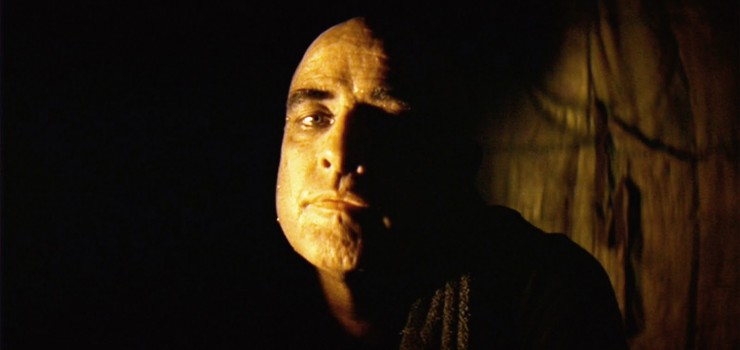
In fact, so self-indulgent is Brando that in a way it’s a sort of tribute to Coppola’s mastery of cinema that he makes this pompous character make any sense at all – or that he makes this sort of nonsense even remotely watchable. But again it’s the hypnotic pull of the film: Coppola builds towards a chilling, haunting final sequence of Willard and Kurtz’s final confrontation intercut with The Doors’ The End and the real-life slaughtering of an ox by a crowd of real-life villagers (they were going to kill the animal anyway but offered to do it for the camera). Coppola somehow turns all this into iconic cinema, even though, viewed objectively, it’s overblown, indulgent, pretentious rubbish.

The whole film is a testament to hewing compelling filmmaking out of breathtaking insanity. After the film departs in the boat, most of reason, sense and conventional story-telling depart with it. Information only gets conveyed through rambling monologues from Willard. The crew of the boat get into scraps that reflect heightened versions of the American experience in Vietnam – from a war crime as the crew shoot-up what turns out to be an innocent boat, to an attack from unseen tribesmen with spears from the mists of the shore. Sam Bottoms, as surfer-turned-GI Lance, is our guide of a sort here – as he gets more stoned, so narrative logic departs with his senses. 

What keeps the film going throughout is the masterful film-making. Coppola shoots the bizarreness with brilliant, visionary imagination. As a social theorist he’s pretty basic – man is, by the way, a savage animal and the Americans didn’t know what they were getting themselves into in ‘Nam – but as a film-maker he’s one of the best. Who else could have made three hours of episodic boat journeys so strangely compelling? The film is crammed full of great scenes and moments which rarely feel like they tie together – in fact, they could almost be watched in any order – and there is barely a character in there, but the film feels like its throwing you into the madness of Vietnam. 

Even the sequence with a bit more narrative is still laced with absurdity. Kilgore’s helicopter assault on a village – and its use of Wagner blaring from helicopters to scare the Vietcong – is justly famous. This is a bravura film-making – and as much a tribute to the astoundingly amazing editing and sound work of Walter Murch as it is the photography of Coppola. Like most of the rest of the film it is visually outstanding, but it also has the film’s best writing (in the quotable but also strangely subtle characterisation of Kilgore) and also the film’s most iconic performance in Robert Duvall. Duvall is terrific as the war-loving, but strangely childish Kilgore, obsessed with surfing and with an ability to live totally in the moment. 
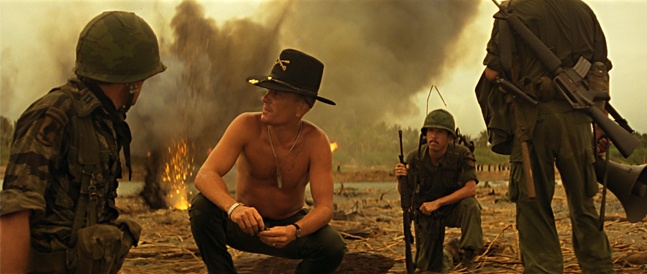
This sequence doesn’t hesitate in showing both the brutality of war – and also the insanity of our commanders. Kilgore is genuinely dreading the end of the war, and you can see why he would since he is clearly having a whale of a time bombing places. Kilgore is a lovable, quotable badass doing what needs to be done – but the film doesn’t forgot that he is also an insane soldier with no off-switch. And Apocalypse Now never really glamourises war, for all the excitement and beauty of watching those helicopters come over the horizon.

It’s the artistry in its film-making, and the genuine effort and work that helps make it a demented classic. Walter Murch’s sound design and editing is possibly flawless – this might be the best edited and sound designed movie ever – from the opening moment when the helicopter blade sounds transform into a hotel room fan you know you are seeing something special. Scenes such as Willard’s hotel-room breakdown hum with intensity as they feel genuinely real – that scene in particular feels like Martin Sheen exposing part of his tortured psyche at the time. Sheen is by the way perfect as Willard, a slightly unknowable killer with dead eyes and a dead soul, still aware of the vileness of his world.

Apocalypse Now is a sprawling batty film – and in many ways an intellectually empty one straining at a depth that ain’t there. But somehow, for all that, it still is a masterpiece. Which is in itself a bit of a miracle as it really should be a disaster. It’s pretentious. It’s overlong. It’s very full of its own importance as a work of art (the re-insertion of the long-winded political discussion at the French Plantation into the Redux version doesn’t help). Some of its performances are plain ridiculous, verging in Brando’s case on outright bad. But yet, it’s delivered with such force of conviction, it’s so wonderfully assembled, so hauntingly shot and edited, that it hammers itself into your brain. You literally can’t forget it, for all its many, many flaws. Despite yourself, you find yourself forgiving it an awful lot – a lot more than you might expect. A mess, but also a classic.

Platoon (1986)

Charlie Sheen goes to war in Oliver Stone’s Oscar winning Vietnam film Platoon

Director: Oliver Stone

Cast: Charlie Sheen (Chris Taylor), Tom Berenger (Sgt Barnes), Willem Dafoe (Sgt Elias), Kevin Dillon (Bunny), Keith David (King), Forest Whitaker (Big Harold), Mark Moses (Lt Wolfe), John C. McGinley (Sgt O’Neill), Francesco Quinn (Rhah), Reggie Johnson (Junior), Johnny Depp (Lerner)

Vietnam has been a long-standing scar on the American psyche. For over 12 years, American soldiers were rolled into Vietnam to fight for something many of them were pretty unclear about. Vietnam was a bloody shadow boxing match for super powers to indirectly combat each other. American casualties were high, and the country that sees itself as championing justice and the free world ended the war with the blood of millions of Vietnamese and Cambodians on its hands. Is it any wonder the country still struggles to compute this?

Before Platoon there had been films that had dealt with the Vietnamese experience. Apocalypse Now had embraced the druggy, morally confused insanity of the war. The Deer Hunter had effectively shown the traumatic impact the war had on regular blue-collar steel-workers. But Platoon was something different. This was the war on the ground, with privates and sergeants as the focus (many of them poor, working class and also black) – the lower rungs of American society flung into a war they don’t understand, in a country they can’t recognise, fighting an enemy they have no comprehension of. 

Platoon throws the audience into the visceral, cruel, terrifying horror of pointless conflict, with a feeling that the war will never end. Stone pulls off a difficult trick here: the film shows a horrifying picture of war and killing, but combines this with successfully showing the adrenalin rush that comes from conflict – and the excitement of visceral film-making. 

Oliver Stone had fought as a young man in a similar unit, after dropping out of college. Chris Taylor (Charlie Sheen) is effectively a surrogate figure for the director, with the film crafted from Stone’s own experiences and those of his fellow soldiers. The film is a simple, intense experience with a straightforward plot: Taylor is torn between two potential “father figures”. One, Sgt Barnes (Tom Berenger), is a supernaturally ferocious warrior and martinet whom the men hold in awe. The other, St Elias (Willem Dafoe), is an equally fierce fighter, but also a hippy, nearly saint-like protective figure. Which of these two will Taylor side with?

Well okay it’s not a massive surprise really is it? The strength of Oliver Stone’s film is its visceral, bloody, impressive intensity. You are thrown into the midst of a series of terrible battles, interspersed with bored soldiers bickering or taking pot. At no time is the viewer (or the soldiers) given any real idea about what is going on, what the aims of the war are, what is really happening in the battles. Stone plays the film totally from the soldier’s POV. Battles are a confused mess at night. The location of the enemy is frequently unclear. There are no indications of any tactics at all. There is barely any leadership – Mark Moses’ Lt Wolfe is an almost hilariously ineffective moral weakling, who follows the leads of his sergeants. The soldiers (or rather the two sergeants) essentially operate as lone wolves, doing what they think best for any particular circumstance.

The film pivots on a confused raid on a Vietnamese village, as the platoon descends on a village for no very clear reason – apart from seemingly being pissed off that one of their number has been killed in the night. Nominally they are searching for Vietcong fighters. But really it seems like an excuse to let off steam. Platoon must have hit hard in the 1980s, as it doesn’t flinch at all from watching American soldiers committing atrocities. Women are shot, teenagers are beaten to death, a fox hole containing what looks like a child is exploded after a brief warning. The soldiers are all terrified, thrusting guns into Vietnamese faces. Above all Sgt Barnes feels no guilt at all at executing villagers in order to pressure the elders into telling what he thinks they might know about the Vietcong (who equally are largely faceless figures of terror in the distance stalking the platoon).

Where the film is less strong is in its plotting and narrative ideas. These are straightforward in the extreme, with Barnes and Elias almost literally as opposing devil and angel on Taylor’s shoulders. The film is clearly weighted in favour of Elias’ hippie mentality, his desire to preserve innocent lives and his caring attitude to his men. Barnes is presented far more harshly – even though his brutality stems from his own deep-rooted desire to keep his men safe, and his belief that Vietnam is hell and you can’t pussyfoot your way around hell. 

Saying that, it’s hard to argue against Stone’s feelings that compromising your humanity is not worth it no matter the struggles to keep yourself and others alive. But these are (forgive me) rather obvious, even traditional points – and its part of the film being essentially a conventional morality tale with a breath-taking military setting laid over the top. The ideas in this film won’t really challenge you – and in fact the film itself is really more of an experience than something that rewards reflection.

Stone’s direction is extremely good – even though he at times falls too much into the trap of overblown, overly operatic visuals (Taylor’s final confrontation with Barnes in the forest falls heavily into this trap). Stone has never been accused of being the most subtle of directors, and there is no stone (sorry) left unturned here to get the message across. In fact Platoon frequently hits its points so hard and with such unsubtle force, that it actually leaves you very little to think about after its finished – the film does all the work for you, like an angry rant that goes into unbelievable depth of detail.

But the acting has a very healthy commitment to it. Sheen shows why he was an actor of promise before he became a self-destructing punchline. Dafoe is very good as the serene Elias – a man’s man, but one comfortable in his own skin, with a strange campness about him, whose courage extends to doing the right thing no matter what. Tom Berenger is hugely impressive as the cold-edged Barnes, who has had to stamp out his humanity to survive. The rest of the characters split into two rival camps following these different soldiers, and there are some fine performances here from some now far more recognisable actors.

Platoon was garlanded with Oscars, partly because it talked about the American experience in Vietnam in a manner (and from a perspective) that had not been addressed before. It is an important historical landmark of a film, even if it is possibly not a great film. A simple, at times less than subtle anti-war film dressed up as a war film, it will immerse you in the conflict and the horror – but I’m not sure it will give you as much to think about as it thinks it does.

Enemy at the Gates (2001)


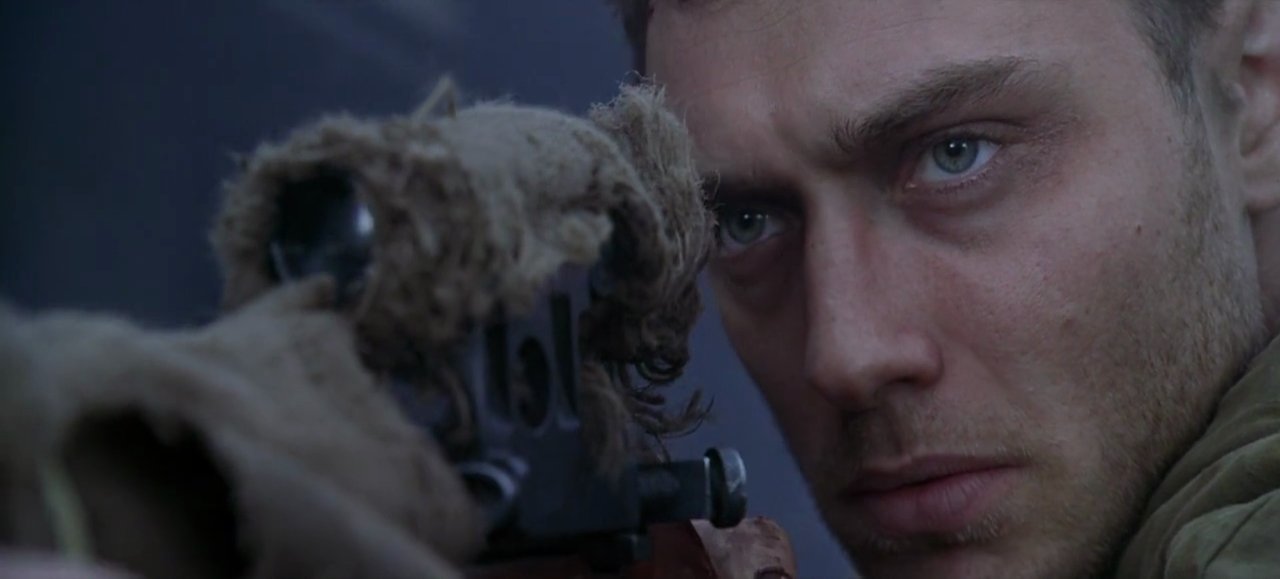
Jude Law takes aim in wonky Stalingrad drama Enemy at the Gates

Director: Jean-Jacques Annaud

Cast: Jude Law (Vasily Zaytsev), Joseph Fiennes (Commisar Danilov), Rachel Weisz (Tania Chernova), Bob Hoskins (Nikita Khrushchev), Ed Harris (Major Erwin König), Ron Perlman (Koulikov), Eva Mattes (Mother Filipovva), Gabriel Marshall-Thomson (Sasha Filippov), Matthias Habich (General Friedrich Paulus)

The Second World War in film almost always focuses on the heroics of the Western Front, where the rights and wrongs are usually pretty clear (the Western powers are noble, the Nazis savage). So it’s different to set a film on the Eastern front – where the Second World War was arguably really won and lost, and where morality is much more complex. The Nazis are terrible, but Stalin’s Russia was no picnic either.

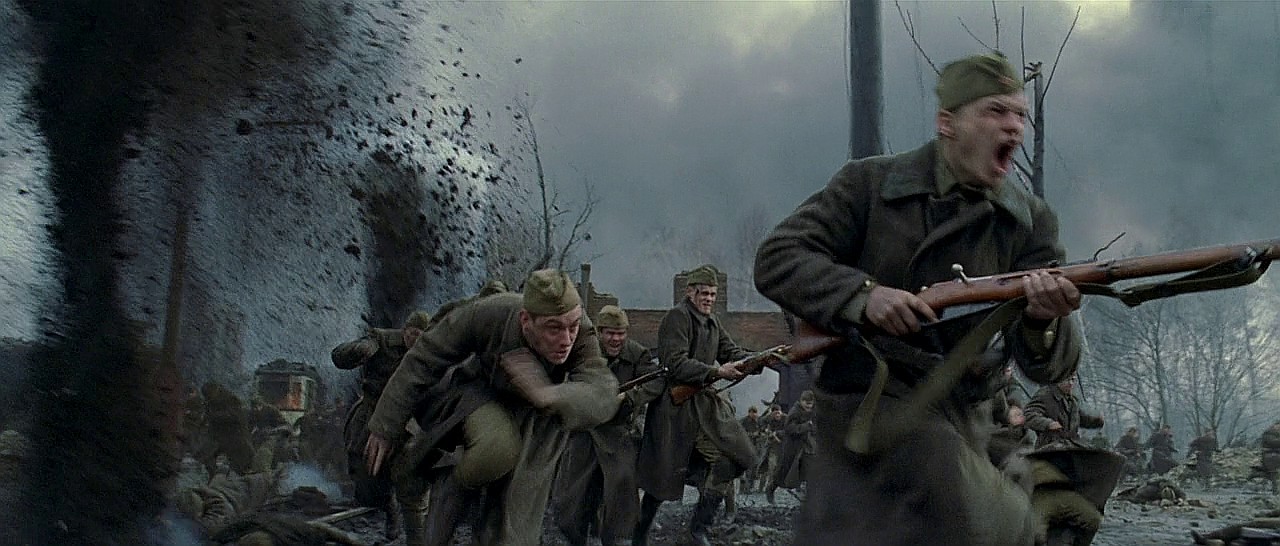
Stalingrad in 1942: Soviet tactics involve giving every other man a gun, and ordering the second man to follow his partner and take his gun when he is killed. Witnessing the sharpshooting skills of young soldier Vasily Zaytsev (Jude Law), political Commissar Danilov (Joseph Fiennes) decides to turn him into the romantic hero the Soviets need to help inspire them. He’s so successful in doing so that the Germans send their own expert sniper, Major König (Ed Harris), to find and kill Zaytsev. Meanwhile, the friendship between Danilov and Zaytsev becomes complicated when they both fall in love for the same woman, sharpshooter and German translator Tania Chernova (Rachel Weisz).

It’s quite something for a film to be denounced by both sides of the war it’s depicting: this probably means it’s doing something right, as it doesn’t deny the hellish atrocities carried out on both sides (even if many of these are implied). The real reason to be outraged is probably more to do with its general flatness and shoving of the great battle into the standard war-movie clichés. There are some attempts to suggest what we are seeing is a true story, but other than a man called Zaytsev existing, there is very little of truth on show. Instead we get a Hollywood view of Soviet Russia: where the characters we like are regular joes, while the ones we don’t are full-on Commie zealots.

The film starts well, with an extended sequence that follows Zaytsev and several other soldiers boarding boats, crossing the river, arriving in Stalingrad and being marched immediately into the front line. Half the men are killed – the fleeing remainder are swiftly machine gunned by their officers for cowardice. It brings back memories of Saving Private Ryan and, while not as good, gives the impression we are going to see a “horrors of war” film – which the film doesn’t turn into.

Instead we get an increasingly melodramatic plotline around love triangles and sniper duels that never really feels like Russian lives at the time. In fact, the film fails to capture any real sense of Soviet Russia, other than its dirt and ruthlessness. Danilov and Zaytsev celebrate their newfound fame with a sort of giddy laddishness that just doesn’t fit any Russian’s understanding of what being noticed in Soviet Russia would surely mean. When the film does try to sound Soviet it stumbles: there is a painful (unintentionally) funny moment when Zaytsev talks about his dream job to be working in a factory, because factory work seems so noble.

The love triangle also seems ripped from Mills and Boon. Not a lot of it rings true, with Danilov turning into some sort of jealous head-boy. The romance blossoming between Zaytsev and Tania can’t decide whether it’s two souls coming together, or whether it has the air of a “last romance” with death around the corner. So it’s either overblown and overplayed, or not given enough room to build. It doesn’t help that there are a number of strange choices – not least a sex scene where Rachel Weisz seems more uncomfortable and in pain than in the throes of passion.

Maybe it’s that none of the performances of the lead actors feels either particularly Russian or soldierly. Jude Law fails to convince as a man from peasant hardship. He’s also saddled himself with a wooden “peasant” accent that not only makes Zaytsev sound like a mockney chancer, but also sound like a worse actor than he is. Joseph Fiennes is more school prefect than Soviet Commissar. Rachel Weisz is the most natural of the three, but her character makes little real sense: sometimes she’s gung-ho, others she talks about wanting this war to end. None of these actors really brings the right charisma needed – in particular Law looks as overwhelmed by the events around him as Zaytsev claims to feel.

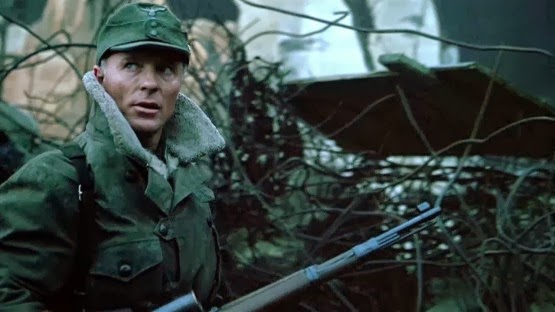
The film belongs to the sniper sequences, and the duel of wits that develops between Zaytsev and König. Ed Harris’ part is as limply written as the rest, but Harris has a movie star charisma the others lack, and suggests a great deal of reserved arrogance and professional coldness. He’s the best thing about the movie. Annaud shoots the slow-burn waiting of sniping with a tension – and the film rather bravely stresses König’s superiority time and time again. As the film zeroes in on these two men trying to outmatch each other, it feels like it’s about something – and also that it’s relieved to leave the war at large behind.

Because for a film set in the Eastern Front, this feels unnerved by there being right and wrong on both sides. It even feels squeamish about sniper shooting. After his initial display of skill, we literally don’t see any sniper work from Zaytsev again – the “cowardly” killing from a distance of regular German soldiers is handed out to other characters. Russians are sorted into good and bad, with the good showing they are “just like us” by quietly denouncing their government. König can’t just be a professional, but the film has to try and nudge him into being a cold-hearted killer. It’s a film about the complex morality of war, that wants to make it as simple as possible.

It’s still well-made, but you wish that more time had been directed towards the script, to give us a story that was slightly better and characters that felt a bit more real. James Horner supplies a decent score (interestingly it also shows how much of film music is re-used, as key refrains in this film are strongly reminiscent of Willowand Troy). But the lead actors are all miscast (Bob Hoskins isn’t much more convincing as a bulldog Khrushchev) and it feels like a film that’s running away from a complex series of issues to try and present something as close as possible to goodies vs. baddies. The War on the Eastern Front was a hugely complex thing: this film hardly scratches the surface.

The Guns of Navarone (1961)


Gregory Peck leads one of the first men-on-a-mission films in The Guns of Nararone

Director: J. Lee Thompson

Cast: Gregory Peck (Captain Keith Mallory), David Niven (Corporal Miller), Anthony Quinn (Colonel Andrea Stavrou), Stanley Baker (Private “Butcher” Brown), Anthony Quayle (Major Roy Franklin), Irene Papas (Maria Pappadimos), Gia Scala (Anna), James Darren (Private Spyro Pappadimos), James Robertson Justice (Commodore Jensen), Richard Harris (Squadron Leader Barnsby), Bryan Forbes (Cohn), Allan Cuthbertson (Major Baker), Walter Gotell (Oberleutnant Meusel), George Mikell (Hauptstaumführer Sessler)

The Guns of Navarone is the archetypical “men on a mission” classic – it was the first major film to feature a team of specialists, all played by famous actors, going behind the lines to carry out some impossible task, leaving a trail of explosions and dead Nazis in their wake. Guns of Navarone was lavished with box-office success – and Oscar nominations, surprisingly – and although it’s a little too long, and a little weakly paced at times (as Thompson himself has admitted) it’s still got a cracking, bank holiday afternoon enjoyability about it. It’s not perfect, but honestly who could resist it?

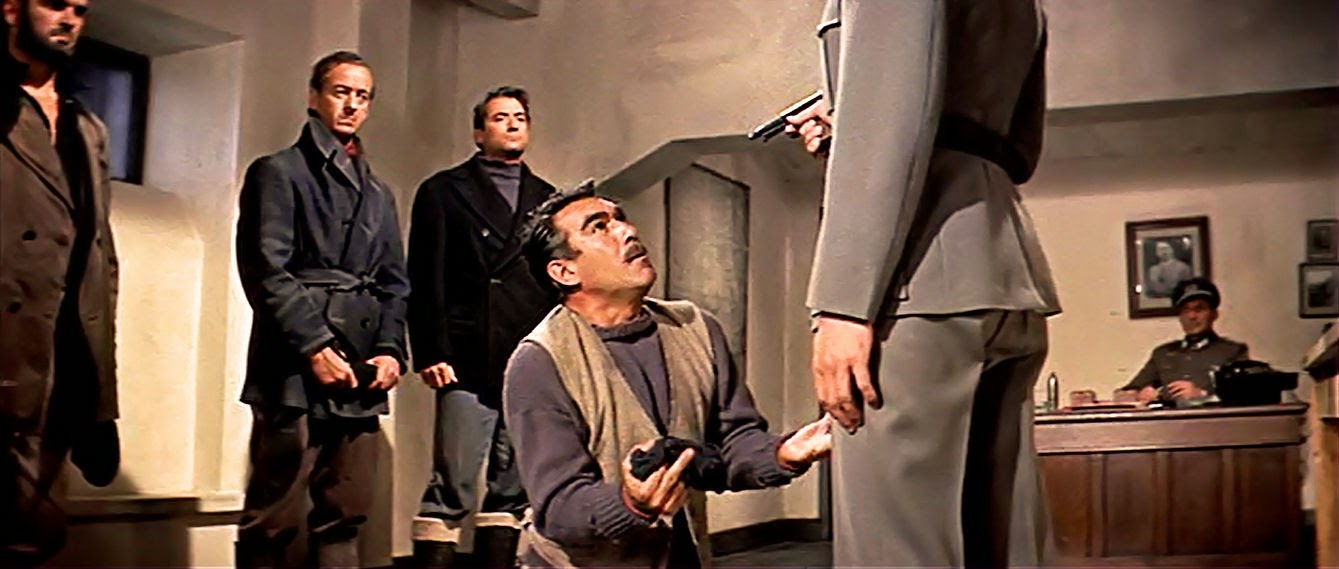
In 1943, 2,000 British soldiers are stranded on the Greek island of Kheros. The Royal Navy plans to rescue them – but the way is blocked by two massive, radar controlled guns, in an impenetrable mountain base. The air force can’t take it out: so it’s up to Commando leader Major Roy Franklin (Anthony Quayle) to put together a team to do it. Recruiting mountaineer-turned-intelligence-agent Keith Mallory (Gregory Peck), explosives expert Miller (David Niven) and Greek-resistance leader Andrea Stavrou (who else but Anthony Quinn?), Franklin leads the team in. But when he is injured, the ruthless Mallory takes command – and leads the team in a perilous behind-the-lines raid.

I’d not seen Guns of the Navarone for a few years, and I’d forgotten what a brilliantly fun, boys-own-adventure thriller it is. I’d also forgotten what a lot of time is given early on into establishing what a team of bad-asses this group are. There seems to be no limit to their ruthless, knife wielding, gun running, cold-eyed killer bravery. And they hired a hell of a cast to play it as well – so damn good that you completely forget Peck, Niven, Quayle and Quinn are all just a little bit too over-the-hill for the derring-do they are called on to carry out.

Guns of Navarone brilliantly explains the mission aims, all the stakes and introduces each of the characters and their basic backstory, before the film basically gives us a series of action set-pieces – on a boat, at the coast, on a cliff, in a village, in a German cell, in Greek ruins, in a German base. It covers everything, and each scene is directed with real verve and increasing tension, with a simplicity to camera-work and editing that really lets the action breathe. The final sequence, waiting for the booby trap to explode among the guns, is a brilliantly done “rule of three” waiting game, with the tension building up each time.

The film is also rattling good fun, and gives each of its actors’ set-piece moments. Gregory Peck grounds the film perfectly as the increasingly ruthless Mallory, willing to sacrifice a number of pawns to achieve the target, but has a war weariness that still makes him sympathetic (as a side note, Peck’s German accent was so woeful all his German was dubbed). Niven plays Miller as a mixture of louche whiner, chippy middle-class man and natural-born troublemaker – and gets some knock-out speeches on the morality of war (Niven by the way nearly died after catching pneumonia during the boat wreck sequence).

Anthony Quinn had a monopoly on playing exotic roles at the time – from Mexicans to Arabs, from Gaugain to Zorba the Greek – so no great surprise he plays the Greek colonel here. He’s terrific though, a cold-eyed ruthless killer – and the sequence where he pretends to be a cowardly awkward fisherman is wonderful (not least for Stavrou’s reaction to Miller’s praise for his performance – a half shrug and a “so-so” hand gesture, one of my favourite ever “character” touches in the movies). Irene Papas is perfect as his female equivalent, while Anthony Quayle puts together another of his “decent army officer chaps” as boys-own adventurer Franklin. Baker and Darren don’t get huge amounts to do, but Baker does well with a “lost my taste for this killing malarkey” sub-plot.

Many of the character beats were so well-done they basically became archetypes for every “group on a mission” film since (the austere leader, the difficult whiner, the old-school traditionalist, the ruthless warrior, the maverick, the one who’s lost his nerve – and, uh, I guess James Darren is the “sexy” one). The actors play off each other superbly. There are also some great cameos – Robertson Justice is great as “the man in charge”, Walter Gotell very good as an archetypical “worthy adversary” German – there is even a slightly bizarre cameo from Richard Harris as an Aussie pilot (yup you read that right). 

Navarone’s pace doesn’t always quite work – the gaps between the action sequences do lag. It takes nearly 45 minutes for our heroes to even get to Navarone. The film also can’t quite decide its stance on warfare. We get Miller’s passionate speeches on the pointlessness of missions when wars are always going to happen anyway. The unmasking of a traitor leads to a long debate on the morality of killing them or not. Several of the characters question the point and morality of war. But then, the film spends plenty of time on Alistair MacLean thriller beats: there is killing-a-plenty of German soldiers, gunned down with ruthless efficiency (not quite as many as Where Eagles Dare but pretty close!). There are small references to Greek villages paying a heavy price in retribution for the gang’s action – but these considerations never even slow them down, or make them stop to think.

Not that it really matters – this is a boy’s own action film, full of hard-as-nails actors grimly “doing what a man’s gotta do” throughout. And, despite being a little too long and aiming for a depth it doesn’t always follow through on, it’s brilliantly assembled, the action sequences are tightly directed, and the acting has a square-jawed confidence to it. Niven is pretty much perfect as the slightly dishevelled Miller, and the clashing relationship between him and Peck growing into respect, has fine bromance to it. Navarone is the first of its kind, and it’s still (and always will be) one of the best – really exciting, really thrilling, really damn good fun.

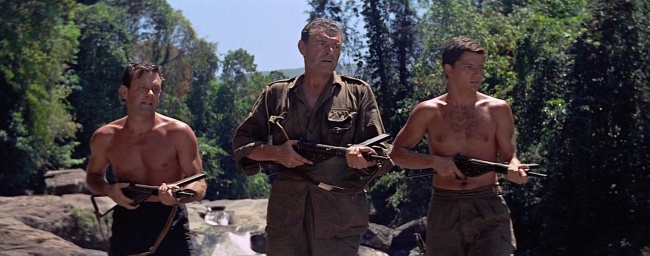
The Heroes of Telemark (1965)


Kirk Douglas runs rings around the Germans in The Heroes of Telemark

Director: Anthony Mann

Cast: Kirk Douglas (Dr Rolf Pedersen), Richard Harris (Knut Straud), Ulla Jacobsson (Anna Pedersen), Michael Redgrave (Uncle), David Weston (Arne), Roy Dotrice (Jensen), Anton Diffring (Major Frick), Ralph Michael (Nilssen), Eric Porter (Josef Terboven), Sebastian Breaks (Gunnar), John Golightly (Freddy), Alan Howard (Oli), Patrick Jordan (Henrik), William Marlowe (Claus), Brook Williams (Einar)

During the Second World War, Telemark in Norway was the main production factory for Heavy Water, a key component for the German nuclear programme. Norwegian commandoes were ordered to destroy the factory, which they did with a cunning plan. This film dramatizes the story – adding more guns and violence – but does at least make the lead characters Norwegian. Knut Straud (Richard Harris) is the leader of the resistance, Rolf Pedersen (Kirk Douglas) the professor who identifies what the factory is churning out. Parachuted back into Norway after secretly travelling to Britain to discuss issues with the allies, they start to plan a raid.

The Heroes of Telemark is sub-par boys-own action stuff, a sort of cross between Where Eagles Dare and The Guns of Navarone but nowhere near as good as either. Despite being crammed with derring-do, it’s strangely unmemorable, and although the stakes are really high, you never feel like you care. Everything in the film, bizarrely, feels a little bit easy. Our heroes are not particularly challenged (Nazi bigwig Terboven even berates his guards at the base for letting our heroes walk in and blow up the factory all while wearing British uniforms) but there isn’t any real price paid. The only heroes who bite the bullet are so heavily signposted for death, you actually spend most the film waiting for them to cop it.

Part of the problem is both Kirk Douglas and Richard Harris feel miscast in the lead roles. It’s also pretty clear (alleged) on-set tensions carried across into shooting – not only do the two characters not really seem to like each other, you don’t get any feeling of a growing bond between them as the film goes on. You end up not really caring about either of them – and since virtually everyone else on the team is hardly defined at all as a human being, that’s quite a big loss.

Douglas plays a bizarre professor of physics whose character varies wildly from scene to scene depending on the plot. Introduced making out with a student in a dark room, Pedersen initially denounces the boys-own heroics of the resistance. No sooner is a gun placed in his hand though, than he starts turning into a regular “ends justify the means” superman. Marry his new-found ruthlessness with his regular horn-dog attitude to women, and he’s a hard guy to like. I’m not sure a hero today would climb into bed with his estranged wife (a glamourous and pretty good Ulla Jaconssen) and then get shirty when she fails to put out. The part feels like an anti-hero role, reworked to give the Hollywood mega-star some action.

Richard Harris is similarly out-of-place as Knut Straud (a character based on the real commando who carried out the raid). He spends the whole film looking sullen and furious – he’s going for intense devotion to duty, but instead he looks like the whole thing is a tedious chore. Harris isn’t really anyone’s idea of an action star, and he’s an odd choice for the film altogether. For different reasons, just like Douglas, his stubborn touchiness makes him hard to like.

Following these rather disengaging figures means the derring-do constantly falls flat. It doesn’t help that Anthony Mann’s direction lacks thrust, drive and energy and never really gets the pulse going. Even during the most daring commando sequences, it never feels particularly thrilling. It’s a very easy film to drift away from, never managing to be as taut or tight as it should. The world-shattering stakes of the German nuclear programme are never clearly explained, or kept at the forefront. Chuck in some rather obvious doubles work (no way is Douglas that good a skier) and a few wonky model shots (the boulder Harris and co roll down the hill to try and take out Terboven’s car is all too clearly made of papier mache) and you’ve got a film that never gets going.

It also lacks an antagonist. Eric Porter has a couple of decent scenes here and there as Reichskommisar for Norway Josef Terboven, but he disappears from the film for ages. The Nazis end up as a faceless bunch of German soldiers, and are so easily overcome or fooled that they hardly count as challenges. As such, the clashes and arguments really come within the commando organisation itself, but since Harris and Douglas so clearly don’t like each other, even their brief reconciliation doesn’t ring that true.

The Heroes of Telemark will pass the time on a bank holiday afternoon. You get some decent performances – Roy Dotrice is very good as a possible quisling – and the odd good scene (Redgrave gets a good death scene) but it never really comes to life like it should. Mann’s direction is too plodding, and the pacing of the film so slack that it never becomes exciting or engaging. There are so many better movies on a similar theme you could be watching.

The Bridge on the River Kwai (1957)


Alec Guinness is the British Colonel in captivity whose principles are sadly misguided in The Bridge on the River Kwai

Director: David Lean

Cast: William Holden (Commander Shears), Alec Guinness (Lt Colonel Nicholson), Jack Hawkins (Major Warden), Sessue Hayakawa (Colonel Saito), James Donald (Major Clipton), Geoffrey Horne (Lt Joyce), André Morell (Colonel Green), Peter Williams (Captain Reeves), John Boxer (Major Hughes)

“Madness! Madness!”Are there many better final lines of films – or any delivered with more emphatic, meaningful gusto than James Donald manages at the close of this David Lean classic? The Bridge on the River Kwai is a constantly reliable, wonderfully assembled classic film, and a never-ending joy to watch. It’s not only a gripping epic, it’s also a wonderful psychological study of a series of men and the impact war has on their psyches. It’s all madness after all.

In 1943, Colonel Nicholson (Alec Guinness) and his men arrive in a Japanese prisoner of war camp in Burma. Camp Commander Colonel Saito (Sesse Hayakawa) has been tasked with building a bridge over the river Kwai, and demands officers and men go to work. When Nicholson adamantly refuses to allow officers to do manual labour (as per the Geneva Convention), he and Saito are set for a clash of wills, in which the iron-willed, rigid certainty of Nicholson eventually triumphs. However, once Nicholson is released from solitary confinement, he is so horrified by the decline in discipline of his men, he decides building the bridge is the perfect opportunity to rebuild morale and demonstrate British character=. So he sets upon building a better, stronger bridge than the Japanese had designed. Meanwhile, fellow prisoner American Commander Shears (William Holden) escapes from the camp back to Allied headquarters – only to be forced to return to the jungle on a commando raid to destroy the bridge, led by Major Warden (Jack Hawkins).

Wow this is one hell of a film. It was garlanded with seven Oscars, and totally deserves each and every one of them. Kwai is a deeply engaging, wonderfully structured epic that balances perfectly the sweep of Hollywood cinema with a keen understanding of the complexities of psychologies under pressure. Because like Clipton says, this is a film about madness. Virtually everyone in this is mad in some way. Lean brilliantly positions these psyches in a series of conflicts and clashes: we have Nicholson vs. Saito, Nicholson vs. Shears, Shears vs. Warden – in every relationship in the film there is conflict and disagreement. It makes for extraordinary drama.

Pile on top of that the fact that David Lean is a consummate film maker. Every moment of Kwai is a display of wondrous visual storytelling, from the arrival of the British in the prison camp – a triumph of defiance, pride and hubris – to the final attack on the bridge. The final sequence around the bridge is exquisitely assembled. The editing is flawless, the tension build-up (nearly 20 minutes!) never flags, but carefully establishes the who, what, why and where. The sequence itself builds up both events and problems with daunting skill. In between, every sequence of the film has some masterful work in it.

The heartbeat is Alec Guinness, simply marvellous as Nicholson. It’s hard to believe watching it that he was not the first choice – in a parallel universe Charles Laughton starred opposite Cary Grant’s Commander Shears! – because he is superb in this Oscar-winning role. Guinness’s Nicholson is mad. Not in the cuckoo way or a cruel or arrogant way. He’s blinded by the rule book, by the middle-class values of duty, order and dignity that govern his life. Mad because he takes a task from his Japanese enemies and does it better than they ever could have: “Must we work so well? Must we build them a better bridge than they could have built themselves?” Clipton asks of him. Too true. Nicholson’s response? That one day people will remember the bridge was built not by “a gang of slaves, but soldiers, British soldiers…even in captivity”. 

So Nicholson doesn’t see it that way. It doesn’t match his narrow world view of a place for everything and everything in its place. Because he has no vision beyond his own immediate circumstances. The important thing for him is to build the bridge, because it’s his duty to keep his men together, and demonstrate British resolve. So it’s Nicholson who visits Clipton’s sick bay and gently questions the wounded men, encouraging them to go back to work on the bridge so it can be finished on time (they ironically march through the graveyard of the camp on the way). For Nicholson the bridge is everything – and Guinness’ eyes are full of rigid monomania (needless to say, by the end of the film Nicholson himself off-handedly informs Clipton with pride that the officers have volunteered to work on the bridge to make sure it will be finished before the deadline).

His manner contrasts fascinatingly with Sesse Hawakaya’s Colonel Saito. Saito, a bank manager type if ever you saw one, clearly struggles with holding his command together and to deliver the bridge as planned. He has the strength of office, but not the strength of character of Nicholson. Hawakaya plays a weak man – and it’s fascinating how Lean charts the shift in power from Saito to Nicholson. Nicholson stands for principle and simply cannot imagine backing down – and then, with a sense of certainty and natural authority that governs his life, swiftly takes over the entire planning of the bridge from Saito. Poor Saito is a broken, weakened man: and in his own form of madness, is left with Nicholson alone as a confidant (the two of them talk more to each other about their loneliness and uncertainties than they do anyone else – Nicholson in particular gets a marvellous speech about the sad transience of the soldier’s life – “it’s a good life, but still there are times…”).

The madness doesn’t stop there. Jack Hawkins’ Major Warden is as fanatical as Nicholson: the mission is everything. Hawkins is excellent, turning Warden into a sort of over-grown schoolboy, playing at soldiers but with an adolescent aggressive willingness to sacrifice the pieces for the greater good. For Warden, no life in the team is sacred (including his own), and everything must be about the target. Warden’s gung-ho, take-no-prisoners attitude, his lack of empathy for the lives of those around him, makes him as much of an insane danger as Nicholson, perhaps more so.

Holden’s more humane Shears is the counterbalance with these three lunatics. Of course, Shears is sucked even more into the madness than anyone else – who else would escape from a prison camp, only to be forced to head back into the jungle on a fool’s errand? Holden is damned impressive as the naturally anti-authoritarian Shears, a man who never seems to have seen a boss without questioning him, who recognises the insanity of the war around him but when push comes to shove throws himself into the mission he has been given. 

He’s the big addition to the original source material – but it’s an idea so good that Pierre Boullé said he wished he had thought of it himself. Boullé won the screenplay Oscar, but the writers of the script were really the black-listed Michael Wilson and Carl Foreman. These two put together a superb script, and the structure contrasting Shears with Nicholson works perfectly. These two are mirror images, but never really antagonists. Their final meeting towards the end of the film has a poetic sadness about it. It adds a whole extra dimension to the film – while one storyline sees the bridge being built, a parallel one prepares for its destruction.

All these threads come together beautifully on the morning of the bridge’s opening, after a triumphant celebration by the prisoners on the completion of the bridge – a moment Nicholson describes to them as “turn[ing] defeat into victory”. He is of course both right and wrong – and the triumph of the film is that you can’t help but share Nicholson’s desire to save this bridge that we have seen so much work, effort and love go into constructing. 

“Madness”. That’s how Clipton sees it – James Donald is by the way wonderful as the one sane man – and yes of course he’s right. It’s all part of what is a masterful film made by a master storyteller, beautifully filmed and edited. Alec Guinness gives a performance for the ages as stubborn, small-minded man whom we somehow still end up strangely admiring and respecting. Holden, Hawkins and Hayakara offer intelligent, engaging portrayals. The Bridge on the River Kwaiis a film that you can watch again and again. In fact you should, because Lean here marries an epic scale with a story that feels small, personal and deeply felt – that places the psychology of real people at the centre of an epic stage. It’s simply a classic.

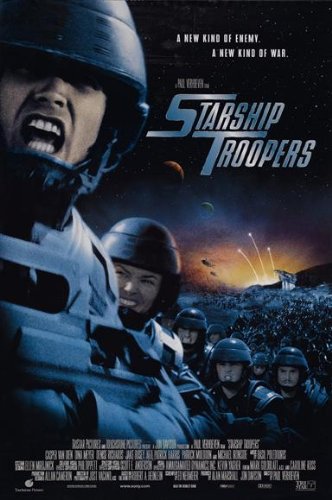
Starship Troopers (1997)


Earth’s military might goes up against space bugs in Paul Verhoeven’s militaristic satire

Director: Paul Verhoeven

Cast: Casper Van Dien (Johnny Rico), Dina Mayer (Dizzy Flores), Denise Richards (Carmen Ibanez), Jake Busey (Ace Levy), Neil Patrick Harris (Carl Jenkins), Patrick Muldoon (Lt Zander Barcalow), Clancy Brown (Sgt Zim), Michael Ironside (Lt Jean Rasczak), Seth Gilliam (Cpl Sugar Watkins)

Every so often, a film uses the tropes of bad films so well, and makes such effective satirical digs, that people initially miss the point of what the film is trying to do. This is pretty much what happened with Paul Verhoeven’s Starship Troopers. On the surface a terribly acted, deeply stupid sci-fi actioner about soldiers killing space bugs, Verhoeven actually created a sharply intelligent, wry satire on the very bombastic militaristic fascism it seems to celebrate. This satirical bent was missed not only by the critics, but also the producers of the straight-to-video sequels the film spawned.

In the 23rd century, mankind has reached the stars. But it’s done so by creating a militaristic, aggressive society, where the young are encouraged to join up to the military in order to become “citizens”. Leaving high-school, hotshot would-be-pilot Carmen Ibanez (Denise Richards) joins up – followed by her boyfriend Johnny Rico (Casper van Dien), in turn followed by Dizzy Flores (Dina Mayer), the girl in love with him. Joining the ground soldiers, Ricco and Flores find themselves as the point of the spear in mankind’s war with the Arachnids (the Bugs), a race of (it becomes clear) intelligent and savage insects on a distant planet.

Starship Troopers isn’t really like anything else: it might well be Verhoeven’s American masterpiece, the perfect mix of his love for extreme gore, violence and sex (filmed with lashings of comic colour and playful glee) with keen social satire, the very ideas he had explored in everything from Robocop to Total Recall. At first glance, Starship Troopers serves up the all-action, gun-toting space battle excitement you would expect from its genre. But Verhoeven not only ramps everything up to 11, he also laces the dialogue and action with a keen satirical bent that hammers home the underlying theme of how war essentially (as Verhoeven puts it) “makes fascists of us all”.

The action is regularly interrupted by propaganda newsreel footage, which stresses the importance of sacrifice for the military effort. The military training camps are almost obsessively focused on brainwashing and reducing the young people in them to cogs in the machine, with safety and welfare as very much a secondary concern (the death of a recruit in an exercise is a concern only because it shows careless leadership rather than because of the death itself). Everyone in the film seems to be a perfect physical specimen. Military lives are thrown away through a combination of arrogance (they’re just bugs, this will be easy!) and incompetence, but never with any feeling of responsibility or expression of regret (though the media works hard to adjust all casualty figures wildly downwards).

The film fires shots at everything in the industro-military complex. The foreign policy of this world is ludicrously aggressive and jingoistic. Despite the spin of the propaganda, it’s pretty clear that humanity has started the war itself. The army is like Hitler’s wet dream – sleek perfect bodies, suicidal self-sacrifice, a complete lack of questioning of any orders or directives, a willing acceptance of corporal punishment. This attitude of violence and unthinking aggression is at every point of society – newsreel footage shows children holding guns with grinning soliders, who then proceed to hand out live ammunition. Later children are shown stomping cockroaches, to cries of the “the only good bug is a dead bug!”. Trials are routinely praised for the brevity (one day between arrest, conviction and execution!). It’s a terrifying world.

What Verhoeven does so well is that, while aware of the multi-leveled nastiness of the world of Starship Troopers, he also makes it a pretty effective straight-war movie. It’s exciting and the action quotient is high. Just like the soldiers in the picture, it’s very easy to see the bugs as faceless opponents which it is easy to feel little regret over killing. The battle scenes are high scale – and of course blackly comic in their extreme gore and bloodlust. But you can still enjoy the action – which is why the film works so well as satire. And also perhaps why so many at the time missed the point. Verhoeven makes this as an enjoyable B-movie, by really effectively using the tropes of B-movies. He turns the trashy B-movie into a sort of art exhibit.

That surely also explains some of the casting. I’m not sure how many of the actors are in on the joke. Certainly Casper van Dien and Denise Richards seem blissfully unaware of the satirical bent under the film. These two wooden actors trot through the sort of banal, by-the-numbers plot arcs and dialogue that fill films like these, with van Dien’s jaw as chiselled as granite and Richards grinning no matter the content of the scene. But their honest woodenness is perfect for the film: a smarter actor would have wanted to tip the wink to the audience, but these guys play it totally straight without even a hint that they are aware of the message underneath.

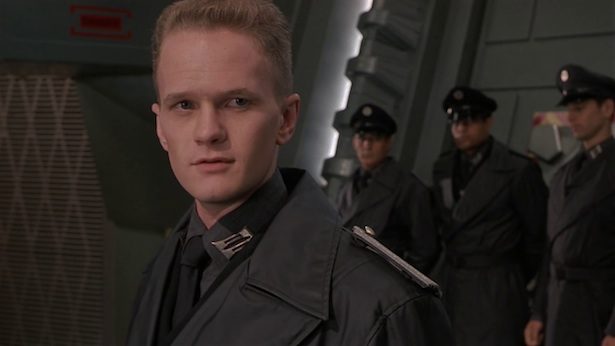
The more satirical element is left to other members of the cast: Michael Ironside has great fun as an almost absurdly fanatical solider, first introduced as a teacher lecturing his students on how the state must come before everything else and violence is the solution to all the world’s problems. Neil Patrick Harris tips a slight nod to the audience as a young man who rises so swiftly through the ranks that by the time we reach the end of the film, he’s a Gestapo-coated secretive colonel. He fits right into the grey militaristic, Nazi design of the military. You can watch all this stuff and simply enjoy the silliness – teenage boys will love this. And when they mature they’ll realise how awful the world it’s presenting is.


Starship Troopers is the ultimate military satire, a film that pushes every single fascist, militaristic society cliché to the limit. The news comes only from state propaganda. Military training involves brainwashing, maiming and slaughter. Education praises anger and violence as a solution to all problems. Verhoeven shoots this all with a grandeur, that pushes the celebration of militaristic violence to the max. 

It’s a film which is brave enough to make its militaristic sequences exciting, to shoot and cut this fascist wet dream with a stirring sense of excitement underpinning all the action. At the end you can celebrate the small victory our heroes celebrate in what is clearly going to be an ongoing war – until of course you realise it’s the victory of a Nazi organisation. The fascist world of the future may bring us sexual and racial equality – but that’s because it’s worked out everyone is needed to feed the grinder. It’s a super-smart satire film that disguises itself as a completely trashy action flick. It’s actually rather brilliant.

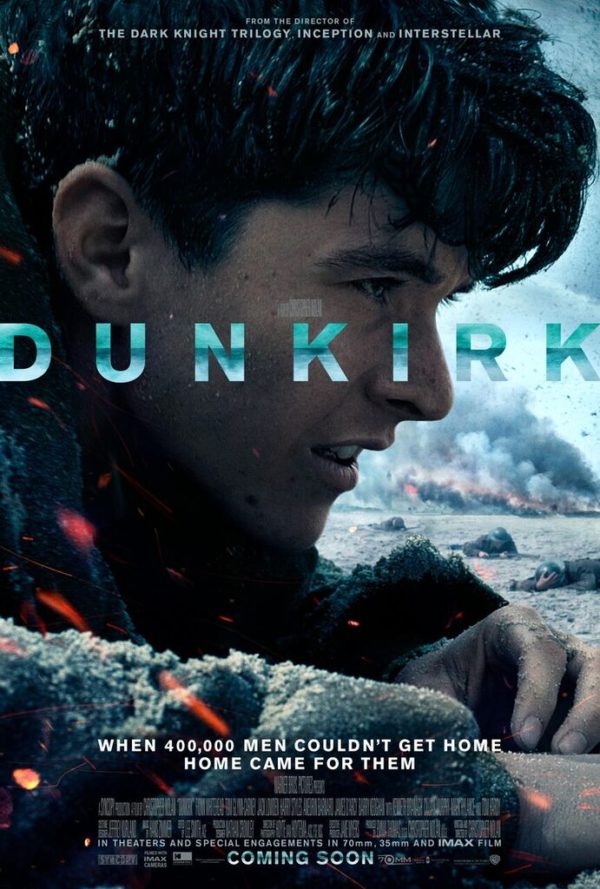
Dunkirk (2017)


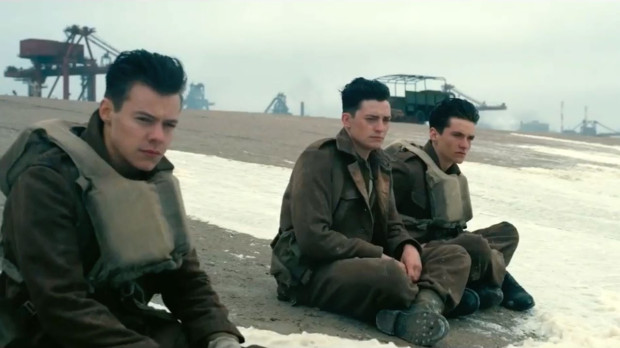
Harry Styles, Aneurin Barnard and Fionn Whitehead are three ordinary soldiers trying to get home in Christopher Nolan’s epic Dunkirk

Director: Christopher Nolan

Cast: Fionn Whitehead (Tommy), Tom Glynn-Carney (Peter Dawson), Jack Lowden (Collins), Harry Styles (Alex), Aneurin Barnard (Gibson), James D’Arcy (Colonel Winnant), Barry Keoghan (George Mills), Kenneth Branagh (Commander Bolton), Cillian Murphy (Shivering Soldier), Mark Rylance (Mr Dawson), Tom Hardy (Farrier)

“We must be very careful not to assign to this deliverance the attributes of a victory. Wars are not won by evacuations. But there was a victory inside this deliverance, which should be noted.” – Winston Churchill

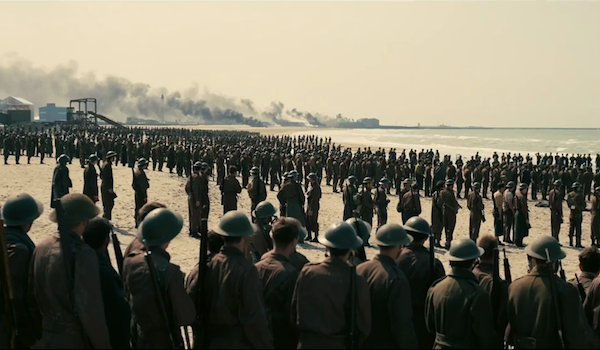
The evacuation of Dunkirk is a very British triumph. Beaten and encircled by the Germans, British forces were stranded in a small pocket around Dunkirk. The country looked certain to lose almost 400,000 men to death or imprisonment – the core of its professional army. The fact that almost 340,000 soldiers were evacuated was more than a triumph: it was almost a miracle. Christopher Nolan’s epic new film brings the triumph and adversity of this campaign to the big screen.

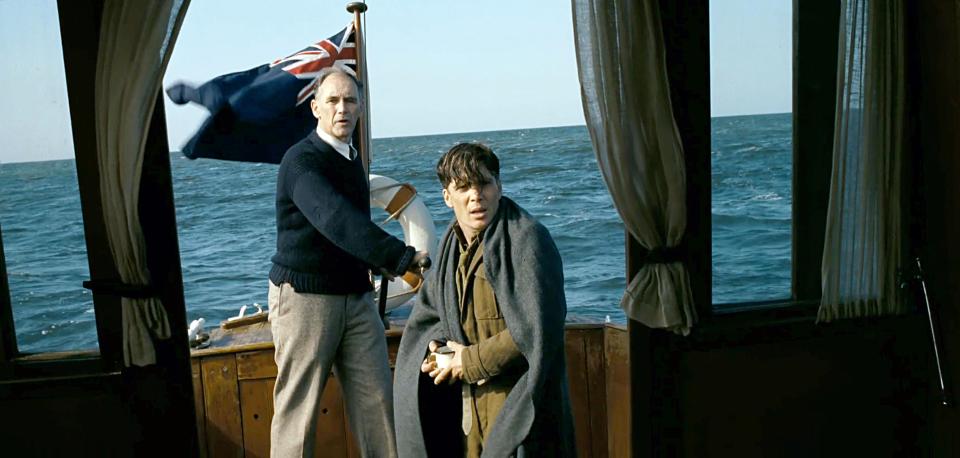
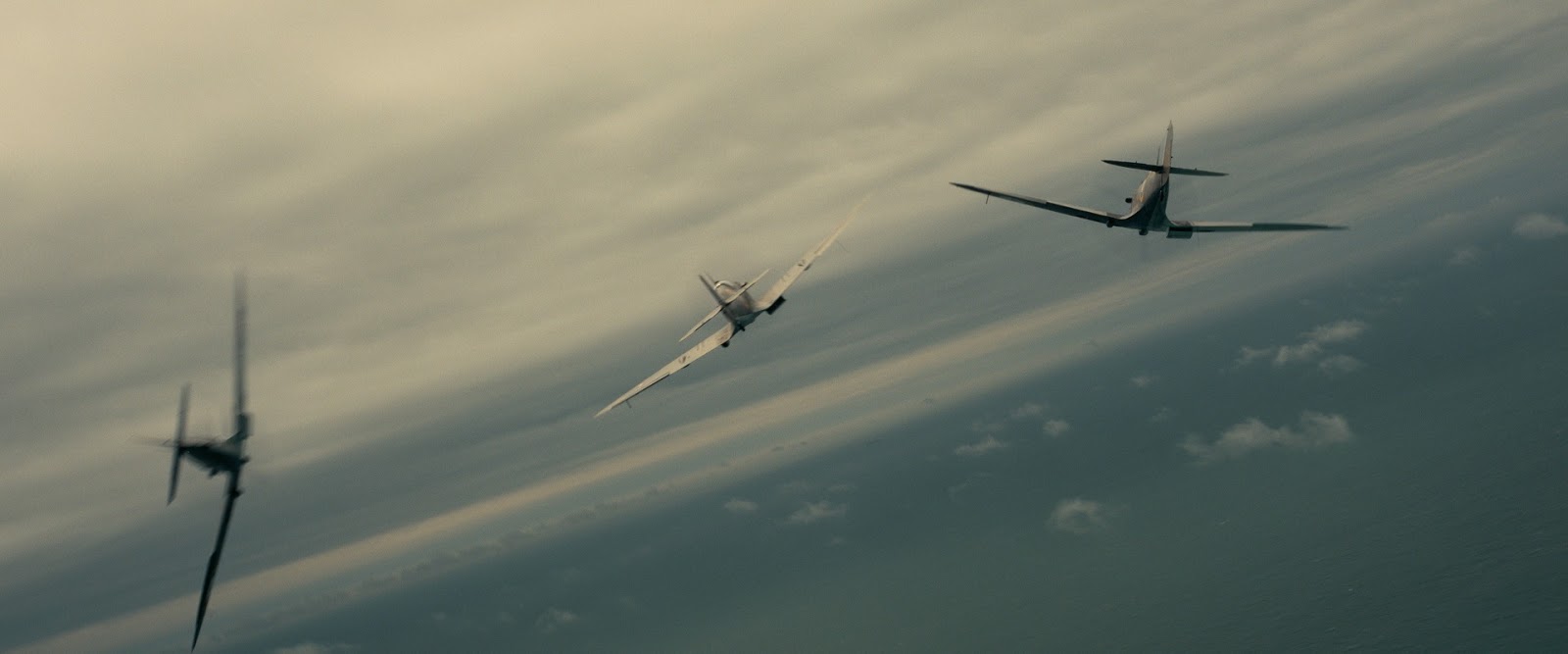
The action unfolds over a week around the evacuation of Dunkirk. On the beach Tommy (Fionn Whitehead), Gibson (Aneurin Barnard) and Alex (Harry Styles) are desperate to escape the chaos on the beach, where the evacuation is being managed from the one standing pier by Commander Bolton (Kenneth Branagh). On the sea, Mr Dawson (Mark Rylance) and his son Tom (Peter Dawson) head to Dunkirk in their small pleasure boat to help with the evacuation, picking up a traumatised soldier on the way (Cillian Murphy). In the air, Farrier (Tom Hardy) and Collins (Jack Lowden) fly a one-hour mission over Dunkirk to provide air support to the stranded soldiers.

As a director, Nolan’s calling cards are playing with narrative forms and timelines, while allowing personal stories play out on extremely grand canvases. Dunkirk feels like a summation of some kind of his career: its multi-layered timelines are gracefully and intelligently threaded together, and while the canvas is enormous, the human stories don’t get lost. The human interest running through the film is particularly impressive, as there is so little dialogue. It’s pretty close to “experience cinema” – it throws the audience into an immersive explosion of events, giving as much of an impression as it’s possible to give of the claustrophobia, tension and terror of being trapped on that beach.

The film-making is impeccable in creating this overbearing feeling. Hans Zimmer’s score thunders over the film, bearing down with a constant pressure and making excellent use of metronome ticking to keep hammering home the time pressure. Nolan brilliantly inverts scale in his filming to create a sense of claustrophobia – we constantly see sweeping shots of but the scale of our surroundings only forces home the seeming impossibility of what the British are trying to do. Individual soldiers seem tiny – how can one man possibly have a chance of escaping? It’s a brilliant mixture of sound and imagery to make the large seem small, the epic seem entrapping.

What Nolan does really well in this grand scale is to create a series of “ordinary soldier” characters. Despite the fact that we learn virtually nothing about them, these characters feel human and desperate. Again, they are such small, ordinary Everyman cogs in the giant machine of the army, that they become hugely relatable. It’s a hugely neat trick by Nolan, another brilliant inversion – just as he turns epic to claustrophobic, he turns ciphers into characters.

Recognising the need for balance between the overbearing impact of the Dunkirk beach sequences, the film allows a mix of story-telling and character types in its other two plotlines. So Mark Rylance’s boat captain voices much of the film’s humanitarianism, in a sequence that plays like a chamber piece – four people discussing duty and the impact of war in a confined space. Meanwhile Tom Hardy’s Spitfire pilot carries more of the traditional “war film” man-on-a-mission dynamics, engaging in a series of dog fights in the sky. Interweaving these stories offers not only relief to the audience, but also narrative contrast.

The interwoven storylines are also brilliantly done since they all take place in very different timespans. The plot at “the Mole” takes place over a week, “the sea” in one day, and “the sky” in one hour. Each of these timelines interlocks and unfolds in the film simultaneously, and characters move at points from one timeline to another.

Okay, writing it down, it sounds impossibly confusing and difficult to follow right? Who could keep track of all that? But the film is so brilliantly assembled that it always make perfect sense. Nolan uses several key markers – a boat, the fate of certain characters – to constantly allow us to see where we are in the story’s timeline. So we understand when we have moved from one timeline to another when we see a ship still on the beach that we’ve seen sinking elsewhere. This also increases the tension – we know at points what will happen before the characters do, because we’ve already seen the after-effects. Again, put it into words it sounds wanky and difficult to follow, but it really isn’t – and the film is put together with such confidence that it never feels the need to show off its narrative gymnastics. Nolan is confident enough to be clever without drawing our attention to it – a very difficult trick to pull off.

All this forceful story telling never prevents the story from also being at many points immensely moving and stirring. The arrival of the boats at Dunkirk is a genuine “lump in the throat” moment. The simple decency of Rylance’s boat captain gives a low-key impression of a very British sort of heroism, of quietly doing one’s duty while valuing every life and wearing your own grief lightly.

The film’s more action-based sequences are equally stirring and moving, because Nolan brilliantly establishes character with only a few brief notes. It’s made clear early on that Hardy’s pilot has only a limited fuel supply: every second he stays above Dunkirk protecting the men and ships below, he reduces his chances of getting home. It’s another sort of heroic self-sacrifice, and in a film that generally doesn’t shy away from showing the deadly consequences of war, Nolan is happy to give us some more traditional, fist-pumping heroics.

Nolan gets the maximum emotion from the more dialogue-heavy parts by hiring some terrific actors: Rylance, as mentioned is superb, and Cillian Murphy is very good as a shell shocked captain. Kenneth Branagh is perfect for conveying the weight of responsibility on the shoulders of the naval commander in charge of the evacuation. And elsewhere, Whitehead, Bernard and Styles all invest their ordinary Tommies with a great deal of emotion and empathy.

Dunkirk is a marvel of cinematic technique and accomplishment, which brings enough moral and emotional force to the drama to keep you engaged in the plights of its characters. You can marvel at the film making tour-de-force of its executions, but you never feel disengaged from it. It’s a marvellous film.

Eye in the Sky (2015)


The great Alan Rickman is an exasperated General, in drone-strike moral fable Eye in the Sky

Director: Gavin Hood

Cast: Helen Mirren (Colonel Katherine Powell), Aaron Paul (Lt. Steve Watts), Alan Rickman (Lt. General Frank Benson), Barkhad Abdi (Jama Farah), Jeremy Northam (Brian Woodale), Iain Glen (Foreign Secretary), Monica Dolan (Angela Northman), Richard McCabe (George Matheson), Phoebe Fox (Carrie Gershon), Babou Ceesay (Sgt. Mushtz Saddiq), John Heffernan (Major Howard Webb)

As Shakespeare said, sometimes we are urged: “to do a great right, do a little wrong”. Eye in the Sky is a film about that dilemma. Numbers 2, 4 and 5 on the terrorist “Most Wanted” list are meeting in a house in Kenya. They are preparing suicide bombers. A series of attacks could be minutes away. A drone strike will probably save hundreds of lives. Seems obvious doesn’t it? Unfortunately, sitting in the fatality zone is an innocent young girl, just trying to sell bread. Take out the bombers and you’ll save dozens of other children – but you’ll almost certainly kill this one child.

Your initial reaction to this sort of situation would probably be “thank goodness that’s not my decision”. Problem is, you get the feeling many of our elective representatives feel the same: as the situation escalates (from capture, to kill, to controlled strike, to a certainty of civilian casualties) so does the buck-passing, from politician to politician all unwilling to make a call.

Guy Hibbert’s well researched and thought-provoking script combined with Gavin Hood’s taut direction make this a gripping conversation thriller about the impossibility of moral debates. Hibbert’s script brilliantly piles moral debate on moral debate – just as we accept the desirability of one action, the circumstances change with bewildering speed. Everything, from a change of travel plans to battery failure on a vital piece of equipment, amps up the pressure and makes the situation more morally unpalatable.

The buck-passing becomes almost a dark farce in this expert script. A put-upon civil servant is repeatedly sent to communicate with a string of senior leaders, from the Foreign Secretary to the Prime Minister. Later a crucial decision takes place over a conference call, with an ever-expanding series of international attendees. It’s like a deadly serious Yes, Minister, with Jeremy Northam’s junior minister a flummoxed and vacillating Jim Hacker.

The military seems equally divided – senior officers focus on the big picture, aware of the evil they must do but seeing it as a necessity to prevent worse acts, but the junior ranks actually executing the strikes push back with increasing distress. Mirren’s colonel pressures a sergeant into effectively falsifying a fatality prediction for the girl, to push her superiors into authorising the strike on this vital target. A shallower film would have played great play of this. But Hood and Hibbert never take that easy route.

The film also explores distance conflict. Nearly all the participants are based thousands of miles away, watching on screens and pushing buttons. Rickman’s General has a knock-out final speech about his first-hand experiences of the horror of suicide bombings – and compares this to the moral objections of the greatest opponent of military action in the film, who has watched it all play out with “coffee and biscuits”. Remote warfare is neither in itself good or bad – and those objecting to actions are not angels, just as those pushing for action have their own moral reasons for doing so, and the film demonstrates that amidst all this, the “right answer” (if there is such a thing) can be almost impossible to identify.

Conversation thrillers like this are dependent on the quality of the actors – so it’s lucky we’ve got a great cast here. A gimlet-eyed Helen Mirren is as tough as you’ve seen her as the field commander who suppresses all doubt in pursuit of the greater good. In his last on-screen role, Alan Rickman gives one of his best performances as a wry, humane general who has come to terms with the hideous moral cost soldiers have to bear. His increased exasperation at the procrastination of his political masters adds some black comedy, but he also gives the character a wonderful humanity (a prologue in which he struggles to buy his grandchild a present is not only wonderfully witty, but humanises the character immediately).

Few actors do tortured conscience under the surface better than Aaron Paul – and his drone pilot turned reluctant killer provides much of the moral force of the film. Paul’s sensitive and anguished divide between following orders and living with the knowledge he’s wilfully condemning a child to death is beautifully done. Barkhard Abdi grounds his field operative not only with much of the film’s more conventional derring-do, but also layers the character with dedication and selflessness.

Eye in the Sky is a marvellous piece of tense and layered film-making. It makes high drama out of moral quandaries, and really makes us pause to stop and think about the impact of our decisions both in a wider context, and a very painful immediate one. The professional military figures – even Mirren’s cold Colonel Powell – are motivated by a painful familiarity with acceptable loss, rather than gung-ho aggression. The politicians struggle to reach a decision not only through reluctance, but with empathy for their potential victims. It overeggs the pudding with its final shots of the young girl who has unwittingly been at the centre of a major international incident, but other than that it hardly puts a foot wrong.

In Which We Serve (1942)


Noel Coward takes command in stirring British wartime drama In Which We Serve

Director: Noël Coward, David Lean

Cast: Noël Coward (Captain E.V. Kinross), Bernard Miles (CPO Walter Hardy), John Mills (Shorty Blake), Celia Johnson (Alix Kinross), Joyce Carey (Kath Hardy), Kay Walsh (Freda Lewis), Michael Wilding (Flags), Leslie Dwyer (Parkinson), James Donald (Doc), Philip Friend (Torps), Frederick Piper (Edgecombe), Richard Attenborough (Young Stoker)

Only the British would make a wartime propaganda film about a sunk ship where over half the crew gets killed (the Navy nicknamed the film In Which We Sink). It says something about this endearingly muddle-headed country that the stories that appeal most to us are those that celebrate our struggles against adversity. It was filmed in the aftermath of the Battle of Britain but before the Battle of El Alamein – the British considered themselves safe from invasion, but still saw victory was a long way off. In that climate, the film’s attitude of knuckling down and doing your duty to achieve a distant dream must have resounded profoundly with millions of people.

Based on the early war career of Louis Mountbatten, this “story of a ship” revolves around the Torin, a destroyer captained by E.V Kinross (Noël Coward). The ship is dive bombed and sunk by the Luftwaffe, and the captain and survivors cling to a lifeboat, waiting for rescue. While they wait, the crew remember their lives back home in flashback – in particular the captain, CPO Hardy (Bernard Miles), and able seaman ‘Shorty’ Blake (John Mills). Can you imagine an American propaganda film with a plot like that?

It’s easy to mock a film like In Which We Serve today. Its stiff-upper-lipped, duty-led, hierarchical world has been lampooned countless times since Peter Cook’s pitch-perfect Bernard Miles impersonation in Beyond the Fringe. (Early in the film, watching Kinross at home, I remembered Eddie Izzard’s spoof: “Don’t go to the war Daddy / I must they won’t start without me…”). The first 30 minutes, with its clipped dialogue, fast-paced delivery and stiff-backed, formal playing style takes a while to tune into. But it’s worth it, as the establishment of this carefully controlled exterior is what makes the later sections, with strong emotions just below the surface, so moving.

Coward was of course primarily a man of the theatre, and this was his only original film script. His collaboration with experienced film-makers produced a stirring, skilfully crafted epic that reflects on several levels of British rank and society, and not only shows us “why we fight” but also “why we should fight”. Coward is credited as the principal director, but much of the direction (and the film’s skilfully constructed structure in the editing suite) comes from his co-director David Lean, here making his directing debut.

Lean’s expressive hand is clear in the brilliantly composed sequences on board the ship itself, both in action and at ease. An example of the fluid editing, is where the camera follows the progression of a missile through the ship, passed from crew member to crew member, each given some brief moments to show their quiet determination and resolve. Similarly, the sequences on the drifting lifeboat have a claustrophobic intensity about them. The flashbacks are carefully placed to allow our understanding of the characters and their backgrounds to grow each time.

The scenes back home are remarkable for their dramatic simplicity. Coward understood the stories that move are those of normal people. The sailors’ home lives – from the captain down – are domestic, calm, happy and above all normal. Very little happens: one sailor gets married, the captain plays with his children, the Petty Officer teases his wife. This regularity makes their courage under fire all the more stirring: truly ordinary people doing the extraordinary. Some critics have called Coward’s attitude to the working classes snobbish, but there is no disdain at all here – instead there’s a paternal admiration with genuine warmth.

This warmth extends even to a stoker who cuts and runs during action. It would be easy to use this moment to amplify the braveness of the others. Instead, in a moving speech to the men, the captain takes the blame onto himself for not supporting the young man earlier. The mortified stoker, in a wonderful little scene, struggles to express his shame to a barmaid, not in anger but in a quiet, confused guilt. The film never condemns or judges him – he is quietly shown returning to his duties. There is no explicit moment of redemption, just a sense of a man who has let himself down, resolving quietly to do better.

The opening sequence covers the lifespan of the ship – from its construction and commissioning, to its launch, early actions and sinking, with the implication of a nation coming together. Later scenes mix theatrical touches with documentary realism. A marvellous sequence covers Dunkirk, which feels incredibly real but also showcases a few wonderful flourishes, from Kinross’ speech praising the soldiers’ bravery to Shorty’s affectionately wry remark on the rivalry between soldiers and sailors. The final sequence brings us full circle, with the construction and launch of another battleship under Kinross’ command. We may lose a battle, but we are never beaten.

Coward takes on the lead role. To be honest, it’s a striking piece of miscasting that somehow works out – Noël Coward is no-one’s idea of a hard-nosed naval veteran. He lacks the range in particular for his scenes of domestic life, coming across as too detached and distant – particularly noticeable since his wife is played brilliantly by the radiant Celia Johnson, conveying layers of emotion under a controlled exterior. But, his quiet, buttoned-up professionalism and clipped Englishness work perfectly for the quietly emotional speeches he delivers. These he nails perfectly, his voice just giving the hint of cracking. It’s a curiously stagy, and in no way naturalistic, performance – but as a representation of a particular type of Britishness it’s perfect.

And Kinross is just the sort of man you would follow to the end – distant and authoritarian, but just and warm. Rescued from the ocean, he goes immediately to his men, moving quietly from wounded man to wounded man, collecting addresses, issuing quiet words of unexpressive comfort (“I’ll tell her you did your duty”). His closing speech (heavily based on Mountbatten’s own address to his crew) throbs with emotion just below the surface as he thanks his men – and it’s hard not to feel it as he shakes the hand of each man and is overcome with emotion, he can only nod a brief acknowledgement to his officers. Lean trains the camera on his back, as we see his shoulders seem to swell to support the pride, respect and love for his men. It’s peculiarly British, but this unspoken affection is hugely powerful.

The more naturalistic performances from the rest of the cast help to anchor the film – and also allow Coward’s more stylised acting to work effectively. John Mills is wonderful as Gunner “Shorty” Blake, a plucky, kind and witty man. He’s just the sort of unexpressive hero we’d all like to be, and his homespun love story with Kay Walsh is genuinely engaging and moving for its everyday normality. Mills also carries much of the film’s humour.

It’s the final sections of the film that really, really work. I can’t get through the scenes of the surviving crew being saved, the quiet courage of the dying men and the austere warmth of the captain, the speeches that burst with pride and respect under a reserved veneer, without feeling a lump in the throat. It’s a masterful piece of quietly powerful film-making, that pays off precisely because so much of what has gone before has been so normal. The fact that we’ve seen the lives of these people – and can see what, in their quiet way, they are fighting for – I found increasingly moving.

In Which We Serve is a wonderful piece of film-making, very well written by Coward and strongly directed (largely) by Lean. Coward himself, in the lead role, is far better at the speeches than as either a captain or husband, but the rest of the cast is excellent with Mills and Johnson both outstanding. It’s truly the stuff of spoofery in many ways today, but tune yourself up to the accents and the repressed Britishness and this is a heartfelt and deeply moving film. Perhaps one of the finest propaganda films you’ll ever see – and still so very British.