Tag: Will Smith

Hancock (2008)

Hancock (2008)

Will Smith goes against type as an arrogant superhero in this deeply flawed would-be satire

Director: Peter Berg

Cast: Will Smith (John Hancock), Charlize Theron (Mary Embrey), Jason Bateman (Ray Embrey), Eddie Marsan (Kenneth “Red” Parker Jnr), Jae Heard (Aaron Embrey)
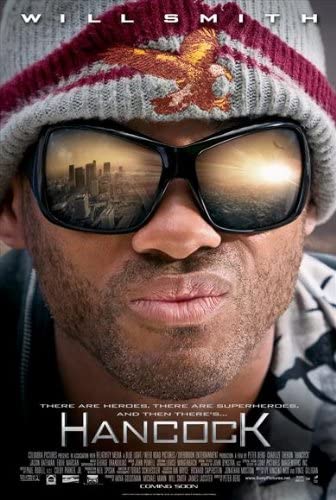
Back in 2008, everyone was entertained by the idea that the most charming man in the world was pretending to be an arrogant, entitled arsehole. Sadly, in 2022, when Will Smith is synonymous with entitled public slapping, the joke feels a little different.

In Hancock, Smith plays the eponymous superhero, a drunken dickhead, who saves people without giving a damn about them or the millions of dollars of damage he causes while doing so. When he saves the life of PR man Ray (Jason Bateman) – wrecking a train in the progress – Ray decides to help Hancock change his image. His wife Mary (Charlize Theron) is less than happy about it – but is there a deeper mystery to her discomfort?

Needless to say there is: and the reveal of what it is marks a tonal shift in a messy film that never quite knows what it is. But that’s because the entire film is basically a sketch thinly stretched out over 85 minutes. What if Superman was real and also a complete arsehole? What would an irresponsible, drunken, unpleasant hero be like? And hell, wouldn’t we stop thanking him and instead start getting really pissed off when he trashes a freeway and several buildings, while chasing some trigger-happy bank robbers?

That’s basically the core of the film: setting up the unlikeable hero, watching him tell people to go to hell and use his powers against people who annoy him. See him get humiliated by going to prison (Ray’s genius PR idea to get people on Hancock’s side) and then eventually resolving a bank robbery with excessive, awkward politeness. It’s one joke. Don’t get me wrong, it’s a good joke. It would make a great recurring gag on Saturday Night Live or something. But it never manages to be anything more than that.

Peter Berg’s film radically shifts gear for the final thirty minutes or so. A second superhero is introduced, a poorly explained and illogical backstory is shoe-horned in and info dumps of character background start to get dropped in (the entire backstory, plot and motivation of Eddie Marsan’s nominal villain is explained in an overheard TV broadcast). What had been a farce suddenly turns into a clumsily intense relationship drama between two people with no chemistry. It ends in a final fight in a hospital which features blood, shooting, tears and a joke about a hand being sliced off. It’s all over the place.

Will Smith just about holds it together: and the fact that he managed to make this not-particularly-funny or rewarding film into the fourth biggest hit of its year is a tribute to what Box Office Gold he was at the time. It’s a decent role for him, and Smith does the humour well. But, after his frank autobiography on his dark side (not to mention that infamous slap), it feels less like Smith playing against type, and more him exposing parts of his own personality. But he carries the entire film with gusto, even if he can’t make the final tonal mess work.

Berg’s direction pitches between way-too-intense and flatly-comedy-free. He drills into emotion in the final act, as if he’s forgotten that this was supposed to be a super-hero satire – but totally fails to bring enough character or reality to the story for its seriousness to work. For the first half, he struggles to bring much personality to the film (I suppose that is Smith’s job). It becomes a film that raises the odd smile but, despite its very short length, outstays its welcome.

Bateman is good value as the do-good PR man (strangely, he’s introduced as a real hotshot, even though it seems he’s completely useless based on nearly everything we see him do). He has a strange chemistry with Charlize Theron, wasted in an incoherent part. No one else gets a look in.

Tonally, Hancock is a mess with a few good gags (Hancock casually tossing a beached whale back into the sea, hitting a yacht, is funny). Its novelty appeal in 2008 – “Look! Will Smith can be mean!” – has disappeared today. Nothing in it is remotely memorable, making a decent joke never anything more than functional. It falls apart in the final stretch as it reaches for a depth it isn’t strong enough to deliver. Can you believe this was one of the biggest hits of 2008? Has anyone really watched, or thought about it, since?

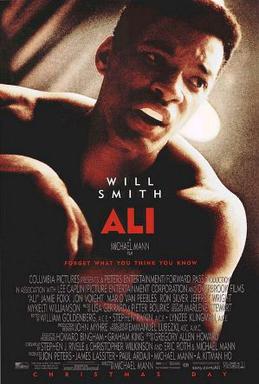
Ali (2001)

Ali (2001)

Will Smith captures The Greatest in a film that misses the fire and passion of Muhammad Ali

Director: Michael Mann

Cast: Will Smith (Muhammad Ali), Jamie Foxx (Drew Bundini Brown), Jon Voight (Howard Cosell), Mario van Peebles (Malcolm X), Ron Silver (Angelo Dundee), Jeffrey Wright (Howard Bingham), Mykelti Williamson (Don King), Jada Pinkett Smith (Sonji Roy), Nona Gaye (Khalilah Ali), Michael Michele (Veronica Porché), Michael Bentt (Sonny Liston), James Toney (Joe Frazier), Charles Shufford (George Foreman), Joe Morton (Chauncey Eskridge), Barry Shabaka Henley (Herbert Muhammad)

There is perhaps no greater sportsman of the 20th century than Muhammad Ali. Not for nothing did he call himself “The Greatest”. His impact on his sport is unrivalled, and his impact on our culture almost matches it. He’s one of those titanic figures that, even if you don’t care a jot for boxing, you know exactly who he is. Ali approved the film – and even more so, Smith’s performance – in Mann’s film that covers ten turbulent years in Ali’s life, from winning the title and changing his name, to refusing the Vietnam draft and losing his boxing licence and title, to reclaiming the title again in  the legendary “Rumble in the Jungle”.

If there is a major flaw about Ali, it’s that Ali was a man who was about so much more than just boxing – but Ali struggles to be more than a film about a boxer. It’s hard today to look at the film and not think that a black director would have had more connection with the emotional, cultural and political turmoil that defined Ali’s life in the 60s and 70s. Mann mounts all this well – and gives it plenty of empathy in the film – but his outsider perspective perhaps contributes to the film’s coldness.

Coldness is the prime flaw of the film. There was no sportsman larger than life than Ali. No public figure who demanded attention more, no boxer who fought his battles as much with wit, convictions and passion as well as fists as Ali. A film of his life needs to capture some of this magic alchemy: it needs to feel like a film that conveys the man Ali was. While there is no doubt there was a melancholy in Ali, a quiet inscrutability behind the pizzazz, this film leans too much into this. It does this while never really telling us anything about Ali’s inner life.

As two marriages are formed and collapse, we don’t get an understanding of what drew Ali to, and caused him to turn away from, these women. His relationship with the Nation of Islam ebbs and flows throughout, but other than a few on-the-nose statements from Ali, we don’t get an idea of how his faith defines him. We get his brave stand against serving in the Vietnam war, but not the emotional and intellectual conviction behind it (other than parading a series of famous quotes).

The film is packed with famous black figures – from Malcolm X to rival boxers and Ali’s support team – his father and family, not to mention three of his wives, but the relationship the film is most invested in is Ali’s mutual appreciation/attention-feeding verbal duels with boxing correspondent Howard Cosell (a pitch-perfect vocal and physical impersonation by Jon Voight). There feels something wrong about this film about a black icon, that his relationship with a white man feels the best defined.

But then it’s also a flaw with the film that its most striking, inventive and memorable sequences are all pitch-perfect recreations of filmed events. Will Smith perfectly captures the vocal and physical grace of Ali, and brilliantly brings to life his interviews with Cosell and his larger-than-life press conferences. The boxing matches are compellingly filmed, a perfect mix of slow-mo and immersive angles (they were largely fought for real, with few punches pulled). Ali’s final KO of Foreman in the Rumble in the Jungle, after several rounds of exhausting Rope-a-dope, is punch-the-air in its triumphal filming and scintillating excitement. But all of this stuff you could actually watch for real today. How essential is a film that uses actors to recreate, with better camera angles and superior editing, stuff that was filmed when it actually happened? Essentially if I want to see Ali stunning the world with his words, or sending Foreman to the canvas, would I choose to watch the man himself, or Will Smith’s perfect impersonation of him doing it?

There is nothing wrong with Will Smith’s performance though. For all his Oscar-winning work in King Richard, this is his finest performance. Bulked up to an impressive degree (Smith spent a year preparing for the film), he’s got Ali’s movements in and out of the ring to a tee and the voice is an unparalleled capture of The Greatest’s. It’s a transformative, exact performance – Smith has just the right force of character for the patter, but also brings the part a soulful depth that the film struggles to explore further. It’s a superb performance.

Enough to make you wish this was in a better, more passionate film. Ali was at the centre of a storm of civil rights and class war in America. He became the public face of a black community struggling to make its voice heard, sick of tired of being treated like second-class citizens by a country they were expected to die for in battle. The politics of the time is lost – Mario van Peebles has a wonderful scene as a troubled Malcolm X, but even he feels like a neutered figure – and the cultural impact of Ali is diluted.

The film ends with captions that dwell on Ali’s later boxing career and his marriages. That’s fine. But this a man who was so much more than what he just did in the ring. He used his position to take a stand on vital issues in America, at huge personal cost, when thousands of others would have settled down to mouth platitudes and make money. He took on the government and refused a compromise that would have allowed him to continue boxing, because he felt the war and America’s domestic policies were wrong. He was a brave leader of men, at a time of furious injustice. The film conveys the facts, but none of the glorious passion. It’s a photocopy of Ali, which is why its best bits are recreations of filmed events. It can’t quite understand or communicate the tumultuous feelings behind racial injustice in the 60s and 70s. It could – it should – have been so much more.

King Richard (2021)

King Richard (2021)

Richard Williams creates two of the greatest tennis stars ever in this easy-viewing star vehicle

Director: Reinaldo Marcus Green

Cast: Will Smith (Richard Williams), Aunjanue Ellis-Taylor (Oracene “Brandy” Price), Saniyya Sidney (Venus Williams), Demi Singleton (Serena Williams), Jon Bernthal (Rick Macci), Tony Goldwyn (Paul Cohen), Mikayla LaShae Bartholomew (Tunde Price), Danielle Lawson (Isha Price), Layla Crawford (Lyndrea Price)

Sports movies have a very reliable formula. There’s the initial promise, early success, adversity, obstacles, a moment of doubt, a renewal of commitment and a final success. I think it’s fair to say that King Richard pretty much hits all the beats you expect. In fact, its pretty much exactly the film you expect it to be when it starts and doubles down hard on the charisma and charm of its star.

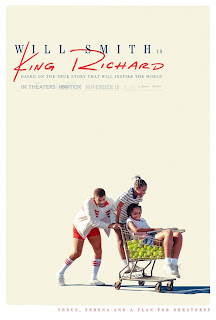
King Richard tells the story of how the Williams Sisters, Venus (Saniyya Sidney) and Serena (Demi Singleton), took their very first steps towards dominating the world of tennis, as told through the eyes of their father Richard (Will Smith). Richard Williams had been determined from almost the moment his children were born, that he would never stop working (and push them) to build lives that would take them away from the working-class ghetto he grew up in. Teaching himself tennis coaching, from the moment they can hold a racket the girls are coached. But, being working class and black in a white-middle-class sport, Richard must work night-and-day to win professional coaching and playing opportunities for his daughters. Not to mention, struggling to ensure that they don’t forget their roots or get chewed up and spat out by the sport.

First and foremost, King Richard is a showpiece for Will Smith. The part fits him like a glove: Williams a larger-than-life, force-of-“Will” role that feels about 2/3rds Williams and 1/3rd Smith. With Williams fast-talking patter, never-give-up determination and absolute commitment to protecting his loved ones, the role plays to all Smith’s strengths. Smith gives a quintessential movie-star performance, which to-be-honest often feels like a Will Smith personality role (the modern equivalent of a Cary Grant performance), but is very entertaining because few people are as good at crafting their personae to benefit a movie as Smith is. Smith is heartfelt, earnest, loveable, sometimes slapable (Note: I wrote that before Smith’s slap-heard-around-the-world was forever attached to his Oscar-winning performance), but always a charming guy you root for.

Which is odd, as Richard Williams is a man with a mixed reputation. He was a demanding, argumentative, often controlling presence who irritated and alienated far more people on the tour than he befriended. Some saw him as a self-promoter, others as a man at times causing problems for his daughter’s careers. King Richard doesn’t shy away from showing these qualities – the awkwardness, the temper, the selfishness, the arrogance – but presents them all in the best possible light. The film is purest hagiography and Richard Williams is always vindicated in all his calls.

Awkwardly the film is also determined to give him all the credit for the Williams’ sisters success. Now there is merit in this – and the script was developed with the sister’s input, so it feels a bit presumptuous to get angry on their behalf. The sisters would never have become what they are if their father had not put rackets in their hands so young and invested hours in training them. Similarly, they would not have been as fully-rounded people without his constant mantra about family, humility and hard work. But also, they did have quite a bit of talent themselves – and certainly they profited from lessons they picked up from the other coaches they worked with.

However, one of the points King Richard is gently making – and it is gently made, as if the film was worried its crowd-pleasing potential might have been affected if it banged this drum too hard – is that Williams had to be a domineering figure because he was fighting against a racial divide in the sport. He feels out of place in the tennis country clubs because he is. No one else on the junior tour is anything other than white and well off. Every coach and trainer is applying methods that have worked for affluent middle-class athletes, without considering any adjustment might be needed for two young women coming from a totally different background.

You can argue the hagiography is partially a course correction from years of the only black father and coach on the tour being denounced as uppity, loud-mouthed, self-obsessed and intrusive. Its still made clear he shares these traits with many other tour parents, but adding to it a massive dose of supportive parenting. There are moments when the film addresses how Williams’ obsession that he knows best might just be starting to run the risk of alienating his daughters: in particular Aunjanue Ellis-Taylor delivers a blistering late speech (which probably got her an Oscar nomination by itself, so compellingly is it performed) where she lays out in no-uncertain-terms Williams many character flaws and damaging behaviours. (Coincidentally the film’s most compelling dramatic scene).

Maybe a bit of hagiography is what we need from a film designed to be an uplifting, triumph against the odds and celebration of one man’s fatherly love and devotion to give his daughters a chance to change their stars. The film is professionally directed by Green and some of the titbits of the sisters early training (throwing American footballs to build service strength among others) is fascinating.

The film is probably at least twenty minutes too long and starts at some points to repeat the same beats again and again. It doesn’t really do anything new and is exactly the sort of film you could predict it being. But it has some good performances, Smith is at the top of his (Oscar-winning) game, and it is an enjoyable, if predictable, feel-good watch.

Enemy of the State (1998)

Will Smith and Gene Hackman dodge the surveillance state in Enemy of the State

Director: Tony Scott

Cast: Will Smith (Robert Clayton Dean), Gene Hackman (Brill), Jon Voight (NSA Director Thomas Reynolds), Regina King (Carla Dean), Jason Lee (Daniel Leon Zavitz), Lisa Bonet (Rachel Banks), Barry Pepper (Agent Pratt), Loren Dean (Agent Loren Hicks), Jake Busey (Agent Krug), Lisa Bonet (Rachel Banks), Jack Black (Agent Fiedler), Jamie Kennedy (Agent Williams), Seth Green (Agent Selby), Ian Hart (Agent Bingham), Stuart Wilson (Congressman Sam Albert), Jason Robards (Congressman Philip Hammersley), Tom Sizemore (Paulie Pintero)

A congressman (a cameoing Jason Robards) is murdered for refusing to support intrusive new counter-terrorism legislation championed by NSA director Thomas Reynolds (Jon Voight). Unfortunately, someone caught the killing on camera. When the NSA come hunting, he plants the recording on an unwitting lawyer friend, Robert Clayton Dean (Will Smith). Dean has no idea he has evidence that could blow the conspiracy – and is nonplussed when they set about destroying his life. The only person who can help is mysterious surveillance expert Brill (Gene Hackman), who has spent decades living off the grid. Can the clear Dean’s name and stop the bad apples in the NSA?

Enemy of the State is a fun chase movie, that enjoys the technical possibilities of the surveillance state, packaged with the fast-pace, bright colour-filtered style of Tony Scott (this is one of his best films). There is more than enough wit and enjoyment about it – not to mention watching a host of very good actors, many of them unknowns at the time, bring a lot of sparkle to the film (you’ve got to give kudos to the casting director). Everything of course gets tied up in a neat, pretty bow but it’s a damn lovely bow so that’s fine.

In its detailed look at the power of the surveillance state, Enemy of the State was, in a way, ahead of its time. The ability for the intelligence agencies here to look into literally everything in your life is pretty unsettling, from bank details to computer accounts. Every camera is an eye and satellites are tasked at will to watch anything. In fact, it’s quite something to remember that the state is only more powerful today – the internet and mobile phones would making tracking Dean even easier than the bugs they secrete about his person, which causes him to flee our baddies stripped to his undies. (Also, if only Reynolds had waited a few years, congress would wave through legislation such as he is requesting here, without batting an eyelid).

The film also dares to shade a little bit of naughtiness into Will Smith’s character. Sure, he’s a crusading labour lawyer (we’ve got to know he’s on the right side!) but he’s also an adulterer with trust problems in his marriage. Smith’s still at his charming best here, and his frazzled desperation as he struggles to understand why on earth the NSA is destroying his life is well-handled. Regina King gets a thankless role as Dean’s shrill wife, whose trust in her husband oscillates according to the requirements of the script, rather than any internal character logic.

Enemy of the State sometimes teeters on the edge of making a point about the dangers of the surveillance state. How easy could it be to abuse this power? Unfortunately it puts most of these arguments into the mouth of Regina King’s holier-than-thou wife, which rather undermines them. It’s also made abundantly clear that we’re witnessing rogue agents. This allows the film to focus more on the cool things surveillance can do, rather than clearer moral statements about whether that’s right or not, other than it being a dangerous tool in the hands of the wrong men.

Scott’s film is more of an entertainment than a treatise though (and thank God for that). It also has a nice little touch of 1970s’ conspiracy thriller to it, something the film leans into with the casting of Gene Hackman in a role reminiscent of Harry Caul in The Conversation. Sure, I can’t remember Caul driving a car while it was on fire or blowing up a building, but Hackman still gives the film some class and a touch of old-school espionage and cynicism. Truth-be-told, other than profession, Caul and Brill have very little in common (Brill is far more confrontational and confident, and much less likely to rip his apartment apart) but it’s still a nice call-back. I also rather enjoy Gabriel Byrne’s smart, playful little cameo as ‘fake’ Brill (hardly a spoiler as you can’t move without knowing Hackman is in the picture).

Scott’s high-energy fun culminates in a smart little trap laid by Dean for all his enemies, that plays nicely off the fact that the NSA agents and the Mafia are definitely paranoid and stubborn enough to not realise they are all talking at cross-purposes. The end of the film sees everything back to normal (it’s unclear how, or if, Dean got his job back considering his unceremonious firing), but I wouldn’t worry about it. It would be nice if it had said more, but as a rollercoaster ride it’s short, sharp and sweet.

Aladdin (2019)

Will Smith and Mena Massoud restage Disney’s Aladdin beat for beat. Why?

Director: Guy Ritchie

Cast: Will Smith (Genie), Mena Massoud (Aladdin), Naomi Scott (Princess Jasmine), Marwan Kenzari (Jafar), Navid Negahban (The Sultan), Nasim Pedrad (Dalia), Billy Magnussen (Prince Anders), Numan Acar (Hakim), Alan Tudyk (Iago)

Disney’s passion for converting their vast animation back catalogue into life-action cash registers continues with Aladdin. And it won’t stop after this film blockbustered its way to a huge international cash haul. Why did it do so well? Probably because it reassuringly offers you exactly the same film as the animated original, bar a few extra sub plots to beef up the runtime. I mean this. This is the same film almost completely as the first one, but without Robin Williams. Which is a bit like saying it’s a Shakespeare remake without the language.

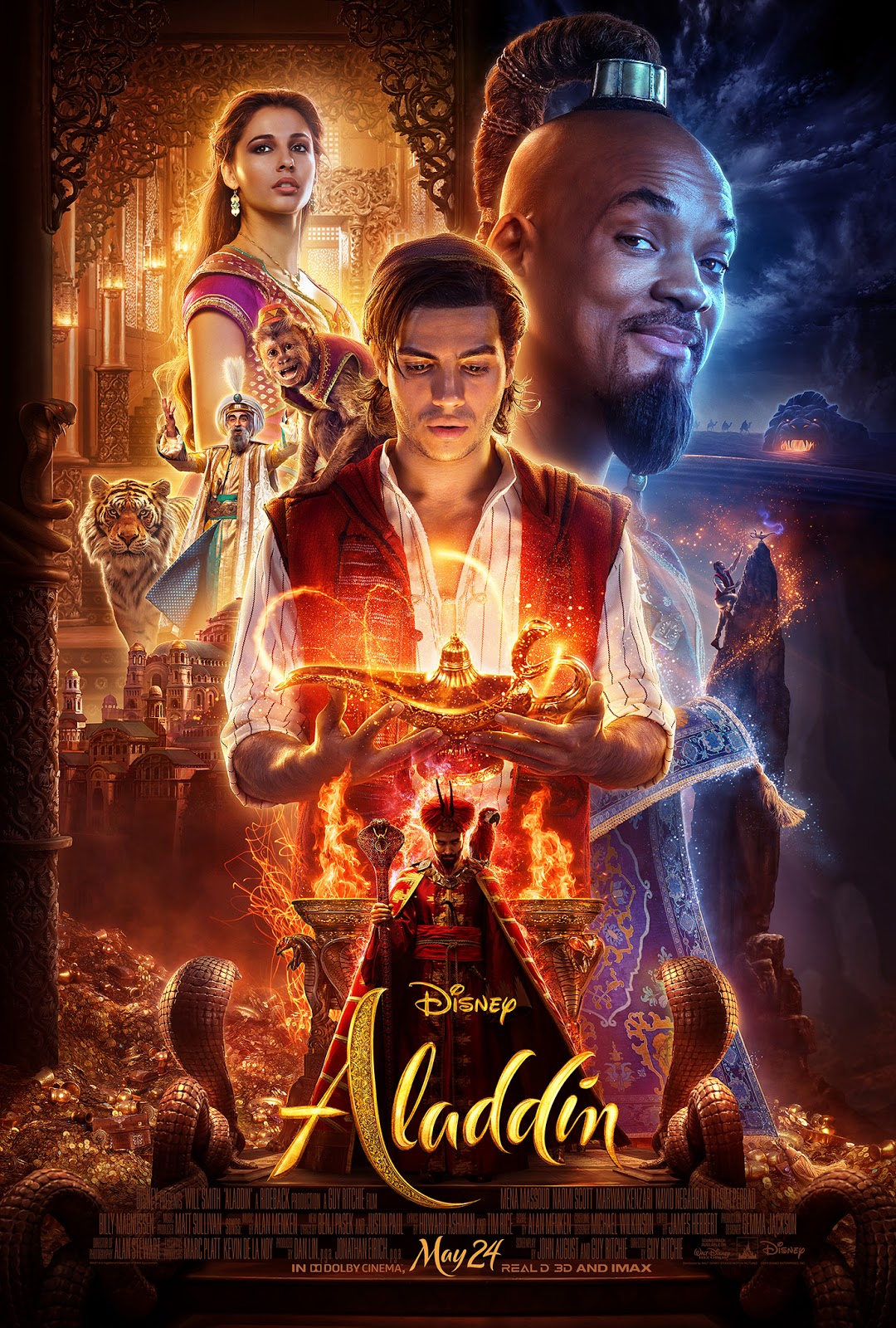
Anyway, everyone knows the story. Evil Jafar (Marwan Kenzari) wants the powerful lamp, it’s trapped in the Cave of Wonders and only “a diamond in the rough” can get it out. Aladdin (Mena Massoud) is that diamond, and wouldn’t you know he’s in prison after sneaking into the palace to meet Princess Jasmine (Naomi Scott) with whom he has unknowingly fallen in love during her visit incognito onto the streets of Agrabah. Aladdin gets the lamp, but events mean he’s the guy who rubs it and gets the three wishes (and the friendship) of the Genie (Will Smith, using every inch of his personality to replace Robin Williams). 

Do people only see these films because they know exactly what they are going to get? Do the directors only make these films under tight instruction to deviate as little as possible from the animated original? What is there creatively in this sort of karaoke, where the biggest praise seems to be “it’s just like the cartoon”? I mean why not just watch the cartoon? As is invariably the case, it’s got far more wit, invention and energy. And it’s half an hour shorter.

This is one of the biggest photocopies I think they’ve done so far. I sat in the cinema genuinely puzzled and dumbfounded as to why this film exists. For much of the first hour, all the lines, the beats, the songs, some of the shots, much of the physical business – it was all the same. All of it.

It does have some new bits and pieces. Jasmine has been given a decent plotline about her dream of becoming the new Sultan being constantly restricted by her father not being able to imagine a girl ruling (she even gets a couple of new songs, which are decent in themselves but so tonally different to the rest of the film they feel crow-barred in). Jasmine also has a new handmaid who can serve as a love interest of the Genie. Iago the parrot has much of his scheming moved over to Jafar (who is made an expert pickpocket), while the film walks a confusing line between making Iago more sentient than a normal parrot, but less so than a human being. The ending has been tweaked into a chase around the streets of Agrabah to grab the lamp. But otherwise it’s basically all the same.

Guy Ritchie stamps no personality on it at all, but then that’s not what he’s been hired for. Instead he mounts the whole thing with a brash Broadway confidence. In fact that’s what the whole film feels like, a massive Broadway extravaganza that plays off the nostalgia felt towards the original by parents of the kids seeing this film. Perhaps that’s why so much is shot-for-shot the same, but at least I guess you can commend his attention to detail.

Casting wise, Naomi Scott is good as Jasmine (given by far and away the most new stuff to do compared to anyone else) and Mena Massoud does a decent job as Aladdin, although the character is as much of a bland pretty boy as he was in the original. Nasim Pedred has some very entertaining moments as the handmaid who attracts the Genie’s eye and supplies some good additional comic relief.

The real thing you want to know though is whether Will Smith is any good as the Genie. The part has been remixed for Will Smith’s skills and style as an actor (the songs have a notable different beat to them), and Smith plays it with a sense of comfy street cool, the fresh prince of the lamp. He does his absolute best here, and his charm and comic timing work as well as ever. But you watch him carefully recreate moments from the original that were flashes of Robin Williams improvisational brilliance, and your heart sinks. He never escapes from the shadow of that master of improvisation. And little moments here and there don’t stop you thinking “I bet if they could have digitally recreated Robin Williams they would have put him in here as well”. 

That’s the whole film though. Never quite enough to justify its existence. Its big, it’s pretty, it’s got some lovely song and dance bits in it, it’s all jolly good fun, there is nothing wrong with it – but it’s never, ever, ever anything more than a straight remake of a tighter, funnier, smarter film. Why does it exist? To make Disney money. And on that score it’s a huge success. And it means this is never, ever, ever going to stop.

Concussion (2015)

Will Smith takes on the NFL in solid but uninspired true-life story Concussion

Director: Peter Landesman

Cast: Will Smith (Dr Bennet Omalu), Alec Baldwin (Dr Julian Bailes), Albert Brooks (Dr Cyril Wecht), Gugu Mbatha-Raw (Prema Mutiso), David Morse (Mike Webster), Arliss Howard (Dr Joseph Maroon), Mike O’Malley (Daniel Sullivan), Eddie Marsan (Dr Steven T DeKosky), Adewale Akinnuoye-Agbaje (Dave Duerson), Stephen Moyer (Dr Ron Hamilton), Richard T Jones (Andre Waters), Paul Reiser (Elliot Pellman), Luke Wilson (Roger Goodell)

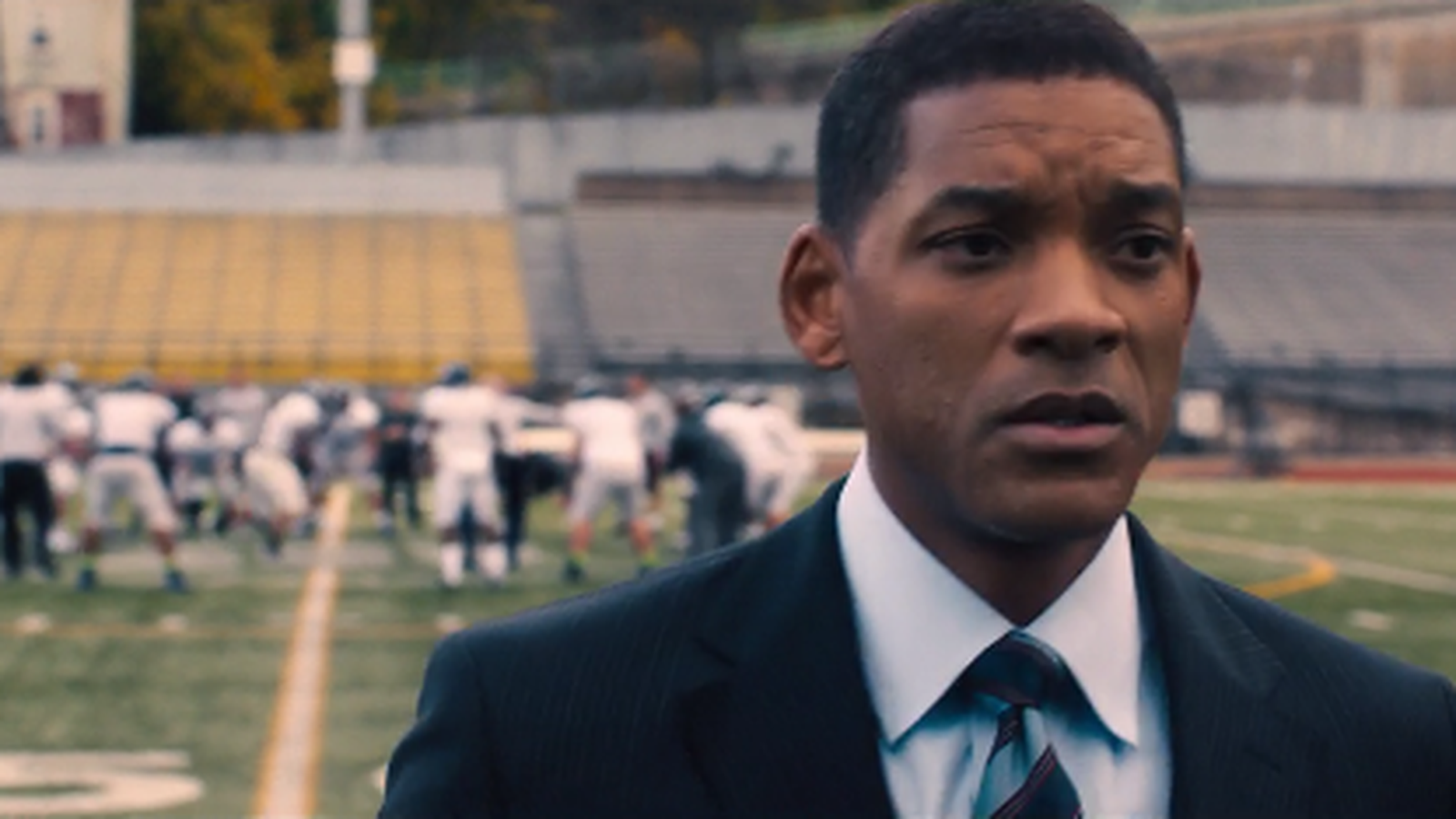
In 2002, Pittsburgh pathologist Dr Bennet Omalu (Will Smith) carried out an autopsy on deceased former Pittsburgh Steelers centre (and American Football legend) Mike Webster (David Morse). What he discovered – that the high speed impacts of American football massively increased the chances of players suffering serious brain damage and debilitating mental conditions – was to change his life, and lead to a six-year battle to get his research acknowledged by the NFL. This film dramatizes this story – with the obligatory inventions and dramatic changes (Landesman describes the film as “emotionally true” if not “factually true”).

Concussion is a fairly straight-forward, rather uninspired “one man’s struggle” kind of film. There isn’t much in it, to be honest, that is particularly unique or different from films of this type we’ve seen before. We’ve pretty much all seen the trope of a man pushing to get himself heard against the scorn, disbelief and anger of those who need to hear him the most. Does Concussionadd anything new to that? No not really.

Peter Landesman shoots the film with a methodical, workmanship that hits all the expected beats. The whole film plays like Michael Mann’s The Insider-lite: with the difference that the NFL never really convinces as an actual threat in the way Big Tobacco does in that film. The film falls over itself to repeatedly tell us how powerful the NFL is but never really shows us in the film how that power might work. When the FBI drum up charges against Omalu’s mentor, you never get the sense that this is being directed by the NFL themselves. They are simply never that dangerous an opponent.

Maybe because this is a film that doesn’t want to run the risk of saying America’s beloved sport is dangerous. It wants to blame bad eggs rather than an institutional failure – hence the repurposing of former player Dave Duerson as a sort of braggart bully. The characters playing the NFL heads are relegated to TV screens in the corner. It never wants to really look at the risks of this institution wilfully burying evidence their sport is dangerous, or question whether this sport is even a good idea. Throughout the world of sport, there are ungoing debates about the health risks of sport, from the danger of heart conditions to early onset dementia in football players from heading the ball. This film fails to really tap into any of this.

As such, there isn’t really any dramatic force behind the film: it doesn’t manage to suggest Omalu is in danger and it doesn’t want to turn the NFL into actual antagonists. It treads a weary middle ground. If the NFL was really positioned as a threat, then the pervasive presence of its stadium in Pittsburgh would be sinister. It isn’t for all Landesman tries to shoot it in that way.

Despite this though, Will Smith is very good as Omalu. The film’s version of the doctor seems a little different from the quirky, socially awkward real-life Omalu. But Smith nails the home-run scenes of Omalu raging at his research being disregarded. (In real life it was easy for the NFL to dismiss Omalu by using his Nigerian heritage (his ‘otherness’) quietly against him. The film doesn’t touch upon this by the way.) Smith has all the charisma the role needs and brings it a certain James-Stewartish moral decency.

The rest of the cast don’t get much else to play with. Alec Baldwin is pretty good as a former NFL doctor trying to ease his conscience (although his accent got some criticism). Gugu Mbatha-Raw has a fairly thankless role as the supportive wife, but does it well. Albert Brooks might be a bit too much at times as Cyril Wecht, but David Morse plays Mike Webster with sensitivity.

The film is not always that subtle. Shots of Webster haunting Omalu are a bit much. Omalu’s unhappiness and frustration are telegraphed using familiar clichés, from raging impotently at stony faced law officers, to trashing a room in his still-under-construction dream home in Pittsburgh (having read the source book it’s hard to believe the real Omalu ever did something like this). The timeline of the film isn’t always clear. There is a little too much lingering on funerals and tear-stained relatives for easy emotional hits.

The main issue is that Concussiondoes nothing special and doesn’t manage to make its familiar structure feel particularly fresh. It’s just a very, very familiar type of story told with no real unique imagination. Although Smith is very good, it’s not quite enough.

I Am Legend (2007)


Rush hour is a lot easier to beat when its just you and your dog.

Director: Francis Lawrence

Cast: Will Smith (Robert Neville), Alice Braga (Anna Montez), Charlie Tahan (Ethan), Salli Richardson (Zoe Neville), Willow Smith (Marley Neville), Emma Thompson (Dr. Alice Krippin)

If you’re going to make a movie that involves the viewer watching one person, alone with just a dog, for well over an hour, you’d better be sure that the person you recruit to play that role can actually hold the viewer’s interest for that time. Factor in, for Hollywood, that the person you pick needs to be capable of getting big box-office, and you ain’t got a lot of choices. But casting Will Smith in this was a choice the studio largely got right.

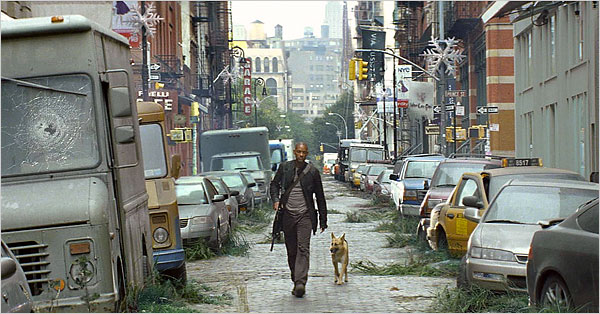
The year is 2012 and the world has ended. Robert Neville (Will Smith) is a military virologist, the last surviving human in New York. A miracle cure for cancer went disastrously wrong three years before and killed 94% of the world’s population, mutated 5% into feral “darkseekers” who attack anything living at night, leaving just 1% of the world’s population immune. Neville lives alone in New York, with only his deceased daughter’s dog for company, and works to find a cure for the disease by capturing and experimenting on the darkseekers.

In a remarkably brave and unusual move for a blockbuster, Will Smith is essentially alone on screen for a solid hour. The film takes a measured, well-paced delight in following his daily routines, covering everything from his work in immunology to scavenging for supplies, hunting deer (escaped from the zoo), hitting golf balls off aircraft carriers, and having free run of a video store he has filled with mannequins. His Washington Square house is heavily fortified, but also remarkably homely and certainly not that bad a place to watch the end of the world from.

Following this daily routine is, by far and away, the most interesting part of the film, as it is one of the few parts that actually feels unique and original. In fact, you wish it could go on longer and that the film didn’t need to revert back its more predictable “one man against the monsters” theme. The ingenuity of survival in extreme circumstances, and the eerie freedom of the busiest city in the world completely empty, makes you wonder not only “could I do that” but also, secretly “would it be fun for a while to drive a fast car around Times Square or whack golf balls off the wing of a stealth bomber?”.

“For a while” is the key thing here, as the film also explores the deeply damaging effect extreme isolation has had on Neville’s psychology. It’s here that Smith earns his chops. He’s an extremely engaging actor, so you’re happy to spend time with him, but he’s also skilled enough to play a cracked psyche without going overboard. Neville chats (and flirts) with mannequins, knows Shrek so well he can speak in perfect unison (inflections and all) with the film, and keeps up a regular stream of conversation with his dog Sam, including asking her what she is planning to do for his birthday. Much of this is played lightly, but at key moments Smith allows Neville to snap. He also plays the tragedy gently – his reactions to Sam’s death are genuinely quite moving because they are quiet and restrained.

This is all interesting stuff. Less interesting are the “darkseekers” and the film’s final resolution. Firstly, the darkseekers themselves are bog-standard zombie monsters – screaming, running, deadly creatures with their one quirk being their fear of UV light. Other than that, it’s nothing you haven’t seen in half a dozen movies before (better). Turning them into zombie creatures does make Neville even more isolated but makes encounters with them fairly predictable, mostly inspired by films past. Most of the film’s big confrontation set pieces have a slightly tired familiar feeling to them. I’m already struggling to remember them, and I only saw the film two days ago.

The major problem with this film is its ending. I Am Legend had its ending re-shot after test audiences saw it. Originally, a reveal would have been that the darkseekers were far more intelligent than appeared, and their motivation was to prevent Neville’s experimentation on them. Two scenes still make a point of discussing Neville’s Mengele-like wall of photos of dead darkseekers, killed by his cure experiments, and other hints remain through the film: the traps they set , the presence of an “Alpha” leader among the monsters, repeated shots of the tattoo on Neville’s last captured darkseeker, which was intended to be a crucial clue that she was the mate of the Alpha.

But test audiences weren’t having that. So in the final version, all this build-up and suggestion is shoved aside as Neville grabs a grenade and blows himself and them to hell to allow a cure to be taken to the rest of mankind. As the cure is taken to an idyllic community in the country (church and all) mankind’s future is his “legend” or some such guff. It’s a major loss of nerve that makes the film just another run-of-the-mill monster flick. It doesn’t match with hints that remain in the whole film and it doesn’t tie in with the more successful first hour of the film. It doesn’t question the possible rights and wrongs of Neville’s actions (at best comprehensive animal experimentation), but fully endorses them.

It’s a shame as this has ideas, its vistas of New York being reclaimed by nature are interesting and memorable, and Will Smith is pretty good in a straight acting role. But instead it settles for being a schlocky monster pic, where we can unquestioningly cheer as everything is neatly tied up with a bow and everything we thought about all of its characters is confirmed. As such, this film isn’t a classic and it hasn’t had the sort of life it might have been able to have. Despite good moments, it’s definitely not a Legend.