Tag: Willem Dafoe

The Northman (2022)

The Northman (2022)

A viking tears through flesh and blood in quest for revenge in this bizarre, fascinating Viking epic

Director: Robert Eggers

Cast: Alexander Skarsgård (Amleth), Nicole Kidman (Queen Gudrún), Claes Bang (Fjölnir the Brotherless), Anya Taylor-Joy (Olga of the Birch Forest), Ethan Hawke (King Aurvandill War-Raven), Björk (The Seeress), Willem Dafoe (Heimir), Oscar Novak (Young Amleth), Gustav Lindh (Thorir), Ingvar Eggert Sigurðsson (He-Witch), Kate Dickie (Halldora), Ralph Ineson (Captain Volodymyr)

Ask people about Hamlet, and they picture a poetic Prince, plagued with doubt and vulnerability, talking to skulls rather than carrying out his mission of revenge. What you probably don’t think about are Vikings on a Berserker rage, slaughtering left, right and centre. But Hamlet has its roots in a bloody Scandinavian legend, where remorseless death is handed out by a ruthless killer. That’s the side of Hamlet, Eggers takes for inspiration in his bloody, bold and resolute Viking film, a blood-soaked acid trip it’s hard to imagine anyone else making.

It’s 895 and King Aurvandill (Ethan Hawke) returns from conquest to his wife Gudrún (Nicole Kidman) and young son Amleth (Oscar Novak). Amleth takes his vows of manhood with his father, guided by a demented He-witch (Willem Dafoe) – only for his father to be almost immediately killed by his half-brother Fjölnir (Claes Bangs), who seizes his throne and wife. Amleth escapes – and years later has grown into a berserker Viking warrior (and Alexander Skarsgård). He sees his chance for revenge when he disguises himself as a slave, and joins a shipment traveling to Fjölnir’s village (Fjölnir having lost his throne). There he forms an alliance with Russian slave Olga (Anya Taylor-Joy) and works to undermine and terrify Fjölnir, before he can enact his revenge and save his mother.

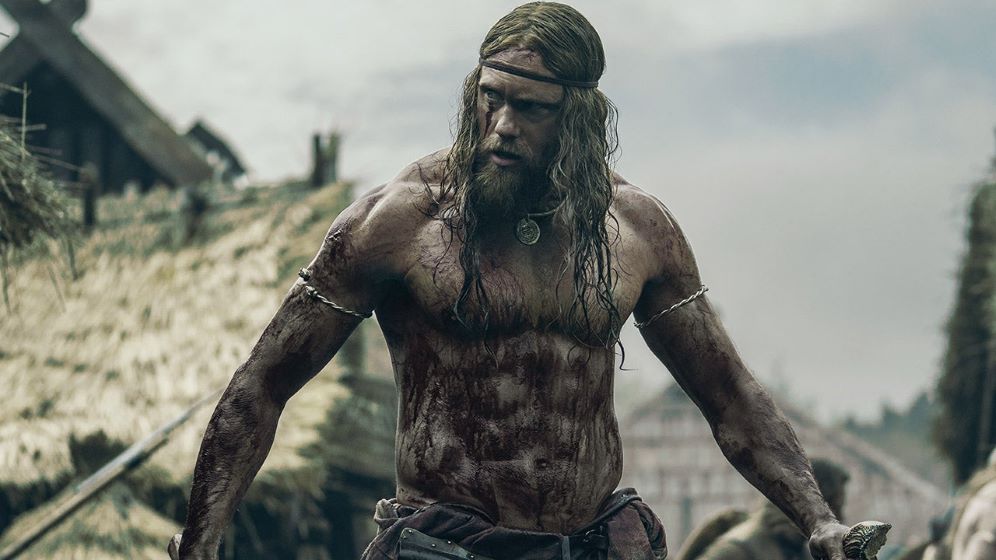
The Northman is, possibly above all, a shocking, absorbing deep-dive into Viking Culture. Eggers doesn’t shirk for a second from the bloody, ruthless mayhem of Viking life. Our introduction to the adult Amleth sees him first whipping himself (and others) into a (possibly magic mushroom fuelled) Berserker rage, dressed as wolves and howling at the fireside, before launching an unbelievably ruthless attack on a Russian village. The desperate peasants are butchered with savage fury (and blood lust). In the aftermath, rape, murder and other horrors occur uncommented on in the background, while those not seen fit for slavery are herded into a barn to be casually burned alive.

Amleth, at no point, expresses a jot of regret for his actions (as a Viking wouldn’t), and even after passing for a slave never questions the institution. His revenge uses the same ruthless, blood-dripping fury as his ravaging and his only passing moment of pause is about directly killing Viking women and children (he gets over it). In all this he is in no way different from the rest – in fact he’s even one of the more sympathetic – Vikings. Fjölnir – revealed as otherwise a wise and generous leader – ruthlessly murders and rapes his slave as he fancies and a weekend’s entertainment for all is watching two teams of slaves beat themselves to death in a no-holds-barred version of hockey.

Eggers leaves you in no doubt that, for all the grim fascination, this is a brutal and savage civilisation that you would in no way want to encounter. Saying that, despite Eggers’ clear intentions, with the film’s cast modelling a sort of chiselled, gym-trained super-human Aryanism, sweeping away Slavic peasants and enforcing a triumph of Nordic culture, parts of this film are surely being channelled into the wet dreams of elements of the right-wing.

The film doesn’t just explore violence. Family bonds are demonstrated to be all important to Vikings – Amleth and Fjölnir are dedicated to their families and go to huge ends to protect and mourn them. (A funeral of one warrior features elaborate blood-letting, as the deceased’s horse is decapitated and his favourite slave willingly butchered so both can join him on the journey to the afterlife). There is a mutual regard and affection between warriors – even opponents – in a culture that puts itself above others. Honoured slaves are respected – though told they can never be equal. Licensed fools and mystics are given a great deal of freedom – Willem Dafoe’s crazed He-witch at Aurvandill’s court mocks all and sundry with no repercussions. There is a huge faith placed in wise men and women who inspire awe and fear – even a slave, such as Olga, with possible mystic powers is treated with caution. Bonds and duties across generations and to the next life are revered. Prophecies and destinies are respected. Poetry and storytelling is highly valued.

For all the killing, there are elements of a rich culture here and strong family bonds. All these combine in the person of Amleth, who will not be shaken from his destiny but will enact it in his own time, in line with the prophecies he of a seeress (an unrecognisable Björk). Eventually it doesn’t matter if Amleth’s idealised memory of his parents turns out to be not the whole story, or if he has a chance to build a new life. Destiny is, in fact, all.

Eggers’ film takes place in what almost a state of heightened, fevered excitement. Beautifully shot by Jarin Blaschke, it mixes expressionistic near-black-and-white, with drained-out shots of violence and flame-lit moments of psychological and body horror. Visions shot in a piercing mix of blues, greys and icey chilliness puncture the film, with strange compositions of characters, Valkyries, Valhalla and the Gods. Supernatural elements pepper the film, with Amleth’s father influencing events in the shape of a raven and Amleth completing a quest for a fateful sword. These moments of hyper-reality are perfectly executed and in a visually unique, blood-drenched nightmare.

Where The Northman is less successful is exploring the inner-depth of its characters. Skarsgård is charismatic and physically perfect, but doesn’t give much inner-life to Amleth. Moments of doubt or uncertainty in Amleth never quite convince and he feels more a force of nature than a person. There are richer performances from others, Kidman in particular a revelation as a cryptic, unknowable woman with a mid-film encounter of heightened emotional (and sexual) tension between her Skarsgård. Bangs’ Fjölnir is strangely sympathetic. Anya Taylor-Joy carries a dominant, mystical force in her performance that helps make her character a bridge between multiple worlds.

All these combine into a film of shocking violence, jaw-dropping beauty and troubling emotional and psychological horror. There is no doubt the film is overlong – there are probably one too many deeply odd segues into drug-induced ravings of various prophets and seers – but as an exploration of a culture so uniquely alien, its sublime. As a piece of work from a truly distinctive and unmatchable director, it’s superb. You look it The Northman and can’t believe anyone else could have made it. If nothing else, that makes it a film worthy of your time.
Spider-Man: No Way Home (2021)

Spider-Man: No Way Home (2021)

Tom Holland’s Spider-Man encounters friends and enemies from another franchise or two

Director: Jon Watts

Cast: Tom Holland (Peter Parker/Spider-Man), Zendaya (MJ), Benedict Cumberbatch (Dr Stephen Strange), Jacob Batalon (Ned Leeds), Marisa Tomei (May Parker), Jon Favreau (“Happy” Hogan), Jamie Foxx (Max Dillon/Electro), Willem Dafoe (Norman Osborn/Green Goblin), Alfred Molina (Otto Octavius/Doctor Octopus), Benedict Wong (Wong), Tony Revolori (“Flash” Thompson), Andrew Garfield (Peter Parker/Spider-Man), Tobey Maguire (Peter Parker/Spider-Man), Rhys Ifans (Dr Curt Connors/Lizard), Thomas Haden Church (Flint Marko/Sandman), JK Simmons (J Jonah Jameson)

It’s been out long enough now – and Marvel are even advertising the Guest Stars – so I guess we can worry slightly less about spoiling this massive crossover event. Spider-Man: No Way Home became one of the biggest hits of all time. It’s not hard to see why, in our nostalgia-loving times. But its not just about nostalgia – lovely as it is to see all those old characters once again. It’s also a hugely entertaining, rather sweet film, crammed with slick lines and jokes, while also, like the best of Marvel’s films, having a heart. We’ve got a hero here so humanitarian he goes to huge risks to try and save the villains. That’s refreshingly human.

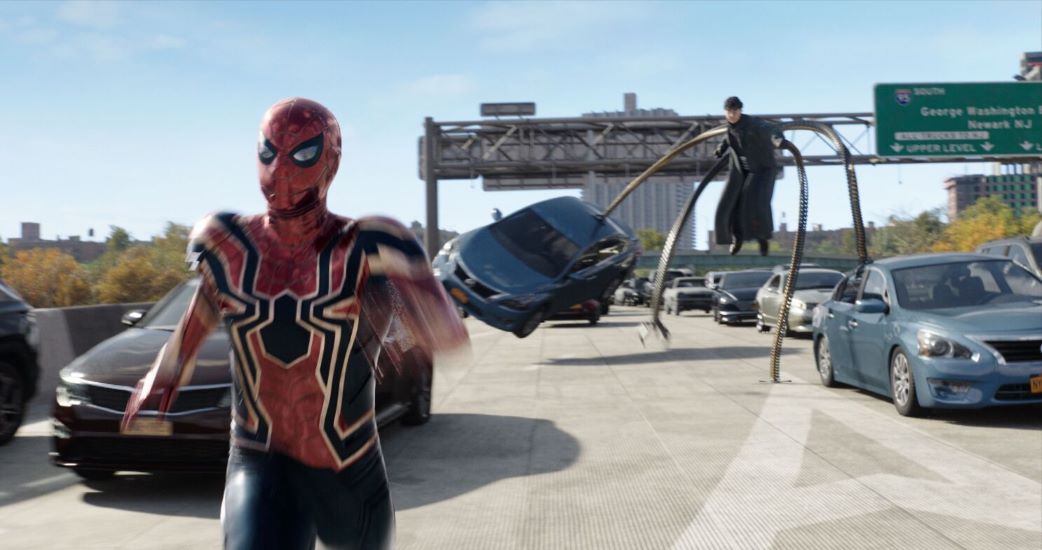
Picking up after the conclusion of Spider-Man: Far From Home, Peter Parker’s (Tom Holland) secret-identity is known. Parker finds himself at the centre of a massive, world-wide scandal, which ends the college chances of him and his friends MJ (Zendaya) and Ned (Jacob Batalon). Peter asks Dr Strange (Benedict Cumberbatch) for help: namely can the world forget who he is? When the spell goes wrong, people who know Parker’s identity from other realities start appearing. And these guys aren’t happy, with villains like Dr Otto Octavius (Alfred Molina), Electro (Jamie Foxx) and psychopath Green Goblin (Willem Dafoe) arriving. But, when Peter discovers sending them back will condemn them to die in the battle against their Spider-man, he decides to do everything he can to try and save them.

No Way Home’s success partly lies on the nostalgia factor, especially for those of us who loved the early Maguire films. And you can sign me up to that: I can’t believe it’s been 20 years since the first one came out! No Way Home throws in characters from all five pre-Holland films and zeros in on the best of the bunch. The films has a lot of fun shuffling and realigning these characters in interesting new combinations, often allowing them to moan about things like origin stories (there is a very funny exchange between Electro and Sandman on the danger of falling into experiments) or just to get on each other’s nerves (Molina’s Doc Ock is spectacularly grumpy).

You pretty much have to have a heart of stone not to enjoy seeing most of these characters again – particularly as they are played with such lip-smacking aplomb. Above all, Dafoe relishes the chance to cement his place as one of the great villains, switching perfectly between gentle and psychotic as the schizophrenic Norman Osborn/Green Goblin (and becoming the nemesis of no-less than two Spider-men). Molina is equally good: pomposity and rage turning into avuncular decency. These two landmark villains from the two best films take most of the limelight, with a smaller share for Jamie Foxx (far more comfortable here than he was in Amazing Spider-Man 2). But every villain is given moments of tragic depth and seeing them react to news of their deaths is strangely moving.

It sets the table rather nicely for a film about redemption. Peter believes he can save these villains from death if he can cure them and restore their humanity. While the pragmatic Strange sees this as pointless, Peter can’t turn his back on a chance to save people. On top of this, No Way Home also serves as a meta-redemption arc for the two previous franchises: Maguire gets a third film worthy of the first two and Garfield is given the sort of rich material he was denied in his failed series.

Which brings us nicely to the biggest returns. Denied by both actors for the best part of a year, this film throws not one, not two but three Spider-men at us, with Maguire and Garfield reprising their incarnations. All three delight in sparking off each other, riffing on everything from web-slingers to making normal life work (“Peter time”) alongside Spider-manning. Maguire settles nicely into the Big-Brother role, giving a worldly experience to the others without losing his gentle idealism. Garfield is sensational – lighter, funnier and warmer than he was in his own films, with a hidden grief that plays out with genuine impact.

Who couldn’t get excited about seeing these three together – or to see the film make these scenes work as well as it does? It shuffles and reassembles things we are familiar with, but presents them in new and intriguing combinations and above all feels true to the characterisations established in previous films. Maguire, Molina and Dafoe in particular feel like they’ve not been away since their own films, while Garfield and Foxx deepen and improve their characters. But it became a mega-hit because it has a truly strong story behind it.

A story staffed by strong, relatable characters. There is a genuine sense of alarm around how Peter and his friends in the film’s opening act are hounded and persecuted by a population scared of them. Even here redemption is key, with Peter going to dangerous lengths to try and get his friends a second chance at getting into MIT. These three characters have a sweet, warm friendship and the chemistry, in particular between Holland (who is sensational, endearing, funny but bringing the role great emotional depth) and Zendaya is stronger than it’s ever been.

And that’s before we hit the film’s genuinely endearing message. Holland’s still-optimistic hero (another excellent contrast with his more damaged alter-egos) is motivated by saving people. And that includes the villains. Maybe it’s the years of Covid, but there is something hugely lovable about a hero who wants to give people a second chance. It’s a living demonstration of “with great power comes great responsibility” (words this film introduces into the Marvel universe with powerful effect, in a mid-film climax). In fact the film is, in some ways, the origin-story Holland’s Spider-Man never had: it gives him a foundational tragedy, leaves him in an isolated position, strips him of his Iron Man style tech and leaves him in a set-up (alone in a cheap apartment, struggling to make ends meet and superheroing on the side) familiar from the comics.

Watts directs the film with real confidence and zest, especially outside the action set-pieces: there is frequent use of ingenious-but-not-flashy single takes and the film’s patient momentum for much of its first half, focusing on character and emotion, really pay off in the second half of fan-service and fights. The camera effects used for Peter’s web-slinging and his spider-sense have a delightful quirky invention. What he really does well though is zero in on the emotion and when events get tragic, he isn’t afraid to commit to that. It gives the film an emotional force that really connected with people.

That heart is what sustains it. It’s a joyful nostalgia trip – that redeems elements of the previous films – but this is a film that really cares about its characters – all of them – and wants you to as well. That gives difficult, emotional struggles to all its Spider-Men, that searches of the humanity in its villains, even the worst of them, making us sympathise with them even as they do dreadful things. Combined with the action and adventure – and the electric pace of the best of Marvel – No Way Home rightly stands as one of the best entries so far.

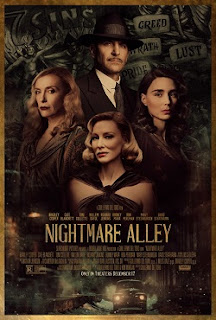
Nightmare Alley (2021)

Nightmare Alley (2021)

A mysterious drifter gets more than he bargained for in del Toro’ flashy but unsatisfying film

Director: Guillermo del Toro

Cast: Bradley Cooper (Stanton Carlisle), Cate Blanchett (Lilith Ritter), Rooney Mara (Molly Cahill), Toni Collette (Zeena Krumbein), Willem Dafoe (Clem Hoatley), Richard Jenkins (Ezra Grindle), Ron Perlman (Bruno), David Strathairn (Pete Krumbein), Mark Povinelli (Major Mosquito), Mary Steenburgen (Felicia Kimball), Peter MacNeill (Judge Kimball), Paul Anderson (Geek), Clifton Collins Jnr (Funhouse Jack), Jim Beaver (Sheriff Jedediah Judd), Tim Blake Nelson (Carny Boss)

There isn’t any magic left in the world, it’s all show and tricks and no wonder. Nightmare Alley is del Toro’s follow-up to his Oscar-winning The Shape of Water and you can’t not admit it’s a triumph of style. It’s a glorious fusion of film noir and plush, gothic-tinged horror. There is something to admire in almost every frame. But it’s also all tricks and no wonder. There’s no heart to it, just a huge show that in the end makes nowhere near the impact you could expect.

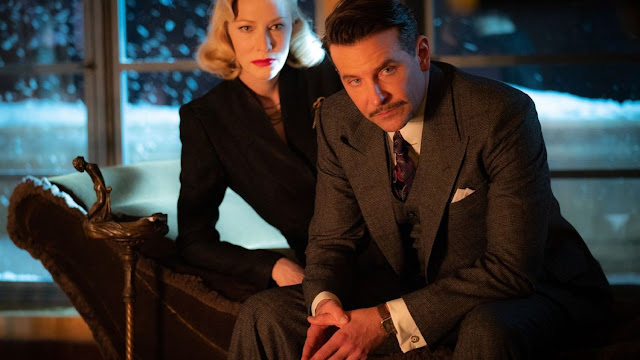
In the late 1930s Stanton Carlisle (Bradley Cooper) is a drifter with a dark past, who is recruited as a labourer in a travelling carnival. Learning the ropes from freak show owner Clem (Willem Dafoe), he’s taken under the wing (in every sense) by mesmerist mind reader Zeena (Toni Collette) and taught the tricks of the art (observation and careful word codes using an assistant to guess names, objects and other facts) by Pete (David Strathairn). Eventually Stanton and his love, circus performer Molly (Rooney Mara), head to the big city where, after two years, Stanton reinvents himself as celebrity mind-reader and medium. There Stanton gets involved with psychiatrist Lilith Ritter (Cate Blanchett) in a long con where he will use the recordings of her sessions with patients to act as a medium to put them in touch with their lost ones. But is there a danger Stanton isn’t ready for in one of his clients, powerful businessman Ezra Grindle (Richard Jenkins)?

Nightmare Alley looks fabulous. But it’s hellishly overlong and curiously uninvolving. It’s like Del Toro fell in love with the whole project and forgot to search for the reason why somebody else would love it. It’s a strangely unshaped film, alternating between long, loving scenes glorying in the dark mood, baroque performances and design but then makes drastic, swift jumps in character psychology that constantly leaves you grasping at engaging with or understanding the personalities of its characters.

Its design is faultless though – it’s no surprise that its only Oscar nominations outside the Best Picture nod were all in technical categories. Dan Lautsen’s cinematography is inky black, with splashes of all-consuming colour. It’s a marvellous updating of film noir, with deep shadows spliced with angles reminiscent of Hammer-style horror. The production design is a labour of love, the carnival sets a hellish nightmare of unsettling shapes, forms and structure contrasting with the art deco grandness of the big city. The design is pretty much faultless, a real labour of love.

But the same effort didn’t go into pacing and story. This is a slow-moving, self-indulgent film, that frequently seems to be holding itself at arm’s length to make it all the easier for it to admire itself. It looks extraordinary, but it’s a frequently empty experience, more interested in mood and striking imagery than character and emotion.

Bradley Cooper gives a fine performance as Stanton. He has an air of cocksure charm, and Cooper skilfully shows this is largely a front of a man who, when push comes to shove, is capable of sudden and unflinching acts of violence. We get an early hint of this when he reacts to being struck by an escaping circus freak with unhesitating brutality. It recurs again and again in the film, and Stanton proudly states his avoidance of alcohol with all the assurance of a man who knows the bottle could unleash dark forces that he could never control. Cooper is vulnerable but selfish and above all becomes more and more arrogantly convinced of his own genius and bulletproof invulnerability, so much so that he drives himself further and further on into self-destruction.

There is some rich material here, so it’s a shame that for all that we never really seem to be given a moment to really understand who he is. Much has to be inferred from Cooper’s performance, since the film seems content to state motivational factors – troubled parental relationships, greed, ambition, a desire to make something of himself – without ever crafting them into a whole. Stanton remains someone defined by what he does.

And Stanton is the only character who gets any real oxygen to breathe, with the others largely ciphers or over-played caricatures. Rooney Mara as his gentle love interest is under-developed and disappears from the film for long stretches. Cate Blanchett gives a distractingly arch performance, somewhere between femme fatale and Hannibal Lector and is so blatantly untrustworthy it’s never clear why Stanton (an expert reader of people!) trusts her completely. Richard Jenkins is miscast as a ruthless businessman, lacking the sense of danger and capacity of violence the part demands.

Most of the rest of the cast are swallowed by the long carnival prologue, that consumes almost a third of the film but boils down to little more than mood-setting and a repeated hammering home of a series of statements that will lead into a final scene twist (and I will admit that is a good payoff). The carnival seems like a self-indulgent exploration of style, and several actors (Perlman, Povinelli and even Collette) play roles that add very little to the film other than ballooning its runtime.

The earlier section would have perhaps been better if it was tighter and more focused on Stanton and his mentor, well played by David Straithairn. I appreciate that would have been more conventional – but it would also have been less self-indulgent and helped the opening third be less of a stylish but empty and rather superfluous experience (since the film’s real plot doesn’t start until it finishes). Drive My Car demonstrated how a long prologue can deepen a whole film – Nightmare Alley just takes a long, handsome route to giving us some plot essential facts, without really telling us anything engaging about its lead character.

It makes for an unsatisfying whole, a cold and distant film packed with arch performances – although Cooper is good – and events that frequently jump with a dreamlike logic. It’s a marvel of design but way too much of a good thing, and constantly seems to stop to admire itself in the mirror and wonder at its own beauty. It becomes a cold and arch study of a film not a narrative that you can embrace. And you can’t the same about many of Del Toro’s other films – from Pan’s Labyrinth to Pacific Rim they’ve got heart. Nightmare Alley doesn’t really have that.

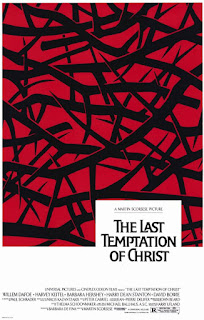
The Last Temptation of Christ (1988)

Last Temptation of Christ header
Willem Dafoe plays the Son of God in Scorsese’s supremely controversial The Last Temptation of Christ

Director: Martin Scorsese

Cast: Willem Dafoe (Jesus Christ), Harvey Keitel (Judas), Barbara Hershey (Mary Magdalene), Harry Dean Stanton (Saul), David Bowie (Pontius Pilate), Verna Bloom (Mary), Barry Miller (Jeroboam). Irvin Kershner (Zebedee), Victor Argo (Peter), Andre Gregory (John the Baptist), Nehemiah Persoff (Rabbi), Tomas Arana (Lazarus), Gary Barsaraba (Andrew), Juliette Caton (Girl Angel)

There are few films as controversial as this. Scorsese’s earthy adaptation of Nikos Kazantzakis’ The Last Temptation of Christ has lived its whole life under the shadow of the parade of traditionalists, conservatives and evangelists who have called for everything from the negative being destroyed to the death of its director. All this is rooted in the film’s quest – as in the book – for the human in Jesus, the saviour who was both mortal and divine. As part of this, it showed him expressing anger, doubt and of course, presented him with temptation and threw him into the dirty, working-class world where he made his ministry.

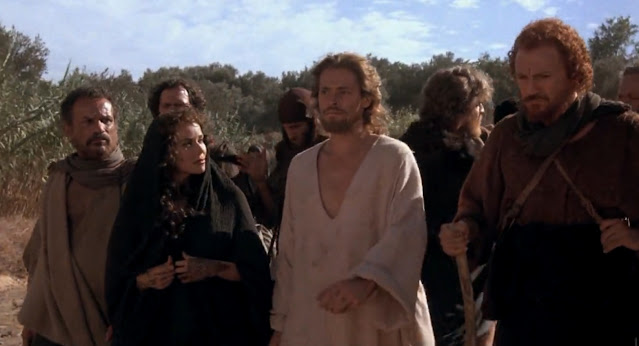
The film follows the life of Jesus (Willem Dafoe) pretty much as per the Gospels, with several interjections and reinterpretations (some of which seem designed to piss off the faithful). We meet Jesus as a carpenter who crafts crosses for Roman crucifixions by day, plagued by voices and fits at night. He knows he has a purpose but is scared of what it might be. Eventually he finds it, encouraged by Judas (Harvey Keitel) his most faithful disciple and a passionate campaigner against the Romans. The last temptation itself fills the final act of the film. On the cross, a disguised Satan comes to Jesus and offers him the chance to leave behind being the messiah and live a normal life: marriage, children and content old age surrounded by family.

The Last Temptation of Christ is Scorsese’s wrestling with his faith. It’s a highly personal, defiantly modern and daring version of the gospels that strongly invests in the notion that true faith is only possible if we also have doubt to overcome. And it applies this logic to Jesus, who is shown here as far more grounded, human and flawed than He has ever been in the movies (or anywhere else). Voiceovers communicate His constant doubts and insecurities – and even His resentments about not understanding what God intends for him.

Where other Biblical epics are old, stodgy and stiff, The Last Temptation profoundly challenges its viewers. This is not a picture postcard world. Jesus’ surroundings are humble and dirty. His disciples are simple men – Judas, the only one with any form of intellect, attacks them as clueless yes-men. But it’s a film that stresses the humanity of Jesus. It wants us to admire him even more, because He needed to overcome the same internal demons we all confront. This is not a saviour unbent in purpose, but battling always. It asks us to try and relate ourself to Jesus in a new way, to ask how we might have felt and whether we would have been strong enough to take on that mantle.

Played with extraordinary passion and fire by Willem Dafoe, this is a Jesus who is scared, reluctant, shows flashes of bitterness and anger but struggles to put all this aside to embrace His destiny and purpose as the Messiah. On other words, He’s far more human than we’ve seen before. He’s also rough and unprepared, in many ways, for His ministry. We see His first attempt at preaching – having, with half-confidence, half-apprehension told Judas He’s sure God will give Him the words – which is carefree, impassioned and amateurish but full of inspirational fire. He doesn’t quite convey the message He’s aiming for, but it is enough to win the devotion of several of the men who will become his disciples.

Scorsese shoots this, as he shoots many of the scenes among the crowds, with an immediacy and urgency, using a mobile camera and throwing us in among those listening to Jesus’ words. John the Baptist’s ministry by the lake is a near-orgy of religious ecstasy (with added nudity), full of wild emotion and jubilant singing – all of which drops out on the soundtrack to just the lapping of the river, as Judas and John meet. (It’s a brilliant moment that shows the world-stopping impact of revelation). Scorsese mixes this with scenes of a spiritual stillness and gentle mysticism. During his time in the desert – during which Jesus sits inside a perfect circle, which He draws free hand in the dirt – He encounters, in scenes of haunting unknowability, temptation from Satan in the form of a snake, a lion and a jet of fire.

It’s a starting point for Jesus’ embarking on a series of miracles and world-changing preaching. Controversially, even now, He is still uncertain of what He is meant to – he tells Judas (who remains a constant confidante) that God only gives Him small parts of the total picture as He needs them. He comes from the desert inviting his disciples to war – against Satan, and to bring God’s word to the world. It seems another provocative image – Jesus brandishing an axe in one hand, His own heart (plucked from His chest before the disciples) in the other – and it’s one of the points in the film where I feel Scorsese overplays his hand. I’m not quite sure what he is suggesting here, as Jesus calls his disciples to war, unless it’s a campaign of muscular Christianity.

It competes with several other images and sequences that infuriated many. Some of these are too much: Jesus crafting crosses and even helping the Romans (in the film’s opening) nail a victim too one is far too much, a tasteless attempt to show a flawed man. Waiting to apologise to Mary Magdalene (a delicate Barbara Hershey) for his part in this, He sits while she services a roomful of men one after another. Moments like this always feel a little too much, even if it’s a more genuine insight into what Mary Magdelene’s life was actually like than we normally get.

But the Temptation itself is fascinating and moving – if a little too long. There was of course outrage at seeing Jesus marry and make love to Mary Magdelene, rejecting his purpose for a life of normality. Surely, if Jesus could be tempted by anything it might have been this: the man who never knew a moment of the life you and I lead, given a chance to experience it. With Satan – passing himself off as a young female guardian angel – guiding him, the vision sees Jesus age into an old man. Satan presents a plausible argument: man and Earth can live in a simple happiness, if they forget the demands of God in heaven.

The very idea of Jesus either deceived by Satan for a time – or seriously considering abandoning His divine purpose – is anathema to many, but again it re-enforces Scorsese’s view that doubt is essential for faith. That we can only commit the supreme act of commitment to God, if we are uncertain about doing it in the first place. And Jesus’ re-devotion at the end to his mission truly gives a sense of “It is being accomplished” in a way few other films have managed.

Ideas like this – and the earthy, vigorous nature of Jesus’ world – dominate the film and dare and push the viewer. Dafoe is superb – and Harvey Keitel excellent as a politically committed Judas, here not betraying Jesus, but taking on the harder role (that of betrayer – Jesus even tells him he is not strong enough for such a role, so has the easier part in dying). It’s shot with a brilliant modernism and has a superb score from Peter Gabriel, stuffed with lyrical etherealism and making use of several contemporary instruments. It sometimes overplays its hand, but as a personal work of a director juggling his own doubts, fears and faith on screen, it’s perhaps one of the most extraordinary religious films ever made.

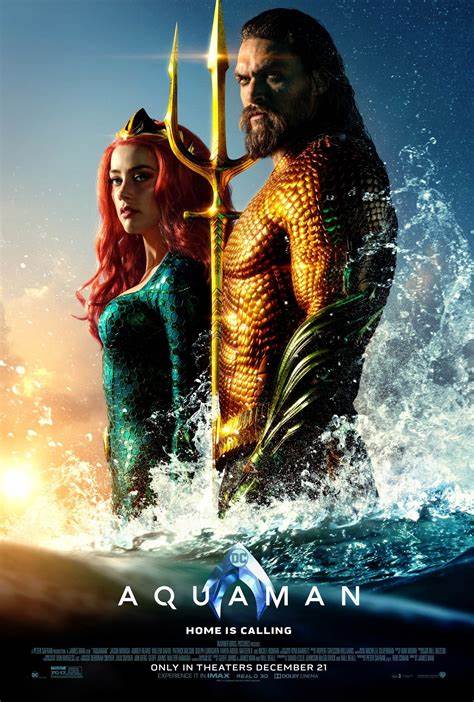
Aquaman (2018)

Jason Momoa takes himself rather seriously in the deeply silly Aquaman

Director: James Wan

Cast: Jason Momoa (Arthur Curry/Aquaman), Amber Heard (Mera), Willem Dafoe (Nuidis Vulko), Patrick Wilson (Orm Marius), Dolph Lundgren (King Nereus), Yahya Abdul-Mateen II (David Kane/Black Manta), Ludi Lin (Captain Murk), Temuera Morrison (Thomas Curry), Nicole Kidman (Queen Atlanna), Micheal Beach (Jesse Kane), Julie Andrews (Karathen)

After helping the rest of the Justice League save the world Arthur Curry aka Aquaman (Jason Momoa) is quite the celebrity. Curry is the son of lighthouse keeper Thomas (Temuera Morrison) and Atlantian Queen Atlanna (Nicole Kidman), who fled her unloved husband and his underwater kingdom but was recaptured when Arthur was young. Her other son Orm (Patrick Wilson) is now King of Atlantis, planning to lead the forces of the sea in a war against those on land. Can Arthur and Orm’s unwilling betrothed Mera (Amber Heard) combine to prevent a war? And will Arthur become a worthy hero?

Aquaman makes a valiant effort to embrace perhaps the silliest set-up for a comic book novel yet. Based around a massive, technologically advanced underwater kingdom that has (inexplicably) remained silent and secret for thousands of years, who inhabitants all seem to have superhuman strength and magical skills (guess it must be all that water pressure), the film at times is hard to take seriously. But it sort of gets away with it, as Wan leans into the tongue-in-cheek campness of all this (and I’m amazed how camp these Atlantians are) and asks us not to take anything we see that seriously, but just to sit back and enjoy the ride.

And the film is basically just a big ride, as we travel from place-to-place and watch Aquaman hit things in various under-water and above ground locations, while keeping up a bit of rapid-fire banter that will flower (but of course!) into an opposites-attract romance with Mera. One thing Wan does very well is to find a way to present the various fights in a style I’ve not seen before. The showpiece one-on-ones take place in a series of incredibly smooth one-shots, which twist and glide around our heroes while they despatch countless foes and, in one impressive show-piece, in and out and across buildings during a fight in an Italian cliff-side town. The ending may be your typical CGI smackdown, but Wan’s presents the fights in a way that actually looks different and excites a bit of awe.

Where the film is less successful is in its slightly tired coming-of-age/proving-his-worth/resolving-his-loss storyline, which offers few surprises. Try as I might, I can’t find Jason Momoa a charming enough actor to effectively make me invest in his character. Compare him to Dwayne Johnson, who is always willing to laugh at himself and is the very embodiment of charming self-awareness. Momoa takes himself very seriously – he always needs to be the coolest guy in the room – and his air of cocky self-importance sometimes jars in a film as dopey as this one.

This also means the film fails to sell a real plot arc for Aquaman himself. Its nominally about a character learning to acknowledge his mistakes, vulnerability and inability to go-it-alone. This doesn’t always feel earned and sometimes emotionally confused. One of Aquaman’s earliest acts is to let the ruthless father of a hijacker (a scowlingly charismatic Yahya Abdul-Mateen II) drown. Later he expresses regret for doing this as, by making an enemy, he endangered Mera. Not regret because it was wrong to let the man die, but a sociopathic concern for his loved ones rather than someone else’s. The character’s growth never really convinces – he still seems like the same cocky maverick at the end than he was at the beginning, rather than someone who has matured into a real leader.

But aside from these doubts, this is a big silly pantomime pretty much told with the right balance between seriousness and tongue-in-cheek. Amber Heard mixes heroism with a dopey, flower-eating sweetness as Mera. Willem Dafoe constantly looks like he’s about to snigger as a wetsuit glad Grand Vizier. There is something rather lovable about a film so eclectic in its cast that Julie Andrews (of all people) voices a sea monster and Dolph Lundgren tackles King Nereus like it’s his shot at Macbeth.

Bangs, booms and few jokes carry us through a deeply silly but enjoyable film. There is a great deal of visual imagination for the sea kingdoms, a mix of Greek inspired nonsense and space-ship bombast. Wan pretty much throws the kitchen sink at the screen, and while it’s definitely rather too long it’s also bubbling with just as much tongue-in-cheek fun that you roll with it. Nothing here reinvents the wheel – and the plot often feels like a rather clumsy after-thought – but it’s still an entertaining wheel.

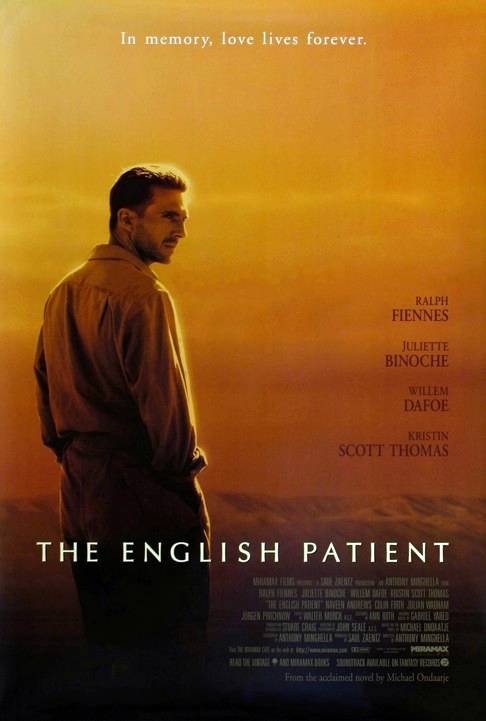
The English Patient (1996)

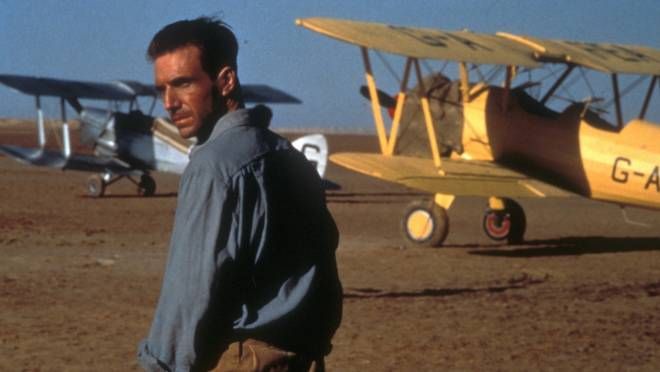
Ralph Fiennes excels as the tragic The English Patient

Director: Anthony Minghella

Cast: Ralph Fiennes (Count Almasy), Juliette Binoche (Hana), Willem Dafoe (David Caravaggio), Kristin Scott Thomas (Katherine Clifton), Naveen Andrews (Kip), Colin Firth (Geoffrey Clifton), Julian Wadham (Maddox), Jurgen Prochnow (Major Muller), Kevin Whatley (Sergeant Hardy), Clive Merrison (Colonel Fenelon-Barnes), Nino Castelnuovo (D’Agostino)

Sweeping, luscious, beautiful and an epic translation of an almost unfilmable novel into something supremely cinematic, The English Patient swept the board with nine Oscars at the 1996 Academy Awards. The English Patient has sometimes had a rocky reputation (not helped by an episode of Seinfeld where Elaine was famously non-plussed by the film). Like some of Minghella’s later work, it’s almost too well made for some to get past, looking like prime award bait. I didn’t “get it” the first time I watched it. But I – and the naysayers – were wrong: The English Patient is rich, rewarding and throbbing with a very British sense of repressed emotion and slow embracing of dangerous passions.

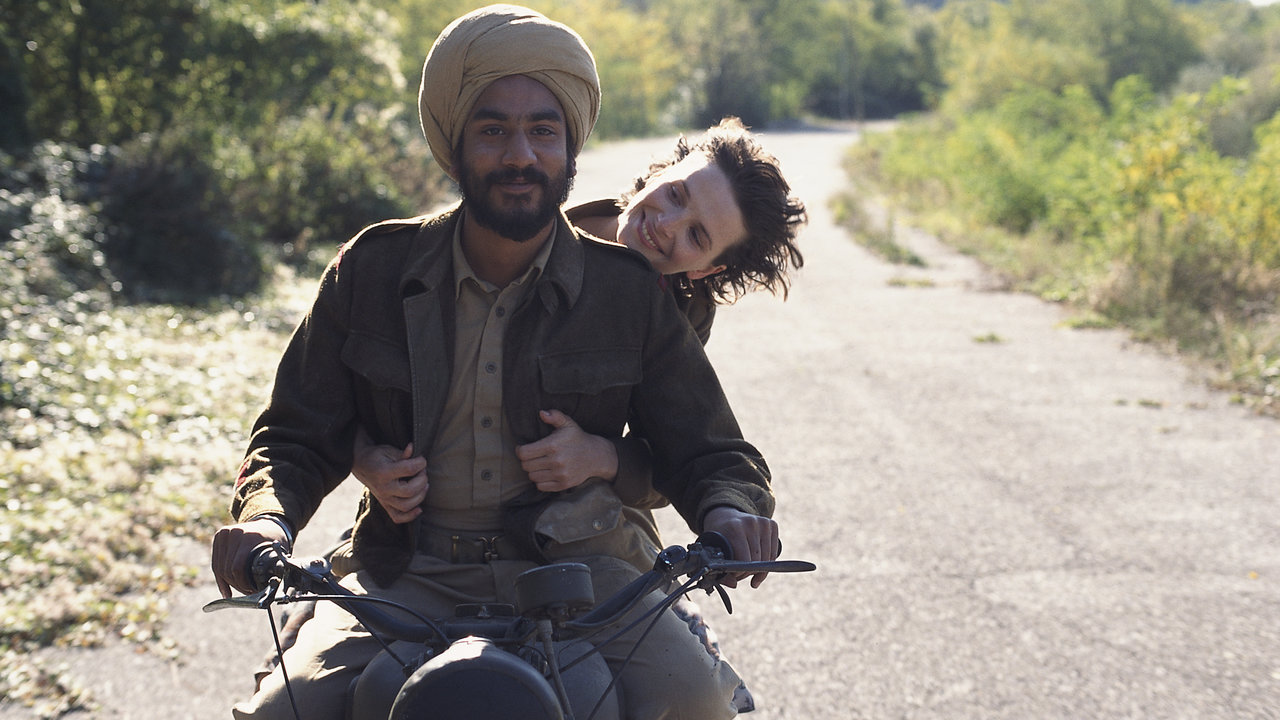
Adapted from Michael Ondatje’s multiple-award-winning novel, it unfolds across two time frames, hinging on a plane crash in the Sahara in 1942 that opens the film and leaves its pilot, Hungarian Count Almasy (Ralph Fiennes), hideously burned beyond recognition. The entire film is both an epilogue to that crash and a prologue explaining how we got there. In 1945, Almasy asserts he remembers nothing, even his own name. In what we later learn is a bitter irony, he is mistaken for an Englishman due to his perfect English. He is nursed through the final days of his life in an abandoned Italian monastery by a Canadian nurse Hana (Juliette Binoche), who has lost nearly everyone she loves in the war. Through Almasy’s memories, we see his life before the war as part of an international society of cartographers. In particular, the love affair that grows between him and Katherine Clifton (Kristin Scott-Thomas), the wife of another member of the society – an affair that will have life-shattering repercussions.

Appreciation for Minghella’s film must start with his ingenious screenplay. The English Patient, a book that moves eclectically between multiple timelines, shifting perspective frequently, and delivers its story in almost impossibly rich prose, should have been unfilmable. Minghella creates something which is both a mirror of the book’s intention, but also a cinematic text. You could use this as a teaching tool for adaptation (bizarrely one of the few Oscars it didn’t win was for Screenplay!). Working in close partnership with editor Walter Murch, Minghella’s film effortlessly cuts back and forth between at least three timelines, but never once confuses or jars. With (according to Murch) over 40 time transitions (that’s one almost every 3-4 minutes, fact fans), this could have been a jarring, impossible to follow mess. Instead, narrative clarity is its watchword.

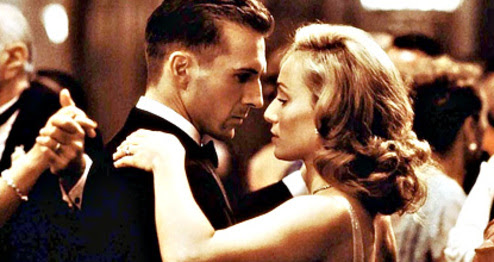
But the film also succeeds because it’s the apex of Minghella’s ability to combine luscious, poetic story-telling with acute emotion and passion. It shouldn’t be a surprise that someone who showed such understanding of grief in Truly, Madly, Deeply acutely understands how joy and pain can go hand-in-hand in love. Perhaps one of the reasons people found this a difficult film is that Almasy and Katherine are not a traditional romantic pairing. Both guarded, sometimes even cold and distant people, they are tentative, perhaps even scared, of the deep bond they immediately feel. A bond that burns all the more brightly because of the compromises and barriers in their emotional lives.

Almasy is distant, aloof, a man easy to know but impossible to understand. Katherine has a very English reserve behind a certain patrician warmth, playful at times but very aware of duty. What’s fascinating – and moving – about the film, is that these two people actually have a huge groundswell of passion between them. They are besotted with each other, but for reasons ranging from background to their own fears of emotional involvement, struggle to admit it to each other. They fling themselves at each other in romantic couplings with an almost animalistic longing. They make each other laugh. They allow themselves to speak of deep feelings, experiences and thoughts that they would not express to others. And they are also able to hurt each other through resentments, distances and shunnings in a way no one else could.

It’s a decidedly unconventional romance – compare it to, say, the next year’s Oscar winner Titanic with its far more conventional love story – but it works wonderfully. The slight air of repression also means that the confessions of deep-rooted feelings – Scott Thomas’ reveal of a gift she has never parted from, or Fiennes’ face twisted in emotional anguish – carry huge impact.

It also helps that the film is set in the sort of grand vistas that David Lean would be proud of. While you can certainly argue (with some justification) that The English Patient is a picture postcard film, its perfect visuals of the desert, the stunning beauty of so many of its shots, add to the extraordinary luscious old-fashioned 1930s romance of its setting. It could all be taking place in a world of von Sternbergesque romanticism.

Minghella’s film also interweaves skilfully the 1945 story line, revolving around Juliette Binoche’s Hana. Binoche won a deserved Oscar for a sensitive, vulnerable performance as a woman terrified of emotional commitment (sound familiar?), scared anyone she grows close to is doomed to die. Her romance with bomb disposal expert Kip (a strikingly delicate performance from Naveen Andrews, with just enough hints of anti-colonial tension mixed in) seems ready to fit this trope, but instead develops in unexpected ways. It also contributes perhaps the film’s most sweepingly romantic moment when Kip uses a pulley system, a flare and a bit of muscle to give Hana a sweeping up-close look at some Renaissance frescos. But while our flashback romance has the foreboding of doom to it, this one instead shows us the hope of a life restarting.

The English Patient also makes some striking points about the insane foolishness not just of war, but nationalism and Empire. The cartographers are a pan-European group who come together as equals, disregarding all concerns of nation. Instead they find a freedom to behave – intellectually, emotionally and sexually – in a way they never could “at home”. They represent a chance of being free to make our own choices, rather than dictated by arbitrary borders. Problems of nationhood are what will bring disaster. Colonialism is viewed equally critically: Kip gets sharp digs in at Kipling and also makes clear that his status as an Indian officer in the British Army is one of uncertainty.

Minghella’s film also works because of the mastery of the performances. Fiennes is in nearly every scene (many of them under a layer of make-up), and the role is a perfect match for the surface coldness in his performance style, which hides his wit and sensitivity. Cheated of the Oscar, Fiennes has rarely been better – his clipped romanticism mellowing in the 1945 section as a gentler but broken man. Scott-Thomas is perfectly cast – I’m not sure any other film has used her skills better – as a woman who compromised on happiness at the wrong time, and now cannot express herself.

The English Patient is a romance of slow moments, of inferred passions, which only at a few points before the end flower into something intimate. But it carries a huge emotional force, precisely because of this. Its technical work is faultless – Gabriel Yared’s score is a sumptuous mix of inspirations – and the acting superb (as well as the stars, Firth is marvellous as a decent but dull man cuckolded, Dafoe adds a layer of unpredictability as a 1945 houseguest and Whatley is the picture of working-class decency in a rare film role). The English Patient is Booker-prize film-making in its depth, richness and the work it asks you to put in, mixed with a David-Lean-meets-Mills-and-Boon pictorial loveliness, where each frame is a sun-kissed example of pictorial perfection. Mixed together, it makes for a sumptuous and deeply emotional package that I find more and more rewarding with every viewing.

The Aviator (2004)

Leonardo DiCaprio excels as Howard Hughes in The Aviator

Director: Martin Scorsese

Cast: Leonardo DiCaprio (Howard Hughes), Cate Blanchett (Katharine Hepburn), John C Reilly (Noah Dietrich), Kate Beckinsale (Ava Gardner), Alec Baldwin (Juan Trippe), Alan Alda (Senator Owen Brewster), Ian Holm (Professor Fitz), Danny Huston (Jack Frye), Gwen Stefani (Jean Harlow), Jude Law (Errol Flynn), Willem Dafoe (Roland Sweet), Adam Scott (Johnny Meyer), Matt Ross (Glen Odekrik), Kevin O’Rourke (Spencer Tracy), Kelli Garner (Faith Domergue), Frances Conroy (Katharine Houghton), Brent Spiner (Robert E Gross), Edward Herrmann (Joseph Breen)

Howard Hughes grew up wanting to make the biggest movies in the world, fly the greatest plans and be the richest man in the world. He achieved all of this. He ended his life a wild-haired long-nailed recluse, terrified of stepping outside his controlled zone, a victim to crippling OCD. Martin Scorsese’s The Aviator is a triumphant, brilliantly engrossing, sumptuous exploration of Hughes’ years of triumph, where everything seemed to go right publicly – even while everything was beginning to go wrong internally.

It’s Scorsese’s second teaming with Leonardo DiCaprio – and while DiCaprio’s boyish good looks don’t really relate to what the real Hughes looked like, his charismatic enthusiasm, passion and determination brings Hughes triumphantly to life. It’s a brilliant performance, which dominates the movie. DiCaprio seems to completely understand power of driving ambition, who will mortgage everything he has time and time again to achieve his dream – and also the force of personality needed to turn those dreams into success. But obsession drives both success and eventual personal disaster. There is always something slightly fragile about DiCaprio – maybe its those boyish good looks – and here he brilliantly captures the tragedy of a man clinging to his sense of self, struggling with the demons within him.

Scorsese’s film gloriously balances the epic with the personal. It so brilliantly relates to the irrational but very convincing fears of those suffering from OCD, that scenes featuring Hughes obsessively plucking tissues from boxes, or stuck in restrooms scared of touching the door carry a real sense of threat. The grandness of much of the rest of the film – and the sense we get have how much more Hughes could have achieved – means the demons he carries are even more affecting. Imagine what he could have done, if he wasn’t terrified of even the smallest germ, or was able to put aside his destructive urge to control every inch of his environment and the people in it.

All this tragedy works because the grandness is so impressive. Scorsese’s film looks beautiful. The filming was inspired by replicating the visual and colour styles of contemporary Hollywood. The early 1930s-set section of the film apes the toned look of early-colour (green appears blue, most strikingly at a golf course) with full colour only appearing when the film hits the years of technicolour. The 1940s sequences are inspired by touches of film noir, leaning into the early days of epic technicolour by the end. It looks striking and also amazing. The production design is similarly breathtaking, while the film is shot and assembled with a wonderfully vibrant energy.

It’s also got plenty of wit. John Logan’s fast-paced script captures the sense of a fun of a man who was determined to turn his dreams into reality. John C Reilly is a lot of a fun as the weary number 2, constantly performing financial gymnastics to keep his bosses dreams afloat. Compulsion and obsession makes Hughes the sort of guy who will rebuild an aeroplane from scratch because of a minor flaw, or will reshoot a film because it will work better with sound. During the shooting of Hell’s Angels he keeps a private fleet of planes on the ground while waiting for clouds that will make the scene work. Frequently thousands of dollars a day are spent keeping projects ticking over, while Hughes waits for perfection. He’s not a man to compromise – and you can see why an artist like Scorsese would relate to that. While the film never lets you forget this obsessive perfectionism cuts both ways – and is as much a symptom of OCD as obsessive handwashing.

Scorsese’s passion for classic Hollywood clearly informs much of the first half of the film, that covers the shooting of Hell’s Angels and Hughes’ relationship with Katharine Hepburn. There are delightful cameos from Hollywood icons like Errol Flynn and Louis B Mayer. Playful references abound. The film’s emotional heart is the bond between the two larger-than-life ambitious figures Hughes and Hepburn. Cate Blanchett (Oscar-winning) is fantastic as Hepburn, a pitch-perfect impersonation that also captures her gsharp, uncompromising intelligence and no-nonsense energy. The chemistry between the two is spot-on.

The film’s second half covers more the aviation of the title, with Hughes’ struggle to break the near-monopoly of the skies owned by PanAm, with his own airline TWA. With Hughes starting to teeter on the edge of OCD collapse, even while energetically setting records in the air and fighting battles in the senate, its perhaps even stronger. It also introduces nemesis in Alec Baldwin’s smoothly manipulative Pan Am chairman Juan Trippe and, most delightfully, an Oscar-nominated Alan Alda as a hypocritically corrupt Senator Brewster. The dinner and senate clashes between Alda and DiCaprio provide glorious energy to power the film’s final act.

It also serves as a last hurrah for Hughes. It’s DiCaprio that really makes the film work as this star burns itself out, finally succumbing to the compulsions that we know will see him end his days locked into a room at the top of a Las Vegas hotel. Moments carry a suggestion of fantasy – is Hughes imagining some of the shady figures he sees at the edges of frames? Are oddly toned late meetings with Ava Gardner (an underpowered Kate Beckinsale) an illusion? It’s all part of the the powerful sense of tragedy of seeing him end, wild-haired, peeing into milk bottles and stuck into loops of repeating phrases over and over again. Scorsese’s film superbly captures the immense sense of lost opportunities.

The Aviator is undeniably grand and triumphant film-making, that looks a million dollars. But it also manages – in thanks to a superb performance from DiCaprio – to capture a tragic sense of a man who burnt himself out at the height of fame and success. It tells two parallel stories without us realising it: a man achieving his dreams, even while his nightmares consume him. With Scorsese’s perfectly judged direction and some wonderful performances, this is both a sprawling epic and a very personal story of loss. While it seems very different from the films we might expect from the master, I think it might be one of his finest works.

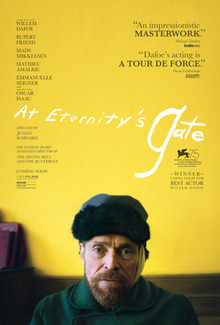
At Eternity's Gate (2018)

Willem Dafoe is the great Van Gogh standing At Eternity’s Gate

Director: Julian Schnabel

Cast: Willem Dafoe (Vincent van Gogh), Rupert Friend (Theo van Gogh), Oscar Isaac (Paul Gauguin), Mads Mikkelsen (Priest), Mathieu Amalric (Dr Paul Gachet), Emmanuelle Seigner (Woman from Arles/Madame Ginoux), Niels Arestup (Madman), Vladimir Consigny (Dr Felix Ray), Amira Casar (Johanna von Gogh-Bonger)

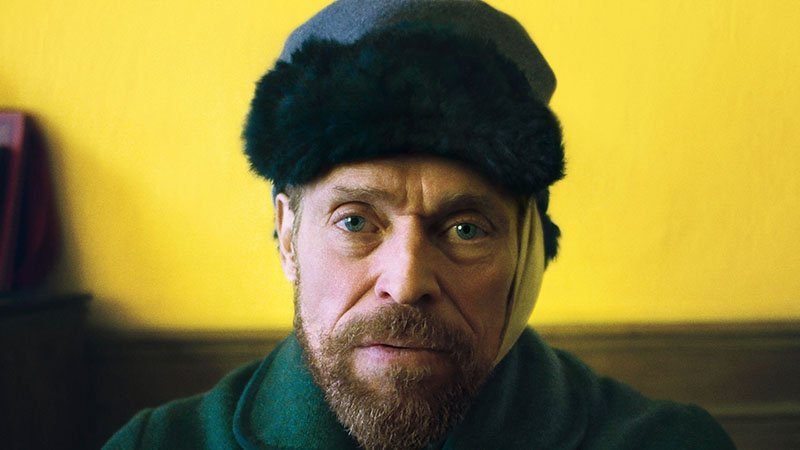
Vincent van Gogh has a constant fascination for film-makers. Perhaps it’s because, as this film suggests, he sat permanently “at eternity’s gate”, painting for those yet to be born. It’s well known van Gogh only found success, fame and artistic recognition after his death. The sad tragedy of his life – he was a deeply troubled man, who struggled profoundly with depression – has been fuel for many films with van Gogh played by actors ranging from Kirk Douglas to Benedict Cumberbatch. Now Willem Dafoe – a very close physical match to the painter (even if he is almost 25 years older than van Gogh at his death) – takes the role on in artist Julian Schnabel’s film.

You’d expect Schnabel, a renowned artist and film-maker, to create a film that offers insight and even revelations on van Gogh and the process of art creation. It’s a shame then that At Eternity’s Gate doesn’t quite succeed in doing this. Schnabel stated in interviews that the existence of the Kirk Douglas/Vincente Minnelli Lust for Life (a far more conventional narrative retelling of van Gogh’s life spliced with melodrama) removed the need for him to worry about telling the clear facts of van Gogh’s life. While I guess it’s true that the basic litany of van Gogh’s final years (which the film focuses on) of Arles-Gauguin row-ear removal-asylum-Gachet-suicide is pretty familiar to many people (and I suspect everyone likely to see this film!), Schnabel’s film drains the drama from this.

Instead Schnabel offers up a film straining at complexity, but which feels rather slight and unsatisfactory. It only seems to scratch the surface of art and the thinking behind van Gogh’s creations. In fact, whenever the film actually tries to talk about art it largely comes across as stodgy and lumpen. Oscar Isaac in particular is saddled with several speeches and dialogue exchanges on art that fall lamely to the floor. Van Gogh gets a few more poetic contributions, but these are few and far between and essentially seem to sum up to a wistful love of nature and the beauty around us.

On top of this, I don’t feel like I get a real understanding or insight in this film into van Gogh’s inner life. In 2011 an episode of Doctor Who written by Richard Curtis made profound and moving material out of Van Gogh’s depression in the episode Vincent and the Doctor. The pain of inner turmoil, the volatility of depression, the way joy can switch to anger and suicidal self-loathing as if a switch has been flicked – it’s all there in that episode. It’s a side of van Gogh that seems missing in this film. The demons, for want of a better word, are missing. 

The film indeed averts its eyes from van Gogh’s bleakest moments. The arguments with Gauguin happen mostly off-screen – I guess the film is placing us in van Gogh’s shoes in that it’s as much a surprise to us that Gauguin announces he can’t bear it any more as it clearly was to van Gogh. The ear cutting is related to us by a calmer van Gogh days later. The film also follows the line of the recent 2011 biography of van Gogh in believing his death was not suicide but manslaughter, a theory that I’m not sure I can really support (since it seems to be founded on a lack of understanding about how the depressed can seem fine one day and then suicidal the next) so maybe this is all intentional.

What the film does do well is get a sense of van Gogh as a soulful and gentle man. Willem Dafoe, as well as being a remarkable physical match for van Gogh, is also an actor made for both suffering and imbalance. After a career of martyrs, the intense, the unhinged, the mutilated and Jesus Christ, his face seems lined already with the cares of the world. Dafoe is very good here, soulful and vulnerable but with a monomania for painting under the surface that guides all his actions. But he has a wistful, childlike tenderness to him and a sense of a gentle man adrift in a world he can’t understand.

It’s a shame the film doesn’t have slightly more to it. Visually it gets a good sense of van Gogh’s striking colours. But I was put off by Schnabel’s addiction to using a wild hand-held camera. Often sloshing woozily around the frame, the camerawork is clearly an attempt to capture the urgent brush strokes and movement of van Gogh’s painting in its visual style – like his paintings it never sits still. It’s also perhaps an attempt to capture the mania of van Gogh’s inner life: it’s noticeable the camera work only calms when van Gogh himself is calm (i.e. painting). But it’s still not exactly easy to watch – like reading a book on the upper deck of a ship during some particularly choppy seas.

At Eternity’s Gate feels like it should be a better film than it is. Irritating camera work aside, it is well made and it has a fine performance at its centre. There are some decent cameos from the other performers – best of all Mads Mikkelsen as a kindly priest who gently, and with great sadness, breaks it to van Gogh that his work is clearly rubbish – but it never really feels like it gives any real insight into either van Gogh or his artwork. For all its panache, it’s strangely empty.

Platoon (1986)

Charlie Sheen goes to war in Oliver Stone’s Oscar winning Vietnam film Platoon

Director: Oliver Stone

Cast: Charlie Sheen (Chris Taylor), Tom Berenger (Sgt Barnes), Willem Dafoe (Sgt Elias), Kevin Dillon (Bunny), Keith David (King), Forest Whitaker (Big Harold), Mark Moses (Lt Wolfe), John C. McGinley (Sgt O’Neill), Francesco Quinn (Rhah), Reggie Johnson (Junior), Johnny Depp (Lerner)

Vietnam has been a long-standing scar on the American psyche. For over 12 years, American soldiers were rolled into Vietnam to fight for something many of them were pretty unclear about. Vietnam was a bloody shadow boxing match for super powers to indirectly combat each other. American casualties were high, and the country that sees itself as championing justice and the free world ended the war with the blood of millions of Vietnamese and Cambodians on its hands. Is it any wonder the country still struggles to compute this?

Before Platoon there had been films that had dealt with the Vietnamese experience. Apocalypse Now had embraced the druggy, morally confused insanity of the war. The Deer Hunter had effectively shown the traumatic impact the war had on regular blue-collar steel-workers. But Platoon was something different. This was the war on the ground, with privates and sergeants as the focus (many of them poor, working class and also black) – the lower rungs of American society flung into a war they don’t understand, in a country they can’t recognise, fighting an enemy they have no comprehension of. 

Platoon throws the audience into the visceral, cruel, terrifying horror of pointless conflict, with a feeling that the war will never end. Stone pulls off a difficult trick here: the film shows a horrifying picture of war and killing, but combines this with successfully showing the adrenalin rush that comes from conflict – and the excitement of visceral film-making. 

Oliver Stone had fought as a young man in a similar unit, after dropping out of college. Chris Taylor (Charlie Sheen) is effectively a surrogate figure for the director, with the film crafted from Stone’s own experiences and those of his fellow soldiers. The film is a simple, intense experience with a straightforward plot: Taylor is torn between two potential “father figures”. One, Sgt Barnes (Tom Berenger), is a supernaturally ferocious warrior and martinet whom the men hold in awe. The other, St Elias (Willem Dafoe), is an equally fierce fighter, but also a hippy, nearly saint-like protective figure. Which of these two will Taylor side with?

Well okay it’s not a massive surprise really is it? The strength of Oliver Stone’s film is its visceral, bloody, impressive intensity. You are thrown into the midst of a series of terrible battles, interspersed with bored soldiers bickering or taking pot. At no time is the viewer (or the soldiers) given any real idea about what is going on, what the aims of the war are, what is really happening in the battles. Stone plays the film totally from the soldier’s POV. Battles are a confused mess at night. The location of the enemy is frequently unclear. There are no indications of any tactics at all. There is barely any leadership – Mark Moses’ Lt Wolfe is an almost hilariously ineffective moral weakling, who follows the leads of his sergeants. The soldiers (or rather the two sergeants) essentially operate as lone wolves, doing what they think best for any particular circumstance.

The film pivots on a confused raid on a Vietnamese village, as the platoon descends on a village for no very clear reason – apart from seemingly being pissed off that one of their number has been killed in the night. Nominally they are searching for Vietcong fighters. But really it seems like an excuse to let off steam. Platoon must have hit hard in the 1980s, as it doesn’t flinch at all from watching American soldiers committing atrocities. Women are shot, teenagers are beaten to death, a fox hole containing what looks like a child is exploded after a brief warning. The soldiers are all terrified, thrusting guns into Vietnamese faces. Above all Sgt Barnes feels no guilt at all at executing villagers in order to pressure the elders into telling what he thinks they might know about the Vietcong (who equally are largely faceless figures of terror in the distance stalking the platoon).

Where the film is less strong is in its plotting and narrative ideas. These are straightforward in the extreme, with Barnes and Elias almost literally as opposing devil and angel on Taylor’s shoulders. The film is clearly weighted in favour of Elias’ hippie mentality, his desire to preserve innocent lives and his caring attitude to his men. Barnes is presented far more harshly – even though his brutality stems from his own deep-rooted desire to keep his men safe, and his belief that Vietnam is hell and you can’t pussyfoot your way around hell. 

Saying that, it’s hard to argue against Stone’s feelings that compromising your humanity is not worth it no matter the struggles to keep yourself and others alive. But these are (forgive me) rather obvious, even traditional points – and its part of the film being essentially a conventional morality tale with a breath-taking military setting laid over the top. The ideas in this film won’t really challenge you – and in fact the film itself is really more of an experience than something that rewards reflection.

Stone’s direction is extremely good – even though he at times falls too much into the trap of overblown, overly operatic visuals (Taylor’s final confrontation with Barnes in the forest falls heavily into this trap). Stone has never been accused of being the most subtle of directors, and there is no stone (sorry) left unturned here to get the message across. In fact Platoon frequently hits its points so hard and with such unsubtle force, that it actually leaves you very little to think about after its finished – the film does all the work for you, like an angry rant that goes into unbelievable depth of detail.

But the acting has a very healthy commitment to it. Sheen shows why he was an actor of promise before he became a self-destructing punchline. Dafoe is very good as the serene Elias – a man’s man, but one comfortable in his own skin, with a strange campness about him, whose courage extends to doing the right thing no matter what. Tom Berenger is hugely impressive as the cold-edged Barnes, who has had to stamp out his humanity to survive. The rest of the characters split into two rival camps following these different soldiers, and there are some fine performances here from some now far more recognisable actors.

Platoon was garlanded with Oscars, partly because it talked about the American experience in Vietnam in a manner (and from a perspective) that had not been addressed before. It is an important historical landmark of a film, even if it is possibly not a great film. A simple, at times less than subtle anti-war film dressed up as a war film, it will immerse you in the conflict and the horror – but I’m not sure it will give you as much to think about as it thinks it does.

Murder on the Orient Express (2017)


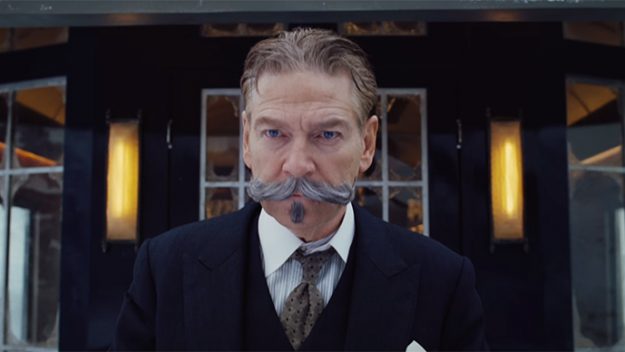
A dishevelled Kenneth Branagh (and tache) investigates a Murder on the Orient Express

Director: Kenneth Branagh

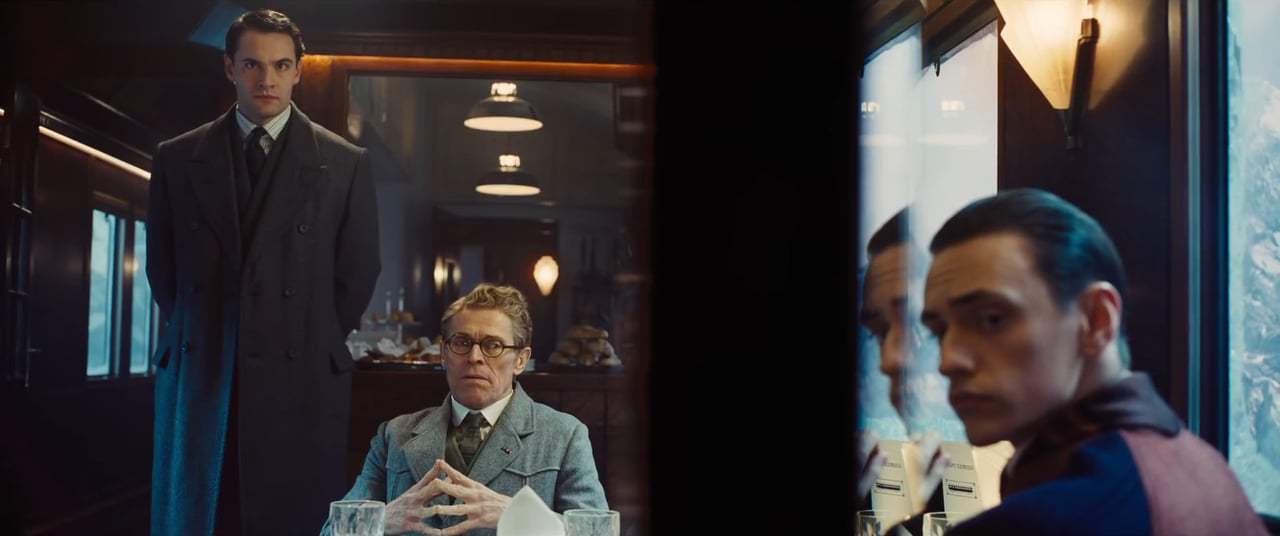
Cast: Kenneth Branagh (Hercule Poirot), Tom Bateman (Bouc), Penélope Cruz (Pilar Estravados), Willem Dafoe (Gerhard Hardman), Judi Dench (Princess Dragomiroff), Johnny Depp (Samuel Ratchett), Josh Gad (Hector MacQueen), Derek Jacobi (Edward Masterman), Leslie Odom Jnr (Dr Arbuthnot), Michelle Pfeiffer (Caroline Hubbard), Daisy Ridley (Mary Debenham), Marwan Kenzari (Pierre Michel), Olivia Colman (Hildegarde Schmidt), Lucy Boynton (Countess Elena Andrenyi), Manuel Garcia-Rulfo (Biniamino Marquez), Sergei Polunin (Count Rudolph Andrenyi), Miranda Raison (Sonia Armstrong)

Is there a murder mystery with a more widely known resolution than Murder on the Orient Express? Possibly not – if for no other reason that film and television versions of this story are as numerous as the suspects in the actual mystery. If that wasn’t a big enough challenge for Branagh to take on, he also joins a list of umpteen actors to play Poirot himself: following in the (very precise) footsteps of the big guns: Finney, Ustinov and of course, above all, David Suchet. How does his version of this most famous detective in his most famous adventure measure up? Well, with mixed results.

For those who don’t know, Hercule Poirot (Kenneth Branagh) is “possibly the world’s greatest detective”. Here, he is travelling back from Istanbul  on the Orient Express, a berth having being secured at the last minute by his friend Bouc (Tom Bateman) the director of the line. En route he is approached by the sinister Ratchett (Johnny Depp), who asks if he can serve as his bodyguard. Poirot refuses – only for Ratchett to be murdered that night. Bouc asks Poirot to investigate – and it soon becomes clear that the dozen other passengers in Ratchett’s carriage could all have had motives to kill him. But who is the killer?

Murder on the Orient Express is on the cusp of being a very good film. But, like the train itself, it gets bogged down too often in changes from the source material that add nothing, action scenes that feel toe-curlingly out of place, and bombastic filming that goes a little bit too far. In many ways it captures some of the faults of its director, my much-loved hero Kenneth Branagh – and I do love him, but as a director he has a tendency to make things too big, to wear his love of the complex shot on his sleeve; to basically try too hard. As a director, that’s what it feels like he’s doing here.

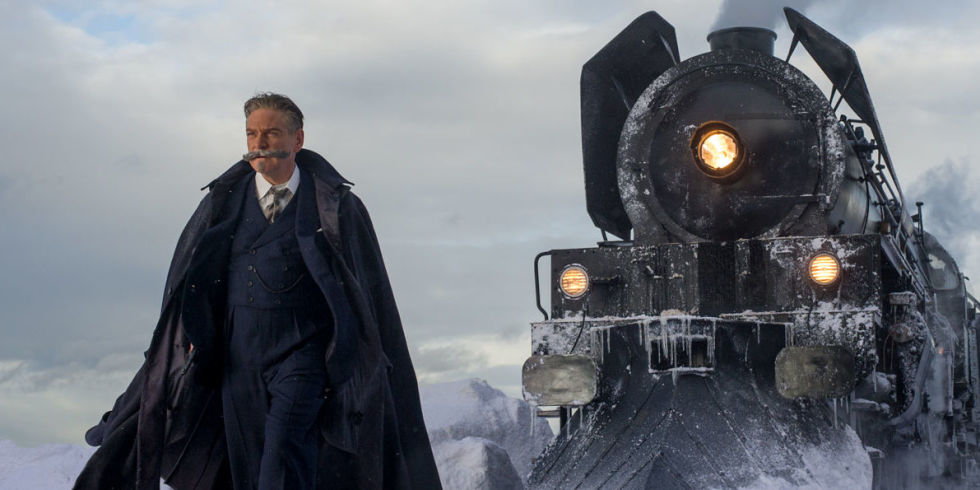
It’s filmed with a luscious, chocolate box, old-school Hollywood grandeur. The camera swoops and zooms over some gorgeous landscape as the train puffs through snowy mountain scenery. There are some loving travelogue tracking shots of Istanbul and Jerusalem. The film lingers with a loving eye on the luxury and class of the Orient Express itself (including some egregiously clunky product placement). The costumes look lovely.  But the end result of all this lavish filming is that it sometimes goes too far towards the reassuring, Boxing-Day-afternoon treat. 

Everything is a little too technicolour at points. It also means that some of Branagh’s more self-consciously tricksy camera work stands out a little too much. A “birds-eye” view of the discovery of the body (the camera above the heads of the actors looking straight down) is oddly disconnecting – it works a lot better when Poirot and Bouc examine the crime scene, giving the audience a god like view of the scene. Some overly complicated shots swoop up along the aqueduct where the train is stuck, past Poirot speaking to characters, then over the top of the train. It’s a rather too overblown and clumsy attempt to make a conversation seem cinematic – it feels a little forced.

It’s one of many points where the film feels like it is trying too hard to make the story edgier or more overtly cinematic. Not the least of these are sequences that up the action quotient. I feel very confident this is the first Poirot film you’ll ever see where the hero is involved in not one but two dynamic fights. One of these is a bizarre chase down the aqueduct with Poirot and another character. The second involves gunfire (an effective shock to be fair) and Poirot using his cane as a weapon in hand-to-hand combat. 

There is nothing wrong with making Poirot more active – Branagh’s character is very much the ex-soldier and policeman, busting open the door to Ratchett’s berth to investigate, walking over the train’s roof, brow-beating the odd suspect (at one point at gun point). It’s just all too much – what audience is this playing to? Who really goes to a Poirot film expecting a goddamn fight scene? Even Count Andrenyi is introduced ninja-kickboxing photographers (I’m not joking here) – is this really what Agatha Christie would have wanted?

There are some odd choices made to deepen Poirot’s character. He is given some sort of lost romantic interest – no less than four times in the film he is given scenes where he holds a photo and bemoans “mon cher Kat-a-rean”. In the opening sequence, Poirot’s love of symmetry is introduced by him accidentally stepping in a cow pat and then stepping in it with his other foot to make each equal. Not only does a “stepping in shit” joke seem wildly out of place, but I don’t believe someone as fastidious and observant as Poirot would even step in it in the first place, let alone choose to step into it twice.

The train doesn’t just stop, it’s nearly taken out by an avalanche. A knife isn’t just discovered, it’s literally found stabbed into a character’s back. Characters have been changed to allow a more diverse cast – which I applaud – but making Arbuthnot a soldier turned doctor is a change that makes very little sense. The claustrophobia of the original is lost by having workers turn up almost immediately to dig the train out. Several scenes are filmed outside, with workers surrounding the train digging it out. Some of these undermine the original or are a little silly.

The suspect assemble

But I’m being really hard on this film because there are major flashes of promise here. Not least in Branagh’s performance as Poirot. I’m very confident in saying that, after David Suchet of course, this is the second best Poirot committed to film. The first thing anyone will notice is of course the moustache. Yes it looks absurd, but you attune to it quickly. It’s also a plot point: Poirot uses it, and his eccentricities, to lure people (Columbo style) into a false sense of security. When the film relaxes into just letting Poirot investigate (and hues closer to the original), Branagh gives Poirot a warm humanity and gentleness. His eyes are a wonder – intense disks of sadness. 

Branagh gives Poirot a love of order and justice that defines his world view – and the film introduces a moral conundrum for Poirot in the solution of the crime. I would say David Suchet’s TV version did this better – stressing Poirot’s Catholicism and belief in the rule of law as major factors that conflict him when confronted with the solution. But Branagh captures a real sense of Poirot’s conflict (even if the solution reveal is overplayed and overshot – right down to a “last supper” style tableaux in a railway tunnel) and his sadness, confusion and decency are really lovely – there is even a very neat touch with him forgetting to straight and smarten his appearance, as he deals with the ramifications of his solution to the murder. He looks like cartoon character, but he makes Poirot a real man. I would definitely like to see him do the role again.

The rest of the all-star cast rather struggle for crumbs, as the focus remains solidly on Poirot (largely because the film is intended as the possible first in a series). Tom Bateman is excellent as Bouc, charming and endearing but also given a character arc that sees him develop and change. Of the stars, Depp is suitably grimy as Ratchett, Pfeiffer imperiously stylish and skittish as Hubbard and Odum Jnr affecting as Arbuthnot. I was very taken with Daisy Ridley’s Mary Debenham, a young charm hiding steel underneath. Dafoe, Dench, Colman, Jacobi and the rest are given little to do but are reliably excellent when they are. Others like Cruz feel wasted. 

When the film focuses on Poirot simply investigating, it is very good. Each interrogation of the passengers is brilliantly played by Branagh – Poirot subtly adjusting his methods and approach depending on the person he is talking to. Poirot’s introduction sequence in Jerusalem has a playful Sherlock feel to it: Poirot solving a crime in seconds (having been dragged from his hotel, where he pickily demands eggs that are perfectly equal), including accurately predicting how the criminal will try and escape. There are lots of lovely moments – but just when you settle down to enjoy it, something wildly over-the-top or silly happens.

Murder on the Orient Express is by no stretch of the imagination a bad movie. In some places, it’s charming and a lot of fun. If it’s designed for watching on a bank holiday afternoon it works very well. But it’s, at best, the third best version of this story on film (after the 1974 Lumet film and the Suchet TV version). Do we really need to watch the third best version of an already familiar story? If we could transplant Branagh’s performance into Lumet’s film, now that would be something. But as it is, we’ve got a decent if flawed film that just tries too hard to do too much.