Tag: Zhang Ziyi

Memoirs of a Geisha (2005)

Memoirs of a Geisha (2005)

Lush romantic adaptation settles for tourism and pretty pictures instead of any emotional or narrative weight

Director: Rob Marshall

Cast: Zhang Ziyi (Sayuri Nitta/Chiyo), Ken Watanabe (Chairman Ken Iwamura), Michelle Yeoh (Mameha), Gong Li (Hatsumomo), Suzuka Ohgo (Young Chiyo), Kōji Yakusho (Nobu), Kaori Momoi (Kayoko Nitta), Youki Kudoh (Pumpkin), Kotoko Kawamura (Grandmother Nitta), Tsai Chin (Auntie), Cary-Hiroyuki Tagawa (the Baron), Samantha Futerman (Satsu Sakamoto), Mako (Mr. Sakamoto)
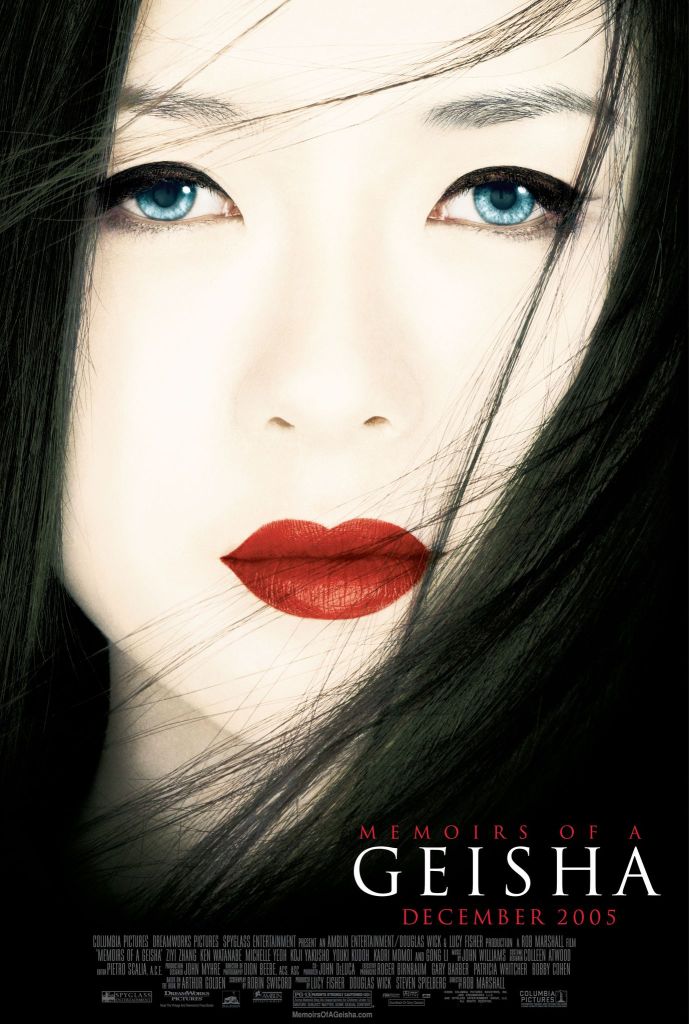
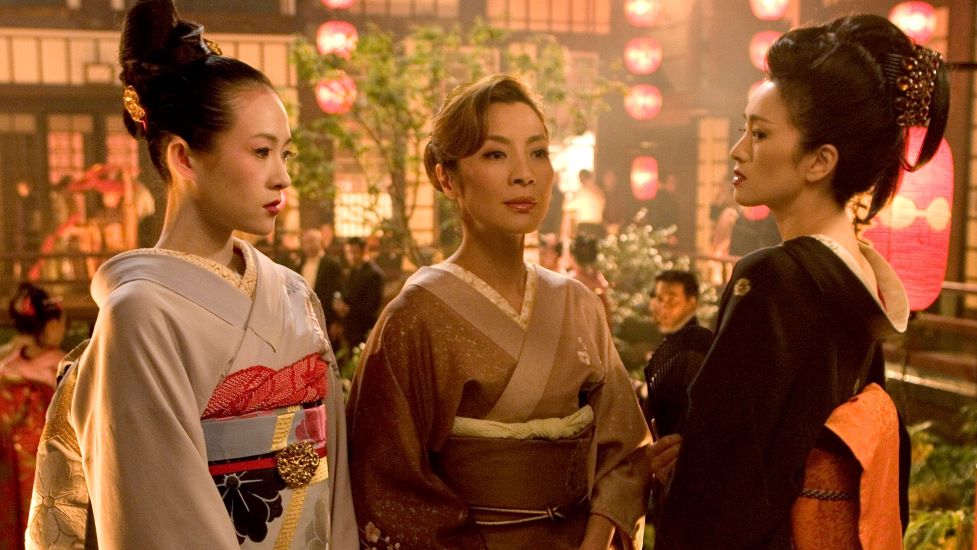
In 1920s Japan, 9 year old disgraced former geisha pupil Chiyo (Suzuka Ohgo) meets a businessman, Chairman Ken Iwamura (Ken Watanabe), who is kind to her. She resolves to one day become a geisha so she may see him again. As a young woman, Sayuri (Zhang Ziyi), as she is now known, masters the geisha arts under the tutelage of famous geisha Mameha (Michelle Yeoh). She encounters the Chairman again – but can she confess her love? And can she escape the attempts of her rival Hatsumomo (Gong Li) to destroy her?

Arthur Golden’s romantic novel was a major success in 1997, tapping into a fascination with Japanese culture. It was inevitable it would come to the screen. But in the journey, it has been stripped down into a beautiful but basically empty story, that seems trite and shallow and revolves around hard-to-invest in characters. By the time it’s finished you’ll wonder what the fuss was about.

The reconstruction of 1920s-40s Japan does look radiant, even if the film focuses on the most chocolate-box, touristy view of Japan you could possibly imagine (think of a Japanese item, event or object and it’s in the film). But it’s radiantly shot and intricately put together – the geisha costumes are a gorgeous, multi-layered, decorative treat – and it’s not a surprise the film lifted three Oscars for cinematography, production and costume design.

It’s not a surprise as well that it was overlooked in all the majors. It’s well-directed by Rob Marshall (juggling a multi-lingual cast and framing the film beautifully), but fundamentally a mix of the highly predictable and the deeply troubling. It’s basically Geisha Expectations or Jane Geishyre. Our heroine is a poverty-stricken youth who makes a series of key encounters in her childhood that shape her whole personality as she comes into wealth as a young adult. Similarly, this quiet girl’s obsessive love for a distant businessman (whom, yuck, she meets as a child – and he compares her to his own children), suffering quietly while sacrificing everything to help him.

But it’s all much less interesting than either of those novels. Despite the narration by an older Sayuri, we never get inside the young woman’s head. Ziyi Zhang is given very little to work with: she either looks distressed, simpering or sad, and frequently fades into the background of her own story. All we really learn about her is that the Chairman gave her an ice cream when she was 9, and that this event influenced her entire life. Equally dull is the Chairman himself, whom Watanabe struggles to make anything other a mute and inscrutable character, terminally dull.

It’s hard to invest in a love-across-the-ages (in every sense) romance between these two, because the film fails to build them up as characters we care about and gives them hardly any time to be together. By the time we reach a late confession, that the Chairman decided (when Sayuri was 9) to turn her into his ideal geisha (um, grooming anyone? Oh yuck) and they finally kiss each other, they still feel like complete strangers. She never matures into a woman who can fall in love past her childhood obsession and he seems more like an oddly manipulative sugar daddy.

Memoirs of a Geisha flounders on the empty plot and non-characters at its heart. It ends up relying on the visuals and lovely design work, because there is no drive or interest in its plot. The film’s most compelling performance is Gong Li’s Hatsumomo and when she walks out of the picture three quarters of the way through, it never recovers. Gong is superb as an envious, embittered geisha being replaced by younger faces. She snipes and growls like a relic from a Bette Davis Hag-thriller, but in the next scene her face will crumple with fear and sadness. She gets all the best lines and the most interesting scenes, from sniping, to lost love to pyromaniac revenge.

Memoirs of a Geisha disappointed at the box office. It’s clumsy casting didn’t help: fine actresses as Zhang, Yeoh and Gong are, they were all Chinese (in Yeoh’s case Malaysian Chinese) rather than Japanese, and there was an uncomfortable feeling that the producers didn’t think this was really an issue. It opened up a can of worms about lingering Chinese hostility over Japanese war crimes, leading to a ban in China. In Japan, the casting was condemned and the film seen as more interested in a tourist eye on geisha culture than a truly Japanese one (and it does appear the film consulted virtually no Japanese people during its making).

All the glorious design in the world can’t hide the emptiness at the heart of Memoirs of a Geisha. World War Two is skipped over in about two minutes (Sayuri spends the time working in the hills, and sums up her whole wartime experience in a couple of sentences, delivered in voice-over while Zhang looks beautiful and pained washing fabric in a river). Other than their external glamour, we don’t learn much about what being a geisha actually means. Its central romance goes from bland, to anonymous, to deeply troubling. It looks wonderful, but if there was anything deeper to the novel than a luscious, gorgeous setting and a predictable, traditional romance, it’s completely lost in translation.

Crouching Tiger, Hidden Dragon (2000)


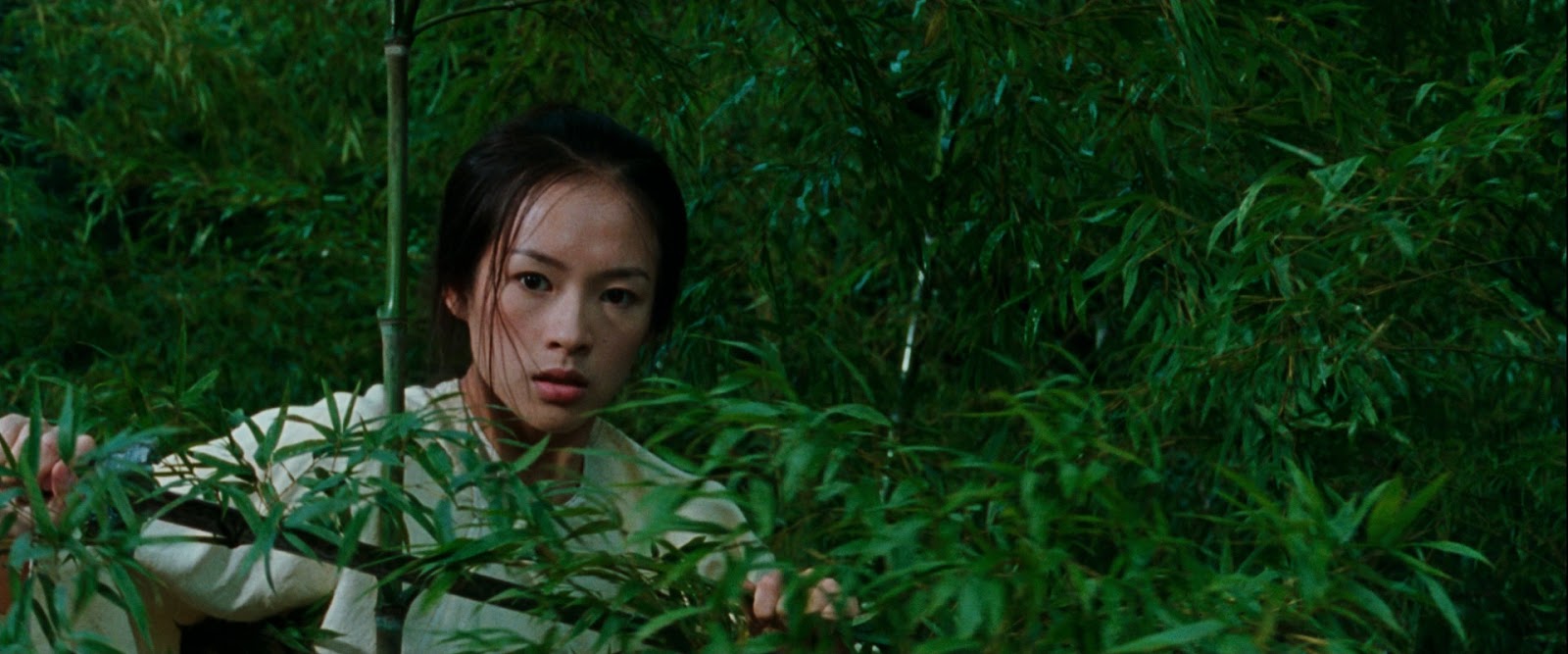
Michelle Yeoh and Zhang Ziyi defy gravity and danger in Crouching Tiger, Hidden Dragon

Director: Ang Lee

Cast: Chow Yun-Fat (Li Mu Bai), Michelle Yeoh (Yu Shu Lien), Zhang Ziyi (Yu Jiaolong), Chang Chen (Luo), Cheng Pei-pei (Jade Fox), Suhung Lung (Sir Te), Li Fazeng (Governor Yu), Gao Xi’an (Bo), Wang Deming (Prefect Cai Qiu), Li Li (May)

Ang Lee is the sort of director who can turn his hand to anything – is there a director with a more eclectic CV? From costume dramas to comic book films, coming-of-age 1970s stories to gay cowboys, he seems able to do everything. But the film that cemented him as a blockbuster director was Crouching Tiger, Hidden Dragon, an awe-inspiring, visually stunning, beautifully made martial arts film, told with a poetic grandiosity that opened the West’s eyes to a whole genre of film-making.

Li Mu Bai (Chow Yun-Fat) is looking to give up the warrior lifestyle, and surrenders his legendary sword “Green Destiny”. Mu Bai asks Yu Shu Lien (Michelle Yeoh), a professional bodyguard, to guard the sword on its way to its new owner. Mu Bai and Shu Lien have long held feelings for each other, but her late fiancée being Mu Bai’s best friend led them to never act on (or truly speak of) their love. The sword is stolen by a mysterious warrior, soon revealed to be the daughter of the local governor, Yu Jiaolong (Zhang Ziyi). Jiaolong has been trained by Jade Fox (Cheng Pei-pei), who murdered Mu Bai’s former master. Gradually the sword becomes the centre of a complex clash between these characters, of conflicting emotions and desires.

Despite its gravity-defying visuals, what Crouching Tiger, Hidden Dragon is really about – and perhaps why it works as well as it does – is contrasting the principles and standards of two different generations. Li Mui Bai and Yu Shu Lien have both lived lives governed by restraint and self-denial, not least in denying their own love. Jiaolung and Luo, on the other hand, are far more willing to act on their emotions – even if these lead to destructive consequences. It’s the human stories like this that ground the drama and make it something with heart that you can invest in.

Jiaolong isn’t willing to tame her wild spirit, and Lee’s film explores within it the nature of mentor-mentee relationships, and the level of confinement that comes from training: Jade Fox wants to control Jiaolong, and both resent each other for the restrictions they have placed on each other. Mu Bai wants to train Jiaolong – but she doesn’t want to submit herself to a master. Mu Bai has spent his whole life searching for Jade Fox to avenge his master. The shadows that masters place over their apprentices hang over the whole movie.

It’s also a refreshing movie that places women so firmly at the centre. Its central figure is Jiaolong, a young woman with an instinctive mastery of the art of Wudang – and she has the fiery defiance and impulsiveness you would expect of a traditional male figure. Jiaolong is a loving but damaged figure, confused and poisoned by Jade Fox’s resentment. She can love with great feeling and also feel a prickly resentment towards the same person – a feeling she expresses time and again. Zhang Ziyi is terrific in the role, an electric screen presence, it’s impossible to take your eyes off her.

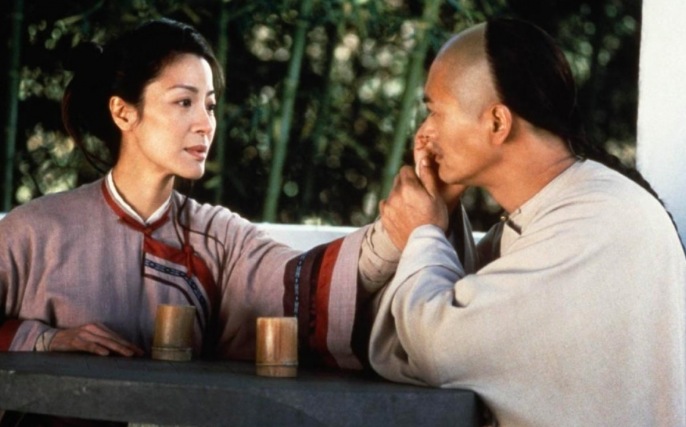
She is contrasted throughout the film with Shu Lien, expertly played by Michelle Yeoh. Shu Lien has lived years of control over her feelings, but carries great reserves of emotion. Yeoh’s eyes are crowded with emotion, and she conveys a great sharpness. Shu Lien is a shrewd, kind but reserved character – someone who realises too late the price she has paid. For all the combat in the film, you feel that the real clash is between these two women and how they have chosen to live their lives.

In the lead male roles, Mu Bai is played with a serene calm by Chow Yun-Fat. Yun-Fat is so reserved that he’s not always as interesting as he could be – despite having a few beautifully played moments. Chang Chen as Lo is a more conventional romantic figure, but he has a lot of charisma – and it’s also a refreshing balance that he is both the more traditionally “female” character in the relationship, but also feels like a worthy partner for Jianlong.

But the thing that makes the film really memorable is its extraordinary beauty. Ang Lee is a master at marrying up marvellous, dynamic images with intelligent, thematic plotting. The battle scenes are of course the most memorable, and they are truly striking, wonderfully choreographed by Yuen Woo-ping. These defy gravity and are extraordinarily graceful in timing and movement – as striking and genuinely beautiful to watch as they are exhilarating. They look marvellous and Lee films them with a disciplined simplicity to allow us to appreciate their beauty. 

On top of that, the overall design and feel of the film is wonderful. Every scene is carefully framed and beautifully composed. Tan Dun’s score is marvellous (amazingly the whole lot was composed, produced and recorded in just two weeks) and really helps to strength the emotions in the scenes themselves. Lee’s masterful direction never loses track of the emotions and relationships that underpin the action sequences, and makes them develop and grow organically from the story, rather than fight scenes for the sake of it.

Crouching Tiger works because it has a strong story, while showing some beautiful and breathtaking fight sequences, the likes of which many people had never seen before. It’s a well-paced movie, that packs a lot into a tightly controlled run time and its thematic richness gives every scene something to reward the viewer with. The real hero here is Ang Lee. Lee is not just a director who can deliver action, he is a man with an intimate emotional understanding. In particular, he has shown in his films an empathy and warmth towards women, and an appreciation of their worldview, in a way few other male directors have managed. Crouching Tiger still stands up – it’s still strikingly different, well acted, looks gorgeous and has a lot of emotional investment.