
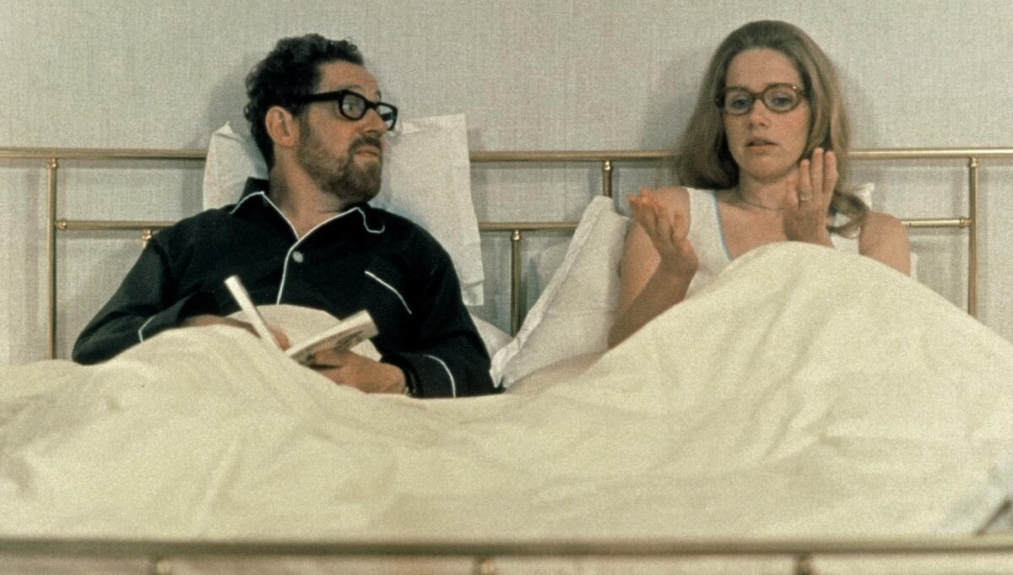
Bergman’s compelling, emotionally charged film is an intense, impressive and surprising tale
Director: Ingmar Bergman
Cast: Liv Ullman (Marianne), Erland Josephson (Johan), Bibi Andersson (Katarina), Jan Malmsjö (Peter), Gunnel Lindblom (Eva), Barbro Hiort af Ornäs (Mrs Jacobi), Anita Wall (Journalist)

A loving couple sit with an interviewer to discuss how happy their relationship is. Ten years later, years after their divorce, they meet in their old weekend cottage for an assignation away from their new partners. Along the way, they’ll lie, fight, cheat but also show time-and-again few people know them better than they do each other. Based on his own marriages and relationships (not least his relationship with Liv Ullman), Bergman’s Scenes from a Marriage is a fascinatingly intimate and intense portrait of the contradictory impulses we feel towards the people we know best: how we can, in the same moment, love them, hate them, want to be a million miles away from them and also yearn to take them in our arms and tell them everything.
Skilfully cut down from a six-part TV series – the episode titles become ‘chapter headings’, each signifying a time shift – it becomes a series of intense, almost real-time, conversations between middle-brow professor Johan (Erland Josephson) and successful lawyer Marianne (Liv Ullman). From their ten-year anniversary, their happy-but-functional relationship is shattered when Johan leaves for the (unseen) Paula, heading into divorce, Marianne’s growth in sexual confidence, her little acts of revenge over Johan and their later affair. At all times they prove capable of ripping emotional wounds into each other, but also remaining strangely dependent on love and affection from each other.
It would be easy to say that Scenes of a Marriage is a theatrical piece – it came, originally, from a play Bergman was working on and well over two thirds of its running time features Josephson and Ullman alone on screen. But if the close-up is the language of cinema, Scenes from a Marriage may be the most cinematic film every made. Shot in a cooly observational style by Sven Nykvist, vast swathes of Scenes from a Marriage plays out in searing close-up, the camera studying every inch of the emotional angst its two characters are putting themselves through. Bergman knows exactly how to build the punishing tension in these scenes, frequently climaxing in visceral outbursts.
It is a film about what we say and what we chose not to say and what we decide to hear. The conversation between the couples is framed by their careful considerations: when to hold fire and when to let rip; when to listen and when to choose not to hear. And it’s clear that, when we are first introduced to them, they have mastered the art of not saying anything at all. Smilingly parroting cliches to their interviewer, they later smugly compare themselves to their feuding friends Karatina and Peter (excellent cameos from a searing Bibi Andersson and a provocative Jan Malmsjö). But their conversation never touches on deeper issues (Bergman’s called this chapter ‘The Art of Sweeping Things Under the Carpet’) and their sex life has dwindled to timetabled functionality.
It’s clear they are aware of this growing distance themselves. Johan shares his poetry with a colleague (an expertly reserved cameo from Gunnel Lindblom), complaining Marianne considers it little better than spiritual masturbation and yearns for an expressive freedom he feels is impossible in his marriage. Marianne meanwhile speaks to a client, Mrs Jacobi (a tragic Barbro Hiort af Ornäs), whose story of a lifetime trapped in a loveless marriage with children she never really wanted clearly strikes Marianne as a chilling vision of her own future.
That doesn’t stop Marianne responding with shocked subservience that tips into desperate pleading when Johan announces he wants to leave her. Bergman stages this scene beautifully, with the ridiculous logic people sink into in tragic break-ups. Johan eats a snack meal prepared by Marianne, guiltily confessing his affair, but there is something very real about Marianne’s stunned reaction which sees her planning his packing (because he’s useless at it) and continue their bedtime preparation before she starts pleading him to stay. Just there is something very real in Johan’s reaction: having steeled himself for a fight, her subservience enrages him until he is cruelly tearing verbal lumps out of her. This is the sort of searing emotional up-and-down that rings true, one allowing shock to humiliate them the other transforming shame into defensive, accusatory blame.
But Scenes from a Marriage is a film that utterly understands how much we change under circumstances. Separation is not good for Johan: his new lover doesn’t interest him, his career stalls and he tips into self-pity. Marianne, once the shock and fear of separation passes, discovers she likes her freedom. Her wardrobe shifts to more form-fitting and revealing clothes, she embraces the opportunities of singledom and repays Johan’s desertion with a seduction of him she deliberately doesn’t follow-through on. They now talk more honestly than ever before – and it’s a blistering, verbally and physically violent exchange rammed full of resentment and petty cruelty.
To do this stuff you need actors at the top of their game and who completely trust each other. Bergman certainly has this with his two stars. Josephson’s self-contented smugness moves through arrogant selfishness to desperate vulnerability, his expressive face sometimes puppy-doggish, sometimes drowning in bear-like fury. Ullman is, of course, exceptional. Her masterful ability to react, to let thoughts and emotions play fleetingly across her face was made for Bergman’s close-up film-making and she takes Marianne on a fascinating journey, from near-submissive home-maker to vibrantly confident women of the world while never letting the vulnerability and doubt be too far from her eyes. It’s an extraordinary performance, searing and tender, as raw as knife-edge.
These two play absorbingly off each other, their conversations gripping minefields of repressed then hugely expressed emotions. Their collaboration, guided by Bergman’s close (but not intrusive) camerawork is extraordinary. Fashioned from Bergman’s experiences of relationships, Scenes from a Marriage is, however, strangely hopeful. One of its key themes is that, even when they hate each other, this couple know and trust each other more than anyone else. In times of crisis and pain they always turn to each for a consolatory word or comfort.
There is something strangely warm about their relationship, despite its turmoil, and the film is refreshing in saying friendship and love doesn’t have to end with divorce, but can transform itself into something else, perhaps even something better. Perhaps it’s that strange note of hope that makes Scenes of a Marriage so influential to a generation of filmmakers. It refuses the simple moral standpoints of judgement and suggests the decision to no longer be together (or even faithful to each other) need not be the end all, but instead a bump in a longer journey: that a relationship (and even a love) doesn’t end when a marriage does.
 Movie Musings