Category: Film about friendship

Mayday (2026)

Mayday (2026)

Branagh throws down big time in this unsurprising but fun popcorn buddy action flick

Director: John Francis Daley, Jonathan Goldstein

Cast: Ryan Reynolds (Troy “Assassin” Kelly), Kenneth Branagh (Nikolai Ustinov), Marcin Dorociński (Alexander Volkov), Maria Bakalova (Anna Ustinov), David Morse (Harold Kelly), Clark Johnson (Keith Hardwick), Wendy Crewson (Karen Meadows), Louis Cancelmi (Pete Sanders), Josh Hamilton (Dan Hennessey)
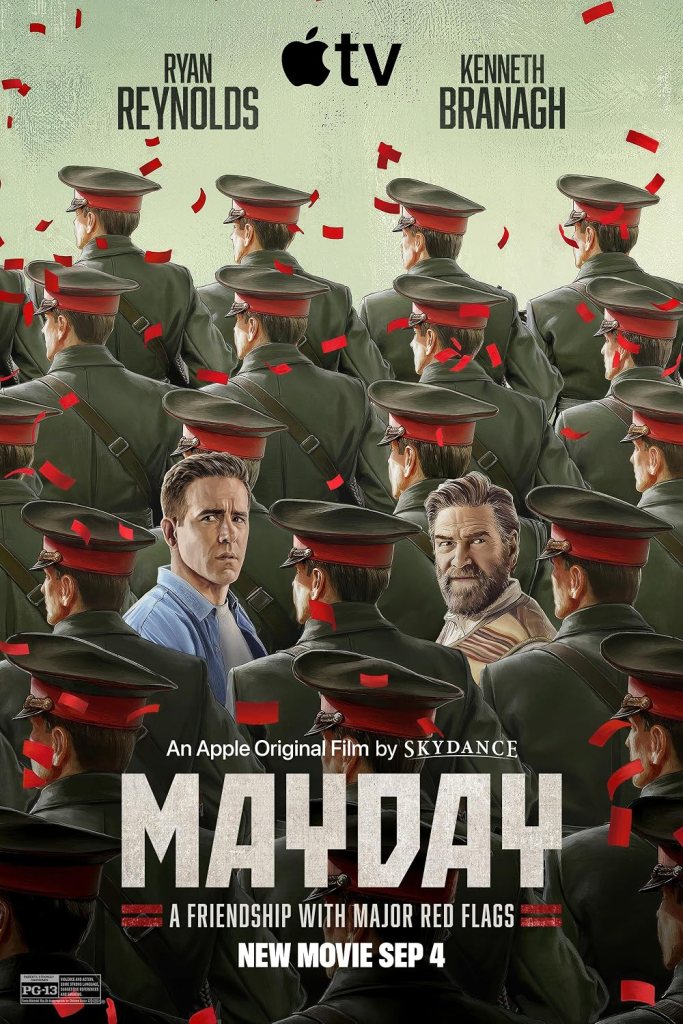
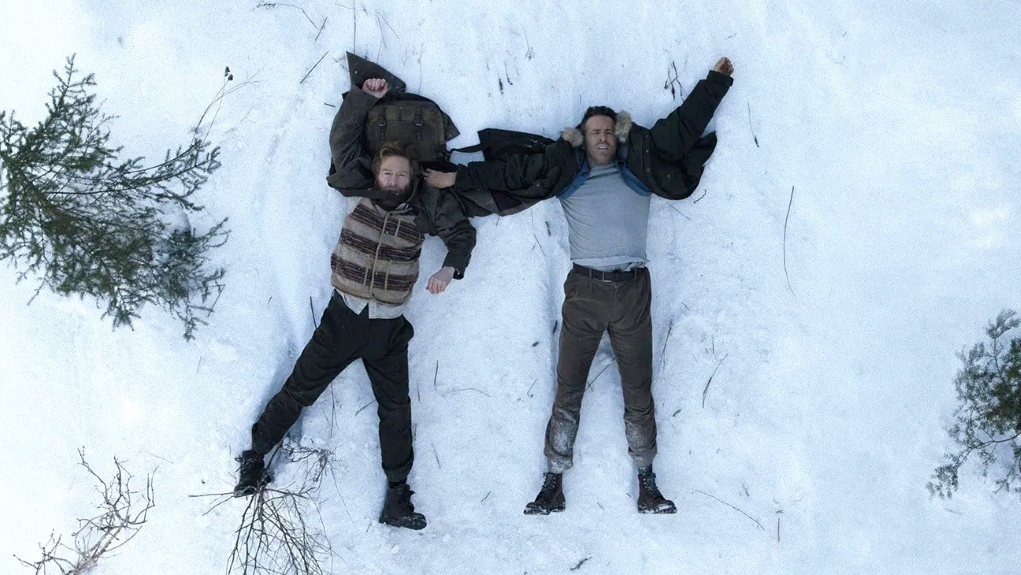
Did anyone have on their 2026 film-bingo card “Kenneth Branagh throws goons around in an action movie”? Saying it’s a big change of pace feels like an understatement, with Branagh confessing in interviews he was delighted to get the opportunity to do something so different. So we get to see the actor most associated with Shakespeare slamming punches and kicks into bad guys and also showing some mean comic chops mixing the banter with Ryan Reynolds.

It’s 1987 and Reynolds is ace American pilot Troy “Assassin” Kelly, shot down over Russia during an off-the-books spy mission. The badly injured Troy wakes up tied to a bed in the home of Nikola Ustinov (Kenneth Branagh). Nikolai is obsessed with all-things-American (“I have not eaten McDonalds but I expect I would find it delicious”), his favourite film is Top Gun which he has seen multiple times on a dodgy bootleg VHS and having an American pilot buddy is his dream. He also, fortunately, is a deadly former KGB operative, willing to help Troy escape his former employers so long as Troy can deliver American passports for Nikolai and his estranged dissident daughter Anna (Maria Bakalova). Cue a buddy road-trip through the dangers of the Soviet Union.

Mayday delivers what you hope it will do: fast-paced, witty entertainment for a Saturday night, with two charismatic actors having a whale of a time bouncing off each other. Reynolds can nearly do this sort of off-the-cuff, improvisational cool in his sleep, expertly making Troy someone wittily cool but also brilliant at his job and deeply caring about his men and (dying) father. Few other actors are as comfortable with the casual quip, the gentle leaning on the fourth wall or leave us in no doubt about his competence even while he spends most of the film floundering out of his depth, limping around and bleating in limited Russian.

Reynolds is undeniable funny and charismatic, but he generously gifts much of the finest moments to Branagh. Covered with a Grizzily Adams beard (obviously referenced by Reynolds), Branagh’s under-appreciated gift for comedy is utilised to superb effect. He makes Dimitri hilariously endearing in his naive thrill at his American guest, or the dry enthusiasm he gives to subjects as diverse as McDonalds, Springsteen and Tom Cruise. But he’s also equally deadpan when discussing every single element of espionage spycraft, commenting on events around him (from fights to lovemaking) with a hilarious matter-of-fact laconic bluntness. Branagh’s sensitive eyes also show the vulnerability of a lonely man, plagued with guilt for his failures as a father.

And Branagh, it seems, can throw down. Mayday gives him multiple opportunities for impressively choreographed fights. From a bar-room brawl that uses snooker cues, bottles, arrows and anything else to hand to a machine-gun grabbing train dust-up to using everything from pens to seatbelts in various other fights. Mayday races from entertaining set-piece to entertaining set-piece, after its initial misdirection opening which suggests we might be in for a sort of lightweight Misery with Reynolds as a bed-strapped Jimmy Caan and Branagh as a genial Kathy Bates.

It’s all so entertaining and snaps along so pacily in just over 90 minutes, well-assembled with a witty series of shots and edits by directors John Francis Daley, Jonathan Goldstein that it almost doesn’t matter that the film truthfully has very little in it that is truly new. In fact, with its 1980s setting, it almost adds to the fun that this feels like a meta-riff on half a dozen other 80s buddy movies with Reynolds and Branagh playfully swopping the roles of Maverick and Goose between them depending on the situation. All of the film scenes could have been merrily ripped out of a studio rolodex of set pieces and character riffs, that sort of stuff that has powered hundreds of films before.

There are a few riffs on the distrust and flaws in both systems either side of the Cold War. Nikolai may love America and be deeply ashamed of the brutality of his own system, but he’s fairly clear-eyed that both sides are willing to push a propaganda view of the other. Troy, a firm believer that America is generally flawless and the USSR unquestionably wrong, has his viewpoint challenged throughout – from discovering his government’s sense of right and wrong is far from perfect to finding not all Russians are brainwashed commie fanatics. The villain – a smug Marcin Dorociński doing a lot with not a lot on paper – plans to use events to shatter Gorbachev’s Glasnost, leaving Troy in the unusual position of helping the system he started the film convinced was terrible.

But really Mayday is all about having good fun. And that’s generally what I had when watching it. It’s all familiar and, aside from the novelty of seeing Branagh do it, there isn’t much in its comedy, action, car chase or fighter pilot antics you’ve not seen before. It skirts around more hard-hitting stuff, such as the fraught relationship between Nikolai and his daughter – largely resolved through an off-screen conversation. The most daring thing in it goes largely unspoken: Reynold’s character is a hotshot fighter pilot at least in his forties with no girlfriend or partner, expresses no sexual interest in any woman in the film and has a faultless gaydar – is Reynolds winkingly playing the full subtext of Top Gun here?

Mayday is assembled with real light comic energy, by people who really know what they doing, to put together a film that’s not pretentious, outstays its welcome or trying too hard to anything other than pop a grin on your face. Which you’d be hard-pressed not to have at some point.
Imitation of Life (1934)

Imitation of Life (1934)

A surprisingly subversive tale on race under it’s traditional ‘woman’s picture’ exterior

Director: John M Stahl

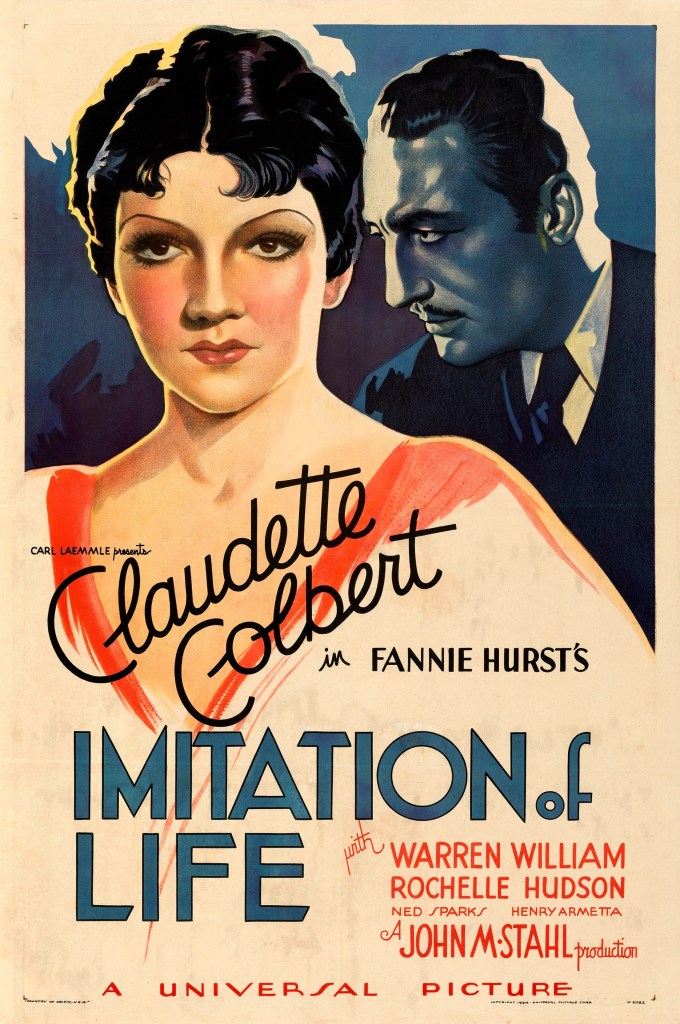
Cast: Claudette Colbert (Beatrice Pullman), Warren William (Stephen Archer), Rochelle Hudson (Jessie Pullman), Ned Sparks (Elmer Smith), Louise Beavers (Delilah), Fredi Washington (Peola), Alan Hale (Furniture man)

Imitation of Life sits at a fascinating juncture of American life. On the surface, its a familiar “woman’s film”. Struggling widowed mother Beatrice Pullman (Claudette Colbert) turns her life around by building a pancake bakery empire, based on the unbeatable pancake recipes of her Black maid and best friend Delilah’s (Louise Beavers). She builds a better life for her daughter Jessie (Rochelle Hudson) and navigates romantic complexity with dashing ichthyologist Stephen Archer (Warren William), who unwittingly attracts the devotion of the teenage Jessie.

Now, a film establishing it was possible for a woman to make a successful business career without the assistance of a man – and that she wouldn’t be, in some way, narratively punished for her presumption – would be radical enough. But, also in Imitation of Life is a complex, questioning look at race in America. Because humble, deferential Delilah – who sees her life’s purpose as being to serve – is openly the foundation of that success. Delilah isn’t even comfortable taking her share of the company (20% for being the face and genius of the company), an attitude Imitation of Life simultaneously encourages us to find both quaint and frustratingly servile. Instead, Delilah wants nothing more than to keep her apron on and bring Beatrice food and foot massages whenever she needs them. What this says about both of them is kept fascinatingly present all the time.

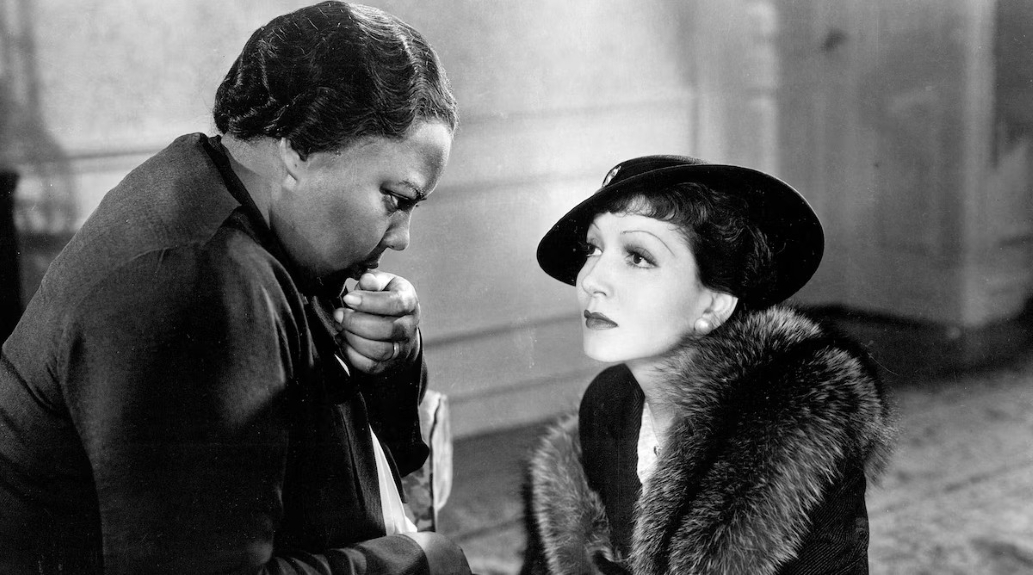
Imitation of Life presents an intriguing, under-the-surface searchingly frank depiction of a close bi-racial friendship that still drips with unspoken hierarchy. Delilah, of course, wouldn’t think of calling Beatrice anything other than Ms Bea, while Beatrice would never think of introducing her as anything other than Delilah (she doesn’t seem to have a last name). Repeated shots employing staircases – most strikingly a mid-shot that sees both women head to bed, one going upstairs the other down – stress the barriers between them. While the wealthy Bea parties upstairs, Delilah smilingly knows her place is downstairs in her comfortable but considerably less grand servants’ rooms. There is friendship, but everyone has their ‘natural’ place – and the film subtly invites us to feel awkward when we recognise this.

However, Imitation of Life gives its most dynamic plot to Delilah and her daughter Peola. Superbly played by Fredi Washington – bringing a lifetime of personal experience to her passionate portrayal – the pale-skinned Peola, unlike Delilah, can ‘pass’ as white. For a Hollywood film to even present this is daring enough: the clear-spoken Peola, who lacks Delilah’s stereotypical sing-song accent, is a living, breathing challenge to the absurdity of America’s racist segregation laws. She can work in a restaurant, where the punters would be aghast if they knew her background (as aghast as they are when Delilah walks in). She has possibilities in her life beyond the ‘Black college’ her mother wants to send her too or the career of menial drudgery even the most intelligent Black people in America were consigned to at the time.

Imitation of Life, with its romantic regard for the traditional Delilah, can (and does) stare disapprovingly at Peola’s contemptuous dismissal of her mother, whose very existence is a living, breathing reminder to people that Peola doesn’t belong upstairs but very much downstairs. An attitude cemented at childhood, when Delilah unexpectantly arrives at school to ‘expose’ Peola’s heritage to everyone. But there is enough sly commentary in Imitation of Life to suggest this is as much a generational split. That Peola is perhaps right to be frustrated that its Beatrice rather than her mother who has made a fortune from their old family pancake mix.

In fact it can feel like Peola is rebelling as much against the older generation of Black people than she is her mother. The people like her mother, whose grandparents (or even parents) were slaves and accept willingly they belong in deferential service to rich whites, gratefully receiving their parental handouts. Peola dresses and speaks like a modern young woman, and her resentment is as much at Delilah’s lack of self-worth and happy embracing of her (admittedly friendly) economic exploitation. Peola is looking at a new future – one where Black people would (rightly) no longer accept such rigid guardrails on their life.

Imitation of Life captures these ideas slightly clumsily, presented in a way white 1930s Americans were comfortable processing, but it’s there. Sure Delilah – played with a real warmth and tenderness by Louise Beavers, adding emotional depth to a ‘mammy’ character – may be, at heart, a stereotype who turns up in Bea’s life with magical serendipity to improve her life with her service. Peola may often be given the words of a stroppy ingrate who won’t accept her place. But both characters – and Beavers and Washington – are straining at presenting something more complex, smuggling it under the Hays Code radar, as a generational tale of divergent options in the Black community.

This makes Imitation more than the comforting Uncle Tom story it presents as. It’s also, certainly, a heck of a lot more interesting than Colbert’s storyline. (Colbert must have noticed this, so it’s too her credit she enthusiastically took the larger but duller part). Colbert does a fine job, her affection for Delilah measured with just enough patronising paternalism. The melodramatic romantic entanglements with Warren William (not at his most interesting) and the almost terminally flat character of Jessie (played forgettably by Rochelle Hudson) drift dully past the eyes as we wait for the camera to go back downstairs for the real story once again.

Imitation of Life resolves most of its plot lines with comforting forgiveness and with characters stepping back into accepting their more expected roles. But it carries just enough suggestion of subversion, underneath its placid acceptance of a status quo, to make you think the same people would have made an angrier, more dangerous film if they had been given the chance.

Mean Streets (1973)

Mean Streets (1973)

Scorsese’s calling card is an energetic, gripping, electric mix of themes that would shape his career

Director: Martin Scorsese

Cast: Harvey Keitel (Charlie), Robert De Niro (Johnny Boy), David Proval (Tony), Amy Robinson (Teresa), Richard Romanus (Michael), Cesare Danova (Giovanni), Victor Argo (Mario), George Memmoli (Joey), Lenny Scaletta (Jimmy), Jeanne Bell (Dianne), David Carradine (Drunk), Robert Carradine (Gunman), Martin Scorsese (Jimmy Shorts)

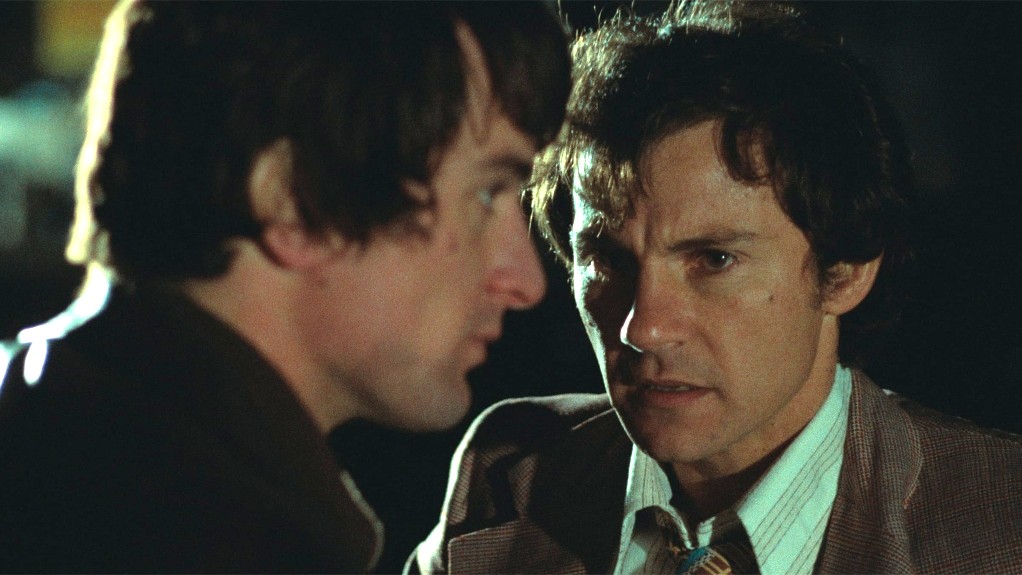
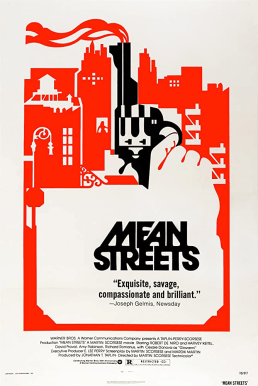
Mean Streets wasn’t actually Scorsese’s film debut but that feels like a technicality. If young Martin had a calling card, it was Mean Streets. It’s a vibrant, electric punch to the solar plexus and a dazzling display of virtuoso skill mixed with grungy, improvisational energy. Mean Streets is an artist finding his voice and screaming his agenda from the rooftops, bringing together a host of ideas, styles and themes that would dominate the rest of his work. Mean Streets remains raw, dynamic and overpowering, a major artistic statement like a punchy companion piece to Terence Malick’s Badlands, another new-found distinctive voice in American from 1973.

Mean Streets was strongly inspired by the environment Scorsese saw around him growing up on the rough streets of New York, crammed with the sort of sin Travis Bickle would later swear to wash away. It’s a world of gangsters and masculinity where boys never grow up, but become immature sharp-suited guys whose conversations end in hasty punch-ups and saving face means everything. Charlie (Harvey Keitel), nephew to the leading neighbourhood Mafiosa, is plagued with Catholic guilt. His idea to deal with this? To ‘save the soul’ of old friend Johnny Boy (Robert De Niro), an impulsive tearaway, in debt to every money lender. Charlie will struggle to curb Johnny Boy’s self-destruction, but with limited success.

Catholic guilt soaks through Charlie, introduced kneeling in Church while we hear the words of a priest (voiced by Scorsese) outlining Charlie’s moral quandaries. Charlie has a morbid fascination with punishment of his sins, never seeing a flame without feeling the urge to dip his hand into it. He claims his hero is St Francis of Assisi (though there is no sign he has read or understood anything St Francis ever said). Charlie continues a clumsy internal monologue with God (hilariously, late in the film he slips into continuing this outload to the confusion of Johnny). He has not time for confession, with its Hail Mary’s: he’s arrogant enough to think, as a real sinner he needs more.

But, like so many of Scorsese’s gangsters, his guilt runs skin-deep. He’s a nice guy, scrupulously polite and well-spoken, only as far as it goes. Charlie may know his guilt springs from his life of crime being full of greed and sin, but never once does he even consider changing it. Just one flash of his uncle casually suggesting he could own his high-class restaurant soon is enough for him to shelve all idea of personal change or real sacrifice. His self-imposed mission to reform Johnny Boy is really a self-aggrandising deflection effort, designed to make him feel better about his horrendous life choices. As if it’s fine to be a low-level rent collector and friendly face of Mafia loan sharks, if he makes one wildcard play by the rules everyone else obeys.

Keitel captures Charlie’s walking contradictions very well, his surface decency hiding his obsessive pride. He may be more articulate about his flaws, but Keitel makes clear Charlie talks a good game, but is obsessed about what people think of him. He considers himself in love with Johnny Boy’s epileptic cousin Teresa (Amy Robinson, very good) – but he’s way too embarrassed to ever let their relationship become public, because of the scorn that will be heaped upon him for dating someone ‘diseased’. Just as the idea of dating Black dancer Dianne (Jeanne Bell) is instantly rejected.

All these low-level gangsters are obsessed with status. Nearly every conversation – most strikingly in a pool room payment haggle – seems about five seconds away from a punch-up over some semi-imagined slight. No one has anything to talk about, other than booze and girls. They are all basically children, giggling over immature jokes or watching films like enthralled toddlers. Only Tony, a surprisingly thoughtful eccentric, seems to have any hinterland (and even he keeps baby lions in his basement). Most of them are useless. Michael, an incompetent loan collector introduced bungling a camera shipment deal, is desperate to look lean and mean in his sharp suits but constantly fails to look like anything other than someone’s dumb younger brother.

The willingness to call out these bullshit self-images is part of what makes Johnny Boy such a dangerous figure. Introduced blowing up a post box for shits and giggles, this is a jaw-dropping firecracker of a performance by De Niro. He makes Johnny Boy a larger-than-life figure with a sociopathic streak, stirring up trouble and conflict simply for kicks. There can be charm to his unashamed insolence – De Niro captures all this has a stunning early monologue, a rambling shaggy dog story excuse that Keitel’s Charlie can’t help grinning indulgently at. But he’s also capable of sudden, thoughtless violence. Just as he can collapse into vulnerable tears when the pressure’s on – tears he can instantly forget when he starts chasing the next thrill, like a dog with a car.

De Niro’s stunning performance beautifully complements Scorsese’s superb direction. Both artists collaborate perfectly for De Niro’s arrival at Tony’s bar – a perfectly paced tracking shot towards Keitel, cut to perfection to The Stones ‘Jumping Jack Flash’. It brilliantly tops Keitel’s own entrance earlier, where the camera followed him in tight close-up from behind (to the tune of The Stones ‘Tell Me’). Mean Streets is full of wonderfully selected rock ‘n’ roll tracks, the action cut to these tunes to perfection. Scorsese understands every beat of this music and how it can maximise impact. From ‘Rubber Biscuit’ to the stunning use of ‘Be My Baby’ at the film’s start, few directors have used pop songs better.

It brings a rocky edge to a film that feels constantly propulsive and wired, despite the fact the plot is strikingly straight-forward. It feels ripped from the streets in places (so persuasive is its energy, you can forgive the multiple obvious continuity errors), full of punchy energy. Sequences like Keitel’s drunken revelry – the camera attached to Keitel makes us feel we are woozing around as much as Charlie. An extended pool-room fight is a masterpiece of energy.

The film is full of masterful edits, immediate tracking shots and whipper-crack roving camerawork. All to see a world of shallow desires, where the characters feel awkwardly out of place as soon as they leave their dark streets (never has anyone looked less comfortable at a beach, than Charlie does here). Every problem is addressed with fists and Charlie is lying to himself when he says he’s less wild and foolish than the others.

Mean Streets builds towards a crescendo, but it’s a masterclass before then of atmosphere. And it’s a major awakening of a great artist – and a major statement of a great actor, De Niro as sensational as Scorsese’s filmmaking as breathtaking. In any other career it would be the highlight: the fact it might only crack the top ten of both, shows the greatness of the careers that would follow.

Project Hail Mary (2026)

Project Hail Mary (2026)

Delightful unusual bromance in space, full of heart and humour – a popcorn treat

Director: Phil Lord, Christopher Miller

Cast: Ryan Gosling (Dr Ryland Grace), Sandra Hüller (Eva Stratt), James Ortiz (Rocky), Lionel Boyce (Carl), Ken Leung (Yao Li-Jie), Milana Vayntrub (Oleysa Ilukhina), Priya Kansara (Mary), Malachi Kirby (Martin Dubois)

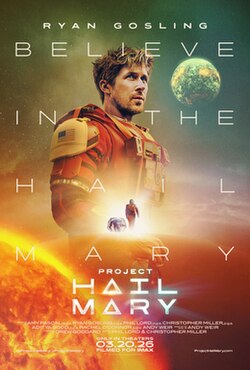
We all feel a bit groggy after a long sleep, waking up feeling a little confused about where we are. But I bet none of us have been as freaked out as Dr Ryland Grace (Ryan Gosling) waking up, millions of light years from Earth, on board a spacecraft called Mary, en route for a mysterious sun, with all the rest of the crew having died in hyper-sleep. Amnesia means he can’t remember why, and he only slowly recalls he was plucked from a teaching career by all-powerful world-saving project leader Stratt (Sandra Hüller). With his unusual scientific expertise, he was tasked with investigating a solar bug (astrophage) slowly killing the stars in the galaxy.

He’s on a ship sent on a ‘Hail Mary’ to investigate the only star in the galaxy that seems unaffected. He’s only slowly remembering all this – and why he is on this mission – when he encounters another ship with a single surviving crewman. He’s Rocky (James Ortiz), a bubbly, friendly, super-skilled mechanic and engineer – who also happens to be a small, rock alien with arms and legs and a hard to translate sing-song voice. Grace and Rocky, with their contrasting skills, team up to solve the astrophage problem and save their worlds from extinction.

Adapted from a novel by Andy Weir, it’s easy to see the overlap with the previous mega-hit based on Weir’s work, The Martian. Very much like that film, a charming, witty genius who doesn’t take himself too seriously has to “science the shit” out of an impossible situation. The differences being that, rather than having to keep himself alive he needs to save the lives of everyone on Earth and rather than being alone, he’s at the heart of an eccentric bromance with a kindred spirit as adorkable as him. It makes for a winning comic pairing but also a very touching, incredibly sweet bromance where you’ll genuinely feel yourself become heavily invested in the safety of this odd couple.

Project Hail Mary made this combination work extremely well on page and it’s translated to screen with just the right level of comedy and tension by Lord and Miller (here redeeming themselves after the catastrophe of their last outing into space, their short-lived direction of Solo). It’s a very faithful adaptation of the novel that not only captures its tone but also preserves some of its darker twists (not least the full story of what happened to Grace back on Earth) and commits to the novel’s off-the-wall ending, that brings its hero both back full circle and gives him a wonderful narrative arc.

Above all though, this is a film about a bromance in space, the film packed with witty interplay between Grace and Rocky as they first slowly understand each other, then learn to work together and then become fast friends, happy to tease each other and (particularly in one heart-rending sequence) willing to take extraordinary risks to keep each other alive. The creation of Rocky – a mix of old-fashioned puppetry and digital augmentation – is brilliant, from seeing him careen around the Mary like an excited hamster in his environmental ball to his endearing linguistic quirks (“Amaze, amaze, amaze!”). Rocky, wonderfully voiced and puppeted (as part of a team) by James Ortiz, is not just undeniably cute, he’s also a determined, brave guy who knows his own mind and brings an unbelievable set of skills to the mission.

We immediately accept him as a ‘real’ character – despite the fact he has no face and is a rock with hands – due to the skilful direction of Lord and Miller and, perhaps above all, the superb work from Ryan Gosling as his human scene partner. Gosling continues to go from strength to strength as he embraces his capacity for mixing adorkable comedy with heartfelt emotion. He makes Grace full of childish enthusiasm, gripped with excitement at the alien wonders and strange planets he encounters, but still nervous, scared and (certainly at first) painfully out of his depth trying to manage the life-and-death struggles of manning a craft alone in space.

The film is intercut with flashbacks as Grace slowly regains his memories – helpfully in chronological order – of his time on Earth leading up to the mission, under the command of the coldly professional Stratt. Sandra Hüller gives this role the same deeply repressed humanity she found in an unlikeable murder suspect in Anatomy of a Fall. Shot in a different aspect ratio – life on Earth looks far more cramped than the glorious vistas of space – the past mixes scenes of peril and world-ending threat, with wonderful character vignettes from Grace and his handler playfully bonding over supplies and sweeties in a hardware story to a sombre Hüller showing her humanity for just a brief second for an impressive rendition of Harry Styles at a celebratory karaoke night. These scenes drip-feed just enough information to keep us guessing, while allowing our understanding of the hero to grow.

And they don’t detract from the real meat of the story, the wonderfully warm relationship between Grace and Rocky and the exciting thrill of watching two experts inventively solve impossible problems. Lord and Miller mix this with just the right mix of comedy, pathos and sentiment, and it will be a hardened soul who won’t feel a bit of grit in the eye at least once in this film. An expert adaptation of a very enjoyable novel, it’s also another wonderful showpiece for the charm and humanity of Ryan Gosling, who  makes this character hugely relatable and enormously likeable, fully embracing the surprisingly complex arc the character is given in the film’s final act. A popcorn triumph that I can imagine re-watching time and again.

The Devil Wears Prada 2 (2026)

The Devil Wears Prada 2 (2026)

Fan-pleasing sequel that cosily does exactly what it says on the tin

Director: David Frankel

Cast: Meryl Streep (Miranda Priestly), Anne Hathaway (Andy Sachs), Emily Blunt (Emily Charlton), Stanley Tucci (Nigel Kipling), Justin Theroux (Benji Barnes), Kenneth Branagh (Stuart Simmons), Lucy Liu (Sasha Barnes), BJ Novak (Jay Ravitz), Simone Ashley (Amari Mari), Tracie Thoms (Lily), Patrick Brammall (Peter), Helen J Shen (Jin Chao)

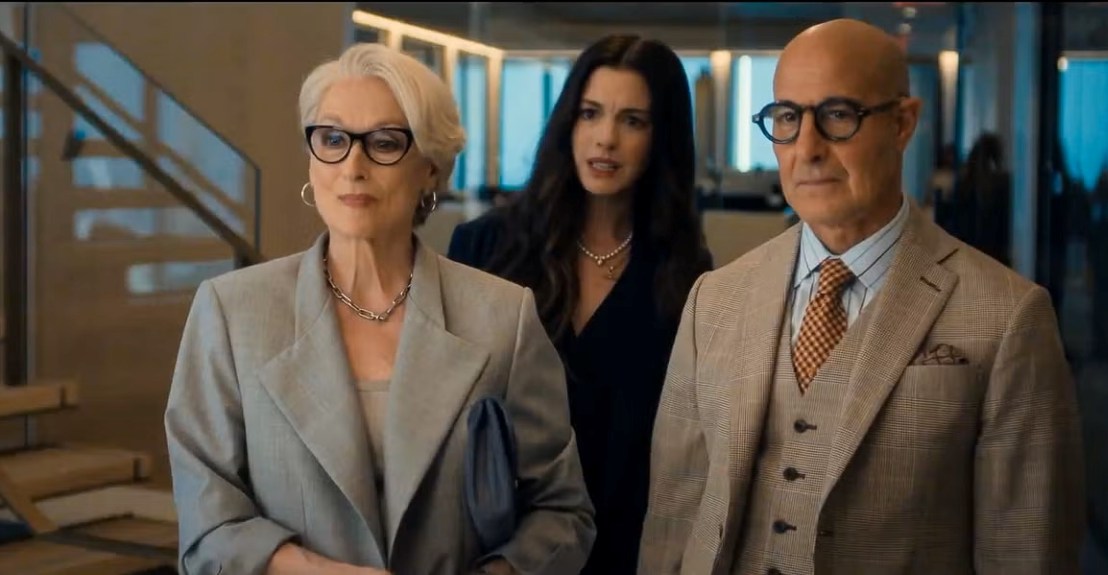
Twenty years on and once again The Devil Wears Prada trots down Hollywood’s cat-walk. Andy Sachs (Anne Hathaway) is now an award-winning journalist, whose entire newsroom has recently been kicked to the curb (via a group WhatsApp!) by their owner. Meaning she’s free to come back to Runway to help the magazine pilot its way through an online storm around a puff piece for a recently exposed sweatshop brand. Subdued dragon Miranda Priestly (Meryl Streep) might not want her back, but the listless editor is struggling in a world of HR complaints and magazines kow-towing to whip-hand holding advertisers like Dior – their advertising team now managed by former assistant Emily (Emily Blunt). Can Andy, Miranda and loyal number-two Nigel (Stanley Tucci) work together to make Runway successful and relevant again in the age of clickbait?

But of course, they can. There is nothing really surprising about The Devil Wears Prada 2, a perfectly entertaining film that has been skilfully set up to offer a good night out for fans of the first film. It’s packed with knowing little in-jokes and references and is overwhelmingly focused on getting the band back together and giving them a joint mission. Which in this case is those two familiar enemies of modern Hollywood, money-obsessed owners with no interest in talent and the internet and all its phone watching shallowness for legacy media.

As such, the idea of a print fashion magazine editor being a symbol of all powerful, devil incarnate ruthlessness feels incredibly passé. That’s one reason why Miranda feels like such a milder, put-upon, even vulnerable figure here, for all Streep can still rip through a sharp one-liner. The other is, of course, that rather like Hannibal Lecter becoming a sort of bizarre cult anti-hero by the time we got to Hannibal, rather than fearing Miranda, Devil Wears Prada 2 knows most of the audience love her. It’s a trend that was already happening in the first movie, and its doubled down here. Miranda is no more-or-less than the primary focus of sympathy for the film.

From the fact that her old world is falling down around her, to the joyless HR rules that stop her poisonous barbs even passing her lips in public, it’s in every inch of the film that expects the viewer to be openly rooting for her. In fact, the whole film is about getting that poisonous, go-getting killer back purring again – with Andy even being called out by a journalist friend for going through Stockholm Syndrome in her eagerness to help her old boss restore herself to terrifying the masses of the fashion world. Andy’s just feeling what the film is going through.

This is all part of a film that recognises the four leads are really popular with the audiences, so since we love them all they might as well all love each other (however secretly) as well. Stanley Tucci’s avuncular affection as Nigel is the glue that brings this gang back together. Anne Hathaway is still all sprightly, girly enthusiasm (however much we are told she is an ace investigative reporter) still trying to impress her private mentor. Emily Blunt (still ace) carefully lets the vulnerability and desperation to be liked peek through the surface of her brittle namesake, obsessed with style and etiquette. All the performers natural mateyness (heck, Blunt and Tucci are famously in-laws) scream off the screen in a film that’s basically a cosy reunion party.

It’s also a film that demonstrates the power of the original. Ironically, for a film all about cost-cutting at Runway, the budget for the film seems through the roof. Most of the second half takes place in the fashion hotspot of Milan. An armada of fashion figures play themselves at various junkets and black-tie dinners (bizarrely, even Rory McIlroy and his wife appear – Rory’s probably shouldn’t have acting in mind as a back-up career). You know a film has passed through the popularity mirror, when the industry it as effectively parodying (however gently) in the first film, pulls out all the stops to get every single name going into its sequel. To cap it off, Lady Gaga pops up to play an exaggerated version of herself, as holder of a long-running feud with Miranda.

The plot, as such, isn’t particularly important compared to the clothes, the charisma of the actors and the warm comfort the film is sure you are getting from the very fact it exists and is playing in front of your eyes. Meryl Streep is still lots of fun, even if she could still play Miranda while standing on her head. I would guess she asked for a top line actor to be her scene partner for her domestic scenes, hence the slightly bizarre presence of Kenneth Branagh of all people (doing a perfectly serviceable job, and he seems to have also gone to the trouble of learning a few notes on the violin).

How much you enjoy all this, rather depends probably on your level of knowledge and affection for the original. But, if you’ve got any level of that, you’ll probably find something to enjoy in this light, feel-good confection, where problems can be easily solved (twice!) by the waving of mythical billionaire Lucy Liu’s magic wand. There are some very, very mild points made about the downfall of the print industry (not to mention journalism) in the digital age, but that’s a subsidiary point to what we really want to see: a closing shot of our heroes working in perfect harmony, having learned (finally) to love and respect each other. It’s the sequel as very particular fan fiction.

Breaking Away (1979)

Breaking Away (1979)

Charming and very witty coming-of-age cycling and friendship tale, told with real wit and zip

Director: Peter Yates

Cast: Dennis Christopher (Dave Stohler), Dennis Quaid (Mike), Daniel Stern (Cyril), Jackie Earle Haley (Moocher), Paul Dooley (Ray Stohler), Barbara Barrie (Evelyn Stohler), Robyn Douglass (Katherine), Hart Bochner (Rod), PJ Soles (Suzy), John Ashton (Roy)

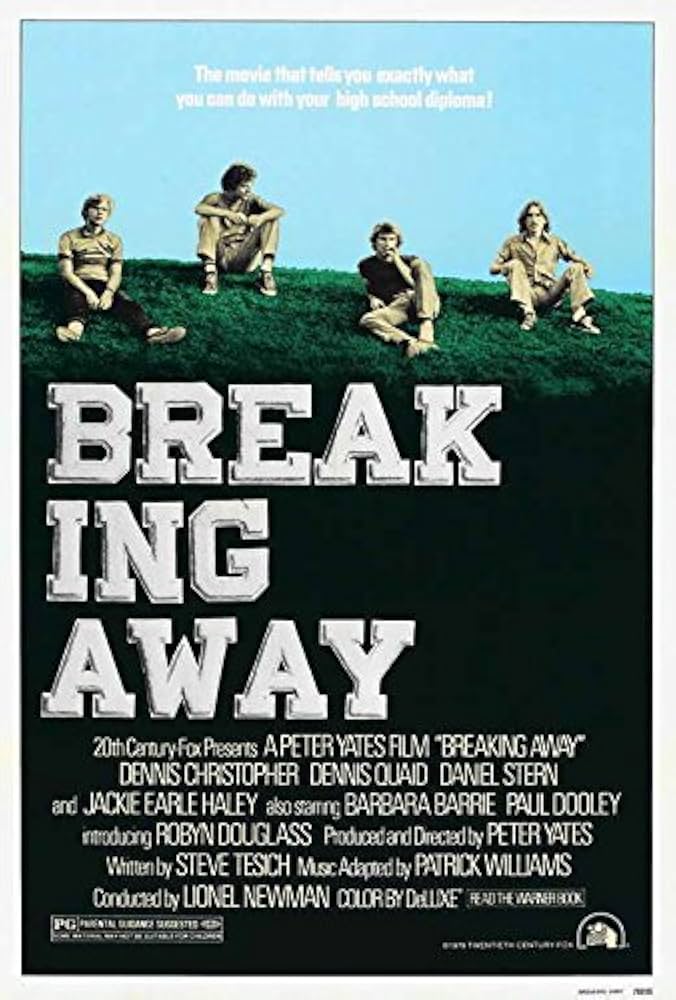
It’s a sports film, coming-of-age film. a romance,  a rivalry and a film a father and son. It’s about half-a-dozen things, with a bit of Mendelssohn and Rossini like a garnish on top. All the sort of stuff our hero loves. He’s Italian-culture fixated (because he loves their cycling team) Dave (Dennis Christopher), who sprinkles his conversation with Italian turns of phrase – to the exasperation of car-dealer dad (Paul Dooley) – and spends his days either cycling or shooting the breeze of just-left-high-school drifter pals Mike (Dennis Quaid), Cyril (Daniel Stern) and Moocher (Jackie Earle Haley).

But it’s tough being working-class kids in Bloomington, Indiana when the students of local Indiana University treat you like scum, tarring you with the nickname “cutters” (from the local limestone quarrying industry). After one dust-up too many between boys and students, the University President decides to invite the locals to enter a team into their mini-500 cycling tournament (500 laps of the track, winner takes all). The “cutters” rely on Dave to win it – but will he take part when it might mean exposing to his student girlfriend Katherine (Robyn Douglass) that he’s not an Italian exchange student?

All of this breezily comes together very well in Peter Yates’ hugely enjoyable comedy, with a semi-auto-biographical Oscar-winning script by Steve Teisch. Like the smoothest Peloton, Breaking Away is perfectly stream-lined, fast-paced and builds expertly to an exciting chase finish. Along the way, it balances a host of tones and emotions with a delightfully light touch. It’s a very easy film to sit down and relax in, wonderfully shot in a series of pitch-perfect Bloomington locations, most strikingly a former quarry now converted into a beautiful mini-lake.

That’s the favourite haunt of our four friends, all of them (in their own ways) plucky underdogs with chips on their shoulders. Theirs is a life without obvious opportunities and escape routes from this small-town life, with even the local cutting industry slowly withering away. This is made even worse by seeing the rich kids of the University, their whole life ahead of them, swanning around and their town (and that quarry) as if they own them. (Hart Brochner, later to be a bullet-catching punchline in Die Hard is the perfect face of semi-decent entitlement as the leader of these students).

These four are played by a dazzling collection of actors – it’s a bitter irony that Dennis Christopher is the only one of them that didn’t go onto bigger and better things since he is excellent here. Quaid’s Mike is a bullish former-jock, so worried his best years are already behind him that he swings wildly between throwing himself foolishly into things to prove his manhood and giving up immediately before he can be embarrassed. Stern’s Cyril is a lanky, geeky oddball, constantly awkward in every situation. Haley’s Moocher is a secret-romantic, with a trigger-temper when his shortness is bought up (he’s more than capable of punching out a punch clock after one gag too many about his height).

Christopher though is the star, a playfully impressionable optimist who throws himself into things with gleeful abandon. There are no half-measures with this kid. When he loves Italian cycling, he’ll immerse himself in every part of Italian culture – music, food, language, the lot. It’s rather sweet to see his bouncy delight, indulged by his warmly supportive mother (an Oscar-nominated Barbara Barrie in a lovely heart-felt turn) who cooks endless Italian meals (to the frustration of his father, who wants not all this “zini stuff” but American food “like French fries”).

It’s as playfully sweet as his courtship of Katherine – even if that is founded on a great big whopper (and the film is mature enough to know part of growing-up is owning up to this fib). A perfect expression of the film’s everyday joy is a lovely moment where Dave, serenading Katherine with an Italian aria, enthusiastically throws out his arms only to whack his hand on a lamppost, shrugging off his obvious pain with a fixed grin. It’s a moment that you can counter-balance with the rollicking slap Katherine later gives him and their gentle reconciliation as he sits slumped against a different lamppost.

Yates’ film really captures youthful, idealistic joy – best seen in a marvellous showpiece scene where Dave races a truck (ironically full of Italian goods!) on a freeway, Yates not only shooting with pacey thrill, but letting the classic Italian music soar over the soundtrack as Dave keeps pace at 60mph. This scene is then heartbreakingly contrasted with Dave’s encounter with the Italian cycling team he has hero-worshipped – only to find they are ruthless professionals, who see him an upstart they are happy to cheat of victory. Christopher’s vulnerability here during this crushing moment of disillusionment (and the little-boy-lost reassurance he eventually seeks from his parents) brings a real lump to the throat.

Breaking Away is also about bonds of loyalty. The friends may feud and argue, but they are willing to go to bat for each other without a second thought – whether that’s one of them beaten in a fight or one of them struggling in the quarry waters. The commitment of the four of them to winning the race – wearing shirts that proudly proclaim them as cutters – is a perfectly assembled display of race filmmaking (Yates bought a lot of skills across from Bullitt) that builds towards a well-judged feel-good ending.

What might be the most moving beat in Breaking Away though is the father-son relationship between Dave and his dad. Paul Dooley is excellent (and cheated of an Oscar nomination) as this gruff, old-fashioned man who won’t say what he feels and believes in hard-work, sweat and the homespun American life who can’t wrap his head around his more cultured life. (Dooley is also hilarious in capturing Ray’s used-car-salesman cheapness – never has the word “Refund!” raised such laughter). These two spend half the film barely understanding each other, but still loving each other – and the shift in their growing warmth and support is genuinely very moving. While still leaving us room to say “Bonjour” to a neat closing gag between them.

Breaking Away is unfussy, perfectly formed and incredibly sweet and entertaining. It’s a genuinely, heart-felt, well-meant, feelgood film that balances laughter, warmth and drama perfectly. It’s one of those small-scale treats you long for among blockbusters.

Here Comes the Navy (1934)

Here Comes the Navy (1934)

Run-of-the-mill odd-couple buddy movie, that somehow landed a nomination for Best Picture

Director: Lloyd Bacon

Cast: James Cagney (Chesty O’Connor), Pat O’Brien (CPO Biff Martin), Gloria Stuart (Dorothy Martin), Frank McHugh (Wilbur ‘Droopy’ Mullins), Dorothy Tree (Gladys), Willard Robertson (Lieutenant Commander), Eddie Acuff (Orderly), George Irving (Admiral)

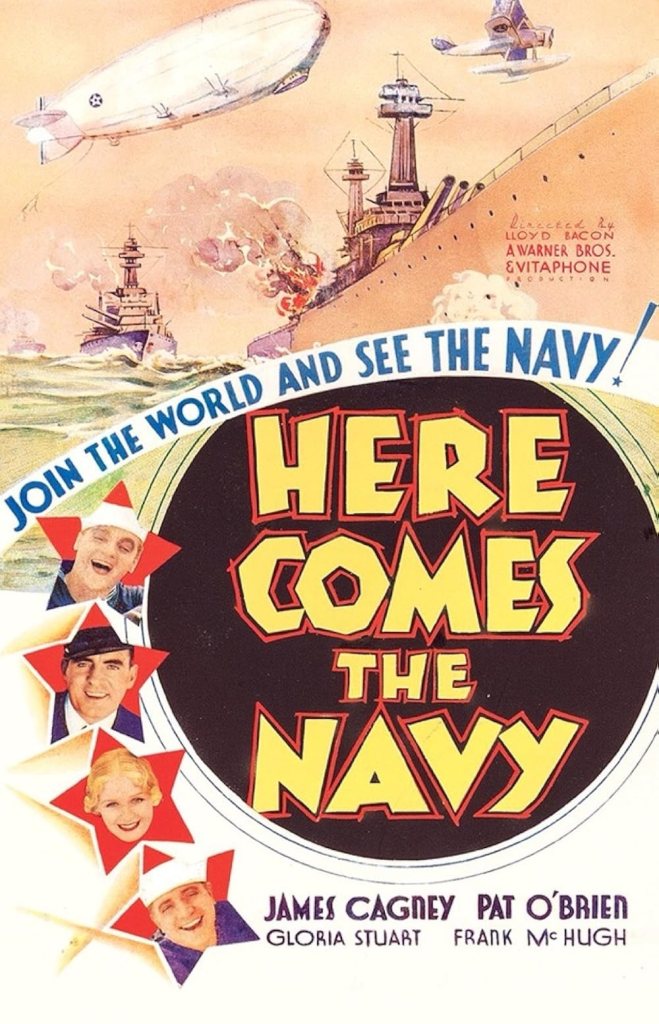
Why did Here Comes the Navy get nominated for Best Picture? The only answer that makes sense why this run-of-the-mill mix of odd-couple buddy movie and flag-waving recruitment piece ended up in such hallowed company is that it was the only contender Warner Brothers had that year and the full company block vote went behind it. Either way, Here Comes the Navy has disappeared as swiftly as a rock dropping to the bottom of the sea.

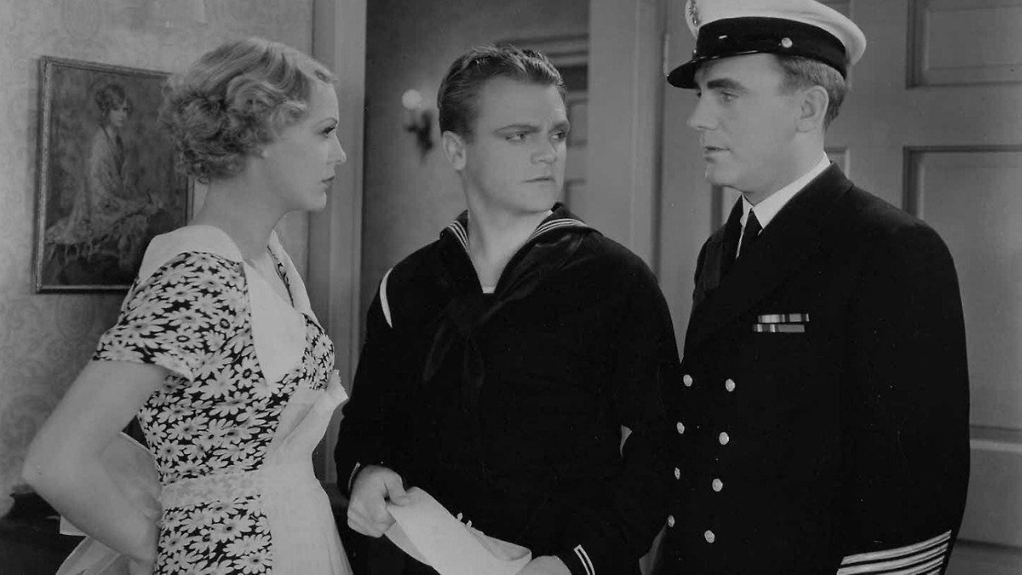
Chesty O’Connor (James Cagney) is a happy-go-lucky builder with a chip on his shoulder who takes it badly when Chief Petty Officer Biff Martin (Pat O’Brien) woos his girl Gladys (Dorothy Tree), wins Chesty’s own dance competition with her and even knocks Chesty down in a fight. Chesty decides the best revenge is to join the navy and get on board Martin’s ship USS Arizona for round two. Unfortunately for him, he finds the navy is harder work than expected, with its rigid discipline. Doesn’t stop Chesty continuing his feud with Martin – especially when he falls for Martins sister Dorothy (Gloria Stuart). But will Chesty find honour, decency and a love of duty in him while serving in the navy?

Since the film was made with the full co-operation of the US Navy, you can be pretty confident he will. Bacon’s film zips along in a pacey 85 mins, hitting every expected beat. It’s almost completely reliable on the charm and comic timing of Cagney, so it’s just as well he’s on fine form, with just the right level of cheek and cynicism alongside his deadly sin of pride. It further helps that he’s sparking much of his odd couple bickering against long-time real-life pal Pat O’Brien, spot on for the stiffer, less entertaining role of the rule-abiding killjoy who can still win a dance contest and will put up his dukes when needed (but only off duty).

The sparring and bickering between these two – with the inevitable heroic deed that brings them together as feuding best pals – is fairly formulaic but decent enough. That’s par for the whole film, which is all a formula delivered exactly to plan, that barely stands out from hundreds of similar movies. It feels rather like a light-and-jolly B-movie, the sort of thing that might pop up before you watch a more prestige product afterwards.

It gets lifted to A-movie status due to the scale from that Naval investment. Here Comes the Navy’s subtle, military-approved, message is that the atmosphere of the navy, its discipline and the pride in the institution of officers and men can turn even the most unlikely waster into a stand-up pride of the service. With that message firmly in place, the film got enviable access to the USS Arizona, with scenes above and below deck, with Chesty and Droopy polishing guns, swabbing decks, loading and firing the guns, climbing on board… every chance is used and to show the navy equipment (several stock clips shows various ships on practice manoeuvres) and the same thing continues when Chesty is re-assigned to the US Naval Air Service, with vast hangers and airships.

Plot wise, among all this impressive military hardware, there is little to get anyone’s creative juices really flowing. It’s all shot with competent professionalism but no real inspiration (or lasting interest) by Lloyd Bacon. Gloria Stuart gives a perfectly fine performance as Martin’s decent, kind sister. Cagney has almost as much chemistry with her, as he does with the tender bond he displays with Frank McHugh’s quietly amusing Droopy. (There is a hint of a homoerotic bond between Cagney and McHugh, that I am pretty sure must have passed the Navy by when they watched the film).

The shenanigans are all fairly amusing, except perhaps for an unfortunate sequence where Cagney blacks up to slip ashore as part of a ticket-of-leave party. The make-up renders him unrecognisable to Martin (!), but that’s not as bad the Black sailor he purchases the ticket from, who is only a few degrees away from the sort of “yes massa” portrait of dimness and docility that filled out the cast of Gone with the Wind.

Aside from that it’s all fine, in a totally forgettable way (I’d be amazed if Cagney had any memory of making the film). It’s main interest today is the way it captures on film two doomed naval vessels. The airship USS Macon that Chesty serves on was lost at sea (fortunately with only two crewmen lost) less than a year after Cagney’s stunt double shinned down a rope mid-air. Even more tragic, the USS Arizona would be sunk at Pearl Harbor seven years later, with 1,177 officers and crew lost, its carcass still lying at the bottom of the harbour today. It’s a tragic footnote to a film that is itself a footnote in Oscar’s history.

Seabiscuit (2003)

Seabiscuit (2003)

Earnest and decent crowd-pleaser, that wears it’s emotional messages a little too heavily

Director: Gary Ross

Cast: Tobey Maguire (John ‘Red’ Pollard), Jeff Bridges (Charles S Howard), Chris Cooper (Tom Smith), Elizabeth Banks (Marcela Zabala-Howard), Gary Stevens (George Woolf), William H. Macy (‘Tick Tock’ McLaughlin), Eddie Jones (Samuel Riddle), Michael O’Neil (Mr Pollard), David McCullough (Narrator)

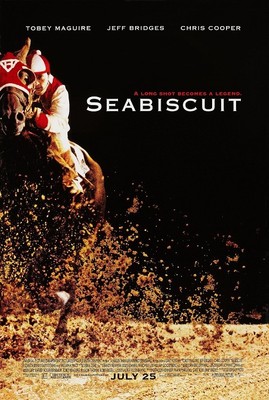
In the aftermath of the Great Depression, so many people felt lost and powerless, that anything that gave them even a smidgen of hope had great power. Which is why perhaps, on 1 November 1938 40 million people tuned into the radio to listen to the ‘Race of the Century’, as Seabiscuit (the little horse that could) took on War Admiral (mighty champion of the track). This forms the background to a sentimental crowd-pleaser from Gary Ross, a people’s champ rather like the horse itself.

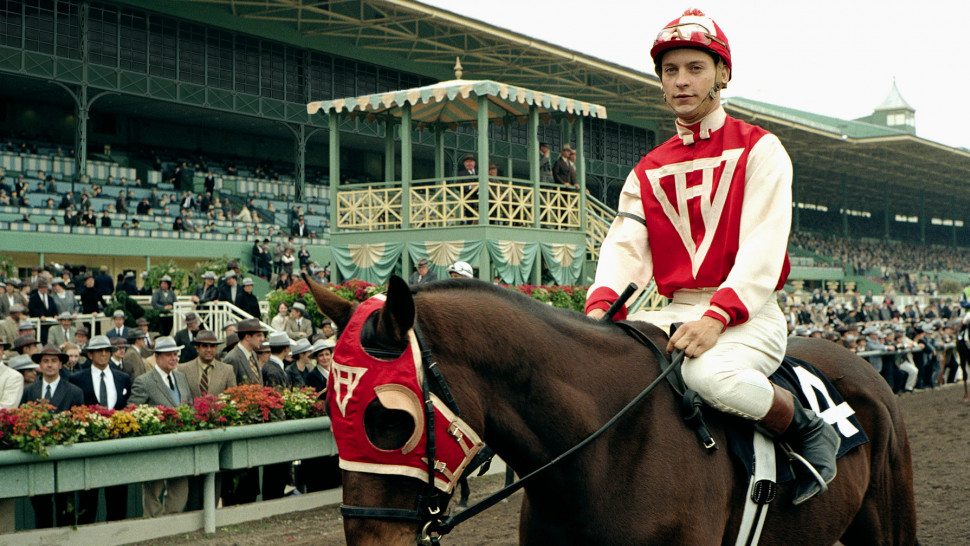
Seabiscuit is framed around the impact this plucky, temperamental but never-say-die horse had on three damaged men who pulled together as an unlikely trio to pull him towards success. First is his owner, automobile empire owner Charles Howard (Jeff Bridges) who is mourning the loss of his son. Second, grizzled trainer Tom Smith (Chris Cooper) whose purpose is vanishing with the Wild West. Third, jockey John ‘Red’ Pollard (Tobey Maguire), a never-say-die fighter himself (literally) who has never got over his resentment about being left by his bankrupt parents. All three will find the success they meet with Seabiscuit helps to re-build their lives.

This personal story does rather overwhelm the Depression-era background, with Seabiscuit playing the “we fixed him and he fixed us” card rather heavily. Much of the film’s dialogue plays up this link between man and beast and the context of the wider impact of this horse’s success doesn’t always come across – perhaps correctly Ross calculated that a personal story brings a greater emotional bond than a piece of social issue. As such, much of the social background is deposited into a Ken-Burns style series of stills and voiceover (so Ken Burns inspired, his old mucker David McCullough even narrates the thing), which never quite links up with the personal stories unfolding.

These stories are presented with mixed success. The death of Howard’s young son – the pre-teen driving a truck to the fishing point cutting to a toy truck lying sideways – is told with a level of restraint that tugs the heartstrings. Ross’ cut from the accident, to a toy car, its wheels spinning, carries impact. Bridges plays the quiet pain and hurt Howard carries with him throughout with an effective level of subtlety. He further gives a neat sense of a page heavily turning in his life, from this shining optimism of his early years as a prodigious car salesman to his quietly more reserved later life as a man who has carefully buttoned up his pain and found solace in a happy marriage (to Marcela, played with genuine warmth and charm by Elizabeth Banks).

It’s a shame the film feels the need to constantly take opportunities to relentless hammer home for us the surrogate parent feelings he starts to feel towards Red (in real life, Howard had several children, but that wouldn’t have made as good drama, would it?). It’s as if Ross worried we might not notice the possibility by ourselves. A relationship where there is more than enough on the page for us to work out for ourselves, is instead often pummelled into us, never allowing us to doubt for a moment than when Bridges worries about Maguire being injured, it is his own son he’s thinking about.

It’s a similar blight that affects even more Red’s resentment at being abandoned by his parents. It’s possible the quietly distraught performance of Michael O’Neil unbalances things here: it’s so painfully obvious his parents don’t want to leave him, you wonder why Red hasn’t worked that out. The film needs to hammer the point home for him, and insist his parents never wrote to him again (something that feels massively out-of-kilter with the emotional sympathy Ross frames them with early in the film). It feels like Seabiscuit didn’t want to lose any possible emotional moment, even if presenting his father as distant and uncaring may well have been far more effective for the story. As it is, Red’s inner pain is also relentlessly telegraphed to us.

Maguire looks the part of the jockey (he lost several bulky Spider-man muscles for the role), but the film keeps needing him to whack the button of anger and self-destructive aggression to re-enforce his broken nature. It’s a good performance, even if it’s hard to see the faultlessly polite Maguire as a rough-and-tumble wild-boy who never met a fight he doesn’t want to throw himself into. Like Bridges, Maguire has a lot of emotional heavy-lifting to carry (as well as parental abandonment, he gets blinded in one eye and goes through a crippling accident that threatens to end his career) and the burden of it eventually rather overwhelms a thinly written character.

More successful is Chris Cooper, who gives a fine performance of avuncular dedication as a horse trainer worried that fences and modern technology are rendering his old horse-whisperer skills increasingly obsolete. Perhaps it helps that Cooper isn’t given an overly forceful backstory to juggle, and that Cooper’s underplaying gives his gruff old-timer schtick real charm. Interestingly, for all the forceful attention paid to the other’s backstories, it’s Cooper’s gentle thawing to others, his kind attention to animals and his patient balancing of horse racing tactics actually involves the audience more. Just as William H. Macy, shorn of carrying any plot at all, leaves a delightful impression as he has a whale of a time with a quietly-drinking radio commentator, supplying his own audio effects in between breaks in his fast-paced patter.

The other most enjoyable note of the film is its capturing of the high-octane world of horse racing and the way it communicates the huge physical and tactical effort of actually being a jockey. From knowing the right time to break, to controlling a racing animal that wants to follow its instincts to chucking up before a weigh in to reduce your load, being a jockey is far from an easy-ride. The racing footage in Seabiscuit is well-filmed and, like the rest of its period detail, magnificently well-observed and its superb dramatic rendition of the thrills of racing makes these scenes genuinely engaging, as well as selling a lot of the ‘plucky underdog’ story the film flourishes in.

It’s also refreshing that the film resists the temptation to try and endow Seabiscuit himself with human qualities. For all our heroes delight in his company, he is always a horse to them (and to us) with just a horse’s instincts and understandings. It’s a winning note in this story of the “little horse that could”, certainly more so than the occasionally overly-insistent dialogue. It may let its attempt to link a personal story to a wider depression-era perspective fall at an early hurdle, but it’s still an effective crowd pleaser.

Kameradschaft (1931)

Kameradschaft (1931)

Pabst’s very earnest plea for brotherhood is also a gripping underground disaster epic

Director: GW Pabst

Cast: Alexander Granach (Kasper), Fritz Kampers (Wilderer), Daniel Mendaille (Jean Leclerc), Ernst Busch (Wittkopp), Elisabeth Wendt (Anna Wittkopp), Gustav Püttjer (Kaplan), Oskar Höcker (Mine foreman), Héléna Manson (Rose), Andrée Ducret (Françoise Leclerc), Alex Bernard (Grandfather Jacques), Pierre-Louis (Georges)

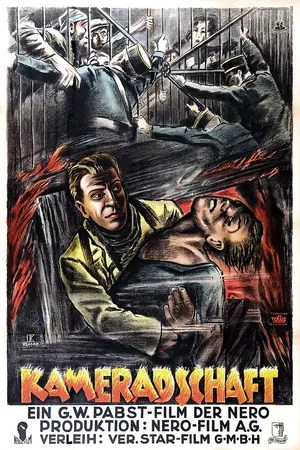
Pabst’s Kamerdschaft was his second sound film after Westfront 1918 and follows on from that film’s politics. Kamerdscaft is a heartfelt plea that, deep down, we are all comrades, who should be working together not tearing at each other. It’s based on a real 1906 mine disaster in Courrières where a coal dust explosion left thousands of French miners trapped underground, relying on teams of French and German (from Westphalia) miners to save them. Pabst shifts this to 1919 and the location to the French-German border (so new, it even runs through the mine itself with both sides literally walled off from each other). It’s straight after the war, and never have tensions been higher.

Pabst argues though that this lethal squabbling between nations distracts us from the ties that bind us. He opens with two children – one French, one German – arguing over a game of marbles both claim to have won, demanding the other hands over all the marbles. They even literally draw a border in the dirt to make their point. Pabst’s symbolism here is not exactly subtle, but it makes the point swiftly and clearly. Whenever we encounter the border officers, they are rules-bound and small-minded. A French border guard almost fires on a truck of German miners offering their help. Bosses from both sides put obstructions in the way of the effort to free the miners. The film closes with military forces from both sides solemnly re-building the underground border wall knocked down during the rescue.

It’s carried over into tensions between both communities. The French are generally encouraged to look down on the Germans. Life on the French side seems more secure and comfortable – with rows of workers houses, bars and plentiful jobs – with the Germans frequently crossing over to try and find work and relaxation in the French side. A trio of jolly Germans nearly get into a bar fight when a French girl declines to dance with one of them: a loud atmosphere in the bar disappearing, as Pabst’s camera pans past a row of faces suddenly turned confrontation and hostile.

This tension is increased by the language barrier. Kameradschaft was a French-German co-production and the actors used their native language. This allowed for a strong cast, with Alexander Granach particularly notable as the jolly Kasper. It’s fascinating to watch Kameradschaft with only one language translated, plunging you into trying to follow the stumbling French of the Germans and vice versa. Misunderstandings frequently arise. That bar near-fight is started when Fritz Kamper’s German miner assumes Héléna Manson’s Rose doesn’t want to dance with him because he’s German, when actually she says its only because she’s tired.

Misunderstandings continue throughout the film. The German’s underground struggle to make themselves understood, using a range of physical gestures and pigeon-French; the French stumble through basic German. While subtleties are missed, it’s striking how Pabst demonstrates in the big things, meaning is always clear: emotions and actions convey a universal meaning we all understand. In the aftermath, a French miner makes an impassioned speech about brotherhood: his German counterpoint responds with a heartfelt speech that he didn’t understand a word but he agrees they are all brothers.

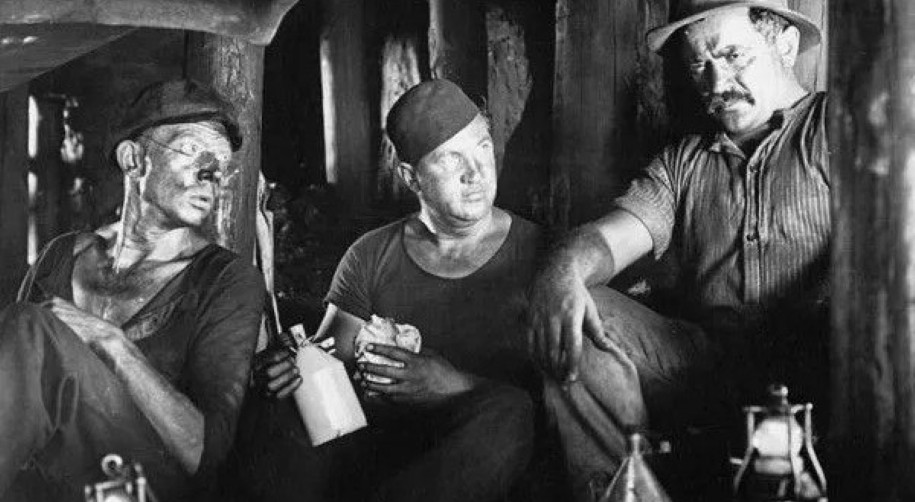
“A miner is a miner” says Ernst Busch’s Wittkopp who insists on the rescue mission. (Busch was a veteran of Brecht and an impassioned Socialist). You can see why they feel this when you see the conditions below ground. Claustrophobic, dark, sooty and terrifyingly confined, the mines quickly become intimidating traps as support beams buckle and crumble. It’s even more impressive when you realise these extraordinarily convincing sets were indeed sets, build in a studio by Ernő Metzner and Karl Vollbrecht. It’s honestly hard to believe that the crew didn’t go underground when you watch, giving the film a strong steak of realism.

It’s a realism mixed with a moody expressionism in the lighting. When the explosion comes, the fire rolls through the smoke and steam filled rooms and then seems to continue, consuming everything in its path. Pabst uses a tracking camera to keep us just ahead of these advancing flames. He stages brilliantly the collapse of the mine, showing miners trapped or crushed as roofs cave in and rocks tumble down. Kameradschaft is just as strong in showing the panic above ground, as the families of those trapped race through the streets to gather at the mine’s locked gates, howling to be allowed in and help with the rescue of their nearest and dearest.

As in Westfront 1918, Pabst employs the same sound-proof casing to his camera to give it as much flexibility as possible while still capturing sound. Kameradshaft is full of the audio hustle and bustle of a town in torment, and he’s equally effective with sound below ground. Not only the collapse of the mine, but the sounds that come with being trapped: heavy breathing of rescuers in their breathing equipment, metallic tapping on pipes to attract attention, desperate scurrying of trapped miners to find a ringing phone in a ruined engine room. All of this is executed to perfection.

Pabst’s finest sound use comes when one trapped French worker succumbs to delusion under the pressure as a German rescuer approaches. As he sweats in panic, the tapping on pipes shifts to the rat-a-tat of machine guns. From his POV we see the approaching German in breathing transform from a miner into an infantryman. In a series of cuts, the French miner imagines himself in the trenches, launching himself in desperate self-defence against his would-be saviour. It’s a beautifully done moment that hammers home Pabst’s message that when nations turn natural friends into enemies, we are all left weaker.

Kameradschaft isn’t always subtle in saying this. You could frequently call it naïve. Pabst stresses the point with a zoom into the shaking hands of German and French rescuers meeting for the first time under-ground (holding the shot for longer than necessary). But it’s an earnest and decent message. But sadly, not one people were going to listen to. The film was, of course, banned in Nazi Germany almost immediately – and they would have approved of Pabst’s more cynical coda of the underground border being re-built (a scene cut from some prints, as being too glum). We may dream of brotherhood and peace, but sometimes it is just a dream. But Kameradschaft is a fine enough film to persuade us its worth dreaming.

Wicked: For Good (2025)

Wicked: For Good (2025)

Part 2 doesn’t match Part 1 for entertainment or depth, but has enough moments to work

Director: Jon M. Chu

Cast: Cynthia Erivo (Elphaba Thropp), Ariana Grande-Butera (Glinda Upland), Jonathan Bailey (Fiyero Tigelaar), Michelle Yeoh (Madame Morrible), Jeff Goldblum (The Wizard of Oz), Ethan Slater (Boq Woodsman), Marissa Bode (Nessarose Thropp), Bowen Yang (Pfannee), Bronwyn James (ShenShen), Colman Domingo (Cowardly Lion)

Act Two comes to the screen in Wicked: For Good, putting the finishing touches to a five-hour journey through a single stage musical. While there are literally hundreds of millions of reasons for splitting the film in two, you can’t doubt the passion and love for the source material from everyone involved. However, Wicked: For Good, while shorter than the first film, feels longer: more padded but also more aimless, exposing more of the flaws of the musical less apparent when Act Two breezes past in about an hour. It’s still an entertaining watch, but it lacks the explosive, glorious impact of the first film.

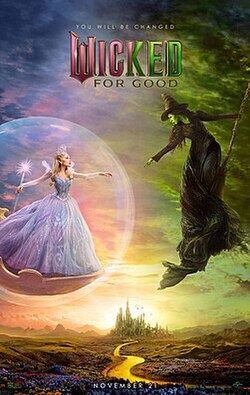
Elphaba (Cynthia Erivo) has been firmly branded public enemy number one as the Wicked Witch of the West. Meanwhile, her old friend Glinda (Ariana Grande-Butera) is the universally beloved face of the regime, showmanship and trickery hiding her complete lack of magic. Elphaba is fighting a losing battle for hearts and minds, failint at her attempts to expose the Wizard’s (Jeff Goldblum) lies and to protect the animals of Oz from persecution. Attempts at good deeds constantly go wrong and the arrival of a young girl from Kansas brings chaos. Will Elphaba and Glinda heal their relationship and will Oz be saved?

Wicked: For Good suffers for covering the weaker second act. Most of the best songs were in the first film. The first act also has more interplay between the two leads (whose relationship is the heart of the story) and had a clearer coming-of-age arc with Elphaba’s eyes being opened to the nature of Oz. Wicked: For Good tries to tackle an awful lot (Good and Evil! Animal rights! The Wizard’s oppression and guilt! Propaganda and manipulation! Backstory for every character in The Wizard of Oz! Elphaba and Glinda’s relationships with Fiyero!) But it often ends up under-cooking, hand-waving and fudging many of them. It chops and changes its focus so often, that developments seem sudden or under-explained.

This is where the extended run-time doesn’t help. The logic leaps that can be done in a few minutes of dialogue between songs in an hour of stage-time, make less sense when stretched over two hours plus. One of Elphaba’s main motivations is protecting the animal’s rights, with these creatures literally losing their voice. Despite opening with her trying to free slave-worker animals from building the Yellow Brick Road, eventually this plot-line feels lost in the shuffle. The motivations and mechanisms of the persecution are unclear, and then confusingly bunched in with racist laws against Munchkins. Similarly, Jeff Goldblum’s Wizard switches from a sociopathic arch-manipulator, into a drink-dependent man coated in guilt, without this journey being amply explained.

Wicked: For Good also awkwardly shoe-horns in events from The Wizard of Oz (there is a lot of Dorothy and her companions on the margins) and comes up with not-always-well-developed reasons why Elphaba and Glinda do the things-they-do as required by Wizard of Oz, without contradicting the more complex, interesting characters they are here. Again, these are flaws revealed by the extended run-time which gives more depth to the leads, but little of its added hour to giving more depth and context to the plot and themes the film is trying to handle, making them feel under-powered.

That’s not to say there are not plenty of positives. Wicked: For Good really understands its core strength is the relationship between its leads, and the chemistry between Erivo and Grande is still dynamite. It’s made very clear they are taking opposite approaches in interpreting ‘what’s best for Oz’ (for Elphaba it’s ending the lies, for Glinda it’s keeping people happy – very on brand for both). Their scenes are the film’s emotional heart, whether laughing or crying together, or even (in one laugh-out-loud moment) literally fighting. Just as in the first film, Wicked: For Good demonstrates the different perception an outsider and an insider brings to a situation and how this informs their loyalties and actions.

Erivo’s wonderfully draws on deep loneliness and growing frustration at her inability to change things, capturing the sense of someone certain she’s in the wrong, but who utterly lacks the ability to persuade (be that animals to stay and fight, or Ozians to take another look at the Wizard). Her deep need for friendship (and romance with Jonathan Bailey’s effortlessly charismatic Fiyero – rather short-changed by screen time here) is clear, even if her transition to embracing elements of ‘the villain’ seems rather forced. Her singing remains breathtakingly good with ‘No Good Deed’ an extraordinary show-stopper.

However, the film might just belong to Ariana Grande. If Wicked was Elphaba’s coming-of-age, this is Glinda’s. Grande brilliantly shows how fragile the bubble of happiness Glinda has built is. Glinda’s realisation that from an early age (an excellent childhood flashback scene helps here) she hid her feelings with an immaculate smile is very well explored – as is her realisation that she is universally beloved, but has no real friends. Grande finds a desperation, fragility and sense of pain that only just peak out – feelings covered well in the best of the film’s two new songs ‘The Girl in the Bubble’, with Chu using reflections to stress Glinda’s realisation of the lies she has told herself.

Of the many themes the film tries to cover in a broad sweep, this one comes out best while others fall by the wayside. Propaganda and dictatorship in Oz sort of sits there as a presence without getting real focus. The oppression of the animals (and imagery of them working in whips and chains) makes a big emotional swing the film isn’t willing to commit to. The other new song, ‘No Place Like Home’, is an unforgettable ballad that awkwardly stages Elphaba begging animal users of an Underground Railroad to stay and hope for the best (imagine telling that to real-life Railroad users). There are darker elements I liked (Marissa Boda’s Nessarose and Ethan Slater’s Boq explore jealousy, possessiveness and rage in a surprisingly daring way, told with an effective economy I wish Chu could have found more often).

When Wicked: For Good works, it works. The impressive visual design from the first film is still in place. Chu directs with energy and vibrancy and gets real emotion from the moments between the leads. But I miss the large choreographed numbers here (perhaps expected from a darker Act Two) and its plot is often unfocused, forced and manages to use double the time to barely extend (or make more interesting) the level of thematic exploration the original musical does. I didn’t enjoy it as much as the first one and becomes a little too trapped by fitting into Wizard of Oz but it’s still an entertaining ride.