Category: Film about friendship

Battleground (1949)

Battleground (1949)

Marvellously realistic, grunt’s-eye view of war, very well made and still carrying impact

Director: William A Wellman

Cast: Van Johnson (PFC Holley), John Hodiak (Pvt Jarvess), Ricardo Montalbán (Pvt Roderigues), George Murphy (Pvt “Pop” Stazak), Marshall Thompson (Pvt Layton), Jerome Courtland Pvt Abner Spudler), Don Taylor (Cpl Standiferd), Bruce Cowling (Sgt Wolowicz), James Whitmore (Staff Sgt Kinnie), Douglas Fowley (Pvt “Kipp” Kippton), Leon Ames (Chaplain), Herbert Anderson (Pvt Hansan), Denise Darcel (Denise), Richard Jaeckel (Pvt Bettis)

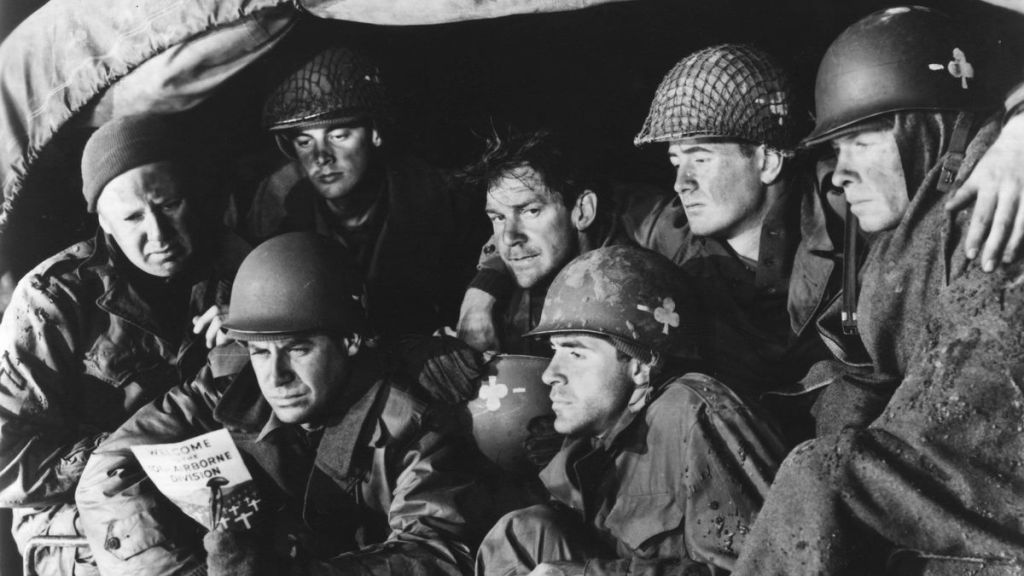
Apparently, the Hays Code would let bad language slide, if it was being used about War Heroes. Not many 40s film start with a credit crawl proudly calling its cast a bunch of bastards (in this case “the Bastards of Boulogne”). That’s our Battleground, the Battle of the Bulge, based on the experiences of screenwriter Robert Pirosh (who won an Oscar). Reflecting Pirosh’s experience, this is the Battle from the Grunt-eye-view, following a platoon of privates and sergeants pushed up from the rear to Bastogne, filling in the time between terrifying shelling and German advances, with grouching about everything from the food, to the lack of leave to the rotten army life.

As such, it’s not a surprise that Battleground proved a huge, multi-Oscar nominated hit (including Best Picture). Many in the audience surely saw their own war experiences reflected back at them: crappy rations, freezing cold fox-holes and the horrifying prospect of sudden death from the sky, that many American GIs knew from the war. Louis B Mayer believed the country was sick of war but producer Dore Schary persisted and was proved absolutely right.

It’s a film soaking in authenticity, that genuinely feels like it’s been filmed in the mist and snow covered chill of Boulogne rather than the sunny uplands of California (it’s cinematography won a deserved Oscar for Paul C Vogel). Director, William A Wellman, a decorated veteran from World War One, not only knew how soldiers thought, he was also grimly familiar with the mix of machismo, grit and terror on the front. Most of the cast were veterans, some only just out of uniform: and Battleground was the first film that put its cast through boot-camp to get them bonding like a company.

It’s a film rooted in the detail of army banter, with the same topics coming up time-and-again, in the distinctive language of the trenches. There is the insular togetherness of men who have seen a great deal of suffering and survived. Where a fellow soldier may get on your nerves but you’ll defend him to the death. The suspicion and dismissive attitude to replacement recruits until they have earned their chops. The delight in small moments of humanity also ring true: the Californian private thrilled at seeing snow for the first time, the protective way Van Johnson’s Private Holly guards and protects the eggs he’s dying to eat, the eager joy (and suppressed disappointment) when mail arrives (or fails to). These little touches make the characters feel real, their bonds feel lived in – and makes their moments of fear and panic all the more real.

And Battleground is perhaps unique in 40s war films for not judging soldiers when they show fear (in fact, when new recruit Layton confesses to being scared out of his wits, grizzled cynic Jarvess supportively congratulates him on joining a club everyone is a member of). When the men re-encounter Bettis, a man who ran at the first shelling, there is no judgement or condemnation towards him. After all, so many of them nearly did it themselves. All of them fear becoming a bleeding heap, sobbing for their mamas (as we see one of them do in a quietly affecting moment). Private Holly, our closest thing to a hero, twice nearly cuts-and-runs but both times circumstances and self-reproach see him disguise this with acts of bravery. Others may suspect the truth, but it’s what a man does that matters not why he does it.

Battleground gives a focus most war film never give. There are no generals, no sense of tactics or scale and precious little of the enemy. The Battle of the Bulge is a slog, sitting in a snow-filled pit trying not to die. Paranoia and fear is constant: news of German’s disguised as GIs lead to several awkward encounters, including a darkly funny scene of patrols demanding each other to name various pieces of American trivia to prove their bona fidas (even a senior officer). When they sit down to read the GI news, the men are mystified not only about who they are fighting (“Who is von Rundstedt?”) but even the name the press give the battle (“What’s the Bulge?”). Half of them have no idea where they are (opinion seems divided on Belgium or Luxembourg), few speak French and there is a sense that what the war is about matters less than surviving it.

Perhaps to combat this, in a potentially sentimental moment that Wellman and Pirosh manage to make feel uplifting, an army chaplin (well played by Leon Ames) assures the men ‘why they fight’ really does matter – and that if, later, people question the point of sending young Americans thousands of miles to die for strangers, then they know not of what they speak. In Battleground this sense of pride and honour, that what they are doing matters, is an essential battery recharge after weeks of freezing struggle: and it still carries real impact now, reflecting on what so many did for a cause larger than themselves.

Battleground’s cast is largely made up of MGM contract players seizing the opportunity to embody the sort of gritty, earthy parts so rarely available to actors serving in second-string roles or uninteresting leads in B-movies. Van Johnson’s Holly masks his fear with rumbunctious enthusiasm and exaggerated moaning. George Murphy gives a career-best turn as a determined veteran, ready to go home. John Hodiak’s Jarvess is a pillar of wisdom, Ricardo Montalbán’s Roderigues a burst of exuberant life. James Whitmore (Oscar-nominated) as Sergeant Kinnie practically defines Hollywood’s view of the grizzled, grouchy sergeant who secretly loves his men.

It all comes together very well and if Battleground feels overlong and even a bit repetitive at times, that’s to be expected considering it’s reflecting the experience of its characters. But there can be few 40s films as clear-eyed, realistic and unjudgmental about the pressures ordinary soldiers felt under extraordinary circumstances. That focused on the grim slog of surviving, over the glamour of conventional heroism in battle. And perhaps that’s why Battleground spoke to so many and feels so different.

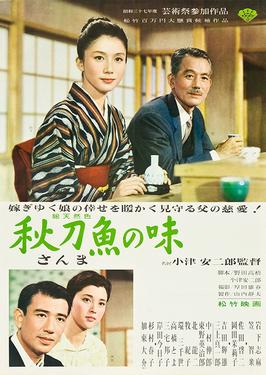
An Autumn Afternoon (1962)

An Autumn Afternoon (1962)

Ozu’s final film feels like a perfect summation of the rich sense of ordinary life in his work

Director: Yasujirō Ozu

Cast: Chishū Ryū (Shuhei Hirayama), Shima Iwashita (Michiko Hirayama), Keiji Sada (Koichi Hirayama), Mariko Okada (Akiko Hirayama), Teruo Yoshida (Yutaka Miura), Noriko Maki (Fusako Taguchi), Shinichiro Mikami (Kazuo Hirayama), Nobuo Nakamura (Shuzo Kawai), Eijirō Tōno (The Gourd), Kuniko Miyake (Nobuko Kawai), Ryuji Kita (Professor Horie)

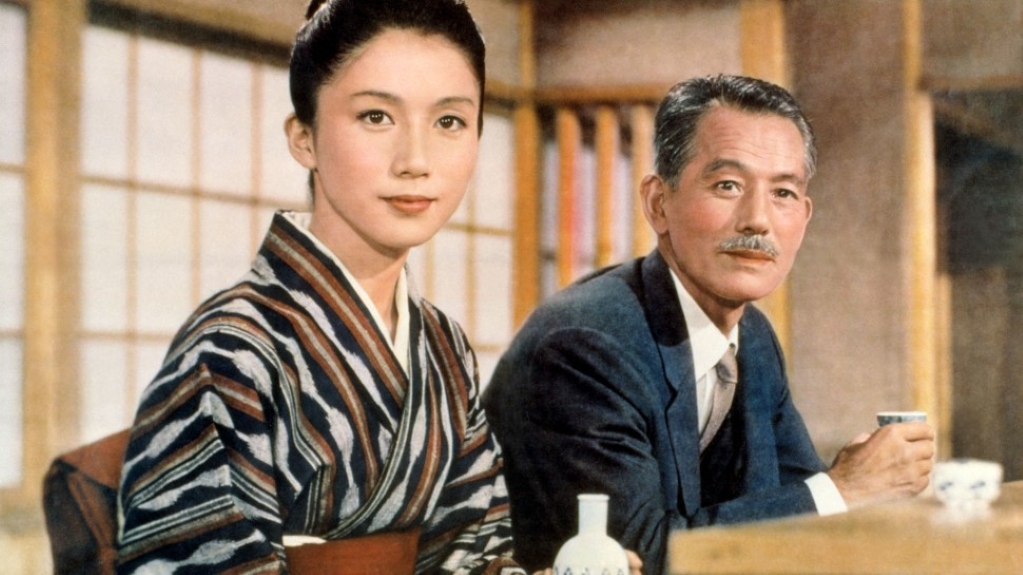
Ozu’s final film feels like a luscious, beautifully filmed summation of a life’s work. Deceptively quiet, simple and gently paced, like the best of Ozu’s work it throbs with a deep understanding of the quiet joys, regrets and pains in ordinary life, where the march of time can relentlessly change and mould your world. An Autumn Afternoon returns to themes familiar from Ozu past work – you see it as almost a remake of Late Spring (with Chishū Ryū, effectively, in the same role) –with his subtly effective recognition of how each generation echoes and reimagines the one before. It’s a deeply humane film from a director who understood everyday life better than almost any other.

Once again, a man feels pressured to marry off a daughter. Shuhei Hirayama (Chishū Ryū) is a middle-ranking factory manager, whose home is tended to by 24-year-old daughter Michiko (Shima Iwashita). Hirayama’s old school-friend and colleague Kawai (Nobuo Nakamura) suggests an arranged marriage for her. Hirayama quietly lets the subject drift, little motived to shake up his home. His opinions slowly shift as he re-encounters his former teacher The Gourd (Eijirō Tōno), now a down-at-heel noodle restaurant owner, who lives with an unhappy spinster daughter. Does Hirayama sees parallels between himself, Michiko and this pair? Is Michiko bothered either way?

It’s a classic Ozu set-up: the different views and perceptions of the generations, contrasted against each other. In many ways, very little happens in An Autumn Afternoon, but in other ways a whole life-time plays out. Skilfully, with an observing, restrained (Ozu’s final film is stiller than ever) camera, Ozu observes people in the Spring, Summer, Autumn and Winter of their lives. In doing so, he captures a particular moment of Japanese history, where pre-War, war and post-war generations confront the world with subtly different outlooks.

In the first darkening of the Autumn of his life, Hirayama is a quiet man with a rich vein of humour. He’s from a generation which sees itself on being more liberal than those before. He meets regularly with a bunch of former school friends, who pride themselves on holding their drink and frequently prank each other in dead-pan comic exchanges. There is a delighted ragging of their friend Professor Horie’s barely concealed sexual glee at his new (younger) wife. They have traditional values (Hirayama assumes marriage will lead to immediate resignation for his young secretary) but enjoy the post-war flourishing of Japan.

Hirayama is comfortable with Americanised Japanese culture, from bottled beers and baseball to American bars and their stools. He drinks too much, make generous offers to others and indulges his children. He’s perfectly happy with the way things are: perhaps because he already fears what his life may be like when his two youngest children flee the nest. It’s a beautifully judged performance from Ryu, genuine, relatable, quietly content but with a subtle sense of sadness and anxiety at change.

There is a sense Ryu’s Hirayama doesn’t want the world shaken, as he has already lived through enough shaking to last a lifetime. He’s a former career Naval officer, who captained a ship in the War. His late wife, it’s implied, died in the American bombing of Tokyo. (Of his children, only two can really remember her, talking about her only wearing trousers during air raids). Bumping into one of his former petty officers, the two men indulge in reminiscences and reflections of what life might have been like in victory (in an American themed bar of all places). Hirayama is drawn to return to the bar again and again, as the barmaid reminds him of his late wife (this small detail would be the entire plot of another film) – although Ryu’s quietly sombreness suggests the memory is to painful to dive into.

But this man contrasts sharply with his children. Hirayama never re-married, and his children have filled the companionship gap in his life. While Michiko matches neatly the traditional view of a Japanese woman as dutiful and guarding of the home (she wears a kimono more than any other female character), his youngest son Kazuo dresses like an American teenager and isn’t afraid to criticise his father. And even Michiko too wants to make her own choices about her life, regardless of the views of others.

The most intriguing contrast though is the marriage between his oldest son Koichi (Keiji Sada) and Akiko (Mariko Okada). Here power dynamics are strikingly different. Both partners work – indeed at one point, Akiko arrives home to find Koichi cleaning and cooking. Decisions are made between them, with Akiko frequently calling the shots. A dispute about Koichi’s plan to spend the excess of a loan from Hirayama on a second-hand set of golf clubs, sees Akiko take firm control of finances (Koichi seems to have inherited his father’s quiet desire not to rock the boat) and has the final say. It echoes, in a way, Professor Horie’s second marriage, where his wife has a level of control over his comings-and-goings that surprises Hirayama and Kawai.

Hirayama may also be quietly disturbed by a vision of what the winter of his life might be like, from ‘The Gourd’, a respected teacher of his childhood, played with a superb desperation and forced good humour by Eijirō Tōno. This once-respected man now works for customers who barely look at him and is totally reliant on a daughter miserable at her life (Ozu quietly watches her break down in tears dealing with her drunken father) and gets embarrassingly pissed at the slightest opportunity when someone else is paying. Considering Hirayama is also a heavy drinker (both men are prone to slumping forward, or swaying on the spot when under the influence) there is a lot that suggests his Winter might not be wildly dissimilar from the Gourd’s.

All of these multi-generational issues are superbly explored by Ozu, all without forced commentary, in a film that is a triumph of his distinctive style of low-angle static cameras, transitions that ground us in location, made even more striking by the film’s gorgeous use of colour (especially its reds). And the film leaves it all open to us to interpret. Because there is no right-or-wrong in Hirayama’s situation: should he let his daughter remain or help her move on and embrace her life?

An Autumn Afternoon concludes with one of the most quietly heart-breaking moments in Ozu’s cinema – under-played to utter perfection by Ryu – as Hirayama sits alone, drink swishing around his guts, singing songs of a martial Japan and facing an unknown future that might see him forced to confront the loneliness he has avoided since his wife died. As the final shots complete of Ozu’s final work – a series of cuts to parts of Hirayama’s home – it feels like a perfect final statement from an artist who looked at the small tragedies of life like no other.

Me and Orson Welles (2008)

Me and Orson Welles (2008)

A star-turn from McKay and a brilliant theatrical reconstruction makes a charming comedy

Director: Richard Linklater

Cast: Zac Efron (Richard Samuels), Claire Danes (Sonja Jones), Christian McKay (Orson Welles), Ben Chaplin (George Coulouris), James Tupper (Joseph Cotton), Eddie Marsan (John Houseman), Leo Bill (Norman Lloyd), Kelly Reilly (Muriel Brassler), Patrick Kennedy (Grover Burgess), Travis Oliver (John Hoyt), Zoe Kazan (Gretta Adler)

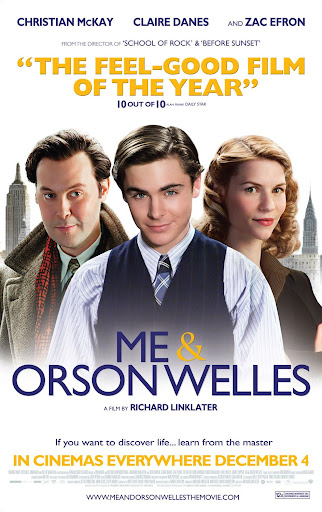
In the 1930s Orson Welles was the Great Man of American theatre, a genius blessed with Midas’ skill to turn everything he touched to Gold. He had conquered the stage and his success on radio transmitted his fame into households across America. All this and he was not even thirty. On top of his boundless charisma, creativity and magnetic leadership qualities, he was also vain, selfish, boundlessly ambitious and self-obsessed, seeing other people as little more than extras in his drama. It’s an exploration of the man central to Linklater’s Me and Orson Welles, combined with the film’s wonderfully fond exploration of that magical world behind the curtain in the theatre.

Me and Orson Welles charts Welles’ landmark Broadway production of Julius Caesar: a modern-dress marvel (‘the fascist Caesar’) that reimagined a sharply cut, pacey production set in a world of jackboots, black shirts and Nuremberg-esque beams of light. Welles (Christian McKay) was, of course, front-and-centre as Brutus with his Mercury theatre players (nearly all of whom followed him to Hollywood for Citizen Kane) all around him. Newest to the cast is 17-year-old Richard Samuels (Zac Efron), away from school, dreaming of being an actor and falling in love with older production manager Sonja Jones (Claire Danes). As the production stumbles towards the stage under Welles’ mercurial hand, Richard worships Welles and loves Sonja – but will his hero-worship survive sustained contact with Welles?

Linklater’s film is set in a gorgeous recreation of 1930s Broadway theatre, full of love for the greasepaint, backstage gossip and theatrical tricks that create a world on stage. It also features an astonishingly accurate recreation of this seminal production, staged and lit to perfection, which gets as close as we can to capturing some sense of the astonishing experience the first night audience had watching the sort of Shakespeare production they had never seen before (Dick Pope, harnessing his experience of recreation Gilbert and Sullivan in Topsy-Turvy deserves major credit for his cinematography here, perfectly capturing Welles’ pioneering use of light).

Welles’ flaws are slowly discovered by Richard Samuels – a charming, deceptively light and winning performance by Zac Efron. Samuels is at first bowled over by Welles charisma – and Welles enjoys the ego-trip of taking a star-struck young man under his wing, who he can tutor and mould (who, after all, doesn’t love having a disciple). What Me and Orson Welles interestingly does is to have its young lead slowly work out that Welles may be a genius – but he’s also a fundamentally, principle-free shit who never means what he says, doesn’t think twice about dropping people when they have served their purpose and largely sees conversation as a one-way street where Welles monologues and the other person listens (and certainly never, ever, contradicts – Welles never forgives correction).

But Welles dominates the film, like he dominated life. He’s brilliantly portrayed by Christian McKay in his first major film role. McKay, an unknown, was selected after Linklater was wowed by his one-man show about the Great Man. (Linklater refused calls from the producers to replace him with a more famous actor). McKay dominates the film in what is not only a superb capturing of Welles vocal and physical mannerisms, but also a capturing of his mix of utter charisma, God-given talent and overwhelmingly selfish egotism. McKay roars through every scene with the same force-of-character you imagine Welles had, bowling over everyone around him and shaping the world into what he wishes it to be. Problems of money, timing and people are waved away (or left to be fixed by Eddie Marsan’s put-upon version of John Houseman) and McKay’s Welles uses sheer force of will to turn every event, outcome and single moment into an intended triumph (whether it is or not). Me and Orson Welles brilliantly captures Welles ability to shape his world.

We see the way he overwhelms the personalities of those around him. People like Joseph Cotton (a superbly captured performance by James Tupper) both love him and know that’s he’s a selfish, arrogant git who doesn’t seem to care about anyone but himself. Others, like Ben Chaplin’s tortured George Coulouris, allow themselves to be mothered by Welles, even though they know his motivations are more for the show itself (and the glory that shall be Welles’). Welles is the guy who gives the same heartfelt pep-talk to multiple actors, and writes identical jovial thank-you cards to all on opening night. The guy who uses nicknames for those around him because it’s a way to subtly assert control. Linklater’s film recognises his genius, makes him overwhelmingly attractive in his gung-ho confidence, but – and this is the brilliant thing about McKay’s stunning performance – also exposes his deep character flaws.

It superbly captures his vanity, selfishness and self-occupation. Welles cares little for anyone, assuming he can brow-beat or overwhelm them to fulfil his wishes. That could be a set designer, furious at Welles hogging credit for his work in the programme (Welles promises this will be amended, forgets about it and then later – when it’s too late to do anything about it – bluntly says he has no intention of not taking credit). It could be the radio show he turns up to record, clearly having not read the script, walking in seconds before live broadcast and promptly improvising a superb monologue (based on The Magnificent Ambersons) which at first puzzles, frustrates and then stuns into fawning admiration his fellow actors. What’s clear is that this is the sort of behaviour you can only get away with when you are flying high and all is perfect – Welles after all would self-destruct like few others in the next few years, never again able to yield such charismatic power again.

Me and Orson Welles uses a familiar structure – a love triangle of sorts – to bring this to life. Claire Danes gives a marvellously winning performance as an ambitious and super-confident woman, trying to make her way in a male world, perhaps drawn towards young Richard because he’s more thoughtful than the rest of the men around her. (Me and Orson Welles makes clear we live in a world where the actors of the company feel comfortable taking bets on who can bed Sonja, while she is also accepts that Welles can use the women of the company like a room-service menu). Both she and Richard are perhaps the forerunners of those who will finally be pushed too far by Welles, that would leave him a perpetual outsider.

This is a fun musing on the personality of one of the greatest film-makers of all time, brilliantly set in a luxurious recreation of classic Broadway. Directed with pace and wit by Linklater, with a fine cast giving it their all (and a career-defining turn from McKay), Me and Orson Welles is light, frothy but fascinating work.

Cabaret (1972)

Cabaret (1972)

Fosse’s influential adaptation reinvents the musical into a superb exploration of sexuality and wilful blindness

Director: Bob Fosse

Cast: Liza Minnelli (Sally Bowles), Michael York (Brian Roberts), Helmut Griem (Baron Maximilian von Heune), Joel Grey (MC), Fritz Wepper (Fritz Wendel), Marisa Berenson (Natalia Landauer), Elisabeth Neumann-Viertel (Fräulein Schneider)

Some say Life is a Cabaret (old chum) – but they may well be closing their eyes to what’s really going on around them. Much harder to do that in Cabaret, a dark study of Weimar Germany, the quintessential time-period where everyone was so wrapped up in having a good time they failed to notice the world was beginning to burn down around them. Fosse’s version is a musical, but song and dance fills just over a quarter of the runtime. At its heart, it’s a character study of two young people in a particular time and place with very different perceptions of the dangers around them. It makes for a dark, inventive re-working of the Broadway original with Fosse stretching his wings into the sort of complex work culminating in the forensic self-examination of All That Jazz – and make Cabaret one of the most unique and exceptional of musicals.

Our Babes in 1931 Weimar Berlin are Sally Bowles (Liza Minnelli) and Brian Roberts (Michael York). Sally is a would-be superstar, plying her trade singing and dancing at the Kit Kat Klub. The host of erotic and blackly comic numbers there is the unsettling MC (Joel Grey). Brian is an academic, a reserved and very English young man with a preference for other men. Housemates in the same boarding house, the two become very close – and both very close indeed to happy-go-lucky Baron Maximilian von Heune (Helmet Griem). Sexual, romantic and emotional feelings ebb and flow while in the background the Nazis march relentlessly towards power along a path of violence.

Fosse was desperate to direct Cabaret, a film he felt certain would be a hit– and producer Cy Feuer was keen to bring his raunchy, dynamic choreography to the seamy world of the Kit Kat Klub. But Fosse also wanted to do something very different to the original musical. He wanted to return more to it literary roots, the semi-autobiographical works of Christopher Isherwood. He also felt, based on his experience directing Sweet Charity, that realism and bursting into song didn’t work. So the original script was jettisoned in favour of a new story junking most of the musicals plot (and several key characters), change its male lead from a straight American back to a queer Brit and cut all but one song not inside the Kit Kat Klub, making them a commentary on the action.

It’s a master-stroke, making Cabaret both a compellingly staged musical, but also a dark social issues piece and exploration of sexuality. In fact, you could watch Cabaret and wonder if Fosse didn’t really want to direct a musical at all. His heart, I feel, lies in the increasingly sexually charged and fluidic relationship between the three lovers at its heart: Sally’s vivacious enthusiasm, Brian’s careful guardedness and Maximilian’s shallow glee. It’scaptured beautifully in a late-night drinking scene in Maximilian’s palatial house, with the camera sensually close as the three dance together, their lips inches away from each other, the desire bubbling between them.

There’s a striking comfort with sexual freedom in Cabaret. Brian’s homosexuality – or bisexuality after he and Sally together discover his previous disastrous liaisons were clearly with “the wrong three girls” – is treated unremarkably by all: after all the Kit Kat Klub has its share of drag queens (one of them sharing a telling look with Brian after they surprise each other at the urinal). It’s all part of a wider bohemian lifestyle, exemplified by Sally who is always dreaming that a big break is just around the corner. This is the decent, brave and accepting side of Weimar Germany.

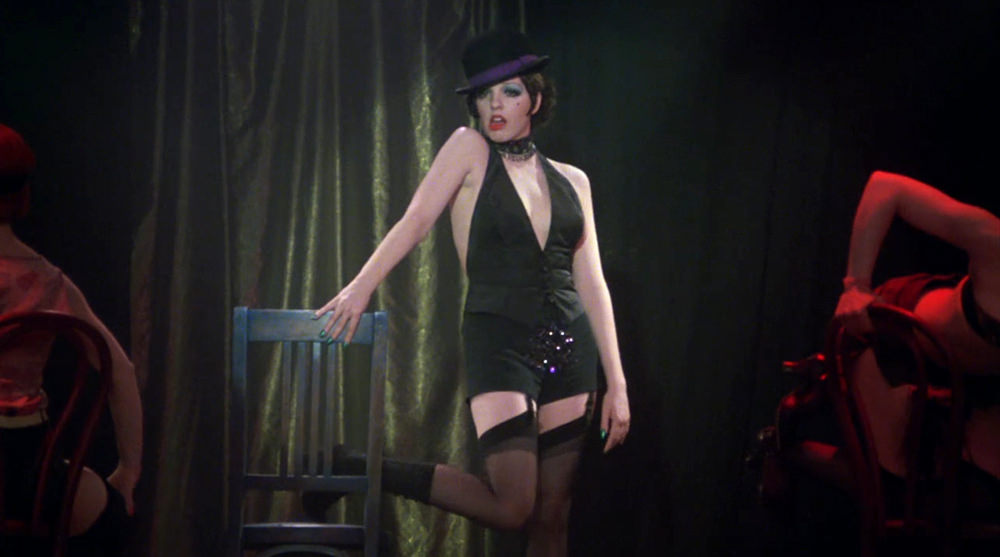
But Cabaret is also about the danger all around the characters, which too many of them ignore. Brian is the most conscious and politically aware, for all his English reserve. But Sally’s major flaw is that she chooses to pretend it’s not happening. Minnelli’s gorgeous rendition of ‘Cabaret’ at the end is so often seen as a triumphant embracing of life on her own terms, that its overlooked Sally performs it having decided to turn her back on broadening her own life outside her comfort zone and is singing to a room increasingly full of Nazis who will stamp out the very life she’s dreaming about.

Sally is bought to life in a superb, Oscar-winning performance by Liza Minnelli. Minnelli’s singing is of course extraordinary – her rendition of ‘Maybe This Time’ is one for the ages – but she’s also superb at bringing to life Sally’s bubbly naivety and kindness while also suggesting the fragility and desperation to be liked under the surface. There’s something very innocent about her, for all her hedonism: her attempted seduction of Brian has the clumsy brashness of an over-eager virgin, and while instinctively keen to help others she’s clueless at dealing with real emotional problems (there’s a wonderful moment when Minnelli looks sideways in panic as Maria Berenson pours her heart out to her, as if trying to find a way to escape). It’s a gorgeous, endearingly sweet performance – and perfectly counterpointed by Michael York’s career-best turn as the sharp, gentle, thoroughly decent Brian, with his own unique moral code.

Around them, Fosse uses the musical numbers to darkly comment on the action, helped by the demonic feel of Joel Grey’s sinister MC (the first real shot of the film is Grey’s face looming up from below to flash a Lucifer grin), whose manner becomes increasingly cruel, Fosse cutting to brief shots of him knowingly grinning as the dangers of Nazism become increasingly hard to avoid. Grey (who originated the part on stage) has a look of Joseph Goebbels about him, and it’s hard not to feel he’s some sort of manic sprite given even more life and energy as the world fills with horrors around him.

The musical numbers are extraordinary, brilliantly assembled by Fosse and full of seedy glamour – there is a gorgeous shot in ‘Willkommen’ when the camera whips around the high-kicking chorus line that’s like a shot of adrenaline. They mix between the darkly funny – the troubling romantic longing of ‘If You Could See Her’ – and the gorgeously inventive, with the tightly choreographed movements of ‘Money, Money’. Grey is a crucial part of this, his charismatic singing and dancing burning through the celluloid – who can forget his cruel glee under the comic interplay of ‘Two Ladies’ – and the use of him as a cryptic chorus who never speaks except on stage is a master stroke.

From its early scenes, we are left in no doubt of the violence many are choosing to ignore. From a street lined with ripped up election posters which Sally and Brian stroll down, to cut aways to stormtroopers brutally beating opponents, we can’t escape the inevitable death of this happy-go-lucky world. It’s also Fosse’s masterstroke to make the only musical ‘number’ outside the Klub not only goose-bumpingly powerful but also a skin-crawling piece of Riefenstahl-framed Nazi triumphalism.

Cabaret superbly captures in this one moment the seductive power of Nazism. As an Aryan boy sings ‘Tomorrow Belongs to Me’ (a slow camera pan reveals his SA uniform) at a beer garden, gradually the crowd joins in. The song builds into a resounding crescendo, people’s faces beaming with pride, full of fixed fanaticism, all of them sharing a special, powerful moment of belonging. Fosse’s unbelievable nerve is to present this utterly straight (someone with no knowledge of Nazism would be deeply moved watching it), making its seductive power even more chilling: because you can’t watch without also feeling a nausea inducing feeling of goose-bumps.

Hard not to agree with Brian when he wryly asks the smug Max whether he’s still sure the Nazis can be controlled. (Max parrots the upper class view that the Nazis are useful tools for getting rid of the socialists). It’s much easier for us to understand why Fritz Webber’s scruffy charmer Fritz (hiding his scuffed shirt cuffs) is scared of revealingly his Jewish heritage, even if it’s all he needs to do to win the love of Marisa Berenson’s shopping mall heiress. You don’t want to pop your head over the parapet in this world.

What’s clear in this superb film, is we can applaud the characters only so far: after all they decide to avoid the obvious that hedonism must be put aside to see the world for what it really is. There is a tragedy, in Sally in particular, that she can’t or won’t do this. As beautiful as her optimism is, it eventually becomes wilful blindness. This is part of what makes Fosse’s extraordinary film one that transcends its source material to become something truly unique. It’s a calling-card of a great director.

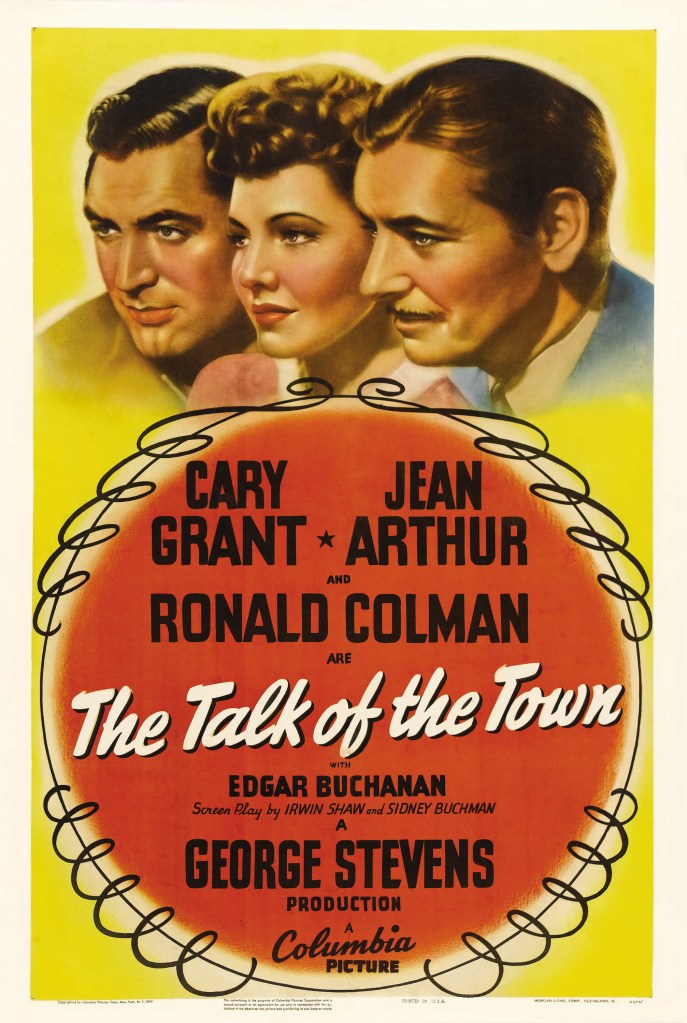
The Talk of the Town (1942)

The Talk of the Town (1942)

Overlooked but delightful comedy with three star actors at the absolutely charming top of their game

Director: George Cukor

Cast: Cary Grant (Leopold Dilg), Jean Arthur (Nora Shelley), Ronald Colman (Professor Michael Lightcap), Edgar Buchanan (Sam Yates), Glenda Farrell (Regina Bush), Charles Dingle (Andrew Holmes), Clyde Fillmore (Senator Boyd), Emma Dunn (Mrs Shelley), Rex Ingram (Tilney), Leonid Kinskey (Jan Pulaski)

Leopold Dilg (Cary Grant) is in a heck of a fix. A passionate campaigner for worker rights, all fingers point straight at him when a local factory burns down leaving an unpopular foreman dead. Dilg rather than wait in the slammer for an inevitably (fatal) sentence, he escapes and find refuge in the country cottage of former schoolmate Nora Shelley (Jean Arthur). Problem is Nora has sublet her cottage to straight-as-a-die legal professor Michael Lightbody (Ronald Colman), in the running for the Supreme Court. With Dilg passing himself off as a gardener, can he and Nora convince the ultra-serious Lightbody there has been a miscarriage of justice?

The Talk of the Town is a hugely enjoyable comedy with more than a pinch of social commentary, that gives three charismatic stars tailor-made roles under the assured hand of a skilled director. It’s a great mix of genres: it opens like a dark thriller, segues into an odd-couple-house-share comedy via a romantic-love-triangle, transforms again into a slightly zany detecting comedy with road-trip vibes and wraps up as courtroom drama with a Capraesque speech and happy ending. The fact all this hangs masterfully together makes The Talk of the Town stand out as a consistently surprising and enjoyable comedy, full of zip and smart, funny lines.

Stevens choreographs the film superbly, specifically in its initial set-up where the three lead characters weave in and out of each other’s lives in the house. Initially Grant hides in the attic – signalling from a window his desire for food (an excellent running gag is the amount Grant’s character enthusiastically eats), with Arthur going to acrobatic lengths to hide his presence from Colman. You can imagine other films getting an entire hour out of this: The Talk of the Town is brave enough to shake-up this set-up within twenty minutes, as Grant nonchalantly wanders downstairs to introduce himself, quick thinkingly introduced as a gardener by an as-surprised-as-us Arthur.

It’s a surprise, but a perfect one – after all it would be hard easy to consider Colman’s character a head-in-the-clouds dullard if he had been fooled for long by Arthur’s increasingly unusual behaviour. And The Talk of the Town needs us to like and respect all three of these characters, to root for all of them. What better way, but to get them rooting for each other?

The odd houseshare comedy that takes over Talk of the Town is all about its principles effectively falling in love with each other (there is a thruple version of Talk of the Town waiting to be made). Grant learns to respect Colman’s self-effacing, shy wit. Colman learns to enjoy Grant’s instinctive intelligence. Both of them find deeper feelings growing for Arthur’s feisty Nora, just as she finds herself drawn to the charm, good nature and honesty of the other two. Talk of the Town becomes delightful as we watch the three of them eat meals together, play chess and chat about the law late into the night. Few films have shown as skilfully friendships organically growing.

The tension that takes over is whether outside forces will tear this friendship apart. Namely, if Colman finds out Grant’s identity will he swop from buying Borscht for his friend (sweetly, Colman remembers a throwaway comment about exactly how much he likes it) to being duty bound to shopping him to the cops? Grant and Arthur are aware of the danger: they’ve been drop-feeding references to the unsound accusations against Grant throughout, all while desperately making sure he never sees Grant’s mugshot photo in the papers (right up to pouring eggs over the front page) – the way Colman eventually finds this out is a beautifully done reveal.

All of this entirely relies on three actors at the top of their game. Grant seems, at first, an odd choice for a worker’s rights campaigner, but this is one of his lightest, most overlooked performances: wry, knowing and playful. Arthur is excellent as the electric centre of this love triangle, energetically torn between two very different men and terrifically determined under the occasionally scatty surface. Colman is dapper, upper-class charm to a T, but full of egalitarian charm and surprisingly willing to begin to question his own views in conversation with others.

Colman’s initial rigidity is represented – in a plot point that’s slightly on-the-nose (literally) – by his goatee, which he wears as a metaphorical shield between him and the world (it’s also another neat running gag, as it garners endless unflattering comments). When Colman inevitably shaves it off (a moment so overplayed, his trusted valet breaks down in tears at the sight) it’s a sign that he has accepted there is more to the law than just its letter. It plays into the film’s final shift, as Colman fills the final act with a passionate speech to silence a crowded courtroom ready for a judicial lynching (hilariously littered with direct quotes from his Grant’s character).

Much to my surprise, the social commentary and democratic praise never outweighs the comedy. The film gives space to earnest debate, but still has time for a madcap chase that ends with Colman hiding up a tree from police dogs. Stevens successfully mixes styles, from Fritz Lang thriller to Preston Sturges comedy to a mix of Hitchcock and Capra. Stevens fuses all these together perfectly, making a film funny, exciting when it needs to be, but always engaging with characters you really root for.

The Talk of the Town is overlooked but a very well-made treat and an exceptional showcase to three charismatic, hugely engaging actors. It marries comedy and social commentary extremely well (it even has a Black character in Rex Ingram’s wise valet whose race is incidental to his personality, quite a thing in the 40s) and bowls along with a huge sense of fun. It’s definitely worth seeking out.

Sing Sing (2024)

Sing Sing (2024)

Highly emotional, beautifully made film about the power of theatre to change lives for the better

Director: Greg Kewdar

Csat: Colman Domingo (John “Divine G” Whitfield), Clarence “Divine Eye” Maclin (Himself), Paul Raci (Brent Buell), Sean San José (Mike Mike), David “Dap” Giraudy, Patrick “Preme” Griffin, Mosi Eagle, James “Big E” Williams, Sean “Dino” Johnson, Dario Peña, Miguel Valentin, Jon-Adrian “JJ” Velazquez, Pedro Cotto, Camillo “Carmine” Lovacco, Cornell “Nate” Alston

Prisons are designed to punish but also to reduce people to easy-to-control numbers, to shut them away from the joys of everyday life. What they are not designed to do is rehabilitate and change people’s lives. The opportunities of doing this in prison are rare, but one such is the Rehabilitation Through the Arts program in Sing Sing maximum security prison. Here prisoners are given the opportunity to explore their creative side in a supportive community, staging plays and taking part in theatrical workshops that encourages inner exploration. It has had extraordinary success in cutting re-offending rates and changed the lives of many of the men who have worked through it.

Sing Sing explores the life-changing impact of giving opportunities to explore new horizons to men society has written off as irredeemable. Sing Sing follows the production of one play and how the rehearsals provide a small slither of humanity to people eager to reform and change themselves for the better. It’s crucial message is that this programme is not so much about acting – but about coming to terms with who you are, and giving its members the tools to evaluate and be truthful about themselves and their crimes, a crucial first step towards rehabilitation. It is based on the personal experiences of John ‘Divine G’ Whitfield (played by Colman Domingo) and Clarence ‘Divine Eye’ Maclin (playing himself), who worked with Kewdar and producer Clint Bentley on the script.

The two men joined the programme at different times for very different reasons. The passionately artistic Divine G is a long-standing member, the group’s leading actor and playwright and its spiritual co-leader with programme director Brent (Paul Raci). Divine Eye is a surly, aggressive man whose initial contempt for performance hides his instinctive connection with poetry and the language of Shakespeare. Sing Sing covers their staging of Breakin’ the Mummy’s Cord, a bizarre mix of cowboys, Ancient Egypt, time travel, Robin Hood and Hamlet – but exactly the sort of light comedy rather than serious drama new member Divine Eye argues they should be doing.

What emerges in this beautifully played drama, shot with a poetic immediacy by Kewdar that embraces natural light (a light the prisoners can largely only experience by looking at it through windows) is a passionate, moving tribute to the power theatre and art can have in changing people. The proof is there in the pudding: along with Maclin’s beautifully honest and natural performance as himself, the cast is full of former programme members playing themselves. This gives a real emotional force to Sing Sing’s reflections on the burdens of incarceration and regrets at terrible life choices: when these men speak of pain, guilt and regret, the truth stares from their eyes. There is an extraordinary moment when Sean ‘Dino’ Johnson speaks about the programme as a place where the inmates can feel, just for a few hours, like they can do the small, beautiful things other people are free to do – and the pain in Johnson’s eyes hurts us all the more because of the truth behind it.

Theatre then can transform us, and we see it in the effect it has on Divine Eye. A combative man, touchy on everything from his masculinity in acting to instinctive anger when another actor walks behind him, at first he seems a dangerous recruit and certainly unlikely casting as Hamlet (the role Divine G had longed for). But he feels a deeper connection with Shakespeare that surprises him, and as the rehearsals proceed he allows himself to connect with his emotions (the core point of the process) to express himself truthfully – to show on the outside more traces of the man inside. Maclin’s performance is extraordinarily honest, not shirking on his bullying anger at the start but showing how learning to understand and communicate his emotions truthfully and without fear or shame changes him into both a passionately committed performer but also a kinder man.

It’s the power of acting and theatre to help people become richer, better versions of themselves – more in touch with, and able to express, their emotions and (even more importantly for criminals) to empathise with others – that Sing Sing makes a passionate case for. It also means we feel the injustice when others treat the programme with suspicion. At his parole hearing, Divine G is asked about whether his reasonable, polite, earnest manner is an example of him ‘acting’. After seeing how this programme has changed lives, the injustice of it being accused of effectively being a programme to build lying skills (not to mention that the programme is based on understanding and accepting the truth about yourself) stings us almost as much as it breaks Divine G’s heart.

As the sole fully professional actor, Colman Domingo gives a wonderful and inspiring performance. Domingo matches the rest of the cast’s truthfulness, showing Divine G has funnelled his pain at incarceration into a flurry of artistic expression: acting, writing plays and pouring his energy into supporting others through the programme. Domingo shows though that Divine G enjoys his standing in the programme: he struggles not to show his hurt and irritation when his offer of a self-written play is rejected in favour of a crazy comedy and there is a more than a little touch of envy when Divine Eye lands Hamlet, the role Divine G was desperate to play. But this comes from a man, falsely convicted, embracing the meaning he has left in his life. When his sense of self is challenged by tragic events, Domingo’s emotional vulnerability and raw pain pours out of him.

But the film is about the small triumphs of changing yourself for the better and it’s a massive tribute to the film that it largely avoids the sort of cliches of prison dramas, or expectations about ‘personal journey’ films that you are primed to expect as it begins. Sing Sing avoids manufactured drama or (in the most part) grandstanding, barnstorming speeches. Instead, its power lies in smaller, quieter moments, of honest reconciliations and small confessions of people working together to better their lives and embracing art and culture to enrich themselves. It’s a beautiful, hopefully and very moving film, the sort of film that offers us hope in a sometimes dark and depressing world.

Anchors Aweigh (1945)

Anchors Aweigh (1945)

Classic musical frequently overlong and under-plotted with fun moments but dwarfed by later films

Director: George Sidney

Cast: Frank Sinatra (Clarence Doolittle), Kathryn Grayson (Susan Abbott), Gene Kelly (Joe Brady), José Iturbi (Himself), Dean Stockwell (Donald Martin), Pamela Britton (Brooklyn), “Rags” Ragland (Police sergeant), Bill Gilbert (Café manager), Henry O’Neill (Admiral Hammond)

US Navy sailors Clarence (Frank Sinatra) and Joe (Gene Kelly) win medals and shore leave all on the same day, and head to the streets of Hollywood looking for a good time. But, Cyrano-like, Joe finds himself helping Clarence court would-be Hollywood actress Susan Abbott (Kathryn Grayson), whom he secretly wouldn’t mind whispering sweet nothings to himself. Just as well the naïve, never-been-kissed Clarence finds an instant spark with café waitress Brooklyn (Pamela Britton). But can the boys deliver to Susan the audition they’ve promised with esteemed MGM musical director José Iturbi (playing himself)? And can true love find a way through?

It certainly can, but it takes a very, very long time for it to do so. Anchors Aweigh was a big hit, scooping several Oscar nominations (including Kelly’s only acting nomination). But today it feels like a self-indulgent pilot for far more successful (and considerably shorter) Freed musicals that followed. The concept of Sinatra and Kelly as shore leave sailors was recycled in On the Town while a peak behind Hollywood’s curtain was obviously used far more effectively in Singin’ in the Rain. Compared to these two, Anchors Aweigh feels bloated, massively over-staying its welcome while its incredibly flimsy plot is stretched out over two hours and twenty minutes (in that time you could watch most of both of its superior successors).

Anchors Aweigh is really a collection of short skits where the stars showcase what they do best: Kelly dances and Sinatra sings. Every so often they sing-and-dance together. The plot’s romantic shenanigans are solved easily and everyone ends with a beaming smile on their face. Instead, the film is almost exclusively remembered for its skits, most famously a very impressive fantasy sequence where Kelly dances with an animated Jerry (of Tom and Jerry fame). This five minutes or so of ingenious animation matched with Kelly’s charm and energy would make for a heck of a short film: which is what of course it really is, since it bears almost no connection with almost anything else in the film (Kelly is spinning a yarn about how he won his medal, suggesting he did it by teaching a lonely mouse king how to trip the light fantastic).

The finest points of this film are these sequences: but there are far too many of them, and many don’t match the same quality. On the positive side, we get some fine singing from Ol’ Blue Eyes, and Kelly and Sinatra dance two hugely enjoyable numbers together: We Hate to Leave where they tease their fellow sailors about all the great fun ahead for them on shore leave and I Begged Her a high-tempo number (which Sinatra took eight weeks to master) as the boys brag about all the wild-antics we know they didn’t actually get up to the night before. Kelly gets a showpiece paso-tinged tap dance themed around Zorro which provides the film’s most impressive athletic stunts. On the negative side, Iturbi is given the scope for too many classical concerto excepts which dramatically slows the action (such as it is) down.

Problem is there is no cement to hold these moments together. The central plot is so flimsy, slight and utterly unsurprising, so completely devoid of conflict or drama, it seems designed to lull you to sleep between the set pieces. It’s not helped by the general acting weakness of much of the cast. Sinatra at this time was a stunning singer and surprisingly competent dancer but a very mediocre actor – amusing as it is to see him play a timid virgin who can’t get a girl. Kathryn Grayson gives a solid but uninspired performance, hardly charismatic enough to make you believe both men would fall for her so swiftly. José Iturbi is wooden as himself. Pamela Britton is so low on charisma, you hardly notice the film doesn’t bother to give her character a name. In his first major role, Dean Stockwell actually shows promise, even if his character is the sort of melt-your-heart child many audiences secretly find nauseating.

The real star here is the third billed Kelly, who nails the persona that would carry him through many films: the charismatic, sometimes glib charmer with the knack for comedic facial reactions who hides hidden romantic depths under a smooth exterior. Kelly is the motor of the whole film, with just the right light comic touch to keep things going, not to mention throwing himself into the film’s most memorable sequences. Every scene showcases his ability to pull a parade of witty facial expressions from bemused to long suffering to sheepishly guilty to exasperated. He’s the finest thing in a mediocre film.

A mediocre film is what Anchors Aweigh is, assembled with the sort of bland competence that was George Sidney’s calling card (compare his work here to the imagination and energy that Stanley Donen bought to pretty much the same material). It’s chief amusement now is chuckling at how certain set-ups now come across: the completely innocent homoerotic undertones between Kelly and Sinatra (although the film winks at this, when Kelly’s attempt to teach Sinatra to woo a girl sees him drawing glances as he minces down the street imitating the girl-next-door); the fact that Kelly’s unseen girlfriend Lola really sounds like she might be a sex worker; the tone-deaf decision of the boys to discourage Susan’s older (and, to be fair, predatory) suitor by singing a song about how she is the equivalent of the town’s bike; how completely chill everyone is about letting two random sailors take a small boy home alone. To be honest giggling at how these particular mores have changed over time is more amusing than most of this otherwise over-long, under-plotted, thuddingly average film.

The Lives of a Bengal Lancer (1935)

The Lives of a Bengal Lancer (1935)

Old-school adventure mixes with some slightly dated Imperial attitudes in a film that’s still good fun

Director: Henry Hathaway

Cast: Gary Cooper (Lt McGregor), Franchot Tone (Lt Forsythe), Richard Cromwell (Lt Stone), Guy Standing (Colonel Stone), C. Aubrey Smith (Major Hamilton), Douglass Dumbrille (Mohammed Khan), Monte Blue (Hamzulla Khan), Kathleen Burke (Tania Volkanskaya), Colin Tapley (Lt Barrett), Akim Tamiroff (Emir), J Carroll Naish (Grand Vizier)

Tales of adventure and derring-do in the British Empire were meat and drink for generations of schoolboys. Few adventures were as well known as The Lives of a Bengal Lancer, a stirring tale of three lieutenants in the Bengal Lancers who become fast friends while defending Queen and country. We’ve got decent, impulsive but luckless McGregor (Gary Cooper), upper-class joker Forsythe (Franchot Tone) and eager-to-please Stone (Richard Cromwell), whose also the son of commanding officer Colonel Stone (Guy Standing). They go up against Oxford-educated Mohammed Khan (Douglass Drumbille), who schemes to seize an ammunition shipment. Can our heroes face down dastardly natives, exotic tortures and desperate escapes? All in a day’s work for a Bengal Lancer.

The Lives of a Bengal Lancer was a big hit on release, despite sharing nothing except the title, location and general theme with the semi-autobiographical novel from former-lancer Francis Yeats-Brown. It’s rollicking adventure and the boys-own mateyness of its leads, sparked a wave of spiritual follow-ups set everywhere from the Canadian mountains to the deserts of Africa. It scooped seven Oscar nominations and was celebrated as one of the greatest adventures on screen. Unfortunately, it’s not as fondly remembered now with its uncritical celebration of colonial India, spiritual links to Kipling’s White Man’s Burden and the fact Hitler of all people named it his one of his favourite film, loving its celebration of how a few white men could ‘protect’ (control) millions of natives.

It’s fair to say you have to close your eyes to some of this stuff when watching The Lives of a Bengal Lancer today. Otherwise you might flinch at our heroes threats to various squirming, cowardly Islamic rebels that if they don’t confess they’ll be sown inside a pig skin (even in 1935, outraged questions were raised about this in Parliament). You need to roll with Douglass Drumbille blacking-up as the well-spoken Mohammed Khan (not just him: nearly all the Indian characters are men-in-face-paint and for good measure our heroes also black-up to disguise themselves). There isn’t a second’s questioning about the morality of Empire and the implicit suggestion runs throughout that the Indian people should be grateful the British were there to run their country for them.

But put all that to one side, and The Lives of a Bengal Lancer is still rather fun. One of the factors making it easier to bench your misgivings is that, really, this film isn’t really interested in India or the themes of Empire anyway. For starters, all three of our heroes are played by Americans making no effort to hide their transatlantic accents (McGregor is suggested as being ‘Scotch Canadian’, but a few words of Cooper’s awful Scottish accent makes you relieved he didn’t bother to keep it up). Any insight into British-Indian relationships is extremely brief. The film is clearly shot in California, in locations identical to the sort of Westerns Hollywood was churning out. And a Western is what Bengal Lancer really is.

Our three heroes do feel more like cowboys shooting the breeze for large chunks of the film rather than army officers. Although there have been criticisms of the leads – Cooper in particular, probably because an actor so iconically American feels strange as an oddly accented Brit – all three of give entertaining, complementary, performances. Cooper is strongly charismatic, rather charming in his earnest attempts to do the right thing and his luckless incompetence at anything that isn’t soldiering (a running joke sees him building up increasing tab in a series of ill-considered bets with the good-at-everything Forsythe). But when action comes calling, McGregor is courageous, quick thinking and selfless. It’s immediately clear why Cooper essentially replayed versions of this relatable role several times. Franchot Tone is equally fine as the witty, smooth Forsythe who never takes anything seriously until things are really serious. Cromwell does sterling work as the naïve Stone.

Most of the film works because we end up liking these three characters – just as well since most of the first half is essentially watching them go about their daily tasks: riding, cleaning horses, heading out on patrol, shooting the breeze in the barracks. There is a small character-led crisis over whether the ram-rod Colonel Stone (a suitably dry Guy Standing) will accept his puppy of a son, but the biggest action drama in the first half is a wild boar hunt that nearly goes terribly wrong. If we didn’t enjoy Forsythe and McGregor deliberately rubbing each other up the wrong way, between teasing and taking a big-brother interest in Stone, we’d struggle to enjoy the rest of the film.

The second half is where the real action kicks in. During a dinner where our heroes dress up in native garb to make nice with a local Emir, Bengal Lancer throws in a bizarre Mata Hari figure, in the mysterious Russian Tania (Kathleen Burke). It’s not a remote surprise she ends up being no-good, or that the disillusioned Stone is swiftly honey-trapped into imprisonment by Dumbrille’s vaguely-motivated smooth-talking villain (it’s hilariously ironic that the villain is the most cut-glass Brit in the film). McGregor and Forsythe don Indian disguise – against orders naturally – to do what men do, which is stand by their friends.

A parade of exciting set-pieces follow thick-and fast, culminating in an impressively staged battle with towers toppling in explosives, machine gun fire spattering left-right-and-centre and our heroes literally coming to blows over who gets to make a heroic sacrifice. We get there via dastardly torture – Bengal Lancer coined the famous “We have ways of making men talk line” – as Mohammed Khan employs bamboo sticks under the fingernails (thankfully shown largely in shadow and Cooper’s stoic grimaces) to get information from our heroes. It’s all part of these men being forged by fire into exactly the sort of hardened men-of-combat we need to protect a frontier.

The Bengal Lancers ride in towards the end like the cavalry, and the air of a Western in Red Coats sticks with Lives of a Bengal Lancer throughout. Sure, it combines this with the stench of White Man’s Burden and an attitude of edgy distrust of foreigners, but The Lives of a Bengal Lancer is also riotous, old-fashioned fun, well shot and charismatically played. It might be a rather slight action-adventure fable, and sure its politics have not aged well, but it is still fun.

A Real Pain (2024)

A Real Pain (2024)

Delightful and enjoyable character study, slight but very well acted by well-cast leads

Director: Jesse Eisenberg

Cast: Jesse Eisenberg (David Kaplan), Kieran Culkin (Benji Kaplan), Will Sharpe (James), Jennifer Grey (Marcia), Kurt Egyiawan (Eloge), Liza Sadovy (Diane), Daniel Oreskes (Mark)

Life is tough. David (Jesse Eisenberg), a new father and successful seller of internet advertising space, finds social situations incredibly challenging. They aren’t a problem for his cousin Benji (Kieran Culkin), an impulsive, charming but troubled man who sits somewhere on an undiagnosed spectrum. The two were once as close as brothers, but growing up (as far as you can say Benji has) led to them drifting apart. After their death of their Holocaust-surviving grandmother – who Benji felt was closer to him than anyone – they travel to Poland, as part of a Holocaust-themed tour group, to commemorate her.

Eisenberg’s film is a witty, heartfelt, sharply scripted character study that’s slight on plot, but works very effectively as slice-of-life film-making. A Real Pain isn’t about solving problems, but acknowledging them (or not). It looks at how challenging and complex life, with its different ages and the changes those inflict on us and those around us, can be overwhelming. Above all, it’s an involving and engaging exploration of the relationship between two people who could not be more different, but are (or were once) held together by deep, unbreakable bonds.

This is despite sometimes finding the other person both loveable and deeply frustrating. That best sums up Benji, a charismatic man who feels things very, very deeply – and doesn’t see any reason to filter those feelings. In a fabulous, magnetic performance, Kieran Culkin makes him a guy who is fun personified until he isn’t. Benji connects with the tour group in a way David can’t: at their first meeting he absorbs details about them with a passionate interest, he ropes them into confidences and larking around for photos, he makes them laugh. He’s memorable, fun and lights up a room.

But he’s also deeply troubled. There is clearly some form of mental health issue with Benji – anything from Tourettes to autism via ADHD. Benji is scrupulously, passionately honest all the time. Which is fine when he is joking around: much more of a problem when he explodes in a furious tirade about the dark-irony of a Jewish Holocaust tour-group travelling first class on a Polish train. His explosions of passionate, vigorous outrage often showcase his failure to understand basic social norms (those rules that govern how far we go when we are annoyed), meaning he often ends up pushing things like a five-year-old who doesn’t realise the impact of his words.

He’s a man who always displays what he feels: after visiting a concentration camp he literally shakes with uncontrollable sobbing; when he wants a moment’s reflection in a graveyard from tour guide James (an excellently restrained, very funny Will Sharpe) he’ll launch into a massively critical tirade about James losing the ‘real people’ behind a blizzard of historical facts. But, strangely, during this passionately felt but excessive tirade (which is excruciatingly embarrassing), he’ll be as equally genuine when he praises James’ tour as he was when lambasting the picture-postcard view of the Holocaust he feels the tour can get lost in. And you can’t help but feel that he has a point, that the link between tourism box-ticking and real historical life-and-death is a bit uncomfortable. But you probably wouldn’t express it at such awkward, skin-crawling length as Benji does.

Culkin’s performance has echoes of his role in Succession – Benji shares Roman Roy’s impulse control, bouncy lack of focus and disregard for what people think about him (although, unlike Roman, that’s more because he genuinely can’t seem to understand people might respond to stuff differently to how he would). But Culkin also mines Benji’s vulnerability and desperation for affection. He’s a loud, bouncy man because he’s terribly, deeply lonely. He frequently wraps David in affectionate laddish embraces as if he’s scared he’ll run away. He clings to the memory of his bond with his grandmother and is distressed at a casual statement from David that suggests it might not have been as close as he believes. He constantly keeps on the go, seeking out new people and experiences, because he’s clearly deeply distressed at the idea of being alone with his own thoughts.

It makes him a fascinating contrast with David, who seems at first more nervous and anxious than Benji but turns out to be far better adjusted – just forgettable opposite the electric Benji. It’s a great performance by Eisenberg, nervous, twitchy and flummoxed by the world. David behaves like most of us would: nervous about Benji’s exhibitionism, worried about what people think about him and anxious about the people he loves. Sure, there’s a bit of Woody Allen-ish comedy to David (the sort of guy who leaves innumerable voicemails whenever there is the slightest change to his travel plans), but he feels like a real guy trying to make the general pressure of life work.

And a lot of that pressure comes from what a joy and a burden Benji can be. Benji can make him laugh but no-one else, but who (as he confesses in a stand out, single-take emotional speech by Eisenberg) he switches between wanting to be him (who wouldn’t want to make friends that easily?) and hating him (who wouldn’t be frustrated by a guy as unpredictable as that?). But, above all, he’s anxious and worried about a cousin who can’t look after himself and secretly struggles the daily turmoil of real life. It’s a whole extra burden he’s carrying, worrying about what this unpredictable, troubled man might do to himself.

Eisenberg’s leans into a thematic idea that the responsibility to life a happy, pain-free life is even more pressure-inducing for Jewish people living in the shadow of these unspeakable horror. There are teasing moments where this processing a traumatic legacy among the mundane burdens of life, looks like it might drop into place – from the second generation American immigrant couple who feels it’s their duty to live a good life, to the Rwandan convert Eloge (very well played by Kurt Egyiawan) who finds a peace in Judaism he’s never found elsewhere – but somehow it never quite clicks into focus. 

A Real Pain is a film stronger on the small details than thematic big pictures.  It wonderfully stages this very male relationship, where both men focus on shared memories and banter so they don’t need to talk about real feelings. And it gives plenty to celebrate in this delightful character study of two complex characters excellently played by Eisenberg and Culkin (Eisenberg has written two perfect roles for actors with very specific ranges). It’s a very intimate character study that makes you think about how each of us try to cope with everyday burdens, packed with moments that will make you both laugh and think. Eisenberg but just be an even better writer-director than he is actor.

Cry Freedom (1987)

Cry Freedom (1987)

Highly earnest, well-meaning, but tragically mis-focused biopic that doesn’t have the impact it wants

Director: Richard Attenborough

Cast: Kevin Kline (Donald Woods), Denzel Washington (Steve Biko), Penelope Wilton (Wendy Woods), Alec McCowen (High Commissioner David Aubrey Scott), Kevin McNally (Ken Robertson), Ian Richardson (State Prosecutor), John Thaw (Jimmy Kruger), Timothy West (Captain De Wet), Josette Simon (Dr Mamphela Ramphele), John Hargreaves (Bruce Haigh), Zakes Mokae (Father Kani), John Matsikiza (Mapetla), Julian Glover (Don Card)

Steve Biko (Denzel Washington) was a leading anti-Apartheid campaigner, driving the Black Consciousness Movement in the repressive racist state of South Africa. Biko called for Black people to organise themselves and rejected the paternalistic concern of hand-wringing white liberals. Biko was ‘banned’ in 1970s by South Africa’s (in)justice department (meaning he could not be in physical proximity with more than one other person at a time) but didn’t let this stop him campaigning – until he was eventually arrested and murdered in custody in August 1977. His story came to international attention with the reporting Donald Woods (Kevin Kline), the white liberal newspaper editor who befriended Biko, later also banned and eventually fled in disguise from South Africa.

All of this makes very ripe ground for Richard Attenborough to make another socially conscious, unreservedly liberal film, very much in the style of Gandhi. Unfortunately, while Gandhi combined epic sweep and drama with its schoolboy history, Cry Freedom is a deathly serious film, straight-jacketed by recreating events as reverentially as possible and focuses itself in all the wrong places. Cry Freedom is the Biko biography in which Biko becomes a supporting character to exactly the sort of white liberal he rejected having African stories filtered through. Admirable as Donald Woods’ efforts to find justice for Biko was, does it feel like he deserved the focus of over half the film? It’s as if Attenborough had decided to frame Gandhi solely from the perspective of Martin Sheen’s journalist rather than the Father of India himself.

Following the trend of many films of the 80s and 90s, Cry Freedom believes that the only way the regular cinemagoer can relate to a minority group is through the filter of a complacent white person having their eyes opened to how unjust everything is. In carefully following this cliché, Cry Freedom does do a decent job. Woods is patronisingly certain of his liberal views, even while he sometimes fails to even acknowledge his live-in Black maid who unquestioningly calls him ‘master’.

Back-slapping himself on writing the odd sympathetic editorial and convinced one of the big problems of South Africa is the danger of anti-white racism, he’s exactly the sort of hero you get in this genre: the guy who assumes, because the system has always worked for him, it will work for everyone. When he resolves to support Biko, he immediately assumes a friendly pow-wow with Justice Minister Jimmy Kruger (a terrifyingly amorally, avuncular John Thaw) will sweep away all the problems (it, of course, makes things immeasurably worse for everyone).

Cry Freedom largely re-creates the oppressive policies of South Africa, through seeing a white character become a victim of the very persecution, bullying and terrorising the Black community has spent its whole life suffering. (With the big exception that Donald Woods never seems to be in danger of being dragged off the streets and beaten to death in a police cell). It feels like a tone-deaf way of exploring these issues. Particularly as Donald Woods’ eventual escape from South Africa is staged and filmed with a singular lack of energy over nearly an hour of screen time, with interest slowly drained out as Attenborough uninventively turns it into an identikit version of any number of bog-standard behind-the-lines Great Escape shenanigans you’ve seen done a million times better before.

Attenborough, to be fair, saves his energy for the re-staging of the brutal repression inflicted on the Black community. Cry Freedom’s opening and closing sequences – a brutal slum clearance in East London and a restaging of the shockingly violent crushing of the 16 June 1976 Soweto uprising (where indiscriminate police automatic weapons fire killed and injured hundreds of children) – are shot with exactly the sort of humanitarian outrage and cold-eyed recognition of the horrors of conflict that Attenborough bought to Gandhi and A Bridge too Far.

It’s not hard to wonder if this is more the sort of film Attenborough wanted to make, but that funding demanded a white lead so as not to panic mainstream cinema audiences. It makes large parts of the film feel like a missed opportunity. A real immersion in the actual day-to-day lives of Black South Africans – not just the beatings, but the unending, casual racism and oppression – would have created a film of even more power. (The fact the film suddenly ends with a flashback to Soweto – an event not central to the plot at all – makes you wonder if Attenborough suddenly realised that, without it, Cry Freedom would have barely shown a Black face for its last twenty minutes).

But too much of the rest of Cry Freedom feels too dry, reserved and lifeless. Even Biko himself falls into this trap. Denzel Washington delivers a very fine performance, full of the sort of effortless charisma and magnetic leadership that makes you believe that so many would follow him and using wit and moral certainty to stand up to the various bullying policeman he encounters. But too much of Biko’s dialogue with Woods is full of the sort of dialogue designed to inform and educate the audience, rather than create good story-telling. Too many scenes in Cry Freedom’s opening hour feel like a South African politics seminar, no matter how much energy Washington gives the dialogue.

It’s part of the feeling the whole film carries: a very serious political ethics class, mixed with an all-too familiar story of a white man learning first hand just how tough his Black friends have had it for years. Attenborough so clearly means well, it feels almost cruel to knock him and his film: but Cry Freedom feels like a film with a lot of blood, sweat and tears invested in it, which then fails to have the emotional heft it really needs and spends a lot of time telling the wrong person’s story.