Author: Alistair Nunn

Gorky Park (1983)

William Hurt investigates murder in Soviet Russia in ace adaptation Gorky Park

Director: Michael Apted

Cast: William Hurt (Arkady Renko), Lee Marvin (Jack Osborne), Brian Dennehy (William Kirwill), Ian Bannen (Prosecutor Iamskoy), Joanna Pacula (Irina Asanova), Michael Elphick (Pasha), Richard Griffiths (Anton), Rikki Fulton (Major Pabluda), Alexander Knox (The General), Alexei Sayle (Golodkin), Ian McDiarmid (Professor Andreev), Niall O’Brien (KGB Agent Rurik)

Martin Cruz Smith’s novel Gorky Park was a bestseller in the early 1980s. It looked at grim goings-on behind the Iron Curtain, a trio of grisly murders in Moscow’s Gorky Park (the bodies are faceless, toothless and fingerless to avoid identification). The murders are investigated by Arkady Renko (wonderfully played in this film by William Hurt), a chief investigator for the Moscow militia who feels out of place in the corruption of Soviet Russia, but is equally scornful of the consumerism of the West. The investigation delves into a complex web of Soviet relationships with American business and the dissident community, not least an American millionaire fur trader Jack Osborne (Lee Marvin), and a would-be defector and possible friend of the victims, Irina Asabova (Joanna Pacula).

What I loved about this film is the novel is a rather overwhelming 500+ pages, but this film is a brisk and pacey two hours – and I literally couldn’t think of a single thing missing. But then that’s what you get when you have a master writer adapting your screenplay. Gorky Park has Dennis Potter, perhaps the greatest British TV writer of all time – and this is a sublime script, which keeps the pace up, covers all the tense greedy wrangling of the villains, and also makes subtle and telling points about the Soviet system, all in a punchier and clearer way than the books. The dialogue is also absolutely cracking, ringing with a brusque, icy poetry, with a brilliant ear for a turn of phrase.

Filmed on location around Helsinki and Glasgow among other places, what the film misses in actual Russian locations (needless to say the Soviets were not keen to host the production of a film that showcased murder and corruption at the heart of their capital city), it makes up for with Apted’s taut direction and eye for the general crappiness of Soviet life. Everything is run down, everything is dirty, everything looks cold and unappealing, even the houses and luxury bathhouses of the party leaders look a bit middle-class and uninspiring. By the time (late in the film) that you find yourself in one of Osborne’s houses you are immediately struck by the quality of the furnishings – it’s literally a different world.

This atmosphere not only creates something a bit more unique, it also allows us to relax and enjoy the quality of Smith’s story. I found it overstretched in the book, but the film gives it an urgency and a sinister creepiness that grips your attention. Apted has a brilliant eye for the little tricks to survive living in a police state, from watching what you say, to carefully placing a pencil in a dialled telephone wheel to prevent bugs from activting. Every moment is well paced and nothing outstays its welcome. Characters are introduced with skillful brushstrokes, and the relationships feel real and lived in. With such strong dialogue, it’s also great they got such good actors to do it.

William Hurt takes on the lead, and he is perfect, affecting a rather clipped English accent (all the Russians speak with various regional or RP accents). With his unconventional looks (part boyish, part stone-like), he looks the part and he totally captures the yearning unconventionality of a character who deep down probably would be a true believer in a good society, but can’t believe in the corruption around him. Far from the stereotypical would-be dissident, Hurt makes him a man who loves his homeland, but not always the people running it. He’s exactly as you would picture Renko in the book – a guy who will go for justice with the bit between his teeth, a semi-romantic hero, no superman (he frequently is bested in combat), who is looking for something to love and believe in.

The rest of the cast are equally fine. Lee Marvin is cast against type as a suave, hyper-intelligent, manipulatively greedy businessman – although his reputation for playing heavies comes in handy when the gloves come off. Joanna Pacula mixes sultry Euro-siren with an urgent yearning for freedom. Ian Bannen is wonderfully avuncular as Renko’s supportive boss (extra points for Tinker Tailor fans that Bannen is reunited here with Alexander Knox, in a dark reflection of their Control-Prideaux working relationship from that series). Michael Elphick seizes on the part of the down-to-earth Pasha, Renko’s friend and comrade, a role greatly improved from the book (largely to give Renko someone to bounce ideas off).

Apted’s film has a great sense of tension and a wonderful feeling for Soviet Moscow’s dark underbelly. The mystery is increasingly gripping and involving as the film goes on – and, in a nice rug-pull, turns out to be about something totally different than what you might expect. Even the final shootout is assembled and shot with an unexpected vibe. It avoids any Cold War pandering – the main villain is a sadistic American allied with Russians, our hero a noble Russian who partners up with a salt-of-the-earth but decent American cop (Brian Dennehy, also very good). For a late night mystery thriller, with a touch of everything thrown in, you can do a lot worse than this. I enjoyed it far more than I expected. I’d almost call it an overlooked B-movie gem.

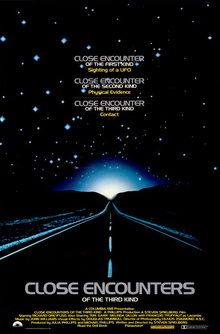
Close Encounters of the Third Kind (1977)

We Are Not Alone in Spielberg’s optimistic sci-fi classic Close Encounters of the Third Kind

Director: Steven Spielberg

Cast: Richard Dreyfuss (Roy Neary), François Truffaut (Claude Lacombe), Teri Garr (Ronnie Neary), Melinda Dillon (Jillian Guiler), Bob Balaban (David Laughlin), J. Patrick MacNamara (Project Leader), Josef Summer (Larry Butler), Robert Blossom (Farmer), Lance Henriksen (Robert)

If you had any doubt that Spielberg in his prime was a fundamentally optimistic filmmaker, then sit down and check out this warm, extremely personal, tale of mankind encountering aliens. It’s one of the very few films that Spielberg also wrote the script for, and every frame is full of his trademark yearning love of the unknown and the childish sense of adventure in us all. In an era where you couldn’t move for depressingly grey films about the corruption of America, Close Encounters is all about dreams and hope.

Throughout mid-West America in the present day, strange crafts covered in lights are seen in the skies by ordinary people like repairman Roy Neary (Richard Dreyfuss). The American Government is very aware of the presence of aliens – recently in the Mojave desert, plans and ships missing since the 1940s have recently reappeared in perfect condition. Led by their UFO expert Claude Lacombe (François Truffaut), the government does its best to control access to, and knowledge of, the aliens. However, Roy Neary and hundreds like him are unable to shake obsessive visions of a strange landmark they seem drawn to create in art. While Neary’s wife Ronnie (Teri Garr) is unable to understand his obsessions, Neary finds a kindred spirit in Jillian Guiler (Melinda Dillon), whose young son has been taken by the aliens.

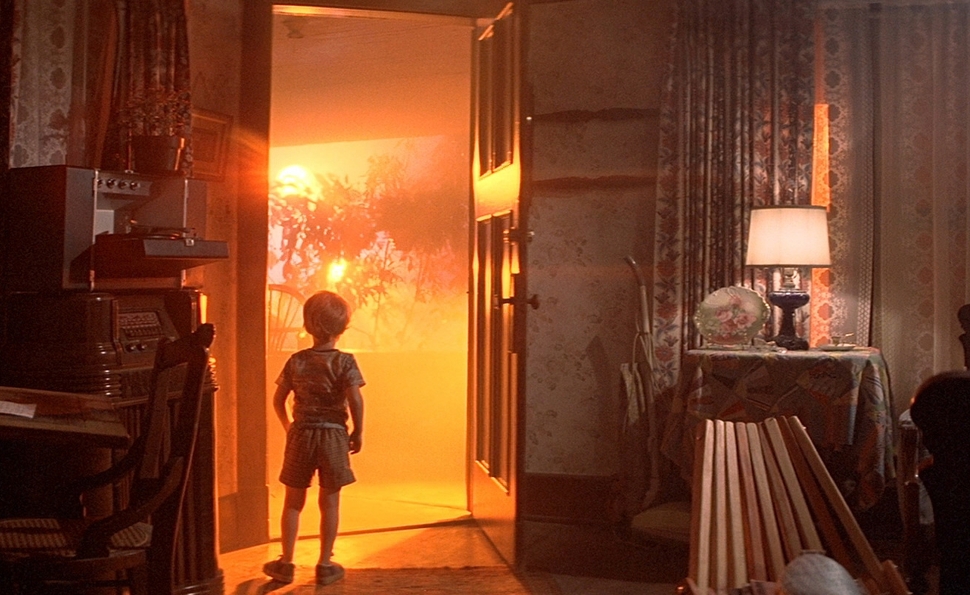
Spielberg has spoken about how, if he could take one image from one of his films to summarise his career, he would choose the one of young Barry Guiler opening the door to reveal an outside flooded with alien light. This also perfectly sums up the movie – a young, optimistic, innocent and instinctive reaction to something unknown but strangely wonderful. If that’s not Spielberg’s reaction – particularly at the start of his career – to the new and unusual I don’t know what is. The shot captures all these feelings, as well as being incredibly arresting and beautiful in itself. It places the viewer at the doorway (if you’ll excuse the pun) of hope and new possibilities in the future.

But then that is the whole film, a gentle exploration of what it might mean to discover we were not alone, especially if our alien visitors were unknowable but essentially benign. Plot-wise, very little happens. The aliens come, we puzzle out their message, the aliens come back. The last 30 minutes of the film are effectively an awe-inspiring light display as the aliens arrive. We learn nothing at all about what they want, what they are doing or what they wish to tell us. Instead it’s left entirely up to our own imaginations, and the magic is in finding our horizons broadened. Like Spielberg, the film is staring up at the sky and dreaming about the future.

And this all works extremely well. The cynicism of the modern age makes you want to knock Close Encounters, more than any other film in Spielberg’s cannon. You want to look at it like a cynical grown-up, to point out its romantic optimism and its gentle humanitarianism. You want to say that it’s unlikely that a government official with such control as Lacombe would be such a warm and wryly amused figure. You want to say that the army would probably be much more defensive in its attitude to the aliens. But the film is so swept up in its joyful discovery that you don’t mind.

Spielberg’s brilliance as a visual stylist here also works massively in the film’s favour. The striking images of the aliens travelling through the countryside or soaring through the skies are mixed with Spielberg’s mastery of the small scale and personal. He’ll compare the simple and homespun with moments of pure wonder and majesty. 

He can also brilliantly mix tension, wonder and fear. The scenes with the aliens intruding in the Guiler home, and later trying seemingly every entrance to the house to try and take Barry with them, are only a few degrees away from genuine horror. Watching the awe-inspiring arrival of the aliens, and their light show around a government facility in the wilderness, it’s hard know not to see how close this is in style, filming and design to the horrifying face-melting conclusion of Raiders of the Lost Ark.

All this optimism and yearning finds its expression in Richard Dreyfuss’ lead performance as Roy Neary. A deliberately average working man, with no desire to rock the boat, Neary is clearly a dreamer turned conformer, a man who still has a childish fascination with models, toy trains and Disney films. Perhaps this is why the aliens have a bigger effect on him than anyone else – it’s a chance for him to discover the sense of wonder and adventure you think he has probably left behind in adulthood. Dreyfuss sells playing a character who is essentially obsessive, manically building a model of the alien landing site, which involves trashing his house and scaring away his wife and kids.

Ah yes the wife and kids. If there is a problem with the film (and even Spielberg has acknowledged this) it’s that it’s very much a young man’s film. Neary’s wife and children are an encumbrance. Teri Garr, in a thankless role, is a nagging shrew who wants her husband (reasonably enough) to grow up and focus on supporting his family. His kids lack understanding or interest in their father. When they leave Neary, he seems (to be honest) not really that concerned – and their absence never troubles him again from that point. While I get Spielberg is focusing on the dreamer as a grown man, casting wife and children as problems that need to be overcome rather than people for whom he has considerable responsibility is something it’s harder to forgive the older you get. It’s easy to see Neary as more than a bit selfish.

Spielberg’s more conservative view of women and especially mother’s comes out in Jillian Guiler’s fierce maternal love for her child – needless to say she’s not fussed about the aliens, only in finding Barry. The kidnapping of Barry – harmless as it might be – is a sort of child-loss horror that feels even more unsettling today with our fears of what might happen to our children. But Dillon gives a good performance as the film’s mother figure, and does at least have the most emotionally true plotline, even if the film doesn’t want to touch the dark implications of her son’s kidnapping.

But this is a film about hope and dreaming, and when it focuses on that it does extraordinarily well. It’s a marvellous and visionary film, full of arresting and beautiful images. Truffaut, very good as the French UFO expert, I’m sure would have loved the film’s magical, old-school, hopeful Hollywood style. Spielberg is a clever and skilled director, with plenty of heart – even if he still at this point didn’t perhaps understand parenthood (something he himself has acknowledged) – and he crafted in Close Encounters a very personal film of an adult who still clings to childhood, who wants to look up at the skies and dream.

Magic Mike (2012)

Magic Mike: there are rare moments with most of the clothes on

Director: Steven Soderbergh

Cast: Channing Tatum (“Magic” Mike Lane), Alex Pettyfer (Adam “The Kid”), Cody Horn (Brooke), Matt Bomer (Ken), Olivia Munn (Joanna), Joe Manganiello (Big Dick Richie), Matthew McConaughey (Dallas), Adam Rodriguez (Tito), Kevin Nash (Tarzan), Gabriel Iglesias (Tobias)

The formula for Magic Mike is basically an all-boys Coyote Ugly mixed with a 1970s blue-collar social drama. But a blue-collar social drama where collars might be all the men are wearing. Based on Channing Tatum’s own experiences as a stripper back in the day (I’d be fascinated to find out how many of the things in this film Tatum got up to when he was a lad), Magic Mike follows the story of Mike Like (Tatum), a brilliant stripper who dreams of setting up his own bespoke furniture company (if that’s not an insight into the sort of eccentric film this is, you’ve got it there!). Meeting young Adam (Alex Pettyfer), he takes the kid under his wing and inducts him in the world of strip clubs. Adam gets a taste for the life, while Mike gets a taste for the company of Adam’s disapproving sister Brooke (Cody Horn). So mentor and mentee gradually find themselves drifting towards trouble.

Magic Mike is good fun mixed with some pretty standard low-rent crapsack world problems, as small-time crime and drugs intrude on the otherwise gentle world of professional male stripping. Magic Mike is essentially a sort of fairy tale, which wants to enjoy the dynamism of performing on stage while also casting a disapproving eye on its hedonism and emptiness. It’s the sort of film which wants to show what a great time you can have living that lifestyle in the short term, while also praising its hero for realising he wants more. You might think (and it has been sold and partially recut) into a hot stripping film, but deep down it wants to be a 1970s social issues drama. It just never quite gets there, because it doesn’t have the depth and can’t escape the cliches of coming-of-age dramas.

So it’s not exactly the most revelatory film in the world. What’s most interesting is that often in these films it’s the mentor who leads the mentee astray. Here, it’s the mentor who finds his life gradually being damaged by the mentee. Mike is basically a kind, decent guy who just hasn’t really grown up. Adam, whom he brings into the stripping world, is basically a shallow, lazy, increasingly selfish person who is only interested in himself. While deep down Mike knows that stripping and all its hedonistic temptations are only a means to an end, for Alex it is the end, and he wants to lead this sort of life forever.

Mike’s basic charm works so well because it’s rooted in Channing Tatum’s own charm as a performer. He has a sweet, puppydog quality as well as a fundamental little-boy-lost innocence, which should seem strange for a bloke who rips his clothes off and gyrates semi-naked on a stage in the laps of cheering women. But it makes sense. The show is a brilliant showcase for Tatum, not only showing his acting and performing strengths but also showcasing his dancing and movement skills. As well as, of course, his chiselled torso. The film front and centres a rather sweet will-they-won’t-they with Mike and Alex’s sister Brooke, played with a sweet firmness by Cory Horn. And there are a host of other excellent performances, not least Matthew McConaughey stealing scenes as club owner Dallas, hiding his greed under a domineering bonhomie.

The film stops frequently for elaborate stripping scenes in manager Dallas’  club. These are put together with real wit and engagement, and while the film never really explores the issues in stripping (no touching from the guests, performance enhancing drugs, the hedonistic openness etc. etc.) it does make a change to see the men of the film being treated entirely as sex objects and not the women (or at least not as much, this still being a film that opens with a semi-nude Olivia Munn). Soderbergh though has always been a proficient technician rather than the sort of intelligent artiste he would like us to think he is, so it’s a not real surprise that most of the film is more flash than depth.

So that’s perhaps why the film largely settles for being a standard “man needs to grow up and leave his old life behind” and “young buck goes out of control” story. The structure of this, and its air of kitchen sink drama as we see Mike struggle to get a loan to start his business, or deal with a stripping event gone wrong as Alex brings drugs to a private party, is something that contrasts nicely with the more dynamic stuff in the club. All this is pretty standard arc material – and Soderbergh’s film dodges really drilling down into some of the issues it touches on. 

Magic Mike is a fun film with a touch of depth, that wants to combine a character study with a study of its stars’ characterful bodies. It only touches upon some of its themes, and tells a fairly traditional story under all that. But it’s got a sort of charm, and it delivers its cliches with aplomb. But then I’m not sure I’m quite the target market for it.

The Man From UNCLE (2015)

Armie Hammer and Henry Cavill try, and fail, to get some zing out of The Man From UNCLE

Director: Guy Richie

Cast: Henry Cavill (Napoleon Solo), Armie Hammer (Ilya Kuryakin), Alicia Vikander (Gaby Teller), Elizabeth Debicki (Victoria Vinciguerra), Jared Harris (Adrian Sanders), Hugh Grant (Alexander Waverly), Luca Calvani (Alexander Vinciguerra), Sylvester Groth (Uncle Rudi), Christian Berkel (Udo Teller), Misha Kuznetsov (Oleg)

The Man From U.N.C.L.E.was a 1960s TV spy caper series, which I confess I’ve never seen an episode of but I’m reliably told (by my wife who has) that it’s all larks and fun. This Guy Ritchie remake, on the other hand, is a tonal mess that has no idea what the hell it is. Only Hugh Grant gets anywhere near to appearing in a caper movie – probably because he’s virtually the only member of the cast who might have grown up watching the original series.

Anyway, in the early 1960s Napoleon Solo (Henry Cavill) is an international master-thief turned CIA agent (this suggests his character is a whole lot more fun than he actually is). Ilya Kuryakin (Armie Hammer) is a KGB super-agent, dealing with issues of psychosis (yup more fun to be had there). This odd couple are ordered to team up and work with car mechanic (no seriously) Gaby Teller (Alicia Vikander), whose father is working with renegade Italian fascists, led by femme fatale Victoria Viniciguerra (Elizabeth Debicki), to build a new nuclear mastery over the world. Or something.

It should be a ridiculous, overblown, mix of Bond and high 60s camp. Instead it’s dreary, chemistry-free, largely uninvolving sub-Mission: Impossible high jinks that I’m not ashamed to say I dozed off during at one point. Would that I had slept through more of it. It’s quite damning when the most enjoyable thing about it is thinking about the accent Olympics going on (we have a Brit playing an American, an American playing a Russian, a Swede playing a German, an Australian playing an Italian, an Irishman playing an American…).

No matter which way the three leads are arranged, Cavill, Vikander and Hammer have no chemistry at all in any combination. There is precisely zero bromance between the two leads. Vikander and Hammer have a will-they-won’t-they romance that comes from absolutely nowhere and leads nowhere (set up for sequels that will never come). Cavill looks the part, but completely lacks the cheeky, self-confident, “I’m-enjoying-all-this” charm that the part requires – instead he’s flat and boring. Hammer has more of the winking-at-the-camera cool, but he’s saddled with a part that frequently requires him to burst out in hotel-room-trashing outbursts of anger. Vikander just looks a bit bored with the whole thing.

These rather joyless characters go through a series of action set pieces, none of which got my pulse racing, and all of which felt like off cuts from a lousy Mission: Impossible sequel. Car chases, fisticuffs, gun fights, explosions, boat chases – they all tick by with no wit or pleasure involved anywhere. In these sort of things, you need to feel the characters are such adrenaline junkies that they sorta enjoy the crazy antics they get thrown into – you don’t get any of that from these three.

Much as I like Elizabeth Debicki, she can do little with her underwritten part – I mean I get that the plot isn’t the main thing in a film like this, but they could have at least given our villain a character. Instead she is as cardboard cut-out as the rest of the storyline. The acting from the bulk of the cast is also really odd – some seem aware they are in a tongue-in-cheek spy film, others seem to think they are in an espionage thriller. It’s a mess. There are scenes of pratfall comedy followed by grim scenes of torture and violence. In one juddering moment of this spy romp, the flipping Holocaust is dragged in as a shorthand for identifying a character as an “ultimate villain” – which given he had our hero strapped to a chair and was about to torture him, I think we could all have worked out without exploiting genocide. Anyone else think pulling this appalling real world event (with photos!) into a stupid caper movie is really tasteless? Did no one watch this thing while it was being edited?

I will say the design is pretty good and it’s well shot. But compare this to the fun and games of Guy Ritchie’s Sherlock Holmes films (which this is obviously trying to emulate) and the total lack of chemistry at its heart becomes immediately clear. Hugh Grant is a complete relief when he turns up as he’s the only actor who actually looks like he is enjoying his part and wants to be there. It was a big box office bomb and it’s no surprise. No one is having fun, the spirit of the original series seems to have been completely lost, and the lead actors totally fail to bring the leading-man pizzazz the film needs. Perfect if you want a nap.

Robin Hood (2010)

Russell Crowe takes aim as Robin Hood

Director: Ridley Scott

Cast: Russell Crowe (Robin Longstride), Cate Blanchett (Marian Locksley), William Hurt (William Marshal), Mark Strong (Sir Godfrey), Mark Addy (Friar Tuck), Oscar Isaac (Prince John), Danny Huston (King Richard), Eileen Atkins (Eleanor of Aquitaine), Max von Sydow (Sir Walter Locksley), Kevin Durand (Little John), Scott Grimes (Will Scarlet), Alan Doyle (Allan A’Dale), Matthew Macfadyen (Sheriff of Nottingham), Lea Seydoux (Isabella), Douglas Hodge (Sir Robert Locksley)

When this film was developed, it was a CSI style medieval romp called Nottingham. Russell Crowe was cast as the film’s hero – an ahead-of-his-time Sheriff of Nottingham, busting crimes in Olde England and dealing with rogue thief (with good press) Robin Hood. Yes that really was the original idea. Mind you, it would at least have been more original than what we ended up with after Scott and Crowe had a bit of a rethink.

So here we are: Robin Hood: Origins (as it might as well have been called). Russell Crowe is Robin Longstride, on his way back from the crusades as an archer in the army of King Richard (Danny Huston) army. When Richard is killed at a siege in France (it was one last siege before home – what are the odds!), the messengers carrying the news back to France are ambushed and killed by wicked Sir Godfrey (Mark Strong). Robin finds the bodies and assumes the identity of Sir Robert Locksley, travelling to England to tell Prince John (Oscar Isaac) the news of his succession – then returning to Nottingham with his friends, where Robert’s father Sir Walter (Max von Sydow) asks him to continue pretending to be Robin for dull tax reasons – and soon feelings develop between Robin and Sir Robert’s widow Marian (Cate Blanchett). But John is intent on farming the land for taxes, and Sir Godfrey is in cahoots with the French to conquer England.

Robin Hood is a semi-decent, watchable enough retread of a story so totally and utterly familiar that even the things it rejigs end up feeling familiar. In fact, to be honest you sit watching it and wondering why on earth anyone really wanted to make it. Scott brings nothing original and different to it, and the film looks like a less visually interesting retread of Kingdom of Heaven. Plot wise it’s empty. What’s the point of it all? It slowly shows us all the pieces of the Robin Hood myth coming together, so best guess is that it was intended to be the first of a series (there seems to have been no interest or demand for a sequel of any sort). 

And then we’ve got Russell Crowe. Leaving aside everything else, Crowe looks about 10 years too old for the part. He delivers some sort of regional accent that meanders from Ireland to Yorkshire in its broadness, a laughable stumble around the country. Crowe does his slightly intense, sub-Gladiator mumbles and stares at the camera and attempts to suggest a deep rooted nobility, but actually comes across a bit more like a snoozing actor awaiting a pay-cheque.

Cate Blanchett does her best, lending her prestige to the whole thing in an attempt to make it land with some dignity (she of course does the opening and closing narration, which struggles to add some sort of grandeur to the whole flimsy thing). She’s saddled with a Maid Marian who is granted various “action” moments, but still has to be saved by Robin and face possible rape from a leering Frenchman (at least she saves herself from that one). 

It also doesn’t help either actor that their romance plays out in the dull middle third of the film, where the plot grinds to a halt as we deal with Sir Walter (Max von Sydow almost literally acting blindfolded) using Robin as some sort of tax dodge scheme. The film is overloaded with characters, all of whom are separated at this point and struggling manfully to make their disconnected plotlines interesting: so we get John dealing with the pressures of office, Sir Godfrey scheming and looting, William Marshal trying to find a middle ground, Robin and Marian falling in love – it’s a mess. On top of this a get a ludicrous reworking of the Magna Carta as some Medieval version of the Communist Manifesto (it’s written by Robin’s executed dad no less, giving him a bizarre “painful backstory” to overcome). None of these plots really come together, and so little time is spent with each of them that they all end up getting quite boring.

The film culminates in a totally ridiculous battle scene on a beach, as Sir Godfrey’s French allies arrive on the shores of medieval England in some sort Saving Private Ryan landing craft. The tactics of this landing and the battle that ensues are complete nonsense. Every single character rocks up at this battle, which should feel like all the plot threads coming together but instead feels like poor script-writing. When Marian turns up, disguised as a man (how very Eowyn), leading a group of warrior children (I’m not joking) who feel yanked from the pages of Lord of the Flies, it’s just the crowning turd on this nonsense.

And all this fuss to defeat Sir Godfrey? Why cast Mark Strong and give him such a nothing part? Sir Godfrey is a deeply unintimidating villain. Everything he does goes wrong. He is bested in combat no less than three times in the film (once by a flipping blind man!). His motivations are never even slightly touched upon. He has less than one scene with John, the man who he is supposed to be manipulating. He runs away at the drop of a hat and Robin gets the drop on him twice on the film. He’s neither interesting, scary or feels like a challenging adversary or worthy opponent.

But then nothing in this film is particularly interesting. The set-up of the merry men around Robin (they seem more like an ageing band of mates on tour by the way than folk looking to rob from the rich and give to the poor) is painfully similar to dozens of other film, particularly in the Little-John-and-Robin-fight-then-become-brothers routine. Crikey even Prince of Thieves shook up the formula by making Will Scarlet Robin’s brother. Scott is going through the motions, like it was one he was committed to so needed to see through to the end despite having long-since lost interest. It’s not a terrible movie really, just a really, really, really average one with a completely miscast lead and nothing you haven’t seen before.

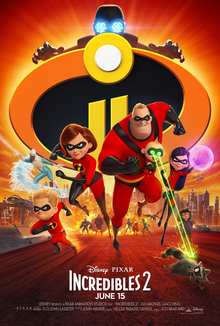
The Incredibles 2 (2018)

The family are back together, in belated but brilliant sequel The Incredibles 2

Director: Brad Bird

Cast: Craig T Nelson (Bob Parr/Mr Incredible), Holly Hunter (Helen Parr/Elastigirl), Sarah Vowell (Violet Parr), Huck Milner (Dash Parr), Samuel L Jackson (Lucius Best/Frozone), Bob Odenkirk (Winston Deavor), Catherine Keener (Evelyn Deavor), Brad Bird (Edna Moda), Sophia Bush (Voyd)

Fourteen years? In Hollywood that is nearly an eternity. Can you even imagine a film released today getting its first sequel over a dozen years later? But that is how long we’ve had to wait for a sequel to The Incredibles

Picking up immediately after the first film finished, the efforts of the Parrs, Bob/Mr Incredible (Craig T Nelson), Helen/Elastigirl (Holly Hunter), their children Violet (Sarah Vowell) and Huck (Dash Parr) and their friend Frozone (Samuel L Jackson) to stop the Underminer only lead to destruction. Superheroes are once again anathema to the authorities, but tech millionaire Winston Deavor (Bob Odenkirk) and his inventor sister Evelyn (Catherine Keener) are determined to change their reputation. Their plan? Use Elastigirl as the new “face” of responsible superhero-ing. Elastigirl takes on a new threat: the villainous Screenslaver who uses screens to hypnotise people and control them. Meanwhile, Bob has to cope with the pressures of being a stay-at-home dad, dealing with with teenage crushes, homework challenges and controlling super-powered baby Jack-Jack, who can barely control his never-ending series of powers.

And the world of Hollywood has changed so much since the first Incredibles film came out. Back then, comic book films were only just starting to come into fashion, and the Marvel Cinematic Universe didn’t even exist. So can The Incredibles forge its way in a cinematic landscape now overstuffed with superhero derring-do?  Well yes it does, because the film hasn’t lost the sense of what was so enjoyable about the first film. We still get all the action-packed excitement of some damn fine adventure sequences, choreographed with skill and wit. Playing alongside that we get all the homespun domestic turmoil of modern family life, right down to a dad struggling to help his son with his homework (“How can they change math?!”) and trying not to mess up his kids’ lives. 

The film resets the table to get us back to the situation of the first film – superheroes are illegal and unwanted and anything the Parrs do is going to have to be under the wire. And then it spins out a twist on the first film – this time it’s the super-competent and intelligent Elastigirl who will be the hero, while the more old-school Mr Incredible stays at home and looks after the kids. This combination works perfectly – Elastigirl is a brilliantly conceived character, cool, calm, collected, super smart, ultra-determined and ridiculously good at what she does. Holly Hunter’s southern tones are smoothly perfect for this part, investing it with just the right level of humanitarianism.

Really I should be annoyed about the end of the last movie being so completely reset in the opening minutes of this one, but truthfully the idea of superheroes struggling to balance everyday problems with illegal super-heroing is such a totally brilliant idea you are really happy to see it play out again, this time adding the dilemmas of Mr Incredible suddenly being thrown into a situation he can’t handle – having to be a regular dad – and collapsing in an unshaven, exhausted mess. 

Seeing someone struggle with such everyday problems is hilarious enough, but the film has a USP in the challenges of looking after cute little ball-of-trouble baby Jack-Jack: a sweet, blubbering little kid with a regular smorgasbord of powers, none of which he is able to control. Bob’s struggles to deal with this explosion of wildness (everything from laser rays to moving in the fourth dimension) throw up endless hilarious moments and sight gags that had me laughing out loud (probably too loud) in the cinema.

Sitting alongside this, Brad Bird hasn’t forgotten how to shoot and cut an action sequence – whether it’s animated or not. A chase where Elastigirl has to stop an out-of-control train is not only hugely exciting, but also tense and witty. Elastigirl is also such a relatable character that she adds huge amounts of human interest to every one of these action bits, and her determination to save lives – even of her enemies in exploding buildings – is really rather touching. The final action sequence doesn’t quite match the highlights of the first film, but it does excellent work.

Of course the villain is in fact using these strengths against her. If the film has one weak point, it’s that the identity of the villain is really rather obvious from the start. I pretty much guessed immediately who the villain was going to be. I can’t see anyone of any age being fooled, and the motivations of this villain seem a lot more rushed and less interesting than those of Syndrome in the first film. 

But that feels like a minor blemish on what is an excellent sequel, a real gem in the Pixar cannon. It’s still got the brilliantly retro-cool design that mixes the modern world with the 1950s and 60s. Michael Giacchino’s soundtrack is cracking. Brad Bird brings himself back as scene-stealing superhero costume designer Edna Mode. What’s not to like? I wouldn’t mind waiting another 14 years if they produce a third film as good as this one.

The Mummy (2017)

Like the film, Annabelle Wallis stares at Tom Cruise in awe in disaster laden (in more ways than one) The Mummy

Director: Alex Kurtzmann

Cast: Tom Cruise (Nick Morton), Sofia Boutella (Ahmanet), Annabelle Wallis (Jenny Halsey), Jake Johnson (Chris Vail), Russell Crowe (Dr Henry Jekyll), Courtney B Vance (Colonel Greenway), Marwan Kenzari (Malik)

Mummy PosterMany films have killed their franchises. It takes a really special film to kill a franchise before it has even started. Welcome to the first, and probably last, entry in Universal’s misguided Dark Universe franchise, a Marvel-style playground for all Universal’s old monsters like Frankenstein, Dracula, the Wolfman etc. etc. And of all of them, The Mummy was the one they decided to start with? 
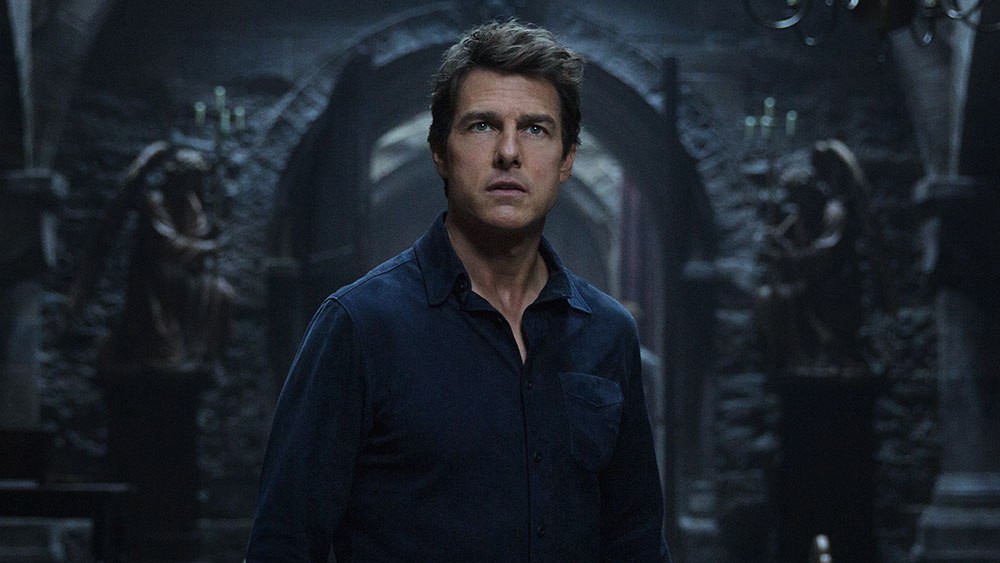
Anyway, our hero is Nick Morton (Tom Cruise) a sort of soldier of fortune in modern day Iraq, plundering antiquities under the banner of the US Army like some low-rent Indiana Jones. He and his hapless sidekick Vail (Jake Johnson) stumble upon a tomb of mysterious lost Egyptian princess Ahmanet (Sofia Boutella) after stealing information from archaeologist Jenny Halsey (Annabelle Wallis). On the clock to take as much as they can from the tomb, Jenny and Nick take home Ahmanet’s sarcophagus. Their plane crashlands in Dover, with Jenny the only survivor – only for Nick to be resurrected in the mortuary. Looks like reborn Ahmanet wants to bring Set, the God of Death, into the world and has chosen Nick as the vessel for Set’s soul. Or something. It’s not really clear. 

In fact the whole film is pretty awful. What sort of film were they trying to make here? Is this a horror or an action film or a buddy film or some sort of black comedy? The tone shifts wildly from moment to moment: one minute Tom Cruise is exchanging Indiana Jones-style banter with his buddy Vail (Jake Johnson). The next he is shooting a possessed Vail at point-blank range (even this is played for laughs a bit). The next he’s being haunted American Werewolf style by a ghost or vision or zombie or somethingversion of wise-cracking Vail. What is going on here? What kind of film is this?

Tom where he normally is – centre of the frame

Well actually we know what kind of film it is: it’s a Tom Cruise starrer. Allegedly, the Cruiser (already quite the control freak perfectionist) took over most of the production from inexperienced, Universal suit Alex Kurtzmann. The DVD’s special features don’t half support this, with Cruise shown effectively directing most of the action sequences while Kurtzmann stands quietly to one side or (best of all!) greeting the star after the opening aircraft crash has been filmed to be told “you’ll love the footage Alex!”. 

Well the studio had doubled-down on Cruise to launch their franchise with his glittering smile and international box-office appeal, so I guess it’s fair enough the guy was shoved square centre. I know the film is called The Mummy but it might as well be Nick Morton. Cruise is in almost every single scene, most of the characters spend the whole time talking about him, and all the action is done by him (every other character is completely useless). The best lines, such as they are, go to him. He’s starting to look a little bit too old for the “young buccaneer” role he has here – and certainly too old to be flirting with Anabelle Wallis – but the film doesn’t care.

Anyway, the plot charges about London with odd time jumps, and unclear character motivations abounding. Why does Ahmanat have such an idee fix that Nick has to be the vessel for Set (other than, of course, his Tom Cruise Awesomeness)? Is it a good or bad thing that Nick could or could not get the powers of a god? Why does Ahmanet need Set in the first place – she “sells her soul” to him in ancient Egypt times for the throne, but basically just cuts the throats of her family at night (hardly requiring the demonic powers of the dead)? In Egypt she’s easily defeated with a blow dart but by the time she’s reborn in London she has incredible powers over minds, matter and animals – why didn’t she use any of this before? 

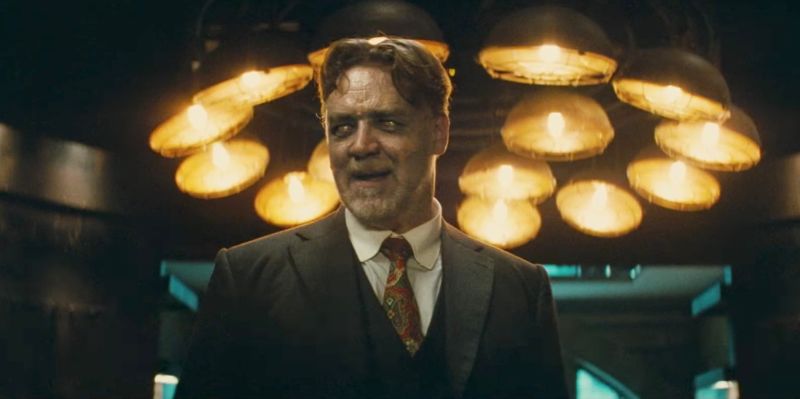
On top of that, we’ve got the incredibly dull Prodigium organisation (a sort of SHIELD for monster fighting) run by Nick Fury-ish arc character Dr Henry Jekyll, played with lumbering crapness by Russell Crowe. Why Russell, why? Crowe plays the part half like a plummy Stephen Fryish professor, the other half like some demented OTT cockney geezer. Of course the film isn’t subtle enough to avoid giving us Jekyll going full Hyde, a laughable moment of cheesy rubbishness with a wild-eyed Crowe reduced to “alrigh’ mate” hamminess while tossing Cruise around in a punch-up that looks like two drunk dads at a wedding going at it.

Oh Russell, why? Why do you make it so difficult for your fans?

The film is also saddled with one of the most inept female characters since Roger Moore’s Bond years. At one point, poor Anabelle Wallis stumbles on Ahmanet and her zombie minions on the verge of stabbing Nick to death and turning him into a demon-host, and Nick’s response is an irritated cry of “Jenny!” as her total lack of proactive response to this, like even he finds her arrival pointless and annoying. I’m afraid to say after that moment, every moment in the film with Wallis weeping, panicking, running away or laughably cheering Nick’s Tom Cruise Awesomeness from the wings (“Kick her arse Nick!”) was met by me and everyone I was watching the film with shouting “Jenny!” at the screen with the same exasperated annoyance.

The only good sequence in the film is the opening plane crash – and that is spoilt as it was all over the trailers. By the time we are in a secret crypt (getting in the way of the crossrail construction) with zombie Templar knights wrestling Nick (no seriously) you’ll have long since ceased caring. Even the fun of saying the next line in the cliché-ridden script before the actors do will be less fun than it used to be.

The Mummy sounds like it should be some sort of camp classic. But it’s really not. It’s ineptly made, poorly written, with a plot that makes no sense and action that varies from dull to laughable. Terrible characters, awful pace, rubbish acting, lousy direction and half-hearted from start to finish – it could barely launch a fart let alone a franchise.

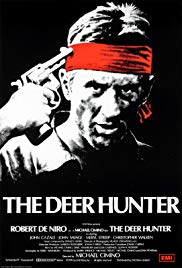
The Deer Hunter (1978)

Robert De Niro goes into a journey into the dark heart of America’s Vietnam experience in The Deer Hunter

Director: Michel Cimino

Cast: Robert De Niro (Mike Vronsky), Christopher Walken (Nick Chevotarevich), John Savage (Steven Pushkov), John Cazale (Stan), Meryl Streep (Linda), George Dzundza (John Welsh), Pierre Sagui (Julian Grinda), Shirley Stoler (Steven’s mother), Chuck Aspregren (Peter Axelrod)

The Deer Hunter is a mighty 1970s milestone of American cinema. Michael Cimino’s Vietnam story is a big poetic epic – its plot is slim but it’s all about the atmosphere, and Cimino’s understanding of the impact that the trauma of war has on different types of men. For vast stretches of the film nothing much in particular happens, followed by short, sharp bursts of gut-wrenching tension – but these have such impact because we have taken the time to see these men’s ordinary lives.

Mike Vronsky (Robert De Niro), Nick Chevotarevich (Christopher Walken) and Steve Pushkov (John Savage) are three Polish-American friends working in a Pittsburgh steel yard, who have volunteered to serve in Vietnam. Before they ship out, they celebrate Steve’s wedding, in a traditional Polish ceremony, and go for one last deer hunt in the woods together – where Mike outlines his philosophy of “one clean shot” (or “This is This”) and the near sacred experience of man communing with nature and hunting. In Vietnam, the three friends are captured by the Viet Cong and forced to take part in a chilling competition of Russian roulette. The impact of these experiences changes their lives – and not for the better – as they struggle to adjust as the war comes to an end.

Michael Cimino was seen at the time as the next great director. This reputation lasted little more than two years, when the box office disaster of his next film Heaven’s Gate (with its tales of ludicrous excess and Cimino’s overly demanding perfectionism) led to the destruction of a studio and effectively ended his career. To be honest, the roots of all this are there in The Deer Hunter. Cimino fought tooth and nail to prevent anything in the film being cut – and he lucked out that he had a few supportive producers and a picture powered by great performances and capturing something of the spirit of the age. Because just this once, more was indeed more.

In some ways The Deer Hunter is an over-indulgent mess. It’s very long, its plot is very slight, it’s very pleased with itself, the camera dawdles for ages through first the friends preparing for a wedding, the wedding itself and then a long hunting trip. This takes up a solid opening hour and 15 minutes of this long film – and progresses the plot forward very little other than establishing the characters and their relationships. But somehow, despite this, the film is magnetic during this. I’m almost not quite sure why, because nothing really happens at great length, but there is a sort of poetic majesty about these sequences that just makes them work.

It’s also a perfect entrée into our characters. After basically sitting and watching them for over an hour do little more than live their everyday lives, we really feel like we understand them. We know Mike is distant, controlled, slightly repressed but prone to moments of exhibitionist wildness that suggest primal, raging emotions beneath the surface. We also understand, with his famous “this is this” speech (“what the fuck does that mean?” his frustrated friend-cum-adversary Stan blurts out), that he is reaching for some sort of symbolic, expressionist understanding of man’s place in the world. He wants to be a poet but doesn’t have the abilities of expression to achieve that.

Similarly, we see Nick as a more carefree, open spirit, someone more in touch with expressing himself and more ready to seize life by the horns. He’s also got a gentle, conciliatory quality to him – out of all the characters, he fits most naturally into the role of confidante. Steven is a child, just trying to do his best in the world, but too naïve for the grown-up world. Most crucially we also see how they interact with each other, and how they relate to women. 

Most women in the film are clearly of very little importance to the characters. Wives and girlfriends are very much on the outskirts of the macho world of the steelyard. And they are of similarly little concern to the men when they come home. Meryl Streep – excellent in an almost nothing part, really it’s amazing how slimly this role is written – plays a woman torn between feelings for Mike and Nick, but the men’s feelings for her waver between uncertainty, indifference and confused affection. Barely any other woman gets a look in, certainly not Steve’s wife who is treated with open suspicion as some sort of floozy.

All this thematic manly matiness then explodes in the later acts of the film, as the after-impact of war – and PTSD, although the word is never used – hits our characters square in the face. And there are few things that will hit you as square on as a bullet. Cimino of course faced waves of criticism about his inclusion of the grisly gambit (no evidence that it was used by the Viet Cong) – but as a metaphor for going to war, and the trauma it will do to your mind, there are few things better than a “sport” which involves placing a gun to your head and pulling the trigger. 

These scenes are already tension-inducing to watch (you can’t help but put yourself in the shoes of the men putting that gun to their heads and wondering if they’ll hear a click or nothing ever again) but Cimino ramps up the pressure here, helped by truly powerhouse performances by De Niro, Walken and Savage. The unbelievable intensity of these scenes, and the total gear shift from everything you’ve seen up to this point in the movie, is a justification of Cimino’s slow pace earlier. After a luxurious opening sequence where we’ve watched the guys fool around, dance, sing and play pool, to suddenly be thrown into this grim, despairing, terrifying situation works brilliantly.

No wonder the rest of the film feels as much in shock as the characters do. Walken is exceptional (and Oscar-winning) as the sensitive soul whose spirit and will to live are destroyed by the incident, who no longer sees any point going home and barely even (by the end) seems to remember who or what he was. Cimino even makes the film feel colder, drabber and chillier in the third act back in Pittsburgh, following Mike’s return home – and his utter inability to deal with his experiences or communicate the horrors of what he has gone through to his friends.

This is also where the film gains immeasurably from a truly sublime performance from De Niro as Mike. In any other actor’s career, this performance would be the stand-out, so it says a lot for De Niro that it’s so often overlooked. But he underplays to devastating effect, as an inarticulate, slightly shy man who has a sheen of confidence, who will do what it needs to survive, who has a poetry and power of love in him that he can’t really express or understand. De Niro is truly brilliant in this film, a still centre that bears almost the total weight of Cimino’s thematic intentions. Essentially De Niro kinda plays an everyman Vietnam vet, and the burden of a whole country after the war without ever having the release of fireworks. He’s excellent.

But then the whole film is a little bit excellent. The Deer Hunter is a masterpiece of a sort, a compelling, dark, tragic and unsettling piece of poetic movie-making. Saying that, there’s something uncomfortable in its depiction of its non-American characters – to a man they are all violence loving degenerates – but then in a film that focuses on the unsettling experience of these Hicksville Americans in a land they don’t understand and can’t deal with, this is at least justifiable in a sense. The Deer Hunter’s main problem at points is that it is a rather pompous, pleased with itself film, but it’s not so much the story that is so strong here but the telling – and Cimino’s telling is first class.

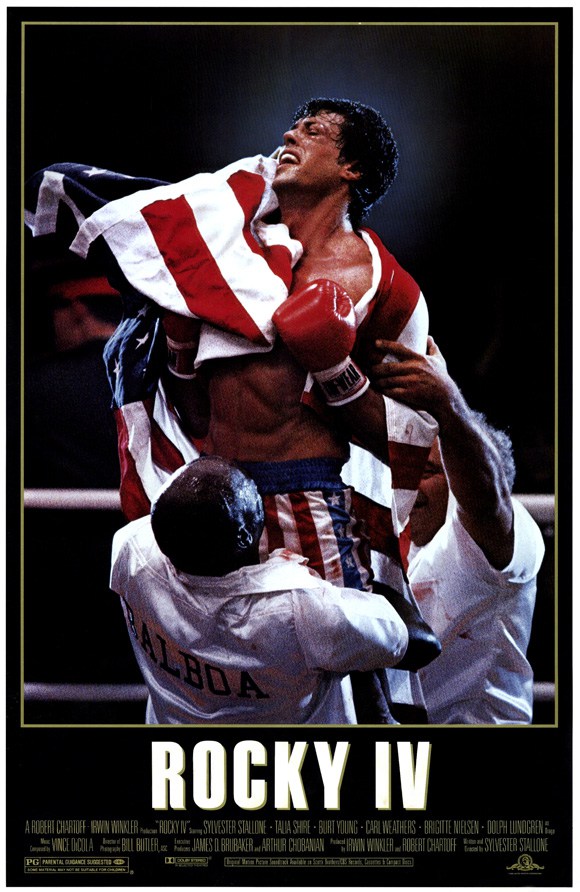
Rocky IV (1985)

Sly Stallone takes on the towering Dolph in Cold War ending boxing fable Rocky IV

Director: Sylvester Stallone

Cast: Sylvester Stallone (Rocky Balboa), Talia Shire (Adrian Balboa), Burt Young (Paulie Pennino), Carl Weathers (Apollo Creed), Dolph Lundgren (Ivan Drago), Brigitte Nielsen (Ludmilla Drago), Tony Burton (“Duke” Evers), Michael Pataki (Nicolai Koloff)

By 1985, Rocky Balboa had come from behind to overcome adversity through sheer willpower no fewer than three times. We’d seen him come from obscurity to fight Apollo Creed, lose his money, fight Creed again, win, get shamed in the ring and lose his belt and trainer on the same night, then come storming back to beat Mr T. We’d had training montages aplenty as, for every major fight, Rocky needed to learn how to box in a new way. We’d seen him take punishment like nobody’s business in the ring as better opponents pummelled him before coming up against Rocky’s iron will. So in Rocky IV we got… well, more or less exactly all that. Again. But in Russia.

The ideas had gone, the inspiration had tanked. There was nothing new to do. Rocky IV is a very short film – and it could easily be shorter again if the padding had been removed. Apollo Creed (Carl Weathers) takes on Russian uber-fighter Ivan Drago (Dolph Lundgren) in the ring in a charity match. Drago is a mountain of Soviet athletic engineering and he beats Creed so badly, Creed dies. In Rocky’s arms of course. So Rocky Balboa (Sylvester Stallone) does what a man has to do – he’ll fly to Siberia and he’ll fight Drago on his own turf, all to avenge the memory of Creed. And for American pride. And along the way he’ll only go and get the Russians to rethink this whole Cold War thing.

Rocky IV is so painfully short of ideas, you’ll feel like you’ve seen it even before you’ve seen it. In fact, at least 10 minutes of it you have. The film opens with essentially a complete recap of Rocky III, including the closing scenes of that film. Later Rocky goes driving to the airport. Along the way he hits the radio in his Lamborghini (the product placement in this film is shockingly crude) and listens to the whole of No Easy Way Out by Robert Tepper, while the film plays a montage that recaps all three of the previous films. The scene might as well end with the title of the song appearing in the bottom left hand corner like an old MTV video. (Stallone’s rolodex was obviously well thumbed, as James Brown later pops up to deliver a rendition of the whole of Living in America.) This sort of stuff pads the plot absurdly.

Either side of that, we have two long training montages comparing the homespun honesty of Rocky’s training with the naughty, doping inspired, technological training of Drago. But then this is not a subtle film. Any film that opens with two boxing gloves – one American, one Soviet – flying towards each other and exploding isn’t exactly pulling its punches on the subtlety front. The political commentary in the film is laughably naïve, from Creed’s inane chatter about American pride, to the laughable depiction of the Soviet officials as distant Bond villains, to Rocky’s closing speech after his victory (spoilers) with its infamous “If I can change, you can change!” refrain. Did the makers think they were putting a hammer to the Berlin Wall here or something?

Most of the rest of the film moves between padding and the bizarre. Almost every single scene ends with a freeze frame, possibly one of the most clunky visual devices you could hope to see. Stallone as director focuses his camera with such loving intensity on his own chiselled frame that it’s almost a sort of camp classic. Some of the conversation and physicality between Creed and Rocky is almost laughable in its inadvertent homoeroticism. 

Then there is plenty of dumb stuff as well. I’d totally forgotten this film showpieces a robot servant whom Rocky’s brother-in-law Paulie (Burt Young) spends most the film treating like a hen-pecking wife. This robot is a bizarre sci-fi addition to the story, which seems to have walked in from a different film.

The fighting when it comes is pretty good, I’ll give it that. Yes literally everything in the boxing ring is so predictable you could write it down in advance, but as always there is something quite moving about watching Rocky take such punishment to emerge as victor. Heck even the Soviet crowd start chanting his name (take that Cold War!). But it’s fine. Drago isn’t even a character (he doesn’t even really have any lines), but that doesn’t really matter as its Lundgren’s size and strength that sells the show (he towers over famously titchy Stallone).

Rocky IV is predictable hokum, that offers precisely zero surprises and must have taken a wet weekend to write. Its bizarre robot sub plot, matched with the endless music videos, montages and flashbacks to old movies, shows that the well was pretty much dry by the time this film came around. But you know the formula still sorta works, and you still cheer as Rocky turns an epic pummelling into triumph. Carl Weathers is pretty good, Creed’s death is as strangely affecting as it is totally ludicrous (never in a million years, by the way, would either of the fights in this film be allowed to continue) but Rocky IV’s okay. And of course it ended the Cold War.

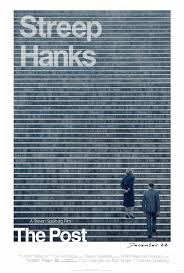
The Post (2017)

Hanks and Streep bust Watergate in advance in Spielberg’s too dry The Post

Director: Steven Spielberg

Cast: Meryl Streep (Katharine Graham), Tom Hanks (Ben Bradlee), Sarah Paulson (Tony Bradlee), Bob Odenkirk (Ben Bagdikian), Tracy Letts (Fritz Beebe), Bradley Whitford (Arthur Parsons), Bruce Greenwood (Robert McNamara), Matthew Rhys (Daniel Ellsberg), Alison Brie (Lally Graham), Carrie Coon (Meg Greenfield), Jesse Plemons (Roger Clark), David Cross (Howard Simons), Michael Stuhlbarg (AM Rosenthal)

There are few things newspaper journalists like more than old-fashioned films about the glory days of the press, showing journalists to be uniformly noble, upstanding, seekers of truth. There are few things Hollywood likes more than films the feature Streep and Hanks and/or are directed by Spielberg. As such, it’s not really a surprise that The Post received laudatory reviews, or that it crept into the Best Picture list of 2017 (it only got one other nomination, inevitably for Streep).

The film covers the Washington Post’s decision in 1971 to publish details from the Pentagon Papers, originally leaked to the New York Timesby former Defence Department official Daniel Ellsberg (Matthew Rhys). The papers detail the American government’s deceptive public messages on Vietnam, a war they knew to be unwinnable for almost ten years. The Nixon administration has blocked publication in the New York Times, but when the Post gets the same papers, owner and publisher Katharine Graham (Meryl Streep) and editor Ben Bradlee (Tom Hanks) have a difficult decision to make – suppress the truth or publish and face crippling legal penalties that could destroy the business.

The Post is quite similar in some ways to Spielberg’s far more successful Lincoln – a po-faced history lesson, told with panache, but essentially a dry civics lesson which draws some neat, but a little too on point, parallels with current events. Certainly it’s clear whom we are meant to be thinking of when the camera shows a shadowy Nixon in long shot from outside the White House, ranting into a phone in the Oval office late at night (admittedly, in a nice touch, the film uses the actual audio from Nixon’s Oval Office recordings). The parallels between press freedom and the spin of politics (or the charges of Fake News flung at any story the powers that be don’t like) are pretty clear. They are also pretty obvious.

Part of the film’s problem is that, unlike All the President’s Men (where the story covers full investigative journalism and Woodward and Bernstein need to piece the story together against the odds), this film hands everything to the journalists on a plate. It doesn’t even try to put a puzzle or some form of mystery before the viewers. Instead, the history is painstakingly (and drily) explained to give us the context, then each stage of the Post getting the papers is shown in simple and rather undramatic steps. There isn’t a sense – despite Bob Odenkirk’s deputy editor doing a bit of legwork – that the Post needed to work that hard to land the story. Crikey, you can see why The Times (who really did the crack the story) were a bit pissed at the film stealing their glory.

Once the papers are in the Post’s hands, the story almost immediately jumps to one night in which the papers are read and the board and the journalists squabble over whether they can legally publish or not. After that we get a swift coda where everything turns out fine, backs are slapped and the Supreme Court says it’s all good. There just isn’t quite enough drama. In fact we feel like we are watching a footnote, rather than the real story, which seems to be happening on the margins (for starters, the scandal of government lies on Vietnam, how The New York Times broke the story, and the Watergate break-in, a recreation of which rather clumsily closes the picture).

And I get that the film is trying to tell a story about how important a free press is and, yes, it’s great – but despite having a number of characters talk at length about this, I’m not sure what the film really tells us that we don’t already know. Instead it moves methodically but swiftly through events, carefully telling us what happened but never turning it into a really compelling story. Pizzazz for its own sake is not a strength, but a little more oomph in delivery here might have helped.

Alongside this, the film also wants to make points about the struggle of a woman in a man’s world and the institutional sexism (that probably hasn’t changed that much) of many boardrooms. Meryl Streep’s Katharine Graham – having inherited the company after the suicide of her husband – is a brow-beaten woman struggling to impose herself in a room of men whom she feels inferior to. Even this plotline though feels slightly rushed – we have Graham cowering in a boardroom meeting and struggling with paperwork, next thing we know she hesitantly makes the call to publish and is facing down her chief opponent (Bradley Whitford, rolling out another of his arrogant men of privilege). It’s all a bit rushed, perfunctory and all as expected – and Streep can clearly play this sort of role standing on her head.

But then the whole film has this slight comfort job feeling about it – everyone clearly invested in the story and the importance of the film’s points, but clearly without being challenged by the content. By the end of the film we’re are awash with clichés, from newspaper print rolling through old machines, to Graham walking through a crowd of admiring women outside the Supreme Court. The interesting and well assembled cast don’t get enough to do, with many of them feeling slightly wasted, not least Sarah Paulson in a thankless role as “the wife”.

The Post wants to be a big, world-changing film that talks about our modern age. Instead it’s a very middle brow, middle of the road history lesson that flatters to deceive, entertaining enough just about, but immediately forgettable.