Author: Alistair Nunn

Scandal (1989)

Joanne Whalley and John Hurt get unwisely wrapped up in the Profumo affair in Scandal

Director: Michael Caton-Jones

Cast: John Hurt (Stephen Ward), Joanne Whalley (Christine Keeler), Bridget Fonda (Mandy Rice-Davies), Ian McKellen (John Profumo), Leslie Phillips (Lord Astor), Britt Ekland (Mariella Novotny), Jeroen Krabbé (Eugene Ivanov), Daniel Massey (Mervyn Griffith-Jones), Roland Gift (Johnny Edgecombe), Jean Alexander (Mrs Keeler), Deborah Grant (Valerie Hobson), Alex Norton (Inspector), Ronald Fraser (Justice Marshall), Paul Brooke (Sergeant), Keith Allen (Reporter)
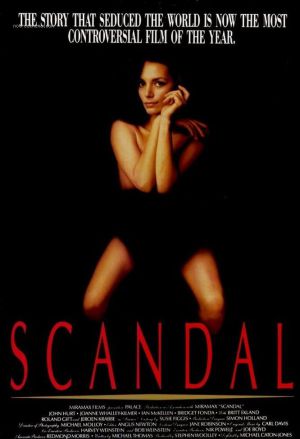
In 1963 the British Government was nearly destroyed by a sex scandal. John Profumo, Minister for War, was widely suspected of conducting an affair with Christine Keeler (a former show girl turned society figure) at the same time as she was sleeping with Russian naval attaché Eugene Ivanov. Profumo denied it to the House of Commons. A few weeks later he confessed he had lied and resigned from Parliament. The scandal shook the country to the core, and led to an exhausted Harold MacMillan’s resignation as PM. As the scandal span out to reveal sex parties in country homes, the country couldn’t get enough of the discovery that large numbers of the upper classes enjoyed nothing more than swinging, orgies and indiscriminate sex laced with sado-masochism. 

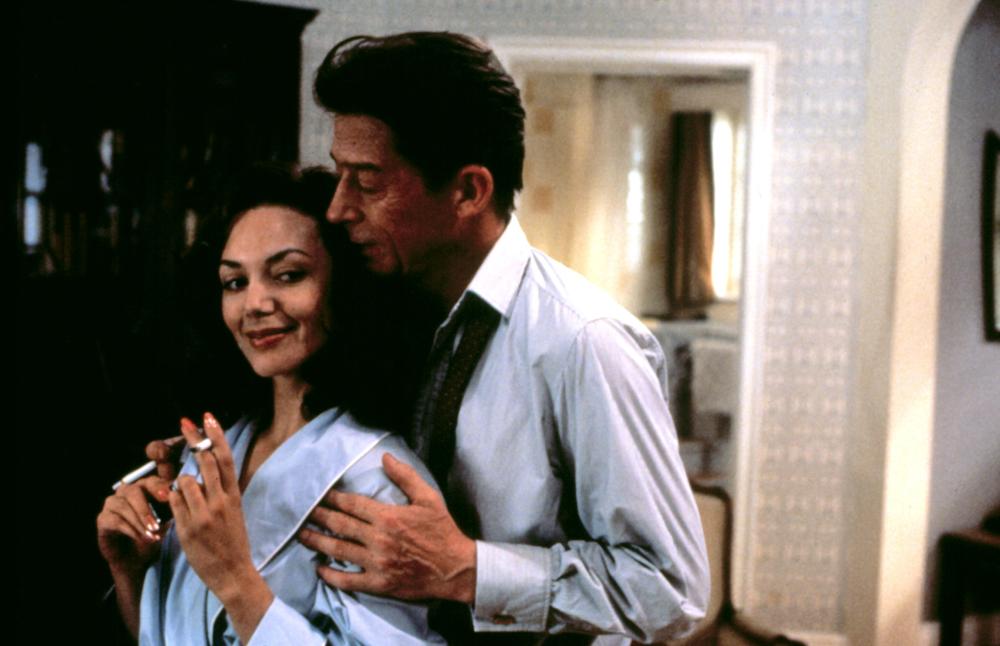
Scandal reconstructs the build-up to and eventual explosion of controversy around this affair, focusing on Keeler (Joanne Whalley) and Stephen Ward (John Hurt), the society osteopath and friend to the rich and famous who had worked out that if he found and coached attractive young girls, Henry Higgins-style, into engaging and fun companions, he could swiftly move up the social ladder by giving the rich and powerful people they could sleep with. When the Profumo affair blew up, it was Ward who was left holding the parcel: abandoned by his rich and powerful friends, Ward was placed on trial as a pimp, vilified in court and in the press, and eventually committed suicide the night before the court case finished (which convicted him in absentia of living off immoral earnings).

It’s this miscarriage of justice that Scandal zeroes in on – and the film does a good job of showing that Ward basically didn’t really do anything that wrong. He didn’t mistreat the girls, he thought he was helping them improve their lives and he didn’t attempt to blackmail his friends. His own sex drive seems curiously disconnected (he was clearly more of voyeur) and if anything, John Hurt (excellent as always) plays him as a slightly sad social-climber. A sort of Horace Slughorn of sex, far more excited by his bulging address book, access to the exclusive clubs of London and calling lords of the land by their matey nicknames, than by all the nooky.

Scandal however is a rather unemotional, unengaging and distant film. It’s hard to get too wrapped up in, as it too often goes for documentary checklist rather than real character engagement. On top of that, it’s often rather unclear – it’s tricky to tell the exact timelines, it’s hard to see often how some events relate to others, it’s unclear in particular how Christine Keeler’s relationship with jazz promoter and drug dealer Johnny Edgecombe led to exposure. It’s a film that’s both in love with telling the facts and so blinded by them that it doesn’t turn them into an engaging story.

But then perhaps part of this is because looking back today, it’s hard to see what all the fuss was about with the Profumo affair. After generations where government ministers have been accused of everything from toe-sucking to performing a sex act on a dead pig, it’s hard not to look at the Granddaddy of all government sex scandals and not think it rather quaint. Today it would barely merit more than few news cycles: and Profumo would certainly have been back in the cabinet within two years. Even the spy angle (was Profumo leaking secrets to Keeler, who in turn leaked them to Ivanov?) was widely (and almost immediately) discredited at the time. 

Not that the seismic impact really comes across anyway in the film. This is partly because the film focuses on Ward and Keeler in particular. For the two of them, there wasn’t much at stake – until their lives were destroyed. In fact, for most of these people at the various dodgy parties – other than embarrassing tittle-tattle – there wasn’t much at stake. A film that gave more space to Profumo – and really made-clear what he was running the risk of losing here, particularly after he lied to Parliament – might have made it clearer the dangers that all involved were inadvertently running.

But that would have been to dent the film’s purpose of showing Ward and Keeler as essentially innocents abroad. Joanne Whalley has a particularly difficult job as a Keeler so thoughtless, short-sighted and self-obsessed, she verges on the dim. Whalley makes her bright, engaging and fun-loving, but never with a whiff of sense. By the time Keeler is blurting out totally unconnected Profumo facts when speaking to the police about her relationship with Edgecombe, you can tell she doesn’t have a chance.

The film’s real strength though is John Hurt’s masterful performance as Stephen Ward. Hurt’s pock-marked face and ruddy complexion (going through a difficult divorce he allegedly spent most of the filming struggling with alcoholism) and slightly sweaty desperation are perfect for the role. A natural victim as an actor, he makes Ward always slightly desperate, always trying too hard, always the grammar-school boy pushing his nose up against society’s window. He’s a super creepy Henry Higgins grooming girls for a “better life” (his genuine belief!) and getting himself an entrée into posh society at the same time.  

Ward, the film argues, didn’t feel he was ever doing anything wrong – and he realises far too late that society, his posh friends and the government don’t agree. “It’ll blow over” he reassures Ivanov: totally wrong. Ward basically was a hedonist who wanted people to have a good time – and was thrilled to be invited to the party. When the shit hit the fan, he was dumped with the blame. It’s an angry note that the film – with its obsession with covering so much ground – fumbles slightly: it wants to be a searing indictment of the hypocrisy of the upper classes, but it fudges the emotional connection so much that you can’t feel it as much as you should.
Instead Scandal just sort of simmers rather than boils. It doesn’t communicate what a sea change this was in how Britain viewed its politicians and upper classes – from hereon they were always seen as men with feet of clay – and it doesn’t get the audience feeling as angry or engaged with things as you might expect. It has a lot of sex in it but (perhaps deliberately) it’s not sexy – the orgy scenes would make a great mood killer – and it seems to miss the hedonistic tone that dominated the class at the time. 

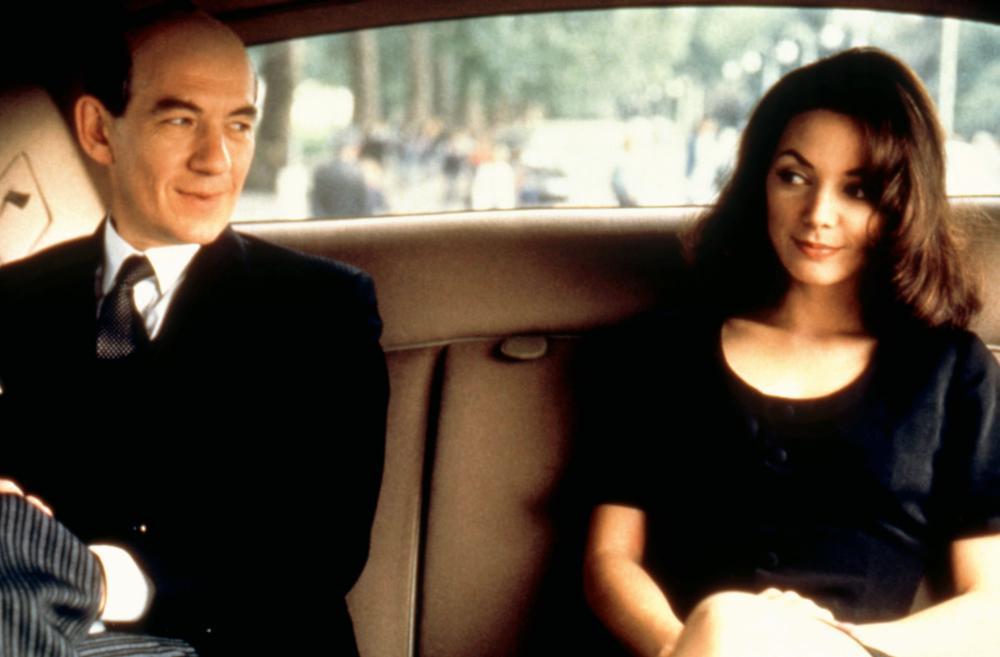
There is some decent directing – a scene of Mandy Rice-Davies and Christine Keeler preparing for a night on the town is particularly well done – and some strong acting, not least from Ian McKellen is a slimy Profumo (rumour has it a recently de-closted McKellen was keen on the role as it was the most hetrosexual role he could imagine playing!). But it never quite clicks together into something really emotionally engaging. And it isn’t quite as clear and easy to follow as you need. Structuring the story as a kind of love story between virtually the only people in the story who don’t have sex together is interesting – and Hurt and Whalley are good – but it’s just not quite a good enough film for what it wants to do.
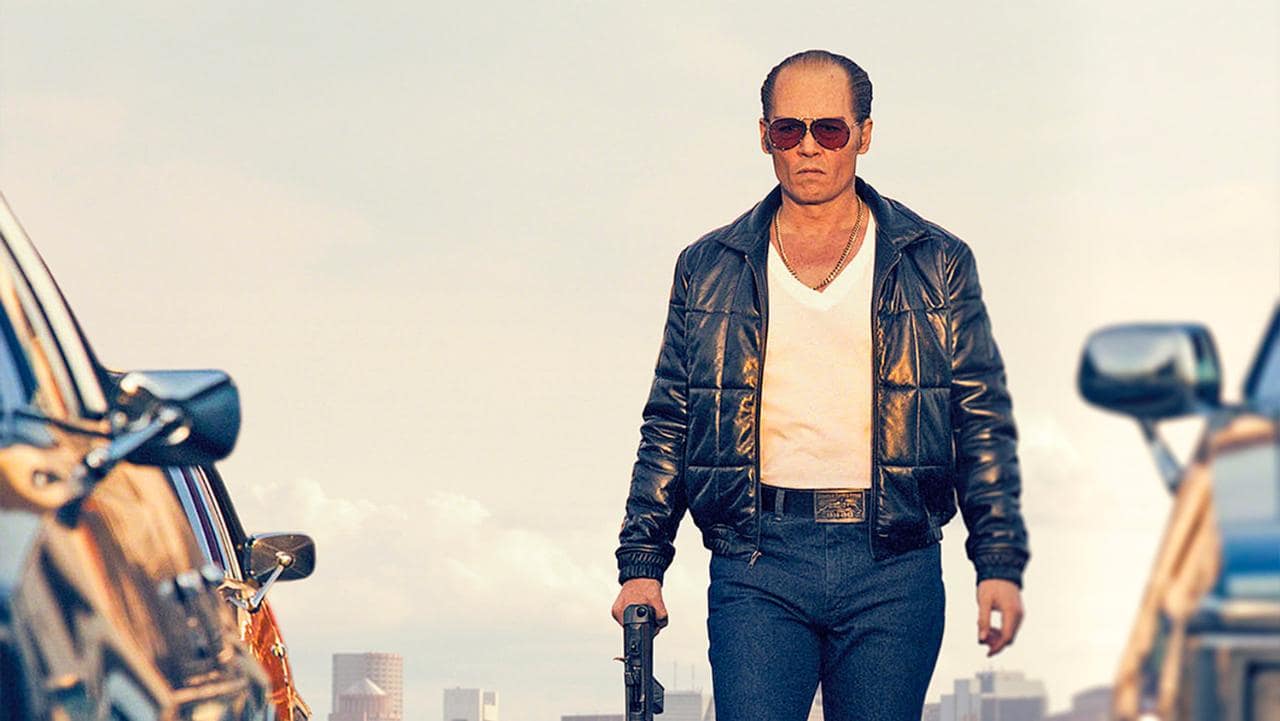
Black Mass (2015)

Johnny Depp dives into his make-up box in this sup-par wannabe Goodfellas

Director: Scott Cooper

Cast: Johnny Depp (James “Whitey” Bulger), Joel Edgerton (John Connolly), Benedict Cumberbatch (William Bulger), Rory Cochrane (Stephen “The Rifleman” Flemmi), Kevin Bacon (Charles McGuire), Jesse Plemons (Kevin Weeks), Peter Sarsgaard (Brian Halloran), Dakota Johnson (Lindsey Cyr), Corey Stoll (Fred Wyshak), David Harbour (John Morris), Julianne Nicholson (Marianne Connolly), Adam Scott (Robert Fitzpatrick), Brad Carter (John McIntyre), W. Earl Brown (Johnny Martorano)

Well Goodfellas casts a long shadow doesn’t it? Certainly long enough to completely drown Black Mass which, despite some good acting and period detail, never really comes together into something compelling or engrossing or even really that interesting. But you’ve got to admire how often Scott Cooper must have watched Scorsese’s classic. Shame he didn’t bring anything new to the table.

In South Boston in the mid-1970s, James “Whitey” Bulger (Johnny Depp) controls organised crime. With his rule under challenge from rival gangs, Bulger turns informer to the FBI – specifically agent and childhood friend John Connolly (Joel Edgerton) – offering information on his rivals in return for being allowed to take over their business. Inevitably, Bulger exploits the relationship for his own gain – with the increasingly blind-eye of Connolly who becomes more and more embroiled in the underworld. 

So there are good things in this. The period detail is pretty good. There are plenty of good gangster moments, even if they’re the reheated leftovers from everything from The Sopranos to Goodfellas. The low-level gangsters we follow have a slightly different perspective – even if most of their characters are completely interchangeable. It’s interesting that Bulger moved in such legitimate circles as the FBI and his State Senate President brother (well played by Benedict Cumberbatch). But the film never really makes this come together to mean anything. You don’t learn anything, you don’t understand anything new – it’s just a series of events.

That’s despite, to be fair, a very good performance by Johnny Depp. Sure the part caters to Depp’s Olivier-like love of the dressing-up box – here he sports bad teeth, a bald patch, a paunch and a pair of searing bright-blue contacts that make him look like a Muppet demon – but for all that, he is very good. His natural presence works to make Bulger a leader and he has a swaggering, dry, cruel quality to him that never makes him anything less than unsettling. He also conveys the monstrous moral blankness behind Bulger, using a fig-leaf of loyalty to cover his destruction.

It’s a shame then that he’s not really given anything to do. Too much of the part is reminiscent of other things: from Jack Nicholson in The Departed (to be fair, Bulger was the inspiration for that character), to Joe Pesci’s “Do I amuse you?” speech or his insanity from Casino. Montages as tired as a sleepless night run through the collection of funds and the beating of rivals. It’s just all so predictable. It’s a box ticking exercise. Yawn.

The biggest shame is that, in Connolly, the film has a far more interesting potential lead character. Imagine it repositioned to follow him instead: the semi-chancer, semi-star-struck kid swept up in the glamour of crime. So much more interesting. How far did he turn a blind eye? How far was he essentially an accomplice? Did he feel or know he was doing the wrong thing? Consider Depp’s brilliance in Donnie Brasco and then imagine what he could have made of this Faustian figure: and what an interesting film we could have had.

Instead, good as Edgerton is, the film barely scrapes the surface of his thoughts or motivations. We get beats – and his wife (excellently played by Julianne Nicholson) is clearly disgusted by his gangster friends – but it constantly falls flat as we keep pulling back to Bulger, or internal FBI arguments that tell us nothing. On top of this Bulger’s empire is ham-fistedly explained: it’s never clear what his reach is, what his main crimes are or what his aims are. We see killings but don’t often know why – and a sequence in Miami is so poorly explained I still don’t know what it was about.

The film introduces Bulger’s lieutenants – but reduces them to identikit hangers on. All the flash-back retrospective confessions (a framing device the film uses to very mixed effect) in the world can’t turn them into characters. Even Bulger’s relationship with his patrician brother gets lost in the shuffle – again a film focused on a crime lord and his State Senator brother would have been more interesting.

Black Mass is well made – but its problem is that there is on the edges a far more interesting film that never comes into focus. If they had chosen a different focus we could have had a film worth watching. Instead, like Connolly, the film is seduced away by the dark soul of Bulger. Depp is great – but the film is so in love with him and his transformation that it becomes something completely forgettable.

Three Colours: Blue (1993)

Juliette Binoche seeks liberty from grief in Krzysztof Kieślowski’s masterpiece Three Colours: Blue

Director: Krzysztof Kieślowski

Cast: Juliette Binoche (Julie de Courcy/Vignon), Benoît Régent (Olivier Benôit), Emmanuelle Riva (Madame Vignon), Florence Pernel (Sandrine), Guillaume de Tonquédec (Serge), Charlotte Véry (Lucille), Yann Trégouët (Antoine), Hélène Vincent (La journaliste), Zbigniew Zamachowski (Karol Karol), Julie Delpy (Dominique)

There are few foreign language films that have cemented themselves in film’s cultural history more than Kieślowski’s Three Colours Trilogy. These three inter-linked films – made with French and Polish money – looked (individually) at themes of Liberty, Equality and Fraternity, while using a colour palate and design that reflected one colour of the French flag each. The first film in this interlinking trilogy is Blue, a sombre, intriguing, intimate drama that perhaps wears its intelligence a little heavily on its sleeve.

Julie de Courcy (Juliette Binoche) is the only survivor of a car crash that kills her husband, a famous composer, and her daughter. Lost in grief, Julie decides that she will separate herself from the world and live entirely independently. She rents out her home, distances herself from friends, takes back her maiden name and destroys what she believes to be the only copy of her husband’s final composition – a concert for the unification of Europe. But Julie finds that liberating herself from all worldly connections is not as easy as she hoped.

Blue is a heartfelt, gentle film that throbs with emotional intensity, much of it coming from Binoche’s searing performance of a woman consumed with a mixture of grief and survivor guilt, who sees complete isolation and “liberty” from all connections as the only chance for sanity. Kieślowski’s direction is masterful – patient, stable, quiet and with a brilliant eye for small details. The film is crammed with small moments that speak of peace and quiet reflection – from watching a lump of sugar being soaked in tea, to lingering studies of everything from rooms to streets. 

The opening sequences of the film convey this masterful confidence from Kieślowski. The camera is a still observer, alternating between subtle POV shots and gentle, perfectly placed observation of Julie. Every moment of the shocking discovery of Julie’s loss is wonderfully assembled – from the stumbling news from the doctor, to the crackling mini-TV on which she watches her family’s funeral being broadcast. Quietly we see Julie return to her own home – and Binoche bottles up emotion with a resolve that suggests as much her determination not to engage with the pain as it does self-control. No wonder her housekeeper bursts into tears at the fact that Julie isn’t crying.

This all ties in very interestingly with the film’s theme of liberty. Conventionally, we would have had Julie escaping from something to find her own life. Kieślowski’s film more interestingly explores the positive and negative of liberty. Julie chooses freedom from all of life’s connections – but this is shown constantly to be not only impossible, but also less than healthy. Her surface liberty is instead crushing her under the pressure of isolation.

At the same time, the film is partly about Julie learning to free herself from her survivor guilt. Cutting herself off from the world denies her a genuine emotional connection with her husband’s friend Olivier (a puppy doggish Benoît Régent). In the first months of her guilt she sleeps with Olivier, hoping it will get her a bit of peace (it doesn’t). Inevitably, as Julie finds out more about her husband’s life – and as we find out that his music output was heavily reliant on Julie’s secret collaboration – the film becomes a question of whether Julie will allow herself the liberty from her past to continue living.

Because in a way this is an anti-tragedy: it starts with a trauma and is about the survivor learning to continue her life. Kieślowski peppers the film with moments of falling, from items to bungee jumpers on the TV. Slowly, these images of falling progress to include being caught, or shots of the bungee cords snapping the person back from oblivion. It’s a neat, subtle continual reference to Julie’s unconscious search for support.

Particularly as it’s made clear that Julie’s entire personality is all about giving, about loving and supporting people. From her silent collaboration with her husband, to her patient caring for her mother suffering from increasing dementia (another perverse form of liberty), to her forming a reluctant friendship with an exotic dancer in her block of flats (who the rest of the tenants are trying to drive out), it’s clear that Julie’s attempt to distance herself is never going to truly work. A character late on even tells her that her husband had always described her as kind and forgiving – qualities Julie learns to re-embrace. 

The wider world that Julie is trying to escape is represented brilliantly throughout by the score of her husband’s (her?) music for Europe. This score – a richly exuberant piece of music by Zbigniew Priesner – constantly intrudes into the action, accompanied by moments where Kieślowski seems to suggest time has stopped as Julie becomes lost in her reflections. Kieślowski uses colour changes and slow zooms to suggest throughout these beats where Julie temporarily becomes lost in the past and memories. The continual presence of the music is perfectly done.

The one element I was less keen on was the over use of blue. From filters on the camera, to backlighting, to objects present in every frame, there is a lot of blue in this movie – every shot has something blue in it. Although this is clever, and clearly thematically intentional for the whole trilogy – I’ve got to be honest spotting this stuff probably took me out of the film at moments. I imagine on a second viewing this will be dramatically reduced – but it’s one of those curses of a trilogy of films that have been so hyped up on the arts circuit, that you are aware of some of its subtle tricks so much that they cease to be subtle.

But Three Colours: Blue is still a masterful, quiet study of grief, loss and yearning, that avoids the obvious and explores different types of liberty and freedom. Binoche is brilliant in the lead role, and Kieślowski sears the brains with images (I still wince remembering a sequence where Julie deliberately scrapes her knuckles over a wall she walks past) and his direction is impeccably sensitive and unshowy, letting the film speak for itself. I can’t wait to watch the other two films in the trilogy – and see how this might affect my views on this first one.

Platoon (1986)

Charlie Sheen goes to war in Oliver Stone’s Oscar winning Vietnam film Platoon

Director: Oliver Stone

Cast: Charlie Sheen (Chris Taylor), Tom Berenger (Sgt Barnes), Willem Dafoe (Sgt Elias), Kevin Dillon (Bunny), Keith David (King), Forest Whitaker (Big Harold), Mark Moses (Lt Wolfe), John C. McGinley (Sgt O’Neill), Francesco Quinn (Rhah), Reggie Johnson (Junior), Johnny Depp (Lerner)

Vietnam has been a long-standing scar on the American psyche. For over 12 years, American soldiers were rolled into Vietnam to fight for something many of them were pretty unclear about. Vietnam was a bloody shadow boxing match for super powers to indirectly combat each other. American casualties were high, and the country that sees itself as championing justice and the free world ended the war with the blood of millions of Vietnamese and Cambodians on its hands. Is it any wonder the country still struggles to compute this?

Before Platoon there had been films that had dealt with the Vietnamese experience. Apocalypse Now had embraced the druggy, morally confused insanity of the war. The Deer Hunter had effectively shown the traumatic impact the war had on regular blue-collar steel-workers. But Platoon was something different. This was the war on the ground, with privates and sergeants as the focus (many of them poor, working class and also black) – the lower rungs of American society flung into a war they don’t understand, in a country they can’t recognise, fighting an enemy they have no comprehension of. 

Platoon throws the audience into the visceral, cruel, terrifying horror of pointless conflict, with a feeling that the war will never end. Stone pulls off a difficult trick here: the film shows a horrifying picture of war and killing, but combines this with successfully showing the adrenalin rush that comes from conflict – and the excitement of visceral film-making. 

Oliver Stone had fought as a young man in a similar unit, after dropping out of college. Chris Taylor (Charlie Sheen) is effectively a surrogate figure for the director, with the film crafted from Stone’s own experiences and those of his fellow soldiers. The film is a simple, intense experience with a straightforward plot: Taylor is torn between two potential “father figures”. One, Sgt Barnes (Tom Berenger), is a supernaturally ferocious warrior and martinet whom the men hold in awe. The other, St Elias (Willem Dafoe), is an equally fierce fighter, but also a hippy, nearly saint-like protective figure. Which of these two will Taylor side with?

Well okay it’s not a massive surprise really is it? The strength of Oliver Stone’s film is its visceral, bloody, impressive intensity. You are thrown into the midst of a series of terrible battles, interspersed with bored soldiers bickering or taking pot. At no time is the viewer (or the soldiers) given any real idea about what is going on, what the aims of the war are, what is really happening in the battles. Stone plays the film totally from the soldier’s POV. Battles are a confused mess at night. The location of the enemy is frequently unclear. There are no indications of any tactics at all. There is barely any leadership – Mark Moses’ Lt Wolfe is an almost hilariously ineffective moral weakling, who follows the leads of his sergeants. The soldiers (or rather the two sergeants) essentially operate as lone wolves, doing what they think best for any particular circumstance.

The film pivots on a confused raid on a Vietnamese village, as the platoon descends on a village for no very clear reason – apart from seemingly being pissed off that one of their number has been killed in the night. Nominally they are searching for Vietcong fighters. But really it seems like an excuse to let off steam. Platoon must have hit hard in the 1980s, as it doesn’t flinch at all from watching American soldiers committing atrocities. Women are shot, teenagers are beaten to death, a fox hole containing what looks like a child is exploded after a brief warning. The soldiers are all terrified, thrusting guns into Vietnamese faces. Above all Sgt Barnes feels no guilt at all at executing villagers in order to pressure the elders into telling what he thinks they might know about the Vietcong (who equally are largely faceless figures of terror in the distance stalking the platoon).

Where the film is less strong is in its plotting and narrative ideas. These are straightforward in the extreme, with Barnes and Elias almost literally as opposing devil and angel on Taylor’s shoulders. The film is clearly weighted in favour of Elias’ hippie mentality, his desire to preserve innocent lives and his caring attitude to his men. Barnes is presented far more harshly – even though his brutality stems from his own deep-rooted desire to keep his men safe, and his belief that Vietnam is hell and you can’t pussyfoot your way around hell. 

Saying that, it’s hard to argue against Stone’s feelings that compromising your humanity is not worth it no matter the struggles to keep yourself and others alive. But these are (forgive me) rather obvious, even traditional points – and its part of the film being essentially a conventional morality tale with a breath-taking military setting laid over the top. The ideas in this film won’t really challenge you – and in fact the film itself is really more of an experience than something that rewards reflection.

Stone’s direction is extremely good – even though he at times falls too much into the trap of overblown, overly operatic visuals (Taylor’s final confrontation with Barnes in the forest falls heavily into this trap). Stone has never been accused of being the most subtle of directors, and there is no stone (sorry) left unturned here to get the message across. In fact Platoon frequently hits its points so hard and with such unsubtle force, that it actually leaves you very little to think about after its finished – the film does all the work for you, like an angry rant that goes into unbelievable depth of detail.

But the acting has a very healthy commitment to it. Sheen shows why he was an actor of promise before he became a self-destructing punchline. Dafoe is very good as the serene Elias – a man’s man, but one comfortable in his own skin, with a strange campness about him, whose courage extends to doing the right thing no matter what. Tom Berenger is hugely impressive as the cold-edged Barnes, who has had to stamp out his humanity to survive. The rest of the characters split into two rival camps following these different soldiers, and there are some fine performances here from some now far more recognisable actors.

Platoon was garlanded with Oscars, partly because it talked about the American experience in Vietnam in a manner (and from a perspective) that had not been addressed before. It is an important historical landmark of a film, even if it is possibly not a great film. A simple, at times less than subtle anti-war film dressed up as a war film, it will immerse you in the conflict and the horror – but I’m not sure it will give you as much to think about as it thinks it does.

The Young Victoria (2009)

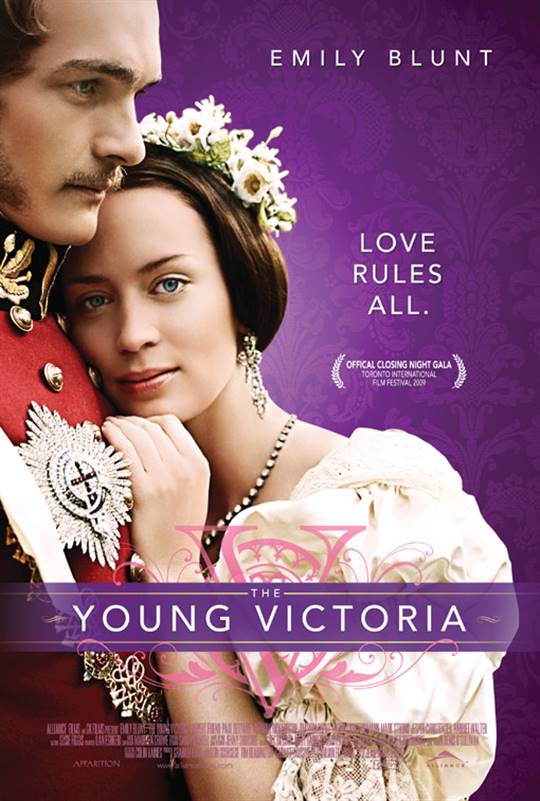
Emily Blunt and Rupert Friend play the royal couple in the cozy The Young Victoria

Director: Jean-Marc Vallée

Cast: Emily Blunt (Queen Victoria), Rupert Friend (Prince Albert), Paul Bettany (Lord Melbourne), Miranda Richardson (Duchess of Kent), Mark Strong (Sir John Conroy), Jim Broadbent (King William IV), Harriet Walter (Queen Adelaide), Thomas Kretschmann (King Leopold), Jesper Christensen (Baron Stockmar), Jeanette Hain (Baroness Lehzen), Julian Glover (Lord Wellington), Michael Maloney (Sir Robert Peel), Michel Huisman (Prince Ernest), Rachael Stirling (Duchess of Sutherland)

Now ITV’s Victoria exists, it’s a bit strange to go back and watch The Young Victoria. With the love today of long-form drama, and the time it can invest in things, it’s funny to see what the drama took almost 8 hours to do being crammed into an hour and a half here. But saying that, The Young Victoria is still an entertaining, luscious viewing experience which, while it has some strange ideas about certain events, is the sort of relaxing Sunday afternoon viewing that will take you out of yourself.

After the death of William IV (a slightly overripe Jim Broadbent), Victoria (Emily Blunt) is elevated to the throne. Finally able to shed the control of her mother’s (Miranda Richardson) domineering secretary Sir John Conway (Mark Strong), Victoria is determined to steer her own course. But she is surrounded by competing influences, not least from the charming arch-politician Lord Melbourne (Paul Bettany). King Leopold of Belgium (Thomas Kretschmann) dispatches his nephew Prince Albert (Rupert Friend) to England with the express interest of marrying Victoria and controlling her – but Albert and Victoria find themselves as kindred spirits, supporting each other to rule.

The Young Victoria is the epitome of prestige costume dramas. It looks fantastic, the cinematography is ravishing, the production and costume design exquisite. It’s pretty clear what the producers thought would sell the picture abroad. The royal regalia is pushed very much to the fore, and we get some wonderfully sweeping scenes, not least an impressively large-scale coronation. The soundtrack brilliantly riffs on Handel, and Julian Fellowes’ script mixes period regal style with a sweeping feeling of romance between Victoria and Albert.

The film actually does a very good job of repositioning Victoria as a young woman, and gives her a strong quality of self-determination and a desire to be herself in a man’s world. It’s really helped in this by the combination of imperial strength, girlish wilfulness and sharp intelligence Emily Blunt brings to the role. Blunt and the film also aren’t afraid to show that, however much Victoria had guts and determination, she was also quite a headstrong woman not above making emotionally led mistaken decisions. In fact, much of the drama spins out of Victoria learning to try and put these youthful crushes and prejudices aside.

Having said that, it’s interesting that the successful conclusion of the film centres on Victoria accepting that she needs the help of Albert to run the kingdom, and that she needs to remove competing influences for her affection – Melbourne and Lehzen – to focus her affection and loyalty on him. The film frames this as a winning romance and a successful partnership (which it was) – but it’s also vaguely creepy if you think about it. Mind you, since all the affectionate influences on Victoria are implied by the script to be at least partly motivated by self-interest, with the possible exception (eventually) of Albert, it manages to suggest this was for the best.

Albert’s background gets some interesting exploration here. He’s very much presented at first as the tool of Leopold as a means of controlling British politics. But he is far too independent, smart and noble to ever be the means of manipulation. Friend is very good here – his performance is quiet, authoritative but also heartfelt. Fellowes guilds the lily a bit to show his devotion by having Albert shot by a would-be assassin late-on in the film. Historically the assassin’s pistol wasn’t loaded, and Albert didn’t get shot (though Fellowes protests Albert didput himself in front of Victoria and that this intent is what’s important, not whether he was shot or not) but the moment does work – it gives the drama a boost and it’s undeniably moving.

While Albert is presented overwhelmingly sympathetically, interestingly Lord Melbourne gets quite a kicking. Paul Bettany is presented far more as a rival love interest than the sort of father-figure Melbourne was in real life (Bettany is probably 20 years younger than the real Prime Minister). Melbourne is shown as cynical, controlling, manipulative and overwhelmingly motivated by self-interest (a few more pushes and he would virtually become the film’s villain). He’s constantly contrasted negatively with Michael Maloney’s upright, honest Sir Robert Peel (one of my favourite statesmen of the 19th century so at least I’m pleased) – and his relationship with Victoria is one of self-promotion, which seems odd seeing as historically the two of them were so close. 

The film introduces other villains for us to hiss at. Kretschmann and Christensen do a good job as arch political schemers. Our real villain though is Mark Strong, who does a great job of scowling, controlling nastiness as the failed-bully Sir John Conroy. Strong’s performance works so well because he makes it clear that Conroy feels that his “Kensington System” (an attempt to manipulate and cow Princess Victoria into being a submissive puppet) is genuinely in her best interest, and that he genuinely cares for her. His partnership with Miranda Richardson as Victoria’s near-love-struck mother works very well.

The Young Victoriathrows in enough interesting character beats like this for it to really work as an enjoyable afternoon period-drama. With some great performances – Emily Blunt carries the movie brilliantly – and while some of the historical characterisation is a bit off, and other moments feel a little too chocolate box it’s a very entertaining, undemanding view., it’s great fun. The hardcore Victorian costume-drama fans will probably prefer Victoriafor the same story in more depth – but this film does it with great sweep (and doesn’t cram in Victoria’s stupid below-stairs plotlines!).

Greystoke: The Legend of Tarzan, Lord of the Apes (1984)

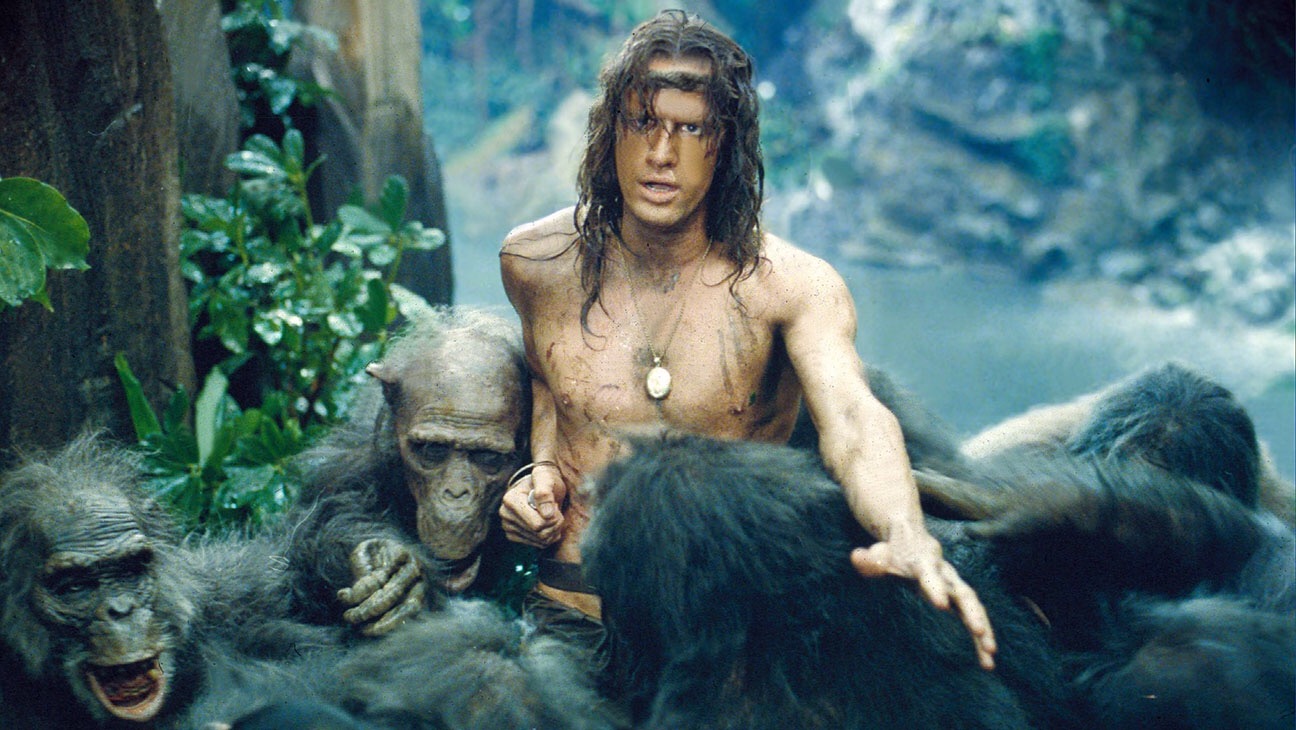
Christopher Lambert is the lord of the apes in dull Tarzan epic Greystoke

Director: Hugh Hudson

Cast: Christopher Lambert (John Clayton), Ralph Richardson (Earl of Greystroke), Ian Holm (Capitaine Fyllieppe d’Arnot), James Fox (Lord Charles Esker), Andie MacDowell (Jane Porter), Cheryl Campbell (Lady Clayton), Ian Charleson (Jeffson Brown), Nigel Davenport (Major Jack Downing), Nicholas Farrell (Sir Hugh Belcher), Paul Geoffrey (John Clayton Snr), Richard Griffiths (Captain Billings), Hilton McRae (Willy), David Suchet (Buller), John Wells (Sir Evelyn Blount)

For his follow-up to Chariots of Fire, Hugh Hudson settled on this curious mess: part heavy-handed exploration of class and the brutality of man, part picturesque jungle picture with people in ape costumes. If anyone remembers Greystroke today, it’s for an interesting bit of trivia: original director and writer Robert Towne was so annoyed at being removed from the project, he used his dog’s name as his screenwriting credit. When the Oscar nominations were announced, this pooch became the first four-legged Oscar nominee. Strangely fitting for a film about the nobility of animals.

The film is a “real life” version of the Tarzan story. What this basically means is that it is dry and boring with a ponderous self-important message about how the real animal is in man (or something like that). It also of course means that the word “Tarzan” isn’t used except in the title (presumably so that audiences could be lured into the cinema). Anyway, after his parents are shipwrecked off the jungle coast, and die after young John Clayton’s (Christopher Lambert) birth, he is raised by gorillas and becomes one of the leaders of the pack. When a troupe of gung-ho explorers are slaughtered by natives, the only survivor is Belgian Fyllieppe d’Arnot (Ian Holm). Rescued by John, d’Arnot teaches him language and takes him home to the estate of his grandfather the Earl of Greystoke (Ralph Richardson), who is desperate for an heir. But can John adjust to the jungle of the modern world?

So Greystoke is well filmed, looks good and has a couple of decent performances in it. But it’s a dull mess as a film. Watching it you suspect a lot of the runtime ended up on the cutting room floor. There are sudden time jumps. Characters appear and disappear, many serving no real purpose. The film drifts towards a conclusion that neither seems enlightening nor serves any real cathartic summation of what the film might be about. There are many, many lovely shots of the jungle and Scottish countryside, but we never really end up caring about any of the characters within it.

The film is thematically a mess from start to finish. It seems to be making a point about John being totally unsuited, by his upbringing, to adjusting to the world of man. But it never really gives a proper voice to John himself. Of course he’s only just learning language, but even without that you never really feel like you begin to understand him, or get a sense of half-remembered human traits emerging from his ape upbringing. Basically you don’t get a sense of conflict within him as to whether he should stay or go. Without that conflict, there isn’t really much interest in watching him work out the answer.

This is despite the fact the Christopher Lambert is actually pretty good as John Clayton. The role plays to his strengths: it’s highly physical (not just in the acts of athleticism but also in its half-man, half-ape physicality). Lambert also has this rather fine other-worldly quality that constantly leaves him looking a bit lost and vulnerable. The part may be underwritten but he is certainly doing his very best here, and he really does a brilliant job of playing an ape trapped in man’s body.

It’s a shame that the film takes so long to get going that he doesn’t really appear for the first half an hour or so. Instead we get a lot of ape-based action in the forest – and probably too much of his parents. Later in the film, the camera makes a point of returning two or three times to a large painting of Cheryl Campbell as John’s mother – but the film never suggests any link at all between these two characters. A lot of time is wasted setting up the parents’ voyage, while at the same time no time is spent on establishing any emotional link between the Claytons and their son.

Far more time is spent on the apes – which I suppose is the point of a film that wants to celebrate the purity of the world of animals over the corruption of man. Rick Baker’s ape make-up is pretty impressive for the time – and works really well in longshot – but in close-up is all too obviously a series of performers in masks. There is a sense of their natures, but not of them as dangerous or wild animals. In fact the film goes overboard in humanising them – even to the extent of giving them their own language of grunts and groans.

The ape stuff goes on too long – and then means the return to civilisation seems rushed and unclear. Ian Holm is excellent as d’Arnot, the bridge between the two worlds, and his fatherly love for John works extremely well. But the film makes no attempt to tackle the questions it raises of John dealing with his split animal-human relationship. Instead the film loads the decks by making almost every human character – epitomised by James Fox’s flat performance as Jane’s toff fiancée – a heartless uncaring moron.

Ah yes Jane. Played with an openness by Andie MacDowell, she’s dubbed in a painfully obvious way by an uncredited Glenn Close. This is another underwhelming relationship that seems skimmed over – one moment they have just met, the next they seem on the verge of a great love. It’s as rushed and slapdash as the introduction of a mentally handicapped servant – of course, with his childish outlook, he is closer to John than anyone could be – who literally appears out of nowhere.

The film was also Ralph Richardson’s final role – he died shortly after completing it – and his barmy Earl of Greystroke (part lonely old man, part semi-senile eccentric) does lift the film with a certain energy (he was posthumously Oscar nominated). But it’s an easy role for Richardson – and in fact his eccentric, hard-to-define energy kind of sums up the whole messy film pretty well. His character’s death is the final nail in its interest, his eccentric energy sorely missed.

The most damaging thing about Greystoke is it is dull and obvious. Pretty scenery and decent performances can only cover so much when the plot is empty and predictable. The film feels cut down absurdly – half the cast of Chariots appear in roles so tiny you wonder why they bothered – and by the time the film drifts towards its conclusion you’ll probably have stopped caring about what it was all about in the first place. It tries to ask questions about man’s nature, but it doesn’t even seem to notice it never answers them. A poor film.

Charley Varrick (1973)

Walter Matthau schemes a caper in crime thriller Charley Varrick

Director: Don Siegel

Cast: Walter Matthau (Charley Varrick), Joe Don Baker (Molly), Andy Robinson (Harman Sullivan), John Vernon (Maynard Boyle), Sheree North (Jewell Everettt), Felicia Farr (Sybil Fort), Norman Fell (Garfinkle), Woodrow Parfrey (Harold Young), William Schallert (Sheriff Horton), Jacqueline Scott (Nadine), Tom Tully (Tom), Benson Fong (Honest John)

Don Siegel was perhaps the ultimate professional director, who took on any scripts that came his way, producing polished, professional films. In the later part of his career, he finally received some of the freedom to start shooting his quality B-movies on A-movie style budgets. Charley Varrick was the first film he made after his box-office smash Dirty Harry, and Siegel received more time and space to deliver a film that mixed action and drama with an elaborate, almost meditative, mystery.

Charley Varrick (Walter Matthau) is a former stunt pilot, whose small crop-dusting business is a front for carrying out small-scale robberies. A bank robbery in Tres Cruces, New Mexico goes horribly wrong – Varrick’s wife Nadine (Jacqueline Scott) is killed and he and his partner Harman Sullivan (Andy Robinson) find the small job they had anticipated is actually holding a huge amount of mafia money. Varrick knows the mafia won’t rest until they get the money back – and he is right, as bank president Maynard Boyle (John Vernon) has no choice but to call in ruthless hitman Molly (Joe Don Baker) to get the money back and kill those who stole it.

Charley Varrickwas also known by Don Siegel as The Last of the Independents – and that kinda fits its tone. Varrick is a small-scale operator who has chosen crime because he’s been squeezed out of the crop-dusting business by the corporations. He’s operating a crime gang that follows a series of carefully planned robberies, aimed at stealing humble amounts: enough to be a nuisance rather than cause a genuine scandal. He’s a small-time operator, proud of who is, who doesn’t want to hit the big time but to excel as the big fish in the small pond.

The whole film reflects this personality: the film is deliberately set in a quiet American town in the mid-West – the opening credits are played over everyday scenes of small-town life. Every location is slightly run-down and unimpressive. Those wrapped up in the crime are regular Joes – on both sides of the law – and the values and principles are those of mid-west America. Even Molly the hitman – while clearly ruthless and capable of extreme violence and full of disdain of those he meets – has a drawling, cowboy quality to him. 

Part of Siegel’s point is that into all this explodes a story of crime, murder and violence that all spins out of money (doesn’t it always?). The mystery element is the audience wondering how Varrick is going to get out of this with both cash and life intact. What Siegel does really well is effectively make Varrick an unreliable narrator. Despite the fact we follow him around in the film, we are never really told what he is thinking or why he does things. Only at the end of the film are all the threads of the actions he has carried out pulled together – a real lightbulb “ah ha!” moment – and the real purpose of what he has been doing is revealed.

To make a character who plays their cards so close to their chest work, you need an actor who is effortlessly charming. The film gets this in Walter Matthau. Matthau, with his hang-dog Droopy-face is hardly anyone’s first idea of a ruthless bank robber (surely part of the film’s point!) but his winning charm and kindly-Uncle quality, as well as the eye of assured cool that Matthau gives him, really make you root for him. In fact it works so well that you actually forget how ruthless Varrick in this film: from moving on swiftly from his wife’s death, to ruthlessly sacrificing several people in his quest for self-preservation. In other hands, Varrick wouldn’t half come across as a copper-bottomed shit. 

Instead, his plan of misdirection, clues pointing towards the wrong thing, and carefully juggled parallel attempts to escape (his unrevealed real plan, and the clumsy surface plan that the audience knows must be a bluff) really works to keep you engaged and entertained. Siegel is purposefully pulling the wool over your eyes in virtually every scene – and he has Varrick basically tell us he’s doing this – but there are few things that audiences like more than a magic trick. We want Varrick to pull a rabbit out of the hat at the end – to surprise us all with how clever he’s been (and to reward those who have worked out part of what he is doing).

Siegel mixes this with a surprising number of quiet, even soulful moments that mix the thoughtful with some black comedy. From Varrick’s tender kissing of his dead wife – right before he professionally carries on with their plan to burn the get-away car they escaped in (this time with his wife’s body inside it) – to a secret meeting/interrogation/intimidation of timid bank manager Harold Young (a twitchy Woodrow Parfey) by smooth big-city bank manager Boyle (a superbly cold John Vernon, nowhere near as assured and secure as he thinks he is) in a cow-filled field, these scenes are about character as much as they are about plot.

Siegel mixes this with moments of pure action and drama. The opening bank robbery is surprisingly violent, considering the gentle introduction to the film – and our “heroes” are amazingly ruthless towards those that stand in their way. Joe Don Baker’s chillingly amoral Molly hands out beatings as easily as he does slightly goofy Western smirks (a beat down of Harman is particularly brutal). Varrick is quietly ruthless and the film ends with a dynamic chase scene in a scrapyard, quite unlike anything you have ever seen.

Charley Varrick epitomises the sort of 1970s film that studios and Hollywood looked down on at the time, but inspired the filmmakers today far more than some of the Oscar winning gumph that got praised. Parts of it are dated – women in the film are either love interests or whores, and both Molly and Charley (Walter Matthau is no one’s idea of a lothario) bed compliant, impressed women in the film with an off-hand carelessness. But the core and heart of the film is in its cool, calculated confidence mixed with a sense of Western soul. With a terrific performance by Matthau, this is a fine example of independent film-making.

Chariots of Fire (1981)


Celebrations abound in triumphant running flick Chariots of Fire

Director: Hugh Hudson

Cast: Ben Cross (Harold Abrahams), Ian Charleson (Eric Liddell), Nicholas Farrell (Aubrey Montague), Nigel Havers (Lord Andrew Linsley), Ian Holm (Sam Mussabini), John Gielgud (Master of Trinity), Lindsay Anderson (Master of Caius), Cheryl Campbell (Jennie Liddell), Alice Krige (Sybil Gordon), Struan Rodger (Sandy McGrath), Nigel Davenpot (Lord Birkenhead), Patrick Magee (Lord Carogan), David Yelland (Prince of Wales), Peter Egan (Duke of Sutherland), Daniel Gerroll (Henry Stallard), Dennis Christopher (Charley Paddock), Brad Davis (Jackson Scholz)

Dun-da-da-da da-da dun-da-da-Da-Da DA. Hum that theme tune and you know straight away what film it is: you can’t resist the temptation to mime out running (in slow motion of course), arms swinging gracefully from side-to-side. There aren’t many more movies with more iconic, instantly recognisable themes than Chariots of Fire

If there is one thing everyone remembers, it’s the young athletes running along the beaches of St. Andrews, spray flying up from their bare feet. Nicholas Farrell sprinting with upper-class determination. Nigel Havers wiping spray from his face with glee. Ian Charleson full of serene joy. Ben Cross with fixed, rigid focus. The opening of Chariots is a master-class in quickly established character, tone, mood and era. The cross-fade from the funeral oration from an ageing Nigel Havers into this slow-motion, halcyon-days reflection tells you we are in the land of memory – and sets right up for the feel-good triumph the film becomes.

The film follows the key athletes of the British 1924 Olympics team. Harold Abrahams (Ben Cross) is a second-generation Jewish grammar-school boy who runs to prove he belongs and can excel. Eric Liddell (Ian Charleson) is a Presbyterian Scot, who runs to celebrate God and whose religion prevents him running in a vital Sunday qualifying heat. Both characters are, in their own ways, outsiders – and their underdog status makes them perfect to root for in this extremely well-made crowd pleaser.

Chariots is often seen as a slightly undeserving Oscar-winner. But that’s to overlook the panache it’s made with and how emotionally uplifting and engaging it is. Hugh Hudson had never directed a film before this one. His background was in commercials and he brings many of the strengths of that background to Chariots. The film is wonderfully assembled, a perfect combination of montage, cross-cutting, longer tracking shots and cross-fading. 

That opening scene tells you a lot with its swift economy. But he handles others just as well: Abrahams’ 100m winning race is played first in real time, then again, cross-cut with Abrahams’ reaction to victory. The first moment is one of triumph, but the immediate repeat allows an opportunity for the viewer to understand the mixed feelings that achieving everything you aimed for can bring. Abrahams’ slightly shocked, underpowered reaction gives the slow-motion repeat of the race a hazy, post-match analysis feel – as if Abrahams is still running the race in his mind. As if he knows that his whole life was building to that one moment, and now he needs to find a new focus.

Hudson’s mastery of moments like this is impressive. Sequences are fabulously assembled. The famous “one minute” dash around the Trinity court (actually Eton) is brilliant, and a great example of how the film sells tent-pole moments. It also masters quieter character moments. One of its stand-out moments simply allows Abrahams’ coach Mussabini (a scene-stealing Ian Holm) to react to Abrahams win (a victory he has not seen due to being banned from the stadium) by quietly rising to attention, then sitting on his bed, gleefully punching through his hat and quietly whispering “my son”. Other scenes – such as those where Abrahams confronts quiet anti-Semitism from Cambridge scholars (nice bitchy cameos from John Gielgud and famed director Lindsay Anderson), or Liddell is quietly pressured into running on Sunday – simmer with good acting and restrained direction.

It’s these scenes that really make the film work. Ben Cross is superb as a chippy, frustrated Abrahams who feels he must justify his place in England’s oppressive class system. He’s constantly glowering, tense and uncertain – but Cross mixes this with a boyish charm, a gentleness (most notably in his shy romance with an unrecognisable Alice Krige) – and a warmth and genuineness that he shows with friends. Nicholas Farrell’s boyish Aubrey Montague (a love-struck best friend if ever I saw one!) helps a lot here – if someone as obviously nice as him likes Abrahams, then gosh darn it we should as well.

Ian Charleson is equally impressive as the devout, charming but coolly determined Eric Liddell who has decided his course in life and nothing is going to shake him from it. The film has a refreshingly considerate view of Liddell’s Christianity – and, furthermore, praises him for sticking to his devout principles. Charleson wrote many of his speeches himself, and he brings a charming honesty to his character. How can you not love this guy? He’s the perfect ambassador for the Church.

The film tackles plenty of clashes for Liddell which sizzle in a quiet way. Cheryl Campbell is very good as his partly proud, partly concerned sister, worried that his missionary work is being sacrificed for his running. His confrontation with the Olympic committee over his crucial decision not to run – is there any other film where not working on a Sunday is the dramatic centre piece? – is nicely underplayed. It’s clear that they (including a very good Nigel Davenport as an understanding Chair) want him to run, and it’s equally clear Liddell is determined he won’t.

It’s the moments like this that make the film so triumphantly feel-good. Both Abrahams and Liddell are at heart immensely likeable, the upper classes and elites who frown at them in their way rather boo-able. The running scenes are great (despite the sweetly dated lack of grace!), the film really capturing the exhilarating energy of pushing yourself to the limit. Watching Abrahams training under the expert eyes of Mussabini (worth repeating again that Holm is the heart of this film, as the fatherly, wise trainer struggling against prejudice against both Italians and professionalism), or Liddell winning from behind after being pushed over in a race are simply hugely uplifting.

Strangely the one thing that does seem a little odd today is the Vangelis score. Yes the Chariots march is outstanding – but the 80s electronic beat to the rest of the score now sounds very dated. Yes it is interesting to overlay (then) modern music over a period piece – but nothing dates quicker than music (except perhaps haircuts) and that is the case here. It sounds odd and jarring with the action at times – but then that main theme is so brilliant (but also the most classical of Vangelis’ compositions) that it still sort of works.

The sad thing is that Chariots didn’t lead to great new things for most involved. When he won the Oscar for best original screenplay, Colin Welland famously cried “the British are coming!”. Sadly he wasn’t really right. Within four years two flop films had all but ended Hudson’s career. Producer David Puttnam took over Columbia Pictures, only to be dismissed within a year after disastrous results. Many of the stars of the film never got the breaks this film promised (Charleson died tragically young – the first major star in England to openly acknowledge his cause of death as AIDS). Even the star Americans introduced to play the yank athletes (Brad Davis and Dennis Christopher) never had a hit film again. As David Thomson put it, within ten years of all the major players only Ian Holm “had any professional credibility left”.

But Chariots is still a bit of lightening caught in a bottle. A strange idea to spin an entire film out of an event lasting less than 10 seconds, but which married up so well with universal themes of class and struggle. It knows exactly what it is, and exactly what it is doing. It really worked then and it really works now. It’s not pretending to be high art, or to really make profound statements – just to entertain. And it really does. Fetch your running shoes and start that Vangelis theme!

Ordinary People (1980)


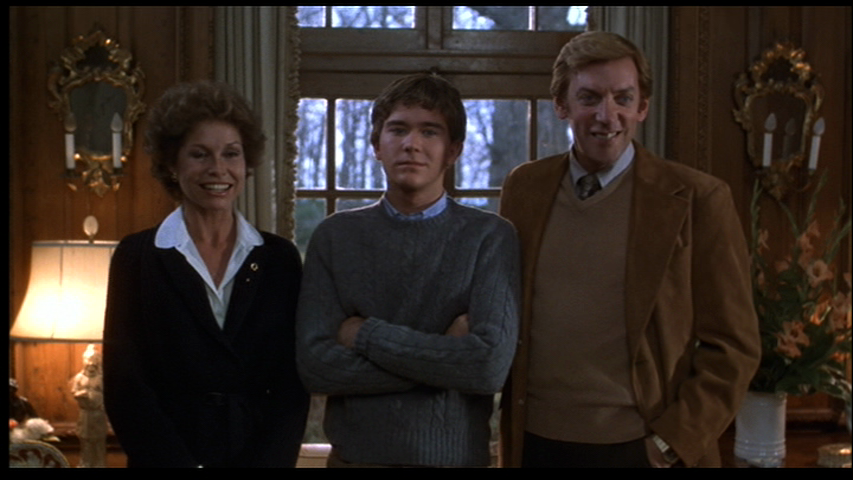
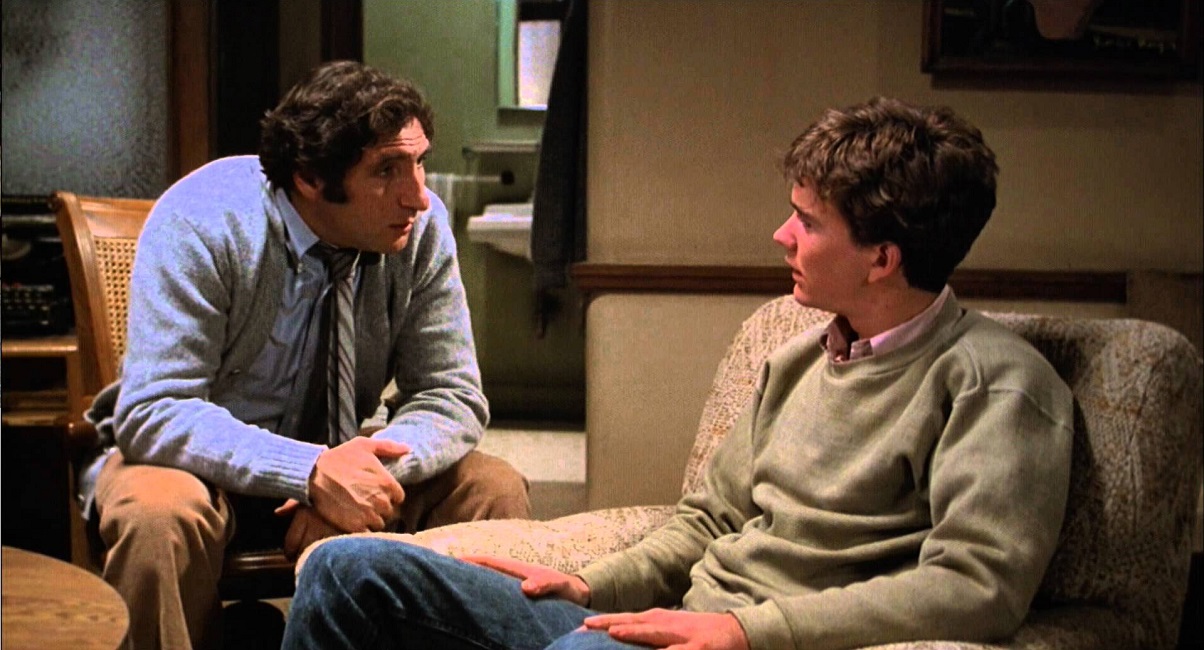
Mary Taylor Moore, Timothy Hutton and Donald Sutherland pose for an awkward picture in family troubles drama Ordinary People

Director: Robert Redford

Cast: Donald Sutherland (Calvin Jarrett), Mary Taylor Moore (Beth Jarrett), Timothy Hutton (Conrad Jarrett), Judd Hirsch (Dr Tyrone Berger), Elizabeth McGovern (Jeannine Pratt), M. Emmet Walsh (Coash Salan), Dinah Manoff (Karen Aldrich), Fredric Lehne (Joe Lazenby), James B Sikking (Roy Hanley)

In 1980, Robert Redford became the first big Hollywood stars to parlay acting success into producing and directing small scale, independent films that otherwise might never have been made. Ordinary People was the first of these – with Redford focusing on staying behind the camera – and it was a big success. It even won four Oscars – best picture, screenplay, supporting actor for Timothy Hutton (despite the fact Hutton is really the lead) and best director for Redford himself (beating out David Lynch for The Elephant Man and Martin Scorsese for Raging Bull). It was a great story for 1980 – the matinee idol turned artist. But is Ordinary People that great a film?

The film covers the emotional collapse of a wealthy middle-class American family after the eldest son Bucky is killed in a boating accident. Younger son Conrad (Timothy Hutton) has had trouble coming to terms with the accident, which he survived, and has only just left an institution after a suicide attempt. His father Calvin (Donald Sutherland) is desperate to try and relate to his son again, while his mother Beth (Mary Taylor Moore) remains emotionally distant attempting to put the accident behind them. Conrad starts seeing psychiatrist Dr Berger (Judd Hirsch), to adjust – but the after effects of Bucky’s death continue to tear the family apart.

Nobody really talks about Ordinary People any more do they? Out of all the 1980s Best Picture winners it’s perhaps the most easy to overlook (except maybe for Terms of Endearment). Why is this? Well truth be told it’s just a pretty ordinary picture. There really isn’t much to it. The story it tells of a wealthy family (only a millionaire like Redford could consider these loaded people ordinary) suffering emotional trauma and psychiatry finding the answer has been told so many times before, and since, that there isn’t anything particularly unique or interesting about it. 

In fact Ordinary People is exactly the sort of small-scale, quiet, middle-brow independent film that awards ceremonies slather over and a few years later (never mind over 30!) people struggle to see what the fuss was about. Redford directs the film with a quiet professionalism – the sort of competent craftsmanship and skill with actors that dozens of other directors could have done just as well. His Oscar for best director is especially galling when you consider the artistry and imagination of Scorsese’s direction of Raging Bull, or the unbearable sadness and tragedy Lynch gave The Elephant Man. It’s the sort of direction a non-famous director wouldn’t even have been nominated for.

This film uses shot-reverse-shot like it’s going out of fashion, most of the scenes are conversations across tables that are weighted down so heavily with meaning you start to lose interest in them. The score uses Pachelbel’s music in such an overwhelming style, it makes that sound as anodyne as much of the rest of the movie. Maybe it’s just because this is such well-trodden ground, but the revelations towards the end of the movie are so blindingly obvious you wonder why it takes so long to get to them (the son blames himself, the mother blames the son and doesn’t love him as much as the dead son, the father wants the two to kiss and make-up). 

This rotates around a series of psychiatrist scenes which at least have the feeling of actual sessions, even if Judd Hirsch (good as he is here) basically plays the sort of revelation inspiring psychiatrist that only appears in movies. The film has a touching faith in the power of analysis being able to solve all problems, and spends so long luxuriating in scenes like this it virtually forgets to put actual living, breathing characters in the middle of them. With the possible exception of the father, none of these characters feel particularly real – they are just mouthpieces for the plot.

Not that it’s badly acted at all. Timothy Hutton made his film debut here and he brings a real fire and passion to the role, as well as a moving emotional vulnerability and anger directed only at himself. The supporting actor Oscar feels a bit of a cheat, as he’s clearly the lead, but he’s very good here as Conrad, struggling to express himself, bottling up his feelings and lashing out at those around him. It’s a part that feels drawn together from bits and pieces of plot requirement, but Hutton plays it to the hilt – it just doesn’t feel like a really real person, more a collection of sad traits.

Mary Taylor Moore is in a similar situation as a mother so cold and distant from her son, so repressed and controlling her distance starts damaging the entire family. She’s unable to process what has happened so almost wants to pretend nothing has (and blames her son for not doing that same), that it again feels like something from a psychiatric case-study rather than real person. Moore gained particular attention at the time as she was best known for comedy (much like Judd Hirsch, famous for the sitcom Taxi) – so the performance at the time might have looked stronger than it actually was.

The best performance might well come from Donald Sutherland in the least flashy role as the father trying to puzzle out what is going on – and trying to work out his own feelings. It’s the only character that feels less like a construct and more a genuine person, whose answers aren’t easily worked out by a bit of psychology study. Sutherland is low-key, tender, gentle and carries all his emotion on the inside – it’s a subtle and excellent performance, overlooked way too much. 

Redford essentially directed an actor’s film here (it’s all about the big moments of acting) so it’s not a surprise that it seized the attention of the Academy (largely made-up of actors) but really it’s not that far away from a well-made “movie of the week”,  with its obvious beats and not particularly surprising revelations. Perhaps it’s the point that the family’s problems seem a lot more apparent to the viewer than they do to the characters – and there is some interesting development of perceptions, not least from Sutherland’s father who starts to come to profound realisations about his wife and son. 

But Ordinary Peopleis an uninspiring and even rather tame drama, that today looks even more low-key and insubstantial. While it tries to break free from the confines of “social drama” it actually wants to tie everything up with a neat bow psychologically – and despite the fact it has an ending that suggests not everything is perfect, it really concludes with a safe full stop. There is a reason why it’s surely one of the best pictures which has been most forgotten about.

J. Edgar (2011)


Leonardo DiCaprio is excellent in Clint Eastwood’s decent J. Edgar

Director: Clint Eastwood

Cast: Leonardo DiCaprio (J. Edgar Hoover), Armie Hammer (Clyde Tolsen), Naomi Watts (Helen Gandy), Judi Dench (Anne Marie Hoover), Josh Lucas (Charles Lindbergh), Dermot Mulroney (Norman Schwarzkopf), Damon Herriman (Bruno Richard Hauptmann), Jeffrey Donovan (Robert F. Kennedy), Zach Grenier (John Condon), Ken Howard (General Harlan F Stone), Stephen Root (Arthur Koehler), Denis O’Hare (Albert S Osborn), Geoff Pierson (A Mitchell Palmer)

J. Edgar Hoover holds a unique place in American history. As the first ever director of the FBI he ruled it as his own personal fiefdom from 1935 to his death in 1972. A workaholic, he revolutionised the investigation of crime in the USA, centralising records, introducing and championing scientific techniques, and working to change the image of lawmen into heroes. On the other hand, Hoover frequently abused his position, used the FBI to investigate rivals and stamp out groups he judged as dissident, and put together secret files of unpleasant and damaging material on political opponents.

Eastwood’s film actually does a pretty good job of balancing these two J. Edgar Hoovers, and of presenting a fairly even-handed portrait of a man most people see now as the worst example of a power-abusing policeman. The film follows the career of Hoover (Leonardo DiCaprio), focusing in particular on the Lindbergh kidnapping, clashes with Presidents, and his relationships with his deputy (and probably long-term lover) Clyde Tolsen (Armie Hammer) and with his domineering mother (Judi Dench). 

The film’s main advantage is a typically power-house performance from Leonardo DiCaprio. His Hoover blusters with insecurity, resentment and a monomaniacal obsession with his own sense of right and wrong. He’s the sort of guy who takes a woman on a date because he thinks it’s time to get married and then takes her to see his filing system. Hoover was a man whose life was work and power – but DiCaprio doesn’t forget that amidst the maniacal power grabbing, he had a confused personal sexuality.

The film suggests Hoover repressed his homosexuality due to the influence of his mother (“I’d rather have a dead son than a daffodil”), and contrasts this painful struggle with the preppy, tender, manly Clyde Tolsen, played with equal skill by Armie Hammer. Tolsen was Hoover’s long-term friend and companion, they holidayed together, ate meals together, lived opposite each other, and Tolsen even accepted the flag after Hoover was buried – neither man married. The film creates a fairly sweet love story of a man who couldn’t fully accept his own feelings falling in love with a man comfortable with who he was. 

The old-married feeling of this couple – whose physical contact never really goes much further than the occasional hand holding – is the emotional heart of the film. Although the repressed Hoover never admits his love openly (to the occasional hurt of Tolsen), it’s actually a fairly good expression of a normalised same-sex marriage, and Eastwood never succumbs to some of the odder gossip about Hoover’s cross-dressing (except in grief at the death of his mother) or sexual preferences.

His relationship with his mother (whom he lived with his whole life until her death) is more predictable: she is demanding and controlling, he is loving, placid and deferential to her. It’s what we’ve seen before several times – and Judi Dench can play this role standing on her head – but it gives us a nice context to get inside Hoover’s head and understand why he behaved the way he did. 

The film doesn’t lose track of Hoover’s ongoing political clashes. We get showpiece senate hearings as Hoover struggles to establish the FBI with the powers it needs to combat crime (DiCaprio is pretty electric in these scenes). Repeated shots show Hoover watching various inauguration parades, or stopping to stare at the same portrait of Washington as he heads in to meet with (and intimidate) various (unseen) presidents. The film hits these beats hard at times – did we need Hoover telling Robert Kennedy that he has information on “your brother, the President of the United States”? But it’s not afraid to show Hoover unsympathetically, particularly in his vindictive campaign against Martin Luther King.

What Dustin Lance Black’s screenplay, and Eastwood’s professional, smooth direction, do well is explain why Hoover may have hated these people so much. The film focuses on Hoover’s early days – full of anarchist bombings, wildfire communist strikes that led to clashes with the police, years of bank robbers and gangsters carrying on unrestricted in America – that makes you at least understand why he felt America was under threat. 

The film’s reconstruction of period detail is exquisite, and much of the photography has a brilliantly murky, sepia tone to it I really liked. The reconstruction of details from the Lindbergh kidnapping is very well done. All this is much better than some of the wonky “old age” make-up Di Caprio, Hammer and Watts (playing Hoover’s faithful secretary) have to labour under towards the end of the film (Hammer in particular looks slightly ridiculous under laboured liver patches). 

In structure, this is a fairly traditional biopic, and in trying to cover Hoover’s entire career it often skips over or misses key incidents. In an era where “modern” biopics tend to focus on dramatizing one key moment in their subject’s life (such as Selma or Lincoln), J. Edgar feels a bit more like a 1990s biopic. It crams so many events in, it sometimes feel like an “and then this happened” sort of film, rather than the more interesting thematic film under the surface.

It’s also struggling to bring more interesting depths out. It has a neat structure of Hoover dictating his biography to a string of indistinguishable “trusted” FBI agents (each scene has a different one, and there is neat visual gag as Eastwood cuts to a series of these guys in a row offering the “wrong” answer to Hoover’s question as to who was the most famous American of the 20th century – the answer being Lindbergh). Interestingly a final speech from Tolsen suggests much of what we have seen is Hoover’s vainglorious “legend building” rather than the “true story” – a theme that you feel could have been explored more.

It’s stuff like this that makes J. Edgar stand out a bit more. That and the wonderful performances from DiCaprio and Hammer, as the truly rather sweet married couple-who-weren’t. The film could make more of exploring the psychology of Hoover – the man who hated anyone different, including homosexuals – but who carried this open secret. But there isn’t time. It’s a film with good ideas and scenes, which could be more than it is. But it’s a decent film for all this. Many won’t like the fact that it takes a sympathetic angle on Hoover. But it shows every life has its right and wrongs.