Tag: Emily Blunt

The Devil Wears Prada 2 (2026)

The Devil Wears Prada 2 (2026)

Fan-pleasing sequel that cosily does exactly what it says on the tin

Director: David Frankel

Cast: Meryl Streep (Miranda Priestly), Anne Hathaway (Andy Sachs), Emily Blunt (Emily Charlton), Stanley Tucci (Nigel Kipling), Justin Theroux (Benji Barnes), Kenneth Branagh (Stuart Simmons), Lucy Liu (Sasha Barnes), BJ Novak (Jay Ravitz), Simone Ashley (Amari Mari), Tracie Thoms (Lily), Patrick Brammall (Peter), Helen J Shen (Jin Chao)

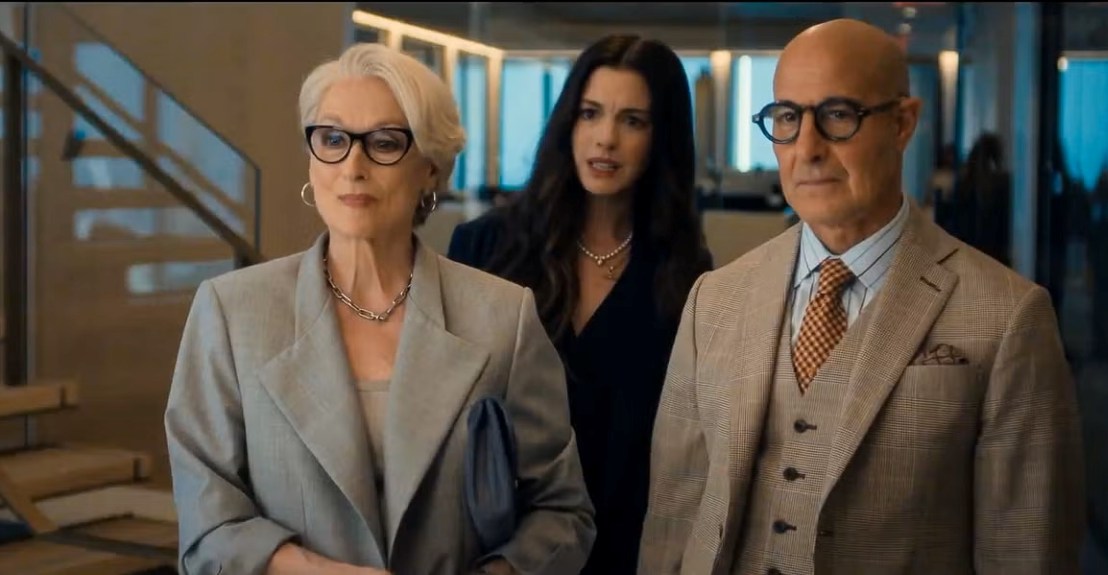
Twenty years on and once again The Devil Wears Prada trots down Hollywood’s cat-walk. Andy Sachs (Anne Hathaway) is now an award-winning journalist, whose entire newsroom has recently been kicked to the curb (via a group WhatsApp!) by their owner. Meaning she’s free to come back to Runway to help the magazine pilot its way through an online storm around a puff piece for a recently exposed sweatshop brand. Subdued dragon Miranda Priestly (Meryl Streep) might not want her back, but the listless editor is struggling in a world of HR complaints and magazines kow-towing to whip-hand holding advertisers like Dior – their advertising team now managed by former assistant Emily (Emily Blunt). Can Andy, Miranda and loyal number-two Nigel (Stanley Tucci) work together to make Runway successful and relevant again in the age of clickbait?

But of course, they can. There is nothing really surprising about The Devil Wears Prada 2, a perfectly entertaining film that has been skilfully set up to offer a good night out for fans of the first film. It’s packed with knowing little in-jokes and references and is overwhelmingly focused on getting the band back together and giving them a joint mission. Which in this case is those two familiar enemies of modern Hollywood, money-obsessed owners with no interest in talent and the internet and all its phone watching shallowness for legacy media.

As such, the idea of a print fashion magazine editor being a symbol of all powerful, devil incarnate ruthlessness feels incredibly passé. That’s one reason why Miranda feels like such a milder, put-upon, even vulnerable figure here, for all Streep can still rip through a sharp one-liner. The other is, of course, that rather like Hannibal Lecter becoming a sort of bizarre cult anti-hero by the time we got to Hannibal, rather than fearing Miranda, Devil Wears Prada 2 knows most of the audience love her. It’s a trend that was already happening in the first movie, and its doubled down here. Miranda is no more-or-less than the primary focus of sympathy for the film.

From the fact that her old world is falling down around her, to the joyless HR rules that stop her poisonous barbs even passing her lips in public, it’s in every inch of the film that expects the viewer to be openly rooting for her. In fact, the whole film is about getting that poisonous, go-getting killer back purring again – with Andy even being called out by a journalist friend for going through Stockholm Syndrome in her eagerness to help her old boss restore herself to terrifying the masses of the fashion world. Andy’s just feeling what the film is going through.

This is all part of a film that recognises the four leads are really popular with the audiences, so since we love them all they might as well all love each other (however secretly) as well. Stanley Tucci’s avuncular affection as Nigel is the glue that brings this gang back together. Anne Hathaway is still all sprightly, girly enthusiasm (however much we are told she is an ace investigative reporter) still trying to impress her private mentor. Emily Blunt (still ace) carefully lets the vulnerability and desperation to be liked peek through the surface of her brittle namesake, obsessed with style and etiquette. All the performers natural mateyness (heck, Blunt and Tucci are famously in-laws) scream off the screen in a film that’s basically a cosy reunion party.

It’s also a film that demonstrates the power of the original. Ironically, for a film all about cost-cutting at Runway, the budget for the film seems through the roof. Most of the second half takes place in the fashion hotspot of Milan. An armada of fashion figures play themselves at various junkets and black-tie dinners (bizarrely, even Rory McIlroy and his wife appear – Rory’s probably shouldn’t have acting in mind as a back-up career). You know a film has passed through the popularity mirror, when the industry it as effectively parodying (however gently) in the first film, pulls out all the stops to get every single name going into its sequel. To cap it off, Lady Gaga pops up to play an exaggerated version of herself, as holder of a long-running feud with Miranda.

The plot, as such, isn’t particularly important compared to the clothes, the charisma of the actors and the warm comfort the film is sure you are getting from the very fact it exists and is playing in front of your eyes. Meryl Streep is still lots of fun, even if she could still play Miranda while standing on her head. I would guess she asked for a top line actor to be her scene partner for her domestic scenes, hence the slightly bizarre presence of Kenneth Branagh of all people (doing a perfectly serviceable job, and he seems to have also gone to the trouble of learning a few notes on the violin).

How much you enjoy all this, rather depends probably on your level of knowledge and affection for the original. But, if you’ve got any level of that, you’ll probably find something to enjoy in this light, feel-good confection, where problems can be easily solved (twice!) by the waving of mythical billionaire Lucy Liu’s magic wand. There are some very, very mild points made about the downfall of the print industry (not to mention journalism) in the digital age, but that’s a subsidiary point to what we really want to see: a closing shot of our heroes working in perfect harmony, having learned (finally) to love and respect each other. It’s the sequel as very particular fan fiction.
Disclosure Day (2026)

Disclosure Day (2026)

Spielberg returns to Close Encounters in a film that explores interesting ideas but doesn’t quite no how to conclude

Director: Steven Spielberg

Cast: Emily Blunt (Margaret Fairchild), Josh O’Connor (Daniel Kellner), Colin Firth (Noah Scanlon), Eve Hewson (Jane Blankenship), Colman Domingo (Hugo Wakefield), Wyatt Russell (Jackson), Henry Lloyd-Hughes (Casper Boyd), Elizabeth Marvel (Sister Maura), Hettienne Park (Serena)

After almost fifty years, Spielberg returns to Close Encounters territory: the wonder and fear from learning we might not be alone. Disclosure Day wraps this up in a very modern conspiracy, a shady organisation keeping secrets, but still carrying the optimism and hope Spielberg’s previous encounters with Little Green Men had. Disclosure Day is a film awash in different ideas and concepts, assembled with the flair and skill you expect from Spielberg, but somehow not quite sensational enough to hold together as well as you hope it’s going to from its punchy opening.

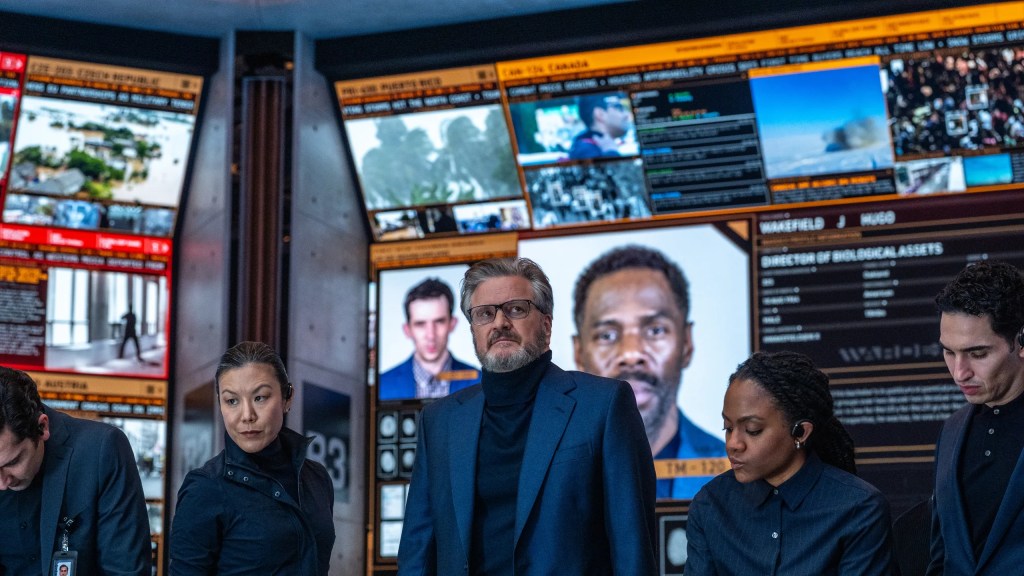
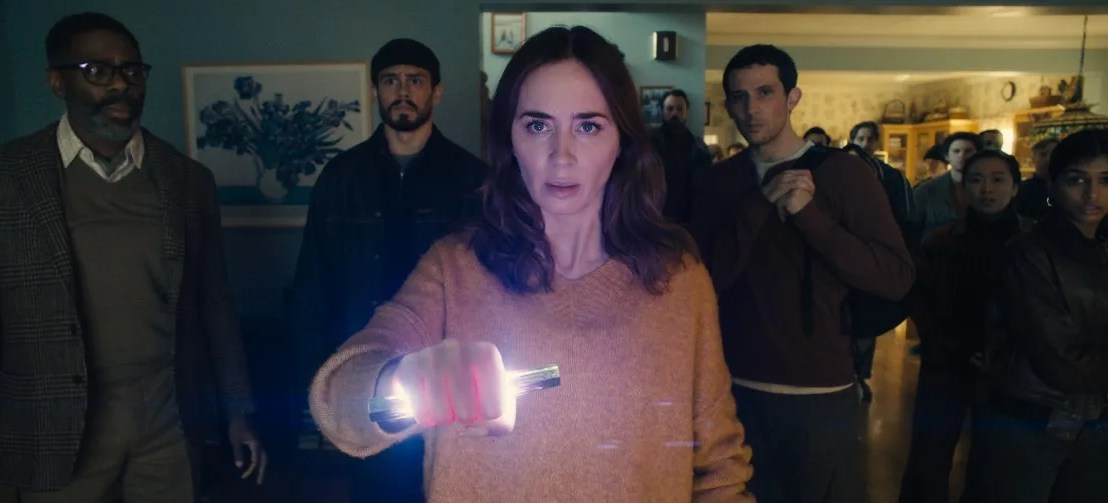
It does start with the sort of guts that you only get after a lifetime of directing mega-hits, throwing us into the middle of the story and avoiding clumsy flashbacks and voiceover and trusting we will catch up as we go. Two very different people find their lives surprisingly changed: Daniel Kellner (Josh O’Connor), a mathematics genius, feels compelled to steal (to release to the public) a mountain of evidence of extra-terrestrial visitations (and our mistreatment of them) hidden by shady corporation Wardex, run by Noah Scanlon (Colin Firth). And TV weather presenter Margaret Fairchild (Emily Blunt) suddenly finds she has the ability to know people’s whole live stories just by looking at them and to speak every language fluently, including a clicky alien dialect that sounds like dolphin chat but is clearly not of this world.

This forms the set-up for a mix of chase movie and earnest plea for patience, understanding and togetherness that feels very in-tune with Spielberg’s greatest hits. Disclosure Day is set in a world where, playing in the background of many scenes, the world teeters on the edge of World War Three – right down to panicked small-town citizens stripping a convenience store to the bones. There is a half-formed argument bubbling here about whether the world is ready for the revelations to come. Will it tip everyone into destructive panic? Eve Hewson’s Jane, a former novitiate, worries it could lead to a brutal shattering of faith – and rightly argues Daniel would have responsibility for the possible negative effects that might come out of whistle-blowing.

It’s avoiding this that is the justification used for by Wardex, our sinister corporation, with its small private army that uses its control of alien tech to call the shots with the government and hunt down whistle-blowers. They are represented by Colin Firth, perfectly cast as an imperiously gruff corporate suit who has just enough humanity bubbling under the surface to make you believe he regrets the things he does. Wardex uses alien mind-control tech, to form a psychic bond with people over great distances, something akin to heightened interrogation and mind-control. These sequences are the film’s stand-outs, Spielberg skilfully using simple effects (both parties pupils switch colour to a sky blue) and effective editing to cross-cut between two people talking while their bodies are miles apart (and he cleverly shows the punishing impact – especially on Firth of the strain of using the device) – as well as the creeping, unsettling horror of mind control pushing people to do and say things they don’t want to do.

It’s a perversion of what Disclosure Day holds up as the alien’s evolutionary advantage: their empathy. That’s the root of Margaret’s powers, which come so naturally to her that when she drops into Russian from nowhere when talking to her slacker boyfriend (a good performance of unreliable decency from Wyatt Russell) or enters into a long fast-paced Korean conversation with a visiting professor in her TV studio (so fast, the official translator can’t even keep up), she doesn’t even notice she’s not talking English. Similarly, her ability to “see” people’s lives – allowing her to offer small titbits of immediate advice that instantly disarm everyone she meets – happens so naturally, it takes her few moments to notice and become scared by her insight.

Her mixed feeling about these skills – which sometimes seem like a blessing and others a terrible curse – are beautifully played by Emily Blunt, who gives a stand-out performance of a driven, successful woman, increasingly terrified but still resolute in the actions she feels compelled to do. Blunt is able to handle the emotion and distress, as well as deliver on the comedy (there is a very funny sequence where, in pelting rain, she grows increasingly frustrated by Jackson’s inability to crush her phone by driving over it with her car). She finds a great deal of sensitivity and gentleness in Margaret, who mixes responsibility, fear, anxiety and exhilaration.

This all comes together very well in the momentum-packed first-half of the film, which sees Margaret and Daniel (a decent performance by Josh O’Connor, that largely fails to really stretch him) travelling together. It’s crammed with inventively shot sequences, such as Daniel and Jane’s escape from a blown countryside safe-house – a brilliant sequence of tracking camera-shots, inventive angles and nerve-tangling tension, helped by O’Connor’s rather sweet nervous fear (“What am I doing?”) throughout. Match that with Margaret’s engrossing pilgrimage across country, and the fascinating use of the alien bond-control device and it makes for a film that sets up a lot of interest.

It’s a shame then that the second half never quite pays this off. As the film proceeds, it feels compelled to start answering the questions that have been bubbling under most of its chase. It’s here the film’s deliberate narrative card-holding starts to work against it. Since our heroes don’t even fully know the questions they should be asking, Colman Domingo’s whistle-blower has to both ask them and then immediately answer them. It leads to a long ‘revelation’ scene, that rather overwhelms us with points about our heroes’ backgrounds stretching back to their childhood that feel both rather heavily delivered and not quite engaging enough.

It also builds towards a sort of modern recap of the ending of Close Encounters, but this time in a TV studio – and it’s interesting to see that Spielberg perhaps still believes that a TV news programme showing footage of aliens would be instantly trusted the world over, without any talk of AI fakery. This long sequence, spooling out the whole backstory of the film’s close encounter phenomena is also similar to Close Encounters in the sense that it’s a simple presentation – but differs in that it lacks the awe-inspiring scale and spectacle of that movie. Without it, it feels somehow slightly drier and more earnest, rather than carrying the sort of magical force the film needs.

It’s part of a sense that Disclosure Day throws a lot of complex stuff at us – our place in the universe, ability to empathise, the potentially dangerous impact revelations can have – but lets these drift away, in favour of a more reassuring and slightly simplistic ending that leaves you feeling its points have been underexplored. This is slightly more disappointing because there has been so much good stuff in Disclosure Day – Blunt is excellent, Hewson and Firth are very good, the direction and film-making on show is first class – but there doesn’t feel like a fully satisfying conclusion is found for everything we have seen.

The Smashing Machine (2025)

The Smashing Machine (2025)

Johnson goes for Oscar in a mediocre film that arguably shows his limits as an actor not his depth

Director: Ben Safdie

Cast: Dwayne Johnson (Mark Kerr), Emily Blunt (Dawn Staples), Ryan Bader (Mark Coleman), Bas Rutten (Himself), Oleksandr Usyk (Igor Vovchanchyn), Lyndsey Gavin (Elizabeth Coleman), Satoshi Ishii (Enson Inoue), James Moontasti (Akira Shoji)

Mixed Martial Arts is big business today. The Smashing Machine makes a point of stating its stars are internationally known, earning millions of dollars. Making them not too dissimilar from The Smashing Machine’s star (and guiding light) Dwayne “The Rock” Johnson, who achieved both these in MMA’s ‘scripted’ sibling Professional Wrestling. It’s a knowledge the film is banking on, as Johnson plays Mark Kerr a leading MMA fighter from that period in the late 90s when men were willing to have several layers of shit kicked-and-punched out of them for a few thousand dollars and a dream.

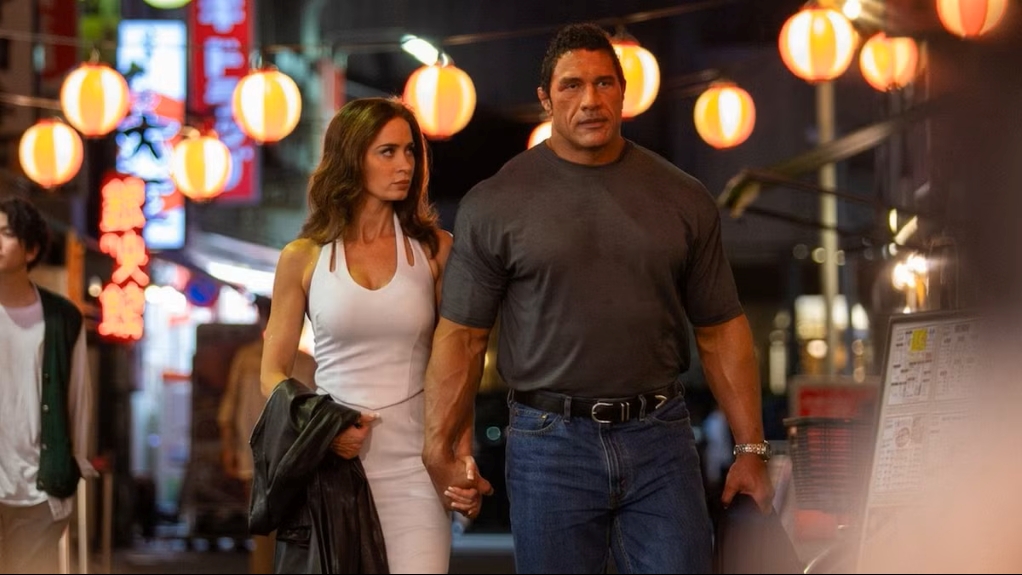
Kerr is one of the big draws of MMA, an affable six-foot mountain of muscle who (when not brutally beating others in the ring) is a hulk of likeability. But he’s got problems – for starters a growing reliance on opioid painkillers and a relationship that’s two thirds self-destructive to one-third mutually dependent with girlfriend Dawn (Emily Blunt). The Smashing Machine covers Kerr’s getting clean, the break-up and return of his volatile relationship and his shot at 2000 MMA title in Japan in 2000 that could land him $200k.

The Smashing Machine covers all this in a deliberately distanced, low-key style. It nominally follows sports film structure (triumph, failure, re-build, some level of success), trudging along the Rocky template. But Safdie avoids exploiting the genre’s strengths (the highs and joys and it’s emotional release) in a way that is both admirable and makes The Smashing Machine a less engaging or interesting film than you keep expecting it to be. It’s almost a point-of-pride that the film avoids the obvious, but instead languidly leaves things unsaid, or skims lightly over key plot developments, as it spools out accompanied by an incessant jazz soundtrack. But it’s not always a strength.

What it fails to do is find something sufficiently interesting or compelling to take their place. It has all the surface appearance of raw, true-life drama: the jerky camera-work, jazzy score, muted colours, roughed-up actors – but is constantly too distanced and cautious to be truly raw. It (perhaps admirably) doesn’t want to be seen to exploit Kerr, but by playing down his struggles (or rather, boiling them down into neat little scenes ripe for “For your consideration” Oscar clips), it also makes them frequently feel like not that much of a deal. On top of this, the underlying desperation that could have been there in a film where people submit themselves (effectively) to ruleless cage fights like wage-slave gladiators never gets an airing.

It doesn’t even really explore the dark nature of the ‘romance’ at its heart, a relationship which seems categorically a ‘bad thing’ for both people (a coda reveals they married shortly after reuniting after the ballistic, emotion-packed row that is their final moments here – and separated within six years). This is a relationship where the two are never on an equinox. When Mark is in the depth of addiction, Dawn is both afraid of his drugged-out distance and enjoys his small-boy-like need for her affection. When he’s clean, Mark sermonises sanctimoniously while Dawn doubles down on drinking and pill-popping in front of him (“that’s not nice” Mark chides her, sounding like a disappointed child).

But, despite the disapproval hinted out from all the other characters in the film, The Smashing Machine shies away from really addressing this dangerous relationship, making it feel more like a formulaic awkward-love-story, rather than being braver with a harsh truth. In fact, that passionate heated romance, ends up feeling like somewhere between a rather forced series of contrived, manipulative moments (that have no real pay-off) and a firey acting exercise between two performers who trust each other.

Lack of bravery soaks through the whole film, a muted awkward affair where you feel different hands pulling in different directions (an on-the-nose commentator explains all the MMA action to us, as if a producer watching a late-cut was worried it would otherwise make no sense). It’s part a quiet, off-the-wall, yanging-when-it-could-ying serious character study (the Safdie side perhaps), part an Oscar bait slice of true-life heroism (the Johnson side).

Ah yes, the Oscar bait. Much play was made of how far Johnson was willing to move out of his comfort zone and cast aside the action that made him a star. However, for me, what The Smashing Machine reveals is the limits Johnson is willing to go too as an actor. The Rock doesn’t do vulnerability even when playing a beaten-up drug-addict in a borderline-mutually-abusive relationship (all the head-in-his-hands scenes weeping can’t change this, and Johnson delivers these moments like acting assignments rather than with true emotion). Johnson won’t sacrifice his strength of character to play a truly weak man: Johnson might punch a door apart, he never feels comfortable embodying a man who was at time selfish, self-destructive or foolish. Johnson prefers a Kerr who is always, in some degree, strong (even when whining at a loss, he does it with real commitment).

His partnership with Emily Blunt doesn’t help him: Blunt is far more skilled at creating a nuanced character, someone who weeps with pain at Kerr’s drug use and then later performatively rages at him for being boring when he’s clean. She’s not afraid to explore the darker, less flattering areas in the way Johnson doesn’t want to. Johnson makes the mistake of many in thinking real acting is starring soulfully and having a cry. What he doesn’t do is really commit to transforming his soul and persona: for all the wig, this always feel like a performance as in-control and carefully studied as Johnson himself is. The Smashing Machine shows that even a piece of against-type Oscar-bait is still fundamentally part of the same Johnson-branding exercise, another brick in the persona wall of a determined, charming high-achiever.

You can’t say as much for the film. An average film, lacking spark, energy or interest that can’t make up its mind about whether it wants to be low-key tragedy or a heroic tale of redemption. It says a lot that its most powerful and affecting moments are its closing ones, as we watch the real Kerr shopping in 2025, utterly anonymous, chatting pleasantly with staff who don’t know who he is before he breaks the fourth wall to wave us goodbye. In these minutes, the film clicks with a force nothing else in it manages. Shame you need to wait two hours for it.

The Fall Guy (2024)

The Fall Guy (2024)

Very enjoyable action caper and also a rather sweet tribute to the unsung heroes of filmmaking

Director: David Leitch

Cast: Ryan Gosling (Colt Seavers), Emily Blunt (Judy Moreno), Aaron Taylor-Johnson (Tom Ryder), Hannah Waddingham (Gail Meyer), Teresa Palmer (Iggy Starr), Stephanie Hsu (Alma Milan), Winston Duke (Dan Tucker), Ben Knight (Dressler)

I’ve seen every single Hollywood Superstar I’ve ever heard of perform miraculous acts of derring-do in front of my very eyes. That all happened right? The camera doesn’t lie! Alas what we saw wasn’t the Legendary Star but instead a well-trained guy, dressed in the same costume, putting life and limb on the line for the big shot. And they don’t even get Oscars for it! The Fall Guy is a witty, exciting and rather sweet tribute to the unsung hero of the movies, the stunt guy, all wrapped up in a pulsating, tongue-in-cheek action-adventure that showcases two likeable stars and, of course, their similarly costumed fall guys.

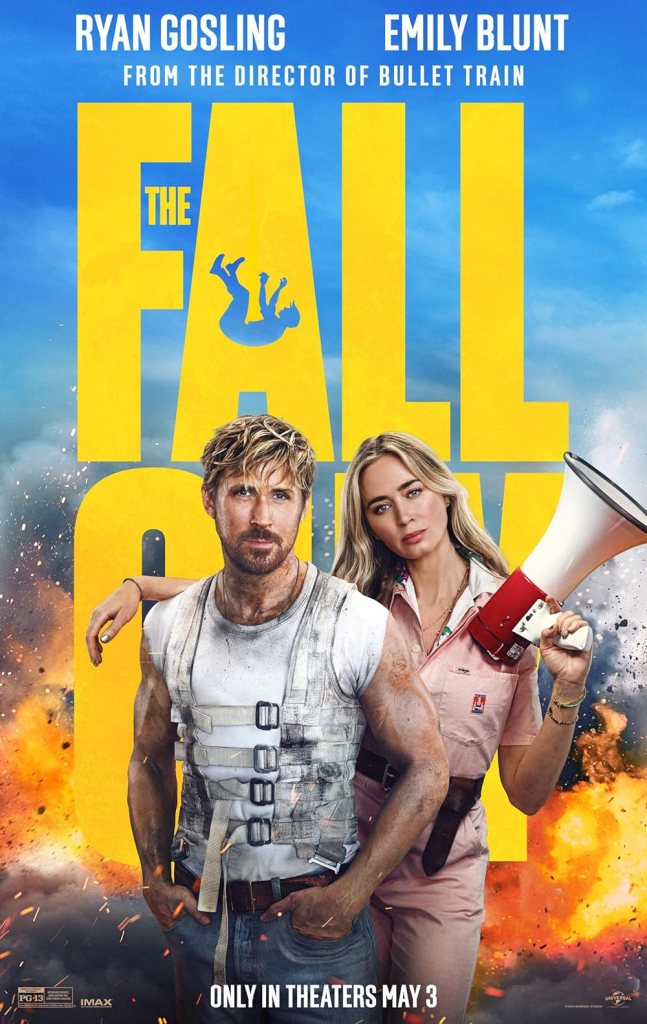
Our hero is Colt Seavers (Ryan Gosling), stuntman of choice for superstar Tom Ryder (Aaron Taylor-Johnson), a spoilt man-child who brags he does his own stunts but can’t cross a road without a double. Colt is riding high, in a promising relationship with cinematographer Jody Moreno (Emily Blunt), until a stunt goes wrong leaving him badly injured. Colt disappears, breaking-up with Jody and wallowing in depression for eighteen months. However, he comes storming back when summoned to Australia by producer Gail Meyer (Hannah Waddingham) who claims Jody personally asked him to double for Tom on her directorial debut, Mad-Max-meets-Independence-Day sci-fi epic Metalstorm. Only turns out she didn’t ask: Colt is in fact tasked by Gail to find the missing Ryder or she’ll be forced to cancel the film and end Judy’s career. Colt soon gets bogged down in drug lords, dead bodies, hitmen who don’t quit and imaginary unicorns. Can he find Ryder and make amends with Judy?

The Fall Guy is fast-paced, loose and funny with a script of punchy Drew Pearce jokes, focused overwhelmingly on giving the viewer a cracking night out at the movies. It leaves very little in the locker room which is fitting for a film is all about celebrating the joy of doing things for real. The Fall Guy pushes the envelope for stunts, be it stupendously high falls, multiple barrel roll cars, furious fisticuffs that use everything going and car chases that leave burnt rubber skid marks on every surface. Basically, it’s a celebration of the art of stunt work, no more than you would expect from Leitch, a former stunt co-ordinator and champion of doing it for real.

It very successfully mixes giddy action thrills with a engaging romantic comedy that uses its two stars to great success. Gosling is relaxed, witty and above all extremely cool, his obvious enjoyment of the material very infectious. Blunt’s comic timing is immaculate. Together their chemistry not only creates plenty of laughs, but makes us invest in wanting them to be together. But The Fall Guy doesn’t just settle for rom-com conventions. A focus of the film is watching Colt get in touch with his feelings (how many other action films feature their stars quietly crying in a car, listening to Taylor Swift?) and accepting his stuntman bravado (it’s the profession where you stick your thumb up at the end of the stunt, regardless what happens) led him to drive Judy away out of twisted shame.

Of course, on the way to getting in touch with his findings, Colt doesn’t half stumble through more than his fair share of brawls. You couldn’t make a film about a stuntman without packing in more death-defying thrills than you can shake a stick at. The Fall Guy delivers two types of stunt thrills. One is the behind-the-scenes on-set stunts Colt executes – death-defying falls, flipping and rolling cars, people being thrown across a field into a rock – where we get to see a few tricks of the trade behind the magic. And then we also get genuine ‘real world’ stunts of epic, popcorn-munching excitement as Colt goes about his search. This is some of the most impressive stuff you’ll see (and its expertly deconstructed in the behind-the-scenes clips that festoon the end-credits), from Colt being hurled and smashed through every inch of Ryder’s apartment to a stunning car-chase that turns into a bare-knuckle dumper-truck fight that’s the film’s mid-act calling card.

The action is somehow even more enjoyable because of the world-weary comedy Ryan Gosling plays it with. After all, being thrown into situations like this is bread-and-butter for Colt, so whether its spending a fight protecting an elusive jet-lag-defeating espresso or working out exactly when he to jump into the road to collide with a car, everything is met with a semi-resigned shrug. He also gets some excellent partners-in-crime, trading stunt-movie facts with colleague Dan (a very funny Winston Duke, shouting the name of the Hollywood stars whose signature moves he’s replicating during fights) and, perhaps best-of-all, a French speaking stunt dog called Jean-Claude who Colt treats like a friend (a dog that bites people in the groin shouldn’t be as funny as this, but I must have been in the right mood). The final battle also sees Colt call on an army of fellow stunt-people.

It makes sense in a film that celebrates this brotherhood. When Colt and the team are working on set, The Fall Guy centralises their creativity and commitment. The shooting of a Metalstorm battle scene is hugely improved by Colt and the team pushing the envelope with suggestions and improvements to the rudimentary script and the whole crew is scrupulously dedicated, professional and committed.

The real threats in The Fall Guy are the things that work against this. Special effects and deep fakes (whch plays into the film’s neat double-meaning title) are the tools of the villains and, in a wider sense, kill the flesh-and-blood of film-making. Hollywood stars and bottom-line Hollywood suits with no respect for the craft are the baddies. Aaron Taylor-Johnson has a lot of fun in a role that parodies almost every star you can think of (Tom Cruise is twice specifically named in the film, as if to stress for the laywers Tom Ryder is not him) while Hannah Waddingham is a smilingly heartless producer, never seen without clutching an oversized diet coke.

The Fall Guy is, above all, a film designed to cheer you up no-end. Crammed with sharp one-liners, expert sight gags and thrilling stunts with a cast having an absolute ball in their roles, it’s the sort of treat that will be remembered long after its slightly disappointing box-office haul has been forgotten.

Oppenheimer (2023)

Oppenheimer (2023)

Nolan’s masterful musing on the morality of science is both challenging and compelling

Director: Christopher Nolan

Cast: Cillian Murphy (J Robert Oppenheimer), Emily Blunt (Kitty Oppenheimer), Matt Damon (General Leslie Groves), Robert Downey Jnr (Lewis Strauss), Florence Pugh (Jean Tatlock), Josh Hartnett (Ernest Lawrence), Casey Affleck (Colonel Boris Pash), Rami Malek (David Hill), Kenneth Branagh (Niels Bohr), Benny Safdie (Edward Teller), Dane DeHaan (General Kenneth Nichols), Jason Clarke (Roger Robb), David Krumholtz (Isidor Issac Rabi), Tom Conti (Albert Einstein), Alden Ehrenreich (Strauss’ aide), Gary Oldman (President Truman), Jefferson Hall (Haakon Chevalier)

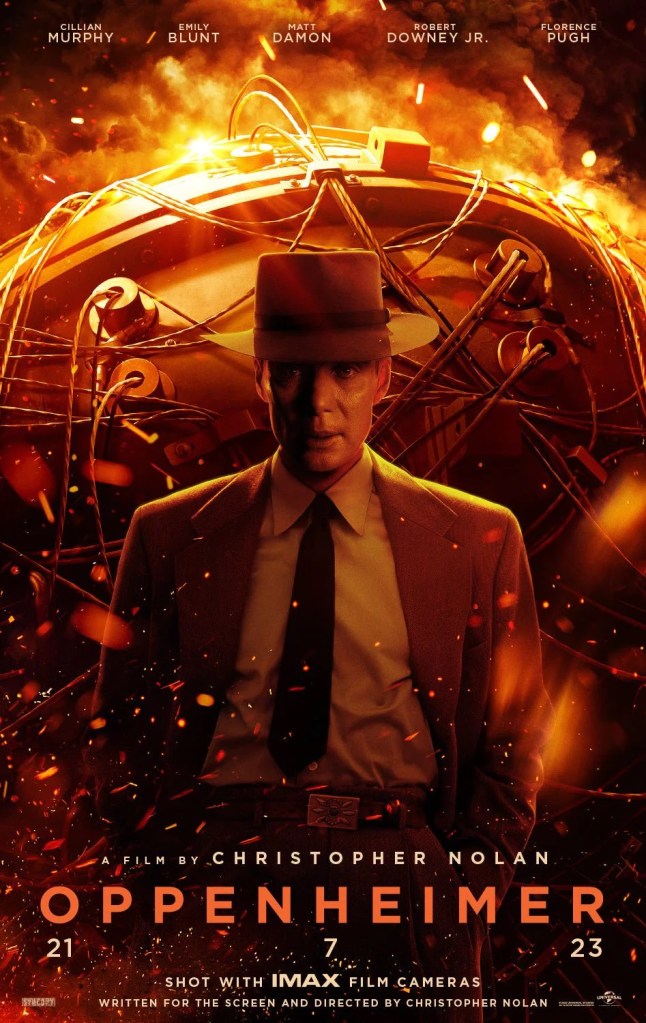
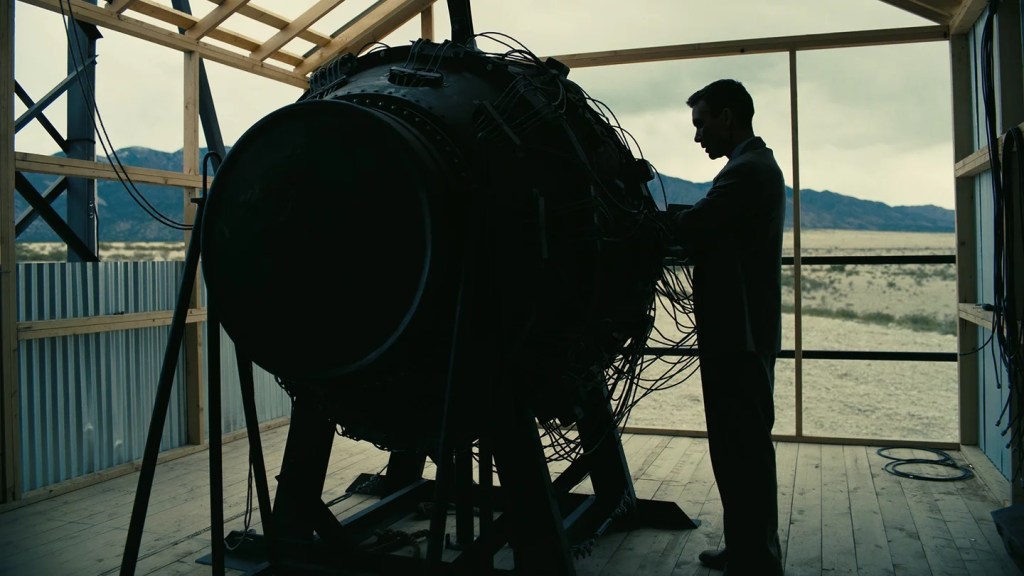
“I am become Death, the destroyer of worlds”. These words from The Baghavad Gita are synonymous with J Robert Oppenheimer, director of the Manhattan Project as he witnessed the destructive force of his creation, the atomic bomb. Fittingly, Nolan’s fascinating and ambitious film opens with a reference to Oppenheimer as Prometheus: the man punished for all time for stealing fire from the Gods. Oppenheimer uses everything from thriller to courtroom drama, to explore the moral responsibilities of science: if we can do a thing, does it follow that we must?

J Robert Oppenheimer (Cillian Murphy) is a Renaissance man and leading theoretical physicist who dabbled more than a little in left-wing politics. The woman he loves, Jean Tatlock (Florence Pugh), is a die-hard communist, the woman he marries Kitty (Emily Blunt) is a former party member, his closest friends are all members. Associations like these will later haunt him after he is approached by General Leslie Groves (Matt Damon) to use his organisational skills, political savvy and charisma to run the WW2 nuclear programme where maverick scientists work hand-in-hand with the army. Despite his position, Oppenheimer remains untrusted by many. In the aftermath of the war, these suspicions will be used by his opponents, among them Lewis Strauss (Robert Downey Jnr) ex-head of the Atomic Energy Committee, to bring about his downfall as Oppenheimer preaches disarmament.

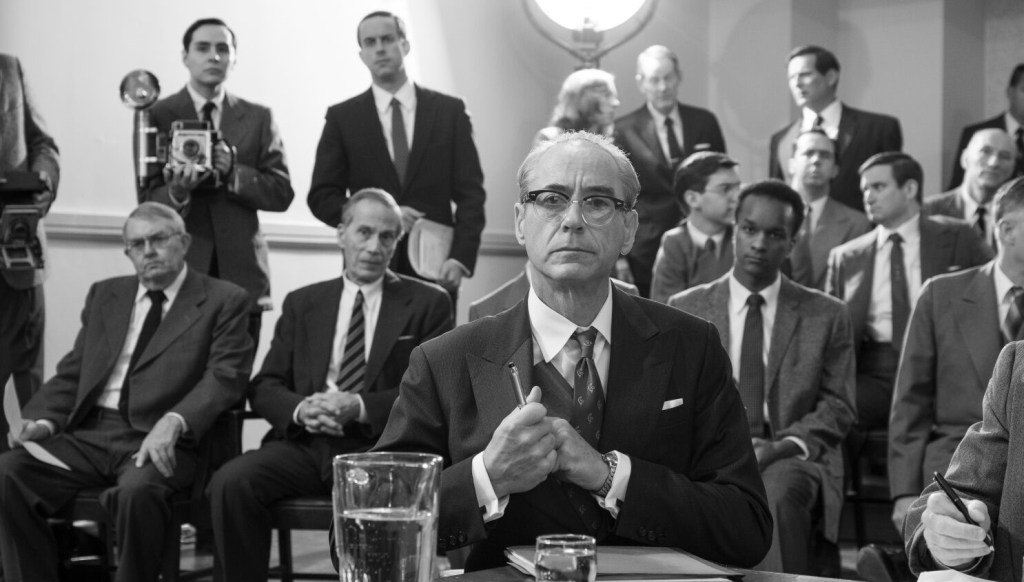
Much like Dunkirk, Oppenheimer is told in two timelines, intersecting with scenes replayed from different perspectives in subtly different ways. In “Fission” we see Oppenheimer, effectively on trial in 1954 for his security clearance, recount his life story, chronological flashbacks taking us through the development of the bomb. In “Fusion”, shot in gorgeous black and white, we follow the 1959 senate hearings to confirm Strauss in a cabinet post, and see his reminiscences of Oppenheimer’s post-war struggles to control the monster he has unleashed.

Oppenheimer is a brilliantly made, cinematically adventurous film: you would, of course, expect nothing less from a distinctive talent like Nolan. Brilliantly intercutting multiple timelines, it’s a film that is as much an experience as a story. This is a behemoth, filled with moments of flair and breath-taking use of sound and vision to affect mood. In particular, the film’s oppressive sound design bears down on the viewer like the pressure of the bomb itself. This means moments when we are released from its grip carry real impact. As Oppenheimer – already plagued with doubt – triumphantly announces the successful use of the bomb, the war-like celebratory pounding of scientists’ feet disappears from the soundtrack leaving Oppenheimer’s words echoing impotently around the room.

The pounding score and epic, sweeping camerawork (even more striking, since so much of the film takes place in small rooms filled with conversation) help Nolan to build up Oppenheimer’s mythic status and simultaneously strip him bare. Literally so at one point as, when questioned on his sex life in his hearing, Oppenheimer is seen naked in the room (as exposed as he must be feeling) answering questions with a naked Jean Tatlock astride him, staring into his wife’s eyes.

Oppenheimer labours, with the best intentions, to create a weapon before the Nazis. In its middle act, Nolan’s film focuses on the propulsive excitement of creation. The thrill of obstacles being overcome and solutions being found. The joy of a diverse team coming together for a single goal. We find ourselves longing for problems to be overcome, swept up in the desire for the endgame, as anxious as the scientists when it looks like rain will prevent the vital first Trinity test of the bomb.

Oppenheimer feels the same. Powerfully, intelligently and magnetically played by Cillian Murphy, this is a man who is a host of flaws crammed with impossible genius. A charismatic room leader, who is awkward in personal interactions. A charmer who rudely fails to remember his brother’s girlfriend’s name at a party. An inspiring leader who alienates people with ease. Murphy captures every inch of Oppenheimer’s staggering intellect and delight in intellectual problems, just as he also embodies the man’s arrogance and crushing self-belief.

So, it’s as crushing to him as it is terrifying to us, when the bomb explodes and the realisation hits us. Nolan’s sensory experience of a film fades down to silence as Nolan lets the camera float across the all-consuming fire of the silent explosion (the noise only comes when the shockwave hits) and suddenly the chilling implication of this terrible weapon becomes clear. This is a device that will kill millions. Oppenheimer knows it: he slowly shrivels into haunted guilt, Murphy seeming to shrink into himself as he finally understands what he has done.

Images of nuclear destruction both obvious (ashen bodies and nuclear flashes) and subtle (the out-of-focus vibration of background around Oppenheimer, as if sensing an approach shockwave) will haunt him and us for the rest of the movie. While many scientists – foremost among them Benny Safdie’s bull-headed Edward Teller and Josh Hartnett’s WASPish but decent Ernest Lawrence – feel little guilt. But Oppenheimer, and we, can no longer avoid questions of moral responsibility raised by those such as Niels Bohr (a quietly effective Kenneth Branagh).

Are there some discoveries better not made? Because once the genie is out of the bottle, it cannot be stuffed back in again. In this new world every world power must always have more. More bombs, bigger bombs, better bombs. And it explains why, like Prometheus, Oppenheimer must be punished. The tool of his punishment being his communist sympathies, embodied in his yearning attraction to Jean Tatlock (an under-used Florence Pugh). Nolan’s film is very strong on the terrifying paranoia of the secret state, where every word or association can be collected into a terrible portfolio of witnesses you cannot question, evidence you cannot see, testimony you cannot hear.

“Why don’t you fight” cries his wife Kitty, played with a dynamic, intelligent forcefulness by Emily Blunt. I could have done with a third act built more around Blunt’s starkly honest betrayal of a woman ill-suited to being a wife and mother, trapped in a world where that is all women can achieve (and which also trimmed a few witnesses from Oppenheimer’s trial). Why doesn’t Oppenheimer fight? Nolan has his theories, carefully seeded and confidently revealed.

Oppenheimer’s post-war clashes cover much of “Fusion”, anchored by a superbly under-playing Robert Downey Jnr (his finest work since Chaplin) as the outwardly avuncular, but inwardly insecure and bitter Strauss, who sees Oppenheimer as the embodiment of all the elitists who turned their noses up at him (no matter that Oppenheimer himself is an outsider, in a world of science run by WASPish types like Lawrence). Nolan’s film explores how morality is forgotten in an environment so rife with paranoia that the slightest expression of doubt is seen as treason.

Nolan’s film needs its vast runtime to keep as many balls in the air as it tries to. It’s probably a few too many balls. I would have loved more on Oppenheimer’s outsider status, as a Jew in American science (its not mentioned that the J stands for Julius, despite his claims it stands for nothing). Similarly, I would have welcomed more time to explore Oppenheimer’s complicated emotional life, in particular the fascinatingly complex relationship of some love, a fair amount of mutual respect and a large measure of mutual convenience with his wife Kitty.

But the film’s chilling musing on the horrors science can accidentally unleash while focused on progress is superbly explored and leaves a lasting impact. It’s a feeling that continues to be sharply relevant while we struggle with the implications of AI. Was there a need for the bomb? Perhaps there was. Were we ready for the bomb? No. And it is the failure of anyone, including Oppenheimer, to even consider this until it was too late that is the coldest warning in Nolan’s epic film.

Charlie Wilson's War (2007)

Charlie Wilsons war
Tom Hanks and Philip Seymour Hoffman plot to bring down communism in the misfiring satire Charlie Wilson’s War

Director: Mike Nichols

Cast: Tom Hanks (Congressman Charlie Wilson), Julia Roberts (Joanne Herring), Philip Seymour Hoffman (Gust Avrakotos), Amy Adams (Bonnie Bach), Ned Beatty (Congressman Doc Long), Christopher Denham (Michael G Vickers), Emily Blunt (Jane Liddle), Om Puri (President Zia-ul-Haq), Faran Tahir (Brigadier Rashid), Ken Stott (Zvi Rafiah), John Slattery (Henry Cravely)

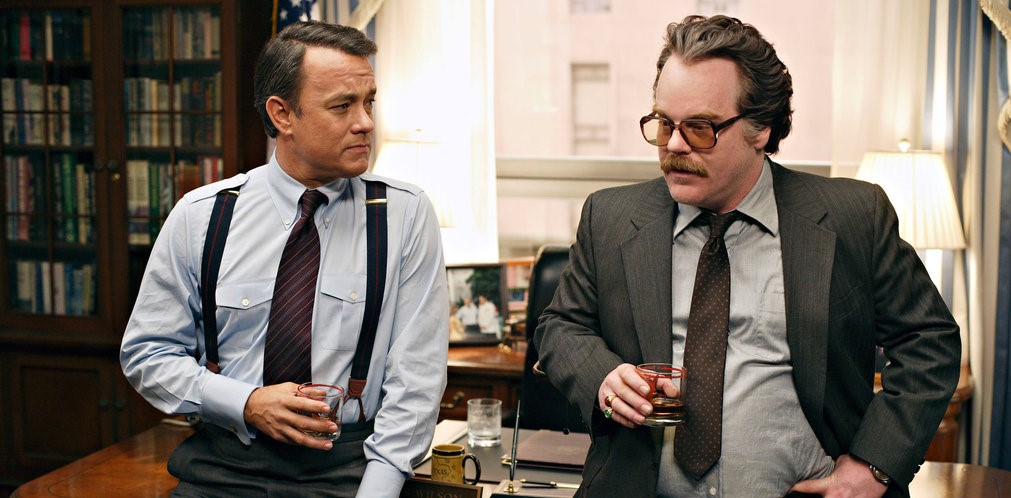
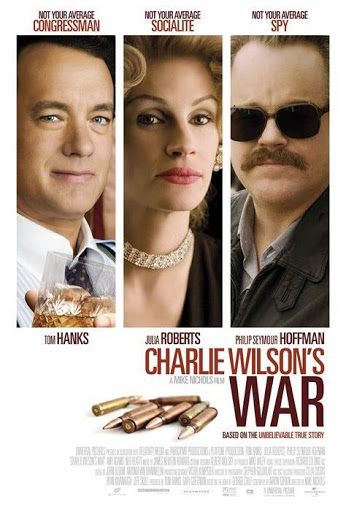
Did Congressman Charlie Wilson (Tom Hanks) end the Cold War? Well no, of course he didn’t. But he might just have managed to make the US notice that Afghanistan had the potential to be the USSR’s very own Vietnam. Despite his reputation as a playboy, Wilson had a shrewd understanding of geopolitics and – encouraged by millionaire backer Joanne Herring (Julia Roberts) and helped by firey CIA agent Gust Avrakotos (Philip Seymour Hoffman) – arranges for money and arms to be pumped into the Afghan Mujahideen throughout the 1980s. Shame that funding stopped just as the Taliban emerged into the power vacuum.

There is a compelling film to be made here around how the US’s short-sighted policies in Afghanistan during the 1980s led to catastrophic implications in the 2000s. This isn’t that film. Instead Nichols – with some playful rat-a-tat dialogue from Aaron Sorkin – settles for a political caper, which only nods vaguely at the future disaster of 9/11 in favour of a feel-good, against-the-odds triumph. It’s a massive shame, as a third act which really embraced how policy failures in Afghanistan contributed to the rise of the Taliban and Al-Queda could have been compelling and thought provoking.

Watching this film you could come away with no real idea why the fighters the Wilson works so desperately to get defensive anti-aircraft missiles to, would end up recruiting young men to fly planes into buildings. The film nods at this, with Wilson failing to raise even a paltry million for investment in education and healthcare in Afghanistan post-Soviet occupation (after raising billions for weapons to fight the Soviets). But we don’t get a sense of the bigger picture here. How did hatred for the Russians, with the Americans as allies, flip into fury at the West? The film doesn’t want to think about it.

Instead this is a light bit-of-fluff. It’s a comic drama of the sort Hollywood loves: the playboy with immense depth. The hero whose heart melts at a refugee camp and dedicates himself to helping people. The film uses as a framing device a medal ceremony, with Wilson being praised for his vital role in bringing about the defeat of the USSR. It’s all feel-good – and for all we see at the end a brief moment of Wilson in tears at his failure to ‘finish the job’ by offering real hope to the Afghans – and that doesn’t feel like the whole story.

There is plenty of comedy though, even if the political awareness is light. Gust and Charlie’s first meeting is a well-staged farce of Wilson juggling geopolitics with heading off oncoming scandal, that requires Gust to frequently step in and out of his office as two different conversations take place. Comic material is mined from Wilson’s handpicked office staff of attractive women who, contrary to expectation, turn out to be brilliantly insightful and hyper-competent. CIA agent Gust is a gift of a role for Philip Seymour Hoffman (who is great fun) as a foul-mouthed, just-this-side-of-OTT maverick who genuinely cares about his job.

Hoffman fares better than the other two leads, both of whom feel miscast. The casting of Hanks and Roberts seems designed to keep a film that could have been a sharp attack on America’s world policy feeling as cosy as possible. After all, this is America’s uncle and America’s sweetheart: they couldn’t be part of geopolitical shenanigans! Sadly, Hanks doesn’t have the touch of smarm and cocksure lightness with depth the part needs (Tom Cruise would have been better). Julia Roberts seems too wholesome for a sexual femme fatale (Michelle Pfeiffer would have been better).

Nichols does keep the pace up and his direction is assured and professional. But this is a strange and toothless film which, after the initial energy of Wilson managing to get the funding the Afghans need, has no idea where to go. So instead it slowly drains out to nothingness. A late scene as Gust explains the dangers of abandoning Afghanistan to the Taliban to Charlie (with the accompaniment of plane sounds on the soundtrack) hints at the film this could have been. But instead, this sticks for being a romp about how an unexpected hero changed the world. The fact it was partly for the worse doesn’t fit this narrative.

A Quiet Place (2018)

John Krasinski needs absolute silence in A Quiet Place

Director: John Krasinski

Cast: John Krasinski (Lee Abbott), Emily Blunt (Evelyn Abbott), Millicent Simmonds (Regan Abbott), Noah Jupe (Marcus Abbott), Cade Woodward (Beau Abbott)

I think we can all agree that 2020 has not been a good year. But it could have been worse: in A Quiet Place, by 2020 mankind has been almost completely wiped out by blind extra-terrestrial alien predators who use their super-sensitive hearing to hunt down survivors. Even Covid-19 doesn’t sound quite as bad as that. To survive demands absolute silence as even the slightest noise could lead to a pack of the ruthless, seemingly invulnerable, aliens descending.

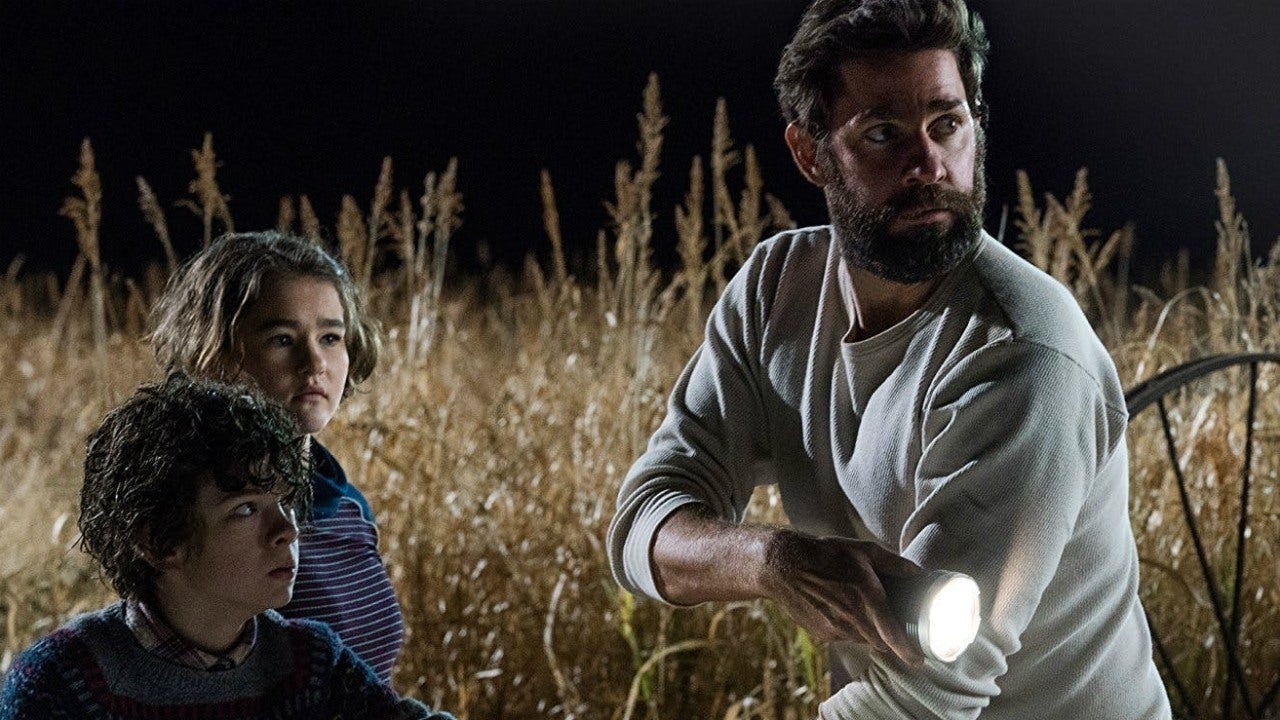
The few survivors include the Abbott family, on an isolated farm somewhere in the American countryside. Father Lee (John Krasinski) has painstakingly converted the house as much as possible into a silent place, with sand on every walking surface outside, sound proofed rooms, batteries out of everything that could make a noise, light and camera warning systems and strict rules on no shoes and no talking – nearly all communication is done in sign language, which the family is fluent in because daughter Regan (Millicent Simmonds) is deaf. But there are troubles on the horizon – not least because Lee’s wife Evelyn (Emily Blunt) is heavily pregnant, and the chances of childbirth – and a new-born baby – happening in silence is dangerously low.

A Quiet Place takes a fresh and ingenious concept and lays it on top of a story that otherwise hits a fair number of expected tropes. But that doesn’t matter too much when the story is told with such freshness and confidence by Krasinski and the idea at its heart genuinely feels like something we’ve never seen before. This is a film where just the very prospect of sound is tense, and noise is the principle villain. And for anyone who’s ever tried sneaking past anything silently, you’ll know how hard it is to say absolutely silent.

The concept means that even the sight of things we know could cause sound builds tension. A nail sticking out of a step to the basement causes huge worry (because we know standing on that barefoot is really going to hurt). The running through a field of wheat suddenly feels like a terrible risk. Just a glass falling off a table could lead to death for everyone. As for the tension you feel at the possibility Evelyn could go into labour and need to deliver a baby in total silence…

It’s the skilful use of everyday concepts like this that gives the film a special sense of dread. This is added to by putting a very clear family unit at the heart of this drama. At root, this is a film about the lengths that parents will go to in order to protect their children and to try and build a safe world for them. Lee is determined to pass on as many of his survival skills to his son, while Evelyn struggles to keep some form of normality going in their home. The family is also coping with deep-rooted grief and unspoken tensions, falling out from the tragic loss of one of their members early in the invasion.

This adds a further generational tension, with the father struggling (on some level) with feelings of guilt at his own failure to protect his family and shamefully feeling some blame towards his daughter for partially causing the events that led to this death. The daughter in turn fears she has lost her father’s love, and can never be forgiven by anyone (including herself) for her mistakes. While there is nothing earth-shatteringly original about this, it helps us to invest solidly in the family and to care deeply about what happens with them.

Krasinski’s direction is sharply acute and brilliantly detailed and his own performance extremely humane and engaging. He also gets an equally fine performance of tenderness and determination from (his real-life wife) Emily Blunt, while the work from Simmonds and Jupe as their children is equally well-judged and excellent. This work is particularly impressive since most of the film takes place in near silence – there isn’t a clearly spoken word of dialogue until almost 45 minutes in and no verbal conversation until nearly the hour mark.

This involving family drama sits very comfortably in the middle of a horror concept. So well in fact that it doesn’t matter that much of it pretty unoriginal or even a little predictable. After a first reel shock, the film settles into more expected rhythms. There are certain gaps that raise questions – I had to wonder how Lee and his family managed to build so much in this collection of theme houses while making no sound at all? While the weakness of the creatures seems so obvious, I’m amazed that it was never stumbled upon while governments and the military fought against them.

But that doesn’t matter too much when A Quiet Place is largely an involving thrill ride with emotive characters whom you care deeply about. And on that score, Krasinski has made a fine horror thriller with a concept that will make it stand out in the memory from other genre pics.

The Devil Wears Prada (2006)

Meryl Streep on demonic good form in The Devil Wears Prada

Director: David Frankel

Cast: Meryl Streep (Miranda Priestly), Anne Hathaway (Andrea Sachs), Emily Blunt (Emily Charlton), Stanley Tucci (Nigel Kipling), Simon Baker (Christian Thompson), Adrian Grenier (Nate Cooper)

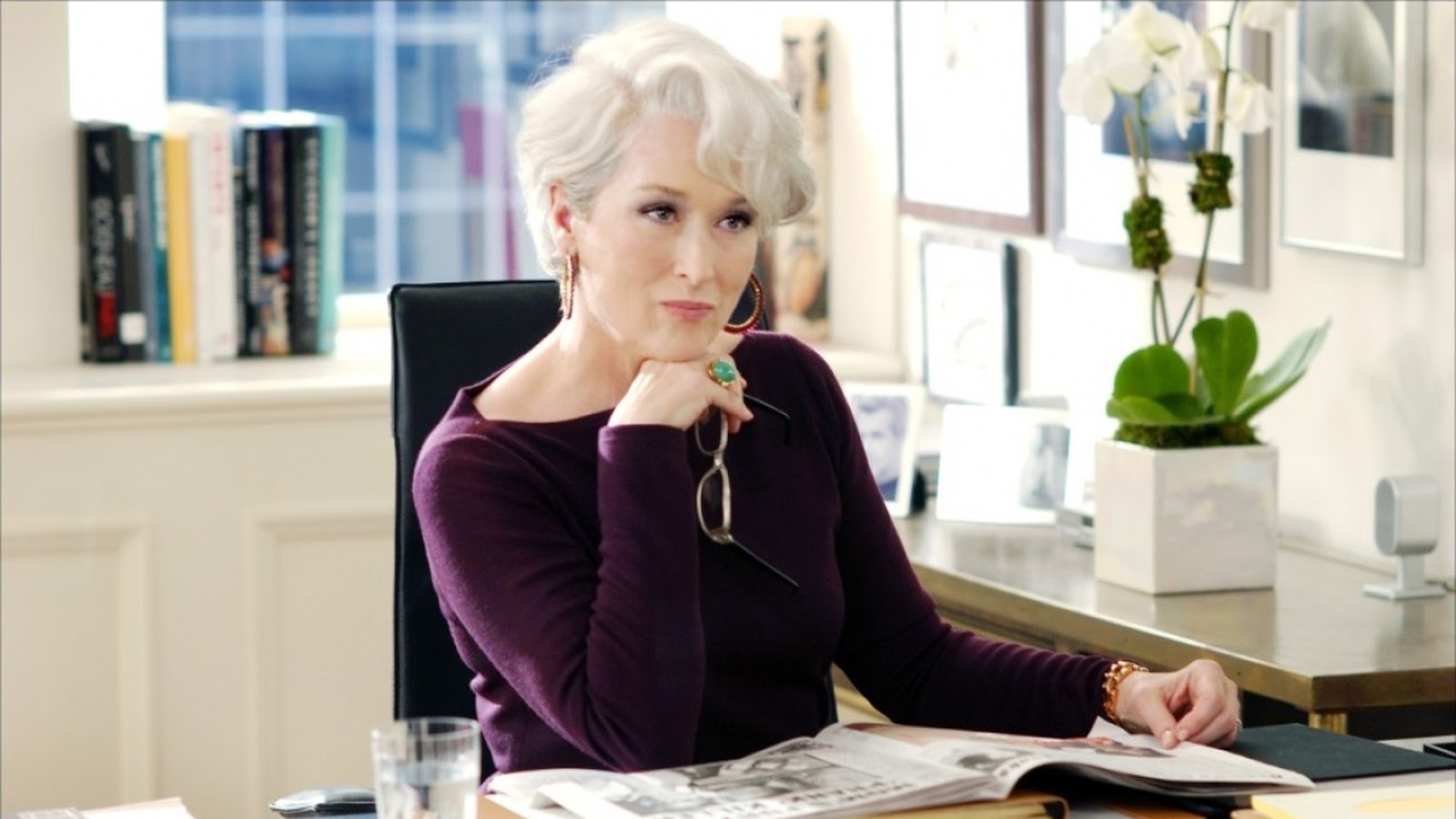
Miranda Priestly (Meryl Streep) is the lord of all she surveys. Ruling the fashion industry from the editorial office of her magazine Runaway, she can make or break careers with a pursed lip or a raised eyebrow. And, while barely raising her voice beyond a whisper, she expects total obedience and deference in the office, with her assistants little better than personal slaves. It’s a tough world for wannabe journalist Andrea (Anne Hathaway), hoping for a big break from her connection with Miranda. Andrea looks down on the world of fashion, and longs for a serious journalism career – but will her ideals survive the temptations on offer… 

The Devil Wears Prada is your pretty standard morality tale of the moth brought too close to the flame: the hero struggling to resist the temptation to jack in their principles and dreams in order to win the praise of a domineering bully and secure riches and fame. We’ve seen it all before, and to be honest TDWP doesn’t really do anything different from this formula, other than introduce it into the world of fashion and making both the tempter and tempted a woman.

And it works where it does because it has some pretty impressive women in these roles. None less than Meryl Streep, who seizes on the role with a quiet relish and has the confidence to underplay scenes that lesser actresses would tear into as if their only dinner that day was the scenery. What’s notable about Streep’s Miranda is that she is so calm, so quiet, so assured, so unflustered that she only needs the slightest gestures and hints to break people around her. It’s the ultimate confidence that comes from supreme power – she knows she never needs to raise her voice, that people will fall silent to listen to her. Streep also mines her considerable comic talent to lace her many moments of cruelty and selfishness with an arch, dry humour.

It’s no wonder poor Andrea has such a rough time in this film. Only in Hollywoodland could Anne Hathaway be considered a dumpy frump, but the styling of her as a someone with no sense of fashion whatsoever (at least initially) does at least make her stand out from the rest. Andrea’s plotline follows what so many other “moth to the flame” plots have followed, moving from snide indifference to her job to all consuming obsession as she begins to parrot the same values and opinions of her master. She even has a partner (usually the woman’s role, so very nice to see it reversed) who complains about her not being at home enough.

The film avoids cheap shots at fashion as well which is refreshing, stressing at every point that it is a world of legitimate art and expertise and has made an important contribution to the culture and society of the 20th century. No wonder so many fashion famous faces cameo. Andrea’s scornful disregard for fashion is punctured early on as being an inverted snobbery and part of her desire to project an image of herself. 

The real issues here are workplace bullying – although the film never really delves into it that much and is eager to leave no real resolution. Emily Blunt – who is extremely good, with more than a hint of desperation and depression under her cool, arch, British exterior – as Andrea’s fellow assistant shows early on how environments like this chew people up and force them to become sharks or die. It’s a suggestion the film is not keen on exploring in real depth though, preferring a far lighter, more traditional story as we wonder whether Andrea will be seduced by the darkness or will return to her roots of integrity and journalism (one guess which way she goes).

Even at the end though, Andrea is still desperate in some way for Miranda’s approval and to be acknowledged in some way by her. It’s a feeling that the film shares. It wants Miranda to turn to it and praise it, it’s scared of really calling her out on her behaviour, instead wanting to cut her as much slack as possible. It wants to see her triumph and, even at the end, to take a wry pleasure from Andrea forging her own life. It’s as besotted with her as the characters are, and for all it shows that Andrea doesn’t do well from spending time with her, it still seems to want to show that under it all “she is human”. It dodges the bullet of actually dealing with bullies and monsters, and instead takes the line of saying “yeah sure she was bad, but she had great style so you can’t not like her.” Which means, in a way, it follows the same line that in real life allows charismatic geniuses in the workplace to continue behaving any way they like.

Which isn’t to say this isn’t a fun film with decent performances and lots of good jokes. Streep gives Miranda a huge degree of depth – we have moments of her loneliness and isolation from her family – but it’s a film that could have done more to show the negatives of how working lifestyles like these affect people. I guess that would have made it less fun though.

Mary Poppins Returns (2018)

Emily Blunt is practically perfect in every way in Mary Poppins Returns

Director: Rob Marshall

Cast: Emily Blunt (Mary Poppins), Lin-Manuel Miranda (Jack), Ben Whishaw (Michael Banks), Emily Mortimer (Jane Banks), Pixie Davies (Annabel Banks), Nathanael Saleh (John Banks), Joel Dawson (Georgie Banks), Julie Walters (Ellen), Colin Firth (William Weatherall Wilkins), Meryl Streep (Topsy), Dick van Dyke (Mr Dawes Jnr), David Warner (Admiral Boom), Jim Norton (Mr Binnacle), Jeremy Swift (Hamilton Gooding), Kobna Holdbrook-Smith (Templeton Frye), Noma Dumezweni (Miss Penny Farthing)

Some sequels go into production even before the first film hits the cinemas. Others give you a good long wait – and Mary Poppins has had you waiting 54 years. Of course, part of that was down to her creator, PL Travers. Travers so hated the Disney original (I mean, she really hated it) she outright banned all other adaptations of her work – but her estate were far more open to the prospect (and let’s be honest, probably also to the money) that Disney could finally go ahead with a sequel.

And thank goodness for that, since this delightful film is practically perfect in every way. It’s 25 years since the events of the first film, and Michael Banks (Ben Whishaw) is now a widower with three children, whose home is about to be repossessed by the bank for non-payment of loans. His sister Jane (Emily Mortimer) is trying to help, but the pressure and sadness are showing on Michael and are forcing his children Annabel, John and Georgie (Pixie Davies, Nathanael Saleh and Joel Dawson) to grow up fast. The Banks family is in trouble – so it’s the perfect time for the arrival of Mary Poppins (Emily Blunt) to save the day – with a little bit of help from gas-lighter Jack (Lin-Manuel Miranda).

Mary Poppins Returns is a triumphant mix of nostalgia and originality, that walks a very difficult tightrope between being a loving pastiche and tribute to the original film while also managing to bring its own original charm and magic touch. That’s a difficult trick to pull off – but it basically takes a slight remix of the original film’s story and adds a heft of emotional impact to create something that feels modern and fresh while also being very close tonally to the original.

This is never clearer than in Emily Blunt’s sublime performance as Mary Poppins. If there is anyone who had a more difficult job in this film than Blunt I can’t think of them. She had to take on the most iconic character of an iconic actress – and does so brilliantly, but creates a character who feels an equal mix of both Andrews and Blunt. This is clearly the same character as before, but Blunt mixes in a wonderful heart-warming care and concern under the pristine English exterior that melts the heart. She has a glowing twinkle to her, an almost bottomless charm with an endearing delight for the wonder and silliness that is part of Poppins world. And boy can she sing and dance? She carries the film with effortless grace – to such endearing effect that, just like with Julie Andrews, you miss her as she becomes less prominent in the final act.

And of course she is matched by a superb company of actors. Lin-Manuel Miranda makes the transition to the big-screen like a duck to water, hugely loveable, wonderfully charming and superb (as you would expect) at the musical sequences. The three children give exemplary performances, with never a hint of sickly sentimentalism. Emily Mortimer is radiantly giddy as Jane, while Ben Whishaw will bring a lump to the throat as a Michael who is struggling under a huge amount of grief.  That’s not the mention wonderful turns from the whole of the cast, especially from Holdbrook-Smith as a kindly lawyer.

All these actors are “marshalled” brilliantly by director Rob Marshall. With his experience of musicals – both on screen and stage – Marshall knows his stuff and brings all his experience to bear here to create a sequel that will be seen (I’m sure) as a worthy companion to the original. Marshall’s direction of the musical sequences is faultless. He knows exactly how and where to place the camera for maximum effect, and gets just the right tone and mood from these scenes. He’s also, let’s not forget, a brilliant choreographer and has put together some exquisite sequences, not least the lamplighter song Trip the Light Fantastic, a whirligig showstopper of a number that if you saw it in the West End would have the whole crowd on their feet.

The songs make for easy criticism (reviewers seem duty-bound to say they are not as good as the original) – but to these ears Marc Shaiman and Scott Whitman’s songs and scores are both catchy and engaging. Give them time and I’m sure you’ll find them as replete with impact as the Sherman brothers’ tunes from 1964. Saying that, there might be one musical number too many – but that’s a very minor criticism. 

Because this is a film that gets so much else right. The storyline is certain to leave a lump in the throat, with its delicate handling of grief and the sadness both of growing up and also children being forced to leave their childhoods behind in impossible circumstances. These are universal themes – and they certainly impacted on me, and on a cinema packed with families all of whom were engrossed. That’s part of the magic of what Marshall has achieved here – heck, even the final Big Ben set-piece starts pushing you towards the edge of your seat in tension. I also loved the bravery of the colour-blind casting. It’s a film that stands on its own feet so well, it almost takes you out of the film when Dick van Dyke appears at the end – it doesn’t need the cameo, this film is its own beast.

Mary Poppins Returns will leave a smile on your face and a glow in your heart. It’s totally lovely from start to finish. Emily Blunt is superb (with wonderful support from all) and Rob Marshall triumphs as director and choreographer in this, surely his finest movie ever. It’s got something for all ages, and a truly heart-warming story. It takes everything that works so well in the first film and builds on it. It’s a wonderful mixture of homage and originality, that you will enjoy time and time and again. Practically perfect!

Into the Woods (2014)

James Corden and Meryl Streep in the strangely flat Into the Woods

Director: Rob Marshall

Cast: Meryl Streep (The Witch), Emily Blunt (The Baker’s Wife), James Corden (The Baker), Anna Kendrick (Cinderella), Chris Pine (Cinderella’s Prince), Tracey Ullman (Jack’s Mother), Christine Baranski (Cinderella’s Mother), Johnny Depp (The Big Bad Wolf), Lilla Crawford (Little Red Riding Hood), Daniel Huttlestone (Jack), Mackenzie Mauzy (Rapunzel), Billy Magnussen (Rapunzel’s Prince), Tammy Blanchard (Florinda), Lucy Punch (Lucinda), Frances de la Tour (Giant’s Wife), Simon Russell Beale (Baker’s Father)

Musicals are big box office. Everyone has a side of themselves that enjoys the razzmatazz of song and dance numbers. In the world of the musical, Stephen Sondheim is often seen as the pinnacle of musical master craftsmen – and for years, studios had tried to bring Into the Woods, his musical reimagining of fairy tales, to the big screen. Was it worth it? Um, possibly not.

A baker (James Corden) and his wife (Emily Blunt) are desperate to have a child. A witch (Meryl Streep) claims she has cursed them after the baker’s father (Simon Russell Beale) stole magic beans from her garden. She will lift the curse in return for four items she can use to lift a curse on her – a milk white cow, a red coat, a glass slipper and some golden hair. Well if you know anything about fairy tales it won’t take you long to figure out which tales we are going to be heading into with that list – and sure enough Jack (Daniel Huttlestone), Red Riding Hood (Lilla Crawford), Cinderella (Anna Kendrick) and Rapunzel (Mackenzie Mauzy) all make appearances. But here the happy ending comes half way through the story – how will the characters deal with the impact of their choices when they have to face the consequences of their actions?

Okay I’m going to be honest, Into the Woods left me a little cold as just a musical. I didn’t really get into any of the numbers as they were playing, and the basic storyline is an odd combo: half satire, half social commentary on the dangers of getting what you want at all costs. I mean that’s clever stuff, and some big themes, but the movie certainly seems to wear them very heavily. And the movie also fails to make the musical sections engaging or inspiring – instead they are rather leadenly staged with very little real vibrancy or joy.

What’s already a rather disengaging musical isn’t helped by Rob Marshall’s leaden direction, which positions each scene with a flatness where the actors get lost in the wide screen and murky set design. Into the Woods is an astonishingly boring film to look at, murky and dimly lit, mistaking lighting (or lack of it) for mood. Every single scene is dingy and poorly framed, with events occurring in front of the viewer but never really getting engaging or interesting. Nothing strikes you interest.

It becomes a film that really isn’t that interesting to watch. This is despite some very strong efforts from nearly all the cast. Meryl Streep inevitably captured most of the praise as the Witch, and she is good, but there is something a little too artificial about her performance for my taste, something not quite heartfelt. But Emily Blunt is very good (and an excellent singer as well – who knew!) as the Baker’s wife, full of humanity and warmth. Chris Pine brings some excellent comic timing to the impossibly vain and preening Prince. There are plenty of other good moments as well, as most of the cast throw themselves into it. 

But these moments keep getting lost in sequences that just aren’t interesting. For every amusing sing-off between the two princes on a waterfall, or moment of genuine warmth and charm between the baker and his wife, we get sequences of unbearable smugness (principally Johnny Depp’s appalling look-at-me cameo as the Big Bad Wolf). British character actors abound all over the place, but most have virtually nothing to do. In addition, the violence and horror elements of the original musical – as the cast deal with the terrible consequences of their actions and turn on each other – are toned down considerably.

In fact, as leading characters start dying left, right and centre, it’s not really shocking enough (as the darkness of their fates is skirted around), as Marshall’s camera meekly turns away  from anything that might cause a fraction of upset. Wasn’t the whole point of fairy tales – and I suppose the original musical – to deal with both the darkness and the light? Why make such a dark musical and then try and force it into being a 12A rating? Why make a movie that tackles dark themes and then shy away from them as often as possible?

It’s part of the slightly incoherent mood of Into the Woods – it never really clicks. It doesn’t really offer much to enjoy: the musical numbers (after the opening title number) are pretty unengaging, and they are filmed with a dull unimaginativeness. Despite the money spent on it, the film looks really cheap. While there are a couple of good performances, others – like Anna Kendrick – are trying a little too hard. It’s a story that is supposed to be about the dark heart of fairy tales, and how reality after a happy ending often isn’t as jolly as we think it is – instead it’s a story that never really feels like it’s about anything.