Tag: Josh O'Connor

Disclosure Day (2026)

Disclosure Day (2026)

Spielberg returns to Close Encounters in a film that explores interesting ideas but doesn’t quite no how to conclude

Director: Steven Spielberg

Cast: Emily Blunt (Margaret Fairchild), Josh O’Connor (Daniel Kellner), Colin Firth (Noah Scanlon), Eve Hewson (Jane Blankenship), Colman Domingo (Hugo Wakefield), Wyatt Russell (Jackson), Henry Lloyd-Hughes (Casper Boyd), Elizabeth Marvel (Sister Maura), Hettienne Park (Serena)
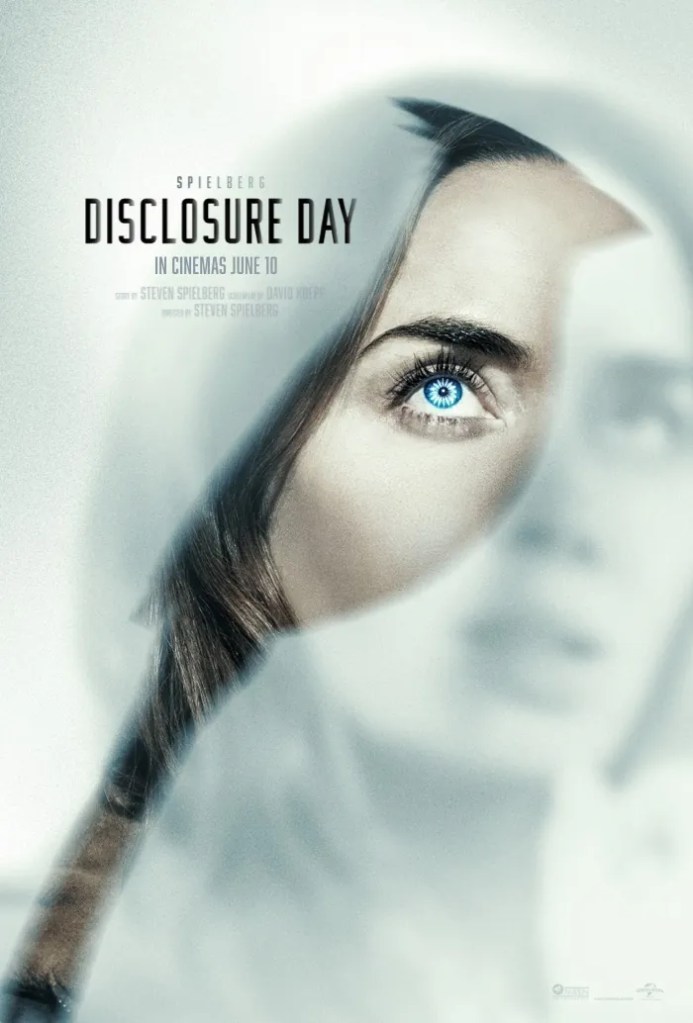
After almost fifty years, Spielberg returns to Close Encounters territory: the wonder and fear from learning we might not be alone. Disclosure Day wraps this up in a very modern conspiracy, a shady organisation keeping secrets, but still carrying the optimism and hope Spielberg’s previous encounters with Little Green Men had. Disclosure Day is a film awash in different ideas and concepts, assembled with the flair and skill you expect from Spielberg, but somehow not quite sensational enough to hold together as well as you hope it’s going to from its punchy opening.

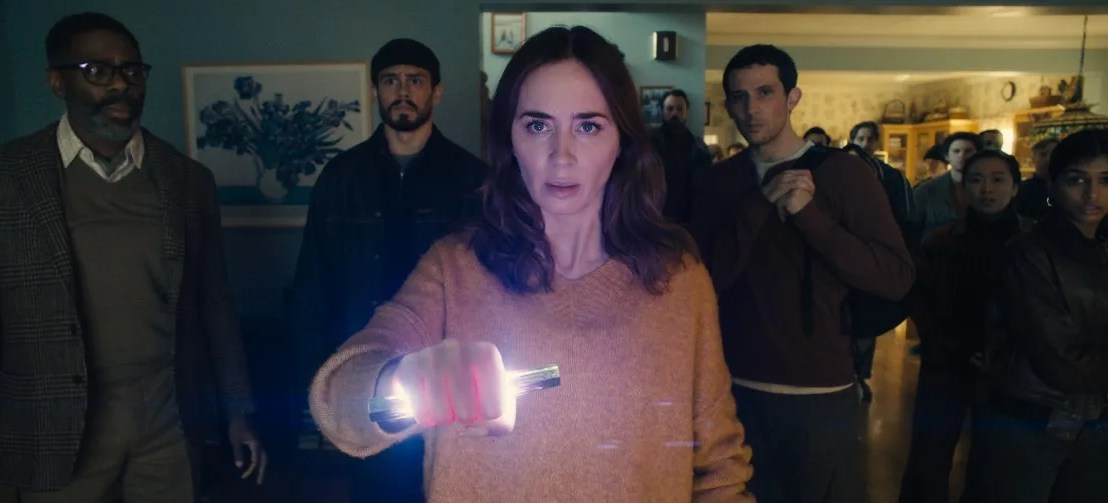
It does start with the sort of guts that you only get after a lifetime of directing mega-hits, throwing us into the middle of the story and avoiding clumsy flashbacks and voiceover and trusting we will catch up as we go. Two very different people find their lives surprisingly changed: Daniel Kellner (Josh O’Connor), a mathematics genius, feels compelled to steal (to release to the public) a mountain of evidence of extra-terrestrial visitations (and our mistreatment of them) hidden by shady corporation Wardex, run by Noah Scanlon (Colin Firth). And TV weather presenter Margaret Fairchild (Emily Blunt) suddenly finds she has the ability to know people’s whole live stories just by looking at them and to speak every language fluently, including a clicky alien dialect that sounds like dolphin chat but is clearly not of this world.

This forms the set-up for a mix of chase movie and earnest plea for patience, understanding and togetherness that feels very in-tune with Spielberg’s greatest hits. Disclosure Day is set in a world where, playing in the background of many scenes, the world teeters on the edge of World War Three – right down to panicked small-town citizens stripping a convenience store to the bones. There is a half-formed argument bubbling here about whether the world is ready for the revelations to come. Will it tip everyone into destructive panic? Eve Hewson’s Jane, a former novitiate, worries it could lead to a brutal shattering of faith – and rightly argues Daniel would have responsibility for the possible negative effects that might come out of whistle-blowing.

It’s avoiding this that is the justification used for by Wardex, our sinister corporation, with its small private army that uses its control of alien tech to call the shots with the government and hunt down whistle-blowers. They are represented by Colin Firth, perfectly cast as an imperiously gruff corporate suit who has just enough humanity bubbling under the surface to make you believe he regrets the things he does. Wardex uses alien mind-control tech, to form a psychic bond with people over great distances, something akin to heightened interrogation and mind-control. These sequences are the film’s stand-outs, Spielberg skilfully using simple effects (both parties pupils switch colour to a sky blue) and effective editing to cross-cut between two people talking while their bodies are miles apart (and he cleverly shows the punishing impact – especially on Firth of the strain of using the device) – as well as the creeping, unsettling horror of mind control pushing people to do and say things they don’t want to do.

It’s a perversion of what Disclosure Day holds up as the alien’s evolutionary advantage: their empathy. That’s the root of Margaret’s powers, which come so naturally to her that when she drops into Russian from nowhere when talking to her slacker boyfriend (a good performance of unreliable decency from Wyatt Russell) or enters into a long fast-paced Korean conversation with a visiting professor in her TV studio (so fast, the official translator can’t even keep up), she doesn’t even notice she’s not talking English. Similarly, her ability to “see” people’s lives – allowing her to offer small titbits of immediate advice that instantly disarm everyone she meets – happens so naturally, it takes her few moments to notice and become scared by her insight.

Her mixed feeling about these skills – which sometimes seem like a blessing and others a terrible curse – are beautifully played by Emily Blunt, who gives a stand-out performance of a driven, successful woman, increasingly terrified but still resolute in the actions she feels compelled to do. Blunt is able to handle the emotion and distress, as well as deliver on the comedy (there is a very funny sequence where, in pelting rain, she grows increasingly frustrated by Jackson’s inability to crush her phone by driving over it with her car). She finds a great deal of sensitivity and gentleness in Margaret, who mixes responsibility, fear, anxiety and exhilaration.

This all comes together very well in the momentum-packed first-half of the film, which sees Margaret and Daniel (a decent performance by Josh O’Connor, that largely fails to really stretch him) travelling together. It’s crammed with inventively shot sequences, such as Daniel and Jane’s escape from a blown countryside safe-house – a brilliant sequence of tracking camera-shots, inventive angles and nerve-tangling tension, helped by O’Connor’s rather sweet nervous fear (“What am I doing?”) throughout. Match that with Margaret’s engrossing pilgrimage across country, and the fascinating use of the alien bond-control device and it makes for a film that sets up a lot of interest.
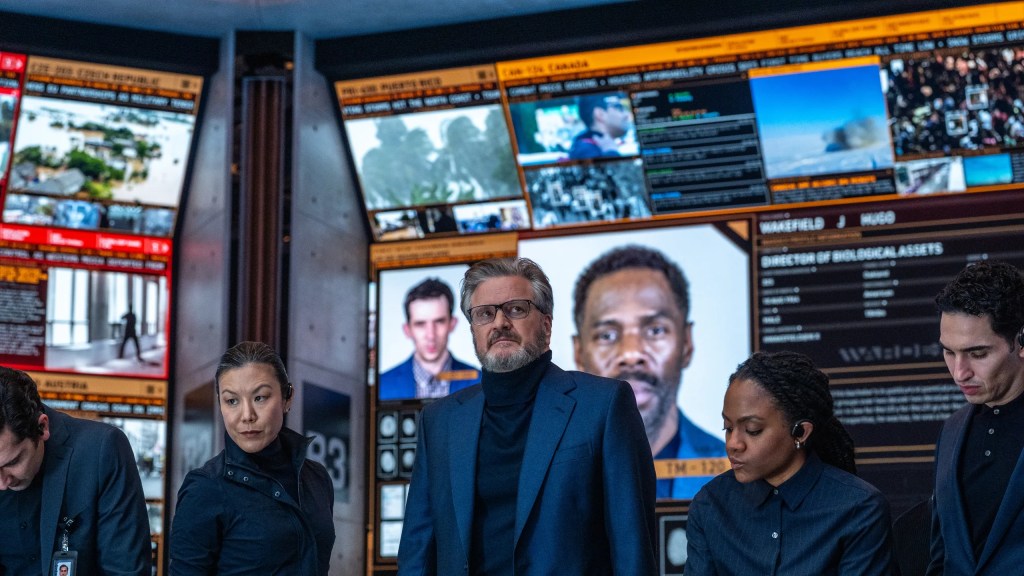
It’s a shame then that the second half never quite pays this off. As the film proceeds, it feels compelled to start answering the questions that have been bubbling under most of its chase. It’s here the film’s deliberate narrative card-holding starts to work against it. Since our heroes don’t even fully know the questions they should be asking, Colman Domingo’s whistle-blower has to both ask them and then immediately answer them. It leads to a long ‘revelation’ scene, that rather overwhelms us with points about our heroes’ backgrounds stretching back to their childhood that feel both rather heavily delivered and not quite engaging enough.

It also builds towards a sort of modern recap of the ending of Close Encounters, but this time in a TV studio – and it’s interesting to see that Spielberg perhaps still believes that a TV news programme showing footage of aliens would be instantly trusted the world over, without any talk of AI fakery. This long sequence, spooling out the whole backstory of the film’s close encounter phenomena is also similar to Close Encounters in the sense that it’s a simple presentation – but differs in that it lacks the awe-inspiring scale and spectacle of that movie. Without it, it feels somehow slightly drier and more earnest, rather than carrying the sort of magical force the film needs.

It’s part of a sense that Disclosure Day throws a lot of complex stuff at us – our place in the universe, ability to empathise, the potentially dangerous impact revelations can have – but lets these drift away, in favour of a more reassuring and slightly simplistic ending that leaves you feeling its points have been underexplored. This is slightly more disappointing because there has been so much good stuff in Disclosure Day – Blunt is excellent, Hewson and Firth are very good, the direction and film-making on show is first class – but there doesn’t feel like a fully satisfying conclusion is found for everything we have seen.

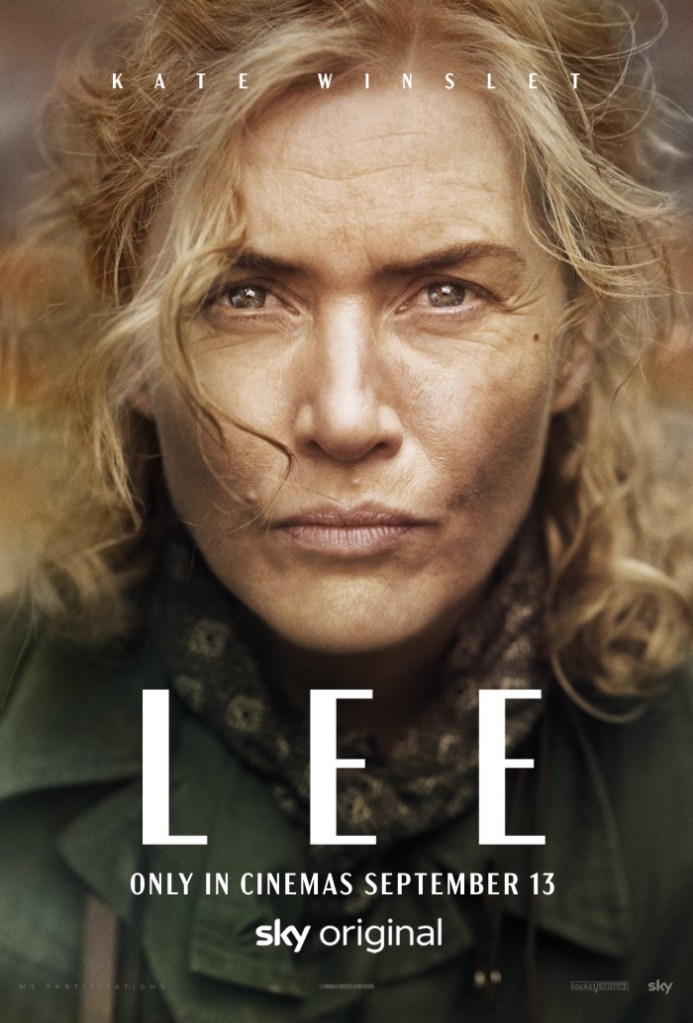
Lee (2024)

Lee (2024)

Kate Winslet plays with passion in an otherwise rather safe and traditional biopic

Director: Ellen Kuras

Cast: Kate Winslet (Lee Miller), Marion Cotillard (Solange d’Ayen), Andrea Riseborough (Audrey Withers), Andy Samberg (David Scherman), Noémie Merlant (Nusch Éluard), Josh O’Connor (Interviewer), Alexander Skarsgård (Roland Penrose), Arinzé Kene (Major Jonesy), Vincent Colombe (Paul Éluard), Patrick Mille (Jean D’Ayen), Samuel Barnett (Cecil Beaton), Zita Hanrot (Ady Fidelin)

“War? That’s no place for a woman!” That’s the message photographer Lee Miller (Kate Winslet) received when she applied to head to the Western Front for Vogue in World War Two. An experienced artist and photographer, with a strongly independent mindset, Miller wasn’t taking no for an answer: her stunning images of the horrors of war and the Holocaust would become a vital historical record.

That’s the key message of this well-meaning, rather earnest, slightly old-fashioned film, a callback to hagiographic biopics of yesteryear. It’s told through a framing device of an older Lee being interviewed in the 70s. The interviewer is played, in a thankless role, by Josh O’Connor (the character’s identity is a late act reveal that most viewers will probably guess early) and his dialogue is awash with either the sort of “and then you married and left France and moved back to London where you became the first woman photographer hired by Vogue” narration that links time-jumped scenes together, or blunt statements about Lee’s emotional state (“you must have been very frustrated”) that Winslet is definitely skilled enough to do with her face alone.

This was a passion project for Winslet, who spent a decade bringing it to the screen and which she bailed it out during a funding wobble, and she is the main reason to watch Lee. This strong-willed, take-no-nonsense bohemian turned hardened professional is a gift for Winslet, but she also gives Miller a strong streak of inner doubt and fear. Under her force-of-nature exterior, there is a strong streak of vulnerability in Miller, her life marked by past trauma. Winslet lets this rawness out at key moments, bringing great depth and shade to a character who could otherwise be blunt and difficult, and the film works best when it gives her free reign.

It’s unflinching but also tasteful in its depiction of war. Experienced cinematographer and first-time film director Ellen Kuras shoots its grimy, hand-held immediacy with an intensity that makes a lot of the film’s limited budget. Lee’s dirt and dust-sprayed combat scenes – with Miller dodging explosions and bullets to get into position to get the perfect shot – are tensely assembled and make a punchy impact. But Lee also knows when not to show us things, and its visual restraint when Miller and colleague David Scherman (Andy Samberg) photograph the horrific aftermath of Buchenwald and Dachau is admirable, the camera focusing on the characters’ stunned faces as they capture the terrible moments, with the horrific reality just out of focus.

There are some fine moments in Lee, which makes it more of a shame that so much of it feels safe, predictable and unchallenging. Lee focuses on Lee Miller as an artist and downplays her daring, unconventional life. Tellingly it’s adapted from a biographer by her son, titled The Lives of Lee Miller, which chronicles her life of constant reinvention. This is after all a woman who maintained a relationship with her Egyptian husband in the 30s, after meeting her second husband Roland who himself remained married for several years (they only married in 1947). She was a model, a surrealist artist, photographic pioneer, ahead of her time. That’s rinsed out to make her more conventional.

In the film, she and husband Penrose (a generously low-key performance from Alexander Skarsgård) have an uncomplicated meet-cute in a French villa owned by a friend (an extended cameo by Marion Cottillard) – admittedly it as at an outdoor picnic where Lee and others sunbathe topless – before settling into a life of middle-class suburbia (right down to Lee cooking meals for Roland when he returns from work). Hints that she has a consensual affair with Scherman linger, but the film seems prissily determined to reposition Lee as a far more conventional person than she really was. It’s a conservative attitude that comes from a good place – focusing on the work not the gossip – but it also makes her feel less unique or challenging than she was.

With the work as its focus, it’s surprising Lee doesn’t make more of the extensive collection of masterpiece photos Miller took. Although an inevitable credits montage shows how some of these were re-created for the film, actually including the images in the film itself might have carried more power and placed Miller’s work more prominently at its heart.

Lee also fumbles slightly with its final revelation of Miller’s past trauma. Shocking as this is, attempting to suggest what happened to Lee in her teens is on the same scale as the Holocaust or that she has a unique understanding of an act of ethnic genocide because she suffered in the past stinks. It’s especially notable since Lee does an excellent job of showing the quiet distress the Jewish Scherman feels as he realises only an accident of geography saved his life. Andy Samberg, in his first dramatic role, is extremely good in a role that clearly carries a very personal feeling for him.

Lee has things going for it, not least Winslet’s barn-stormingly committed and passionate performance. But in the end, it turns its lead character into someone who feels less provocative and revolutionary than she was. Its safely traditional structure and narrative approach turn her into a “role model” and make Lee the sort of middle-brow biopics Hollywood churned out in the 80s. It’s solid, interesting but essentially safe and forgettable.

Challengers (2024)

Challengers (2024)

Dynamic, mature, hilarious and moving relationship drama, an absolute delight

Director: Luca Guadagnino

Cast: Zendaya (Tashi Duncan), Josh O’Connor (Patrick Zweig), Mike Faist (Art Donaldson), Darnell Appling (New Rochelle Final Umpire), AJ Lister (Lily Donaldson), Nada Despotovich (Tashi’s mother), Naheem Garcia (Tashi’s father), Hailey Gates (Helen)

Tennis superstar Art Donaldson (Mike Faist) is on the slide after six majors – he’s lost his click and can’t even struggle past up-and-comers from the lower rungs of the tour. His coach, manager and wife Tashi (Zendaya) has an idea for how to get his groove back: he’ll enter a lowest-rung Challenger tournament, chalk up an easy win and return to confidence. Problem is, Art’s estranged former friend and doubles partner Patrick Zweig (Josh O’Connor) is also in the tournament and the two of them now line up for a grudge match in the final. But there is more going on than meets the eye, as Guadagnino’s film unfolds in a non-linear style to reveal the complex, confused and frequently ambiguous sexual, emotional and sporting tensions that have beset the three over 13 years.

Challengers feels like it might be a ripe piece of teen click-bait fluff – but reveals itself to be a whipper-sharp, funny, involving and cleverly open-ended film stuffed full of excellent dialogue by Justin Kuritzkes that frequently catches you off-guard with its plot developments. Challengers is a thrillingly mature, adult and very truthful exploration of the underlying attractions and tensions between three people, all of whom seem confused about their exact feelings and motivations.

What is clear – as made explicitly clear by an intensely erotic late-night encounter in a hotel room between the three of them thirteen years earlier – is the rich, unspoken attraction they all share. Art and Patrick are strongly attracted to Tashi, she seems equally interested in different aspects of each of them, while Art and Patrick’s homoerotic bond (clued in before this by their affectionate, casual physical intimacy as well as their intense celebrations on winning the Junior US Open) is immediately clear to the savvy Tashi and briefly embraced by the two men.

Sport – particularly mano-a-mano games like tennis – has an undercurrent of sexual energy to it. Adrenalin-filled men pounding away at each other from across the net, bodies glistening with sweat? Teammates grasping each other in victory with an intensity often beyond anything they would show to a romantic partner? Challengers explores how close a dance sport and sex is, the remarkably similar effects both have on our bodies. It’s what Tashi – a former tennis sensation whose career was ended in tragic circumstances – is getting at when she says the best tennis matches aren’t about tennis. They are semi-romantic couplings, the perfect rally being two bodies in perfect harmony.

This all develops thrillingly in the inter-relationships between the three leads, each excellent. Zendaya is superb as a woman forced to live her tennis dreams vicariously through her husband, who values the loyalty of Art while being quietly troubled by his neediness, infuriated by Patrick’s arrogant performative selfishness while being deeply attracted to his don’t-give-a-damn independence. She has a tight knot of tension throughout that is compelling, a constant sense we are watching a woman struggling to find some sort of resolution from a lifetime of competing resentments and desires.

Equally superb – revelatory in fact – is Josh O’Connor, who makes Patrick a cocksure, confident, selfish but immensely charming guy. Patrick scraps a career from natural skill that he never bothered to hone (witness his bizarre crooked-arm serve), embraces his sexual confidence, bounces around with a breezy bro-confidence and does everything he can to hide the lonely, lost boy he really is. This is breathtaking work from O’Connor, from hilariously funny when shamelessly pimping himself on tour for a roof over his head, and tragically vulnerable in bashful confessions with Tashi.

Mike Faist has the least flashy role but is equally wonderful. Art is – if you will – the most closeted of the three, the least confident, most dutiful, who dedicates himself to things and doesn’t stop to think deeply about his true feelings. You suspect the unspoken intense romantic bond between Art and Patrick remains unspoken in their youth because Art himself is uncertain (scared?) about what he feels. Just as he buttons up and represses his own resentments and anger towards Tashi.

Challengers switches and re-aligns these characters beautifully and constantly leaves us guessing. When Tashi (and by extension Art) refuses to see Patrick after her injury, is this because she genuinely blames him for unsettling her before the match or because she just needs something other than random chance to blame? Does she drive Art into becoming a Grand Slam winning machine out of love, a vicarious desire for success or anger (as she shapes into something he isn’t) because she blames him as well? Does Art know or care? Does he realise how much his depression comes from severing connections with his alter-ego Patrick and does Patrick slog it out on the circuit because it’s the only way he can still feel in-any-way close to the only two people he loves (but won’t admit?).

Watching all this unfold, seeing each scene reveal a new piece of information that refocuses what we thought about each character, is compelling – helped a great deal by the vibrant, emotional and intensely sympathetic performances from the three leads. Challengers is also a superbly assembled film, sharply and snappily edited and with an electric, emotionally well-judged score by Trent Reznor and Atticus Ross that skilfully uses refrains to link back to key emotions and sensations. It’s also a film that shoots tennis more electrically than any other. With sweeping crane shots, hand-held camera and every trick in the book, we see matches from the perspective of everything: the players, the ground, even the ball itself. It’s stunningly visually inventive.

It culminates in a truly wonderful, open-ended, emotionally satisfying ending that I actively adored. It’s a film about love, about three people who feud over petty things for years but need each other to be complete, who find there are elements of each other’s personalities that serve to complete themselves. Who are fiercely sexually attracted to each other, but also have a deep, intense emotional bond they need more than they realise. Challengers is an absolutely gorgeous, delightful, superb film – another emotional, mature triumph from Guadagnino, with three brilliant actors working wonders with a sharp script. It’s a film to love and treasure.

Mothering Sunday (2021)

Mothering Sunday (2021)

Arthouse flourishes and trickery drown this try-hard literary adaptation

Director: Eva Husson

Cast: Odessa Young (Jane Fairchild), Josh O’Connor (Paul Sheringham), Sope Dirisu (Donald), Olivia Colman (Mrs Niven), Colin Firth (Mr Niven), Glenda Jackson (Older Jane Fairchild), Patsy Ferran (Milly), Emma D’Arcy (Emma Hobday)

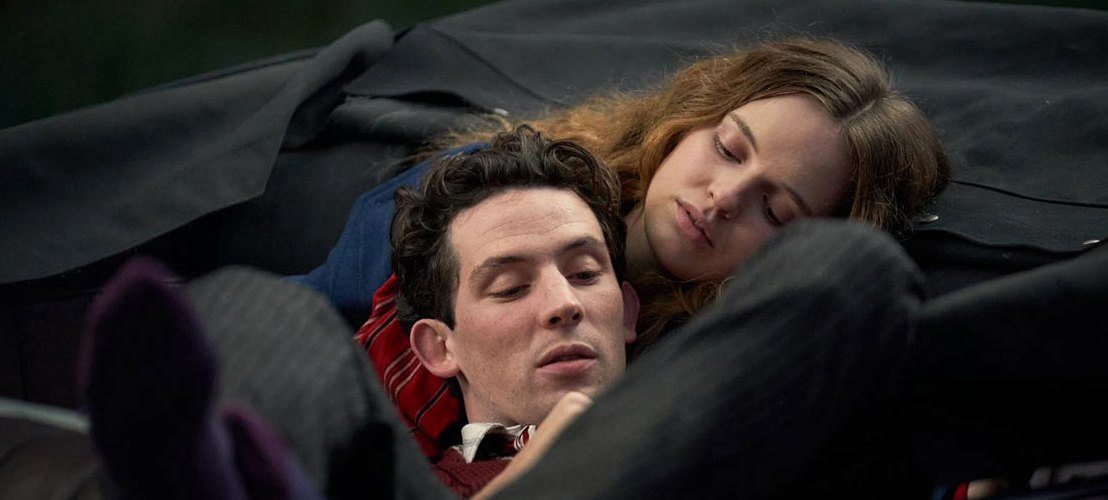
Based on an award-winning novel by Graham Swift, Mothering Sunday is mostly set on a single day: March 30th 1924. Jane Fairchild (Odessa Young) is the maid of the Nivens (Colin Firth and Olivia Colman), both of whose sons died in the Great War. The only surviving son of their close social circle is Paul Sheringham (Josh O’Connor), who has been conducting a secret sexual affair with Jane for several years. On this fateful day, Paul sneaks away from his fiancée (who was originally to marry the Nivens’ deceased son, James) for a tryst with Jane. The tragic after-effects will shape Jane’s future life. This is intercut throughout the film as she deals with the illness years later of her lover, philosopher Donald (Sope Dirisu).

Mothering Sunday is a proud, in fact a little too proud, art-house film. It takes an intricate, well structured and delicate novel by Swift and piles on the technique to try and wring as much meaning from the piece as possible. In doing so, Husson drowns a simple story in cinematic tools. Skilful cutting, intriguing shots, rich layered music, artful compositions, juddering intercutting between timelines, repeated shots and symbolic compositions eventually give an impression of a film trying too hard to impress.

It’s a story that would have carried a world more impact if it had been told with simple directness, where stylistic flourishes felt natural rather than exploited at every conceivable opportunity. Instead of moving though, the film eventually becomes tiring and the pointed dynamism of the film’s making gets in the way of the emotion. As we are cut away from moments of emotion, or the dialogue tries too hard to capture the complexity of Swift’s writing (as my wife put it, “there is a lot of talk about jizz”), we are constantly prevented from encountering the quiet emotion and unspoken devastation that should be at the heart of this simple-but-shattering story.

Even when Olivia Colman’s character – in her only real scene – is heart-rendingly confessing her pain at the loss of her children and her envy of Jane for her orphan status (she has no one to lose), Husson’s camera seems at least as interested in making you admire the fiddily mirror-based tracking shot she is using to shoot it. It is far more impactful and graceful when it sits still: for example moments like Colin Firth’s well judged performance of deeply repressed grief and pain, which expresses itself in very British banalities about the weather and doing-the-decent-thing.

Which isn’t to say that Mothering Sunday is a bad film, or that there aren’t moments of deeply impressive film-making. A dashboard-mounted camera that follows Jane’s disguised torment as she is driven to the scene of disaster is memorable, and there are beautiful shots like an aerial shot lingering over a fire in a forest that haunt the imagination. The film has a haunting quality to it, like a half-memory that flits from clear picture to clear picture via hazy recollection. But all this style swamps the impact. The film never has the patience to sit down and let us get involved in its story properly. Or really tackle how lasting the impact of loss – particularly the generational loss of the 1910s – had on families and, by extension, the whole country.

Mothering Sunday’s main successful feature is the hugely impressive performance from Australian actress Odessa Young. Not only is her accent faultless, but Young has a poetic romanticism in here that sits equally alongside an old soul within a young body. Much of the film is dependent on her micro-reactions to moments of life-changing sorrow and joy. She spends a large chunk of the film naked (as required by the source material – although this is also another tiresome sign of the film’s overly proud ‘arthouse’ badge) – but imbues this with a bohemian freeness that suggests it’s the only time, released from the shackles of her work clothes, that she feels truly free. She carries almost the whole film and does so with a consummate, compelling ease.

There are fine performances as well from Josh O’Connor – channelling Prince Charles somewhat – as a conflicted man, crushed by the burden of carrying the expectations for a whole generation, and Sope Dirisu (in a rather thankless role) as Jane’s later philosopher lover. Glenda Jackson contributes a neat cameo as a Doris Lessing-like older Jane, now a hugely successful novelist, reacting just like she did to the winning of the “major international prize” for literature.

But the overall film never quite manages to carry the impact it should. It should leave you consumed with the sadness and waste of early death and the destruction that comes from war. Instead, you will remember more the pyrotechnical invention of its making – and the wonderful score by Morgan Kibby – rather than any heart or sense of tragedy.