Tag: Benny Safdie

The Odyssey (2026)

The Odyssey (2026)

Nolan’s epic takes deep, thoughtful bites out of Homer, looks amazing but maybe tries to do too much

Director: Christopher Nolan

Cast: Matt Damon (Odysseus), Tom Holland (Telemachus), Anne Hathaway (Penelope), Robert Pattinson (Antinous), Lupita Nyong’o (Helen of Troy/Clytemnestra), Samantha Morton (Circe), John Leguizamo (Eumaeus), Zendaya (Athena), Charlize Theron (Calypso), John Bernthal (Menelaus), Himesh Patel (Eurylochus), Bill Irwin (Polyphemus), Elliot Page (Sinon), Benny Safdie (Agamemnon), Mia Goth (Melantho), Corey Hawkins (Polybus), Logan Marshall-Green (Melanthius)

I think pretty much everyone knows the story: Odysseus (Matt Damon), after ten years fighting the Trojan War, has the longest, most hellish commute ever. Will he see his Kingdom of Ithaca again, or wife Penelope (Anne Hathaway) and now-grown son Telemachus (Tom Holland) again? And, even if he does, what will he do about the fact his home is awash with hostile suitors, led by the bullying Antinous (Robert Pattinson) who want to take his throne and wife for themselves?

Nolan’s adaptation of Homer is epic as few other films are. Shot it seems with the whole Mediterranean (and Iceland for good measure) as a soundstage, its visual imagery is almost impossible to beat, shot with immense skill for IMAX without letting the scale flood the story. It’s a surprisingly faithful retelling of the legend, with Homer’s non-linear style catnip for an architect storyteller like Nolan, who promptly opens the film in the final year of the timeline and spools backwards and forwards from there.

The film is set in “a time of apparent magic”, an oblique idea in a world of Cyclopes and trips to Hades (a stunningly, bleakly unsettling vast black landmass, with bodies crawling forward to sip goats blood and share terrible prophecies), but where the presence of the Gods is open to interpretation. Zeus cracks thunder and Poseidon rolls waves, but maybe it’s just superstition. Is Odysseus right to be a sceptic? The only God present is Athena, played with warm distance by Zendaya, who may or may not be a figment of Odysseus guilty conscience.

Despite its length, it frequently zips along, with a marvellously staged sequence from Homer cropping up every few minutes. Sequences like the Fitzcarraldo-like laborious dragging of a wooden horse (half buried in the sand) that looks like a grim bronze statue of a bucking horse, over many miles by the luckless Trojans are brilliantly done. It’s hard to fault almost anything about its production. But it’s not perfect.

Perhaps the major thing missing from Nolan’s film is a sense of personal hubris (as opposed to the imperial hubris of Agamemnon). Nolan has a very interesting interpretative idea of the fall of Troy being effectively the fall of man, the deception and brutality being a Bronze age Hiroshima. But a more interesting film would have seen Odysseus initially proud of his role in this orgy of war-ending killing, only to realise during the disastrous journey home he is in fact the villain. That he broke his own sacred code, of twanging the bow to warn the prey. Instead, Odysseus is plainly aware of his crimes from the start, and his shame perversely gives the character little room to develop, beyond Nolan’s implication his journey is self-inflicted.

Strangely then, it’s hard to get a sense of the journey changing Odysseus. Nolan is far more successful as seeing the whole film as a self-inflicted punishment. Odysseus doesn’t believe he deserves to go home. Instead, as the destroyer of peace and order, part of him embraces his journey (he even leaves Troy on a self-imposed longer route, over his crew’s protests). While his long exile with Calypso is largely pushed into montage, the film implies Odysseus willingly eats the lotus to forget his guilt.

Nolan attempts to fill the gap by having Odysseus strain to save his crew’s lives. But, while Odysseus is weighed down with guilt, his crew emphatically isn’t; this borderline mutinous bunch merrily ransacking and burning a farming village. When Circe denounces this bunch as rapists in waiting, neither the film (or Odysseus) can really argue otherwise. The Odyssey can never quite decide what it feels about these characters, and their resentment at Odysseus for their numbers being whittled down tends to get outweighed by the film’s empathy for Odysseus’ guilt and shame.

There are similarly confused emotional lines in Odysseus relationship with young warrior Sinon. The Odyssey wants to establish Odysseus’ double betrayal of this man – first allowing Antonius to bully him into taking his place in the army, then using him as a pawn to get the Trojans to drag the horse into the city – as a foundational crime. But there isn’t time to establish a surrogate father-son bond between them, meaning Odysseus betrayal of Sinon feels muddily motivated. Again, the film wants to keep Odysseus sympathetic so avoids stating the conclusion he must have made: Sinon’s life is an acceptable sacrifice to end the war. The Odyssey leans heavily on Elliot Page’s sensitive, traumatised performance to make us fill in this blank.

This is a sign of Nolan’s film covering a lot of complex meat, without always finding room to digest it fully. Alongside this, he wants a more conventional, crowd-pleasing tale of a hero coming home to a loving wife. As part of this, many of the female characters of The Odyssey are stripped of some of their richness. Most egregiously, Charlize Theron’s Calypso and Zendaya’s Athena are little more than sounding boards for Odysseus. But even Penelope, despite an emotionally intense performance from Anne Hathaway, is more of a traditional faithful wife. Nolan is trying to show the vulnerability of her position in a masculine world – but you long for more sign of the shrewd resentful figure of either The Return or Margaret Atwood’s The Penelopiad.
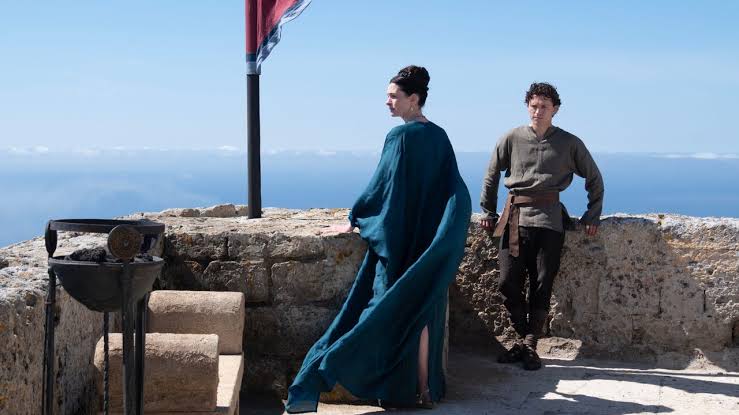
Perhaps because this is because Nolan is grimly realistic in suggesting women are often trapped in victim roles in this male world. Lupita Nyong’o’s Helen of Troy may be critical of the Greeks but is also an abused wife (her face disfigured by Jon Bernthal’s brutish Menelaus), plagued with shame about how her name was used to justify so much death. Even Circe, the most complex and engaging female role, dreads becoming a victim. That doesn’t take away from the barn-storming cameo of resentment and paranoia by Samantha Morton. The creepy Cronenbergesque body-horror of Circe using her hands to craft the sailor’s faces into pigs – including shoving her hand down one man’s throat – is perhaps the film’s most unsettling moment.

What a lot of this comes back to is Nolan’s admittedly fascinating idea that Odysseus has opened a Pandora’s Box that unleashed destruction on the world. His burning of Troy, broke Zeus’s Law of treating guests as you yourself would wish to be treated. In echoes of Oppenheimer, Odysseus believes he has laid the groundwork for the end of the world, by creating one where hospitality can be betrayed and people’s word is no longer their bond (exactly the world the suitors are exploiting in Ithica).

This keys into Nolan’s most interesting concept. Throughout this subtly fracturing world – where the Gods may be falling silent and the world is shorn of rules – there are reports of ‘men of the sea’ roaming the coasts taking anything they want. Is this another cause for the Greeks to fight? Perhaps not: like nuclear weapons, violence become self-perpetuating. The actions of Odysseus crew should clue us in that these men are in fact the Greeks themselves, their humanity gone, continuing a cycle of destruction and death started by Odysseus who has “become death, destroyer of worlds”.

There are many, many good ideas in The Odyssey, which I’ve mulled over for several weeks after seeing the film. Fundamentally, I feel some of it doesn’t always land from the casting of Odysseus. Would Matt Damon have been my choice? Probably not: there is a boyish decency about Damon, not a tortured cunning. He’s probably not helped by recent memories of Ralph Fiennes (almost born to play the role), but Damon can’t bring out the depths of conflict, guilt, regret and misplaced pride in the way (say) Cillian Murphy did in Oppenheimer. Damon is a little too similar to the optimistic, earnest energy Tom Holland very successfully gives Telemachus. The Odyssey tries to follow The Return in making Odysseus keen to ensure Telemachus does follow him into a life of violence – but can’t resist giving Holland one last sword fight to flex his muscles.

I feel conflicted about The Odyssey and I need to see it again. It is so close to everything I wanted. Its practical effects and epic scenes with Polyphemus, the sirens and Sicilia and Charybdis have a wonderful Jason and the Argonauts feel to them that I loved. But it also feels quite damning that the sack of Troy is less shocking here than it was in Troy (especially as the brutality is at the heart of what the film is trying to do) and its final third covers similar ground to The Return, but (for me) with less clear-eyed honesty, awkwardly balancing action set-pieces and its thematically ‘happy’ ending.

But there are so many delights to appreciate, not least Ludwig Göransson’s imposing score, the stunning imagery and costume design (Ellen Mironijck’s imaginative use of a range of inspirations reaches an apotheosis in Agamemnon reimagined as a mix of Darth Vader and Batman). There are wonderful performances in smaller roles, not least Morton, Bernthal, Himesh Patel and most of all John Leguizamo as the loyal Eumaeus and Robert Pattinson as the despicable. But while it tackles an array of brilliant idea, it can’t always balance these all successfully. It’s almost the first Nolan film where his reach overextends his grasp – but when you have a reach like this, does it matter?
The Smashing Machine (2025)

The Smashing Machine (2025)

Johnson goes for Oscar in a mediocre film that arguably shows his limits as an actor not his depth

Director: Ben Safdie

Cast: Dwayne Johnson (Mark Kerr), Emily Blunt (Dawn Staples), Ryan Bader (Mark Coleman), Bas Rutten (Himself), Oleksandr Usyk (Igor Vovchanchyn), Lyndsey Gavin (Elizabeth Coleman), Satoshi Ishii (Enson Inoue), James Moontasti (Akira Shoji)

Mixed Martial Arts is big business today. The Smashing Machine makes a point of stating its stars are internationally known, earning millions of dollars. Making them not too dissimilar from The Smashing Machine’s star (and guiding light) Dwayne “The Rock” Johnson, who achieved both these in MMA’s ‘scripted’ sibling Professional Wrestling. It’s a knowledge the film is banking on, as Johnson plays Mark Kerr a leading MMA fighter from that period in the late 90s when men were willing to have several layers of shit kicked-and-punched out of them for a few thousand dollars and a dream.

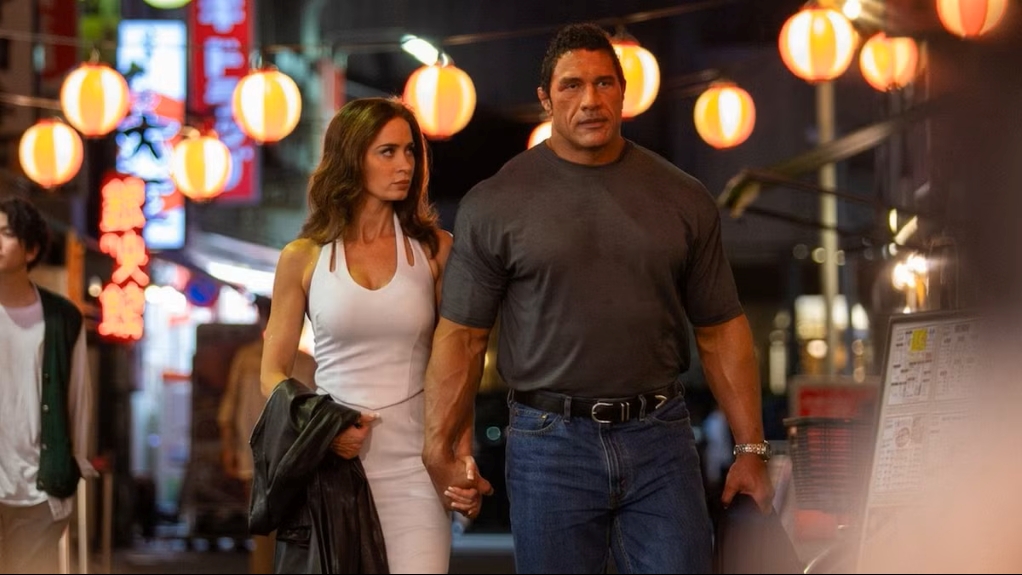
Kerr is one of the big draws of MMA, an affable six-foot mountain of muscle who (when not brutally beating others in the ring) is a hulk of likeability. But he’s got problems – for starters a growing reliance on opioid painkillers and a relationship that’s two thirds self-destructive to one-third mutually dependent with girlfriend Dawn (Emily Blunt). The Smashing Machine covers Kerr’s getting clean, the break-up and return of his volatile relationship and his shot at 2000 MMA title in Japan in 2000 that could land him $200k.

The Smashing Machine covers all this in a deliberately distanced, low-key style. It nominally follows sports film structure (triumph, failure, re-build, some level of success), trudging along the Rocky template. But Safdie avoids exploiting the genre’s strengths (the highs and joys and it’s emotional release) in a way that is both admirable and makes The Smashing Machine a less engaging or interesting film than you keep expecting it to be. It’s almost a point-of-pride that the film avoids the obvious, but instead languidly leaves things unsaid, or skims lightly over key plot developments, as it spools out accompanied by an incessant jazz soundtrack. But it’s not always a strength.

What it fails to do is find something sufficiently interesting or compelling to take their place. It has all the surface appearance of raw, true-life drama: the jerky camera-work, jazzy score, muted colours, roughed-up actors – but is constantly too distanced and cautious to be truly raw. It (perhaps admirably) doesn’t want to be seen to exploit Kerr, but by playing down his struggles (or rather, boiling them down into neat little scenes ripe for “For your consideration” Oscar clips), it also makes them frequently feel like not that much of a deal. On top of this, the underlying desperation that could have been there in a film where people submit themselves (effectively) to ruleless cage fights like wage-slave gladiators never gets an airing.

It doesn’t even really explore the dark nature of the ‘romance’ at its heart, a relationship which seems categorically a ‘bad thing’ for both people (a coda reveals they married shortly after reuniting after the ballistic, emotion-packed row that is their final moments here – and separated within six years). This is a relationship where the two are never on an equinox. When Mark is in the depth of addiction, Dawn is both afraid of his drugged-out distance and enjoys his small-boy-like need for her affection. When he’s clean, Mark sermonises sanctimoniously while Dawn doubles down on drinking and pill-popping in front of him (“that’s not nice” Mark chides her, sounding like a disappointed child).

But, despite the disapproval hinted out from all the other characters in the film, The Smashing Machine shies away from really addressing this dangerous relationship, making it feel more like a formulaic awkward-love-story, rather than being braver with a harsh truth. In fact, that passionate heated romance, ends up feeling like somewhere between a rather forced series of contrived, manipulative moments (that have no real pay-off) and a firey acting exercise between two performers who trust each other.

Lack of bravery soaks through the whole film, a muted awkward affair where you feel different hands pulling in different directions (an on-the-nose commentator explains all the MMA action to us, as if a producer watching a late-cut was worried it would otherwise make no sense). It’s part a quiet, off-the-wall, yanging-when-it-could-ying serious character study (the Safdie side perhaps), part an Oscar bait slice of true-life heroism (the Johnson side).

Ah yes, the Oscar bait. Much play was made of how far Johnson was willing to move out of his comfort zone and cast aside the action that made him a star. However, for me, what The Smashing Machine reveals is the limits Johnson is willing to go too as an actor. The Rock doesn’t do vulnerability even when playing a beaten-up drug-addict in a borderline-mutually-abusive relationship (all the head-in-his-hands scenes weeping can’t change this, and Johnson delivers these moments like acting assignments rather than with true emotion). Johnson won’t sacrifice his strength of character to play a truly weak man: Johnson might punch a door apart, he never feels comfortable embodying a man who was at time selfish, self-destructive or foolish. Johnson prefers a Kerr who is always, in some degree, strong (even when whining at a loss, he does it with real commitment).

His partnership with Emily Blunt doesn’t help him: Blunt is far more skilled at creating a nuanced character, someone who weeps with pain at Kerr’s drug use and then later performatively rages at him for being boring when he’s clean. She’s not afraid to explore the darker, less flattering areas in the way Johnson doesn’t want to. Johnson makes the mistake of many in thinking real acting is starring soulfully and having a cry. What he doesn’t do is really commit to transforming his soul and persona: for all the wig, this always feel like a performance as in-control and carefully studied as Johnson himself is. The Smashing Machine shows that even a piece of against-type Oscar-bait is still fundamentally part of the same Johnson-branding exercise, another brick in the persona wall of a determined, charming high-achiever.

You can’t say as much for the film. An average film, lacking spark, energy or interest that can’t make up its mind about whether it wants to be low-key tragedy or a heroic tale of redemption. It says a lot that its most powerful and affecting moments are its closing ones, as we watch the real Kerr shopping in 2025, utterly anonymous, chatting pleasantly with staff who don’t know who he is before he breaks the fourth wall to wave us goodbye. In these minutes, the film clicks with a force nothing else in it manages. Shame you need to wait two hours for it.

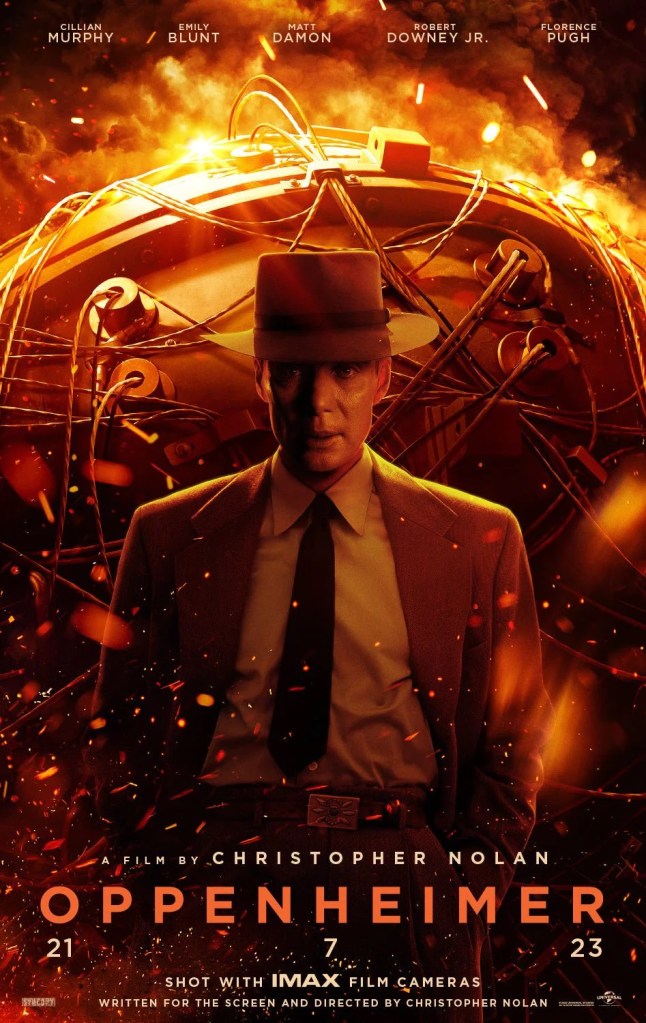
Oppenheimer (2023)

Oppenheimer (2023)

Nolan’s masterful musing on the morality of science is both challenging and compelling

Director: Christopher Nolan

Cast: Cillian Murphy (J Robert Oppenheimer), Emily Blunt (Kitty Oppenheimer), Matt Damon (General Leslie Groves), Robert Downey Jnr (Lewis Strauss), Florence Pugh (Jean Tatlock), Josh Hartnett (Ernest Lawrence), Casey Affleck (Colonel Boris Pash), Rami Malek (David Hill), Kenneth Branagh (Niels Bohr), Benny Safdie (Edward Teller), Dane DeHaan (General Kenneth Nichols), Jason Clarke (Roger Robb), David Krumholtz (Isidor Issac Rabi), Tom Conti (Albert Einstein), Alden Ehrenreich (Strauss’ aide), Gary Oldman (President Truman), Jefferson Hall (Haakon Chevalier)

“I am become Death, the destroyer of worlds”. These words from The Baghavad Gita are synonymous with J Robert Oppenheimer, director of the Manhattan Project as he witnessed the destructive force of his creation, the atomic bomb. Fittingly, Nolan’s fascinating and ambitious film opens with a reference to Oppenheimer as Prometheus: the man punished for all time for stealing fire from the Gods. Oppenheimer uses everything from thriller to courtroom drama, to explore the moral responsibilities of science: if we can do a thing, does it follow that we must?

J Robert Oppenheimer (Cillian Murphy) is a Renaissance man and leading theoretical physicist who dabbled more than a little in left-wing politics. The woman he loves, Jean Tatlock (Florence Pugh), is a die-hard communist, the woman he marries Kitty (Emily Blunt) is a former party member, his closest friends are all members. Associations like these will later haunt him after he is approached by General Leslie Groves (Matt Damon) to use his organisational skills, political savvy and charisma to run the WW2 nuclear programme where maverick scientists work hand-in-hand with the army. Despite his position, Oppenheimer remains untrusted by many. In the aftermath of the war, these suspicions will be used by his opponents, among them Lewis Strauss (Robert Downey Jnr) ex-head of the Atomic Energy Committee, to bring about his downfall as Oppenheimer preaches disarmament.

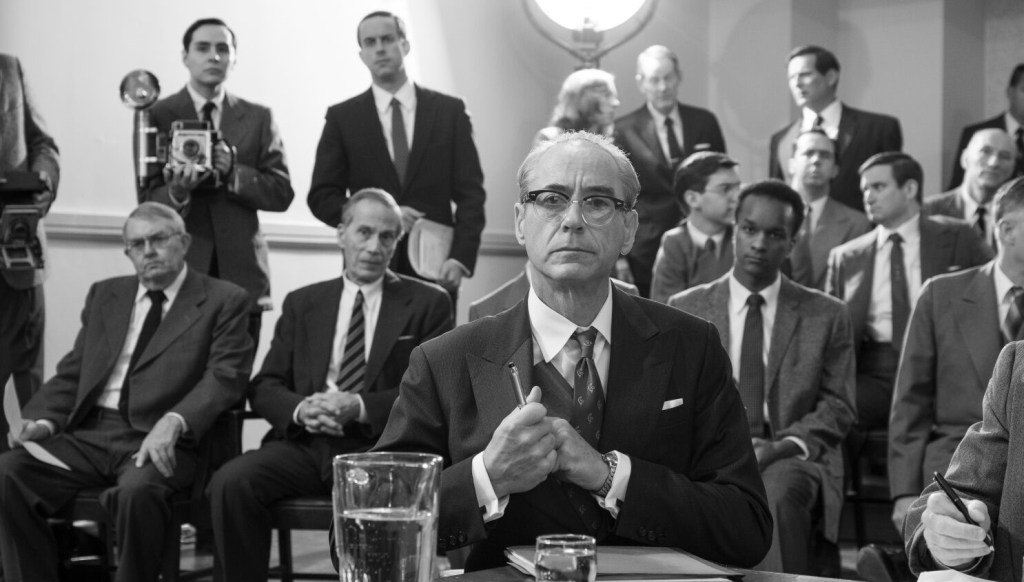
Much like Dunkirk, Oppenheimer is told in two timelines, intersecting with scenes replayed from different perspectives in subtly different ways. In “Fission” we see Oppenheimer, effectively on trial in 1954 for his security clearance, recount his life story, chronological flashbacks taking us through the development of the bomb. In “Fusion”, shot in gorgeous black and white, we follow the 1959 senate hearings to confirm Strauss in a cabinet post, and see his reminiscences of Oppenheimer’s post-war struggles to control the monster he has unleashed.

Oppenheimer is a brilliantly made, cinematically adventurous film: you would, of course, expect nothing less from a distinctive talent like Nolan. Brilliantly intercutting multiple timelines, it’s a film that is as much an experience as a story. This is a behemoth, filled with moments of flair and breath-taking use of sound and vision to affect mood. In particular, the film’s oppressive sound design bears down on the viewer like the pressure of the bomb itself. This means moments when we are released from its grip carry real impact. As Oppenheimer – already plagued with doubt – triumphantly announces the successful use of the bomb, the war-like celebratory pounding of scientists’ feet disappears from the soundtrack leaving Oppenheimer’s words echoing impotently around the room.

The pounding score and epic, sweeping camerawork (even more striking, since so much of the film takes place in small rooms filled with conversation) help Nolan to build up Oppenheimer’s mythic status and simultaneously strip him bare. Literally so at one point as, when questioned on his sex life in his hearing, Oppenheimer is seen naked in the room (as exposed as he must be feeling) answering questions with a naked Jean Tatlock astride him, staring into his wife’s eyes.

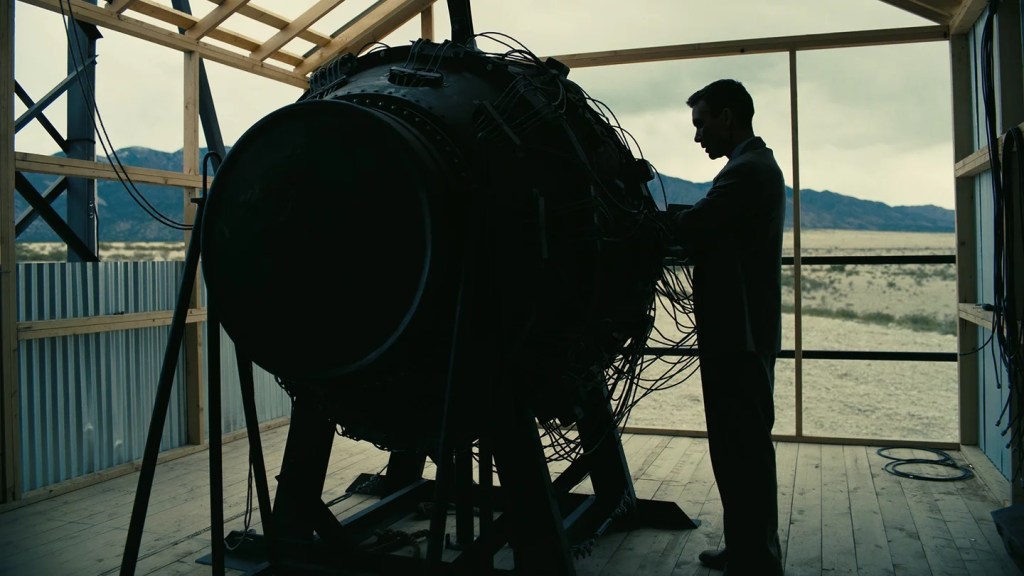
Oppenheimer labours, with the best intentions, to create a weapon before the Nazis. In its middle act, Nolan’s film focuses on the propulsive excitement of creation. The thrill of obstacles being overcome and solutions being found. The joy of a diverse team coming together for a single goal. We find ourselves longing for problems to be overcome, swept up in the desire for the endgame, as anxious as the scientists when it looks like rain will prevent the vital first Trinity test of the bomb.

Oppenheimer feels the same. Powerfully, intelligently and magnetically played by Cillian Murphy, this is a man who is a host of flaws crammed with impossible genius. A charismatic room leader, who is awkward in personal interactions. A charmer who rudely fails to remember his brother’s girlfriend’s name at a party. An inspiring leader who alienates people with ease. Murphy captures every inch of Oppenheimer’s staggering intellect and delight in intellectual problems, just as he also embodies the man’s arrogance and crushing self-belief.

So, it’s as crushing to him as it is terrifying to us, when the bomb explodes and the realisation hits us. Nolan’s sensory experience of a film fades down to silence as Nolan lets the camera float across the all-consuming fire of the silent explosion (the noise only comes when the shockwave hits) and suddenly the chilling implication of this terrible weapon becomes clear. This is a device that will kill millions. Oppenheimer knows it: he slowly shrivels into haunted guilt, Murphy seeming to shrink into himself as he finally understands what he has done.

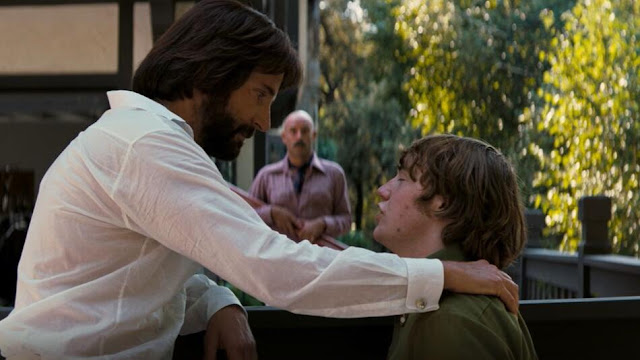
Images of nuclear destruction both obvious (ashen bodies and nuclear flashes) and subtle (the out-of-focus vibration of background around Oppenheimer, as if sensing an approach shockwave) will haunt him and us for the rest of the movie. While many scientists – foremost among them Benny Safdie’s bull-headed Edward Teller and Josh Hartnett’s WASPish but decent Ernest Lawrence – feel little guilt. But Oppenheimer, and we, can no longer avoid questions of moral responsibility raised by those such as Niels Bohr (a quietly effective Kenneth Branagh).

Are there some discoveries better not made? Because once the genie is out of the bottle, it cannot be stuffed back in again. In this new world every world power must always have more. More bombs, bigger bombs, better bombs. And it explains why, like Prometheus, Oppenheimer must be punished. The tool of his punishment being his communist sympathies, embodied in his yearning attraction to Jean Tatlock (an under-used Florence Pugh). Nolan’s film is very strong on the terrifying paranoia of the secret state, where every word or association can be collected into a terrible portfolio of witnesses you cannot question, evidence you cannot see, testimony you cannot hear.

“Why don’t you fight” cries his wife Kitty, played with a dynamic, intelligent forcefulness by Emily Blunt. I could have done with a third act built more around Blunt’s starkly honest betrayal of a woman ill-suited to being a wife and mother, trapped in a world where that is all women can achieve (and which also trimmed a few witnesses from Oppenheimer’s trial). Why doesn’t Oppenheimer fight? Nolan has his theories, carefully seeded and confidently revealed.

Oppenheimer’s post-war clashes cover much of “Fusion”, anchored by a superbly under-playing Robert Downey Jnr (his finest work since Chaplin) as the outwardly avuncular, but inwardly insecure and bitter Strauss, who sees Oppenheimer as the embodiment of all the elitists who turned their noses up at him (no matter that Oppenheimer himself is an outsider, in a world of science run by WASPish types like Lawrence). Nolan’s film explores how morality is forgotten in an environment so rife with paranoia that the slightest expression of doubt is seen as treason.

Nolan’s film needs its vast runtime to keep as many balls in the air as it tries to. It’s probably a few too many balls. I would have loved more on Oppenheimer’s outsider status, as a Jew in American science (its not mentioned that the J stands for Julius, despite his claims it stands for nothing). Similarly, I would have welcomed more time to explore Oppenheimer’s complicated emotional life, in particular the fascinatingly complex relationship of some love, a fair amount of mutual respect and a large measure of mutual convenience with his wife Kitty.

But the film’s chilling musing on the horrors science can accidentally unleash while focused on progress is superbly explored and leaves a lasting impact. It’s a feeling that continues to be sharply relevant while we struggle with the implications of AI. Was there a need for the bomb? Perhaps there was. Were we ready for the bomb? No. And it is the failure of anyone, including Oppenheimer, to even consider this until it was too late that is the coldest warning in Nolan’s epic film.

Licorice Pizza (2021)

Licorice Pizza (2021)

Young romance in a changing time in Paul Thomas Anderson’s unconventional love story

Director: Paul Thomas Anderson

Cast: Alana Haim (Alana Kane), Cooper Hoffman (Gary Valentine), Sean Penn (Jack Holden), Tom Waits (Rex Blau), Bradley Cooper (Jon Peters), Benny Safdie (Joel Wachs), Skyler Gisondo (Lance), Mary Elizabeth Ellis (Momma Anita), John Michael Higgins (Jerry Frick), Christine Ebersole (Lucy Doolittle), Harriet Sansom Harris (Mary Grady)

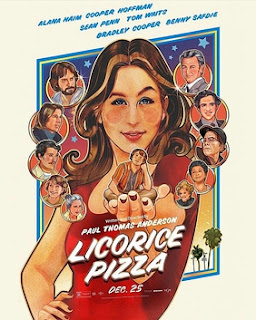
Is there a force harder to understand than love? That’s basically the theme of Paul Thomas Anderson’s delightfully whimsical film, which explores an unlikely relationship in Los Angeles in 1973, played out to a backdrop of the OPEC gas crisis. Told with a dreamlike grace and overflowing with affection and warmth for its characters, it’s a deceptively simple film that is a masterpiece of heartfelt craft.

Standing in line to have his photo taken for his High School picture, 15-year-old Gary Valentine (Cooper Hoffman) is instantly smitten with cynical photography assistant, 25-year-old Alana Kane (Alana Haim). Much to her surprise, his claim to be a child actor in the movies is actually true – he’s co-starring with Lucille Doolittle (Christine Ebersole, in a thinly veiled spoof of Lucille Ball) in a movie. He’s also a budding entrepreneur, setting up a business selling water beds in LA. Alana still doesn’t know what she wants to do with her life, but finds herself drawn to Gary, despite her acute awareness of their age difference. The two of them become business partners and drift in and out of friendship, never quite sure exactly how they feel about each other.

Now I guess you might well have checked yourself there at the thought of a romance between a teenager and a 25-year-old. But there is no prurience here, no masturbatory coming-of-age fantasy with an older woman or sleazy grooming. This is instead a very genuine, sweet and moving romance between two people who only really have numbers keeping them apart. It particularly works because Gary in many ways feels about 5 years older than he actually is and Alana often feels about 5 years younger than she is. In many ways they are both twenty-year-olds – and it’s only the fact that they are not which puts a barrier between them being together. As such it becomes very easy to accept their potential relationship, and even root for it.

That’s massively helped by the fact that these two characters are marvellously embodied by two first-time actors. Anderson specifically wrote the role for Alana Haim, member of family rock group Haim (Anderson has directed several of their music videos, and was taught by Haim’s mother). She’s stunning: prickly, quick-witted, cynical but also vulnerable and sensitive. She’s desperate to find some sort of purpose in her life: exploring the role of trophy girlfriend, businesswoman and political campaigner, but always seems like she’s slightly lost, for all her defiance. Haim is also wonderfully exasperated and befuddled by the interest she feels for this younger guy, barely able to acknowledge she might have feelings for him. Haim is superb.

Gary, played by the son of regular Anderson collaborator the late Philip Seymour Hoffman, is equally well bought to life by Cooper Hoffman. Gary’s career as a child actor is coming to an end: as we see through a disastrously over enthusiastic audition, which the casting directors watch out of a polite respect. But Gary has the go-getting hustling skills of someone much older. He’s got an eye for business opportunities – water beds, film productions, pinball machines – that would be the envy of others. He’s smart, confident, frequently cocky, assured – but at times also staggeringly immature (like a teenage boy he’s obsessed with boobs and Alana watches with frustrated despair as he and some friends drag out miming a wanking gag for what seems forever). He’s also still sometimes just a kid: mistakenly arrested at one point, he sits in terror in a police station and, even when uncuffed and released, is too scared to leave the station without Alana’s encouragement.

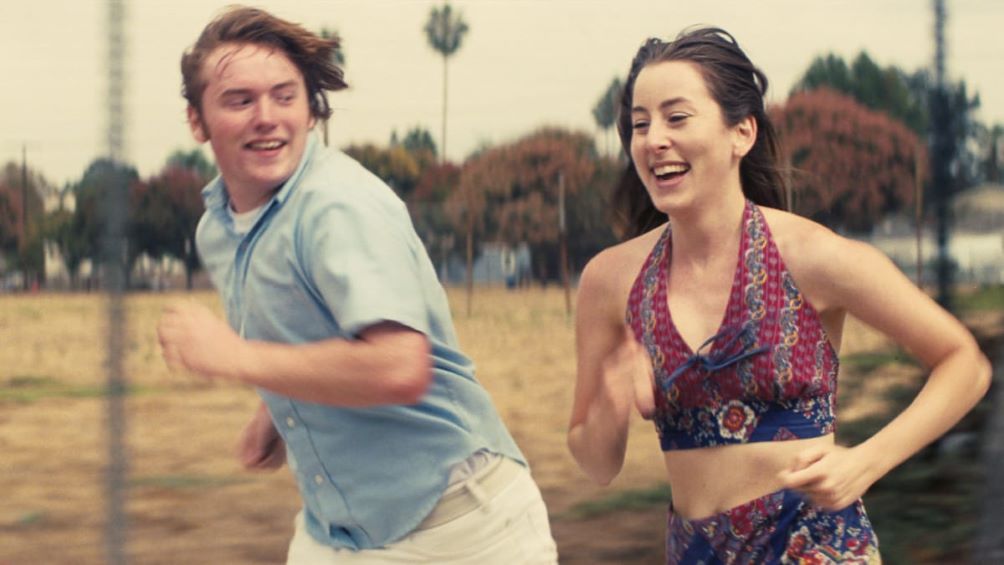
That arrest scene is yet another moment that reaffirms the deep bond and love between these two people. Wrongly arrested for nominally fitting the description of a suspected killer – “Look forward to Attica!” the police taunt him – he’s hauled from an Expo. Alana follows, running full pelt after the squad car – even though at this point they’ve not spoken for weeks – and then holds him for what feels like forever when he is released (before, of course, slapping him and saying “What did you do?”). Later, when Alana falls while taking part in an ill-advised late-night motorbike stunt, Gary will run the length of a golf course to make sure she is alright (despite, again, the two of them having cut ties before this). Moments like this sing with a real romantic force.

Particularly as this is such a love-hate film. Alana and Gary constantly hurt each other, finding ways to get into perfect sync only to screw it up. Gary is heartbroken when Alana starts to date his older co-star (a smug atheist, played wonderfully by Skyler Gisondo). Alana is overcome with jealousy and pain when Gary flirts and kisses a school crush his own age at the launch of their water-bed business. After auditioning for a movie role, Alana delights in making Gary uncomfortable when he walks into the bar where she is enjoying a drink with the movie’s male star. Through it all, these two are drawn back to each other time and again – and when the chips are down their loyalty and love to each other is absolute, even if they can’t always admit it to either themselves or each other.

Around the two outstanding central performances, Anderson constructs a series of scenes and skits that drift from one to the other. The whole film has a curiously dreamlike transition structure: it’s frequently hard to tell how much time has passed and the narrative omits overly functional scenes, so we frequently see a situation has changed but only an implication of why (example: Gary’s mother tells him she can’t chaperone him to New York for a TV appearance – next shot Alana and Gary are on a plane. How was this agreed? Who cares!). Each of the sequences plays out with a shaggy-dog story charm, directed with the confidence and brilliance of a director who is happy to make it look easy. And let me tell you, very few could pull off something as light and charming.

The film is stocked with delightful cameos. John Michael Higgins is very funny as the owner of a Japanese restaurant, with two successive Japanese wives who he “translates” for by repeating in ludicrously Japanese accented loud English whatever has just been said. Harriet Sansom Harris is very funny as a plugged-in agent. Ebersole is a monstrous attention-hungry star. Sean Penn is funnier than he’s ever been playing a version of William Holden, pissed and barely able to distinguish between his film roles and real life, cajoled by an equally pissed director (Tom Waits on top form as a sort of Peckinpah-Huston combo) to perform a motorbike stunt late at night. Best of all is Bradley Cooper, who burns through his brief scenes as an unhinged Jon Peters, a whipper-cracker of unpredictability and insatiable horn.

But it’s the two leads that give this heart, and Licorice Pizza is an amazingly sweet, tender, endearing and deeply charming love story about a couple who can’t quite understand why they want to be together and spend most of the movie making sure they’re not. Anderson brings it altogether with immense homespun charm – this is almost a home movie, Haim’s family play he character’s family, the cast is stuffed with Anderson’ family and friends – and Licorice Pizza is the sort of delight that shouldn’t work, but very triumphantly does.