Tag: Anne Hathaway

The Odyssey (2026)

The Odyssey (2026)

Nolan’s epic takes deep, thoughtful bites out of Homer, looks amazing but maybe tries to do too much

Director: Christopher Nolan

Cast: Matt Damon (Odysseus), Tom Holland (Telemachus), Anne Hathaway (Penelope), Robert Pattinson (Antinous), Lupita Nyong’o (Helen of Troy/Clytemnestra), Samantha Morton (Circe), John Leguizamo (Eumaeus), Zendaya (Athena), Charlize Theron (Calypso), John Bernthal (Menelaus), Himesh Patel (Eurylochus), Bill Irwin (Polyphemus), Elliot Page (Sinon), Benny Safdie (Agamemnon), Mia Goth (Melantho), Corey Hawkins (Polybus), Logan Marshall-Green (Melanthius)
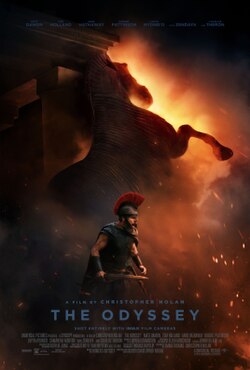
I think pretty much everyone knows the story: Odysseus (Matt Damon), after ten years fighting the Trojan War, has the longest, most hellish commute ever. Will he see his Kingdom of Ithaca again, or wife Penelope (Anne Hathaway) and now-grown son Telemachus (Tom Holland) again? And, even if he does, what will he do about the fact his home is awash with hostile suitors, led by the bullying Antinous (Robert Pattinson) who want to take his throne and wife for themselves?

Nolan’s adaptation of Homer is epic as few other films are. Shot it seems with the whole Mediterranean (and Iceland for good measure) as a soundstage, its visual imagery is almost impossible to beat, shot with immense skill for IMAX without letting the scale flood the story. It’s a surprisingly faithful retelling of the legend, with Homer’s non-linear style catnip for an architect storyteller like Nolan, who promptly opens the film in the final year of the timeline and spools backwards and forwards from there.

The film is set in “a time of apparent magic”, an oblique idea in a world of Cyclopes and trips to Hades (a stunningly, bleakly unsettling vast black landmass, with bodies crawling forward to sip goats blood and share terrible prophecies), but where the presence of the Gods is open to interpretation. Zeus cracks thunder and Poseidon rolls waves, but maybe it’s just superstition. Is Odysseus right to be a sceptic? The only God present is Athena, played with warm distance by Zendaya, who may or may not be a figment of Odysseus guilty conscience.

Despite its length, it frequently zips along, with a marvellously staged sequence from Homer cropping up every few minutes. Sequences like the Fitzcarraldo-like laborious dragging of a wooden horse (half buried in the sand) that looks like a grim bronze statue of a bucking horse, over many miles by the luckless Trojans are brilliantly done. It’s hard to fault almost anything about its production. But it’s not perfect.

Perhaps the major thing missing from Nolan’s film is a sense of personal hubris (as opposed to the imperial hubris of Agamemnon). Nolan has a very interesting interpretative idea of the fall of Troy being effectively the fall of man, the deception and brutality being a Bronze age Hiroshima. But a more interesting film would have seen Odysseus initially proud of his role in this orgy of war-ending killing, only to realise during the disastrous journey home he is in fact the villain. That he broke his own sacred code, of twanging the bow to warn the prey. Instead, Odysseus is plainly aware of his crimes from the start, and his shame perversely gives the character little room to develop, beyond Nolan’s implication his journey is self-inflicted.

Strangely then, it’s hard to get a sense of the journey changing Odysseus. Nolan is far more successful as seeing the whole film as a self-inflicted punishment. Odysseus doesn’t believe he deserves to go home. Instead, as the destroyer of peace and order, part of him embraces his journey (he even leaves Troy on a self-imposed longer route, over his crew’s protests). While his long exile with Calypso is largely pushed into montage, the film implies Odysseus willingly eats the lotus to forget his guilt.

Nolan attempts to fill the gap by having Odysseus strain to save his crew’s lives. But, while Odysseus is weighed down with guilt, his crew emphatically isn’t; this borderline mutinous bunch merrily ransacking and burning a farming village. When Circe denounces this bunch as rapists in waiting, neither the film (or Odysseus) can really argue otherwise. The Odyssey can never quite decide what it feels about these characters, and their resentment at Odysseus for their numbers being whittled down tends to get outweighed by the film’s empathy for Odysseus’ guilt and shame.

There are similarly confused emotional lines in Odysseus relationship with young warrior Sinon. The Odyssey wants to establish Odysseus’ double betrayal of this man – first allowing Antonius to bully him into taking his place in the army, then using him as a pawn to get the Trojans to drag the horse into the city – as a foundational crime. But there isn’t time to establish a surrogate father-son bond between them, meaning Odysseus betrayal of Sinon feels muddily motivated. Again, the film wants to keep Odysseus sympathetic so avoids stating the conclusion he must have made: Sinon’s life is an acceptable sacrifice to end the war. The Odyssey leans heavily on Elliot Page’s sensitive, traumatised performance to make us fill in this blank.

This is a sign of Nolan’s film covering a lot of complex meat, without always finding room to digest it fully. Alongside this, he wants a more conventional, crowd-pleasing tale of a hero coming home to a loving wife. As part of this, many of the female characters of The Odyssey are stripped of some of their richness. Most egregiously, Charlize Theron’s Calypso and Zendaya’s Athena are little more than sounding boards for Odysseus. But even Penelope, despite an emotionally intense performance from Anne Hathaway, is more of a traditional faithful wife. Nolan is trying to show the vulnerability of her position in a masculine world – but you long for more sign of the shrewd resentful figure of either The Return or Margaret Atwood’s The Penelopiad.
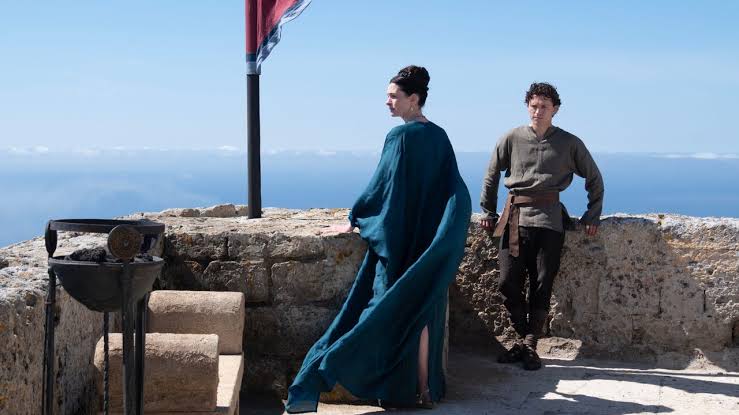
Perhaps because this is because Nolan is grimly realistic in suggesting women are often trapped in victim roles in this male world. Lupita Nyong’o’s Helen of Troy may be critical of the Greeks but is also an abused wife (her face disfigured by Jon Bernthal’s brutish Menelaus), plagued with shame about how her name was used to justify so much death. Even Circe, the most complex and engaging female role, dreads becoming a victim. That doesn’t take away from the barn-storming cameo of resentment and paranoia by Samantha Morton. The creepy Cronenbergesque body-horror of Circe using her hands to craft the sailor’s faces into pigs – including shoving her hand down one man’s throat – is perhaps the film’s most unsettling moment.

What a lot of this comes back to is Nolan’s admittedly fascinating idea that Odysseus has opened a Pandora’s Box that unleashed destruction on the world. His burning of Troy, broke Zeus’s Law of treating guests as you yourself would wish to be treated. In echoes of Oppenheimer, Odysseus believes he has laid the groundwork for the end of the world, by creating one where hospitality can be betrayed and people’s word is no longer their bond (exactly the world the suitors are exploiting in Ithica).

This keys into Nolan’s most interesting concept. Throughout this subtly fracturing world – where the Gods may be falling silent and the world is shorn of rules – there are reports of ‘men of the sea’ roaming the coasts taking anything they want. Is this another cause for the Greeks to fight? Perhaps not: like nuclear weapons, violence become self-perpetuating. The actions of Odysseus crew should clue us in that these men are in fact the Greeks themselves, their humanity gone, continuing a cycle of destruction and death started by Odysseus who has “become death, destroyer of worlds”.

There are many, many good ideas in The Odyssey, which I’ve mulled over for several weeks after seeing the film. Fundamentally, I feel some of it doesn’t always land from the casting of Odysseus. Would Matt Damon have been my choice? Probably not: there is a boyish decency about Damon, not a tortured cunning. He’s probably not helped by recent memories of Ralph Fiennes (almost born to play the role), but Damon can’t bring out the depths of conflict, guilt, regret and misplaced pride in the way (say) Cillian Murphy did in Oppenheimer. Damon is a little too similar to the optimistic, earnest energy Tom Holland very successfully gives Telemachus. The Odyssey tries to follow The Return in making Odysseus keen to ensure Telemachus does follow him into a life of violence – but can’t resist giving Holland one last sword fight to flex his muscles.

I feel conflicted about The Odyssey and I need to see it again. It is so close to everything I wanted. Its practical effects and epic scenes with Polyphemus, the sirens and Sicilia and Charybdis have a wonderful Jason and the Argonauts feel to them that I loved. But it also feels quite damning that the sack of Troy is less shocking here than it was in Troy (especially as the brutality is at the heart of what the film is trying to do) and its final third covers similar ground to The Return, but (for me) with less clear-eyed honesty, awkwardly balancing action set-pieces and its thematically ‘happy’ ending.

But there are so many delights to appreciate, not least Ludwig Göransson’s imposing score, the stunning imagery and costume design (Ellen Mironijck’s imaginative use of a range of inspirations reaches an apotheosis in Agamemnon reimagined as a mix of Darth Vader and Batman). There are wonderful performances in smaller roles, not least Morton, Bernthal, Himesh Patel and most of all John Leguizamo as the loyal Eumaeus and Robert Pattinson as the despicable. But while it tackles an array of brilliant idea, it can’t always balance these all successfully. It’s almost the first Nolan film where his reach overextends his grasp – but when you have a reach like this, does it matter?
The Devil Wears Prada 2 (2026)

The Devil Wears Prada 2 (2026)

Fan-pleasing sequel that cosily does exactly what it says on the tin

Director: David Frankel

Cast: Meryl Streep (Miranda Priestly), Anne Hathaway (Andy Sachs), Emily Blunt (Emily Charlton), Stanley Tucci (Nigel Kipling), Justin Theroux (Benji Barnes), Kenneth Branagh (Stuart Simmons), Lucy Liu (Sasha Barnes), BJ Novak (Jay Ravitz), Simone Ashley (Amari Mari), Tracie Thoms (Lily), Patrick Brammall (Peter), Helen J Shen (Jin Chao)

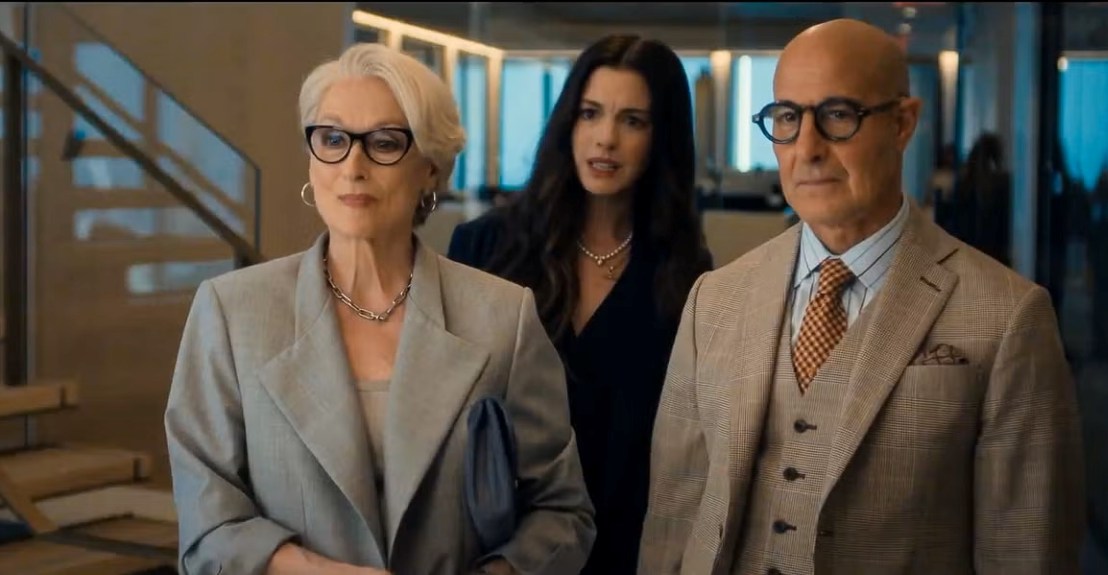
Twenty years on and once again The Devil Wears Prada trots down Hollywood’s cat-walk. Andy Sachs (Anne Hathaway) is now an award-winning journalist, whose entire newsroom has recently been kicked to the curb (via a group WhatsApp!) by their owner. Meaning she’s free to come back to Runway to help the magazine pilot its way through an online storm around a puff piece for a recently exposed sweatshop brand. Subdued dragon Miranda Priestly (Meryl Streep) might not want her back, but the listless editor is struggling in a world of HR complaints and magazines kow-towing to whip-hand holding advertisers like Dior – their advertising team now managed by former assistant Emily (Emily Blunt). Can Andy, Miranda and loyal number-two Nigel (Stanley Tucci) work together to make Runway successful and relevant again in the age of clickbait?

But of course, they can. There is nothing really surprising about The Devil Wears Prada 2, a perfectly entertaining film that has been skilfully set up to offer a good night out for fans of the first film. It’s packed with knowing little in-jokes and references and is overwhelmingly focused on getting the band back together and giving them a joint mission. Which in this case is those two familiar enemies of modern Hollywood, money-obsessed owners with no interest in talent and the internet and all its phone watching shallowness for legacy media.

As such, the idea of a print fashion magazine editor being a symbol of all powerful, devil incarnate ruthlessness feels incredibly passé. That’s one reason why Miranda feels like such a milder, put-upon, even vulnerable figure here, for all Streep can still rip through a sharp one-liner. The other is, of course, that rather like Hannibal Lecter becoming a sort of bizarre cult anti-hero by the time we got to Hannibal, rather than fearing Miranda, Devil Wears Prada 2 knows most of the audience love her. It’s a trend that was already happening in the first movie, and its doubled down here. Miranda is no more-or-less than the primary focus of sympathy for the film.

From the fact that her old world is falling down around her, to the joyless HR rules that stop her poisonous barbs even passing her lips in public, it’s in every inch of the film that expects the viewer to be openly rooting for her. In fact, the whole film is about getting that poisonous, go-getting killer back purring again – with Andy even being called out by a journalist friend for going through Stockholm Syndrome in her eagerness to help her old boss restore herself to terrifying the masses of the fashion world. Andy’s just feeling what the film is going through.

This is all part of a film that recognises the four leads are really popular with the audiences, so since we love them all they might as well all love each other (however secretly) as well. Stanley Tucci’s avuncular affection as Nigel is the glue that brings this gang back together. Anne Hathaway is still all sprightly, girly enthusiasm (however much we are told she is an ace investigative reporter) still trying to impress her private mentor. Emily Blunt (still ace) carefully lets the vulnerability and desperation to be liked peek through the surface of her brittle namesake, obsessed with style and etiquette. All the performers natural mateyness (heck, Blunt and Tucci are famously in-laws) scream off the screen in a film that’s basically a cosy reunion party.

It’s also a film that demonstrates the power of the original. Ironically, for a film all about cost-cutting at Runway, the budget for the film seems through the roof. Most of the second half takes place in the fashion hotspot of Milan. An armada of fashion figures play themselves at various junkets and black-tie dinners (bizarrely, even Rory McIlroy and his wife appear – Rory’s probably shouldn’t have acting in mind as a back-up career). You know a film has passed through the popularity mirror, when the industry it as effectively parodying (however gently) in the first film, pulls out all the stops to get every single name going into its sequel. To cap it off, Lady Gaga pops up to play an exaggerated version of herself, as holder of a long-running feud with Miranda.

The plot, as such, isn’t particularly important compared to the clothes, the charisma of the actors and the warm comfort the film is sure you are getting from the very fact it exists and is playing in front of your eyes. Meryl Streep is still lots of fun, even if she could still play Miranda while standing on her head. I would guess she asked for a top line actor to be her scene partner for her domestic scenes, hence the slightly bizarre presence of Kenneth Branagh of all people (doing a perfectly serviceable job, and he seems to have also gone to the trouble of learning a few notes on the violin).

How much you enjoy all this, rather depends probably on your level of knowledge and affection for the original. But, if you’ve got any level of that, you’ll probably find something to enjoy in this light, feel-good confection, where problems can be easily solved (twice!) by the waving of mythical billionaire Lucy Liu’s magic wand. There are some very, very mild points made about the downfall of the print industry (not to mention journalism) in the digital age, but that’s a subsidiary point to what we really want to see: a closing shot of our heroes working in perfect harmony, having learned (finally) to love and respect each other. It’s the sequel as very particular fan fiction.

Les Misérables (2012)

Hugh Jackman runs for years in Tom Hooper’s controversial Les Misérables adaptation

Director: Tom Hooper

Cast: Hugh Jackman (Jean Valjean), Russell Crowe (Inspector Javert), Anne Hathaway (Fantine), Amanda Seyfried (Cosette), Eddie Redmayne (Marius), Helena Bonham Carter (Madame Thenadier), Sacha Baron Cohen (Thenardier), Samantha Barks (Eponine), Aaron Tveit (Enjolras), Daniel Huttlestone (Gavroche)

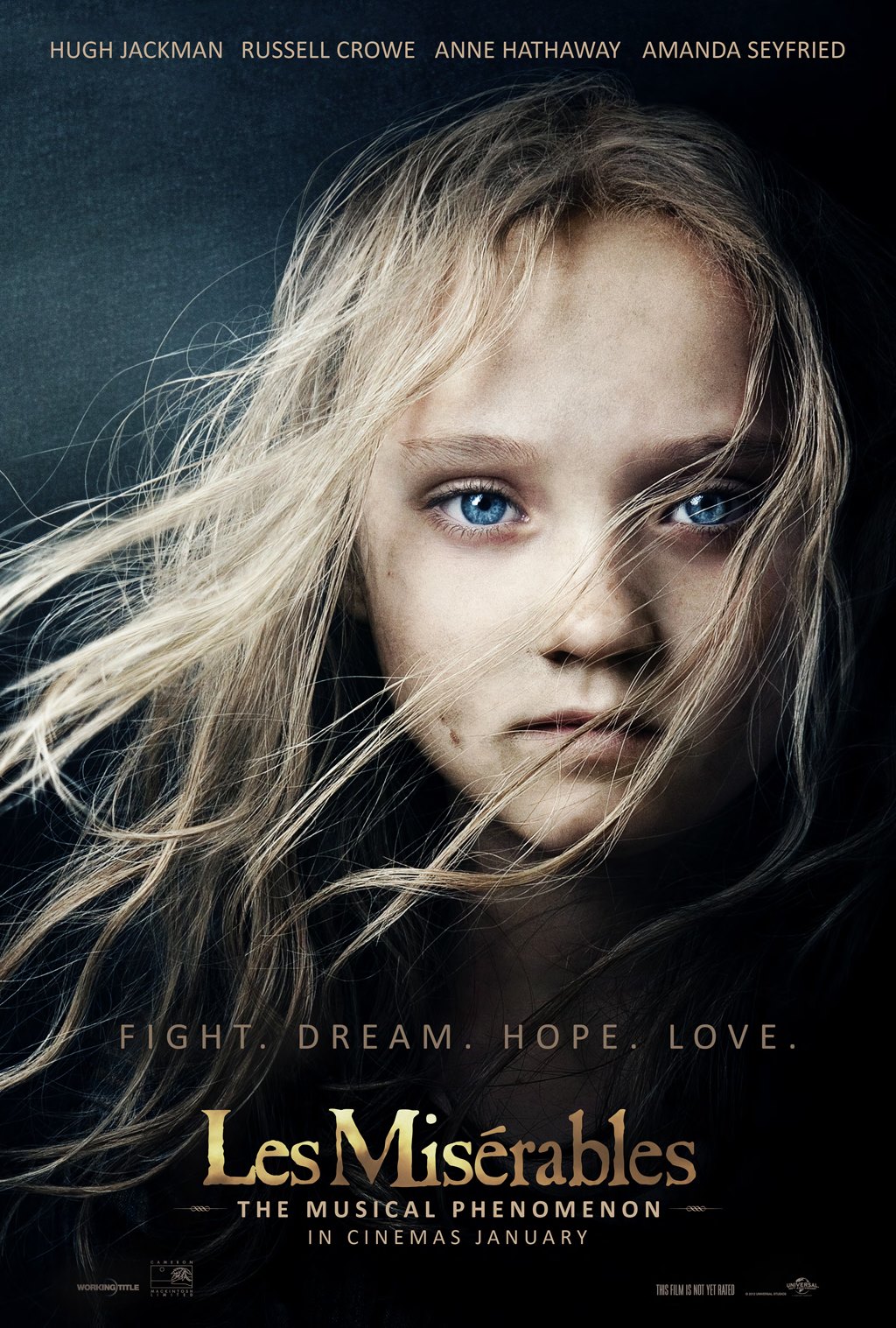
Of all the behemoth musicals of the 1980s, Les Misérables may just be the best. An entirely sung adaptation of Victor Hugo’s door-stop novel, it’s been thrilling sold-out global audiences ever since 1985. It ran on Broadway for 16 years and never stopped playing in the West End. Plans to turn it into a film have took decades, with its scale always the problem (not least since musicals spent a large chunk of the 1990s as far from sure bets at the Box Office). Finally, it came to the screen, with an Oscar-winning director who supplied the ‘fresh new vision’ a show that had been staged literally thousands of times needed. That vision has its merits, but it’s also divisive.

The story follows Jean Valjean (Hugh Jackman), a convict imprisoned for nineteen-years for stealing a loaf of bread. He is persecuted by his nemesis Javert (Russell Crowe), a rigid policeman who believes a man can never change. On parole, Valjean is an outcast but his life is changed forever after encountering a Bishop (played by original West End Valjean, Colm Wilkinson) who claims he had gifted the silverware Valjean had in fact tried to steal. The Bishop charges Valjean to live his life for the good of others. Eight years later he has become a respected mayor of a small town. But his past starts to catch up with him as Javert arrives as the new chief of police. Will helping Fantine (Anne Hathaway), the mother of illegitimate child Cosette (growing up to become Amanda Seyfried), lead to his secret being revealed?

Tom Hooper has a difficult challenge taking on Les Misérables. There can be few people around who haven’t heard at least some of the songs – and no musicals fan who probably hasn’t at a minimum watched a concert version, if not the show itself. How do you even begin to make one of the most famous musicals of all time fresh? Hooper chose a new approach that would up the intimacy and drama, fore-fronting emotion over scale. It also allowed him to fuse his unconventional framing with the raw, hand-held camera work of John Adams, his hit HBO miniseries.

So, Les Misérables, unlike many other musicals was to be all-sung live by the actors, rather than separately recorded and lip-synched on set. The camera would fly into their faces and almost interrogate the actors as they performed, capturing every emotion passing across their face. It would be up-close and intimate. What in the theatre works as a series of powerful, theatre-filling, ballads would be repackaged into something very personal. At times it works extremely effectively.

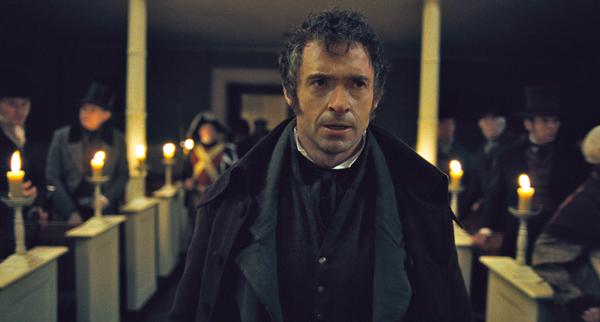
Having the actors sing live, means all the power of the performances they gave in the moment are captured. Emotions are dialled up, with songs often delivered through cracking voices or snot-filled nose sniffs. This has a particularly huge benefit for Anne Hathaway, whose deeply heartfelt, devastating rendition of I Dreamed a Dream is delivered in a single shot close-up that turns the song into a powerfully raw song about trauma (this sequence alone probably ensured Hathaway won every major gong going). It’s the same with Jackman: Valjean’s Soliloquy in particular plays off the raw guilt, shame and self-disgust Jackman lets play across his face while later Who Am I gains even more impact from the fear, hesitation, regret and moral determination Jackman injects into it, cracked voice and all. Perhaps not a surprise the two most confident performers benefit the most.

The downside is that, repeating the same visual technique for every single song, does make the film at times rather visually oppressive and repetitive. Even the large group numbers sees the camera drill into the faces of the individual singers, rather than offer us any wide shots. In fact, the wide shots in the film are so few you can almost count them on one hand. While Hooper’s approach uses the close-up to present the songs in ways theatre never could (good), it does mean he sacrifices the scale and beauty cinema can bring (less good).

You actually begin to think perhaps Hooper doesn’t really like musicals that much. His vision here is to turn Les Misérables into more of an indie film than an adaptation of West End musical. Choreography isn’t, to be fair, a major part of the stage production, but theatrical spectacle is, and that’s almost completely missing. Some of the most powerful, hairs-on-the-back of the neck power of the big numbers has been sacrificed for grinding the emotion out (Jackman at points speaks some of the lines rather than singing them). Musically, Samantha Barks’ marvellous rendition of On My Own is the only song in the film I would listen to out of context. It makes the show different – but more variety and more willingness to embrace the spectacle of the show – mixed with the intimacy of the solo numbers might have added more.

Les Misérables is still however very entertaining: after all it can’t not be when it has some of the best songs in the business. The acting is extremely strong. Jackman is perfectly cast: he not only has the vocal range and strength, but also the acting chops to bring to life a character who goes from red-eyed fugitive to caring and dutiful surrogate father. Hathaway is hugely affecting as Fantine, vulnerable but also with a deep resentment. Redmayne is hugely engaging and charismatic as Marius. Barks is excellent, Seyfried gives a lot of sensitivity to Cosette and Carter and Cohen are fun as the Thenadiers. The only mis-step is Crowe, who has the presence for the role but notably lacks the vocal strength for a notoriously difficult role.

They all provide some of the most intimate renditions of these songs you’ll ever see and the film unarguably offers a take you will have never seen before, even if you had sat through every single one of the thousands of stagings. It works better for solos than group numbers (which, with their kaleidoscope of voices all in different locations are hard to replicate on screen anyway), and it’s a well the film dips into far too often, but when it works, it really does. Les Misérables divides some – and on repeated viewings its repetitive visuals make it feel longer, with the second half in particular flagging – but Hooper does something a West End show can’t do. It might well have been better if it has used more of the things cinema cando (scale, sets, mise-en-scene – it’s hard to picture an actual image from the film that isn’t a close-up) but a film with actors as good as this and songs as affected as these will always work, no matter what.

The Devil Wears Prada (2006)

Meryl Streep on demonic good form in The Devil Wears Prada

Director: David Frankel

Cast: Meryl Streep (Miranda Priestly), Anne Hathaway (Andrea Sachs), Emily Blunt (Emily Charlton), Stanley Tucci (Nigel Kipling), Simon Baker (Christian Thompson), Adrian Grenier (Nate Cooper)

Miranda Priestly (Meryl Streep) is the lord of all she surveys. Ruling the fashion industry from the editorial office of her magazine Runaway, she can make or break careers with a pursed lip or a raised eyebrow. And, while barely raising her voice beyond a whisper, she expects total obedience and deference in the office, with her assistants little better than personal slaves. It’s a tough world for wannabe journalist Andrea (Anne Hathaway), hoping for a big break from her connection with Miranda. Andrea looks down on the world of fashion, and longs for a serious journalism career – but will her ideals survive the temptations on offer… 

The Devil Wears Prada is your pretty standard morality tale of the moth brought too close to the flame: the hero struggling to resist the temptation to jack in their principles and dreams in order to win the praise of a domineering bully and secure riches and fame. We’ve seen it all before, and to be honest TDWP doesn’t really do anything different from this formula, other than introduce it into the world of fashion and making both the tempter and tempted a woman.

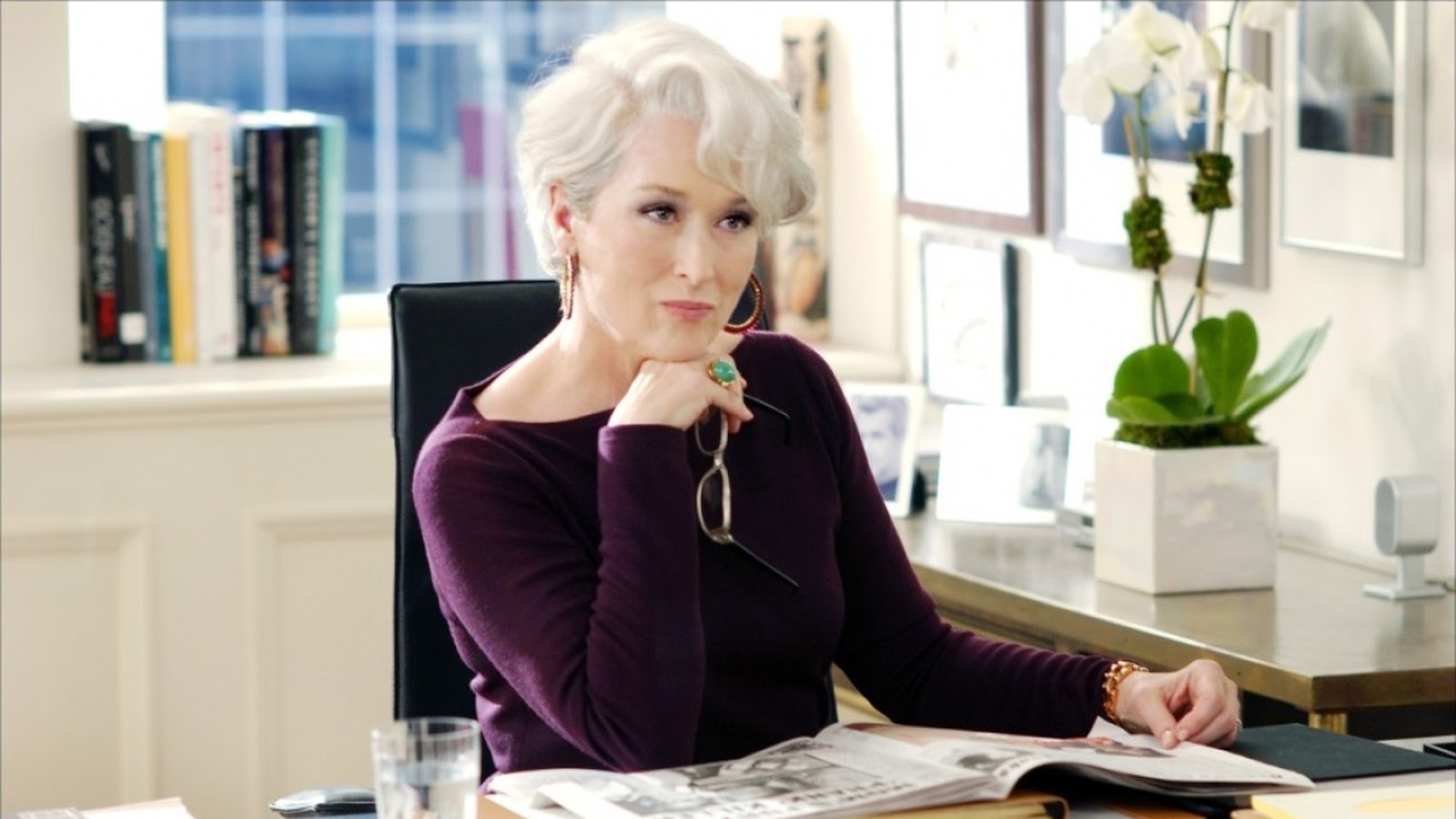
And it works where it does because it has some pretty impressive women in these roles. None less than Meryl Streep, who seizes on the role with a quiet relish and has the confidence to underplay scenes that lesser actresses would tear into as if their only dinner that day was the scenery. What’s notable about Streep’s Miranda is that she is so calm, so quiet, so assured, so unflustered that she only needs the slightest gestures and hints to break people around her. It’s the ultimate confidence that comes from supreme power – she knows she never needs to raise her voice, that people will fall silent to listen to her. Streep also mines her considerable comic talent to lace her many moments of cruelty and selfishness with an arch, dry humour.

It’s no wonder poor Andrea has such a rough time in this film. Only in Hollywoodland could Anne Hathaway be considered a dumpy frump, but the styling of her as a someone with no sense of fashion whatsoever (at least initially) does at least make her stand out from the rest. Andrea’s plotline follows what so many other “moth to the flame” plots have followed, moving from snide indifference to her job to all consuming obsession as she begins to parrot the same values and opinions of her master. She even has a partner (usually the woman’s role, so very nice to see it reversed) who complains about her not being at home enough.

The film avoids cheap shots at fashion as well which is refreshing, stressing at every point that it is a world of legitimate art and expertise and has made an important contribution to the culture and society of the 20th century. No wonder so many fashion famous faces cameo. Andrea’s scornful disregard for fashion is punctured early on as being an inverted snobbery and part of her desire to project an image of herself. 

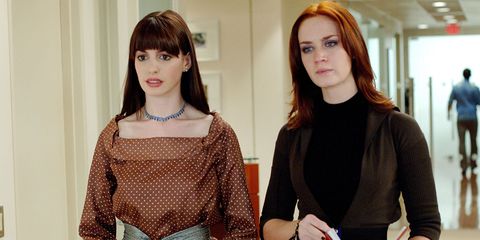
The real issues here are workplace bullying – although the film never really delves into it that much and is eager to leave no real resolution. Emily Blunt – who is extremely good, with more than a hint of desperation and depression under her cool, arch, British exterior – as Andrea’s fellow assistant shows early on how environments like this chew people up and force them to become sharks or die. It’s a suggestion the film is not keen on exploring in real depth though, preferring a far lighter, more traditional story as we wonder whether Andrea will be seduced by the darkness or will return to her roots of integrity and journalism (one guess which way she goes).

Even at the end though, Andrea is still desperate in some way for Miranda’s approval and to be acknowledged in some way by her. It’s a feeling that the film shares. It wants Miranda to turn to it and praise it, it’s scared of really calling her out on her behaviour, instead wanting to cut her as much slack as possible. It wants to see her triumph and, even at the end, to take a wry pleasure from Andrea forging her own life. It’s as besotted with her as the characters are, and for all it shows that Andrea doesn’t do well from spending time with her, it still seems to want to show that under it all “she is human”. It dodges the bullet of actually dealing with bullies and monsters, and instead takes the line of saying “yeah sure she was bad, but she had great style so you can’t not like her.” Which means, in a way, it follows the same line that in real life allows charismatic geniuses in the workplace to continue behaving any way they like.

Which isn’t to say this isn’t a fun film with decent performances and lots of good jokes. Streep gives Miranda a huge degree of depth – we have moments of her loneliness and isolation from her family – but it’s a film that could have done more to show the negatives of how working lifestyles like these affect people. I guess that would have made it less fun though.