
Tag: Lucy Liu

The Devil Wears Prada 2 (2026)

The Devil Wears Prada 2 (2026)

Fan-pleasing sequel that cosily does exactly what it says on the tin

Director: David Frankel

Cast: Meryl Streep (Miranda Priestly), Anne Hathaway (Andy Sachs), Emily Blunt (Emily Charlton), Stanley Tucci (Nigel Kipling), Justin Theroux (Benji Barnes), Kenneth Branagh (Stuart Simmons), Lucy Liu (Sasha Barnes), BJ Novak (Jay Ravitz), Simone Ashley (Amari Mari), Tracie Thoms (Lily), Patrick Brammall (Peter), Helen J Shen (Jin Chao)

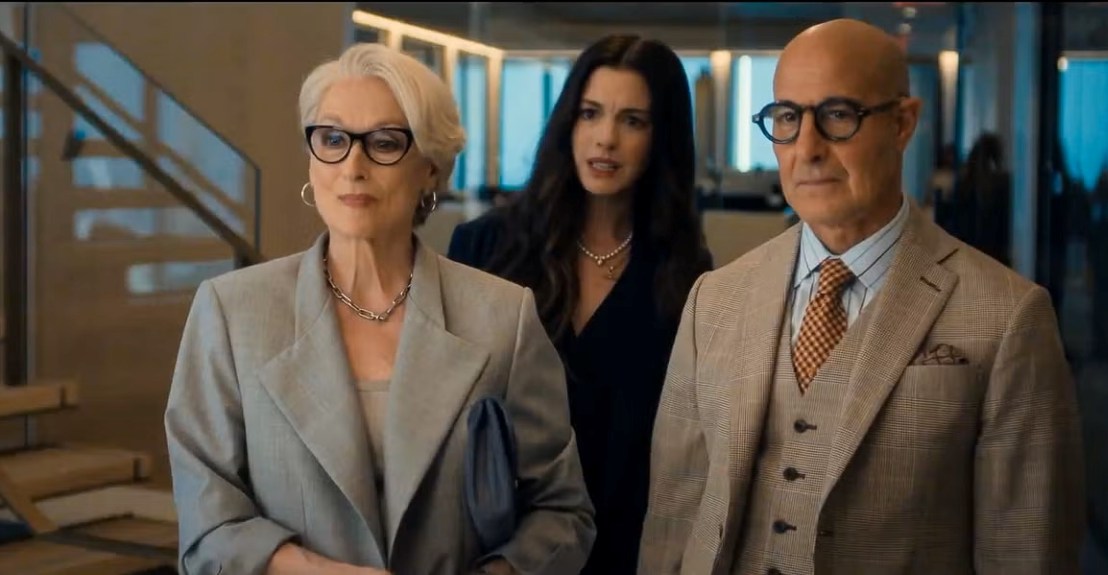
Twenty years on and once again The Devil Wears Prada trots down Hollywood’s cat-walk. Andy Sachs (Anne Hathaway) is now an award-winning journalist, whose entire newsroom has recently been kicked to the curb (via a group WhatsApp!) by their owner. Meaning she’s free to come back to Runway to help the magazine pilot its way through an online storm around a puff piece for a recently exposed sweatshop brand. Subdued dragon Miranda Priestly (Meryl Streep) might not want her back, but the listless editor is struggling in a world of HR complaints and magazines kow-towing to whip-hand holding advertisers like Dior – their advertising team now managed by former assistant Emily (Emily Blunt). Can Andy, Miranda and loyal number-two Nigel (Stanley Tucci) work together to make Runway successful and relevant again in the age of clickbait?

But of course, they can. There is nothing really surprising about The Devil Wears Prada 2, a perfectly entertaining film that has been skilfully set up to offer a good night out for fans of the first film. It’s packed with knowing little in-jokes and references and is overwhelmingly focused on getting the band back together and giving them a joint mission. Which in this case is those two familiar enemies of modern Hollywood, money-obsessed owners with no interest in talent and the internet and all its phone watching shallowness for legacy media.

As such, the idea of a print fashion magazine editor being a symbol of all powerful, devil incarnate ruthlessness feels incredibly passé. That’s one reason why Miranda feels like such a milder, put-upon, even vulnerable figure here, for all Streep can still rip through a sharp one-liner. The other is, of course, that rather like Hannibal Lecter becoming a sort of bizarre cult anti-hero by the time we got to Hannibal, rather than fearing Miranda, Devil Wears Prada 2 knows most of the audience love her. It’s a trend that was already happening in the first movie, and its doubled down here. Miranda is no more-or-less than the primary focus of sympathy for the film.

From the fact that her old world is falling down around her, to the joyless HR rules that stop her poisonous barbs even passing her lips in public, it’s in every inch of the film that expects the viewer to be openly rooting for her. In fact, the whole film is about getting that poisonous, go-getting killer back purring again – with Andy even being called out by a journalist friend for going through Stockholm Syndrome in her eagerness to help her old boss restore herself to terrifying the masses of the fashion world. Andy’s just feeling what the film is going through.

This is all part of a film that recognises the four leads are really popular with the audiences, so since we love them all they might as well all love each other (however secretly) as well. Stanley Tucci’s avuncular affection as Nigel is the glue that brings this gang back together. Anne Hathaway is still all sprightly, girly enthusiasm (however much we are told she is an ace investigative reporter) still trying to impress her private mentor. Emily Blunt (still ace) carefully lets the vulnerability and desperation to be liked peek through the surface of her brittle namesake, obsessed with style and etiquette. All the performers natural mateyness (heck, Blunt and Tucci are famously in-laws) scream off the screen in a film that’s basically a cosy reunion party.

It’s also a film that demonstrates the power of the original. Ironically, for a film all about cost-cutting at Runway, the budget for the film seems through the roof. Most of the second half takes place in the fashion hotspot of Milan. An armada of fashion figures play themselves at various junkets and black-tie dinners (bizarrely, even Rory McIlroy and his wife appear – Rory’s probably shouldn’t have acting in mind as a back-up career). You know a film has passed through the popularity mirror, when the industry it as effectively parodying (however gently) in the first film, pulls out all the stops to get every single name going into its sequel. To cap it off, Lady Gaga pops up to play an exaggerated version of herself, as holder of a long-running feud with Miranda.

The plot, as such, isn’t particularly important compared to the clothes, the charisma of the actors and the warm comfort the film is sure you are getting from the very fact it exists and is playing in front of your eyes. Meryl Streep is still lots of fun, even if she could still play Miranda while standing on her head. I would guess she asked for a top line actor to be her scene partner for her domestic scenes, hence the slightly bizarre presence of Kenneth Branagh of all people (doing a perfectly serviceable job, and he seems to have also gone to the trouble of learning a few notes on the violin).

How much you enjoy all this, rather depends probably on your level of knowledge and affection for the original. But, if you’ve got any level of that, you’ll probably find something to enjoy in this light, feel-good confection, where problems can be easily solved (twice!) by the waving of mythical billionaire Lucy Liu’s magic wand. There are some very, very mild points made about the downfall of the print industry (not to mention journalism) in the digital age, but that’s a subsidiary point to what we really want to see: a closing shot of our heroes working in perfect harmony, having learned (finally) to love and respect each other. It’s the sequel as very particular fan fiction.

Chicago (2002)

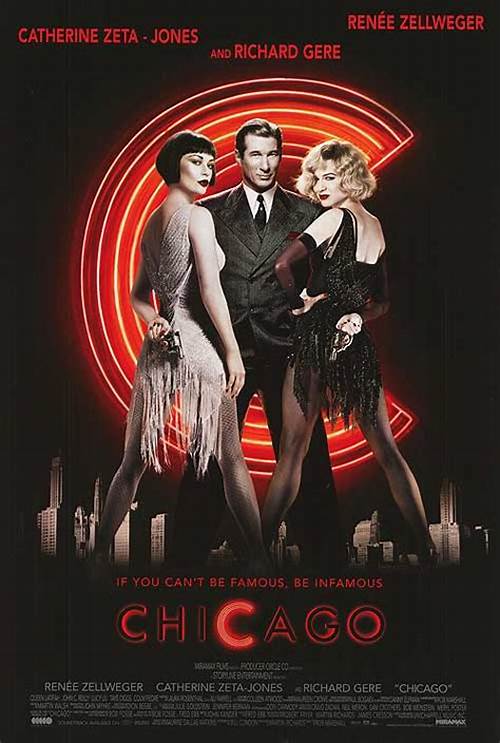
Catherine Zeta-Jones struts her stuff in Rob Marshall’s fabulous Oscar winner Chicago

Director: Rob Marshall

Cast: Renée Zellweger (Roxie Hart), Catherine Zeta-Jones (Velma Kelly), Richard Gere (Billy Flynn), Queen Latifah (“Mama” Morton), John C. Reilly (Amos Hart), Christine Baranski (Mary Sunshine), Taye Diggs (The Bandleader), Colm Feore (Martin Harrison), Lucy Liu (Kitty Baxter), Dominic West (Fred Casely), Mya (Mona), Susan Misner (Liz), Denise Faye (Annie), Deidre Goodwin (June)

It’s become quite the fashion to knock Chicago. Heck I’ve done it myself. How did this mere musical win Best Picture? It’s not even as if the original production was much more than an entertainment. It’s another of those films diminished by whispers that it doesn’t deserve the title of Best Picture. But, look at the film with an unprejudiced eye, and you’ll see that this is the best stage-to-screen musical theatre adaptation since Cabaret. Chicago is such dynamic, high octane entertainment, you would have to a really cold heart not to enjoy it.

A heart as cold, perhaps, as most of the characters. Its set in a 1920s Chicago where it doesn’t matter what you are famous for, so long as you are famous. Who are the bigger stars? The people on stage of the infamous on death row? Roxie Hart (Renée Zellweger) is a wannabe who guns down her conman lover Fred Casely (Dominic West) when his promises of the stage career she’s dreaming of turns out to be all hot air. Roxie works out that she can turn her infamy into just plain fame – following the inspiration of vaudeville-star-turned-accused-murderer Velma Kelly (Catherine Zeta-Jones), who is now more famous than ever. With amoral lawyer Billy Flynn (Richard Gere) in their corner, can they play all sides against the middle and find freedom and fame?

Chicago’s debt to Bob Fosse is in almost every single frame. Rob Marshall’s brilliant choreography is inspired by Fosse’s own work for the original production. It means the entire film drips with the passionate sexiness of Fosse’s best work. It’s also inspired by Fosse’s Cabaret in its use of the musical numbers. There all the musical numbers were kept within the nightclub, acting as a subtle commentary on the events of the film. Here they occur in Roxie’s imagination, staged in a shadowy empty theatre with a mysterious band leader (a charismatic Taye Diggs) introducing each song. It’s a brilliant concept, that allows them to be staged with the sort of exuberance and theatricality that would look plain odd in a ‘real’ setting.

And what musical numbers they are! These are toe-tappingly, finger-clickingly fun, that will make you want to jump up and join in. Marshall’s choreography and direction is not only faultless, but also covers a range of styles. From the sultry opening of All That Jazz performed by Catherine Zeta-Jones, we get burlesque (When You’re Good to Mama), sensual sexiness (Cell Block Tango), knock-about farce (We Both Reached for the Gun), classic 1930s Astaire and Rogers (Roxie) and surreal madness (Razzle Dazzle). The one thing they all have in common is the high-octane energy they are performed with (no wonder all those dancers are so slim!), with no one leaving anything in the dressing room.

Chicago is possibly one of the best edited musicals ever made. Marshall gets a superb balance between camera movements, cutting and the dance numbers. We can appreciate – and see – every step of the intricate choreography, with clear camera movements and angles. But the film is also edited practically on the beat. Cuts accentuate changes in the tempo and even marry up with the exact movements of the dancers. Not only that, the numbers frequently cut from reality to fantasy and back again – and this parallel montage is superbly done, with perfectly timed transitions. The cutting complements each number so well, it actually makes them more exciting and dynamic. It’s a masterclass in using the language of cinema to accentuate the impact of dancing.

But Marshall manages to make Chicago not just a collection of amazing dances and fabulous tunes. In our celebrity worship age, Chicago feels increasingly more relevant – you can imagine Roxie would love to be on reality TV and would never be off Twitter. It doesn’t matter that she’s got no real talent (in fact it makes the fact that all the musical numbers are fantasies even more witty), she’s just desperate to be known. Shooting her lover is the best thing that’s ever happened to her and she’ll do anything to stay in the newspapers, from a fake pregnancy to playing the timid ingenue.

Everyone in Chicago is just playing the game. Velma is just as desperate to cling to fame – and her growing desperation at losing the limelight to Roxie is almost touching. Mama Morton, the quietly corrupt prison warden, lives vicariously through her inmates (she even dyes her hair to match Roxie’s). The media lap up the details of every killing, turning the trials into huge soap operas. And at the heart you have Billy Flynn, as much a showman as he is a lawyer, playing every angle and knowing its all about telling a good story rather than truth or justice.

Chicago is played with absolute commitment. Renée Zellweger is excellent as the fiercely ambitious, amoral Roxie, her fragile softness perfect for the image Roxie likes to project, just as she is able to twist her face into selfish meanness. Zeta-Jones clearly hadn’t forgotten her years of musical theatre, demonstrating she is a superb singer and dancer, her vampish glamour perfect for Velma’s dark ambition. Richard Gere (in a role turned down by Travolta, as he ‘didn’t get’ the framing device) channels his natural charisma and good natured smirk into a role that could have been made for him. Reilly is surprisingly sweet and effective as Roxie’s put-upon husband and Latifah hugely entertaining as the knowingly manipulative Mama.

Chicago may be “just a musical” – but you’d be hard pressed to find a better entertainment. The song and dance numbers are superb and the film still manages to land some blows on celebrity culture. Hollywood has always loved musicals – can you imagine how the viewers of Broadway Melody would have responded if they had seen this? – and with Chicago we get something we’ve not seen since the golden days of Bob Fosse. There are few Oscar winners as straight forwardly entertaining as this.