
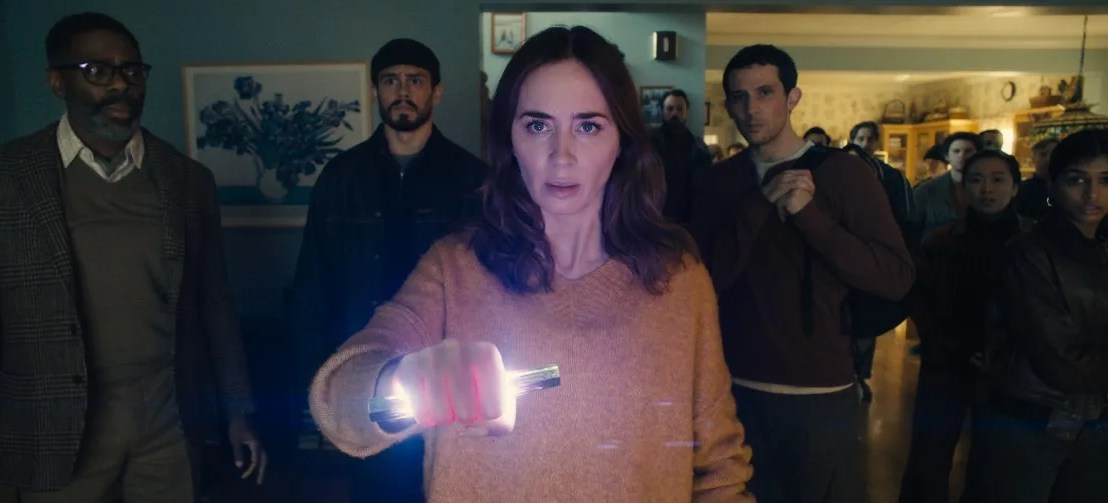
Spielberg returns to Close Encounters in a film that explores interesting ideas but doesn’t quite no how to conclude
Director: Steven Spielberg
Cast: Emily Blunt (Margaret Fairchild), Josh O’Connor (Daniel Kellner), Colin Firth (Noah Scanlon), Eve Hewson (Jane Blankenship), Colman Domingo (Hugo Wakefield), Wyatt Russell (Jackson), Henry Lloyd-Hughes (Casper Boyd), Elizabeth Marvel (Sister Maura), Hettienne Park (Serena)
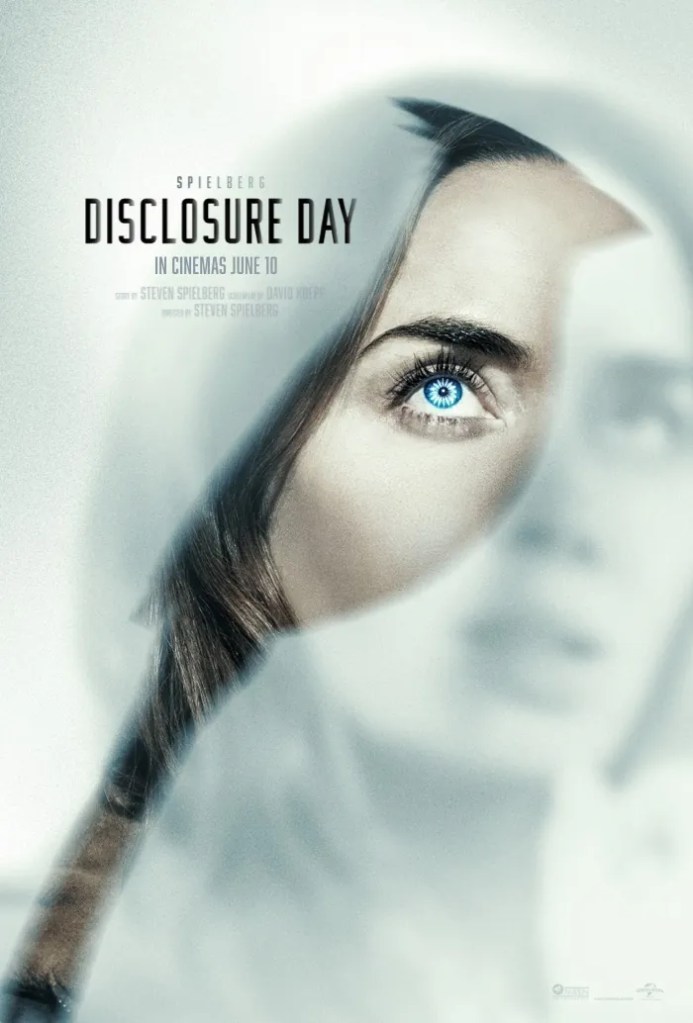
After almost fifty years, Spielberg returns to Close Encounters territory: the wonder and fear from learning we might not be alone. Disclosure Day wraps this up in a very modern conspiracy, a shady organisation keeping secrets, but still carrying the optimism and hope Spielberg’s previous encounters with Little Green Men had. Disclosure Day is a film awash in different ideas and concepts, assembled with the flair and skill you expect from Spielberg, but somehow not quite sensational enough to hold together as well as you hope it’s going to from its punchy opening.
It does start with the sort of guts that you only get after a lifetime of directing mega-hits, throwing us into the middle of the story and avoiding clumsy flashbacks and voiceover and trusting we will catch up as we go. Two very different people find their lives surprisingly changed: Daniel Kellner (Josh O’Connor), a mathematics genius, feels compelled to steal (to release to the public) a mountain of evidence of extra-terrestrial visitations (and our mistreatment of them) hidden by shady corporation Wardex, run by Noah Scanlon (Colin Firth). And TV weather presenter Margaret Fairchild (Emily Blunt) suddenly finds she has the ability to know people’s whole live stories just by looking at them and to speak every language fluently, including a clicky alien dialect that sounds like dolphin chat but is clearly not of this world.
This forms the set-up for a mix of chase movie and earnest plea for patience, understanding and togetherness that feels very in-tune with Spielberg’s greatest hits. Disclosure Day is set in a world where, playing in the background of many scenes, the world teeters on the edge of World War Three – right down to panicked small-town citizens stripping a convenience store to the bones. There is a half-formed argument bubbling here about whether the world is ready for the revelations to come. Will it tip everyone into destructive panic? Eve Hewson’s Jane, a former novitiate, worries it could lead to a brutal shattering of faith – and rightly argues Daniel would have responsibility for the possible negative effects that might come out of whistle-blowing.
It’s avoiding this that is the justification used for by Wardex, our sinister corporation, with its small private army that uses its control of alien tech to call the shots with the government and hunt down whistle-blowers. They are represented by Colin Firth, perfectly cast as an imperiously gruff corporate suit who has just enough humanity bubbling under the surface to make you believe he regrets the things he does. Wardex uses alien mind-control tech, to form a psychic bond with people over great distances, something akin to heightened interrogation and mind-control. These sequences are the film’s stand-outs, Spielberg skilfully using simple effects (both parties pupils switch colour to a sky blue) and effective editing to cross-cut between two people talking while their bodies are miles apart (and he cleverly shows the punishing impact – especially on Firth of the strain of using the device) – as well as the creeping, unsettling horror of mind control pushing people to do and say things they don’t want to do.
It’s a perversion of what Disclosure Day holds up as the alien’s evolutionary advantage: their empathy. That’s the root of Margaret’s powers, which come so naturally to her that when she drops into Russian from nowhere when talking to her slacker boyfriend (a good performance of unreliable decency from Wyatt Russell) or enters into a long fast-paced Korean conversation with a visiting professor in her TV studio (so fast, the official translator can’t even keep up), she doesn’t even notice she’s not talking English. Similarly, her ability to “see” people’s lives – allowing her to offer small titbits of immediate advice that instantly disarm everyone she meets – happens so naturally, it takes her few moments to notice and become scared by her insight.
Her mixed feeling about these skills – which sometimes seem like a blessing and others a terrible curse – are beautifully played by Emily Blunt, who gives a stand-out performance of a driven, successful woman, increasingly terrified but still resolute in the actions she feels compelled to do. Blunt is able to handle the emotion and distress, as well as deliver on the comedy (there is a very funny sequence where, in pelting rain, she grows increasingly frustrated by Jackson’s inability to crush her phone by driving over it with her car). She finds a great deal of sensitivity and gentleness in Margaret, who mixes responsibility, fear, anxiety and exhilaration.
This all comes together very well in the momentum-packed first-half of the film, which sees Margaret and Daniel (a decent performance by Josh O’Connor, that largely fails to really stretch him) travelling together. It’s crammed with inventively shot sequences, such as Daniel and Jane’s escape from a blown countryside safe-house – a brilliant sequence of tracking camera-shots, inventive angles and nerve-tangling tension, helped by O’Connor’s rather sweet nervous fear (“What am I doing?”) throughout. Match that with Margaret’s engrossing pilgrimage across country, and the fascinating use of the alien bond-control device and it makes for a film that sets up a lot of interest.
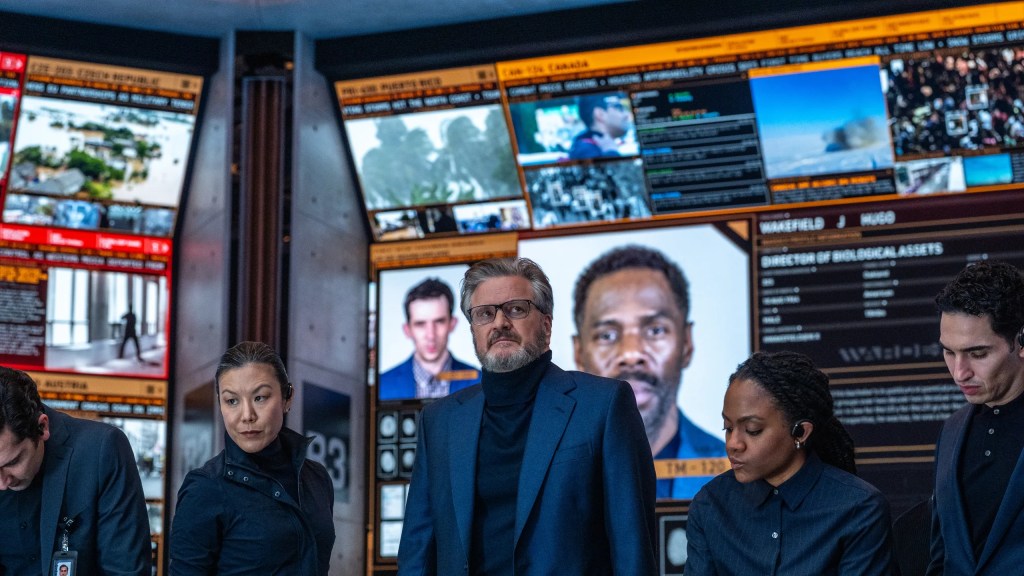
It’s a shame then that the second half never quite pays this off. As the film proceeds, it feels compelled to start answering the questions that have been bubbling under most of its chase. It’s here the film’s deliberate narrative card-holding starts to work against it. Since our heroes don’t even fully know the questions they should be asking, Colman Domingo’s whistle-blower has to both ask them and then immediately answer them. It leads to a long ‘revelation’ scene, that rather overwhelms us with points about our heroes’ backgrounds stretching back to their childhood that feel both rather heavily delivered and not quite engaging enough.
It also builds towards a sort of modern recap of the ending of Close Encounters, but this time in a TV studio – and it’s interesting to see that Spielberg perhaps still believes that a TV news programme showing footage of aliens would be instantly trusted the world over, without any talk of AI fakery. This long sequence, spooling out the whole backstory of the film’s close encounter phenomena is also similar to Close Encounters in the sense that it’s a simple presentation – but differs in that it lacks the awe-inspiring scale and spectacle of that movie. Without it, it feels somehow slightly drier and more earnest, rather than carrying the sort of magical force the film needs.
It’s part of a sense that Disclosure Day throws a lot of complex stuff at us – our place in the universe, ability to empathise, the potentially dangerous impact revelations can have – but lets these drift away, in favour of a more reassuring and slightly simplistic ending that leaves you feeling its points have been underexplored. This is slightly more disappointing because there has been so much good stuff in Disclosure Day – Blunt is excellent, Hewson and Firth are very good, the direction and film-making on show is first class – but there doesn’t feel like a fully satisfying conclusion is found for everything we have seen.

