Author: Alistair Nunn

Black Swan (2010)


Natalie Portman in the intense world of ballet in Aronofsky’s crazy masterpiece Black Swan

Director:  Darren Aronofsky

Cast: Natalie Portman (Nina Sayers), Mila Kunis (Lily), Vincent Cassel (Thomas Leroy), Barbara Hershey (Erica Sayers), Winona Ryder (Beth MacIntyre), Benjamin Millepied (David Moreau), Ksenia Solo (Veronica), Kristina Anapau (Galina), Janet Montgomery (Madeline), Sebastian Stan (Andrew)

Something about ballet just makes people think of obsession. Many dancers criticised Black Swan for perpetuating myths about the dangerous psychology, the quest for perfection, the personal life imbalance connected with the all-consuming art ballet seems to be. It’s hard not to agree with them – but that doesn’t mean Black Swan isn’t unsettling, creepy and hypnotic film-making. 

Nina Sayers (Natalie Portman) is an obsessive member of the New York Ballet, focused on achieving perfection and lives a sheltered, barely adult life at home, dominated by her mother Erica (Barbara Hershey). With the forced retirement of company lead Beth McIntyre (Winona Ryder), Diagheliv-style director Thomas Leroy (Vincent Cassel) selects Nina to play the dual role lead of white and black swan in Swan Lake. Leroy feels she is perfect for the innocent white swan, but needs to work on the sensual black swan. Increasingly feeling the pressure of playing the role under the demanding Leroy – and growing increasingly preoccupied with her understudy Lily (Mila Kunis) – Nina’s fragile psyche begins to fracture.

Black Swan is a mesmerising mixture of psychological drama, melodrama, Cronenberg-style body horror, unreliable narration and immersion into a pressure-cooker world. It’s often difficult to watch, sometimes maddeningly over-blown, and overly tricksy in its intense visual style. But despite that, it’s actually compellingly watchable, an audacious tight-rope walk between style and substance that constantly feels like it’s going to get lost in its extremes but never does.

Aronofsky’s camera flies and whirls like the ballet dancers he is recording, and he creates a wonderfully dark spin on The Red Shoes. What I found particularly fascinating watching the film again after many years is how unreliable and imprecise so much of the story is. Told completely from the perspective of Nina – a woman subject to delusions, chronic social insecurity and an increasingly split psyche – it becomes clear that a lot of what we see may not be as clear-cut as we think. 

This most obviously affects our perception of Mila Kunis’ rival (or is she?) dancer Lily. How many of the interactions we see are actually happening, and how many are fantasies? With Lily becoming an alternative physical form for Nina’s projection of her own “black swan” persona (several times, Lily’s face morphs and shifts into Nina’s), we have to question virtually every appearance we see of her – and interpret her personality from the prejudiced, fearful view seen by Nina. Similarly, Barbara Hershey’s domineering mother (while undoubtedly controlling) is perhaps not the monster we see. She’s clearly 100% right in her fears for Nina’s sanity. How much of her behaviour is possessive jealousy and how much is it a protective parent who knows her daughter is a danger to herself?

Then of course we have Nina herself. Natalie Portman won every award going for her performance here, a tour de force of bravura dementedness mixed with vulnerability. Nina is a character who we only slowly realise as the film progresses is not the innocent, childlike waif she first appears, but has a much darker, more complex personality. Her “black swan” side – the darker, sexual side of her personality she is encouraged to explore – slowly expresses itself more and more as a physically. Portman clearly demonstrates the differences between the two sides of Nina’s personality. Her increasing desperation, isolation and insecurity are very effective – and the moments where she allows the “black swan” persona to control her actions are riveting.

Aronofsky explores Nina’s unbalanced mind with moments of pure body horror – although it’s grand guignol ickyness like this that probably pushed some people too far. It ties into most of the film being (quite possibly) a series of Nina’s vivid fantasies. Ballet wounds become increasingly magnified – from a broken toe nail early on, to Nina obsessively picking and scratching any wound. In one impossible to watch moment she obsessively picks off a long strip of skin from a finger wound (fortunately revealed immediately after to be fantasy). Beginning to believe she is growing wings, she obsessively scratches her back and has visions of swan flesh morphing over her body. At one point she fantasies her legs breaking into swan legs. In between this are bouts of sexual exploration – both solo and with partners – that seem increasingly unnerving. 

Aronofsky’s ballet world is one of meticulous work and back-stabbing brutality. An early sequence covers Nina’s almost ritualistic preparations of her ballet shoes. The troupe, far from supportive, seems to be ripe for bitchy debate and rivalry (although of course some of this may well be Nina’s unhinged perception). Winona Ryder has a neat cameo as a former star dancer, ruthlessly dumped for being too old. Vincent Cassel’s director is at best a domineering bully and at worst a position-abusing horndog, depending on how reliable Nina’s perspective is. It’s the setting of a melodrama, and Aronofsky has expertly mixed a Silence of the Lambs style psycho-drama and The Fly style horror.

Portman holds the film together brilliantly under Aronofsky’s distinctive direction. It’s not going to be for everyone – but Aronofsky understands ballet if nothing else, shoots it brilliantly, and when we finally see Nina fully transformed as the Black Swan dancing the final performance, the energy and controlling focus of her performance, and its beauty, really comes across (even to a ballet ignoramus like me).

Black Swan is such an off-the-wall mix of styles, and so out there in some of its visuals, story developments and characterisations, that it’s not going to please everyone. In fact, catch this on the wrong day and you’ll hate this film (and probably really, really, really hate it). But catch it at the right time and it will stick with you. But whatever your view of its gothic style and content, you’ll admire Portman’s performance, respect the craft with which it has been made, and enjoy several fine performances from Cassel, Hershey and Kunis among others. It’s weird. Very weird. But that’s not necessarily a bad thing.

Psycho (1960)


Janet Leigh takes an unwise shower in Alfred Hitchcock’s disturbing slasher-noir Psycho

Director: Alfred Hitchcock

Cast: Anthony Perkins (Norman Bates), Janet Leigh (Marion Crane), Vera Miles (Lila Crane), John Gavin (Sam Loomis), Martin Balsam (Detective Milton Arbogast), John McIntire (Sheriff Al Chambers), Simon Oakland (Dr Fred Richman)

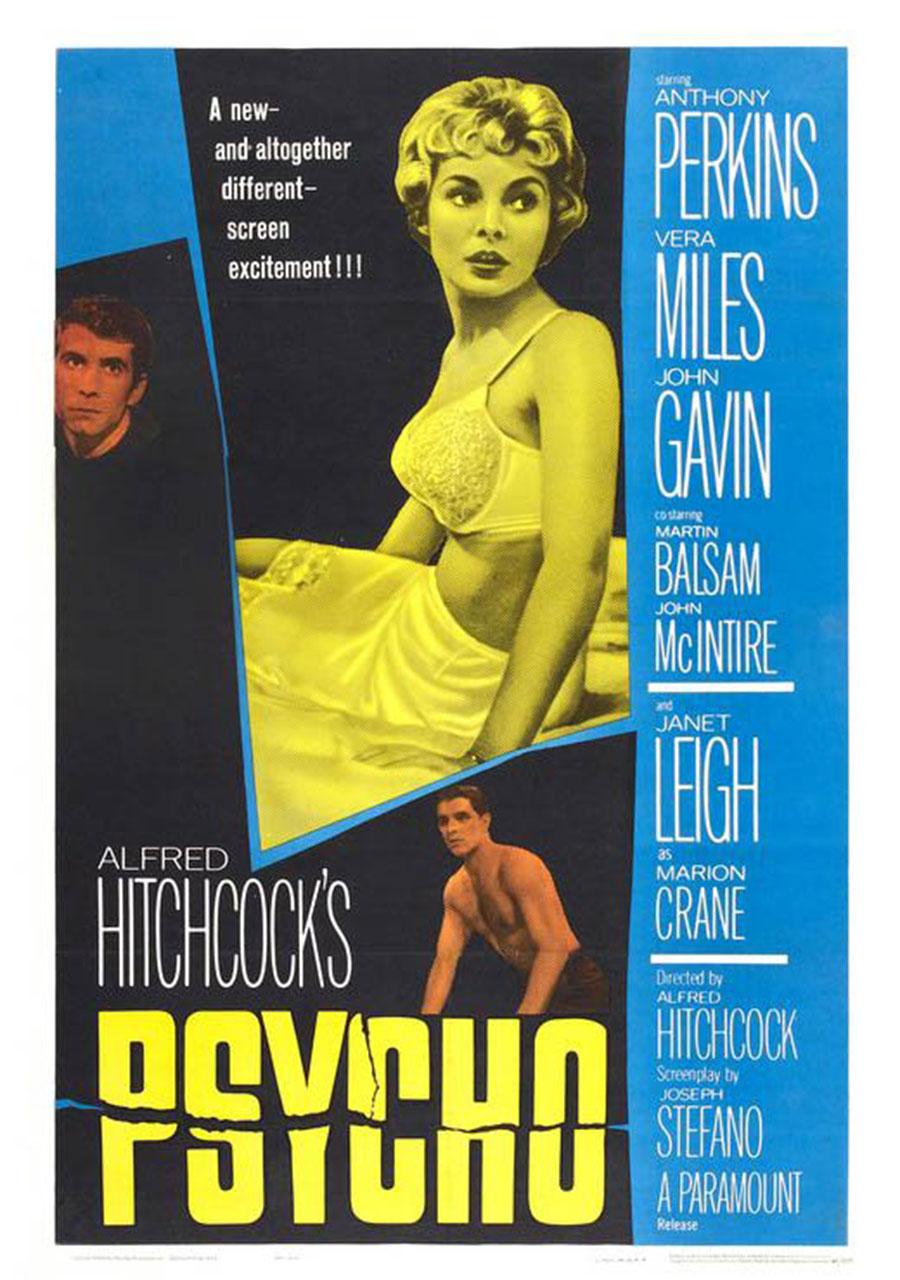
Psycho is so famous it’s almost impossible to watch it as Hitchcock intended. When it was released, the old showman made a huge amount of play from literally banning people from entering the cinema after it had started, with huge billboards in theatres urging people on no account to tell anyone what happens. It was the first major anti-spoiler campaign – and it worked a treat, because the film became a sensation. Such a sensation, that I don’t think there can be many people alive who aren’t familiar with the basic intricacies of its plot, whether you’ve seen it not.

Marion Crane (Janet Leigh) steals $40,000 from her employer, in order to marry her love Sam Loomis (John Gavin). Fleeing New York, she drives through two nights, changes her car, frets about being caught – and finally rests for the night at the Bates Motel, run by shy Mummy’s-boy (“A mother is a boy’s best friend!”) Norman Bates (Anthony Perkins). Exhausted by two days of stress, Marian thinks it’s time to have a shower – and so we suddenly switch genres completely….

Psycho is a masterpiece of mis-direction. If you didn’t know what the film was about, you would expect, from the first act, you are in for some sort of mix between Double Indemnity and a documentary true-crime thriller. The entire first act is essentially a brilliant Hitchcock MacGuffin – both the money and Marion Crane turn out to be things of immense importance to the characters, but essentially less so to the audience. Hitchcock pulls one of his best con tricks by presenting Janet Leigh as the main character, only to dispatch her brutally less than halfway through the film. 

Which is of course during one of the most famous scenes in film history: the shower scene. It’s a masterclass of unsettling, suggestive editing, disturbing imagery (you never see the knife plunging into flesh, but you certainly feel like you do, with constant cuts from knife, to body, to movement, to blood in the bathtub – but no links between them on screen), and of course Bernard Herrmann’s jagged strings scoring it all. For no other reason, this scene would cement the film in cinema history. It’s a slasher scene filmed by a master of cinema, a clear and simple statement for everyone else to come that this was how it was done – and no other director of slasher horror has come anywhere near Hitchcock’s skill here. It’s a phenomenal, terrifying, powerful piece of cinema.

It works so well because Marion Crane is not a faceless victim. Unwittingly, we’ve carefully followed her through the last few days of her life. We’ve seen her love affair with Loomis, we’ve felt her despair at their only being able to meet in motels, felt her temptation and then shared her paranoia and anxiety as she flees with the money. Leigh is barely off-screen for the entire opening third of the movie – and we’ve completely invested in her by the time the water is flowing. Leigh is excellent as Crane – and an overlooked coda to the shower scene is Hitchcock’s tight closeup on her eye immediately after the attack – Leigh pulls off the hugely difficult trick of letting her eye seem like the life is fading away from her in that second. 

It’s one of many outstanding directing feats in the film. Hitchcock slowly builds the uneasy atmosphere of the Bates motel from the moment Marian arrives there, using increasingly unsettling, gothic angles to capture Norman and to suggest that all is not what it seems. As our characters explore the Bates motel, jump cuts to innocuous objects make them carry great peril and uncertainty. Everything at the Bates motel is unnerving, unusual and every shot is not quite right. The Bates motel itself looks like the most nightmarish gothic mansion (seriously who would want to stay there?!).

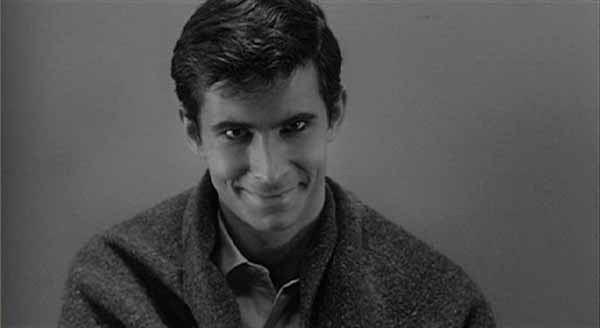
The identity of the murderer is pretty well known. Anthony Perkins is twitchy and fidgety, a softly-spoken peeping tom who is unable to meet anybody’s eyes and is obsessed with taxidermy – is it any great surprise? Perkins is perfect as Bates, and Hitchcock expertly inverts his boyish good looks to masterful effect. Could someone so shy, quiet and innocent-looking be a killer? As the final scenes show us mother’s disturbed voice in Bates’ mind (while the camera slowly tracks in on his increasingly unhinged, grinning face) we not only get some more Hitchcock tricks (a subliminal imposing of the mother’s decayed face over Bates) but also another wonderful scene, of iconic acting and simple but powerful camera work. Hitchcock could do it all.

Mother – oh yuck. It’s brilliant misdirection again. Who is mother? Where is she? Who is the woman we keep seeing? Who is the female murderer? Even when we are told categorically that mother died years ago, that information itself is immediately questioned (“If she wasn’t buried then who was?”). When we do find the truth it’s another horror moment – the greatest ever turn-the-body-around-to-see-the-horror moment you’re going to see in the movies. Lila’s scream and raised arms knock a lightbulb, which swings casting alarming light and shade over the scene.

So Psycho is a masterpiece of film, because it is such an unsettling clash of genres. It’s a film noir whose main character accidentally stumbles into a slasher film. Investigating the disappearance of Marion, Loomis and her sister Lila keep returning again and again to the money that has gone missing, assuming it is the motive of the crime – but they couldn’t be more wrong. 

As is explained to them at the end by the film’s psychiatrist character. This is the weakest mis-step in the film: a psychiatrist explains in a dull lecture exactly what has happened, what was wrong with Norman blah-blah-blah. Maybe we are just much more familiar with things like that, but this scene surely always had a “let me tell you all the answers” flatness to it. Sam Loomis and Lila Crane are not exactly the most interesting characters you are ever going to see – Loomis in particularly seems at first he is going to be a slight rogue, but the character quickly settles into being a bore (what does Marion see in him?). After the first 45 minutes have gone by, most of the scenes outside of the Bates Motel are (whisper it) dull – probably because they focus on a lot of discussion about the money, an issue the audience has long since lost interest in. Did Hitchcock deliberately make these scenes flatter, knowing we needed the rest from the horrors of the Bates Motel?

Psycho, though, is a classic and it will always be a classic. A slasher film and psycho-thriller, directed by an absolute master filmmaker at the top of his game. When Hitchcock made this film – on a low budget, using a TV crew, in black-and-white – people wondered why he was slumming it, why he was wasting his talent. They weren’t asking that after the film was released. Psycho is one of his purest, most unsettling thrill-rides, as horrifying, compelling and unsettling now as it was when it was first released.

The Guns of Navarone (1961)


Gregory Peck leads one of the first men-on-a-mission films in The Guns of Nararone

Director: J. Lee Thompson

Cast: Gregory Peck (Captain Keith Mallory), David Niven (Corporal Miller), Anthony Quinn (Colonel Andrea Stavrou), Stanley Baker (Private “Butcher” Brown), Anthony Quayle (Major Roy Franklin), Irene Papas (Maria Pappadimos), Gia Scala (Anna), James Darren (Private Spyro Pappadimos), James Robertson Justice (Commodore Jensen), Richard Harris (Squadron Leader Barnsby), Bryan Forbes (Cohn), Allan Cuthbertson (Major Baker), Walter Gotell (Oberleutnant Meusel), George Mikell (Hauptstaumführer Sessler)

The Guns of Navarone is the archetypical “men on a mission” classic – it was the first major film to feature a team of specialists, all played by famous actors, going behind the lines to carry out some impossible task, leaving a trail of explosions and dead Nazis in their wake. Guns of Navarone was lavished with box-office success – and Oscar nominations, surprisingly – and although it’s a little too long, and a little weakly paced at times (as Thompson himself has admitted) it’s still got a cracking, bank holiday afternoon enjoyability about it. It’s not perfect, but honestly who could resist it?

In 1943, 2,000 British soldiers are stranded on the Greek island of Kheros. The Royal Navy plans to rescue them – but the way is blocked by two massive, radar controlled guns, in an impenetrable mountain base. The air force can’t take it out: so it’s up to Commando leader Major Roy Franklin (Anthony Quayle) to put together a team to do it. Recruiting mountaineer-turned-intelligence-agent Keith Mallory (Gregory Peck), explosives expert Miller (David Niven) and Greek-resistance leader Andrea Stavrou (who else but Anthony Quinn?), Franklin leads the team in. But when he is injured, the ruthless Mallory takes command – and leads the team in a perilous behind-the-lines raid.

I’d not seen Guns of the Navarone for a few years, and I’d forgotten what a brilliantly fun, boys-own-adventure thriller it is. I’d also forgotten what a lot of time is given early on into establishing what a team of bad-asses this group are. There seems to be no limit to their ruthless, knife wielding, gun running, cold-eyed killer bravery. And they hired a hell of a cast to play it as well – so damn good that you completely forget Peck, Niven, Quayle and Quinn are all just a little bit too over-the-hill for the derring-do they are called on to carry out.

Guns of Navarone brilliantly explains the mission aims, all the stakes and introduces each of the characters and their basic backstory, before the film basically gives us a series of action set-pieces – on a boat, at the coast, on a cliff, in a village, in a German cell, in Greek ruins, in a German base. It covers everything, and each scene is directed with real verve and increasing tension, with a simplicity to camera-work and editing that really lets the action breathe. The final sequence, waiting for the booby trap to explode among the guns, is a brilliantly done “rule of three” waiting game, with the tension building up each time.

The film is also rattling good fun, and gives each of its actors’ set-piece moments. Gregory Peck grounds the film perfectly as the increasingly ruthless Mallory, willing to sacrifice a number of pawns to achieve the target, but has a war weariness that still makes him sympathetic (as a side note, Peck’s German accent was so woeful all his German was dubbed). Niven plays Miller as a mixture of louche whiner, chippy middle-class man and natural-born troublemaker – and gets some knock-out speeches on the morality of war (Niven by the way nearly died after catching pneumonia during the boat wreck sequence).

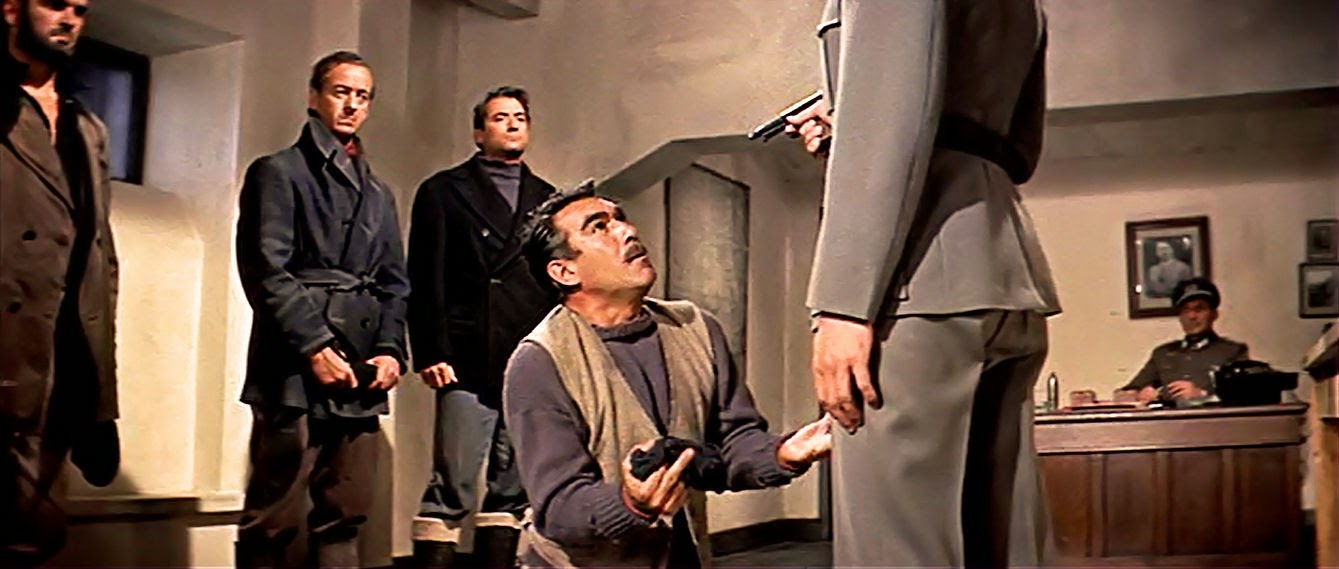
Anthony Quinn had a monopoly on playing exotic roles at the time – from Mexicans to Arabs, from Gaugain to Zorba the Greek – so no great surprise he plays the Greek colonel here. He’s terrific though, a cold-eyed ruthless killer – and the sequence where he pretends to be a cowardly awkward fisherman is wonderful (not least for Stavrou’s reaction to Miller’s praise for his performance – a half shrug and a “so-so” hand gesture, one of my favourite ever “character” touches in the movies). Irene Papas is perfect as his female equivalent, while Anthony Quayle puts together another of his “decent army officer chaps” as boys-own adventurer Franklin. Baker and Darren don’t get huge amounts to do, but Baker does well with a “lost my taste for this killing malarkey” sub-plot.

Many of the character beats were so well-done they basically became archetypes for every “group on a mission” film since (the austere leader, the difficult whiner, the old-school traditionalist, the ruthless warrior, the maverick, the one who’s lost his nerve – and, uh, I guess James Darren is the “sexy” one). The actors play off each other superbly. There are also some great cameos – Robertson Justice is great as “the man in charge”, Walter Gotell very good as an archetypical “worthy adversary” German – there is even a slightly bizarre cameo from Richard Harris as an Aussie pilot (yup you read that right). 

Navarone’s pace doesn’t always quite work – the gaps between the action sequences do lag. It takes nearly 45 minutes for our heroes to even get to Navarone. The film also can’t quite decide its stance on warfare. We get Miller’s passionate speeches on the pointlessness of missions when wars are always going to happen anyway. The unmasking of a traitor leads to a long debate on the morality of killing them or not. Several of the characters question the point and morality of war. But then, the film spends plenty of time on Alistair MacLean thriller beats: there is killing-a-plenty of German soldiers, gunned down with ruthless efficiency (not quite as many as Where Eagles Dare but pretty close!). There are small references to Greek villages paying a heavy price in retribution for the gang’s action – but these considerations never even slow them down, or make them stop to think.

Not that it really matters – this is a boy’s own action film, full of hard-as-nails actors grimly “doing what a man’s gotta do” throughout. And, despite being a little too long and aiming for a depth it doesn’t always follow through on, it’s brilliantly assembled, the action sequences are tightly directed, and the acting has a square-jawed confidence to it. Niven is pretty much perfect as the slightly dishevelled Miller, and the clashing relationship between him and Peck growing into respect, has fine bromance to it. Navarone is the first of its kind, and it’s still (and always will be) one of the best – really exciting, really thrilling, really damn good fun.

Ten Rillington Place (1971)


Richard Attenborough brings the killer John Reginald Christie to life in Ten Rillington Place

Director: Richard Fleischer

Cast: Richard Attenborough (John Reginald Christie), Judy Geeson (Beryl Evans), John Hurt (Timothy Evans), Pat Heywood (Ethel Christie), Isabel Black (Alice), Robert Hardy (Malcolm Morris), Geoffrey Chater (Christmas Humphreys), André Morell (Judge Lewis), Tenniel Evans (Detective Sergeant)

Films about real-life serial killers have that eternal problem: how far can they go in giving us answers? How much can we ever really understand why a killer does what they do? Is there any way of really putting ourselves in their shoes – and do we really want to? Ten Rillington Place avoids a lot of these issues by making no attempt to give understanding to Christie at all, simply presenting his actions, and by putting the focus on the tragic death of Timothy Evans.

In a miscarriage of justice Timothy Evans (John Hurt) was tried and executed for the murder of his wife Beryl (Judy Geeson) and their baby daughter in 1950. The real murderer? The man who lived downstairs, John Christie (Richard Attenborough), a socially maladjusted, softly spoken man who confessed to killing at least eight people three years later at his trial for murdering his wife. Christie had an uncanny gift for gaining the confidence of desperate women, would offer to perform illegal (and free) medical procedures (such as abortions), during the course of which he would gas them with carbon monoxide, strangle them, possibly carry out acts of necrophilia and then bury them in his garden or in the walls of his house. Evans never suspects until far too late that Christie is the killer and, scared that he will be accused, follows Christie’s advice to the letter – advice that will only make him look all the more guilty.

Richard Fleischer’s chillingly documentary-style film-making goes into forensic detail on the events of the murder of Beryl Evans and her daughter, and the wrongful conviction of Timothy Evans for the crime – largely on the basis of Christie’s testimony at Evans’ trial. Fleischer shoots the film with a deeply disciplined restraint, a calm documentary style that avoids any sensation lingering on the crimes, but still carries great emotional impact.

The film covers the period from Evans moving into the flat above Christie, Christie’s murder of Beryl, Evans panicked flight to Wales on Christie’s advice, his series of confessions to the police, his trial and execution. Book ending the film we get a scene with Christie murdering his neighbour Muriel Eady – a terrifying demonstration of Christie’s murder rituals, as well as an indicator of how easily he could gain the trust of his victims. What it strikingly doesn’t try to give us is any psychological explanation for why Christie did what he did. There are no revealing flashbanks, no cod-psychology. Instead we just see a killer, kill people. We might get an idea of what he gets out of it, but no explanation of what turned him to it. The film is all the more powerful for it. 

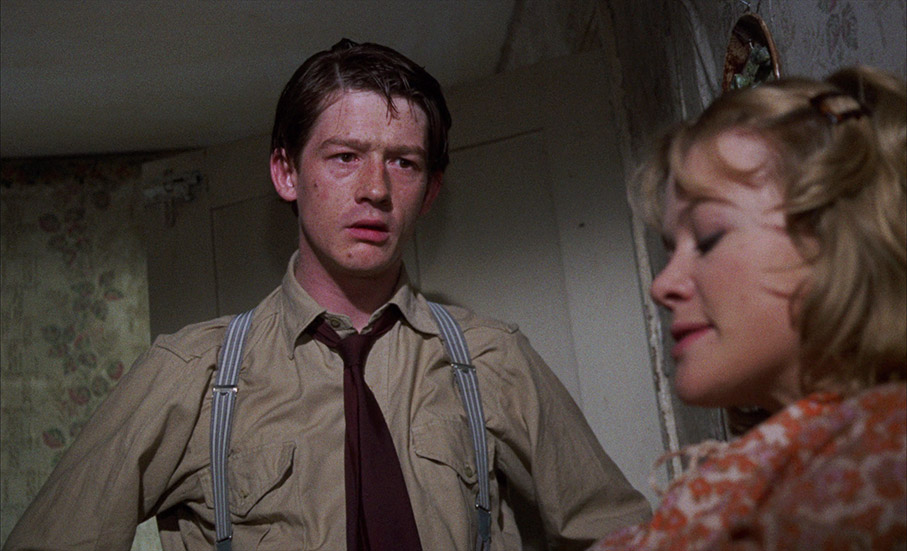
Instead the focus is on the victims, and the Evans story is heart-rending, partly because of Fleischer’s calm, sensitive direction, but mainly due to John Hurt’s astonishingly powerful performance. The film, and Hurt, don’t shy away from the qualities that made Evans seem like such a natural fit for a murderer at his trial. He’s a compulsive liar. He brags. He fights and argues with a fury. He’s not really that sympathetic a guy at first. But he’s certainly innocent. Hurt brilliantly demonstrates his vulnerability and simplicity – Evans was illiterate and almost unbelievably trusting, a liar who fell victim to a superb, manipulative liar.

His shock and slowly growing realisation of the nightmare he is in are incredibly moving, as is his powerful grief when he finds his wife killed – and his trusting innocence when he turns (unknowingly) straight to his wife’s killer for advice on what to do. Every action Evans takes in the film makes you want to jump in and urge him to do something – anything – different.  Unsympathetic as he is at the start, by the conclusion you almost can’t bear to watch him incriminate himself with each action. Hurt is sublime, with his weak manner, his confusion, his touching faith that it will all be okay and his feeble mantra of “Christie Done It” – it’s one of the greatest performances in his career.

Judy Geeson gives a marvellously emotional performance as Beryl Evans. Geeson has the perfect look for the part, and she completely embodies a woman who has found herself in a difficult situation, in love with a weak man. You understand completely how she is drawn towards Christie as a confidant, and why she would feel the desperation to abort a child she and Evans could never afford. Her eventual murder is horrifying in its struggle and desperation, the growing horrible realisation in her eyes that she is in mortal danger – this is a particularly strong sequence, difficult to watch for the viewer, as we know what a terrible series of decisions she is making. 

Fleischer’s film was motivated by a very firm anti-death sentence stance. The scene of Evans’ execution is shocking in its brutal suddenness. Shot with a handheld camera and in a single take (in near silence other than Hurt’s deep breathing), the execution is over and done with in less than a minute – from Evans sitting in a room, to the reveal of the executioner’s noose next door and the terrible drop (with a jump cut straight to Christie stretching his back). It’s a brilliantly low-key, but resoundingly powerful scene that sticks with you for all time.

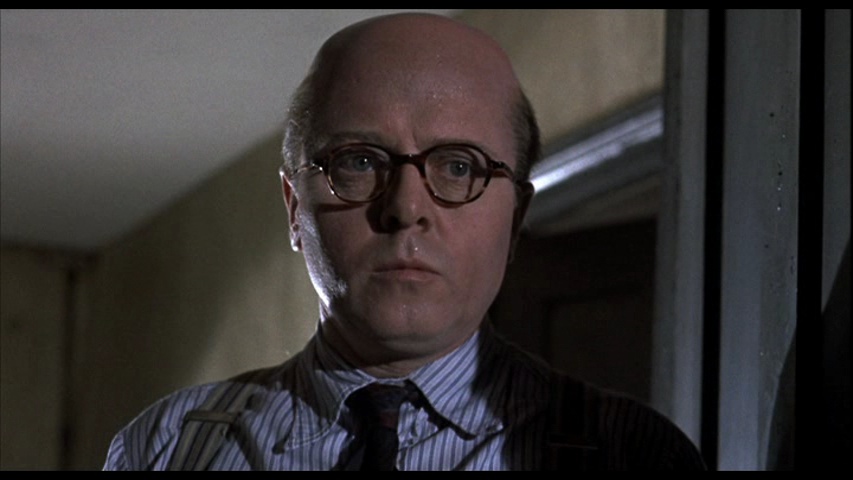
All this way and we’ve not mentioned Richard Attenborough’s transformative performance as Christie. Attenborough presents the softly spoken monster as a bland, empty non-entity, a man who has almost nothing to make him stand out from the crowd. He never makes the part into a great monster or any sort of domineering force of nature. In partnership with Fleischer, he shows Christie was a total blank canvas of a man, “evil” only in the most mundane and uninteresting way. He’s so mild-mannered, you can see why so many women trusted him. Attenborough is chillingly blank throughout, in a deeply unsettling performance of crushing mundanity. He’s brilliant in this film – Attenborough was completely committed to its anti-death penalty stance – and he avoids the temptation of trying to explain or make sense of Christie. 

That’s the trick of the film – Christie is not a special man. He performs dreadful acts, but he is a nothing of a person, devoid of motive (the lack of motive is something those at Evans’ trial use most to argue against Christie’s possible guilt), a totally forgettable man who committed crimes memorable only for their cruelty. Fleischer, and Clive Exton’s careful, thoroughly researched script, is simply superb in presenting Christie with all his filthy blankness, Rillington Place in all its crushed lack of colour, and the murders in un-flashy documentary sadness. Ten Rillington Place is an engrossing true-life story that turns a miscarriage of justice into a Greek tragedy. It’s a much overlooked classic.

Three Billboards Outside Ebbing, Missouri (2017)


Frances McDormand is looking for justice in Martin McDonagh’s razor sharp Three Billboards Outside Ebbing, Missouri

Director: Martin McDonagh

Cast: Frances McDormand (Mildred Hayes), Woody Harrelson (Sheriff Bill Willoughby), Sam Rockwell (Officer Jason Dixon), John Hawkes (Charlie Hayes), Peter Dinklage (James), Abbie Cornish (Anne Willoughby), Lucas Hedges (Robbie Hayes), Željko Ivanek (Sergeant Cedric Connolly), Caleb Landy Jones (Red Welby), Clarke Peters (Abercrombie), Samara Weaving (Penelope), Kerry Condon (Pamela), Darrell Britt-Gibson (Jerome), Amanda Warren (Denise), Kathryn Newton (Angela Hayes)

How do we deal with grief? What might it drive us to do? How does it make us behave – and what sort of person can it make us become? Martin McDonagh’s superbly scripted and directed, brilliantly acted film explores these themes in intriguing and compelling depth, consistently surprising the audience, not only with unexpected plot developments, but also wonderfully complex characters, whose personalities and decisions feel as distanced from convention as you can get.

Mildred Hayes (Frances McDormand) is a grieving mother, who feels let-down by the police and justice system as they have failed to locate and arrest the rapist who murdered her daughter. She hires three large billboards on a quiet road out of her town in Ebbing, and places on each of them a stark message: “Raped while dying”, “And still no arrests?” and “How come, Chief Willoughby?”. The billboards lead to Sherriff Bill Willoughby (Woody Harrelson) doing what he can to re-open the case – a case with no real evidence or leads. But the local community – many of whom adore Willoughby – are increasingly angered by the billboards, not least Willoughby’s semi-protégé, controversial red-neckish officer Joe Dixon (Sam Rockwell). The billboards lead to increasingly violent disagreement in the small community – and surprising allegiances developing.

McDonagh’s black comedy-drama balances immense sadness and searing rage with jet-black humour. McDonagh’s distinctive (and often foul-mouthed) style runs through the entire film. It’s a film that not only defies real categorisation, it also defies expectations. You would expect this film to be a commentary on a heart-rending grieving mother struggling against an indifferent, incompetent, racist (or all three) legal system. Perhaps even a film that will build towards a sort of “whodunit” murder mystery. All these expectations are constantly turned upon their head. Any obvious, traditional narrative development – and lord the film plays with this throughout its runtime – is diverted. You never know where the film is going – and you would certainly never have guessed its conclusion from the opening. 

Our expectations are immediately inverted when Woody Harrelson’s Sheriff meets with Frances McDormand’s mother in the opening moments. We expect him to be indifferent, annoyed or bitter – instead he’s liberal, concerned, sympathetic and hurt, while understanding why Mildred has done what she has done. Mildred, who we expect to be moved by, whose pain we expect to empathise with – instead she’s burning with fury and resentment, is amazingly confrontational and unyielding, and her ideas for investigating the crime border on the ruthlessly right-wing. Far from the predictable drama you might expect, you are thrown into something unusual – and real.

The storyline continues throughout in this vein – McDonagh never takes the expected route, but constantly pushes towards something unexpected. His trademark spikey dialogue throws you off balance – this is surely one of the few films where you’ll see a son affectionately call his mother “an old c**t”, or a happily married, middle-class couple address each other with a stunning, loving crudity. Pay-offs to plot developments are confidently unorthodox, and devoid of the expected sentimentality. The murder mystery element of the story is played with in a unique way: even the crime itself remains unexplored and unexplained, with only a few grim photos and a few hints dropped in dialogue as to what happened.

Instead, the film focuses on how grief and upheaval affects a community. All of the characters deal with a profound personal loss over the course of the story, and the impact of this on them leads not just to anger and rage, but also in some a profound reassessment of their life and choices. It’s a film that looks at the struggle we have to control the narratives of our own lives, to not be a victim but instead to give the things that have happened to us meaning and importance. Each character wants to find a way to make the things that have happen to them have meaning, and to find a sense of closure. It asks what can and can’t we forgive, and how far do we need to take actions to find a sense of closure. The film’s open-ended conclusion both points towards suggested answers to these questions, while at the same time offering few.

Frances McDormand gives a compelling performance in the lead role, as a domineering, strong-willed woman who resolutely refuses to be a victim, but wants revenge. Burning with a simmering rage at the world, and quick to respond with aggression and even violence, McDormand never allows the character to become fully sympathetic, but constantly challenges us. It’s the sharpest-edged grieving mother you’ll see on film, as full of prejudice and judgemental behaviour as she is pain and guilt. She attacks each scene like a bull in a china shop, and Mildred Hayes is a smart, ruthless woman who takes no prisoners.

The part was written especially for McDormand, as was that of Joe Dixon for Sam Rockwell. Rockwell, one of those eminently reliable supporting actors, gives an extraordinary powder-keg performance as an on-the-surface dumb, racist bully with poor impulse control, who is barely able to hide a vulnerable mummy’s-boy complex and a strangely touching sense of loyalty. Rockwell is dynamite in each scene, but constantly gives us interesting and varied line-readings, changing our perceptions of his character with each scene. 

To briefly address a controversy that has arisen about the film.  McDonagh has explored extremes like this in the past – his work in the past has humanised murderers, child-killers, terrorists and executioners, while not excusing their actions. The film has courted controversy by refusing to condemn Dixon’s racism, or for not ‘punishing’ the character enough, but it instead asks us to understand why Dixon has done or said the things he says – and to empathise with the pain, despair and anger in his own life. Is Dixon a racist? He’s a product of his time and place, I’d say he’s really just very angry, without understanding why, and without having the emotional intelligence to deal with it. He might have done unpleasant things – in the film doesn’t dodge this – but it asks us to question why he might have done this, rather than paint him as a demon.

Equally brilliant (perhaps one of his greatest performances) is Woody Harrelson as the surprisingly liberal, good-natured, patient and humane Sherriff Willoughby. Surely no one could expect the authority figure in a film of this nature to be the most sympathetic and likeable character in the film, the one with perhaps the most moving personal story. Harrelson is simply superb in the part, and his gentle, lingering regret hangs over the film.

But the whole cast is marvellous. Hawkes is a deeply troubled and pained man hiding it under anger and mid-life crisis. Dinklage is a sad eyed, lonely man. Cornish sports a slightly unusual accent but is warmly loving and very normal as Willoughby’s wife. Hedges is impressive as Mildred’s son, whose life is made increasingly difficult by his mother’s unwillingness to compromise. Landy Jones is excellent as the empathetic billboard manager, too good for this town. Peters brings a reassuring air of authority and dignity to the film. With the dialogue a gift for actors, there isn’t a weak performance in the film.

McDonagh’s fine, simple direction adds a Western-style sweep to the action and allows the story to speak for itself, working with the actors to bring out some brilliant, unique characterisations. It’s an intelligent and thought-provoking film, that constantly pushes you in unexpected directions and asks intriguing and challenging questions about profound issues, especially grief. Despite this, it’s a laugh-out-loud black comedy, that will move you and which has the courage to leave many of its plot issues open-ended and true-to-life. It asks questions, but it also acknowledges that life doesn’t give us answers. It also reminds us that we can never judge people from our initial impressions or expectations.

Little Women (1994)


Gillian Armstrong’s beautifully cast and played adaptation of Little Women is a classic

Director: Gillian Armstrong

Cast: Winona Ryder (Jo March), Gabriel Byrne (Friedrich Bhaer), Trini Alvarado (Meg March), Kirsten Dunst (Young Amy March), Samantha Mathis (Amy March), Claire Danes (Beth March), Susan Sarandon (Marmee March), Christian Bale (Theodore Laurence), Eric Stoltz (John Brooke), John Neville (Mr Laurence), Mary Wickes (Aunt March)

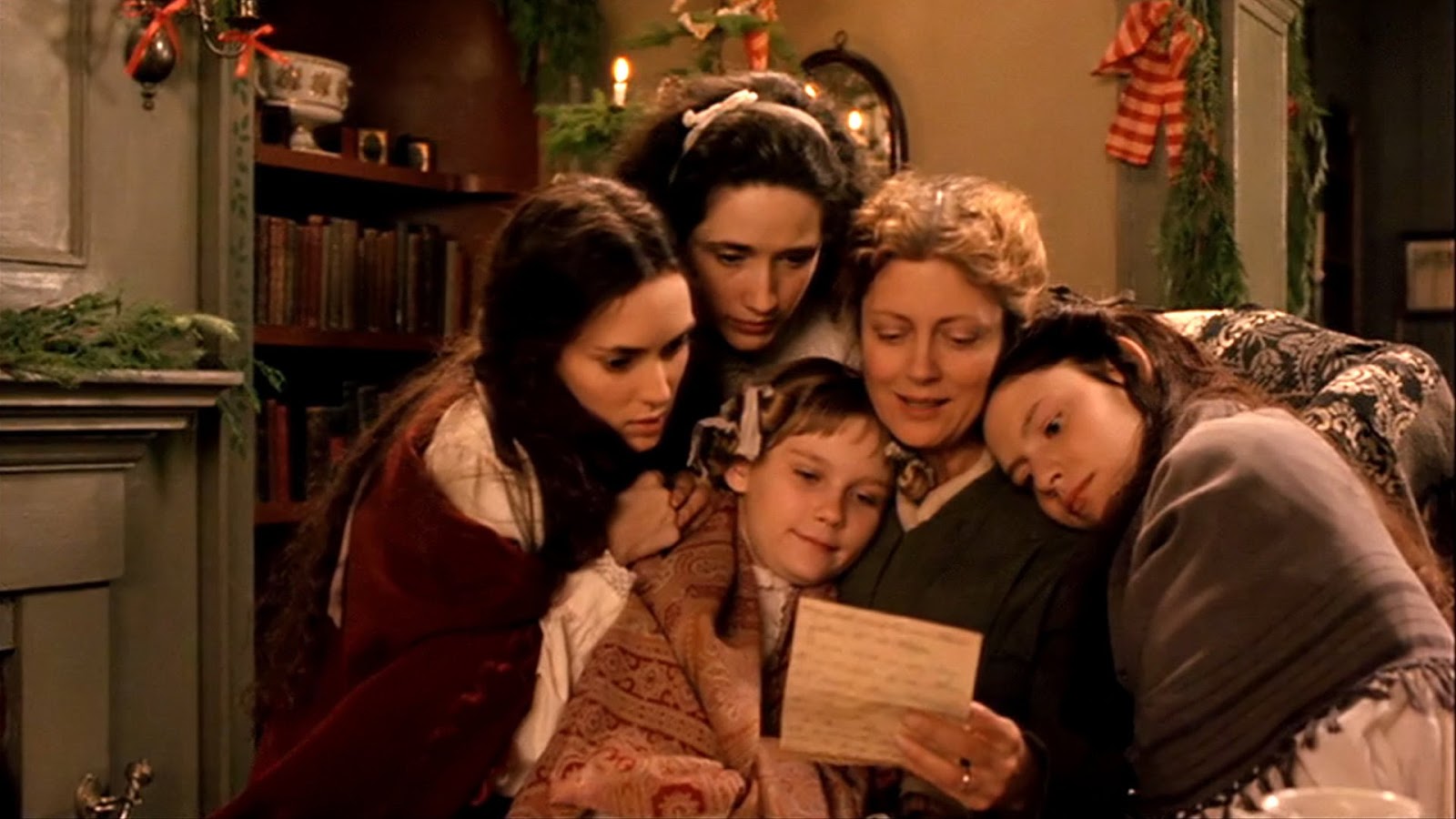
There are certain adaptations that simply set the standard. I’m thinking of the BBC Pride and Prejudice or Emma Thompson’s Sense and Sensibility. For productions like this, it almost seems superfluous to create another version: why would you want to when you can already watch the whole thing done perfectly? Gillian Armstrong’s superlative production of Little Women is such a film: so perfectly cast, immaculately acted and brilliantly assembled that I simply can’t imagine another production bettering it.

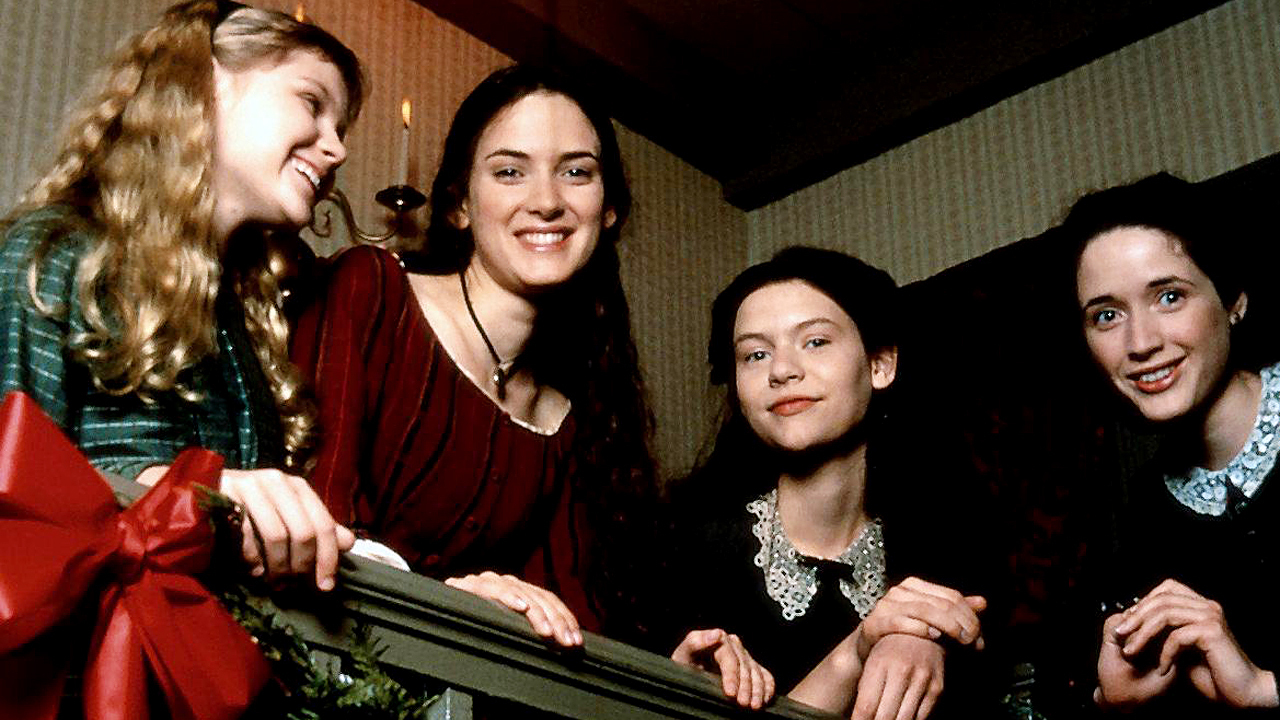
In Massachusetts during the American Civil War, the March sisters live with their mother (Susan Sarandon): sensible Meg (Trini Alvarado), tomboyish Jo (Winona Ryder), gentle Beth (Claire Danes) and temperamental Amy (Kirsten Dunst). While their father is away fighting, the girls grow up and experience the highs and lows of life and love, while never losing sight of the strong bond that holds them together.

Not only is it impossible to imagine another production besting this, I can’t imagine another creating so many “something in my eye” moments as this film manages. Gillian Armstrong’s tender direction gets a guaranteed emotional response from the audience every time, largely because she keeps the film simple, focused and doesn’t overegg the emotion. She recognises the story itself carries delicious highs and heartbreaking lows – and lets these moments speak for themselves. From its opening moments, establishing the girls’ love of theatricals and their own private “Pickwick club”, you know you are in the safe hands of people who fully understand the novel.

It’s a film which plays it very, very simple and lets the beauty of the moments speak for themselves. Many work perfectly: no less than three times I felt myself welling up, from the presentation of Mr Laurence’s piano to Beth, to Beth’s tragic death, to the final scenes between Jo and Professor Bhaer. Each of these moments is quite simply perfectly played and carry a major emotional wallop. It’s because Armstrong sets out a film that is totally straight, and a completely loving and respectful adaptation of Alcott’s novel. Armstrong, and adapter Robin Swicord, also build a profound, focused story of growing up and learning to adjust to loss and the changes life brings us. Focusing on this creates a very clear journey in the movie – as well as a story anyone who has had any life experiences is going to respond to.

Part of the reason why the film is such a complete success is the superb playing from a cast without a weak link among it. The four March sisters genuinely feel like people who have grown up together, so strong are the bonds of chemistry between them. I’d also hugely commend Armstrong and Swicord for so skilfully establishing the different personalities of the sisters – within the opening few minutes you’ll feel like you know all their personalities exactly (a task utterly failed by a recent three-part BBC adaptation).

In the lead role, it’s scintillating to watch Winona Ryder and remember what a superb, heartfelt and gloriously expressive actress she is. Vulnerable but also tomboyish, boisterous and also tender, she brilliantly captures Jo and her semi-bohemian, semi-homespun yearnings, and her passionate love for a life different from the traditional. Ryder also has such wonderful skill with conveying emotion – at several key moments, waves of emotion seem to pass over her face in careful micro-expressions. Several moments carry the weight that they do, because Ryder sells them so well. 

Her three sisters are equally well-cast. If she has a rival for skill of expression and conveying depth of emotion it’s Claire Danes, who is astonishingly good as the gentle Beth (hard to believe she was only 15 at the time!). Danes’ simple joy and her gentle, unassuming love for those around her really hit home. Danes’ joyful warmth makes Beth’s acceptance of the piano from Mr Laurence a beautiful moment, while her tender humanity makes her death incredibly moving. Kirstin Dunst is superb as the young Amy – part brattish pre-teen, part excitable child. Her sudden horror when she realises the gravity of burning Jo’s book again helps this moment work so well. Trini Alvarado has the less interesting part, but her grounded, calm, proper and gentle performance as Meg balances the work of the sisters really well, and Alvarado demonstrates she has real empathy for the role.

The rest of the cast are equally good. Samantha Mathis (taking over the older Amy) delivers an excellent portrayal of a woman keen to head into the world. Susan Sarandon is perfect as a wonderfully loving, all-knowing mother. Christian Bale is perfect as the playboyish Teddy, full of playful fire. John Neville sells a few crucial scenes as a humane Mr Laurence. Gabriel Byrne is certainly far more handsome than his literary counterpart, but he’s so wonderfully gentle, caring and kind that it hardly matters: the relationship between him and Jo is beautifully judged.

Beautifully judged basically sums up the whole thing: there is not a bum note in this whole film. Armstrong and Swicord nail every single decision. Armstrong’s direction is outstanding: a brilliant example is the gently, unbearably sad sequence of sprinkling roses in Beth’s room after her death – it’s so simply done but incredibly moving. The film is crammed with moments like this, beautifully scored by Thomas Newman. Swicord’s script is marvellous, and it successfully draws out the feminist message of the book, without hammering the points: it gently flags up the lack of opportunities often available for women at the time, but also celebrates the contribution they can make. 

Little Women is a simply superb piece of adaptation, and a deeply affecting and heart-warming film. Only a film that lets you invest in the characters as much as this, could move you as much as it does. When Ryder smiles, you feel your whole world light up. When Danes cries with joy you feel your heart sing. When tragedy comes you feel like you’ve had a loss yourself. The story is superbly streamlined, each character is perfectly established, the relationships between them all are so wonderfully done – you can’t help but fall in love with it. If it had been a film about men it would have been littered with Oscar nominations. As it is, despite the sexism of the Academy, it’s a film you’ll treasure and return to again and again.

Harry Potter and the Goblet of Fire (2005)


Our heroes face an increasingly dark future in Harry Potter and the Goblet of Fire

Director: Mike Newell

Cast: Daniel Radcliffe (Harry Potter), Rupert Grint (Ron Weasley), Emma Watson (Hermione Granger), Robbie Coltrane (Rubeus Hagrid), Ralph Fiennes (Lord Voldemort), Michael Gambon (Albus Dumbledore), Brendan Gleeson (“Mad-Eye” Moody), Jason Isaacs (Lucius Malfoy), Gary Oldman (Sirius Black), Miranda Richardson (Rita Skeeter), Alan Rickman (Severus Snape), Maggie Smith (Minerva McGonagall), Timothy Spall (Peter Pettigrew), Frances de la Tour (Madame Maxime), Mark Williams (Arthur Weasley), Robert Pattinson (Cedric Diggory), David Tennant (Barty Crouch Jnr), Jeff Rawle (Amos Diggory), Tom Felton (Draco Malfoy), Robert Hardy (Cornelius Fudge), Roger Lloyd Pack (Barty Crouch), David Bradley (Argus Filch), Clémence Poésy (Fleur Delacour)

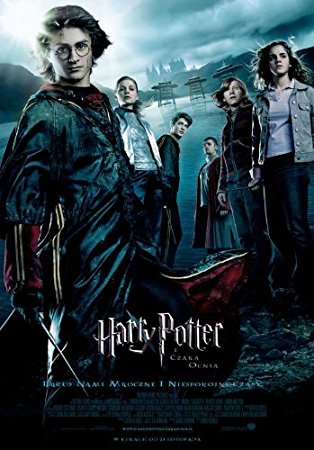
After Alfonso Cuarón announced he would only direct one Harry Potter film, the producers faced a stiff challenge. The third Harry Potter film had been the best so far, and elevated both the acting and design into a far more filmic, epic position than before. Could Mike Newell match this in Goblet of Fire? Sure he could.

If nothing else, Goblet of Fire is a triumph of adaptation. Used to the page-to-screen translations of the earlier films, it was expected that the film would be split into two parts. Instead Newell and screen-writer Steven Kloves turned Rowling’s huge fourth book into a tightly structured and focused film that places Harry’s emotional journey firmly at its centre, and includes only the things that support the building of that story. 

Goblet of Fire is a film of fascinating contrasts. In fact, it’s probably the lightest, most ‘teenage’ of the films, while also containing a dark final chapter and more death than we’ve had so far in the series. But this film is actually rather funny and allows its characters to focus on the challenges and stresses of growing up, with only a few flashes of danger and darkness – before they get wrapped up in the battle against Voldemort that will dominate the next few films.

So this is the film where we get crushes, where Harry and Ron struggle to get dates for the ball, where we get a sense of Hermione not only growing up – but growing in confidence. Harry develops a hopeless crush on Cho Chang – his “Willyougotoballwithme” hurried date proposal is all too familiar to most men, as is his “oh no never mind not a problem” when she (reluctantly) says no. Meanwhile, Ron struggles to understand his own hormonal feelings towards Hermione. It’s all well done and very funny. The ball itself is a highlight of teenage awkwardness, as well as genuinely feeling like a teenage party (including a sort of wizarding mosh pit). 

This teenage awkwardness carries across into Harry’s involvement in the Tri-wizard Tournament, a series of stirring set-pieces against dragons, mer-people and a wicked ever-shifting maze. The tournament offers a range of puzzles Harry needs to solve – more than enough opportunity to allow other characters to get involved. Neville Longbottom particularly moves to the fore for the first time – not only embracing dancing (hilariously nearly every boy is as embarrassed by it as you might expect) and landing a date, but also using his knowledge of plants to help Harry, and we get increased insight into his own tragic backstory. It’s great to see Matthew Lewis being able to stretch himself – and show the roots of the good young actor he’s become.

The film spends a lot of time on family roots, both tragic and happy, in particular fathers and sons. We have no fewer than four father/son match-ups in these films, and each gives us a slightly different perspective on family relationships. Mark Williams’ matey but loving Arthur Weasley gets more screen time than ever before, and Williams develops him into a protective but warm patriarch. Contrast that with the troubled coldness the Crouches show each other – and the swift speed with which Barty Crouch denounces his own son. We get a glimpse of the sort of father Harry could have had with a brief ghost appearance of Harry’s parents. The strongest father-and-son relationship we get to see is that between the Diggorys, an immeasurably proud father and a perfect son.

Mentioning Amos Diggory means we have to bring up one of the most extraordinary acting cameos in the entire series: Jeff Rawle’s work here is brilliant. Is there a more moving moment in the franchise than his uncontrollable grief when Cedric is killed? His anguished crying of “That’s my boy” will haunt many a viewer for years to come. It’s a measure of the brilliance Mike Newell had with actors, and the shrewdness of the casting throughout. Would anyone else have thought of George Dent from Drop the Dead Donkey for this King Lear-like cameo? Would anyone else have thought of Trigger as strict disciplinarian, Barty Crouch (Roger Lloyd-Pack is terrific). The film also shrewdly cast David Tennant about five minutes before he became one of the most popular actors in the country, for an excellent malevolent cameo of pride and bitterness.

The acting throughout is terrific – Mike Newell has the reputation of an actor’s director, and he really shows it here. The three leads are no longer children but teenagers, and they feel like it. Radcliffe plays Harry with increasing maturity and emotional depth, balancing with nuance and quiet confidence the light comedy of Harry’s hormonal yearnings, his fear during the tournament, and his terror and resolve during the confrontation with Voldemort. It’s quite a range he has to go through here, and this features his best performance so far.

Similarly, Grint increases his comedic range with a sullen, teenage I-don’t-want-to-admit-I’m-interested-in-girls series of exchanges. Watson demonstrates her obvious chemistry with both her co-stars, and also does a great job of showing Hermione’s growing emotional maturity and confidence. Many of the other regulars continue to do great work, with Gambon really settling into this role of Dumbledore (although his fury when Harry’s name emerges from the Tri-wizard cup seems strangely out of character). 

The new cast members as always offer plenty. Miranda Richardson delivers a lot of comic flourishes, and snappy media pot-stirring, as gossip columnist Rita Skeeter. Brendan Gleeson carries all the charisma you would expect as a maverick, perhaps even unbalanced Mad-Eyed Moody. In a further testament to the excellent casting directors here, Robert Pattinson (five minutes before his fame exploded) is very good as a suave, handsome, slightly cocky but charming Cedric Diggory.

The film though is building towards its surprising gear-change late in the story – and the introduction of Voldemort, murder and death into a film that until now has been an engaging and amusing action film and teenage comedy. Perfect casting for Voldemort was secured with Ralph Fiennes. Of course Fiennes could play Voldemort standing on his head, but his softly-spoken suaveness and patrician charm is absolutely perfect for the role. You really get a sense of ice running through his blood, and his cold cruelty and arrogance. Fiennes is pretty much iconic in this role. 

The final sequence itself is brilliantly done, a thrilling and terrifying sequence, which really hammers home the extent of Harry’s powerlessness and vulnerability – while the brutal, instant dispatching of Cedric immediately changes the ball game for the rest of the series. The scene is brilliantly shot with a series of blacks and greens for mood and offers a sensational conclusion, as well as an expertly shot duel between Harry and Voldemort that established the filmic language for all subsequent duels that were to come.

Goblet of Fire is another example after Prisoner of Azkaban of a great piece of franchise film-making. It’s not quite as stand-alone, or as perfectly dramatically formed, as the previous film – but that’s because this one ends, like none of the other films before, on a cliffhanger. For the first time, this series wasn’t offering an opponent and obstacle that could be overcome and left behind at the end of the film. Here the baddies win – and the feeling going forward is that, with the help of friends and family, we can battle the evil, but it will still be there. It’s an engaging, funny and very well-structured film, packed with decent twists, and ends with a humdinger of a scene in a film that has already had plenty of excellent moments. Harry Potter is surely one of the best franchises there is.

Belle (2013)


Gugu Mbatha-Raw is the mixed race daughter making waves in society in Amma Asante’s underwhelming pseudo-historical film Belle

Director: Amma Asante

Cast: Gugu Mbatha-Raw (Dido Elizabeth Belle), Tom Wilkinson (William Murray, Lord Mansfield), Sam Reid (John Davinier), Emily Watson (Lady Elizabeth Mansfield), Sarah Gadon (Lady Elizabeth Murray), Miranda Richardson (Lady Ashford), Penelope Wilton (Lady Mary Murray), Tom Felton (James Ashford), James Norton (Oliver Ashford), Matthew Goode (Captain Sir John Lindsay), Alex Jennings (Lord Ashford)

The British film industry produces a constant stream of costume dramas, many covering alarmingly similar ground on the aristocracy or wealthy of the Georgian period onwards. It’s to be commended then that Belle takes a similar plot, but from a radically different direction. Here, a famous real painting of a white and mixed-race pair of ladies becomes the jumping off point for a drama about an illegitimate mixed-race daughter of a wealthy family.

Dido Elizabeth Belle (Gugu Mbatha-Raw) is the daughter of naval captain and a slave in the West Indies. After his death, she his raised by her uncle William Murray (Tom Wilkinson), Earl of Mansfield, and his wife (Emily Watson) to raise her as their own alongside their niece Elizabeth (Sarah Gadron). Belle is treated as an equal among the family, but is not allowed to dine with guests or move freely in society. However, Belle has inherited a fortune from her father – unlike Elizabeth – and quickly finds herself a source of interest from the younger sons of the nobility. Meanwhile Lord Mansfield, the Chief Justice, is asked to rule on the slave ship Zorg case (where slavers threw their slaves overboard in a storm), a case that brings passionate abolitionist John Davinier (Sam Reid) into Belle’s life and makes her start to re-evaluate society’s attitude to her.

Belle is a formulaic costume drama, given an imaginative twist by placing a black woman at its heart. It explores issues around the imbalanced attitudes of British society at the time (and since), and the hypocrisy and racism that bubbles under the surface of the British gentry. Belle is rejected by all and sundry – until knowledge of her wealth becomes known, at which point many of these objections are choked back to secure her money. The film gets much mileage out of Belle slowly comparing her position first to the black servants around her and then to the slaves who lost their lives on the Zorg.

However, what undermines Belle is that it is a work of fiction – and it feels like it’s hiding it. What we do know about the real Belle (which isn’t much) doesn’t relate at all to what we see in the film. She wasn’t an heiress. She didn’t fall in love with an abolitionist lawyer – Davinier was not the aspiring son of a cleric, but a French steward. Elizabeth probably wasn’t a penniless relative. Mansfield’s credentials as a proto-Abolitionist and reformer were never in doubt – by the time of the Zorg case he had already passed a ruling 10 years earlier that there was no basis for slavery in British law. Belle actually lived in Mansfield’s house until his death as effectively a housekeeper and semi-secretary (the very fate she rejects in the film). The film’s lack of interest in historical fact even affects small details – at one point James Norton’s pleasant but empty Oliver boasts his father has purchased him a commission as a Captain in the Navy, virtually the only institution in Georgian England which promoted solely on merit! (This annoyed me a lot more than it should have.) 

Belle is not a true story by a long stretch – but that doesn’t stop it proclaiming a “what happened next” series of captions at the end. It could have got away with this in a way other non-historical films have, if its story itself was more compelling. But instead Belle offers a merely serviceable story, offering a unique prospective on the aristocracy but largely using it to tell a fairly conventional “love across the social divide” story. Honestly, for large chunks of the film you could replace Belle with any slightly shameful second daughter, and the story would remain largely the same.

Which is a shame because it feels like it wastes something really interesting – and also wastes Mbatha-Raw’s star-making turn. She is excellent – sweet and naïve, but growing in confidence, determination and wisdom, gaining the strength of will to shape her own destiny. The film introduces interesting themes as Belle begins to question the attitudes of her family – do they accept her because they must? Would they be as open to a black stranger? – but these themes don’t quite coalesce into something really solid and coherent. Instead they are trotted out, but we don’t really feel we learn anything.

Similarly, the case of the slave ship Zorg seems rather loosely defined. We don’t get a real sense of public pressure or interest in the case, or really understand the essentials of what the case involved. Instead, it’s used primarily as a tool to question the attitudes of Lord Mansfield, and whether he has the ability to expand his obvious love for Belle into a wider statement of man’s equality. Tom Wilkinson is very good as Mansfield – prickly, but essentially decent and caring under a gruff surface – even if the role can hardly be a challenge for him. But the film doesn’t really manage to make a really compelling argument about what it is trying to say, other than slavery is of course bad.

Elsewhere, the film takes simple shots and shoots fish in the barrel. The Ashton family are introduced to stand in for British society. Lord Ashton is brisk and businesslike and interested only in maintaining the status quo. Lady Ashton – played by Miranda Richardson at her most coldly standoffish – only cares about securing wealth for sons. Of those sons, James Norton gets the most interesting part as the decent but shallow Oliver. Poor Tom Felton though: his character might as well be Draco Malfoy in period costume, all but spitting out ‘Mudblood’ at Belle. None of these performances offer anything different from what we’ve seen before.

That’s part of the problem with Belle – it wastes an interesting idea by slowly turning it into a more conventional story, primarily focused on who is Belle going to marry, rather than the implications of a black woman in a racist society, or the hypocrisy of that society being only willing to accept her when she has money. Despite some good acting – Penelope Wilton and Emily Watson also give tender performances – and a star-turn in the lead, it’s not really that interesting a film. You keep expecting it to burst into life, but it never does: for such a film offering a fresh perspective on history, you don’t feel like you’ve learned anything new about Georgian society at the end of it.

Apocalypto (2006)


Rudy Youngblood is on the run in Mel Gibson’s Mayan experience epic

Director: Mel Gibson

Cast: Rudy Youngblood (Jaguar Paw), Dalia Hernández (Seven), Jonathan Brewer (Blunted), Morris Birdyellowhead (Flint Sky), Gerardo Taracena (Middle Eye), Raoul Trujiilo (Zero Wolf)

In the early 1500s, the Mayan civilisation is at its final peak before its collapse. However, it is a civilisation built on human sacrifice and exploitation. A peaceful village is brutally attacked by Mayan soldiers, who take the women to be sold into slavery and the men to be sacrificed to the sun. Jaguar Paw (Rudy Youngblood) manages to save his wife and child, but is captured and taken to the Mayan capital where he struggles to survive, escape and find his family.

Setting a film in the long gone Mayan civilisation, in an entirely dead language, with no stars is a brave choice for any film-maker. So you have to tip your hat to Mel Gibson, for all his undoubted unpleasantness, that he was brave enough (or powerful enough) to put the project together. It could have been a grand folly but, thanks largely to Gibson’s undoubted prowess as a film-maker, it’s a relentless experience movie, with moments of horror expertly mixed with terrifying edge-of-the-seat tension. It’s a clear sign that, for all his personal issues, Gibson is a very fine director.

The chase, when it comes in the final third is unrelenting, and brilliantly shot and edited. Gibson uses a range of different cameras, from those mounted on Youngblood, to tracking shots, to aerial shots to throw us into the middle of the action. Trees blur by, the soundtrack pounds, the camera doesn’t let up. Gibson also knows to throw in quieter moments – pause points, moments to take breath for both the pursuers and the pursued. Jaguar Paw carries a dreadful wound – and runs on the same level of adrenalin as the film provokes in its audience.

Of course, it’s also, as per a Gibson film, very bloody stuff. Faces are bludgeoned. Bodies are cut to pieces. A jaguar literally rips a man’s head apart. The film wants us to experience this bloody world first hand. As a piece of film-making, it’s addictive in its unremitting violence and tension. It’s also compelling how the odds slowly change throughout the chase – like a Die Hard in the jungle, the further the pursuit heads into the jungle, the greater confidence Jaguar Paw possesses, and the more he is able to turn the tables on his pursuers. This also highlights the savage danger of nature itself – the jungle is full of potential dangers, from jaguars to hornets to poisonous animals.

It’s far from perfect of course. The script is dire – the subtitled content we read if often terrible clunky. The opening sequence is a long series of jokes about eating a wild pig’s bollocks. There are strange anachronistic turns of phrase – at one point a collapsing tree nearly takes out the convey of slaves, leading Zero Wolf to shout “I’m walking here!”. If you were in any doubt about the essential crudeness and simplicity of Gibson’s sense of humour, you only really need to read the subtitles.

But because the film is subtitled and feels like a brave piece of film-making, it’s very easy to assign a depth to it that the film doesn’t really have. It is, to all intents and purposes, an 80s action film transposed to an ancient civilisation. It would like to think it has some profound message about the nature of man. But it’s largely an experience movie that throws you into an old civilisation and wants you to vicariously feel the suffering of its central character. It’s Gibson at his most visceral, throwing us into worlds of violence, tapping into elemental feelings of pity and horror. 

I guess there are themes in there about the universal corruption and cruelty of great civilisations, with their violence, greed and cruelty – and we know the conquistadors are just round the corner. But other than presenting this as is, the film doesn’t make too much of an effort to draw real contrasts with our world. It is what it is. The audience is there to feel the fear and the horror of the innocent villagers being fed to the Mayan human sacrifice machine. Any pretence to this being a profound movie on top of that is just that: a pretence.

But Gibson can shoot the hell out of a film, and this is tense, engrossing viewing – largely because you’ve not really seen anything else really like this. The scenes at the Mayan sacrifice temple are horrifyingly hypnotic in their orgy of death. Our villagers have a chilling powerlessness in the face of this death machine that awakens all our feelings of vulnerability and sympathy. Violence and murder is shown to be central to Mayan civilisation – and it might not carry that thematic idea forward too much, but at least it’s an interesting suggestion.

But Gibson’s primary purpose here is to make a high-octane chase movie – an actioner, set in a primitive civilisation, where human beings on foot carry all the energy of the chases, and the stakes feel impossibly high. You have to admire Gibson’s power as an immersive film-maker, and the unique vision he presents, difficult as it can be to watch. It’s something truly unique, often shockingly so. And if it is, at heart, part chase part slasher with slightly more depth, it’s also something you can’t imagine many other directors having the chutzpah to put together.

My Week with Marilyn (2011)


Michelle Williams navigates the world of fame as Marilyn Monroe, escorted by Eddie Redmayne

Director: Simon Curtis

Cast: Michelle Williams (Marilyn Monroe), Eddie Redmayne (Colin Clark), Kenneth Branagh (Laurence Olivier), Judi Dench (Sybil Thorndike), Emma Watson (Lucy), Dominic Cooper (Milton H. Greene), Derek Jacobi (Owen Morshead), Dougray Scott (Arthur Miller), Toby Jones (Arthur P Jacobs), Julia Ormond (Vivien Leigh), Zoë Wanamaker (Paula Strasberg), Michael Kitchen (Hugh Perceval), Philip Jackson (Roger Smith), Simon Russell Beale (Cotes-Preedy), Robert Portal (David Orton), Jim Carter (Barry), Richard Clifford (Richard Wattis), Gerard Horan (Trevor)

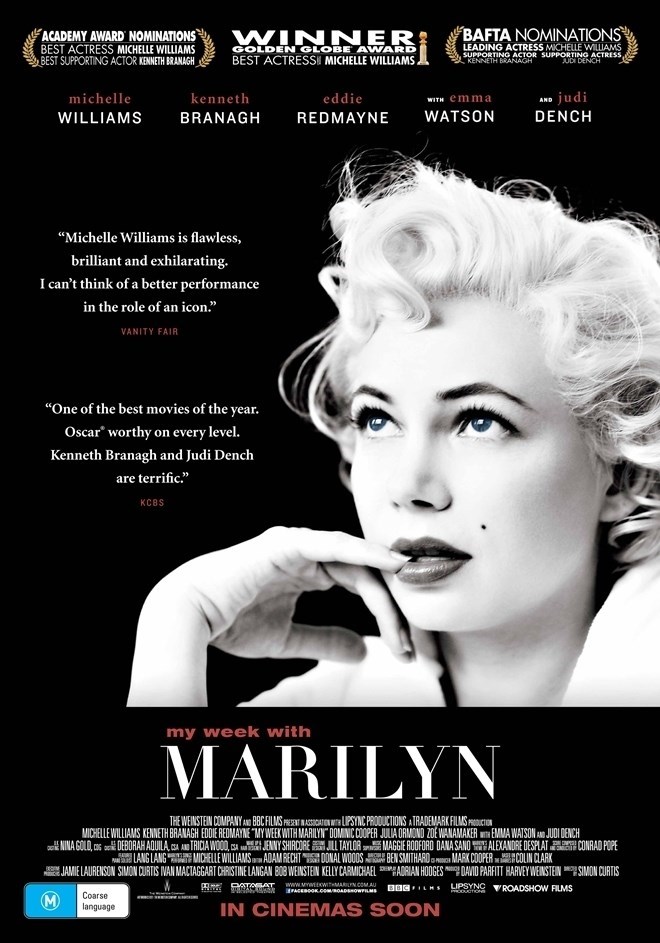
In 1956 Laurence Olivier was the greatest actor in the world; Marilyn Monroe was the biggest star (and sex-symbol) in the world. Surely when they came together to make a movie, it would be cinema gold. It wasn’t. Olivier directed and starred with Monroe in The Prince and the Showgirl, an almost impossibly slight puff piece, partly assembled (so rumour goes) so Olivier could sleep with Monroe. But it turned out Monroe’s fragile psyche and Stanislavkian approach to acting was incompatible with Olivier’s well-honed craft. The two did not get on.

Simon Curtis’ gentle, at times charming, but basically very lightweight film follows the making of the film through the eyes of Colin Clark. Clark, son of the famous art critic Kenneth Clark, was a naïve, romantic young man keen for a career in the movies through his father’s contacts. Hired by Olivier’s production company, Clark is tasked to take care of Monroe throughout the film. He becomes increasingly fascinated and infatuated with her as they spend more and more time together.

The film is based on Clark’s diaries, and he is played by Eddie Redmayne at his most fresh-faced. The problem with Clark is that, to be honest, rather than a young man on a journey of self-discovery, he comes across a little like a social-climbing creep and borderline stalker. Clark recounts a short-lived friendship that obviously had huge importance to him – but the film doesn’t want to deal with the fact it probably meant virtually nothing to Monroe, beyond some company during a lonely time. 

It’s not helped by the fact Clark comes across slightly like a pushy groupie, the self-proclaimed guardian of Monroe’s needs – qualifications barely justified by his actions. The film wants us to think he got closer to the magic of celebrity than anyone, but he feels like a stranger with his nose a little closer to the portcullis. Quite frankly, Colin is the least interesting character in his own story, and Redmayne fails to really give him much depth for us to engage with. Instead he remains a slightly unsettling inverted snob, manipulated by Monroe. The film, you feel, just doesn’t get this. At the end someone tells Colin he is “standing taller” than when he first met him (the implication being the relationship has made a man of him – as if spending a bit of downtime with a celebrity was the only route to emotional maturity). But rather than being part of a sweet star-crossed romance, Colin feels like someone creepily attaching himself to someone vulnerable. 

However, Michelle Williams is very good as Marilyn, capturing a real sense of her emptiness and insecurity. She perfectly captures Monroe’s physicality and vocal mannerisms. She is very good at capturing Monroe’s sense of permanent performance, of her glamour, kindness and innocence, mixed with her maddening vulnerability and (inadvertent?) selfishness. It’s a fine performance – better than the film deserves. 

Because the film is afraid of remotely criticising Monroe at all – or really engaging with the deep psychological reasons for her depression, or addressing the possibility that part of her appeal was her slight blankness that any desires could be projected onto. Instead, the film suggests, she’s sad because men just use her. Apart from Colin of course. His kissing, skinny-dipping and sharing a bed with her are entirely unmotivated by any lustful yearnings.

The film is in love with Monroe, presenting her just as Colin saw her – perfection. In fact, just as Dougray Scott’s put-upon Arthur Miller says, she was probably exhausting and all-consuming. She certainly sucks the naïve Colin into her orbit, in a way he (or the film) hardly notices or understands. It wants us to think of this as a romance – in fact, Monroe’s fragility created a neediness that meant she didn’t feel she needed to consider other people, so overwhelmingly concerned was she with her own brittleness. The film essentially believes she was a star, so is basically allowed to do what she wants. The fact that she did so with an air of gentle vulnerability means the film gives everything she does a pass.

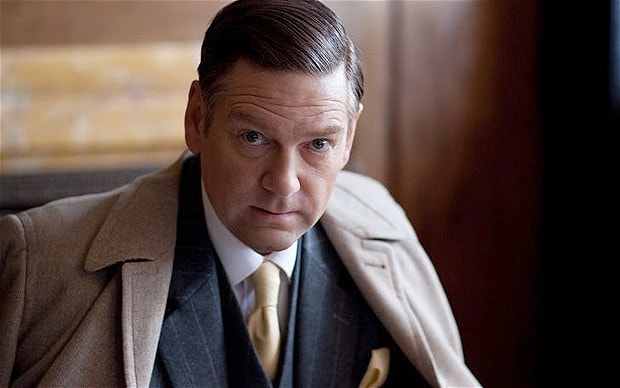
So it’s rather hard not to sympathise with Olivier’s growing frustration with Monroe’s unreliability. Kenneth Branagh triumphs as Olivier, surely the role he was born to play: very funny, but also with a patrician charm and all-consuming arrogance. Branagh taps into Olivier’s vulnerability, his sense that he may not be able to communicate his acting strength into movie stardom, that he is yesterday’s man. For all her difficulty, Monroe had that “star quality” that makes her the centre of your attention. I’d argue Olivier almost certainly had the same – but the film is so in love with Monroe, it needs to slightly bring Olivier down. Branagh, however, is so good that he constantly punctures the film’s attempt to force Olivier into a less sympathetic role than the one it indulges Monroe with.

My Week with Marilynis far from terrible – it’s just a rather empty film. It has a terrific cast with these British star actors all offering fine pen portraits of assorted actors, producers and agents. The film however is slight, and so in love with its fairy-tale elements, it doesn’t notice that Clark’s story is slightly more creepy and certainly a lot more emotionally empty than the film wants it to be. It wants to take us behind the curtain of a 20th-century icon – instead it accidentally shows how impenetrable their screens are, and how easy it is for ordinary people to persuade themselves that the most fleeting of contacts was something special.