Tag: Eric Stoltz

The House of Mirth (2000)

The House of Mirth (2000)

Masterful adaption of Wharton, beautifully judged, brilliantly acted and superbly filmed

Director: Terence Davies

Cast: Gillian Anderson (Lily Bart), Eric Stoltz (Lawrence Seldon), Dan Aykroyd (Gus Trenor), Anthony LaPaglia (Simon Rosedale), Laura Linney (Bertha Dorset), Terry Kinney (George Dorset), Eleanor Bron (Julia Peniston), Jodhi May (Grace Stepney), Elizabeth McGovern (Carry Fisher), Penny Downie (Judy Trenor), Pearce Quigley (Percy Glyde), Lorelei King (Mrs Hatch)
When Scorsese bought Edith Wharton’s The Age of Innocence to the screen, it was seen as a wild swing out in his career. You could have said the same thing when Terence Davies made The House of Mirth, an unlikely follow-up from a host of artistically constructed, meditative memory pieces. But in doing so, Davies executed perhaps one of the most perfectly executed translations of a novel to the screen, a gorgeous, beautifully moving film. Put simply, in its grace and magic glow, it’s pretty hard to imagine The House of Mirth being done better.

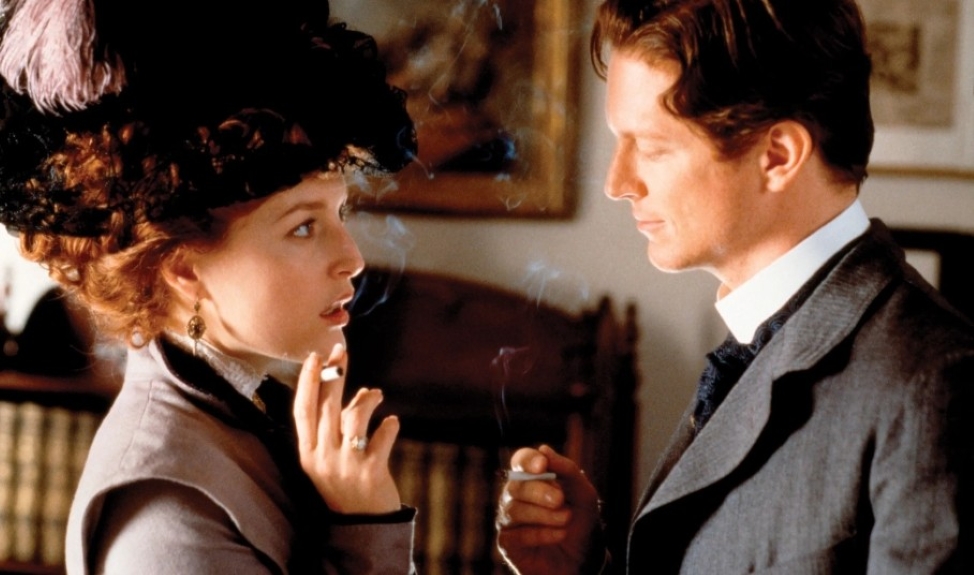
Our hero is Lily Bart (Gillian Anderson), a woman who feels she is at the heart of 1905 New York society but will discover her grip on life is far less secure than she believes. Dependent on her aunt (Eleanor Bron) for financial support, needing to marry for money, perhaps in love with not-quite-rich-enough bachelor Lawrence Seldon (Eric Stoltz), unwilling to compromise on her principles and desires, Lily will make a series of catastrophic decisions. Thee will leave her facing the brunt of the ruthlessness of her so-called friends such as banker Gus Trenor (Dan Aykroyd) or Bertha Dorset (Laura Linney) and her world falling apart with extraordinary speed.

Shot with a visual beauty inspired by a host of painters – most notably John Singer Sergeant, whose compositions are referenced throughout to breathtaking effect – Davies film is measured, wise and slowly unleashes a powerful emotional impact. Carefully adapted, Davies film is awash with the intricate, ornate dialogue of early twentieth century New York: speech that, it quickly becomes clear, is about disguising and obscuring the true meaning of what is being said. New York society is awash with lies, deceptions, selfishness and greed, all of it disguised with fine words and high-living – as Lily says “Why is it when we meet we always play this elaborate game?”

What’s tragic about Lily Bart is that it’s a game she believes herself to be skilled at, time revealing she is a novice stumbling in the big leagues. On top of which, as someone penniless, unmarried and reliant on others, she has a terrible lack of security. A lack of security meaning people like Trenor can demand a very personal reward in exchange for his financial services, without worrying about disgrace. Someone savvier would have seen through Ackroyd’s wonderful portrait of barely concealed greed under Trevnor’s avuncular pleasantness. Just as a more worldly figure would have seen that (the simply brilliant) Laura Linney’s gossipy Bertha sees Lily as nothing more than a simple soul ripe for manipulation, a pathetic fall-guy to hide her own infidelities.

It becomes clear there is a doomed, tragic quality to Lily. She’s introduced emerging from a blackened screen in a puff of train steam, an Anna Karenina-ish echo hinting at her eventual fate. In an extraordinarily complex, perfectly judged performance from Gillian Anderson, Lily emerges as a woman of far greater depth and principle than we (or she) suspects. But prone to terrible errors of judgment, often for the right reasons. She is too principled to marry for money, but not savvy enough to play the courting game, publicly humiliating the wealthy Percy Glyde (Pearce Quigley) who she dutifully woos, only to stand him up for a walk that is a clear proposal hint.

But she is too aware of her wordly needs to embrace the mutual love between her and Eric Stoltz’s charmingly enigmatic Lawrence Stern. These two conduct a dance of suggestive flirtation, without ever truly committing their feelings openly. Lily seems to be almost a tease, but Anderson beautifully demonstrates a hesitancy born from an attempt to be honest, to find love and money in one man. The heart-rending realisation later in the film that she has made a terrible mistake, out of a mix of principle, pride, foolishness and decency is captured in Anderson’s superbly pained expression – not to mention a late emotional out-pouring that is heart-breaking in its pain and honesty.

Slowly, Lily’s world falls apart, Davies capturing the tragedy with coolly observant camerawork gliding through society, echoing the photographic approach that defined his earlier work. In every sequence, and between every scene cut, Lily’s position slowly, at first imperceptibly, becomes worse and worse. Less and less secure, until eventually she’s lost to society, in a world of run-down bedsits and laudanum addictions. Where she brutally realises her life of society balls has made her a “useless person”, with no skills and utterly out-of-depth in a world where she must earn her living.

Anderson’s punctures Lily beautifully throughout with a naïve vulnerability. In a way, the undeserved social disgrace Lily suffers (wrongly seen as a slut and a home wrecker) makes her cling even more closely to her principles – even as they become more and more damaging to her. These principles can seem as inexplicable to us as they do to her few allies: she pays out a stock of her limited personal finances to cover up Bertha’s affair with Lawrence, continuing to cover for her even as Bertha burns her in front of all of New York (and barely considers using her evidence for blackmail). It’s part of what makes Lily an astonishingly admirable figure, even as her life spirals downward.

The powerful emotion of this, the deep investment Davies helps us feel for a woman who becomes more and more understandable to us as she is more and more stripped of privilege, is complemented by exquisite film-making. One breath-takingly superb transition sees Davies camera drift through a grand house with all its furniture and fittings carefully hidden under dustsheets, out into a rain-speckled stream, the camera swooping lower and faster until the water transitions into the sun-kissed waves of the Mediterranean: a gorgeously, masterfully simple transition that moves us across weeks and miles in a moment. Haunting images abound, a spilt ink pot in the film’s closing sequence like a gut punch of emotional rawness.

Really, what Davies understands, is that Wharton’s bitter comedy is set in a ‘vile’ world. In society, nothing matters other than the quality of homes and classiness of backgrounds. The finest people can lie, cheat and steal with no blowback. Nouveau riche like Simon Rosedale (a very good Anthony LaPaglia) are judged as vulgar when their actions reveal they are decent. It’s a world where you start to expect no one is happy: Lily’s cousin Grace (an excellent Jodhi May) is unloved, her aunt miserable, half of society are privately humiliated cuckolds, deeply bitter and unhappy.

The House of Mirth is a truly outstanding literary adaptation, beautifully assembled, wonderfully acted – Anderson, in particular, was and is an absolute revelation – and directed with a deeply powerful simplicity by Davies. It’s possibly his masterpiece.
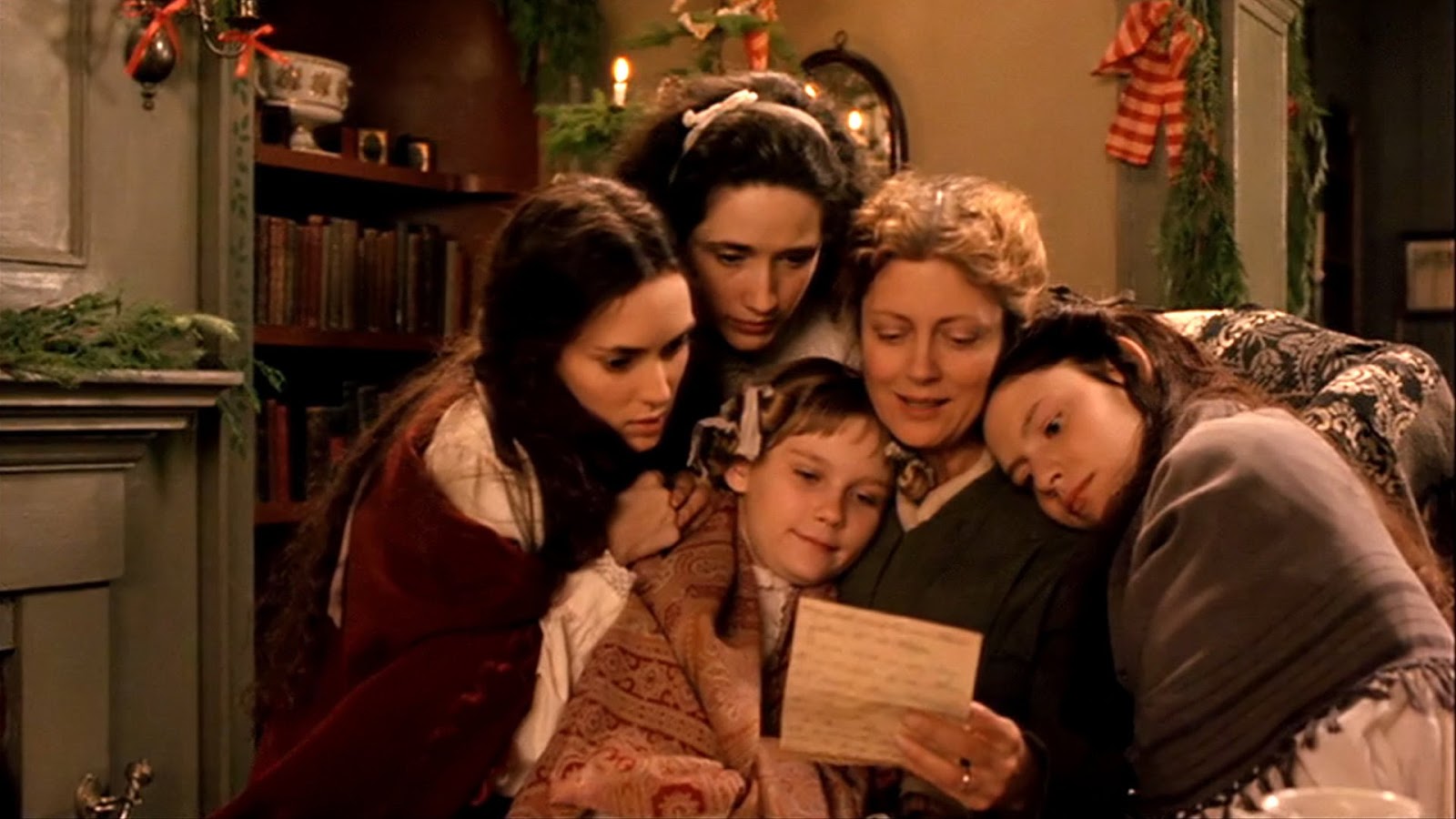
Little Women (1994)


Gillian Armstrong’s beautifully cast and played adaptation of Little Women is a classic

Director: Gillian Armstrong

Cast: Winona Ryder (Jo March), Gabriel Byrne (Friedrich Bhaer), Trini Alvarado (Meg March), Kirsten Dunst (Young Amy March), Samantha Mathis (Amy March), Claire Danes (Beth March), Susan Sarandon (Marmee March), Christian Bale (Theodore Laurence), Eric Stoltz (John Brooke), John Neville (Mr Laurence), Mary Wickes (Aunt March)

There are certain adaptations that simply set the standard. I’m thinking of the BBC Pride and Prejudice or Emma Thompson’s Sense and Sensibility. For productions like this, it almost seems superfluous to create another version: why would you want to when you can already watch the whole thing done perfectly? Gillian Armstrong’s superlative production of Little Women is such a film: so perfectly cast, immaculately acted and brilliantly assembled that I simply can’t imagine another production bettering it.

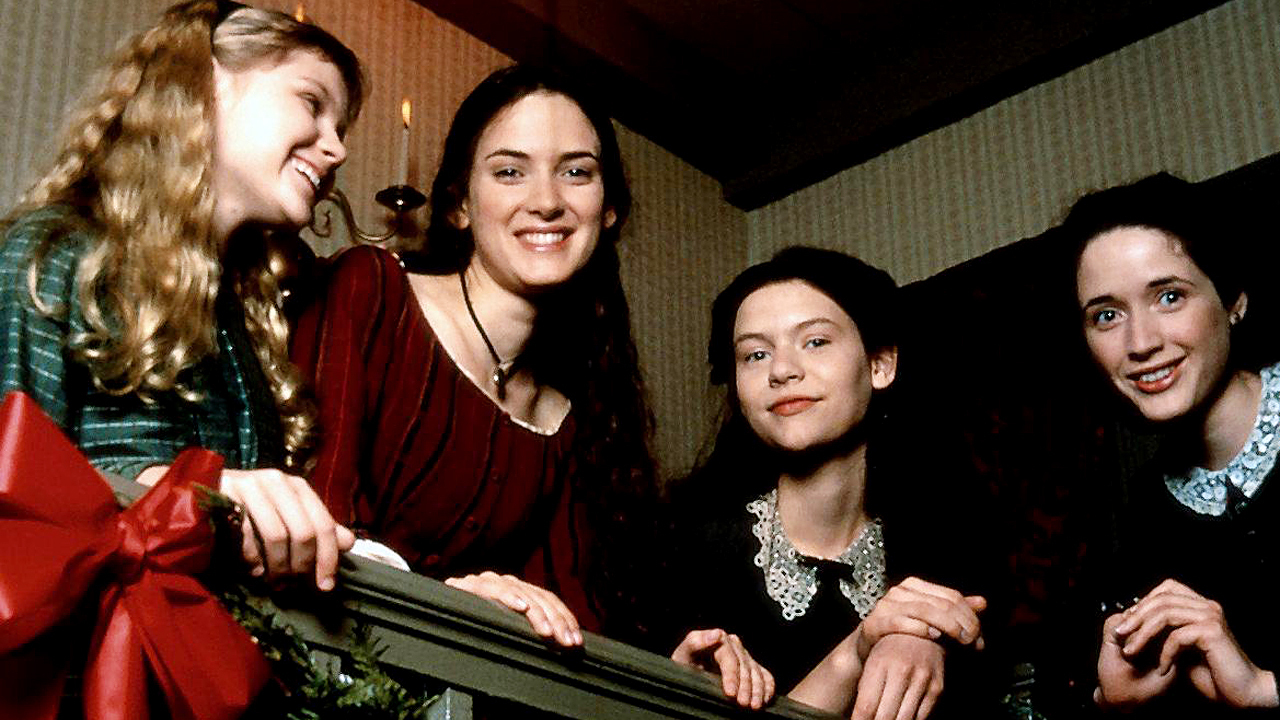
In Massachusetts during the American Civil War, the March sisters live with their mother (Susan Sarandon): sensible Meg (Trini Alvarado), tomboyish Jo (Winona Ryder), gentle Beth (Claire Danes) and temperamental Amy (Kirsten Dunst). While their father is away fighting, the girls grow up and experience the highs and lows of life and love, while never losing sight of the strong bond that holds them together.

Not only is it impossible to imagine another production besting this, I can’t imagine another creating so many “something in my eye” moments as this film manages. Gillian Armstrong’s tender direction gets a guaranteed emotional response from the audience every time, largely because she keeps the film simple, focused and doesn’t overegg the emotion. She recognises the story itself carries delicious highs and heartbreaking lows – and lets these moments speak for themselves. From its opening moments, establishing the girls’ love of theatricals and their own private “Pickwick club”, you know you are in the safe hands of people who fully understand the novel.

It’s a film which plays it very, very simple and lets the beauty of the moments speak for themselves. Many work perfectly: no less than three times I felt myself welling up, from the presentation of Mr Laurence’s piano to Beth, to Beth’s tragic death, to the final scenes between Jo and Professor Bhaer. Each of these moments is quite simply perfectly played and carry a major emotional wallop. It’s because Armstrong sets out a film that is totally straight, and a completely loving and respectful adaptation of Alcott’s novel. Armstrong, and adapter Robin Swicord, also build a profound, focused story of growing up and learning to adjust to loss and the changes life brings us. Focusing on this creates a very clear journey in the movie – as well as a story anyone who has had any life experiences is going to respond to.

Part of the reason why the film is such a complete success is the superb playing from a cast without a weak link among it. The four March sisters genuinely feel like people who have grown up together, so strong are the bonds of chemistry between them. I’d also hugely commend Armstrong and Swicord for so skilfully establishing the different personalities of the sisters – within the opening few minutes you’ll feel like you know all their personalities exactly (a task utterly failed by a recent three-part BBC adaptation).

In the lead role, it’s scintillating to watch Winona Ryder and remember what a superb, heartfelt and gloriously expressive actress she is. Vulnerable but also tomboyish, boisterous and also tender, she brilliantly captures Jo and her semi-bohemian, semi-homespun yearnings, and her passionate love for a life different from the traditional. Ryder also has such wonderful skill with conveying emotion – at several key moments, waves of emotion seem to pass over her face in careful micro-expressions. Several moments carry the weight that they do, because Ryder sells them so well. 

Her three sisters are equally well-cast. If she has a rival for skill of expression and conveying depth of emotion it’s Claire Danes, who is astonishingly good as the gentle Beth (hard to believe she was only 15 at the time!). Danes’ simple joy and her gentle, unassuming love for those around her really hit home. Danes’ joyful warmth makes Beth’s acceptance of the piano from Mr Laurence a beautiful moment, while her tender humanity makes her death incredibly moving. Kirstin Dunst is superb as the young Amy – part brattish pre-teen, part excitable child. Her sudden horror when she realises the gravity of burning Jo’s book again helps this moment work so well. Trini Alvarado has the less interesting part, but her grounded, calm, proper and gentle performance as Meg balances the work of the sisters really well, and Alvarado demonstrates she has real empathy for the role.

The rest of the cast are equally good. Samantha Mathis (taking over the older Amy) delivers an excellent portrayal of a woman keen to head into the world. Susan Sarandon is perfect as a wonderfully loving, all-knowing mother. Christian Bale is perfect as the playboyish Teddy, full of playful fire. John Neville sells a few crucial scenes as a humane Mr Laurence. Gabriel Byrne is certainly far more handsome than his literary counterpart, but he’s so wonderfully gentle, caring and kind that it hardly matters: the relationship between him and Jo is beautifully judged.

Beautifully judged basically sums up the whole thing: there is not a bum note in this whole film. Armstrong and Swicord nail every single decision. Armstrong’s direction is outstanding: a brilliant example is the gently, unbearably sad sequence of sprinkling roses in Beth’s room after her death – it’s so simply done but incredibly moving. The film is crammed with moments like this, beautifully scored by Thomas Newman. Swicord’s script is marvellous, and it successfully draws out the feminist message of the book, without hammering the points: it gently flags up the lack of opportunities often available for women at the time, but also celebrates the contribution they can make. 

Little Women is a simply superb piece of adaptation, and a deeply affecting and heart-warming film. Only a film that lets you invest in the characters as much as this, could move you as much as it does. When Ryder smiles, you feel your whole world light up. When Danes cries with joy you feel your heart sing. When tragedy comes you feel like you’ve had a loss yourself. The story is superbly streamlined, each character is perfectly established, the relationships between them all are so wonderfully done – you can’t help but fall in love with it. If it had been a film about men it would have been littered with Oscar nominations. As it is, despite the sexism of the Academy, it’s a film you’ll treasure and return to again and again.

Rob Roy (1995)


Tim Roth and John Hurt are the villainous aristocrats taking advantage of Liam Neeson’s honour in Rob Roy

Director: Michael Caton-Jones

Cast: Liam Neeson (Rob Roy MacGregor), Jessica Lange (Mary MacGregor), John Hurt (Marquess of Montrose), Tim Roth (Archibald Cunningham), Eric Stoltz (Alan MacDonald), Andrew Kier (Duke of Argyll), Brian Cox (Killearn), Brian McCardie (Alasdair MacGregor), Gilbert Martin (Guthrie), Ewan Stewart (Coll), Jason Flemyng (Gregor), David Hayman (Tam Sibbalt), Shirley Henderson (Morag)

In the mid-1990s there was one of those bizarre Hollywood coincidences that saw two similarly filmed Scottish-based dramas head into production at the same time: Braveheart and Rob Roy. Braveheart stole the headlines, and the Oscars, and turned William Wallace from a footnote in history into an icon of Scottish independence. However, it’s arguable that the over-looked Rob Roy is the better, richer, more involving film.

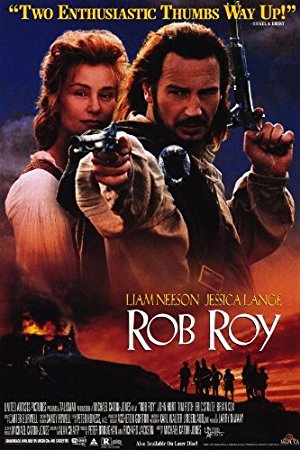
In 1713, Rob Roy MacGregor (Liam Neeson) is the Chief of the Clan MacGregor, in a loving marriage to Mary (Jessica Lange), and supports his clan through protecting the cattle of the gentry. Knowing that this is not enough to help their poverty, Rob borrows £1,000 from the Marquess of Montrose (John Hurt) to start a cattle trading business. However, on collecting the money, his friend Alan MacDonald (Eric Stoltz) is murdered by Archibald Cunningham (Tim Roth), a foppish playboy and ruthless fencer, who is staying with Montrose and wants the money to clear his debts. Montrose demands Rob falsely testifies that his rival the Duke of Argyll (Andrew Keir) is a Jacobite in return for forgetting the debt – when he refuses, he is named an outlaw and a rebel.

Rob Roy works so damn well because it is thrillingly told, well-scripted, shot with a romantic sweep in some terrific Scottish locations and uniformly excellently acted. It’s perfectly constructed as a classic melodrama, because the heroes are pretty much completely upright, admirable and inspiring (without ever being tiresome or sanctimonious), while the villains are intriguingly shifty and vile, running the gamut from cowardly opportunist to vicious sociopath. Chuck this in with a tightly focused plot, and it works extremely well.

Liam Neeson is perfect casting as the upright Rob. Few people do nobility and decency better than Neeson, and Rob is just about the most stand-up guy you can imagine. You can totally understand why every one of his clan seems to worship the ground he walks on. Neeson’s classical physicality and stance totally sell him as the ultimate highlander, while his kindly eyes and gentle manner make him an obvious fit as an inspiring leader. 

Caton-Jones directs the action with zip, even if the film does perhaps go on a fraction too long. He sets Rob’s decency and honour at the centre of the film, and brilliantly builds the thematic story around the shifting world where old-school honour and decency is being left aside for the more ruthless realpolitik of Montrose. Rob’s old-school decency makes him the kind of hero figure you see in a traditional Western – and Caton-Jones is clearly inspired by the scope and sweep of John Ford Westerns, making excellent use of the mist and the hills. 

The Scottish highlands are our wild plains, the traditional values are those of the homestead – and the communities Rob protects are presented with a warmth and glow that is never galling. A lot of this is due to Jessica Lange’s excellent performance as Mary, a woman of warmth, tenderness but also hard-hearted realism mixed with a sharp strength of will. Lange (and her lilting accent is quite lovely to listen too) handles the events that occur to her as the wife of a rebel with a dignity, but also a fierce rage just below the surface. If Rob is defending honour, she represents it.

But the real strength the film has is its villains. It has three very different but terrific antagonists, each of them brilliantly brought to life by three very good actors. John Hurt brings Montrose a brilliant sense of slightly perverted corruption, the arrogant insouciance of a man who works out there is more going on than he is being told, but not caring so long as he can turn it to his advantage. Brian Cox is excellent as the cowardly, greedy, shallow and bullying land property manager, snivelling and timid beneath his bluster. 

The real swagger through comes from Tim Roth, who is quite superb as the flamboyant sadist and sociopath Archibald Cunningham. Roth marches off with the film, pitching it just right as a man who presents (and lives) a performance to the entire world: a foppish playboy who seems light and disposable, but is in fact a ruthless, dangerous man with no principles and a horrifying capacity for violence. The character has enough humanity to prevent him from becoming a caricature – he’s bitter at being a bastard, he has a strange affection for his mother. He’s aware that he’s the baddie – he just doesn’t care. In fact he loves it. He invites people to underestimate him – and takes a sadistic delight in proving them wrong. He’s a perfect dark reflection to Rob.

The film introduces him demonstrating his terrifying skill with a sword in a sporting duel: and you don’t need a PhD in storytelling to guess that the film is heading towards a second, closing sword duel between our noble hero and his sadistic opposite. When it comes, it’s a belter of a sword fight, brilliantly choreographed, that sums up the whole movie: Rob fights with a broadsword (and the film demonstrates how exhausting swinging one of those can be) and depends on directness and fairness. Cunningham fights with a rapier, is quick, indirect and gleefully delights in inflicting a number of glancing wounds. It’s one of the best sword fights (and uses of combat to communicate character) on film – and it’s engrossing.

Rob Roy is easily overlooked – but it’s a fine film, full of memorable moments and above all stuffed with terrific performances. Caton-Jones shoots the film very well, and works brilliantly with the actors. You’ll remember them all – and you’ll invest in their stories. Yes it is a little too long, and yes sometimes it’s a little too in love with the romance of the highlands – but it’s a smashing, exciting and engrossing film and you’ll certainly find plenty in it to enjoy: not least Roth’s showboating menace.