
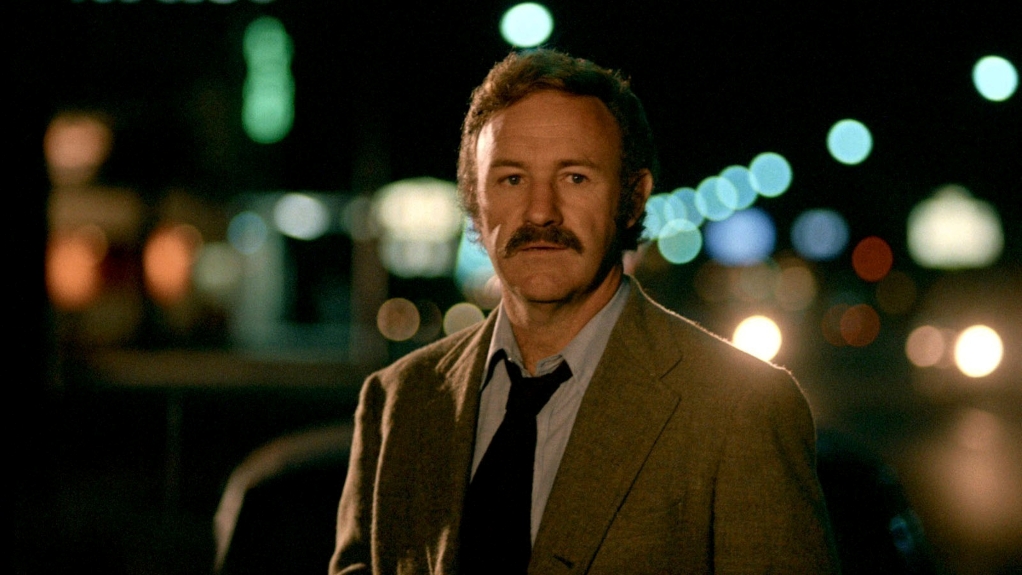
A private detective out of his depth in this excellent 70s conspiracy-thriller tinged noir detective drama
Director: Arthur Penn
Cast: Gene Hackman (Harry Moseby), Jennifer Warren (Paula), Susan Clark (Ellen Moseby), Melanie Griffith (Delly Grastner), Edward Binns (Joey Ziegler), Harris Yulin (Marty Heller), Janet Ward (Arlene), James Woods (Quentin), John Crawford (Tom Iverson)
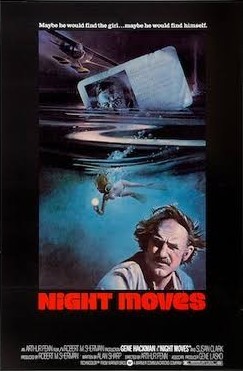
“Yeah, but he didn’t see it. He played something else and he lost. He must have regretted it every day of his life. I know I would have.” That’s how Harry Moseby – PI, retired footballer and chess enthusiast – explains the fall out of a 1925 chess championship game, where the losing player failed to spot a checkmate in three through a brilliant flurry of knight moves. There’s a reason why a tweaked version of this makes the title (Penn argued it was because so many key scenes were set at night, though I suspect he just worried the alternative would either be too confusing or tip the wink too much). Turns out the case Moseby is investigating is just like that chess game, with himself as the losing player failing to spot the killer checkmate move.
That’s the set-up for a very seventies private detective movie, where the hero is effectively living out a fantasy of being Marlowe or Spade, turning down every opportunity to bring himself into the modern world (via a near-fangled database-using detective agency, awash with cash) and pays a heavy price. Because, rather like Matthau in Charley Varrick, Moseby sees himself as last of the Independents, but without (it turns out) the nous or ruthlessness to succeed. Instead, Harry misses everything that turns out to be important, heads down blind alleys, focuses on the wrong motives and ends the film like he spent it, drifting in circles drenched in defeat.
Harry (Gene Hackman) is hired by an ageing former Hollywood starlet (Janet Ward) to find her daughter Delly (Melanie Griffith), a case he solves with relative ease since she is staying with her estranged father-in-law Tom Iverson (John Crawford) and Tom’s wise-crackingly flirtatious marinist girlfriend Paula (Jennifer Warren). Easy peasy right? Wrong, as Harry finds himself embroiled in a further mysteries and deaths, revolving around links between the family and the world of Hollywood stunt drivers, led by the good-natured Joey Ziegler (Edward Binns). As he scratches the surface of the mystery, he will discover to his horror he is way out of his depth.
Arthur Penn’s detective drama soaks in the paranoic style he virtually made his own, mixed with grimy depression at the world gone to hell. “Where were you when Kennedy was shot?” Paula asks Harry who responds with a weary sigh of “which one?” Everything feels sordid and shabby: Harry’s job is essentially trailing unfaithful wives; Hollywood is a cheap exploitation flick machine and alcoholic ex-starlet Janet bemoans how good her breasts used to be. It’s a film shot with a grainy, dirty detail by Bruce Surtees and edited with a deliberately disjointed suddenness by Dede Allen, scenes often feeling like they end abruptly or jarringly, leaving us as off balance as Harry is. There is, throughout, a creeping air of confusion and uncertainty – Penn designed the film to require multiple viewings and even then questions remain – not least since vital clues and hints are dropped in with marked casualness, while major red herrings are flashed in front of us.
In the middle of this, Harry wants to be a resourceful, determined, ingenious private eye plucked from Chandler. But he’s far from that, not quite smart enough to realise he’s not that smart. His naïve cluelessness should be clear, since he stumbles only by chance on an affair his wife (Susan Clark) has been having for some time. He lets his prejudices and opinions get in the way of conclusions – most especially in the instant dislike he takes (who can blame him) of James Woods’ snivelling bitter mechanic, a casual boyfriend of Delly, who looks more beat up and scarred every time we see him (a nice hint he’s not the criminal-in-waiting Harry assumes he is). On the other hand, since he likes Edward Binn’s jovial stunt driver Joey, he seems to forget in their first meeting he watched Joey violently rough up a young man in a bar for trivial reasons.
He’s superbly played by Gene Hackman, who makes Harry full of vulnerability and shyness that marks him out as a slightly naïve lost soul, despite his more hard-bitten outer shell. Hackman understands perfectly that Harry is really a big kid, living out a fantasy, but without the instincts or the skill to pull it off. He’s flustered by women (Delly’s casual teenage sexuality, in particular, disorientates him no end) and his all-too-obvious crush on Jennifer Warren’s very well-played mix of femme fatale and wisecracking sidekick is rather sweet. Hackman also invests Harry with an old-world decency and (knightly!) sense of chivalry: he’s disgusted at Tom’s sleeping with his step-daughter (“There should be a law against it” Tom sighs; “There is” Harry contemptuously states) and quickly feels a protective feeling towards Delly.
But despite this, he’s as much a clueless patsy in all this as he is in his marriage, unable to see the wood for the trees. Just like Chinatown, he ends up out of his depth – the difference being the case turns out to be far more mundane then he suspects. In fact, Harry turns out to be the main destructive force of the film: his ham-fisted persistence in delving deeper, panicking characters into murderous actions, even while Harry fails to understand for a moment what he is involved in and who he should be wary of.
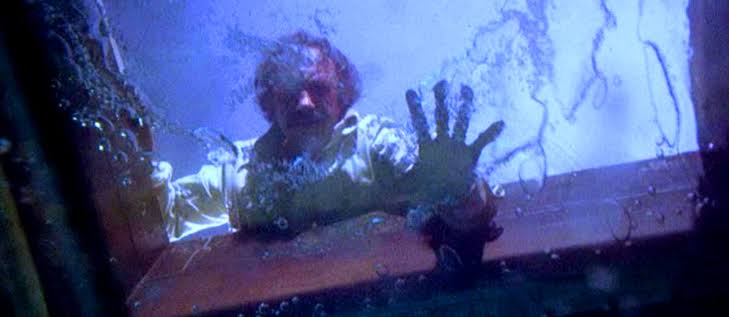
It’s a great visual metaphor that Harry only realises (possibly) what’s been going on in the whole film, when he stares down through the sea-view window of Paula’s boat at a vital clue he’s missed all this time. Harry has to strain to interpret what he can see, water and bad lighting obscuring his view. It’s the murky, obscured world of the film bought to visual life. A film during which Harry has closed his ears and eyes to all the crucial details, failed to appreciate the real meanings of the things he has focused on and left himself alone and adrift in a sea of carnage, only just beginning to piece things together (but far too late).
It makes for a superb, labyrinthine detective drama, laced with paranoia and unsettling mystery, with a superb Hackman full of a mix of bashful charm, world-weary cynicism and tragic naivety, clinging to a fantasy that can’t survive contact with reality. Penn’s film might rival Chinatown as the definitive hard-bitten detective drama of the 70s, one where the hero’s every action leads to disaster, every decision is misguided in some way, every conclusion flawed and learns only too late how wrong he was. If that’s not hard-bitten 70s cynicism I don’t know what is.

