Tag: Gillian Anderson

The House of Mirth (2000)

The House of Mirth (2000)

Masterful adaption of Wharton, beautifully judged, brilliantly acted and superbly filmed

Director: Terence Davies

Cast: Gillian Anderson (Lily Bart), Eric Stoltz (Lawrence Seldon), Dan Aykroyd (Gus Trenor), Anthony LaPaglia (Simon Rosedale), Laura Linney (Bertha Dorset), Terry Kinney (George Dorset), Eleanor Bron (Julia Peniston), Jodhi May (Grace Stepney), Elizabeth McGovern (Carry Fisher), Penny Downie (Judy Trenor), Pearce Quigley (Percy Glyde), Lorelei King (Mrs Hatch)
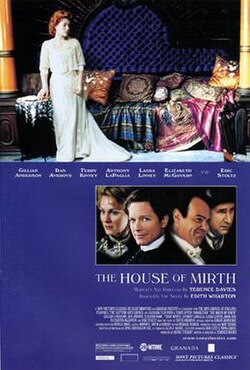
When Scorsese bought Edith Wharton’s The Age of Innocence to the screen, it was seen as a wild swing out in his career. You could have said the same thing when Terence Davies made The House of Mirth, an unlikely follow-up from a host of artistically constructed, meditative memory pieces. But in doing so, Davies executed perhaps one of the most perfectly executed translations of a novel to the screen, a gorgeous, beautifully moving film. Put simply, in its grace and magic glow, it’s pretty hard to imagine The House of Mirth being done better.

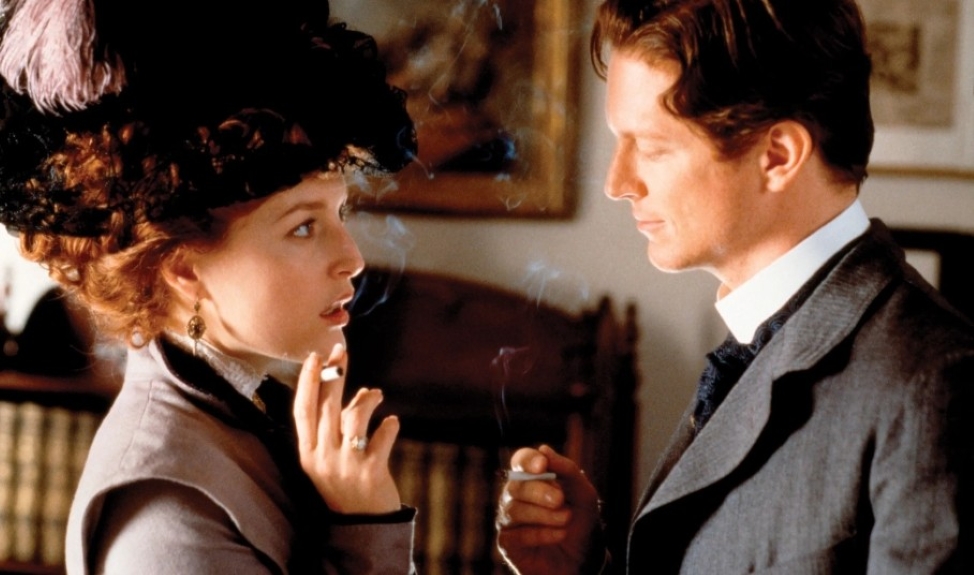
Our hero is Lily Bart (Gillian Anderson), a woman who feels she is at the heart of 1905 New York society but will discover her grip on life is far less secure than she believes. Dependent on her aunt (Eleanor Bron) for financial support, needing to marry for money, perhaps in love with not-quite-rich-enough bachelor Lawrence Seldon (Eric Stoltz), unwilling to compromise on her principles and desires, Lily will make a series of catastrophic decisions. Thee will leave her facing the brunt of the ruthlessness of her so-called friends such as banker Gus Trenor (Dan Aykroyd) or Bertha Dorset (Laura Linney) and her world falling apart with extraordinary speed.

Shot with a visual beauty inspired by a host of painters – most notably John Singer Sergeant, whose compositions are referenced throughout to breathtaking effect – Davies film is measured, wise and slowly unleashes a powerful emotional impact. Carefully adapted, Davies film is awash with the intricate, ornate dialogue of early twentieth century New York: speech that, it quickly becomes clear, is about disguising and obscuring the true meaning of what is being said. New York society is awash with lies, deceptions, selfishness and greed, all of it disguised with fine words and high-living – as Lily says “Why is it when we meet we always play this elaborate game?”

What’s tragic about Lily Bart is that it’s a game she believes herself to be skilled at, time revealing she is a novice stumbling in the big leagues. On top of which, as someone penniless, unmarried and reliant on others, she has a terrible lack of security. A lack of security meaning people like Trenor can demand a very personal reward in exchange for his financial services, without worrying about disgrace. Someone savvier would have seen through Ackroyd’s wonderful portrait of barely concealed greed under Trevnor’s avuncular pleasantness. Just as a more worldly figure would have seen that (the simply brilliant) Laura Linney’s gossipy Bertha sees Lily as nothing more than a simple soul ripe for manipulation, a pathetic fall-guy to hide her own infidelities.

It becomes clear there is a doomed, tragic quality to Lily. She’s introduced emerging from a blackened screen in a puff of train steam, an Anna Karenina-ish echo hinting at her eventual fate. In an extraordinarily complex, perfectly judged performance from Gillian Anderson, Lily emerges as a woman of far greater depth and principle than we (or she) suspects. But prone to terrible errors of judgment, often for the right reasons. She is too principled to marry for money, but not savvy enough to play the courting game, publicly humiliating the wealthy Percy Glyde (Pearce Quigley) who she dutifully woos, only to stand him up for a walk that is a clear proposal hint.

But she is too aware of her wordly needs to embrace the mutual love between her and Eric Stoltz’s charmingly enigmatic Lawrence Stern. These two conduct a dance of suggestive flirtation, without ever truly committing their feelings openly. Lily seems to be almost a tease, but Anderson beautifully demonstrates a hesitancy born from an attempt to be honest, to find love and money in one man. The heart-rending realisation later in the film that she has made a terrible mistake, out of a mix of principle, pride, foolishness and decency is captured in Anderson’s superbly pained expression – not to mention a late emotional out-pouring that is heart-breaking in its pain and honesty.

Slowly, Lily’s world falls apart, Davies capturing the tragedy with coolly observant camerawork gliding through society, echoing the photographic approach that defined his earlier work. In every sequence, and between every scene cut, Lily’s position slowly, at first imperceptibly, becomes worse and worse. Less and less secure, until eventually she’s lost to society, in a world of run-down bedsits and laudanum addictions. Where she brutally realises her life of society balls has made her a “useless person”, with no skills and utterly out-of-depth in a world where she must earn her living.

Anderson’s punctures Lily beautifully throughout with a naïve vulnerability. In a way, the undeserved social disgrace Lily suffers (wrongly seen as a slut and a home wrecker) makes her cling even more closely to her principles – even as they become more and more damaging to her. These principles can seem as inexplicable to us as they do to her few allies: she pays out a stock of her limited personal finances to cover up Bertha’s affair with Lawrence, continuing to cover for her even as Bertha burns her in front of all of New York (and barely considers using her evidence for blackmail). It’s part of what makes Lily an astonishingly admirable figure, even as her life spirals downward.

The powerful emotion of this, the deep investment Davies helps us feel for a woman who becomes more and more understandable to us as she is more and more stripped of privilege, is complemented by exquisite film-making. One breath-takingly superb transition sees Davies camera drift through a grand house with all its furniture and fittings carefully hidden under dustsheets, out into a rain-speckled stream, the camera swooping lower and faster until the water transitions into the sun-kissed waves of the Mediterranean: a gorgeously, masterfully simple transition that moves us across weeks and miles in a moment. Haunting images abound, a spilt ink pot in the film’s closing sequence like a gut punch of emotional rawness.

Really, what Davies understands, is that Wharton’s bitter comedy is set in a ‘vile’ world. In society, nothing matters other than the quality of homes and classiness of backgrounds. The finest people can lie, cheat and steal with no blowback. Nouveau riche like Simon Rosedale (a very good Anthony LaPaglia) are judged as vulgar when their actions reveal they are decent. It’s a world where you start to expect no one is happy: Lily’s cousin Grace (an excellent Jodhi May) is unloved, her aunt miserable, half of society are privately humiliated cuckolds, deeply bitter and unhappy.

The House of Mirth is a truly outstanding literary adaptation, beautifully assembled, wonderfully acted – Anderson, in particular, was and is an absolute revelation – and directed with a deeply powerful simplicity by Davies. It’s possibly his masterpiece.

Scoop (2024)

Scoop (2024)

Interview dramatisation which mostly fails to turn news into drama, making empty points

Director: Philip Martin

Cast: Gillian Anderson (Emily Maitlis), Keeley Hawes (Amanda Thirsk), Billie Piper (Sam McAlister), Rufus Sewell (Prince Andrew), Romola Garai (Esme Wren), Richard Goulding (Stewart MacLean), Amanda Redman (Netta McAlister), Connor Swindells (Jae Donnelly), Lia Williams (Fran Unsworth), Charity Wakefield (Princess Beatrice)

It was one of those interviews that shook the world – largely because it was such car-crash TV. Prince Andrew (played, under layers of effective make-up, by Rufus Sewell) desperately wanted to distance himself from the Jeffrey Epstein scandal and BBC’s Newsnight was seen as the most appropriate outlet for a reputation-restoring chat with a proper journalist, Emily Maitlis (Gillian Anderson). The interview was booked by producer Sam McAlister (Billie Piper) – whose book Scoops inspired this – and advocated for by Andrew’s senior advisor Amanda Thirsk (Keeley Hawes). The revelation of Andrew’s priceless mix of out-of-touch privilege and shallow dimness, combined with his inability to understand the impact on anyone but himself, consigned him to royal oblivion.

Scoop tries its best to turn the behind-the-scenes story into drama – but, to be honest, it comes across as a hugely underwhelming Frost/Nixon-lite. It’s hard not to feel an episode of Netflix’s The Crown would have dealt with this with more depth and interest than this manages. Scoop commits the cardinal sin of any “plucked-from-the-TV-headlines” biopic: all its most interesting parts are pitch-perfect recreations of an interview you can watch at your leisure on YouTube. Once you’ve got over how well Anderson and Sewell have captured their subjects, that’s basically it.

That’s Scoop all over. It’s a film that’s all flash and no substance. Martin and screenwriter Peter Moffat work overtime to suggest that this interview was a seismic piece of journalism, a sort of David-v-Goliath reveal. It ends with the Newsnight team giving themselves a self-congratulatory round-of-applause for “having given a voice to the victims” – a bit rich considering neither the interview or this film gives them much more than a second or two. Maitlis and co are shown to be trembling with nerves before interviewing this Royal Spare who no-one ever took particularly seriously (as McAlister bluntly tells him at one point), something which feels a bit odd since we are repeatedly told Maitlis has quizzed Bill Clinton among a score of other names.

There is a Spotlight-ish attempt to show the Newsnight team verifying some facts before the interview takes place – Scoop is one of the few films you’ll see where a paparazzi photographer, played as a cheeky wideboy by Connor Swindells, presented as a noble crusader for the truth – but it never rings true. No real facts about the Andrew-Epstein case were either unknown, in dispute or revealed during the interview. Andrew wasn’t even undone because of “gotcha” questions: it was because he performed so catastrophically badly, painting himself as the “real victim” and revealing he existed in a reality no ordinary person could begin to recognise.

There is very little drama in Scoop. Based on McAlister’s book, Scoop is duty-bound to place her as centrally as possible. Problem is the slogging hard-work of building trust over time to land big interviews is quite undramatic. Instead, the film boils McAlister’s work down into a chance email, a pub chat and a bit of Hollywoodish-straight-talking from McAlister during a meeting with the prince. This sells her skills short. In fact, unlike Frost/Nixon which got chunks of drama out of the will-they-won’t-they dance to set-up the interview, Scoop gives the impression everyone wanted it to happen. In fact, it makes it look so straight-forward, you end up thinking McAllister’s bitter colleague might be right – how highly skilled is her job?

The desire to centralise McAllister creates further problems: their nominal lead’s key involvement ends before the stuff the film is really interested in (the interview) even begins prepping. Scoop falls back on plucky outsider to keep her involved, retrofitting McAllister (a producer with nine year’s experience with world leaders) into a working-class outsider, who needs to force herself into “the room where it happens”. Problem is as soon as she’s in the room, McAlister has nothing to say or do (one suspects the whispered legal battles connected with a rival mini-series on the same subject stopped the writing of any McAllister-ish insight here, for fear it would be promptly denied by the Maitlis-backed rival production).

McAlister becomes a side-bar, a largely silent background character in her own story. Not quite the message that the film wants to promote on female empowerment (even if her bosses are all women). There are similar odd notes in here. Amanda Thisk’s colleague, an aggressive male we are clearly not meant to sympathise with, resigns when the interview is agreed saying it’s a terrible idea. Scoop paints him as a chauvinist bully, furious at being over-ruled by a woman – problem is he’s right. The most effective moment on this subject is arguably more about privilege in general, as Andrew demeans a female cleaner for incorrectly sorting his teddy bear collection. As mentioned the actual victims remain voiceless and nameless on the margins, barely meriting even a post-credits mention.

Perhaps the real problem with Scoop is it wants to be an All the President’s Men style journalism film but the interview was really a soapish showbiz story. There is not investigation, no wrongs bought to light. There is no gladiatorial duel (compare to Frost/Nixon). Andrew essentially commits reputational suicide in front of his stunned opponents, when confronted with fairly routine, fact-based questions. It’s not like toppling someone really important – and the film is so careful about legal implications it avoids putting any stance on what Andrew may or may not have done, knowingly or otherwise.

What the film doesn’t want to say is that Newsnight landed a big hit by giving us exactly the sort of easy-to-digest, car-crash, celeb news it’s staff start the film scorning. Now a film embracing that would be interesting! In the film McAlister says they need to rejuvenate the programme, to stop talking in an echo-chamber to the Metropolitan elite on subjects like Brexit but focus on the things people really care about and challenge its viewers with positions that differ from their own. Was this story about Prince Andrew in any way at all an answer to that challenge? No. Did it change the world? No. Did it really deserve a film – and that rival three-part series? Scoop never suggests it does.

The Last King of Scotland (2006)

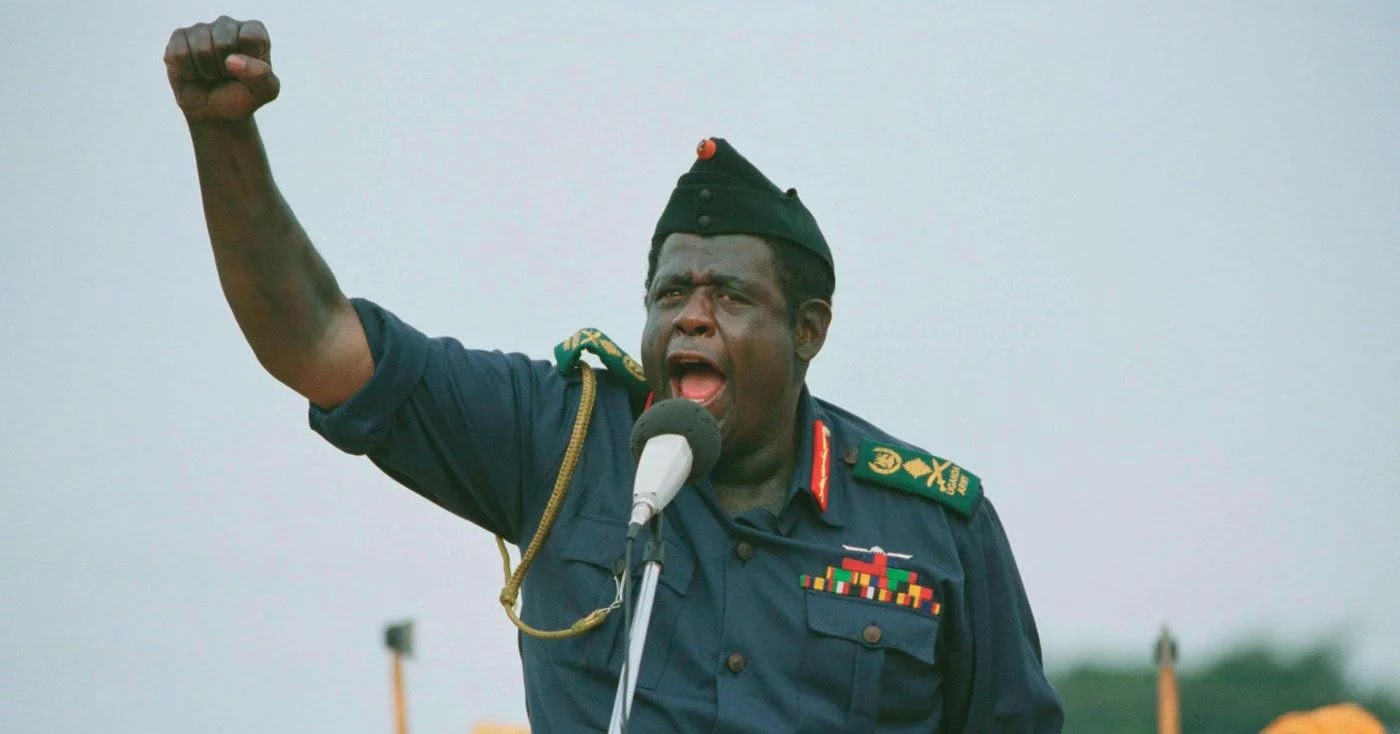
Forest Whitaker dominates as Idi Amin in The Last King of Scotland

Director: Kevin Macdonald

Cast: Forest Whitaker (Idi Amin), James McAvoy (Nicholas Garrigan), Kerry Washington (Kay Amin), Gillian Anderson (Sarah Merrit), Simon McBurney (Stone), David Oyelowo (Dr Junju)

Forest Whitaker won every award going for his performance as Idi Amin. A film can perhaps only begin to scratch the surface of what a megalomaniac nutjob Amin was, and the depths of his depravity and corruption. But The Last King of Scotland is perhaps less focused on that, and more on the pull that people as charismatically self-absorbed and larger-than-life like Amin can have on the weak-minded and, on a wider basis, how this can end up with him leading an entire country on a not-so-merry dance, everyone desperate to gain the love and approval of a single dominant personality.

That weakling is Dr Nicholas Garrigan (James McAvoy) a young medical graduate from Edinburgh, who is arrogant, cocksure over-sexed and over-here in Uganda, keen for adventure and to get as much sex and experiences in as he can while he’s over here. A gap-year student with a desire for the easy life, after a chance meeting Garrigan becomes chief-physician and confidant to Amin, a man with a deep love for Scotland and who likes to think of himself as a father to those around him. It takes Garrigan a long time to realise that this indulgent, if bad-tempered, charismatic father-figure  is in fact a brutal dictator, his eyes eventually opened by the experiences of one of Amin’s wives Kay (Kerry Washington) who pays a heavy price for mothering an epileptic and adultery. Will Garrigan escape from Uganda?

Macdonald’s film gets a brilliant sense of both the exotic appeal of Uganda at the time (and or Amin) and it’s heat-embroiled danger. The camera work is flooded with yellows and grimy details, that makes every scene feel like its bathed in heat (and later danger) as well as giving it a documentary realism (helped by its use of handheld and immediate footage). The story of the film itself is a fairly basic morality tale, but these stories work because of their universality and it’s clear that Garrigan’s selfishness, shallowness and self-interest is going to lead to a terrible awakening.

The film’s real strength is Whitaker’s tour-de-force as Idi Amin. Whitaker is an actor who has been straining at the leash for an explosive roll, and he gets one here. If ever there was a part that would allow an actor to let rip it’s the one, with Amin part Hannibal Lector, part decadent Roman emperor, a low-rent Hitler with an ego larger than his country. But the bombast and childish fury work because it is built within the framework of a sort of puffed-up magnetism, a charismatic “hail-fellow-well-met” bonhomie that suggests this guy could be the best fun in the room. So dripping in assurance and confidence is Amin that he becomes strangely attractive – and the sort of all-powerful force of nature that would have most of us smiling if we caught a word of approval from him.

The trick of the film is to front-and-centre this lighter, fun-loving aspect. It’s easy to enjoy it like Garrigan as Amin charms the audience as much as he does its lead character. Sure there may be violence at the margins, but good-old-Amin is just doing what needs to be done. He’s brilliant with the people. It’s funny when he on-a-whim appoints Garrigan to decide a major architectural pitch from several countries. He’s playful and enthusiastic. When he’s cross with people he seems at first more disappointed than angry. It’s only as the film goes on that we realise we have been gaslit as much as Garrigan, that Amin may be a fun guy but he also cares nothing for anyone and that the more his focus shifts away, the more we see his callous paranoia and lack of any moral scruples.

Certainly we start getting a sense of the ruthlessness he is prepared to exhibit to enforce his rule in Uganda and the brutality with which he will suppress any resistance. Aides killed in a failed assassination attempt illicit no sympathy. He feels no guilt or responsibility for anything he does. In one brutal moment he berates Garrigan for failing to counsel him against expelling all Asians from Uganda. When Garrigan protests he did, Amin only responds with “Yes, but you did not persuade me Nicholas!” the sort of inverted logic practised only by the insanely self-obsessed.

Whitaker’s performance powers all this, a magnetic masterclass in insanity, charisma and paranoia. He’s well matched by James McAvoy (the film’s real lead) whose performance is similarly a masterclass is shallowness and petty triteness. If anything the film is almost too successful in this. A Garrigan is such a little arsehole it takes quite a force of will to build up any sympathy for this serial shagger playboy. It’s capable to think as the fire turns on him that perhaps he deserves this – and the number of (mostly black) characters who lay down their lives to protect him starts to get a bit wearing after a while.

Because this in part is a film where actual Ugandans are not heard that much. The two principle characters we see are both victims: Kerry Washington in a thankless part as the attractive young wife you just know from day one Garrigan will climb into bed with and David Oyelowo as the sort of noble doctor you only seem to find in movies. For all its horror at Amin’s crimes, it’s still largely filtered through the eyes of a young, white, innocent abroad who sees up-front the dangers but the real victims of Amin, the Ugandans themselves, are clichés or elevated clichés.

While you could say that was not the point of the film, it still means we miss some of the real danger and psychopathy of the leading character, so absorbed are we in seeing the increasing peril of the white man caught up in it all. It’s why The Last King of Scotland doesn’t quite work as well as it should, any why it settles in the end for a being a morality tale plot-boiler about a monster at the heart of the forest, rather than a deeper and more intelligent film about the tragedy of an African state. It’s still enjoyable for all that, but it could have been more.