Author: Alistair Nunn

Logan (2017)


One looks at the past, the other their potential future in bleak superhero thriller Logan

Director: James Mangold

Cast: Hugh Jackman (Logan), Patrick Stewart (Charles Xavier), Boyd Holbrook (Donald Pierce), Stephen Merchant (Caliban), Richard E. Grant (Dr Zander Rice), Dafne Keen (Laura), Eriq La Salle (Will Munson), Elisa Neal (Kathryn Munsun), Elizabeth Rodriguez (Gabriela Lopez)
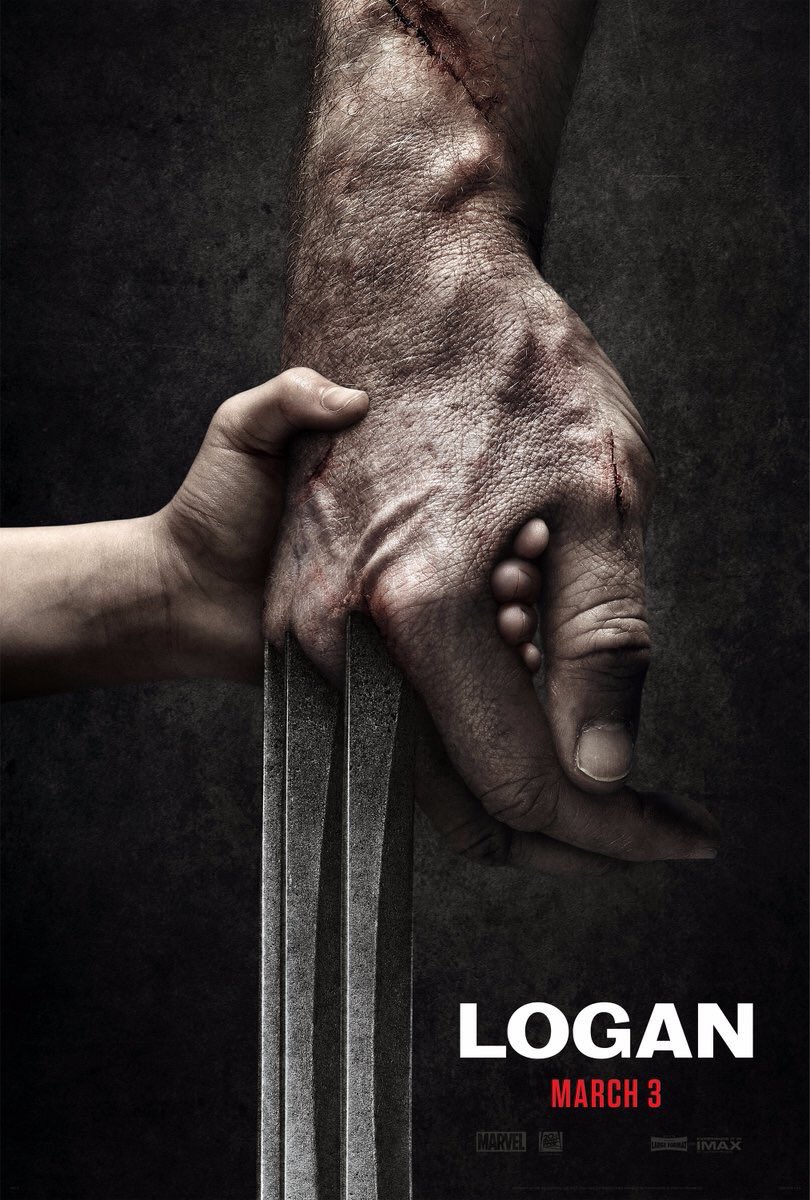
What were you doing 17 years ago? Personally, I was still at school: but Hugh Jackman was being parachuted into X-Men to take on the role of Wolverine after Dougray Scott’s shooting schedule on Mission Impossible 2 forced him to drop out. Since then he has appeared in eight films as the clawed superhero, some good, some shockingly bad – and this is his swansong. Taking a paycut, Jackman wanted to make the Wolverine “you’ve seen in the comics”: did he succeed?

The year is 2029 and mutants are nearly extinct. Logan (Hugh Jackman) lives in Mexico on an abandoned farm, caring for former X-Men leader Charles Xavier (Patrick Stewart), now suffering dementia and brain seizures with lethal effects on those around him. When young mutant Laura (Dafne Keen) arrives needing their help, Logan and Charles find themselves (reluctantly in Logan’s case) on one last adventure, travelling to reunite Laura with other new-born mutants – with a band of lethal mercenaries on their tail. Naturally a string of bodies follows in their wake.

Firstly I think its fair warning to say this is a bone-crunchingly, head-skeweringly, blood-spurtingly violent film. It’s easily more violent than every other X-Men film put together quadrupled. It’s also littered with strong swearing. To be honest, I’m surprised it’s not an 18 certificate – lord knows what strings they had to pull. Mangold’s intention is to show us what battle would actually be like if you were fighting with impossibly sharp knives for hands: limbs are hacked off, chests ripped to pieces, heads are punctured, bits of brain litter the floor. 

There is no romanticism of any of this violence – and the film needs to show it, as its primary theme is the impact a life full of this sort of extreme slaughter would have. Even Logan, his regenerative powers severely decayed, stumbles and limps through the action, often totally outmatched by those he fights – even a gang of car thieves get the jump on him in the opening scene. In fact, that scene serves to establish the mood of the film very quickly: Logan is slow and out of shape and eventually has to resort to extreme and brutal violence to desperately end the fight as quickly as possible. 

The action in the film is impressively filmed but never triumphalist in execution, and the overriding emotion is pain and sorrow. In many ways, it’s a bleak and depressing film, with precious little hope (it does find some peace and optimism in the final frames, but it’s almost the first time this happens). It has a huge body count, and many of the deaths hit home as both deserving and undeserving suffer. In this world there are no good decisions – whatever Logan decides to do, people around him suffer: and it’s the truth of this throughout his life that has led to such pain behind his eyes. The film’s comparatively small scale compared to previous films in the franchise helps keep the focus intimate and personal.

Its setting of course brings Westerns to mind, but also in its sense of the grim passing of an age. Emotionally, both Logan and Charles are exhausted and struggling under impossible burdens of guilt and sorrow., it’s a nihilist Western, a homage to especially perhaps to Shane and The Searchers. Mangold’s direction seizes these contrasts and infuses every frame of the film with visual and stylistic homages to this iconic American genre: even the inclusion of X-Men comic books “in-universe” gives the heroes the feeling of being, Wyatt Earp style, living legends, struggling to carry that burden.

Interestingly this is probably one of the first films that feels like a post-Trump movie. The future America it shows is grim and depressing, with big corporations ruling the roost and the little guy trodden down. The health system is a mess. The film is set partly across the border in Mexico (with brutally tight border control preventing easy passage). A large section of the plot even revolves around a desperate attempt to flee across a border before it is closed down. Of course it’s probably just part and parcel of the standard cinematic crapsack future, but right now the tone and mood of the film feels very much in sync with modern America. 

Hugh Jackman is of course front and centre in this film, and you can see straight away this project is a deeply felt one for him. Unlike any other X-Men film before, this is a character study and allows Jackman to first and foremost act. And he is terrific. With Logan’s powers failing, not only is he able to offer a very different physical performance than ever before, he also allows the character’s vulnerability, defensiveness and fear to come to the fore. Jackman explores the continual conflict in the character between his rage and isolation and his empathy and desire to be good. His protectiveness of Charles is balanced throughout by his deliberate distancing himself from Laura, as if he knows anyone whom he allows to get close will suffer. Jackman makes Logan feel old and beaten down, without losing the sense of fire under the surface.

There are in fact terrific performances throughout the film. Patrick Stewart similarly has never had a better written X-Men role in 17 years, and he makes the witty, profane, bitter but still optimistic and kindly Charles Xavier a stand-out. The interplay between him and Jackman is superb, drawing on the emotion of that years of working together on these films. Dafne Keen is a real find as Laura, convincingly feral and never less than compelling, even though she barely speaks for 2/3rd of the film – Mangold’s direction of her is perfect, drawing maximum impact from her performance. She perfectly captures the sense of being a younger version of Logan, struggling to understand the world and the impact of killing: is it any wonder Logan feels uncomfortable looking at her? Boyd Holbook is very good as a dry mercenary while Richard E Grant draws the maximum from limited screentime as a frightingly calm “mad” scientist.

While this is something very different from previous X-Men films, it’s not a perfect film. In terms of violence, I would argue it sometimes goes too far, like an excited child looking to see how far it can push us. It’s main problems are with narrative: far too many plot devices in the film are signposted like Chekov’s Guns, drawn to our attention in a forced way (often twice in case we forgot) so that most audiences could guess where events are going (there is only one real surprise in the film, and that one I defy you to really see coming). Similarly, while the film’s debt to classic Westerns is clear, to have the characters actually sit down and watch Shane seems a little too much (as well as giving a massive hint about the eventual destination this film is heading towards). Mangold’s direction is good but he lacks the profoundity of a Christopher Nolan to give these comic book happenings a shattering depth – their emotional impact comes from our familiarity with these actors in these roles over many years, not quite so much the film itself.

Saying all that, this is something strikingly different and showpieces some terrific performances. It also feels like it has something it wants to tell us about the burdens of violence on a man and how the past always eventually catches up with us.

WarGames (1983)


“Would you like to play a nice game of Chess” – if only he had said yes…

Director: John Badham

Cast: Matthew Broderick (David Lightman), Dabney Coleman (Dr John McKittrick), John Wood (Dr Stephen Falken), Ally Sheedy (Jennifer Mack), Barry Corbin (General Beringer)

If you worked in a nuclear launch centre and received orders to launch out of the blue, would you want to make a phone call to confirm? That’s the compelling idea that opens this tense but engagingly playful film on nuclear politics that successfully balances teen high-school drama with the possibility of Armageddon. For the record, the man who wants to make the call (played by Leo McGarry himself, John Spencer) outrages his subordinate so much with this breach in protocol that the subordinate pulls a gun on him and demands he follows the orders.

David (Matthew Broderick) is that staple of high-school drama, the geeky genius who coasts through school. He’s a computer genius and, attempting to impress cool girl Jennifer (Ally Sheedy), one-day he finds a back-door into NORAD’s weapons control system WOPR (aka JOSHUA). Thinking he’s found a computer games company, he accepts its invitation to play “Thermonuclear Global War”. Before he knows where he is, he’s in custody and bombs are fueling in their silos.

The opening of the film (a brilliantly self-contained mini-movie) perfectly encapsulates the swiftness of escalation in a nuclear war. At least three more times in the movie, we see how swiftly events can push on from DEFCON 5 to 1. This is a film that questions the very purpose of both the nuclear deterrent and nuclear war itself. There isn’t a single character who truly advocates the purpose of the weaponry, and none of them is anything but terrified at the prospect of pushing the button. But this questioning is handled lightly, and Badham’s direction never allows it to dominate proceedings. The film tackles such a big topic with such a sharp and fun script, and at such a rollicking, enjoyable pace with laughs and thrills, that it must count as a some sort of minor classic.

The film is also of course about computers and hacking. There is actually a lot of charm in watching, on my tablet, a film where a computer takes up the space of a room and an actual telephone is used to hack into an external network. This is probably one of the first films ever to demonstrate hacking and the potential influence of computers. Thrillingly, the film has both a warm acceptance of the advantages computers could bring, and a suitably sci-fi dread of what they may (unwittingly or not) unleash on the world if granted full power over us.

Because this film recognises, arguably ahead of its time, that the mechanisation and omnipresence of computers is terrifying. Like John Spencer in the film’s opening, most of us (I hope!) would want to speak to another human being before pressing the buttons. JOSHUA is scary because it is so benignly controlling – it believes that nuclear war is just another game, and has no understanding at all of the impact on the world its actions will have. JOSHUA isn’t a villain at all – it’s literally an ill-educated child that hasn’t learned its actions have consequences and can’t tell the difference between simulation and reality. It’s the nightmare scenario of having all the empathy and emotional intelligence removed from the world of decision-making.

This isn’t just a film about technology and nuclear politics though – far from it. It’s an engaging human story, told in a tight and streamlined way, and staffed by a very well written selection of characters who all feel tangible and real. Broderick and Sheedy are wonderfully engaging leads, with a great deal more depth than the cliché: David is far more assertive and determined than you might expect, while Jennifer has much more sense and humanity than a high-school Queen. This extends to our NORAD location: Dr McKittrick is far more empathetic and willing to listen than first impressions suggest, and General Beringer is a thoughtful, sensitive man at odds with his obstructive, gung-ho first impression. John Wood (a great stage actor who never quite got the film roles he deserved) plays Dr Falken with wit and a knowing wink, his disillusionment with the world sitting alongside a wry delight.

I was actually surprised how much I enjoyed this film and how well it stands up. It’s thought-provoking but it’s also a lot of fun and very well written, acted and directed. There is a very good mixture between “action” sequences – a wild drive and run to get into NORAD before it is locked down is particularly exciting – and conversation scenes that, due to their high stakes and impassioned acting, play like verbal action scenes. It’s superbly designed too, with the NORAD “war room” in particular setting the pattern for all such locations in future movies.

This is a perfect marriage between the blockbusting mindset of the 1980s and the cynicism of the 1970s. Because it’s a blockbuster and has kids in leading roles, it’s never got the credit it deserves – but this has as much merit as many political and conspiracy thrillers of the cynical 1970s.

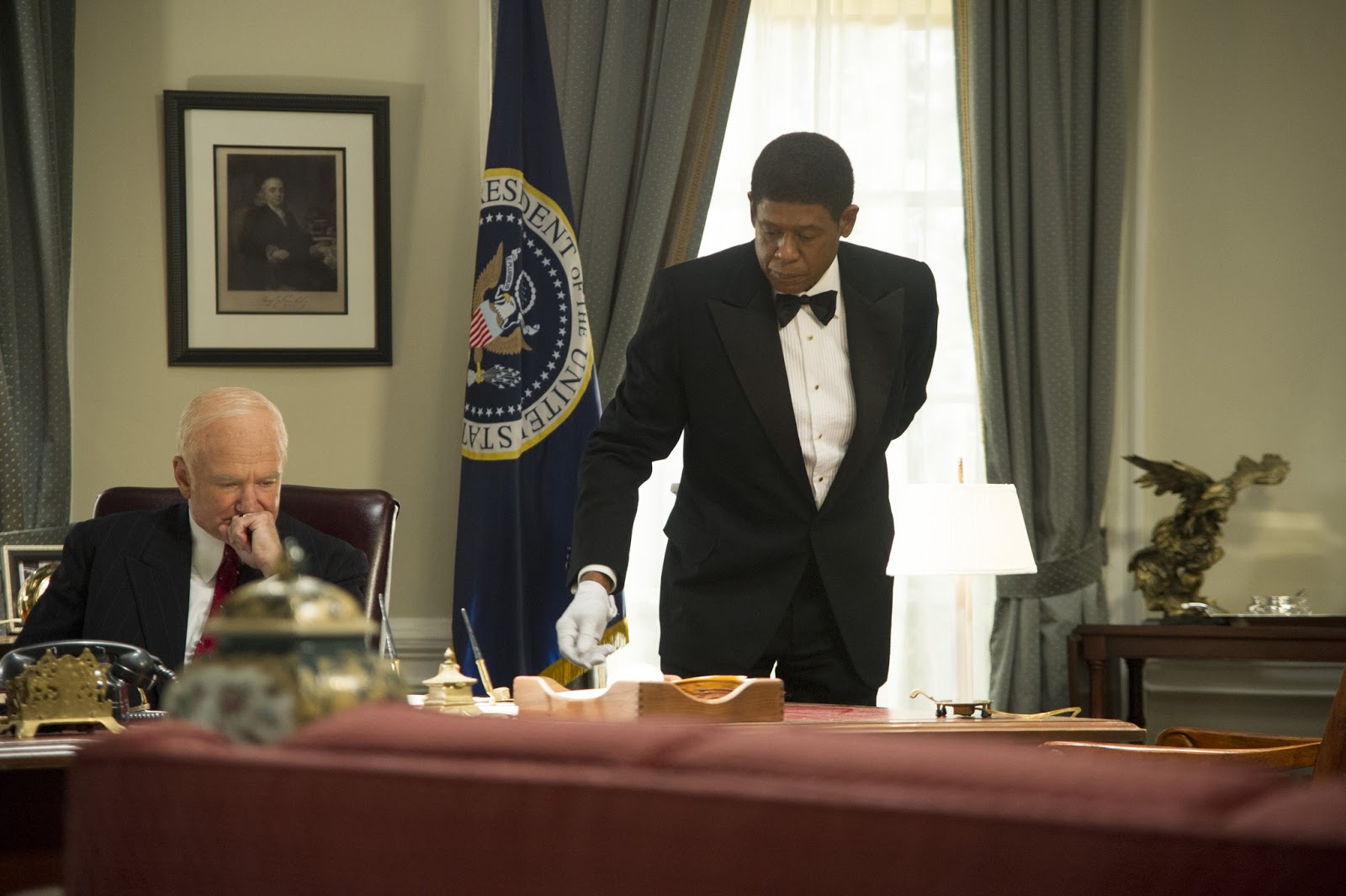
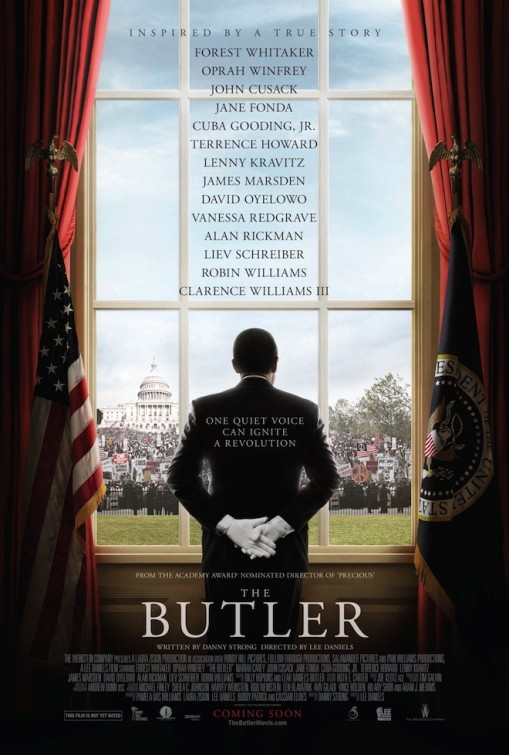
The Butler (2013)


Forest Whitaker takes on a lifetime of service, as the Civil Rights movement meets Downton Abbey

Director: Lee Daniels

Cast: Forest Whitaker (Cecil Gaines), Oprah Winfrey (Gloria Gaines), David Oyelowo (Louis Gaines), Cuba Gooding Jnr (Carter Wilson), Lenny Kravitz (James Holloway), Colman Domingo (Freddie Fallows), Yaya DeCosta (Carol Hammie), Terrence Howard (Howard), Adriane Lenox (Gina), Elijah Kelley (Charlie Gaines), Clarence Williams III (Maynard), John Cusack (Richard Nixon), Jane Fonda (Nancy Reagan), James Marsden (John F. Kennedy), Vanessa Redgrave (Annabeth Westfall), Alan Rickman (Ronald Reagan), Liev Schreiber (Lyndon B. Johnson), Robin Williams (Dwight D Eisenhower)

Cecil Gaines (Forest Whitaker) grows up on a plantation in the South; after his mother is raped and his father killed by the son of the house, the family matriarch (Vanessa Redgrave) takes him on as a house servant as a token gesture of regret. His training here sets him on the path to working in a succession of increasingly wealthy hotels and, finally, the White House. Over 30 years, he serves the Presidents in office, never involving himself or commenting on policy, proud of his service to his country. This often puts him in conflict with his Civil Rights activist son Louis (David Oyelowo), with his wife Gloria (Oprah Winfrey) stuck in the middle.

This is the sort of film that feels designed to win awards. It’s based on a vague true story (it changes nearly all the events of course) and it’s about a big subject. It’s got big name actors doing acting. It aims at big themes. What it actually is, is a film that misses its marks. It’s a film that spends time with big themes but has nothing to say about them, or in fact anything interesting to say full stop. It assumes that the historical context will do the work, and leaves it at that. Instead, it settles for trite sentimentality and cliché, personal stories played on a stage that makes those stories seem slight and inconsequential rather than giving them reflective depth.

The biggest problem about the film, leaving aside its heavy-handed sentimentality and mundane predictable storytelling, is that all the way through it feels like we are following the wrong story. It’s such a vibrant and exciting period of history, so full of events, passion and struggle: and instead we follow the story of Cecil, essentially a bland passive character who achieves very little and influences even less. There are vague references to leading “the regular life” and how working in domestic service is like some sort of subversive act to demonstrate the education and hard-working possibilities of the minority, but to be honest it never really convinces.

The film promises that Cecil was a man who had a profound impact on the people he served – but this doesn’t come across at all. Instead, the parade of star turns playing US Presidents are there it seems for little more than box office: we see them speaking about Civil Rights issues or planning policy, but we get very little sense of Cecil having any bond with them. The cameos instead become a rather distracting parade, as if the film was worried (perhaps rightly) that Cecil’s story was so slight and bland that they needed the historical all-stars to drum up any interest in it. It doesn’t help that the cameos are mixed – Rickman, Schreiber and Marsden do okay with cardboard cut-out expressions, but Cusack in particular seems horribly miscast. A braver film would have kept these pointless camoes in the background and focused the narrative on Cecil and his colleagues below stairs, and their struggles to gain equal payment with their white colleagues. This film is seduced by the famous events and names it spends the rest of the time backing away from.

The performance at the centre is also difficult to engage with. Forest Whitaker is such an extreme, grand guignol actor that it’s almost sad to see him squeeze himself into a dull jobsworth such as Cecil. Whitaker seems so determined to play it down that he mumbles inaudibly at great length (it’s genuinely really difficult to understand what he is saying half the time), slouching and buttoning himself into Cecil’s character. It doesn’t come across as a great piece of character creation, more a case of miscasting. Oprah Winfrey does well as his wife, although her character is utterly inconsistent: at times a drunk depressive, at others level-headed and calm. The link of either of these characters to the hardships of life as a Black American or their role in racial politics is murkily unclear.

The star turn of the film – and virtually all its interesting content – is from David Oyelowo, who ages convincingly through the film from idealist to activist to elder statesman. His story also intersects with the actual historical events that are taking place in America and he is an active participant – unlike Cecil the passive viewer, just as likely to switch the TV off as follow the news. Often I found myself wishing the film could follow his character rather than Whitaker’s.

That’s the problem with the film: what point is it trying to make? The film seems to want to honour Cecil’s service in the White house – but the film is a slow journey towards Cecil’s sudden revelation that maybe his son’s campaigning for Civil Rights was the right thing to do. This flies in the face of the film’s tribute to Cecil’s decades of quiet, unjudging service: the film can’t make up its mind whether it wants to salute Cecil for being an unjudging, dedicated servant to a long line of Presidents, or for having the courage to take a political stance towards the end. It’s having its cake and eating it. It’s this shallow lack of stance that finally makes it an empty and rather dull viewing experience.

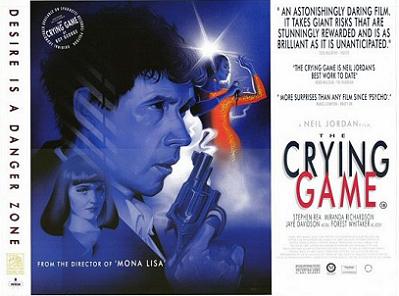
The Crying Game (1992)


Jaye Davidson and Stephen Rea play a dangerous game of attraction

Director: Neil Jordan

Cast: Stephen Rea (Fergus), Miranda Richardson (Jude), Forest Whitaker (Jody), Jaye Davidson (Dil), Adrian Dunbar (Peter Maguire), Tony Slattery (Deveroux), Jim Broadbent (Col), Ralph Brown (Dave)

The Crying Game is one of those little movies that could: a small scale British/Irish drama about human nature and dangerous relationships, which suddenly burst into the world big, was nominated for five Oscars and won one for its creator, turning him into a widely respected writer/director.

The film follows Fergus (Stephen Rea), an IRA soldier who, over a long night, bonds deeply with Jody (Forest Whitaker) a British soldier his unit are holding hostage with the intent of killing him if their comrades are not released. When Jody is accidentally killed trying to escape his execution, and British soldiers wipe out his cell, Fergus escapes to a new life in London, aiming to track down Jody’s girlfriend Dil (Jaye Davidson) whom Jody asked him to find. Fergus discovers things about himself and Jody in London he little anticipated – and also finds that his IRA companions, especially the dangerous Jude (Miranda Richardson), are not as deceased as he believed.

When it was first released in the UK, The Crying Game was a critical and box-office disaster. This was linked to its IRA plotline, largely on account of the film’s unwillingness to stick an unequivocally clear condemnatory label on the IRA. Of course, the film is not a film about terrorism at all – and whatever it says about the rights and wrongs of the British presence in Ireland (very little indeed), I think it’s pretty clear that it shows killing and violence are completely wrong. However, the film was saved by its huge success in America. There, its subject matter didn’t provoke the same level of controversy it was re-marketed as the biggest “twist” film since Psycho.

And ever since then I would say it has stayed in that list of great “twist” films – up there with The Usual Suspects, The Sixth Sense, Planet of the Apes, Fight Club and of course Psycho, among many others. Most of its mystique at the time was due to the fact that the twist was revealed just over halfway through the film and was based around a theme that has gained far more familiarity to us today. I won’t say what the twist is (just in case), as seeing it unfold is a pleasant surprise that turns what we think we know about several of the characters on its head. I’ll simply say that it is a question of identify and leave it at that.

Identity is appropriate, as that’s what this film is about: the images we build about ourselves and how we project those to the people around us. The way our environment, and the people we spend time with, help to shape the people we are. The sometimes unexpected depths that we discover within ourselves. The film is dramatically opposed to label altogether: hence it can present a gunman for the IRA who is a sensitive and kindly soul, whose relationships with others are based on gentleness (and Fergus is just one of three characters in the film who turn out to be very different from our initial perception of them). Many of these reveals are connected to understanding how love and affection can overlap with feelings of attraction and how we express these feelings. This is all parts of the film’s fundamentally humanitarian outlook.

The film has a poetic, at times almost dreamlike, quality about it. There is a lyrical ambience to many of the scenes, with the camera drifting comfortably through the action. Visions of Jody plague Fergus throughout, both day-to-day and (tellingly) during a sexual encounter with Dil. Jody’s image haunts the film, ghost-like, through the many photos of him in Dil’s flat. Many of the events have a similarly haunting sense of being a few degrees out of reality. It’s got the sense of a violent bedtime story or fairy tale in London.

Jordan’s script is outstanding – humane, witty, deeply felt – and the actors embrace the opportunity to play such multi-levelled, difficult-to-pigeonhole characters. It’s also brilliantly constructed into three clear acts, each of which comment upon and deepen the others: we have Fergus and Jody together in Ireland, a tragic growth of friendship and respect between two men; Fergus and Dil in London, a sweet and tentative romance built on secrets; and finally the return of the IRA to London, a destructive thriller. Each act feels like a natural development and there are no juddering changes of tone, as Jordan keeps the focus on the characters and their personal stories and feelings.

A large part of the film’s success is linked to Stephen Rea’s thoughtful and sensitive performance as Fergus, a man who has clearly stumbled into a life of violence despite his sensitive and rather tender nature (and our underlying natures guiding our actions is a major theme of the film). He’s a true lost soul, and his deep (and sudden) friendship with the kidnapped Jody has an ease about it that reveals depths about his character. His relationship with Dil has a sweetness to it, while Fergus is engagingly nervous and tentative of openly expressed love (not to mention that he lies to her – non-maliciously – from the start, as he knows far more about her than she realises). It’s a low-key but commanding performance with a real depth of feeling, and Jordan gives the character a powerful redemptive arc that Rea plays to the hilt.

There is also terrific work from the rest of the cast. This is one of only two films Jaye Davidson ever made, and the untrained naturalness of the acting adds a huge amount to the mystique of the character, as well as making Dil truly sympathetic and intriguing. Davidson’s short career also preserved the unique mystery around the character that was so essential to the film’s success. Forest Whitaker’s English accent is an up-hill battle, but the actor brings his force-of-nature charisma to the part so completely you overlook that he isn’t convincing as a Londoner, a solider or a cricketer. What you do believe is his connection with Fergus, while Whitaker is able to suggest dark hints throughout that his bond with Fergus is as least part manipulation.

Miranda Richardson has the grandest role as a death-dealing IRA hitwoman, which she delivers with aplomb, her dark eyed fanatical fury making her a dangerous antagonist for the film. Jim Broadbent also shines in an early role as an enigmatic barman, but there is hardly a bum note in the acting, although Tony Slattery is perhaps a little too broad as Fergus’ worksite boss.

The Crying Game is a hugely rewarding film to watch, a deep and thoughtful film, packed with wonderful scenes, great acting and guaranteed to lead to discussion and debate after it has finished. Yes it’s a film with a famous twist – but it is not a film defined by that twist. Instead that is only part of the rich tapestry of the film’s exploration of identity, desire and self-knowledge, in which the images we are present to others are as difficult to interpret as the images we present to ourselves.

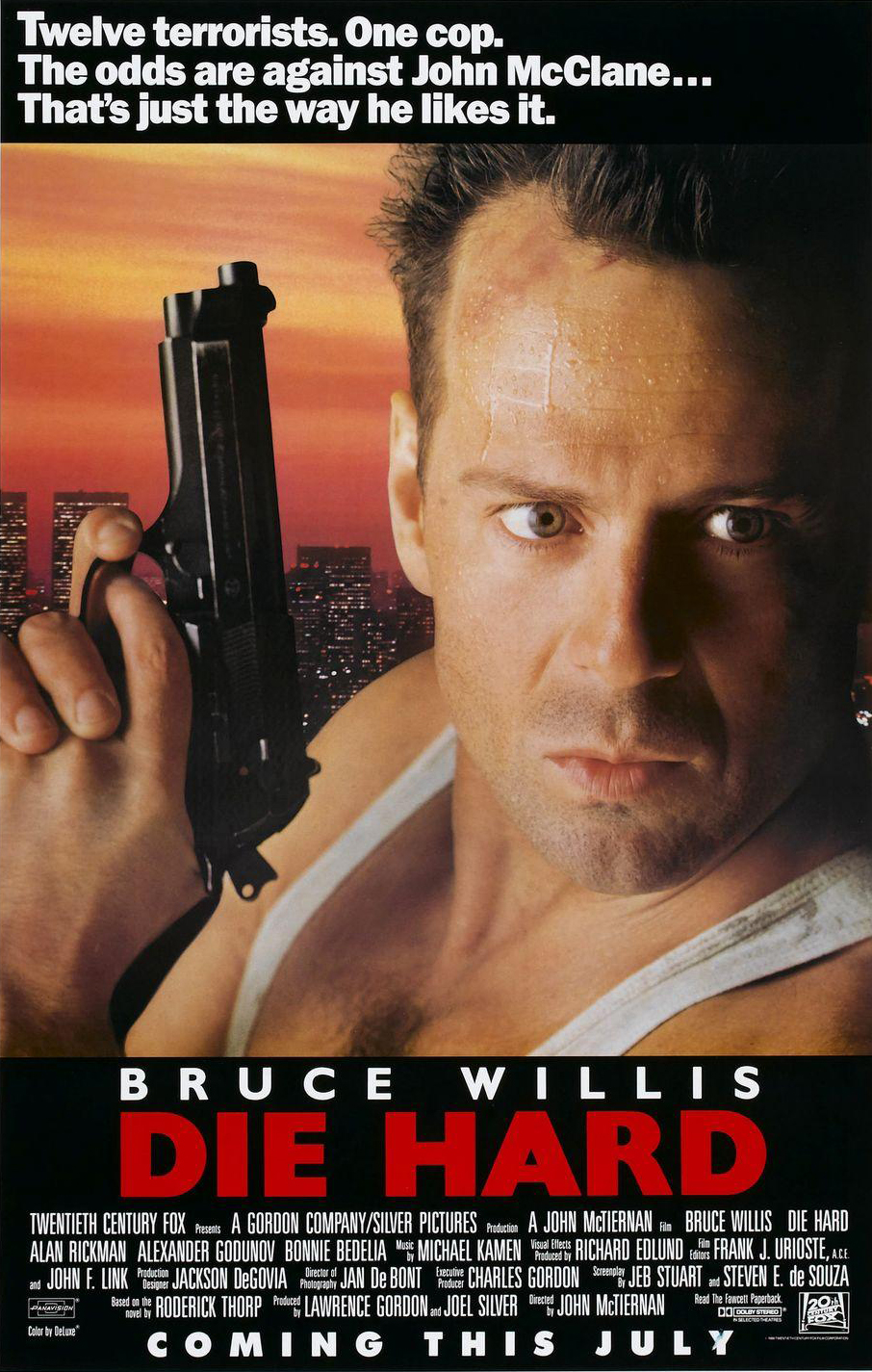
Die Hard (1988)

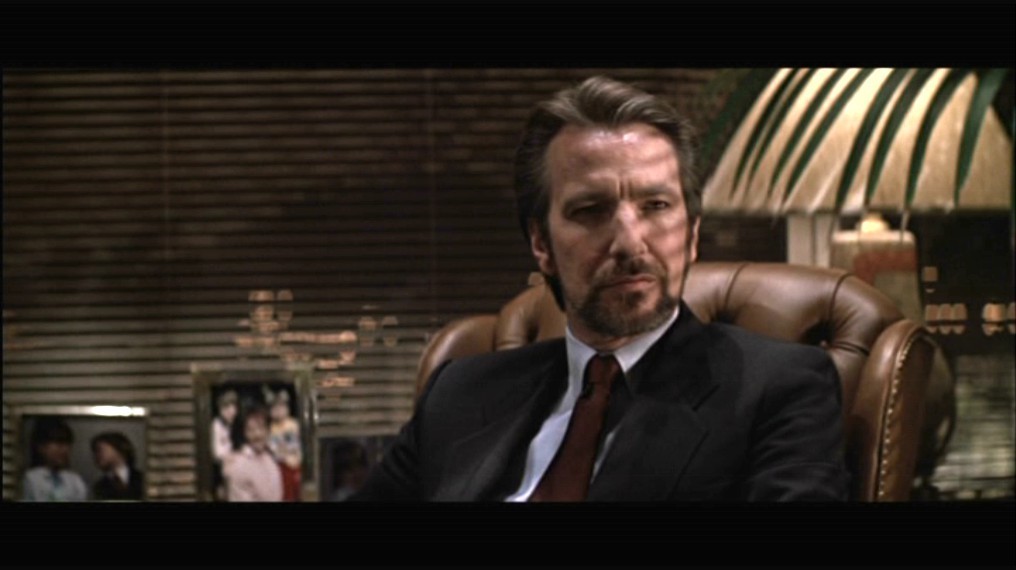
Alan Rickman sets the bar for all Hollywood villains in Die Hard

Director: John McTiernan

Cast: Bruce Willis (John McClane), Alan Rickman (Hans Gruber), Alexander Gudonov (Karl), Bonnie Bedelia (Holly Gennaro McClane), Reginal VelJohnson (Sgt Al Powell), Paul Gleason (Dwayne T. Robinson), De’Voreaux White (Argyle), William Atherton (Richard Thornburg), Clarence Gilyard (Theo), Hart Bochner (Harry Ellis), James Shigeta (Joseph Yoshinobu Takagi)

Is there a better action film ever made than Die Hard? In fact, I’m almost tempted to say: has a more influential film emerged from 1980s Hollywood than this masterpiece of tension, action, thrills and wry humour? Die Hard set the template for action: the structure of the hero and villain locked in a battle of wits, claustrophobic locations, one man (sometimes now a woman) against overwhelming odds… There is a reason so many films now have their plot explained as Die Hard on a [insert eccentric location or method of transportation here].

The plot is brilliantly simple and streamlined – so compellingly is the whole enterprise put together that you don’t notice that it was all being made up in the spot (the main hint of that being there is clearly no ambulance in the baddies’ arrival truck). If you don’t know the plot, where have you been since 1988? John McClane (Bruce Willis) is a cop who’s in LA to spend Christmas with his estranged wife Holly (Bonnie Bedelia). Joining her office party at Nakatomi Plaza, a massive skyscraper still partly under construction, their marital discord is interrupted by the building being seized by a group of European terrorists (or are they?) led by urbane sophisticate Hans Gruber (Alan Rickman). Now it’s all down to John, dressed in nothing more than a vest and trousers, without even any shoes to take on a dozen heavily armed baddies single-handed. 

Die Hard is a perfect storm – everyone involved was in the right place, at the right time of their careers, with material they were perfectly able to bend to their skills. There have been so many wonky thematic rip-offs of this film that a lot of credit should go to John McTiernan for setting such a brilliant template that proved irresistible to adapt. It goes without saying that the film is whip-sharp and rattling with tension, and that its action moments are brilliantly shot and choreographed. What makes Die Hardwork so well is that it puts character and performance at its heart. McClane is a character we can root for, a regular guy as far away from an Arnie or Sly superman as you can get; similarly Gruber is so charming and charismatic, part of you wants him to win.

Although there is plenty of blood and violence, McTiernan doesn’t dwell on it (watch the far more brutal Die Hard 2 for contrast), and there is no sadism in the editing. Instead, McTiernan invests the film with a lot of sly humour and wit – and he is not afraid to acknowledge that there is an illicit thrill in watching intelligent people like Gruber put detailed plans into place, executing them perfectly while running rings around the law. The use of Ode to Joy as Gruber’s personal theme tune is incredibly playful, and the film successfully positions itself in its narrative with Gruber as the protagonist and McClane the antagonist (with the difference that McClane is the character we root for) – as such, McClane’s reactive role in the plot constantly stresses his isolation and vulnerability, while Gruber’s control of the narrative positions him as a truly daunting opponent. A modern film would have kept the reveal of Gruber’s plan until the third or fourth reel – here Gruber tells us within five minutes of arriving that he’s there to rob the place; immediately we are connected with him and understand his aims, and understand the structure of the film coming up from the start.

The humour of the film is never heavy handed, and it’s perfectly balanced with the threat – Gruber and McClane are witty and dry but their characters are never undermined. The film never forgets its Christmas setting, which makes for a number of humourous contrasts (altogether now “Now I have a machine gun. Ho-Ho-Ho”). There is no comic relief as such, and every character serves a clear role in the plot – no fat on the bones here. I also really like the fact that the film at many points subtly undercuts machismo: the gung-ho FBI agents Johnson and Johnson are cocksure morons; as the SWAT team storms the building one of them stops to shriek “ow” after pricking his hand on a thorn. Sly comedy runs throughout – preparing to defend the building from the same SWAT attack, one of the terrorists glances around nervously before helping himself to some candy from behind a shop counter (because kidnap and murder are not a problem, but stealing sweets is really naughty). The film is packed with rich incidental moments like this that charm the viewer, even while bodies piles up and parts of the building go up in smoke.

Bruce Willis was also the perfect choice as McClane. Not only does he have the physical capability, but he has the acting skills. Long before he succumbed to the smirk or the grimace as his default settings when bored (watch Die Hard 5 – or rather don’t – to see the comparison between then and now), he makes McClane very real. Yes he’s confident and arrogant, but McClane is also laced with self-loathing (watch him beat himself up after his conversation with Holly) and under the surface he has a deep humanity, which dedicates him to saving lives (twice in this film he lambasts himself for not doing enough to save people). Willis not only takes a physical battering over the course of the film – don’t we all wince at the idea of running barefoot over a floor of glass? – but he’s also half the time desperately scared under the adrenaline, using wit and defiance as a defence mechanism. McClane does things in this film we could never do in real life (jump off an exploding building using a fire hose as rope – yup you’re dead) but Willis always feels like a regular guy – someone we can understand, relate too. He’s as far away from Arnie in, say, Predator as you can get.

Of course we’ve come all this way without mentioning arguably the film’s MVP, the incomparable Alan Rickman. Astonishingly, this was his first ever film, but Rickman is so perfectly brilliant in this film that I don’t think it’s an exaggeration to say every Hollywood villain since has been weighed against his performance here and found wanting. Rickman taps into a truth: wouldn’t we all love to be the baddie? Despite it all, Gruber is clearly enjoying himself throughout: to borrow a phrase, he’s an exceptional thief and since he’s moved up to kidnapping we should all be more polite. He’s also sharply intelligent, his invention and arrogant confidence that he has thought of everythingare actually rather thrilling – while his exasperation at both McClane and the inadequacies of his underlings are oddly charming. Rickman’s arch and clipped delivery turns lines into endlessly quotable bon-mots – he has a perfect sense of timing and says more with an arched eyebrow than other actors could with a page of dialogue.

The film’s master touch is to recognise early the strength of these two characters and to make the main duel not so much a physical fight as a battle of wits. Skilfully navigating the viewer around the building, Gruber and McClane execute move and counter move, both thinking fast on their feet while never losing sight of their main goals. The film also brilliantly allows them to engage in a running verbal battle via walkie-talkie, making their clash increasingly personal – and also allowing both characters to demonstrate their ingenuity. It also allows us to invest in the clash between them – and to make the sense of one-upmanship that runs through the film feel very alive.

The focus here has been on those two characters, who really drive the film – but every member of the rich supporting cast contributes hugely. Bonnie Bedelia is very effective in a difficult part as Holly – assertive, independent but never trying or tiresome (we see her point on McClane as well, who can be a jackass). Alexander Gudonov is perfect as the Han’s macho-but-short-sighted Number Two. William Atherton is gloriously vile as an exploitative reporter. Hart Bochner embodies the shallow, coke-fuelled, Masters of the Universe 80s as Ellis. Reginald VelJohnson adds a lot of humanity as the thoughtful Al Powell.

Okay there are one or two things wrong with the film (I’ve always found Al’s final use of his gun at the film’s end a bit uncomfortable, and I suspect from the conflicted messages of the soaring music and VelJohnson’s sad-faced acting that this was a tricky moment for the producers to get right). But this is an explosion of filmic joy that constantly rewards multiple viewings (god knows how many times I’ve seen this film). The action sequences never tire, the characters never lose their interest. I don’t think it’s a stretch to call it a masterpiece as well as a landmark piece of film-making.

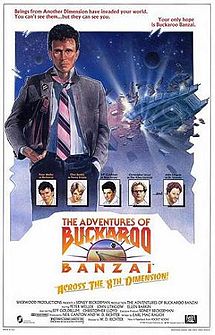
The Adventures of Buckaroo Banzai Across the 8th Dimension (1984)

Some of the costume choices in this image probably help you to see what oddness you have in store…

Director: WD Richter

Cast: Paul Weller (Buckaroo Banzai), John Lithgow (Dr Emilio Lizardo/Lord John Whorfin), Ellen Barkin (Penny Priddy), Christopher Lloyd (John Bigbooté), Clancy Brown(Rawhide), Jeff Goldblum (New Jersey), Vincent Schiavelli (John O’Connor), Robert Ito (Professor Hikita), Carl Lumbly (John Parker)

Okay so watching that was strange. If you looked up “cult movie” in the dictionary you would probably see an embedded video of this film. It’s so cult it has literally no interest at all in appealing what so ever to anyone outside of its established sci-fi crowd. If Star Wars was sci-fi for the masses, this is camp sci-fi for the cultish elite.

The plot is almost impossible to relate but Buckaroo Banzai (Paul Weller) is a polymath genius – surgeon, rocket scientist, rockstar – who perfects a device that can travel through solid matter and dimensions. But creating the device makes him a target for a race of aliens, led by Lord John Whorfin (John Lithgow) who live in the gaps between dimensions and want to use the device to escape.

The film is part straight-laced 1940s sci-fi serial, part tongue-in-cheek romp, part comic book, part satire. In fact it’s nearly impossible to categorise, which is certainly in its favour: you’ve certainly never seen anything like it before. It’s bursting with ideas and straight faced humour and clearly had an influence on sci-fi still today (for starters there are more than a few beats of Moffat-era Doctor Who here, while Banzai himself would fit in as The Doctor). It bursts out of the screen with a frentic energy, not massively concerned with narrative logic or consistency, its solely focused on being entertaining. It throws the kitchen sink at the screen with all the passion of fan fiction.

Despite all this I think you have to have a very certain sense of humour and set of interests to really enjoy it – and I’m not sure that I did. If you don’t have an encyclopedic knowledge of comic books and sci-fi you’ll probably feel like you are missing something (and you probably are). I’m also not sure there is much there to attract the “muggle” fan – Weller plays the lead with a smoothness and a charming straightness but he’s not the most interesting of characters (to be brutally honest). Lithgow counter balances him by going utterly over the top in a performance of ridiculous Mussolini-like bombast. But it’s not completely engaging. Basically if you don’t love it within the opening 25 minutes, you aren’t going to won over by anything else that happens. Every frame of the film is setting itself up as a chance for cult fans to speak to each other.

It actually rather feels like you are being invited to a party but then are left with your nose pressed up against the window. All the actors are clearly having a whale of a time with the other-the-top setting and bizarre half-gags. But I’m not sure all that enjoyment really travels across the screen to the viewer. While it’s sorta sweet in it’s almost sexless innocence (Birkin plays the lost twin of Banzai’s wife but there’s never a hint of real sexual buzz anywhere). Characters sport guns and hang around in a nightclub, but Banzai’s gang are essentially a group of 11 year olds who have taken adult form. So it’s gentle and has an innocent chumminess, but also a bit hard to engage with it.

I think in the end I just found it a little too eager and straining to be an outlandish, deliberately cultist film – it’s like an inverted elitest piece of modern fiction, that uses narrative tricks, devices and style to make itself harder for the regular viewer (or reader) to be part of its experience. So while this is something very different and almost insanely off the wall, it’s also something that is never going to move you or appeal in the way Empire Strikes Back will do.

The Ides of March (2011)


George Clooney is a Presidential candidate with feet of clay in this bitter indictment of American politics

Director: George Clooney

Cast: Ryan Gosling (Stephen Meyers), George Clooney (Governor Mike Morris), Evan Rachel Wood (Molly Stearns), Philip Seymour Hoffman (Paul Zara), Paul Giamatti (Tom Duffy), Marisa Tomei (Ida Horowicz), Jeffrey Wright (Senator Franklin Thompson), Jennifer Ehle (Cindy Morris), Gregory Itzin (Jack Stearns), Max Minghella (Ben Harpen)

Stephen Meyers (Ryan Gosling) is an ambitious young political advisor on the presidential campaign of Governor Mike Morris (George Clooney). However, scandal bubbles under the surface of the campaign and Meyers finds himself a pawn in the power struggles between his boss Paul (Philip Seymour Hoffman) and the rival campaign manager Tom (Paul GIamatti), as well as increasingly drawn to a young intern Molly (Evan Rachel Wood) with a secret.

Like some of the work of the current crop of actor-directors (Clooney and Affleck being the prime examples) this feels like a thematic remake of classic (better) films from the 1970s, in this case Robert Redford’s classic The Candidate. Like that film, this one explores a politician whose dynamism, photogenic appeal and liberalism hide feet of clay. The film takes a supremely cynical view of modern politics, presenting a world where even idealists will (when push comes to shove) do anything to assure their position because they believe that only they can deliver the change the country needs. As Rich Hall said in the build-up to the most recent election, it takes a special kind of ego to say “I’ve looked at this countries problems and what you need to solve them is me”.

To get this idea across a bit more, it probably would have helped to get more sense of what Morris (and his rival Pullman) stands for. The film tries to get round this with the shorthand of casting Clooney as Morris: we all know Gorgeous George is a Good Thing (although I’d also add that Clooney’s smoothly groomed, almost too-perfect good looks give him plausibility as a character drenched in hypocrisy behind his charismatic smirk). Instead we have to take it for granted, from his appearance and few phrases about green politics and job creation, that Morris is a Kennedy-like force for change. The film rather weights the decks by presenting no-one in this political game as being truly idealistic or in it for any other reason than personal gain or the thrill of the game – even Morris, a force for the film argues good, is shown to be totally hypocritical and devoid of personal empathy, believing that any means are justified by the end.

Gosling’s Stephen Meyers is the heart of the film, and it’s his growing corruption the film charts. Meyers starts as a slightly uneasy mix of professional politician, cynical about the media and the public, and idealist eager to change the country for the better. Gosling’s performance is the embodiment of the struggle between these good and bad angels, and Gosling has the right balance of naivety and ruthless careerism in his looks to capture this. Having seen this film once before, I actually found it more rewarding this time: Meyers is a cynic who wants to be an idealist.

Slightly less clear, however, is Evan Rachel Wood’s role as an intern. I don’t think it’s much of a spoiler to say her role is largely a tragic one – but the film never quite shapes her as a real person. She’s a model of the intelligent, sexy young woman, more of a collection of beats than a real person (however winningly Wood plays her). Her eventual tragedy is something that happens rather than something that feels like it happens to her – and the story is about the effect this has on the male characters around her rather than what it might have meant for her. She’s a well designed plot device rather than a person.

The film does have an interesting stance on politics – even if it already feels outdated in our new Trumpian, post-truth days. Hoffman and Giamatti do good work as contrasting political fixers at opposite ends of the idealist and cynic spectrum. The vision of politics has something designed to support news cycles rather than to serve the people feels like it has more than some truth behind it. It’s not a masterpiece by any stretch of the imagination, but it’s well made and has some brains behind it. And it does actually grow better on a second viewing.

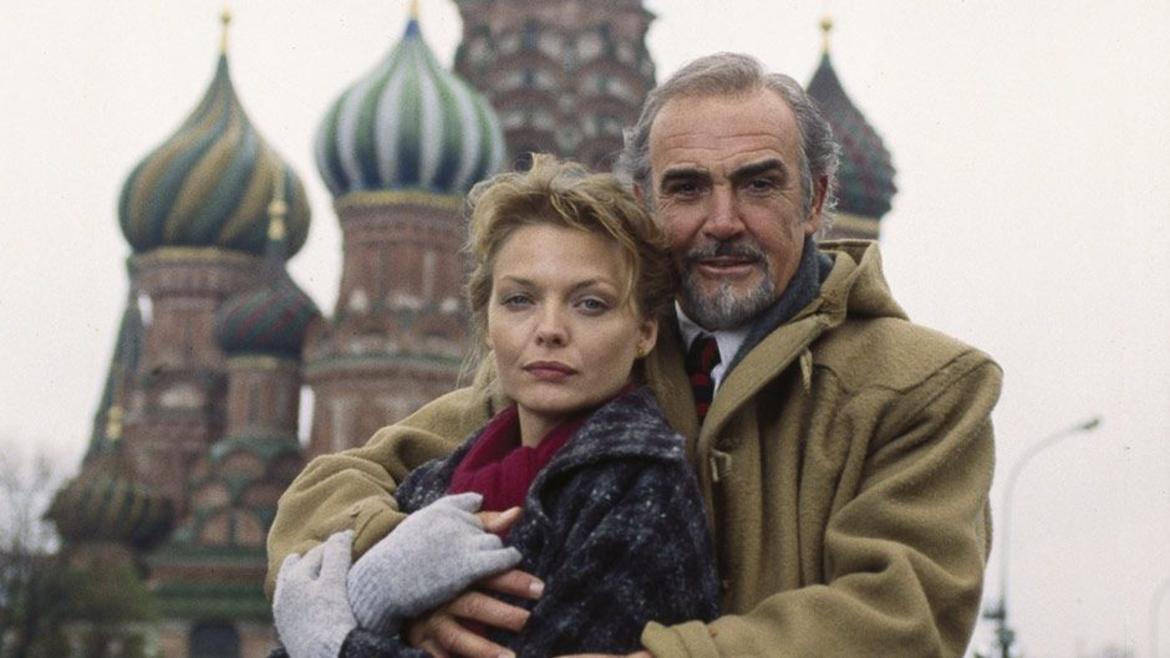
The Russia House (1990)


Connery and Pfeiffer go behind the Iron Curtain

Director: Fred Schepisi

Cast: Sean Connery (Bartholomew “Barley” Scott Blair), Michelle Pfeiffer (Katya Orlova), Klaus Maria Brandauer (Dante), Roy Scheider (Russell), James Fox (Ned), John Mahoney (Brady), Michael Kitchen (Clive), J. T. Walsh (Colonel Jackson Quinn), Ken Russell (Walter), David Threlfall (Wicklow)

Based on John Le Carré’s novel, The Russia House was one of the first espionage thriller films released after the fall of the Soviet Union, and therefore found itself exploring the curious impact of Glasnost on the games of one-upmanship that East and West played with each other.

Barley Blair (Sean Connery) is an over-the-hill publisher with connections in Russia, who is enlisted by MI6 to recruit the mysterious “Dante” (Klaus Maria Brandauer, a little too mannered for the film and under used), whose manuscript about Russian nuclear readiness has been intercepted en route to Blair by the intelligence services. Blair’s main contact is Dante’s former lover Katya (Michelle Pfeiffer), a woman trapped in political games.

Second-tier Le Carré is brought to the screen in a film that perfectly captures the authorial voice, but missing  narrative drive. Tom Stoppard’s adaptation masterfully captures the nuances and rhythms of Le Carré’s writing – the conversations of the CIA and MI6 operatives, their lingo and phraseology, are a perfect evocation of the author’s style, while Barley comes to the screen as almost the quintessential disillusioned middle-aged romantic: scruffy with a drink problem and a public school disdain for the prefects of the intelligence service.

The film’s other major positive is the central performance of Sean Connery. The former James Bond (then in the middle of a five-year purple patch of great roles which ran from The Name of the Rose to The Hunt for Red October) brilliantly plays against type as the dishevelled Barley, a man who feels like he has spent a lifetime circling failure and unreliability. Connery tones down his athletic physicality as an actor, playing Barley as a shuffling, hunched figure, often a step behind those around him. He’s also able to capture the romantic defiance behind Blair as well as a sadness and a self-loathing, his eyes showing years of shame at his own unreliability and the disappointments he has inflicted on people. It’s one of his least “Connery-like” performances, and a real demonstration of his willingness to stretch himself as an actor.

He’s well matched by some fine supporting performances. Pfeiffer is a very good actress who balances Katya’s vulnerability with a shrewd understanding of the compromises and dangers of the world she is in. Having said that, the chemistry between her and Connery doesn’t quite click into place during the course of the film. There are also good performances from James Fox and Roy Scheider as feuding intelligence boffins, and an eye-catching “love it or loath it” one from Ken Russell playing one of Le Carré’s quintessential campy, eccentric public-school intelligence operatives.

The film’s main weakness is that the actual story just isn’t quite interesting enough. The stakes never feel as high as they should be, and the unfolding of events seems unclear rather than carefully concealed from the audience. Despite the actors’ performances, Blair and Katya aren’t quite characters we can invest in enough and the momentum of the film too often gets bogged down in a reconstruction of intelligence agent squabbles. Schepisi films the Russian locations extremely well, but too often the camera lingers lovingly on a series of locations like a travelogue, slowing down the pace of the film as the film revels in its status as only the second Hollywood production allowed to film in Russia.

It’s an intelligent and faithful adaptation, but it doesn’t quite come to life. Stoppard’s script doesn’t carry enough narrative thrust and you simply don’t care enough about the fates of many of the characters. In many ways, a less faithful adaptation – such as the BBC’s recent production of The Night Manager – might well have made for a more compelling movie. As it is, although the film feels like an immersion into the author’s universe, it also feels like a dip into one of the less engaging and memorable offerings in his back catalogue. Along with the book’s strengths, it also carries across weaknesses. It’s satisfying enough and doesn’t outstay its welcome – but it also never really seizes the attention.

Howards End (1992)


Emma Thompson and Anthony Hopkins discover marriage is never an easy business

Director: James Ivory

Cast: Helena Bonham Carter (Helen Schlegel), Anthony Hopkins (Henry Wilcox), Vanessa Redgrave (Ruth Wilcox), Emma Thompson (Margaret Schlegel), James Wilby (Charles Wilcox), Samuel West (Leonard Bast), Nicolas Duffett (Jacky Bast), Jemma Redgrave (Evie Wilcox), Susie Lindeman (Dolly Wilcox), Prunella Scales (Aunt Juley), Joseph Bennett (Paul Wilcox), Adrian Ross Magenty (Tibby Schlegel)

From the mid-1980s to the late-1990s, Merchant-Ivory was the by-word for a certain type of film-making: intelligent and sensitive adaptations of books, with fine British actors in wonderful costumes. It was a perfect brand. And it probably reached its peak with this masterful adaptation of EM Foster’s precise, tragi-comic analysis of class in Britain.

Set in Edwardian England, the film focuses on three very different families: the Wilcoxes, grown wealthy off the back of the Empire, who have purchased large chunks of the houses and lands of the former aristocratic elite; the Schlegels, an upper middle-class family of intellectuals; and the Basts, a lower middle class couple trying to improve their lot. Ruth Wilcox (Vanessa Redgrave) befriends Margaret Schlegel (Emma Thompson) in the last few months of her life and, on impulse, leaves Howards End, her beloved family home, to Margaret when she passes away. With the agreement of his children, her husband Henry (Anthony Hopkins) destroys the note, but later falls in love with and marries Margaret. Meanwhile, Margaret’s sister Helen (Helena Bonham Carter) struggles to help improve the lot of thoughtful, well-read insurance clerk Leonard Bast (Samuel West) – with disastrous results.

The film balances these varying plot lines with great skill. It weaves in both well-judged social commentary and a shrewd and subtle analysis of the way perceptions of morality (and the consequences of people’s actions) alter dramatically depending on the class and sex of the person perpetuating the societal offence. Helped by Ruth Prawer Jhabvala’s masterful (and Oscar winning) screenplay, Ivory’s direction balances this acute scrutiny with an emotional and deeply involving story, staffed with characters whose dignities and flaws are humanly observed. Ivory and Jhabvala demonstrate a masterful understanding of the way we build stories about our own lives and create the people we want ourselves to be – and how this can be influenced by the results of our actions.

These self-images people create of themselves in the film are invariably more noble than the people they transpire to be. Of all the characters, arguably only Leonard Bast follows up on his intentions and consistently delivers on his word. It’s a tribute to Samuel West’s wonderful performance as Bast, as well as the film’s control, that Bast is both a tragic victim and also at times an almost painfully pathetic character, a striver whose every attempt to improve his lot ends in disaster (the film also sticks to Forster’s darkly comic fate for Bast).

While the Basts constantly pay a heavy price for every action, the Wilcoxes and Schlegels largely avoid paying any price for their mistakes until the end. Indeed, Henry Wilcox seems barely able to understand that his past love affair with a young woman left him with a certain moral responsibility for her fate after he broke the affair off. In a brilliant series of short scenes (with fades to black between each section of the conversation) we see him painfully confess the story to Margaret; the fades perfectly capture the mood of a broken up and difficult emotional moment for both characters.

The film perfectly understands the hypocrisy of the upper classes. Wilcox is a man of complete certainty and off-hand confidence, making sweeping statements with complete authority, who has no empathy with the lower classes: “The poor are poor. One is sorry for them, but there it is”, he blithely tells the Schlegels. His son Charles (a smackable James Wilby) is a spoilt and selfish snob with only contempt for anyone lower than him on the social ladder. Helen’s later fall from grace (in its way a manipulation of those dependent on her) is met with a condemnation Wilcox never imagines should never attach to his own actions. The whole film is a brilliant tapestry of these contrasts and flaws.

Emma Thompson won an Oscar for her work here, and she does a wonderful job as the emotional heart and conscience of the film, essentially our eyes into the events of the story. Intelligent and with a deep sense of morality, Margaret is also a woman who is willing to make compromises when she judges there is the need. Her decisions are not always correct or justifiable, but Thompson makes her struggle between her need to do the right thing and her desire to find happiness with her husband constantly understandable. In addition to this, Thompson is a radiant and engaging presence, allowing a character verging at times on being a matronly fusspot to always be someone we care deeply about.

She’s matched by a complex and thoughtful performance by Hopkins as Henry Wilcox. Hopkins has a brilliant understanding of the essential moral emptiness of Henry, based not on any malice or cruelty but on a genuine belief that some rules can be applied differently to him because his position and his own self-image reassure him that he is a good man. One of the film’s main subplots is the journey of Henry to understanding his actions have had consequences – and that these consequences reflect on him. Hopkins handles the growing awareness of this with brilliant sensitivity – his late emotional collapse is a masterclass in low-key, elegant, but deeply moving, acting. It’s also a tribute to the film’s mastery that Wilcox (despite basically being a cold, thoughtless snob) remains a character we relate to, understand and forgive.

Sex bubbles under in this Edwardian world. Henry’s sexual history is a crucial turning point. Helen’s freer attitude to love first brings the Wilcoxes and Schlegels together and then later leads to disastrous consequences with Bast. Tied directly in with the class issues in the film, Charles (James Wilby) is determined later to defend her honour, despite Helen having no wish for him to do so. There is even a hint of sexual feeling in Ruth Wilcox’s sudden friendship with Margaret. Alongside this run themes of the slow and deliberate way relationships develop: Margaret and Henry’s relationship takes the whole course of the film to reach a proper understanding, while Helen (and Helena Bonham Carter is wonderful here as a faintly skittish well meaning do-gooder) and Bast’s friendship shifts and changes throughout the course of the film without either really understanding the other.

Howards End’s complexity is of course in large part due to EM Forster’s original source novel, and his insight as a commentator on Edwardian England and its morals. But to capture so much of the air of the novel in this film, and to bring the story so richly to life, is an enormous tribute to the mastery of Ivory and Jhabvala’s work here and to the excellent work of the cast. The production values are exceptional of course and the film is told with pace, zip and feeling. If there was a high point for the costume drama this (and their follow up picture, The Remains of the Day) was it. Merchant-Ivory would never hit these heights again.

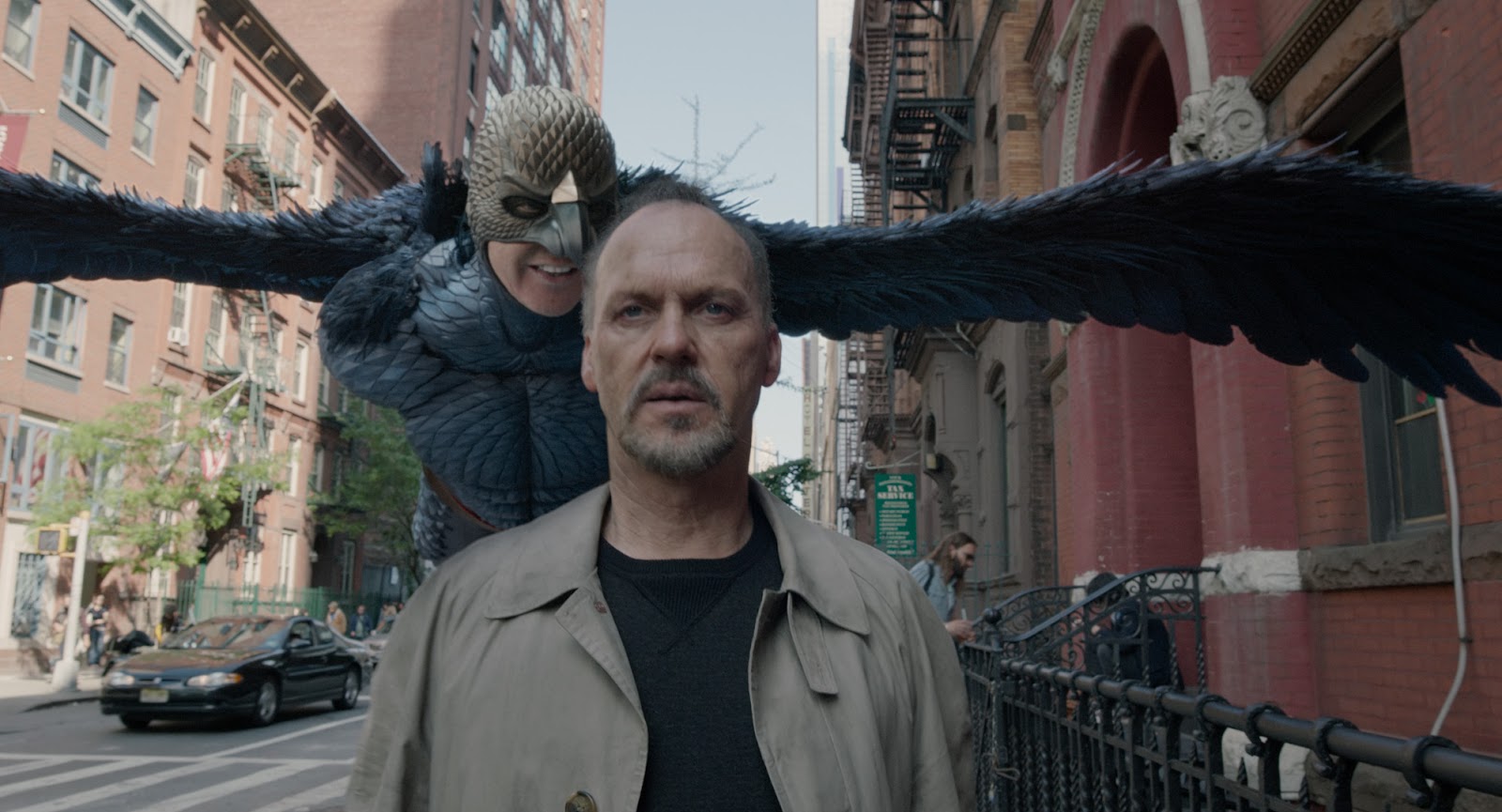
Birdman (or The Unexpected Virtue of Ignorance) (2014)


Michael Keaton is haunted by his superhero alter-ego in Iñárritu’s well made but heavy handed theatre satire

Director: Alejandro González Iñárritu

Cast: Michael Keaton (Riggan Thomson), Zach Galifianakis (Jake), Edward Norton (Mike Shiner), Andrea Riseborough (Laura Aulburn), Amy Ryan (Sylvia Thomson), Emma Stone (Sam Thomson), Naomi Watts (Lesley Truman), Lindsay Duncan (Tabitha Dickinson), Merritt Wever (Annie)

Oscar voters seem to be invariably drawn towards stories about actors and acting. Put together a decent and ambitious movie about those subjects, ideally with a sprinkling of gentle satire that pokes fun at acting but basically says at the end it is a noble profession, and you got yourself a contender. So it was with Birdman.

Riggan Thomson (a career revitalising role for Michael Keaton) is a faded movie star who hit celebrity 15 years ago with a series of films about a superhero, Birdman. Today he is trying to reclaim his artistic integrity by directing, adapting and starring in a Raymond Carver story on Broadway. At the same time he wants to rebuild a relationship with his daughter (Emma Stone), a recovering drug addict. The film covers the stumbling journey towards the opening night, with Thomson dealing with a demanding and difficult enfant terrible co-star (Ed Norton), a string of disasters and the haunting presence of his Birdman alter-ego, lambasting his choices and urging him to return to blockbusters.

I’m going to lay into this film a bit. It’s harsh, because it is really trying to do something different, for which it deserves credit. So I’ll start with the good stuff. The conceit of making the film look like it was done in one take is extraordinarily well done – the camera work is inventive and extraordinary. Emmanuel Lubezki is a visual genius and the technical accomplishment is astounding, a real tour-de-force. The acting is also very good. Michael Keaton embraces the best script he had in years, giving the part such commitment and emotion you overlook it’s a fairly simple part. Emma Stone is raw and tragic as his daughter. Ed Norton gives one of his finest performances as a dickish method actor (a neat self-parody) who in quieter conversations reveals real depth – and provides more insights into the passion for creativity than virtually anything else in the film.

Okay, that’s the really good stuff. It’s got some good lines as well, and its general style never stops being entertaining. But it’s also nowhere near as clever as it thinks it is. It wants to be a profound study of the nature of life and art, but it never really gets to grips with these ideas or drills down into them. For art, its contrasts are simplistic verging on hectoring. It never really gets to the heart of what acting is or means. For life it boils down into a straightforward “father wants to win back love of family” plot. The film presents all this as something deep and meaningful, and uses a lot of style and razamatazz – but the basic points remain simple or under-explored.

Part of my problem with the film is that is wears its pseudo-intelligence rather too heavily, and it ends up turning into smugness. Lubezki’s camera work is extraordinary but it also has a “look-at-me” quality that really begins to distract from the viewing of the film – even second time around the content of the film passes you by a bit. Tellingly, on the DVD Iñárritu talks about being drawn to the project because he wanted to make a film that felt like it was done in one take. Fine, but perhaps it would have been better if he had been a bit more interested in, say, the content of the film itself? Everything about the film-making demands you give it your attention, from the camerawork to the insistent drumming soundtrack. These elements are not bad in themselves – but it’s showing off rather than craft servicing the film.

The film’s themes themselves are, I think, also not as interesting or challenging as the film-makers believe them to be. The central idea of actors being shallow with chaotic home lives is so tired as to be a cliché: “Why don’t I have any self-respect?”/”You’re an actress, honey” summarises the sort of jokes you’ve seen before in other films.

I also felt the film’s attempts to analyse the nature of art and performance were formulaic and even rather empty. Lindsay Duncan plays a chilly theatre critic, determined to destroy the play, and Keaton delivers well Riggan’s rant to her on using labels and presenting opinions as facts. There isn’t any counterbalance to this offered, no exploration of, for example, criticism can service art or how opinion guides our reception of what we perceive as good art. A heavy handed fantasy sequence has his Birdman alter ego addressing the camera directly “Look at these people, at their eyes… they’re sparkling. They love this shit.” Yeah Alejandro we get it, we are shallow and deep down prefer action films than all this “ talky, depressing, philosophical bullshit” – hardly an original thought, and hardly framed originally though, is it? Do we really need to be whacked on the head with it? What point is this trying to make that we haven’t heard hundreds of times before?

But then is it any wonder that it wants to try and make points about cinema rather than theatre? For a film set exclusively in a theatre, I don’t really feel that its makers really understand the pressures or nature of theatre. Instead, it merely stands in here as a short hand for “cultural worthiness” – Riggan might as well be making an independent film or writing a novel, theatre is just a counterpoint used for blockbuster films (a genre Iñárritu clearly does understand and has opinions on). Nothing in the film really seems to capture a real sense of backstage in a theatre or what putting on a play is like, for example Peter Yates’ film of The Dresser. There is no sense of the collaborative nature of the medium or its immediacy as a performance art – it’s labelled as lazily as a vehicle for pretension and self loathing as criticism is for bitterness and failure.

The film also plays with the notion of Riggan’s (possibly) unhinged nature. Throughout the film we see him use superpowers – levitation, telekenesis, flight, control of fire. Along with his haunting by the Birdman character (done with a nice parody of the gravelly Christian Bale-Batman voice), it all ties into the possibility that Riggan is losing the ability to keep his real life and his career’s defining moment from merging into one another. The film’s ending builds on this, playfully suggesting some of what we have seen might have been real (though it also could be interpreted as a final dream sequence) – but I’m not sure what is gained by introducing these skills other than for visual flair. Riggan’s inner turmoil is never explored fully by the film and I don’t feel the film has the patience to explore his feelings or depression. As such, I find the open-ended ending doesn’t really add anything – it feels like it has been inserted to create debate, rather than acting as a culmination for your interpretation of the film, a la Inception say.

Phew. Birdman is by no means a bad film. It is a good one, but not a great one. It has much to admire, both on a technical and performance level, but (like Riggan) it is straining for an intellectual depth and thematic richness that simply isn’t there. It’s a showpiece, a brilliantly done one, really impressive to watch and it dazzles while it takes place – but there isn’t much to talk about afterwards. It is what it is. Compared to this year’s film-about-acting, La La Land, it’s both less charming and less profound, and has less to tell us about the compromises and struggles of real life. You can enjoy it, and it needs to be seen, but I can’t see it ageing well.