Author: Alistair Nunn

The Critic (2023)

The Critic (2023)

McKellen’s familiar star turn is the only life in an otherwise unremarkable film

Director: Anand Tucker

Cast: Ian McKellen (Jimmy Erskine), Gemma Arterton (Nina Land), Mark Strong (David Brooke), Lesley Manville (Annabel Lord), Romola Garai (Cora Wyler), Ben Barnes (Stephen Wyley), Alfred Enoch (Tom Tunner), Nikesh Patel (Ferdy Harwood), Claire Skinner (Mary Brooke), Ron Cook (Hugh Morris)

The murky streets of 1930s West End London are the kingdom of Daily Chronicle theatre critic Jimmy Erskine (Ian McKellen), famous for his poison-inked, vitriolic reviews of the many shows that fall beneath his high standards. But the times they are-a-changing, not least at the Chronicle where the former owner (a Rothermere-like bully who loved Jimmy’s take-no-prisoners prose bullying) is replaced by his son David Brooke (Mark Strong), a softly-spoken liberal who wants to take the paper in a new direction. With the arrogant Erskine on a knife-edge (not helped by his risk-taking penchant for rough-trade sex encounters with gentlemen in the park), Brooke is about to unknowingly discover how far the famed critic will go to cling onto his job and reputation – and how easily he will embroil an ambitious young actress, Nina Land (Gemma Arterton), in his schemes.

The Critic starts far more interestingly when it ends. It’s easy criticism, but you can well imagine it falling foul of Erskine’s fury if he had seen it unfold before him in a West End theatre on a Tuesday night. Despite the best efforts of all involved, it all too quickly becomes the sort of routine revenge-murder-conspiracy potboiler that relies a little too much on contrivance and coincidence, the stench of familiarity all over it. Atmospheric as it is – set in a dimly-lit, fog-bound London and in the plush retiring rooms of the rich and famous – and well-selected as its selection of faux theatrical memorabilia that litters Erskine’s home is, the actual story becomes all too predictable.

The main thing it has going for it is a fine performance by Ian McKellen, even if the part plays so neatly to his strengths you feel he could play it standing on his head. McKellen has long mastered mixing the twinkle of the bon vivant with the vicious, cold-eyed cruelty of the sociopath, even having recently done the same thing in The Good Liar. Erskine is selfish, demanding, cruel with a self-destructive streak (both financially – living a ruinous life well beyond his means – and his frequent drunken pride and stubbornness). He bitterly believes himself to deserve acclaim and standing (denied to his failed acting career) and treats almost everyone around him with contempt hidden behind a raised eyebrow or pursed lip. His primary motivation, to the very end, is that his theatrical writing should become a collected volume in every home cementing him as a sort of Wildean wit.

The Critic toys with a more interesting view of Erskine as not entirely unsympathetic. His homosexuality – and the abuse and persecution it has bought him – shows him fall foul of encounters with the police and sees him challenging preening National Front blackshirts. He’s disgusted by Fascism and despises racism, promoting his young Black lover, secretary and amanuensis Tom Tunner (a fine performance of mixed loyalty and Stockholm-syndrome-like support from Alfred Enoch). He’s genuinely touched when Nina Lane – who has lambasted for years in print – tells him his writing made her want to act. But these shades of grey get largely ditched for as the film focuses on darkening his shadow as the plot descends into conspiracy, blackmail and murder.

McKellen does provide the film’s best entertainment. He knows how to deliver a line, how a splutter can communicate outrage, how an intake of breath can communicate fury, how the eyes can turn any smile insincere. He’s long since mastered Iagos and if The Critic doesn’t ask him to do anything he hasn’t done before, he can still do it like an absolute pro. There are other decent performances. Mark Strong plays against type as a man as (surprisingly) decent and kind as he seems. Gemma Arterton expertly plays both “bad” and “good” acting as would-be theatrical giant Nina Lane, while mixing desperation and self-loathing in her off-stage persona. On the other hand, the film wastes Romola Garai as Brooke’s Nazi-sympathising daughter and Lesley Manville as Nina’s chatterbox mother.

The Critic builds up a contrived (and inadvertently creepy) plotline that links both Brooke and Nina – most convenient for Erskine’s improvised blackmail scheme – and that melodrama eventually suppresses The Critic’s more interesting moments. A film that looked at Erskine’s character having been formed in a world where his sexuality was a persecuted crime might have made for a more intriguing storyline. Or which explored how Erskine settled for being court jester to powerful, clubbing homophobes – so much so he actively resents the more liberal Brooke. Or looked at the creeping onset of fascist sympathy in the upper classes. Or one which took a more expanded look at Tom’s struggles in a defiantly non-diverse 30s London (instead the significance of Tom’s skin colour fluctuates according to plot requirements and its awkward uniqueness is undermined by the fact the theatre director is played by Nikesh Patel). It avoids all this for all too familiar tropes.

In most ways The Critic has its moments but fundamentally fails to deliver. And, perhaps worst of all, it does so in a way that doesn’t even really raise the critical heckles. Instead, you’re overwhelming feeling when this sub-Christie drama comes to its close is that it was okay. The sort of film Jimmy Erskine would have dismissed in a few short sentences.

Das Boot (1982)

Das Boot (1982)

Perhaps the definitive submarine film, a terrifying masterpiece of claustrophobia and suspense

Director: Wolfgang Petersen

Cast: Jürgen Prochnow (Kapitänleutnant), Herbert Grönemeyer (Leutnant Werner), Klaus Wennemann (Chief engineer), Hubertus Bengsch (First watch officer), Martin Semmelrogge (Second watch officer), Bernd Tauber (Chief HelmsmanKriechbaum), Erwin Leder (Chief Mechanic Johann), Martin May (Ullmann), Heinz Hoenig (Hinrich), Uwe Ochsenknecht (Boatswain Lamprecht), Claude-Oliver Rudolph (Ario), Jan Fedder (Pilgrim), Ralf Richter (Frenssen)

In the annals of submarine movies, few have taken such a hold of the imagination than Das Boot. This is particularly remarkable since it follows the struggles not of Allied sailors but members of the German Kriegsmarine, the U-Boats who patrolled the Atlantic to sink as many merchant ships as they could, all in the service of aiding the Nazi war effort. But the sea knows no flags and holds no allegiances: to the watery deep, men are just men, and a small, rusty metal box is fragile at 280 metres no matter who sails in it. And the men sailing U-96 are just ordinary, regular men, with wives, girlfriends and regrets back home who above all just want to survive to see them again.

Wolfgang Petersen’s is a masterclass in immersing us in a claustrophobic world. The crew of U-96­ are led by the captain (Jürgen Prochnow), a hardened, cynical veteran is out here to do a job, not fight for radical cause he has little time for. Instead, his concern is to preserve the lives of his men, all younger (in most cases almost twenty years so) than him, during their time at sea where days (and even weeks) of bored inaction are interspersed with interludes of sheer terror as the submarine desperately runs from depth charges and dodges Allied destroyers.

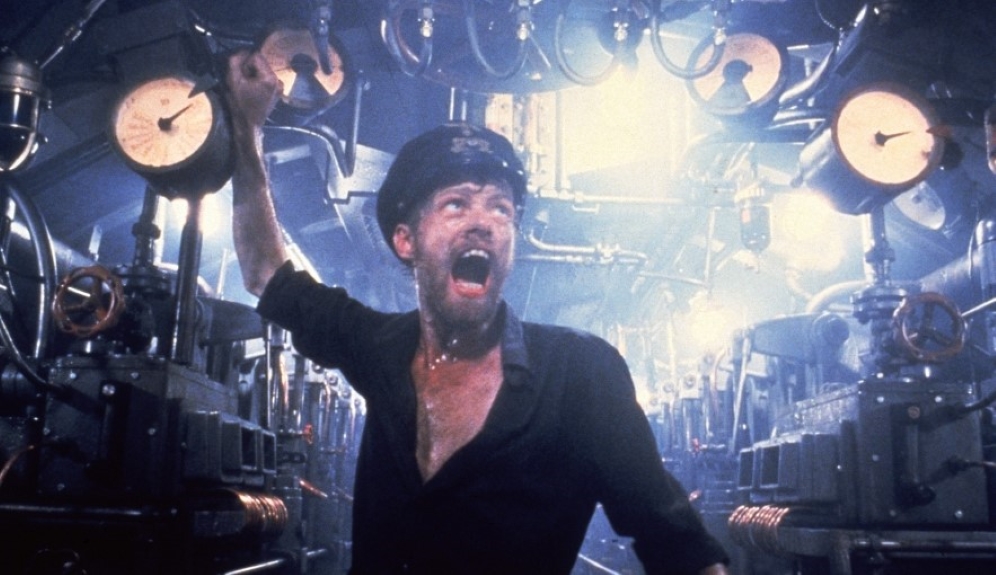
Das Boot was filmed over almost a year, in chronological order. The actors practically lived in their confined set (deafened by the sound of its mechanics), their hair growing out to match their characters and their skin taking on a pallor from not enough time in the sun. For hours at a time we never leave the confines of the submarine – if you don’t count the odd trip to the ship’s bridge, where those lucky enough to venture up-top are lashed with salty sea water from near constant Atlantic storms. Aside from that, they are in what is effectively a 60m metal corridor, a specially designed camera operated by cinematographer Jost Vacano, tracking swiftly behind the frenetic pace of the sailors as they dive through hatches and pound along dripping quarters.

It’s a film where you cannot escape the tight confines of this boat, the sound track filled with groans and shudders as the boat cracks under the weight of water or buckles from high-pressure depth charges. When under attack, bolts burst out of pipes like machine gun bullets and water (which is obviously freezing) gushes through opened valves. It mixes with the sweat in the characters tension-filled faces. There is no comfort and no privacy under the water, bunks positioned on the edges of the ship’s corridor. The only food is whatever was taken aboard last time the ship was at shore – and if that means cutting layers of green mould off weeks-old bread, so be it.

Petersen’s capturing of this sense of a tiny, pressure-filled world is superb and he succeeds masterfully in getting the audience to feel the character’ stress and fear. When the film opened in America, crowds cheered an opening caption which details the losses the Kriegsmarine suffered during the war: at the end, the same audiences were reported stunned into sympathetic silence. None of these men are detestable Nazis. One man writes never-ending letters to his French fiancée. Another is a devout Christian. The Chief Engineer clasps tight photos of a skiing holiday with the wife he has not seen in months. Another is frustrated at radio reports of his football team losing a key match. All of them are haggard, unshaven and scruffy. None of them feel safe for a moment.

Only the first watch officer utters anything approaching true believe in the Nazi regime (he is also the only man to try and maintain some semblance of military smartness – at an encounter with a German merchant ship, he is inevitably mistaken for the captain). But his belief comes from naïve optimism: he has no wider idea of the world around him and his statements of trust in the regime noticeably dry up over time. For the rest: who has the time for ideology when you could be crushed by a mountain of water at any time? Captain Thomson (Otto Sander) opens the film by making a drunken speech at the launch of U-96, lambasting Hitler – a speech that is met with shocked silence because its being said rather than because of the content.

The sea also builds subconscious bonds for those who share its dangers, even with enemies. After returning later at night to the scene of a sinking ship (their only successful operation throughout the whole film), the Captain and his officers are horrified to find the Allied ship has not had its crew evacuated – a fact they notice too late, having already sent two more torpedoes into the water to finish the ship off. Haunted, the Captain orders U-96 to back off: after all, he knows (as we do) it will be impossible to take any survivors aboard his tiny boat. Even this successful mission is tinged with horror: the rest of their encounters mostly feature desperate attempts to dodge British destroyers.

It’s relentless. Life under water is dull, but inescapable but could be broken at any moment by life-threatening terror, perhaps hours of shaking and leaking under depth charges explode around them. Even the most experienced can crack – Johann, the ship’s chief mechanic, at one-point breaking under the pressure, his wide-eyes desperately searching for some escape as he ignores orders. War correspondent Lt Werner (Herbert Grönemeyer) goes through the same experiences we do: his assumptions about brave soldiers and ice-cold professionals, breaking down as he and we realise these are ordinary people just trying to stay alive.

Their lives are the principle concern of the Captain, superbly played by a stoic Jürgen Prochnow, as a man who keeps his emotions on a tight leash because letting them slip may see them never getting under his control again. The Captain is a default father to his men, concerned above all with preserving their lives, over and above the war he is bitter and cynical about. Now of course, you can argue Petersen is stacking the deck by presenting a German crew with not a (determined) advocate for Nazism among them: but so superbly does the film bring-to-life the pressures, risks and terror of U-96, you fail to be surprised that they would come to focus overwhelmingly on their own survival rather than the gnomic ideology of the murderous dictator who started the whole thing.

By the time the film has send U-96 to the near bottom of the ocean, forcing the crew to battle against the odds to restore power and save it from sinking (it’s the golden rule of all submarine films, that the recommended depth should be exceeded and for the ship to sink like a stone), you will be rooting for these pressured-but-capable professionals to save themselves. The overall feeling you take from Das Boot is the futile, pointlessness of it all: months at sea almost for nothing, acts of extreme bravery rendered moot by flashes of ill luck and chance, the utter lack of having any to show for it when the boat returns to port. Das Boot understands the futile horror, the grim pressure and punishing impact of war, placing people into terrible situations for no real purpose. It’s that which helps make it one of the defining war films – and the great submarine film.

Training Day (2001)

Training Day (2001)

Pulsating corrupt-cop drama, highly entertaining with a full-throttle Denzel Washington

Director: Antoine Fuqua

Cast: Denzel Washington (Detective Alonzo Harris), Ethan Hawke (Officer Jake Hoyt), Scott Glenn (Roger), Tom Berenger (Stan Gursky LAPD), Harris Yulin (Doug Rosselli LAPD), Raymond J Barry (Lou Jacobs LAPD), Cliff Curtis (Smiley), Dr Dre (Officer Paul), Snoop Dogg (Blue), Macy Gray (Sandman’s wife), Charlotte Ayanna (Lisa), Eva Mendes (Sara)

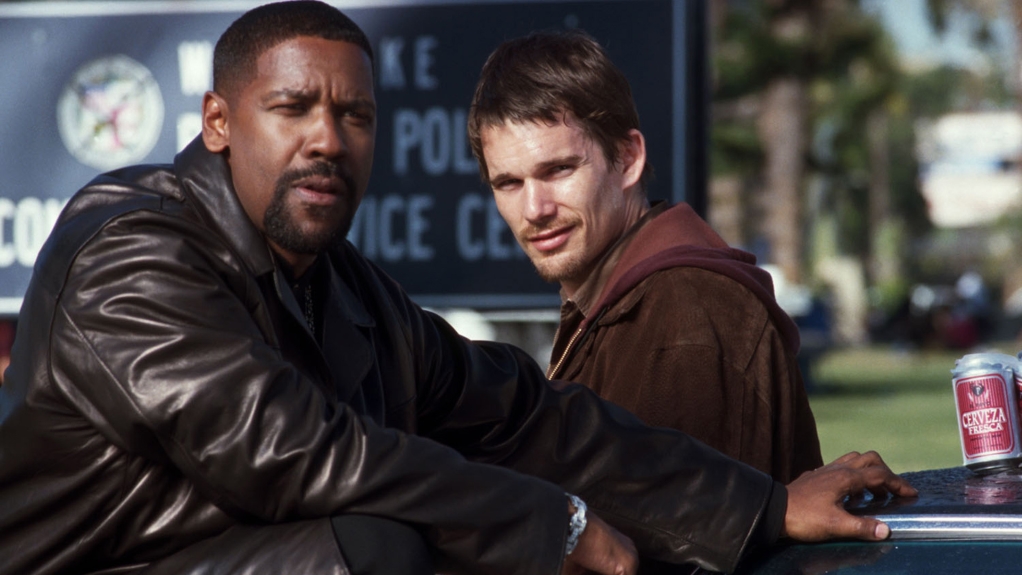
“King Kong ain’t got nothing on me!” That’s the mantra of larger-than-life legendary cop Alonzo Harris (Denzel Washington), who has immersed himself so much in the dirty neighbourhood gangland of LA that it’s hard to see where cop ends and crook begins. Alonso claims to believe to keep the town clean, you gotta break a few rules. But then he also believes in filling his own pockets with stolen money. It’s all going to come to a head in one day: first day on the job for ambitious boy-scout officer Jake Hoyt (Ethan Hawke) who thinks he’s auditioning to join an elite squad only to find he’s the victim of a series of elaborate mind-games and dodgy moves by Alonzo, testing to see whether he is potential asset or sacrificial pawn. It’s going to be a long day.

Training Day is basically a massive dance with the devil, offering his little Faustus all the wonders of the world in return for his soul. It’s all there for Hoyt’s taking: respect, glory, standing – and of course oodles of plastic-wrapped dollar bills. All he has to do is sacrifice every inch of his integrity and personal morality to Alonzo Harris, a grandstanding Mephistopheles. This first day is all about Harris pushing Hoyt to see how far he will go. Will he smoke a little dope so he could pass as an undercover druggie? Will he search a house under a false warrant? Will he rough up a suspect? Will he murder a drugdealer and steal his cash?

Throughout all this, Denzel Washington barnstorms to fantastic Oscar-winning effect. This is a delightfully Devilish performance, Washington leaving it all out on the pitch. Alonzo Harris has inhabited the persona of the gangsters he follows for so long he’s basically become one. Harris is scarily charismatic, the unshakeable confident cool he uses to cow and terrify criminals and punks on the street, also making him a hugely attractive figure. This is despite his complete amorality, his ruthless capacity for violence and his shocking willingness to abuse and use almost everyone around him. He does all this by convincing Hoyt for long stretches that his poor treatment, abuse and deception of him is all in Hoyt’s own interest: to toughen up this naïve puppy into a killer.

Hoyt spends half the time if this is some elaborate show-and-test. Who can blame him? Washington’s exuberance plays masterfully on the edges of someone putting on a massive performance. There are neat moment where we see how fragile some of Harris’ control is, once he is outside of his comfort zone: he’s in hoc for millions to Russian gangsters and as events of the day pile up his thermonuclear self-confidence tips into moments of impotent fury. Washington is fantastic as this street monster, whose seductive lines on modern policing (do a little bad to do a greater good) start off sounding like common sense before you realise they tip quickly into justifying open criminality. It’s a performance of perfect physical swagger matched with his limitless charisma, inverting the qualities that made him a perfect Steve Biko or Malcolm X into a Lectorish monster.

Ethan Hawke is also extremely good as his polar opposite, the eager to please rookie who realises there is a lot more going on here than he thought. Training Day suggests there may well be a middle ground between Hoyt’s straight-as-an-arrow idea of policing and Harris’ corruption – and it’s part of Harris’ appeal that his perverted mentoring ends up making Hoyt a tougher, more unrelenting (better?) cop than he was before. But also, Hawke is great at showing that Hoyt (under his sheen of moral uprightness) is also a tough, hardened professional. In classic story-telling style, Harris is a dark reflection of Hoyt: they share a stubbornness, a conviction that they are right, a refusal to be intimidated (Hoyt may nervously try to please Harris at first, but once he realises the score he refuses to be forced into doing anything he doesn’t want to do) and a capacity for throwing themselves into decisive action. There is a reason why this rookie can get the drop on Harris – much to his wicked mentor’s delight and admiration – in a way no one else can.

That alone shows the dark magnetism of people like Harris: like Hoyt we end up wanting their approval even when we hate or fear them. Even as he holds a shotgun to his head, there is a part of Hoyt you suspect is proud that Harris’ gut reaction is to shout an impressed “My man!”. Of course Harris knows his validation is important to people. Monsters like this know the weaker-willed crave their respect. But then Harris also knows no one else in his team – all of them weak-willed bullies, desperately trying to imitate them – have even a quarter of the independence of mind Hoyt has.

What Harris under-estimates is Hoyt’s survival instinct. The final third of the film, the clash that has been building inevitably between these two, again demonstrates both their similarities and their fundamental differences. The main difference between them being Hoyt cares for, and protects others, and Harris cares only about himself. Hoyt’s humanitarianism will save him from dangerous situations and even Harris’ girlfriend (a tough-but-cowed performance from Eva Mendes) recognises Hoyt has shown more concern for her son in a few minutes than his father, Harris, ever has in his whole life.

The final act of Training Day hinges a little too much on one whopper of a coincidence: the sort of narrative contrivance so colossal that, in a less magnetic film, you’d be throwing stuff at the TV shouting “oh come on!” It’s final, inevitable, confrontation between Harris and Hoyt feels rather too much like many, many other films before it in every single beat, while the ending has a whiff of Hays Code morality (all wrongs righted!) about it that rather undermines the edgy, unpredictable film it precedes.

But when Training Day focuses on the sound and the fury of Washington and the Faustian dance on the deep grey lines of street policing, this is a sensational, energetic and highly watchable cop thriller, pulsatingly directed by Antonie Fuqua. With Washington superb and Hawke easy to overlook as his straight-laced partner, it’s a character study that constantly shifts our expectations and leaves us genuinely worried about the fate of its hero. The sort of slick entertainment Hollywood does at its best.

Martha Marcy May Marlene (2011)

Martha Marcy May Marlene (2011)

Durkin’s debut is atmospheric but not quite satisfying enough look at the danger of cults

Director: Sean Durkin

Cast: Elizabeth Olsen (Martha/Marcy May), John Hawkes (Patrick), Sarah Paulson (Lucy), Hugh Dancy (Ted), Brady Corbett (Watts), Christopher Abbott (Max), Maria Dizzia (Katie), Julia Garner (Sarah), Louisa Krause (Zoe)

When 22-year-old Martha (Elizabeth Olsen) surfaces after two years off-the-grid, seeking help from her sister Lucy (Sarah Paulson) and Lucy’s husband Ted (Hugh Dancy), they think she’s still the same slightly selfish screw-up she’s always been. But unknown to them, Martha has spent those missing years rechristened as Marcy Man in a patriarchal Manson-like cult in the Catskills run by charismatic Patrick (John Hawkes). As Martha attempts to readjust, she is haunted by flashbacks to the cult and a growing paranoia that her escape from Patrick’s clutches might only be temporary.

Durkin’s debut film is a masterclass in unsettling atmosphere. With its gloomy photography and stretches of unsettling silence, it never lets the viewer relax. Lucy and Ted’s luxury country house ends up feeling as unsafe and uncertain as the cult’s rickety farm. Well-handled cuts take us suddenly from present to flash-back – for example, a cut sees Martha dive from Ted’s boat to land in the waterfall near the cult’s farm. Auditory and visual transitions run throughout the whole film – Martha’s sleeping positions in the house suddenly mirrored in flashbacks, or food preparation in one timeline transitioning to the same task in the other. It makes everything feel as disjointed and jagged to us as it does to Martha.

This unsettling uncertainty, where the “safe” environment of Lucy and Ted’s house increasingly mirrors the unsafe world of the cult, is a neat way of suggesting the struggle of people like Martha to truly escape. It also complements a very effective, star-making turn from Elizabeth Olsen. At times hostile, Martha is just as likely to withdraw, Olsen showing her deeply unsettled by everyday acts like her sister combing her hair (an act reminiscent to her of the cult’s sexual abuse), or blankly not comprehending the society’s everyday rules. Desperate for reassurance, she still clings to the cult’s empty mantras, lashing out with furious venom when she feels vulnerable. It’s a soulful, damaged and delicate performance that carries much of the film.

Martha Marcy May Marlene captures the horrific, insidious manipulation of the cult. John Hawkes is very good as a quietly charismatic, intimidating man who, without ever raising his voice, controls every situation he is in through self-confidence and absolute certainty. The cult is firmly hierarchical, with Patrick at the top, men below and women at the bottom, serving the men – from cooking food (and not eating so much as a crumb until they are finished) to taking part in partner-swapping orgies watched by Patrick. All women are initiated into the cult through a “cleansing” ritual – being drugged by the other women, then raped by Patrick and they and the other members are brain-washed into pride at being “chosen” for Patrick’s wisdom.

Durkin leaves the nature of the cult deliberately ill-defined, in itself a comment on the shallow emptiness of these movements and the intellectual mediocrity of their leaders. When a row develops over dinner, Martha responds to the (admittedly smug) Ted by angrily parroting the cult’s empty, depth-free anti-money and anti-capitalist statements. The cult roughly follows the Manson Family playbook in breaking into homes and stealing (or worse) to fund its activities. Its main function is dehumanising its members, so they will think nothing of killing and abandon all personal boundaries. Martha still suffers from the latter: used to sleeping in communal rooms, she thinks nothing of wandering into Ted and Lucy’s room and lying down to sleep on their bed while they noisily have sex in the other half of it (they are not pleased, much to her bemusement).

There is good stuff here – which makes it disappointing that the film ends up, for me, feeling slightly unsatisfying. We get no real sense of what made Martha join this cult, or who she was before it sunk its claws into her. We also get very little sense of what made Martha decide to escape. The film suggests maybe her reaction to the murder of the owner of one of the wealthy homes they break into: but since the film later suggests that murder (and Patrick’s teaching that killing is somehow doing people a favour) is a fairly regular occurrence in the cult, this also feels unlikely.

The film also avoids really diving into interesting questions about readjustment and de-programming from traumatic experiences. For all it brings Martha’s PTSD to the fore, it doesn’t really show much development in either Martha’s feelings towards the cult or her understanding of her experiences. Now it’s true the road to recovery isn’t a straight line of narratively smooth continual healing, but a long, complex journey with many setback. But as a film, focussing solely on this part of her life ends up rather repetitive, like we’re struck watching just part of a longer story.

Durkin’s film is instead really a study of paranoia – Martha’s growing, unspoken, fear that the cult is coming for her and her family. But for those fears to really work, we need to feel the cult is capable of pre-meditated murder – the only killing we see is sudden and unprepared, other house entries showing the cult go to great lengths to be undetected. The film caps with a deliberately ambiguous sequence that may or may not be a mix of reality, chance, coincidence and Martha’s paranoid fears. But it’s a sequence that feels like it’s been created to conclude the film, rather than something that grows organically throughout, blunting some of its impact.

It’s a shame as there is a lot to like in this impressive, atmospheric debut, not least Durkin’s coldly unsettling direction, Olsen’s terrific performance and very good supporting turns from an exasperated-but-patient Sarah Paulson as Lucy and Hawkes’ dark, quiet charisma. But Martha Marcy May Marlene eventually boils down to telling you that being in a cult is traumatic, without really exploring the nuances of the struggle to overcome that or what pulls you into that situation in the first place. By focusing on paranoia, it feels like it tells only part of a wider, more interesting story.

Fanny and Alexander (1982)

Fanny and Alexander (1982)

Bergman’s gorgeous final film, a sublime family saga, that leaves you thinking for days

Director: Ingmar Bergman

Cast: Bertil Guve (Alexander Ekdahl), Pernilla Allwin (Fanny Ekdahl), Ewa Fröling (Emilie Ekdahl), Jan Malmsjö (Bishop Edvard Vergérus), Gunn Wållgren (Helena Ekdahl), Erland Josephson (Isak Jacobi), Jarl Kulle (Gustav Adolf Ekdahl), Allan Edwall (Oscar Ekdahl), Pernilla August (Maj), Mona Malm (Alma Ekdahl), Börje Ahlstedt (Carl Ekdahl), Christina Schollin (Lydia Ekdahl), Harriet Andersson (Justina), Stina Ekblad (Ismael Retzinsky), Mats Bergman (Aron Retzinsky), Gunnar Björnstrand (Filip Landahl)

After many years (and masterpieces) Bergman wanted to move on from film: but before he went, there was time for one more magnum opus, a sprawling family saga that would throw a host of his interests (death, family, sexual openness, God, theatre, infidelity, the unknowable) onto one grand, sprawling canvas. Fanny and Alexander would be a truly personal film, featuring a young protagonist with more than a passing resemblance to Bergman himself. Despite this it’s an irony Bergman might like that the finest version of this film we have is actually a five-hour recut for television (the limits of run-time from distributors being one of many things Bergman was tired of). That version is a beautiful, life-affirming, gorgeous piece of film-making, an extraordinarily humane story tinged with the supernatural told on a luscious, Visconti-like scale. It’s a fitting sign-off from a master.

In 1907, the wealthy Ekdahl family live in a luxurious apartment block, their rooms filled with the rich detail of their love of art and culture. Ten-year-old Alexander’s (Bertil Guve) father Oscar (Allan Edwall) and mother Emilie (Ewa Fröling) run the Ekhdal theatre, where his wealthy grandmother Helena (Gunn Wållgren) once performed. After a fabulous Christmas celebration, Oscar dies after a stroke while rehearsing the role of the Ghost in Hamlet. After a period of mourning, Emilie remarries to the older Bishop Edvard Vergérus (Jan Malmsjö), who turns out to be a domestic tyrant, obsessed with the letter of religious and family law. Will Alexander, his younger sister Fanny (Pernilla Allwin) and their mother escape from Vergérus’ controlling clutches?

What really strikes you first and foremost about Fanny and Alexander is its gorgeous warmth – hardly the first quality you traditionally associate with Bergman. It opens with a prolonged (over an hour) Christmas celebration, with the family and their servants eating, laughing, telling stories and dancing through their gorgeously furnished apartment. It should feel indulgent (and I suppose it is), but this warm reconstruction of an at-times-flawed, but fundamentally loving and vibrant family is actually deeply moving and heart-warming.

The Ekdahls have a bohemian freedom, with their love of theatre and art (only Uncle Carl, a manic depressive businessman, feels slightly out-of-place and even he takes the children to one-side during the festivities to entertain them by blowing out candles with his farts). Their house is charmingly egalitarian, with the servants treated as part of the family, loyalty they return. The theatre troupe (led by Bergman regular Gunnar Björnstrand in his final, small, role) – are equally part of this extended family, the theatre a second magical home where the children take small roles in various productions and delight in the stagecraft and costumes behind-the-scenes.

Fitting a Bergman family (and the Ekdahl’s share some elements with parts of Bergman’s family) they are extremely forward-looking in their morality. Uncle Gustav Adolf (played with bombastic, gentle charm by Jarl Kulle) is a notorious ladies man, but goes about it with such innocence and near-childish openness his patient wife Alma (Mona Malm) indulges him because in all other respects he’s a loving husband and father, and his overall fidelity to her is never in doubt. Alma restricts herself to a single slap of his new lover, maid Maj, but otherwise treats her like a sister. Pernilla August is hugely endearing as this caring young woman, swiftly absorbed into the wider Ekdahl family who value her care for others. The Ekdahl’s have no time for conventional morality, led from the front by matriarch Helena (Gunn Wållgren is fantastic as this wordly-wise, ideal grandmother figure) who has lived a life of sexual openness with her husband and values people not societal conventions.

Oscar, their father (wonderfully played by Allan Edwall as a bashfully mediocre actor and a quietly shy but warm man) takes his role as the leader of this company very seriously, but with a light touch (modestly bemoaning his lack of statue compared to his father). Bergman uses a myriad of small moments to make this father an ideal parent, not least a late-night fantastical story he improvises for the children, spun around their nursery room chair, one of the most tender moments of parent-child bonding in the movies. (This despite hints that Oscar, who has allowed the younger, more sensual Emilie to conduct her own affairs, might not be their true father).

The stunning production and costume design (which won Oscars for Anna Asp and Marik Vos-Lundh) are essential for creating this immersive, rich and vibrant life: one which will be exploded in Dickensian tragedy by the death of Oscar and the arrival of the Murdstone-like Edvard Vergérus (played with chilling, smug hypocrisy by Jan Malmsjö under a fake smile) who is everything the Ekdahls are not. Where they are warm and egalitarian, he is cool and elitist, he is a prude with no regard for art and his home is in bleached-out puritan stone, devoid of personal touches – it literally looks like a different world to that we’ve spent the first few hours in, full of untrustworthy people (like Vergérus’ maid played by a wonderfully two-faced Harriet Andersson).

Vergérus is all about control, something we suspect from the start with his aggressively tender manhandling of Alexander, his hand slamming into the back of his neck. He worms his way into the affections of Emilie – a woman who, with her earth-shattering wails over the body of Oscar, is clearly vulnerable in her raw grief (Ewa Fröling is extraordinary as this gentle figure, prone to appalling judgement and unexpected strength of character) – and then sets out their marriage terms with controlling agendas, not least that in arriving in his house, she and her children must shed every inch of their previous life, from personal connections to the knick-knacks they have grown to love. He’s a poor advert for a God Alexander is already cursing for taking his father (his attic, filled with crumbling religious symbols, feels of a part of Bergman’s world where God is at best a passive observer, at worst a near malicious presence).

Bergman makes clear Vergérus is a man who genuinely believes he is doing the best for his family and that the moral lessons he hands out, at the end of a cane, to Alexander are essential. A weak man who mistakes bullying for strength. In many ways the fact he is not vindictive just weak and convinced of his own moral certainty (re-enforced by his fawning family, who treat him like a sort of prophet). Sure, he’s capable of anger, anti-Semitic slurs and little acts of cruelty, but Malmsjö shows him as a man who is trying, in his own wrong-headed way, to win the love of his adopted wife and children and can’t understand why he is not met with gratitude and love.

Perhaps it’s this sudden dropping into a cold world (one not dissimilar from Bergman’s own troubled relationship with his priest father – in fact you leave Fanny and Alexander wondering if Bergman hated his own father as much as Alexander who literally prays for his death) that so sparks Alexander’s own links to a mystic world around him. There is a rich vein of something other throughout Fanny and Alexander, from the statues Alexander watches move in the opening sequence (not to mention the haunting spectre of Death he witnesses in the same moment), to Oscar constantly appearing to Alexander like Hamlet’s Ghost. Is this haunting Alexander’s guilt at this failure to face his dying father on his deathbed, or a link to a world beyond our understanding?

After all Oscar’s Ghost greets Helena at one point, the two entering into a loving conversation. And he’s not the only supernatural touch around Fanny and Alexander. Family friend (and Helena’s lover) the Jew Isak (a rich performance by Bergman regular Erland Josephson) lives in a house full of mystic puppets that might be able to breath and walk. Isak perhaps uses magic to help smuggle the children out of Vergérus’ house (making them appear in two places at once), while his androgenous son Ismael (played by a woman, Stina Ekbad) is implied to having the spiritual power to channel Alexander’s hatred of Vergérus into actual supernatural revenge in the real world (another classic literary touch, that plays on spirituality and the Mad Woman in the Attic in Jane Eyre).

Fanny and Alexander is an extraordinary film, I feel I have only begun to scratch its surface here. It’s both a Dickensian family fable and a semi-benevolent Ghost story. It’s a family saga and a careful look at a particular time and place. It’s funny and moving. It really feels like one final mighty effort from a master.

Seven (1995)

Seven (1995)

Darkly, unrelentingly unsettling, Fincher’s true-debut is an outstanding psychological thriller

Director: David Fincher

Cast: Brad Pitt (Detective David Mills), Morgan Freeman (Detective William Somerset), Gwyneth Paltrow (Tracy Mills), Richard Roundtree (DA Talbot), R. Lee Ermey (Police captain), John C McGinley (‘California’), Julie Araskog (Mrs Gould), Mark Boone Jnr (FBI man), John Cassini (Officer Davis), Reginald E. Cathey (Dr Santiago), Richard Schiff (Mark Swarr), Kevin Spacey (John Doe)

Set in a city where decency and humanity goes to die, daylight is a stranger and everything is covered with constant rainfall, Seven covers the most chilling week-in-the-life of two detectives. One, disillusioned William Somerset (Morgan Freeman), is counting down to his early retirement. The other, his cocksure replacement David Mills (Brad Pitt) thinks he’s unbeatable and indestructible. But they are going up against someone who will shake them to their core, a calculating serial killer dispatching victims he judges guilty of the seven deadly scenes, framing their bodies in grotesque rituals. Can they track him down before he completes his terrible work?

Seven is one of the finest, and most influential, of all serial killer films. Dark, haunting and relentless, it’s a perfect package of grim foreboding and nihilistic terror, expertly directed by David Fincher. Seven is very careful about what it shows you, trusting far more in the horror of suggestion and witnessing the reactions of the characters – you come out of it convinced you have seen more than you have. It never lets you relax for a moment, always dreading the worst – yet so many people never saw coming its infamous final act with its unexpected, horrifying, reveals and darkly, hope-free conclusion. Seven offers almost no comfort and never pets you at ease only a despairing look at how terrible the world can be and how desperate the struggle for goodness can be.

In a visual design that’s reminiscent of Blade Runner, the world of Seven is almost permanently dark, dingy and rain-soaked, the crime scenes filthy, terrifying haunted houses of grimness. The chaotic sounds of the city, mechanical and uncaring, are everywhere: Somerset even sleeps with a metronome ticking in an attempt to impose sone order on his world. The score uses base beats and near-industrial sound, the editing mixes smooth classic cuts and sudden shocks, the camera work is awash with tones from the green of greed to the blood red of lust. Not there there is any comfort in daylight, since the brightest, most open sequence of this claustrophobic film (even the Mills’ apartment violently shakes from passing trains, a subtle hint no where is safe) takes place in a pylon-stuffed field and it’s the most horrific, nihilistic of the lot.

Seven though is also darkly seductive: it plays on our fascination with the dark ‘genius’ of Hollywood killers, their love of patterns and the twisted purity of their quest for perfection. The film’s opening sequence, showing the killer’s preparations in a series of jagged, disorienting cuts, even places us in his perspective. When he is revealed, he mixes prissy politeness with dark, obsessive love for his work. Seven understands out fascination with the pattern killer – just as we were obsessed with Hannibal Lector and the Terminator, the guy in control is intriguing. It punishes us for this by stressing the horrific impact of his crimes and the traumatic impact on the survivors, is nihilistic ending even more effective for all the dark enjoyment the viewer has taken out of Seven’s grim momentum.

It’s also benefits hugely from its play on the conventions of the odd-couple detective pairing. Somerset and Mills are chalk-and-cheese: Somerset is calm, methodical and professionally distant, Mills is volcanic, lacks focus and becomes terribly personally invested. One of the films few touches of humanity and hope is the growing friendship between these two – slow-burning to say the least – that sees them go from butting heads to sharing jokes and supporting each other’s calls.

The performances are excellent. Brad Pitt (whose clout helped ensure producers couldn’t neuter the film’s shocking ending) is full of jittery energy masking his insecurity, doubt and fear; so worried about looking weak he resorts constantly to anger. Lacking patience (hilariously he can’t bring himself to read Dante and Chaucer, as Somerset recommends, instead resorting to hiding Cliff Notes books in his desk) he investigates the crimes with gusto, focused on the exterior not the interior. He can’t only see the killer as a lunatic, an under-estimation that makes him easy to manipulate.

The moral centre is Morgan Freeman’s Somerset, a superb performance. Somerset is completely disillusioned, convinced any trace of goodness in the world has disappeared. Despite this, events prove him wise (but not above terrible errors) and determined with a strong moral centre. He’s empathetic about crime in ways Mills isn’t (at an early crime scene, one of his first questions is if the victim’s kid has seen the body, a question dismissed as irrelevant by his colleagues) and investigates from inside the killer’s psyche, seeking to understand his motives. Perhaps no other film than Seven has given Freeman so perfect a vehicle, his expressive eyes full of sorrow and regret, his careful decency a mask of detachment that he slowly lets slip to Mills and his wife.

As that wife, Gwyneth Paltrow gives a striking, endearing and perfectly judged performance in a small but crucial role. Tracy Mills is the one unquestionably decent person in this crap-sack world, perhaps why she and Somerset are drawn together. Seven has a wonderfully quiet, humane moment in all this horror, when the two meet to discuss parenthood, a beautifully played exploration of doubt and fear from Paltrow and quiet semi-regret from Freeman. It’s a role pivotal for the film, Paltrow leaving a deeply tender impression on the viewer.

It’s vital for the film’s final act pay-off. Seven is perfectly constructed, both in its pacing of the murders and in not dragging out the mystery of the motive too long (it knows, of course, that everyone watching the film is ahead of the detectives on that score). It’s crammed with stand-out sequences: a SWAT team house storming promises drama but turns into a dark twist on the wrong-door routine; a chase sequence after a chance encounter with the unseen killer gives a perfect shot of adrenalin. It’s all unbalancing us for a shockingly unexpected move by the killer (the actor’s identity carefully kept a secret in advance, meaning his reveal is a genuine shock for the uninitiated) leading to its horrifically nihilistic ending that I defy anyone to anticipate (except its now probably as famous as the identity of Rosebud or Keyser Soze).

Seven is astonishingly brave in all its pulsating thrills and perfectly judged tension for offering very little hope. This is a film where good is essentially powerless against evil: Somerset is too detached to beat evil, Mills so invested in his own black-and-white world he’s easy prey for the coldly manipulative. The film’s conclusion is a punch to the gut, but logical in a film where we’ve seen ordinary people indifferent to the worst of humanity and evil being so devilishly determined and ingenious in its actions no one stands a chance to beat it. You can criticise Seven for its small beats of misogyny: while Tracy is pure, like a fairy-tale princess, the two female victims are a shallow, preening model while the lust victim is not the man who uses prostitutes but the prostitute herself – an attitude we shouldn’t be surprised the killer has, but is unquestioned by any of the (all-male) investigators. (I was uncomfortable with this when I first saw it in the nineties, and time hasn’t changed my mind).

But aside from that, Seven is a darkly compelling masterpiece, a brilliantly unsettling film from David Fincher, at last allowed to deliver a film that exactly matched his vision (in a way Alien 3 did not). The battle to keep its nihilistic dark and shocking ending was a battle well-won, and it makes for a film that is a chilling exploration of evil in the world as well as a compelling, darkly-bloody film noir set in a world of unrelenting hopelessness. One of the greatest serial killer films ever made.

Alien: Romulus (2024)

Alien: Romulus (2024)

Starting as a cleverly structured homage, it becomes increasingly more nostalgia driven as it goes on

Director: Fede Álvarez

Cast: Cailee Spaeny (Rain), David Jonsson (Andy), Archie Renaux (Tyler), Isabela Merced (Kay), Spike Fearn (Bjorn), Aileen Wu (Navarro), Daniel Betts / Ian Holm (Rook)

It’s always a surprise how many Alien films there actually are (at least nine if you count all the Alien vs Predators). Perhaps we forget because so many of them have been less than great. So, saying Alien: Romulus is the third best Alien film isn’t exactly high praise. After all, beyond Alien and Aliens the bar is pretty low. Alien: Romulus has a lot going for it, not least the fact it’s clearly been made with love by a director who adores the series. It makes it all the sadder that, the longer it goes on, the more it becomes a fan-boy remix of a elements from the other films. It ends up as much of a nostalgia obsessed, easter-egg piece of fan bait as any recent Marvel film, but at least entertaining.

Set some time after Alien – it opens with a mysterious Weyland-Yutani ship plucking the original Xenomorph (wrapped in a protective cocoon) from the Nostromo’s wreckage– ourhero is Rain (Cailee Spaeny), a young worker in a grim mining facility planet. Working for credits for passage home – a target the company constantly changes – she lives with her adoptive ‘brother’ Andy (David Jonsson), a gentle, glitchy synthetic reprogrammed by her late father. They have a chance for freedom when her ex-boyfriend Tyler (Archie Renaux) and his crew asks her and Andy’s help to plunder cryostasis chambers from an abandoned ship so they can survive the nine-year journey to another world. But the ship (Romulus and Remus) is, of course, the one we saw earlier – and on board are a host of facehugger experiments, leading inevitably to Xenomorph slaughter.

Alien: Romulus starts very strongly, carefully reconstructing the stylistic look and feel of the original (right down to the spot-on sound design of all those 70’s future computers blinking into life, chuntering old fax machines). The crapsack colony feels perfectly in-tune with Aliens, as a mix of Western frontier town and industrial hellscape. Álvarez’s film brings the franchise back to its roots, after the mystique-shattering of Ridley Scott’s prequels. Romulus is a haunted house in space, a psychopathic alien lucking around every corner. As the tension slowly builds – helped by the fact we, obviously, know a lot more about what those odd spidery-things suspended in animation are – Alien: Romulus feels like a return to the factors that made the series work in the first place.

Álvarez dials up the sexualised body horror of this revolting creature and its unstoppable relentless cunning. Alien: Romulus is full of the revolting invasiveness of these animals, the icky body horror of creatures hatching inside you, with the nightmare-fuel monstrosities getting worse as the film goes on. Playing out in a poorly lit ship, the creatures scuttle from the corners of the screen to impregnate or dissect their victims. He also has some neat original ideas, including deducing the face-huggers detect body heat and movement (having no eyes) so the only way to evade them is to raise the room temperature and move slowly (such a good idea, you wish he made more of it).

It’s also a film that looks at the all-round weapon nature of these creatures, specifically their acid blood. The team can’t shoot the things – they’ll melt through the decks and cause instant decompression – and when one does die, its blood floats through zero-gravity as an almost impossible to evade thread. One character dies not from the jaws of the xenomorph, but from sticking a cattle prod into its cocoon, acid spilling out into his eyes, hands and chest (not pretty).

It’s opening act also offers an intriguing relationship between its two leads, one a potential proto-Ripley with a strong moral compass, the other a very different type of synthetic. Andy, well-played by David Jonsson, is gentle, clumsy and naïve, a vulnerable people-pleaser who loves cringy Dad jokes, prone to the android equivalent of epileptic fits under pressure. By establishing the closeness between these two characters, Alien: Romulus explores a new angle of the series study of the relationship between humans and their creations: are these synthetics people or property?

Rain clearly loves Andy: she may resent the bullying he receives from some of the anti-synthetic crew, but also willingly reprograms him when needed and plans to leave him behind so as not to fall foul of anti-synthetic laws back home. Reprogramming Andy drastically alters his personality – David Jonsson does a great job switching his body language, demeanour and accent (back to his native British) – as Andy becomes a more familiar Alien electric reflexes and ‘needs-of-the-many’ andriod. What’s intriguing here is its implied part of this is due to Andy’s own suppressed resentment at his treatment by the humans as somewhere between a child and a screwdriver.

The complex relationship between these two is the heart of Alien: Romulus and its most original element. It’s a shame the film loses focus on this the longer it goes on. As Romulus hits it’s second half, Álvarez succumbs to fanboy temptation until finally he can’t go more than thirty seconds without referencing an line or scene from an earlier Alien film. Slowly the parade of painfully recognisable features (even an utterly out-of-character reprise of ‘Get away from her you bitch’) begins to depress you as Alien: Romulus gives up the idea of being something fresh and settles for being a passionate piece of fan-fiction, unable to imagine anything beyond the scenarios it’s already seen play out somewhere else.

Alien: Romulus becomes as much a nostalgia trip as anything else Hollywood makes these days. Right down to recreating a digital version of the late Ian Holm as ‘Rook’, Romulus and Remus’ version of Nostromo’s Ash, for a prominent role. The recreation is pretty good, Rook is an interesting character – sympathetic to the heroes at first, but increasingly reverting to form – but there is something uncomfortable about it. This is, after all, a recreation for nostalgia of a dead actor, without his consent (though with his families) not as a visual cameo but as a crucial character. How long before we get more and more of this?

It’s a slightly unsettling note, even if I ended up enjoying Alien: Romulus more than a should have. Part of me liked seeing Ian Holm again. Hypocritically I don’t mind quite so much riffs on films I like –hypocritical since I was annoyed by the same thing in Deadpool & Wolverine. But I wish Alien: Romulus had settled for subtle recreation of details while striking out somewhere unique. What it actually ends up doing is suggesting that, once you strip it down to its roots, there isn’t much to Alien beyond slasher-in-space. Which makes you think, for all its flaws, perhaps Prometheus was a braver movie for trying to do something that wasn’t that.

But then I’ll also definitely watch it again. So maybe that makes me part of the problem.

The Hidden Fortress (1958)

The Hidden Fortress (1958)

Kurosawa’s samurai entertainment is overlong but has just enough action and adventure

Director: Akira Kurosawa

Cast: Toshiro Mifune (General Rokurota Makabe), Minoru Chiaki (Tahei), Kamatari Fujiwara (Matashichi), Susumu Fujita (General Hyoe Tadokoro), Takashi Shimura (General Izumi Nagakura), Misa Uehara (Princess Yuki), Eiko Miyoshi (Yuki’s lady-in-waiting), Toshiko Higuchi (Prostitute)

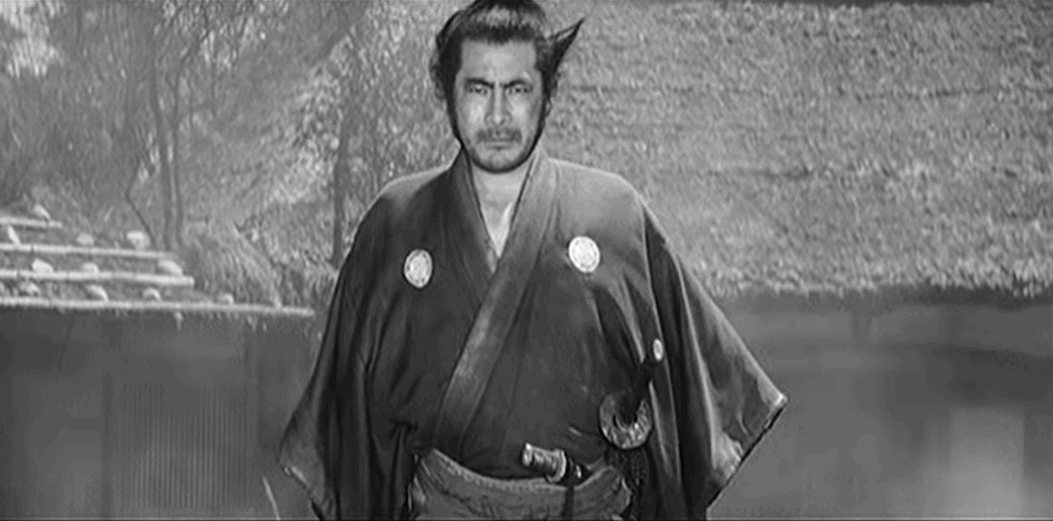
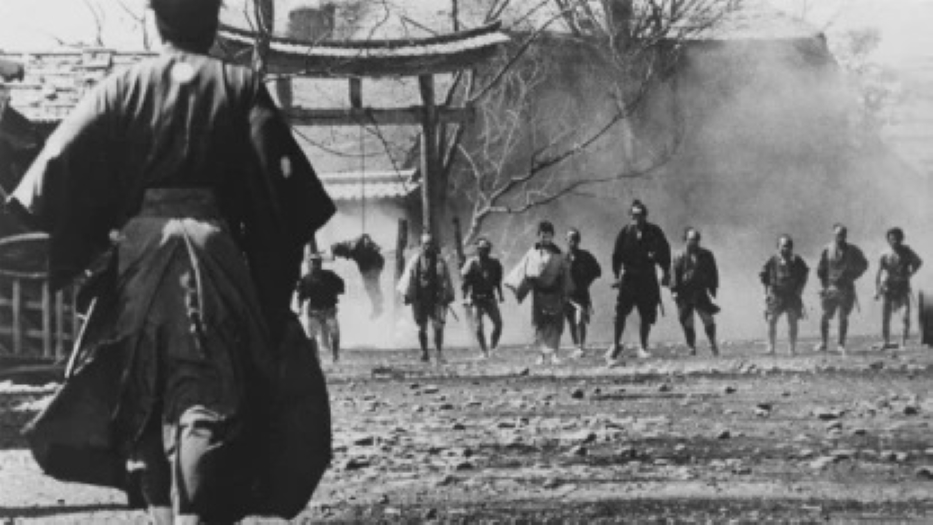
A princess hides in a castle from the wicked forces who have captured her kingdom. Her only hope is a noble general who has concealed the kingdom’s gold in bundles of wood, hidden in a lake at a mysterious castle. The general needs to get the gold and the princess through miles of hostile territory, with only a pair of greedy, incompetent peasants to help. This fairy tale structure is spun by Kurosawa into a samurai action-adventure with Mifune (inevitably) as the general, Misa Uehara as the Princess and Minoru Chiaki and Kamatari Fujiwara as the peasants. It’s good fun, overlong, but an entertaining ride – and one now best known now for its influence over Star Wars.

Kurosawa, after pouring his heart and soul into Throne of Blood, needed to relax. He decided it was time for an entertainment, something to please the crowds. The Hidden Fortress is certainly that, Kurosawa’s first film shot on impressive widescreen Tohoscope, with plenty of horse-bound action and swordplay. It’s really a Kurosawa Westerns, with heroes on the trail on a mission with bad guys to foil. But, as is sometimes the case with Kurosawa, it’s length and scope frequently makes it feel slightly indulgent, while it’s mix of comedy and drama doesn’t always sit comfortably together.

The Hidden Fortress is though highly cinematic. As well as Kurosawa’s enjoyment of the wide-angle lens – soaking up the slopes of Mount Fuji, often rolling in a beautiful mist – it frequently employs Kurosawa’s love of fast-editing tricks, in particular fast wipes to move us seamlessly from one place and time to another (one of many flourishes that influenced George Lucas who made these Kurosawa wipes internationally famous). A horse charge, where General Makabe chases down the samurai hunting them, is a grippingly frenetic with its pace and energy.

Kurosawa mixes this with comedy, though his unusual POV characters. In another move cited by Lucas’ as the inspiration for C3PO and R2D2, much of The Hidden Fortress takes place from the perspective of its peasant sidekicks. But, unlike the genial droids, Tahei and Matashichi are greedy, cowardly and selfish, frequently proving themselves untrustworthy. But, then in a touch of social commentary, perhaps they don’t owe anything to a general who treats them as slaves and (initially) plans to kill them once they are no longer useful. They are played with energetic larger-than-life force by Minoru Chiaki and Kamatari Fujiwara that contrasts neatly with the gruff authority of Mifune.  

It’s them we follow from the start, feuding over robbing the body of a slain samurai before being flung into the slave mines of the Princess’ former kingdom. One of Hidden Fortress’ gently played themes is the class difference between these two sons-of-the-soil and the upper-classes they (reluctantly) serve. For starters, that service comes with no choice – it never occurs to Makabe that they have a say in the matter – and they are told almost nothing about the purpose of their journey. They are instead tools for a higher purpose, just as the Princess’ similar-looking maid is sent to town to be captured and executed, to help protect the bloodline of the royal family.

It’s an attitude the Princess – well played by Misa Uehara as a stubborn young woman, full of righteous indignation at her restrictive office – comes to deplore. She, unlike anyone else among the elite, questions the idea of the poor as unimportant puppets for their betters, and it is she who is drawn to protect people, including a mis-treated prostitute who she insists Makabe buys the freedom of. It’s also she – more than anyone else, including the two peasants – drawn towards the anarchic Fire Festival they encounter, with its dismissal of worldly goods and embracing of enjoying life. But, perhaps Kurosawa’s point is it’s only the wealthy who can afford to indulge themselves with such thoughts: peasants have far fewer options and no choice but to scrabble in the dirt for coins.

This social commentary would perhaps be more widely discussed if the film had kept Kurosawa’s original title, Three Bad Men in a Hidden Fortress: a title that tips Tahei, Matashichi and Makabe into the same morally ambiguous pot, all obsessed with worldly needs (money or the continuation of the royal house) over any concerns about those around them. But, somehow, it’s easier to focus on the wheedling greed of the peasants, and overlook the lofty cold distance of the general, because he’s a noble guy, brave and daring who spares his opponent after a fair duel.

It’s also because The Hidden Fortress is less focused on these elements – Seven Samurai did the snobbery of the samurai class and the mixed motives of the working classes more effectively in any case – and more on being a rollicking, road-movie entertainment. It’s Western-style (in both ways) misfit band adventures, features expertly filmed action set-pieces. Best of all the previously mentioned chase, and a gripping one-on-one duel between Rakabe and his rival General Tadokoro (a fine performance of quiet dignity from Susumu Fujita), that is edge-of-the-seat in its mix of graceful camera work and exciting sword play.

The Hidden Fortress is entertaining, but it’s hard to escape the feeling there is too much of it. Despite not being as long as Seven Samurai, it feels less forceful narratively, largely features less compelling characters and is less well balanced between depth and action. Its plot feels almost deliberately lightweight and the resolution feels rushed. The film’s fairy-tale simplicity really needs a relatable hero at its heart – but the focus on the sometimes irritating peasants means we don’t get that. Fundamentally, The Hidden Fortress is an adventure story from a director, taking a rest from more complex work. It entertains, but feels like it lives in the shadow of other films, even before its connection to Star Wars turned it into a footnote in another film’s story.

Titanic (1997)

Titanic (1997)

Cameron’s film is easy to knock, but is a triumph of romance, scale and real-life tragedy

Director: James Cameron

Cast: Leonardo DiCaprio (Jack Dawson), Kate Winslet (Rose DeWitt Bukater), Billy Zane (Cal Hockley), Frances Fisher (Ruth DeWitt Bukater), Kathy Bates (Molly Brown), Gloria Stuart (Old Rose), Bill Paxton (Brock Lovett), Suzy Amis (Lizzy Calvert), David Warner (Spicer Lovejoy), Danny Nucci (Fabrizio De Rossi), Victor Garber (Thomas Andrews), Bernard Hill (Captain Smith), Jonathan Hyde (J Bruce Ismay)

Get on any ship, and I guarantee you’ll see two people at the bow standing, one in front of the other, with their arms stretched out. If that doesn’t tell you something about the lasting impact of Titanic nothing will. Titanic was a sensation: top of the box office for months with the sort of repeat-viewing producers dream of; My Heart Will Go On went platinum and half the world was in love with Leonardo DiCaprio. It won 11 Oscars, made a billion dollars and is a film everyone knows even if (hard to believe) they ain’t seen it. James Cameron took an enormous punt on TitanicRomeo and Juliet meets disaster movie on legendary ship – and it paid off in spades. Because, no matter your cynicism, you can’t deny he created a film millions of people invested in to an extraordinary scale, staged with the epic sweep, gorgeous detail and pounding disaster thrills that channelled David Lean, Luchino Visconti and Irwin Allen all at once.

Rose DeWitt Bukater (Kate Winslet) is destined for a life of dutiful, unimaginative marriage with spoilt millionaire Cal Hockley (Billy Zane) when she boards Titanic as a first-class passenger in Liverpool on 10 April 1912. Also boarding the ship (but in steerage) is drifter and would-be artist Jack Dawson (Leonardo DiCaprio). When he saves her from taking her own life by jumping from the ship, they form a bond which flourishes into a love that will change both their lives. But not as much as the iceberg the ship is ploughing relentlessly towards across the Atlantic.

It’s very easy to take a pop at Titanic. Its romance sometimes succumbs to Mills and Boon cliché and Cameron’s script has more than its fair share of clunky lines (it’s one of those rare Best Picture winners with no screenplay nomination). Plenty of people hated it in a fit of inverted snobbery as a whole generation took this modern romance to its heart. But Titanic reveals the truth of the magic of movies: it uses a traditional romance to build our emotional investment in the sinking and the lives of ordinary passengers, more successfully than any other Titanicfilm had before or since.

Cameron knew the mountain he had to overcome. After all, this was the most famous disaster since Pompeii: where was the tension? So, he opens with a modern-day setting, a treasure hunt among the real ship’s ruins, with the hilariously named Brock Lovett (a game Bill Paxton in a thankless role) searching for a priceless diamond, the Heart of the Ocean. His only link: the older Rose (a plucked-from-retirement performance of charm and hidden fire from 87-year-old Gloria Stuart), who becomes our window to the past. This allows the audience to be told the geekily excited “ain’t it cool” details of the sinking with the same sort of distance we’re used to thinking about it. The film then becomes a lesson in making us learn, like Brock, this wasn’t an anecdote but a horrific disaster that killed 1,500 real people (made worse because we know exactly what’s going to happen to this ship every step of the way). The MacGuffin is intended to look as trivial as it does by the film’s end.

His key tool for this was his Romeo and Juliet love story told, for all its airport-novel lack of originality, with a vibrant, earnest intensity. Helped by fantastic chemistry between two talented actors, you have to work hard not to care for Rose and Jack (no accident those initials). And through their eyes, the whole ship comes to life, Just as the special effects camera sweep through the ruins, turns it from a ghost shop into a living breathing place, where ordinary, real-life dramas play out in every corner. It’s a perfectly judged entry point for bringing history to compelling life, playing on emotions we’ve all felt: love and fear of death.

The film splits neatly into two acts. The first is the romance and, whatever you say, it’s a cinematic romance for the ages in its old-school sweep. As we watch them bounce round the ship, make each other laugh, dance and fall in love, the utter lack of cynicism is really winning. It’s so overwhelmingly genuine and heartfelt, you can’t help feeling it yourself. Both help each other find new depths: for Rose, the willingness to embrace her own choices, for Jack a maturity and responsibility he’s lacked. Bathed in golden cinematic light and backed by James Horner’s superb score, they become two people we really invest in being together. It’s so earnest and honest it even gets away with otherwise ridiculous scenes like “draw me like one of your French girls Jack”.

Both the leads carry-off it off superbly. No mean feat considering the challenge of making the film – not least being submerged for weeks in freezing cold water during night shoots. Kate Winslet makes Rose burst with life from the depths of fear and doubt, effortlessly carrying much of the movie. It’s often overlooked that Rose drives much of the pace of the romance, as well as clearly being the more sexually and romantically experienced partner. Leonardo DiCaprio – who found it a burden for years, as it turned him from proto-DeNiro to heartthrob pin-up – gives an infectious energy to Jack’s fortune-cookie mantras, while growing in authority as the film progresses towards disaster.

Cameron fills his golden-hued recreated Titanic with the sort of detail we’ve not seen since The Leopard. Sure, his view of the haves and have-nots is hardly subtle (from ruthlessly posh, heartless Brits to plucky, happy-go-lucky Irish working-class), but it makes it very easy to relate to the injustice, bullying and casual snobbery. In Rose’s fiancée Cal, Billy Zane unselfishly plays an utter rotter: a coward, a snob who mocks Picasso and has never heard of Freud, a bully who treats Rose like a pet dog and puts his own needs (and safety) first at every turn. Titanic might be a ship of goodies and baddies (most egregiously in its clumsy slandering of First Officer Murdoch, a clumsy mis-step Cameron later apologised to Murdoch’s family for), but it’s undeniably alive.

It’s that quality of life which makes the sinking of the ship so horrifyingly intense. Cameron’s extraordinary second-half of the film – effectively a souped-up, horrifying remake of A Night to Remember (including quoting shots from that film) – never lets us treat this like a historical curiosity. Instead, it hammers home in intense, tragic detail, the shocking loss of life and the desperate, futile attempts of so many people to survive. Told in close to real-time, superbly edited and practically dripping in freezing water, it’s terrifying in its unstoppable intensity. Suddenly the scale of this mighty ship shrinks into an ever smaller world of fear. Events advance with horrifying speed, as the ship slowly then terribly quickly, disappears, made worse by our knowing in advance every step.

Cameron breathes life into dozens of small tragedies that surround Titanic. The band that played on. The Irish mother who puts her children to bed, knowing they cannot escape. The wealthy elderly couple who lie together while the water washes up around them. The hysterical children separated from their weeping father who remains on board. The priest who spends his dying moments comforting his flock. The camera catches moments of terror in the eyes of people we have seen fleetingly in the film. Titanic drains any sense of perverse excitement at the disaster from you. By the time the survivors are pleading for rescue in the freezing Atlantic, you’ll be as shell-shocked and shaken as the witnesses in the lifeboats.

Watch Titanic with your cynicism parked, and it is an extraordinary piece of epic, romantic film-making. The cinematography, production design, costumes and editing are all perfect and James Horner’s inspiring score takes the film’s slightly mushy romance to a higher level. There are great performances from the likes of Kathy Bates and Victor Garber. And the second half grips like a horrific vice, never letting go. There’s a reason this film gripped the hearts of the whole world in 1997: it knows exactly what it is trying to do and excels at doing it. And never, in any film, has a historical disaster hit a viewer with as much punch as Titanic does.

Invasion of the Body Snatchers (1956)

Invasion of the Body Snatchers (1956)

Paranoia in small-town America is superbly executed in Siegel’s creepy sci-fi thriller

Director: Don Siegel

Cast: Kevin McCarthy (Dr Miles Bennell), Dana Wynter (Becky Driscoll), King Donovan (Jack Belicec), Carolyn Jones (Teddy Belicec), Larry Gates (Dr Dan Kauffman), Virginia Christine (Wilma Lentz), Ralph Dumke (Police Chief Nick Grivett), Jean Wiles (Nurse Sally Withers), Bobby Clark (Jimmy Grimaldi)

‘Look, you fools, you’re in danger! Can’t you see?! They’re after you! They’re after all of us! Our wives, our children, everyone! They’re already here! You’re next!’

Those paranoid screams from Dr Miles Bennell (Kevin McCarthy) are part of the iconic conclusion of Don Siegel’s thrilling B-movie sci-fi conspiracy, full of the creeping horror of not trusting your own eyes or ears. It’s set in small-town Santa Mira, a sweet-as-apple-pie slice of Americana, where everyone knows everyone and life never changes. Until, of course, it does. Dr Bennell returns from a conference in Los Angeles to an epidemic of people claiming their loved ones are no longer their loved ones but that something about them is different. Bennell shrugs this off, more focused on his budding romance with fellow divorcee Becky Driscoll (Dana Wynter) – until he finds a clone of his friend Jack Belicec (King Donovan) growing in their home and faces the horrific truth: alien invaders are replacing people in the town with emotionless duplicates bent on world domination.

Siegal always claimed it was just a movie. That he wasn’t interested in political statements. You can believe that if you like, but Invasion of the Body Snatchers’ power stems from the terrible political and social parallels it draws with the real-world. The inversion reeks of 50s McCarthyite paranoia at communist infiltration, those suspicious Pinkos uninterested in individuality, only in protecting the system, where people are just cogs in its wheel. Even today, it still feeds on our fear of ‘the system’ absorbing us, crushing all that individuality we pride ourselves in having.

Even scarier at the time, Invasion doesn’t happen in the big city (where individuals are all getting lost anyway), but in that most American place of all, sacred small-town America, of picket fences and lifelong neighbours. If it can happen there, Invasions suggests, it really could happen anywhere. It’s one of many instances where Siegel makes the low-budget work effectively: in the same way he made a massive city full of people you don’t know the perfect space for a killer in Dirty Harry, he makes an intimate community the worst possible place to see people drained of humanity.

Invasions of the Body Snatchers uses that low-budget and limited locations to excellent effect. The bulk of the action taking place in the character’s homes and offices is actually more chilling. Watching a pod person mow a lawn, while his terrified niece (an effective performance from Virginia Christie) swears up-and-down he’s definitely not really her uncle, or a child running in terror from the home of his preternaturally calm mother is even more scary. That gets even more disturbing when our heroes discover replicas of themselves growing in their basements, or watch their small-town streets suddenly turn into a sea of emotionless duplicates.

There is also a hell of a lot snuck under the censor’s watchful eyes (maybe they only half-watched B-movies?) Its sharp screenplay includes plenty of surprisingly racy talk about between Bennell and Becky about his ‘bedside manner’ (‘that comes later’ he wryly tells her), or the fact that both of these characters talk openly about ‘going to Reno’, a popular euphemism at the time for divorce. For the time this is a surprisingly frank discussion of sex, not to mention the possibility of contented divorce (even Bennell’s nurse teases him about his flirtations with married ladies). What’s interesting is to consider is, if part of the appeal of the film is the horror of the familiar disappearing, perhaps the open acceptance of both divorce and sex suggests the process is already happening in different ways? Perhaps the safe world of picket fences is collapsing anyway, into something more permissive (and, who knows, plenty of people might well prefer that).

The creepy body-horror of the pods the duplicates grow in is also surprisingly disturbing for a 50s sci-fi. Splitting open to reveal the half-formed people inside, covered in foam, or the creepily serene complete copies that emerge, there is something deeply unsettling about it. No wonder Bennell’s instinct is to destroy them if he can with a garden fork, a surprisingly graphic choice. It’s hard to imagine a major Hollywood picture getting away with this sort of nightmare imagery.

It helps to build the terror of the film, which grows more-and-more relentless. Much of the final third of Invasion mixes a cat-and-mouse game with Bennell and Becky’s desperate flight from the town. It culminates in Bennell – in a scene really sold by Kevin McCarthy, who is the picture of (literally) square-jawed determination and reasonableness – disintegrate into just the sort of ranting lunatic (as he would do again in a cameo in the 1978 remake) the pod people decide they can let go, because ‘no one will believe him anyway’. Siegel shoots this sequence of paranoid ranting with a fast-cut mix of close-up and unsettling angles, as Bennell fails utterly to get anyone on the highway to slow down and listen to his warnings, like that nightmare of shouting when no one can hear you.

Perhaps it was too much for the producers, who added their own reassurance, introducing a framing device where Bennell recounts his tale to two reassuring figures of authority. I like to think Siegel – who uses visual metaphors for creeping paranoia and panic effectively throughout the film – deliberately shot these sequences as dully as possible (they remind me above all of the pedestrian final sequence of The Magnificent Ambersons) either so that we forget them (which we do) or perhaps to suggest their mundane nature implies these two-dimensional doctors and FBI agents might just be pod people themselves.

Despite the framing device, Invasion of the Body Snatchers is a tightly paced thriller, that builds in intensity throughout and uses its small-town setting as an excellent metaphor for the terrifying thought of your own family being invaded and subverted by a horrendous outside force. It makes for a compelling B-movie and leaves a deeply unsettling feeling behind: no wonder it has inspired so many remakes and reinventions. The terror of the people you know being the same and yet so completely alien and different, is going to have impact on every generation, no matter the context.