Author: Alistair Nunn

Pan’s Labyrinth (2006)

Pan’s Labyrinth (2006)

Superb fantasy film, full of heart, visual imagination and beautiful story-telling, truly one from the heart

Director: Guillermo del Toro

Cast: Ivana Baquero (Ofelia), Sergi López (Captain Vidal), Maribel Verdú (Mercedes), Doug Jones (The Faun/The Pale Man), Ariadna Gil (Carmen), Álex Angulo (Doctor Ferreiro), Manolo Solo (Garcés), César Vea (Serrano), Roger Casamajor (Pedro), Pablo Adán (Narrator/Voice of the Faun)

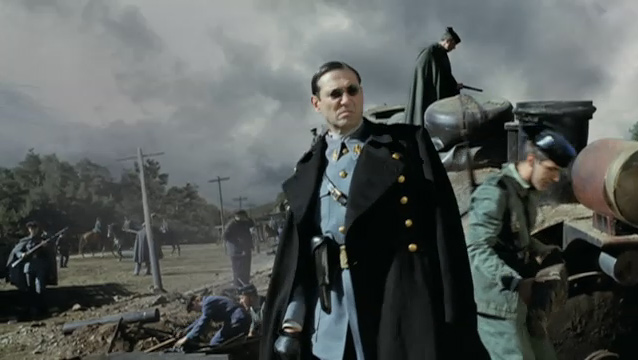
What do you do when your world is terrible? Sometimes the only way to survive is to embrace your own world, even if that world has its own darkness and terrors. Guillermo del Toro’s masterful Gothic fairy tale mixes the terrors of Francoist Spain with one of untrustworthy magic and monstrous spirits and compellingly balances bleak horrors with the chance of hope. Visually stunning, thematically rich and heartbreakingly emotional, Pan’s Labyrinth is a Grimm’s fairy tale bought shockingly up-to-date, a uniquely heartfelt film from a distinctive director.

It’s 1944 in the woods of Spain and the Reds are still fighting their lonely crusade against Franco’s fascists. Captain Vidal (Sergi López) is here to stamp out these rebels and has summoned his heavily pregnant wife Carmen (Ariadna Gil) and twelve-year old step-daughter Ofelia (Ivana Baquero) to his distant command post so that he can be present at the imminent birth of his son. Ofelia hates the punctilious and coldly obsessive Vidal (rightly so – he’s capable of coldy indifferent but shocking acts of violence) and escapes more-and-more into her fairytale books. One night, she wanders into an old maze and encounters a Faun (Doug Jones), who tells her she is the long-lost princess of the fairy kingdom and must perform three tasks to return home. Ofelia now exists in two worlds: an increasingly Gothic fairy one of and a real one of violence, ruled by her monstrous father-in-law.

Pan’s Labyrinth is a beautifully balanced film of multiple interpretations. It’s never clearly stated whether Ofelia’s fairytale world is ‘real’ of a product of her imagination. It’s clearly a way a scared girl could process real world traumas – the death of her father, the appalling Vidal, the horrors of war around her – with many elements of the fairy world reflecting things happening around her. But on the other hand, the mandrake root the Faun gives her to help heal her sick mother by placing it under her bed has an immediate impact and Ofelia’s magic chalk and the labyrinth itself offer secret doorways that allow her to escape Vidal in the film’s final act (or perhaps a by then disoriented and drugged Vidal is just mistaken). Essentially, you are left to embrace the idea you prefer – much as it is implied Ofelia herself chooses the version of her life she wishes to embrace.

Choosing for yourself and not blindly following orders is one of the key lessons of Pan’s Labyrinth. The ‘real’ world of Franco’s Spain is full of regimented orders to be blindly obeyed without question. In this it has the collaboration of the Church – at Vidal’s dinner-party, a subservient priest self-satisfyingly fills his plate with food while shrugging off concerns of the starving poor – and Fascism echoes Church mantras (one of Vidal’s lieutenants repeats the same propaganda ‘prayer’ to Franco over-and-over again while he hands out the bread ration to the cowed villagers). Franco’s Spain is one of order and regimen, where individuality and choice is stamped out.

And there are echoes of this in Ofelia’s fantasy world. Played with a gentleness, vulnerability and strikingly earnest decency by Ivana Baquero, Ofelia refuses to accept the world must be the way it is (unlike her mother who has sadly accepted it must). But her fairy world, the Faun – expertly portrayed by Doug Jones’ lithe physicality – is a far from gentle guide. Creaking from the wood he is formed from, he’s sinister, mixes vague statements with subtly presented orders and constantly holds information back while presenting Ofelia with tight rules for her tasks. Just as Fascism takes choice away real world, the Faun presents Ofelia with a book that reveals the future (but only one page at a time) and her tasks increasingly demand complete obedience, under the threat of punishment.

This is not a comforting world. Ofelia – who at one-point wears costumes reminiscent of those other famous children in dark, surreal and dangerous fantasy-worlds Alice and Dorothy – confronts a vile toad and, most chillingly, an albino child-eater with eyes in his stigmata hands who lives in a room decorated with nightmare reflections of the real horrors of the 40s (most strikingly a Holocaust-reminiscent pile of children’s shoes). For all its fantastical, it’s also very much a nightmare version of a real-world that could have been dreamed up by a child processing horrors.

Pan’s Labyrinth celebrates individuality and choosing for yourself. Ofelia’s story is one of increasingly taking her own choices: from refusing to accept her mother’s new husband, to escaping into her fantasy world (twisted as it is), to finally outright refusing the increasingly dark instructions of the Faun. It’s in doing this that she can eventually prove herself a true hero, someone who does not accept the established order but can make her own decisions.

This makes her a contrast to Vidal. Truly he is one of cinema’s most loathsome monsters. In a superbly controlled performance by Sergi López, Vidal isn’t repulsive because he is a larger-than-life, sadistic monster but because he is a small, inadequate bully who has controls his small world in order to make himself feel important. Vidal is obsessed with order and detail – introduced tutting at the 15-minute-late arrival of his wife, his office is filled with the gears of the mill and he fetishistically cleans his pristine uniform, shaves himself and repairs his father’s watch. This watch – the only memoir he has of his hero father, who died when he was a baby – is the root of his obsessions, Vidal desperate to become his father and pass on his own toxic legacy of ancestor worship to his son. It’s striking that, as Vidal’s world collapses around him, his clothing and body becomes more and more scarred, bloody and disordered – his external appearance resembling the monster within.

In Vidal’s world everything fits neatly into place, governed by his Fascist ideology. Carmen – a fragile Ariadna Gil, struggling to accommodate to a world of harsh choices – is of interest to him only because of the baby she carries. He operates the mill as a tightly organised regime, in which the rebels are unwanted ghosts in the machine. He uses violence ruthlessly but as a tool, not with sadistic relish. He brutally beats a suspected rebel to death with a bottle with robotic indifference and tortures suspects with a practised patter. To him, everything is justified if it is obeying an order. So much so, that he literally cannot understand the refusal of Dr Ferreiro (in one of the film’s most moving moments) to blindly follow orders, no matter the consequences.

Dr Ferreiro (a beautifully judged performance by Álex Angulo) is one of two figures whose independent thought Vidal is unable to recognise, even when they are under his nose. His maid Mercedes (Maribel Verdú, one of the passionate hearts of the film) is fiercely independent, the sister of the rebel leader and working subtly against Vidal. She forms a bond with the gentle Ofelia while showing that refusing to be part of a blind system is a crucial part of humanity. She also provides possibly one of the most satisfying moments in cinema during a confrontation with Vidal.

Del Toro’s film beautifully balances these fascinating ideas of choice and independence within its brilliantly evocative design. It’s a beautifully shot film, in a gorgeous array of Velazquez-inspired tones, its moody darks and blues gorgeously captured by Guillermo Navarro while its design work is extraordinary in its texture and detail. But it’s a classic because del Toro’s superb creativity and quietly emotional direction. Pan’s Labyrinth makes us really care for this child just as it makes us despise the cruelty of her step-father. Combined with gorgeous design, del Toro’s film truly comes from the heart, a loving, very personal tribute to the power of stories and individual choices. The film is so powerful, you even forget that it opens as it ends, and that we know in our heart-of-hearts how this journey will finish. Nevertheless, Pan’s Labyrinth ends on a note of joy and acceptance so pure, it could only be from the fantasy world not the real one.

Five Graves to Cairo (1943)

Five Graves to Cairo (1943)

Exciting and witty war-time spy thriller, an overlooked work from a master director

Director: Billy Wilder

Cast: Franchot Tone (Corporal John Bramble), Anne Baxter (Mouche), Akim Tamiroff (Farid), Erich von Stroheim (Field Marshall Erwin Rommel), Peter van Eyck (Lieutenant Schwegler), Fortunio Bonanova (General Sebastiano), Miles Mander (Colonel Fitzhume)

It’s 1942 and the war is not going well for the British. The Germans are on the move in Africa under their ace commander Field Marshal Rommel. A tank drifts through the desert, bumping up and down sand dunes. Inside its crew slump, one dangling from his gun turret, another thrown on-and-off the gearsticks with each dune. It’s hauntingly Wilderish – a ghost tank charging through a never-ending desert – that Corporal John Bramble (Franchot Tone) wakes into, escaping across into the bombed-out Empress of Britain hotel run by panicked Farid (Akim Tamiroff), assisted by British-loathing Frenchwoman Mouche (Anne Baxter). Bramble’s hopes that he might lay low for a few days are thrown into danger when the hotel is requisitioned moments after his arrival by the German army with Rommel (Erich von Stroheim) himself setting up command there. Bramble passes himself off as recently deceased club-footed waiter Davos – only to discover Davos was a German spy and Rommel expects him to help delivery on his masterplan to crush the British.

Five Graves to Cairo is a magisterial juggling game of move and counter-move in which everyone holds tightly their own very specific parts of a greater mystery while trying to learn everyone else’s. Wilder does all this with wit and more than a little tension. Can Bramble keep up his pretence about being Davos while hiding his complete ignorance of Rommel’s masterplan? Will Rommel’s constantly alert, note-taking aide Lt Schwegler (Peter van Eyck) rumble him? The whole film is captured in one of its earliest sequences, as Farid carefully shepherds and blocks the view of Schwegler’s inspection of the foyer of his hotel, to prevent him seeing Bramble hiding behind the desk.

The whole film builds from there as Bramble constantly thinks on his feet, crafting obscure but convincing answers as he improvises wildly. All while limping around in a club-foot shoe and providing the sort of night-and-day waiting service the Germans expect. His improvisation is endless, from distracting a blowhard Italian general to steal his gun, to identifying himself quietly to a captured British officer being wined and dined by the smug Rommel by switching a whisky name chain on a bottle with his dog-tag (then smoothly passing off ‘Bramble’ as a rare spirit to the Italian general). His plans switch fast too, from a vague assassination attempt to being instructed by Miles Mander’s Montgomery-ish officer to uncover the Field Marshal’s schemes.

The Field Marshal himself is the epitome of Prussian arrogance. Played with a preening, puffed-up, Teutonic self-importance by an excellent Erich von Stroheim, Rommel never moves without his feathered swagger stick, pompously cavorting around the hotel, prissily demanding the finest sheets and best room. Far from the later ‘Good German’ image of the General, this Rommel is as snobbishly self-satisfied as a Bond villain, overwhelmingly pleased with his elaborate scheme (which he shrewdly set-up years earlier) and teasingly playing twenty questions with his British prisoners to see if they can work-out his intentions, while manipulating the game so his opponents can’t win. He’s an arrogant, hissable villain we are desperate to see taken down a peg or two.

Equally dislikeable is his whipper-smart aide, played with a thin-politeness by Peter van Eyck that hides his comfort with deception. With these villains as the face of the relentless German military machine, Wilder builds real tension around the importance of Bramble foiling Rommel’s scheme – and makes very clear to us that these ruthless sticklers for rules, certain of their own genius and superiority, will definitely not treat this accidental spy kindly if they catch him.

As Bramble, Franchot Tone does a decent job – although his Transatlantic vowels sound particularly odd when the similarly American Anne Baxter immerses herself in a French accent – even if Bramble himself is less interesting than his situation. A more charismatic actor might perhaps have helped lift Five Graves to Cairo to a higher level – after all it shares more than a few stands of DNA with Casablanca but Tone and Baxter aren’t quite Bogie and Bergman. What Tone does do well is morph swiftly from persona-to-persona, switching from heat-stroke confused soldier to would-be-assassin, to fast-thinking spy with a surprisingly natural ease.

He also builds a rapport with Mouche – Edith Head’s costumes for these two, with their contrasting blacks and stripes, quickly visually link them together – who discovers she hates the German more than she resents the British for abandoning her brother at Dunkirk. Baxter is very good as the real emotional heart of this film, a harsh woman hardened by loss, desperate to do what she can to save her POW brother but who finds a new cause to believe in. Baxter carefully lets her character build in statue from obstacle to reluctant aide to true believer, with real naturalness.

Her development reflects a whole film that uses its single claustrophobic location – nearly the whole film takes place over little more than a day or two in the hotel – to excellent effect, with potentially dangerous reveals lurking around every corner. Not least that the real Davos lies buried under rubble in the basement – not quite fully buried, Wilder’s focus early on Bramble’s orthopaedic show hinting at the vital ‘tell’ later on. Everyone – except perhaps the supremely self-satisfied Rommel – suspects there is more going on than they realise, and Wilder expertly ratchets up the tension through Hitchcockian time-bombs and carefully structured dialogue sequences to keep the audience firmly on the edge of their seats.

It’s makes for a fine caper, a careful riff on then current history that suggests Bramble might just have provided the vital clues to prevent the nefarious Rommel from claiming victory at El Alamein. While Five Graves to Cairo has a high entertainment factor, it’s not quite in the first league of war spy stories. But with entertaining performances – Tamiroff’s sweaty, stammering Farid and Fortunio Bonanova’s hyper-Italian Opera-singing general are also treats – and a real wit balanced with a well-developed tension, it’s a strong early film from a director who would go from strength-to-strength.

Scenes From a Marriage (1974)

Scenes From a Marriage (1974)

Bergman’s compelling, emotionally charged film is an intense, impressive and surprising tale

Director: Ingmar Bergman

Cast: Liv Ullman (Marianne), Erland Josephson (Johan), Bibi Andersson (Katarina), Jan Malmsjö (Peter), Gunnel Lindblom (Eva), Barbro Hiort af Ornäs (Mrs Jacobi), Anita Wall (Journalist)

A loving couple sit with an interviewer to discuss how happy their relationship is. Ten years later, years after their divorce, they meet in their old weekend cottage for an assignation away from their new partners. Along the way, they’ll lie, fight, cheat but also show time-and-again few people know them better than they do each other. Based on his own marriages and relationships (not least his relationship with Liv Ullman), Bergman’s Scenes from a Marriage is a fascinatingly intimate and intense portrait of the contradictory impulses we feel towards the people we know best: how we can, in the same moment, love them, hate them, want to be a million miles away from them and also yearn to take them in our arms and tell them everything.

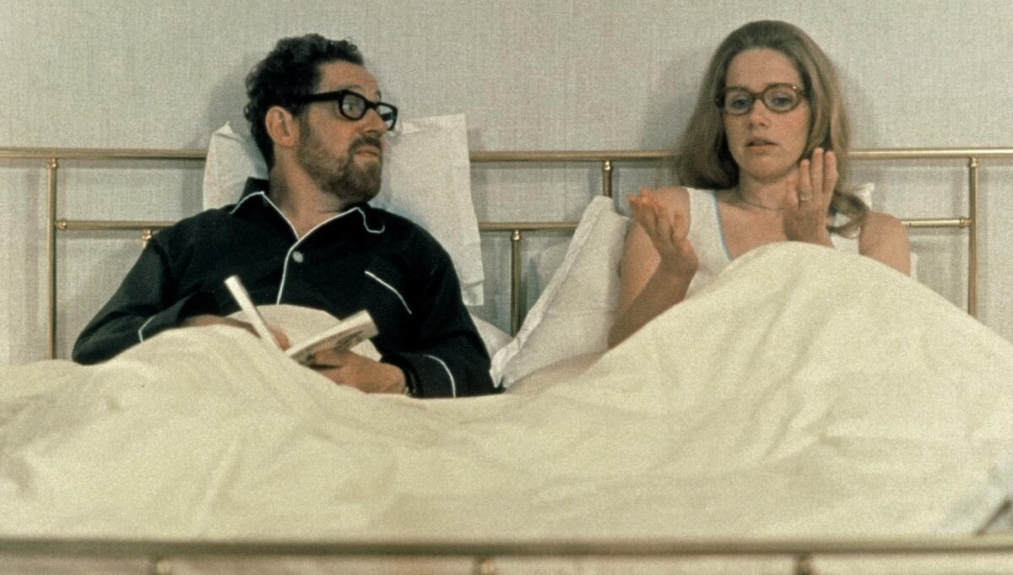
Skilfully cut down from a six-part TV series – the episode titles become ‘chapter headings’, each signifying a time shift – it becomes a series of intense, almost real-time, conversations between middle-brow professor Johan (Erland Josephson) and successful lawyer Marianne (Liv Ullman). From their ten-year anniversary, their happy-but-functional relationship is shattered when Johan leaves for the (unseen) Paula, heading into divorce, Marianne’s growth in sexual confidence, her little acts of revenge over Johan and their later affair. At all times they prove capable of ripping emotional wounds into each other, but also remaining strangely dependent on love and affection from each other.

It would be easy to say that Scenes of a Marriage is a theatrical piece – it came, originally, from a play Bergman was working on and well over two thirds of its running time features Josephson and Ullman alone on screen. But if the close-up is the language of cinema, Scenes from a Marriage may be the most cinematic film every made. Shot in a cooly observational style by Sven Nykvist, vast swathes of Scenes from a Marriage plays out in searing close-up, the camera studying every inch of the emotional angst its two characters are putting themselves through. Bergman knows exactly how to build the punishing tension in these scenes, frequently climaxing in visceral outbursts.

It is a film about what we say and what we chose not to say and what we decide to hear. The conversation between the couples is framed by their careful considerations: when to hold fire and when to let rip; when to listen and when to choose not to hear. And it’s clear that, when we are first introduced to them, they have mastered the art of not saying anything at all. Smilingly parroting cliches to their interviewer, they later smugly compare themselves to their feuding friends Karatina and Peter (excellent cameos from a searing Bibi Andersson and a provocative Jan Malmsjö). But their conversation never touches on deeper issues (Bergman’s called this chapter ‘The Art of Sweeping Things Under the Carpet’) and their sex life has dwindled to timetabled functionality.

It’s clear they are aware of this growing distance themselves. Johan shares his poetry with a colleague (an expertly reserved cameo from Gunnel Lindblom), complaining Marianne considers it little better than spiritual masturbation and yearns for an expressive freedom he feels is impossible in his marriage. Marianne meanwhile speaks to a client, Mrs Jacobi (a tragic Barbro Hiort af Ornäs), whose story of a lifetime trapped in a loveless marriage with children she never really wanted clearly strikes Marianne as a chilling vision of her own future.

That doesn’t stop Marianne responding with shocked subservience that tips into desperate pleading when Johan announces he wants to leave her. Bergman stages this scene beautifully, with the ridiculous logic people sink into in tragic break-ups. Johan eats a snack meal prepared by Marianne, guiltily confessing his affair, but there is something very real about Marianne’s stunned reaction which sees her planning his packing (because he’s useless at it) and continue their bedtime preparation before she starts pleading him to stay. Just there is something very real in Johan’s reaction: having steeled himself for a fight, her subservience enrages him until he is cruelly tearing verbal lumps out of her. This is the sort of searing emotional up-and-down that rings true, one allowing shock to humiliate them the other transforming shame into defensive, accusatory blame.

But Scenes from a Marriage is a film that utterly understands how much we change under circumstances. Separation is not good for Johan: his new lover doesn’t interest him, his career stalls and he tips into self-pity. Marianne, once the shock and fear of separation passes, discovers she likes her freedom. Her wardrobe shifts to more form-fitting and revealing clothes, she embraces the opportunities of singledom and repays Johan’s desertion with a seduction of him she deliberately doesn’t follow-through on. They now talk more honestly than ever before – and it’s a blistering, verbally and physically violent exchange rammed full of resentment and petty cruelty.

To do this stuff you need actors at the top of their game and who completely trust each other. Bergman certainly has this with his two stars. Josephson’s self-contented smugness moves through arrogant selfishness to desperate vulnerability, his expressive face sometimes puppy-doggish, sometimes drowning in bear-like fury. Ullman is, of course, exceptional. Her masterful ability to react, to let thoughts and emotions play fleetingly across her face was made for Bergman’s close-up film-making and she takes Marianne on a fascinating journey, from near-submissive home-maker to vibrantly confident women of the world while never letting the vulnerability and doubt be too far from her eyes. It’s an extraordinary performance, searing and tender, as raw as knife-edge.

These two play absorbingly off each other, their conversations gripping minefields of repressed then hugely expressed emotions. Their collaboration, guided by Bergman’s close (but not intrusive) camerawork is extraordinary. Fashioned from Bergman’s experiences of relationships, Scenes from a Marriage is, however, strangely hopeful. One of its key themes is that, even when they hate each other, this couple know and trust each other more than anyone else. In times of crisis and pain they always turn to each for a consolatory word or comfort.

There is something strangely warm about their relationship, despite its turmoil, and the film is refreshing in saying friendship and love doesn’t have to end with divorce, but can transform itself into something else, perhaps even something better. Perhaps it’s that strange note of hope that makes Scenes of a Marriage so influential to a generation of filmmakers. It refuses the simple moral standpoints of judgement and suggests the decision to no longer be together (or even faithful to each other) need not be the end all, but instead a bump in a longer journey: that a relationship (and even a love) doesn’t end when a marriage does.

The King of Comedy (1983)

The King of Comedy (1983)

Scorsese’s dark satire on the obsessive love of fame was miles ahead of its time

Director: Martin Scorsese

Cast: Robert De Niro (Rupert Pupkin), Jerry Lewis (Jerry Langford), Sandra Bernhard (Masha), Diahnne Abbott (Rita Keene), Shelley Hack (Cathy Long), Frederick De Cordova (Bert Thomas)

Like moths to a flame, celebrity attracts obsessives, weirdos and those desperate to grab their slice of fame’s limited cake. In our world of influencers and social media, the sharp, uncomfortable and acidic King of Comedy has become a classic after flopping on release. The world seems full of Rupert Pupkin’s today, people who feel their mission in life is to share their gifts for entertaining with the world and feel ownership over their famous idols.

Rupert Pupkin (Robert De Niro) feels like this about TV chat-show host Jerry Langford (Jerry Lewis). Pupkin sees himself as a polite, affable comedy-star-in-the-waiting and only the fact that he and Langford have never met is preventing them from forming a deep and lasting friendship. In actuality, Pupkin is a fantasist with an elaborate fantasy-world he struggles to differentiate from reality. Believing Jerry wants to give him his big break, his stalkerish attempts to become the star’s protégé lead to inevitable rejection. Desperate, he allies with Jerry’s even-more-openly obsessive stalker Masha (Sandra Bernhard) to take desperate measures to break into the spotlight.

The King of Comedy gets, in a way few other films have done before or since, the dark outer-reaches of the allure of fame. It’s a film about people desperate, in different ways, to have a part of the glamourous exciting world are pressed up against the screen watching. It’s about the darkly-comic – and, in their way, terrifying – lengths people will go to feel special and noticed. To land a quiet moment with a distant superstar or (even better) to become the celebrity themselves.

There’s a little bit of Rupert Pupkin in all of us. Perhaps that’s why we find De Niro’s exquisite performance both hilarious, mortifying to watch but also strangely endearing. Who hasn’t spun in their head elaborate fantasies full of warm conversations with those we admire, where they fall over themselves to tell us how amazing we are? Or imagined a critical teacher going on television to tell the world how wrong they were? Or dreamed of impressing the person we fancied at school with tales of our high-flying success among the hoi-polloi?

What we perhaps don’t do, is build a replica TV studio in our apartment, staffed with life-size cardboard cut-outs of our heroes. Or act out, long into the night, the conversations we wished we had. We probably don’t try to force up fantasies weekend retreats with superstars into reality by turning up at their houses unannounced with a date we want to impress in tow. We might enjoy flirting with a little fantasy life, we’ve probably not started to believe it or started to resent the celebrities for not performing in real life the affection they show us in our mind.

But Rupert does. Superbly played by De Niro – this might just be his finest performance, hilariously over-eager, pathetic but with just the possibility of Bickle-like danger under the surface – Pupkin lives half in this world, half in his own. He doesn’t even seem to realise how socially awkward or desperate he is, approaching every conversation with an air of polite, calm decency. The sort of guy who hands over his own autograph to the girl he’s trying to impress, telling her it will be worth a fortune one day. Who, when he finally gets the chance to talk to his idol after ’rescuing’ him from a deranged fan (something we quickly realise is a set-up – and an indicator of the ends Pupkin will go to), seems literally unable to let the conversation end, utterly unaware each additional word that passes his lips makes it less-and-less likely Jerry will ever speak to him again.

Pupkin only looks normal when he’s compared to his partner in Jerry-obsession Masha, a superbly grating performance of unhinged monomania from Sandra Bernhard. Masha and Rupert – the sparky, bickering interplay between De Niro and Bernhard is electric, the two sounding like children feuding over the last cookie in the jar – are two halves of the same personality: Rupert the more polite, more capable of affecting normality part who longs for a celebrity to recognise him as one of their own; Masha is the possessive id, who wants to grasp her object of affection tight and never let them go, focused on celebrities because they are easier to follow than regular people.

But we’ve all been desperate to take a chance to get close to something we want haven’t we? When presenting himself at Jerry’s office with his demo tape, Pupkin politely but firmly refuses to read any social cues from the staff that they want him to leave. De Niro’s permagrin is a superpower, rejection bouncing off him unscathed. De Niro manages, under the smile and unassuming manner, to always demonstrate Pupkin’s belief fame is his due. The King of Comedy really understands the belief many feel that all which separates them from success is luck. Pupkin rejects hard work and honing his act, genuinely not understanding why he can’t graduate straight to prime-time TV. He’s a millennial ahead of his time, someone who believes if he really, really wants something he should get it.

What’s fascinating about Scorsese’s film is it encourages us to share Pupkin’s delusional perspective. Jerry Langford – a superb performance of bitter, dark self-parody by Jerry Lewis – is all smiles on TV but, as far as we can see, a surly bully in reality, frequently abrupt and rude. But think about it: we only really see him from the perspective of the invasive Pupkin and the frankly terrifyingly Masha. Would you cut these guys any slack? In brief moments where King of Comedy puts us in Jerry’s shoes, it’s clear his world isn’t always pleasant: the woman who responds to his polite refusal to talk to her son on the phone screams “You should die of cancer” at him and he’s obvious genuinely scared of Masha. Is it a surprise he clutches a golf club throughout his confrontation when Pupkin arrives at his home? He chooses his words carefully because too much interaction can be as dangerous as none-at-all.

What’s also quietly clever about King of Comedy is that Pupkin isn’t talentless as such. His problem is all his material is as derivative and carefully studied as his attempt to act normal is. When we see his act, some of the jokes land – but they land like with the carefully planned poise of an obsessive who has copied the tics of those with genuine talent. Pupkin is witty, but it’s outweighed by his obsessive desire for immediate fame. Everything about him is carefully crafted, his entire persona constructed to cope with the world. That’s why he retreats so often in fantasy, where everything is easier.

And maybe King of Comedy heads into fantasy, much as Taxi Driver perhaps does. Don’t trust a Scorsese-De Niro film where someone who we’ve seen as maladjusted, unaware and self-deceiving as Pupkin gets what he wants at the end. King of Comedy shares huge amounts of DNA with Taxi Driver – history repeating itself as farce – even if Pupkin is too childish and incompetent to be as much of a danger as Bickle is.

King of Comedy captures all this with a brilliant understanding of the addictive qualities of fame and celebrity. Sure we sort of like Pupkin sometimes, but we also understand why Jerry finds him so unbearable and unsettling – and also clear just how short a distance he would need to travel to become Masha. King of Comedy delivers all this with an unflashy skill and hosts a truly superb performance from De Niro, a pitch-perfect study in weakness, longing, delusion, repressed desperation and strange vulnerability. It speaks to feelings we’ve all had, but it also reveals the horrific end results of those longings.

Hunger Games: The Ballad of Songbirds and Snakes (2023)

Hunger Games: The Ballad of Songbirds and Snakes (2023)

Terminally dull prequel, full of backstory you won’t care about at all

Director: Francis Lawrence

Cast: Tom Blyth (Coriolanus Snow), Rachel Zegler (Lucy Gray Baird), Josh Andrés Rivera (Sejanus Plinth), Viola Davis (Dr Volumnia Gaul), Peter Dinklage (Casca Highbottom), Jason Schwatzman (“Lucky” Flickerman), Hunter Schafer (Tigris Snow), Fionnula Flanagan (Grandma’am), Burn Gorman (Commander Hoff), Ashley Liao (Clemensia Dovecote)

Did you watch Hunger Games and wonder – ‘this is great and all but where did that guy Coriolanus Snow come from, eh’? Not sure I did. And I’m not sure I really needed to know, now that I’ve sat through all interminable 158 minutes of Hunger Games: Ballad of Songbirds and Snakes or Hitler: The Early Days. Imagine, if you will, the original Hunger Games movie – but if it was much longer, had an utterly uninteresting lead character and took itself so seriously you’d think it was offering a solution to third world debt and climate change all at once. Ballad of Songbirds and Snakes worst crime isn’t that it goes on forever, that it retreads old ground with no new ideas or that it feels like a pointlessly over-extended footnote. It’s that it is overwhelmingly, crushingly, dull.

People didn’t care about the back story: they cared about Katniss Everdean, a perfectly crafted character, hugely engaging and relatable on every viewing. I cared about her struggle to protect the people she loved not the backdrop of Panem politics. Did anyone? If I was interested in anything in Panem politics it was the way the Games both terrified the huddle masses of the districts and gave them hope. Unfortunately, this film either didn’t understand that, didn’t care or assumed we’d happily invest in the original’s villain if he was buff and had a dreamy girlfriend.

Young Coriolanus Snow (Tom Blyth, doing his best to sound like Donald Sutherland) is one of the leading students in Panem, selected to mentor a tribute through the 10th Hunger Games. Young Snow’s loins heat-up when his tribute is manic pixie dream-girl Lucy Gray (Rachel Zegler) from District Twelve. But what excites him more: a tumble with a girl from the sticks, or persuading outlandishly loopy games master Dr Volumnia Gaul (Viola Davis, the only person having fun) he knows how to turn this gladiatorial deathmatch into ratings gold? You got one guess what he picks.

Though it takes him a very, very, very long time to pick it. We watch this Proto-Hitler embrace his inner sociopath, through a weary trudge in Hunger Games lore with the origins of virtually every prop in the original movies lovingly laid out for us. Ever wondered why Snow wears that buttonhole? This is the film for you and then some. Almost every single thing in Ballad of Songbirds and Snakes is linked to something in the original movies. It’s the sort of unimaginative, world-shrinking yawn-fest where nearly every character shares a surname of a character from the original films – but of course Caesar Flickerman’s dad has exactly the same job, personae and style as he does!

You could let this go if Ballad of Songbirds and Snakes had an interesting story of its own. But it’s tedious, self-important plot makes Attack of the Clones look like Tolstoy. It chucks in a little bit of arena slaughter, but inexplicably makes it unclear how many of Coriolanus’ suggestions for improving the show are actually changing things. When the tributes perform for ‘favour’ is that something they always did (as most people behave like it is) or because Coriolanus scrawled memo suggested it (as the film implies)? The wider impact is also lost: are people bonding with Lucy Gray or having their child-killing-urges ticked in brand new ways by Coriolanus? Who knows.

It doesn’t help that Ballad seems shy about making Coriolanus himself a villain. It gives Tom Blyth a difficult act to pull off and he’s left playing his cards so close to his (inevitably) buff – his future sadism doesn’t stand in the way of a good topless scene in this film – chest that rather than wondering what will top him into sociopathy, he instead becomes a flat, boring character, with even his lust for Lucy fizzling rather than sizzling.

Rachel Zegler gets a bit more fun as this irritating mix of idealist and realist (she is pretty much whatever the plot needs from scene-to-scene – one minute angrily slapping away offerings of food, the next cowering in shocked fear when danger comes calling), with Ballad at least a good vehicle for Zegler’s vocal talents. But Lucy Gray remains too enigmatic – and, to be honest, just as dull in her unknowability – to ever become someone you care about. And never, for one minute, in her flower-crafted dress and perfect make-up do you believe she is a child of the ghetto in the way you did with Jennifer Lawrence.

Honestly the film misses a hero as complex and multi-layered as Katniss and splitting facets of her into two other characters just creates to incomplete characters. Throw in a plot that lacks any energy – it’s lackadaisical second half, with Coriolanus chucked into the wilderness as a Stormtrooper in District 12, goes on forever – and which gets bogged down in an utterly unengaging and confusing rebellion plotline with is resolved with a nonsensical narrative flourish – and it’s a recipe for disaster. It never, ever get the pulse racing as it stumbles, yawningly, to its end.

The stuff that actually is interesting gets shunted to the sidelines. A bored Peter Dinklage gets a late monologue on the creation of the Hunger Games that you desperately want to hear more about it, but don’t. Viola Davis, barrelling over-the-top under a mountain of demented hair, weird contact lenses and bizarre costumes, keeps talking about ‘the purpose of the Hunger Games’ in a portentous way that sounds like its leading somewhere but never does (so much so, I wondered if the filmmakers even understood the bread-and-circuses-as-control metaphor going on here).

Francis Lawrence directs as if this background-filling pamphlet from Suzanne Collins was a newly discovered Testament. The film is slow, stately and gives even the smallest, most inconsequential moments an unbearable level of self-important significance. It lacks pace and interest – so much so that even the slaughter of eleven scruffy, malnourished children and teenagers feels tired and ‘seen it all before’. There is no mystery, no sense of roads-not-taken, not even any peril . Just small elements of a more interesting later story being slotted dutifully in place, you realise you never wondered where Coriolanus Snow came from because it never mattered in the first place.

Monty Python and the Holy Grail (1975)

Monty Python and the Holy Grail (1975)

The Python’s finest hour is a hit-a-minute medieval comedy that I never fail to laugh at

Director: Terry Gilliam, Terry Jones

Cast: Graham Chapman (King Arthur), John Cleese (Sir Lancelot/The Black Knight/French Taunter/Tim the Enchanter), Terry Gilliam (Patsy/ Soothsaying Bridgekeeper/The Green Knight/Sir Bors), Eric Idle (Sir Robin the-not-quite-so-brave-as-Sir-Lancelot/Concorde, Dead collector/Roger the Shrubber/Brother Maynard), Terry Jones (Sir Bedevere the Wise/Prince Herbert/Dennis’ mother), Michael Palin (Sir Galahad the Pure/Leader of the Knights Who Say Ni/Lord of Swamp Castle/Dennis), Connie Booth (Miss Islington), Carol Cleveland (Zoot/Dingo)

I’ve sometimes found the surreal, satirical and sometimes plain silly humour of the Monty Python troupe hit-and-miss. But when it lands, it really lands and Monty Python and the Holy Grail may well just be their finest hour. Essentially a series of sketches loosely worked together into a sort-of-plot, but never taking itself too seriously, it’s an often-inspired collection of highly influential gags delivered by a troupe of performers at the top-of-their-game (it’s hard to believe that they have all said shooting the film was a tough, punishing and exhausting process).

What Python got right here is how easy – and hilarious – it is to poke fun at something so very po-faced and serious as medievalism had a tendency to take itself back then. In fact, it’s perhaps a lasting tribute to the film that no-one has ever been able to take it quite as seriously since. Monty Python and the Holy Grail also lines up shots at the arthouse high-brow seriousness of films like Andrei Rublev and, most famously, The Seventh Seal (those hilarious, moose-obsessed, opening credits are a flawless take-down of Bergman’s portentous opening) but also a dismantling of the likes of Bresson’s Lancelot du Lac (no-one can watch that film’s opening now without picturing the Black Knight protesting ‘It’s a only a flesh wound!’ as crimson spray flows freely).

I love Holy Grail. It’s practically designed for undergraduates to sit around and watch, while getting slowly pissed and then spend ages quoting at each other. Many of its jokes lean into bizarre surrealism and funny sounding words – “shrubbery!” just sounds funny, even more so when it’s squeaked out by a giant Michael Palin in a ridiculous helmet affecting a rhotacism. And the Pythons knew how to turn problems into genre-defining gags: thank God they couldn’t afford horses, so instead came up with the frankly genius idea to just mime the knights riding horses to the sound of two coconut halves being visibly tapped together by their squires.

And then to have the comic presence of mind to riff on enforced ideas like this so much (just how did coconuts turn up in medieval Britain?) that for generations, fans will ram their tongues earnestly into their cheeks debating the migratory habits and air speeds of laden and unladen swallows. It’s all part of a superbly written script, which get just the right balance between Thomas Mallory-esque medieval rhythms laced with nonsese ( “The swallow may fly south with the sun or the house martin or the plover may seek warmer climes in winter, yet these are not strangers to our land”) and a mix of anachronistic casualism and simmering middle-class frustration. All the time in Monty Python and the Holy Grail there are traces of the sort of serious, played-dead-straight, medieval film this could be, making the constant punctuation of surreal, fourth-wall leaning, silliness all the more hilarious.

A lot of this also comes down the highly skilled comic playing of the troupe. Graham Chapman, in particular, has the seemingly dull job of playing the straight-man. But his ability to play, even the most ridiculous encounters, with complete earnestness is crucial to the film’s success. Arthur is, really, a ludicrous figure, but Chapman knows he can never acknowledge this for the joke to work. Hilariously, the legendary king here becomes a sort of put-upon middle-manager, constantly frustrated while going about his day job, dumb enough to be unaware of how absurd he is, but smart enough to get frustrated at the increasingly dim antics of his followers.

It also allows the rest of the troupe to let rip with broader comic performances, all of whom have a whale of a time. John Cleese’s pompous bossiness and control-freak mania is perfect for the psychotic Sir Lancelot while his latent comic cruelty, combined with a passion for silly accents and walking, is perfect for the famed French taunter (the funniest Frenchman on screen). Palin’s goodie-two-shoes decency is great for the tempted Sir Galahad while his brilliant capacity for deluded self-importance nails the Lord of Swamp Castle – and who else could have taken such an impish delight in the Trotskyist mantras of the socialist peasant Dennis? For the rest of the troupe, Eric Idle’s mix of cheek, dressed-up poshness and wimpy weakness is expertly used while Terry Jones mocks academia as Sir Bedevere and whines brilliantly as Herbert. And no-one does dirty better than Terry Gilliam.

Gilliam and Jones also directed, allegedly not always harmoniously neither quite agreeing if this was a film or whether it was a comic show. But the presence of Gilliam behind the camera probably accounts for why this is the most visually striking Monty Python film, with mists rolling over the hills and the Scottish locations given a mythic power which makes the silly jokes that happen all around them even funnier – while Jones’ medievalist background surely helped define the film’s surprisingly authentic (and therefore even funnier) feel. Holy Grail also very successfully disguises that it was effectively all shot in one or two locations (Doune Castle is shot from so many angles it becomes about a dozen different locations).

But what really makes Holy Grail work is the quality of the jokes. And it opens with a run of gags of such consistent quality they are perhaps unparalleled in Python’s work. The Swallow debate. Bring Out Your Dead. Peasants nailing the ‘self-perpetuating autocracy’. The flesh wounds of the Black Knight. The witch trial. The French Taunter (“Your mother was a hamster and your father smelled of elderberries!”). The Trojan Rabbit. Camelot being a silly place. The opening half of the film is one piece of solid comic gold and if the second half doesn’t have quite the same hit rate, it’s still more than funny enough.

And funny is what it is all about. You can say ‘it doesn’t have as good a plot as Life of Brian’. You can say it just ends, as if the troupe ran out of ideas. You can say it loses a steam. But it doesn’t matter when you laugh and laugh time and time again at its best bits. And you really do. And people who encounter it at the right age, will go on laughing at it for the rest of their lives., for decades to come.

The Fall Guy (2024)

The Fall Guy (2024)

Very enjoyable action caper and also a rather sweet tribute to the unsung heroes of filmmaking

Director: David Leitch

Cast: Ryan Gosling (Colt Seavers), Emily Blunt (Judy Moreno), Aaron Taylor-Johnson (Tom Ryder), Hannah Waddingham (Gail Meyer), Teresa Palmer (Iggy Starr), Stephanie Hsu (Alma Milan), Winston Duke (Dan Tucker), Ben Knight (Dressler)

I’ve seen every single Hollywood Superstar I’ve ever heard of perform miraculous acts of derring-do in front of my very eyes. That all happened right? The camera doesn’t lie! Alas what we saw wasn’t the Legendary Star but instead a well-trained guy, dressed in the same costume, putting life and limb on the line for the big shot. And they don’t even get Oscars for it! The Fall Guy is a witty, exciting and rather sweet tribute to the unsung hero of the movies, the stunt guy, all wrapped up in a pulsating, tongue-in-cheek action-adventure that showcases two likeable stars and, of course, their similarly costumed fall guys.

Our hero is Colt Seavers (Ryan Gosling), stuntman of choice for superstar Tom Ryder (Aaron Taylor-Johnson), a spoilt man-child who brags he does his own stunts but can’t cross a road without a double. Colt is riding high, in a promising relationship with cinematographer Jody Moreno (Emily Blunt), until a stunt goes wrong leaving him badly injured. Colt disappears, breaking-up with Jody and wallowing in depression for eighteen months. However, he comes storming back when summoned to Australia by producer Gail Meyer (Hannah Waddingham) who claims Jody personally asked him to double for Tom on her directorial debut, Mad-Max-meets-Independence-Day sci-fi epic Metalstorm. Only turns out she didn’t ask: Colt is in fact tasked by Gail to find the missing Ryder or she’ll be forced to cancel the film and end Judy’s career. Colt soon gets bogged down in drug lords, dead bodies, hitmen who don’t quit and imaginary unicorns. Can he find Ryder and make amends with Judy?

The Fall Guy is fast-paced, loose and funny with a script of punchy Drew Pearce jokes, focused overwhelmingly on giving the viewer a cracking night out at the movies. It leaves very little in the locker room which is fitting for a film is all about celebrating the joy of doing things for real. The Fall Guy pushes the envelope for stunts, be it stupendously high falls, multiple barrel roll cars, furious fisticuffs that use everything going and car chases that leave burnt rubber skid marks on every surface. Basically, it’s a celebration of the art of stunt work, no more than you would expect from Leitch, a former stunt co-ordinator and champion of doing it for real.

It very successfully mixes giddy action thrills with a engaging romantic comedy that uses its two stars to great success. Gosling is relaxed, witty and above all extremely cool, his obvious enjoyment of the material very infectious. Blunt’s comic timing is immaculate. Together their chemistry not only creates plenty of laughs, but makes us invest in wanting them to be together. But The Fall Guy doesn’t just settle for rom-com conventions. A focus of the film is watching Colt get in touch with his feelings (how many other action films feature their stars quietly crying in a car, listening to Taylor Swift?) and accepting his stuntman bravado (it’s the profession where you stick your thumb up at the end of the stunt, regardless what happens) led him to drive Judy away out of twisted shame.

Of course, on the way to getting in touch with his findings, Colt doesn’t half stumble through more than his fair share of brawls. You couldn’t make a film about a stuntman without packing in more death-defying thrills than you can shake a stick at. The Fall Guy delivers two types of stunt thrills. One is the behind-the-scenes on-set stunts Colt executes – death-defying falls, flipping and rolling cars, people being thrown across a field into a rock – where we get to see a few tricks of the trade behind the magic. And then we also get genuine ‘real world’ stunts of epic, popcorn-munching excitement as Colt goes about his search. This is some of the most impressive stuff you’ll see (and its expertly deconstructed in the behind-the-scenes clips that festoon the end-credits), from Colt being hurled and smashed through every inch of Ryder’s apartment to a stunning car-chase that turns into a bare-knuckle dumper-truck fight that’s the film’s mid-act calling card.

The action is somehow even more enjoyable because of the world-weary comedy Ryan Gosling plays it with. After all, being thrown into situations like this is bread-and-butter for Colt, so whether its spending a fight protecting an elusive jet-lag-defeating espresso or working out exactly when he to jump into the road to collide with a car, everything is met with a semi-resigned shrug. He also gets some excellent partners-in-crime, trading stunt-movie facts with colleague Dan (a very funny Winston Duke, shouting the name of the Hollywood stars whose signature moves he’s replicating during fights) and, perhaps best-of-all, a French speaking stunt dog called Jean-Claude who Colt treats like a friend (a dog that bites people in the groin shouldn’t be as funny as this, but I must have been in the right mood). The final battle also sees Colt call on an army of fellow stunt-people.

It makes sense in a film that celebrates this brotherhood. When Colt and the team are working on set, The Fall Guy centralises their creativity and commitment. The shooting of a Metalstorm battle scene is hugely improved by Colt and the team pushing the envelope with suggestions and improvements to the rudimentary script and the whole crew is scrupulously dedicated, professional and committed.

The real threats in The Fall Guy are the things that work against this. Special effects and deep fakes (whch plays into the film’s neat double-meaning title) are the tools of the villains and, in a wider sense, kill the flesh-and-blood of film-making. Hollywood stars and bottom-line Hollywood suits with no respect for the craft are the baddies. Aaron Taylor-Johnson has a lot of fun in a role that parodies almost every star you can think of (Tom Cruise is twice specifically named in the film, as if to stress for the laywers Tom Ryder is not him) while Hannah Waddingham is a smilingly heartless producer, never seen without clutching an oversized diet coke.

The Fall Guy is, above all, a film designed to cheer you up no-end. Crammed with sharp one-liners, expert sight gags and thrilling stunts with a cast having an absolute ball in their roles, it’s the sort of treat that will be remembered long after its slightly disappointing box-office haul has been forgotten.

The Wooden Horse (1950)

The Wooden Horse (1950)

One of the first POW films, setting a template for stiff-upper-lip derring-do

Director: Jack Lee

Cast: Leo Genn (Peter Howard), David Tomlinson (Philip Rowe), Anthony Steel (John Clinton), David Greene (Bennett), Peter Burton (Nigel), Patrick Waddington (Senior British Officer), Michael Goodliffe (Robbie), Anthony Dawson (Pomfret), Bryan Forbes (Paul), Dan Cunningham (David)

One of the most popular of WW2 movies sub-genres is the POW escape movie. The Wooden Horse was one of the first of these, showcasing the sort of barmy, off-the-wall scheme that British POWs spent their tedious years dreaming up. Based on an autobiographical novel by former POW Eric Williams – here fictionalised as Peter Howard (Leo Genn) – inmates of Stalag Luft III built a pommel horse to aid their escape. The scheme? Hide a man underneath the horse to dig a tunnel, while the guards are distracted by a never-ending stream of men jumping over it for hours and hours on end.

The Wooden Horse dramatizes this with a stiff-upper-lip ‘well done Old Chap’ Britishness, shot with a low-key documentary realism (the film blew a huge portion of its budget on location shooting). It’s almost defiantly low-key, about a world away from Steve McQueen jumping over a fence on a motorbike or the sort of emotive struggles with war pressure in The Cruel Sea. Even the escape itself is a grinding, repetitive task taking place over months moving an infinitesimal distance every day as the parade ground tunnel edges closer and closer to the fence. This low-key attitude extends to the cast, led by Leo Genn, who eschew dynamics for calm, quiet unflappability. (Ironically, despite its documentary realism, Peter Butterworth – one of the original members of the escape attempt – was told on auditioning he wasn’t believable as a POW.)

The film is split neatly into two halves. The first covers the escape plan itself and lays out a structure that became familiar from countless POW films that followed: the plan is carefully detailed, senior officers humph and finally flick the thumbs up, a parade of fellow inmates chip in expertise (from forgery to ingenious distractions), a staged accident of flipping the horse over tricks the Germans into thinking nothing is going on, the tunnel caves in, a man is left stranded in the tunnel longer than is safe… It’s all in here, while our heroes bluffly and bravely work out the logistics of smuggling soil away and mastering various French identities to make their escape.

The second half follows two of our heroes – Leo Genn’s stoic Howard and Anthony Steele’s matinee idol Clinton – as they shred their nerves moving through Europe aiming for the port of Lübeck and a ship to Norway. This is the marginally less interesting part of the film, although it conversely does feature the film’s most interesting moment as a visibly sickened Clinton is forced to kill an ordinary German guard, very different from the usual boys-own adventure attitudes you expect.

However, most of the rest of the second half is just a little too dry and documentary, despite the best efforts to play up the paranoia and tension of a life on the run in occupied territory. Lee directs with a methodical, unflashy style, while ongoing clashes with producers on the budget, which eventually saw the film completed months later by the producer and a hurriedly put-together rather abrupt (and incongruous) ending in a Swedish restaurant, which seems to lean into the beginnings of an anti-Soviet Cold-War era consensus. Some of the dramatic tension drains out of a film which actually might have benefited from a little more melodrama, among the muttered, patient conversations in alleyways and the almost-agitated debates about which resistance groups to trust.

The camp-escape half works best, probably because the ingenuity of seeing the prisoners work out the logistics of converting their pommel horse into the perfect escape weapon and overcoming the minutia of camp life remains very entertaining. There is even a certain amount of wit in the bonhomie and cheek of the escape, which the film doesn’t shy away from, from the plan depending on the willingness of hungry POWs hurling themselves over a wooden horse for hours at a time to the boarding school air of bored over-familiarity that permeates the sleeping quarters. Lee also mines some tension out of a late-night inspection of the sleeping quarters, which only just misses discovering the mountains of soil that has been hidden precariously in the ceiling.

The Germans themselves are presented fairly sportingly – The Wooden Horse doesn’t give us an obvious villain and, as noted, presents its only slain German as a tragic figure. The Germans are even fairly sporting, solemnly carrying away the offending horse with a hurt dignity after the escape – presumably the poor War Horse is to be confined to solitary – while the POWs give this hero a rousing cheer. The Wooden Horse avoids the set-up of many similar films, which often presents both a token ‘Worthy Opponent’ and a token ‘Unrepentant Nazi’ among the Germans. Instead, they are exclusively presented as straight-forward professionals – again perhaps with an eye on the emerging 1950s anti-Soviet consensus that was starting to form in Europe.

The mood of sporting endeavour around the whole film – as well as the stiff-upper-lip pluck of the imprisoned Brits – helped guide the POW film towards its natural development as a Boy’s-Own adventure story with a sense escape as the ultimate sporting adventure (though even The Great Escape throws in more than enough tragedy). The Wooden Horse sometimes lacks in drama, so swept up is it in a sort of documentary realism (it’s hard not to argue with the producers that the put-upon forbearance of John Mills might have been a better choice for the lead than the rather too smooth Leo Genn), but as an early example of a much-loved genre it offers more than enough entertainment.

The Running Man (1988)

The Running Man (1988)

Gloriously stupid Arnie vehicle, sort of satire but really a chance for violence and wise-cracks

Director: Paul Michael Glaser

Cast: Arnold Schwarzenegger (Ben Richards), María Conchita Alonso (Amber Mendez), Richard Dawson (Damon Killian), Yaphet Kotto (William Laughlin), Jesse Ventura (Captain Freedom), Jim Brown (Fireball), Erland Van Lidth (Dynamo), Marvin J. McIntyre (Harold Weiss), Gus Rethwisch (Buzzsaw), Professor Toru Tanaka (Professor Subzero), Mick Fleetwood (Mick)

It’s 2017 and the USA has fallen apart (they were more right than they thought…) with a dictatorial government keeping the population in their place and distracting them from their lost freedoms with the violent TV show The Running Man, where criminals fight to the death in gladiatorial contests. The latest contestant? Ben Richards (Arnold Schwarzenegger), a former cop who everyone believes massacred civilians from his helicopter gunship but who we know is actually the hero who tried to stop it. Running Man host Dawson (Damon Killian) thinks Richards is the guy for a ratings slamdunk. But guess what? Arnie is as tough as he looks and might just bring down the system in prime time.

The Running Man makes an interesting contrast with Rollerball. In fact, it’s really just a souped-up 80s version of the same idea, of corporations using violent entertainment to keep the masses in line. The main difference being Rollerball is a sort-of lingering existentialist character study which mixes ambiguity with high-octane sports action, played out with Kubrick-inspired classical music and lingering slow-mo. The Running Man is a loud, brash, hyper-violent film that allows Arnie to flex both his muscles and his wise-cracking wit. Leaving its roots as a Stephen King adaptation far behind, it’s both a lot more stupid and a whole lot more fun than Rollerball.

The Running Man is a bizarre mix of Cronenbergish media satire and ludicrous camp comedy. It’s in-universe TV show has a parade of killers on it, laughable in their cartoonish violent silliness, with methods of killing so elaborate that they would put Bond villains to shame. Subzero is an ice-skating wrestler with a razor-sharp hockey stick! Buzzsaw dispatches opponents using (you guessed it) a chainsaw that can cut through anything! Dynamo dresses up in an electric suit, sings opera and electrocutes people! Fireball burns everything with his gas-filled flame-thrower!

You think that sounds silly? Well don’t worry because Arnie will (surprise, surprise) send them all to their maker with a karmic death (you have one guess as to how they all die) and an apt pun (“He had to split!” he grins slicing Buzzsaw in half with his own chainsaw). This is Arnie at his eighties height, expanding his brand and transforming The Running Man into his very own star vehicle. (He even squeezes in his “I’ll be back!” catchphrase). Ben is the perfect Arnie character: he’s noble but cool, muscular but witty, makes bad-ass threats and delivers on them, smokes stogies like they’re going out of fashion and waltzes off with the girl at the end after saving the world.

Arnie is sort of working alongside a resistance movement, but they don’t get in the way of his manly independence. The principle function of his resistance movement buddies Laughlin (Yaphet Kotto) and Weiss (Michael J McIntyre) is to symbolically lay down their lives to give Arnie even more moral high-ground – The Running Man makes very clear he doesn’t enter this sadistic blood-sport to protect himself (oddly in this totalitarian dictatorship, criminals still have enough rights to choose not to sacrificed on national television) but to save the lives of his Red Shirt pals. Their deaths also serve to justify the ruthless violence Arnie hands out (though of course he refuses to kill an unarmed, injured opponent just so we know all the other bodies he dropped must have deserved it).

It’s all set in a charmingly quaint 80s view of the future: power-suits for the rich and jump-suits for the convicts, with clunky TVs and worn-out urban environments. The Running Man throws in its odd surreal, camp and bizarre touch, not least the sight of Mick Fleetwood (buried under prosthetics) playing himself as the resistance leader. Its pumped-up TV show is packaged like a hyper-violent 80s mega-smash, hosted by real-life actor-turned-quiz-show-host Richard Dawson, gleefully embracing self-parody as a venal, heartless bully full of two-faced smarm with the audience while treating his staff like dirt.

Dawson, in all his larger-than-life awfulness, actually makes a pretty good foil for the muscle-bound Arnie, not least because he understands exactly what the Austrian Oak wanted from this film. Because Arnie knew people didn’t really want social commentary or satire – they wanted a black-and-white world where the ex-Terminator could smack, punch and shoot things with gleeful abandon while testing out a host of potentially quotable catch-phrases. Essentially The Running Man is a sort of Tom-and-Jerry cartoon with a sheen of social commentary, that panders shamelessly for our love of watching outré villains suffer grim and painful ironic deaths.

And you know what? Arnie was right. Because, however stupid (and its very, very stupid) The Running Man is, no matter how cookie-cutter, uninspired and predictable every single second of it is – it’s perfect, brain-dead, beer-in-hand, Friday night fun. And while the progression of Rollerball to this is a perfect example of how lobotomized Hollywood had become, at least this is fun.

Cyrano (2021)

Cyrano (2021)

Slight but enjoyable musical, with the flaws of the original but some virtues of its own

Director: Joe Wright

Cast: Peter Dinklage (Cyrano de Bergerac), Haley Bennett (Roxanne), Kelvin Harrison Jr. (Christian de Neuvillette), Ben Mendelsohn (De Guiche), Monica Dolan (Marie), Bashir Salahuddin (Le Bret), Joshua James (Valvert), Anjana Vasan (Sister Claire), Ruth Sheen (Mother Marthe), Mark Benton (Montfleury), Richard McCabe (Priest), Peter Wight (Ragueneau)

Edmond Rostand’s play has been reinvented time-and-time again. After all, who can’t relate to a man convinced he’s unlovable and uses his poetic heart to write the words to help his rival woo the woman they both love. Erica Schmidt’s stage musical with songs by Aaron and Bryce Dessner from The National, pretty much keeps everything but kicks out the famous oversize nose in favour of making Cyrano a man with dwarfism. Bringing him to life – both here and on stage – is Schmidt’s husband Peter Dinklage, with his stage and screen love Roxanne portrayed by Haley Bennett, wife of Cyrano’s director Joe Wright.

It all helps create an easy-going feeling to Cyrano, a decent, at times impressive musical, that never quite turns into something really lasting but presents several fine songs in its middle act. It’s unfortunate that it’s opening section – and largely forgettable initial number – set the scene less than compellingly, dutifully repeating Rostand via a show-boating Cyrano easily besting a preening actor in a battle of wits, all while casting faintly longing looks at impressed Roxanne. What it doesn’t really do is seize the attention. In fact, what it does is really remind you what a slight story Cyrano de Bergerac really is: and that it only really starts with the Act Two introduction of Christian.

It’s certainly, it feels, where Wright’s interest begins. The romantic triangle between the three – Cyrano and Christian both in love with Roxanne, Roxanne in love with Christian and (perhaps) sub-consciously with Cyrano – introduces drama and stakes into a film that until then largely lacks either. Contrasts are drawn between Cyrano and Christian who share honour and decency, but are polar opposites in terms of confidence. Christian is physically and socially assured but crippled with inarticulate shyness when asked to speak; Cyrano can turn his feelings into poetry, but is convinced he is an unlovable imp, his confidence forever crushed by his appearance.

The concept of exchanging oversize nose for Dinklage’s dwarfism works rather well, when every single camera angle constantly reminds us of Cyrano’s otherness. It also gives a wonderful showpiece for the excellent Dinklage, who brings an intense, grungy charisma to the role. He can do the Cyrano’s performative showmanship, but also expertly demonstrates this is a front to protect his true self from being seen and potentially rejected. It becomes clear Cyrano partly embraces his titanic ghost-writing (hundreds and hundreds of pages), without Christian’s knowledge, because he genuinely feels it is the closest he can come to experiencing a relationship, just as he believes should he ever speak his true feelings they would inevitably be rejected. Dinklage does a wonderful job of balancing inner vulnerability with a mask of cocksure, arrogant confidence.

Cyrano certainly misses the subtle indicators, from the start, that Haley Bennett’s Roxanne might well have feelings for him. Aware that Cyrano de Bergerac often presents not the most flattering picture of Roxanne’s intelligence (she is a woman, after all, fooled for years into believing all those romantic words came from her husband not her lifelong friend). Bennett however let’s a – again perhaps subconscious – suspicion play just around the corner of her eyes, not to mention that her feelings for Cyrano feel a lot closer to romantic from the start. Is she as scared of rejection as Cyrano, put off by his independent front? After all she values honest feelings – and Christian, even if his words come from someone else, is clear about the way he feels in a way Cyrano never is. Kelvin Harrison Jr. is rather charming as this sweet, kind, strangely shy young man, tongue-tied and bemused by long words but with a strong sense of right and wrong.

The film – and the musical – is at its strongest when these three are interacting. Wright’s filmmaking also comes to life, with his more staid and traditional visual set-ups for the theatre-set prologue giving way (via a dynamic one-shot full of ducking and diving camerawork as Cyrano takes out ten assassins single-handed) to a series of balletic scenes. Large-scale musical numbers are accompanied by people going about every-day tasks with a wonderfully choreographed grace: be that bakers rhythmically kneading dough and stocking ovens, to a mass of soldiers fencing in perfect harmony. The songs also pick up considerably in both power and humability, culminating in the affecting Wherever I Fall, an eve-before-battle group number that sees Cyrano’s regiment preparing themselves for what could-be their final night, beautifully shot with a mist-filled coolness.

Cyrano’s slight story remains its weakness and the film can’t quite decide how to expand organically the deception plot at its heart. It’s almost a shame it bravely closes the door on the film’s most obvious protagonist, with Ben Mendelsohn’s De Guiche getting a scowling ‘villainy’ number but proving himself a man of honour. Fundamentally the long introduction to the set-up and the five-year-later coda the film wraps up with end-up feeling unsatisfying. It’s actually too faithful to Rostand, carrying across the original’s flaws. Cyrano embraces the mix of romance, comedy and sadness in its wooing-by-proxy and the odd-couple friendship between Cyrano and Christian, but feels more perfunctory as soon as it has to move beyond this section of the film.

It’s a shame as that central section is actually rather effective with Wright bringing the musical numbers in particular to life with a real delicate beauty. There are some very good performances, especially the heart-felt work from Dinklage, but it eventually strains towards an epic scale its story isn’t quite strong or engaging enough to support.